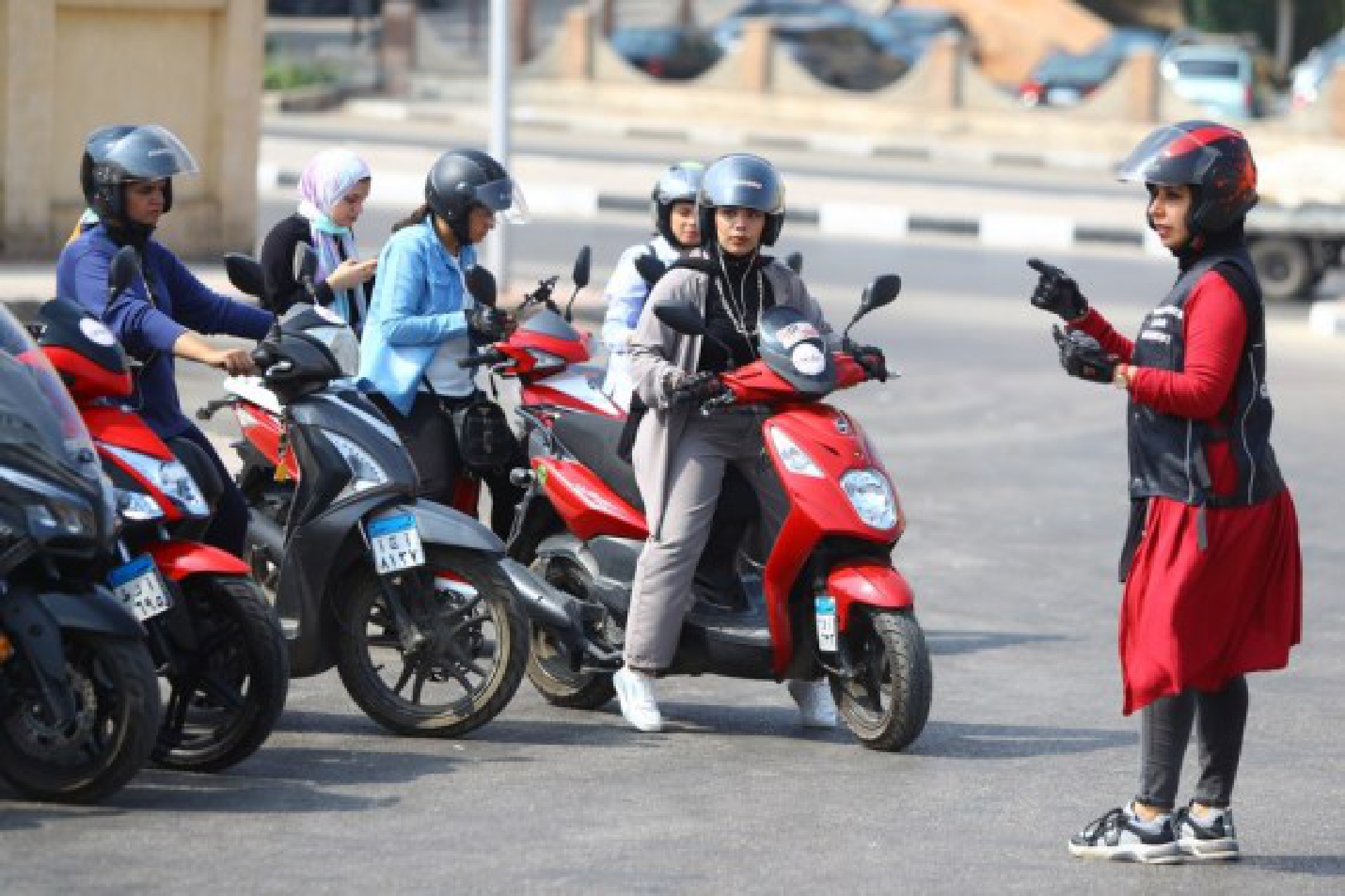
Several hundred Virginia health-care workers have been suspended or fired over coronavirus vaccine mandates #SootinClaimon.Com

#SootinClaimon.Com : ขอบคุณแหล่งข้อมูล : หนังสือพิมพ์ The Nation.

https://www.nationthailand.com/international/40006995


Several hundred hospital workers in Virginia have been suspended or lost their jobs because they refused to get the coronavirus vaccine, as required by most major health-care systems.

The earliest vaccine mandates went into effect Sept. 1, with two other waves set for Oct. 18 and Nov. 1, according to a survey of hospital policies.

Across the country, health-care systems that have instituted mandates have seen some workers leave or be terminated over their refusal to get the shot, exacerbating a shortage in skilled nursing and bedside care.

ADVERTISEMENT

Health-care systems in rural areas of Virginia, where there is generally more vaccine resistance, are being hit harder by an employee exodus over mandates than urban and suburban hospitals, which generally have larger staffs and are better able to withstand some unvaccinated employees leaving.

Inova in Northern Virginia lost 89 workers for noncompliance with the system’s requirement, which is less than half of 1 percent of its workforce, while Valley Health, based in the northern Shenandoah Valley, fired a little over 1 percent of its workers for not getting the vaccine.

Hospital officials say the reasons that workers refuse to get the vaccine mirror hesitancy in the larger community, especially in rural counties, including historical distrust of medical institutions and worries about the development of the vaccine technology.

Some area health systems have opted not to require the vaccine, for fear too many workers would leave over it. Alan Levine, the CEO of Ballad Health, estimated a mandate would cost Ballad 5 to 10 percent of its staff; about 63 percent of its staff are already vaccinated, which is higher than the southwest Virginia and northeast Tennessee communities the system serves.

“In a rural hospital it doesn’t take a whole lot of people to walk away for it to have a serious effect on your hospital,” Levine said. “It’s a lot easier to recruit nurses to Northern Virginia than it is to Southwest Virginia.”

As a result, many officials are considering a policy where unvaccinated workers contribute more to their health insurance. “Perhaps it’s a choice but it comes with a financial consequence,” he said.

Ballad, which recently reinstated a policing of postponing elective surgeries, hit its peak of 413 in-house covid patients last month, including 120 in the ICU, most of whom were on ventilators, he said. By Friday, the number was down to about 300, Levine said.

In contrast, J. Stephen Jones, the president and CEO of Inova, which operates the state’s largest hospital, Inova Fairfax, said the Northern Virginia system’s Sept. 1 vaccine mandate helped with recruitment. Jones said that nurses in the urban and suburban hospitals want to know they are working with vaccinated colleagues out of concern for their own safety.

Still, of 20,000 Inova employees, 89 left as of last week because they would not get vaccinated.

“First and foremost, vaccination mandates work,” Jones said in an interview. “Recognizing that people are dying by the thousands, mandates are going to have to be the solution to get us beyond this.”

Before vaccines were available, several hundred workers at a time could be isolating due to being ill with covid-19 or having had a covid-19 exposure, but Jones said as of Friday, only 20 workers were out with covid-19 and none were hospitalized.

“The mandate is based on very strong, extremely clear guidance on the safety and efficacy of the vaccine,” he said.

Officials at Valley Health, a health-care system that operates Winchester Medical Center and serves the northern Shenandoah Valley, said 72 employees were terminated on Sept. 21, for noncompliance with the Sept. 7 vaccine mandate.

The system granted about 300 employees – or 5 percent of its 6,000 workers – a religious or medical exemption from the mandate, officials said.

Jeff Feit, vice president for community and population health at Valley Health, declined to detail why people requested exemptions, but said the confidential process was “rigorous and consistent.”

In mid-August, about 20 people, many of them nurses, stood outside Winchester Medical Center to protest the requirement. A judge last week dismissed a lawsuit filed by three unvaccinated employees of the hospital who wanted to keep their jobs despite the mandate, the Northern Virginia Daily reported.

“I’m very respectful that this was a hard decision for a lot of people, but it was their decision,” Feit said of the mandate in general. “It’s wonderful to live in a country where we have free choice.”

The D.C. Hospital Association, which expressed support in June for mandatory vaccination as a condition of employment, said in a statement that hospitals in the city had seen “tremendous” upticks in vaccinations among licensed and unlicensed hospital staff in recent weeks, particularly among those who have been hesitant. The city has mandated the vaccine for all health-care workers in D.C. by Sept. 30, unless they have a religious or medical exemption.

“While hospital policies vary, some of our members will begin taking employment actions in accordance with their policies on October 1,” the statement said. “DC hospitals do not take these actions lightly. The singular objective of our member hospitals is to ensure a safe environment to work and care for patients, and vaccination is key to that goal.”

Here’s where major area health systems stand with vaccine mandates:

– Virginia Hospital Center in Arlington does not have a vaccine mandate, but about 92 percent of employees are already fully vaccinated, spokeswoman Maryanne Boster said.

– VCU Health System required employees to get their first dose by Sept. 15.

– Four systems serving Hampton Roads – Sentara Healthcare, Chesapeake Regional Healthcare, Children’s Hospital of The King’s Daughters Health System and Riverside Health System – require employees to be vaccinated by Oct. 18. Of 28,000 Sentara employees, 13 people have resigned due to the vaccine requirement, spokeswoman Kelly Kennedy said.

– UVA Healthrequires all employees to be fully vaccinated by Nov. 1. As of Friday morning, the system had 66 employees on paid administrative leave for a covid infection or exposure, spokesman Eric Swensen said.

– Johns Hopkins Medicine required clinical and nonclinical personnel to be fully vaccinated by Sept. 1.

– Luminis Health, which operates Doctors Community Hospital in Lanham and Anne Arundel Medical Center, has an Oct. 1 deadline and said it will have more information about compliance among its 6,700 employees next week. But as of Friday, spokesman Justin McLeod said 2 percent, or about 134 workers, were not vaccinated.

– University of Maryland Medical System also set an Oct. 1 vaccine requirement deadline, and officials said Friday that 98 percent of full-time and part-time clinical staff and 96 percent of nonclinical staff were vaccinated. The system has nearly 30,000 workers.

– Children’s National Hospital in June was one of the first children’s hospitals in the nation to announce a vaccine mandate, which went into effect Sept. 30. All 8,500 employees are vaccinated and no one lost their job over the requirement, spokeswoman Diane Troese said.

– United Medical Center spokeswoman Toya S. Carmichael said every health-care worker in D.C. was required to receive at least the first dose of the vaccine by Sept. 30 , and she said 86 percent of staff are fully vaccinated. Unvaccinated staff have until Oct. 30 to obtain a waiver from D.C. Health, she said.

– MedStar Health says all employees must be fully vaccinated by Nov. 1.

Published : October 04, 2021

Oman braces for historic landfall from Tropical Cyclone Shaheen #SootinClaimon.Com

#SootinClaimon.Com : ขอบคุณแหล่งข้อมูล : หนังสือพิมพ์ The Nation.

https://www.nationthailand.com/international/40006994


For the first time in decades, a hurricane-strength cyclone is poised to slam into the northern coast of Oman. Tropical Cyclone Shaheen, equivalent to a Category 1 hurricane, is expected to make landfall in the Middle Eastern nation late Sunday night or early Monday morning local time.

The storm will generate a dangerous ocean surge, flash flooding and damaging winds in an area unaccustomed to such weather extremes. In a single day, some areas could see more than twice their annual rainfall, which is only three to four inches.

According to Reuters, Shaheen has been blamed for three deaths in Oman, where the outer part of the storm’s circulation was scraping the country’s central-northeast coast.

ADVERTISEMENT

The storm packed peak winds of 75 mph over the Gulf of Oman as it churned slowly westward Sunday evening local time. The Joint Typhoon Warning Center in Honolulu projected landfall within six to 12 hours near the coastal town of al-Suwayq, home to 120,000 people and about 85 miles west of Muscat, Oman’s capital.

In Muscat, Reuters reported, flights were suspended or delayed while officials urged residents to evacuate coastal areas. The Times of Oman wrote that the government had set up 143 shelters.

The most dangerous conditions were anticipated west of Muscat, although windswept heavy rain could nevertheless drench the capital city.

The Typhoon Warning Center noted that the storm’s eye had become more distinct as it closed on the shoreline, a sign of strengthening. It predicted that Shaheen would intensify “a bit more” before and that its peak winds could near 85 mph before landfall. The storm is anticipated to weaken rapidly after moving inland.

Oman’s Civil Aviation Authority predicted about eight to 20 inches of rain “causing severe flash floods.” The risk of flooding is particularly acute because the desert terrain cannot effectively absorb rain.

The authority also called for offshore waves of 26 to 39 feet with shoreline waves of 6.5 to 10 feet.

Although Oman has been struck by numerous tropical cyclones over the years, they have almost always come in from the east off the Arabian Sea. No tropical cyclones have come in from the north off the Gulf of Oman since satellite observations began in the 1960s, although records that date farther back show two instances.

Meteorologists Bob Henson and Jeff Masters, writing for Yale Climate Connections, noted that Shaheen would probably make landfall farther west in Oman than any previous known storm.

In 2018, Tropical Cyclone Mekunu slammed into Oman’s east coast from the Arabian Sea as the equivalent of a Category 3 hurricane, killing at least four people in Oman and eight in Yemen.

Published : October 04, 2021

Bombing outside Kabul main mosque leaves at least 2 dead, Taliban says #SootinClaimon.Com

#SootinClaimon.Com : ขอบคุณแหล่งข้อมูล : หนังสือพิมพ์ The Nation.

https://www.nationthailand.com/international/40006993


KABUL – A bombing outside Kabul main mosque left at least two Afghan civilians dead and others wounded on Sunday, the Taliban said, the latest in a series of blasts apparently intended to undermine the militants ability to bring security to the capital and other cities.

The explosion at Eid Gah Mosque was the first major attack in Kabul since the Islamic State targeted the international airport in late August as thousands attempted to escape the country. As of Sunday night, there had been no official claim of responsibility.

Qari Muhammad Saeed Khosti, a spokesman for the Interior Ministry, said two people died in the blast but cautioned that the number could rise. “I don’t have an exact number of casualties,” Khosti said. “Our investigations are underway.”

ADVERTISEMENT

A hospital in Kabul said in a tweet that it took in four wounded people in Sunday’s blast. Reports on social media indicated that the explosion killed as many as 12 people and injured more than 30.

Bilal Karimi, deputy spokesman for the Taliban, denied the reports of heavy casualties. He said there were no Taliban fighters among the casualties. Taliban security units captured three suspects, he said, and investigations were underway. “Usually Daesh terrorists are behind such attacks, but it is too early to say anything that confirms who was behind the bombing,” Karimi said, using the Arabic acronym for the Islamic State.

The Taliban is battling the Islamic State-Khorasan, or ISIS-K, the Afghan branch of the network that’s based in Syria and Iraq, in several areas of the country. The airport attack in late August, which included two suicide bombings, killed 13 U.S. service members and some 170 Afghan civilians at the chaotic end of the U.S. withdrawal of troops after two decades in Afghanistan.

ISIS-K, which opposes the Taliban, has in recent weeks claimed responsibility for a series of blasts in eastern Afghanistan. The blasts were mostly around the city of Jalalabad, capital of the eastern province of Nangahar and known as an ISIS-K stronghold. While both are Islamist groups, ISIS-K accuses the Taliban of not being extreme enough.

The Taliban is also reportedly facing divisions within its own ranks over who should receive the most credit for defeating the United States and how power should be shared. It has officially denied reports of infighting between rival factions.

The explosion outside the gate of the mosque, on a highway between Kabul and Logar province, occurred as Taliban members and other people had gathered at a memorial to honor the mother of Zabihullah Mujahid, acting deputy information minister and a key spokesman.

“We are investigating as to how it happened and who did it,” said Karimi.

Separately, Twitter on Sunday temporarily suspended the accounts of both Mujahid and Karimi without providing a specific reason. Mujahid has slightly more than 400,000 followers. Karimi has roughly 66,000 followers.

Published : October 04, 2021

Billions hidden beyond reach #SootinClaimon.Com

#SootinClaimon.Com : ขอบคุณแหล่งข้อมูล : หนังสือพิมพ์ The Nation.

https://www.nationthailand.com/international/40006992


A massive trove of private financial records shared with The Washington Post exposes vast reaches of the secretive offshore system used to hide billions of dollars from tax authorities, creditors, criminal investigators and – in 14 cases involving current country leaders – citizens around the world.

The revelations include more than $100 million spent by King Abdullah II of Jordan on luxury homes in Malibu, Calif., and other locations; millions of dollars in property and cash secretly owned by the leaders of the Czech Republic, Kenya, Ecuador and other countries; and a waterfront home in Monaco acquired by a Russian woman who gained considerable wealth after she reportedly had a child with Russian President Vladimir Putin.

Other disclosures hit closer to home for U.S. officials and other Western leaders who frequently condemn smaller countries whose permissive banking systems have been exploited for decades by looters of assets and launderers of dirty money.

ADVERTISEMENT

The files provide substantial new evidence, for example, that South Dakota now rivals notoriously opaque jurisdictions in Europe and the Caribbean in financial secrecy. Tens of millions of dollars from outside the United States are now sheltered by trust companies in Sioux Falls, some of it tied to people and companies accused of human rights abuses and other wrongdoing.

The details are contained in more than 11.9 million financial records that were obtained by the International Consortium of Investigative Journalists (ICIJ) and examined by The Post and other partner news organizations. The files include private emails, secret spreadsheets, clandestine contracts and other records that unlock otherwise impenetrable financial schemes and identify the individuals behind them.

The trove, dubbed the Pandora Papers, exceeds the dimensions of the leak that was at the center of the Panama Papers investigation five years ago. That data was drawn from a single law firm, but the new material encompasses records from 14 separate financial-services entities operating in countries and territories including Switzerland, Singapore, Cyprus, Belize and the British Virgin Islands.

The files detail more than 29,000 offshore accounts, more than double the number identified in the Panama Papers. Among the account owners are more than 130 people listed as billionaires by Forbes magazine and more than 330 public officials in more than 90 countries and territories, twice the number found in the Panama documents.

As a result, the Pandora Papers allow for the most comprehensive accounting to date of a parallel financial universe whose corrosive effects can span generations – draining significant sums from government treasuries, worsening wealth disparities, and shielding the riches of those who cheat and steal while impeding authorities and victims in their efforts to find or recover hidden assets.

“The offshore financial system is a problem that should concern every law-abiding person around the world,” said Sherine Ebadi, a former FBI officer who served as lead agent on dozens of financial-crimes cases.

Billions hidden beyond reachBillions hidden beyond reach

Ebadi pointed to the role that offshore accounts and asset-shielding trusts play in drug trafficking, ransomware attacks, arms trading and other crimes. “These systems don’t just allow tax cheats to avoid paying their fair share. They undermine the fabric of a good society,” said Ebadi, now an associate managing director at Kroll, a corporate investigations and consulting firm.

The Post is publishing eight articles, as well as video and audio pieces, based on material in the Pandora trove. Stories being published today focus on revelations about Abdullah and Putin. Stories tomorrow will more closely explore U.S. aspects of this system, including the harm caused by U.S. tax havens and how Americans accused of wrongdoing can escape financial consequences by using offshore entities. In subsequent days, stories will examine the looting of Asian artifacts, survey the hidden wealth of billionaires who appear in the files, and trace the impact of U.S. sanctions on Russian oligarchs.

These are part of a global package of stories based on the Pandora Papers – a project involving 150 news organizations in 117 countries and territories. The package includes reports by the BBC and the Guardian that reveal new details about foreign donors contributing millions to British Prime Minister Boris Johnson’s Conservative Party. The ICIJ has collaborated with foreign partners on stories about a scandal-plagued Catholic order in Mexico, millions of dollars held offshore by members of Pakistani Prime Minister Imran Khan’s government, as well as the secret holdings of leaders from Europe to Latin America.

The vast majority of the documents are marked with dates indicating they were created between 1996 and 2020, though some date to the 1970s. With many documents dated as recently as last year, the cache illuminates how the offshore system – a term from the time when remote islands were the principal havens for hiding cash – has endured the scandals and efforts at reform that followed prior investigations.

The records include dozens of memos and messages discussing ways to defeat new transparency laws, erect more-ironclad shelters for assets and, ironic as it may sound in this context, avoid being exposed by another leak.

Executives at a politically connected Panama City law firm, for example, mentioned in a 2016 email “numerous requests from clients to confirm the security of our information systems” after the Panama Papers stories, according to documents. The executives scrapped plans to convert paper records to digital storage, hoping to reassure wary clients.

Nevertheless, internal records from the Alemán, Cordero, Galindo & Lee firm, known as “Alcogal,” represent one of the largest caches in the Pandora collection, exposing more high-profile clients than documents from the other 13 firms and accounting for some of the trove’s most significant revelations.

In a statement, Alcogal said, “We have always acted according to the law, and have cooperated in all respects with competent authorities.”

– – –

High stakes for leaders

The Panama Papers stories five years ago led to the resignations of the leaders of Iceland and Pakistan. There could be political stakes for some of those named in the Pandora documents.

Andrej Babis, the Czech prime minister, who is up for reelection this week, is a billionaire politician who has cast himself as a populist adversary of Europe’s elite. But the documents show that in 2009 he purchased a $22 million chateau near Cannes, France, with a cinema and two swimming pools, using shell companies that hid the identity of its new owner. Babis did not respond to requests for comment.

In Kenya, President Uhuru Kenyatta has cultivated the persona of a determined foe of corruption, saying in 2018 that “every public servant’s assets must be declared publicly.” But Pandora documents show that he and several close relatives set up at least seven entities offshore that hold money and real estate worth more than $30 million. Kenyatta did not respond to requests for comment.

Other world leaders linked to offshore accounts found in the Pandora trove include President Milo Djukanovic of Montenegro, President Sebastián Piñera of Chile and President Luis Abinader of the Dominican Republic. There are revelations about the offshore holdings of Sri Lankan power couple Thirukumar Nadesan and Nirupama Rajapaksa; and Dubai ruler Mohammed bin Rashid al-Maktoum.

But the newly revealed details about offshore assets held by King Abdullah of Jordan, a long-standing U.S. ally, are particularly striking. Documents show that he used a constellation of shell companies to conceal purchases of luxury properties in California, London and the Georgetown neighborhood of Washington, D.C.

The disclosures come as Abdullah is facing political turmoil, including an alleged coup plot this year, in a kingdom that depends on billions of dollars in aid from the United States and other countries. DLA Piper, a law firm representing Abdullah, said that “any implication that there is something improper about [his] ownership of property through companies in offshore jurisdictions is categorically denied.”

– – –

The U.S. uber-rich

The Panama Papers leak was particularly revelatory about Russians’ use of the offshore system. One story reported that a Russian cellist, who had been friends with Putin since childhood, was secretly linked to offshore accounts holding up to $2 billion.

Putin called that leak a “provocation,” insinuating that U.S. intelligence agencies were involved as part of an effort to discredit the Russian financial system and punish the Russian leader by targeting his inner circle. U.S. officials denied the allegation.

This time, although Russians account for a disproportionately large share of those exposed in the Pandora files, the records are more wide-ranging, laying bare the hidden riches of U.S. adversaries and allies alike.

Those named in the trove are as varied as former British prime minister Tony Blair, Colombian pop star Shakira, members of China’s elite and figures in Saudi Arabia’s royal family.

The United States’ wealthiest citizens – including Amazon founder Jeff Bezos, who owns The Washington Post; Tesla founder Elon Musk; Microsoft billionaire Bill Gates; and billionaire investor Warren Buffett – do not appear in the documents.

Financial experts said the uber-rich in the United States tend to pay such low tax rates that they have less incentive to seek offshore havens. But their absence from the files also may mean that very wealthy Americans turn to different offshore jurisdictions – including the Cayman Islands – and different companies than those represented in the Pandora documents.

There are files pertaining to former president Donald Trump’s involvement in a Panama hotel project. But the Pandora documents do not appear to reveal significant new information about his finances.

Robert F. Smith, who is often described as the United States’ richest Black person, is perhaps the wealthiest American whose offshore holdings are detailed extensively. Smith agreed last year to pay a fine of $139 million and admitted hiding funds offshore and submitting false tax records as part of a non-prosecution agreement with the Justice Department. The agreement calls for Smith to cooperate in a separate case against Robert T. Brockman, a Texas billionaire who backed Smith financially and has been charged with hiding $2 billion in income. Smith declined to comment for this story.

The files also help to illustrate how even respected U.S. institutions can become entangled in allegedly tainted transactions. The documents trace how an art trader accused by the Justice Department of trafficking in looted Cambodian antiquities used an offshore trust in transactions involving those items. The trader, Douglas Latchford, died last year, but relics that he or his associates moved remain on display at the Metropolitan Museum of Art in New York City and other museums.

Perhaps the most troubling revelations for the United States, however, center on its expanding complicity in the offshore economy. South Dakota, Nevada and other states have adopted financial secrecy laws that rival those of offshore jurisdictions. Records show leaders of foreign governments, their relatives and companies moving their private fortunes into U.S.-based trusts.

In 2019, for example, family members of the former vice president of the Dominican Republic, who once led one of the largest sugar producers in the country, finalized several trusts in South Dakota. The trusts held personal wealth and shares of the company, which has stood accused of human rights and labor abuses, including illegally bulldozing houses of impoverished families to expand plantations.

– – –

Greater concealment efforts

Despite the scandals and reforms triggered by previous revelations like those in the Panama Papers – which led to new transparency laws in the British Virgin Islands and other tax havens – the Pandora trove highlights the enduring demand for mechanisms to hide money and the continuing abundance of firms to provide them.

Trident Trust, a firm that operates in more than a dozen offshore jurisdictions, mounted an effort in 2016 to recruit account holders fleeing Mossack Fonseca, the Panama City law firm that collapsed after its internal records and client lists were exposed in the Panama Papers case, according to Pandora documents.

In a statement, Trident said it “does not discuss its clients with the media” but “is fully committed to compliance with all applicable regulations.”

Alcogal touts itself online as a “top tier” practice with high ethical standards. It was founded in 1985 by Jaime Alemán, who attended private high school and universities in the United States, served as Panama’s ambassador in Washington, and wrote a book titled “Honesty Is Priceless.”

The firm has become a major purveyor of services that help elite clients hide wealth offshore. Nearly half of the politicians whose names surfaced in the Pandora trove were clients of Alcogal, the documents show. Among them are former Panamanian presidents, the president of Ecuador, a leading candidate in next month’s Honduran election and Abdullah.

Despite international standards calling on firms to apply extra scrutiny when they take on politicians, government officials or those close to them as clients, intake forms show that Alcogal at times did not mark even country leaders as “politically exposed persons,” or PEPs.

In its statement, Alcogal said it was inaccurate “to imply that we have not classified certain individuals as PEPs, where in fact we have.” The firm declined to address specific cases. Overall, the company said, “We have always acted according to the law, and have cooperated in all respects with competent authorities.”

At times, financial advisers pushed Alcogal to do even more to protect the identities of their clients.

Jurg Wissmann, a Swiss lawyer who has represented Putin associates and used Alcogal to set up at least 150 companies in Belize and other tax havens, warned officers at Alcogal never to store any of his clients’ names on computer systems, according to documents.

“You are obliged to keep secrecy for our clients,” he wrote, “and to not make feasible at all a second Panama Papers story.” Wissman did not respond to requests for comment.

Only a few of Wissmann’s clients are named in the Pandora documents.

Published : October 04, 2021

Supreme Courts conservatives have abortion, guns, God on agenda #SootinClaimon.Com

#SootinClaimon.Com : ขอบคุณแหล่งข้อมูล : หนังสือพิมพ์ The Nation.

https://www.nationthailand.com/international/40006984


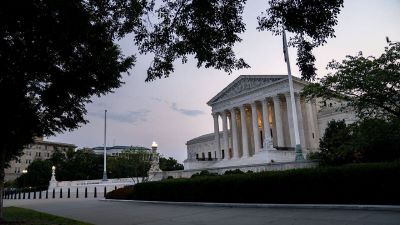
The U.S. Supreme Court term that starts Monday isnt entirely about abortion. It only seems that way.

The explosive issue promised to top the agenda even before the court let Texas start banning abortion after six weeks of pregnancy a month ago. The court will consider a Mississippi case that could slash reproductive rights nationwide and even asks the justices to overturn Roe v. Wade, the 1973 ruling that legalized abortion nationwide.

But more broadly, Justice Amy Coney Barrett’s first full term offers a menu of opportunities for the court’s conservative wing to exploit its 6-3 majority — and give Republicans the type of payoff they envisioned when they pushed through her Senate confirmation just before the 2020 election.

ADVERTISEMENT

Before the term ends in June, the justices will rule on guns, religion and federal regulation, and they could add cases on affirmative action, redistricting and President Joe Biden’s vaccine mandate.

Those cases come against a backdrop of slipping public approval for the court and efforts by justices from across its ideological spectrum to shore up public confidence. Four justices — Barrett, Stephen Breyer, Samuel Alito and Clarence Thomas — have contended publicly in recent weeks that the court’s rulings are based on the law, not politics or personal preferences.

“The court’s legitimacy rests on being able to show the public that a change in personnel does not mean a dramatic change of law” in high-profile cases, said Farah Peterson, a legal historian who teaches at the University of Chicago Law School. “And that’s what’s going to be at stake in this term.”

The term is already off to an inauspicious start, with Justice Brett Kavanaugh testing positive for Covid-19 Thursday, just days before the justices are set to hear their first in-person arguments in 19 months. Kavanaugh has no symptoms and is fully vaccinated, the court said Friday.

Here’s what’s on the court’s agenda so far for the next nine months:

– Abortion showdown. The biggest abortion face-off in a generation will take place Dec. 1, when Mississippi defends its ban on the procedure after the 15th week of pregnancy. Upholding the law would require the court to gut the 1992 Planned Parenthood v. Casey ruling, which said states can’t impose significant restrictions before fetal viability, a point the court suggested was around 23 or 24 weeks at the time.

The stakes have only grown since Mississippi Attorney General Lynn Fitch filed her appeal in March 2020. At the time, she didn’t explicitly ask the court to overturn Roe and Casey. After Barrett took her seat and the court accepted the case, Fitch shifted course, arguing in July that Roe was “egregiously wrong” and should be discarded.

“There’s probably five votes to uphold the law,” said Noel Francisco, who served as former President Donald Trump’s solicitor general and now is an appellate lawyer at Jones Day. He said that overturning Roe and Casey is a “distinct possibility.”

About a dozen states have trigger bans that would take effect if Roe is overturned, while other states are poised to put in place their own sweeping restrictions, according to reproductive-rights advocates. They say a ruling favoring Mississippi would leave women in much of the South and Midwest without legal access to abortion.

The ongoing fight over the Texas law could add an important new dimension. Abortion providers are urging the court to hear an expedited appeal arguing that Texas improperly insulated its law from judicial review — and nullified a federal right — by making the measure enforceable only through private lawsuits. The appeal asks the court to take the unusual step of hearing the case even though a federal appeals court hasn’t resolved that issue.

The Supreme Court also could be called upon in the coming weeks to intervene in a Justice Department lawsuit that seeks to block the Texas law and is now pending at a federal district court.

The justices will separately hear arguments Oct. 12 in a case stemming from a Kentucky law that abortion-rights advocates say would effectively ban the procedure after 15 weeks of pregnancy. At issue is whether Kentucky Attorney General Daniel Cameron, a Republican, can take over defense of the law after an appointee of Democratic Governor Andy Beshear decided to drop the matter when the state lost an appeals court decision.

– Concealed handguns: The court will hear its first major gun case in a decade on Nov. 3, when the justices consider whether states must let most people carry a handgun in public for self-defense.

The court is weighing an appeal by a National Rifle Association affiliate and two people who say New York is violating their Second Amendment rights by issuing concealed-carry licenses only to those who can show a special need for protection. New York is one of eight states the NRA says prevent most people from getting a carry license.

Although the court said in 2008 and 2010 that the Second Amendment guarantees most people can have a handgun at home for self-defense purposes, the justices have never said whether that right extends into the public arena.

As with abortion, the decision to take the case underscored the likely impact of Barrett, who backed gun rights as an appeals court judge. Until Barrett replaced the late Justice Ruth Bader Ginsburg last year, the court had repeatedly turned away virtually identical appeals.

The court “seems poised” to say the Second Amendment extends beyond the home, said Pratik Shah, an appellate lawyer at Akin Gump. “And if it does that, it’s hard to imagine a world in which this New York licensing scheme can continue to exist. So I think the real question here is: How far is the court willing to go?”

– Religious rights: The court has repeatedly bolstered religious rights in recent years, and it could go even further with three scheduled cases.

In the newest case, which the court accepted on Thursday, a Christian organization contends Boston is violating the Constitution by refusing to fly the group’s flag outside City Hall while agreeing to display the flags of other private parties. Boston contends it is engaging in government speech, which is exempt from First Amendment scrutiny.

The court will also decide whether Maine can exclude religious schools from a tuition-assistance program used by towns that don’t run their own public schools. Religious-rights advocates are looking to build on a 2020 ruling that required Montana to let religious schools participate in a program that provides state-subsidized scholarships for private education.

And in a case that could divide the justices along unusual lines, the court will rule on the religious rights of prisoners at the moment they are being executed. Texas inmate John Ramirez is seeking permission for his Baptist pastor to pray aloud and lay his hands on him as he died by lethal injection.

– Federal regulation: In a term that so far is light on business cases, companies will be looking at a clash that could limit the power of regulatory agencies to put their own spin on ambiguous federal statutes.

The case, set for argument Nov. 30, concerns cuts made by the Department of Health and Human Services to Medicare prescription-drug reimbursements for hospitals that serve low-income and underserved communities. A group led by the American Hospital Association contends the reductions can’t be squared with federal law.

More broadly, the case tests a legal doctrine known as Chevron deference that has drawn criticism in conservative circles in recent years. The doctrine, which draws its name from a 1984 Supreme Court ruling, requires courts to defer to agencies on the meaning of unclear laws if the regulators’ interpretation is reasonable.

The U.S. Chamber of Commerce is among those urging the court to rein in the use of Chevron deference, arguing that federal agencies “are only too happy to exploit openings to aggrandize their own powers.”

– Marathon bomber: The court will also consider a Justice Department bid to reinstate the death sentence for Dzhokhar Tsarnaev, who was convicted in the 2013 Boston Marathon bombing.

A federal appeals court threw out Tsarnaev’s sentence, saying prospective jurors weren’t adequately asked about pretrial media coverage they consumed. The appeals court also said the trial judge should have allowed evidence involving a previous crime that Tsarnaev says showed he was acting under his brother’s influence.

Biden’s administration is defending the sentence even though the president has said he will work to end the federal death penalty.

Monday’s arguments will mark the court’s first in-person cases after a year and a half of telephone sessions during the coronavirus pandemic. They will be the first courtroom arguments for Barrett as a justice, letting her finally sit in her designated seat at one end of the court’s winged mahogany bench.

The sessions will also be the first to include live audio from the courtroom, something transparency groups have long sought. The court allowed live audio of its telephone sessions, but it wasn’t clear until a few weeks ago whether the practice would continue into the new term.

The arguments will be closed the public, though about two dozen reporters who cover the court on a regular basis will be allowed to attend.

Among the unknowns is what Thomas will do with the new argument format the court is adopting. The longest-serving justice went years without asking a question during the traditional courtroom arguments. But when the court shifted to telephone arguments — and the justices began taking turns asking questions rather than intervening at will — Thomas surprised many observers by becoming an active participant.

Now that they are back in the courtroom, the justices will use a hybrid approach, starting with open questioning and giving each lawyer one-on-one time with the arguing lawyer at the end.

“This will be a little bit of a work in progress,” said Paul Clement, an appellate lawyer at Kirkland & Ellis.

Published : October 03, 2021

For years, the voice behind ISIS propaganda was a mystery. Now a Canadian faces criminal charges. #SootinClaimon.Com

#SootinClaimon.Com : ขอบคุณแหล่งข้อมูล : หนังสือพิมพ์ The Nation.

https://www.nationthailand.com/international/40006983


A Canadian who U.S. prosecutors allege is behind influential English-language propaganda videos for the Islamic State has been brought to Virginia to be prosecuted.

For years, the voice behind ISIS propaganda was a mystery. Now a Canadian faces criminal charges.

Mohammed Khalifa, 38, was captured by Kurdish forces in Syria in 2019. At that point, according to prosecutors, he had been with the Islamic State for six years. He started as a fighter, according to court documents, before becoming involved in the translation and dissemination of English-language propaganda.

He ultimately led ISIS’s English-language media arm, prosecutors allege, whose output included videos, audio statements and an online magazine. Prosecutors say Khalifa narrated over a dozen ISIS recruitment videos, including two of the group’s most influential efforts at luring Westerners: “Flames of War: Fighting Has Just Begun,” in 2014, and “Flames of War II: Until the Final Hour,” in 2017.

ADVERTISEMENT

In the videos, according to court records, Khalifa encouraged supporters to try to join the Islamic State abroad or, if they could not, to launch attacks in their home countries. One video included a voice recording of the man who declared his allegiance to ISIS before committing a massacre at Pulse Nightclub in Orlando in 2016.

Others showed brutal executions, including of Syrian prisoners who were forced to dig their own graves and a Jordanian pilot being burned alive.

“As alleged, Mohammed Khalifa not only fought for ISIS on the battlefield in Syria, but he was also the voice behind the violence,” Raj Parekh, the acting U.S. attorney for the Eastern District of Virginia, who also is one of the prosecutors handling the case, said in a statement. “Khalifa promoted the terrorist group, furthered its worldwide recruitment efforts, and expanded the reach of videos that glorified the horrific murders and indiscriminate cruelty of ISIS.”

Khalifa, who was born in Saudia Arabia, also was responsible for translating material from Arabic to English, prosecutors said. He is charged with conspiracy to support a foreign terrorist organization resulting in death. If convicted, he faces up to life in prison.

It’s the second case involving the Islamic State’s propaganda arm recently brought to the federal court in Alexandria, Va., where many high-profile international terrorism cases are prosecuted. Parekh and Assistant U.S. Attorney Dennis Fitzpatrick also are handling the case against two men accused of helping to kill American and British hostages on behalf of the Islamic State, executions that were featured in gruesome propaganda videos. One of the pair pleaded guilty last month; the other is to go to trial next year.

At the time the “Flames of War” videos were released, American authorities had no idea who the narrator was; the FBI sought the public’s help in identifying him in 2015. After his capture, Khalifa identified himself to multiple news outlets as the mysterious propagandist.

In an interview with the Canadian Broadcasting Corp. after his capture, Khalifa said, “I had a normal life back in Canada, I was doing very well for myself, and I decided to give it up knowing . . . what I was sacrificing in the process. That was a decision I made, and I stuck to that decision.”

According to the CBC, Khalifa was an information technology specialist in Toronto when he joined the Islamic State. He said he was himself radicalized by propaganda videos – ones narrated by Anwar al-Awlaki, a U.S. citizen who joined al-Qaida and was killed in a U.S. drone strike in Yemen in 2011.

“I came here to fight jihad not just to defend Syrians, but because it’s an obligation to fight the tyrants, remove them from power and establish the Shariah, all with the aim of reestablishing the Islamic caliphate,” he wrote in an email to a close relative just after leaving Canada, according to court records.

Amarnath Amarasingam, a Canadian extremism researcher at Queen’s University, was the first to identify Khalifa as the voice of violent ISIS videos.

People said he was crazy, Amarasingam recalled, when he said the man calling himself Abu Ridwan al-Kanadi sounded “distinctly like people I grew up with in Toronto.”

Now, Amarasingam says he hopes to learn whether Khalifa held any higher position in the Islamic State beyond being producer of English propaganda.

“He’s a significant person, in that, whenever Westerners interacted with ISIS media, ISIS claims, ISIS radio, he was the voice we heard,” Amarasingam said. “He also went with ISIS to the last holdouts.”

As the Islamic State was collapsing in 2018, Khalifa told FBI agents, he was ordered to flee but chose to stay and fight. In a gun battle with the Syrian Democratic Forces in January 2019, his AK-47 jammed and he surrendered, according to prosecutors.

Court records did not indicate whether Khalifa has a lawyer.

Published : October 03, 2021

Thousands gather at Womens March rallies in D.C., across U.S. to protect Roe v. Wade #SootinClaimon.Com

#SootinClaimon.Com : ขอบคุณแหล่งข้อมูล : หนังสือพิมพ์ The Nation.

https://www.nationthailand.com/international/40006982


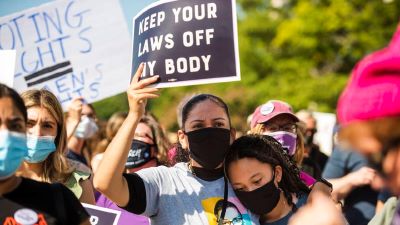
WASHINGTON – Thousands of protesters marched at rallies in Washington and in cities across the country Saturday, decrying Texass recent ban on most abortions and warning that the U.S. Supreme Courts conservative majority could impose further restrictions in the coming months.

Amassing in downtown of the District of Columbia before walking in a clamorous procession to the Supreme Court, a roster of speakers bemoaned a looming threat to Roe v. Wade and implored Americans to enlist in a nationwide campaign to preserve women’s abortion rights.

Women and their male supporters gather at Freedom Plaza in Washington on Saturday for the WomenWomen and their male supporters gather at Freedom Plaza in Washington on Saturday for the Women

ADVERTISEMENT

“No matter where you live, no matter where you are, this moment is dark – it is dark – but that’s why we’re here,” Alexis McGill Johnson, president of Planned Parenthood, told the crowd at the “Rally for Abortion Justice.”

“It is our job to imagine the light even when we can’t see it,” Johnson said. “It is our job to turn pain into purpose. It is our job to turn pain into power.”

By 1 p.m., the crowd had swelled to the thousands as people spilled into the streets on either side of Freedom Plaza, clustering in pockets in the shade, their eyes on the stage.

“Not only is abortion health care, but at my organization we also believe it’s self-care,” Marsha Johns, executive director of the Ayiha Center, a Texas-based abortion rights organization, told the throng. “You can no longer tell us what to do with our bodies.”

At that, the protesters erupted in cheers, many hoisting homemade signs and chanting, “Abortion is healthcare!”

Volunteers, among them Debora Mims, 56, from D.C., gathered Saturday at Freedom Plaza for the WomenVolunteers, among them Debora Mims, 56, from D.C., gathered Saturday at Freedom Plaza for the Women

The day of demonstrations, organized by the Women’s March, was the first the group has sponsored since former president Donald Trump left office in January. Trump’s 2016 election catalyzed the first Women’s March, which drew millions of protesters to Washington and around the country and is widely considered the largest single-day demonstration in the country’s history, inspiring people to become first-time protesters, activists and politicians.

Attendance at subsequent marches has declined. But organizers are hoping to energize the movement around threats to Roe v. Wade, the 1973 Supreme Court case that protects a person’s right to an abortion. With a 6-3 conservative majority on the high court, many now fear that Roe could be in jeopardy.

In addition to the protest in Washington, organizers said they planned more than 600 demonstrations across the country, including New York City, where thousands could be seen marching across the Brooklyn Bridge toward Foley Square.

In downtown Chicago, where several thousand abortion rights protesters gathered, Kathy Flora, 50, said the Texas ban compelled her to travel in from the suburbs to attend her first demonstration. “I just can’t believe it’s gotten to this point, to be honest,” she said. “I thought it was supposedly settled law.”

At a protest in Jackson, Miss. a group of women in their 60s questioned whether younger women would fully grasp the consequences of Roe being overturned. Lisa White, 65, who traveled 170 miles from her home in Bay St. Louis, Miss., said the way women’s rights are being “slashed across the board” evokes reminders of her youth when she said her aspirations of going to law school were dismissed by men who thought “women should be barefoot and pregnant.”

“I was not taken seriously,” said White, who attended law school in Connecticut. “I had to fight for everything I got.”

In San Francisco, the thousands of marchers along Market Street included Jessie Reynolds, 20, a student who said she began to follow politics only recently after becoming aware of the Black Lives Matter movement.

“That was my ‘coming to Jesus’ moment,” she said. Referring to the abortion rights movement, she said she hoped the march would “put the fire back in women. I wasn’t a part of this fight up until this year and I’m hoping that a lot of other people have turned that switch on.”

As the day’s events began into downtown Washington, people streamed into Freedom Plaza from across the region and beyond, many of them mothers and daughters arriving together for what they said was their first protest.

“I’m hoping my kids won’t have to protest for their bodies,” said Katie Donovan, 18, who arrived from Maine wearing a red tank top that read, “Keep Your Laws Off My Body.” Her mother, Katrina Marianacci, 48, stood nearby with her other daughter, the two of them also wearing the same tank top, said she wanted the girls to “see what happens when women come together to fight for their rights.”

Lisa Santoro, who lives outside Philadelphia, drove to the rally in Washington with her two adult daughters, Molly and Abby. As a high school student in the 1980s, Santoro said she never feared that she would lose her legal right to an abortion.

Now she worries her daughters won’t have the same access. “Maybe we should have been out here marching for reproductive rights all along,” she said.

The demonstration also drew hundreds of antiabortion protesters, including a couple of dozen who sought to disrupt a morning faith service hosted by abortion activists at Freedom Plaza.

“Woe to you!” one man protesting abortion yelled. “The blood of innocent babies is on your hands!”

To drown him out, the crowd erupted in singing and clapping, as one woman, Angela Jamison, 51, of Fairfax, Va., stepped in to point him back across the street where the counterdemonstrators were supposed to stay.

After the speeches at Freedom Plaza, thousands of protesters marched along Pennsylvania Avenue, led by an all-female drum line and chanting, “My body! My choice!”

At the Supreme Court, they were met by another group of counterprotesters who greeted them with a banner that read “We are the pro-life generation.”

“Abortion harms women!” the counterprotesters chanted as a live band played Christian rock.

“We’re leading what should be the true message of a women’s march,” said Michele Hendrickson, 35, the director of strategic initiatives for Students for Life of America. “If we want to talk about women empowerment, then we shouldn’t be feeding women a lie that they need abortion to succeed.”

Alveda King, an evangelical minister and antiabortion activist who is the niece of Martin Luther King Jr., stood in front of the Supreme Court and prayed. “We are crying out for the babies,” King said. “What you’ve done in Texas, do it across the country.”

As the march ended outside court, protesters and counterprotesters exchanged chants – “Pro- life! Pro women!” one side shouted, “My body! My choice!” the other side countered – until U.S. Capitol Police officers separated them.

On Sept. 1, Texas’s law state went into effect prohibiting abortion once cardiac activity is detected, around six weeks gestation, before most people know they are pregnant. Under the law, citizens can sue anyone that helps facilitate an illegal abortion in Texas, from the doctor who performs the procedure to an Uber driver who drives a patient to a clinic.

The Supreme Court on Dec. 1 is to consider the constitutionality of a Mississippi law that bans abortions after 15 weeks gestation, nearly 10 weeks before a fetus can survive outside the uterus. Roe v. Wade protects the right to an abortion before the point of fetal viability. If the law is allowed to stand, it will further empower other states to pass similar restrictions.

Recent polls show Americans oppose overturning Roe v. Wade by a roughly 2-to-1 margin. A large majority of Americans also support allowing a person to receive an abortion in the case of rape or threats to her health.

Abortion advocates were happy to see the words “abortion” included in the name of the March, said Aimee Arrambide, the executive director of Avow, an abortion rights group in Texas.

“There is stigma surrounding abortion, even from people who support abortion access,” she said.

The title of the March is a nod to the reproductive justice movement, founded by women of color, which advocates not just for abortion to be legal, but accessible to all, regardless of socio-economic status or any other barrier that might cut someone off from the procedure.

Rachel O’Leary Carmona, executive director of the Women’s March, described the movement as a coalition of more than 120 groups, including Planned Parenthood and Black Feminist Future, focused on ensuring women are able to safely and legally access abortion and health care for their families.

“Roe is the floor, not the ceiling,” Carmona said. “Abortion rights, reproductive justice, is absolutely a part of voting rights and justice for immigrants, and racial justice because they can’t be extracted from themselves. The most impacted communities across all those groups are communities of color.”

Yet to some Black feminists, the rally seemed like a “White woman’s march,” as 24-year-old Devonn Thomas put it, saying there needed to be more focus on disparities that hurt minority women’s access to abortion.

Thomas, who identifies as queer, said that she is the daughter of a queer mother too, and that her mother always taught her the importance of the right to choose. But that choice, she said, has always been easier for wealthier White women while minority women have faced barriers.

“Abortion rights is still white power if it’s not given to Black people as well,” Thomas said.

Published : October 03, 2021

Biden signs measure to extend federal highway fund amid debate over infrastructure package #SootinClaimon.Com

#SootinClaimon.Com : ขอบคุณแหล่งข้อมูล : หนังสือพิมพ์ The Nation.

https://www.nationthailand.com/international/40006981


WASHINGTON – The Senate voted Saturday to extend transportation funding programs for a month, a step that grants a reprieve to 3,700 Department of Transportation employees who were furloughed when the money expired on Thursday. The House approved the measure late Friday.

President Joe Biden signed the measure into law on Saturday.

The fund, designed to provide long-term stability for road and transit projects, expired Thursday night as Democrats clashed over whether to advance a $1 trillion infrastructure bill amid debate that included the future of trillions more in social spending.

The House voted 365-51 to approve the extension. The Senate backed the measure on Saturday, which will end the furloughs and ensure money keeps flowing. It gave lawmakers time to continue seeking a resolution to the impasse over the spending packages.

ADVERTISEMENT

While an extension resolves immediate issues, supporters of the $1 trillion infrastructure bill are leery of the prospect that Congress will opt to repeatedly pass short extensions – an approach lawmakers have taken in the past.

The immediate impacts were limited, but the lapse is “unacceptable,” said Jim Tymon, executive director of the American Association of State Highway and Transportation Officials. The group urged Congress to pass a long-term surface transportation bill.

“While AASHTO appreciates addressing the lapse in federal highway, transit and highway safety programs caused by the failure to pass the bipartisan Infrastructure Investment and Jobs Act, short-term extensions are not a suitable way to govern,” Tymon said in a statement Saturday. “This particular extension doesn’t include any new funding for state departments of transportation until October 15, leaving them without support from their federal partners for weeks while they continue the work of moving people and goods through our communities.”

Neil Bradley, an executive vice president at the U.S. Chamber of Commerce, said officials are already beginning to develop plans for the coming construction season and need certainty that federal money will be available.

“It is not cost-free to simply kick the can down the road,” Bradley told reporters this week.

State transportation departments, which get reimbursed from the fund, were expected to be able to keep paying their bills for a few weeks. The Transportation Department said in a statement that existing grants would continue to be paid.

The Governors Highway Safety Association said the mini-shutdown could affect safety programs at a time when road deaths and dangerous driving are up. In a tweet, it called the lapse “a direct impact of Congress missing the deadline to extend the FAST [Fixing America’s Surface Transportation] Act and continue Highway Trust Fund operations.”

While the focus remained on passing the infrastructure bill, the Senate Environment and Public Works Committee had been working with the House Transportation Committee this week on backup options to keep the Federal Highway Trust Fund operating. An alternative proposal to keep it going until December would have required a $5 billion bailout because the fund is running out of money.

After the House vote on Friday, Rep. Peter DeFazio, D-Ore., chairman of the Transportation Committee, said the extension would protect thousands of Department of Transportation employees and keep important projects on schedule.

“Now we will continue our work to pass the Build Back Better agenda into law, including a historic investment in America’s infrastructure,” he said in a statement.

Sen. Shelley Moore Capito of West Virginia, the top Republican on the Environment and Public Works Committee, said in a statement Saturday she was “deeply disappointed” that the House postponed a vote on the infrastructure package, noting that it included a five-year surface transportation reauthorization bill.

“The best way to continue these programs and provide long-term certainty to state departments of transportation and others was for the House to pass the bipartisan infrastructure package. However, that’s not what happened,” she said. “A further lapse in funding would have jeopardized future projects that are necessary to ensure the safety and efficiency of our roads and bridges.”

Most of the furloughed employees were at the Federal Highway Administration and the Federal Motor Carrier Safety Administration. The trust fund also covers transit projects and road safety work in addition to construction, and grants in those programs also would have been affected by an extended shutdown.

The trust fund last lapsed in 2010, but employees were quickly called back to work. The gas tax, which helps fill the fund, has not expired.

Published : October 03, 2021

Region shows drop in new cases as restrictions extended #SootinClaimon.Com

#SootinClaimon.Com : ขอบคุณแหล่งข้อมูล : หนังสือพิมพ์ The Nation.

https://www.nationthailand.com/international/40006958


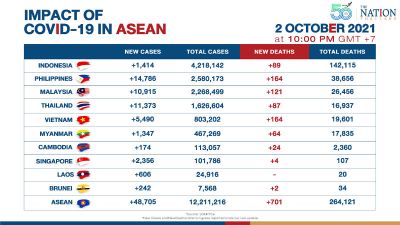
Southeast Asia generally saw a drop in new Covid-19 cases and related deaths on Saturday, collated data showed.

Asean countries reported 48,705 infections and 701 deaths on Saturday compared to 53,451 and 818 respectively on Friday.

Brunei, meanwhile, has extended the enforcement of Covid-19 restrictions and curfew hours by another 14 days from October 4 to 17. Curfew hours run from 10pm to 4am and people have been instructed to work from home as well as avoid going outdoors.

ADVERTISEMENT

Brunei is planning to accelerate its Covid-19 vaccination drive in the next two or three weeks to ensure 80 per cent of its population is fully vaccinated by the end of this year.

Meanwhile, Myanmar has extended international flight restrictions to the end of October in a bid to contain the spread of Covid-19.

Covid-related restrictions have also been extended to the end of October, while the Myanmar army will keep its military operations suspended until February next year to keep infections low.

Published : October 03, 2021

Egyptian women get on wheels to break taboo #SootinClaimon.Com

#SootinClaimon.Com : ขอบคุณแหล่งข้อมูล : หนังสือพิมพ์ The Nation.

https://www.nationthailand.com/international/40006957


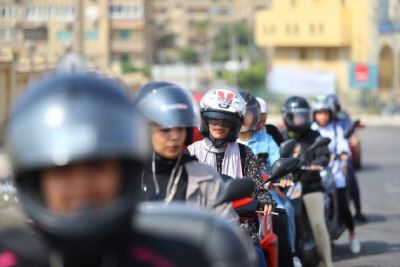
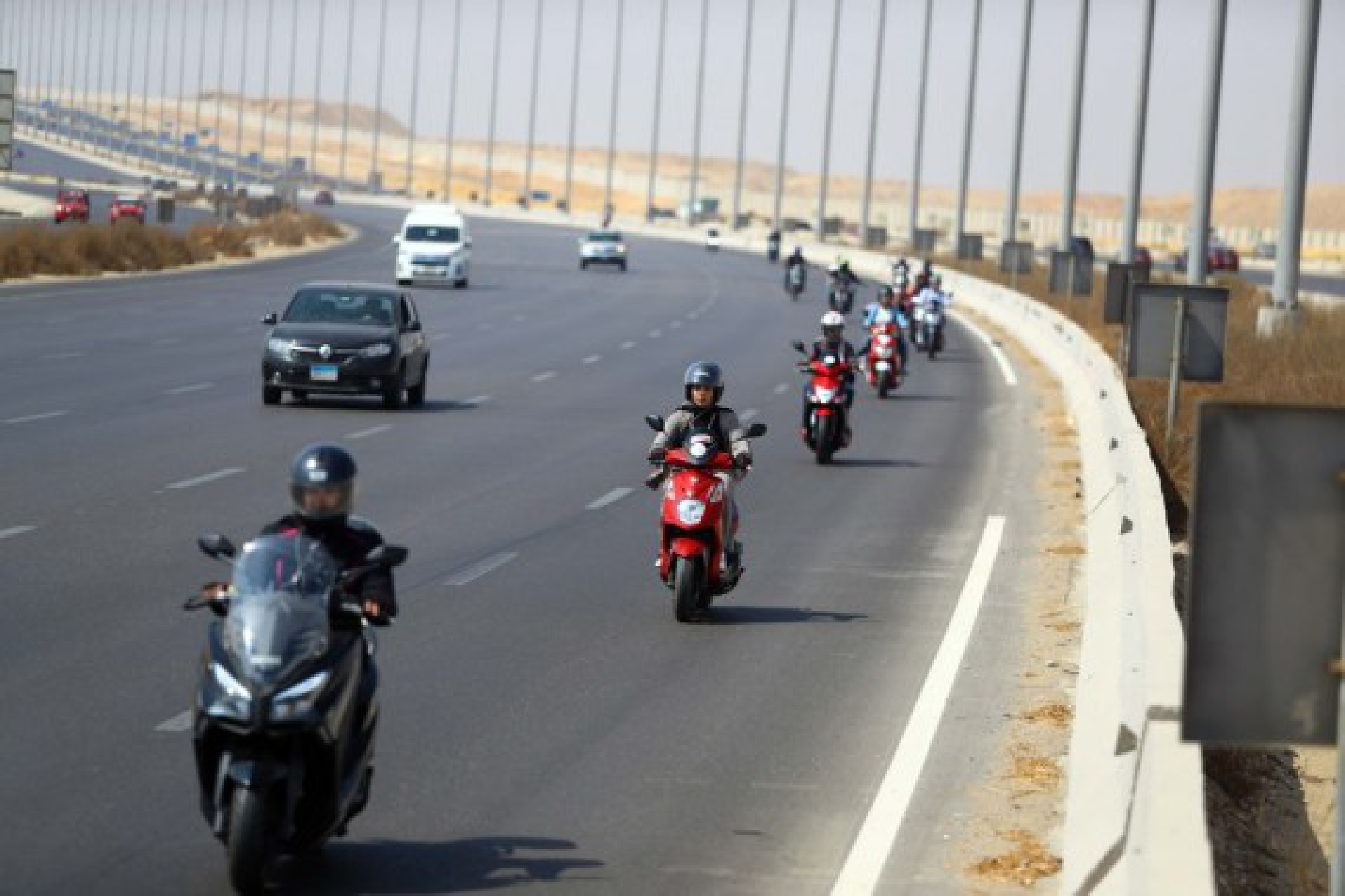
Egyptian women of different ages rode their motorcycles and scooters for some 30 km on the Cairo-Suez highway on Oct. 1, to deliver a message that women can ride motorbikes just like men.

Dozens of Egyptian biker women dotted a highway in the capital Cairo to encourage more females to take the plunge and get on two wheels.

During a one-day event, women of different ages rode their motorcycles and scooters for some 30 km on the Cairo-Suez highway to deliver a message that women can ride motorbikes just like men.

ADVERTISEMENT

“Today’s event is meant to bring a large number of female riders on the road so that people can see us riding easily just as men do,” Wala Zouhier, the event organizer and owner of a motorcycle training academy, told Xinhua.

Women of different ages ride their motorcycles and scooters for some 30 km on the Cairo-Suez highway on Oct. 1, 2021. (Xinhua/Ahmed Gomaa)Women of different ages ride their motorcycles and scooters for some 30 km on the Cairo-Suez highway on Oct. 1, 2021. (Xinhua/Ahmed Gomaa)
Related Stories

“We want to unite females for friendship and support by riding on the road,” said the young lady, who leads an initiative to encourage women to ride motorbikes and scooters.

Zouhier pointing out that the ride will also promote the idea that women have the mental and physical abilities to own and ride a motorbike.

“We want to break a taboo and support women to use motorcycles and scooters as a means of transportation,” she said, “the number of female motorcyclists is rapidly increasing now and more girls are willing to know how to ride a motorbike or a scooter.”

For Heba Ahmed, a radiologist who got a scooter license recently, riding with a group is an exciting experience that she was longing for.

She revealed that it was uncommon for people in Egypt to see women riding motorbikes. However, she said the phenomenon of female bikers is gaining momentum in the North African country.

“People are beginning to accept that women ride motorbike…male drivers on the road show respect to us and I personally did not get harassed while riding,” Ahmed told Xinhua as she sat on her scooter.

“I go to work by riding my scooter and people do not feel surprised…it helps me arrive on time when there is a traffic jam. My coworkers like the idea and some of my female colleagues are seriously thinking to learn how to ride scooters.”

Heba Abdelhamid, a middle-aged employee at an international company, uses her scooter every day to commute.

“I ride some 40 km everyday…it helps me save time because I live in the overcrowded downtown,” she told Xinhua after the ride.

She said that her family members, especially her husband, welcomed the idea, adding that she also received great support from people on the road.

“Riding a motorbike or a scooter gives you freedom and I really love it,” Abdelhamid told Xinhua, flashing a smile.

Dozens of Egyptian biker women dotted a highway in the capital Cairo to encourage more women to take the plunge and get on two wheels. (Xinhua/Ahmed Gomaa)Dozens of Egyptian biker women dotted a highway in the capital Cairo to encourage more women to take the plunge and get on two wheels. (Xinhua/Ahmed Gomaa)

Published : October 03, 2021