The country also reported another 113 coronavirus-related deaths. The total number of coronavirus-related deaths in Britain now stands at 131,373.
Another 36,572 people in Britain have tested positive for COVID-19, bringing the total number of coronavirus cases in the country to 6,392,160, according to official figures released Thursday.
The country also reported another 113 coronavirus-related deaths. The total number of coronavirus-related deaths in Britain now stands at 131,373. These figures only include the deaths of people who died within 28 days of their first positive test.
ADVERTISEMENTx
Britain’s Health Secretary Sajid Javid said Thursday that he is “confident” that COVID-19 booster vaccine will begin to be given to the most vulnerable from next month, according to Sky News.
The government is still waiting for the final advice from the Joint Committee on Vaccination and Immunisation (JCVI) on the booster jabs. The JCVI is meeting on Thursday to discuss the potential booster campaign, according to the Sky News report.
“So, we’re waiting for their final opinion and, looking at everything and the timing of that, I’m confident that we can start in September when we will start with the most vulnerable cohorts and start offering that third jab,” Sajid said.
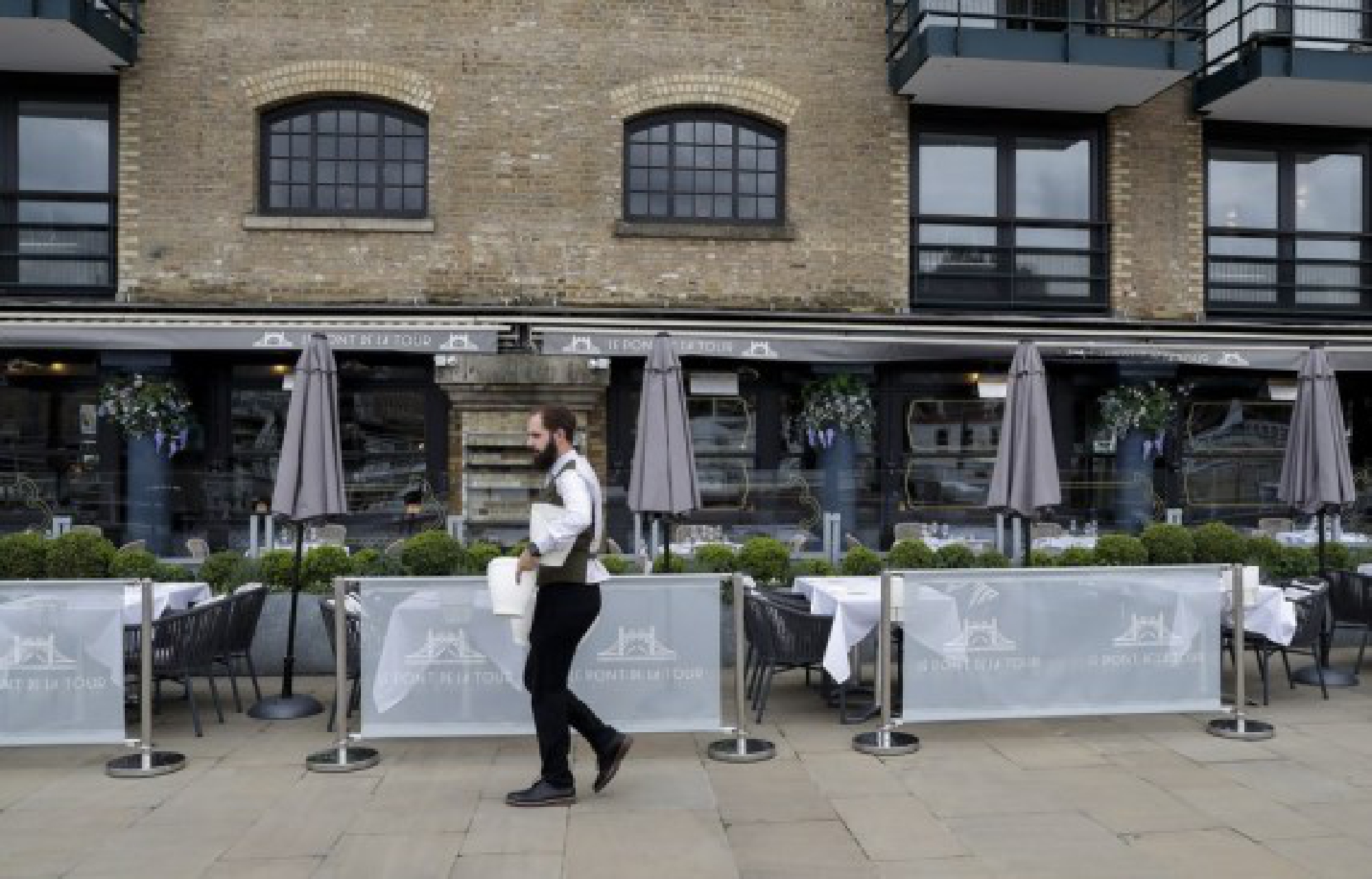
A waiter is seen at a restaurant in London, Britain, on Aug. 13, 2021.
More than 87 percent of people aged 16 and over in Britain have had their first dose of vaccine and more than 75 percent have received both doses, the latest figures showed.
To bring life back to normal, countries such as Britain, China, Germany, Russia and the United States have been racing against time to roll out coronavirus vaccines.
Tibets progress a powerful message for Western naysayers
The Tibet Autonomous Region celebrates the 70th anniversary of its peaceful liberation this year, a triumphant moment for its socialist system and governance that delivers a powerful message to Western politicians who fail to acknowledge its enormous progress.
In 1951, the Agreement of the Central People’s Government and the Local Government of Tibet on Measures for the Peaceful Liberation of Tibet, known as the 17-Article Agreement officially proclaimed the peaceful liberation of Tibet.
That liberation, together with the epochal democratic reform in 1959, has helped Tibet cast away its regressive, autocratic, and isolated past to embrace prosperity and an open future.
ADVERTISEMENTx
Nearly 3.65 million people live in the region, up 21.52 percent from 2010. Over 86 percent of the population is Tibetan.
Tibet’s average life expectancy increased from 35.5 years in 1951 to 71.1 years in 2019.
The region has more than 1,700 sites for Tibetan Buddhist activities with 46,000 monks and nuns. In an effort to preserve traditional Tibetan culture, the state and the region have invested over 5 billion yuan (770 million U.S. dollars) in the renovation of cultural relics. Tibetan opera, Gesar, Lum medicinal bathing of Sowa Rigpa have been included in the UNESCO Intangible Cultural Heritage List.
Having eradicated absolute poverty, Tibet is in an accelerated drive of economic development with modernized infrastructure.
Tibet’s achievements should be sufficient to prompt certain individuals in the West to drop their fixation on the Shangri-La myth, which idealizes eternal theocratic rule and a spiritual world, and sees any modern development as worthy of condemnation.
Over the past 70 years, leaving the dark ages behind, Tibet has replaced the cruel, feudal serfdom system with a socialist system, exercised regional ethnic autonomy, and carried out reform and opening-up along with the rest of the nation.
As a region that occupies an important place in the nation’s security paradigm, Tibet receives significant attention from the central authorities, and massive assistance from other provinces to boost its development. The central budget has funded key infrastructure projects in the region, including railways and airports.
In order to maintain lasting stability and sustain development, Tibet steadfastly opposes secessionist plotting. The 14th Dalai Lama and his followers, supported by Western anti-China forces, have over the years continued attempting to promote “Tibetan independence” by provoking incidents that jeopardize peace and stability in Tibet.
These political exiles, as well as certain Western politicians and organizations, have launched a misinformation campaign targeting Tibet. They call liberation “repression” and demonize China’s policy in the region. Their cries of “cultural destruction” and “genocide” do not carry a shred of truth. Their frequent accusations regarding ethnic, religious, democratic and human rights issues are in fact driven by the idea of “Tibetan independence” to meddle in China’s domestic affairs.
These narratives concerning Tibet reflect either sheer ignorance or hegemonistic thinking tied to imperialist aggressions in the region in the 19th and early 20th centuries.
Since the 1980s, Western forces have played an active role in the outbreaks of unrest that have taken place in Tibet.
China, with its ironclad resolve to safeguard national sovereignty and ethnic unity, will never allow the meddling hands attempting to play the “Tibet card” to turn the tables. And any secessionist attempts, which go against history and the common will of various ethnic groups in the region and the whole country, are doomed to failure.
Under the leadership of the Communist Party of China, people in Tibet now live moderately prosperous lives, which would have been unimaginable before the region’s peaceful liberation. They are sure to create an even brighter future through unity, modernization drive and continued support from the central authorities.
Canadian Armed Forces assets and personnel have arrived on the ground in Afghanistan to coordinate at the tactical level with the United States and other allied partners, helping “get Canadians, Afghans and their families to safety,” Prime Minister Justin Trudeau said.
Canadian Armed Forces have resumed flights to Afghanistan, according to Prime Minister Justin Trudeau on Thursday.
Trudeau said that Canadian Armed Forces assets and personnel have arrived on the ground in Afghanistan to coordinate at the tactical level with the United States and other allied partners, helping “get Canadians, Afghans and their families to safety.”
ADVERTISEMENTx
Trudeau said two CAF CC-177 planes will make regular flights into Kabul to support evacuation efforts.
“Canadian Armed Forces flights to and from Hamid Karzai International Airport will resume shortly under Op AEGIS,” tweeted Defence Minister Harjit Sajjan on Wednesday night.
Operation Aegis is designed for the military to help with evacuation efforts in Afghanistan.
Israel offers 3rd dose of COVID-19 vaccine to people over 40
Israel decided to lower the eligibility age for the third dose of the COVID-19 vaccine from 50 to 40, Israels state-owned Kan TV news reported on Thursday.
The expert committee of the Israeli Health Ministry recommended vaccinating people aged over 40, as well as teachers of all ages due to the recent sharp rise in COVID-19 infections in the country, said the report.
ADVERTISEMENTx
The decision is expected to take effect by Friday after an approval by the ministry’s director general, Nachman Ash.
So far, nearly 1.25 million people have received the third dose in Israel, out of about 1.9 million aged 50 and over who took the second shot more than five months earlier.
The number of people who have received the first doses of the COVID-19 vaccine in Israel reached nearly 5.88 million, or 63 percent of its total population, while over 5.4 million have taken two doses and nearly 1.25 million have got three jabs.
12.2 mln people in Afghanistan acutely food insecure: UN
“Humanitarian needs are expected to deteriorate further in the second half of the year due to drought,” the OCHA said, adding that the majority of the 12.2 million people acutely food insecure will be further affected by drought.
UN humanitarians said Thursday that the relief crisis in Afghanistan is deteriorating rapidly, with 12.2 million people acutely food insecure.
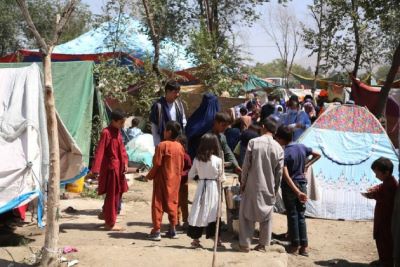
While thousands of people are reported fleeing, or attempting to flee, through Kabul airport, the UN Office for the Coordination of Humanitarian Affairs (OCHA) said 735,000 people returned to the country this year from Iran, Pakistan and other countries and are in urgent need of humanitarian aid. Another 550,000 people became internally displaced since January.
ADVERTISEMENTx
“Humanitarian needs are expected to deteriorate further in the second half of the year due to drought,” it said, adding that the majority of the 12.2 million people acutely food insecure will be further affected by drought.
The humanitarians said severe acute malnutrition increased by 16 percent, impacting 900,000 people and moderate acute malnutrition increased by 11 percent, hitting 3.1 million children.
A below-average wheat harvest is expected, and the livestock yield is forecast to be weak due to poor pastures and feed availability, OCHA said. Conflict and drought reduced agricultural activities by 28 percent, adding to market vulnerability.
Afghan displaced people who fled from their homes during the fights carry their belongings in a public park in Kabul, Afghanistan, Aug. 11, 2021.
Food prices continue at elevated levels. Conflict-related movement restrictions further inflated the price of staples, it said. The cost of wheat, rice, sugar and cooking oil increased by more than 50 percent compared with pre-COVID-19 prices, with monthly increases in 2021 of between 1 percent and 4 percent.
The UN humanitarian response plan for Afghanistan remains just 37 percent funded, OCHA said. The need for emergency shelter and relief items is particularly urgent due to the surge in displacements, but donors only delivered 4 percent of the funds needed.
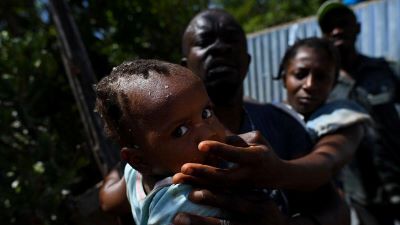
Haiti was devastated by a quake that killed more than 2,000 people. Heres how you can help.
After Haiti was rocked Saturday by a 7.2-magnitude earthquake – more powerful than the one that left the country in shambles more than a decade ago – communities were left to grapple with the tremors destructive aftermath.
Haiti’s civil protection agency said that 2,189 people had died as of Wednesday night and that more than 12,000 had been injured. The earthquake has affected about 1.2 million people in the Caribbean nation – including 540,000 children – according to UNICEF. The child-welfare organization estimated that 84,000 homes were damaged or destroyed – a situation that will require at least $15 million to respond to urgent needs.
The earthquake is the latest crisis in the poorest country in the Western Hemisphere. In recent months, Haiti has struggled with a spike in gang violence and kidnappings for ransom. The country was further challenged by the July 7 assassination of President Jovenel Moïse. Those problems come amid a pandemic in which just 0.17 percent of Haiti residents have received at least one dose of a coronavirus vaccine, according to Oxford University’s Our World in Data.
Further complicating the aid, The Washington Post reported, Tropical Storm Grace brought heavy rainfall Tuesday, causing mudslides and floods that damaged temporary shelters for people displaced by the quake. Recovery efforts stalled, and the roads on which aid and patients are transported were blocked.
The United States, the United Nations and a cohort of international aid groups have moved to send help, but their efforts have been slow – in part because of Haiti’s political instability.
Their aid comes in the shadow of mishandled resources after the massive 2010 earthquake. Vast sums of money were lost to corruption and embezzlement, with some of Haiti’s top politicians being suspected of misusing the funds. U.N. peacekeepers infected with cholera were part of an outbreak that led to more deaths. The American Red Cross was accused of mismanaging the half-billion dollars it raised to support the nation, according to ProPublica.
A definitive death toll for the Jan. 12, 2010, 7-magnitude earthquake was not established, but estimates by the United Nations place it at 220,000. About 1.5 million people were displaced.
As hospitals care for survivors and as rescuers comb through the ruins of last week’s earthquake, local and international organizations have been accepting donations – and there are numerous ways to help.
ADVERTISEMENT
– Local organizations
Hopital Bernard Mevs is the largest emergency hospital in Port-au-Prince. Although not directly affected by the earthquake, it is “over capacity” with patients who have been airlifted or driven to its premises. Some of its nurses and doctors are stationed in shelters in the southwestern part of Haiti, near the earthquake’s epicenter. In partnership with Project Medishare, the hospital organized a GoFundMe campaign to help victims in Les Cayes and Jeremie.
Prodev is a Haitian-led nonprofit organization that supports the education of impoverished children. After the 2010 earthquake destroyed nearly 80 percent of the country’s schools, Prodev supported rebuilding efforts and established a school in a community where displaced children had been relocated. The institution is accepting contributions.
When Hurricane Michael ravaged Haiti in 2016, Fokal – a 25-year-old nonprofit that works with local small businesses and groups – initiated a relief campaign by distributing funds through its network of organizations, including “smallholder farmers, cocoa growers, dairy farmers and women who run micro agro businesses, all of which are crucial in the region’s food production.” Its disaster program was again set in motion and is accepting donations.
– U. S. based initiatives
ADVERTISEMENT
Based in Naples, Fla., Hope for Haiti is a nonprofit organization established to reduce poverty in the island nation. Since its founding in 1990, it has responded to natural disasters including the 2010 earthquake and Hurricane Michael in 2016. It is providing medical services and clean water in its infirmary in Les Cayes. The organization is accepting contributions for its relief efforts.
In 2008, a group of Haitian Americans established Project St. Anne to “maintain the future of Haiti by investing in our greatest asset, our children,” according to the education-focused organization’s website. It has a team at Camp-Perrin – a commune 26 miles south of the epicenter – delivering food and water to survivors. It is accepting donations.
In Miami’s Little Haiti, the largest such diaspora enclave in the country, some members of Notre Dame D’Haiti Catholic Mission lost relatives on the island. Reginald Jean-Mary, the parish administrator, told The Post that his cousin – who is a priest in Les Anglais – helped pull congregants out of the rubble when his church collapsed Saturday. Jean-Mary said Notre Dame D’Haiti is collecting financial contributions online or over the phone at 305-751-6289.
Operation Helping Hands is a joint effort of United Way of Miami-Dade and the Miami Herald/El Nuevo Herald that was launched in the aftermath of hurricanes Mitch and Georges in 1998. It has been reactivated since in emergencies and natural disasters, including the Surfside condo collapse outside Miami. The operation is supporting victims’ short- and long-term recovery by collecting donations.
Nonprofit organization Sow a Seed, which says its mission is to provide humanitarian aid to impoverished children in the Caribbean, launched an earthquake relief campaign for medical supplies, food, water, clothing and baby items. It is accepting donations.
– International organizations
Partners in Health “delivers health care to the world’s poorest places,” according to its website – including Haiti, where it is known as Zanmi Lasante. In the aftermath of the earthquake, a team of clinicians was sent to Les Cayes and surrounding areas to support the transportation of trauma victims and to provide emergency care, according to a news release. The organization is accepting donations for its earthquake response.
Since Sunday, José Andrés’s World Central Kitchen has served meals to victims and first responders. The organization has deep roots in Haiti – it was established after the renowned chef visited the country after the earthquake 11 years ago, and it has since opened a culinary school in Port-au-Prince. It’s accepting financial contributions.
An estimated half-million Haitian children have “limited or no access to shelter, safe water, health care and nutrition,” according to Bruno Maes, UNICEF’s representative in Haiti. The organization has mobilized its team to deliver medical supplies to hospitals. It has also distributed tarps for emergency shelter, latrines, hygiene items and water-treatment tablets, and is collecting donations.
Man claiming to have bomb near U.S. Capitol is in custody after standoff, police say
WASHINGTON – For the third time in nine months, Washington was brought to a standstill as the seat of the U.S. government came under the threat of violence Thursday, this time from a man who parked a truck near the Capitol, demanded to speak with President Joe Biden about a range of grievances and threatened to destroy two blocks of the nations capital with an explosive device.
Congressional office buildings and nearby homes were evacuated as authorities negotiated with the man, identified by law enforcement as Floyd Ray Roseberry, of North Carolina. Roseberry surrendered to authorities after about five hours and will face criminal charges, U.S. Capitol Police Chief J. Thomas Manger said.
Before he was taken into custody, he delivered a tirade over a Facebook live video – watched by tens of thousands of people – in which he assailed Biden and other Democrats, called for a revolt against the U.S. government and claimed there were other “patriots” waiting in vehicles elsewhere in D.C.
Law enforcement officials said Thursday afternoon there were no indications Roseberry was acting with accomplices, and they couldn’t say yet whether he actually had explosives in his vehicle. In his video, Roseberry claimed his explosive device was sound-activated and would go off if his truck windows were broken.
“The revolution is on, it’s here, it’s today,” he said in his live stream. “America needs a voice. I’ll give it to them.”
ADVERTISEMENTx
Roseberry voiced disgust with Biden’s Afghanistan policy and called on Democratic senators to step down, saying they were “killing America.” He demanded to speak with the president.
By about 4 p.m., D.C. police said the bomb threat had been cleared, lifting road closures and allowing residents to return to their homes.
Congress is not in session this week. But many legislative aides and other government employees were working, and the threat of violence and rushed evacuation evoked memories of the violent storming of the Capitol just over eight months ago by a mob seeking to overturn the electoral defeat of former President Donald Trump.
In the aftermath of that riot, the seat of the U.S. government became in essence a quasi-militarized zone, with barriers erected around the Capitol to protect against further attacks. In April, a Capitol police officer was killed when a man rammed his car into a barricade outside the building. The fortifications were removed just last month.
“I’ve been on the Hill for six years last month,” Jordan Wilson, the director of operations and emergency coordinator in Virginia Republican Rep. Rob Wittman’s office, said Thursday. “And I can’t tell you how many people have left in the last six, eight, nine months, in both parties, just because these things are hard to go through. And it does beg the question, is it worth it?”
ADVERTISEMENT
With each security alert, it’s Wilson’s job to make sure the staff is safe and accounted for, to lock the doors and identify the nearest evacuation route if that becomes necessary. And with each security alert it grows more emotionally draining, Wilson said. His mom reached out to him while watching the situation unfold on the news, just as she did after Jan. 6.
“And again today she asked, why are you still working here?” he said. “That’s a hard question to answer.”
On Thursday, about 50 employees of National Capital Bank, who had been evacuated from their building, gathered in Seward Square around 11:30 a.m.
Chris Reddick, the bank’s vice president of residential lending, said it was the third time he had been evacuated from the building this year since Jan. 1. As he stood in the shade under a tree, wearing a green plaid face mask, traffic from multiple road closures sat snarled near him.
“It’s upsetting, and it scares my wife,” Reddick said.
ADVERTISEMENT
The Bureau of Alcohol, Tobacco, Firearms and Explosives, the FBI and D.C. police assisted Capitol Police with the incident. Metro trains on the Orange, Blue and Silver lines bypassed the Capitol South station.
Authorities had disclosed little information about Roseberry on Thursday afternoon.
Roseberry spoke with his son and his son’s fiancé on Wednesday and did not mention his plans to head to the U.S. Capitol and threaten to detonate a bomb, said Courtney Foster, who said she is engaged to Roseberry’s son and considers Roseberry a father.
Roseberry often talked about politics with his family, Foster said, sharing his dislike for Biden’s policies, support for former Trump and skepticism about vaccines.
“We didn’t know that he was going to do any of this. We didn’t know anything” Foster, 20, of Grover, N.C., said in a telephone interview. “He is just a good old farmin’ country man that has just kind of had enough, I guess, and you know, kind of reached his breaking point.”
In a telephone interview, his ex-wife, Crystal Roseberry, said their 10-year marriage – which ended about a decade ago – had been stormy because of his volatile temper. But she was still shocked when she saw her former husband’s face on social media Thursday.
Her phone had been ringing all day, she said, as friends and family expressed similar disbelief.
“He’s never done nothing like this before,” she said.
Two North Carolina State Highway Patrol cars were blocking the road to an address associated with Roseberry in the Grover area on Thursday afternoon. State Trooper Russell Corry said they had been directed to shut down the road while officials cleared the residence.
“We’re just using precaution because he said he had an explosive device,” Corry said.
The SITE Intelligence Group, which monitors online extremism and terrorist groups, said Roseberry’s social media was full of pro-Trump material, although Roseberry said in his live stream Thursday not to be motivated by political partisanship.
“I’m here for a reason, Joe Biden. I’m here for the American people. And if you want to take me out, take me out. But when the patriots come, your a– is in trouble,” Roseberry says in the video. “So if you blow my truck up man, it’s on you, Joe. I’m ready to die for the cause.”
He said he had a wife, whom he had told he was going fishing through Sunday, as well as two children and a grandchild. At one point, he showed piles of coins in the back of the truck and said he threw $3,000 in cash onto a sidewalk.
Members of Congress – many of them away in their home districts – expressed a mix of concern and incredulity at yet another threat to their place of business.
“Today, once again, the Capitol Police, FBI and other law enforcement dealt with a potential threat to the Capitol Hill community,” House Speaker Nancy Pelosi, D-Calif., said. “The immense gratitude of the Congress is with all law enforcement officers who today and all days sacrifice to keep the Capitol Complex and those within it safe.”
“I have checked in with my DC-based staff and they are all safely away from the Capitol Complex,” Rep. Gwen Moore, D-Wis., wrote on Twitter. “I thank Capitol police and first responders for their response and pray everyone remains safe.”
Fear and sadness – but not necessarily surprise – were also voiced by those who found themselves near the Capitol as the standoff unfolded.
Victoria Cowens and Courtney Mahugu had recently moved to the District for their freshman year at Howard University. They were trying to visit the Supreme Court when the bomb threat came through.
“It’s disappointing, as a country,” Cowens, of Rochester, N.Y., said.
“The fence was just lowered a couple months ago and it felt like progress,” said Mahugu, of Kansas. “It makes you fearful to see all these cop cars.”
In the chaos, they never made it to the Supreme Court.
Around 3 p.m., tourists and onlookers continued to enjoy the sites near the Capitol. One couple, pulling a purple suitcase, said they’d just arrived from Atlanta and hadn’t heard of the bomb threat. Neither did a pair of women smoking cigarettes near a small reflecting pool.
Police yelled at a runner in black athletic shorts and yellow sneakers, oblivious to the afternoon’s events as he jogged down First Street NW toward a closed-off area, ear buds in.
After Roseberry had been arrested, Rebecca Adeyanju, 35, and her husband, Ken, 40, walked with their two daughters – 5 years old and 6 months old – toward the Capitol. The family had stopped in the District on a family road trip to Texas from their home in Maine. They had just learned of the bomb scare.
They had wanted to get a photo. On a road trip from their home in Maine, the Adeyanjus had stopped in the District on their way to Texas. A woman on the street had told them of the bomb scare.
“It’s all terrible, and it needs to stop,” Rebecca said. “I could say so much, but really it just needs to stop.”
“It’s not right,” said Ken Adeyanju, who held their infant daughter. “It’s just insane. I don’t know why this keeps happening.”
Published : August 20, 2021
By : The Washington Post · Lizzie Johnson, Ellie Silverman, Antonio Olivo, Peter Jamison
Singapore vaccinated travel easing starts with Germany
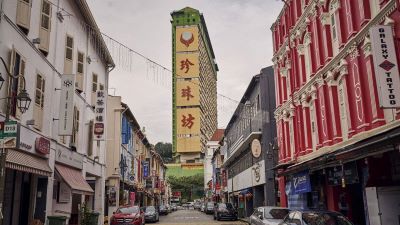
Singapore will pilot quarantine-free travel lanes for vaccinated passengers next month from Germany and Brunei and open up to visitors from Hong Kong and Macau in its first big move yet to lift border restrictions that have been in place since early in the pandemic.
In what are the highly anticipated first steps of the city’s reopening, travelers from Germany and Brunei can enter Singapore from Sept. 8 without the need to have a purpose for visiting and controlled itinerary or sponsor requirements, officials said during a press briefing in the city-state Thursday.
While Singapore is easing restrictions on inbound travel from Hong Kong, the two financial hubs won’t go ahead with plans for an air travel bubble, the governments said. Their strategies for containing Covid have diverged — Hong Kong is still pursuing a Covid-zero eradication path, while Singapore seeks to reopen with a backstop of one of the world’s best vaccination rates.
Germany and Brunei were chosen as places where Singapore could test its confidence in vaccinated travel lanes, with Covid infections in both places at manageable levels. Though Brunei limits foreign tourism, travelers from Singapore were already allowed to enter Germany with minimal restrictions.
“As the saying goes, we are feeling the stones as we cross the river,” said Lawrence Wong, the finance minister and a co-chair of the nation’s Covid task force. “Each time we make a move we will monitor the data, we will look at the evidence and ensure that our hospital system is able to cope with the infection situation before we take the next step.”
ADVERTISEMENTx
Singapore is the first among the group of places with a zero-tolerance approach to Covid-19 to start pivoting its approach from strict containment to treating the pathogen as endemic. While the reopening comes as a relief to residents and businesses, the highly limited nature of the first steps indicates that the process will move more slowly than some hoped.
Singapore Airlines welcomed the easing, calling the move an “important step in the safe and calibrated reopening of the Singapore air hub, on the back of robust vaccination rates in Singapore.” The airline plans to operate vaccinated travel lane (VTL) flights from Frankfurt and Munich to Singapore from Sept. 7.
Elise Becker, vice president Asia-Pacific for Lufthansa Group, said in a statement that the airline was “delighted” by the easing to Germany. “It will not only help people reunite safely with family, friends and loved ones but may also be a role model for other Asia-Pacific countries to follow.”
The travel lane underscores Singapore’s plan to differentiate between those who get vaccinated and those who don’t. Short-term visitors aren’t allowed from Germany and Brunei if they’re not fully vaccinated. And the travel lane won’t extend to children too young for the jabs, even if their parents are vaccinated.
Singapore is eyeing a third round of vaccine as booster shots for some fully-vaccinated individuals, especially the severely immunocompromised. Recommendations are expected shortly.
ADVERTISEMENT
Singapore also expects to begin vaccinating children under age 12 sometime in early 2022, after safety and efficacy have been sufficiently studied.
The travel easing decision comes days after Trade Minister Gan Kim Yong told Bloomberg News in an interview that Singapore was considering such travel lanes based on a country’s infection and vaccination rates, and their ability to control outbreaks.
Restrictions will be eased for Singapore residents coming from Hong Kong and Macau from August 21, and further eased for visitors from the two places from August 26. They join New Zealand, most of mainland China and Taiwan as economies with the least entry restrictions to Singapore, or Category I on the city-state’s four-part list.
Australia, Canada, South Korea and China’s Jiangsu province form Category II, where travelers can quarantine for just seven days. The group also includes all travelers from Germany and Brunei who aren’t utilizing the vaccinated travel lane.
Category III, which allows home-based quarantine for 14 days, includes Austria, Belgium, Denmark, Italy, Japan, Luxembourg, Norway and Switzerland. All other countries for which Singapore hasn’t banned entry form Category IV, which requires 14 days quarantine in a dedicated hotel facility on entry.
ADVERTISEMENT
While business and leisure travel is essential to Singapore’s trade-dependent economy, the government to date has restricted movement and applied constrictive domestic measures as a means to control infections. However with nearly 80% of its population now fully vaccinated — one of the highest rates in the world — it’s begun shifting to an approach that tries to treat the disease more like influenza.
In addition to the travel pilot, Singapore on Thursday also eased strict work-from-home rules, allowing as many as 50% of employees who are otherwise able to work at home to return to the office. It also increased the capacity of spaces that see large numbers of patrons, such as malls and cinemas, and ended temperature screenings that have been required to enter public places since early in the pandemic.
Yet even with all the easing, Singapore continues to have stiffer social-distancing rules than most western financial capitals, according to data on local restrictions compiled by Bloomberg. And that may not end anytime soon.
“We should be under no illusion that the road ahead will be an easy one,” Wong said, reiterating that Singapore may need to pause or pull back some measures if clusters grow to the point it strains the city-state’s hospital system.
“The path toward being a COVID resilient nation is going to be long and hard slog,” he said. “Even at very high vaccination rates we are not going to reach herd immunity where the outbreak just fizzles out.”
Published : August 20, 2021
By : Syndication Washington Post, Bloomberg · Philip J. Heijmans
Australia sees worst day of pandemic amid delta outbreak
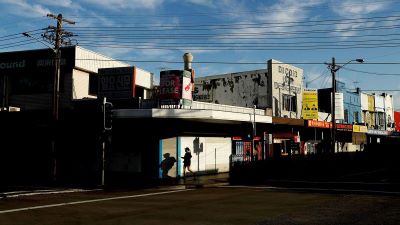
Australia has suffered its worst day since the start of the Covid-19 pandemic, with total daily cases surpassing the previous record posted more than a year ago as a delta variant outbreak spreads as far as New Zealand.
New South Wales recorded 681 new cases, Premier Gladys Berejiklian told reporters on Thursday in Sydney, where stay-at-home orders have been enforced for almost two months. Meanwhile, Victoria state recorded 57 new infections — more than double from the previous day, and its highest tally since September — as Melbourne endures its sixth lockdown since the pandemic began.
New South Wales, Victoria and Australian Capital Territory recorded a combined 754 cases in their communities on Thursday, surpassing the nation’s previous high of 725 recorded in early August 2020, when Melbourne was in the midst of a lockdown that lasted for three months.
ADVERTISEMENTx
Authorities are now finding that lockdown strategies that had previously worked to eliminate community transmissions are struggling to contain the spread of the highly-contagious strain, especially as people grow increasingly weary of the stay-home restrictions.
“Everyone will have to learn to live with delta,” Berejiklian said, signaling that her government had abandoned attempts to eliminate the virus. “In New South Wales, we are learning that earlier than” in other states, she said. Ramping up vaccination rates was vital in order to start removing some lockdown restrictions, she added.
Australia’s outbreak has spread to New Zealand, which has entered a strict nationwide lockdown and recorded at least 20 infections. The first community case in New Zealand since February was detected earlier this week, and genome testing has showed a clear link to the delta surge in New South Wales.
Sydney’s outbreak is also increasingly spreading into other areas of Australia, forcing more than half of the country’s 26 million people into lockdown. That’s creating an unprecedented threat to Indigenous communities hundreds of miles from Australia’s most populous city, including in western New South Wales, where more than 150 infections have been detected.
The rapid rise in infections underscores how both nations’ so-called “Covid Zero” strategy — which has seen them rely on restricted international borders and rigorous testing to eliminate community transmission — is under increasing strain.
ADVERTISEMENT
The case surge has injected a sense of urgency into Australia’s previously slow vaccine rollout, which has seen Prime Minister Scott Morrison criticized by health experts and political rivals for failing to quickly secure enough shots from a wide range of drugmakers.
As recently as March — when Australia was generally free of the virus — Morrison declared that the inoculation rollout wasn’t a “race.” But the delta variant has flipped the script, with health authorities now trying to get as many people vaccinated as quickly as possible despite remaining hampered by supply restraints. According to Bloomberg’s Vaccine Tracker, while less than 22% of Australians are fully inoculated, close to 40% have now received at least one dose.
Other states and territories have responded to the coronavirus crisis in southeastern Australia by implementing hard borders to try to keep delta at bay. After a request from Queensland state authorities, defense force soldiers will start patrolling its border with New South Wales to enforce non-essential travel restrictions.
In a bright spot, the tropical northern city of Darwin will exit its three-day lockdown on Thursday after managing to control a delta cluster.
Despite the mounting economic and emotional toll the pandemic and lockdowns are having on Australians, the nation’s top banks say the economy is well positioned to rebound once prolonged stay-at-home orders in Sydney and regional lockdowns lift, with households and firms stronger than at the start of the pandemic.
ADVERTISEMENT
“The emotional toll is higher this time as there is a lot of anguish around how we get out of it,” said Andrew Hinchcliff, group executive of institutional banking and markets at Commonwealth Bank of Australia. “But the Australian economy is so well positioned, it will come out of this on a relative basis better than most.”
Published : August 20, 2021
By : Syndication Washington Post, Bloomberg · Jason Scott, Georgina Mckay
Biden says Taliban in existential crisis over role in world
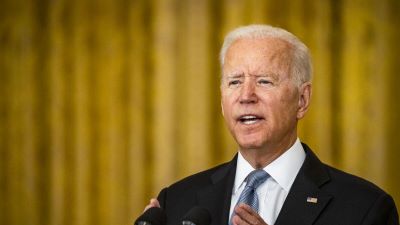
President Joe Biden said the Taliban are in the midst of an “existential crisis” about their role on the international stage but that he didnt believe the group had fundamentally changed its course.
“Let me put it this way: I think they’re going through sort of an existential crisis about do they want to be recognized by the international community as being a legitimate government,” Biden told George Stephanopoulos of ABC News in an interview that aired Thursday morning. “I’m not sure they do.”
Biden’s comments point to a looming question of whether the U.S. will recognize the Taliban as Afghanistan’s government after they swiftly took control of the country, including the capital city of Kabul. The U.S. has already taken steps to block money from flowing to the Taliban and could opt to negotiate relief from economic sanctions if they agree to block international terrorist groups such as al-Qaida and protect the rights of women and minorities.
But any dealings with the Taliban will be politically fraught for Biden, who has already faced widespread criticism on Capitol Hill, where lawmakers from both parties are calling for more information about the crisis. The House Intelligence Committee is to receive a classified briefing on Afghanistan on Monday from representatives of several intelligence agencies, according to an official familiar with the plans.
ADVERTISEMENTx
Biden this week has been defending his high-stakes bet that U.S. voters want to end American’s 20-year war in Afghanistan and will forgive him for the searing images of desperate Afghans looking to flee. In earlier excerpts from the interview that aired Wednesday, Biden said U.S. troops would remain in Afghanistan until all Americans are able to leave the country — even if it takes longer than his Aug. 31 deadline to withdraw.
Biden and Pentagon leaders said that American intelligence assessments didn’t foresee such a rapid advance by the Taliban and collapse of the Afghan military, prompting the U.S. to race to evacuate its citizens and Afghans who aided U.S. troops.
Many Americans were shocked by the drama that unfolded this week in Kabul, where desperate Afghans tried to cling to the side of a U.S. military plane as it taxied down a runway, with some plunging to their deaths as it took flight minutes later.
Biden, speaking in the interview, said there had been no consensus in the intelligence community that the Taliban would take over, and no prediction it would happen so fast. He also said he may not have forseen that the Taliban would allow American citizens to evacuate the country safely, citing that as an example of how unpredictable the group could be.
Biden has also faced criticism from European allies, who have expressed frustration over not being consulted as the situation deteriorated. In the interview, Biden said he had since spoken with German Chancellor Angela Merkel and U.K. Prime Minister Boris Johnson, and added that he would be speaking with French President Emmanuel Macron.
In the earlier excerpts, Biden repeated that he stood by his decision to withdraw, and said he faced a decision of whether to put more U.S. troops’ lives at risk or pull out.
Published : August 20, 2021
By : Syndication Washington Post, Bloomberg · Justin Sink, Jennifer Jacobs

 A waiter is seen at a restaurant in London, Britain, on Aug. 13, 2021.

 Afghan displaced people who fled from their homes during the fights carry their belongings in a public park in Kabul, Afghanistan, Aug. 11, 2021.