A year after George Floyds death, Minneapolis remains scarred, divided #SootinClaimon.Com

#SootinClaimon.Com : ขอบคุณแหล่งข้อมูล : หนังสือพิมพ์ The Nation.

https://www.nationthailand.com/international/40001209

A year after George Floyds death, Minneapolis remains scarred, divided


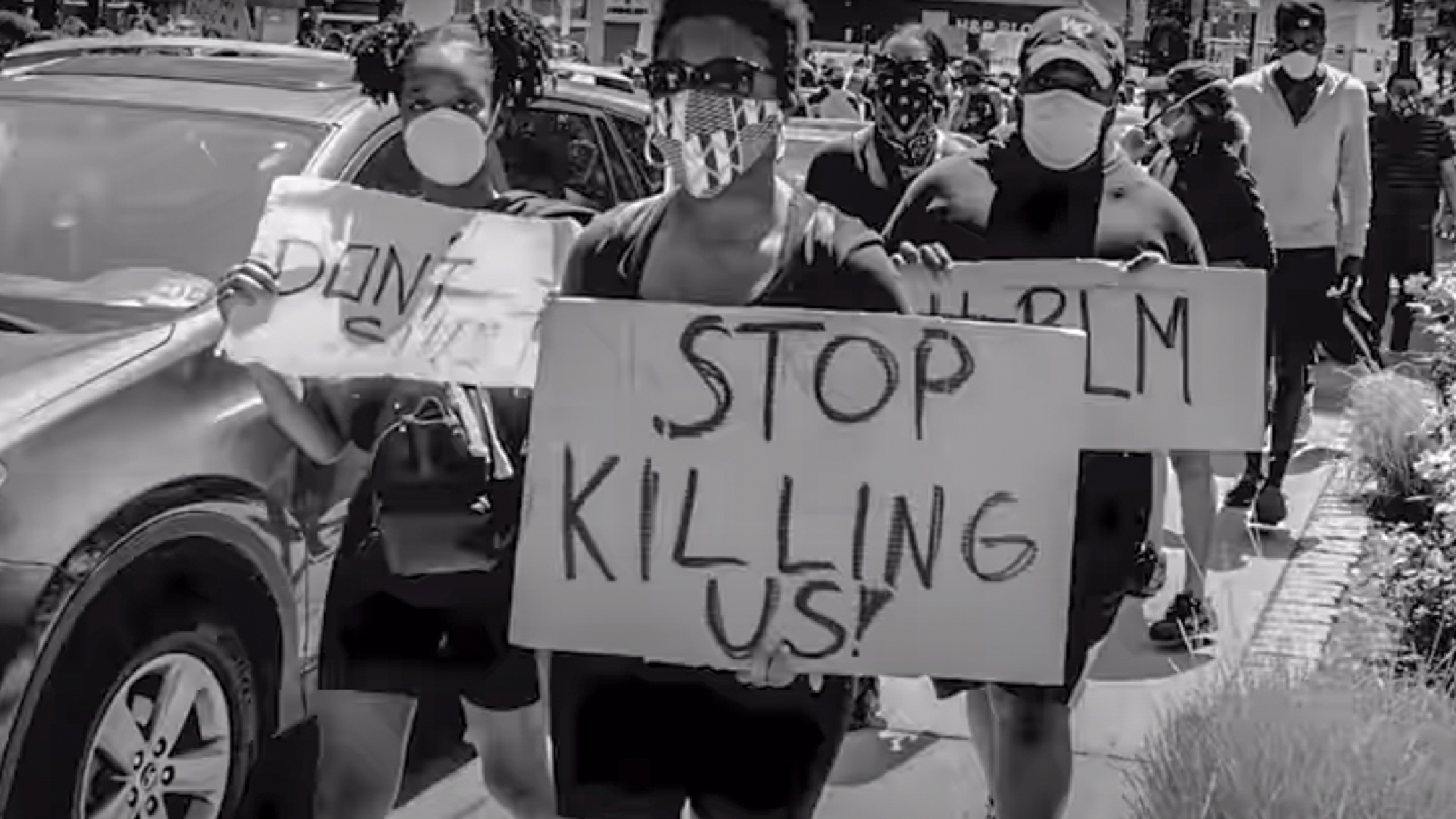
MINNEAPOLIS – A year after George Floyds death sent millions across the country into the streets in some of the largest sustained protests in American history, the city at the center of that movement continues to struggle with its own reckoning over policing, equality and racial justice.
A year after George Floyds death, Minneapolis remains scarred, divided

Colorful signs featuring Floyd’s name and face still decorate front yards across this Upper Midwestern city in a collective demand for justice. Visible scars also remain from the unrest that erupted after his death, leaving scores of buildings damaged or destroyed.

While the city breathed a collective sigh of relief last month when a jury convicted former Minneapolis police officer Derek Chauvin of murder and manslaughter in Floyd’s death, the sensation was fleeting.

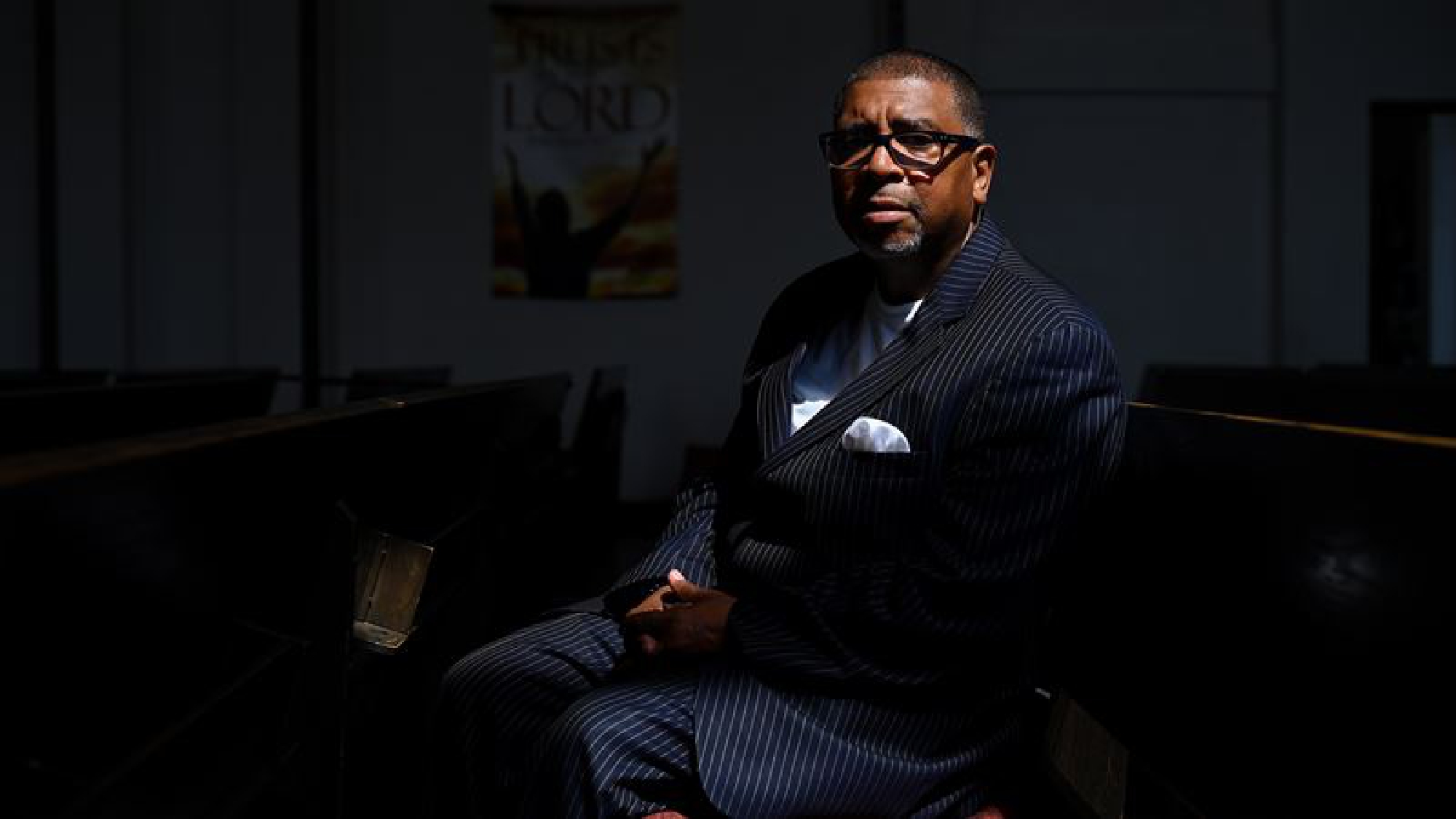
“I think we felt like we could breathe a little bit after Chauvin’s conviction,” said Brian Herron, pastor of Zion Baptist Church in North Minneapolis, the heart of the city’s Black community.

Like many here, Herron, a former Minneapolis City Council member, had been skeptical that a jury would convict a police officer in the death of a Black man. “I don’t know if there’s a real sense of justice, but there’s a sense of accountability,” he said.

As Minneapolis prepares to mark the first anniversary of Floyd’s death Tuesday, it remains a city in turmoil, with many of the racial inequities highlighted during last year’s protests unresolved. The police department is in crisis – woefully understaffed, its officers demoralized and its practices and culture under investigation by the Justice Department. At the same time, there has been a pronounced increase in crime while the relationship between the police and residents remains fractured.

“All that tension is still here,” Herron said.

Adding to the anxiety is escalating violence in the city, including a dramatic spike in shootings in its Black community. A 6-year-old girl was killed and two other children gravely wounded in shootings in recent days, shocking residents and prompting a war of words among elected officials and community leaders, including some who have sought to link the violence to calls to defund the police in the aftermath of Floyd’s death.

Three more people were fatally shot in two incidents late Friday and early Saturday, including a shootout outside a downtown nightclub that left two dead and eight injured. No arrests have been made in any of the recent incidents, according to police.

The city remains deeply divided over the future of its police department, which some city council members want to replace with a public safety agency, a proposal that is likely to be on the ballot in November.

“The rhetoric around defund has gotten us to where we are today,” said Sondra Samuels, a longtime north-side activist who is among a group of residents that has sued the city over police staffing shortages. “Not everybody is an Officer Chauvin. … We need police in this city,” said Samuels, who is Black.

More than 200 Minneapolis police officers – a third of the force – have resigned or sought to leave the department since Floyd’s killing cast a harsh spotlight on policing here. The result has been a staffing shortage the mayor and police chief say has complicated efforts to respond to the rise in violence.

“When you make big, overarching statements that we’re going to defund or abolish and dismantle the police department and get rid of all the officers, there’s an impact to that,” Mayor Jacob Frey told a local television station recently.

Frey – who, along with the entire city council, is up for re-election this year – has called for more funding for police overtime and additional cadet classes to increase the number of officers on the streets, proposals that require the council’s approval.

Some fault the mayor and other officials for not investing more in social services and other efforts they argue would be more effective at preventing the violence. They question the reasoning in sending a surge of officers into a community still traumatized by Floyd’s death and where there is mutual distrust between the police and many of the residents they are sworn to protect.

“We deserve a more comprehensive plan than simply adding more police or focusing on police reforms,” said Phillippe Cunningham, a council member who represents an area of North Minneapolis hit hard by shootings and has led efforts to create a new public safety agency that would include a law enforcement division with a smaller number of officers.

A spokeswoman for Frey said the mayor “has partnered with the community to tackle the root causes of crime,” including “economic policies designed to break cycles of violence and poverty and ultimately build a more equitable and safer city.”

Although the city has enacted several police reforms, including a ban on chokeholds and neck restraints like the one Chauvin fatally used on Floyd, many residents say they have seen no evidence of real change in a force that has long been accused of racism as well as aggressive behavior, especially toward people of color.

They say the limited number officers seen on patrol often cruise the streets with their windows up, refusing to engage with residents, and behave aggressively toward those they do encounter. Business owners say officers have cut back on outreach efforts, which some blame on the staffing crisis.

“I tell the officers I know to just try to show a little humanity, show people you’re a human being,” said Sammy McDowell, the Black chef behind Sammy’s Avenue Eatery.

McDowell operates two cafes – one on the predominantly Black north side and the other in northeast Minneapolis, which is mostly White. “You have to try and have a relationship with the community you serve, but there hasn’t really been much of a change. … I know they are short-staffed, but something has got to give.”

Many White residents who live on the city’s south side near where Floyd was killed say they still feel uncomfortable calling the police despite the increase in crime in their neighborhoods, including burglaries and carjackings, because of concerns they might put their minority neighbors at risk from officers.

“I don’t want to feel responsible for what could happen,” said one White woman as she walked near 38th and Chicago, the intersection where Floyd was killed. She asked that her name not be used, citing the increasingly hostile debate among her neighbors about crime and safety around the intersection, which has been turned into a makeshift memorial to Floyd and a site of continued grieving and protest over racial injustice.

Frey has said the city plans to reopen the intersection after the anniversary of Floyd’s death, setting up a potential conflict between the city and a group of caretakers who say they won’t give up control of what has become known as George Floyd Square until demands for further justice – including additional changes in policing and investment in Black-owned businesses – have been met.

Police Chief Medaria Arradondo, the first Black man to lead the department and who made headlines when he testified against Chauvin at the former officer’s trial, has pushed back against what he has described as political attacks on his department and cuts to funding. In December, the city council voted to shift nearly $8 million from the department’s budget to fund alternatives to policing, including the creation of mental health crisis teams and anti-violence efforts.

“I am down about a third of our department. We cannot do this work alone,” Arradondo said during a news conference last week in which he insisted his officers are doing everything they can to stem the violence. “It’s going to take the collective leadership of all of us to do that.”

Arradondo, through a spokesman, declined an interview request.

The debate over policing has divided many in the Black community – pitting younger activists who have called for the police department to be abolished against those who have criticized how the effort to defund or reimagine public safety has been handled.

Nekima Levy Armstrong, a civil rights lawyer and longtime racial justice activist, has been one of the police department’s fiercest critics, but she said the effort to dismantle the department had moved forward without the input of many Black residents.

“They conducted no research, consulted no experts. … They should have specifically come to the Black community because we are the most likely to experience police violence as well as community violence, but they didn’t,” Armstrong said. “We shouldn’t have to choose between no police or corrupt police.”

She recalled warning council members involved in the defund movement that proposing drastic changes to policing without considering “economic justice” efforts to build up the community and reduce crime would sow chaos. “And look what has happened,” she said.

The surge in violent crime isn’t unique to Minneapolis. Cities across the country, including Atlanta and Chicago, have reported spikes in shootings and homicides, which many blame on the economic despair and sense of alienation brought on by the pandemic. But those problems have been magnified in Minneapolis, which has publicly grappled with how to reimagine its approach to public safety since Floyd’s death and where hostilities between residents and police have been on display in front of the country.

Last year, the homicide rate in Minneapolis hit highs not seen since the mid-1990s, when killings led the city to be derisively called “Murderapolis.” The bleak trend has continued into this year. According to police data, nearly 200 people have been shot this year – more than double the same period last year and the most recorded in more than a decade. There have been 31 homicides, compared with 15 at this point in 2020.

Most of the shootings have taken place in North Minneapolis, where Black residents have questioned why city officials have not reacted with more urgency to control what some have described as a pandemic of violence and where a growing number of children have been caught in crossfire.

On April 30, 10-year-old Ladavionne Garrett Jr. was riding in the back seat of his parents’ car when gunfire broke out. He was hit in the head by a bullet that pierced the car’s trunk. He was taken to North Memorial Health Hospital, where he was in a medically induced coma after surgery. On May 15, Trinity Ottoson-Smith, 9, was bouncing on a trampoline at a friend’s house when someone fired several shots from the alley, striking her in the head. She was also taken to North Memorial, where she was placed in an intensive care room down the hall from Ladavionne’s.

The community was holding a vigil for those children when gunfire erupted again Monday night, striking 6-year-old Aniya Allen as she sat in the back seat of a car eating food from McDonald’s after a day of shopping with her mother. Aniya, who died Wednesday, was the granddaughter of K.G. Wilson, a longtime peace activist who has spent years rushing to scenes of other shootings to comfort families and to try to prevent further bloodshed.

“I have done nothing but try to help families for years,” Wilson said last week as he choked back tears near the spot where his granddaughter was fatally shot. “Now it’s my child. What makes you think yours won’t be next? When is enough going to be enough?”

Some Black residents, including families of those injured or killed in gunfire, have asked why those who took to the streets to protest Floyd’s death – including White people – haven’t flooded the streets in anger over the wounding and killing of Black people in the ongoing violence.

“My grandson is fighting for his life. This ain’t doing nothing,” said Sheree Jennings, Ladavionne’s grandmother, who left his hospital bedside to interrupt a news conference last week where Frey and other leaders were speaking about public safety.

“Why is this community not angry? Is it because he is a Black kid? Is that why? Is it because a cop didn’t shoot him? … We’ve got to do better than this,” she said.

A year after his restaurant on the north side was threatened by the civil unrest that erupted across the city, McDowell has found himself in the unusual position of being a racial ambassador to the mostly White customers at his location in northeast Minneapolis.

A large man standing around six feet tall, McDowell knows some White people might view him as threatening if they were to see him on the street. But behind the counter, serving coffee and sandwiches, they’re comfortable as he talks them through issues of race as they grapple with their own feelings in the aftermath of Floyd’s death.

McDowell has found himself having long talks with White customers who have struggled to understand the systemic racism that has blocked Black people from buying homes in certain neighborhoods or obtaining bank loans. “From their perspective, it just doesn’t make sense,” he said. “But they are trying to understand. They are trying to make an effort.”

But the most challenging discussions have been about the future of policing. Sometimes McDowell, who tells his customers he is not against law enforcement, reverts to the only way he knows to explain the complicated debate over public safety.

“If you have one rotten tomato, it’s going to spoil the whole box. So you’ve got to remove it,” he tells them.

Published : May 24, 2021

By : The Washington Post · Holly Bailey
Covid-19 cases and deaths in Asean see slight decline #SootinClaimon.Com

#SootinClaimon.Com : ขอบคุณแหล่งข้อมูล : หนังสือพิมพ์ The Nation.

https://www.nationthailand.com/international/40001186

Covid-19 cases and deaths in Asean see slight decline

The number of Covid-19 patients and fatalities in Asean countries on Saturday saw a slight decrease in comparison with Friday.

Covid-19 cases and deaths in Asean see slight decline

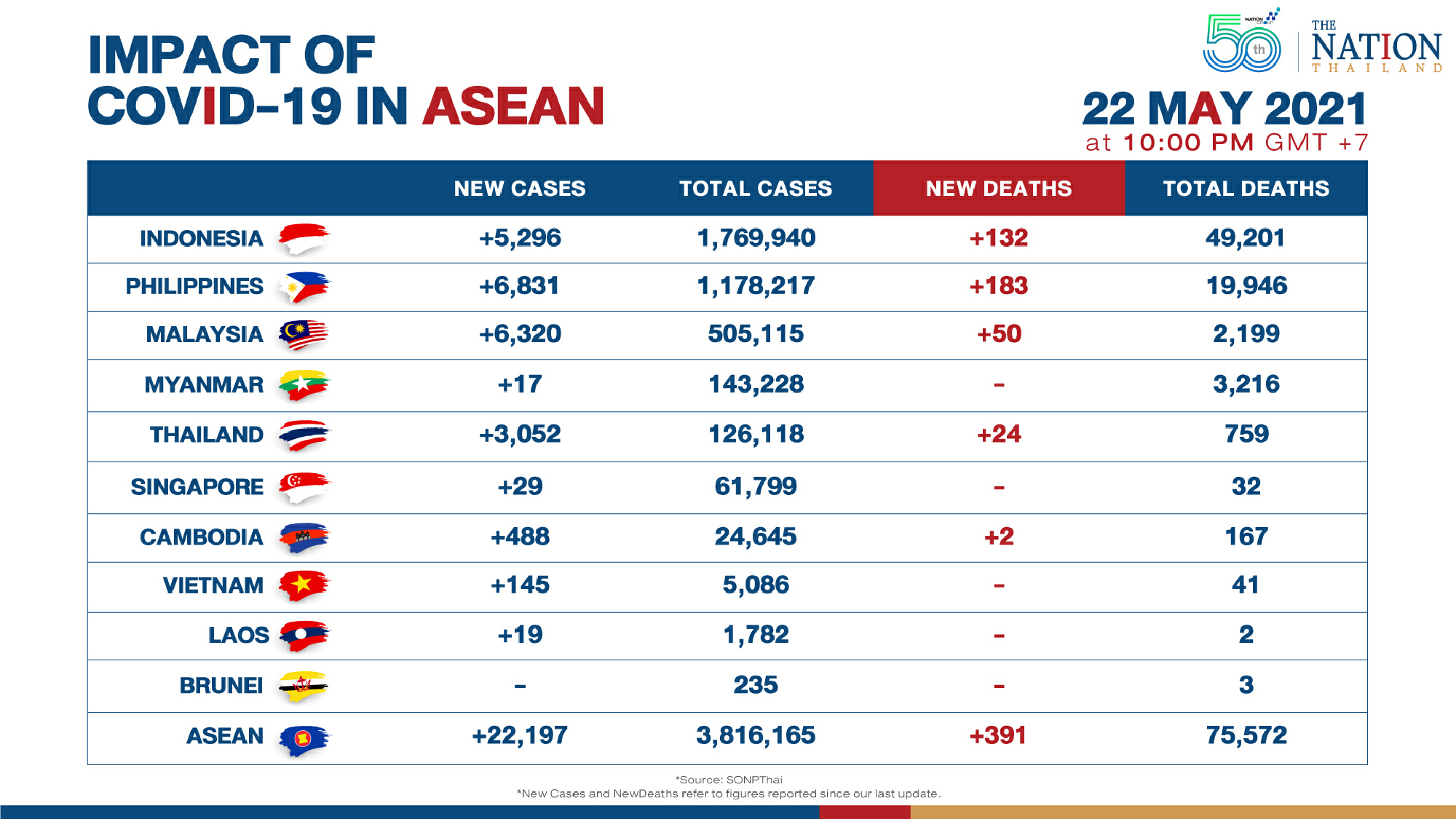
The region reported 22,197 new cases compared to 22,650 on Friday, and 391 deaths against 412 the previous day.

Singapore reported 29 new cases, taking cumulative cases in the country to 61,799. Meanwhile, 61,242 patients had recovered and been discharged so far.

Singapore’s Ministry of Trade and Industry has requested all private companies to send a list of employees working at offices to ensure that it is in line with the ministry’s policy to limit the number of employees working from offices.

Cambodia reported 488 new cases and two deaths, taking cumulative cases in the country to 24,645 and 167 deaths. Meanwhile, 17,164 patients had recovered and been discharged.

Entertainment venues, theatres, fitness centres, etc still have to shut their doors even though the Cambodian government had lifted the curfew order in Phnom Penh.

Covid-19 cases and deaths in Asean see slight declineCovid-19 cases and deaths in Asean see slight decline
Published : May 23, 2021

By : The Nation

Biden administration grants protected status to thousands of Haitian migrants #SootinClaimon.Com

#SootinClaimon.Com : ขอบคุณแหล่งข้อมูล : หนังสือพิมพ์ The Nation.

https://www.nationthailand.com/international/40001185

Biden administration grants protected status to thousands of Haitian migrants


The Biden administration will grant a form of provisional residency known as temporary protected status to tens of thousands of Haitian migrants living in the United States without legal status, the Department of Homeland Security announced Saturday, citing worsening conditions in the Caribbean nation.

Biden administration grants protected status to thousands of Haitian migrants

Haitians granted protected status will be exempted from deportation for 18 months. At that point, the Biden administration could choose to renew the designation.

“Haiti is currently experiencing serious security concerns, social unrest, an increase in human rights abuses, crippling poverty, and lack of basic resources, which are exacerbated by the COVID-19 pandemic,” Homeland Security Secretary Alejandro Mayorkas said in a statement.

“After careful consideration, we determined that we must do what we can to support Haitian nationals in the United States until conditions in Haiti improve so they may safely return home,” he said.

Only Haitians already present in the United States are eligible, so migrants who arrive after May 21 would still face potential deportation, according to DHS.

The decision was a win for the immigrant activists and advocacy groups that have campaigned for the protections and criticized the Biden administration for deporting Haitians to their home country during a period of heightened violence and instability.

Haiti is in the middle of a constitutional crisis, with rival street gangs controlling parts of its capital city, Port-au-Prince.

Critics of the designation argue that a humanitarian program meant to shield migrants during extraordinary circumstances has morphed into an immigration pathway for hundreds of thousands of migrants with “temporary” protections that have been extended more than a decade.

The Obama administration designated Haitians for protected status after the devastating 2010 earthquake. That designation was repeatedly renewed, but the Trump administration announced in 2017 that it would not extend the protections, giving Haitians 18 months to leave the United States.

Immigrant advocates sued the government to force a reversal, and the Trump administration’s efforts to end TPS for Haiti and other nations stalled in multiple court battles.

Biden’s move could benefit 150,000 Haitians living in the United States, according to an estimate by Senate Foreign Relations Committee Chairman Robert Menendez, D-N.J.

“The last thing our country should be doing is forcing an entire community in the U.S. to decide between packing up their lives and tearing their families apart by self-deporting, or becoming undocumented and forced into the shadows of our society,” Menendez said in a statement.

“All one needs to do is take a look at the conditions on the ground in Haiti to understand why today’s announcement to issue a new TPS designation will avoid destabilizing the island’s fragile recovery efforts and keep approximately 150,000 individuals from harm’s way,” he said.

Congress created the TPS designation in 1990 to temporarily exempt foreign nationals from deportation if the executive branch determined natural disasters or armed conflict in their countries had created extraordinary hardship and instability.

The DHS announcement directs Haitians eligible for the protections to file an application with U.S. Citizenship and Immigration Services, including current beneficiaries of the original 2010 designation. Haitians granted the protections receive work and travel authorization, and must satisfy background checks to remain eligible for the benefits.

Published : May 23, 2021

By : The Washington Post · Nick Miroff

Gaza struggles with twin health crises of war injuries and feared coronavirus surge #SootinClaimon.Com

#SootinClaimon.Com : ขอบคุณแหล่งข้อมูล : หนังสือพิมพ์ The Nation.

https://www.nationthailand.com/international/40001184

Gaza struggles with twin health crises of war injuries and feared coronavirus surge


GAZA CITY, Gaza Strip – Gazans and international aid agencies raced to head off overlapping medical crises Saturday as hospitals already overrun with injuries from the 11-day bombardment by Israel struggled to treat a surge in coronavirus cases from packed shelters.

Gaza struggles with twin health crises of war injuries and feared coronavirus surge

Tens of thousands of people crowded into underground chambers, community centers and other places across Gaza seeking to avoid the Israeli airstrikes, creating opportunities for the virus to spread.

At the same time, the attacks left more than 1,900 people injured across Gaza before a cease-fire took effect Friday, according to health officials here. At least 248 people in Gaza and 12 in Israel were killed in the waves of Israeli strikes and the rocket attacks from Gaza.

“It has become a double burden during these 12 days,” said Abdel-Latif al-Hajj, a physician and director of international cooperation for Gaza’s Health Ministry. “We are facing many more covid-19 cases and mass casualties at the same time.”

Hajj stood in the debris-filled courtyard in front of what used to be a primary health-care facility and home to Gaza’s only lab using the PCR test for the coronavirus. Its windows were gone, and the floors were covered with concrete rubble from an office building across the street that had been targeted by Israeli warplanes.

One of his colleagues, a physician who had been conducting a telemedicine session when the attack came, received a critical head injury in the blast, Hajj said.

“It’s like they took the roof of that building and put it into our clinic,” he said.

Aid groups said they were moving medical supplies to Gaza as fast as possible. But any shipments into Gaza need approval from Israel, which maintains tight control over border crossing points.

The International Committee of the Red Cross (ICRC) said it was sending a mechanical ventilator, patient monitors, defibrillators, suction devices and other equipment.

Lynn Hastings, the U.N. humanitarian coordinator for the Palestinian territories, said groups were prioritizing medical equipment and supplies, as well as hygiene kits, to help residents contend with collapsed civic infrastructure.

Damage inflicted during the conflict cut water supplies in Gaza by 40 percent, the ICRC said, and some 700,000 Gazans are affected by power cuts.

Hastings, who spoke to reporters after viewing the damaged coronavirus testing lab, said the international Covax vaccine program – overseen by the World Health Organization and other institutions – planned to deliver a shipment of coronavirus vaccine doses to Gaza within days.

To date, fewer than 40,000 Gazans have been vaccinated, just under 2 percent of the population.

“With people sheltering together, it’s obviously going to be a very significant need,” Hastings said. “They were overwhelmed because of the covid situation even before.”

Gaza’s health system had been pushed to the point of collapse before the fighting because of a dwindling corps of doctors, years of underfunding by the governing militant group Hamas and an Israeli blockade that made it more difficult to acquire medical supplies and equipment.

The pandemic nearly swamped hospitals, which had just 60 intensive care unit beds in the enclave of 2 million people before the health crisis.

Aid groups including the WHO and the ICRC helped Gaza expand its capacity with new ventilators and testing materials.

By one estimate, 70,000 Gazans sought shelter in schools and other sites during the bombardments, some of which are still housing people whose homes were damaged or destroyed. Thousands more crowded in with relatives.

“People stopped [social] distancing,” said Shadi Awad, the head of respiratory care at al-Shifa hospital, Gaza’s primary health center. “They had no choice.”

Awad has been watching with alarm as a backlog of Gazans with coronavirus symptoms are able to come in for help now that they can safely leave their homes. On Friday, his staff recorded 40 positive cases of 50 people tested, nearly filling his isolation unit and the critical care beds.

The physician spoke in the courtyard of the sprawling hospital compound. Scattered everywhere was the detritus of the recent mayhem: uncollected garbage, empty IV bags, tubes and spent syringes. The ever-present buzz of an Israeli surveillance drone overhead was evidence that although the fighting was over for now, the tensions endured.

Early in the bombardment, the hospital evacuated its critical covid-19 patients to other treatment centers to make space. Now, the coronavirus wards are filling again, and the hospital is having to move equipment from one department to another to meet the need.

“Yesterday, I had to borrow a ventilator from the [non-covid] ICU for one man who was critical,” Awad said.

The strikes not only drove a surge in medical demand, they also destroyed critical medical capacity. The loss of the testing lab means that asymptomatic cases will go undetected, even as doctors fear the virus is spreading at an accelerated pace.

And two blocks from where the lab was damaged, another blast killed Ayman Abu al-Ouf, the head of internal medicine at al-Shifa hospital. He had been one of the leaders of Gaza’s pandemic response.

He was killed, along with 12 members of his extended family, when their four-story apartment building collapsed during a strike on Wehda Street. The Israeli military said it was targeting Hamas tunnels in the area and said it would investigate what led to 42 “unintended” civilian casualties.

Awad described “Dr. Ayman” as an invaluable specialist who drove programs and still saw as many as 90 patients a day.

“I had called him just an hour before [the blast] to talk about a case,” Awad said. “He was lucky not to be killed by corona, and then he was killed by an airstrike.”

Published : May 23, 2021

By : The Washington Post · Steve Hendrix, Hazem Balousha

How Black Lives Matter changed the U.S. debate on the Mideast #SootinClaimon.Com

#SootinClaimon.Com : ขอบคุณแหล่งข้อมูล : หนังสือพิมพ์ The Nation.

https://www.nationthailand.com/international/40001181

How Black Lives Matter changed the U.S. debate on the Mideast


WASHINGTON – Black Lives Matter activists recently took to the streets of Indianapolis to protest for Palestinians. In Congress, a lawmaker who cut her teeth as a Black Lives Matter organizer and who has compared her clashes with police to those faced by Palestinians tweeted Friday, “A cease-fire ends the bombardment – not the violence.”

How Black Lives Matter changed the U.S. debate on the Mideast

And during the height of the recent Gaza hostilities, the official Black Lives Matter organization called for “Palestinian liberation,” six years after the group’s early leaders took a trip to the Middle East that planted the seeds for the current alliance.

Black Lives Matter, which has grown into a potent political force amid a national reckoning on race, has responded forcefully to the violence in the Mideast to extend its reach into foreign policy, pressing the Democratic Party to adopt a dramatically different approach to the long-standing Israeli-Palestinian conflict.

Whatever the aftermath of the violence in the region, it has starkly changed the Israeli-Palestinian debate in the United States, shifting it for many liberals from a tangled dispute over ancient, often-confusing claims to the far more familiar turf of police brutality and racial conflict.

“We understand that the liberation of Black people in the United States is tied to the liberation of Black people all over the world, and tied to the liberation of oppressed people all over the world,” said Melina Abdullah, co-founder of the Los Angeles chapter of Black Lives Matter. “Being in solidarity with the Palestinian people is something that’s been part of our work as Black Lives Matter for almost as long as we’ve been an organization.”

That message has reverberated through the Democratic Party in a new way over the past two weeks. That, in turn, is being met by frustration from Israel’s supporters who say the military conflict between Israel and Hamas, a Palestinian organization that the United States has designated a terrorist group, is nothing like the tensions on America’s streets.

“Most people recognize that there’s a totally different dynamic at work between a terrorist organization shooting 3,500 missiles into your country on the one hand, and the racial dynamics that take place in American cities,” said Mark Mellman, president of Democratic Majority for Israel. “The failure to recognize that difference becomes fundamentally misleading.”

Some supporters of Israel also say that framing the Middle East conflict as a racial issue badly misrepresents what is at its heart a territorial struggle between two peoples with claims to the same land.

Some Republicans are going further, accusing Black Lives Matter activists of extremism and antisemitism. The activists counter that they are standing up not for Hamas, but for the numerous Palestinians who they say have long been evicted, terrorized and treated like second-class citizens.

The tensions reflect the striking success of Black activists in shifting the Democratic Party’s frame of reference over the past year on a range of issues, so that racial justice undergirds the debate on everything from climate change to health care to tax cuts. The eruption in Gaza marks the extension of that shift into the international arena.

One measure of this is that President Joe Biden, after initially taking a more traditional posture of stressing Israel’s right to defend itself, shifted to a tougher stance of calling for a cease-fire and ultimately demanded that Israel de-escalate.

Biden in many ways has aligned himself with Black Lives Matter over the past year. He knelt in solidarity with protesters in his first non-virtual campaign event during the pandemic. He has talked repeatedly with the family of George Floyd, whose murder at the hands of Minneapolis police became a fulcrum for a national conversation about police brutality against Black people.

But the limits of the activists’ influence on Biden also came into focus Friday, when he told reporters that “there is no shift in my commitment to the security of Israel.”

Biden added: “I think that, you know, my party still supports Israel. Let’s get something straight here: Until the region says unequivocally they acknowledge the right of Israel to exist as an independent Jewish state, there will be no peace.”

Other White House officials also played down the differences in the party.

“The president doesn’t see this through the prism of domestic politics,” White House press secretary Jen Psaki said on Thursday. She added later, “There’s a disagreement on tactics, there’s a disagreement on some aspects of how we engage, but we all agree that we want to end the suffering.”

Pressure from activists is only part of the shifting Democratic landscape. Biden, 78, and others of his generation came of age when Israel was more liberal politically, more vulnerable militarily and fewer years removed from the Holocaust. As Israel has become more powerful, its politics have become more hawkish and right-leaning, dismaying many former Democratic supporters.

Prime Minister Benjamin Netanyahu’s open embrace of former president Donald Trump and the GOP over the past four years further alienated many liberals.

Black Lives Matter activists say an alliance with Palestinians is natural, since, as they see it, Israeli police are brutalizing Palestinians much like American officers mistreat unarmed Black people and protesters.

A new generation of liberal Black House members is making that case on Capitol Hill. Rep. Cori Bush, D-Mo., a former Black Lives Matter organizer who gained prominence in the protests of the deadly police shooting of an unarmed Black young man in Ferguson, Mo., delivered a speech on the House floor tying that experience to the plight of the Palestinians.

“As we march in defense of Black lives, we are not just saying that Black people in this country should be able to live full and joyous lives,” Bush said in a statement to The Post. “We’re saying that our own government is funding a brutal and militarized disposition towards our very existence – from Ferguson to Palestine.”

Bush, who declined to be interviewed, said Palestinians have endured “military occupation, policing, and apartheid,” terms that are rejected by many other Democrats.

Rep. Jamaal Bowman, a freshman Democrat from New York who unseated longtime Democratic Rep. Eliot Engel, a staunch Israel defender, also argued that the experience of Palestinians is related to that of Black Americans.

“As a Black man in America, I understand on a personal level what it means to live in a society designed to perpetuate violence against people who look like me,” he said in a statement. “My experience of systemic injustice, including being beaten by police at 11 years old, informs my view of what’s happening right now in Israel and Palestine.”

During the recent hostilities, even some centrist Democrats altered their previously unwavering support for Israel, calling for a cease-fire rather than unequivocally supporting Israel’s assertion that the assault on Gaza was necessary for self-defense.

Some Democrats point to Senate Majority Leader Chuck Schumer, D-N.Y., as an example of the current trends in the party. A longtime Israel hawk, Schumer said little during the recent conflict and voiced support for a statement from his colleagues urging a cease-fire even before Biden did so publicly.

Schumer faces reelection in a state where many residents support Israel, but younger liberals such as Bowman and Rep. Alexandria Ocasio-Cortez, D-N.Y., are gaining influence, and some Republicans suggested he had caved to Israel’s opponents to dodge a primary challenge. A Schumer spokesman declined to comment on the GOP criticism.

Now that a cease-fire has been declared, however, it’s less clear that Black Lives Matter activists and their allies can coalesce around a set of demands that will drive the Mideast debate in the coming months.

Some critics of Israel support the Boycott, Divestment and Sanctions (BDS) movement, for example, while others are sharply opposed. And while some favor imposing conditions on Israel in exchange for U.S. aid, agreement is elusive on what those conditions should be.

And questions remain about whether prominent Democrats will distance themselves from Black Lives Matter activists if those activists continue to make outspoken statements on the Mideast.

After BLM tweeted support for Palestinians, the BDS National Committee responded: “Thank you for your solidarity. From Ferguson to Palestine, our struggles against racism, white supremacy and for a just world are united!”

Even some of the more forceful advocates of a tougher line against Israel, such as Sen. Bernie Sanders, I-Vt., do not support boycotting the U.S. ally.

While the alliance is currently gaining more notice, Black activists have been forming links with Palestinian leaders for decades, often describing them as fellow representatives of an oppressed group.

In 2015, half a dozen members of the Black Lives Matter organization joined other activists on a 10-day trip to the Palestinian territories and Israel, hoping to make a connection with activists on the other side of the globe.

They met with members of the Palestine Liberation Organization, met a young poet whose family had been forced to give half their house to Jewish settlers and visited the site of the Ibrahimi Mosque massacre. When they returned, the organization issued a statement of solidarity with Palestinians.

“We have to connect all of the struggles for liberation,” Abdullah said. “You can’t be on the front lines for the struggle for freedom for one group of people, and then be silent on everyone else’s.”

Published : May 23, 2021

By : The Washington Post · Sean Sullivan, Cleve R. Wootson Jr.

A woman was fatally shot while walking a dog. The suspects gun was a police officers AK-47. #SootinClaimon.Com

#SootinClaimon.Com : ขอบคุณแหล่งข้อมูล : หนังสือพิมพ์ The Nation.

https://www.nationthailand.com/international/40001180

A woman was fatally shot while walking a dog. The suspects gun was a police officers AK-47.


As Darian Simon was walking his dog with his girlfriend last June, he heard a critical voice yelling at them to not let the dog go to the bathroom in the alley of a Denver apartment building.

A woman was fatally shot while walking a dog. The suspects gun was a police officers AK-47.

The man in the ground-level apartment asked the couple if they were going to train the dog or just command the pet to “go poop,” according to a probable cause statement. Simon ignored the man until he saw him point what Simon believed to be a pellet gun at him and his girlfriend, Isabella Thallas.

But instead of a toy gun, it was an AK-47 and multiple shots rang out from the apartment, police said. Thallas, 21, was killed and Simon was injured in a random shooting that rocked the city. The shooting suspect, Michael Close, 36, faces multiple charges, including first-degree murder, and has pleaded not guilty by reason of insanity.

Nearly a year later, there’s another wrinkle: The rifle allegedly used to kill Thallas and injure Simon was a personal firearm of a Denver police officer who was a longtime friend of the suspect. The details of who owned the gun involved in the shooting, first reported by KUSA earlier this year, were later confirmed by the Denver Police Department.

Dan Politica, who was a Denver police sergeant, reportedly resigned from the force in March, local media reported this week. Police had previously said that the gun was taken from Politica by Close, a friend of his for roughly 20 years, without his permission, and that the officer had informed the department that the rifle had been missing, reported the Denver Post. In a letter with the subject line, “Letter of resignation,” that was obtained by The Washington Post, Politica did not offer a reason for his exit.

Politica does not face charges related to the shooting and had no open internal investigations at the time he left the department, his attorney, Reid Elkus, told The Post. Elkus said that the sergeant did not resign from the department but retired. “He absolutely was not forced into retirement,” said Elkus, adding that Politica received a retirement party and plaque and is receiving his full pension benefits. He had been with the Denver Police Department since 2005.

News of Politica’s departure has unfolded as the state continues to grapple with what to do about assault-style weapons that have shattered Colorado in mass shootings in recent years. While the state has passed legislation to help prevent gun violence, the push to ban assault-style weapons in Colorado remains difficult for lawmakers.

The city of Denver has had a ban on assault weapons for years that the state Supreme Court ruled in 2006 was allowed to stand. The details of how Politica acquired the weapon and where it was stored remain unclear, and his attorney declined to comment on the matter. Craig Silverman, an attorney representing Simon, said to The Post that Close allegedly fired 24 shots.

One of the Colorado bills signed into law was named after Thallas, who had celebrated her 21st birthday two days before her death on June 10, 2020. The bill signed into law last month by Colorado Democratic Gov. Jared Polis creates penalties for those in the state who fail to report lost or stolen firearms. He was joined by Thallas’s mother, Ana, who fought back tears wondering why it took her daughter’s death to help bring change.

“What saddens me, and what hurts the most, is that it takes a mother of murdered daughter to stand up and speak and try to make a difference in this state,” the mother said at a news conference last month.

Neither the Denver Police Department nor Josh Maximon, an attorney retained by Thallas’s father, immediately returned requests for comment.

It was a late Wednesday morning when the couple took Simon’s dog, Rocco, out for a walk in the Ballpark neighborhood of downtown Denver, according to court documents of a preliminary hearing. The dog had been unable to go to the bathroom for a couple days and the couple was concerned.

Around the time Close started yelling at the couple, he allegedly texted Politica around 11:30 a.m. about how his dog had been recently attacked by other pets and how he was going to murder someone, according to court testimony from Denver Police Detective Joseph Trujillo, the investigating officer. Trujillo, who testified that Close and Politica had been friends for almost two decades, noted that the officer was concerned for his friend’s mental health.

Simon, co-founder of the fashion company and brand Be A Good Person, was taken to the hospital with two nonfatal gunshot wounds to his leg, Silverman said. Thallas was pronounced dead at the scene, and her autopsy concluded she died of a gunshot wound.

After the shooting, Close allegedly left a voice mail for Politica at 11:40 a.m. about how he had “done something really bad.”

“There’s no going back from this now,” Close said, according to Trujillo’s testimony.

When the Park County Sheriff’s Office arrested Close about an hour later, they found him in his car near Pine Junction, Colo., with a rifle and a handgun as well as a gun belt and multiple magazines of ammunition, according to an arrest affidavit. Close did not have any previous arrests in Colorado, according to the Denver Post.

Aside from the first-degree murder charge, Close also faces charges of attempted murder, use of a prohibited large-capacity magazine during a crime and assault. A judge ordered that Close be held without bond.

Thallas’s mother recalled to KDVR that she only learned of her daughter’s fate when she found out that Simon was at the hospital but her child was not.

“Then her sister texted me something from the news. A shooting in the ballpark area, one in surgery and one dead. I saw that and I knew. I felt it. I just fell, I couldn’t breathe,” she told the outlet. “It was like somebody had kicked me in my stomach.”

As the city mourned the loss of Thallas through vigils and a mural, her death sparked questions as to how this young woman went to walk her boyfriend’s dog and ended up dead. The detail of the AK-47 belonging to Politica was first publicly brought to light in a Facebook post from Thallas’s mother in January, reported KUSA, in which she claimed that her daughter was “murdered with an AK-47 that belonged to a Denver Police Sergeant.” The police department acknowledged to the TV station that the rifle was not issued by authorities.

Years before the fatal incident involving his firearm, Politica was suspended for harassing a street performer and starting a brawl that resulted in false arrests in 2016.

But Politica’s resignation has brought even more questions and doubt for the family of Thallas, who was remembered by her father on Silverman’s podcast as having a big heart and wanting to get into the fashion industry. Joshua Thallas, her father, wondered to KDVR why Politica was leaving the force now: “If there was no wrongdoing, why should he leave his job?”

“We’re just looking for an answer. It’s been almost a year, we’ve played by the rules, we’ve stayed quiet when asked to be quiet by the DA, and attorneys, and it’s time to have a voice,” he said. “It’s time to know why. Not just us as a family and friends. Everybody wants to know what the heck has gone on.”

Published : May 23, 2021

By : The Washington Post · Timothy Bella

Morocco sends tons of humanitarian aid to Palestinian territories and Gaza #SootinClaimon.Com

#SootinClaimon.Com : ขอบคุณแหล่งข้อมูล : หนังสือพิมพ์ The Nation.

https://www.nationthailand.com/international/40001175

Morocco sends tons of humanitarian aid to Palestinian territories and Gaza


Morocco on Friday delivered emergency humanitarian aid to the Palestinians in Gaza through the Rafah border crossing with Egypt.

Morocco sends tons of humanitarian aid to Palestinian territories and Gaza

The humanitarian aid was handed over by Morocco’s ambassador to Egypt, Ahmed Tazi, to the representative of the Palestinian Ministry of Health, Fathi Abou Warda.

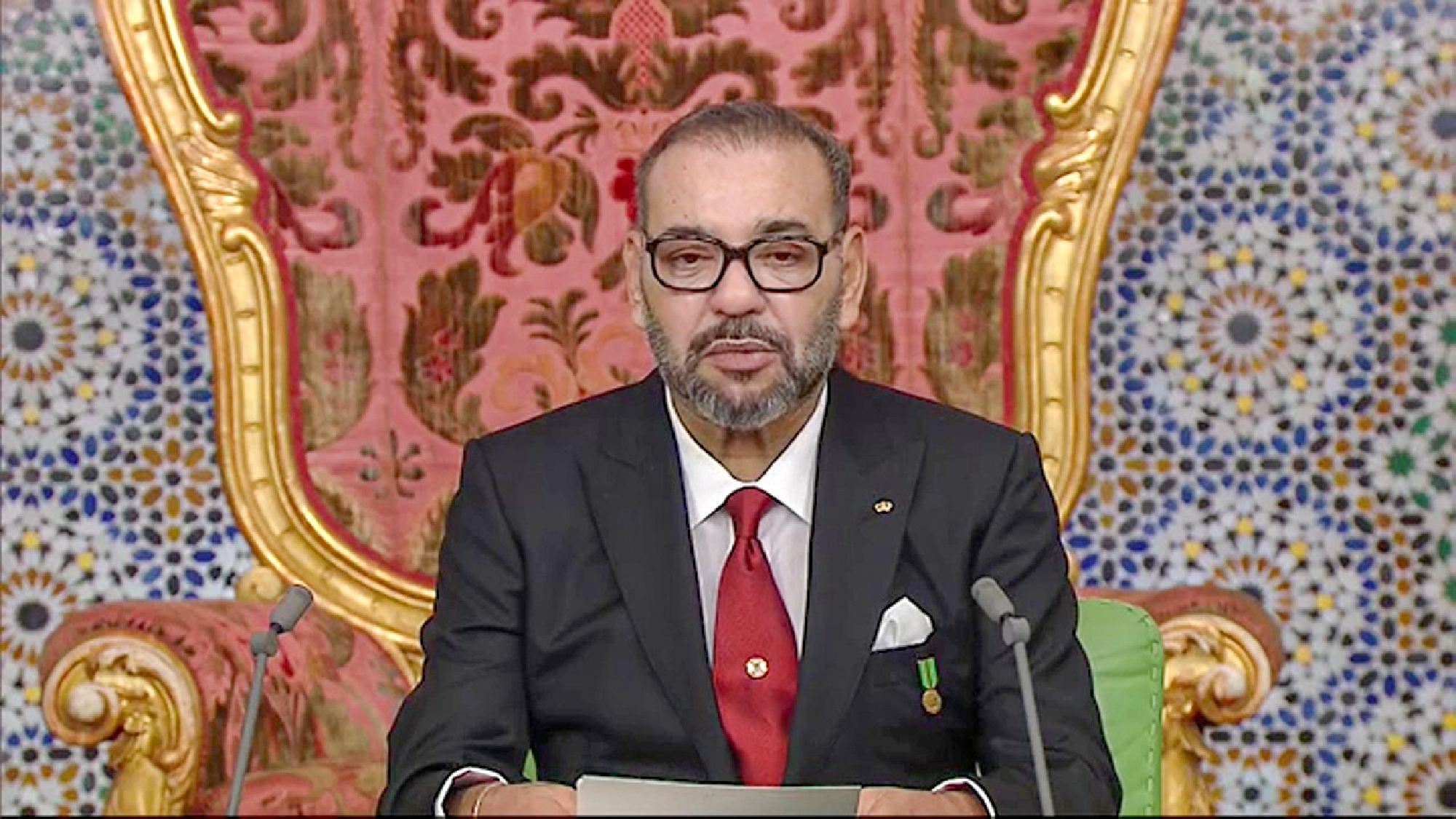
The Palestinian official expressed his gratitude to King Mohammed VI of Morocco for his continuous support to the Palestinian cause and his defence of the Palestinians’ legitimate right to establish an independent state, according to a Moroccan government handout.

The official also conveyed the greetings and gratitude of the Palestinian Authority to the king and Morocco for this initiative that would help alleviate the suffering of the Palestinian people.

Gaza came under severe air attack from Israel in retaliation for rocket attacks. The two sides have accepted a ceasefire.

On Tuesday, two Moroccan Royal Armed Forces aircraft carried 20 tons of the aid and landed at Cairo East Air Base Airport in Egypt.

Last Sunday, two military aircraft carrying humanitarian aid consisting of basic foodstuffs, medicines for emergency care and blankets had landed in Amman, Jordan. The aid was transported to the Palestinian territories by trucks across the border bridge between Jordan and the West Bank.

The 40 tons of humanitarian aid comprised basic foodstuffs (30 tons), emergency medicines and blankets (10 tons).

Morocco had denounced in the strongest terms the violence perpetrated in the occupied Palestinian territories.

Morocco backs a two-state solution, through the creation of a Palestinian State within the borders of June 4, 1967, with East Al-Quds, or East Jerusalem, as its capital.

Published : May 22, 2021

By : The Nation

Biden says he wont allow Justice Dept. to seize journalists phone, email records #SootinClaimon.Com

#SootinClaimon.Com : ขอบคุณแหล่งข้อมูล : หนังสือพิมพ์ The Nation.

https://www.nationthailand.com/international/40001167

Biden says he wont allow Justice Dept. to seize journalists phone, email records


WASHINGTON – President Joe Biden on Friday declared that he would not allow his Justice Department to seize journalists phone or email records, calling the practice “simply wrong.”

Biden says he wont allow Justice Dept. to seize journalists phone, email records

At the White House, a reporter asked Biden about federal law enforcement taking such records and whether the president would “prevent your Justice Department from doing that.” Biden joked with the reporter, then grew serious, saying: “Absolutely, positively it’s wrong. It’s simply, simply wrong.”

“So you won’t let your Justice Department do that?” the reported asked.

“I will not let that happen,” the president responded.

Biden’s declaration follows recent disclosures that during the Trump administration, the Justice Department secretly sought the records of four journalists, three for their work at The Washington Post and one for her reporting at CNN.

Media organizations and free-press advocates decried the moves, asking whether the Justice Department had followed its own policies and noting that such tactics have a chilling effect on journalists’ ability to uncover essential information about the government. Two Democratic lawmakers – Sen. Ron Wyden of Oregon and Rep. Jamie B. Raskin of Maryland – wrote to Attorney General Merrick Garland urging him to stop using the tactic. But until the president’s assertion Friday, his administration had not renounced the practice.

Biden’s statement would seem to block the Justice Department from sifting through reporters’ records in leak investigations and other cases, at least while he is in office. That could curtail federal law enforcement’s ability to pursue those who reveal classified information, although under existing policy, prosecutors were supposed to pursue all other means before trying to sweep up any reporter’s communications.

“That statement basically ends the chances of any media subpoenas in this administration,” said Matthew Miller, who was a spokesman for Eric H. Holder, President Barack Obama’s attorney general.

Bruce Brown, executive director of the Reporters Committee for Freedom of the Press, said that he is seeking more details on the Justice Department’s recently revealed seizures and that he is in talks with government officials to reconstitute a group of journalists and Justice Department personnel first formed in the Holder years to discuss the impact of the department’s policies. The group, he said, has not met since 2018.

Brown hailed Biden’s comments, saying they set the groundwork for a productive discussion about the policy.

“Hearing him say, ‘This is wrong,’ and hearing him say, ‘This is not going to happen again,’ that’s just what we’re wanting to hear,” Brown said.

But some former Justice Department officials cautioned that a unilateral ban on going after reporter records was unwise. “It’s appropriate for there to be a significant hurdle for the Justice Department to seek records of journalists in leak investigations – but establishing a blanket prohibition would be detrimental to legitimate national security interests,” said David Laufman, a former Justice Department national security official who previously oversaw leak cases. “What the department needs is a policy that strikes the right balance between protecting First Amendment interests while enabling law enforcement to determine who’s responsible for the unauthorized disclosure of classified information.”

A Justice Department spokesman declined to comment on Biden’s declaration. It was unclear whether the president’s remark – which appeared to be off the cuff – would be accompanied by any policy update or formal guidance to federal prosecutors.

In a briefing Friday before Biden spoke, White House press secretary Jen Psaki had notably declined to renounce the Justice Department’s practice of secretly seeking journalists’ phone and email records to identify sources in leak investigations, even as she sought to distance the Biden administration from the recently revealed instances of the Trump administration’s doing so.

Asked what the Biden administration’s view was on the Justice Department’s having secretly obtained journalists’ records, Psaki noted that the moves occurred before Biden was in office but did not answer whether she thought the tactic was appropriate.

“The Justice Department conveyed yesterday that they intend to meet with reporters to hear their concerns about recent notices, and they certainly intend to use the Holder model as their model, not the model of the last several years,” Psaki said during the briefing. “But really, these decisions would be up to the Justice Department.”

Pressed later by a reporter who noted that Holder’s Justice Department had also secretly sought reporter phone records – though it later instituted policies narrowing the circumstances in which that could be done – Psaki again deflected.

“We’re not going to follow the Barr model, and I would point you to our Department of Justice as to how they will approach that issue,” she said, referring to William P. Barr, who served as attorney general under President Donald Trump.

In a brief phone call after Friday’s White House news briefing, Barr asserted, “All I’ll say is, I followed the Holder model.” He declined to answer more-specific questions.

Anthony Coley, a Justice Department spokesman, also declined to answer specific questions about the recently revealed gathering of journalists’ records, including whether the moves were appropriate and whether the department would continue the practice.

The Post was notified earlier this month that the department had, during the Trump administration, secretly obtained phone records of Post journalists and tried to obtain their email records. The effort appears to have been centered on reporting about the Trump administration and Russia’s interference in the 2016 election. Then, on Thursday, CNN revealed that its Pentagon correspondent was told her phone and email records had been secretly swept up by the department.

After the revelation that Post reporters’ records were collected, Marc Raimondi, a Justice Department spokesman, seemed to suggest the department’s policies had been followed.

“While rare, the Department follows the established procedures within its media guidelines policy when seeking legal process to obtain telephone toll records and non-content email records from media members as part of a criminal investigation into unauthorized disclosure of classified information,” he said in a statement at the time.

But after the more recent revelation about the gathering of CNN Pentagon correspondent Barbara Starr’s records, Coley, the Justice Department’s top spokesman, said only that the move occurred in 2020 and vowed, “Department leadership will soon meet with reporters to hear their concerns about recent notices and further convey Attorney General Garland’s staunch support of and commitment to a free and independent press.”

Holder faced significant controversy over collecting the phone records of journalists working for the Associated Press and Fox News. In 2013, he issued guidelines for how such records should be obtained. The guidelines called for prosecutors to notify and negotiate with reporters before obtaining their records but said an exception could be made if the attorney general determined that such discussions would pose a substantial threat to an investigation. Obama had called on Holder to review the Justice Department’s guidelines on such matters.

Miller, the former Holder spokesman, said he thought reporter subpoenas during the Biden administration were “unlikely anyway after the experience in the Obama administration and the rules Holder put in place.” But Biden’s assertion, he said, “drives a stake through it, barring something truly unexpected.”

Miller conceded that the Holder policy was “not perfect,” because the exception could be exploited to allow a willing attorney general to search reporters’ records. But he said the department was unlikely to want to abandon entirely the practice of issuing subpoenas to journalists, because nefarious actors, such as foreign intelligence agents, might pose as journalists to dodge law enforcement.

“You have to either ban media subpoenas outright – which I think is unwise, and most people at the department think is unwise – or you have to have some kind of an exception,” Miller said. “And the problem with having some exception is an attorney general who doesn’t want to follow the spirit of these rules can always find an exception.”

Published : May 22, 2021

By : The Washington Post · Matt Zapotosky, Anne Gearan

Louisiana police release video from violent arrest of Black man who died amid outcry over leaked footage #SootinClaimon.Com

#SootinClaimon.Com : ขอบคุณแหล่งข้อมูล : หนังสือพิมพ์ The Nation.

https://www.nationthailand.com/international/40001166

Louisiana police release video from violent arrest of Black man who died amid outcry over leaked footage


Louisiana State Police on Friday released body-camera videos from the arrest of Ronald Greene, a Black man whose death in custody triggered fresh outrage this week after leaked footage showed Greene pleading with troopers who stunned him, dragged him and left him shackled facedown.

Louisiana police release video from violent arrest of Black man who died amid outcry over leaked footage

State Police Superintendent Col. Lamar Davis also said he had replaced the leader of a troop dogged by allegations of abuse and made other changes to his command staff. Video of Greene’s May 2019 arrest obtained by the Associated Press – withheld for two years by authorities amid allegations of a coverup – added to mounting scrutiny of Troop F, which saw four of its members charged this year after an excessive force investigation.

“I assure you that we are making significant change,” Davis said at a news conference Friday evening. “We have made significant change, and we will continue to make significant change throughout our agency.”

The footage newly uploaded to YouTube represents all of the state police’s video from the incident, officials said. It includes body-camera as well as some in-car camera footage from four state troopers: Kory York, John Clary, Dakota DeMoss and Chris Hollingsworth, who died last fall. Lawyers for Greene’s family have also called for the arrest of officer Floyd McElroy, as the Justice Department investigates.

“We have been in close contact with FBI and we expect federal indictments to happen soon,” Lee Merritt, an attorney for Greene’s family, said in a Friday night statement to The Washington Post. “The Greene family has waited long enough for justice.”

The partial video released this week by the AP showed Greene wailing and saying “I’m sorry!” as troopers violently arrest him, deploying what the AP identified as a stun gun after appearing to raise his hands inside his car. Troopers later punch Greene in the face, drag him briefly by his shackled ankles and leave him to moan alone while handcuffed for more than nine minutes, the AP reported.

“I’m scared! I’m scared! . . . I’m scared!” the 49-year-old yelled while bent over in the front seat. “I’m your brother. I’m scared!”

Medics soon found Greene unresponsive, according to his family’s wrongful death lawsuit, and he was pronounced dead minutes after arriving at a hospital.

Davis said that state police had intended to make the videos public at the proper time; police previously said that unauthorized release compromised a “fair and impartial outcome.”

Davis said he hopes the community can start a “healing process” but declined Friday to comment to reporters on troopers’ conduct while state and federal authorities investigate. He said he could not speak to whether Greene should be alive today.

Asked about the AP’s reporting that state police withheld basic records related to Greene’s arrest from the medical examiner – including police reports and emergency medical information – Davis said he could not discuss the matter.

“I really don’t know why or when,” Davis said. “I would have to look at that.”

A long-hidden autopsy attributed Greene’s death to “cocaine induced agitated delirium complicated by motor vehicle collision, physical struggle, inflicted head injury and restraint,” according to the AP.

Lawyers for the troopers involved in the arrest have previously either declined to comment or not responded to The Post. State police said they intend to fire DeMoss, who is on leave and faces charges in the alleged beating of another Black driver.

Louisiana Democratic Gov. John Bel Edwards said Friday that he supported the release of all the footage in state police’s possession and found the video, which he watched last year, to be “disturbing.”

Troopers filmed with Greene appear to be White, and the AP describes them as White.

Greene was driving his silver Toyota along a highway in Monroe, La., about midnight on May 10, 2019, according to his family’s lawsuit. The body-cam video shows trooper DeMoss chasing Greene down a highway at more than 115 mph, the AP reported.

“We got to do something,” DeMoss said over his radio, according to the AP, just before police caught with Greene. “He’s going to kill somebody.”

DeMoss has said he tried to stop Greene after observing an unspecified “traffic violation,” the lawsuit from Greene’s family states. It says Greene eventually swerved and crashed into a wooded area but did not hit a tree and was able to leave the car on his own.

Video obtained by the AP shows Greene putting at least one hand up inside his car as troopers approach and shout with expletives, “Let me see your . . . hands!” Greene recoils and pleads with police as they shock him while he is still inside the car.

Troopers get Greene on the ground and struggle with him, with one man saying Greene is grabbing him, the AP reported. But they use force even when Greene is apparently restrained and compliant.

One video obtained by the AP shows an officer berating Greene for trying to change positions as he lay on his stomach, restrained.

“Don’t you turn over! Lay on your belly! Lay on your belly!” a trooper yells, briefly dragging Greene by his shackled ankles and then kneeling on the man’s back.

“You better lay on your . . . belly like I told you to!” he orders. “You understand?”

“Yes, sir!” Greene cries. “OK, OK, sir!”

When Greene is shackled and cuffed, police leave him unattended, bloody and still facing the ground, according to the AP.

One of the troopers, Hollingsworth, admitted to beating Greene in a profanity-laced recording obtained by the AP.

“Choked him and everything else trying to get him under control,” Hollingsworth said, the news agency reported. He described a prolonged struggle with Greene, who he said “was spitting blood everywhere and all of a sudden . . . just went limp.”

The lawsuit filed by Greene’s family says police initially told loved ones Greene died in a car crash; in fact, the lawsuit alleges, excessive force left Greene “beaten, bloodied, and in cardiac arrest.”

Police pointed Friday to local news articles from the day Greene died that said he became “combative” with officers and was handcuffed after a struggle, according to authorities.

DeMoss got a “letter of counseling” and a “letter of reprimand,” according to the state police. He was found to have violated rules on “courtesy” and body-worn or car cameras, officials said.

York was found to have violated rules on body-worn cameras and treatment of people in custody and got a 50-hour suspension. He has “returned to active duty pending the outcome of the review by federal and state authorities,” state police said.

Hollingsworth was set to be fired last fall, but died in a single-vehicle crash shortly after learning his intended punishment, the AP reported.

The criminal investigations division in Monroe reviewed the incident and submitted materials in August of 2019 to prosecutors in Lincoln Parish, according to a timeline released Friday by state police. In February 2020, police said, they provided a case file to the Justice Department. Then, more than a year after Greene’s death, an administrative investigation into troopers’ use of force began.

Critics have cast Greene’s death as part of systemic issues in the Louisiana State Police and their treatment of people of color. Court filings recently drew new attention to DeMoss and other troopers’ roles in the alleged beating of 29-year-old Antonio Harris.

Alanah Odoms, executive director of the ACLU of Louisiana, told The Post this week that she wants the Justice Department to investigate the Louisiana State Police and Troop F.

Odoms said of the body camera footage: “It provides to the public – in the same way that the George Floyd video did – the necessary kind of tangible and frankly gruesome and infuriating kind of proof of what our community members have known inherently and anecdotally for too long.”

Davis defended the Louisiana State Police as a whole on Friday, echoing other police leaders’ references to “bad apples.”

“While we may have a few bad actors, it’s our job and it’s my job to hold them accountable,” Davis said.

Published : May 22, 2021

By : The Washington Post · Hannah Knowles

Expert on Canadian English who defined gotchies, jambuster #SootinClaimon.Com

#SootinClaimon.Com : ขอบคุณแหล่งข้อมูล : หนังสือพิมพ์ The Nation.

https://www.nationthailand.com/international/40001165

Expert on Canadian English who defined gotchies, jambuster


Katherine Barber, a lexicographer who served as founding editor in chief of the Canadian Oxford Dictionary, a tome that codified a long-neglected argot with definitive entries on such linguistic gems as “gotchies” (slang for underpants) and “jambuster” (a jelly doughnut), died April 24 at a hospice center in Toronto. She was 61.

Expert on Canadian English who defined gotchies, jambuster

The cause was brain cancer, said her brother Peter Barber.

Known in Canada as the “Word Lady,” Barber devoted the better part of her professional life to collecting and cataloguing the manifold words and idioms that make Canadian English different from the language as it is spoken in England and the United States.

Her work may not have entailed much glamour, or glamor, as she slogged her way from “eh to zed,” as a reporter for the Globe and Mail once joked. But she found abundant pleasure in awakening her countrymen and women to the marvels of their language, the words they said and heard every day without ever realizing that those expressions were uniquely theirs.

“People often ask me, why do we need a Canadian dictionary? Isn’t an American one good enough?” Barber said. “It’s as if Canadians don’t realize how distinctive their language is. People use words like ‘seat sale’ but don’t know that other people don’t use them.” (A “seat sale” refers to a markdown in price, especially of airline tickets.)

A polyglot, Barber spoke fluent French and German and was conversational in Italian. She had trained in translation and lexicography – the practice of compiling dictionaries – when Oxford University Press hired her in 1991 to oversee the publication of a new reference guide to Canadian English.

The Canadian Oxford Dictionary was not the first dictionary of its kind; the Gage Canadian Dictionary, among other guides to Canadianisms, preceded it. But when the Canadian Oxford was released in 1998, after more than six years of toil by Barber and the team of lexicographers she oversaw, it was hailed as a “monument.”

“It immediately outshone its second-rate schoolhouse predecessors and became a universal professional standard in this country,” a reporter for the National Post of Canada wrote in an obituary about Barber, describing her as “our appropriately reserved and gentle answer to blustering Samuel Johnson or officious Noah Webster.”

To assemble the dictionary, Barber and her colleagues studied thousands of texts from high literature to bodice-rippers, periodicals, and even advertisements and restaurant menus in search of distinctly Canadian words and phrases. In the end, they identified more than 2,000.

These expressions included “Molson muscle” (beer belly), “bangbelly” (a dessert typical of Newfoundland), “spinarama” (defined as an “evasive” hockey move “consisting of an abrupt 360-degree turn”) and “bunny hug” (a hooded sweatshirt).

Foreigners visiting Canada could rely on the Canadian Oxford to tell them that a “parkade” is a parking garage. They might turn to the “B” section of the alphabet to learn, with relief, that a sign advertising a “bachelor for rent” refers not to a male escort but rather a studio apartment.

Canadians have at least 17 words to describe ice and so many regional terms for doughnut – besides jambuster, Burlington bun and bismarck – that Barber kidded her dictionary should perhaps have been titled “The Oxford Companion to Canadian Doughnuts.”

By the time she had completed her task, she was possessed, a reporter for the Ottawa Citizen once wrote, of a “vocabulary the size of Saskatchewan.” It grew even larger by 2004, when a second edition of the dictionary, also overseen by Barber, was released.

In an interview with TVO, an educational television network in Ontario, Barber remarked that a good lexicographer must be a generalist able to “pop from nuclear physics to ballet to basketball.” It was perhaps ironic that she became a lexicographer, she observed, because she was a “terribly untidy person.” But, she added, “I love imposing order on the language.”

Katherine Patricia Mary Barber was born on Sept. 8, 1959, in Ely, a city in Cambridgeshire, England. Her father, a member of the Royal Air Force, and her mother, who met him during travels in Britain, were Canadian.

Barber was in grade school when her father retired from the military and the family returned to Canada, settling in Winnipeg, the capital of Manitoba.

Her love of language could be traced to both parents, her brother said. Their mother was a high school English teacher, their father an avid reader. In her girlhood, Katherine Barber recalled, she was enthralled not by Nancy Drew mysteries but rather by Fowler’s guide to modern English usage.

She received a bachelor’s degree in French literature from the University of Winnipeg and, later, a master’s degree in French letters from the University of Ottawa. She worked on a bilingual Canadian dictionary before joining Oxford University Press to write entries for the Oxford English Dictionary.

Oxford University Press reportedly invested $2 million in the first edition of its Canadian dictionary. But in 2008, Barber and her staff were laid off when the publishing house shuttered the Canadian dictionary division in Toronto, citing “changing market conditions.”

Barber, whose other passion in life was ballet, later operated a travel company that arranged trips to Europe around ballet performances. She wrote two books of her own, “Six Words You Never Knew Had Something to Do With Pigs: And Other Fascinating Facts About the Language From Canada’s Word Lady” and “Only in Canada, You Say: A Treasury of Canadian Language.”

Survivors include two brothers and a sister.

Barber once remarked that her purpose in life was “to convince people that there is more to Canadian English than ‘eh.’ ” But even “eh” received a complete treatment in the Canadian Oxford.

It is an interjection “inviting assent,” “expressing inquiry or surprise,” “asking for something to be repeated or explained” or “ascertaining the comprehension, continued interest, agreement, etc., of the person or persons addressed.” The last listing is “the only usage of eh that can be categorized as peculiarly Canadian,” according to the definition, “all other uses being common amongst speakers in other Commonwealth countries and to a lesser extent in the United States.”

Published : May 22, 2021

By : The Washington Post · Emily Langer