A Cambodian court will begin hearings on Tuesday into the disappearance of Wanchalearm Satsaksit, a Thai activist and political exile, who disappeared from Phnom Penh in the middle of the year.
Thanee Saengrat, director-general of the Department of Information and spokesman of the Ministry of Foreign Affairs, said Thai authorities have coordinated closely with their Cambodian counterparts as soon as they had learned of Wanchalearm’s disappearance in June 2020.
The Royal Thai Embassy in Phnom Penh had sent a letter to the relevant authorities in Cambodia requesting cooperation to investigate the matter after hearing the news, Thanee said.
The Ministry of Foreign Affairs is concerned about the well-being of Wanchalearm which is considered an important mission of the ministry to provide consular assistance to Thai people in foreign countries in distress as well as coordinating and giving advice to Wanchalerm’s sister, Sitanan Satsaksit, Thanee said.
Recently, the ministry facilitated through the Department of Consular Affairs and the Royal Thai Embassy in Phnom Penh for Wanchalerm’s sister to travel to Cambodia to provide information to the judge after receiving an invitation from the Phnom Penh Civil Court.
“Thai authorities cannot express any opinion on the case since it is under investigation in Cambodia,” Thanee said.
On Tuesday, the Cambodian court will arrange a preliminary examination for the first time in the case of Wanchalerm.
The spokesperson for the Ministry of Foreign Affairs stated that Thailand was committed to the rule of law and human rights principles in accordance with its obligations and related international laws to which Thailand was a partner.
“The Thai government has a constitutional duty to protect and oversee the interests of all Thais.
“The Thai government has made every effort to facilitate through the relevant government agencies so that the legal process can go well in the search for Wanchalerm,” Thanee said.
By The Washington Post · Laurie McGinley, Yasmeen Abutaleb, Carolyn Y. Johnson
WASHINGTON – Pfizer has told the Trump administration that it cannot provide additional doses of its coronavirus vaccine until late June or early July because other countries have rushed to buy up its supply, according to individuals familiar with the situation.
That means the U.S. government will have 100 million doses of the two-shot Pfizer vaccine purchased earlier this year – far fewer than it initially planned – raising questions about whether it can keep to its aggressive schedule to vaccinate most Americans by late spring or early summer.
Trump administration officials denied that there would be availability problems in the second quarter, citing other vaccines in the pipeline, but others said problems are possible.
“I’m not concerned about our ability to buy vaccines to offer to all of the American public,” Gen. Paul Ostrowski, who oversees logistics for Operation Warp Speed, the government’s initiative to expedite vaccine development, said in an interview Monday. “It’s clear that Pfizer made plans with other countries. Many have been announced. We understand those pieces.”
But several officials knowledgeable about the contracts said that if there is a Pfizer shortfall for the second quarter, supplies from other companies may be insufficient to fill the gap, depending on which other vaccines have been authorized by then.
Pfizer officials had urged Operation Warp Speed to initially purchase 200 million doses, or enough for the two-shot regimen for 100 million people last summer, according to people knowledgeable about the issue who spoke on the condition of anonymity because they were not authorized to discuss the situation. But the Warp Speed officials declined, opting instead for 100 million doses, or enough for 50 million people, they said.
“Anyone who wanted to sell us . . . without an [FDA] approval, hundreds of millions of doses back in July and August, was just not going to get the government’s money,” said a senior administration official.
When federal officials recently approached Pfizer to buy another 100 million doses for the second quarter of next year – after the company released data showing the shots to be remarkably effective – Pfizer said the company would be able to provide only 50 million doses in the second quarter of the year, and another 50 million doses in the third quarter, the individuals said. That’s because other countries have ordered the vaccines, they said.
President Donald Trump is expected to sign an executive order on Tuesday that would prioritize vaccinating Americans before providing doses to other countries, according to a senior administration official who spoke on the condition of anonymity because he was not authorized to speak about the plans. Fox News first reported the executive order. It is not clear whether the order is related to the Pfizer supply issue or whether the president can prevent an American company from fulfilling lawful contracts with other countries. The order will be announced as part of a White House “vaccine summit” designed to highlight the administration’s accomplishments on vaccines.
“The executive order reaffirms to the American people that we are going to put America first,” said a senior administration official, who spoke on the condition of anonymity because he was not authorized to discuss the issue publicly.
The vaccine by Pfizer and German biotech firm BioNTech is expected to receive emergency authorization from the Food and Drug Administration in the next several days, and Moderna’s is lined up for clearance shortly after that. Shipments of the vaccines will begin within 24 hours of the approvals, federal officials have said.
Warp Speed officials hope other companies with promising vaccine candidates – including Johnson & Johnson – will provide what’s needed, but some of those companies are still conducting late-stage clinical trials, while others have not started them.
That means there are several weeks to months before the companies are ready to submit an application to the FDA for emergency authorization. One of the companies, AztraZeneca recently reported vaccine data that was encouraging, but experts raised questions about the data and what it meant about the efficacy of the vaccine.
Moncef Slaoui, chief science adviser to Warp Speed, said in an interview Monday that the U.S. government strategy was to spread its risk widely over many different types of vaccines from different manufacturers. He declined to comment on negotiations with any company, including Pfizer. But he said he did not believe there would be any kind of vaccine “cliff,” from which the available doses would fall sharply.
Slaoui said that Johnson & Johnson was likely to report trial results in early January and be ready to ship doses in February, if its vaccine is authorized. He predicted that AstraZeneca’s trial would report results in late January or early February and potentially begin providing doses that month.
“Specifically this means we can have more Moderna vaccine doses, more Pfizer vaccine doses, more Johnson & Johnson vaccine doses and AstraZeneca doses for the foreseeable future,” Slaoui said. “We could have all of them. And for this reason, we feel confident we could cover the needs without a specific cliff. . . . We have planned things in such a way as we would indeed avoid a cliff.”
The contract that Pfizer signed with the government in July was to deliver 100 million doses of vaccine, and it contained an option to request up to an additional 500 million doses. Those doses will begin being shipped to communities across the country within 24 hours of FDA approval, which could come as early as this week.
“Pfizer shall inform the Government of appropriate lead times based on purchase of raw materials, capacity reservation and other factors, and Pfizer and the Government shall mutually agree on an appropriate estimated delivery schedule,” the contract states.
“Recognizing the urgency of the need, our manufacturing teams have been working round-the-clock so we can bring the vaccine to the world as quickly, efficiently and equitably as possible,” Pfizer spokeswoman Amy Rose said.
Additional doses would be “subject to a separate and mutually-acceptable agreement,” she said, and the company would not comment on confidential negotiations that might be taking place with the U.S. government.
No agreements with Moderna beyond its initial contract have been announced, but the U.S. has the option to purchase 400 million additional doses, at a cost of $16.50 per dose.
By The Washington Post · Reis Thebault, Teo Armus, Marisa Iati
Anthony Fauci, the country’s leading infectious-disease expert, warned Monday that Christmas celebrations could facilitate the spread of the virus even more than Thanksgiving, because Christmas gatherings often start several days before the holiday and continue through New Year’s.
Fauci said Christmas gatherings often start several days before the holiday and continue through New Year’s. Health officials are scrambling to apply the lessons from a Thanksgiving holiday weekend in which millions defied pleas not to travel.
And although vaccines appear to be around the corner, Fauci said a measurable decline in deaths is likely to take at least several weeks after health-care workers and nursing-home residents start being inoculated.
“But it will come, I’ll guarantee you,” he said. “If we get the appropriate people vaccinated, we do it on time and then we go to the next level, there’s no doubt that vaccine is going to be able to turn this around.”
Later in the day, Fauci said he was willing to get his coronavirus vaccine in front of cameras to allay concerns about the vaccines’ safety.
“I’d be more than happy to do it publicly,” he told “CBS Evening News” anchor Norah O’Donnell during an interview hosted by the Milken Institute.
Fauci on Monday also praised the stay-at-home orders that took effect in most of California this weekend as a crush of coronavirus infections brought the state’s hospital system to its knees.
Fauci, director of the National Institute of Allergy and Infectious Diseases, said he has told state health authorities that he agreed with their decisions.
“I said, ‘You know, you really don’t have any choice,’ ” Fauci said on CNN. “When you have the challenge to the health-care system, you’ve got to do something about that.”
In other developments:
– Pfizer has told the Trump administration it cannot provide additional doses of its coronavirus vaccine until late June or early July, sources say. That means the U.S. government will have 100 million doses of the Pfizer vaccine that it purchased earlier this year – far fewer than it initially planned – raising questions about whether it can keep to its aggressive schedule to vaccinate most Americans by late spring or early summer.
Trump administration officials denied there would be availability issues in the second quarter, citing other vaccines in the pipeline, but others said problems are possible.
– The Los Angeles public school district, the second-largest in the United States, will revert to online learning for the rest of the semester.
– Millions of Americans who lost their jobs during the pandemic have fallen thousands of dollars behind on rent and utility bills.
– Leaders of the largest U.S. corporations expect sales to ramp up in the next six months, signaling rising optimism about the nation’s economy.
Restaurant closings top 110,000 with industry in ‘free fall’
InternationalDec 08. 2020A “Closed Forever” sign is displayed on Louis’ Restaurant, an 83-year-old diner that closed permanently this year in San Francisco, Calif. Photographed Aug. 5, 2020. MUST CREDIT: Bloomberg photo by David Paul Morris
By Syndication Washington Post, Bloomberg · Carolina Gonzalez
More than 110,000 restaurants have closed permanently or long-term across the country as the industry grapples with the devastating impact of the covid-19 pandemic. And more pain is ahead, with a potential shutdown of indoor dining in New York City just as the temperatures drop.
The nationwide tally — representing one in six U.S. eateries — is among the findings of a survey released Monday by the National Restaurant Association. The figure was up from about 100,000 shutdowns in a September survey. The Washington-based trade group shared the latest results with Congressional leaders in an attempt to secure financial support for a sector rocked by rising costs and falling sales.
“The restaurant industry simply cannot wait for relief any longer,” Sean Kennedy, executive vice president of public affairs at the association, said in a letter to Congress. “What these findings make clear is that more than 500,000 restaurants of every business type — franchise, chain and independent — are in an economic free fall.”
As people continue to stay and eat at home and new indoor dining bans emerge across the country, restaurateurs have struggled to keep up sales, with many of the hardest-hit areas in states such as New York and Illinois. Almost 90% of full-service restaurants in the survey reported declines, with revenue falling 36% on average.
Expenses are also climbing amid the pandemic, with 59% of operators saying their total labor costs as a percentage of sales are higher than they were pre-pandemic.
The industry has pleaded for aid, with many pinning their hopes on the Restaurants Act, which would establish a $120 billion fund to help restaurants, as well as a second draw of the Paycheck Protection Program.
In the meantime, the sector faces dire prospects. Thirty-seven percent of operators say it is unlikely their restaurant will still be in business six months from now if there are no additional government relief packages, according to the survey. More than one in three operators are considering temporarily closing until conditions improve.
With covid cases on the rise, New York Gov. Andrew Cuomo, D, said indoor dining would be shut down in New York City and reduced across the rest of the state if the regional hospitalization rate has not stabilized after five days.
The pain is felt among publicly traded chains as well as independent establishments. An S&P index of restaurant stocks fell as much as 1.3% Monday, with Dave & Buster’s Entertainment Inc., BJ’s Restaurants Inc. and Cheesecake Factory Inc. among the biggest decliners. Each have relatively large exposure to California, which continues to be rattled by lockdowns, wildfires and forced power outages.
“It’s hard to look past the current very difficult restaurant industry sales and traffic trends for rays of industry sunshine,” Telsey Advisory Group analyst Bob Derrington wrote in a note. He expects sales trends to remain “volatile” into 2021 as more states and municipalities are “once again cracking down on social gatherings including dining in bars and restaurants.”
Millions of Americans are heading into the holidays unemployed and over $5,000 behind on rent
InternationalDec 08. 2020Tenants of the Woodner on 16th Street NW in Washington D.C. protest unsafe living conditions during the coronavirus crisis and ask for rent to be canceled on May 28, 2020. MUST CREDIT: Washington Post photo by Katherine Frey
By The Washington Post · Heather Long
WASHINGTON – Millions of Americans who lost their jobs during the pandemic have fallen thousands of dollars behind on rent and utility bills, a warning sign that people are running out of money for basic needs.
Nearly 12 million renters will owe an average of $5,850 in back rent and utilities by January, Moody’s Analytics warns. Last month, 9 million renters said they were behind on rent, according to a Census Bureau survey.
Economists say the data underscores the deepening financial disaster for many families as the pandemic continues to shut off work opportunities, lending new urgency to negotiations over a second round of stimulus that could reinstate federal unemployment insurance and rental assistance, among other forms of aid.
On Monday, lawmakers were working to release an outline of the latest $908 billion bill, which has some bipartisan support. The deal would restart $300 in weekly federal unemployment in January running through April, although details are still being worked out, congressional aides said.
The stakes are high for some 20 million Americans receiving some kind of unemployment aid, who have seen weekly checks dwindle since August, making it harder to pay bills. About 12 million unemployed are slated to have their benefits cut off entirely at the end of the year unless lawmakers act before then.
With coronavirus cases at all-time highs, the economic recovery has stalled and job opportunities remain scarce. Only 245,000 jobs came back in November, the slowest pace since the recovery began. Restaurants and retailers cut jobs, and more small businesses are closing, data show.
The numbers of those behind on rent and utilities were especially high for families with children, with 21% falling behind on rent, and among families of color. About 29% of Black families and 17% of Hispanic renters were behind, the Census Bureau reported. A separate analysis by the Federal Reserve Bank of Philadelphia, looking at people who had jobs before the pandemic, found 1.3 million such households are now an average of $5,400 in debt on rent and utilities, after those people had lost jobs and their family’s income plunged.
“The tidal wave is coming. It’s going to be really horrible for people,” said Charlie Harak, a senior attorney at the National Consumer Law Center. “The number of people who are now 90 days behind and the dollars they are behind are growing quite significantly.”
Nashville, Tenn., mother Nikki Cornwell is $4,000 behind on rent and fears she will be evicted right after Christmas. Her water was shut off on Monday. Her landlord filed the paperwork already, and her court date is set for Jan. 5 – just after the federal eviction moratorium is set to expire.
“I am behind on my rent. I will get evicted soon with my kids who are in virtual school and need internet,” said Cornwell, who lives with her mom and two kids. “I’ve had bad moments, but never anything like this.”
Cornwell, 36, lost her job in March at a factory that packages tea. She contracted the coronavirus in May. One fearful night she called 911 because she felt she couldn’t breathe. She has mostly recovered but still can’t smell anything. She had a job offer last month, but it got rescinded as coronavirus cases soared and the company decided to pull back on hires. She was getting $275 a week in unemployment, but that just ended. She has pawned jewelry and her son’s beloved PlayStation to pay for food.
“This is like a Charles Dickens novel,” said Mark Wolfe, executive director of the National Energy Assistance Directors’ Association. “It’s an evolving story of how people at the bottom are suffering.”
Many unemployed Americans were able to delay paying rent this fall under eviction moratoriums. But those protections end soon, and landlords and utilities are eager to get paid, because they have their own bills and taxes to pay. Economists warn low-income families won’t be able to suddenly pay back three to six months of rent at once.
The federal eviction moratorium is slated to end on Dec. 31, even as coronavirus cases spike and the economic recovery fizzles. Researchers at the Philadelphia Fed say even their conservative forecast warns evictions will spike 50% higher next year.
Shelbie Selewski is $2,100 behind on rent and utilities after losing her job as a medical receptionist in Macomb County, Mich. Her landlord has taped eviction papers to her door three times, and her electricity was shut off in September – on her son’s third day of virtual kindergarten. She begged friends and relatives for help to get the electricity back on, but bills are piling up again.
Selewski, 29, receives $200 a week in unemployment and recently sold the family’s TV and PlayStation 4 to prevent another utility shut-off. Her new baby was born with a collapsed lung, putting the infant at high risk during the pandemic. She and her fiance have not been able to find jobs.
“It has been the worst year ever. I’ve watched everything I’ve worked for go away,” Selewski said. “Every time I paid something and felt some peace, it felt like I got a utility shut-off notice three days later.”
Landlords and utilities increasingly worry they will have to eat this debt. Meanwhile, struggling families like the Selewskis fear no one will rent to them again after an eviction in which they were so far behind on rent. Bad credit can hurt families for years.
Amid those pressures, renters and landlords are urging Congress to approve bigger unemployment payments and another round of $1,200 stimulus checks, which would go a long way toward helping alleviate the debt burden on the unemployed. Many families say they fell behind on bills this fall after the extra $600-a-week unemployment payments ended in late July.
“The longer employment stays suppressed, and people stay out of work, it will make it even harder to catch up on the debt and dig yourself out of that hole,” said Davin Reed, community development economic adviser at the Federal Reserve Bank of Philadelphia.
So far, however, Republican and Democratic leaders in Congress remain far apart on a stimulus deal, which they have been debating since July. A bipartisan compromise unveiled last week includes $25 billion for rental housing assistance, but a package released by Senate Majority Leader Mitch McConnell, R-Ky., did not include any money for housing or utilities. The House Democrats’ Heroes Act includes $50 billion specifically for low-income renters.
“It’s much better for Congress to err on the side of helping too much than too little,” said Mark Zandi, chief economist at Moody’s Analytics. “There’s nothing scarier than losing your home, especially in January with a pandemic out of control. That would be overwhelming.”
Zandi predicts as much as $70 billion in unpaid debt by January, a painful amount that renters, landlords and utility companies will have to sort out. But he thinks the bigger damage to the economy could come from Americans watching people get evicted in early 2021 – a sign the federal government no longer cares.
“The economic damage created by this pandemic will be many times more severe if we lose faith that the government has our back,” Zandi said, adding that it could trigger a drop in consumer confidence.
Data from the Mortgage Bankers Association shows $9 billion in rent wasn’t collected in the third quarter. Without that money, landlords are struggling to pay property taxes, insurance and other upkeep costs, adding more strain to the economy.
Utility data is showing equally alarming signs of strain. New Hampshire has seen a 66% jump in the number of families who are 90 days or more behind on utility payments compared with 2019. Pennsylvania has seen a 67% increase over the last year in the number of households in arrears, according to data compiled by NEADA.
Pennsylvania utilities now have an arrearage balance of $721 million, up from $433 million last year. Massachusetts shows $754 million, up from $508 million a year ago.
“For families struggling right now and trying to get back on their feet, we have to find a way to write off this debt,” Wolfe said.
NEADA is asking for $10 billion in additional Low Income Home Energy Assistance Program funding to help low-income families pay their utilities this winter. The House bill, the most generous so far, had $4.5 billion.
Cornwell and Selewski check the news daily for any sign that additional help may be on the way. Both women have sought aid from church groups, friends and local government agencies, a piecemeal system of help that is still leaving them thousands of dollars behind on critical bills.
“We didn’t cause any of this, but it feels like Congress is saying you are on your own to deal with this,” Cornwell said.
Asian American leaders press Biden for more diverse Cabinet picks
InternationalDec 08. 2020Neera Tanden, President-elect Joe Biden’s pick to lead the Office of Management and Budget, speaks last week in Wilmington, Del. MUST CREDIT: Washington Post photo by Demetrius Freeman
By The Washington Post · Amy B Wang
WASHINGTON – Members of the Congressional Asian Pacific American Caucus are scheduled to meet virtually with President-elect Joe Biden’s transition team Monday to express their growing concern that there will be insufficient Asian American representation in top-tier spots in Biden’s administration.
Biden’s team has prided itself on rolling out a diverse set of candidates with each Cabinet and personnel announcement, but most of the senior, highly visible leadership roles have gone to White candidates, including Janet Yellen as treasury secretary, Antony Blinken as secretary of state, Ron Klain as White House chief of staff and Jen Psaki as White House press secretary.
That has not gone unnoticed by CAPAC, as well as Asian American Pacific Islander (AAPI) advocacy groups. Of Biden’s Cabinet-level picks so far, only one is of Asian American descent: Neera Tanden, whose parents immigrated from India, was chosen to serve as director of the White House Office of Management and Budget.
Asian Americans are not alone in pressing Biden for representation in his Cabinet. Black and Latino leaders have also voiced concern that his long-promised diversity has mostly shown up in secondary positions, and Biden is meeting Tuesday with the NAACP board in part to discuss such issues.
When Tanden’s nomination was announced last Monday, CAPAC’s chair, Rep. Judy Chu, D-Calif., said she was thrilled, praising Tanden as a “strong, experienced leader” and noting that if confirmed, she would be the first woman of color to lead the OMB, a critical agency that helps shape administration priorities.
But Tanden, who heads the Center for American Progress, a liberal think tank, has already been criticized as too partisan by several Republican senators, and Chu and others worry privately that she will be treated as a “sacrificial lamb” who may not be confirmed. Tanden’s nomination will be especially precarious if Democrats do not win both Senate seats in Georgia’s Jan. 5 special election, leaving Republicans in control of the Senate.
Vivek Murthy, a physician of Indian descent, was reportedly a candidate to lead the Department of Health and Human Services, but he was instead asked to reprise his role as U.S. surgeon general, a job he held during the Obama administration.
Chu and other CAPAC members said they support efforts to elevate the surgeon general job to a Cabinet-level position. But in the meantime, they say, the surgeon general spot is no substitute for a higher-level post.
“That is a position that is very important, but one doesn’t even directly report to the president – it’s part of HHS,” said Rep. Grace Meng, D-N.Y., the first vice chair of CAPAC. “Our call remains that we have AAPIs at the highest levels in the Cabinet, just like every administration in recent history.”
Since Bill Clinton’s administration, there has always been at least one AAPI Cabinet member. The Obama administration had a record three AAPI Cabinet secretaries, while the Trump administration has included two – Transportation Secretary Elaine Chao and Nikki Haley, the former ambassador to the United Nations.
More broadly, AAPI activists contend that Biden should honor one of the central promises of his campaign – to move beyond President Trump’s hostility to diversity and build a government that looks like America. AAPIs make up about 7 percent of the U.S. population, and Asian American voters were critical to Biden’s victory in states like Georgia, which had not voted for a Democratic presidential candidate since 1992.
Biden has recognized that numerous civil rights groups are pressuring him on diversity, promising that in the end they will be satisfied with his picks.
“Their job is to push me,” he told CNN’s Jake Tapper last week. “Every special interest – and I don’t say that in a negative way – every advocacy group out there is pushing for more and more and more of what they want. That’s their job.”
He added, “My job is to keep my commitment, to make the decisions. And when it’s all over . . . you’ll see the most diverse Cabinet, representative of all folks – Asian Americans, African Americans, Latinos, LGBTQ, across the board.”
Civil rights leaders are not so sure. Two weeks ago, 19 members of CAPAC sent a letter to Biden’s transition team urging that AAPIs be chosen for at least 7 percent of Cabinet-level and other positions, reflecting their proportion of the U.S. population.
The letter also noted that AAPIs represent the fastest-growing segment of the U.S. electorate, and that they had turned out in record numbers in the November election to support Biden over Trump by a roughly 2-to-1 margin.
A similar letter from the AAPI Victory Fund, a super PAC that was the second national group to endorse Biden in the Democratic primary, was more pointed.
“Given the enormous contributions of AAPI voters in electing you and Vice President-elect Kamala Harris – I dare say pivotal in several battleground states – it would be deeply disappointing if several AAPIs are not nominated to serve in your Cabinet,” wrote Shekar Narasimhan, the group’s founder and chairman.
Narasimhan noted that the Victory Fund had endorsed Biden at a time when two other AAPI candidates were still in the race – Rep. Tulsi Gabbard (D-Hawaii) and businessman Andrew Yang – “with the knowledge that many in the AAPI community would be upset.”
“Our meeting was at a moment in the campaign, in the middle of the January, when it was not looking particularly good” for Biden’s campaign, Narasimhan said in an interview.
After Biden made the case that he would be the best candidate to represent AAPI interests, the super PAC got behind him and eventually helped him raise more than $11 million for the his campaign, as well as organizing more than 5,000 volunteers to work on get-out-the-vote efforts for Biden and later Harris.
In exchange, Narasimhan said Biden “emphatically” assured them AAPIs would have representation at the top levels of his campaign – including a “visible” AAPI person as co-chair of his campaign – and then in his transition and government.
“Our community looks up and says, ‘Who’s there?’ And we should be able to point to that person and say, ‘They’re there,’ ” Narasimhan said. “We made that ask several times during the course of the campaign. Should I say I’m disappointed it didn’t happen? Hell yes, of course. These may sound rhetorical and symbolic, but to our community they damn well matter.”
That sentiment was shared by others.
“Our communities are growing at a point where not being taken seriously is something that is of concern,” said Madalene Mielke, president of the Asian Pacific American Institute for Congressional Studies (APAICS). “It’s to make a better government. It’s not just for the sake of representation.”
Mielke cited former congressman Norman Mineta, D-Calif., a Japanese American whose family was sent to an internment camp when he was 10 years old and who later served as President George W. Bush’s transportation secretary. Mineta has said his personal story, which he recounted to Bush at Camp David in early 2001, was a big reason Bush spoke out strongly against racially profiling Muslims after the Sept. 11, 2001, terrorist attacks.
“Those are the kinds of experiences that AAPIs have gone through in their history here,” Mielke said. “And to not have an Asian American who can talk about their unique lived experiences in this way, it doesn’t provide a full American experience for an administration that is supposed to be diverse and inclusive.”
CAPAC’s scheduled meeting with the Biden team comes after other civil rights groups have said they are dissatisfied not only with the lack of diversity in Biden’s Cabinet-level picks, but with how some of those decisions have been handled.
Last week, the Congressional Black Caucus, along with a half-dozen civil rights groups, urged Biden to appoint more African American candidates to top positions.
On Thursday, members of the Congressional Hispanic Caucus criticized the treatment of Gov. Michelle Lujan Grisham, D-N.M. – who was reportedly a front-runner for HHS secretary but now appears to be out of the running – and said more Latinas should be named to the administration.
Meanwhile, several Asian American groups have sent lists of prospects to Biden’s transition team, some as early as the summer. They have included such figures as Sen. Tammy Duckworth, D-Ill., for defense secretary; David Kim for transportation secretary; Julie Su or Chris Lu for labor secretary; Yang for commerce secretary; and Katherine Tai for U.S. trade representative.
Kim and Su hold Cabinet positions in California, and Lu is a former deputy U.S. labor secretary. Tai is chief trade counsel for the House Ways and Means Committee.
But with six weeks to go until the inauguration, there is growing concern that few of those recommendations are being seriously considered for prominent spots.
The top Cabinet posts are generally seen to be secretary of state, defense and treasury, along with the attorney general. Of those, two – defense secretary and attorney general – remain to be filled.
Duckworth, like other current lawmakers, may face an additional challenge, since Biden is unlikely to pluck members from the Senate or House given the narrow partisan margin in both chambers.
If Biden’s Cabinet does not include any AAPI secretaries, it would be the first time that has happened in more than 20 years.
Chu said she has been trying to ascertain from transition leaders who is a “realistic” candidate, as opposed to being mentioned solely to give the appearance that Biden’s team is trying to assemble a diverse administration. “We wanted to make sure that the conclusion was that that person would be appointed,” she said.
Biden spokesman Jamal Brown said in a statement that the transition team is working to build an administration that looks like America, and he noted that Harris is the first woman of Black and South Asian descent to be vice president-elect.
Asian American leaders express pride in Harris’s historic election, but they also chafe at the idea that her presence might give the transition team a pass on naming other AAPIs to Cabinet positions.
“We’re thrilled that she’s vice president-elect. She’s been an amazing advocate for the AAPI community,” said Gregg Orton, national director of the National Council of Asian Pacific Americans, another group that has sent Biden a list of AAPI candidates. “But no, I’m challenged by this idea that that should be enough. I guess I would simply refute it.”
Conservative nonprofit group challenging election results around the country has tie to Trump legal adviser Ellis
InternationalDec 08. 2020Jenna Ellis addresses reporters during a news conference with Trump’s personal attorney Rudy Giuliani at the Republican National Committee headquarters in Washington on Nov. 19. MUST CREDIT: Photo for The WashingtonPost by Sarah Silbiger
By The Washington Post · Jon Swaine, Rosalind S. Helderman, Josh Dawsey, Tom Hamburger
WASHINGTON – A conservative legal organization that has filed lawsuits challenging the election results in five states has a tie to President Donald Trump’s legal team, raising questions about the independence of what has appeared to be an endeavor separate from the president’s last-gasp legal maneuvering.
WASHINGTON – A conservative legal organization that has filed lawsuits challenging the election results in five states has a tie to President Donald Trump’s legal team, raising questions about the independence of what has appeared to be an endeavor separate from the president’s last-gasp legal maneuvering.
Senior Trump campaign legal adviser Jenna Ellis serves as special counsel to the Thomas More Society, which has filed lawsuits through the newly formed Amistad Project alleging problems with the vote in Arizona, Georgia, Michigan, Pennsylvania and Wisconsin.
The Thomas More Society confirmed her relationship to the group but said she is playing no role in its election-related activities.
However, her affiliation with the organization – as well as other links between Trump’s team and the conservative group – suggest a coordinated effort to flood the nation’s courts with repetitive litigation that allows the president to claim the election results remain contested.
The first glimpse of the Amistad Project came late this summer, when the new legal outfit popped up in courts across the country, trying to stop county election officials from taking grants to bolster their operations amid the pandemic.
A lawyer who works with the group was also spotted encouraging Republican observers to challenge the absentee ballot count at Detroit’s TCF Center on Election Day.
Last month, the Amistad Project announced in a news release that the Trump campaign would join the group on “a case-by-case basis” in challenging election results across the country. The statement, which has since been taken offline, quoted Trump’s personal attorney Rudy Giuliani calling Amistad “a partner in the fight to ensure the integrity of our elections.”
Amistad attorneys also drew up a draft complaint to file jointly with the president’s campaign in Michigan, according to a document posted on a website used by Amistad to raise money and publish its legal briefs. Ian Northon, an Amistad attorney named on the brief, told The Washington Post there was no such joint effort and that the draft was posted by mistake.
The Thomas More Society, a Chicago-based nonprofit law firm focused on religious liberty issues, has said the Amistad Project is “dedicated to election integrity” in the public interest.
“As a tax-exempt organization, the Thomas More Society doesn’t support or endorse candidates, but when our election laws and even our constitution are under attack, we take action,” the group said in an October announcement.
Ellis is a Thomas More Society special counsel and is also listed as part of the “Leadership and Advisory Board” on a website used by Amistad to raise money and publish its legal briefs.
The group’s tactics have complemented the president’s own legal and public relations strategy, and its work has been promoted by both Trump and his influential allies in the conservative media.
Amistad’s lawsuits have asked courts to allow the Republican-controlled legislatures in battleground states to appoint presidential electors – a strategy Trump and his legal team have urged state lawmakers around the country to embrace. Amistad sought to justify the plan in a paper published on Friday that railed against the conduct of election officials in “urban Democrat strongholds.”
In response to questions from The Post, Thomas More Society President Thomas Brejcha wrote in an email that Ellis “has no association or involvement with our Amistad efforts” and that the group was not “at all connected with the Trump Campaign.”
Ellis said in a statement sent via Trump’s campaign that she had “no affiliation or work with the Amistad Project” and that she had been included on the website used by the project “without my permission.” Her Thomas More Society biography was recently updated to state that she is not working with Amistad.
Tony Shaffer, a retired defense intelligence official who sits on the Trump campaign’s advisory board, appeared at an Amistad news conference in Virginia on Tuesday as the group’s “lead investigator” in its hunt for voter fraud.
A spokesman for Shaffer said the Trump campaign and Amistad Project were “not related,” but did not respond when asked if Shaffer had facilitated any communication or cooperation between them.
Trump campaign spokesman Tim Murtaugh did not respond to multiple requests for comment about the campaign’s relationship with Amistad.
Philip Hackney, a former IRS official and professor in nonprofit law at the University of Pittsburgh, said the Thomas More Society was “putting its tax-exempt status at risk” by partnering with partisan figures while bringing election litigation.
“It certainly raises the question of whether they have engaged in a way that the IRS could find violated the law,” he said. But Hackney cautioned that tax officials would find it difficult to decisively contradict the group’s claims to be acting in the wider public interest.
In response, Brejcha called that idea “at best ludicrous,” stressing that Ellis is not involved with the group’s election work.
“These election concerns are neutral and non-partisan but obviously our labors in that vineyard may incidentally inure to the benefit of one party or another in given cases,” he stated.
“The Trump Campaign is not and has not been our ‘partner,’ in any sense of that word, although we have had some overlapping concerns about certain election integrity issues – concerns shared by many other Americans,” Brejcha added.
The small group of lawyers helping to drive the Amistad effort include a former Kansas attorney general barred from practicing law due to professional misconduct, and a Minnesota attorney who has advocated policies such as restricting the number of Americans who are not Christian or Jewish.
Working in conjunction with a team of former Trump campaign data analysts, Amistad also has claimed to have shared its findings with the FBI. The Justice Department declined to comment. Attorney General William P. Barr said last week that the department has found no evidence of widespread voter fraud.
The group’s lawsuits seeking to overturn the election results have been criticized by Democrats as a zombielike project that refuses to die even as Biden’s decisive win has been certified by state after state.
“What we are seeing is the death rattle of an utterly failed legal strategy by the president and his allies, and it’s just not going to work,” said Norman Eisen, a veteran Democratic attorney who is monitoring the election challenges for the bipartisan Voter Protection Project.
The Wisconsin Supreme Court late Friday declined to hear a case filed by the group, with a conservative justice on the seven-member elected panel writing that he found its lawsuit included “glaring flaws that render the petition woefully deficient.”
Justice Brian Hagedorn issued a stern rebuke to the group’s attempt to get the court to overturn the presidential election, which he termed “the most dramatic invocation of judicial power” he had ever seen.
“This is a dangerous path we are being asked to tread,” he wrote.
For Trump, the Amistad Project has served a key role in helping to keep alive his baseless claims that fraud corrupted the 2020 presidential race. The group’s efforts serve as a third front in the assault against the election results, alongside Trump’s own legal challenges and lawsuits filed by attorney Sidney Powell.
At Tuesday’s news conference, Amistad presented two men it styled as whistleblowers, who made vague allegations about mail ballots potentially having been mishandled when they worked for Postal Service subcontractors this fall. Neither presented evidence of fraud, but Trump and his campaign posted about their allegations a dozen times on Twitter, pinning one video clip to the top of the president’s page on Friday.
The Thomas More Society was founded in Chicago in 1997 by Brejcha, a former business lawyer who became embroiled in the abortion debate by defending on free-speech grounds antiabortion protesters who were sued by a national women’s group.
During the past two decades, the organization has joined the conservative movement’s fights against abortion, same-sex marriage, and mandates for employers to provide health insurance covering contraceptives. It took in more than $6 million in contributions in 2018, according to its latest available tax return.
In an email, Brejcha said the group recently amended its bylaws to add work related to “election integrity” to its mission, concerned that state and local officials were using the pandemic to violate religious freedom and other constitutional protections.
In August this year, it launched the Amistad Project under the leadership of Phillip Kline, a former Kansas attorney general who is now a professor at Liberty University, a conservative Christian college in Lynchburg, Va., led until this year by Trump ally Jerry Falwell Jr.
Kline was previously represented by the Thomas More Society when he tried to overturn the indefinite suspension of his law license by the Kansas Supreme Court, which ruled in 2013 that Kline violated rules governing lawyers’ conduct while pursuing investigations of abortion providers as a prosecutor.
A spokeswoman for Kline said he was too busy to talk. He did not respond to numerous requests for comment.
The website Got-Freedom.org, which promotes Amistad, features a series of online videos hosted by Kline’s daughter, Liberty graduate Jacqueline Timmer. In them, she recycles false claims made by Trump, including that the abrupt addition of votes from major cities to state counts on election night were actually “dumps” of fake ballots. Timmer did not respond to a request for comment.
Until Thanksgiving, the website used by Amistad listed as “partner organizations” two offshoots of Job Creators Network, a conservative advocacy group that has received funding from major Trump donors, including the billionaire Home Depot founder Bernie Marcus. Its logos were removed from the site after The Post made inquiries.
A poll worker prepares to start counting ballots during the 2020 general election at the TFC Center in Detroit, Michigan on Nov. 3. MUST CREDIT: Washington Post photo by Salwan Georges
Elaine Parker, a senior Job Creators Network official, said the organization had not provided any funding to either the Amistad Project or the Thomas More Society, and that its logos should not have been used on the website.
As the election approached, Amistad embarked on a legal campaign aimed at blocking grants to election authorities from the Center for Tech and Civic Life, a nonprofit working to boost voter turnout, whose donors include the Facebook founder Mark Zuckerberg and his wife, Priscilla Chan.
Claiming the center was trying to increase turnout only in Democratic strongholds, Amistad argued that it was part of the nation’s “dark history of voter suppression” and filed federal lawsuits across the country claiming that it was illegal.
The suits were filed on behalf of purported grass-roots groups with names such as the Pennsylvania Voters Alliance and the Wisconsin Voters Alliance, as well as similar incarnations in Georgia, Iowa, Michigan, South Carolina and Texas.
Most of the groups were not officially incorporated and had little or no public presence beyond the legal action. None of the lawsuits succeeded, one being rejected by the U.S. Supreme Court.
Amistad was represented in the lawsuits by Erick Kaardal, a Minnesota-based Thomas More counsel, who over the past decade worked on election lawsuits for a group in his home state called the Minnesota Voters Alliance. In 2018, Kaardal and the group won a U.S. Supreme Court ruling that a state law banning political clothing at polling places violated the First Amendment.
Kaardal, who did not respond to an interview request, is now representing Amistad in its challenges of the election in Arizona, Georgia and Wisconsin. He has also co-authored a series of self-published books advocating a “Christian neopopulist” agenda and endorsing Trump’s assault on the media and other institutions.
“We must engage in an unrelenting attack on naive secular culture, the establishment and its politics,” Kaardal and his co-author wrote in a 2013 book. They proposed changing the Constitution to prohibit any immigration policy “which threatens the Christian cultural heritage of the United Sovereign States by allowing the portion of the population practicing non-Jewish or non-Christian religion to exceed 10% of the citizenry.”
Kaardal also previously represented the rapper Kanye West this year as West tried unsuccessfully to get on Wisconsin’s presidential ballot, court records show. West’s effort, which was backed by GOP operatives in at least five states, was widely seen as a bid to draw minority support from Biden.
– – –
As it prepared its legal campaign against election authorities this summer, the Thomas More Society announced Ellis as a special counsel at the organization, providing it with a link to Trump’s campaign.
While Ellis, a 36-year-old Colorado native, bills herself as a constitutional lawyer, the bulk of her litigation experience has been as a junior prosecutor and a criminal defense lawyer. She is also a fellow at a Liberty University think tank in which Kline is also involved.
Brejcha told The Post that Ellis had “brought clients” to the Thomas More Society in Los Angeles and Oregon.
In August, Ellis joined a Thomas More legal team representing a Los Angeles megachurch pastor who violated pandemic prohibitions on indoor services, court records show. In a court filing that asked for permission to join the case, Ellis noted that she was a “private counsel to the President of the United States.”
Since Election Day, Ellis has risen to national prominence as part of what she terms an “elite strike force” of lawyers contesting Trump’s loss. She has promoted baseless theories about voter fraud alongside Giuliani at news conferences and public meetings with state legislators. But she has not converted her allegations into legal briefs or appearances in court, where making false statements could have serious consequences.
Ellis’s registration with Colorado’s Supreme Court lists her address not at a law office but at the Leesburg, Va., headquarters of ProActive Communications, a public relations company led by veteran Republican operative Mark Serrano.
ProActive handles media for the Amistad Project. Last month, it also issued statements on behalf of two Detroit-area Republican officials who sought to rescind their vote to certify the election results in Wayne County.
Amistad lawyers including Tim Griffin, an adjunct professor at Liberty University, were engaged with the Republican officials as they prepared affidavits to rescind their votes, according to people familiar with the events.
William Hartmann, one of the Wayne County Republicans who sought to rescind his support for certification of the county’s vote, said he chose Thomas More Society lawyers to help draft his affidavit because “they are a non-partisan organization.”
Griffin declined to comment on his involvement with the Wayne County officials, referring questions to Serrano and ProActive, which did not respond to requests for comment.
ProActive has received more than $2.4 million from Trump’s reelection campaign for communications consulting and video production, campaign finance reports show.
Separately, Ellis has been paid more than $172,000 by Trump’s campaign, the filings show.
Ellis said in a statement that she had not received “any Trump campaign funds paid to ProActive.”
Trump asked Brad Parscale, then his campaign manager, to hire Ellis on a monthly retainer last year after being impressed by how well she defended him in a TV appearance that he saw, according to a person familiar with the events.
After joining Trump’s team, Ellis flew with the president on Air Force One and indulged demands from him that some other White House and campaign attorneys judged as unwise, such as filing defamation lawsuits against major news organizations.
“The president would call her when the other lawyers would tell him no,” a senior administration official said.
During the campaign, she was not involved in the campaign’s legal strategy meetings, but she had direct access to the president and was regularly angling to secure TV appearances, according to people familiar with her role. After Election Day, Ellis told other lawyers she and Giuliani were in charge, they said.
Two officials said Ellis provided the president with false evidence of voter fraud during the approach to the election and encouraged his politically damaging rhetoric railing against the integrity of mail ballots. A rambling 46-minute speech about the election that Trump filmed in the White House last week was “a Jenna production,” one of the officials said, adding that communications staff and other offices were not involved.
An adviser who frequently speaks with Trump said that during conversations with the president, Ellis has exaggerated the importance of the public hearing-style meetings that she has held with Giuliani, giving him a false sense that they could actually help to overturn the election result.
“She’s willing to say anything. Even as Rudy comes up with legal theories that are not able to be executed, she will think of a way to talk about it on television,” said an official who was involved in the president’s legal effort until recently.
Ellis declined to comment on her conversations with the president.
– – –
Amistad was active on the ground in battleground states during the days around the election, filing emergency lawsuits over the security of ballot drop boxes, requesting to review security footage of the drop boxes and sending monitors to observe votes being counted. Griffin, the Amistad attorney and Liberty adjunct professor, was at Detroit’s TCF Center on Election Day, where he was advising Republicans on how to lodge challenges against ballots.
“We want all votes to be counted and want serious challenges recognized,” Griffin said as GOP activists approached him with questions.
After Trump’s defeat, Amistad filed a flurry of legal complaints in Arizona, Georgia, Michigan, Pennsylvania and Wisconsin.
The project has tried to bolster its lawsuits with legal statements prepared by Matt Braynard, a veteran of Trump’s 2016 campaign, who heads a separate Virginia-based organization named the Voter Integrity Fund, which has spent recent weeks analyzing voter data in search of fraud.
Kline wrote in a tweet last month that Amistad “retained Matt Braynard and team after Nov 3 to develop data analysis to cultivate as evidence to support election integrity lawsuits in battleground states.”
Braynard – whose team includes the federal government’s chief information security officer, who said he took vacation time to work on the project – quickly raised more than $670,000 last month for his initiative through crowdfunding. In Amistad’s post-election legal actions in Arizona, Georgia and Wisconsin, Braynard has disclosed to each court that he was being paid a flat fee of $40,000 to serve as an expert witness.
In an email, Braynard declined to comment on how the fees would be used. He said any leftover money raised by his group would be offered back to donors or used to fund “a right-wing voter registration and anti-voter fraud organization.”
Braynard’s court filings present statistical analyses based on samples of voters surveyed by his team. He claims the findings indicate that thousands of voters were sent mail ballots despite not requesting them and that thousands more voted despite no longer being residents.
Amistad’s lawsuit that was dismissed in Wisconsin argued that election clerks violated state laws in how they accepted mail-in ballots – the same claim the Trump campaign made in a separate lawsuit that the Wisconsin Supreme Court declined to hear last week.
Writing for a four-justice majority, Hagedorn cast doubt on Braynard’s analysis, saying the group’s petition rested “almost entirely on the unsworn expert report of a former campaign employee that offers statistical estimates based on call center samples and social media research.”
By Syndication Washington Post, Bloomberg · Nick Wadhams, Karen Leigh
The U.S. is preparing to sanction at least a dozen more Chinese officials over their role in the recent disqualification of Hong Kong legislators, according to two people familiar with the plans.
The latest round of sanctions over Hong Kong could be rolled out as soon as Monday, said the people, who asked not to be identified because the measures haven’t been formally announced. The move comes as President Donald Trump continues to pile pressure on China’s Xi Jinping and the ruling Communist Party in his final weeks in office.
While the names or positions of any of the potential targets weren’t immediately known, U.S. Secretary of State Michael Pompeo was expected to sign off on a list that included high-ranking officials. The Trump administration had previously declined to sanction any members of the Politburo’s supreme Standing Committee.
News that the U.S. was preparing sanctions on some Chinese officials helped sour the tone in global financial markets in Asian trading Monday morning, and futures on the S&P 500 Index slipped 0.2%.
As many as 14 people were expected to be affected, Reuters, which first reported the sanctions, said separately.
Chinese Foreign Ministry spokeswoman Hua Chunying said on Monday Beijing would take countermeasures should the U.S. continue down the “wrong path,” without elaborating.
“If the reports are true, I believe you can imagine China’s position,” Hua said. “We firmly oppose and strongly condemn U.S. interference in China’s internal affairs and sanctions on Chinese personnel under the pretext of Hong Kong. We have expressed our positions to the U.S. side many times and made legitimate and necessary responses.”
Hua spoke hours after Chinese Foreign Minister Wang Yi told the U.S.-China Business Council that Washington and Beijing should “work together” to “achieve a smooth transition” of their ties.
Beijing “could demand sanctions relief in exchange for concessions in future negotiations,” said Nicholas Turner, a lawyer who advises on sanctions at Steptoe and Johnson in Hong Kong. “It’s unlikely the Biden administration will roll back sanctions that are politically popular in Washington. Trump-era sanctions could become sticking points in the U.S.-China relationship for years to come.”
Hong Kong has continued to be rocked by political upheaval in recent weeks. Last month, China passed a resolution allowing the disqualification of Hong Kong lawmakers who weren’t deemed sufficiently loyal — prompting opposition legislators to resign en masse.
Their departure fueled concern about Hong Kong’s autonomy from Beijing in the wake of China-drafted national security legislation imposed on the former British colony in June. Prominent local activist Joshua Wong was also sentenced to more than a year in prison last week for leading a 2019 protest outside police headquarters, the latest in a series of moves by Chinese and local officials to clamp down on the city’s battered opposition.
The U.S. has already hit officials with sanctions over Beijing’s crackdown on dissent in Hong Kong, including the city’s Chief Executive Carrie Lam. Lam recently said she was collecting “piles of cash” at home as the measures barred her from basic banking services.
Trump indicated to aides in July that he did not want to further escalate tensions with China and had ruled out additional sanctions on top officials for now, Bloomberg News reported at the time. Before that, his team had created a list of officials that included Vice Premier Han Zheng, a member of the party’s powerful seven-member Politburo Standing Committee, Bloomberg said, citing people familiar with the matter who spoke on the condition of anonymity.
An even more senior target would be National People’s Congress Chairman Li Zhanshu, the party’s No. 3 official and Xi’s former chief of staff. The legislative body led by Li has been directly responsible for China’s most controversial measures on Hong Kong in recent months, including the loyalty resolution.
China’s exports jumped in November by the most since early 2018, pushing its trade surplus to a monthly record high and underlining how global demand for pandemic-related goods is supporting a growth rebound in the world’s second-largest economy.
Chinese companies shipped $268 billion in goods in November, the most for any single month and more than 21% higher than the same month last year. Import growth eased to 4.5%, leaving a trade surplus of $75.4 billion — the largest on record in data going back to 1990.
“The export boom is one of the biggest economic surprises this year regarding China’s outlook,” with the country benefiting from effective containment of the virus and strong Christmas orders, said Zhou Hao, an economist at Commerzbank AG in Singapore.
Strengthened by the seasonal surge ahead of the year-end holidays, the figures illustrate how the pandemic has complimented China’s manufacturing strengths, as consumers worldwide reduced spending on services due to coronavirus closures. Combined with a pickup in China’s domestic consumption and investment, they also suggest that the country’s economic rebound remained on track in November.
“Importers from various locations outside China worried that their locations would be under lockdown during Thanksgiving and Christmas, and therefore request urgent deliveries from China’s factories,” said Iris Pang, Greater China chief economist at ING Groep NV in Hong Kong.
Global demand had started recovering before a resurgence in virus cases in some of China’s biggest export markets, including the U.S. and Europe — a development which could further fuel demand for Chinese-made personal protective gear and work-from-home devices.
Exports of medical equipment in the January-November period jumped 42.5% in dollar terms from a year ago, while shipments of electronics in November were up 25% compared to the same month last year.
“Demand for pandemic-related and electronics goods was pretty much unaffected by the newly imposed social-distancing measures, which affect services more than goods trade,” said Michelle Lam, Greater China economist at Societe Generale SA in Hong Kong.
The widening trade surplus could put further upward pressure on the yuan, which has already appreciated more than 6% against the dollar this year, one of the best performers in Asia. Beijing has previously come under attack by the U.S. and Europe because of its currency intervention to weaken the yuan.
“The fact that China’s trade surplus is growing will make everyone unhappy,” said Yukon Huang, a former World Bank head in China who is now a senior fellow at the Carnegie Endowment for International Peace’s Asia Program. “China does not want to rub it in and that’s why it’s been willing to let the renminbi appreciate.”
As a result of changing patterns of trade due to the pandemic, China’s trade surplus with the U.S. reached a new monthly record of $37.4 billion in November. That’s despite Beijing promising a steep increase in imports from the U.S. this year as part of a phase-one trade deal aimed at halting trade disputes with Washington.
The latest data showed China is nowhere near meeting its targets under that deal. U.S. President-elect Joe Biden recently said that he wouldn’t quickly remove tariffs imposed by the Trump administration and will consult allies before developing a China strategy.
Click here for a breakdown of China’s export growth by country
China’s imports tend to be driven by demand for raw inputs for investment and agricultural commodities, rather than consumer goods. Imports of iron ore in the first 11 months of this year rose almost 10.9% from the same period in 2019, while soybean purchases from overseas climbed 17.5%.
“Imports are slightly weaker than expected, which shows that the infrastructure spending might need to take a break as winter is approaching,” said Commerzbank’s Zhou.
Leading indicators of trade, such as freight shipping costs and export orders in Chinese purchasing managers surveys have remained strong, suggesting the solid export performance can be sustained into the new year. South Korea’s exports, a bellwether for global trade, strengthened in November.
However some economists caution that the performance might slow next year if the rollout of vaccines allows factories elsewhere to return to full capacity.
“We caution that the export strength could temper in 2021 as the recovery in major economies moderates after the V-shaped rebound and production in other countries gradually normalize,” Lam said.
Bob Dylan to sell his entire songwriting catalogue to Universal
InternationalDec 08. 2020Musician Bob Dylan at a May 29, 2012, ceremony awarding him the Presidential Medal of Freedom from President Barack Obama at the White House in Washington, D.C. MUST CREDIT: Bloomberg photo by Andrew Harrer
By Syndication Washington Post, Bloomberg · Lucas Shaw
Universal Music Group is acquiring Bob Dylan’s entire song catalogue, a collection that spans six decades and includes many of the most iconic tracks in music history.
Universal didn’t disclose a price for the deal, though Dylan’s songs are worth more than $200 million, according to people familiar with the terms. The collection encompasses 600 works, from early-’60s songs such as “Blowin’ in the Wind” and “The Times They Are A-Changin'” to an album released just this year, “Rough and Rowdy Ways.”
Dylan, 79, is cashing in on the boom in music rights. The value of songs and recordings has skyrocketed in recent years thanks to streaming, which has fueled a five-year expansion for the music industry after a deep slump. He isn’t selling the recordings, which are a separate asset.
“It is no exaggeration to say that his vast body of work has captured the love and admiration of billions of people all around the world,” Universal Chief Executive Officer Lucian Grainge said in a statement. “I have no doubt that decades, even centuries from now, the words and music of Bob Dylan will continue to be sung and played — and cherished — everywhere.”
Vinyl records, including Bob Dylan’s “The Times They Are A-Changin’,” are displayed for sale at the HMV Record Shop in Tokyo on Sept. 28, 2016. MUST CREDIT: Bloomberg photo by Noriko Hayashi
Song rights, represented by music publishers, don’t usually fetch as much money as recordings. But they can be a more reliable source of revenue. Songs can be used to make money in a variety of ways, including radio play, advertising and movie licensing — compared with the often-fleeting burst of sales from a new record.
Just last week, Stevie Nicks sold a majority stake in her songwriting that valued the catalogue at about $100 million.
Dylan has never written pop songs — no Dylan song has ever topped the key Billboard charts — but few songwriters can claim a deeper catalogue. In 2004, Rolling Stone included 15 of his works on its list of the greatest songs of all time, and placed “Like a Rolling Stone” at the very top. Only the Beatles earned more spots on the list.
Dylan surged onto the scene in the early 1960s as a folk poet and wrote songs speaking out against the war in Vietnam. His transition to electric guitar and more of a rock sound in the middle of that decade alienated some of his most ardent fans, but also led to some of his best work, including “Highway 61 Revisited” and “Blonde on Blonde.”
The deal strengthens Universal Music Group as it prepares for an initial public offering next year. With its recent deals for Taylor Swift and Dylan, Universal has added works from two of the most successful songwriters in music history.




 A “Closed Forever” sign is displayed on Louis’ Restaurant, an 83-year-old diner that closed permanently this year in San Francisco, Calif. Photographed Aug. 5, 2020. MUST CREDIT: Bloomberg photo by David Paul Morris
  Tenants of the Woodner on 16th Street NW in Washington D.C. protest unsafe living conditions during the coronavirus crisis and ask for rent to be canceled on May 28, 2020. MUST CREDIT: Washington Post photo by Katherine Frey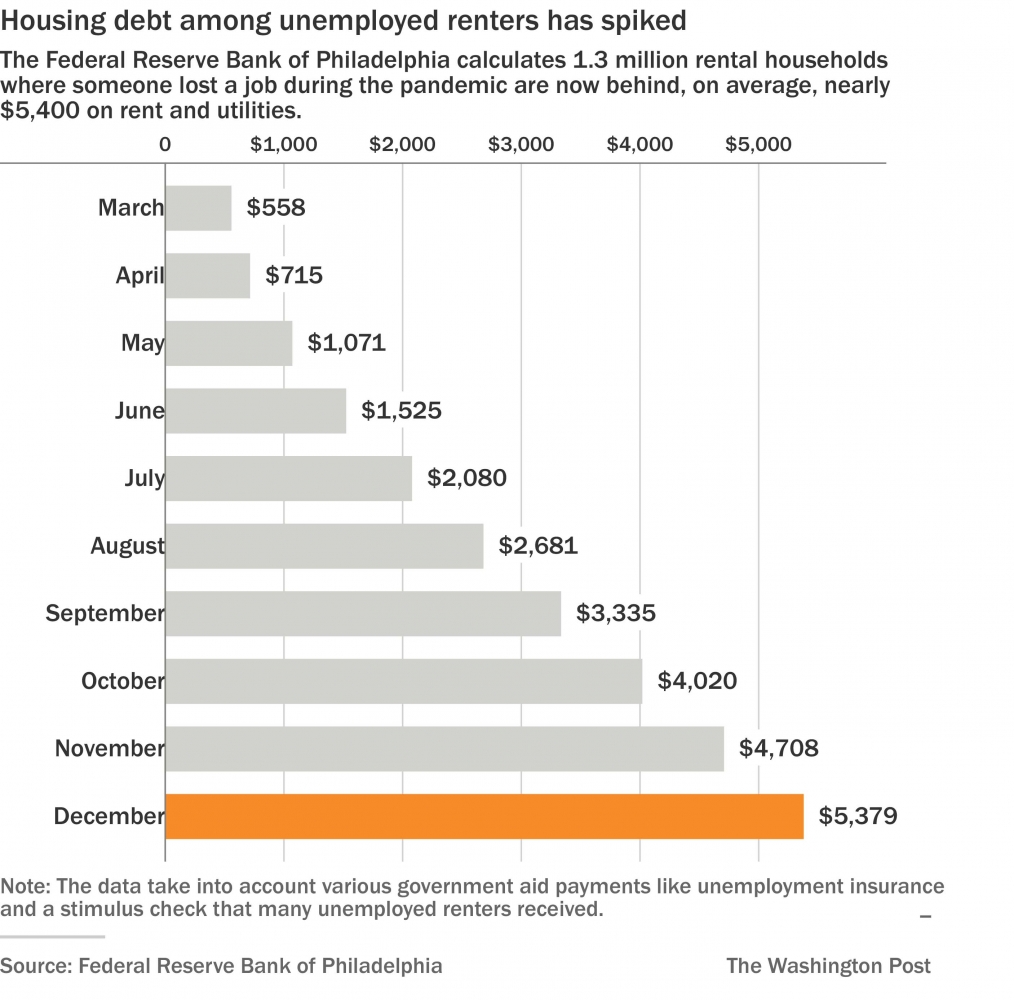
 Neera Tanden, President-elect Joe Biden’s pick to lead the Office of Management and Budget, speaks last week in Wilmington, Del. MUST CREDIT: Washington Post photo by Demetrius Freeman
  Jenna Ellis addresses reporters during a news conference with Trump’s personal attorney Rudy Giuliani at the Republican National Committee headquarters in Washington on Nov. 19. MUST CREDIT: Photo for The WashingtonPost by Sarah Silbiger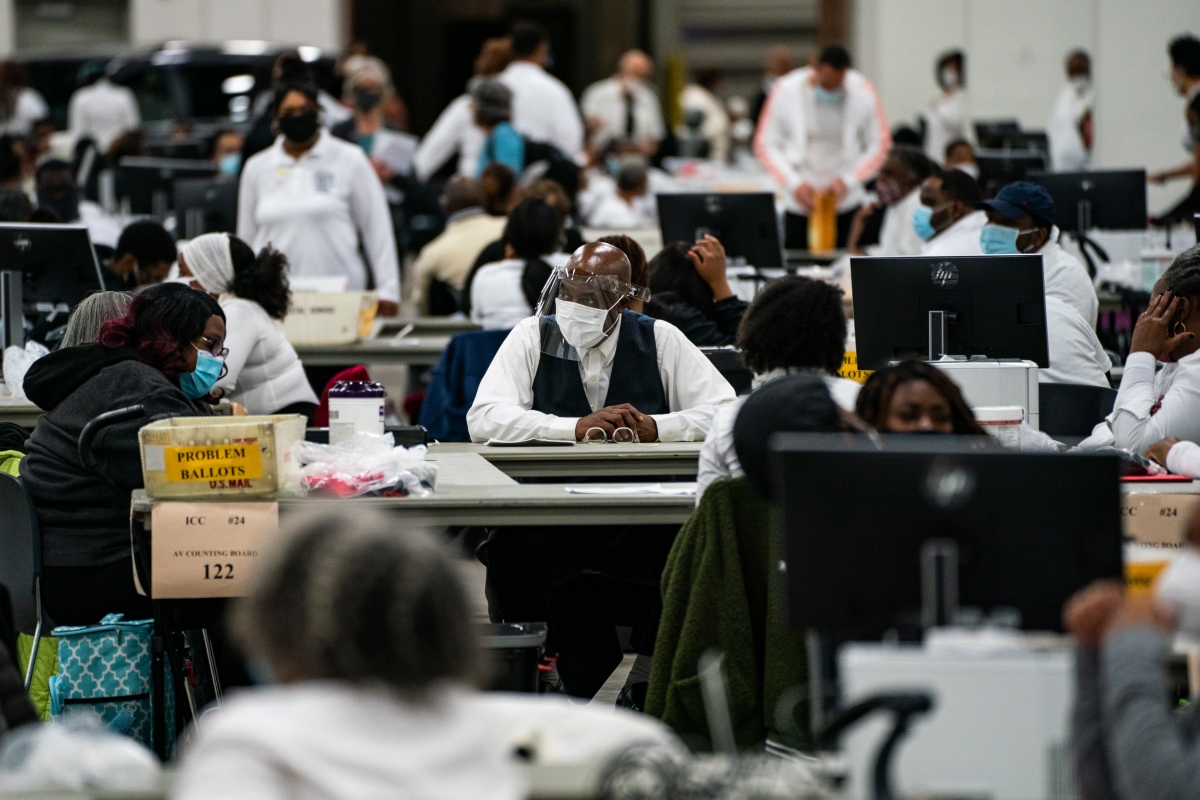


 Musician Bob Dylan at a May 29, 2012, ceremony awarding him the Presidential Medal of Freedom from President Barack Obama at the White House in Washington, D.C. MUST CREDIT: Bloomberg photo by Andrew Harrer
 SootinClaimon.Com