Pelosi, McConnell fan stimulus hopes with clock running out #SootinClaimon.Com

#SootinClaimon.Com : ขอบคุณแหล่งข้อมูล : หนังสือพิมพ์ The Nation.

Pelosi, McConnell fan stimulus hopes with clock running out (nationthailand.com)

Pelosi, McConnell fan stimulus hopes with clock running out

InternationalDec 03. 2020House Speaker Nancy Pelosi, D-Calif., speaks during a news conference in Washington, on Nov. 13, 2020. MUST CREDIT: Bloomberg photo by Stefani Reynolds.House Speaker Nancy Pelosi, D-Calif., speaks during a news conference in Washington, on Nov. 13, 2020. MUST CREDIT: Bloomberg photo by Stefani Reynolds. 

By Syndication Washington Post, Bloomberg · Erik Wasson, Steven T. Dennis, Laura Litvan

House Speaker Nancy Pelosi and Senate Majority Leader Mitch McConnell each took a stab at breaking the deadlock over a new stimulus, but it wasn’t clear that either side budged enough to get a deal in the short time Congress has left to act.

Pelosi and Senate Democratic leader Chuck Schumer — who’ve previously stuck with a $2.4 trillion coronavirus relief package — presented a new proposal to McConnell and Treasury Secretary Steven Mnuchin, but refused to publicly release details. Schumer called it “a private proposal to help move the ball forward.”

McConnell, in response, began circulating his own plan to fellow Republicans, saying it had the blessing of President Donald Trump. While he labeled it a new proposal, an outline distributed to GOP senators showed it was largely a revision of an earlier $500 billion plan that had been rejected by Democrats as inadequate.

The emergence of the proposals Tuesday reflected the rising concerns that the economy needs another boost amid evidence that surging covid-19 cases are undermining the recovery as past fiscal support runs out. President-elect Joe Biden on Tuesday called on Congress to pass a “robust” aid bill while unveiling his economic team, without offering specifics of how big it should be or what measures it ought to contain.

Mnuchin told reporters Wednesday that he had spoken “briefly” with Pelosi Tuesday about her new pitch, but declined to offer public comment on it. He said that he didn’t plan to speak with her again Wednesday.

Asked what Trump will sign, Mnuchin said Trump favors the approximately $500 billion McConnell plan. Prior to losing the election, Trump said he wanted a more than $2 trillion in stimulus, although congressional Republicans never endorsed that amount.

The current Republican narrative is that the economic recovery is strong enough to need only smaller-scale assistance. White House economic adviser Larry Kudlow held to that Wednesday, saying on Fox Business that business investment is doing well and “consumer spending is very strong — consumers have huge hoards of cash from a high saving rate.”

Some of that saving came from previous government support, which is now running out. With employment levels still down by some 10 million compared with the pre-Covid-19 high, economists are warning the recovery is at risk of faltering.

Federal Reserve Chair Jerome Powell reiterated to lawmakers at a hearing on Tuesday that “the risk of overdoing it is less than the risk of underdoing it” on fiscal stimulus. He pointed out that the pace of improvement in the economy has weakened in recent months.

At the same hearing, Mnuchin said he was urging Congress to “pass something quickly.” Powell and Mnuchin are also to appear before a House Financial Services Committee hearing on Wednesday.

Many business groups are pressing Congress to compromise.

“Large parts of the business community are running out of patience,” said Kip Eideberg, senior vice president for government and industry relations for the Association of Equipment Manufacturers, which represents more than 1,000 U.S. Companies. “It is beyond surreal that they are still bickering over politics when they should be focused on policies. That’s been our message to both parties in the House and the Senate.”

But both sides in Washington appeared to be holding to some of their earlier positions that have left negotiations at a standstill. They again accused each other of putting partisanship ahead of compromise.

Both McConnell and the White House brushed aside a proposal for a $908 billion compromise package offered by a bipartisan group of lawmakers from the House and Senate.

Democratic leaders spoke more positively about the bipartisan plan, but fell short of embracing it themselves.

The proposal from a group that included Republican Senator Mitt Romney of Utah and Senator Joe Manchin, a West Virginia Democrat — who will be pivotal votes on any plans from the Biden administration next year — included some state and local aid Republicans had opposed and some pandemic liability protections Democrats have resisted.

The outline of McConnell’s plan didn’t provide an overall cost, though many of the provisions track those he’s offered before.

It includes $333 billion in spending on assorted business subsidies including a revised version of the Paycheck Protection Program, as well as funding for schools, vaccines and agriculture and a restoration of 100% expensing of business meals for tax purposes. It does not include a major tranche of state and local aid outside of schools demanded by Democrats and continues to include legal liability protections Democrats have considered to be a poison pill.

It also features a one-month extension of pandemic unemployment relief followed by a two-month phase-out — considerably stingier than Democrats have been demanding.

McConnell characterized it as a stopgap measure and gave tacit recognition that he expects Biden to assume the presidency.

“After the first of the year, there is likely to be a discussion about some additional package of some size next year, depending upon what the new administration wants to pursue,” said McConnell, who for weeks hasn’t acknowledged Trump’s loss.

At a news conference Tuesday in Delaware, Biden said that any package passed in a lame duck session would likely be “at best just a start.”

He proposed trillions of dollars of new federal spending during his campaign, and advisers have suggested that some of those plans could be included in a post-inauguration stimulus bill.

His Build Back Better proposal included $2 trillion on clean energy and infrastructure, $775 billion to support the “caring economy” including child and elder care, and a $700 billion “Buy American” initiative aimed at using federal procurement and research dollars to boost domestic manufacturing.

Biden has also said he hopes to see additional federal aid for small businesses.

Over the next 10 days Congress also has to deal with passing a $1.4 trillion annual spending bill to fund government operations. The U.S. government has been working under a stopgap measure since the fiscal year began on Oct. 1. That expires Dec. 11, and missing the deadline would trigger a partial government shutdown.

The must-pass measure has emerged as the likely vehicle for any pandemic-related relief.

Sen. John Thune of South Dakota, the chamber’s No. 2 Republican, said he thought some relief, such as aid for small businesses or money for schools and vaccine distribution, could be attached to the annual spending bill.

Some lawmakers were skeptical there was enough time before the Congress breaks for the holidays.

“The whole idea of not being willing to negotiate until you’re down to the last week of negotiating time usually doesn’t produce a very good result,” said Missouri Republican Sen. Roy Blunt, also a member of McConnell’s leadership team.

Undoing Trump’s ‘Muslim ban’ could take minutes, but results could take months or years #SootinClaimon.Com

#SootinClaimon.Com : ขอบคุณแหล่งข้อมูล : หนังสือพิมพ์ The Nation.

Undoing Trump’s ‘Muslim ban’ could take minutes, but results could take months or years (nationthailand.com)

Undoing Trump’s ‘Muslim ban’ could take minutes, but results could take months or years

InternationalDec 03. 2020Hanine Mohamed records the events as a crowd protesting President Trump's Hanine Mohamed records the events as a crowd protesting President Trump’s “Muslim ban” gathers outside the Supreme Court as the justices hear a case involving the travel restrictions on April 25, 2018. MUST CREDIT: Washington Post photo by Jahi Chikwendiu. 

By The Washington Post · Abigail Hauslohner

WASHINGTON – One of the first moves President Donald Trump made after taking office in 2017 was to implement what became known to critics as his “Muslim ban,” a policy that restricted people from certain countries from traveling to the United States. President-elect Joe Biden has pledged that one of his first actions after taking office on Jan. 20 will be to eliminate that ban.

Trump, who had campaigned in 2016 with pledges to monitor American Muslims and keep other Muslims out of the United States, introduced the ban a week after taking office. It barred the entry of foreign nationals from seven Muslim-majority countries – Iran, Iraq, Libya, Somalia, Sudan, Syria and Yemen – and suspended all refugee arrivals. The ban is now in its third iteration after numerous court challenges, and it prohibits entry to most people from Iran, Libya, North Korea, Somalia, Syria and Yemen, as well as immigrants from Eritrea, Kyrgyzstan, Myanmar and Nigeria, and select people from Tanzania and Venezuela.

The administration ultimately justified the ban by saying it applies to countries that do not adequately share the level of intelligence the United States needs to properly vet their citizens. National security experts have noted that the administration has presented scant evidence of terrorism threats originating with citizens of any of the banned countries who obtained visas.

Biden, who, like others in the Democratic Party, thinks the ban serves a racist agenda rather than a national security purpose, has said that such bans are “morally wrong,” and his administration plans to do away with them within his first 100 days in office, meaning the U.S. government posture could change by spring.

“The Trump administration’s anti-Muslim bias hurts our economy, betrays our values, and can serve as a powerful terrorist recruiting tool,” the Biden campaign website says. “Prohibiting Muslims from entering the country is morally wrong, and there is no intelligence or evidence that suggests it makes our nation more secure. It is yet another abuse of power by the Trump administration designed to target primarily black and brown immigrants. Biden will immediately rescind the ‘Muslim bans.’ “

The current iteration of the ban still primarily affects Muslims, and immigration lawyers and advocates estimate that tens of thousands of people have had their visa applications denied outright or sit idle for months or years in a bureaucratic purgatory known as “administrative processing.”

Immigration advocates and Biden allies said in interviews that they are confident that Biden will rescind the ban on his first day in office.

“The Muslim travel ban, I think, will be one of the first things,” said Sen. Dick Durbin, D-Ill., who has spoken with Biden’s campaign and transition team about the president-elect’s immigration priorities. “Psychologically, it is such an important move.”

Because the ban was introduced via executive order, Biden can undo it in the same way, experts said. New guidance could go to consular officers and U.S. Customs and Border Protection officials in a matter of days.

But it probably will take much longer for that policy shift to yield actual travel visas for people hoping to come to the United States.

People take part in a "No Muslim Ban Ever" march and protest of the travel ban imposed by the Trump administration as they head toward the Trump International Hotel on Oct. 18, 2017, in Washington. MUST CREDIT: Washington Post photo by Ricky Carioti.

People take part in a “No Muslim Ban Ever” march and protest of the travel ban imposed by the Trump administration as they head toward the Trump International Hotel on Oct. 18, 2017, in Washington. MUST CREDIT: Washington Post photo by Ricky Carioti.

Gadeir Abbas, a staff attorney for the Council on American-Islamic Relations (CAIR) who helped pursue court cases challenging the ban, said that getting logistical support back up and running by dismantling the network of bureaucratic obstacles the Trump administration erected will take time. He said visa processing via the State Department and petition processing within U.S. Citizenship and Immigration Services “has been effectively gutted.”

“Its character has been altered in ways that will not be instantaneously unwound by revoking the executive order,” Abbas said.

Those who support the ban say its revocation will expose the United States to fresh national security threats and will exponentially expand the vetting burden for intelligence officials, which could amplify processing delays.

“Changing the guidance would be the work of just a few days,” said one Department of Homeland Security official who thinks the Trump administration protocols serve an important purpose and who spoke on the condition of anonymity because they were not authorized to speak publicly. “But because the lack of access to foreign criminal and terrorist databases that the Executive Order was designed to offset would remain, the workload for those doing the actual screening before the visas could be issued would likely greatly increase because there would suddenly be so many more people applying for visas who would require more careful scrutiny.”

Abbas and other attorneys who represented plaintiffs who were separated from loved ones, jobs, college courses or medical treatment because of the ban, estimate that tens of thousands of people were either rejected outright because of the policy or are awaiting the outcome of processing or waiver appeals. An untold number of others never applied for visas that they otherwise would have sought, Abbas and other lawyers said.

“However many visas have been denied based on the Muslim ban, and however many waivers have been denied or granted, I think won’t really capture the total number of folks who have been affected by the Muslim ban,” he said.

A backlog of visa applications in administrative limbo will need to be processed and either denied or approved, immigration experts say.

“There’s a large group of people who would have applied for visitor visas, student visas, a variety of other temporary visas, and they’re probably going to start from scratch,” said Sirine Shebaya, executive director of the National Immigration Project of the National Lawyers Guild. “So people who might have otherwise gotten a multiple-entry visitor visa I think are probably at step zero.”

And then there are others who were rejected because of the ban who may want to try again, or who the Biden administration may decide are entitled to an automatic appeals process.

Many visa denials under the Trump administration referenced the president’s policy as the reason, Shebaya noted, adding: “So for the people who were denied the visa altogether, I think there’s a question of how the Biden administration is going to deal with those.”

Advocates for immigrants and refugees note that Trump did not pioneer lengthy vetting protocols – or the scrutiny applied to those traveling from Muslim countries. Strict preexisting screening means that even without the ban, processing immigrant applications, for example, could take years.

“Even if you undo all the damage to the immigration and visa system that the Trump administration very creatively inflicted over the course of four years, what you’re left with is a pre-Trump immigration system that still systematically discriminated against Muslims,” Abbas said. “It was always the case that if you were from a Muslim-majority country, your immigration application would not be treated the same way.”

Biden vows to ‘restore and defend’ legal immigration, reversing Trump administration visa policies #SootinClaimon.Com

#SootinClaimon.Com : ขอบคุณแหล่งข้อมูล : หนังสือพิมพ์ The Nation.

Biden vows to ‘restore and defend’ legal immigration, reversing Trump administration visa policies (nationthailand.com)

Biden vows to ‘restore and defend’ legal immigration, reversing Trump administration visa policies

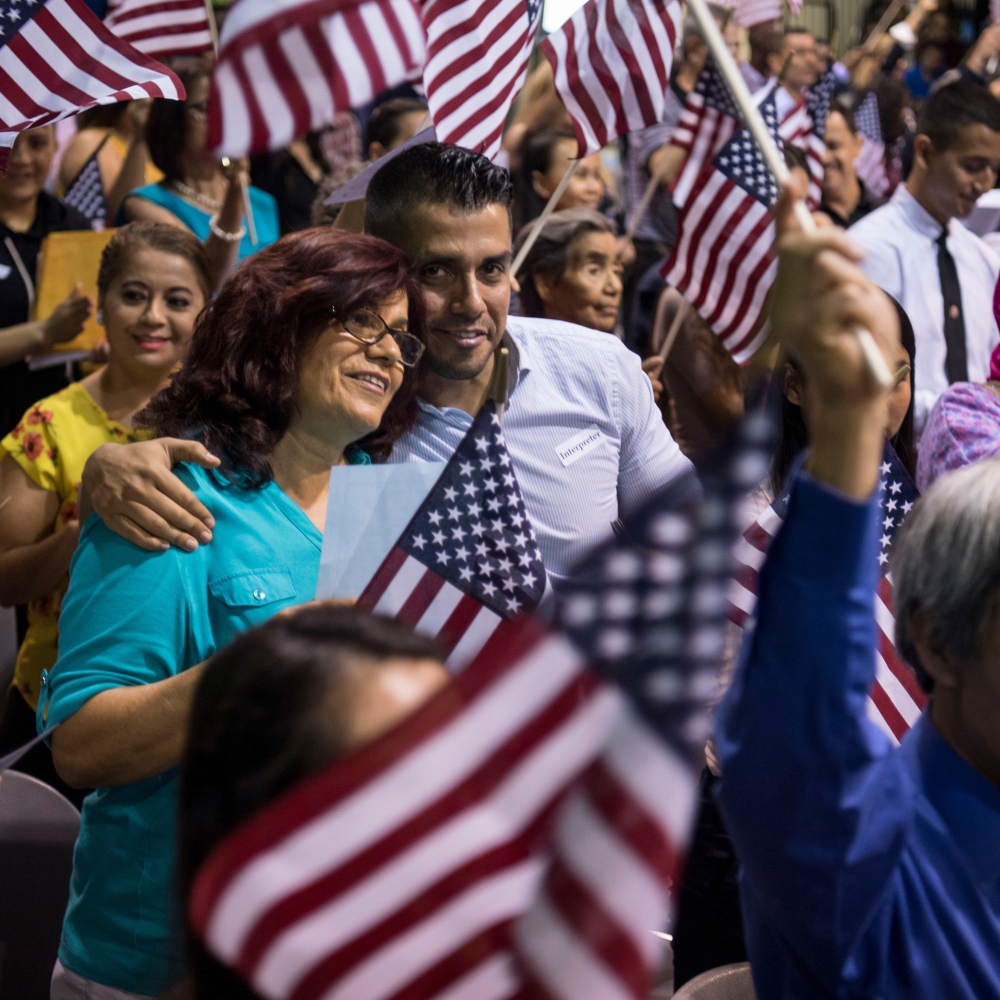
InternationalDec 03. 2020American flags await the more than 220 people from more than 40 countries participating in the Fiesta of Independence Naturalization Ceremony at South Mountain Community College in Phoenix on July 4, 2018. MUST CREDIT: Washington Post photo by Carolyn Van Houten.American flags await the more than 220 people from more than 40 countries participating in the Fiesta of Independence Naturalization Ceremony at South Mountain Community College in Phoenix on July 4, 2018. MUST CREDIT: Washington Post photo by Carolyn Van Houten. 
By The Washington Post · Abigail Hauslohner

WASHINGTON – There were executive orders. Presidential proclamations. New rules and regulations. Policy memos. New agency guidance.

Immigration experts say that in his four years in office, President Donald Trump fundamentally altered the system through which foreign nationals can obtain visas to come to the United States, much of it through policy memos and internal guidance and without the blessing of Congress. It was a cascade of tiny cuts – and the result, in part, was fewer visas issued.

Immigrant visa issuance decreased more than 17% from fiscal 2016 to fiscal 2019, when the government issued 462,422, according to State Department data. In the fiscal year that ended Sept. 30, immigrant visa issuance fell an additional 46% – in large part because of the coronavirus pandemic – to 250,446.

The Trump administration also has issued fewer temporary visas, which include those provided for study, tourism and work. The three years before the pandemic struck had a 16% drop, to 8.7 million temporary visas. In fiscal 2020, that total number dropped again by more than half.

In a statement, the State Department attributed the decline in visa issuance that preceded the pandemic to “cyclical” demand, and said pandemic-related suspensions of routine visa services at embassies and other restrictions affected the numbers this year.

President-elect Joe Biden plans to reverse many, if not all, of the Trump administration policies that immigration lawyers and officials say have reduced the flow of immigrants to the United States, aiming to get things back to the way they were before starting on any fresh goals.

Biden has pledged to “restore and defend the naturalization process for green-card holders,” and to “support family-based immigration.” He also has said he wants to preserve “preferences for diversity in the current system,” because Trump has sought to eliminate what is commonly known as the diversity visa lottery that ensures that the United States draws immigrants from everywhere instead of the small number of countries that are overrepresented in family and employment-based immigrant visas.

Biden’s new ideas – increasing the overall number of work-based immigration visas, reforming the high-skilled work visas known as H1-Bs to ensure less abuse of the workers and the system, expanding paths to citizenship for long-term agricultural workers, and allowing cities to petition the federal government for higher levels of immigration to support their growth – probably will have to wait, and will require bipartisan cooperation, experts say.

But the Biden administration will first have to figure out how to get the paperwork flowing again. Visa processing times and admissions, particularly for citizens of Africa, Asia and South America, have slowed since Trump took office because of changes that administration officials say were necessary to properly vet foreign travelers.

Some of the most notable declines in immigrant visa issuance under the Trump administration have occurred among nationals that Trump publicly disparaged or targeted specifically.

David Reyna hugs his mother, Tina Chavez, originally from Mexico, as she participates in the Fiesta of Independence Naturalization Ceremony at South Mountain Community College in Phoenix on July 4, 2018. MUST CREDIT: Washington Post photo by Carolyn Van Houten.

David Reyna hugs his mother, Tina Chavez, originally from Mexico, as she participates in the Fiesta of Independence Naturalization Ceremony at South Mountain Community College in Phoenix on July 4, 2018. MUST CREDIT: Washington Post photo by Carolyn Van Houten.

Haitians, whose country Trump has disparaged, for example, received 67% fewer immigrant visas between 2016 and 2019. Mainland Chinese – whose country Trump has blamed for many things, including the United States’ economic woes and the coronavirus pandemic – received 35% fewer immigrant visas during that same time period. Iranians, among the nationalities that Trump’s travel ban targeted, received nearly 80% fewer immigrant visas.

Immigration lawyers say the Trump administration’s added protocols, which they say have included frequent “requests for evidence” or additional paperwork, as well as more interview requirements, created unnecessary additional bureaucracy without showing a demonstrable impact on safety. U.S. Citizenship and Immigration Services (USCIS) also has raised processing fees and has struggled with funding shortages, and backlogs have lengthened significantly.

“Visa processing . . . is going to be very time-consuming and complicated,” said Ali Noorani, the chief executive of the National Immigration Forum, an immigrant advocacy group, referring to the effort to unravel the Trump administration’s changes.

Sen. Dick Durbin, D-Ill., a Biden ally who has consulted with the Biden campaign and transition team on immigration policy, said one key change will be the leadership and staffing of the Department of Homeland Security and its immigration-related agencies, including USCIS; leaders will need to be familiar with the department, so they will know where to make the fixes, he said. Durbin said a major priority of the new administration will be unraveling hawkish Trump administration policies, many of which senior adviser Stephen Miller orchestrated as part of a restrictionist approach to immigration.

“We also have to make sure we clear the decks of Miller’s acolytes in these agencies,” Durbin added.

Some changes will require new internal guidance memos, but others will need new rules to replace the old – a formidable months-long process that allows time for public input.

The Trump administration also has continued to issue new immigration policies since the election, including policy manual changes that give USCIS officers more discretion to deny permanent legal residency, also known as green cards. Immigration experts think the Biden administration will quickly reverse most recent changes, but they also say the new policies will add to the bureaucracy and could create a major influx of post-transition applicants.

“I think this administration is going to need to probably conduct a pretty thorough audit of the changes that have taken place and figure out how to stand up these institutions,” said Kristie De Peña, the vice president for policy and the director of immigration at the Niskanen Center, a Washington think tank that favors more immigration. “All of that is going to take a lot of time and money.”

A spokesperson for the Biden transition team declined to answer questions about forthcoming policy, instead referring to the campaign’s website, where the president-elect alludes to the bureaucratic challenges and backlogs that he will need to address.

“The Trump administration has made it far too difficult for qualifying green-card holders to obtain citizenship,” the website says. “Biden will restore faith in the citizenship process by removing roadblocks to naturalization and obtaining the right to vote, addressing the application backlog by prioritizing the adjudication workstream and ensuring applications are processed quickly, and rejecting the imposition of unreasonable fees.”

More broadly, experts say, the agencies that adjudicate all of these visas, work permits and citizenship are going to require a culture shift to move beyond Trump’s immigration posture.

“It’s not just about mechanics,” said Sirine Shebaya, executive director of the National Immigration Project of the National Lawyers Guild. USCIS under Trump has been transformed from an immigration “benefits” adjudication agency to an “enforcement arm” of the administration’s immigration agenda, she and other experts said. What was once an agency built around facilitating immigration, work and travel to the United States has shifted its focus to keeping people out.

“I think that one of the most pervasive effects of the administration has been a culture shift in the way these agencies relate to their jobs, and that’s actually going to require a lot of effort,” to reverse, Shebaya said.

While OPEC+ fights, Mexico wins over $2 billion with oil hedge #SootinClaimon.Com

#SootinClaimon.Com : ขอบคุณแหล่งข้อมูล : หนังสือพิมพ์ The Nation.

While OPEC+ fights, Mexico wins over $2 billion with oil hedge (nationthailand.com)

While OPEC+ fights, Mexico wins over $2 billion with oil hedge

InternationalDec 03. 2020Employee pass in front of the finished Abkatun-A2 oil platform at the Mcdermott International Inc. fabrication facility in Altamira, Mexico, on Nov. 2, 2018. MUST CREDIT: Bloomberg photo by Luis Antonio Rojas.Employee pass in front of the finished Abkatun-A2 oil platform at the Mcdermott International Inc. fabrication facility in Altamira, Mexico, on Nov. 2, 2018. MUST CREDIT: Bloomberg photo by Luis Antonio Rojas. 

By Syndication Washington Post, Bloomberg · Nacha Cattan, Javier Blas

Mexico will cash in its oil price insurance policy this year for the fourth time only in the last two decades, receiving a payout of about $2.5 billion from its 2020 sovereign oil hedge, people familiar with the transaction said.

In an ironic turn of events, Mexico is making a hedging profit just as the OPEC+ deal the Latin American country walked away from earlier this year is threatened by infighting over production levels.

For the past two decades, Mexico has locked in its oil revenue via options contracts it buys from a small group of investment banks and oil companies in what’s considered Wall Street’s largest — and most closely guarded — annual oil deal. The program gave President Andres Manuel Lopez Obrador leverage to abandon the OPEC+ agreement by shielding the country from oil market turmoil, and the payout comes at a time when his government is badly in need of cash.

This year’s hedge expired earlier this week, as the program runs annually from Dec. 1 to Nov. 30, triggering the payment mechanism. The government hasn’t yet disclosed the amount, but it released some financial data earlier this year that allows analysts to make an approximate calculation.

Mexico told lawmakers earlier this year it had guaranteed its budget oil price assumption of $49 a barrel for 2020 through a mix of its oil hedge and the use of a budget revenue stabilization fund. Traditionally, the stabilization fund covers a couple of dollars of the price, with the rest hedged via a massive derivatives deal with several Wall Street banks. Assuming that Mexico hedged around $45-$47 a barrel, and that it secured a similar volume as in previous years, it stands to receive a payout in excess of $2 billion.

A spokesperson at the Mexican finance ministry said they couldn’t comment at this time. The people who said the hedge would pay around $2.5 billion asked not to be named because the information isn’t public.

The payout is smaller than the $6 billion that Lopez Obrador said in April the country could make if oil prices remained as weak as they were then. The Mexican oil benchmark basket averaged just $12 a barrel in April during the darker days of the coronavirus pandemic. Since then, it has recovered to trade above $40 a barrel last week.

“We protected the Ministry of Finance,” Lopez Obrador said in April.

The smaller payout will still be a much needed cash injection after the nation’s budget revenue fell amid the deepest economic recession in almost a century.

Mexico counterparts on the deal have included in the past banks such as Goldman Sachs Group Inc. and JPMorgan Chase & Co., as well as the in-house trading units of big oil companies like Royal Dutch Shell Plc and BP Plc.

The hedge has shielded Mexico in every downturn over the last 20 years: The country made $5.1 billion when prices crashed in 2009 during the global financial crisis, and it received $6.4 billion in 2015, plus another $2.7 billion in 2016 after Saudi Arabia waged a price war.

The put options give Mexico the right to sell its oil at a predetermined price. The country banks all gains from a rally but enjoys the security of a minimum floor.

Although Mexico disclosed details of its hedge in the past, since 2018 it has kept secret the most sensitive data, including the exact strike price of the put options, and the volume hedged. On top of its sovereign program, which is run by the country’s Ministry of Finance and executed by the central bank, the state-owned oil company Petroleos Mexicanos also runs a much smaller oil hedge.

Apple faces EU lawsuits over iPhones that wear out too quickly #SootinClaimon.Com

#SootinClaimon.Com : ขอบคุณแหล่งข้อมูล : หนังสือพิมพ์ The Nation.

Apple faces EU lawsuits over iPhones that wear out too quickly (nationthailand.com)

Apple faces EU lawsuits over iPhones that wear out too quickly

InternationalDec 03. 2020

By Syndication Washington Post, Bloomberg · Stephanie Bodoni

Apple is facing lawsuits in several European countries seeking about 180 million euros ($217 million) over misleading claims about the battery life of older iPhones.

A group of five European consumer organizations filed class-action suits in Belgium and Spain and plans to sue in Italy and Portugal over the coming weeks as well, Euroconsumers said in an emailed statement Wednesday. The lawsuits concern users of iPhones 6, 6 Plus, 6S and 6S Plus, the group said.

The lawsuits mirror U.S. cases over claims that the company misled consumers about iPhone battery power and software updates that slowed the performance of the devices. The California-based company last month agreed to pay $113 million to settle a case with multiple U.S. regulators while customers are seeking approval from a U.S. court for a class-action settlement that could be worth as much as $500 million.

“Consumers are increasingly upset by products wearing out too quickly, the iPhone 6 models being a very concrete example of that,” said Els Bruggeman, head of policy and enforcement at Euroconsumers. “Not only does it cause frustration and financial harm, from an environmental point of view it is also utterly irresponsible.”

The group sent a cease and desist letter to Apple in July, asking it to stop a practice that allegedly forces users to install updates which then slow down their phones so much that they become obsolete and a new model is needed.

Apple spokespeople didn’t immediately respond to an email seeking comment. The Financial Times previously reported on the European lawsuits.

OPEC+ works silently to repair crack at oil coalition’s core #SootinClaimon.Com

#SootinClaimon.Com : ขอบคุณแหล่งข้อมูล : หนังสือพิมพ์ The Nation.

OPEC+ works silently to repair crack at oil coalition’s core (nationthailand.com)

OPEC+ works silently to repair crack at oil coalition’s core

InternationalDec 03. 2020Oil pumping jacks, also known as Oil pumping jacks, also known as “nodding donkeys”, operate in an oilfield near Neftekamsk, Russia, on Nov. 19, 2020. MUST CREDIT: Bloomberg photo by Andrey Rudakov. 

By Syndication Washington Post, Bloomberg · Grant Smith, Javier Blas, Salma El Wardany

After failed talks exposed a dangerous fissure at the alliance’s core, OPEC and its partners are quietly working to repair the damage.

Key players in the 23-nation alliance are making diplomatic efforts to resolve a dispute — centered around Saudi Arabia and the United Arab Emirates — over how much crude to pump in the new year. They need to thrash out a compromise before ministers gather on Thursday, at a meeting that’s been postponed because of the impasse.

The Organization of Petroleum Exporting Countries and its partners rescued the oil market this year from an unprecedented slump, slashing production as the pandemic crushed demand. If their pact breaks down, prices would sink again, battering an industry that spans tiny nations like Gabon to corporate giants such as Exxon Mobil Corp.

On Monday, differences between the Saudis and the UAE prevented the cartel from reaching a clear agreement on whether to delay a planned production increase. Traditionally stalwart allies, a fissure has emerged between the two Persian Gulf exporters as Abu Dhabi pursues a more independent oil policy.

Delegates spent Tuesday consulting with their governments and exchanging ideas over the phone. For now, the results are hidden within the opaque world of Middle East diplomacy, but several delegates said on Wednesday that the consultations had so far been positive.

“OPEC+ often generates drama, and this time tensions are running high,” said Helima Croft, chief commodities strategist at RBC. “But we still believe that the group will probably find some face-saving compromise, with a short extension of the current cuts being the most likely outcome.”

Most nations at Monday’s online session favored deferring the 1.9 million-barrel daily supply increase due to take effect in January by three months. With a new wave of virus infections hitting the global economy, they believe demand is still too fragile to absorb additional crude.

But the UAE pushed back, delegates said. Without openly opposing a delay, Energy Minister Suhail Al-Mazrouei insisted on stringent conditions — mainly the speedy implementation of cuts that other members owed in compensation for pumping too much in prior months — that rendered an agreement all but impossible.

In an apparent gesture of frustration, Saudi Arabia’s Energy Minister Prince Abdulaziz bin Salman told the group that he may resign as co-chair of a key OPEC+ panel. Al Mazrouei was offered the post, but refused, according to a person familiar with the situation.

“The market is underestimating a little bit how serious this is — this is one of Saudi Arabia’s biggest allies,” Amrita Sen, co-founder of consultant Energy Aspects Ltd., told Bloomberg Television. She didn’t predict a messy outcome this week, but sees tensions persisting into next year.

This procedural dispute masks the UAE’s deeper dissatisfaction with OPEC supply restrictions, which “does not bode well for collective cohesion in 2021,” according to Croft.

Over the summer, Abu Dhabi’s impatience led it to cast aside its usual obedience to cartel discipline, and pump more crude than its quota allowed. The Saudis were furious, and summoned Al-Mazrouei to Riyadh for a public dressing down.

While the UAE subsequently atoned, people familiar with its oil policy say Abu Dhabi believes the current quota is unfair, and is keen to make the most of massive investments in production capacity. It’s also planning a new regional price benchmark based around its Murban crude variety, which needs the kind of volumes that clash with production limits.

Two weeks ago, the Emiratis even signaled privately that they have contemplated leaving OPEC in the long term. Analysts consider it just the latest example of the increasingly autonomous policy framework pursued by Abu Dhabi Crown Prince Mohammed bin Zayed.

“The UAE is increasingly willing to act in its own direct national interests, and where that doesn’t align with Saudi Arabia it’s confident and willing to go it alone,” said Neil Quilliam, associate fellow in the Middle East and North Africa program at the Chatham House think tank.

Nonetheless, many oil-watchers expect an agreement will be reached on Thursday. Algerian Oil Minister Abdelmadjid Attar, who currently holds the post of OPEC president, told state radio on Tuesday that postponing the meeting shows the group is willing to find a consensus.

OPEC is no stranger to difficult meetings. The gathering in April that resulted in the current output agreement went on for several days as Mexico haggled over its contribution. In 1986, one round of talks in Geneva ran for 17 days, and was quickly followed by a 10-day marathon.

“There is a determined push by the UAE to have its voice heard, to rearrange the chairs and thereby undermine Saudi primacy,” said Bill Farren-Price, a director at research firm Enverus. Still, he expects a rollover will be agreed: “They will be looking at a big dip in prices if they don’t do this.”

Barnier voices caution as Brexit negotiators race to a deal #SootinClaimon.Com

#SootinClaimon.Com : ขอบคุณแหล่งข้อมูล : หนังสือพิมพ์ The Nation.

Barnier voices caution as Brexit negotiators race to a deal (nationthailand.com)

Barnier voices caution as Brexit negotiators race to a deal

InternationalDec 03. 2020Michel Barnier, chief negotiator for the European Union, center, wears a protective face mask while speaking with lawmakers ahead of a State of the Union address in the European Parliament in Brussels on Sept. 16, 2020. MUST CREDIT: Bloomberg photo by Geert Vanden Wijngaert.Michel Barnier, chief negotiator for the European Union, center, wears a protective face mask while speaking with lawmakers ahead of a State of the Union address in the European Parliament in Brussels on Sept. 16, 2020. MUST CREDIT: Bloomberg photo by Geert Vanden Wijngaert. 

By Syndication Washington Post, Bloomberg · Ian Wishart · WORLD, EUROPE

British and European Union officials are racing to strike a post-Brexit trade deal before the start of next week, with EU chief negotiator Michel Barnier telling envoys the outcome is still too close to call.

While intensive, round-the-clock talks in London are making progress, genuine disagreement remains on the two biggest obstacles, meaning it’s impossible to predict an outcome with any certainty, people with knowledge of the discussions said. A third issue — how the deal would be enforced — can only be overcome at the end. However, two officials said the general mood on both sides is one of optimism.

Barnier told diplomats from the bloc’s 27 member states on Wednesday and that three disagreements, which have long bedeviled the talks, are still unresolved. There has been some movement, Barnier added, but it had mainly come from the EU side, according to one diplomat. The pound fell as much as 0.6% on the news.

The next few days are crucial, with the U.K. and EU teams hoping that an agreement can be reached on Friday or over the weekend, officials said. One said that while a final picture was beginning to emerge, the situation remains incredibly delicate.

It is typical in the last few days of a negotiation for assessments of a likelihood of a deal or not to swing wildly as both sides try to make each other blink. Markets are jumpy, showing how eager traders are to jump on signs an agreement is in reach.

People familiar with the EU position said negotiators are trying to avoid talks running into next week to prevent them having an impact on preparations for a summit of EU leaders that starts on Dec. 10. Barnier told ambassadors that talks could continue until that date, officials said.

Not only are European governments occupied with a row over the EU budget, the bloc’s negotiating team, led by Barnier, is concerned that presenting leaders with anything other than a signed-and-sealed deal would leave an agreement vulnerable to being unpicked at the last moment.

The EU has outsourced its negotiating to Barnier and the European Commission, and some countries — especially France and the Netherlands — are uneasy about what sort of compromises are being made in their name, one EU official said.

Barnier’s briefing on Friday was an exercise in calming those countries’ nerves, one diplomat said. But another said member states are concerned the EU might sign a deal that wasn’t in its favor, and that not signing one would be better than making too many concessions.

While deadlines have come and gone throughout the negotiating process, this period is being seen as the real endgame, officials on both sides said. The talks, which have been going on since March, need to finish within days if the U.K. and EU parliaments are to have time to ratify any agreement before Britain leaves the EU’s single market on Dec. 31.

If the two sides fail to reach an accord by then, businesses and consumers will be left facing the cost and disruption of tariffs and quotas, while relations between the U.K. and EU risk being poisoned for a generation.

Officials in Brussels said that planned U.K. legislation giving the government powers to unilaterally rewrite parts of the Brexit Withdrawal Agreement could yet prompt the EU to balk at ratifying any deal. They expressed hope that Britain will delete the most controversial clauses from the bill if a deal is reached.

The two biggest obstacles to a trade deal remain what access EU boats will have to British fishing waters and the level competitive playing field for business, but progress has been made on both in the last few days, officials said. A third disagreement — how the overall deal is enforced — is tied to the first two.

On fisheries, the U.K. is holding out for greater control over its stocks, something the government sees as a matter of sovereignty. An agreement on the issue is a precondition for any wider accord, but President Emmanuel Macron has warned that France won’t allow a deal that fails to respect its interests.

Compromises being discussed include delaying any changes to quota allocations and phasing them in gradually over time. But efforts to reach an agreement on the subject are being hindered both by EU countries’ claims to historic rights to fish in certain areas, and the U.K.’s demand to make access conditional on annual negotiations, one official said.

On the level playing field, the two sides are trying to establish a system in which U.K. environment and labor standards can evolve in a similar way to the EU’s but which allows the British government to have full control over them.

Hong Kong activist Joshua Wong jailed 13.5 months over protest #SootinClaimon.Com

#SootinClaimon.Com : ขอบคุณแหล่งข้อมูล : หนังสือพิมพ์ The Nation.

Hong Kong activist Joshua Wong jailed 13.5 months over protest (nationthailand.com)

Hong Kong activist Joshua Wong jailed 13.5 months over protest

InternationalDec 03. 2020Joshua Wong, activist and former members of pro-democracy party Demosisto, walks towards a Correctional Services Department vehicle ahead of being transported to West Kowloon Magistrates' Courts in Hong Kong on Dec. 2, 2020. MUST CREDIT: Bloomberg photo by Paul Yeung.Joshua Wong, activist and former members of pro-democracy party Demosisto, walks towards a Correctional Services Department vehicle ahead of being transported to West Kowloon Magistrates’ Courts in Hong Kong on Dec. 2, 2020. MUST CREDIT: Bloomberg photo by Paul Yeung. 

By Syndication Washington Post, Bloomberg · Kari Lindberg, John Cheng, Chloe Lo

Hong Kong activist Joshua Wong urged supporters to “hang on” after he was sentenced to more than a year in jail for leading a protest outside police headquarters last year, prompting angry cries outside the court in one of the most high-profile cases in the government’s crackdown on the pro-democracy movement.

“I know it’s so difficult, but I’ll hold on,” he yelled to supporters after the sentence was read out.

On Wednesday, Wong was sentenced to 13 and a half months in West Kowloon Magistrates’ Courts on charges of organizing an unauthorized assembly in June 2019 and inciting others to take part. The 24-year-old leader of the city’s 2014 Occupy protests had pleaded guilty last week to the charges, which carried a maximum sentence of three years in prison.

Activists Agnes Chow and Ivan Lam, who were both members of Wong’s now-disbanded political party Demosisto, also pleaded guilty over their roles in the protest. Chow, 23, was sentenced to 10 months in jail while Lam, 26, was given seven months. After the sentencing, Lam shouted: “Never regret it!”

Around 100 people outside the courtroom cried out in anger once they heard the verdict. “Add oil!” they yelled, using one of the protest movement’s slogans. “We’ll wait for you!” Rival pro-China supporters chanted that Wong, Chow and Lam deserved to be locked up “forever,” and popped bottles of sparkling wine in celebration.

“In sentencing, the court must take into account factors such as protecting the public, meting out penalties, open condemnation and deterrence,” Magistrate Wong Sze Lai wrote in her decision. “As the present case involves a breach of public order and safety, as well as a threat to the personal safety of the public, deterrent sentences are warranted to safeguard public interests and the lives and property of the people.”

The June 21, 2019, siege outside the Hong Kong Police Force’s compound in Wan Chai was among the most dramatic moments in the early days of last year’s historic protests against legislation that would’ve allowed extraditions to mainland China. Wong — then fresh out of jail — joined the rally to oppose the police’s decision to tear gas against protesters.

Dozens of high-profile democracy advocates, including lawmakers, lawyers and billionaire media mogul Jimmy Lai, are facing jail time as Chief Executive Carrie Lam’s government seeks to punish participants in last year’s largely leaderless protests. Police have arrested more than 10,000 people on various allegations, including 26 under new national security legislation carrying sentences as long as life in prison.

The effort to prosecute Wong — who testified before the U.S. Congress last year and was subject of the Netflix documentary “Joshua: Teenager vs. Superpower” — has drawn condemnation from Western government officials. Chow’s case has also helped solidify criticism of Beijing in Japan, where local media has dubbed her “the goddess of democracy.”

Shortly after the sentencing, Hong Kong democracy activists Nathan Law and Alex Chow, living the U.K. and U.S. respectively, published an op-ed in the New York Times calling for a global alliance to push back against China and on Washington to do more for the city’s residents as Beijing cracks down.

“We hope that the Biden administration will review and reform asylum policies for Hong Kongers and take a close look at sanctions against those who attack the city’s democratic institutions,” the wrote.”It’s another blatant attack on the HK activists, whose wishes are solely bringing democracy to Hong Kong,” Law wrote separately on Twitter.

Before the sentencing, two pro-democracy supporters chanting outside the court in support of Wong were quickly cleared from the scene by police, who said they had been standing on the court’s driveway.

“The protest movement is over,” said Alexandra Wong, a protester known as Grandma Wong who attended rallies over the course of Hong Kong’s unrest last year, outside the court. “They’re arresting all lawmakers, even young activists, teenagers, even a grandma like me. Put charges on us for nothing, trying to silence us. It’s over.”

Previous Sentence

Joshua Wong had previously served more than four months in jail for leading protests in 2014, when he was still a high school student. After pleading guilty last week, Wong was taken into custody where he was held for some 72 hours in a lit hospital room because police wanted to determine whether a shadow on a stomach X-ray indicated he had swallowed a foreign substance.

The activist is still facing charges related to his participation in an annual candlelight vigil to mark the June 4, 1989, crackdown on Tiananmen Square activists in Beijing, which had been banned due to coronavirus restrictions.

He’s also among those arrested over an October 2019 protest against a ban on face masks that has since been ruled unconstitutional and replaced with a requirement to wear them.

Britain grants Pfizer coronavirus vaccine emergency authorization #SootinClaimon.Com

#SootinClaimon.Com : ขอบคุณแหล่งข้อมูล : หนังสือพิมพ์ The Nation.

Britain grants Pfizer coronavirus vaccine emergency authorization (nationthailand.com)

Britain grants Pfizer coronavirus vaccine emergency authorization

InternationalDec 03. 2020The Pfizer logo at a Pfizer facility in Puurs, Belgium, on Nov. 10, 2020. MUST CREDIT: Bloomberg photo by Geert Vanden Wijngaert..The Pfizer logo at a Pfizer facility in Puurs, Belgium, on Nov. 10, 2020. MUST CREDIT: Bloomberg photo by Geert Vanden Wijngaert.. 

By The Washington Post · William Booth, Karla Adam

LONDON – Britain became the first country to grant emergency approval on Wednesday to the coronavirus vaccine developed by the Pfizer and BioNTech, smashing all speed records to see a potentially lifesaving shot invented, tested and approved in less than a year.

British officials said a mass immunization program would begin almost immediately, with distribution of the first 800,000 doses to begin next week in a remarkable rollout of an entirely new kind of vaccine, built with a few bits of RNA, that must be stored and shipped at Antarctic temperatures.

Drug regulators in Britain have a global reputation for being tough but quick-moving, but Wednesday’s decision is likely to intensify the focus on the U.S. Food and Drug Administration, which has faced increasing pressure from the Trump administration to approve Pfizer’s vaccine. On Tuesday, White House Chief of Staff Mark Meadows summoned Stephen Hahn, the head of the FDA, to ask why the agency was not moving faster.

The British government said the first people to receive the vaccine would be the most vulnerable to covid-19, and so at the head of the line will be the residents of nursing homes and their caregivers. In Britain, like the United States, residents of these homes suffered high rates of mortality, especially in the first wave of the pandemic. According to the Office for National Statistics, over 17,000 people – 27 percent of coronavirus-related deaths in England and Wales – have died in nursing homes.

The care home residents will be followed by all those over 80 and front-line medical workers. Then the over 75, the over 70s and individuals who are “clinically extremely vulnerable.”

At a Downing Street news conference, June Raine, chief executive of the Medicines and Healthcare Products Regulatory Agency, said that the regulator had “absolute confidence” in the “safety, effectiveness and quality” of the vaccine.

“No stone has been left unturned,” she said.

“If you are climbing a mountain, you prepare and prepare. We started that in June. By the time the interim results became available on November 10 we were at base camp and then when we got the final analysis we were ready for that last sprint that takes us to today.”

Wei Shen Lim, chair of the Joint Committee on Vaccination and Immunisation, said Britain was prioritizing those most at risk of dying from the virus, those who are most vulnerable, and health-care workers. He said that the order of who gets a jab first is unrelated to lockdown tiers where people live.

Munir Pirmohamed, a professor at the University of Liverpool and an independent adviser to the government, said the Pfizer data showed that there was partial immunity after the first dose and that people will be immune seven days after the second dose. The two doses are given about three weeks apart.

British officials say they will have 800,000 doses of the vaccine in the country within days, with another few million doses by the end of the year. Pfizer has said it can supply 40 million doses here in the spring.

But Britain has said it wants to immunize the whole country of 67 million – so supply will crucial.

British regulators are also reviewing for approval of a competing vaccine made by Oxford University and the British-Swedish pharmaceutical company AstraZeneca. If approved the government has made orders for 100 million doses from AstraZeneca. There’s also 7 million doses on pre-order from another front-running vaccine candidate made by Moderna.

Britain’s swift action drew some blowback from the European Union’s drug regulator, which said that it believed its slower and more careful approval process was the “most appropriate regulatory mechanism for use in the current pandemic emergency.”

It said that the full approval process allows for a more extensive evaluation of the data and imposes more legal requirements for safety, quality and efficacy of the vaccine on drug manufacturers.

The regulator, the European Medicines Agency, is reviewing both Pfizer and Moderna’s vaccines, but does not expect to take action before the end of December.

Britain has left the European Union but remains subject to many of its regulations, including those on drugs, until Dec. 31. But E.U. rules allow individual countries to authorize unlicensed drugs during emergencies.

In a statement, Britain’s Department of Health and Social Care said that the decision to approve the vaccine “follows months of rigorous clinical trials and a thorough analysis of the data” by a panel of experts who concluded that it met the standards for safety and effectiveness. Data previously released from large-scale clinical trials showed that the vaccine had nearly 95 percent efficacy and people who were immunized displayed no serious side effects.

Britain has been racing to become the first Western country to approve a coronavirus vaccine.

British Prime Minister Boris Johnson tweeted, “It’s the protection of vaccines that will ultimately allow us to reclaim our lives and get the economy moving again.”

“Help is on its way,” British Health Secretary Matt Hancock tweeted on Wednesday. “The NHS stands ready to start vaccinating early next week.”

Hancock told the BBC that he was “absolutely thrilled” by the decision and “very proud” that Britain was the first country to approve the vaccine.

Pfizer CEO Albert Bourla described the vaccine’s authorization as “a historic moment,” and noted that the company anticipates that it will soon be approved by other governments around the world. Pfizer and BioNTech filed for emergency use authorization in the United States on Nov. 20, with the goal of distributing the vaccine to high-risk populations by mid-December.

Biden closes in on top health leaders as pandemic ravages U.S. #SootinClaimon.Com

#SootinClaimon.Com : ขอบคุณแหล่งข้อมูล : หนังสือพิมพ์ The Nation.

Biden closes in on top health leaders as pandemic ravages U.S. (nationthailand.com)

Biden closes in on top health leaders as pandemic ravages U.S.

InternationalDec 03. 2020Michelle Lujan Grisham, governor of New Mexico, is seen on a laptop computer speaking during the virtual Democratic National Convention on Aug. 19, 2020. MUST CREDIT: Bloomberg photo by Daniel Acker.Michelle Lujan Grisham, governor of New Mexico, is seen on a laptop computer speaking during the virtual Democratic National Convention on Aug. 19, 2020. MUST CREDIT: Bloomberg photo by Daniel Acker. 

By Syndication Washington Post, Bloomberg · Josh Wingrove, Shira Stein, Alexander Ruoff

President-elect Joe Biden’s front-runner for secretary of Health and Human Services is New Mexico Gov. Michelle Lujan Grisham, and he may announce several of his administration’s health leaders as soon as next week, according to people familiar with the matter.

The position of HHS secretary is down to two possibilities, the people said, between Lujan Grisham and former surgeon general Vivek Murthy, a co-chair of the coronavirus advisory board Biden appointed shortly after he was elected.

Biden’s health team will assume office with the U.S. still suffering from the pandemic, as virus cases and hospitalizations soared over the past month. His health secretary is expected to have input on filling other top health posts, such as FDA commissioner and the administrator of the Centers for Medicare and Medicaid Services, the people said, so those appointments may not be announced until later.

The Health and Human Services secretary will have the tough task of rebuilding Obamacare, which Biden has promised to expand. That will be a difficult undertaking with a Republican-led Senate.

Murthy or Jeff Zients, who led the Obama administration effort to repair healthcare.gov, the faulty Obamacare website, may be named to a leadership role on the pandemic, according to the people familiar with the matter — a “Covid-19 czar.”

Mandy Cohen, the North Carolina state health secretary, is a favorite for CMS, the people said. Biden’s choices to lead the Food and Drug Administration appear narrowed down to David Kessler, a former commissioner of the agency who is another co-chair of his coronavirus advisory board, and Joshua Sharfstein, a former FDA official who is a vice dean at Johns Hopkins University’s Bloomberg School of Public Health.

Biden announced his economic team on Tuesday, a group led by Treasury Secretary-designate Janet Yellen whose top priority will be restoring jobs eliminated by the pandemic. An announcement on some of his health team could come as soon as Monday, the people said.

The people familiar with the matter asked not to be identified because talks are still ongoing and no final decision has been made. It’s not clear how many people will be announced at once, or which positions would later be filled by the health secretary once the Biden administration is in place.

Biden’s transition team did not immediately respond to a request for comment.

The U.S. recorded 158,000 new coronavirus infections on Monday and a record 205,000 cases three days earlier. Biden will take office as distribution of coronavirus vaccines ramps up, and he has warned that any delay in the transition to his administration could slow or complicate that endeavor.

Lujan Grisham is seen as having an easier path to confirmation than Murthy, who has spoken out against gun violence as a public health threat and may draw strong opposition from Senate Republicans as a result, the people familiar with the matter said.

If he isn’t nominated to lead HHS, Murthy is under consideration as Covid-19 czar or another role, including a second stint as surgeon general, the people said. Murthy talks to Biden almost every day as co-chair of his advisory board and is seen as having influential supporters.

Murthy and Zients have also represented Biden’s transition team on calls with current HHS officials, two of the people said.

Biden’s team is still discussing what the White House coronavirus task force and Operation Warp Speed — the Trump administration’s effort to fast-track vaccines — will look like under the new administration.

If Biden announces his health team next week, he may be just days ahead of the first emergency FDA approval of a coronavirus vaccine. President Donald Trump is planning a vaccine summit next week at the White House, while an FDA advisory panel is scheduled to meet on Dec. 10 to discuss the shots.

Vice President Mike Pence told governors this week that the vaccines could start being delivered as soon as the week of Dec. 14.