‘Strike Back’ cleared for final run on Cinemax

ศาสตร์เกษตรดินปุ๋ย : ขอบคุณแหล่งข้อมูล : หนังสือพิมพ์ The Nation

http://www.nationmultimedia.com/detail/movie/30365152

‘Strike Back’ cleared for final run on Cinemax

movie & TV March 04, 2019 15:15

By The Nation

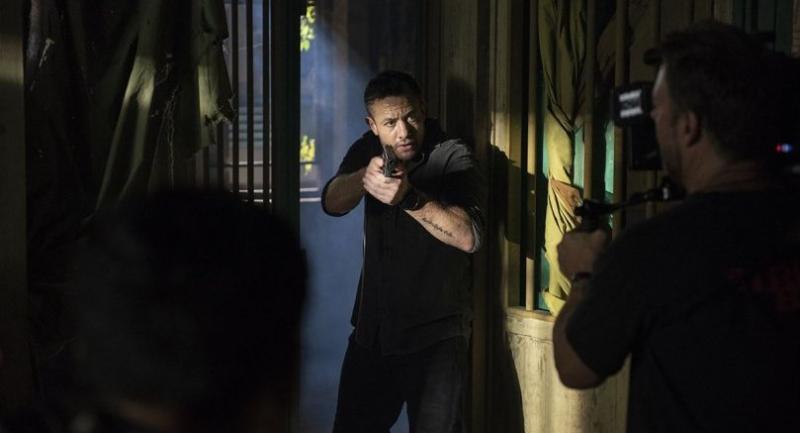
Cinemax has renewed the action series “Strike Back” for a seventh and final season, its president for miniseries and programming, Kary Antholis, announced this week.

“Strike Back” Season 6 is currently airing with new episodes at the same time as in the US, every Saturday at 10am with a same day encore at 9pm.

The season finale is scheduled for March 30.

The series is also available on HBO Go via AIS Play and AIS Playbox.

The show follows the explosive escapades of Section 20, an elite, multinational, covert special-ops team that spans the globe fighting a vast web of interconnected criminal and terrorist activity.

“‘Strike Back’ established Cinemax as a destination for adrenaline-fuelled action series nearly a decade ago,” Antholis said. “It is with sincere gratitude for the service of all of the past and present members of Section 20 – both in front of and behind the camera – that we send the team of on one last mission to save the world from annihilation.”

Showrunner Jack Lothian said the series had “always raised the bar for small-screen action”.

“And we’re looking forward to doing that one last time. There are plenty of twists and turns ahead, but I can promise one thing – we’re going out with a bang.”

Season six stars Warren Brown, Daniel MacPherson, Alin Sumarwata, Jamie Bamber, Yasemin Kay Allen and Varada Sethu.

Ghostly beings

ศาสตร์เกษตรดินปุ๋ย : ขอบคุณแหล่งข้อมูล : หนังสือพิมพ์ The Nation

http://www.nationmultimedia.com/detail/movie/30364902

The love triangle between Sai, centre, who has inherited the curse of Krasue, Noi, left, nd Jerd, right, brings a new look to the feared ghost in the
The love triangle between Sai, centre, who has inherited the curse of Krasue, Noi, left, nd Jerd, right, brings a new look to the feared ghost in the “Sang Krasue” (“Inhuman Kiss”).

Ghostly beings

movie & TV February 28, 2019 01:00

By Parinyaporn Pajee
The Nation

The wellknown Krasue ghost gets a makeover in a new chiller from Transformation Films

Thailand has many ghost tales and among the most popular and scary is Krasue – usually an old woman who morphs into a nocturnal spirit and whose head with the body’s internal organs hanging from it hovers in the air above the ground at night, looking a little like a fireball. She is the ghost that terrifies earthly mortals, eating their livestock and rotting food before returning to her body and appearing as a normal person by day.

Many successful movies about Thailand’s other popular ghost Mae Nak have been made over the last couple of decades, but Krasue seems to have fallen out of favour. Indeed only three projects starring this ghastly ghost have been made this century – “Krasue Valentine” by Yuthlert Sippapak in 2006, Bin Banluerit’s 2016 comedy “Krasue Khrueng Khon” and the erotic horror “Tamnan Krasue” (“Demonic Beauty”) by the same director.


Young actress Phantira stars as Sai

Now Krasue is back with not one but two new movies being released in three weeks. “Sang Krasue” (“Inhuman Kiss”) hits theatres on March 14 followed by “Sisters” on April 4.

For clarity’s, this article deals only with the first. Read about “Sisters” here next week.

“Sang Krasue” is set in a small village during World War II and centres on attractive teenager Sai (Phantira Pipityakorn), who grows up with two boys Jerd (Sapol Assawamunkong) and Noi (Oabnithi Wiwattana warang), who both fall in love with her.

But Sai discovers that she has inherited the curse of Krasue and soon she is transforming into the nocturnal spirit and hunting for fresh flesh and blood. Villagers are terrified by the deaths of their livestock and the Krasue hunt begins, led by veteran ghost hunter Tad (Surasak Wongthai). Jerd joins the hunt, but Noi, who has only recently returned to the village, decides to stand by Sai, despite knowing the horrifying truth.


“Sang Krasue” is set during the World War II in a small village whose residents become terrified by the mysterious death of their livestock and other strange events.


The project was initiated three years ago when Wisit Sasanatieng asked experienced TV-commercial director Sittisiri Mongkolsiri to work on it. “Sang Krasue” is Sittisiri’s first featurelength film, though he also worked on “Last Summer” with other moviemakers.

Sittisiri’s initial reaction was to say no. Unlike the various takes on Mae Nak that had been successfully and profitably turned into movies by Nonzee Nimibutr and Banjong Pisunthanakun, among others, Krasue movies remained trapped in the stereotype of the floating-head ghost who passes on the curse to another young woman by spitting into her drinking water.

But after giving the idea some thought, he decided it would be a challenge to make a film that was better than anything that had gone before.


Veteran actor Surasak Wongthai plays ghost hunter Tad.


That meant redefining the Krasue concept – keeping the essence of Krasue but changing the storyline.

“I don’t think of Krasue as a ghost but a monster,” says the director. “She is a normal person during the day but manifests herself at night as a head trailing the body’s internal organs. We call her a ghost because we define a ghost as a scary thing or spirit. But Krasue is like vampire or werewolf that transforms into something else and goes back to being a normal person later on.”

In “Sang Krasue”, Sai is a young girl, not the traditional old woman, who discovers that she has inherited Krasue blood and can mutate into the monster when darkness falls. She’s also aware that her fellow villagers are scared and will try to kill her. And it is on this turning point in her life that the film focuses – a teenage girl trying to manage her life and love while being hunted.


Even knowing Sai’s secret, Noi (Oabnithi) still loves her and helps her to survive the hunt.

Meanwhile her lover knows her secret but still loves her, and is willing to kiss her even though he knows that the Krasue curse can be transmitted through saliva.

“Of course, we all know that it can pass only to a woman, so my idea was what happens if the tainted saliva is transmitted through kissing and it happens to a man, not a woman. And in the film it does affect Noi after they kiss each other,” Sittisiri says.

Because of its scary and disgusting character, humans always think that Krasue is cruel. But in this film, “even a monster has a heart and is somehow more beautiful than she is in human form”, he says.

After Sittisiri created the new story line, he asked director Chookiat Sakveerakul to write the script. The film is set in the war years, far away from Bangkok. There is no electricity and criminals are everywhere.

“It’s not historically correct but a fantasy, so I’ve chosen to focus on the cinematic approach,” he explains. In his version, Krasue is an outsider and considered a threat, but she really is harmless.

“It’s a love story and, as in all love stories, love will win over everything, You don’t have to believe that Krasue is real – it’s just a fantasy tale.”

Sittisiri admits that the love triangle among the three actors and the monster image of Krasue are something like the successful teenage romance “The Twilight Saga”.

“But it’s also different. We see lots of vampire movies, but they’re not all the same,” he points out.

Aware that his idea was risky and that a large budget would be needed for the computer graphics and other visual effects, Sittisiri agreed to work on a pilot project to see whether he and the studio were moving in the same direction.

“After discussing the idea, Transformation gave me a budget to work on a short pilot clip. If it didn’t work or our idea wasn’t what they were after, then we wouldn’t proceed with the project. For the clip, I created my version of Krasue, the way she moves and other details, and they agreed.”

More than a year was spent on the visual effects, which Sittisiri describes as the hardest part of the project.

“We don’t have a real reference, so we went for a jellyfishlike movement for the Krasue while focusing on the right dynamics for the eye and hair movement,” he says.

The director also decided to cast three newcomers instead of superstars.

“It’s harder to convince the audience when they’re watching superstars. Besides, they always have busy working schedules and I wouldn’t have been able to handle that during the shoot. I’m also new too, so it’s better to work with new actors who can give us 100 per cent of their time.”

And obviously Transformation is pleased with the recent, naming Sittisiri codirector with Wisit Sasanatieng on “Oubatikaan” (“Shimmers”), the second Netflix original series coming from Thailand.

Cinema’s wonder women

ศาสตร์เกษตรดินปุ๋ย : ขอบคุณแหล่งข้อมูล : หนังสือพิมพ์ The Nation

http://www.nationmultimedia.com/detail/movie/30364881

Cinema’s wonder women

movie & TV February 28, 2019 01:00

By Special to The Nation

The Thai Film Archive celebrates female directors with a month of screenings

Thai cinema and its talented female directors come to the fore this month, in a series of films being screened by the Thai Film Archive at its Sri Salaya theatre to mark International Women’s Day.


Cinema is an industry run by men. Throughout the history of filmmaking, the job of “a director” is automatically linked to the image of a man seated in the director’s chair and running the creative engine of a movie. But in fact, women have long been involved in the key position on a film set. Alice Guy-Blache, for instance, was arguably the world’s first female filmmaker active between 1896-1906, right there at the dawn of cinema. A number of silentera filmmakers in Europe and the US were also female.

In Thailand, Pratuang Srisuphan is believed to be the first female cinematographer and director whose name appeared in several post-WWII movies (“Tat Rak”, 1953; “Sood Teerak”, 1955). Theatre director Ladda Sarntayon, who was active during the war years, later directed a film called “Fai Cheewit” in 1956 and “Kabuankarn Seree Cheen” in 1958. Wellknown actress Suphan Buranapim directed Chaam Amprang in 1955. Most prominently, Mom Ubol Yukol Na Ayutthaya, wife of Prince Anusornmongkolkarn, was credited as the director of several classic titles such as “Pak Thong Chai” (1957) and “Chaloeisak” (1958).


In short, women have long been a creative force in Thai cinema. And yet their presence has been limited, especially in the 16mm era in the 1960s and early 1970s. When the Thai film industry entered the 35mm era in the mid-1970s, a number of female directors came forward: Poranee Suwannatat, Amporn Prateepsane (who was a former action star), Suangsuda Chollampee, Nantana Weerachon, Oranuch Ladpanna, who all specialised in action flicks, as well as actresses who turned to directing such as Choosri Meesommon and Patravadi Meechudhon.


It was in the late 1990s and 2000s that a generation of nonmale filmmakers – spurred by technology and a renaissance of the industry that engendered new opportunities – made their presence felt both in the mainstream and independent scenes. Among them were Samarnrat “Ing K” Karnjanavanich (“Shakespeare Must Die”), Pimpaka Towira (“The Island Funeral”), Mingmongkol Sonakul (“Isaan Special”), Siwaporn Pongsuwan (“Khaoniew Moo Ping”), Paoon Chantasiri (“The Letter”), Sukanya Wongsatapat (“Akha Pu Narak”), Areeya Sirisopa and Nisa Kongsri (“Dek Toh”) and Anocha Suwichakornpong (“By the Time It Gets Dark”).


These directors touch on a wide range of style and subject, from hard-hitting documentary, satirical drama, experimental film and mainstream romantic flicks. Recently, a new crop of woman directors has emerged: Kanittha Kwanyoo (“Arpat”), Saraswadee Wongsompetch (“Yes or No”), Bongkot Benjarongkakul (“Sad Beauty”) and Manassanan Panlertwongkul (“Love Sucks”). There are also a number of young short filmmakers who’re poised to move on to feature filmmaking.


And while distinguishing between “male” and “female” directors is increasingly pointless in the world of gender fluidity, the collective rally for the film industry to promote nonmale perspective through the works of nonmale filmmakers has gained momentum in the past few years – in Hollywood, international film festivals and in Thailand.


And so, to mark International Women’s Day on March 8, the Archive (Public Organisation) hosts a programme of 13 female-directed Thai films, from the 1960s to 2018, plus Patty Jenkins’ “Wonder Women” in a special (and free) screening.


The programme starts tomorrow March 1 and runs throughout the month at Sri Salaya Theatre, Thai Film Archive on Buddha Monthon Sai 5 Road, Salaya.

For more information, call (02) 482 20134 or visit http://www.face¬book.com/ThaiFilmArchivePage


Coming to the screen, weekdays at 5.30pm

– Tomorrow: “Arpat” (2014) directed by Kanittha Kwanyoo – A horror film about a monk, a girl and a ghost

– March 6: “Rak Niran” (“Eternal Love”, 1970) directed by Poranee Suwannatat – A vintage love story shot partly in Hong Kong

– March 8: “Wonder Woman” (2017) directed by Patty Jenkins – stars Gal Gadot as Wonder Woman.

– March 12: “Yes Or No” (2010) directed by Sarasawadee Wongsompetch  – A love story that defies gender stereotype

– March 14: “Dek Toh” (2005) directed by Areeya Sirisopha and Nisa Kongsri – A documentary about a rural school

– March 16: “Sad Beauty” (2018) directed by Bongkot Benjarongkakul – A thriller/drama about two female friends and their misadventure.)

– March 20: “Pumaree See Thong” (1988) directed by Nantana Weerachon  – A woman who keeps losing her husbands to deadly accidents falls in love and fears that the curse will follow her.

– March 22: “Peen Kliew” (1994) directed by Oranuch Ladpanna  – An action film about a group of locals who decide to rise and fight against influential landowners.

– March 23:

1pm:”Lovesucks” (2015) direct¬ed by Manassanum Punlertwongsakul

3pm: “Karaoke Girl” (2013) directed by Visra Vijitvadhakarn

– March 28: “Rak Risya” (1979) directed by Patravadhi Sritrairat (Meechudhon) – tale of forbidden love from Thailand’s doyenne of the screen and stage

– March 29: “Khao Niao Moo Ping” (2006) directed by Siwaporn Pongsuwan (A girl and her puppy go on an adventure in Bangkok.)

– March 31:

1pm: “The Island Funeral” (2015) directed by Pimpaka Towira (A road movie set in the Deep South of Thailand.

3pm: “By the Time It Gets Dark” (2016) directed by Anocha Suwichakornpong  – An award-winning film partly inspired by the events of October 6, 1976.

A night of surprises

ศาสตร์เกษตรดินปุ๋ย : ขอบคุณแหล่งข้อมูล : หนังสือพิมพ์ The Nation

http://www.nationmultimedia.com/detail/movie/30364779

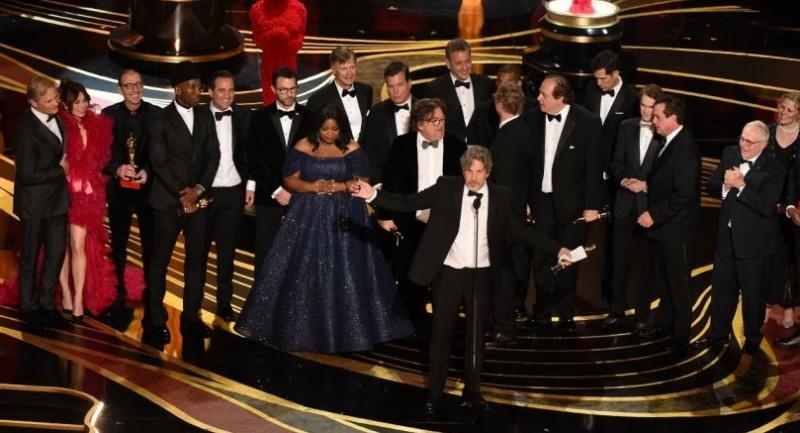
Producers of Best Picture nominee “Green Book” Peter Farrelly and Nick Vallelonga accept the award for Best Picture with the whole crew on stage during the 91st Annual Academy Awards.

A night of surprises

movie & TV February 26, 2019 01:00

By AGENCE FRANCE-PRESSE

2,053 Viewed

Cuaron wins three Oscars for “Roma” but “Green Book” is best film and Queen bag the most prizes

ALFONSO CUARON bagged a hat trick of Oscars on Sunday for “Roma”, his love letter to his childhood in 1970s Mexico City, but civil-rights drama “Green Book” crashed his party with a win for best picture.

The 57-year-old Cuaron won the prizes for best director, cinematography and foreign-language film, capping a wonderful night – and giving streaming giant Netflix another feather in its cap.

Alfonso Cuaron winner of the Best Director Award, Best Achievement in Cinematography Award and Best Foreign Language Film Award for “Roma”. 

“I grew up watching foreign-language films, learning so much from them, being inspired – films like ‘Citizen Kane’, ‘Jaws’. And there are no waves, there’s only the ocean,” an emotional Cuaron said.

“I think the nominees tonight have proven that we are part of the same ocean.”

Rock legends Queen, fronted by US singer Adam Lambert, kicked off the 91st Academy Awards with a rollicking performance of “We Will Rock You”. The group then brought the crowd to its feet with a rendition of the classic “We Are the Champions”.

Rami Malek won the Best Actor award for “Bohemian Rhapsody” 

Guitarist Brian May, 71, who is also an astrophysicist, delivered a signature guitar solo to open Tinseltown’s biggest night.

The British rockers may have experienced more nerves than during a normal gig: biopic “Bohemian Rhapsody” was up for several awards and ended up the biggest winner of the night with four Oscars.

The film – which tracks the band’s rise to fame from the moment when Freddie Mercury joined the band in 1970 to their memorable 1985 Live Aid performance – took statuettes for best actor Rami Malek, as well as sound editing, sound mixing and film editing.

“I may not have been the obvious choice but I guess it worked out,” chuckled a self-deprecating Malek, whose spellbinding turn as Mercury captivated audiences.

“Roma”, Cuaron’s black-and-white ode to childhood and the women who raised him, was the frontrunner going into the night. It had earned 10 nominations, despite spending little time in movie theatres, in keeping with Netflix’s customary release strategy.

“Green Book” overcame controversy for a successful night – it started off with a widely expected best supporting actor trophy for Mahershala Ali, and a best original screenplay award.

It was expected to lose out to “Roma” for best picture, but crept up to take the honours after winning the same prize at the influential Producers Guild Awards.

“The whole story is about love. It’s about loving each other, despite our differences, and finding out the truth about who we are,” said director Peter Farrelly.

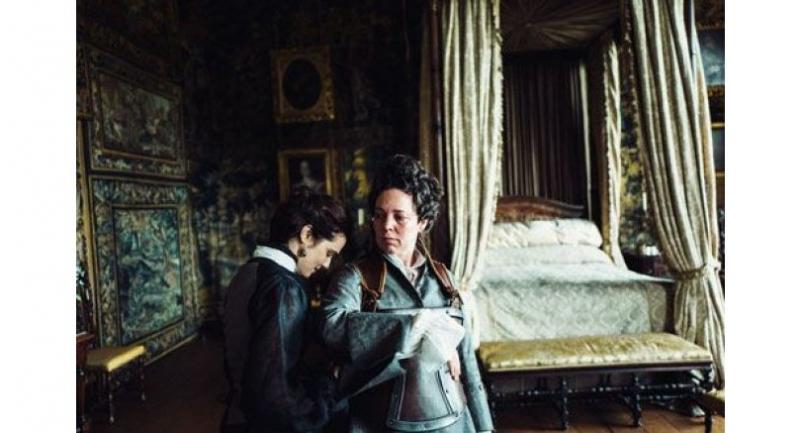
Another frontrunner for an Oscar was offbeat royal romp “The Favourite”, which also had 10 nominations but turned out to be one of the night’s big losers.

It went home with just one win – albeit one of the night’s biggest shocks – for best actress Olivia Colman. The 45-year-old Brit bested Glenn Close, who swept all before her during the awards season for “The Wife”.

 Lady Gaga, left, and Bradley Cooper perform during the 91st Annual Academy Awards. 

Crowd favourite “A Star is Born”, too, came away with only one statuette, for Lady Gaga’s song “Shallow”, while the much-vaunted Dick Cheney biopic “Vice” was only recognised for hair and makeup.

“I’ve worked hard for a long time and it’s not about winning. But what it’s about is not giving up. If you have a dream, fight for it,” the Grammy-winning Gaga said, tears streaming down her face.

“Spider-Man: Into the Spider-Verse” won the Oscar for best animated film – a reward for its stunning, innovative visuals and strong messages about diversity and family that won over both moviegoers and critics.

“To our audience, thank you so much. We love you, and we just want you all to know – we see you, you’re powerful. This world needs you,” co-director Peter Ramsey told the audience at the Dolby Theatre.

The film – directed by Ramsey, Bob Persichetti and Rodney Rothman – introduces movie audiences to a new Spider-Man, Miles Morales, a half-black, half-Latino teen who, like Peter Parker before him, is just trying to survive adolescence in New York, find a girl who likes him and figure out who he is.

The classic tale of good and evil is told in a new way – rather than be stuck in some cardboard comic-book universe, this Spider-Man for a new generation wears Nikes and listens to rap.

The film is a perfect antidote to the #OscarsSoWhite complaints that have plagued the Academy of Motion Picture Arts and Sciences in recent years.

Celebrated filmmaker Spike Lee provided one of the few eyebrow-raising moments as he accepted an Oscar, his first ever competitive prize, for best adapted screenplay for race drama “BlacKkKlansman”.

Writerdirector Spike Lee, left, winner of Best Adapted Screenplay for “BlacKkKlansman,” and Mahershala Ali, winner of Best Supporting Actor for “Green Book”. 

Dressed all in purple in tribute to late pop crooner Prince, the director put the ABC network’s anti-profanity bleeping machine through its paces with some colourful language.

But then he got serious with an impassioned tribute to his grandmother and a plea for voters to be “on the right side of history” in the 2020 US presidential election.

Among all the contenders, Marvel superhero movie “Black Panther” would have had the best brand recognition among the TV audience – it took in more at the box office than all of its best-picture rivals combined.

The 7,900-odd voting members of the Academy of Motion Picture Arts and Sciences saw fit to add gold to the blockbuster’s haul of green, with statuettes for its production design, costumes and original score.

The winners were announced as ever in a ceremony beamed around the world to millions of showbiz fans with a twist – there was no host for the first time in three decades.

The academy opted to take the risk after comedian Kevin Hart withdrew in the face of a firestorm over past controversial tweets that were slammed as homophobic.

The first statuette – for best supporting actress – went to first-time nominee Regina King, 48, for her emotional performance as a mother defending her daughter’s boyfriend, wrongfully accused of rape, in “If Beale Street Could Talk”.

The academy – desperate to boost television ratings that have plummeted in recent years – tried to stick to a three-hour telecast, but it hit a few bumps along the way.

Controversies over its efforts to save time included plans to present a handful of awards during commercial breaks, and to feature only a few of the nominated songs. Both ideas were quickly scrapped.

Gaga and her co-star and director Bradley Cooper wowed the audience with their performance of “Shallow”, while songstresses Jennifer Hudson and Bette Midler also performed.

In the end, the show was only about 15 minutes over time.

Best Actress winner Olivia Colman for “The Favourite”

Best Supporting Actress winner for “If Beale Street Could Talk” Regina King)​​​​​​

Director Peter Farrelly, winner of Best Picture and Best Original Screenplay for “Green Book” 

​​​​​​​Andrew Wyatt, left, Anthony Rossomando, second left, Lady Gaga, second right, and Mark Ronson. Right, won the “Best Original Song” award for “Shallow”.

Oscars night is here! Hollywood ready for glitzy gala

ศาสตร์เกษตรดินปุ๋ย : ขอบคุณแหล่งข้อมูล : หนังสือพิมพ์ The Nation

http://www.nationmultimedia.com/detail/movie/30364664

  • Photo/AFP
    Photo/AFP

Oscars night is here! Hollywood ready for glitzy gala

movie & TV February 24, 2019 12:28

By Agence France-Presse

3,806 Viewed

Hollywood’s A-listers will hit the red carpet Sunday for the Oscars — the climax of a long, eventful awards season that could yield some big surprises.

Alfonso Cuaron’s black-and-white cinematic ode to his childhood, “Roma,” leads with 10 nominations and is a firm favorite for the coveted best picture Academy Award.

If it does win, it will be the first foreign-language film, and the first from streaming giant Netflix, to earn the honor.

But civil rights dramedy “Green Book” has overcome controversy to remain on the radar, and could benefit from the Academy’s complex preferential voting system to snatch the top prize.

Hot on their heels are a variety of films, from offbeat royal romp “The Favourite” (also with 10 nominations), to Spike Lee’s race drama “BlacKkKlansman,” to crowd pleasers like superhero flick “Black Panther” and musical romance “A Star Is Born.”

Two biopics — “Vice” about former US vice president Dick Cheney and “Bohemian Rhapsody” about the band Queen — round out the list of contenders for best picture.

The 7,900-odd voting members of the Academy of Motion Picture Arts and Sciences had bold choices in front of them — traditional art-house Oscar bait, and big, rousing blockbusters.

“With eight best picture nominees, every film has passionate supporters, but no film has a consensus,” Tim Gray, awards editor for showbiz trade publication Variety, told AFP.

All will be revealed at the Dolby Theatre, in a ceremony beamed around the world to millions of showbiz fans, with a twist — there will be no host for the first time in three decades.

The Academy opted to take the risk after comedian Kevin Hart withdrew from the gig in the face of a firestorm over past controversial tweets that were slammed as homophobic.

“They still don’t have an answer to a question that’s been around since the first TV showing in 1953: is this a presentation of every category, or is it entertainment?” Gray said. “They want it to be both.”

The entertainment factor will be high when Queen opens the show with singer Adam Lambert fronting the iconic band.

– Will Glenn Close finally win? –

For top acting honors, Christian Bale’s transformation into Cheney for “Vice” gave him the early lead in the Oscars race, and several statuettes.

But Rami Malek won respect from his peers — and a Golden Globe, Bafta and a Screen Actors Guild award — for his spellbinding turn as late Queen frontman Freddie Mercury.

“In Christian Bale’s, I see an incredible actorly thing, but with Rami Malek, you see a role that just really connected with audiences,” said Variety’s chief film critic Peter Debruge.

“I wouldn’t be surprised if the newcomer disrupts in this case.”

The best actress race has a clear favorite: Glenn Close, who has swept the prizes for her gripping work in “The Wife” as a woman on the edge when her author husband wins the Nobel Prize in Literature.

Lady Gaga wowed fans and critics with her turn in “A Star is Born,” and Yalitza Aparicio’s nomination for her first acting role in “Roma” earned praise. But it looks to be Close’s night.

“It is not her strongest role, but it is an opportunity for her to really own a small film, to carry it on her shoulders, and to remind the industry that here is one of our real treasures as an actress,” Debruge said.

Mahershala Ali (“Green Book” and Regina King (“If Beale Street Could Talk”) are the odds-on favorites in the supporting acting categories.

– Better ratings this year? –

The Academy — desperate to boost television ratings that have plummeted in recent years — is trying to stick to a three-hour telecast, but it hit a few bumps along the way.

Controversies over its efforts to save time included plans to present a handful of awards during commercial breaks, and to feature only a few of the nominated songs. Both ideas have since been scrapped.

Lady Gaga and Bradley Cooper will sing their power ballad “Shallow” from “A Star Is Born.” Songstresses Jennifer Hudson, Bette Midler and Gillian Welch will also perform.

But Variety reported that Kendrick Lamar and SZA would not perform “All the Stars” from “Black Panther,” due to a “logistics and timing” issue.

The 91st Academy Awards begin Sunday at 5:00 pm (0100 GMT Monday).

And the Oscar goes to ….

ศาสตร์เกษตรดินปุ๋ย : ขอบคุณแหล่งข้อมูล : หนังสือพิมพ์ The Nation

http://www.nationmultimedia.com/detail/movie/30364385

British film “The Favourite” has 10 nominations.

And the Oscar goes to ….

movie & TV February 21, 2019 01:00

By Agence France-Presse
Los Angeles

2,098 Viewed

Who votes for the Academy Awards and how does it work?

The ballots are almost all in!

Millions of television viewers around the globe will tune in Sunday (Monday morning Bangkok time) to watch the Oscars, the glitziest night in showbiz, but most don’t know how the winners are chosen.

Less than 8,000 people in the entertainment industry select the honourees – and Tuesday marked the final day of voting.

The following is a look at the complex, sometimes confounding process that leads to the winners of the 24 Academy Awards:


Who votes?

The Academy of Motion Picture Arts and Sciences in Los Angeles currently has 7,902 voting members.

Academy membership is divided into 17 branches – actors, directors, producers, costume designers, etc – and candidates must be active or otherwise have “achieved distinction” in the industry.

Applicants must be sponsored by two Academy members representing their branch.

Oscar winners and nominees are automatically considered for membership and don’t need sponsors.

Applications are reviewed once a year by the Academy’s Board of Governors, which has the final say on who joins the elite group.

Members used to enjoy voting rights for life but since 2016, “voting status” has been limited to 10 years, and is renewable, to avoid having voters who are no longer active in the business.

Lifetime voting rights only come after three 10year terms. Those not active become “emeritus” members who cannot vote.


“Roma” by Alfonso Cuaron also has 10 nominations


Who are the Academy members?

On principle, the Academy does not reveal its voting roll, though nothing prevents a member from saying he or she can cast a ballot.

Following the #OscarsSoWhite uproar in 2015 and 2016, about the lack of black nominees, the Academy has endeavoured to be more inclusive, vowing to double the number of women and minority members by 2020.

In June 2018, the Academy took the unusual step of revealing the names of all 928 people invited to join.

If they all agreed, 31 per cent of Academy members are now women and 16 per cent are people of colour, according to The Hollywood Reporter.


How are the nominees chosen?

Members of each of the 17 branches pick the nominees in their area of expertise. The actors’ branch – the largest voting group – submits nominations for the acting categories, directors submit nominations for best director and so on.

Nominations for certain awards, like for best foreign language film and best animated feature, are chosen by special committees.

The entire membership votes to choose the nominees for best picture.

How are the winners chosen?

All voting members choose the winners.

In 23 of 24 categories, the person with the most votes is the winner.

But when it comes to the coveted best picture award, the Oscar voters have since 2009 used a complicated preferential ballot system in which they rank the films from most favourite to least favourite.

Anywhere from five to 10 nominees can be chosen: this year, eight films are in contention.

If one film garners more than 50 per cent of the vote outright, it automatically wins.

Otherwise, accounting firm PricewaterhouseCoopers uses an instant-runoff voting system that ensures that the film that enjoys the widest consensus among Academy voters wins.

That means the count begins by eliminating the film that received the lowest number of firstplace votes and redistributing those ballots to those voters’ second choice.

The process of elimination continues until there is one film left with more than 50 per cent of the vote.

“The idea of the preferential ballot is to reflect the wishes of the greatest number of voters,” explained Ric Robertson, who was the Academy’s chief operating officer in 2009 when the process changed.

“Otherwise you might end up with a movie that, say, 25 per cent of the people love and the rest can’t stand,” he told the Los Angeles Times.

“This way, hopefully, you have a winner that most people can live with.”

The torture within

ศาสตร์เกษตรดินปุ๋ย : ขอบคุณแหล่งข้อมูล : หนังสือพิมพ์ The Nation

http://www.nationmultimedia.com/detail/movie/30364460

Singaporean Daniel Hui's fiction
Singaporean Daniel Hui’s fiction “Demons” had a successful screening in the Forum section of Berlin festival. It stars famous filmmaker Glen Goei and newcomer Vicky Yang in a mysterious story about abuse, madness and cannibalism.

The torture within

movie & TV February 21, 2019 01:00

By Donsaron Kovitvanitcha
Special to The Nation

3,262 Viewed

Indonesia scores high at the Berlin Film Festival with a movie about food while Singaporean director Daniel Hui brings his little house of horrors to the big screen

The 69th edition of Berlin International Film Festival, which ran from February 7 to last Saturday, brought cinephiles films from around the world but sadly only a few Southeast Asian titles made it into the selection this year.

In the section Culinary Cinema, which presents films about food, Edwin’s latest feature “Aruna and Her Palate” became the first Indonesian film to be shown in this special section of the festival. The Indonesian-South Korean-Singaporean co-production was released in Indonesia in September and screened at the International Film Festival and Awards Macao in December.

Starring Dian Sastrowardoyo and Nicholas Saputra, “Aruna and Her Palate” is the story of Aruna, an epidemiologist who is sent to investigate an outbreak of bird flu and also uses the trip to satisfy her obsession with food.


Vietnam’s Pham Ngoc Lan brought his latest brief work “Blessed Land” to compete in Berlinale Shorts 2019.

Culinary Cinema is a special section of Berlin and ticket prices include a special dinner created to fit the theme of the film. For “Aruna and Her Palate”, ticket holders enjoyed an Indonesian-inspired dinner created by The Duc Ngo, a top Vietnamese chef based in Berlin.

In Berlinale Shorts, Singaporean Tan Wei Keong’s “Kingdom” and Vietnamese filmmaker Pham Ngoc Lan’s “Blessed Land” were screened in competition. Although neither film won a prize, it provided a good opportunity for young Southeast Asian filmmakers to present their films in Berlin.

Singaporean film “Demons” directed by Daniel Hui had its European premiere in the Forum section after making its debut at last year’s Busan International Film Festival. A graduate of the School of Film/Video at the California Institute of the Arts, Hui was also behind the 2011 feature “Eclipses” and 2014’s “Snakeskin”, which was shown at the World Film Festival of Bangkok in 2016. “Demons” is the director’s latest work and also his first fiction feature, and like his previous works was entirely shot on 16mm film. This time, he says, he wanted to make something that was more personal. “This is a very personal film and that makes it hard for me to talk about it,” Hui told The Nation after its successful screening.


“Aruna and Her Palate” by Edwin was the only Indonesian entry at this year’s Berlin International Film Festival. A commercial title, it’s co-produced by South Korea’s CJ Entertainment.


“I read a lot and I get many of my ideas from books,” he continued, adding that the inspiration for “Demons” came from Chinese literature.

“The original idea was to make a film about poetry. One part of it is based on a short story by Lu Xun called “A Madman’s Diary” about a man who is losing his mind. He reads lots of classical texts from Chinese literature that teach virtue and morality but in his confused mind sees that they all say that you should eat people. He starts to believe that cannibalism is part of his tradition and culture and goes out on to the street where he thinks he hears passersby people talking about eating people. The cannibalism in my film is inspired by this story,” he explained.

The main character in “Demons” is Vicky (Vicky Yang), a new actress who is thrilled when she lands the leading role in Daniel (Glen Goei)’s latest play. But her role casts her into endless torture at the esteemed director’s hands. When she turns to supposed allies for support, Vicki finds that they encourage Daniel’s abuse as part of her artistic growth and his genius.

“I started this project four years ago, and after that I kept writing and writing. The film has many different versions. The first version was an adaptation of Dostoyevsky, which is why it’s called ‘Demons’. Then it changed and changed until it became the way it is”, Hui says.


Short animation “Kingdom” by Singaporean Tan Wei-Keong had its international premiere in the festival’s Berlinale Shorts competition.

The film features several people from the Singaporean film scene, among them the producer Tan Bee Thiam and the director himself. For the main characters, Daniel chose to work with his friend Yang, even though she had little acting experience, and Goei, a well-known film and theatre director whose 1998 movie “Forever Fever” was the first Singaporean film to be distributed in the US by Miramax.

“Vicky is a close friend of mine,” Hui explains. “I’ve known her for 10 years. She played a small role in ‘Snakeskin’. We talked a lot about our pasts and our own experiences. She was hungry to perform something very personal.

“I needed somebody who already had a reputation as an artist. Glen is a very famous in Singapore and he’s very open to working with young filmmakers. He always finds it very challenging and stimulating for him. Without him, we couldn’t have made the film.

“We shot over 10 weeks but it was difficult. There were many accidents. Glen fell during the production and had to go to hospital. It was quite scary,” he continues, adding that because there was no script, much time was taken up trying new things,

“We had a general outline, which is not a script. We knew that we would show up at the location and that these people would be in the scene. I didn’t know what exactly they were going to say or react with each other, so the night before, I would write something and send it to them. Sometimes on the day, I’d just tell them. We rehearsed a lot and talked a lot and then shot the scenes. We would shoot for six hours a day, then go back and think about the next day’s scenes. I then spent 18 months editing the film.”

Daniel decided to ask Thai sound designer Akritchalerm Kalayanamitr to work on this project “I’m big fan of his works. Not only from Apichatpong [Weerasethakul]’s films but also from [Sompot Chidgasornpongse’s] ‘Railway Sleepers’. We worked together for five months. At one point, after he’d spent two months on the sound, I decided to reedit the film, so he had to rework the sound again, but he was extremely generous.”

Another part of the film deals with LGBT issues faced by the character Daniel and his boyfriend, who is played by Hui.

“LGBT in Singapore is still criminalised. I am gay myself, but I didn’t want to show that because you’re LGBT, you’re also a victim. I wanted everybody to be unsafe in the film. This guy is gay but he also rapes women, says Hui, adding that the Singapore authorities will not like the LGBT aspect.”

And despite the opposition to LGBT themes in his home country, Hui says he is still planning to release it in Singapore.

“I’m not how easy it will be but we will try. I don’t expect it to be plain sailing but I also don’t expect to be banned by the censorship board.”

New series on Cinemax to debut this summer

ศาสตร์เกษตรดินปุ๋ย : ขอบคุณแหล่งข้อมูล : หนังสือพิมพ์ The Nation

http://www.nationmultimedia.com/detail/movie/30364437

New series on Cinemax to debut this summer

movie & TV February 20, 2019 01:00

By THE NATION

2,372 Viewed

Two new Cinemax Original Series, “Warrior”, based on writings of martial arts legend Bruce Lee, and “Jett”, about a world-class thief, will premiere on Cinemax in April and June respectively.

Shot in Cape Town, South Africa, Warrior” is an action-packed crime drama set during the brutal Tong Wars of San Francisco’s Chinatown in the second half of the 19th century. The 10-episode drama series, executive produced by Jonathan Tropper and Justin Lin, premieres same time as the US on Saturday, April 6 at 9am exclusively on Cinemax.

The series follows Ah Sahm (played by Andrew Koji), a martial arts prodigy who emigrates from China to San Francisco under mysterious circumstances and becomes a hatchet man for one of Chinatown’s most powerful tongs (Chinese organised crime family).

Another series “Jett” will premiere in June on Cinemax and stars Carla Gugino as worldclass thief Daisy “Jett” Kowalski. Fresh out of prison, she is forced back into doing what she does best, and a cast of morally ambivalent, dangerous and eccentric criminals, from budding femme fatales to compromised law enforcers, are determined to exploit her skills for their own ends.

“Little Big Lies” returns alongside new drama “Chernobyl”

ศาสตร์เกษตรดินปุ๋ย : ขอบคุณแหล่งข้อมูล : หนังสือพิมพ์ The Nation

http://www.nationmultimedia.com/detail/movie/30364388

  • “Little Big Lies”

“Little Big Lies” returns alongside new drama “Chernobyl”

movie & TV February 19, 2019 15:12

By The Nation

2,964 Viewed

The second season of the highly anticipated award-winning HBO Original drama series “Big Little Lies” and a brand new HBO Original mini-series “Chernobyl” will premiere exclusively on HBO in June and May respectively.

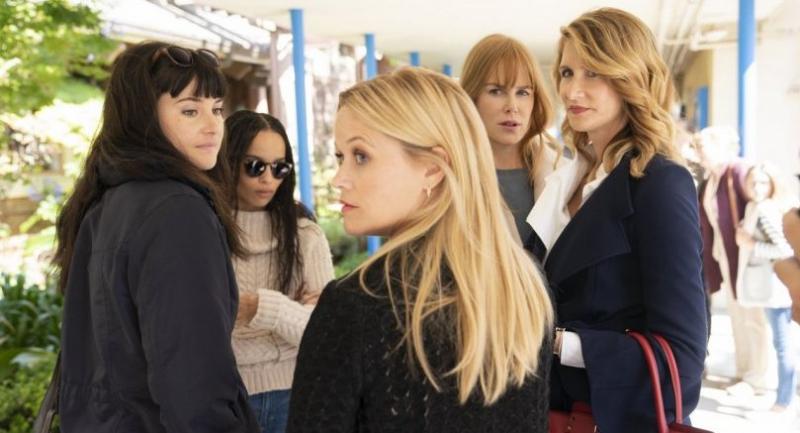
 Premiering in June, the seven-episode second season of “Big Little Lies” is set in the tranquil seaside town of Monterey, California. The night of the school fundraiser changed that peaceful life, leaving the community reeling as the “Monterey Five” – Madeline, Celeste, Jane, Renata and Bonnie – bond together to pick up the pieces of their shattered lives. The series explores the malignancy of lies, the durability of friendships, the fragility of marriage and the vicious ferocity of sound parenting.

Created by David E Kelley and based on the novel by Liane Moriarty, the series stars Reese Witherspoon, Nicole Kidman, Shailene Woodley, Laura Dern and Zoe Kravitz alongside new cast member Meryl Streep.

“Chernobyl” dramatises the story of the 1986 nuclear accident, one of the worst man-made catastrophes in history, and of the brave men and women who made incredible sacrifices to save Europe from unimaginable disaster. Starring Emmy nominee Jared Harris, Stellan Skarsgard and Oscar nominee Emily Watson, the five-part mini-series debuts in May.

The change within

ศาสตร์เกษตรดินปุ๋ย : ขอบคุณแหล่งข้อมูล : หนังสือพิมพ์ The Nation

http://www.nationmultimedia.com/detail/movie/30364349

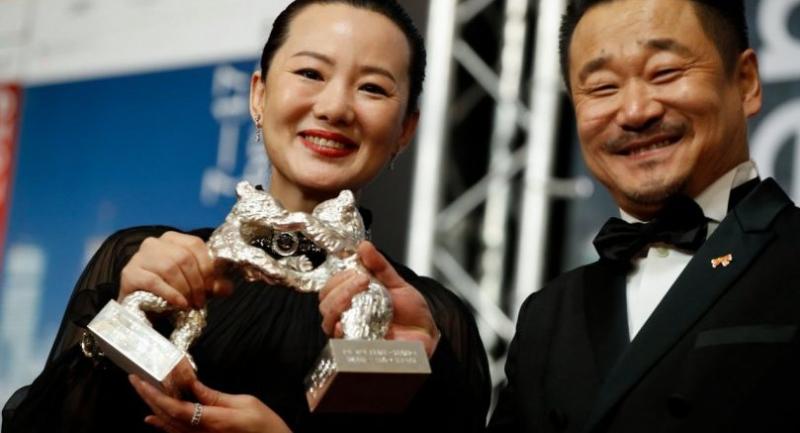
  • Chinese actors Wang Jingchun and Yong Mei pose with their Silver Bears for Best Actors in the film “Di Jiu Tian Chang?” (“So Long, My Son”) at the 69th Berlinale film festival./AFP Photo
    Chinese actors Wang Jingchun and Yong Mei pose with their Silver Bears for Best Actors in the film “Di Jiu Tian Chang?” (“So Long, My Son”) at the 69th Berlinale film festival./AFP Photo

The change within

movie & TV February 19, 2019 01:00

By DONSARON KOVITVANITCHA
SPECIAL TO THE NATION

2,144 Viewed

True-to-life tales resonate with judge and audiences at this year’s Berlin International Film Festival

For almost 70 years, the Berlin International Film Festival has been one of the best platforms for world and Asian cinema. And this year was no exception. Its 69th edition wrapped at the weekend with a major triumph for director Nadav Lapid whose film “Synonyms” became the first Israeli movie to win the prestigious Golden Bear.

The Franco-Israeli co-production is the third feature film directed by Lapid, who was praised as the rising star of Israeli cinema for his 2014 film “The Kindergarten Teacher”, which premiered at the Critic’s Week in Cannes and was later remade in an American version. This year was also the first time Lapid had been invited to screen his film in Berlin, with “Synonyms” taking home not only praise from film critics, but also one of the biggest awards in cinema.

“‘Synonyms’ might be a scandal in Israel and even in France, but for me the film is a big celebration of cinema,” Lapid said in his acceptance speech.

In the film, which is set in Paris, Lapid instils his own experiences, feelings and anger in his main character Yoav, a man who escapes from Israel to Paris and finds his way to an empty apartment and has his clothes stolen while he is taking a shower. Despite being saved by a young couple, Yoav struggles in the foreign city, and tries to get rid of his identity by speaking only French. But all too often, his Israeli persona comes back to haunt him in a Europe where migrants are not always warmly welcomed.

Francois Ozon’s latest film “By The Grace of God”, in which the main character decides to confront the priest who sexually abused him when he was a boy, won Grand Jury Prize, while German filmmaker Angela Schanelac won the Silver Bear for Best Director for her latest film “I Was a Home, But…”.

Chinese director Wang Xiaoshuai /AFP Photo

Chinese cinema also enjoyed another big year at the Berlinale, with Wang Xiaoshuai’s latest outing “So Long, My Son” winning both the Silver Bear for Best Actor and Silver Bear for Best Actress.

“Five years ago, I was down there in the audience. Today I am standing right here,” actor Wang Jingchun noted during his acceptance speech for the Silver Bear. A familiar face in Chinese cinema, he has starred in many successful films including “Black Coal, Thin Ice”, which won the Golden Bear in 2014.

“I had no idea that I would win this award,” added an emotional Yong Mei, who was in Berlin for the first time.

“I’d like to thank Berlin International Film Festival, |and the cast and crew of ‘So Long, My Son’.”

Wang Xiaoshuai has long regarded Berlin as the place where he started his career. His first feature film “The Days” was screened in the festival’s Forum section back in 1994. He has won a top prize twice: the Grand Jury Prize in 2001 for “Beijing Bicycle” and the Silver Bear for Best Screenplay for 2007’s “In Love We Trust”.

“People who grew up in China will see the changes very clearly in ‘So Long, My Son’. I don’t know if it is lucky or unlucky to go through that. As a creative artist, I am able to take that huge span of time and put a subjective angle on it. I guess the most extensive change is that people don’t recognise the place they use to live in,” he said.

Yong Mei and Wang Jingchun in a scene from the movie “So Long, My Son”.

“So Long, My Son”, which takes place over 30 years, starts with the death of Xing Xing, the only son of Yaojun and Liyun, then explores the lives of the couple before and after the loss of their only son in an period when Chinese citizens were allowed to have only one child or face persecution and even forced abortion.

Liyun is a victim of the One-Child Policy and was forced to have an abortion when the family planning department of her factory found out that she was expecting a second child. The abortion leaves her sterile and she and her husband are traumatised when they discover that the person who forced her to do abort caused the death of Xing Xing.

“During the cultural revolution, we had a saying, ‘Look forward and don’t think about the past’. At the time it was all about forgetting the economy and caring about ideology. An improved economy has changed all that. But even if we look back at the whole process, we still need to keep looking ahead and take lessons from the past to avoid certain mistakes,” Wang Xiaoshuai added.

“Our generation and our parents’ generation were really at the forefront of that change and they have experienced both the old society and new society. It gave me an opportunity as a director to try and show everything the Chinese have experienced. There are lots of people who want to go back to Chairman Mao’s era, which is fine, but society does need to develop. There are lots of problems in China, which you have to deal with during the process of development, but we also need a film to tell us the story of the past to avoid the mistakes of the future,” the director added.

Although the film touches on the dark history of China, it also allows a glimpse of how people can and do go on with their lives after traumatic events, of how they deal with guilt and let go of a grudge.

“The special policy that changed us is unavoidable because that was what we lived through, but what I am more interested in as an artist is people’s flexibility and their ability to love. My parents and grandparents underwent so many changes but they are still very brave and optimistic in the way they approach life and how they have tried to achieve the best out of life. I hope that message has come out from my film.”

But while “So Long, My Son” and “Ondog”, the Mongolian film by Chinese filmmaker Wang Quan-An both enjoyed successful screenings in Berlin, Zhang Yimou’s latest film “One Second” was mysteriously withdrawn from the festival’s competition line-up. Rumours indicated that this might have something to do with the strict censorship in China.

“It was very unexpected. I was getting off the plane when I heard the news and I was quite shocked. It was very tough process for any filmmaker so I feel a great deal of sympathy for Zhang Yimou. His first film came to Berlin and we’ve all been influenced by him. I was really looking forward to showing my film alongside his. I don’t know what happened but I am very sorry about it,” Wang Xiaoshuai continued, adding that young filmmaker Derek Kwok-cheung Tsang’s “Better Days”, which was expected to screen in the Generation section, was also pulled.

The 69th edition of Berlin International Film Festival marked the last edition for Dieter Kosslick, the festival director who has been in this position since 2002 and who received a standing ovation during the closing ceremony.

For the 70th edition of the festival, Carlo Chatrian of the Locarno Film Festival will move to Berlin as artistic director, while Mariette Rissenbeek, managing director of German Films has been appointed as executive director of the Berlin International Film Festival.