‘Bangkok Bastards’ and the story of Thailand’s sustainable architecture

#SootinClaimon.Com : ขอบคุณแหล่งข้อมูล : หนังสือพิมพ์ The Nation.

https://www.nationthailand.com/special-edition/sustainability/40024860

‘Bangkok Bastards’ and the story of Thailand’s sustainable architecture

‘Bangkok Bastards’ and the story of Thailand’s sustainable architecture

TUESDAY, FEBRUARY 14, 2023

Jarupong Krisanaraj

Along with business operations, the bio-circular-green (BCG) economic model can also be applied to architecture seamlessly, said Chatpong Chuenrudeemol, director of the architecture studio CHAT Architects.

He unveiled a vision for architecture under the BCG economy model in his study “Bangkok Bastards”.

“Many people see construction worker shacks as an eyesore, like slums, but I find beauty and creativity in them,” he said, adding that he has studied their simple architecture closely.

Even though the temperature inside construction-worker housing is hot, workers can live comfortably thanks to scaffolded verandas where they can drink alcohol and dry clothes, he said.

The scaffolding structure protects workers from rain and sun and can be adjusted to overcome various challenges of living.

“Hence, this structure is used for construction workers’ houses nationwide.”

These houses have taught him to look at various kinds of everyday architecture, said Chatpong, adding that their design could be applied to the BCG economy model.

“Bangkok Bastards” kicked off 10 years ago, inspired by locals’ wisdom and creativity in finding homegrown architectural solutions to everyday issues. Chatpong is now expanding his research to more buildings, including hotels.

He cited the beauty and modernity of Hotel Picnic on Bangkok’s Soi Rang Nam. It features a brise soleil that deflects sunlight, a mysterious tunnel to the motel, private parking lots and a secret exit passage. Many of its rooms have no windows, to protect customers’ privacy.

“Even though the architect who designed this motel may not be well known internationally, I am ready to accept him/her if the architecture looks creative,” he said.

He added that Picnic Hotel had been renovated with a neoclassic design.

Chatpong mentioned that its owner, “Tony”, had also recruited him to design the nearby Samsen Street Hotel.

He explained that Tony had worked as a drinks vendor, cabbie and owner of tailor shop in Samsen before becoming a hotel operator.

Designing the hotel was challenging as the rooms are small. Tony had a tight investment budget for each room, which had to fit three people to generate more revenue, he added.

He invented a bed box to suit guests who visit Thailand with their families.

“The bed box did not increase the building’s weight much,” he said.

The bed box can also serve as a balcony, which aids engineers in fixing air condensers and also helps brings the Samsen community to life.

We created a new business model by allowing guests to interact with street food vendors near the hotel, he said, adding that this benefits both the hotel and the vendors.

The bed-box balconies can also serve as stages for local community concerts.

Samsen Street Hotel features a reception inspired by security bars, a tunnel similar to the demolished hotel on Bangkok’s Soi Rang Nam, and a courtyard with outdoor screen and pool lounge.

Guests can sit on the balconies and watch movies in the courtyard.

“Visitors may feel charmed by this courtyard, he said, adding that the hotel receives both Thai and foreign guests.

It has also won many awards and attracted visits from well-known architects from around the world.

Among Chatpong’s other designs is a three-storey guesthouse inspired by a loom, in Sakon Nakhon province.

Situated in a rice field, the building hosts local craftspeople including weavers, who teach the guests local wisdom and traditions.

The “Bastard” architecture model is difficult to understand as it uses many elements, including floors, roofs, plastic chairs and foldable desks, to create space in inexpensive ways that demonstrate the imagination of Thai people, Chatpong said.

“Isaan BCG Expo 2022 was a collaboration between the Khon Kaen Innovation Centre, Mitr Phol Group, and 50 alliance networks from the public and private sectors. The expo is yet another effort to transform Thailand’s least economically developed region into a hub for bringing Thai economics to Asean through the BCG model.”

Related stories:

How Banpu is taking NEXT step for Thailand’s BCG sustainable economy

BCG Expo explores Isaan designs through recycled materials

Apec Summit ends on a successful note

How Banpu is taking NEXT step for Thailand’s BCG sustainable economy

#SootinClaimon.Com : ขอบคุณแหล่งข้อมูล : หนังสือพิมพ์ The Nation.

https://www.nationthailand.com/special-edition/sustainability/40024859

How Banpu is taking NEXT step for Thailand's BCG sustainable economy

How Banpu is taking NEXT step for Thailand’s BCG sustainable economy

MONDAY, FEBRUARY 13, 2023

Jarupong Krisanaraj

Clean energy, biodiversity and bioenergy are now big trends among countries worldwide, said Sinon Vongkusolkit, chief executive officer of clean energy solution provider Banpu NEXT.

He said that signatories to the United Nations Framework Convention on Climate Change (COP) are expressing concerns about clean energy. He added that the Russia-Ukraine war had increased COP participants’ focus on energy security and sustainability.

“Many countries forecast green energy is future energy,” he said.

He also praised the Thai government’s bio-circular-green (BCG) economic model for driving Thailand toward energy sustainability via innovation, science and technology.

He also pointed out that different sectors have to work together to promote energy sustainability in Thailand. He added that Banpu NEXT was honoured to help on this issue.

Sinon explained that Banpu NEXT is among Banpu group flagship companies focusing on clean energy.

“We look at ourselves as an integrated energy provider,” he said, adding that the company is operating a green energy business in five countries as well as Thailand, namely Japan China, Vietnam, Australia and Indonesia.

He said Banpu NEXT encompasses many renewable energy trends, such as wind and solar farms, adding that the company already has 1-gigawatt electricity production capacity from renewable energy.

“The renewable energy sector is expected to grow exponentially,” he said, adding that the sector is forecast to expand by 3-4 times by 2025.

Banpu NEXT is selling electricity from renewable energy to both the government and retailers. The company expects to sell clean electricity to more retailers in the future.

The company is also playing an important role in helping factories and schools manage their buildings to achieve their net-zero greenhouse gas emission goals, with solar roofs and batteries.

“We have a battery factory in China with a production capacity of 1 gigawatt,” said Sinon, adding that the company’s batteries are sold in Europe and China.

He said Banpu NEXT would sell batteries in Thailand next year in a bid to create an electric vehicle (EV) ecosystem in the country.

The company also has a battery farm that stores electricity before selling it to countries in a bid to help with peak shaving.

Banpu Next kicked off its EV business two years ago, starting with car sharing that allows businesses to rent EVs.

“The company also offers EV charging and related services,” he said.

The issues of smart cities and energy management are trending across the globe, Sinon said. In this regard, the company is boosting cooling efficiency in buildings, as well as providing a platform for building management.

“We are trying to become a total solution provider for our customers,” he said.

Banpu Next is cooperating with several partners, including China’s Durapower Group on batteries, Vietnam’s Solar Esco on solar roofs, and Beyond Green on EV car services.

The company recently invested in artificial intelligence (AI) and smart analytics which will help build management capacity.

On future trends, Sinon said the digital platform will play an important role in business operations.

He said business operations will become smarter via several solutions, including data analytics and EV services. These solutions will also help smart city development.

“For instance, e-mobility sharing, ride sharing, charger management and feed management are part of our e-mobility services available for customers,” he said, adding that these services are linked to Banpu NEXT’s application.

He said the company had provided a 1.4-megawatt solar rooftop and EVs to create a smart ecosystem at Rugby International School in Pattaya. It also sparked awareness of waste management among students there.

“All of these will help reduce carbon emissions, food waste and electricity bills,” he said.

He added that Banpu NEXT was proud of its role in helping drive Thailand toward sustainability and building business sentiment among customers.

“Isaan BCG Expo 2022 was a collaboration between the Khon Kaen Innovation Centre, Mitr Phol Group, and 50 alliance networks from the public and private sectors. The expo is yet another effort to transform Thailand’s least economically developed region into a hub for bringing Thai economics to Asean through the BCG model.”

Related stories:

BCG Expo explores Isaan designs through recycled materials

Apec Summit ends on a successful note

AMATA group has their sights set on the BCG Model

Few Thais aware of real reasons for global warming: survey

#SootinClaimon.Com : ขอบคุณแหล่งข้อมูล : หนังสือพิมพ์ The Nation.

https://www.nationthailand.com/special-edition/sustainability/40024828

Few Thais aware of real reasons for global warming: survey

Few Thais aware of real reasons for global warming: survey

SUNDAY, FEBRUARY 12, 2023

Most Thais have little awareness of the damages being done to the Earth by climate change, a National Economic and Social Development Council (NESDC) report published on Sunday shows.

NESDC said only 35% of Thais believe the use of fossil fuel should be reduced, a reflection of the fact that Thais generally are not too aware of the causes of climate change.

A survey conducted by Meta and Yale University last year showed that more than 50% of respondents worldwide are aware of climate change and rising global temperatures, especially those in developed countries.

Among Thai respondents, 75% said climate change would moderately or severely affect their offspring, while 68% said the issue was close to them.

“However, 40% of them said government and business sectors should be responsible for tackling climate change, while only 28% said everybody should be responsible,” the report showed.

Citing a global survey by the UN Development Programme and Oxford University in 2021, it said 64% of respondents said climate change was a global issue, while 59% said many countries should deal with this issue as soon as possible.

Few Thais aware of real reasons for global warming: survey

“According to a United Nations Conference on Trade and Development report, 7,348 natural disasters took place globally between 2000 and 2019, killing 1.23 million people and affecting more than 4.2 billion others,” NESDC said.

The global economy had suffered around US$2.97 trillion (about 100 trillion baht) in damages over that period.

Meanwhile, Thailand has been hit by more than 40,000 flood crises over the past 30 years, killing over 2,000 people and causing 12.59 trillion baht in damages.

Thailand was hit by severe flooding in 2011 and 2021, with the second crisis causing up to 53 billion baht in damages.

“Many people may blame natural disasters on the government’s failure in disaster management, but these surveys have proved that the real reason is climate change,” NESDC said.

Citing the 2021 Intergovernmental Panel on Climate Change report, NESDC said global temperature had risen by 1 degree Celsius.

“These studies indicate that global warming is closer than people think,” NESDC said, adding everybody should be aware of this issue.

Related stories:

Embedding climate risk into banks’ credit risk management

Thai businesses must focus on sustainability to achieve carbon neutrality: Varawut

Singapore agri-genomics firm launches world’s first climate-resilient strawberry variety Singapore agri-genomics firm launches world’s first climate-resilient strawberry variety

Sustainable financing can accelerate development goals: UN

#SootinClaimon.Com : ขอบคุณแหล่งข้อมูล : หนังสือพิมพ์ The Nation.

https://www.nationthailand.com/special-edition/sustainability/40024798

Sustainable financing can accelerate development goals: UN

Sustainable financing can accelerate development goals: UN

FRIDAY, FEBRUARY 10, 2023

Jarupong Krisanaraj

Financial strategies and investment decisions are important drivers in achieving sustainable development goals (SDGs), UN staff said during a forum on sustainable finance at the UN Conference Centre in Bangkok on Thursday.

The financial sector and investors are paying attention to sustainable development because it plays an important role in business operations, said UN Global Compact Network Thailand chairman Suphachai Chearavanont.

Thailand is developing financial and investment tools to support business operators in sustainable development, especially for tackling climate change and protecting the environment, Suphachai said.

“Natural resources are essential for the global economy,” he said. It would be difficult to maintain economic growth and the quality of life if ecosystems and biodiversity are not protected, he added.

He advised business operators to follow five strategies to achieve SDGs: set a target and communicate it clearly, use marketing to attract consumers, promote the role of employees and partners in value chains, encourage the young generation to deal with challenges to sustainability, and create a culture of innovation.

“I believe that business operators are able to achieve their SDGs, such as reducing air pollution and adapting themselves to cope with the impact of climate change,” he said.

Sanda OjiamboSanda Ojiambo

Sanda Ojiambo, CEO of UN Global Compact, said economic instability, food and energy scarcity, and rising global temperature are making development less sustainable.

The business sector has an important role to play in sustainable development, she said, adding that sustainable finance is a mechanism to accelerate sustainable development.

More than 80,000 business operators – including those who run small- and medium-sized enterprises – are facing difficulties in achieving their SDGs, Ojiambo said.

“We believe up to US$7 trillion [in sustainable financing] could be allocated to the business sector to achieve global goals,” she said.

The UN Global Compact Asia and Oceania Regional Hub will be opened in Bangkok soon to help businesses across the region achieve their SDGs, she said.

Gita SabharwalGita Sabharwal

Value-chain management and environmental awareness are key to achieving SDGs, said UN Resident Coordinator for Thailand Gita Sabharwal.

The UN is helping businesses achieve their SDGs, she said.

“We are currently midway on sustainable development by 2030,” she said.

The private sector has an important role to play in accelerating sustainable development in Thailand, she added.

She urged financial institutions and asset managers to unlock sustainable finance to help businesses achieve their SDGs.

Related stories:

Amata powers ahead with European smart city

Siemens expects high growth in Thailand, Asean CEO says

Sustainability a pillar of Radisson Hotel Group’s long-term success after Covid-19

Embedding climate risk into banks’ credit risk management

#SootinClaimon.Com : ขอบคุณแหล่งข้อมูล : หนังสือพิมพ์ The Nation.

https://www.nationthailand.com/blogs/special-edition/sustainability/40024795

Embedding climate risk into banks’ credit risk management

Embedding climate risk into banks’ credit risk management

FRIDAY, FEBRUARY 10, 2023

The increasing severity of natural disasters and other negative consequences of climate change have led to growing recognition of the need for collaboration to reach a sustainable solution. The Conference of the Parties (COP26), bought together parties for the United Nations Convention on Climate Change, enhancing commitment and accelerating actions towards the Paris Agreement’s goal of reducing greenhouse gas emissions to zero by 2050.

Embedding climate risk into banks’ credit risk management
On a local level, the Bank of Thailand is committed to provide continuous support for the country to achieve economic and social security across various dimensions, including environment, social, and governance, based on the principle of sustainable banking. Most recently, on December 26, 2022, the Bank of Thailand, the Securities and Exchange Commission of Thailand prepared a standard for grouping economic activities that consider the environment, ‘Thailand Taxonomy’, for hearing and suggestions across the government, private and public sectors. The banking sector plays an essential role in solving such problems. Accelerated collaboration between the banking sector and customers will significantly change credit management process. 

The credit risk lifecycle consists of seven main steps, which will all likely be impacted by climate risks.

1. Strategy and products – Banks should introduce scoring systems or indicators that can estimate the effect of greenhouse gas emissions according to each risk perspective, such as industry or customers. These systems could also be leveraged to formulate business strategies. In addition, banks should design their products incorporating climate risks. By expanding green financing to compensate for greenhouse gas emissions, such as lower interest rates for environmentally friendly construction, this can further motivate clients’ participation in reducing emissions.

2. Prospecting and origination – Ideally, banks should assess the impacts of physical and transition risks on clients’ credit risk at the onset of new relationships. The scope of assessment may depend on the industry, region, and customer. Banks should ask customers for additional information on energy consumption attributed to new business activities, supply chain information, and data on emissions per unit of revenue.

3. Underwriting and approval – Banks should infuse climate risks into the rating and underwriting process. The assessment should take the clients’ physical and transition risks into account. Some banks are also creating shadow rating systems to evaluate customers’ default probabilities in relation to climate alongside typical default probabilities. Then, banks can adopt mitigation effort when there is a large differential between the two approaches.

4. Collateral management and hedging – Both physical risk and transition risks can affect the collateral value, such as natural disasters that damage physical assets or cause changes in real estate values. However, banks currently have limited opportunities to transfer climate risks because the market in this regard has not yet developed. A lack of expertise and limited data on carbon intensity may make it challenging to develop a hedging strategy. Therefore, banks will likely need to develop new strategies to work counterparties to hedge climate risk. This could include opportunities to collaborate with insurance firms and other entities to design derivatives contracts for climate risk.

5. Portfolio monitoring and management – Banks must develop new methodologies to quantify climate risk at both borrower and portfolio levels. Banks will need additional data, such as emissions or strategies for managing transition risks. They should evaluate the borrower’s ability to repay debt and the effect on the bank’s operating costs across various scenarios. As a result, the banks can better manage the credit portfolio to cover the risks associated with climate change.

6. Default management – Banks should consider the root causes of default and asses if climate risk was a factor. For example, a technology company’s inability to repay the principal could stem from the supply chain being affected by major flooding elsewhere in the world. Suppose banks fail to incorporate climate change as a root cause of late or default payments. In that case, they will likely underestimate these risks in their credit models and provide loans with lower interest rates, ultimately affecting the bank’s profitability.

7. Reporting and disclosure – The Task Force on Climate-Related Financial Disclosures (“TCFD”) is a standardized international reporting framework that enables companies to disclose climate-related financial information effectively. The framework requires reporting across four dimensions: governance, strategy, risk management, and metrics and targets. Banks should develop guidelines for building their TCFDs and gathering information on risks and opportunities over different time periods. Then, banks can systematically define the roles of management and boards in managing those matters.

Embedding climate risk into credit risk management is considered an essential responsibility for the bank, even though it could be an enormous undertaking for most banks. Moreover, borrowers should consider establishing guidelines for managing climate risks and provide banks with more information. These changes are necessary to fuel the transition to a carbon-neutral future.

By Narumol Jirapanich 
Director | Risk Advisory – Financial Industry Risk & Regulatory
Deloitte Thailand

Sustainability a pillar of Radisson Hotel Group’s long-term success after Covid-19

#SootinClaimon.Com : ขอบคุณแหล่งข้อมูล : หนังสือพิมพ์ The Nation.

https://www.nationthailand.com/special-edition/sustainability/40024547

Sustainability a pillar of Radisson Hotel Group’s long-term success after Covid-19

Sustainability a pillar of Radisson Hotel Group’s long-term success after Covid-19

WEDNESDAY, FEBRUARY 08, 2023

Radisson Hotel Group (RHG), one of the world’s leading hotel company, expressed its vested commitment to sustainability, as the world turns more to green practices.

RHG’s Chief Development Officer for Asia Pacific, Ramzy Fenianos, recently told The Nation in an exclusive interview that the Covid-19 pandemic had made the world realize the importance of the environment and how tremendously it could affect everyone’s life. 

“Covid-19 has shown people the value of human life and the fragility of our world, and this has accelerated the drive for sustainability as a key pillar in the industry,” he said.

Fenianos stated that RHG’s mission is to adapt to the needs of its customers while maintaining the group’s firm commitment to responsible business and sustainability practices.

Therefore, RHG is incorporating more innovative methods and tools to elevate the overall process aimed at achieving sustainability.

Radisson Hotel Group launched its first environmental policy in 1989. That landmark move has helped to significantly reduce its carbon footprint over the past years. By 2025, the Group aims to achieve its goal of reducing carbon emissions by 30% and eventually be carbon neutral by 2050.

To achieve its ambitious goal, RHG, in collaboration with the World Travel and Tourism Council (WTTC), has developed a new set of sustainability indicators known as ”Hotel Sustainability Basics”.

Sustainability a pillar of Radisson Hotel Group’s long-term success after Covid-19

According to Fenianos, Hotel Sustainability Basics serve as a key performance index. For example, the Group is deploying the use of tools to reduce water consumption, and choosing local suppliers to reduce carbon footprint.

Moreover, energy conservation, waste reduction, and lowering of carbon emissions are also listed in the set as additional requirements.

“One of the most important task before us is to motivate our hotel owners to make their property and asset sustainable, such as setting up water bottling plants within the hotel or partnering with other companies to install electric charging stations,” he said.

Radisson Hotel Group has set intermediate targets in order to meet this ambitious mid-term decarbonization goal. One of these critical short-term steps is the implementation of the Hotel Sustainability Basics in all RHG hotels worldwide by the end of 2023.

In addition, as part of its efforts to encourage greater participation in protecting the environment, RHG welcomes its clients to take part in and benefit from these sustainability measures. Radisson Rewards members can make their hotel stays carbon neutral by redeeming just 325 points per day to offset the carbon footprint of their stay in a reliable and seamless way. Radisson Rewards is one of the few loyalty programs to offer this option in points and as an integral part of the stay, making green stays easy campaign.

Sustainability a pillar of Radisson Hotel Group’s long-term success after Covid-19

Fenianos mentioned that according to Expedia Research in April 2022, 90% of travellers want to see sustainable options, and 95% of Asia-Pacific travellers choose sustainable options. The trend points to an increasing number of travelers showing a willingness to pay for sustainable options.

“We realize that today’s travelers are willing to pay more for an environmentally friendly, convenient, cleaner, and safer stay. I could say that sustainability is requested by most of our guests,” he stated. 

Aside from focusing on sustainability, RHG also plans to continue its expansion strategy as the global tourism industry recovers. 

Despite challenges such as inflation, RHG continues to grow in key markets in the region, including Thailand.

Sustainability a pillar of Radisson Hotel Group’s long-term success after Covid-19

Fenianos said that RHG intends to add value to Thailand’s tourism, and added that the rich diversity of Thai natural resources, food, and culture would be key factors in making Thailand’s tourism stronger and more sustainable.

“We have a very positive outlook on Thailand’s market and have full faith in its potential,” Fenianos said.

The Group continues to be vested in the growth of Thailand and the region, and prioritises relationships with hotel owners, travelers, and employees while also advocating sustainability, he concluded.

Introduction to the DIGITAL TRANSFORMER

#SootinClaimon.Com : ขอบคุณแหล่งข้อมูล : หนังสือพิมพ์ The Nation.

https://www.nationthailand.com/blogs/special-edition/digital-transformer/40024731

Introduction to the DIGITAL TRANSFORMER

Introduction to the DIGITAL TRANSFORMER

WEDNESDAY, FEBRUARY 08, 2023

Thanapongphan Thayarattakul

Advisor | Author | Lecturer | Speaker

Founder of Digital Transformation Academy

We all know that digital disruption and Covid-19 require organizations to accelerate adaptation through Digital Transformation. These are making many companies struggle and rush to transform digitally.

Most organizations, or more than 70%, are unsuccessful in their business transformation because there are no clear explicit plans or approaches of how to make future changes to address this new challenge in order to develop an appropriate digital-driven business strategy.


Digital Leaders VS. Digital Laggards

Digital Leaders or the successful organizations can achieve 1.8x higher earnings growth and 2x higher business value than Digital Laggards. 

Digital Leaders can also drive revenue growth 2-3x faster than their competitors. 

The gap is growing wider during the COVID-19 pandemic.

Source: Digital Transformation Compass (2021), Ethan Than & Dr. Nattaporn Virunhagarun

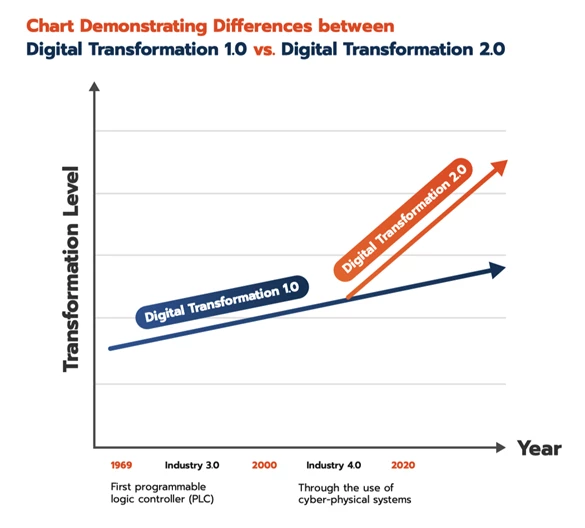
What happened before 2023

Introduction to the DIGITAL TRANSFORMER


Image: Digital Transformation Compass (2021), Ethan Than & Dr. Nattaporn Virunhagarun


Digital Transformation 1.0

The First Wave of Transformation

Many years ago before the COVID-19 outbreak, we underwent a digital change to achieve new competitive advantages and thrive in the digital economy through:

Digitization, it is the process of converting information from an analog to a digital format so that computers can store, process, and transmit such information;

Digitalization, it is the use of digital technologies that alters life and work;

Digital Transformation, it is a fundamental change in how we do business, including our core competencies, through digital business transformation.

Digital Transformation 2.0

Entering into The Second Wave of Digital Transformation

A previous study by Accenture showed that leading enterprises are compressing a decade of digital transformation in just 1-2 years following the COVID-19 pandemic. 


The next evolution in Digital Transformation: The Post-Digital Transformation Era

According to IDC, the world is moving from Digital Transformation to Digital-First.

By 2022, more than half the global economy is based on or influenced by digital. 

Strong digital transformation investment growth is forecast across all sectors, with a compound annual growth rate (CAGR) ranging between 15% to 20% for 2017-2022. This will accelerate to a CAGR of 16.5% for 2022-2024.

And by 2023, one in two companies will generate more than 40% of their revenue from digital products and services, as compared with one in three companies in 2020.


Conquer 2023 and beyond

To succeed in the digital-first era in 2023 is to be a digital-first enterprise. In other words, preparing for the digital transformation is not enough, you must be a “Digital Transformer” to respond to and tackle changes with positive mindsets towards the business world today and in the future.

In the “Digital Transformer” special edition, you will see the steps towards and case studies of a successful “Digital Transformer” especially in ASEAN the fastest growing Internet market in the world.

Government’s strategic environmental assessment push a tool for sustainable development, not a ‘magic pill’

#SootinClaimon.Com : ขอบคุณแหล่งข้อมูล : หนังสือพิมพ์ The Nation.

https://www.nationthailand.com/blogs/special-edition/sustainability/40024467

Government's strategic environmental assessment push a tool for sustainable development, not a ‘magic pill’

Government’s strategic environmental assessment push a tool for sustainable development, not a ‘magic pill’

MONDAY, JANUARY 30, 2023

Farida Waller

The Thai government is pushing the Strategic Environmental Assessment (SEA) as an essential tool to prepare and measure sustainable development plans throughout the country.

The SEA will include environmental concerns in policies, plans, and programmes and evaluate how they connect with economic and social concerns.

It is expected to help current and future generations in economic, social, and environmental aspects.

Strategic decision-making should be more open and clearer in general in the hope that the public will trust the planners and decision-makers, experts say.

“It helps in seeing the root of the problems, not just the impact,” said Wites Srinate, consultant at United Analyst and Engineering Consultant Co Ltd.

Government's strategic environmental assessment push a tool for sustainable development, not a ‘magic pill’

The office of the National Economic and Social Development Council and Khon Kaen University held a seminar on “Lessons from SEA-based sustainable development” at Pathumwan Princess Hotel, Bangkok on January 24.

The seminar focused on exchanging experiences and challenges in various aspects implementing SEA to achieve sustainability in different departments, and also to enhance knowledge and correct understanding of the SEA.

“To achieve sustainable development, we must consider whether people in the future would be able to use all the natural resources as we do today,” explained Sunee Mallikamarl, an environmental law expert.

Government's strategic environmental assessment push a tool for sustainable development, not a ‘magic pill’

Three national parks in Thailand are considered as World Heritage areas, Sunee Saksua, director of the Foreign Affairs Division Department of National Parks Wild Animals and Plants, said.

“Currently, 22% of Thailand’s forests are national forests. We plan to increase their area to 25%,” said Sunee Saksua.

“The most difficult part of implementing the SEA is the challenge of communication, media creation, building confidence and participation across sectors and stakeholders,” Wites said.

Thongchai Panswad, head representative of the Faculty of Environmental Engineering and the Environmental Engineering Society of Thailand, cautioned that “The SEA is not a magic solution.”

Government's strategic environmental assessment push a tool for sustainable development, not a ‘magic pill’

Timing is important to be fully aware and prepared before forming a new law on the SEA he added.

“I don’t agree with having an SEA manual, what we need instead are guidelines to promote flexibility,” said Thongchai.

“The ecosystem is the centre, not humans. Humans created the SEA to develop the environment. Thailand is part of the environment, therefore implementing the SEA will aid in developing the ecosystem and the country,” Sunee Mallikamarl argued.

Another seminar will take place soon for stakeholders to exchange ideas and design a manual for SEA to be practically used once it becomes a law in Thailand.

‘Spiral Garden’ inventor Atsada: Outstanding Thai National Youth Award 2023

#SootinClaimon.Com : ขอบคุณแหล่งข้อมูล : หนังสือพิมพ์ The Nation.

https://www.nationthailand.com/special-edition/sustainability/40024151

‘Spiral Garden’ inventor Atsada: Outstanding Thai National Youth Award 2023

‘Spiral Garden’ inventor Atsada: Outstanding Thai National Youth Award 2023

THURSDAY, JANUARY 19, 2023

Stephanie Adair

Atsada Israpanich, a 17-year-old student from International School Bangkok who invented the “Spiral Garden”, has been honored with the prestigious 2023 Prime Minister’s Award (PM Award) for “Outstanding Thai National Youth who brought recognition to Thailand”.

The PM Award was granted in recognition of Atsada’s Spiral Garden innovation, which has received accolades, gold medals, and special awards in international competitions from the UK, Canada, South Korea, and Turkey.

The Spiral Garden – a device for growing fresh vegetables in less space – was inspired by Atsada’s passion for natural surroundings after he moved to a city condominium.

The unique design and function enable those living in small spaces, such as apartments, to grow their own food conveniently and effectively.

‘Spiral Garden’ inventor Atsada: Outstanding Thai National Youth Award 2023

Atsada is also responsible for the “CO2 Capture” project – a system that turns carbon dioxide into plant fertiliser – which won gold medals and special awards in Indonesia and China last year.

His projects aim to help Thailand achieve the four dimensions of Food Security laid out at the 1996 World Food Summit:

– Food Availability: Via sufficient school gardens for local Thai schools with technology

– Food Accessibility: Via Spiral Garden

– Food Utilisation: By developing healthy, low-cost menus for impoverished communities in Bangkok

– Food Stability: Via the Seed Bank Set Project in Chiang Mai to support Hilltribes (www.theseedbanksetproject.com).

‘Spiral Garden’ inventor Atsada: Outstanding Thai National Youth Award 2023

As well as being an innovator, Atsada is also an entrepreneur of a social enterprise. He is the founder and CEO of Boon for Life (www.boonforlifethailand.com), an online platform that provides a bridge between the underprivileged and benefactors.

“When you have a passion, drive for it, and you will reach it. I would like to invite all interested and passionate youths to join,” said Atsada.

“Let’s create a greener future together.”

Stephanie Adair

Thailand braces for BEV boom in 2023

#SootinClaimon.Com : ขอบคุณแหล่งข้อมูล : หนังสือพิมพ์ The Nation.

https://www.nationthailand.com/special-edition/ev/40023978

https://youtube.com/watch?v=AsSdfCrEotg%3Fautoplay%3D1%26mute%3D0%26controls%3D0%26origin%3Dhttps%253A%252F%252Fwww.nationthailand.com%26playsinline%3D1%26showinfo%3D0%26rel%3D0%26iv_load_policy%3D3%26modestbranding%3D1%26enablejsapi%3D1%26widgetid%3D1

FRIDAY, JANUARY 13, 2023

Demand for battery electric vehicles (BEVs) in Thailand continues to rise this year.

Reservations for popular BEV brands are driving forecasts of strong growth in the EV market in 2023, with consumer confidence supporting investment in Thailand-based production of EVs, batteries and electric charging stations.

Battery electric vehicles (BEVs) have become a hot topic of conversation among Thais after more than 4,000 units of two models of Tesla were booked on the first day of the Telsa website accepting orders last month

Before the official arrival of Tesla to do its own marketing, the BEVs are already gaining popularity in Thailand

It is predicted that overall BEV sales in Thailand last year exceeded 12,500 units, a 212.5% increase over 2021

Total BEV sales this year are estimated at 24,000 units, a 92.0% increase over last year

Driving range
The International Energy Agency (IEA) states that a standard BEV had an average driving range of 349 kms per charge in 2022, an increase of 44% compared to 243 kms in 2017

Charging stations
Charging devices have been developed with fast charge technology, allowing a direct current fast charge to the level of 80% of battery in less than an hour

The Energy Policy and Planning Office of the Energy Ministry reports that there are 944 charging stations nationwide

The Electric Vehicle Association Of Thailand (EVAT) states that as of September 2022, there are 2,572 charger plugs in the country, a 13% increase year on year

EVAT says 46% of charger plugs are DC type (a 53% increase from last year) and 54% are AC type (an 8% decrease)

By 2025, the number of fast-charge plugs is estimated to rise to 4,400 plugs and to 12,000 plugs by 2030

Wallbox charging devices at home have become an alternative for BEV users

BEV motorists may get wallboxes from:

  • BEV manufacturers provide a free wallbox as a promotion plus free or discounted installation fee
  • Property developers provide a wallbox in their new projects
  • BEV users buy and install their own wallbox with cost ranging from 35,000 to 85,000 baht

Those without a wallbox can use an AC charger provided with their BEV, but the recharging takes up to 24 hours