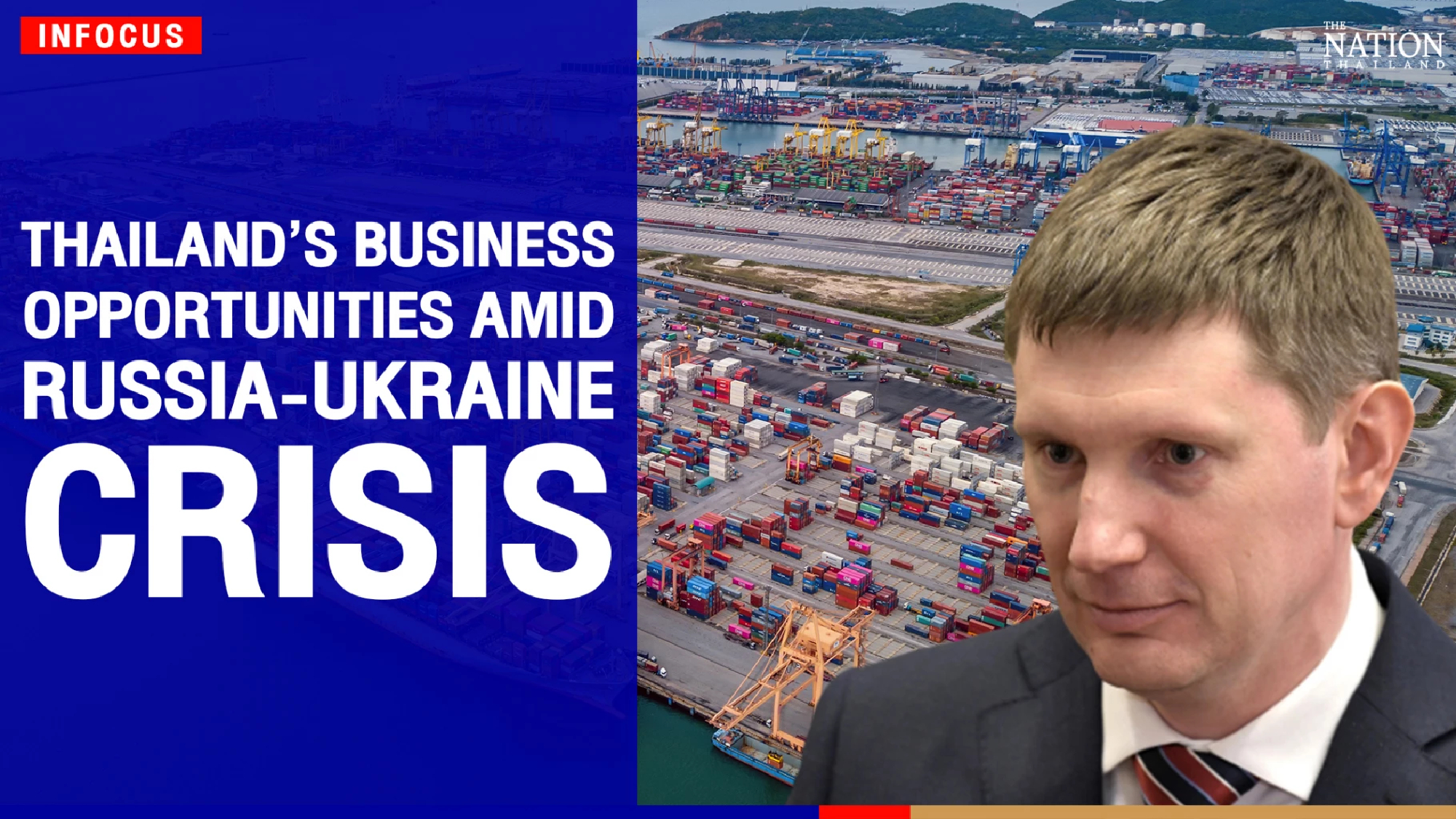
Russia’s trade minister said the crisis brought on by the West’s economic boycott would prompt his country to expand markets in Asia and also give Thailand the opportunity to bag a bigger market share in Russia.
What effect do the western sanctions have on Russia and globally?
Maxim Reshetnikov – First of all, thank you so much for the opportunity to answer questions and convey our position to the people of Thailand. Relations between Russia and Thailand have a long history; this year we are celebrating the 125th anniversary of the establishment of diplomatic relations between the countries. They have not only a wonderful history but also great opportunities for development. I’m sure they have a bright future. Regarding the sanctions, Russia has been living under sanctions for a long time, back in 2014 the first package of sanctions was adopted. As a result, we were able to take advantage of the external pressure to strengthen our economy, we significantly increased both our agro-industrial sector and our automotive industry, and used this time to diversify our exports, including fuel and energy. At the same time, the wave of sanctions in recent months is certainly unprecedented. They covered more than 10 thousand Russian legal entities and individuals, and affected many sectors of the economy. Moreover, they went far beyond the legal framework that was established in the world. I am talking about the seizure of gold and currency reserves as well as the seizure of property of the Russian legal entities and citizens in Europe. Now we can already say that Russia withstood this sanctions pressure. Nowadays our financial markets have stabilized, our ruble has strengthened, inflation is declining, processes of structural restructuring of the economy have been launched, and a reorientation from the western markets and the western value chains to the East, primarily to Asian markets, is underway.
And, as in all such situations, sanctions pose problems on the one hand, but at the same time, they open opportunities. Opportunities for the Thai economy to enter the Russian market and fill empty sectors of the economy, that have formed. Opportunities for the Russian enterprises, which are now actively looking for new markets and reorienting their products: fuel and energy resources, oil, oil products, gas, fertilizers, food products, engineering and machine goods. We are here to discuss how to make the most profit from the opportunities that are now opening up.
Russian economy’s sectors that Thailand can make investments
Maxim Reshetnikov – The first thing I would like to say is that we have a successful example of Thailand’s investments in the Russian economy – this is the CP Foods company, which has invested more than 2 billion US dollars in the Russian agriculture and is generally developing effectively. It is a notable player in the Russian market, which develops export projects. Possible areas of investment are fuel and energy resources. What also we care about now is that we are facing a major restructuring, including in the automotive industry. Considering that Thailand has a serious industry related to the production of automotive components, this area may also be promising. Both the Russian and Thai economies are very diversified and complement each other quite well. One of the issues that the Thai government is interested in is mineral fertilizers. We care about it as well, because we are reliable exporters of these fertilizers. Frankly, we have a lot of spheres.
About SWIFT
Maxim Reshetnikov: We understood that such risks would be possible, therefore, in recent years, Russia has been developing its own financial messaging system. Inside, all-Russian banks are connected to this financial system, so there are no problems with the money transaction within the country. We also have our own system of bank cards “MIR”. We also propose to introduce it in Thailand. Moreover, many foreign banks connect to the mentioned system of financial messages, and this provides us with independence in making payments. We welcome the connection of our banks to the Chinese CIPS system, which we also use to service export and import operations.
The decision of Western countries to cut off from the Russian fuel, what are the long-term consequences?
Maxim Reshetnikov: We assume that Russia is a very large supplier of resources. It is difficult to replace it with anything else. Moreover, there will be a reorientation of resources: it is obvious that Europe will take oil and oil products from the American continent or from Asia, while Russia will offer and promote its oil to the Asian market. But this will require a fairly significant change in logistics and, unfortunately, for the consumer, this will result in an increase in the cost of petroleum products. First of all, European consumers will have to pay for this, because the cost of fuel will increase there, while Asian consumers, in our point of view, will benefit from it, because competition in Asian markets will increase in this regard.
How long the current situation in the world will continue?
Maxim Reshetnikov: We assume that this is a fairly long-term trend. Accelerating the reorientation to the eastern markets is a strategic direction for us, and we will make every effort to be integrated into value chains together with the Asian countries, Arab countries, and South America. The world is becoming less monocentric and current events will push the dollar-based monetary system away from the world. There will be more diverse technological development. The world will become a larger number of independent economic centres.
About walkout of several countries during the meeting.
Maxim Reshetnikov: It is better to ask for comments from those countries that came out. The Thai side did a gigantic job in preparation for the event, during the conduction of the event, in negotiating the texts of the joint statement, trying to reconcile very different positions and come out in a positive way. I understand what huge efforts were made. It seems to me that it is very important that discussions move beyond words, the desire to achieve results and eventually reach a constructive conclusion. And such kinds of demarches that you mentioned are not conducive to reaching such agreements.
The visit of President Putin to the APEC Summit.
Maxim Reshetnikov: This question should be addressed to the Ministry of Foreign Affairs of Russia.
What problems in the economy make President Putin worry mostly?
Maxim Reshetnikov: The subject of the President’s attention in the economic sphere is, first of all, the incomes of Russian citizens, therefore our entire economic policy is built on two ultimate goals: the reduction of unemployment and the growth of wages and incomes, including social benefits of citizens. These issues are being discussed and our efforts are focused on them.
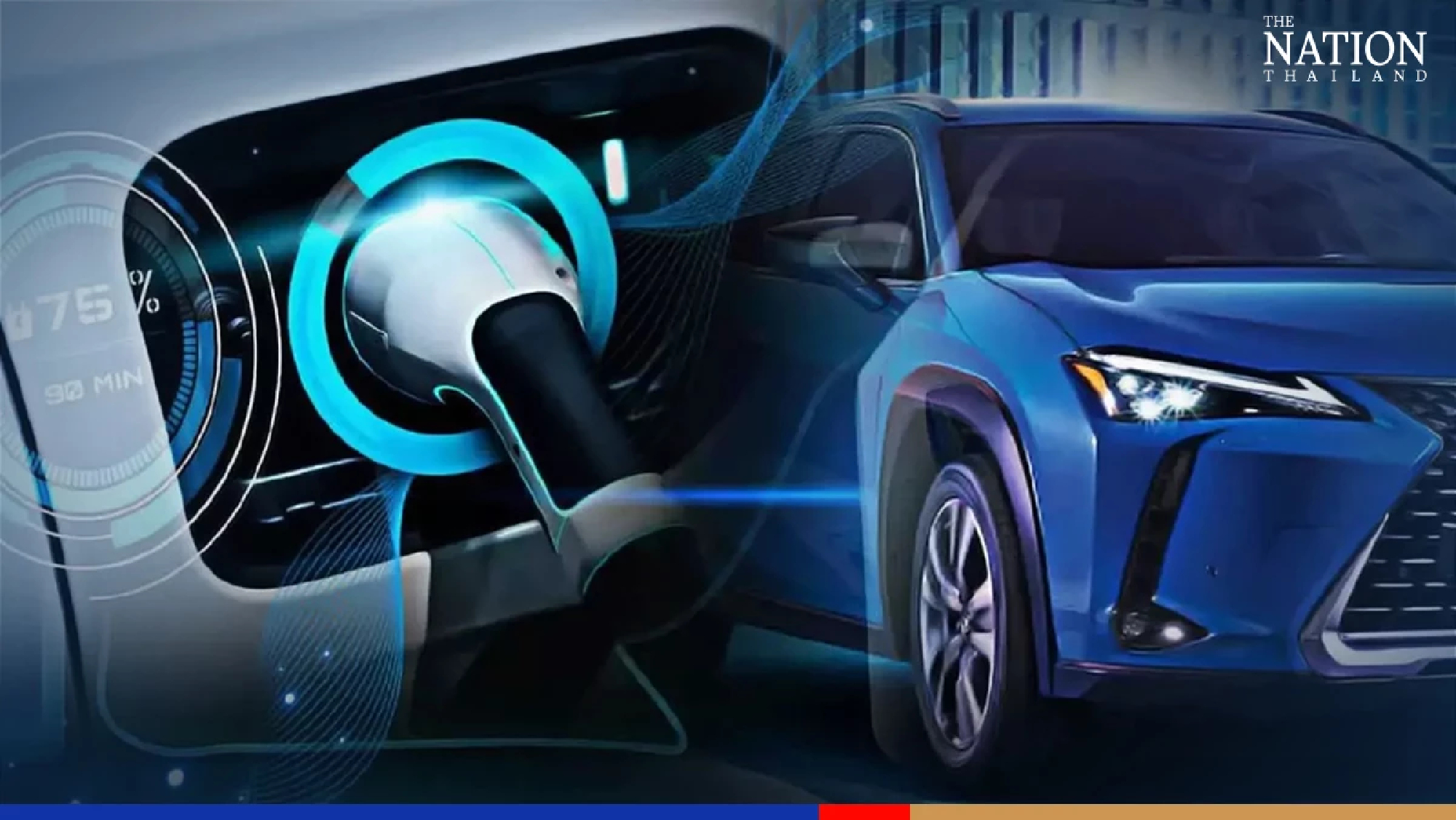
The price of electric vehicles have become a whole lot cheaper after incentive packages were implemented at the beginning of May.
Completely built-up (CBU) battery electric vehicles (BEVs) with less than 10 seats, for example, received a tariff cut from 20 to 40 per cent.
Here are the incentive packages and prices of EVs:
EVs costing under THB2 million
BEVs with a retail price of less than THB2 million will be exempted from import tariffs if the original tariffs are less than 40 per cent, and will be reduced by 40 per cent if the original tariffs exceed 40 per cent.
EVs priced between THB2 million and THB7 million
BEVs sporting a 30 kilowatts/hour battery and costing THB2 million to THB7 million will be exempt from import tariffs if the original tariffs are less than 20 per cent, and will be reduced by 20 per cent if the original tariffs exceed 20 per cent.
Direct subsidy
The government also approved a direct subsidy for EV importers and manufacturers, which are separated into two categories:
THB70,000 direct subsidy for cars with 30kWh batteries
THB150,000 direct subsidy for cars sporting more than a 30kWh battery
EVs become cheaper
Some 31,000 electric vehicles were booked at the recent Bangkok International Motor Show 2022, reflecting an increasing interest in EVs.
News agency Bangkokbiz surveyed the price of EVs in Thailand from March to April. Here are some examples of the discount on EVs:
ORA Good Cat 400 Tech (47.7 kWh battery): from THB989,000 to THB828,500
ORA Good Cat 400 Pro (47.7 kWh battery): from THB1,059,000 to THB898,500
ORA Good Cat 500 Ultra (63.1 kWh battery): from THB1,199,000 to THB1,038,500
New MG ZS D (50.3 kWh battery): from THB1,189,000 to THB949,000
New MG ZS X (50.3 kWh battery): from THB1,269,000 to THB1,023,000
MG EP (50.3 kWh battery): from THB988,000 baht to THB761,000
MG EP Plus (50.3 kWh battery): from THB998,000 to THB771,000
Nissan Leaf (40 kWh battery): from THB1,990,000 to THB1,499,000.
Although hybrid electric vehicles (HEVs) have been available since 2009, Thailand is still in the early stages of transitioning to electric vehicles.
That should soon change, however, with the adoption of zero-emission vehicles (ZEVs) predicted to surge from 2025 due to the government’s regulations, incentives, electrification goals, better technology and rising consumer demand.
The government is determined to improve air quality, develop smart cities nationwide, and meet its target of reaching carbon neutrality by 2050, and net zero greenhouse gas emissions by or before 2065. As transportation is a major source of carbon emissions, electric vehicles are one solution to reducing the air pollution and greenhouse gas emissions caused by internal combustion engine vehicles (ICEV).
The aim to switch to EVs was underscored in 2015 when the Cabinet approved the next-generation automotive industry as one of the New Engines of Growth in the 20-year national strategic plan. The government’s policy to support EV production, R&D and domestic usage motivated individuals, academia and the private sector in Thailand to establish the Electric Vehicle Association of Thailand (EVAT) in September that same year.
In February 2020, Prime Minister Prayut Chan-o-cha appointed the National Electric Vehicle Policy Committee to set a direction and target for the EV shift towards zero-emission mobility. Under the government’s 30:30 electrification policy, all vehicles used by government agencies and public fleets as well as 30 per cent of all new vehicles produced in Thailand must be ZEVs.
In response to the government policy, the EV committee last year formulated a bold roadmap for EV adoption with a target for ZEV production of 725,000 EV cars and pick-ups plus 675,000 EV motorcycles, and 34,000 buses and trucks.
This will account for 30 per cent of all auto production in 2030. The target for ZEV use, meanwhile, is 440,000 passenger cars and pickup trucks, 650,000 motorcycles, and 33,000 buses and trucks.
In addition, the government will also boost related infrastructure with a target of 12,000 fast chargers and 1,450 battery swapping stations to be available throughout the country by 2030.
Moreover, Thailand is competing with Indonesia to become an EV production and export hub. According to a report by the International Renewable Energy Agency, by 2025, around 20 per cent of all vehicles on the road in Asean will be EVs.
There is room for more growth since the Southeast Asian region has a population of around 661 million.
The National Electric Vehicle Policy Committee has set the target of xEV production (HEV, PHEV, BEV and FCEV) at 1.05 million units in 2025, 6.22 million in 2030, and 18.4 million in 2035. EV use is targeted to be 1.50 million in 2025, 5.41 million in 2030 and15.58 million in 2035.
On the global level, technological research and consulting firm Gartner forecasts that 6 million electric cars (battery electric and plug-in hybrid) will be shipped in 2022, up from 4 million in 2021 or 34.4 per cent. This is borne out by the IEA’s Global Electric Vehicle Outlook 2021, which reported that the global EV stock across all transport modes (excluding two/three-wheelers) will expand from over 11 million in 2020 to almost 145 million vehicles by 2030, an annual average growth rate of nearly 30 per cent.
In this scenario, EVs will account for about 7 per cent of the road vehicle fleet by 2030. EV sales reach will almost 15 million in 2025 and over 25 million vehicles in 2030, representing respectively 10 per cent and 15 per cent of all road vehicle sales.
Factors driving EV growth
Thailand’s EV demand started to gain momentum when Chinese car makers entered the Thai market with low prices. Great Wall Motor (GWM), a global SUV and pick-up truck manufacturer, is a key player shaking up the Thai EV market after launching a 100-per-cent electric vehicle, the ORA Good Cat, in October last year at a competitive price, creating an electric vehicle phenomenon in the country.
Last year, the number of newly registered xEV passenger cars (no more than 7 seats) nationwide categorised by fuel type was 44,323 units, of which 1,943 were BEV (battery electric vehicle) units, according to the Land Transport Department.
The accumulated number of BEV registrations surged from 1,394 units in 2017 to 11,382 in 2021 (data from the Electric Vehicle Association of Thailand).
Elliot Zhang, president of Great Wall Motor’s ASEAN operations, earlier anticipated that the total sales of BEV cars in Thailand this year would surge to 18,800 units. In 2022, GWM expects to leapfrog its competitors to grab a share of the EV market pie with sales growth of 440 per cent to 20,000 units for all EV types.
A package of incentives covering the period 2022-2025 approved by the Cabinet in February 2022 is critical to the EV shift and an increase in domestic production.
In the first two years, the measures will focus on encouraging widespread domestic use of EVs by providing tax breaks and subsidies for imported models and those made locally. The purchase of an EV made by a participating brand will see the buyer receive a subsidy of Bt70,000 to Bt150,000, depending on the type and model of the vehicle.
In the last years of the package, the support will mainly be on promoting domestically produced EVs, while cancelling some benefits for imported models. This is to encourage operators to accelerate the production of electric vehicles in the country to meet growing demand.
In addition to the rising price of petrol, the recent incentive package and a greater EV variety also encouraged consumer interest and boosted EV orders at the 43rd Bangkok International Motor Show 2022, which ended on April 3. The event saw a 14.4 per cent growth in orders from a year earlier to 31,896, more than 10 per cent of them electric cars. At the show, GMW enjoyed a total of 1,520 orders for its three EV models, with the ORA Good Cat accounting for 1,136.
MG Sales (Thailand), authorised manufacturer and distributor of MG cars in Thailand, recently reported that MG received bookings for 4,500 units in just one month after joining the government’s EV stimulus policy in March.
Jaturon Komolmit, chief of operations of Grand Prix International (GPI), which organised the show at IMPACT Muang Thong Thani, said it was a positive sign to see so many carmakers now manufacturing EVs, with more than 20 different electric models presented at this year’s event.
In addition to diverse models to meet customers’ needs, improved batteries, more readily available charging infrastructure and price parity with internal combustion engine (ICE) vehicles are major drivers. The National EV Policy Committee expects that EV prices will be equivalent to ICE prices in 2025.
Acceleration in charging infrastructure ecosystem needed
Another factor crucial to boosting demand for EVs is the availability of charging infrastructure within convenient proximity and driving range. In line with the road to net zero, the Energy Ministry launched a promotional campaign in 2017 offering a subsidy for state agencies and private firms to install EV charging points.
BMW Group (Thailand) could be the pioneer in developing a public EV charging station. In addition to supporting the EV charger projects of state electricity agencies, BMW formed a partnership with Polytechnology, Greenlots Central Group, and AP (Thailand) to introduce ChargeNow as Thailand’s first public charging station for any xEV car brand. BMW has been collaborating with its partners in expanding the ChargeNow network from the current 600 outlets nationwide.
Energy Absolute (EA) is one of the leading service providers and has installed more than 430 stations and 1,800 chargers to facilitate AC Charge, Fast Charge and DC Ultra-Fast Charge services. EA also entered into a partnership agreement with Metropolitan Electricity Authority (MEA) and JRW Utility Plc in March to carry out a feasibility study on an EV Smart Charging Station project.
Sharge Management Co, a fast-growing EV charging startup, recently announced its strategic business plan for 2022 that will see it strengthening the charging ecosystem to enable customers to accelerate charger expansion. Sharge provides integrated charging solutions for Night (charge at home), Day (charge at destination) and On-the-Go (charge between destinations). This year, Sharge aims to add 600 Night stations with 2,000-4,000 chargers, allowing residents at single houses and condominiums greater convenience.
In addition, Sharge recently entered into partnership with Chao Phraya Express Boat Co to provide at least 40 chargers for electric boats in the next five years.
“Besides cheaper car prices, charging infrastructure is a crucial factor to boost the EV market. I believe that from 2025, the number of EV charging stations will increase significantly with 100,000-200,000 chargers installed in 2030 nationwide,” said Peerapatr Sirichantaropart, managing director of Sharge Management Co.
Evolt Technology, a Thai tech startup providing charger supply, platform and software management, partnered with Banpu NEXT in February to expand access and improve the efficiency of integrated charging station platforms with digital technology and user-friendly applications.
Evolt Technology’s CEO Poonpat Loharjun said that the two firms laid down a framework for expanding consumer access to charging platforms and are aiming to provide 500 Fast Charge stations in 2022, 5,000 stations throughout Thailand by 2025, and to provide electric vehicles under the Mobility as a Service (MaaS) concept of Banpu Next.
At present, there are about 10 EV charging providers in Thailand. According to the EV roadmap, the National EV Policy Committee has set a target to have 12,000 DC quick chargers in 2030 and 36,500 in 2035.
A fresh boost for charging infrastructure
In an effort to speed up the adoption of electric mobility, the Thailand Board of Investment (BOI) in April approved revised incentives and conditions for investments in charging stations, allowing smaller charging service providers to get the tax benefits.
Adding to the 5-year corporate income tax exemption available to investments in charging stations with at least 40 chargers, 25 per cent of which are the DC type, the revised measures now allow smaller charging stations to be eligible for 3-year tax benefits.
The revised measures also abolish two requirements, namely the condition barring investors from receiving additional benefits from other agencies, and the requirement for ISO certification. These two conditions are no longer relevant given that some chargers could be installed in other establishments such as hotels and condominiums, not necessarily at typical charging stations. Moreover, in order to ensure rapid expansion of charging facilities, a combination of several support measures may be required.
“We have revised the measures to ensure that our incentives stay relevant in a fast-changing business environment. This will enable investors, particularly SMEs and startups to have more access to BOI benefits, and manage their costs more effectively,” said Duangjai Asawachintachit, secretary-general of the BOI.
Gearing up for investment
A burgeoning EV market creates numerous opportunities for automakers and investors to reap the benefits of investments in Thailand’s electrification. In moving Thailand forward to become a production hub of electric vehicles and batteries in 2035, the Board of Investment (BOI) announced a new promotion package in late 2020 covering a comprehensive range of electrical vehicles, with a focus on battery electric vehicles, local production of critical parts, and inclusion of all commercial vehicles (passenger cars, buses, trucks, motorcycles, tricycles) and ships.
The BOI previously approved 26 projects producing electric vehicles of various types, including 5 hybrid electric vehicles (HEVs), 6 plug-in hybrid electric vehicles (PHEVs) and 13 BEVs, and 2 E-Bus projects, with a combined production capacity of over 566,000 units per year, BOI data shows. So far, seven of those projects have started commercial operations, namely majors like Nissan, Honda and Toyota for HEVs; Mercedes Benz and BMW for PHEVs; and newcomers FOMM and Takano for BEVs. The agency also approved 14 projects to make critical parts for EVs, including 10 battery production projects.
Last year, Auto Alliance (Thailand), a joint venture between Ford Motor Company and Mazda Motor Corporation, received approval for a plug-in hybrid electric vehicles (PHEV) and battery electric vehicles (BEV) production project. FOMM (Asia), a Thai-Japan joint venture, was the first automaker to produce BEVs in Thailand in 2018 with the world’s smallest class 4-seater electric vehicle, followed by Takano Auto with the launch of the country’s first EV pickup truck in 2020.
Luxury car manufacturers like Mercedes-Benz and BMW are also enhancing their manufacturing footprints in Thailand and ramping up e-mobility. Mercedes-Benz has announced it will produce the EQS electric vehicle in Thailand later this year, making it the first major automaker to build 100-per-cent electric vehicles in Thailand. The first ever all-electric Mercedes-Benz EQS was developed entirely from an EV platform to become an executive-class electric car.
Mercedes-Benz Thailand together with its local partner Thonburi Automotive Assembly Plant (TAAP), started to build PHEVs in Thailand from early 2016 and opened battery production in 2019.
In line with the parent company’s aim to provide EV for all segments in 2024, BMW Group Thailand is mulling the possibility of assembling electric cars at its manufacturing plant in Rayong. BMW Group Thailand started its assembly plant for PHEV in 2017 and launched a local high-voltage battery production plant in Chon Buri in 2019, enabling it to better respond to growing demand for electrified vehicles in Thailand.
SAIC Motor-CP Co and MG Sales (Thailand), is spending Bt2.5 billion to produce BEV and expand battery production facility in Chon Buri next year to prepare for both domestic demand and export of PHEV and BEV cars.
GWM continues its rapid growth in Thailand and is set to making even bigger strides with the ORA Good Cat gaining in popularity among Thai consumers. GWM plans to begin production of battery BEVs in Thailand in 2023 and open an EV car production facility in 2024.
Four top automakers, namely Toyota, Nissan, Honda and the AutoAlliance, which assembles Ford and Mazda vehicles, have announced that they will start manufacturing electric vehicles (EVs) in Thailand.
AThai delegation, led by Energy Minister Supattanapong Punmeechaow, travelled to Japan in April to woo investors from targeted industries namely automotive, electronics and medical.
Supattanapong said most of the investors have confidence in Thailand and consider it a good location to build a regional base. He added that many companies showed great interest in investing in Thailand, especially in the automotive and electronic sectors.
The minister said these companies also aim to achieve carbon neutrality, which is in line with the Thai government’s policy.
He said during the discussions, the delegation also revealed supporting measures being offered by the government, especially in the EV and EV-related industries.
“The companies welcome these measures and have shown interest in investing in the EV industry,” he added.
Supattanapong said he also tried to build connections in the manufacturing and recycling of EV batteries.
A Government House source said the delegation met with four automakers to discuss EV supporting measures from 2022 to 2025, including discounts on excise and customs tax.
At the meetings, the automakers also announced their future business plans. For instance, Toyota plans to produce 30 EV models over the next 10 years and aims to sell 3.5 million electric vehicles by 2030.
Thailand’s Board of Investment has been supporting automakers in the manufacturing of battery electric vehicles (BEV), hybrid electric vehicles (HEV) and plug-in hybrid electric vehicles (PHEV).
The benefits offered to four automakers include:
• Toyota: The project to produce BEV and PHEV cars was approved on January 7, 2020. The vehicles are expected to go on the market by 2023.
• Nissan: Its project to manufacture HEV cars and EV batteries was approved on July 28, 2018. The automaker invested 10.96 billion baht in the project.
• Honda: The company’s 5.82-billion-baht expansion into the manufacturing of HEV cars and EV batteries was approved on July 28, 2018.
• AutoAlliance: Its project to manufacture PHEV and BEV vehicles was approved on November 4, 2020. The automaker has invested 3.25 billion baht and expects to manufacture 5,000 PHEV and 1,000 BEV each year for the local market.
Meanwhile, Supattanapong also said that Japanese electronic companies see Thailand as a strong midstream and downstream manufacturing base. They also believe Thailand has the potential to develop into an upstream semiconductor manufacturer, provided it builds a strong workforce in the field, he added.
Japanese companies in the medical industry have also voiced confidence in the potential of the Thai medical sector. He said these companies are planning to enter the medical industry and clinical research by cooperating with Thai universities and hospitals.
Supattanapong said the delegation also discussed guidelines on applying medical technology to keep the elderly healthy and extending their life spans so they can continue working beyond retirement age. He said this was necessary because Thailand is fast becoming an ageing society.
Thailand will add more incentives for drivers to purchase electric vehicles in a bid to reach its target of 30 per cent EV production by 2030, Finance Minister Arkhom Termpittayapaisith announced on Friday.
In the pipeline are more charging stations nationwide as well as a special reduced rate for electricity at charging points.
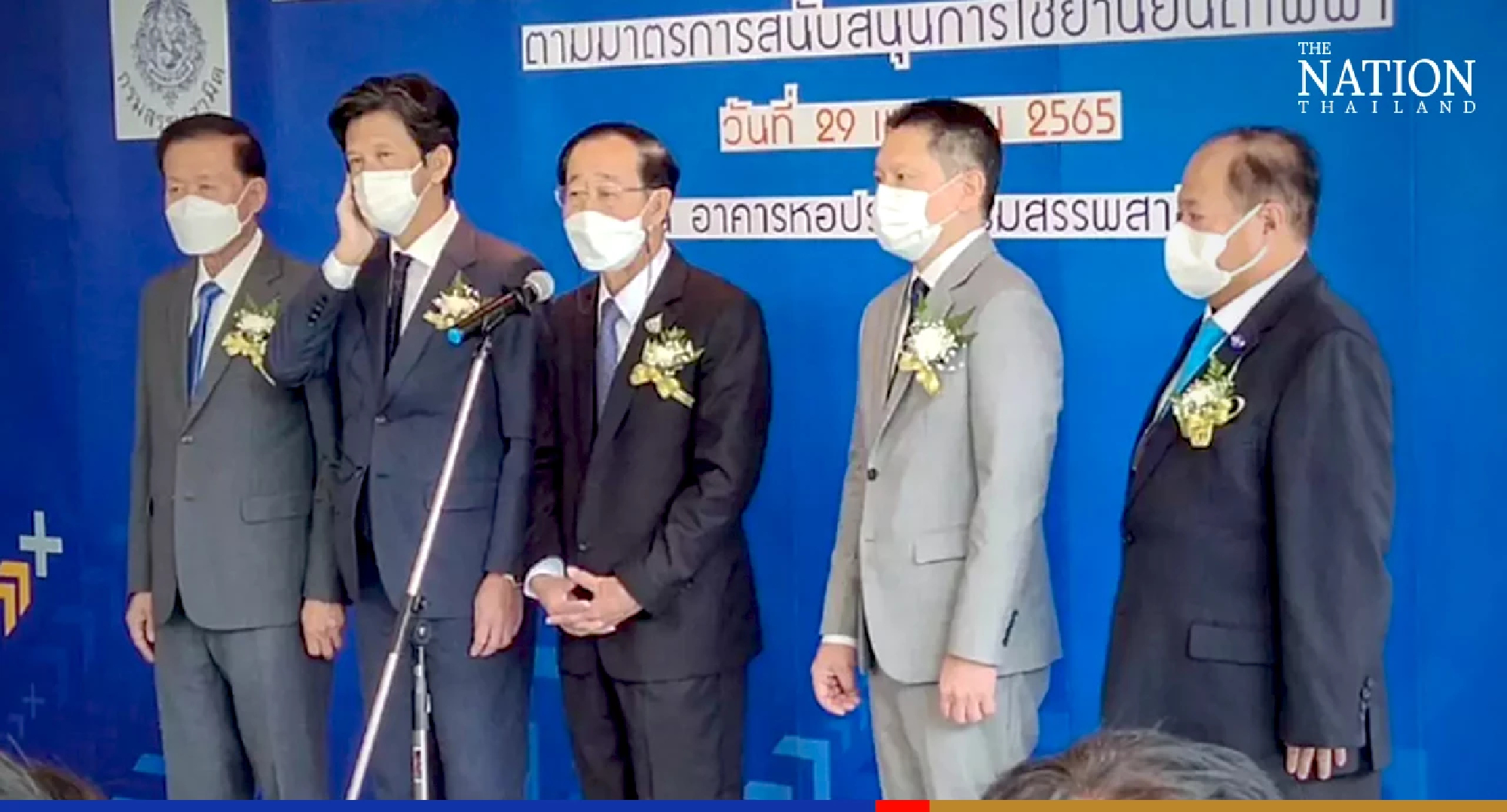
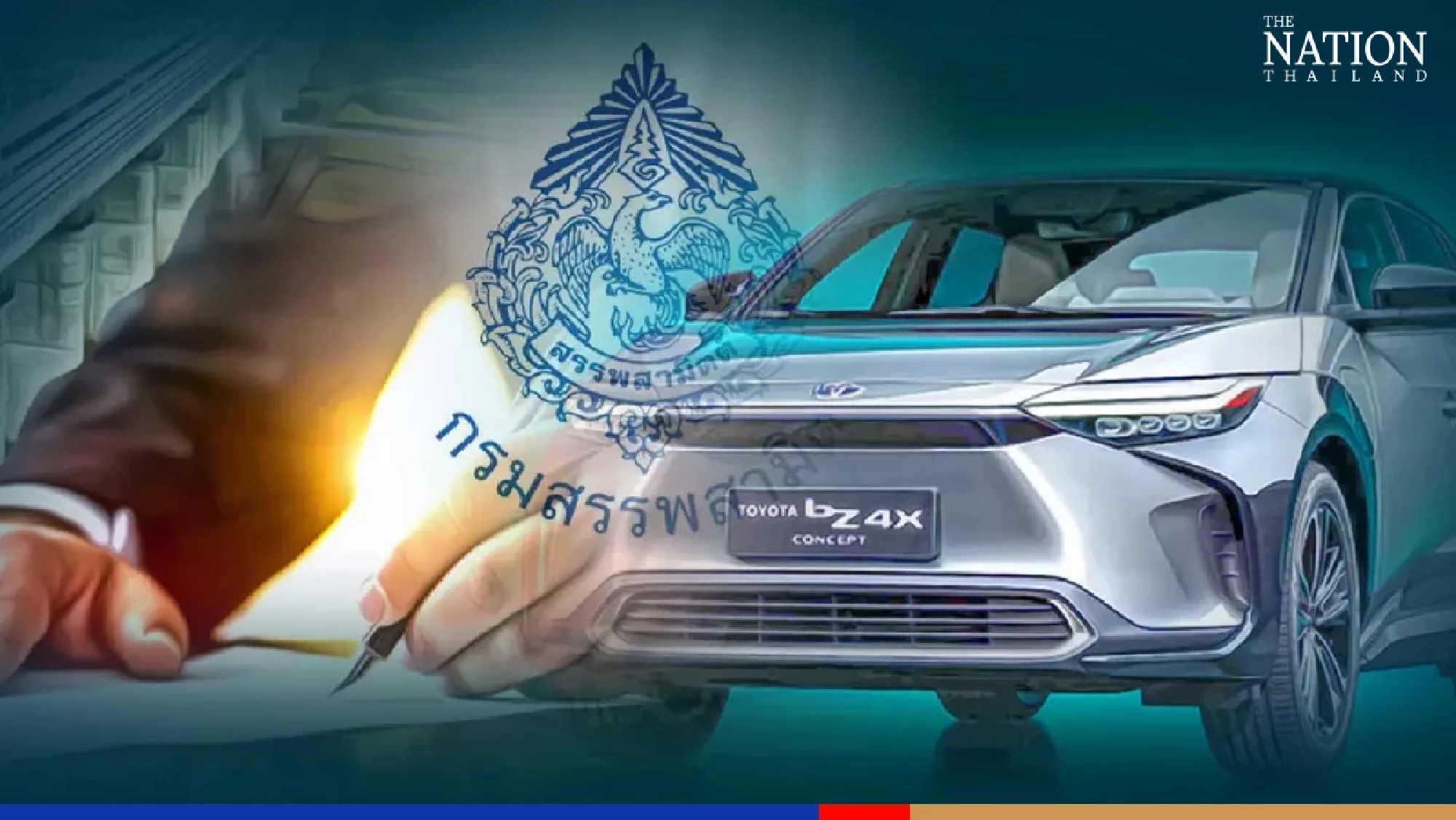
Arkhom unveiled the latest moves to boost EV usage during his speech to mark Toyota Motor Thailand signing up to the Excise Department’s EV price subsidy scheme.
Toyota will sell its new bZ4X battery electric compact SUV under the scheme.
In February, the Cabinet approve subsidies of Bt70,000 to Bt150,000 on purchases of EVs as part of its package to promote Thailand’s EV manufacturing industry.
In the package, the excise tax on EV cars was cut from 8 per cent to 2 per cent and on EV pickups from 8 per cent to zero. The import tariff on complete EV cars was reduced to 40 per cent, 20 per cent and 0 per cent, depending on the engine size, until 2023.
The current four-year promotion package is due to expire in 2025. However, the National Electrical Vehicle Policy Board will decide this year on how to further boost EV usage, Excise Dept director-general Lawaron Saengsanit said.
The current package cuts the price of an EV by an average Bt300,000, the director-general added.
So far, three companies have signed up for the package. They are SAIC Motor-CP, MG Sales Thailand and Great Wall Motor Manufacturing (Thailand).
SAIC Motor-CP is the maker of MG vehicles in the country while MG Sales Thailand is the distributor and importer of MG vehicles.
Lawaron said about 5,000 EVs have been booked under the price subsidy. They include the Ora Good Cat from GWM and the MG EP and MG ZS models.
Lawaron said about 600 EVs were sold during the recent Bangkok International Motorshow, although their manufacturers had not yet applied for the subsidy package.
The impressive sale volumes for many EVs during the motor show had a significant impact on the Thai auto industry, signalling the country was heading towards a low-carbon society in line with government policy, Lawaron added.
He was also confident the country will reach its target of 30 per cent EVs as a proportion of total auto production by 2030.
He also expected at least five more manufacturers to apply for the EV subsidy package this year.
He added that two Thai EV motorcycle manufacturers will sign up for the package next week.
Toyota Motor Thailand will sign a memorandum of understanding (MoU) with the Excise Department on Friday to make its future electric vehicles eligible for the government’s price subsidy, the department chief said on Thursday.
Excise director-general Lawaron Saengsanit said the signing ceremony would be presided over by Finance Minister Arkhom Termpittayapaisith.
Lawaron expressed confidence that other EV manufacturers would later join the subsidy programme. He said a Chinese automaker under the brand Neta has also expressed interest to join the programme, but it has yet to hold talks with its parent firm.
He said he also expected good news from other Japanese auto manufacturers after Deputy Prime Minister and Energy Minister Supattanapong Punmeechaow held a roadshow in Japan to promote EV investment in Thailand.
So far, Great Wall Motor (GWM) Manufacturing Ltd and MG Sales Thailand Ltd have signed MoUs with the Excise Department for their EVs to be eligible for excise tax reduction and subsidy of Bt70,000 to Bt150,000.
Lawaron said about 6,000 EVs were sold in the recent Bangkok International Motor Show.
He said the sales of EVs by the two brands have been suspended following shortage of certain equipment but the two Chinese brands have assured him that the problem would be solved soon.
The director-general said the government has set aside THB3 billion for subsidy in the first year, which would be enough for 20,000 EVs.
A source from the Finance Ministry said only THB10 million from the THB3-billion budget has been utilised so far.
The source said the sale of EVs was still low because manufacturers lacked chips that were key parts for making EVs so they could not meet the demands of buyers.
The source added that GWM has so far applied for subsidies for its 2,000 EVs, and MG for 3,000 EVs. The subsidies will be granted when they hand over the vehicles to buyers. Even when all the 5,000 EVs are given the subsidies, only THB750 million would have been spent from the budget, the source added.
The Asian Development Bank (ADB) and Energy Absolute have signed a 160 million baht loan agreement to finance an electric ferry fleet for Bangkok, the first such transport system in Southeast Asia, the ADB announced in a press release on Wednesday.
The ADB is leading financing for the project worth a total 600 million baht, which includes a 123.1 million baht concessional loan from the Clean Technology Fund, which finances the demonstration, deployment and transfer of low-carbon technologies, as well as investments from the Japan International Cooperation Agency and the Export-Import Bank of Thailand.
“This project is a fine example of ADB’s leadership in climate finance and supporting green technologies that help our developing member countries meet the Sustainable Development Goals,” said ADB vice-president for Private Sector Operations and Public–Private Partnerships Ashok Lavasa. “This project demonstrates the potential for electric mobility solutions beyond road vehicles to be adopted across Asia and the Pacific.”
The financing will be used for the E Smart Bangkok Mass Rapid Transit Electric Ferries Project.
E Smart Transport Company, a wholly owned subsidiary of Energy Absolute, will operate 27 e-ferries along the Chao Phraya River in Bangkok. Each ferry can comfortably carry up to 250 passengers per trip. The project will reduce greenhouse gas emissions by an estimated 18,900 tonnes of carbon dioxide equivalent a year.
“This project demonstrates Energy Absolute’s leadership in e-mobility in Thailand and the region, and the potential to use technology developed within the region to reduce greenhouse gas emissions,” said company deputy chief executive officer Amorn Sapthaweekul.
Established in 2006, Energy Absolute is one of the largest renewable energy companies in Thailand and a pioneer of sustainable transport in the country. ADB supported the company during its maiden green bond issuance in 2019 and its first certified green loan financing in 2020.
CK Power Plc (CKPower) has now executed the Hing Hoi Project for the 6th year running as a part of the company’s CSR strategy to add value to society.
CK Power Plc (CKPower) has now executed the Hing Hoi Project for the 6th year running as a part of the company’s CSR strategy to add value to society.
Its ‘Competency-Co-Creation-Cooperation-Connection’ formula is used to enhance educational opportunities for children at Hin Hua Suea Kindergarten in Xaysomboun Province, the Lao PDR.
Under the project, CKPower uses its renewable energy innovation to install solar cells and essential utilities that promote the quality of life of students and people in the community.
“In its report entitled ‘6 CSR Directions in 2022: From Net Zero to Social Positive’, Thaipat Institute gave its outlook on corporate social responsibility and sustainability creation,” the company said. “It indicated that the concept of social positive business it established for this year will form an important part in companies’ work to make positive impacts on society and to grow their businesses.”
It added that the institute suggested elevating social contribution from traditional options such as donating money, goods or services to using business capabilities to improve living quality and well-being, thereby ensuring a positive impact on the whole society.
“Moreover, the institute reported the ESG (Environmental, Social and Governance) factor will see greater use in the communication of business results as well as social and environmental impacts – in a sense becoming a universal language among social positive businesses and stakeholders,” the company added.
Mr. Thanawat Trivisvavet, Managing Director, CK Power PLC
CKPower Managing Director Thanawat Trivisvavet shared the background on the Hing Hoi Project, saying that CKPower is one of the region’s largest producers of renewables-based electricity with one of the lowest carbon footprints.
He said CKPower has made sustainable development a priority all along, with the Hing Hoi Project being the company’s main CSR initiative.
“It resulted from CKPower conducting survey of the local communities surrounding its power plants and in remote areas in Thailand and the Lao PDR to learn how they are like and their needs for essential utilities such as water and electricity,” he explained.
He added that this move same goes for education as they wanted to provide children and youngsters with equal access to basic education and an environment suitable for learning.
“Competency-Co-Creation-Cooperation-Connection” strategy”The Hing Hoi Project is now in its 6th year running and the strategy it uses to add value to society is Competency-Co-Creation-Cooperation-Connection. Innovative ideas, processes and knowhow CKPower has in renewables-based power generation engineering are applied to create something of value to society, while sustainable relationships are built with employees, communities and stakeholders,” he said.
Mr. Wisate Chungwatana, Managing Director, Nam Ngum 2 Co., Ltd
Nam Ngum 2 Power Co Ltd Managing Director Wisate Chungwatana said for the 6th year, the company, a subsidiary of CKPower, chose to do the Hing Hoi Project at Hin Hua Suea Kindergarten in Xaysomboun Province, the Lao PDR as it is located near its Nam Ngum 2 Hydroelectric Power Plant.
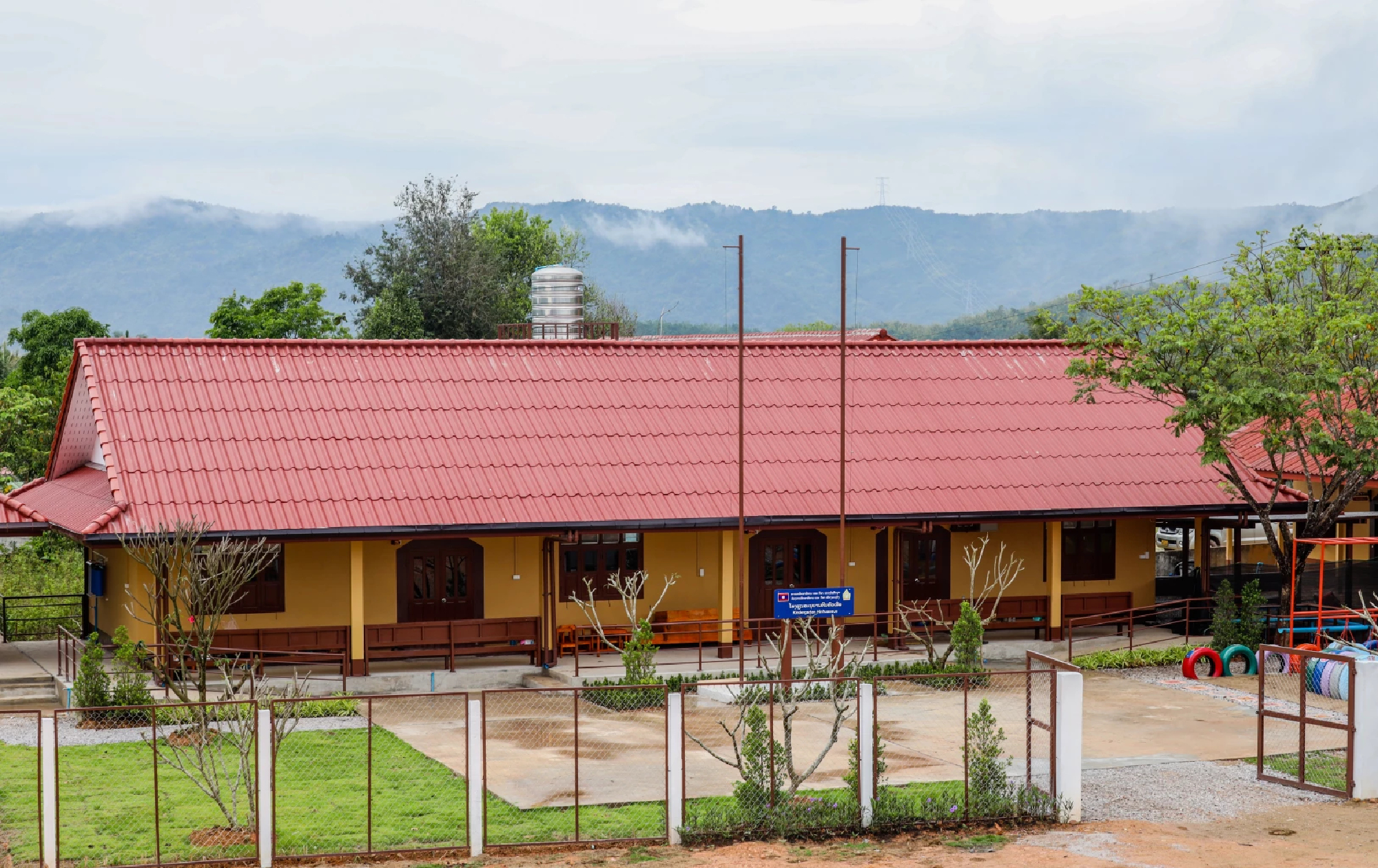
He explained that the kindergarten was attended by 130 children from many villages, but there was just one building with three classrooms for levels 1-3 kindergarteners. The school was short of clean drinking water and there was not enough water for internal use, he added.
“Hence, the company constructed a new school building with three classrooms, each having 42 square metres, to accommodate boys and girls as well as disabled students,” he said.
“This is so there are more rooms for age-appropriate learning, in accordance with the stipulations of the Lao PDR’s Ministry of Education and Sports.”
He further explained that the old school building has been repainted and improvement has been made to its power system, to make sure everyone is safe. A new bathroom building has been built to accommodate students and teachers, he added.
Solar panels for a solar-powered underground water pump system
“Moreover, we have used CKPower’s engineering capabilities in renewable energy to install a solar-powered underground water pump. We use six solar panels with a combined capacity of 400 watts to generate power to operate the pump and we keep the water in a 2,000-liter tank,” he said.
“We have also installed a drinking water filtration system that complies with the drinking water standards of the Lao PDR and World Health Organisation to ensure that drinking water is clean and safe.
He said the children’s playground was designed to use mostly recycled materials in order to promote proper child development while making the best use of available resources.
Improvement has been made to the landscape around the school and we have provided teaching and learning materials and medium for both the new and old buildings, he added.
“We took 11 months to build Hin Hua Suea Kindergarten under our 6th Hing Hoi Project – from May 2021 to March 2022 – and received great cooperation from the community and CKPower’s employees,” he said.
“I am proud of my part in the development of the area, carried out to ensure the community’s access to basic utilities as well as education for children and youngsters, in line with our sustainable development goals.”
UV water filtration systemMr. Huethor Phialouang (left), Head of Anouvong District, Mr. Tongmoua Souaka (middle), Vice Governor of Xaysomboun Province and Mr. Wisate Chungwatana (right) drink water from a water filtration machine
Over the past six years the Hing Hoi Project has provided CKPower with the opportunity to benefit the public in Thailand and the Lao PDR in the form of 40 public utility structures. These reach out to 1,676 children and youngsters as well as engage 799 employees, 8 local communities and 16 relevant agencies.
In total, 7 learning centres were built for the local communities, and society at large, to learn about renewable energy. They include a hydropower turbine generator, a solar-powered school building, a solar-powered pump reservoir and a solar-powered road lighting system.
United Nations’ Sustainable Development Goals; 11 of them have been achievedAnd, equally importantly, the Hing Hoi Project has achieved 11 out of 17 Sustainable Development Goals (SDGs) set by the United Nations in compliance with global sustainable development principles.
The sale of 3,000 electric vehicles at the recent Bangkok International Motor Show was proof that the EV industry in Thailand was gaining momentum, Industry Minister Suriya Juangroongruangkit said.
Suriya said the sale of EVs in the motor show constituted 10 per cent of the total 33,936 vehicles sold during the show that ended on Sunday.
The industry minister said more EV manufacturers had joined the show this year.
He said the registrations of EVs in the country had been rising from 2,000 EVs in 2020 to 4,000 last year, and the number this year could more than double to 10,000.
“It will be a leapfrog in growth,” Suriya said.
The minister added that the automobile industry and the manufacturing of auto parts was a strong driving force for the Thai economy. Their export value of THB1.09 trillion last year comprised 6.4 per cent of national gross domestic product.
He said Thailand had manufactured 1.7 million vehicles in 2021 and the number is expected to rise to 1.8 million this year.
Suriya said the Industry Ministry has discussed with concerned government agencies, as well as the Thai Automotive Industry Association, the Thai Auto Parts Manufacturing Association, and the private sector about the government’s vision to turn Thailand into a hub for manufacturing EVs and EV parts for the region.
Suriya said the ministry aims to see EV manufacturing capacity in Thailand increase to 225,000 vehicles a year in 2025, and 725,000 in 2030.
The minister said the EV industry would add THB200 billion to the GDP in 2030 and create 30,000 jobs a year in the modern automobile industry by 2030.
Suriya said the Industry Ministry has set 114 standards for controlling the quality of electric cars, pickups, buses, trucks, motorcycles, tri-cycles, batteries and EV charging stations in its efforts to create an environment to facilitate the strengthening of the EV industry.
He said the ministry has also built the Automotive and Tyre Testing, Research and Innovation Centre in Sanam Chaikhet district of Chachoengsao province to improve automobile standards.
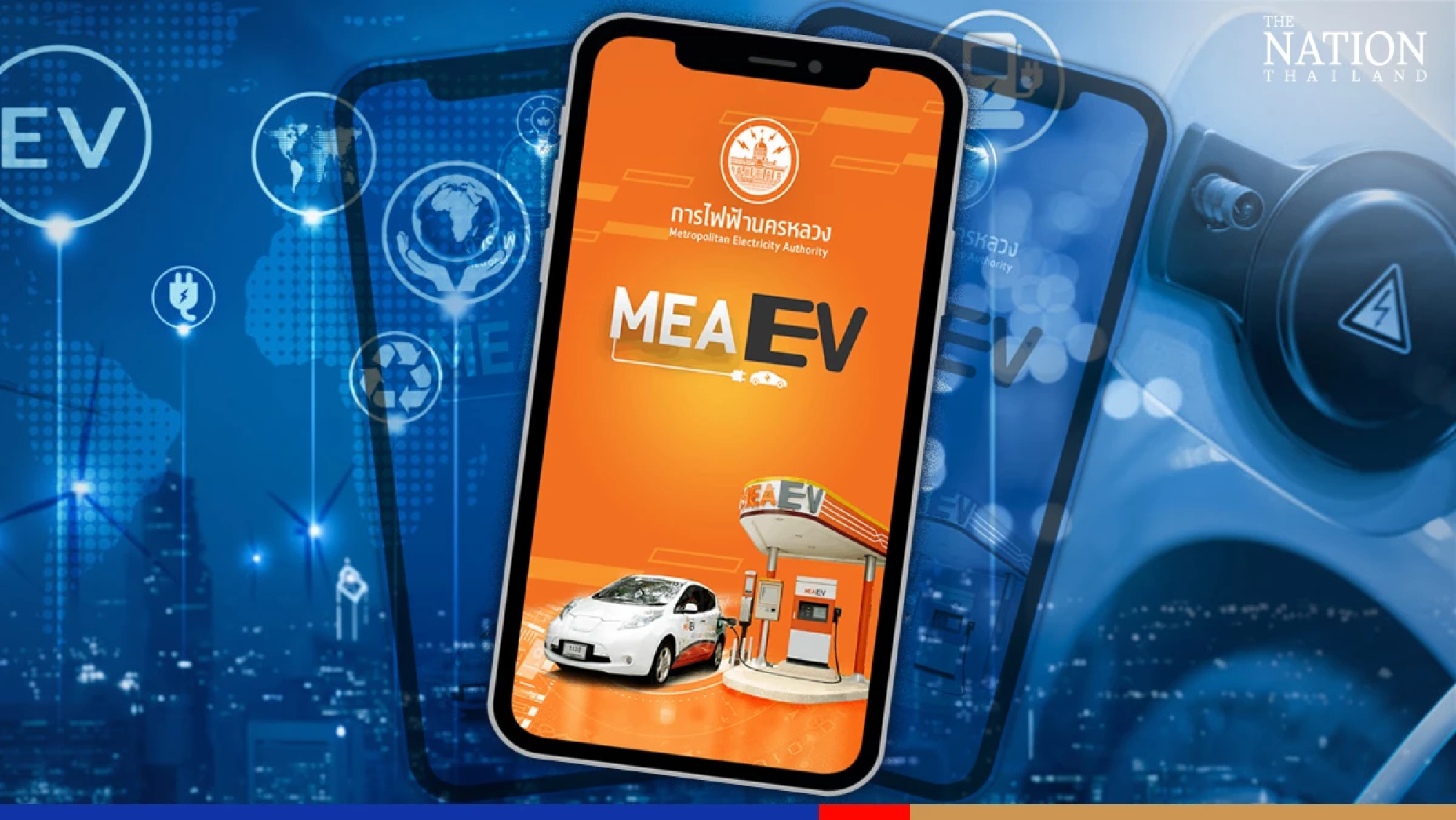
The Metropolitan Electricity Authority has released an app for electric vehicle users, enabling them to recharge their EVs in Bangkok and surrounding provinces. The service will be free until the end of June.
The new version of the MEA EV Application is available for free download on both Android and iOS mobile devices, the electricity authority said.
The new app helps EV motorists to quickly locate 22 charging stations in Bangkok, Nonthaburi and Samut Prakan.
The charging stations are located at MEA branches, 7-Eleven outlets in Bangkok’s Ban Suan La Salle and near the Bang Khunnon police station, and at Benchakitti Park.
The app, which allows users to book EV charging, comes equipped with a navigation function to guide motorists to the charging station.
It also features the MEA Wallet to allow electronic payment when the MEA starts collecting fees after June 30.
The app records the charging history of each user to check how much they have paid.
The MEA plans to install 100 charging points across Bangkok, Nonthaburi and Samut Prakan by December to mark 10 years since it launched charging services. The new stations will be launched under a project sanctioned by the Interior Ministry and dubbed “Clean Bangkok Metropolis by Charging EVs with MEA”.



 Mr. Thanawat Trivisvavet, Managing Director, CK Power PLC
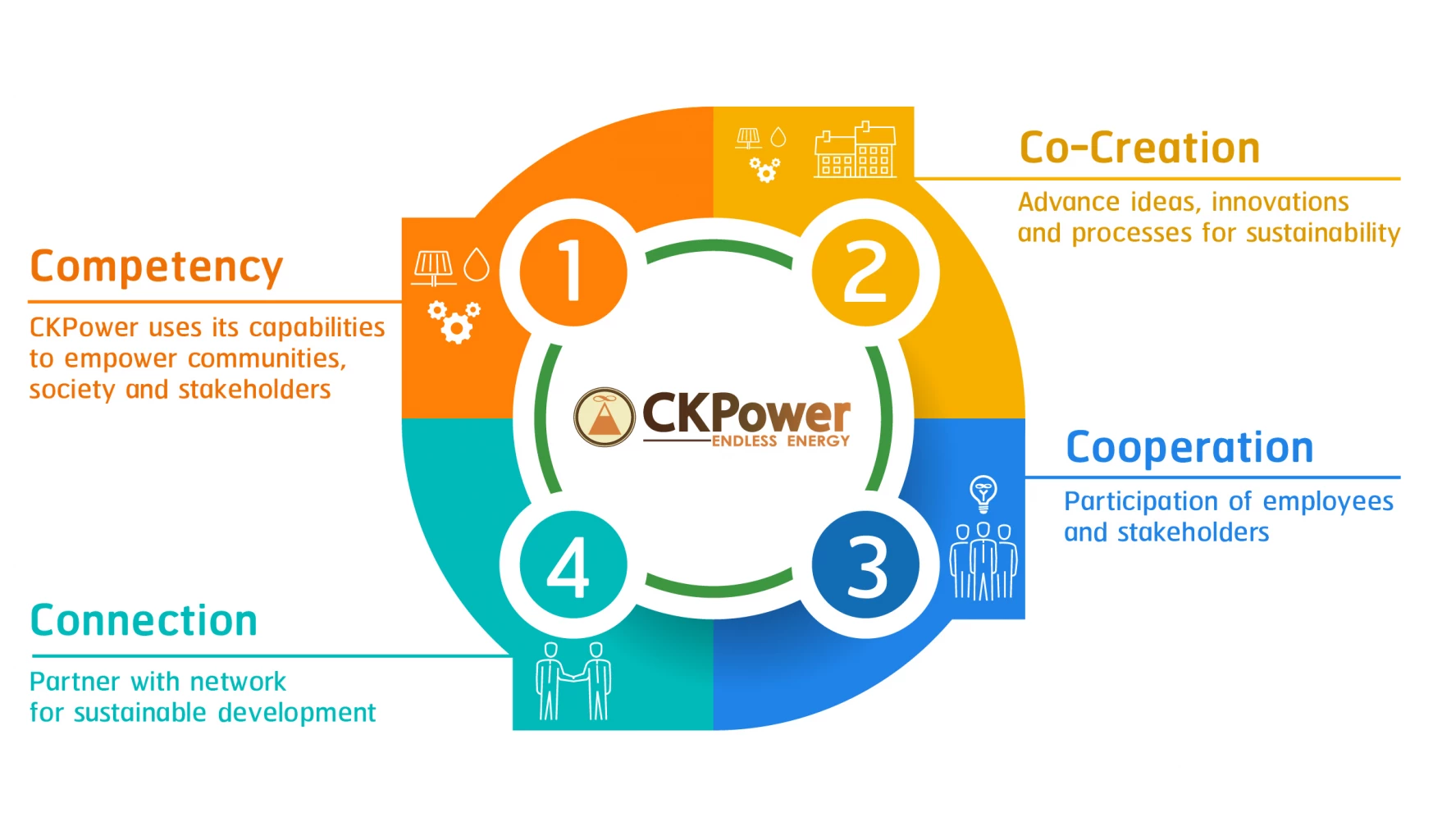 “Competency-Co-Creation-Cooperation-Connection” strategy”The Hing Hoi Project is now in its 6th year running and the strategy it uses to add value to society is Competency-Co-Creation-Cooperation-Connection. Innovative ideas, processes and knowhow CKPower has in renewables-based power generation engineering are applied to create something of value to society, while sustainable relationships are built with employees, communities and stakeholders,” he said.
 Mr. Wisate Chungwatana, Managing Director, Nam Ngum 2 Co., Ltd
 Solar panels for a solar-powered underground water pump system
 UV water filtration system
 Mr. Huethor Phialouang (left), Head of Anouvong District, Mr. Tongmoua Souaka (middle), Vice Governor of Xaysomboun Province and Mr. Wisate Chungwatana (right) drink water from a water filtration machine
 United Nations’ Sustainable Development Goals; 11 of them have been achievedAnd, equally importantly, the Hing Hoi Project has achieved 11 out of 17 Sustainable Development Goals (SDGs) set by the United Nations in compliance with global sustainable development principles.


 SootinClaimon.Com