Manchester United owners consider selling club

#SootinClaimon.Com : ขอบคุณแหล่งข้อมูล : หนังสือพิมพ์ The Nation.

https://www.nationthailand.com/lifestyle/sport/40022354
Manchester United owners consider selling club

Manchester United owners consider selling club

WEDNESDAY, NOVEMBER 23, 2022

THE NATION

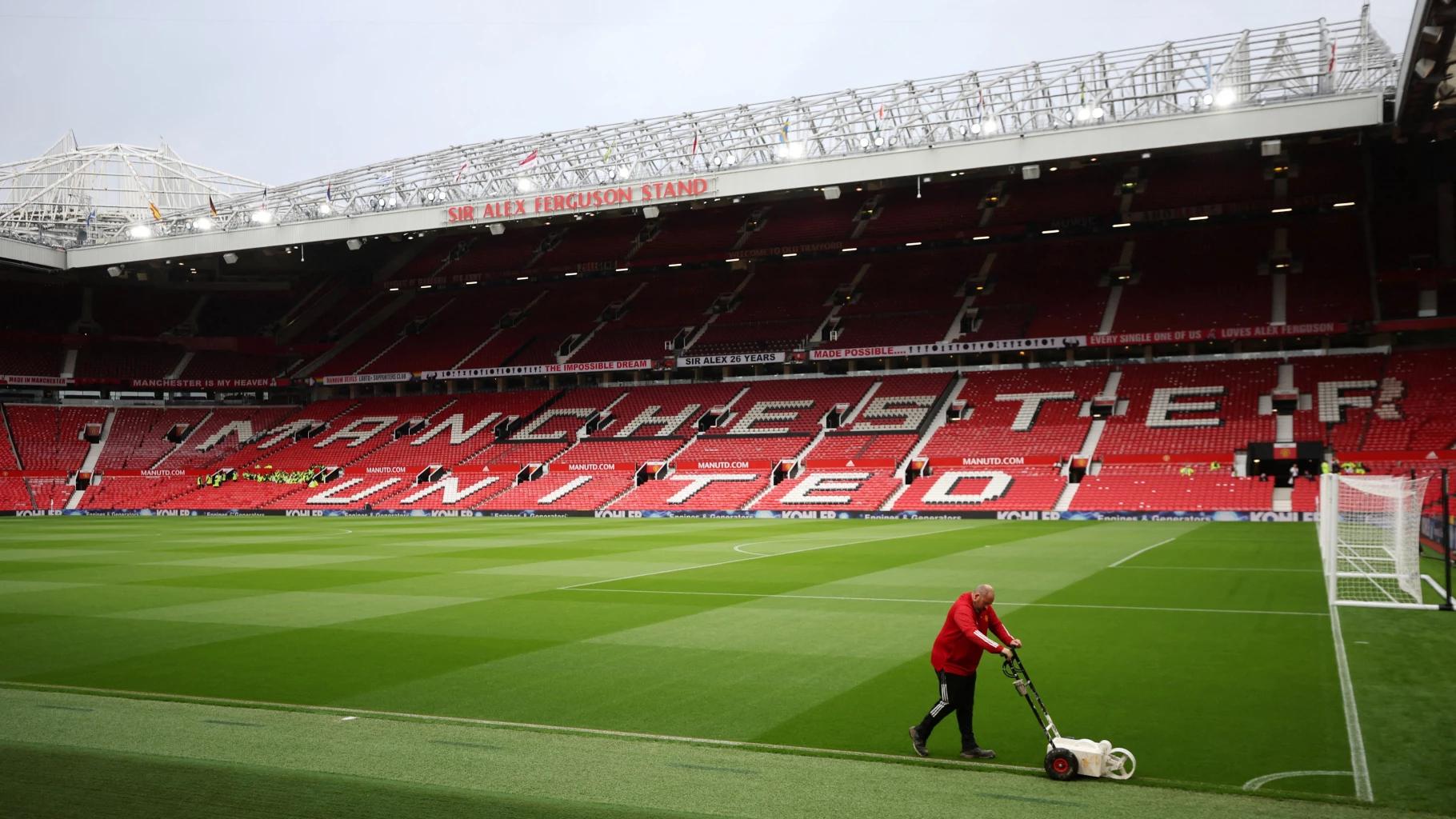
Manchester United said on Tuesday (November 22) it was commencing a process to explore strategic alternatives, including a new investment or a potential sale, 17 years after the American Glazer family bought the English Premier League soccer club.

The Glazer family is working with financial advisers on the process, which could lead to a partial sale of the Old Trafford club or investments including stadium and infrastructure redevelopment, the club said in a statement.

Manchester United fans have been clamouring for a change of ownership and the Glazers have been the target of intense criticism as the team have gone five years without winning a trophy. The last silverware they won was the Europa League and League Cup back in 2017.

“As we seek to continue building on the club’s history of success, the board has authorized a thorough evaluation of strategic alternatives,” Avram Glazer and Joel Glazer, executive co-chairmen and directors of United, said in the statement.

“We will evaluate all options to ensure that we best serve our fans and that Manchester United maximizes the significant growth opportunities available to the club today and in the future,” the statement said.

In August, British billionaire Jim Ratcliffe had expressed interest in buying United, Reuters reported. At the time, Elon Musk had also joked about planning to buy the club.

The owners are under pressure with United sitting fifth in the Premier League halfway through the season, which has been suspended because of the current Qatar World Cup.

Manchester United fans display banners in protest of the Glazer family’s ownership of the club inside the stadiumManchester United fans display banners in protest of the Glazer family’s ownership of the club inside the stadium
 

Manchester United shares jumped as much as 20% after Sky News first reported on the sale process, giving the club a market capitalisation of $2.6 billion.

The company was worth $2.5 billion at the close of U.S. trading on Tuesday. At it’s peak as a public company, it had a market capitalisation of $4.3 billion in 2018.

Also on Tuesday, the club said that star striker Cristiano Ronaldo will leave with immediate effect, marking a bitter end to the Portugal captain’s second spell at Old Trafford after he said he felt betrayed by the club.

The Glazers bought the club for 790 million pounds ($939.07 million) in 2005 in a highly leveraged deal which has been criticised for loading debt onto the club.

United has been listed on the New York Stock Exchange since 2012, when the Glazers sold 10% of their holding via the listing and have sold more shares since.

The Raine Group is acting as financial adviser and Latham & Watkins LLP is the legal adviser to Manchester United.

Rothschild and Co. is acting as financial adviser to the Glazer family shareholders.

Among the fan protests against the Glazers was one in May 2021 that forced the postponement of a home match against Liverpool, one of the club’s biggest rivals. It was the first Premier League match to be postponed because of a protest.

United and Liverpool were among a group of big clubs that said they wanted to establish a European Super League in April 2021 but then withdrew, partly because of objections from many fans in England.

Liverpool are also “exploring a sale” according to club chairman Tom Werner. In May 2022, Chelsea Football Club was sold to a consortium led by an investment group fronted by Todd Boehly and Clearlake Capital for $3.2 billion (2.5 billion pounds).

United finished sixth last season in their worst Premier League campaign in terms of points earned, failing to qualify for the lucrative European Champions League competition.

They won the last of their record 20 top-flight league titles in 2013, the year the great Alex Ferguson stepped down as manager after more than 26 years in charge.
 

THE NATION

Explainer: Thailand’s World Cup broadcast fiasco

#SootinClaimon.Com : ขอบคุณแหล่งข้อมูล : หนังสือพิมพ์ The Nation.

https://www.nationthailand.com/lifestyle/sport/40022345

Explainer: Thailand’s World Cup broadcast fiasco

Explainer: Thailand’s World Cup broadcast fiasco

TUESDAY, NOVEMBER 22, 2022

Thailand was among the last countries to secure broadcasting rights for the 2022 World Cup, signing a contract just “two days” before the tournament began.

But there was a problem with the broadcast distribution even before the first match kicked off within a few hours of signing the deal, creating an unsavoury controversy.

The Nation offers a clear insight into the whole process of acquiring the rights and the controversy over the distribution of matches for broadcast.

Thai people have been watching the event for free

Explainer: Thailand’s World Cup broadcast fiasco

• Thailand started broadcasting the World Cup in 1970, 52 years ago, but initially it was only the opening match, the semi-finals, and the final.

• From 1990 to 2018, Thai people could watch every match of the World Cup for free while people in other countries have to pay for special pay-per-view packages on cable TV if they want to watch every match.

“Must-have” rule, the cause of the fiasco

Explainer: Thailand’s World Cup broadcast fiasco

• When there was a fiasco over telecast rights for the 2014 World Cup, the National Broadcasting and Telecommunications Commission (NBTC) passed a “must-have” rule. The rule stipulates that Thai people must be able to watch seven sports tournaments for free. They include: the Southeast Asian Games, Asian Games, Olympic Games, and also the football World Cup.

The “must-have” rule discouraged private companies from buying broadcasting rights of these big sports events because they could not sell TV packages for profit and were forced to broadcast for free, which was not worth the investment.

A funding crisis

Explainer: Thailand’s World Cup broadcast fiasco

• Fifa, football’s world governing body, does not itself sell broadcasting rights of the World Cup. It has an agency, Infront, which is responsible for selling them.

Infront set the price of broadcasting rights for Thailand at 1.36 billion baht with a tax of 240 million baht, or 1.6 billion baht in total, an absurdly high price.

The pricing criteria is determined by the market value in each country and the purchase price for Thailand for the 2018 World Cup was 1.4 billion baht in total.

• Lacking a budget to acquire the rights, and with no private company coming forward to buy them, NBTC’s board decided to approve a budget of only 600 million baht from the Broadcasting and Telecommunications Research and Development Fund for Public Interest to purchase broadcasting rights. The Sports Authority of Thailand (SAT) was left with the task of finding the remaining 1 billion baht.

• Several private companies joined together to pay the remaining amount. They included True (300 million baht), PTT (100 million baht), and Thai Beverage (100 million baht).

With this funding of 500 million baht added to the NBTC’s contribution of 600 million baht, the total added up to only 1.1 billion baht, well short of the quoted price. The SAT tried to negotiate a lower price but Infront rejected their plea as they were worried other countries might use the same method.

• Several sectors had to step up including Khunying Patama Leeswadtrakul, a member of the International Olympic Committee, who talked with Fifa and stated that the World Cup is important for Thai people and will create the dream for youths to love football and sports. The Football Association of Thailand also sent a letter to Fifa.

It helped the governor of the Sports Authority of Thailand to negotiate. Fifa discussed with Infront again and agreed to lower the price to 1.18 billion baht (US$33 million), or 1.4 billion baht after tax.

With this, Thailand was the last country to obtain broadcasting rights for the 2022 World Cup on November 18, shortly before Fifa’s deadline expired.

Digital television operators up in arms

Explainer: Thailand’s World Cup broadcast fiasco

Even after Thailand obtained broadcast rights, there was a problem of broadcast distribution. The Association of Digital Television Broadcasting (ADTEB) submitted a complaint to the NBTC, claiming discrimination by the SAT which allowed True to broadcast on every platform. The association asked the telecom watchdog to review the broadcast rights. It argued three points in its submission to the NBTC:

1. A contribution of 600 million baht to acquire the rights came from the Broadcasting and Telecommunications Research and Development Fund for Public Interest.

The budget was from television operators to support, promote, study, and develop broadcasting and that is why they also supported the purchase.

The ADTEB said that the funding supported the purchase of rights for 64 matches, not 32 matches, and accounted for 40 per cent of the total budget needed for acquiring the rights.

However, private broadcaster True was allowed to select important matches, which reflected inequality and unfairness.

2. True contributed 300 million baht for purchase of the broadcasting rights but the company got exclusive broadcasting rights on all channels and platforms and was able to choose 32 matches including advertisement minutes from broadcasting channels.

The NBTC had contributed 600 million baht with a resolution that the broadcast rights of all 64 matches be distributed equally.

However, they distributed only 32 matches so ADTEB viewed the proportion as unfair and not equal while it was also beneficial to a single private company.

3. The SAT held a meeting to distribute broadcasting rights on Saturday from 10am to 4pm. It allowed the main sponsor, True, to choose 32 matches and left the balance 32 matches to other channels.

The ADTEB said that the association and its members had conveyed to the SAT several times that the practice was unfair and unequal, but the SAT had ignored their objections.

Related stories

Has the ref’s watch stopped? Mystery of added time at World Cup solved

#SootinClaimon.Com : ขอบคุณแหล่งข้อมูล : หนังสือพิมพ์ The Nation.

https://www.nationthailand.com/lifestyle/sport/40022344

Has the ref’s watch stopped? Mystery of added time at World Cup solved

Has the ref’s watch stopped? Mystery of added time at World Cup solved

TUESDAY, NOVEMBER 22, 2022

Fans confused over why Monday’s three World Cup matches ended with a combined 59 minutes of added time have new Fifa guidelines to thank.

The match between England and Iran alone lasted almost 30 minutes beyond the 90-minute mark, or the equivalent of the extra-time period in the knockout stage.

The time added in the first half was understandable, given the long stoppage needed to treat Iran goalkeeper Alireza Safar Beiranvand after he suffered a head injury with concussion.

However, in the second half, despite only a brief halt in play when England defender Harry Maguire got injured, another 13 minutes was added to the clock.

Fans scratching their heads got the explanation for the sudden increase in stoppage time from former Italian referee Pierluigi Collina, who now chairs the Fifa Referees Committee. Collina explained that Fifa is using a new system to calculate added time at the 2022 World Cup.

Under the new system, the match clock is stopped every time the ball goes out of play, during dead-ball situations, and for throw-ins, goal kicks, free kicks, substitutions, the referee checking VAR, and even goal celebrations.

All of these will result in time added to the match, Collina said.

The new guidelines are aimed to stop time-wasting by players and encourage the game to flow. Collina added that fans can expect to see at least 10 minutes of added time in every match.

Related stories

NBTC tells True to return exclusive broadcast rights for 16 World Cup matches

#SootinClaimon.Com : ขอบคุณแหล่งข้อมูล : หนังสือพิมพ์ The Nation.

https://www.nationthailand.com/lifestyle/sport/40022342

NBTC tells True to return exclusive broadcast rights for 16 World Cup matches

NBTC tells True to return exclusive broadcast rights for 16 World Cup matches

TUESDAY, NOVEMBER 22, 2022

True Corporation (True) has been asked to return exclusive Fifa World Cup broadcast rights for 16 of the 32 matches it was allotted, in order to maintain fairness in match allocation, the National Broadcasting and Telecommunications Commission (NBTC) said on Tuesday.

The move came after the Association of Digital Television Broadcasting (ADTEB) filed a complaint with the NBTC over what it said was unfair distribution of rights for the 2022 World Cup matches.

The ADTEB claimed that True had been given exclusive broadcasting rights on all channels and platforms and was able to choose 32 matches including advertisement minutes from broadcasting channels, in violation of the NBTC’s resolution that all 64 matches must be distributed equally.

The 32 matches allocated to True were: the final, third-place playoff, one quarter-final, two semi-finals, four round-of-16 matches and 23 first-round matches.

NBTC acting secretary-general Trairat Viriyasirikul said the SAT will reallocate 16 matches to other digital television operators.

“It is up to the SAT to decide which matches will be reallocated,” he said, adding that True did not object to NBTC’s move.

He said people in Thailand could not watch the broadcast of the Fifa World Cup on online channels other than True because of a contract between True and SAT.

He added that the SAT will talk to True about broadcasting match highlights.

Trairat added that the NBTC had acknowledged True’s proposal to broadcast the World Cup final in high-definition system instead of standard-definition, but did not acknowledge the reason.

“The proposal is expected to be discussed at the NBTC board meeting on Wednesday,” he added.

Related stories:

‘I feel very good,’ says Messi ahead of probable last World Cup

#SootinClaimon.Com : ขอบคุณแหล่งข้อมูล : หนังสือพิมพ์ The Nation.

https://www.nationthailand.com/lifestyle/sport/40022321

'I feel very good,' says Messi ahead of probable last World Cup

‘I feel very good,’ says Messi ahead of probable last World Cup

TUESDAY, NOVEMBER 22, 2022

Reuters

Argentina captain Lionel Messi said he was physically ready for the World Cup in Qatar and that it will be a special occasion as his side are one of the favourites in what is likely to be his last appearance in the global tournament.

“I feel very good physically, I think I’m in a great moment, both personally and physically and I don’t have any problems,” Messi, who did light training away from his team mates on Saturday, told a news conference on Monday (November 21).
 

“I heard that they said I trained differently. It was because I had a knock but there is nothing strange (happening). It was just a precaution.”

The 35-year-old, who in Qatar will be playing his fifth World Cup, added that he did not prepare differently for the tournament which for the first time is being played in November and December.

“I didn’t do anything special,” the forward said.

“I took care of myself and worked as I have done all my career, knowing that this is a special moment, as this is probably my last World Cup, my last chance to achieve this great dream that I have, that we all have.”

Argentina captain Lionel Messi said he was physically ready for the World Cup in Qatar and that it will be a special occasionArgentina captain Lionel Messi said he was physically ready for the World Cup in Qatar and that it will be a special occasion

The seven-time Ballon d’Or winner has enjoyed a trophy-laden career at both club and personal level but has so far failed to deliver a long awaited World Cup for his country, something many fans around the world would like to see change this time around.

“It’s a beautiful thing that many people outside Argentina want us to be champions and that it’s largely because of me,” Messi said.

“I’m grateful for the love I’ve received around the world during my career, and here in Qatar it’s another example of that.

“I don’t know if we arrive better than at other World Cups. But we’ve just won (the 2021 Copa America) and that decompresses us a lot.

“It makes us work in a different way, without anxiety about the national team and its results, and enjoying ourselves.”

Argentina kick off their World Cup campaign with a Group C opener against Saudi Arabia on Tuesday and will then face Mexico and Poland.
 

Reuters

Iran chose not to sing anthem at World Cup opener as England take the knee

#SootinClaimon.Com : ขอบคุณแหล่งข้อมูล : หนังสือพิมพ์ The Nation.

https://www.nationthailand.com/lifestyle/sport/40022310

Iran chose not to sing anthem at World Cup opener as England take the knee

Iran chose not to sing anthem at World Cup opener as England take the knee

MONDAY, NOVEMBER 21, 2022

Players of Iran’s national soccer team chose not to sing their country’s anthem at their opening World Cup match against England on Monday (November 21), in an apparent show of support for protesters back home.

The players were silent as the anthem was played at the Khalifa International Stadium, where Iranian fans gathered in the stands and shouted as the music was played. Some were seen making thumbs-down gestures.

More than two months of protests in Iran, sparked by the death of a young woman in the custody of the morality police, are one of the boldest challenges to Iran’s clerical leaders since the 1979 Islamic Revolution.

Iranian state television, during its live broadcast, censored the footage of the players lining up before the match as the anthem was played.

England players took the knee ahead of kick off as a symbol of anti-discrimination, with captain Harry Kane wearing a black armband with the words “No Discrimination” on it.

England together with Wales, Belgium, the Netherlands, Switzerland, Germany and Denmark decided not wear ‘OneLove’ rainbow armbands at the World Cup under pressure from FIFA, their associations said in a joint statement on Monday.

Iran chose not to sing anthem at World Cup opener as England take the knee

FIFA has threatened to issue yellow cards to any player wearing the multi-coloured armband which was introduced to support diversity and inclusion.

England captain Harry Kane spoke on Sunday (November 20) of his desire to wear the armband in Monday’s Group B opener against Iran.

True says it has signed contract with SAT for exclusive online World Cup broadcasting rights

#SootinClaimon.Com : ขอบคุณแหล่งข้อมูล : หนังสือพิมพ์ The Nation.

https://www.nationthailand.com/lifestyle/sport/40022299

True says it has signed contract with SAT for exclusive online World Cup broadcasting rights

True says it has signed contract with SAT for exclusive online World Cup broadcasting rights

MONDAY, NOVEMBER 21, 2022

Telecom giant True Corporation Plc on Monday issued a statement clarifying why people in Thailand could not watch the broadcast of the Fifa World Cup on online channels other than True.

In the statement, True said its three subsidiaries — True Digital Group, True Visions Group, and True4U Station — have entered into a contract with the Sports Authority of Thailand (SAT) to purchase the rights to broadcast the Fifa World Cup being held in Qatar from November 20 to December 18, so that Thai viewers could watch the event on free TV.

The SAT had received a budget of 600 million baht from the National Broadcast and Telecommunications Commission (NBTC), but it was not enough to cover the cost of broadcasting rights, hence True had contributed 300 million baht in exchange for exclusive broadcasting rights on all channels and platforms.

“Under the contract with the SAT, True possesses the broadcasting rights of Fifa World Cup Final 2022 via cable, satellite, IPTV, Internet, mobile, OTT, and terrestrial transmissions,” said the statement. “However, under the NBTC’s must-have rule of 2012, only the broadcast via terrestrial transmission must be made available for free to the public.”

True said it therefore reserves the exclusive right to broadcast the event via channels and platforms other than terrestrial TV, to comply with the must-have rule as well as intellectual property laws.

Earlier on Monday, the Association of Digital Television Broadcasting (ADTEB) filed a complaint with the NBTC over what it said was unfair distribution of rights for the 2022 World Cup matches.

ADTEB claimed that True got exclusive broadcasting rights on all channels and platforms and was able to choose 32 matches including advertisement minutes from broadcasting channels, in violation of the NBTC’s resolution that all 64 matches must be distributed equally.

Related Stories

Unhappy digital TV broadcasters complain to watchdog about World Cup rights distribution

Broadcasters cry foul after True dominates World Cup match allocation

One day to kick-off – but still no Thai TV World Cup schedule

Unhappy digital TV broadcasters complain to watchdog about World Cup rights distribution

#SootinClaimon.Com : ขอบคุณแหล่งข้อมูล : หนังสือพิมพ์ The Nation.

https://www.nationthailand.com/lifestyle/sport/40022295

Unhappy digital TV broadcasters complain to watchdog about World Cup rights distribution

Unhappy digital TV broadcasters complain to watchdog about World Cup rights distribution

MONDAY, NOVEMBER 21, 2022

The Association of Digital Television Broadcasting (ADTEB) on Monday filed a complaint with the National Broadcast and Telecommunications Commission (NBTC) over what it said was unfair distribution of rights for the 2022 football World Cup matches.

The NBTC had approved a contribution of 600 million baht to acquire the broadcasting rights for the Fifa World Cup.

Read More

The ADTEB said there was unfairness in the distribution of broadcast rights after the first meeting on Thursday. It said that as per the agreement, the broadcasting rights of 64 matches were to be distributed equally to digital television operators.

The ADTEB submitted three points to the NBTC to investigate and consider whether the distribution was fair:

● A contribution of 600 million baht to acquire the rights came from the Broadcasting and Telecommunications Research and Development Fund for Public Interest (BTFP).

The budget was from television operators to support, promote, study, and develop broadcasting and that is why they also supported the purchase.

The ADTEB said that the funding supported the purchase of rights for 64 matches, not 32 matches, and accounted for 40 per cent of the total budget needed for acquiring the rights.

However, private broadcaster True was allowed to select important matches, which reflected inequality and unfairness.

Unhappy digital TV broadcasters complain to watchdog about World Cup rights distribution

● True contributed 300 million baht for purchase of the broadcasting rights but the company got exclusive broadcasting rights on all channels and platforms and was able to choose 32 matches including advertisement minutes from broadcasting channels.

The NBTC had contributed 600 million baht with a resolution that the broadcast rights of all 64 matches be distributed equally.

However, they distributed only 32 matches so ADTEB viewed the proportion as unfair and not equal while it was also beneficial to a single private company.

● The Sports Authority of Thailand (SAT) held a meeting to distribute broadcasting rights on Saturday from 10am to 4pm. It allowed the main sponsor, True, to choose 32 matches and left the balance 32 matches to other channels.

The ADTEB said that the association and its members conveyed to the SAT several times that the practice was unfair and unequal, but the SAT had ignored their objections.

The association then decided to approach the NBTC’s board that its members did not agree with the SAT, and had unwillingly accepted the decision at Saturday’s meeting as it would affect the broadcast on Sunday.

The association said that it did not accept the SAT’s principles and methods in distributing the broadcasting rights and asked the NBTC to investigate and consider their complaint.

Related stories

Experts say Thailand’s ‘must carry’ rule must end after World Cup fiasco

#SootinClaimon.Com : ขอบคุณแหล่งข้อมูล : หนังสือพิมพ์ The Nation.

https://www.nationthailand.com/lifestyle/sport/40022288

Experts say Thailand’s ‘must carry’ rule must end after World Cup fiasco

Experts say Thailand’s ‘must carry’ rule must end after World Cup fiasco

MONDAY, NOVEMBER 21, 2022

Experts at a seminar slammed the way Thailand obtained broadcasting rights for the 2022 Fifa World Cup as a fiasco on Sunday.

The seminar was held by the Democrat Party to air complaints after the rights were purchased for 1.2 billion baht under the “must carry” rule for free broadcasts.

Half of the purchase fund came from public money in the National Sports Development Fund (NSDF).

However, three conglomerates – Charoen Pokphand Group (CP)ThaiBev and PTT – stepped in with contributions to meet Fifa’s asking price.

CP’s broadcasting arm True Corp was then allocated half of the World Cup’s 64 matches including the final, which sparked complaints from other broadcasters.

The National Broadcasting and Telecommunications Commission (NBTC) was severely criticised by experts and politicians for approving the rights purchase.

Experts say Thailand’s ‘must carry’ rule must end after World Cup fiasco

Paisan Limsathit, a legal expert from Thammasat University, said the NBTC had overstepped its jurisdiction by organising the purchase, which should have been managed by the Sports Authority of Thailand (SAT).

He explained that the NBTC is responsible for regulating broadcasters but that did not include purchasing broadcasting rights or approving funds to do so from the Universal Service Obligation fund.

The purchase of World Cup rights was also not in line with the objectives of the Broadcasting and Telecommunications Research and Development Fund for Public Interest (BTFP), which had only 2 billion baht, he added.

Paisan said the rights should have been purchased with money from the National Sports Development Fund (NSDF) or the private sector.

Kemmatat Poldej, former president of the Mass Communication Organisation of Thailand (MCOT), said broadcasting licences for sport were the most expensive. Higher viewership means higher licence prices, so their purchase needs to be discussed first, he added.

Watanya Bunnag, former manager of the Thailand national under-23 football team, pointed out that money to buy the rights came from the sale of digital broadcast licenses, which are a national asset. She added that the NSDF was also funded by the national budget.

Watanya, a Democrat candidate for the next election, explained that Thailand had never faced difficulties obtaining broadcasting rights before the digital television era because back then, television channels gathered purchase budgets and found revenue from sponsors.

The problems only arrived with the NBTC’s “must have/must carry” rule in the digital television era, as the regulator’s attempt to disrupt the market had backfired, she said.

Watanya reiterated her call for the NBTC to review the “must carry” rule to avoid future problems.

Read More

All 64 matches of the World Cup in Qatar will be broadcast live on 17 subscription-free Thai television channels.

Related stories

German stadium lights 20,000 candles for Qatar migrant worker fatalities

#SootinClaimon.Com : ขอบคุณแหล่งข้อมูล : หนังสือพิมพ์ The Nation.

https://www.nationthailand.com/lifestyle/sport/40022280

German stadium lights 20,000 candles for Qatar migrant worker fatalities

German stadium lights 20,000 candles for Qatar migrant worker fatalities

MONDAY, NOVEMBER 21, 2022

Reuters

20,000 candles flickered in the stands of a German football stadium on Sunday (November 20) as part of a protest against Qatar’s human rights record, organised by the German labour welfare organisation AWO and artist Volker-Johannes Trieb.

Hundreds of volunteers lit the candles on Germany’s Day of the Dead that also coincides with the start of the World Cup in Qatar.

6,500 footballs filled with sand were also laid out in the stadium, to commemorate the thousands of migrant labourers killed on World Cup construction sites in Qatar, according to an AWO press release.

“There is no exact figure available of those who have died and there probably never will be. I don’t have the words. Slavery that ends in death and grief is disgusting. The games that are starting today have been bought with pain and death. This is the bloodiest World Cup there has ever been,” said artist and protest initiator, Trieb.

Hundreds of volunteers including school pupils spent the day setting up the protest in the stadium at Castle Struenkede in Herne.

According to an AWO press release, more than 15,000 migrant labourers have been killed whilst building Qatar stadiums for the tournament.

“We are here because we want to protest against the World Cup in Qatar and we think it is unacceptable to break human rights like this and that’s why we had to do something,” said one of the unnamed volunteers.

Artist Volker-Johannes Trieb poses for the photographers holding a soccer ball filled with sand and one of a total of 20,000 candles set at stadium Struenkede Castle during the opening game of the 2022 FIFA World Cup to commemorate what the event organizers say are deaths of thousands of workers who lost their lives to build the stadiums for the tournament in Qatar, a claim disputed by Qatar, in Herne, Germany,Artist Volker-Johannes Trieb poses for the photographers holding a soccer ball filled with sand and one of a total of 20,000 candles set at stadium Struenkede Castle during the opening game of the 2022 FIFA World Cup to commemorate what the event organizers say are deaths of thousands of workers who lost their lives to build the stadiums for the tournament in Qatar, a claim disputed by Qatar, in Herne, Germany,

“It is outrageous that FIFA puts on a World Cup in winter and even though they have known what has been going on there over the last years insisted on sticking to the plan. It’s outrageous!”, another volunteer added.

Sunday’s protest was the second event organised by AWO and Trieb. In April, the group deposited sand-filled footballs outside the FIFA headquarters in Zurich, Switzerland.

Qatar, the first Middle Eastern country to host the World Cup, has come under intense international pressure for its treatment of foreign workers and restrictive social laws on homosexuality and women’s rights.

Disquiet over the country’s human rights record has led to calls for teams and officials to boycott the games at the Nov. 20-Dec. 18 tournament.

Reuters