Bang Saen locals dive in as beach finally reopens #ศาสตร์เกษตรดินปุ๋ย

#ศาสตร์เกษตรดินปุ๋ย : ขอบคุณแหล่งข้อมูล : หนังสือพิมพ์ The Nation.

https://www.nationthailand.com/travel/30388864?utm_source=category&utm_medium=internal_referral

Bang Saen locals dive in as beach finally reopens

Jun 01. 2020
By The Nation

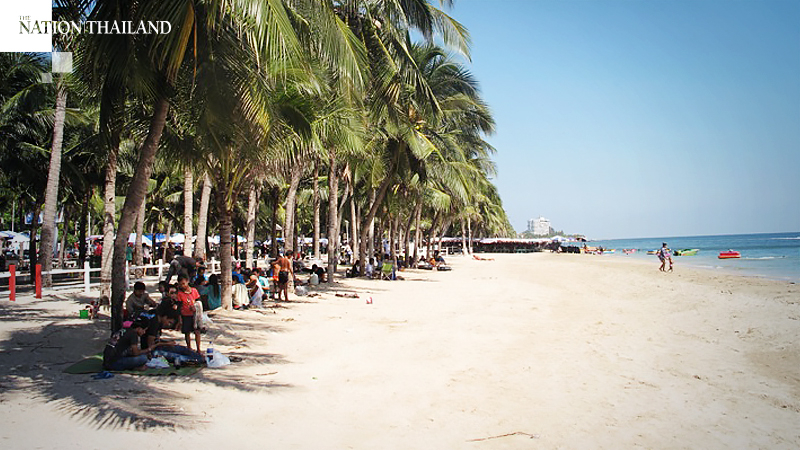
Residents of Chonburi are finally enjoying Bang Saen Beach again, after it was reopened on Monday (June 1) following more than two months of lockdown.

At 8am, police removed barriers that were blocking entry to the beach, while tourists and locals waited patiently to step back on the sand and swim in the sea again.

However, police have banned vendors’ stalls and other tourism services until June 5, when the beach will officially reopen.

Alcohol is also prohibited, and anyone found drinking on the beach will be arrested.

Bang Saen is considered the closest beach to Bangkok, lying just 108 kilometres to the east of the capital.

A local family told the Nation Thailand that their son was delighted to be allowed back, as the beach was part of the community.

However, the father said they would remain cautious over Covid-19.

Wang Nam Kheow hills covered in bright blooms #ศาสตร์เกษตรดินปุ๋ย

#ศาสตร์เกษตรดินปุ๋ย : ขอบคุณแหล่งข้อมูล : หนังสือพิมพ์ The Nation.

https://www.nationthailand.com/travel/30388741?utm_source=category&utm_medium=internal_referral

Wang Nam Kheow hills covered in bright blooms

May 29. 2020
By The Nation

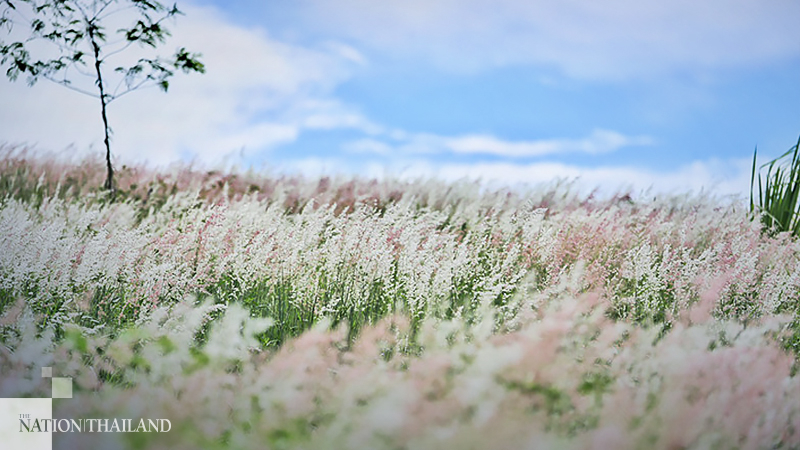
Many cars were seen parked along Highway No 3060 (Wang Nam Kheow-Pak Chong) as people stopped to take photographs of fields covered in white, pink and purple blooms.

Pongthep Malachasing, president of Nakhon Ratchasima’s tourism club, said the hillsides are usually covered in colourful flowers upon the arrival of the rainy season.

“These fields of flowers have become popular among locals and tourists, who stop to take photographs to post on social media,” he said.

These fields covered in bright, colourful blooms have become a new tourist attraction in Nakhon Ratchasima, with many people coming to enjoy the fresh air and natural surroundings in the Wang Nam Kheow district.

Six countries cautiously reopening for summer travel #ศาสตร์เกษตรดินปุ๋ย

#ศาสตร์เกษตรดินปุ๋ย : ขอบคุณแหล่งข้อมูล : หนังสือพิมพ์ The Nation.

https://www.nationthailand.com/travel/30388213?utm_source=category&utm_medium=internal_referral

Six countries cautiously reopening for summer travel

May 20. 2020
By Special To The Washington Post · Drew Jones · FEATURES, TRAVEL 
After months of lockdowns, European leaders are preparing to lift some coronavirus-related travel restrictions and allow tourism to resume – cautiously.

“Our message is we will have a tourist season this summer,” European Union Economic Affairs Commissioner Paolo Gentiloni told the BBC last week, “even if it’s with security measures and limitations.”

Those E.U. measures include updating health protocols for hotels and public transit and expanding contact tracing between member states. The goal, according to a news release from the European Commission, is “to help the EU tourism sector recover from the pandemic, by supporting businesses and ensuring that Europe continues to be the number one destination for visitors.”

There are regulations, chief among them that non-European tourists will have to wait until at least June 15 to begin their visits. But much of the loosening of restrictions will be left up to individual nations – France and Ireland, for example, have agreed to allow travel among them without requiring a 14-day quarantine in the final destination.

Here’s what other countries on the continent, along with a few top non-European travel destinations, are planning.

– – –

Spain

In the Spanish beach town of Canet d’en Berenguer, outside Valencia, officials are accounting for social distancing with a system allowing beachgoers to book appointments on the sand via mobile app.

The beach will be divided into a grid of socially distanced sites, with staggered arrival times and the option to choose either a morning or afternoon slot (but not both). In all, the restrictions will allow for a maximum of 5,000 people per day, about half of the beach’s normal capacity.

“This summer will be very different,” Canet d’en Berenguer Mayor Pere Joan Antoni Chordá told CNN. “There’ll be more space between your neighbor. Like a ‘business-class’ beach.”

– – –

Iceland

When Iceland reopens its borders June 15, it will require all visitors to either take a covid-19 test, agree to a two-week quarantine or present official documentation of a recent negative test for the disease caused by the novel coronavirus.

Regardless of which option they choose, tourists will have to download a contact-tracing app. Iceland has tested more than 13% of its population of about 360,000 people, a higher rate than any other country in the world.

“Iceland’s strategy of large-scale testing, tracing and isolating have proven effective so far,” tourism minister Thordis Kolbrun Reykfjord Gylfadottir said in a statement.

Iceland has reported 10 coronavirus-related deaths since the pandemic began.

– – –

Greece

Greece will open to tourists a bit later, starting July 1, but the nation’s usual packed nightlife scene probably won’t be a part of it. Solo or socially distanced small-group activities, such as kayaking and boating, will be encouraged instead.

“The tourism experience this summer may be slightly different from what you’ve had in previous years,” Prime Minister Kyriakos Mitsotakis told CNN. “Maybe no bars may be open, or no tight crowds, but you can still get a fantastic experience in Greece – provided that the global epidemic is on a downward path.”

Every international traveler to Greece will have to enter through Athens and submit to a health screening, which includes a rapid covid-19 test.

– – –

Mexico

Beaches across Mexico will open to tourists starting in June, with phases of reopening continuing through July and August. Los Cabos, the tip of the Baja California peninsula that includes popular spring break destination Cabo San Lucas, will allow for limited travel beginning June 1 as health screenings and enhanced sanitation measures ramp up to accommodate more tourists late into the summer.

The Los Cabos tourism board said it will look to open many of the area’s hotels and, eventually, the international terminal at its airport, if the new safety protocols reduce the spread of the virus. Cancun and Riviera Maya will also reopen in phases, though the U.S. State Department’s has a “Level 4: Do Not Travel” advisory for the area.

“For those looking further to international destinations, the overarching theme [in online searches] seems to be relaxation and beach time, with Mexico and the Caribbean dominating the list,” an Expedia spokeswoman told Travel + Leisure.

– – –

Australia and New Zealand

On the other side of the world, Australia and New Zealand are experimenting with the idea of a “travel bubble” that would allow tourists to travel freely between the countries, which have both had relatively few deaths. The bubble, however, would apply only to residents of the two countries,

“Our Number 1 focus at the moment is making sure that both our countries are in the position where we’re domestically managing covid-19 to a point where we can with confidence open borders,” New Zealand Prime Minister Jacinda Ardern said at a recent news conference.

Italy announces plans to ease travel restrictions starting June 3 #ศาสตร์เกษตรดินปุ๋ย

#ศาสตร์เกษตรดินปุ๋ย : ขอบคุณแหล่งข้อมูล : หนังสือพิมพ์ The Nation.

https://www.nationthailand.com/travel/30387985?utm_source=category&utm_medium=internal_referral

Italy announces plans to ease travel restrictions starting June 3

May 17. 2020
File photo

File photo
By The Washington Post · Chico Harlan · WORLD, EUROPE 

ROME – Italy on Saturday moved to significantly unwind coronavirus-related movement restrictions, announcing plans to allow travel across the country as well as to and from abroad beginning June 3.

Such changes would restore many of the freedoms that were in place before Italy became the epicenter for the virus’s spread in Europe. Italy is under intense economic pressure to reopen its doors and revive its tourism sector, which normally accounts for 13 percent of its GDP.

But the country is also gambling that it can contain any new outbreaks that might come with freer travel.

Since early March, the movement of Italians has been severely restricted, as part of one of the most rigid lockdowns in Europe. Under the current restrictions, people in the country are not allowed to leave their region, and leisure travelers are prohibited from coming to Italy. Anybody arriving in the country for urgent business reasons is required to self-isolate for 14 days.

In an evening address, Prime Minister Giuseppe Conte said that people arriving from other E.U. states would not be subject to quarantine.

“This will create the conditions for tourism recovery,” he said.

The continent’s external borders are closed to nonessential travelers until at least mid-June – keeping Italy, initially, off the table as a travel option for Americans. Foreign minister Luigi Di Maio indicated that Italy’s eased restrictions would apply to those already in the European Union, writing on Facebook that from June 3 it will be possible “to move within E.U. states.”

Even by loosening the restrictions, Italy will have a hard time fully restoring its summer tourism season. Airlines have dramatically cut back on routes to the country, and many people who had planned trips to Italy have already canceled. Countries with more controlled outbreaks, like Greece and Portugal, are trying to pitch themselves as safe travel destinations for northern Europeans trying to escape to the beach.

Still, Italy is moving quickly to ease its restrictions in part because many of its regional governments, worried about the economic toll, have agitated for a more rapid timetable. On May 4, Italy took the first steps to emerge from lockdown, allowing factories and construction projects to resume. The government has since pushed up the opening date for restaurants – from early June to May 18. Retail stores and museums will also restart May 18.

“The epidemiological situation in Italy is holding,” said Fabrizio Pregliasco, a virologist at the University of Milan, who noted that the last two weeks haven’t shown any worrying upticks in the transmission of the virus. “With some caution, it is reasonable to imagine a reopening.”

The stringent lockdown Italy imposed for eight weeks succeeded in slowing the pace at which the virus was spreading. The country is discovering roughly 1,000 new coronavirus cases daily, compared with 6,000 at the peak in late March. Only 10 percent of the country’s intensive care beds are occupied by coronavirus patients, compared with more than 50 percent more than a month ago.

The country is sure to pay a severe economic price, because of restrictions necessitated by the virus and because it came to a standstill for so long. Italy’s economy is expected to contract this year by more than 9 percent, its deepest recession in history. Italy’s Confcommercio business association said that drop in consumption will mainly hit a few sectors – particularly, hotels and restaurants.

Thailand’s Phuket beckons when travel resumes #ศาสตร์เกษตรดินปุ๋ย

#ศาสตร์เกษตรดินปุ๋ย : ขอบคุณแหล่งข้อมูล : หนังสือพิมพ์ The Nation.

https://www.nationthailand.com/travel/30387624?utm_source=category&utm_medium=internal_referral

Thailand’s Phuket beckons when travel resumes

May 10. 2020
Tourists take a selfie photograph at Patong Beach in Patong, Phuket, Thailand, on Jan. 16, 2018. MUST CREDIT: Bloomberg photo by Taylor Weidman.

Tourists take a selfie photograph at Patong Beach in Patong, Phuket, Thailand, on Jan. 16, 2018. MUST CREDIT: Bloomberg photo by Taylor Weidman.
By Syndication Washington Post, Bloomberg · Randy Thanthong-Knight · FEATURES, TRAVEL 

As a swimmer, I’ve always felt at home in the ocean. But Phuket, a place I’ve visited more than a dozen times since childhood, is where I find stillness.

The ocean laps calmly, and when you close your eyes to feel the salty breeze, you can hear the rustling of tropical forests right off the coast. Vendors sell just-cracked coconuts sloshing over with fresh juice. Point in any land-bound direction, and within a few miles you’ll find the world’s best beach resorts, gracious hospitality, and restaurants that vary from street food stalls to a Michelin-starred dining room. It’s the best of all worlds, somehow squeezed onto a picturesque island that’s just a puddle-hop flight from my home in Bangkok.

Even an “up and down” one-hour flight feels impossibly far away at this time. While some of Thailand’s provinces haven’t reported a single case of covid-19, Phuket has become the country’s biggest hot spot. The island, which once received about a million tourists each month, is now deserted. And the government is forecasting that tourism won’t reignite until a vaccine emerges, which could take well more than a year.

But Phuket remains my mental refuge. Bangkok, like many other locked-down cities with its compact living spaces, isn’t meant for a quarantined lifestyle. When I open my windows in my downtown apartment, I’m greeted by construction noises and rooftops of neighboring buildings rather than blue water and the sound of chirping birds. Life, in other words, is not a beach.

Until I can get back safely to Phuket, I’ll relish one silver lining about its current quietude. In recent years the island was suffering from overtourism; huge numbers of visitors and too many boat businesses had led to the buildup of marine debris, damaged coral, and a disruption in the balance of wildlife and natural habitats. A pause on human visitors has brought out rare sea turtles to nest in record numbers on empty beaches, and the manatee-like creatures called dugongs have been spotted in typically boat-riddled shallows. That means Phuket will be its most beautiful self whenever we can return.

When the time comes, of course I’ll hit up some of my local favorites-but I’ll also indulge in the singularly luxurious spots that have given Phuket its prime position at the top of many bucket lists. Here’s how to nail the best of both worlds.

Even as a native Thailander, I find the food served from southern kitchens akin to the old ghost pepper challenge-it flexes your spicy taste receptors until they’re numb and tingly. Besides being unapologetically hot, it’s also rich and decadent: think pork kua kling, a spicy dish spiked with kaffir lime leaves and curry paste, or the stir-fried bitter beans with shrimp paste called sataw pad kapi.

I tend to order both at Raya, my favorite restaurant on the island. It’s set inside a century-old house in Phuket Old Town-an unassuming spot that you could easily pass by and never notice, with a geometric tiled floor and black-and-white photos on its walls. It’s not air-conditioned, so on a hot day, I’ll head to the nearby Tu Kab Khao instead. Located in a colonial building with coffered ceilings and Murano chandeliers, it focuses on prettied-up versions of family recipes such as stir-fried pork leg with salted krill and stir-fried pumpkin with dried shrimp and shrimp paste.

Charter a boat for a day from Phuket, as it’s possible to explore the many islands of the Andaman Sea. Head a few hours northwest to find the Similan Islands, an archipelago of 11 islets that are ringed by crystal-clear waters inhabited by neon coral, turtles, and reef sharks. To the east are Thailand’s famous Phi Phi Islands and the less-visited Koh Yao Noi and Koh Yao Yai, which offer secluded beaches and pristine coves.

On Phuket itself, there’s much more to do than whiling the day away under the sun. Old Phuket Town, with its brightly colored Portuguese-inspired buildings, has long been dismissed as overly rundown. But the area has been experiencing a renaissance: Historic buildings have been restored and turned into cafes, restaurants, and shops. Enormous, colorful murals now coat previously crumbling facades. Most nights of the week, the streets are lined with vendors who simmer traditional dishes, be it pots of rice and pork rib soup or bowls of stir-fried noodles with eggs.

Just a short cab ride away is Chalong Bay Rum Distillery, where small-batch rum is made from organic Thai sugarcane. Go in the afternoon for a two-hour cocktail workshop; you’ll learn about the artisanal process while roaming a sun-drenched plantation. From the thatched-roof open-air dining room, you’ll also learn to make a few drinks, including a Thai twist on the caipirinha that’s flavored with red chile. (They call it the spicyrinha.)

When it comes to hotels in Phuket, there’s no sense in going off the beaten path. The island is home to some of the best resorts in the world, including the very first feather in Aman’s glorious cap. Opened in 1988, Amanpuri has 44 villas with private pools and 40 pavilions spread out on a former coconut plantation, each adorned with traditional Thai arts including decorative bowls and Buddhist ornaments. Not only is it a coveted spot to rest your head at night, but the resort offers access to a private beach with ultra-fine sand and clear water, where the lounge chairs are shaded by beautiful parasols and flanked by enormous gray boulders.

If nature is what you need, try a treetop villa at Keemala instead. The hillside resort is surrounded by lush rainforest and looks pulled out of a fantasy film set; some of the rooms are fashioned after birds nests, and from their plunge pools you can commune with chirping cicadas and crickets.

For the ultimate in seclusion, if that’s what remains on order in a post-lockdown world, there’s Como Point Yamu on Phuket’s quiet east side. Its turquoise-hued, glass-walled villas face the bay, which means any photo you take pointing outwards will be blue-on-blue-on-blue. Included in its amenities are a boat that takes you to a private beach club on nearby Naka Yai Island-perfect for kayaking and paddle boarding-and a 100-meter-long infinity pool facing the vast sea and its many limestone islands.

As I daydream about Phuket, I’m planning on supporting Soi Dog Foundation, which rescues dogs from the meat trade and helps find them homes abroad. With international flights grounded, the organization will need more help than ever to provide food and medical support for the animals in its care.

Airlines step up pressure for government-run temperature checks for travelers #ศาสตร์เกษตรดินปุ๋ย

#ศาสตร์เกษตรดินปุ๋ย : ขอบคุณแหล่งข้อมูล : หนังสือพิมพ์ The Nation.

https://www.nationthailand.com/travel/30387545?utm_source=category&utm_medium=internal_referral

Airlines step up pressure for government-run temperature checks for travelers

May 08. 2020
File photo

File photo
By The Washington Post · Hannah Sampson · BUSINESS, FEATURES, TRAVEL

JetBlue is the latest airline to urge government officials to add temperature screenings for air travelers.

Joanna Geraghty, JetBlue’s president and chief operating officer, said in an interview with CNN Friday that while temperature checks might not be effective for asymptomatic people, they could still alert authorities to someone who should not be flying.

“Our perspective is there needs to be a global industry solution for this,” she said. “Different standards for different airlines is going to be challenging for the traveling public. If you show up in an airport and one airline does temperature checks one way and another does it another way, that’s just hard for consumers. Our recommendation is for the government to step in and handle that service.”

Her comments echoed those of Southwest Airlines CEO Gary Kelly, who told CBS News this week that he was urging the Transportation Security Administration to start checking temperatures as part of a checkpoint screening process. Frontier Airlines, which became the first U.S. airline to announce its own temperature scans on Thursday, also urged government authorities to take over the job.

Geraghty said she expected to see more developments around health requirements and flying soon.

“I think a lot will be changing in the next few weeks around what the industry is going to do and, more importantly, what that nationwide standard should be and whether the government will be stepping in and setting some of those nationwide requirements,” she said.

A TSA statement late Thursday said the agency had not made any decisions about airport health screenings.

“Ongoing discussions with our [Department of Homeland Security] and interagency colleagues, as well as our airport and airline partners, will enable the agency to make informed decisions with regard to the health and safety of the aviation environment,” the statement said. “The safety and security of the traveling public and our employees will always be our top priority.”

Tibet Airlines to launch 18 new air routes in summer #ศาสตร์เกษตรดินปุ๋ย

#ศาสตร์เกษตรดินปุ๋ย : ขอบคุณแหล่งข้อมูล : หนังสือพิมพ์ The Nation.

https://www.nationthailand.com/travel/30386708?utm_source=category&utm_medium=internal_referral

Tibet Airlines to launch 18 new air routes in summer

Apr 24. 2020
More than 40 million tourists from home and abroad visited Tibet in 2019, up 19 percent year on year, according to local authorities.[Photo/Xinhua]

More than 40 million tourists from home and abroad visited Tibet in 2019, up 19 percent year on year, according to local authorities.[Photo/Xinhua]
By Xinhua

Tibet Airlines plans to add 18 air routes this summer to provide more options for passengers and promote tourism in Southwest China’s Tibet autonomous region, according to the company.

The air routes will link Lhasa, capital of the autonomous region, and other cities in China including Kunming, Changsha and Shijiazhuang.

The company said it will offer a total of 66 air routes this summer.

More than 40 million tourists from home and abroad visited Tibet in 2019, up 19 percent year on year, according to local authorities.

Krabi’s starfish haven Ao Siao gets ready for post-virus tourist influx #ศาสตร์เกษตรดินปุ๋ย

#ศาสตร์เกษตรดินปุ๋ย : ขอบคุณแหล่งข้อมูล : หนังสือพิมพ์ The Nation.

https://www.nationthailand.com/travel/30386853?utm_source=category&utm_medium=internal_referral

Krabi’s starfish haven Ao Siao gets ready for post-virus tourist influx

Apr 27. 2020
By The Nation
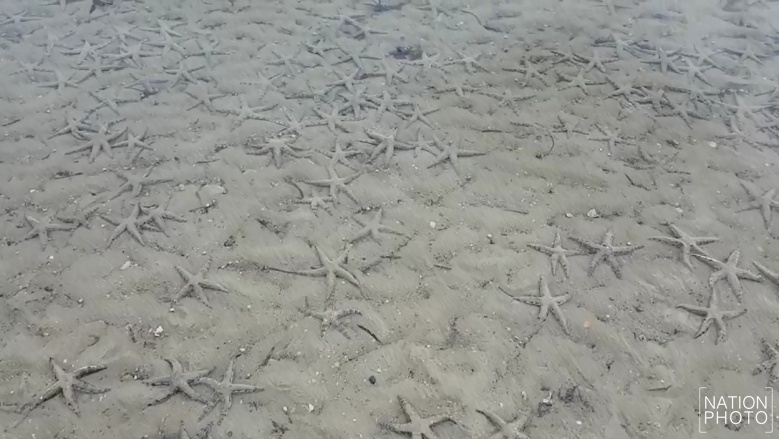
Thousands of starfish can be seen when the tide ebbs in Krabi’s Ao Siao beach.

Though this beach is not that popular among tourists compared to the Nopparat Thara Beach on mainland Krabi, Khlong Muang Beach or the island of Phi Phi, Ao Siao is getting ready to attract tourists once the Covid-19 outbreak comes to an end.

The 2-kilometre-long beach is still abundant with natural resources, especially scores of starfish which can be seen when the tide ebbs. The beach is also known for its refreshing breezes and strangely shaped sand dunes.

Ao Siao is 5km from Ao Nang Beach within the Hat Nopparat Thara-Mu Koh Phi Phi National Park.

Scientists think they know ways to combat viruses on airplanes. They’re too late for this pandemic. #ศาสตร์เกษตรดินปุ๋ย

#ศาสตร์เกษตรดินปุ๋ย : ขอบคุณแหล่งข้อมูล : หนังสือพิมพ์ The Nation.

https://www.nationthailand.com/travel/30386968?utm_source=category&utm_medium=internal_referral

Scientists think they know ways to combat viruses on airplanes. They’re too late for this pandemic.

Apr 29. 2020
A visualization from Purdue University shows how the tiny invisible droplets from a single cough flow through the cabin of a Boeing 767 passenger jet. MUST CREDIT: Qingyan Chen/Purdue University School of Mechanical Engineering handout

A visualization from Purdue University shows how the tiny invisible droplets from a single cough flow through the cabin of a Boeing 767 passenger jet. MUST CREDIT: Qingyan Chen/Purdue University School of Mechanical Engineering handout
By The Washington Post · Michael Laris · NATIONAL, FEATURES, HEALTH, TRANSPORTATION, TRAVEL

On March 14, 1977, a woman with the flu climbed aboard a 737 and headed for Kodiak, Alaska, with 53 other passengers and crew. After an engine failed, most of them sat on the runway with the cabin doors shut, and the ventilation system off, for two hours. Within three days, 38 more people were sick.

More than four decades after state and federal epidemiologists showed how easily viruses spread from person to person on airplanes, the novel coronavirus has decimated global aviation. Daily passenger screenings are down 95 percent, according to the Transportation Security Administration.

Though there have been significant advances since the 1970s, and airlines spent weeks touting the safety of flying and their steps against the coronavirus, passenger cabins still pose a danger for the spread of infectious diseases, experts said.

It is a problem of biology, physics and pure proximity, with airflow, dirty surfaces and close contact with other travelers all at play.

Breakthroughs are possible, researchers said. Ultraviolet lights that promise to destroy viruses without hurting humans are being tested by Columbia University scientists, who say the lights would be effective in airplane cabins, airports, hospitals and schools.

“As we speak, there are 100 hairless mice being exposed for 15 months,” said David J. Brenner, director of Columbia’s Center for Radiological Research. The mice live under the lights eight hours a day and get eye and skin tests every couple of weeks, and after eight months the researchers have found no damage, “which is encouraging.”

The lamps could have helped prevent the spread of covid-19, Brenner said, but “it’s come a little too soon for us. If it had come at this time next year, we’d be in a good position to fight it.”

The Federal Aviation Administration and major manufacturers have long been aware of the risk of diseases spreading on flights and have sponsored research seeking improvements.

– – –

Boeing is experimenting with lavatories that can sanitize themselves in less than three seconds. Engineers at the U.S. manufacturer and its top competitor, Airbus, have explored changing the way air moves around passengers to reduce infections.

But fighting illnesses and preparing for disaster were not industry’s top priorities as global air travel soared.

“When you can easily sell your airplanes, you try to defer the problems to the future,” said Qingyan Chen, a Purdue University engineering professor who helped lead a major FAA-funded research project on disease transmission aboard aircraft and has received research funding from Boeing. “Today we found that future is actually 2020.”

How far airlines and manufacturers might go now, and how far regulators or passengers might push them, remains unclear. Boeing was already under siege for deadly design flaws in its 737 Max aircraft following two crashes, and the company said it is seeking takers for a “voluntary layoff” plan as the aviation sector has slowed “to a trickle.”

“When the world emerges from the pandemic, the size of the commercial market and the types of products and services our customers want and need will likely be different. We will need to balance the supply and demand accordingly,” chief executive Dave Calhoun told employees in an April 2 letter.

The FAA regulates airplane design and production, down to the requirements for fire-retardant seat cushions, and oversees airline operations. But while the agency sets some air-quality standards, such as acceptable carbon dioxide levels, it has not set rules for preventing the spread of infectious diseases in airplane cabins.

“It’s very hard for industry to change. . . . It’s not like a flip of a switch,” said Chen, pointing to the expense of developing new features and getting them certified by the FAA. But those high costs also underscore the key role for government, he said. “Regulation is very important. If you regulate that, then they will have to do something.”

The FAA declined to answer a question about why it has avoided setting requirements to address the spread of viruses on planes. A spokesman instead pointed to comments FAA Administrator Steve Dickson made March 11 on Capitol Hill.

Pressed on what requirements the FAA has affecting the “possible transmission of contagious diseases on commercial flights,” Dickson, who took the top regulator job less than a year after leaving Delta Air Lines, instead discussed rules covering “noxious fumes.” He also echoed statements from airlines during the pandemic.

“The risk to the public is no higher than it would be in any area where you have folks gathered,” Dickson told Rep. David Price, D-N.C., saying the air on planes is “on par” with that in homes.

“The research that’s been done over the years is that there’s really not any significant difference in what you would have in a building such as we’re sitting in today, in terms of air quality,” Dickson added, before taking a question from Rep. Mario Diaz-Balart, R-Fla.

A week later, Dickson said he would be self-quarantining after a “brief encounter” before the hearing with Diaz-Balart, who tested positive for the virus and eventually recovered.

– – –

As the coronavirus spread globally, the message from the airline industry to would-be customers was that planes were safe and that extra precautions were being taken. But the science behind cabin air quality has been lost in some of the messaging.

As President Donald Trump downplayed the threat of the virus, the White House offered reassurances. Asked March 2 if he would be comfortable traveling with his family to Disney World, Vice President Mike Pence said that “there’s been no recommendation about any limitations on travel” in the United States, adding that he travels “all the time.”

The TSA screened more than 20 million people over the next two weeks, both passengers and workers, as travelers continued to process the dangers and the virus continued to spread. On March 16, Trump advised against unnecessary travel.

Unions representing aviation workers, who have complained about the lack of masks and other protective equipment, say hundreds of flight attendants and pilots have tested positive for covid-19, and at least seven have died.

Airlines have noted that all, or most, of their planes use high-efficiency particulate air filters. Air flows past millions of particle-grabbing layers in the filters and is blended with air sucked in through the engines, creating roughly a 50-50 mix of fresh and recirculated air.

Delta said that “HEPA air filters extract more than 99.999% of even the tiniest viruses.” Alaska Airlines, citing studies from the European Union Aviation Safety Agency, argued that cabin air “can be better than the air found in many office buildings,” given how frequently it recirculates. Southwest said the filters help provide onboard air quality “which, in most cases, exceeds the quality of air that can be found outdoors.”

Chen, who edits the journal Building and Environment and has studied air quality in offices and cruise ships in addition to planes, said that while planes get high marks on some measures, many of the industry claims are misleading.

While air on a Southwest plane may be cleaner than what is outside in a highly polluted city in China or India, Chen said, that is not the case in United States, where Southwest does most of its flying.

The European research cited by Alaska Airlines focused on certain chemical contaminants, not viruses.

“To be honest, airplanes are not designed to prevent infectious-disease transmission,” said Chen, who was co-director of the FAA-funded Airliner Cabin Environment Research center from 2004 to 2010. “They’re not designed to do the job.”

Experts agree that HEPA filters are highly effective at capturing everything from viruses to skin flakes.

But that is only part of the picture.

The problem is passengers can still breathe in tiny floating droplets from a coughing passenger seated nearby – before the air carrying those droplets can be vented out of the cabin and filtered.

Precisely how far the droplets might float before being pulled out and cleaned has been the subject of intricate scientific observation, airflow modeling and disease tracing, from the onboard flu cases in Alaska to an earlier coronavirus outbreak in 2003, when severe acute respiratory syndrome (SARS) killed 774 people around the world.

On March 15 of that year, a Boeing 737 took off from Hong Kong for a three-hour flight to Beijing, with a feverish 72-year-old man sitting in 14E, a middle seat.

Of the 120 people on board, 22 were later diagnosed with confirmed or probable cases of SARS, according to a reconstruction published in the New England Journal of Medicine that year. Researchers said the “most plausible” explanation was that they were infected on the plane by the man in 14E. He died of atypical pneumonia a few days after the flight.

The World Health Organization had defined “contact” with a SARS patient as sitting in the same row, or in the two rows ahead or behind the infected person.

The researchers found that the risk for those in the three rows in front of the man, or the same row, was much higher than for those sitting elsewhere. But two people seated as far as seven rows in front of him were also infected, as were two flight attendants. Five passengers later died.

People moving around or touching surfaces may have played a role, or the virus may have floated in the air for longer than expected, the researchers concluded.

A decade after the SARS flight, Emory University researchers, with support from Boeing, sought to address those findings.

Public health students carrying iPads on 10 flights from Atlanta built a “network model” of passenger contacts and infection risks. The authors, including a top Boeing physician, concluded that respiratory disease spread by droplets would likely be “limited to one row in front of or in back of an infectious passenger.”

In seeking to explain how people sitting so far away on the Beijing-bound flight ended up sick, the Emory researchers said the SARS “transmissions” may have happened at the airport, or come from “other sources before or after the flight.”

The authors of the original SARS study had acknowledged those possibilities, but said that many people got sick around four days later and that “clustering” pointed to the day of the flight as a crucial moment. They also said they could have missed others who became ill.

Experts in disease transmission are still wrestling with the implications of that Beijing flight and what insights it may provide for today’s much more deadly coronavirus pandemic.

The Centers for Disease Control and Prevention in February reiterated the two rows up, two rows back guidance for defining “contact” with an infected patient, which can shape who gets monitored.

Some local public health officials have cast a wider net. Officials in Monroe County, New York, warned all passengers and crew members on a 50-seat jet bound for Rochester on March 14, along with everyone at the airport around the time it landed, to monitor themselves because a patient diagnosed with covid-19 had been on board.

The death of American Airlines flight attendant Paul Frishkorn last month highlights the need to “avoid further contagion” of airline crew members, the Air Line Pilots Association said, adding that at least three of its pilots have died. The group called on Transportation Secretary Elaine Chao to require that airlines be more exacting about cleaning and inform employees when they have been exposed, or aviation could “grind to a complete halt.”

– – –

Chen was born to a farming family in Fujian province, in southeast China, where his university studies were delayed by Mao Zedong’s brutal Cultural Revolution. He spent painful years lugging massive rocks for construction projects before coming to the United States and delving into the behavior of tiny particles on airplanes.

Working with two Boeing engineers and a team of researchers from Purdue, Chen wanted to know how changing an airplane’s ventilation system would affect the risk ofcontracting SARS, as a stand-in for other dangerous viruses that might emerge.

Their results, published last year, were startling. They found that passengers sitting with a SARS patient in a seven-row section of a Boeing 767 would have a 1-in-3 chance of getting sick from a five-hour flight. On a shorter 737 flight, the risk was 1 in 5.

But they found that changing the existing ventilation system – essentially by having air flow into the cabin from near the floor rather than from above – would make a big difference, cutting the risk by half or more.

Chen said droplets were swept away from passengers more efficiently using alternative systems, one tested by Airbus engineers and another developed by Chen and his team.

One reason: The warmth of the passengers’ bodies helped the flow of air coming up from underneath, since warm air rises, he said. Going with that flow, rather than fighting against it, lessened the turbulence that could keep germs on top of passengers.

“We try to not mix your air with your neighbors’,” Chen said.

The study assumed the virus that caused SARS could stay airborne for long periods, which is different from what the CDC says is typically occurring with the novel coronavirus.

Scientists and public health officials said covid-19 is largely spread from one person to another through droplets, such as when people cough or sneeze.

Such relatively large droplets, brimming with viruses, generally travel only a limited distance before being pulled down by gravity, sort of like ping-pong balls falling back to the table after being whacked.

That is why social distancing guidelines have emphasized the six-foot distance and call for incessant hand-washing, to avoid picking up fallen droplets and bringing them to your face.

Fortunately, experts said, the coronavirus does not behave like the fearsomely infectious measles virus, which can stay aloft for up to two hours, more like the balls bobbing and floating around an old-school lottery machine.

But Chen – whose background is in mechanical engineering and fluid dynamics, not medicine – said the uncertainties around covid-19 remain a cause for caution.

The World Health Organization said droplets are the main path for infection, but noted research showing that the coronavirus has become airborne in some hospital settings, including during intubation to help breathing.

U.S. researchers reported suspending coronaviruses in the air and said such infections are “plausible.”

The National Academies of Sciences, Engineering, and Medicine on April 1 pointed to evidence that the coronavirus can spread by air through “normal breathing,” not just via droplets from coughing, and cited research from the University of Nebraska that it was detected in the air beyond six feet from sick people. The White House subsequently recommended that people wear masks in public.

Chen also noted research showing that the coronavirus can be found in feces and wonders if the violent flush of airplane toilets could cause the virus to become airborne. The outbreak on the Diamond Princess cruise ship provides added concern. Though researchers found evidence the virus spread via contacts and droplets, Chen wonders if air systems may also have contributed.

What he has established through years of research is that droplets less than a certain size – about 20 microns, or millionths of a meter – can easily be swept through the air. Following a cough, they disperse widely, and it takes about four minutes on average for such particles to be filtered out of the cabin, his research shows.

Slightly larger droplets can still float for 10 seconds in the cabin’s blowing air, or be carried in the wake of someone walking, he said.

Larger, heavier droplets that settle quickly remain the most serious risk with covid-19, he said.

But any person deciding whether to fly, now or in the future, should be vigilant, and wear a mask, he said.

“I personally believe we just provide all possible routes of transmission and make people aware of the risks,” Chen said.

On Monday, JetBlue said it would require all passengers to wear masks starting May 4, and American Airlines said it would start handing out face coverings on some flights. “This is the new flying etiquette,” said JetBlue president Joanna Geraghty.

For a manufacturer such as Boeing, the choices were difficult, Chen said, including deciding how much to upend current designs in search of progress.

“I don’t mean Boeing does not want to change. . . . They definitely think this is a problem they need to solve,” Chen said, noting the years the company spent sponsoring his research. But changing an aircraft is a major undertaking.

“The technology we developed is not bulletproof. It’s much better than the current one – but not bulletproof,” Chen said. “Is that worth spending money to change all the systems?”

Boeing would not comment on the SARS transmission risks outlined by Chen and its engineers and said its product strategies are proprietary. It said research on disease transmission “is and continues to be a high priority.”

The company said it tested its “Fresh Lav,” which uses automated ultraviolet lights to kill 99.9 percent of germs in lavatories “after every passenger use,” on a specially outfitted Boeing 777 last year.

Airbus, facing the same challenges, would not say if alternative ventilation systems may be introduced. Current cabin configurations reflect what is considered “most effective and achievable,” the company said in a statement.

– – –

Brenner and his team at Columbia have begun testing their special 3-by-3-inch lights against the novel coronavirus, which has killed more than 210,000 people worldwide.

One colleague, physicist David Welch, is calibrating exposure from the lamps. Another, Manuela Buonanno, is testing how many viruses survive.

They killed two batches of less-threatening coronaviruses in recent weeks with a very low level of exposure, according to research released Monday, and Brenner said things are looking good so far with the one that causes covid-19.

Brenner believes the technology could address the problem of a virus-spewing airplane passenger.

“You’re sitting there and the guy right behind you sneezes. . . . All the filters in the world aren’t going to help you,” Brenner said. “I think the lamp would potentially deal with that.”

What takes longer is conclusively proving the long-term safety for people exposed to the light, a type of radiation known technically as far-UVC light. Traditional ultraviolet lights are used to clean water supplies and sanitize operating rooms, but only when no people are under them, because they can cause cancer and eye damage.

But Brenner said far-UVC light is different. It is generated at the far end of the ultraviolet spectrum and is “not in any way penetrating.” It barrels right through air or droplets containing viruses, but is quickly absorbed – and stopped – by the protein in dead skin cells or in the layer of tears on the surface of the eyes, Brenner said.

“In order to produce any damage, it has to get to the live cells,” he said. “Not once have we yet seen any hazardous effects.”

Could the light somehow sneak through and cause damage?

“I think the answer’s no. That’s why we have all those mice sitting upstairs in this long-term study,” Brenner said.

Brenner has studied the effects of CT scans, nuclear plants and dirty bombs. He and his colleagues developed a commonly used radiation protocol for fighting prostate cancer. He initially thought of the lamps as a weapon against infections during surgeries, after a good friend died of one.

There are challenges, including the need for a huge supply of the lightbulbs, though he said industry is already ramping up for that. The lights are mainly for targeting viruses in the air, since they might hide in the tiny shadows of upholstery, he said. A closed tray table would also be a problem.

Boeing said its lavatory prototype uses far-UVC lights, which are “not harmful to humans.” The company said it could not speak directly to the Columbia research but is pursuing creative “cabin upgrades.”

Airbus declined to say if it would consider the lights, and the FAA would not say if it supports the idea.

The Columbia researchers have been palpating the skin of the mice and looking for lesions on their corneas. Some of the males are getting a bit antsy from being cooped up, but otherwise are looking good, Brenner said. At the end of the study, researchers will check them for any subtle DNA damage.

As scientists scurry to develop vaccines, viruses traverse the globe along with people, moving “from city to city. They go by train or plane or buses,” Brenner said. “If you can target transportation modes in some way, you could do a lot of good.”

How to plan your first post-pandemic trip #ศาสตร์เกษตรดินปุ๋ย

#ศาสตร์เกษตรดินปุ๋ย : ขอบคุณแหล่งข้อมูล : หนังสือพิมพ์ The Nation.

https://www.nationthailand.com/travel/30386278?utm_source=category&utm_medium=internal_referral

How to plan your first post-pandemic trip

Apr 18. 2020
Sun loungers sit on the beach at San Foca, Italy, on May 22, 2018. MUST CREDIT: Bloomberg photo by Giulio Napolitano.

Sun loungers sit on the beach at San Foca, Italy, on May 22, 2018. MUST CREDIT: Bloomberg photo by Giulio Napolitano.
By The Washington Post · Natalie B. Compton · FEATURES, TRAVEL

The ability to travel is just one of the many luxuries temporarily suspended as the novel coronavirus outbreak continues its spread around the world. For now, we’ve been tasked with putting travel plans on hold and staying home to “flatten the curve.”

But although experts are uncertain whether summer travel will be possible, not all future travel is off the table.

“I’m reminding people this thing is not forever,” says Robert Reiner, a psychologist and executive director at Behavioral Associates. “It has a beginning, a middle and an end.”

In the meantime, we can daydream and use these tips to start planning that glorious first post-pandemic vacation.

– Use trip-planning as a coping mechanism, but be flexible

According to Reiner, there are two crises going on during this pandemic: a biological one (the coronavirus outbreak) and a psychological one (coronavirus anxiety, economic uncertainty and social isolation, among other issues).

Trip-planning can be a way to give yourself something to look forward to and provide an uplifting distraction from immediate pandemic problems. However, there are caveats. You’ll set yourself up for more stress if you finalize a trip too early. The outbreak could cancel it.

“Right now, especially with people’s spirits so low, structuring something that you are excited about is a great thing, as long as you understand the fact that it might not happen,” Reiner says.

As you start connecting your travel dots, remember that we can’t travel now, and stay-at-home orders as well as and restrictions aren’t predictable. You may want to keep staying home, even when travel technically becomes allowed.

Reopening dates “do not mean that it will be safe to travel then,” says Adam Goldstein, the co-founder and former CEO of the now-shuttered travel aggregation site Hipmunk. “And will it be ethical to travel then? Even if you’re technically allowed to – which I think in some states you still are – if you don’t need to, you shouldn’t, because you might be an asymptomatic (covid-19) carrier.”

So instead of planning for summer trips, think long-term, perhaps even into 2021.

“Because companies are so lenient with their cancellation policies right now, there’s no reason why you shouldn’t look at” travel opportunities, says Misty Belles, the managing director of global PR for Virtuoso, a network of agencies specializing in luxury and experiential travel. “The escapism of being able to look and dream, and think about what you want to do, is ideal.”

– Window-shop for travel online

If you don’t have a specific trip in mind, start fresh. Dedicate some of your screen time to hunting for your next destination.

For example, try using special tools on Kayak, Hopper and Skyscanner that show users the cheapest flights in the world from your home airport at any given time. You may spot affordable routes that lead to your next trip, big or small.

To put entirely new-to-you international destinations on your radar, sign up for Scott’s Cheap Flights to get alerts on handpicked flight deals.

Travelers can also browse By The Way’s City Guides, each written by a local writer in that destination, and the Instagram page for domestic and international trip inspiration.

– Be intentional with your future travel plans

As you’re browsing, consider what you want out of your next trip. Think about those you’ve already taken, and what experiences were the most meaningful, memorable or disappointing.

“This is this rare moment where the entire travel industry and travelers get a pause and a complete reset, which is something we’ve never had before,” says Konrad Waliszewski, CEO and co-founder of TripScout, a travel planning and entertainment platform.

After the pandemic, Waliszewski wants to travel somewhere new to him on every level.

“I’m going to pick a place that’s just a lot further away, literally and figuratively,” he says. “I’m just going to read about it now, watch any documentary or movie about it.”

– Dive into the details

Researching beyond basic trip logistics can help us luxuriate in the experience of trip planning.

“The trip-planning is an extension of the trip itself,” Waliszewski says. “It’s a great way to be entertained at home.

In addition to reading books and watching movies about your future destination, he recommends reading about the culture and history of a place, and following locals on Instagram, from chefs to journalists to artists.

Following chefs on Instagram to find restaurants on the road is a trick chefs use when they travel.

“You find people that you like or trust their taste – even though that may be completely arbitrary – and just go for it,” Pok Pok’s chef and owner Andy Ricker said of following chefs on Instagram.

Once you find chefs or other interesting locals to follow, save any of their relevant posts in a folder under your Instagram “Saved” photos for easy access before or on your trip.

– Organize your research

As you amass a list of places to see, restaurants you’d like to eat at and museums you’d like to explore, save them on Google Maps so they’re handy.

Star points of interest in Google Maps or create location-specific lists if you want to feel more organized. When your trip approaches, download that map so it’s available even when you don’t have internet access or cell service.

Other tools can help log your trip research, like Pinterest boards, Google Docs or spreadsheets, and maps on Waliszewski’s TripScout. Try apps like Roadtrippers for organizing road trips or Packpnt if you want to get an extremely early jump on your packing list.

Your normal life routine might not have allowed for such deep dives into all of the eating, drinking and sightseeing opportunities that travel offers. Although the pandemic has taken away much, it has given us time – to really prepare for the next trip and appreciate the travel memories we already have.

As Waliszewski put it, the pandemic is “making me just so grateful for having the opportunity to have traveled in the first place.”