Sun-starved, locked down Italians ask if summer can be saved #ศาสตร์เกษตรดินปุ๋ย

#ศาสตร์เกษตรดินปุ๋ย : ขอบคุณแหล่งข้อมูล : หนังสือพิมพ์ The Nation.

https://www.nationthailand.com/travel/30386156?utm_source=category&utm_medium=internal_referral

Sun-starved, locked down Italians ask if summer can be saved

Apr 16. 2020
Artist’s impression of plexiglass panels creating protective pods on a beach. Source: Nuova Neon Group Due Srl

Artist’s impression of plexiglass panels creating protective pods on a beach. Source: Nuova Neon Group Due Srl
By Syndication Washington Post, Bloomberg · Chiara Remondini, Flavia Rotondi · WORLD, EUROPE 

When Italians look for light at the end of the tunnel in the sixth week of their nationwide lockdown, a lot of them see the same thing: sunshine, endless beaches and the warm Mediterranean sea.

But with summer approaching fast and no indication that the deadly coronavirus is anywhere near being eradicated, some are starting to ask whether a return to the thousands of beaches dotting the country’s 4,971 miles (8,000 kilometers) of coastline is even possible.

If you’ve been on an Italian beach you know: there’s a lot of social, but not much distance. Most of the prime spots have been snapped up by private “bathing establishments” where clients — many of whom return each year and pay by the season — are stacked in tight rows of deck chairs or chaise lounges. Neighboring bathers share the shade of umbrellas to gossip, smoke, drink coffee or play cards, as their children roll in the sand nearby.

“We’ll be going to the beach this summer,” Culture and Tourism undersecretary Lorenza Bonaccorsi assured Italians in an appearance on state Rai television. How will the government assure adequate health and safety measures? “We’re working on it,” she said.

Like other European governments, Italy is struggling to find a way to ease movement restrictions and get the economy rolling again while managing the risk of a virus resurgence.

For Italy, tourism is a big part of the equation. Though the industry accounts for as much as 13% of GDP, revenue in the first half will be down 73% compared with last year, with some 25 million fewer foreign tourists between July and September, according to the CNA confederation of artisans and small and medium-sized companies.

With the spring season virtually wiped out, and uncertain prospects for foreign visitors returning anytime soon, the country may need Italian bodies on its beaches this summer in order to kick-start the economy.

It’s far from clear how that will work. Even though the nationwide lockdown is set to end on May 3, Italians are being told to expect only a gradual opening-up of the country, with strict rules covering everything from safe distances to when and where to use masks and gloves. A task force to map out the country’s exit from the lockdown has yet to release its recommendations.

For Italy’s 30,000 beach operators, the unanswered questions range from what to do if a customer gets sick, to how bathrooms and showers should be cleaned and managed, to whether food can safely be served. And no one seems to know how social distancing would work.

Nuova Neon Group Due Srl, a display-panel maker from the Emilia-Romagna region, has proposed installing plexiglass panels around each pod of deck chairs and umbrellas, fueling social media reactions about the “barbecue temperatures” and the “prison-like atmosphere” the sectioned-off seating would create.

Italian media outlets have speculated about staggered entrance times, walk-through access tunnels with disinfectant sprinklers or security guards to enforce distancing rules. Some have even suggested numbered tickets for access to the surf.

Still, regional officials plan to soldier on, with or without a plan from the central government. Veneto Governor Luca Zaia said cancellations from Germans who traditionally flock to his region are as low as 7%, a sign that tourists are still in wait-and-see mode for the summer. “I don’t think it’s going to be a disaster,” he said.

During self-quarantine, learn a foreign language without leaving the house #ศาสตร์เกษตรดินปุ๋ย

#ศาสตร์เกษตรดินปุ๋ย : ขอบคุณแหล่งข้อมูล : หนังสือพิมพ์ The Nation.

https://www.nationthailand.com/travel/30384957?utm_source=category&utm_medium=internal_referral

During self-quarantine, learn a foreign language without leaving the house

Mar 27. 2020
A team of 150 linguists and teachers created the content for Babbel, a language-learning app with more than a dozen options. MUST CREDIT: Babbel handout

A team of 150 linguists and teachers created the content for Babbel, a language-learning app with more than a dozen options. MUST CREDIT: Babbel handout
By The Washington Post · Andrea Sachs

Je suis un chat.

Clearly, I am not a cat, but to fill my self-quarantined time, I have been repeating this French phrase over and over again. With the encouragement of Duolingo, a foreign language app, I have also been Paul and un chien (a dog). To learn another country’s language in these circumstances, I had to accept the new reality.

At this point in time, we have no idea when we will be able to travel abroad again. But we don’t need to be idle. We can keep our travel muscles limber with foreign language classes. Then, once we can roam the globe again, we can gleefully jump right into conversations with locals – and their pets.

Linguist experts and educators say the best way to learn a new language is to converse directly with the instructor or native speaker, ideally in the same physical space. However, with schools and foreign language centers closed, we have to take our lessons indoors, online and in isolation. In response, a few organizations, such as the International Center for Language Studies and the Global Language Network, both in the District, have shifted their in-person classes to virtual “synchronous classrooms.” For this arrangement, students and teachers confer via Skype, Zoom or another similar computer interface platform.

“You need clear audio and video, and a good connection,” said Anna Carson, director of ICLS’s Foreign Language Division. “You need to see how the teacher is producing sound and the placement of the tongue in the mouth.”

ICLS is offering private classes as well as 10-week group classes for $385. The Global Language Network charges $200 but refunds $100 if the student does not miss more than two classes for a 12-week package or one class for a six- to 10-week session.

“When it comes to learning a language, nothing compares to the in-person experience,” said Andrew Brown, founder and executive director of the Global Language Network, a nonprofit organization. “However, the circumstances of the global pandemic has forced us in a corner and we are making the best of a challenging situation.”

If your schedule, budget or unruly nest of hair prevents you from pursuing a course of this semipublic nature, try tapping into the trove of resources and tools online. Angelika Kraemer, director of the Language Resource Center at Cornell University in Ithaca, New York, recommends the free programs associated with libraries, such as Mango Languages, which has partnerships with learning institutions around the country. (To find libraries in your area, use Mango’s search tool.) Kraemer also suggests BBC Languages, which is run by the British public broadcasting company. The multimedia lessons cover about 40 languages, and depending on the country, the instruction may include sports videos, crossword puzzles, kids’ programming (easier vocabulary and concepts than adult fare) and street slang, such as “saufen wie ein loch,” a German phrase that translates to “Let’s drink as if there’s no tomorrow.”

For similarly creative lessons, Per Urlaub, associate dean of the Language School at Middlebury College in Vermont, directs aspiring speakers to the Center for Open Educational Resources and Language Learning at the University of Texas, one of 16 national centers funded by the Education Department. The site posts materials for more than 20 languages, including podcasts in Mandarin, slam poetry in Portuguese and more than three decades of recordings of Czech Moravians living in Texas. Urlaub also recommends foreign publications, such as France’s Le Monde and Italy’s La Repubblica, as a means to improve your reading skills and gain a different perspective of world events. He said to choose a familiar subject, such as breaking news about the coronavirus, and then graduate to the opinion pages, which contain more challenging linguistic features and cultural viewpoints.

“If I were hunkered down, I would focus on reading proficiency,” he said. “Reading skills come first and go last.”
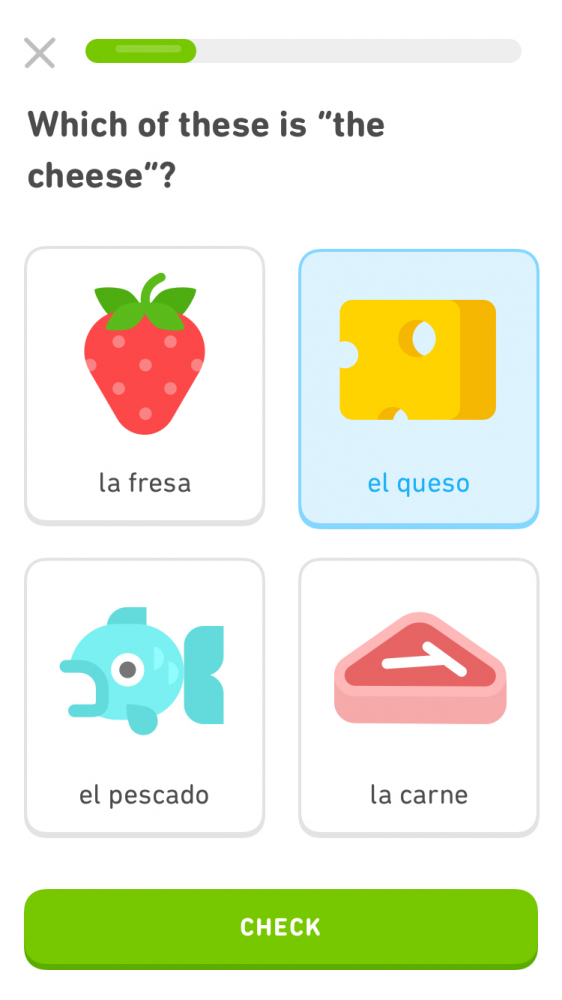
Self-quarantined travelers can pick up a new language through virtual classes, online resources and apps, such as Duolingo, which offers lessons for more than 30 languages, including Spanish. MUST CREDIT: Duolingo screenshot

Self-quarantined travelers can pick up a new language through virtual classes, online resources and apps, such as Duolingo, which offers lessons for more than 30 languages, including Spanish. MUST CREDIT: Duolingo screenshot

The pandemic has driven a lot of us into the arms of Netflix. The marathon watch-fests are escape hatches, but they can also have educational value. Language Learning with Netflix is a free extension available through the Google Chrome Web store that features a catalog of international movie and TV series, including 306 offerings in Spanish, 132 in Mandarin, 39 in German and 18 in Hindi. In addition to hearing dialogue in the native tongue, you can read subtitles in two languages, which helps with translation, and look up words in a pop-up dictionary, among other tools. (I tried to load this accessory but could not because of a computer issue. As an alternative, I watched a French series called “The Hook Up Plan” with French subtitles, and am, um, hooked.)

“You don’t interact with the language in a natural way, but you can improve your listening comprehension skills and vocabulary,” Urlaub said. “But you won’t gain oral fluency.”

Apps have also stepped into this vacuum and are ideal for people ready to cut their apron strings with Google Translate. But educators warn users to approach the programs with realistic expectations.

“Apps give people who have not had a lot of exposure to the language the illusion that they have learned quite a lot,” Urlaub said. “Instead of engaging with real people, we are interacting with a static system.” However, Urlaub admits that he has used Duolingo to refresh his French and that “in a weird way, it’s fun.”

During my own self-quarantine, I hoped to awaken my dormant French, which has been in a deep Sleeping Beauty slumber since college. I asked the college professors for advice on navigating the app landscape. Kraemer said to look at the app developers: Are they professionals familiar with the process of learning a new language or a “tech whiz sitting in an office”? She also approves of apps that resemble video games with competitive goals, ascending levels of success and an ego-boosting award system.

“The game aspect of unlocking the next badge keeps you going back for more,” she said.

Other worthwhile attributes: a visually appealing design and lessons organized in digestible time segments. “It is easier to sit down for 10 or 30 minutes every so often,” she said.
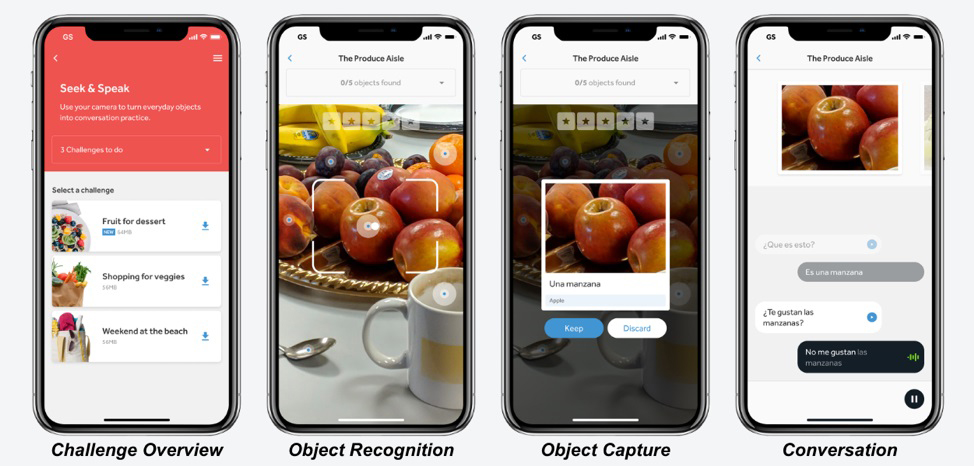
Rosetta Stone's app offers travelers a program that teaches them skills useful for a trip abroad. MUST CREDIT: Rosetta Stone

Rosetta Stone’s app offers travelers a program that teaches them skills useful for a trip abroad. MUST CREDIT: Rosetta Stone

Earlier this past week, with no shortage of 10- to 30-minute blocks of time, I decided to wave some smelling salts under the nose of my French. I started with Duolingo, because even though I was learning alone in my apartment, I was not alone in the wider Duolingo universe. Michaela Kron, a company spokesperson, said the app boasts 30 million active monthly users and recorded a 91 percent rise in participants in the United States between the weeks of March 9 and March 16. (The app is free, but the upgraded ad-free version ranges from $6.99 per month to $12.99 per month, depending on the plan.)

I chose a goal of 10 minutes per day and took a placement test that kicked me back to my first day of French high school class. I cycled through lessons that tested me on a handful of pre-K words, such as cat, dog, horse, man and woman, in a variety of challenges, such as translating phrases, speaking a word into my phone’s microphone and typing a phrase uttered in French. I was advancing fast, with the cartoon characters cheering me on, but slid backward several times for, say, forgetting the feminine and masculine articles of pizza and croissant. (Question for Duo, the owl mascot: Why am I learning words that are spelled the same in both languages? Why not teach pain, instead of pizza, and pomme, instead of orange? Just a suggestion.) I earned gems that I could spend in the Duolingo store and lost and gained hearts that I needed to perform the exercises. I could have nabbed an extra heart by watching an ad, but that seemed like cheating.

I became so driven to excel in Basics 1 that, two hours later, I was still sitting in the same spot, pounding “A cat is eating a croissant” into my phone. Kron later warned me that students should stick to their goal time or they could sabotage their memory retention and, in my case, get a little obsessed. If I stick with Duolingo, the lessons will grow more difficult, plus I can expand my curriculum with such features as Duolingo Stories and the Duolingo French podcast. In addition, once we are allowed to leave our homes, I can meet up with other members at community events – maybe over une pizza and un croissant. (Nailed it.)

Babbel, which has noticed a more than 50 percent jump in subscriptions since the virus outbreak, lets people sample the goods with its free preview lesson; the entire learning package costs between $6 and $13 a month (and is currently free for U.S. students). The courses for the Newcomer and Beginner I levels cover vocabulary and phrases that any traveler would be grateful to have on the tip of the tongue, such as the words for directions, greetings, clothing items and telling time – plus the odd profanity. The challenges are similar to Duo’s – translation, speaking, listening – but the degree of difficulty was higher and the initial lessons seemed more relevant to real life. The 150 linguists and teachers in charge of creating Babbel’s content and methodology can really work a virtual classroom.

After three sections, I could sense a solid foundation of French taking shape. When I shut down my phone that night, I felt as if I could wake up in Paris and ask a local for directions to a clothing store. In the shop, I could inquire about a sweater or pair of shoes. And if the store didn’t have my size, I could let the curses fly.

Founded in 1992, Rosetta Stone is part of my early travel memories; the mustard-yellow kiosks selling the boxed language programs were as much an airport staple as Hudson News and Auntie Anne’s Pretzels. The retail arm is gone, and the app has taken up the mantle. The company has a free three-day trial before you have to start paying from $36 for three months to $199 for a lifetime subscription with unlimited access to all of the languages. (During the pandemic, students can access the resource free.) After my tumble down the rabbit hole with Duolingo, I appreciated the strict 30-minute increment. I chose the travel-theme series and spent the next half-hour absorbing a slow build of information, from singular nouns to plural, with new verbs introduced. First, everyone was eating and drinking; then they were running, reading and writing. I had a technical glitch: The program said it was struggling to hear me through my faulty microphone. So I lifted the device closer to my mouth and growled in a deep Catherine Deneuve voice. At the end of the lesson, I earned a “Great Job” from Prof. R. Stone.

For English speakers, Lirica offers only Spanish lessons at the moment but plans to expand this year. The three-year-old company was founded by Paul Custance, a former financial director at Sony Music UK, a connection that makes sense when you realize that the lesson plan is based on international hits – specifically, 44 songs curated by linguists and performed by such artists as Maluma, Enrique Iglesias and Lila Downs.

“Repetition is a necessary part of learning vocabulary and constructs in a foreign language,” Custance said. “Just think of a song you like and part of it will likely play in your head. When language elements are accompanied by a catchy tune, there is a higher chance you will emotionally engage with them and, crucially, remember them.”

The app comes with two to three free tunes per level; after you use up your pass, the program costs $8 for one month or $25 for a year. (The company is offering free monthly subscriptions to U.S. schools.) Nicky Jam’s “Hasta el Amanecer,” an award-winning reggaeton song, was queued up first. The program uses the lyrics as a vehicle to teach grammar and vocabulary words and phrases, as well as sharpen listening and comprehension skills.

“What do we know so far?” Lirica asked me.

“Nicky is flirting with a girl,” I answered correctly.

Many of the words alone are useful but strung together – well, it depends on the setting. I will probably have to save “Ven dale ahi, ahi, moviendo todo eso pa’ mi,” or “Come on, come on, move it all for me,” for a conversation with a furniture moving company – or a night in a Latin American dance club.

Spring is here, and Mother Nature doesn’t care about a pandemic #ศาสตร์เกษตรดินปุ๋ย

#ศาสตร์เกษตรดินปุ๋ย : ขอบคุณแหล่งข้อมูล : หนังสือพิมพ์ The Nation

https://www.nationthailand.com/travel/30384457?utm_source=category&utm_medium=internal_referral

Spring is here, and Mother Nature doesn’t care about a pandemic

Mar 19. 2020
People explore blooming cherry blossoms near the Tidal Basin on Sunday. Several National Cherry Blossom Festival events have been canceled because of the coronavirus. MUST CREDIT: Washington Post photo by Matt McClain

People explore blooming cherry blossoms near the Tidal Basin on Sunday. Several National Cherry Blossom Festival events have been canceled because of the coronavirus. MUST CREDIT: Washington Post photo by Matt McClain
By The Washington Post · Adrian Higgins · FEATURES, HOMEGARDEN

Through the ages and across cultures, spring has been a metaphor for life and its renewal. All the vital forces of the universe are captured in a single blushing cherry blossom. Whether we ever stop to ponder this or merely find casual delight in the trees now erupting into bloom, or the fields of daffodils dancing at their feet, we see the vernal world as being reborn and fresh. Except nature’s party this year seems just plain wrong. A saucer magnolia abloom is as off as someone whistling at a

Where is the gloom of November when you need it?

The equinox occurs late Thursday, but spring has been around a while. March has brought a growing season that is unusually early and spectacular in its broad and unfrosted display, at least in the Mid-Atlantic. Didn’t the flowers get the coronavirus memo?

A runner is framed by a blossoming tree on Tuesday in Springfield, Va. MUST CREDIT: Washington Post photo by Matt McClain

A runner is framed by a blossoming tree on Tuesday in Springfield, Va. MUST CREDIT: Washington Post photo by Matt McClain

In normal times, the eruption of life we call spring is not just a natural phenomenon but a call to people to leave their winter caves and come together to celebrate the floral renaissance. In Washington, D.C., that’s the communal worship of the cherry blossom followed in other communities in the United States and, especially, in Europe with folk festivals and maypole dancing.

The shared celebration, integral to our collective joy of being alive, has been turned on its head by our abrupt sequestration. What will the Tidal Basin hold this year now that Cherry Blossom Festival events have been canceled? Will the hordes still flock to the Yoshino blossoms or will a diminished crowd find elbow room? Will there be just a few souls dealing with a dystopian emptiness amid the countless blossoms? Everything about this crisis is new to the generations born after World War II.

Spring has arrived, the days are lengthening, the air warming and we have been ordered back into the caves. It’s dark and bloomless in there, with only our rolls of toilet paper to hug. Meanwhile, Flora dances with the windblown petals, blithe to our worries and privations.

Does a falling tree make a sound in an empty forest, does spring burst forth without us? Oh yeah. The green thumbs among us may have assembled a paradise of flowering plants, but even those curated blooms are more interested in bees, beetles and moths than us, because flowering is about sex and the transfer of pollen to pistil. The trees in early bloom need months to form their apples and acorns and hazelnuts. Even trees rendered sterile by our manipulation think they are fertile. Sorry, guys, the spring eruption is not for our benefit, biologically.

Don’t judge them harshly; plants have had to put up with their own pernicious pests and diseases for centuries, most spread by us. Think of the Dutch elm disease, caused by a fungus spread by beetles, or the xylella bacteria using carrier insects to afflict vineyards, citrus orchards and, in Italy, ancient olive groves. The spread of plant disease too often is a byproduct of our globalization, and so is the coronavirus – there could be no more graphic example of the interconnectedness of human society than the wildfire spread of this disease from an interior region of China. In choosing Homo sapiens, covid-19 has found both vector and victim in one.

Botanical gardens, our temples to spring, are closing or partially closing around the world, further distancing folks from the most awaited season (for those of us in the Northern Hemisphere). The Royal Horticultural Society has announced that the highlight of Britain’s horticultural calendar, the Chelsea Flower Show in May, is canceled.

The Dubai Miracle Garden, a giddying display of 150 million annual flowers in a Disneyland setting, is closed, according to its website.

What must be one of the strangest experiences at the moment is to wander through the Keukenhof, the Dutch botanical estate near Amsterdam where acres of sinuous garden beds are exploding with millions of planted tulips and other spring bulbs, planted by an army of gardeners last fall.

Here you will find rivers of tulips in lipstick red, bubble-gum pink and golden yellow, along with some subtler hues and variegations. Beneath the canopy of burgeoning trees, the air is fresh and scented with countless hyacinths and other spring beauties.

For this spring’s display, the gardeners planted 7 million bulbs. A floral mosaic alone consumed 50,000 tulips, grape hyacinths and crocuses.

The flower beds are set beside lakes, pavilions and woodland paths, and have been a quaintly over-the-top display of the floral and mercantile ingenuity of the Netherlands bulb industry for decades. The flowers have attracted millions of visitors over the years – at first the Dutch and their European neighbors but increasingly East Asians in a shrinking world. Last year some 1.5 million tourists came from more than 100 countries to revel in the eight-week display. This year the starring blossoms will open to an empty house.

The 2020 show – themed “A World of Colors” – was to have begun Saturday and run until May 10. For now the park is closed by government regulation until at least April 6, but it seems unlikely it will be opened after that, upstaged by a World of Covid.

You could say, as the Japanese do, that the brevity of the cherry blossoms is a symbol of our own brief time. You could say too that to plant a tree or a garden is to defy that. Those are acts of inherent faith in the future, whether we are around to see them or not.

We need plants, even if they don’t need us, so admire the spring bursting at the mouth of the cave. And yet in our confinement, in our inability to revel unfettered this spring, there is a real sorrow. One thinks of poet Philip Larkin’s ode to the awakening trees. “Their greenness is a kind of grief.”

U.S. economy expected to lose 4.6 million travel-related jobs this year from coronavirus fallout #ศาสตร์เกษตรดินปุ๋ย

#ศาสตร์เกษตรดินปุ๋ย : ขอบคุณแหล่งข้อมูล : หนังสือพิมพ์ The Nation

https://www.nationthailand.com/travel/30384303?utm_source=category&utm_medium=internal_referral

U.S. economy expected to lose 4.6 million travel-related jobs this year from coronavirus fallout

Mar 18. 2020
By The Washington Post · Rachel Siegel · NATIONAL, BUSINESS, FEATURES, HEALTH, TRAVEL 

The United States is expected to lose 4.6 million travel-related jobs this year as the coronavirus outbreak levies an $809 billion blow to the economy, according to startling projections released Tuesday by the U.S. Travel Association.

Further, 4 million total jobs have been eliminated already or are on the verge of being lost in the next few weeks, the American Hotel & Lodging Association said. In some of the hardest-hit markets – such as Seattle, San Francisco, Austin and Boston – properties are shutting down and occupancy rates are at unprecedented lows.

Total spending on travel in the United States – including from transportation, retail, lodging and restaurants – is expected to drop by $355 billion for the year, or 31 percent – more than six times the impact of the Sept. 11, 2001, terrorist attacks. The projected 4.6 million jobs lost would, by themselves, nearly double the U.S. unemployment rate, from 3.5 percent to 6.3 percent, according to U.S. Travel.

The travel industry is joining airlines and casinos in begging for a government rescue. On Tuesday, Treasury Secretary Steven Mnuchin said that the Trump administration wants to send direct cash payments to Americans in the next two weeks as part of a massive economic stimulus package forming between Congress and the White House. The overall price tag of the package could be around $1 trillion.

The hotel industry alone is asking for $150 billion – largely in the form of direct grants – to keep employees on the payroll and small businesses afloat. The broader travel industry is also seeking an additional $100 billion, executives said on a press call. Those tallies are separate from the more than $50 billion being sought by the airline industry.

The requests were presented by industry leaders to Trump, Vice President Mike Pence and other officials handling the pandemic in a White House meeting Tuesday.

Chip Rogers, president and chief executive of AHLA, said coronavirus had had a more severe economic impact on the lodging industry than the Sept. 11, 2001, terrorist attacks and the 2008 financial crisis combined. In a stunning reversal, the industry is facing the possibility that half of the hotels in the United States could close this year, Rogers said. The prospect is especially dire for the small businesses that make up 83 percent of the travel industry.

Jon Bortz, president and chief executive of the Pebblebrook Hotel Trust and AHLA chairman, said his company let 4,000 employees go and expects to lay off an additional 2,000 by the end of the month – representing more than three-quarters of its workforce. Pebblebrook, which has 54 hotels nationwide, is facing shutting down doors at more than half of its properties.

Douglas Dreher, president and CEO of the Hotel Group, said occupancy at some properties had dropped to the single digits and that one-third of the company’s workforce will be let go in the near term.

“It is for us the Great Depression,” Dreher said. “We need help.”

Industry leaders emphasized that government funding would need to come within days. Direct grants would go toward lost salaries and make sure that hotel owners can make their mortgage payments.

Marriott International said Tuesday that it was starting to furlough what it expects to be tens of thousands of employees. The hotel chain, which has nearly 1.4 million rooms and employs 130,000 people in the U.S., began shutting down some managed properties last week. Those who lost their jobs won’t be paid while on furlough, but they would continue to receive health-care benefits, the company said.

Travel prices are dropping almost everywhere as coronavirus fears take over #ศาสตร์เกษตรดินปุ๋ย

#ศาสตร์เกษตรดินปุ๋ย : ขอบคุณแหล่งข้อมูล : หนังสือพิมพ์ The Nation

https://www.nationthailand.com/travel/30383960?utm_source=category&utm_medium=internal_referral

Travel prices are dropping almost everywhere as coronavirus fears take over

Mar 12. 2020
By The Washington Post · Hannah Sampson · WORLD, ENTERTAINMENT
Matt Hribar likes to travel as much as possible. But the 25-year-old Cleveland resident whose many jobs include DJ, trivia host, podcaster and musician typically can’t swing the price of a flight and hotel to most of his dream spots.

But these are not typical times, as the spread of the new coronavirus pummels demand for travel around the world and pushes prices for flights, hotels and cruises down.

That’s how Hribar found himself with round-trip plane tickets for this spring to Miami, where he intends to “kind of quarantine myself on the beach,” for about $100 and to Los Angles for about $200.

“I took a look and I liked what I saw, so I booked,” he says.

Travel industry observers think there will be a lot for bargain hunters to like in the coming days, especially as they consider the typically expensive summer vacation season. But those travelers will have to navigate a rising number of cancellations, travel restrictions and public-health warnings as they plan vacations.

“What’s going to happen is, the hotels and airlines and especially the cruise lines, when they think they’re going to lose some business, they start offering deals,” Roger Dow, president and CEO of the U.S. Travel Association, said in an interview this month. He cautioned that he doesn’t think the low-price stretch will last too long. “I think there is going to be an opportunity for Americans to get some good deals as the marketplace reacts and says: We’re going to price to increase occupancy.”

Health experts have said travelers should heed specific travel warnings from the U.S. State Department and Centers for Disease Control and Prevention when planning any trip, and prepare in case they get caught up in restrictions or an unexpected quarantine. And they should be cognizant of their own risk factors – especially age and underlying health issues – before traveling.

Late Wednesday, President Trump announced a ban on foreign travelers from most of Europe – excluding the United Kingdom – to the United States for 30 days starting Friday. The U.S. State Department advised U.S. citizens to reconsider travel abroad altogether, in part because of the potential for quarantines and border restrictions. And the Centers for Disease Control and Prevention warned against all nonessential travel to most of Europe.

The result of so much upheaval: Travel companies have gotten desperate for customers.

Cruises: Bob Levinstein, CEO of the cruise shopping site CruiseCompete, says that based on the business he’s doing, cancellations in March are way up and bookings are “through the floor” – down 68.5%. As a result, he says he’s never seen lower prices or better offers. That included a balcony room for a week-long Caribbean cruise for $250 and another cruise for $599 that includes $400 in onboard credit. Two cruise companies, Viking Cruises and Princess Cruises, have suspended voyages altogether for the near future.

“Basically in the cruise business, rule number one is always fill the ship. And that’s because empty cabins don’t spend money at the bar, they don’t buy alcohol, they don’t gamble at the casino, they don’t buy shore excursions,” Levinstein said. “The ships keep sailing and they just have to keep reducing the prices, and that’s what’s going on. They’ve never been lower, and I suspect over the next couple of months, they will continue to go lower.”

Hotels: Travel data firm STR said in a report Wednesday that U.S. hotel occupancy in the first week of March dropped 7.3% compared with about the same time last year, and average daily rates were down 4.6%. The biggest drop in rates came from the San Francisco area, where average prices per night fell 30% to more than $212.

“This is quite likely the beginning of a bad run that will get worse before it gets better,” Jan Freitag, the company’s senior vice president of lodging insights, said in a statement.

Tim Hentschel, CEO and co-founder of the bookings site HotelPlanner, said Europe has seen 50% price drops in the past week, and the U.S. has seen prices go down by 30% in major cities.

He said in an email that travelers looking for the biggest discounts should look in a city where big citywide events have just announced cancellations. If the Summer Olympics are canceled or postponed, he said, that could be a time to find a great deal in Tokyo. The CDC has recommended that travelers “practice enhanced precautions” in Japan due to the virus.

Airlines: Airline prices typically rise this time of year. But the airfare booking app Hopper says domestic fares dropped an average of 14% between March 4 and Saturday, though some routes are seeing rates 70 percent lower than average. International fares are down, too, but the company has seen a surge in searches for domestic travel.

“Not only are we seeing prices are down, but they’re also down across the board,” says Hayley Berg, the company’s economist. “So these fare sales, they’re not limited to one or two routes. We’re seeing a significant impact across many, many major routes.”

Scott’s Cheap Flights regularly flags flight deals to global destinations, but founder and CEO Scott Keyes says that what stands out now are the typically rare summer deals. He said he’s found round-trip deals from U.S. airports for $260 to London, $500 to Japan, $200 to Vancouver and about $650 to Fiji.

“That’s kind of the airlines’ cash cow is the summer travel months – everybody’s out of school, … the weather’s nice, everybody wants to travel then, that’s when great deals are least likely to pop up,” he says. “And yet, because bookings are down so much, they’re available now.”

He says airlines’ “peace-of-mind” offerings – more leeway for cancellations and rescheduling – make it easier for passengers to pull the trigger when they see a good deal.

“It’s a privilege that is never afforded to travelers, especially on the cheapest fares, to be able to have that kind of flexibility,” he says.

Jack Ezon, founder and managing partner of the travel agency Embark Beyond, said in an email that he is urging clients to book travel for spring and summer now knowing that they can easily change plans if necessary.

“With so many people around the globe reacting strongly to the developments, prime space at hotels all over the world is suddenly available,” he said in an email. “Airline costs have plummeted. Any good buyer knows to buy when a market is weak – as we like to say, ‘Don’t waste this crisis.'”

Joe DeSimone, 30, of Austin, saw stories about empty flights and figured airlines would be eagerly searching for people to fill some of those seats. So he took advantage of lower prices within the past month to book flights to Toronto two weeks from now, for a little over $200, and London two months from now, for slightly more than $400. Both trips are for upcoming conventions, but, he says, even if the conventions get canceled, he’ll be happy to spend time in both cities.

“These were things that I knew I was going to want to do, but was on the fence about,” says DeSimone, who runs an after-school program that teaches game design to high school students and works in food service at Alamo Drafthouse. Plus, friends in London said he could stay with them for up to three months.

He says he wouldn’t book a flight anywhere that has severe travel restrictions in place, because that wouldn’t make for a great vacation.

“Otherwise, if the government’s not on lockdown, and I don’t see like photos that make it look like something out of the Black Plague, … I’m probably OK,” DeSimone says.

Ireland cancels St. Patrick’s Day parades amid virus fear #ศาสตร์เกษตรดินปุ๋ย

#ศาสตร์เกษตรดินปุ๋ย : ขอบคุณแหล่งข้อมูล : หนังสือพิมพ์ The Nation

https://www.nationthailand.com/travel/30383741?utm_source=category&utm_medium=internal_referral

Ireland cancels St. Patrick’s Day parades amid virus fear

Mar 10. 2020
By Syndication Washington Post, Bloomberg · Peter Flanagan · WORLD, EUROPE

Irish authorities canceled the nation’s annual St. Patrick’s Day celebrations as concern around the coronavirus outbreak escalated.

The St. Patrick’s parade scheduled for March 17 in Dublin has been shelved, Irish Prime Minister Leo Varadkar told reporters Monday in Dublin. About half a million people attended Ireland’s national day celebrations last year, with thousands traveling from overseas.

“It is possible we are facing events unprecedented in modern times,” Varadkar said. The virus “can’t be stopped, but it can be slowed.”

The government plans a raft of measures for sick pay and other benefits as part of its response to the coronavirus, at a cost of about 2.4 billion euros, it said in a statement.

Cork, Ireland’s second-biggest city, canceled its event on Monday, because city leaders said they couldn’t provide the “necessary assurances” to guarantee the safety of participants and spectators.

The festival is the latest in a string of events across the globe halted as the virus spread. Geneva’s International Motor Show has been canceled, as has the world’s biggest property conference in France. Technology conference South by Southwest in Austin, Texas, was also abandoned, while Ireland’s Six Nations rugby match against France, scheduled for this weekend, is off.

In Ireland, the cancellation of the St. Patrick’s Day parade will be a blow to hotels, bars and restaurants. In recent years, authorities have increasingly promoted the festivities as a lure for tourists, with global landmarks, such as the Empire State Building and London Eye, floodlit green around March 17.

Organizers put the economic benefit of the festival at more than $83 million (73 million euros). On Monday, Irish hotel operator Dalata Hotel Group Plc said it has seen a “significant reduction in bookings” and “a significant increase in cancellations” since last month.

Ireland had 21 cases of coronavirus confirmed by late Sunday.

State Department warning against cruise travel threatens one of Florida’s economic engines #ศาสตร์เกษตรดินปุ๋ย

#ศาสตร์เกษตรดินปุ๋ย : ขอบคุณแหล่งข้อมูล : หนังสือพิมพ์ The Nation

https://www.nationthailand.com/travel/30383728?utm_source=category&utm_medium=internal_referral

State Department warning against cruise travel threatens one of Florida’s economic engines

Mar 10. 2020
File photo of Grand Princess cruise ship  by Syndication Washington Post, Bloomberg

File photo of Grand Princess cruise ship by Syndication Washington Post, Bloomberg
By The Washington Post · Rachel Siegel, Brittany Shammas, Hannah Knowles · NATIONAL, BUSINESS

A State Department warning that U.S. citizens should not travel on cruises because of the coronavirus outbreak has placed extreme pressure on the country’s cruise industry, a sector that supports more than 421,000 American jobs and contributed almost $53 billion to the U.S. economy in 2018.

Nowhere will the blow back be felt more acutely than Florida, the home base for many of the industry’s heaviest hitters and a tourism hot spot. In Florida alone, the sector supports more than 154,000 jobs and generates nearly $8.5 billion in direct spending, according to the Cruise Lines International Association. Employees take home nearly $7.7 billion in wages.

Coronavirus’ economic fallout has ricocheted through supply chains, global markets and oil prices. Now the travel and tourism industries face their worst crisis since the 2001 terrorist attacks, and economists worldwide are bracing for months of havoc. On Monday, White House advisers plan to present President Trump with a list of potential policy changes, including deferring taxes on specific industries hit by the coronavirus downturn, such as the hospitality and travel sectors.

Florida in particular would gain from that kind of boost. Major cruise lines have their headquarters in the Sunshine State, including Carnival Corp., Royal Caribbean, Norwegian Cruise Line, MSC Cruises (USA) and Disney Cruise Line.

In 2018, over 7.5 million passengers boarded ships from one of Florida’s five cruise ports in Miami, Tampa, Jacksonville, Fort Lauderdale and Brevard County, where Cape Canaveral is located. Almost 2.3 million of Florida’s residents cruised in 2018, according to CLIA.

But in a matter of weeks, coronavirus threatens years of industry growth. Nationwide, spending by cruise lines, their passengers and crew rose to almost $24 billion in 2018. That’s 33 percent higher than it was in 2010.

The State Department’s announcement followed mounting pressure on the industry after American passengers aboard two Princess Cruises ships became infected with covid-19, the disease caused by the virus, within the past two months. Hundreds of travelers have been turned away at multiple ports and subject to lengthy quarantine periods.

The advisory came as a shock to some industry experts, who expected additional precautions on ships rather than a blanket advisory against cruise travel. Previously, U.S. officials had only gone as far as saying that senior citizens and people with health conditions should avoid cruising. Vice President Mike Pence, who is heading up the Trump administration’s response to the virus, met with industry leaders Saturday in Fort Lauderdale, Fla., to determine “what more we can do together to protect the American people.”

“American people value our cruise line industry; it brings great joy and great entertainment value for Americans,” he said, according to the Miami Herald. “We want to ensure Americans can continue to enjoy the opportunities of the cruise line industry.”

Katie Miller, a spokeswoman for Pence, told The Washington Post on Sunday that the new guidance was “a recommendation made by health professionals that the White House of course adopted.”

On Sunday, about an hour before the State Department tweeted out its advisory, the cruise association added in a tweet that it has “committed to do even more to protect our guests, our crew and the communities where we sail,” adding “more stringent boarding procedures,” more medical resources on board and screening people’s temperatures as they embark.

The State Department directive, posted on Twitter just before 4 p.m., warned Americans of the risks of taking cruises amid the outbreak, noting that other countries with strict screening procedures had stopped passengers from disembarking or quarantined them. Three hundred twenty-eight Americans aboard the Diamond Princess cruise ship in January and February were evacuated and isolated for two weeks after being stranded on it for weeks. Seven-hundred passengers became infected in a ship-wide pandemic; seven died.

Another Princess Cruises ship, the Grand Princess, was being held in waters off San Francisco on Sunday, with the coronavirus detected among nearly half of the passengers initially tested. Those results raised concerns that, as had happened on the Diamond Princess, the virus could be spreading among the 3,533 people aboard.

“While the U.S. government has evacuated some cruise ship passengers in recent weeks, repatriation flights should not be relied upon as an option for U.S. citizens under the potential risk of quarantine by local authorities,” said the announcement from the State Department, which did immediately not respond to The Washington Post’s requests for further information.

The Centers for Disease Control and Prevention issued a similar directive Sunday, recommending that travelers – particularly those with underlying health issues – “defer all cruise ship travel worldwide.” The agency added that cruise passengers are at a higher risk of person-to-person spread of the coronavirus.

A spokesman for Carnival Corp., which owns Princess Cruises, Holland America Line and others, noted in a statement to The Post on Sunday that the company’s brands had “enhanced their health screening protocols,” including conducting thermal scans and temperature checks prior to boarding and on board.

“We are currently in discussions with the CDC, World Health Organization and other health officials, and we met as a cruise industry Saturday, March 7, with U.S. Vice President Mike Pence on an aggressive industry-wide response plan,” wrote the spokesman, Roger Frizzell. “The health and safety of our guests and crew is our highest priority, and cruising remains one of the most attractive vacation options available.”

He added: “While advisories have been issued, no restrictions are in place for those who choose to take a cruise.”

CLIA said in a statement that it was “staying focused on the development of an aggressive, responsive plan as agreed to during the meeting with the Vice President yesterday, which will go beyond the significantly enhanced protocols already in place.”

Stewart Chiron, an industry expert who bills himself as “The Cruise Guy” and offers cruise discounts and tips, said he hadn’t seen anything like the advisory in 30 years of observing and talking about the cruise business. After the meeting with Pence, he had anticipated changes on ships, such as increased coronavirus kits on board or denial of travel for people from certain areas heavily affected by the virus.

But Sunday’s recommendation against an entire form of travel has stunned the industry as a dramatic escalation, he said. He accused officials of “trying to make the uninformed public feel better that the government is doing something” and pointed to the Centers for Disease Control and Prevention’s struggle to roll out widespread testing for coronavirus.

Mike Driscoll, the editor-in-chief of Cruise Week, said he too was taken aback by Sunday’s news, noting that company leaders were set to meet again with government officials on Tuesday to discuss ways they could address concerns.

“It’s just a little jarring to have that on the heels of something that’s saying it’s okay. . . we’re working on something,” Driscoll told The Post.

He’s confident some will keep cruising. But people pay attention when, say, the State Department issues a warning against visiting a certain country, he said. Travel agents he talked to Sunday all had the same message about the advisory: “This is huge.”

For the best view of Paris, skip the crowded Eiffel Tower and head to Tower Montparnasse #ศาสตร์เกษตรดินปุ๋ย

#ศาสตร์เกษตรดินปุ๋ย : ขอบคุณแหล่งข้อมูล : หนังสือพิมพ์ The Nation

https://www.nationthailand.com/travel/30383385?utm_source=category&utm_medium=internal_referral

For the best view of Paris, skip the crowded Eiffel Tower and head to Tower Montparnasse

Mar 05. 2020
The expansive view over Paris from the Tower Montparnasse includes the Eiffel Tower. MUST CREDIT: Courtesy of Montparnasse Tower Panoramic Observation Deck.

The expansive view over Paris from the Tower Montparnasse includes the Eiffel Tower. MUST CREDIT: Courtesy of Montparnasse Tower Panoramic Observation Deck.
By Special To The Washington Post · James March

(EDITORS: Offering alternatives to overcrowded destinations.) – – –

– At the Eiffel Tower, you’ll find long lines and a packed, narrow observation deck

Whether masters such as Van Gogh or Camille Pissarro, or smartphone users fiddling with filters, visitors to Paris long to capture it visually. There is a wealth of seductive locations in the City of Light from which to snag that iconic Instagram image, such as the winding streets of Montmartre or the rising glass pyramid at the Louvre. One place, though, will always attract more photographers than the rest.

The Eiffel Tower has a magnetism that few other sites can match. If you exit at Bir-Hakeim metro station and turn right along the Quai Branly, it reveals itself slowly, rising above a line of trees. A grandiose, wrought-iron relic of the Belle Epoque, it looks like no other world landmark. (Tickets to climb the tower can top out around $29.)

That’s just one reason the tower attracts almost 7 million visitors annually. Every day, thousands of people form snaking queues at the base of its four legs so they can ride an elevator (or walk, for those who like a challenge) to the 906-foot-high summit for the famous view across Paris, with the River Seine bending away to the east while the Arc de Triomphe stands proudly in the near distance.

But the top-floor observation deck is narrow and perpetually crammed with tourists. If you want to get your own Parisian memory, be patient and be prepared to hustle for the popular spots with the best views. Even at night, when the tower lights up and the city changes complexion, the masses are still reluctant to stay away. For visitors who are time-constrained or simply don’t like crowds, it isn’t a hugely enjoyable way to see one of the world’s iconic cities. Less than two miles away, however, is a superb alternative.

Location: Champ de Mars, 5 Avenue Anatole France, 75007 Paris, France.

– At Tower Montparnasse, two viewpoints and a fraction of the visitors

The neighborhood of Montparnasse holds a mystique of its own. The bars, cafes and restaurants were frequent haunts of the “Lost Generation” of American writers and artists who moved to Paris in the 1920s. Visitors still come to retrace the Les Années folles footsteps (and drinking habits) of Ernest Hemingway and F. Scott Fitzgerald.

Somewhat less romantic is the imposing specter of the Tower Montparnasse, a 689-foot-tall monolith that looks out of sync with the rest of the Parisian cityscape. Completed in 1973, its dark, rectangular, glass facade rises up from the Montparnasse-Bienvenüe metro station and dwarfs everything else in the area. You don’t visit for its architecture though.

Its 56th floor panoramic observation deck offers arguably the finest view of Paris with a fraction of the visitors that the Eiffel Tower receives. Entry is $20 per adult, and Europe’s fastest elevator whisks you to the top in a breezy 38 seconds. What really separates Tower Montparnasse, though, is the vast roof terrace, where there’s ample room see the city from any angle you like. Admire the distant byzantine curves of Sacré-Coeur Basilica without having to wait or be in anyone’s way. Watch the sun descend behind the Eiffel Tower as the city lights begin to flicker on. It’s a beautiful, stress-free way to capture your own Paris at your own pace.

– Location: 33 Avenue du Maine, 75015 Paris, France.

Release of green turtles draw crowd #ศาสตร์เกษตรดินปุ๋ย

#ศาสตร์เกษตรดินปุ๋ย : ขอบคุณแหล่งข้อมูล : หนังสือพิมพ์ The Nation

https://www.nationthailand.com/travel/30383183?utm_source=category&utm_medium=internal_referral

Release of green turtles draw crowd

Mar 02. 2020
By The Nation

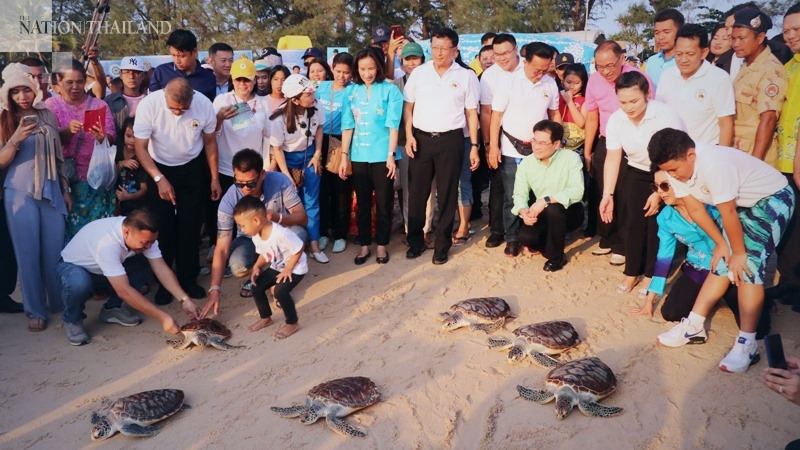
Commerce Minister Jurin Laksanawisit recently led the release of green turtles to the sea under a conservation programme at Thai Muang Beach in Thai Muang district of Phang-nga province.

Numerous Thai and foreign tourists participated in the event, marked by parades and fancy costumes. 70 green turtles were returned to the sea, mainly by children.

Thai Muang Beach, said the governor of Phang-nga, is suitable for the turtles to lay eggs. In the last two years, green turtles reappeared on the beach after six years of absence.

Their return brought much joy to residents of the district. They want to raise awareness of turtle conservation through the event and as a feature of tourism in Phang-nga.

The event runs from March 1 to 10.

Look to low-key Torun for Polish culture, history #ศาสตร์เกษตรดินปุ๋ย

#ศาสตร์เกษตรดินปุ๋ย : ขอบคุณแหล่งข้อมูล : หนังสือพิมพ์ The Nation

https://www.nationthailand.com/travel/30382919?utm_source=category&utm_medium=internal_referral

Look to low-key Torun for Polish culture, history

Feb 27. 2020
Similar charm to Krakow but fewer people can be found in Torun's old market square. MUST CREDIT: Photo for The Washington Post by Hugh Biggar

Similar charm to Krakow but fewer people can be found in Torun’s old market square. MUST CREDIT: Photo for The Washington Post by Hugh Biggar
By Special To The Washington Post · Hugh Biggar

Krakow offers a busy marketplace, hip bars, a historic Jewish quarter and the Schindler factory.

Krakow offers a busy marketplace, hip bars, a historic Jewish quarter and the Schindler factory.Home to a castle, old squares, hip bars and cafes lining its alleys and cellars, Krakow has it all – and, seemingly, all the tourists. Roughly 14 million tourists visit annually; so many that they can overshadow the city’s layers of history and beauty.

Dodging the crowds – some zipping by in golf carts, others following guides holding paddles – is a common part of the Krakow experience as you make your way to must-see sites. These include the ancient cathedral in the old market square, the nearby Cloth Hall – still churning out commerce as it has since the Renaissance, but now of the tourist kind – and further out, the Wawel Castle overlooking the Vistula River, once home to Polish monarchs and a legendary dragon. Just beyond the castle is the city’s historic Jewish quarter. Kazimierz, with its Old Synagogue and Schindler’s Enamel Factory (whose owner, Oskar Schindler, shielded Jews from Nazi concentration camps and was the inspiration for the movie “Schindler’s List”), draws crowds and golf cart tours as well.

There are also more low-key alternatives in Krakow, including the Kosciuszko Mound, a small hill with scenic views built to commemorate a Polish statesman and military adviser to the American Revolution. Or take a walk through Nowa Huta, a leafy residential neighborhood constructed to be a prototype of communist life.

Location: Krakow is in southern Poland, about two hours by train from Warsaw.

– In Torun, you can climb a clock tower, make gingerbread and commune with Copernicus.

Further up the Vistula, Torun combines beauty and history but without the raucous crowds. Like Krakow, the city survived World War II intact – a rarity in Poland. Today, old city walls and castle-like gates enclose a town center lined with chic cafes, shops and townhouses from the Middle Ages (many of them lit at night).

At the heart of Torun on the old market square is the Town Hall, a Gothic home to a museum chronicling the city’s storied past. If you don’t mind climbing narrow wooden stairs and past large bells, the clock tower provides a great overview of Torun. On one side of the river, old brick buildings and a medieval street grid; on the other, the city ebbs into apartment blocks from the more recent communist era.

At the ground level, a short walk along pedestrian-only streets takes you to the ruins of a 13th-century Teutonic Knights castle on the edge of the Old Town. Circle back to the center through narrow lanes and past ancient granaries, ramparts and historic fortifications (one now famous as a leaning tower).

Once you look past the Lizard King nightclub and hip-hop graffiti, it is easy to imagine astronomer Nicolaus Copernicus walking the same streets. Copernicus, born in 1473, grew up here, and a Gothic home belonging to his merchant father (and possibly Copernicus’s birthplace) is a now a museum. It has exhibits on life in medieval Torun and on the astronomer’s revolutionary work placing a motionless sun at the center of the universe, with Earth and the other planets revolving around it.

Just behind the Copernicus home is another museum dedicated to a different Torun icon – pierniki, or gingerbread. Torun’s role as a trading center in the Middle Ages brought many influences, including spice from the Far East, adding a distinctive flavor to the gingerbread. Today, you can try your hand at making gingerbread at the museum and discover one of the many ways Torun is a place to be savored.

Location: Torun is in north-central Poland, about three hours by train from Warsaw.