Petition asks Delta, United and American airlines to seat families together without extra fees #ศาสตร์เกษตรดินปุ๋ย

#ศาสตร์เกษตรดินปุ๋ย : ขอบคุณแหล่งข้อมูล : หนังสือพิมพ์ The Nation

https://www.nationthailand.com/travel/30382914?utm_source=category&utm_medium=internal_referral

Petition asks Delta, United and American airlines to seat families together without extra fees
Feb 27. 2020
By The Washington Post · Drew Jones

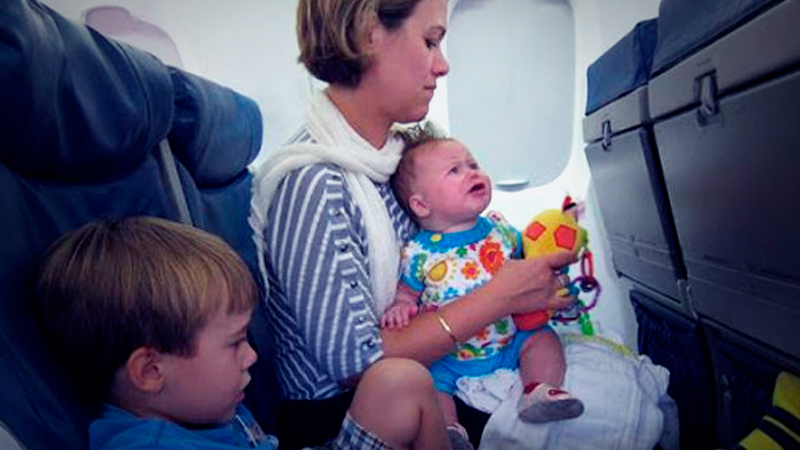
One consequence of the ever-changing landscape of airline prices has been that family seating ends up costing travelers hundreds more per flight. And there’s a growing movement aimed at getting rid of these added charges for parents flying with their children.

Launched last week from Consumer Reports, an online petition that has amassed over 65,000 signatures asks American, Delta and United Airlines to stop separating families onboard and to nix fees for those who select seats together. It claims that there’s a security hazard in having children 13 and younger seated away from their parents and that it burdens passengers who have to fly next to unaccompanied children.

Charles Leocha, president of Travelers United, said he’s supportive of the Consumer Reports efforts to step in and help boost a cause he has championed for years. “I’m thrilled to get their support,” he said.

In 2016, Congress passed a law mandating that families be able to sit together at no extra cost. When deciding who would evaluate the new rules, Congress allotted for a period of discussion and for experts to study the effect of the rules to existing regulations. But then, according to Leocha, because of the Department of Transportation’s deference to the airline industry and the looming election, the momentum to adopt the new steps halted. Consumer Reports solicited complaints from families who had been separated while flying. When presented to the DOT, Leocha said, the agency claimed the number of complaints didn’t reach an actionable level.

The types of complaints included an incident on a United flight where a child was placed in an aisle seat next to a stranger, an American flight where attendants attempted to split up three children – one of them was a 2-year-old – and a Delta flight over Thanksgiving where an 8-month-old was assigned a middle seat away from the parents.

The DOT did issue guidance for families when making travel arrangements together. The guidance includes avoiding basic economy fares because they “are often lower fares and may not provide consumers with the ability to select a seat. These tickets may not meet the needs of families with young children,” according to the website.

Based on the current rules, Leocha said, low-fare options like basic economy seats exclude families, who are blocked from the cheapest options because they don’t allow reservations for seats. Instead, families reluctantly upgrade, paying more while jumping through unnecessary hurdles.

“The families are being stuck with a double-whammy,” he said. “First, on the basic economy, they can’t get any seat reservations. Then they’ve got to go up to the next level. And then when they go up to the next level, they can’t even sit together without having to pay even more money.”

Charles Hobart, a spokesman for United, said the airline uses an automatic system to make modifications to reservations, ensuring that children are placed next to parents. If timing becomes a factor, reservations can be modified at the gate, and when families check in, agents prioritize family seating.

United has gone as far as introducing a family-friendly lane and check-in system at Chicago O’Hare International Airport. It has an 80 percent success rate of keeping families together, according to Hobart, who added that the system is applied to all classes of seats, including basic economy.

“It’s in everyone’s interest that families are able to sit together on that aircraft – the customers themselves, the other passengers and our onboard crew as well,” Hobart said.

Rainer Jenss, president of the Family Travel Association, sees it as an issue of right and wrong.

“Airlines are charging premiums for the right for people to sit where they want,” he said. “And that includes sitting next to your travel companion. That is a convenience [fee]. A lot of people are arguing, myself included, that it should not be considered a convenience for a parent to sit next to their child.”

Jenss believes family seating should be standard across the industry and says that even a small number of complaints should be enough for airlines to do the right thing.

Jenss pointed to the rules of some international airlines – like Air Canada – that guarantee family seating. He suggested that U.S. airlines could do a better job of analyzing their data to see when families are most likely to travel and then expect that demand.

Major airlines could take steps, he added, like Southwest Airlines has, and let families board first, or block off specific areas for families, like the back of the plane, so other travelers wouldn’t have to worry about being seated next to unaccompanied children and parents could keep an eye on theirs.

Representatives for American and Delta said they prioritize family seating and have systems that ensure children are seated with an adult.

“Regardless of the type of ticket purchased, Delta works with customers on a case-by-case basis to ensure their travel needs are met,” Delta spokeswoman Lisa Hanna said in a statement to The Washington Post. “When customers have seating questions, we encourage them to reach out to us as soon as possible to allow for the opportunity to address their concerns.”

American Airlines said the company has spent a “considerable amount” of time developing a system that is designed to ensure that no child 15 and younger is seated alone, regardless of seating assignments. As an added step, American blocks out a certain number of seats on a given flight due to re-bookings and unexpected events, so even if arrangements aren’t made ahead of time, flight attendants can move people around to prioritize family seating.

“We are confident that this process works well for families who choose to fly with American Airlines,” read a statement to The Post.

The advocacy groups want the signatures and families’ complaints to appeal directly to the airlines, which can make the policies more than just words on paper. Ultimately, airlines say they want the same. But, as with most other factors of air travel these days, the number of variables means issues get settled on a case-by-case basis.

How to do Mardi Gras like a local, according to a krewe #ศาสตร์เกษตรดินปุ๋ย

#ศาสตร์เกษตรดินปุ๋ย : ขอบคุณแหล่งข้อมูล : หนังสือพิมพ์ The Nation

https://www.nationthailand.com/travel/30382681?utm_source=category&utm_medium=internal_referral

How to do Mardi Gras like a local, according to a krewe

Feb 23. 2020
By The Washington Post · Monica Rodman · FEATURES, TRAVEL
The “greatest free show on Earth” is not a one-day celebration. It’s not even a one-week celebration. It is a month-long amalgam of parades and balls leading up to the season of Lent. In New Orleans, Mardi Gras proper, or Fat Tuesday, is the biggest day that attracts most locals and tourists. It falls on Feb. 25 this year and will feature parades hosted by some of the largest and oldest krewes, such as Zulu and Rex.

There is no question about those being some of the most theatrical spectacles you’ll ever see, but the parades leading up to Fat Tuesday are worth noting as well. Some local favorites are the Krewe of Chewbacchus, with a sci-fi theme, and the Krewe du Vieux, which is known for crude, humorous floats.

https://www.washingtonpost.com/video/c/embed/5d0eeef2-a0af-40c3-8bc3-e67a147e2531

We spent a few days with the Krewe of Freret, which was started in 2011 by a group of Loyola University graduates who wanted to revive the community of the Freret corridor. This year, its theme was “the music of New Orleans,” showcased with floats with elaborate sculptures of musicians like Louis Armstrong, Jimi Hendrix and Trombone Shorty.

According to the Krewe of Freret, there are some keys for how to best experience Mardi Gras like a local.

– – –

1. Know where your bathroom is

Depending on how dedicated you are, and how much water (or alcohol) you’re drinking, you’ll most likely need to use the restroom at some point. There are portable restrooms every few blocks, but many hotels and restaurants sell bathroom wristbands, which can be a worthy investment in the long run. Relieving yourself outside is illegal and will get you arrested.

– – –

2. Do not flash for beads

Mardi Gras is associated with an overload of debauchery in the French Quarter. This perception is not wrong, but there is more to it than bodies exposed for beads. In fact, don’t flash anyone at all. You will get arrested. According to the co-founder of the Krewe of Freret, Greg Rhoades, “most of Mardi Gras is incredibly family-friendly.”

– – –

3. Go with the flow

There are several parades happening all over the city, sometimes at the same time. Don’t think too hard about where you’re going and what time. Just live in the moment. Find happiness. It’s everywhere.

4. Hydrate, hydrate, hydrate

Mardi Gras can be an all-day, all-night event, so drink a lot of water, especially if you’re consuming alcohol. Remember, it’s a marathon, not a sprint. You want to be able to make it to the end of the night, when the parties start happening.

– – –

5. Wear close-tied shoes

According to Lydia Blackmore of the Historic New Orleans Collection, “We judge the success of a Carnival season by the tonnage of trash produced.” The streets get very dirty. You’re also going to be on your feet all day and dancing through the night, so bring comfortable footwear and your insoles if you use them.

– – –

6. Throw on a wig or a costume

Many New Orleanians have a closet in their home dedicated to costume material. You don’t have to dress up as anything specific, but you’ll see people along the parade route sporting purple, green and gold attire.

– – –

7. Don’t stand next to kids

They’re cute. But the float-riders tend to throw beads at the kids, so they’re more likely to steal your beads. Keep your distance.

– – –

8. The best way to get a good spot is to make friends

Almost everyone you meet in the Big Easy is welcoming, and it’s hard not to make friends along the way. New Orleanian Zenia Smith says Mardi Gras is like a gumbo pot: “When you mix all of these people together, and you throw in some alcohol, you throw in some music, you throw in some good food – it’s just the best experience in the world.”

River cruising in America is growing among boomers. But plenty of people still don’t know it’s a thing. #ศาสตร์เกษตรดินปุ๋ย

#ศาสตร์เกษตรดินปุ๋ย : ขอบคุณแหล่งข้อมูล : หนังสือพิมพ์ The Nation

https://www.nationthailand.com/travel/30382974?utm_source=category&utm_medium=internal_referral

River cruising in America is growing among boomers. But plenty of people still don’t know it’s a thing.

Feb 28. 2020
By The Washington Post · Hannah Sampson

Diana and David Carlson have traveled around the world over the years: Egypt, South Africa, China, Prague, Berlin and more.

“My husband’s getting to the point where he says, ‘I just don’t like those long plane trips,'” says Diana Carlson, 73. That’s fine with her. “I say, ‘OK, we’ll go on the boat again.’ I’ll go on it as often as I can.”

By “the boat,” Carlson means the American Queen, a six-deck paddle-wheeler that plies the Mississippi River as the flagship of the American Queen Steamboat Company. For all the Southern California couple’s globe-trotting, they’ve sailed nearly 20 times with the cruise line that’s devoted to U.S. rivers.

The Carlsons are exactly the kind of customers the operators of American river cruise lines want to reach: They have the time and ability to travel, an interest in exploring U.S. sites and – importantly – they know that river cruising exists in the United States.

“I really believe the demand is there,” says Charles Robertson, president and CEO of American Cruise Lines, which operates a fleet of 12 small river and coastal ships that touch 30 states. “It’s a matter really of raising awareness about cruising as an option in this country. The demand for river cruises globally is enormous, and I think most people just aren’t aware yet that it’s actually an option here.”

Baby boomers are the group that operators are most keen on reaching. Robertson said his company has historically attracted cruisers 65 and older, but are attracting more in their 50s with amenities on new boats, like yoga rooms, gyms and unique gathering areas.

“People that cruise on our boats need two things: time and money,” says John Waggoner, chairman and CEO of American Queen Steamboat Company. “Because of that, boomers are ideal. Most of them have traveled all over the world. They want to stay closer to home, they want to learn more about the U.S.”

About 80% of the steamboat company’s passengers are baby boomers. Waggoner said depending on the boat in question, demographics on board skew toward 65 or 70, plus or minus 10 years. Cindy Anderson, an owner of the travel agency USA River Cruises, says the market has largely been travelers 65 and older.

European river cruising got a huge popularity boost in the past decade during the run of the TV period drama “Downton Abbey” – not because of any particular plot line, but because Viking River Cruises was a sponsor of the PBS Masterpiece series. U.S. audiences who couldn’t get enough of the Crawley family and their staff also got an eyeful of the company’s boats, cabins and destinations.

Although Americans have been traveling on U.S. rivers for centuries, the modern river-cruise industry in the country is still nascent and dominated by two companies. American Cruise Lines started sailing in 2000, while major operator American Queen Steamboat Company launched its first ship in 2012. Both have seen accelerated growth in recent years. Between them, they cover waterways including the Mississippi, Ohio, Tennessee, Cumberland, Hudson, Columbia and Snake rivers as well as coastal areas in New England, the Southeast and Alaska.

Itineraries are often focused on history or nature, with a heavy dose of Americana. Cruise lines organize themed trips around the Civil War, Kentucky Derby, music, food or bourbon. Trips tend to include alcohol, and most shore excursions and can cost far more than a typical Caribbean cruise, between $6,000 to $10,000 a week per couple, depending on the line.

“I think a lot of people have not really explored the United States in that way,” says Colleen McDaniel, editor in chief of the news and review site Cruise Critic. “And it’s a really fabulous way to do it. The pace is a little bit slower, which is great for some people.”

The Cruise Lines international Association doesn’t break out statistics for river cruising in the United States, but the two biggest players say they are having to add ships to keep up with the demand.

American Cruise Lines can carry about 80,000 passengers this year, with that number expected to grow as more boats come online; two more new vessels will be added in 2021, bringing the total to 14. The line, which sails paddle-wheelers, coastal ships and modern riverboats that carry between 100 and 200 passengers, has more than doubled capacity since 2015.

American Queen Steamboat Company needs about 46,000 customers a year to fill the six vessels it owns under two brands – the namesake steamboat company and the recently acquired Victory Cruise Lines. The operator christens its latest addition American Countess, a 245-passenger steamboat built using the hull of a former casino boat, in April. Last year, the operator acquired Victory and its two coastal vessels, and is building a third.

“They want to get the ships on those rivers fast,” McDaniel says. “So I think that represents the demand that’s out there.”

And Viking – now an industry powerhouse with 78 ocean and river vessels – is making bigger moves in the United States. The company recently announced a new expedition ship that will sail to United States and Canadian destinations on the Great Lakes.

The Associated Press reported last week that Viking also plans to start Mississippi River cruises in 2022; the operator has been talking about plans to enter the market for several years. More details were not immediately available.

U.S. law says lines that sail only domestic itineraries must meet stringent requirements that keeps foreign operators out. Vessels must be built in the United States, staffed by American crew, and inspected by the Coast Guard, among other rules. It wasn’t clear how Viking planned to meet those requirements, but competitors say they hope the line’s arrival will drum up more attention for the still-niche sector.

Anderson, whose travel agency focuses on American rivers, said current global events are also driving interest in local exploration.

“A lot of people are not leaving the United States because of this new virus,” she says, referring to the novel coronavirus that has sickened more than 81,000 people and killed more than 2,770. “We’ve had a huge amount of cancellations for overseas, but we’ve also had double the amount of bookings for the U.S. now.”

For 77-year-old Al Elliott of Georgetown, Texas, the rivers have been a great place to spend his retirement (and his kids’ inheritance, he joked). He takes Amtrak to all his cruises and counts a wine cruise as one high point.

“I think my liver’s still trying to dry out from that one,” he says, though he’s hardly done with the theme. “They have a beer cruise I want to go on.”

At peace with the gentle giants of Koh Lanta #ศาสตร์เกษตรดินปุ๋ย

#ศาสตร์เกษตรดินปุ๋ย : ขอบคุณแหล่งข้อมูล : หนังสือพิมพ์ The Nation

https://www.nationthailand.com/travel/30383020?utm_source=category&utm_medium=internal_referral

At peace with the gentle giants of Koh Lanta

Feb 29. 2020
By The Nation

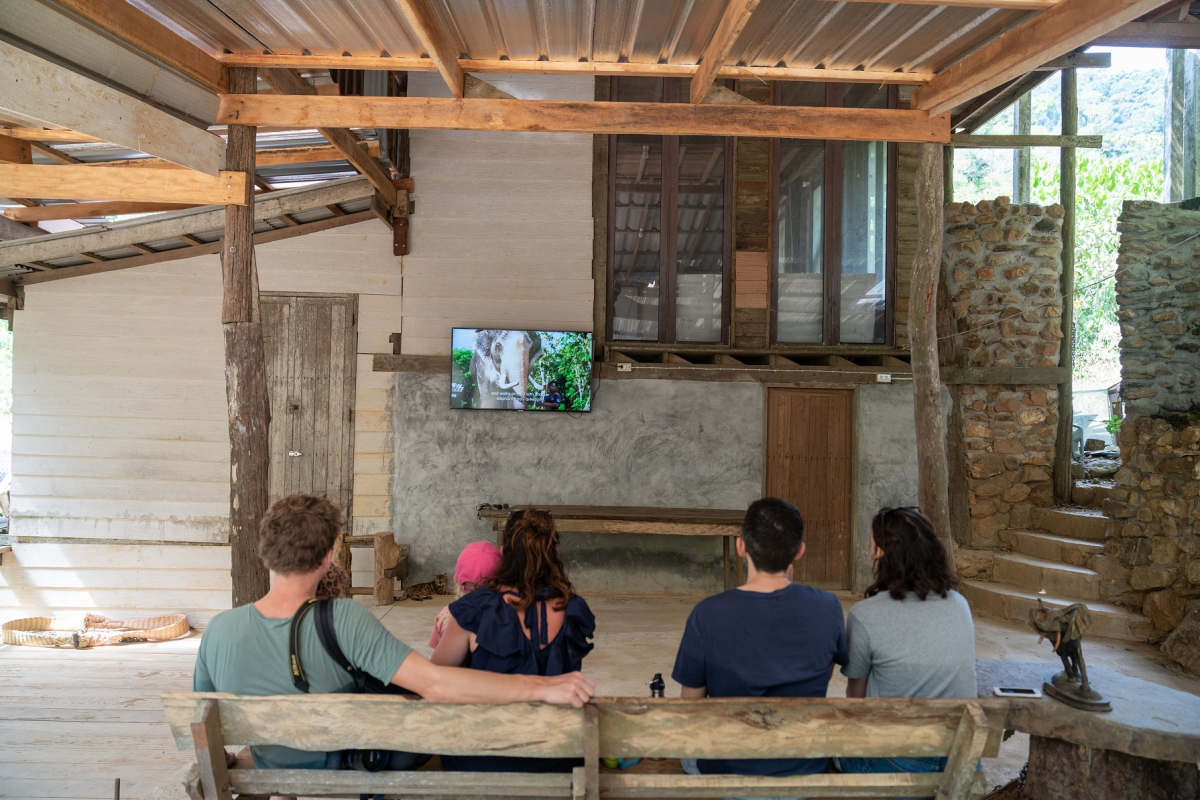
Built with the support of the wildlife protection organisation World Animal Protection, the jungle-covered “Following Giants” attraction on Koh Lanta confirms how Thailand’s elephants thrive in completely natural surroundings and why such habitats must be better preserved.

It’s an environment where the elephants can go about their lives just being elephants – no rides for humans or painting pictures with a brush in their trunks, no bizarre balancing acts or circus tricks.

There are many human visitors, of course, but they’re walking in the elephants’ footsteps and never disturbing them, merely forging passive connections and getting to understand them better.

Visitors have a variety of activities to choose among, involving not just watching the elephants – notably bird’s-eye views from a tree-house – but also helping replenish their natural food sources.

It’s fun and fulfilling to make and distribute through the forest “seed bombs”, of which the elephants with their massive appetite need a constant supply.

Following Giants has three resident elephants, named Sow, Jahn and Chok, who appear as content as any you might encounter in the wild. That’s something of a miracle in itself, because all three led punishing lives previously, toiling in logging camps or constantly carrying around tourists. Now they’re free to live the unfettered lives to which they were born.

World Animal Protection seeks to provide a happier and more beneficial life for animals and also show communities how they can exchange traditional business practices for kinder, nobler endeavours that still attract tourists and ample income.

A visit to Following Giants is a show of support for the remarkable tusked creatures that call Thailand home, and it encourages more communities like those on Koh Lanta to embrace more eco-friendly approaches to tourism.

Visits can be arranged by contacting the owner, Charae Sangkaow, at followinggiants.lanta@gmail.com or (084) 744 7060.

The enduring allure of Bang Pu #ศาสตร์เกษตรดินปุ๋ย

#ศาสตร์เกษตรดินปุ๋ย : ขอบคุณแหล่งข้อมูล : หนังสือพิมพ์ The Nation

https://www.nationthailand.com/travel/30382669?utm_source=category&utm_medium=internal_referral

The enduring allure of Bang Pu

Feb 23. 2020
By The Nation

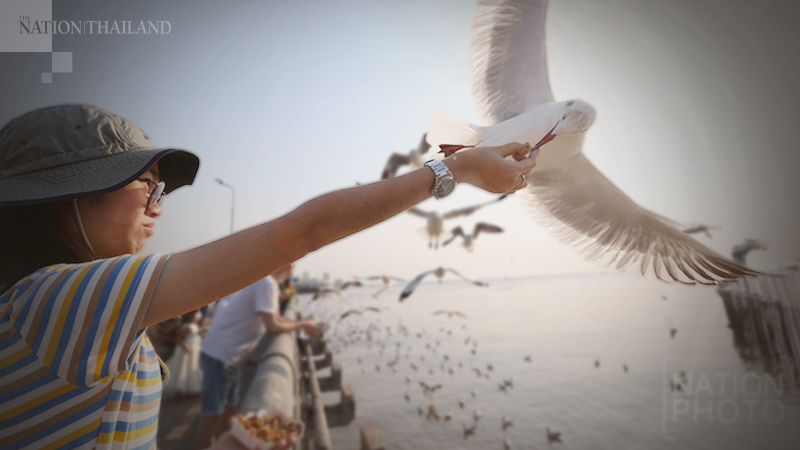
Bang Pu Recreation Centre has been a famous recreation centre for a long time. Mostly, tourists come here to enjoy their time in the restaurant. From November to the end of April, a lot of seagulls migrate here and live along the seaside. From children to adults, they all love to watch seagulls and feed them; just hold the food and let the bird decide which one to feast on.

Bang Pu used to be a well-known recreation centre in the past because of its short distance from Bangkok. Young people loved to visit to enjoy the view, watching seagulls, eating seafood at Bangpoo Restaurant and ending their evening with a dance.

Nowadays, the usual evening dance is still there every Saturday. More seafood restaurants have been open for tourists who come to visit Bang Pu.

Towards the end of the year, Bang Pu becomes a place for birdwatching, attracting an overwhelming number of tourists of every generation. Apart from birdwatching, there is Bang Pu Nature Education Centre, where you can learn about mangroves. Bang Pu also offers a spectacular view of the sunset.

Interesting attractions nearby include Ancient Siam, Samutprakarn Crocodile Farm and Zoo, Wat Asokaram and Phra Samut Chedi.

Charmed by Ranong and its alluring islands #ศาสตร์เกษตรดินปุ๋ย

#ศาสตร์เกษตรดินปุ๋ย : ขอบคุณแหล่งข้อมูล : หนังสือพิมพ์ The Nation

https://www.nationthailand.com/travel/30382427?utm_source=category&utm_medium=internal_referral

Charmed by Ranong and its alluring islands

Feb 22. 2020
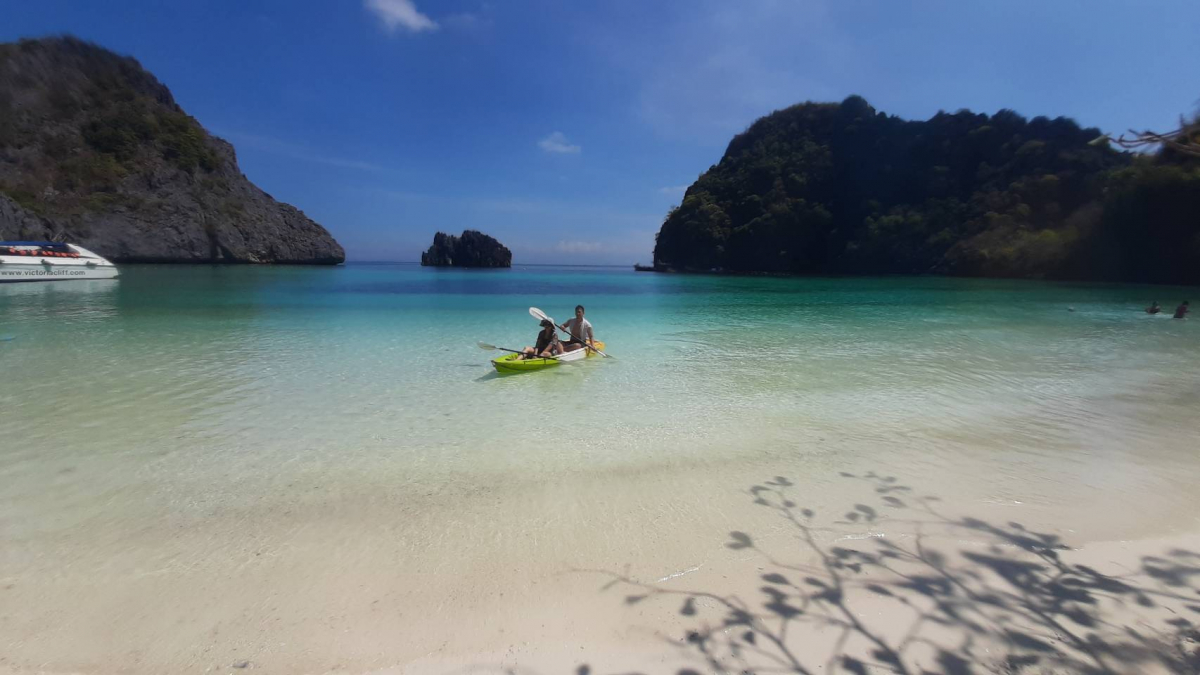
Horse Shoe island

Horse Shoe island
By THE NATION

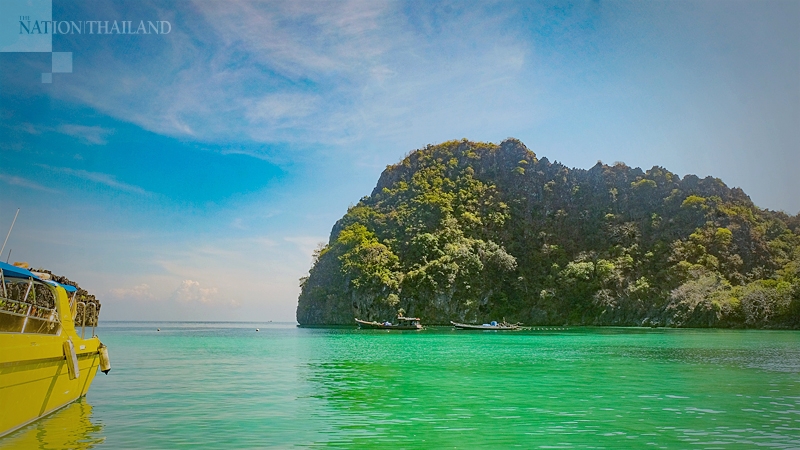
Visitors to Ranong province either already feel the lure of Kam Nui and Phayam islands or they’re told about it repeatedly. The lure proves inescapable, and the islands are easily reached with a short boat ride.

Horse Shoe Island

Horse Shoe Island

The boat rides to the islands in Myanmar coast have become quite popular in the past three years thanks to celebrities and other “influencers” posting rave reviews on social media.Just a little farther out across a shard of the Andaman Sea is the Myanmar coast. You just need to ask at any travel agency in Ranong and they’ll ask to see a Thai ID card or passport.
Kawthaung

Kawthaung

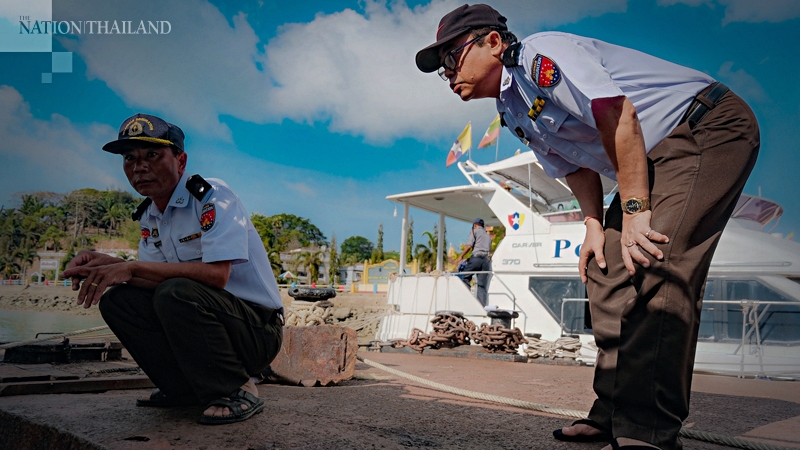
The trip starts fairly early in the morning at Lighthouse Pier and takes you to the Myanmar port of Kawthaung, known as Victoria Point in colonial times, where you get your border pass.Different agencies offer different routes and lists of islands among the 10 or so islands on offer, but by most accounts, the best ones to visit are Horse Shoe, Emerald Heart, Nyaung Oo Phee and Cockburn.#
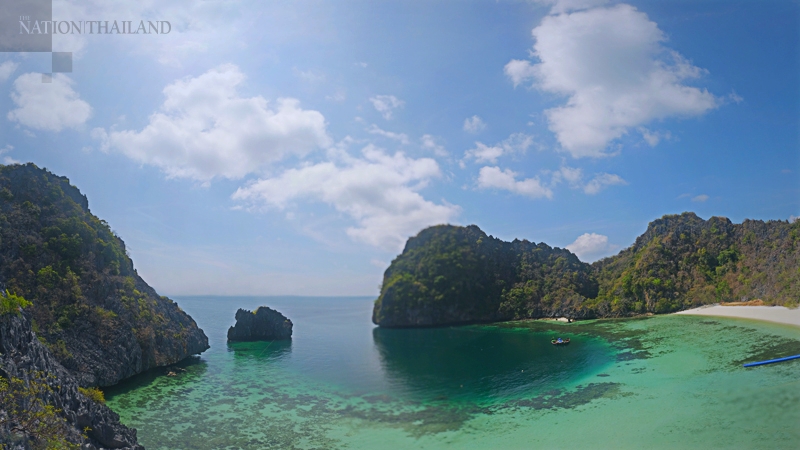
It’s advisable to go prepared for swimming, diving or kayaking.

And be prepared also to find no internet – or any stores catering to tourists, for that matter. Nor any cars and not much in the way of roads.

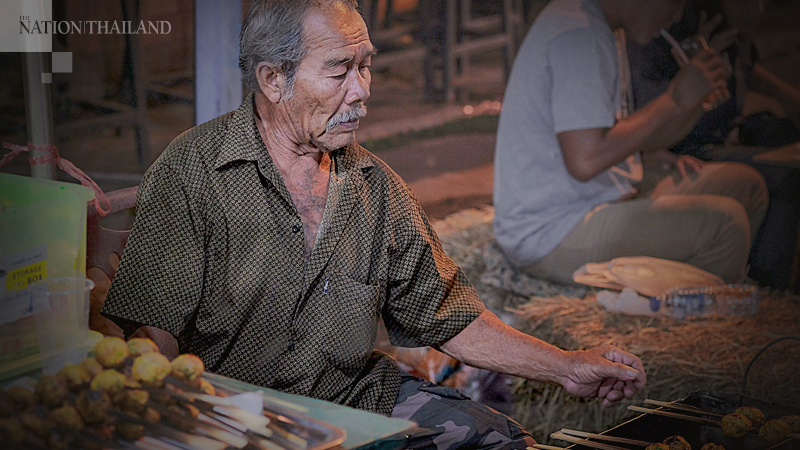
You should have done all your shopping on Ranong’s Walking Street anyway. It’s a charming little downtown promenade with numerous food carts selling cheap meals and snacks, but it’s only really functioning from 4 to 10pm.

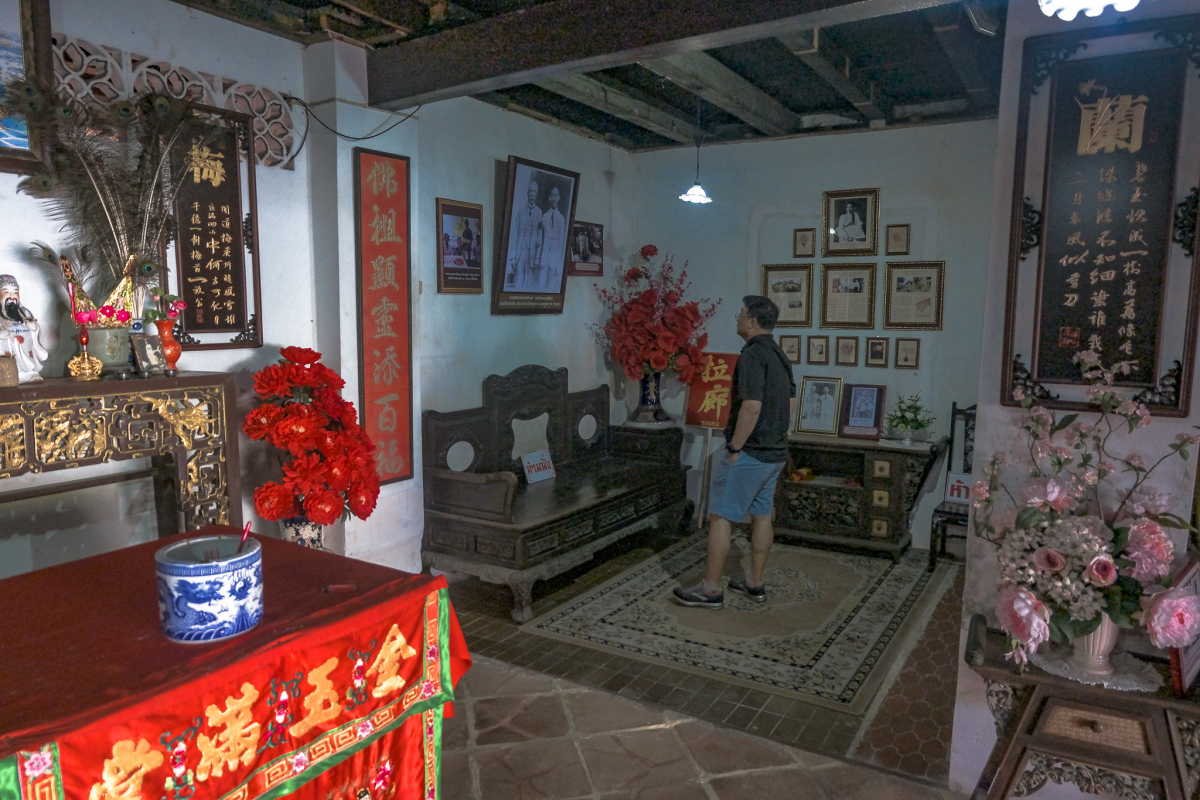
For history buffs, Mueang Ranong also has the lovely Baan Thein Sue (Thein Sue House), about a century old and all very Chinese in construction and decor.
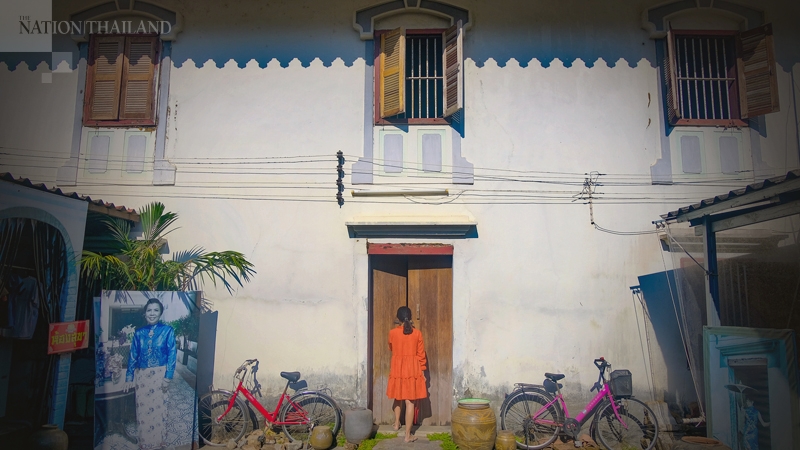
The same family has lived there from Day 1 and is currently in its sixth generation.
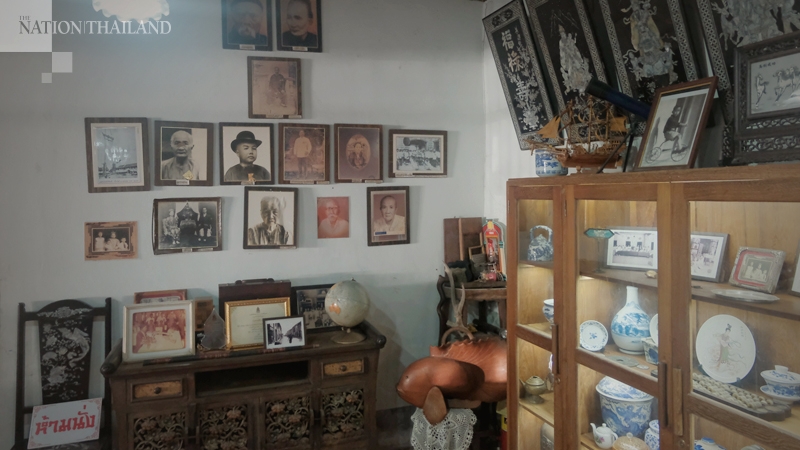
There are two houses to Thein Sue House, actually. The one out front has been converted into a museum filled with Chinese furniture and décor and historical photos and documents. The family lives in the second.

Tags:

Ecstatic divers encounter rare, ‘friendly’ whale shark #ศาสตร์เกษตรดินปุ๋ย

#ศาสตร์เกษตรดินปุ๋ย : ขอบคุณแหล่งข้อมูล : หนังสือพิมพ์ The Nation

https://www.nationthailand.com/travel/30382284?utm_source=category&utm_medium=internal_referral

Ecstatic divers encounter rare, ‘friendly’ whale shark

Feb 17. 2020
By The Nation

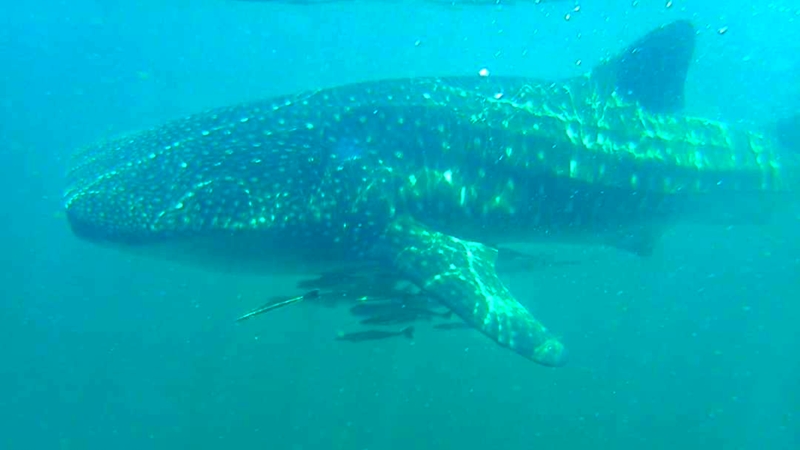
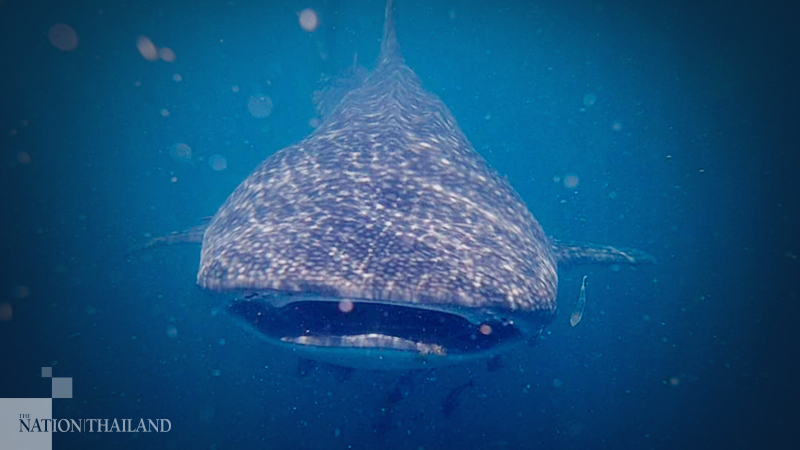
Koh Lanta National Park officers encountered a 4-metre whale shark swimming near Koh Haa Island in Krabi province on Sunday during an exploration of the marine ecosystem in the park.

Its chief said Koh Haa is a marine park that has one of the most beautiful lagoons in Krabi and there are numerous plankton in the area, which attracted the whale shark. However, it was rare for these huge creatures to appear in that zone.

The giant fish showed no signs of fear for humans and even swam with ecstatic divers for a while. The park’s officers recorded a video of the incident before posting it on social media, drawing excitement from netizens.

The national park chief added that whale sharks are not harmful, but he advised tourists to snap pictures and record videos of them without using a flash, which might terrify the large creatures.

The coronavirus’s effect on tourism will carry into 2021, experts say #ศาสตร์เกษตรดินปุ๋ย

#ศาสตร์เกษตรดินปุ๋ย : ขอบคุณแหล่งข้อมูล : หนังสือพิมพ์ The Nation

https://www.nationthailand.com/travel/30382239?utm_source=category&utm_medium=internal_referral

The coronavirus’s effect on tourism will carry into 2021, experts say

Feb 17. 2020
People wearing protective masks ride an escalator at Galaxy Macau casino and hotel in Macau on Feb. 5, 2020. MUST CREDIT: Bloomberg photo by Justin Chin.

People wearing protective masks ride an escalator at Galaxy Macau casino and hotel in Macau on Feb. 5, 2020. MUST CREDIT: Bloomberg photo by Justin Chin.
By Syndication Washington Post, Bloomberg · Nikki Ekstein 

Even as infections of the novel coronavirus seemed to be slowing last week, the effects of the epidemic on the global tourism industry were accelerating rapidly.

The impact of the pneumonia-like disease caused by the virus, called Covid-19, is already being felt across the Asian continent, where leisure and business travel contributed $884 billion to gross domestic product in 2017, the most recent year for which data has been compiled by the World Travel and Tourism Council. (Projections for 2018 are about $1 trillion.) For China alone, inbound tourism brought in $127.3 billion in 2019, according to the country’s tourism bureau.

Economic fallout from China’s coronavirus mounts across the globe

But as diagnoses tick upward again, travel agents, operators, and hoteliers are bracing for at least months, if not a full year, of economic disruption from the outbreak, with long-term effects that may ripple well into 2021.

“The numbers of trip cancellations-not just to China but to the entire continent of Asia-is growing every day,” says Jack Ezon, founder and managing partner of luxury travel agency Embark Beyond. “People are put off. Sadly, a lot of them are just saying, ‘I don’t know if I want to go anywhere right now.’ Or, in many cases, ‘I’ll just go next year.’ ”

So far, almost 75% of his travelers have canceled their February and March departures to Southeast Asian countries, which the U.S. Centers for Disease Control and Prevention still considers to have a lower, level one risk for coronavirus. “They’re worried about being anywhere close to the outbreak,” he says, “or of getting stuck with canceled flights if other hubs become infected.” A full 100% of the honeymoons his agency had booked to the region have been canceled and rebooked for alternate destinations including the Maldives, Southern Africa, and Australia.

Hilton Chief Executive Officer Chris Nassetta told investors on Feb. 11 that he expects the impact of the new coronavirus to last anywhere from six to 12 months: “Three to six months of escalation and impact from the outbreak, and another three to six on recovery,” he said. He estimated the cost to his company could be from $25 million to $50 million.

Why so long, if the medical community is beginning to send optimistic messages about the number of new cases?

When it comes to leisure travel, the biggest question usually revolves around location, location, location. Once that’s been decided, weather dictates all. “North Asia you can do year-round, but Southeast Asia is much more challenging,” says Catherine Heald, co-founder and CEO of the Asia-focused travel specialist Remote Lands. “Thanks to monsoons and very hot temperatures in most of that region,” which last roughly March through September, “people aren’t looking seriously at rebooking until the fall,” she says.

For families, school schedules can complicate plans. “We had one family looking at traveling over spring break, and they won’t have that same window of time until next year’s spring break,” she says. “They’re rebooking for 2021.” The same logic applies for those who specifically wanted to see cherry blossoms in Japan or flowers blooming alongside treks in Nepal-common reasons to plan a spring trip.

Heald’s clients are among the most likely to help the industry rebound. So far her company has seen fewer cancellations than have her competitors because of the way she targets leisure and high-spending travelers. An average trip with Remote Lands costs $1,500 per day for two people, which makes her a purveyor of bucket-list vacations-trips that people are desperately hoping to realize.

“People spend a lot of time and money planning these trips,” she says. “They want to make it happen.” Her workaround so far has been to simply reroute airfares through unaffected hubs, replacing routes through Hong Kong or Shanghai with connections in Tokyo, Seoul, or Dubai. The cost, she says, can range depending on availability of fares and type of tickets booked. “On a scale from 1 to 10, the disruption to our business has been about a 2 or 3,” Heald says, explaining that travelers’ willingness to postpone, rather than cancel, keeps her balance sheets mostly intact.

Business in China was already low this year because of negative press about trade wars. Heald says only 3 out of 400 trips she booked last year were China-only. Ezon agrees: “China was a little soft this year for leisure anyway, and Hong Kong was a mess from July” and the ongoing protests there.

The broader Southeast Asia region had been benefiting from the overflow, but that momentum is on hold. “People are canceling Sri Lanka and India just because it’s part of Asia,” Ezon says. “There haven’t even really been cases there, but so much is unknown that people are just staying away.” (Sri Lanka has reported one case of someone infected with the new coronavirus and India has reported three so far, according to Bloomberg’s coronavirus tracker.)

Hotels understand travelers’ fears, nonsensical as they may seem. Many have extended gracious policies allowing people to change their plans throughout the Asia-Pacific region at no cost, as long as they rebook before the 2020 festive season. Like Heald and her fellow travel specialists, many hotels are hoping to best retain their 2020 revenues and mitigate outright cancellations.

That’s less of an option for operators such as Guy Rubin, founder of Imperial Tours, whose entire business is based on luxury trips to the Chinese mainland. “Obviously, we have had cancellations and postponements for January, February, and March,” he says. But even travelers with itineraries for October have been inquiring about cancellations.

Others are in a holding pattern, waiting to see if the current strategy of quarantining people to contain the virus works. “If the containment strategy works, then I imagine people will be traveling in China again by summer,” Rubin says. “If it does not work, then I imagine it will take a year for people to regain trust in China.”

Severe acute respiratory system (SARS) is one example the industry is studying for guidance. It took WHO roughly four months from the moment it announced a global alert about SARS until it said the disease was contained, and then an additional five months for the organization to wrap up its efforts to tally new cases. According to aviation analysts at AirInsight, the SARS outbreak cost airlines $10 billion, and that was at a time when global business was less developed.

If it similarly takes nine months for the Covid-19 outbreak to pivot into “recovery” status, which is consistent with the industry outlooks cited here, aviation will take a bigger hit. And it will take longer still for hotels and destinations to fully return to tourism levels before the disease’s spread.

“Think about Fukushima,” Heald says, referring to the 2011 nuclear disaster at Japan’s Fukushima Dai-ichi nuclear plant. “People didn’t regain trust or interest in travel to Japan for years.” The flip side is that when they did, she says, there was such pent-up demand that it led to a boom in tourism: Overseas arrivals rose from 13.4 million in 2014 to 31.2 million in 2018. After many years of reassuring travelers they didn’t need to worry about radiation exposure, Japan suddenly became the fastest-growing destination in the world.

Ezon agrees this tide will ebb and flow. “If SARS was bad, this will be worse,” he says. “But remember Ebola? It’s still in Africa, and safari bookings are stable. Remember chikungunya? Once the news cycle moves on,” he says, “people will forget. Just like everything else, it’ll bounce back.”

Prague seeks to rein in Airbnb to avoid ghost city scenario #ศาสตร์เกษตรดินปุ๋ย

#ศาสตร์เกษตรดินปุ๋ย : ขอบคุณแหล่งข้อมูล : หนังสือพิมพ์ The Nation

https://www.nationthailand.com/travel/30382215?utm_source=category&utm_medium=internal_referral

Prague seeks to rein in Airbnb to avoid ghost city scenario

Feb 16. 2020
Prague castle (right) stands on the city skyline beyond rooftops in the historical old disrict of Prague, Czech Republic, on Aug. 3, 2017. MUST CREDIT: Bloomberg photo by Martin Divisek.

Prague castle (right) stands on the city skyline beyond rooftops in the historical old disrict of Prague, Czech Republic, on Aug. 3, 2017. MUST CREDIT: Bloomberg photo by Martin Divisek.
By Syndication Washington Post, Bloomberg · Lenka Ponikelska · BUSINESS, WORLD, FEATURES

Prague is widening its campaign to put the brakes on Airbnb and other holiday rental websites, which they say are locking locals out of the housing market and changing the face of neighborhoods.

The Czech capital this week approved a plan that calls for legislative changes allowing local authorities to restrict short leases, improve tax collection and force the platforms to share more details about its users, including the number of guests during a stay. The city is cooperating with the national government and will try to push the changes through parliament this year.

“We just have to be able to counter the adverse effects of the boom of short-time rentals through digital platforms for citizens whether it is the touristification of neighborhoods, rising rents or lack of housing,” said Hana Kordova Marvanova, who prepared the proposal. “Unfortunately, the current legislation does not give us means to address the issue.”

Prague has debated for years whether to apply stricter rules to rein in Airbnb. The issue has intensified lately due to ballooning Airbnb rentals in Prague and growing complaints from citizens about noise, damage to historical buildings and rising rents. The city is also battling a housing crisis as apartments are taken off the market by owners jumping into short-term rental craze, mirroring a growing trend across Europe.

Airbnb disputed the claim that the system overloads the housing market and pushes out locals. Company spokeswoman Kirstin Macleod said a 2018 study by the Czech Center for Economic and Market Analysis concluded that Airbnb accomodation was equivalent to just 1.8% of the city’s total housing stock.

Nevertheless, the company takes “local concerns seriously,” she said in an emailed response to questions from Bloomberg, and is willing to work with all parties in Prague and across the globe to make home sharing viable and safe.

“Recently, we have approached the City of Prague on several occasions,” Macleod said, “and offered to work together on a similar partnership and we are hopeful that we can find a common solution in future.”

Another study in the same year by the Planning and Development Institute of Prague, however, concluded that as many as a fifth of all apartments in the capital’s Old Town district, and 10% in the surrounding areas are listed on the site. Some 80% of listings are entire apartments, according to the study.

So far, Prague has been unsuccessful in regulating the holiday rental site and similar efforts have previously failed to gain the support of lawmakers. Kordova Marvanova also said that previous talks with Airbnb didn’t bring any feasible results for the city.

It has now joined forces with the Ministry of Local Development to finalize the proposals before going to parliament. City officials are also holding talks with the Czech Chamber of Commerce and counterparts in Cesky Krumlov, a southern Bohemian town also heavily hit by over-tourism.

“There is an overwhelming agreement that we need the platforms to share information with us,” Kordova Marvanova said.

If the amendments are passed, Airbnb-type platforms will have to provide municipalities with detailed information regarding units being used in the business, sharing basic host data and the number of guests. According to Kordova Marvanova, the capital led unsuccessful negotiations with Airbnb about providing the data.

Other proposals still have to be further discussed with the ministry. The city also proposes giving local authorities rights to ban renting whole flats as opposed to single rooms, limit the number of rented days or subject the apartments for rent to stricter fire safety rules.

Prague’s council approved a move to join 10 European cities – Amsterdam, Barcelona, Berlin, Bordeaux, Brussels, Krakow, Munich, Paris, Valencia and Vienna — that signed a letter calling on the European Commission to update its laws as part of a battle to control the sites.

The popular book and TV series ‘Outlander’ is increasing travel to these Scottish sites #ศาสตร์เกษตรดินปุ๋ย

#ศาสตร์เกษตรดินปุ๋ย : ขอบคุณแหล่งข้อมูล : หนังสือพิมพ์ The Nation

https://www.nationthailand.com/travel/30382214?utm_source=category&utm_medium=internal_referral

The popular book and TV series ‘Outlander’ is increasing travel to these Scottish sites

Feb 16. 2020
Diana Gabaldon, author of the

Diana Gabaldon, author of the “Outlander” books, on set during the filming of Season 1. MUST CREDIT: Courtesy of Diana Gabaldon
By Special To The Washington Post · Erika Mailman · FEATURES, EUROPE, TRAVEL 

Best-selling author Diana Gabaldon hadn’t even set foot in Scotland when she began the book that launched the popular Outlander series.

But she’s made the country so attractive to readers – and to watchers of the Starz television program, which resumes with Season 5 on Sunday – that the Scottish government’s tourism agency gave her an honorary Thistle Award for generating a flood of visitors to the fens, glens, jagged mountains and soft jade landscapes she so alluringly describes. According to numbers from VisitScotland, Outlander has increased tourism by an average of 67 percent at the sites mentioned in the books or used in filming.

Gabaldon, who is from Phoenix, wrote the first book and part of the second before traveling to Scotland. As a research professor pre-internet, she read exhaustively to craft indelible images of Scottish places for the “practice novel” she kept secret from her husband. When the unfinished draft sold in a three-book deal for a “staggering amount of money at the time,” Gabaldon let her professorship lapse and headed to Scotland. Despite having no Scottish heritage, she says, “I remember seeing the green land rising and thinking, ‘This feels like home.’ ” She and her husband parked at Carter Bar, where she posed for a photo in front of the England-Scotland border stone. This stone appears in Book 3, “Voyager,” where the character Jamie says of it, “Looks like the sort of stone to last a while,” according to fan Karen Henry, who blogs at Outlandish Observations.

If you long to visit after being exposed to the sweeping vistas and compelling history in the books and the show – for which Gabaldon, 68, is consultant and wrote several episodes – here are some spots to include on the itinerary.

Inverness: “It’s called the heart of the Highlands,” says Gabaldon of the city she names as her first recommendation, “and has reverberations through the third book and on into the rest of the series. It’s where the entire clan system came to a screeching halt.” In the show, however, Inverness is played by another city, Falkland.

Culloden Battlefield, five miles from Inverness: Here, the Jacobite rebellion ended in one hour of brutal bloodshed in 1746. “The Scots really didn’t have a chance,” says Judy Lowstuter, owner of Celtic Journeys travel company. After the loss to the English, Scots “were not permitted to speak Gaelic, and in the Highlands that’s all they spoke. They wouldn’t let them wear kilts or play bagpipes; the whole culture was extinguished.”

A battlefield is a somber place to visit, but Hugh Allison, former property manager at Culloden who now owns Inverness Tours, says he’s found a way to help U.S. visitors relate to the site. “You could make the argument that this is the battle that formed the United States of America,” he says. Its repercussions emptied English and French treasuries, which meant England’s King George III called for more taxes in the American colonies, “and we know where that went.”

At Culloden, various clans have memorial stones on the battlefield. Although the character Jamie Fraser is fictional, his clan is not. And yes, that clan has a stone on the battlefield as well.

Like everyone I spoke with, Allison paid homage to the Outlander Effect. “Twice as many people were asking where the Fraser stone is. You have to think, either it’s a very fertile clan and there are twice as many Frasers as there were last year, or something else has happened. Diana (Gabaldon) was that something else.”

The Covenanter Hotel, Falkland, Fife: This serves as Mrs. Baird’s B&B in the TV show, where Claire and Frank stay near Craigh na Dun. Gabaldon told me via email about a “busload of Spanish tourists from Barcelona who pulled up outside the hotel and streamed inside to check in, only to be told by the proprietress who had been watching out her upstairs window that I was outside. … They fell upon me in a frenzy of affection, hugging and kissing me and carrying on about Jamie and Claire.” Graeme Watson, who now co-owns the hotel with Ross Moonlight, says the hotel serves food all day so you have a reason to stop even if you can’t stay overnight in the room decked out as Claire’s. “It’s got an Outlander theme, so there are tartans as the bedspreads, and a medicine bag in the room as a nod to Claire,” he says. Steps from the front door, you’ll want to Instagram yourself at the fountain where Jamie stood to look up at Claire in the window – a mystery for fans who can’t figure out how he came to be there.

Falkland Palace, Falkland, Fife: This beautiful hunting palace has marvelous gardens and the oldest tennis court in Scotland, where Mary, Queen of Scots, and her father played. Besides serving as an apothecary in the show’s “Hail Mary” episode, the palace appears in the inaugural episode if you know where to look for it, according to Allison. Claire peers in the window of the ironmonger (a term used until the 1970s in Scotland to mean “hardware store”) at a blue vase. “Look over her shoulder and you’ll see the gatehouse of Falkland Palace,” Allison says.

Doune Castle, Doune, Perthshire: This medieval stronghold that plays Castle Leoch on TV conveys visible poignancy: Claire and Frank visit it in ruins in the show’s “modern day” 1940s, and Claire returns when it is in its heyday. Visits to the castle have increased 227 percent since the Starz series debuted in 2014, according to a report called “The Outlander Effect & Tourism,” commissioned by VisitScotland last year, the highest rise for the filming sites in the study.

Craigh na Dun: The circle of vertical stones, so necessary for time travel? It doesn’t exist. “The standing stones that appeared in the television series are fake and are in the studio in Cumbernauld, near Glasgow. They’re made of something like Styrofoam,” reports Lowstuter. But dinna fash, Sassenach, you can still visit the hilltop where the menhirs were temporarily placed, at Kinloch Rannoch Moor in Perthshire, about 90 minutes northeast of Edinburgh. It’s hard to find, but there is a parking lot at Pitlochry, Perthshire. It’s on private land, a working farm, so be a careful visitor. Gabaldon says Craigh na Dun, a phrase she invented, means “the stone of the hill” in Gaelic. “I was reading a lot of books on folklore and standing stone circles,” she says, “and all of them ended the same way – ‘But nobody actually knows the purpose of the stones’ – and I thought, well, I can think of something.”

Finnich Glen, near Glasgow: Attempt this visit only if you are hardy and fit. In the show, this glen serves as the Liar’s Spring, where Dougal confronts Claire about witchcraft, “the sexiest scene in the whole series,” Lowstuter says. “It’s a beautiful waterscape, like a fairy glen in this secret, wild Celtic landscape.” Currently, it’s very difficult to find and requires a sketchy maneuver to park your car where there’s no official lot and, most treacherously, a climb down mossy, slippery stone steps, some of which no longer fit into their grooves. “How they got a film crew down there, I don’t know,” Lowstuter says. But thanks to the Outlander Effect, there are plans to put in a parking lot, build a visitor center and repair the stairs.

Some sites are off the tourist path for other reasons. The Reverend Wakefield’s home, where characters settle into the library to conduct research, is a private house not open to visitors, according to Jenni Steele, the film and creative industries manager at VisitScotland. “There are a lot of locations in the series that I cannot promote,” she said. “They might be on private land, or a historic structure delicate in its fabric that can’t cope with too many visitors.”

Preston Mill, East Linton, near Edinburgh: This is another site that has benefited from needed repairs. The old mill’s wheel, under which Jamie hid from English soldiers, was jammed, but Steele said Outlander fans responded enthusiastically to a funding appeal for restoration work, and the target was reached quickly.

Tibbermore Parish Church, Perth: One of the most harrowing scenes is when Claire undergoes a witchcraft trial with Geillis (“best.vaccination.ever”). “This is no longer a practicing church,” says Steele, adding that fans contributed to allow the 1632 facility to work on preservation.

Bakehouse Close, on the Royal Mile in Edinburgh: Although you may not enter, you can climb the outdoor stone staircase to the print shop where Jamie and Claire were reunited. Steele says the shop is quite close to a historic printers shop at Tweeddale Court called Oliver & Boyd. “You can still see the name above one of the doors,” she says.

Astonishingly, all the locations for “Outlander,” excepting South Africa, were filmed in Scotland. The VisitScotland website features 42 shooting sites up through Season 4, and after Season 5 ends, its locations will be added, too.

The Scots praise Gabaldon not just for the tourists she’s brought but for her generosity of spirit and sense of kinship with the country. There are tales of book signings that didn’t end until 2:30 a.m., benefits for hospice associations, sandwich shops that gave her food on the house because she did so much to raise the local economy.

“People may go to Scotland thinking of Jamie and Claire, but when they come home, it’s Scotland in their minds, because of the way Diana has represented Scotland in the books,” Lowstuter says. “She kept very true to the history and magic of Scotland, embellished by her ability to bring it to life on the page.”

– – –

IF YOU GO:

WHERE TO STAY

– The Covenanter Hotel

The Square, High Street, Falkland

011-44-1337-857163

covenanterfalkland.com

Closed until Feb. 26 for renovations. Double room about $110 per night; Outlander room about $252 per night.

WHAT TO DO

– Culloden Battlefield

East of Inverness, off the A9/B9006

011-44-1463-796090

nts.org.uk/visit/places/culloden

Battlefield open all year, daily. Visitor center hours vary and change monthly; open 10 a.m. to 4 p.m. until Feb. 29; hours expand in spring. Guided battlefield tour included with admission. Adults about $14, children/seniors about $12.

– Falkland Palace

East Port, Falkland

011-44-1337-857397

nts.org.uk/visit/places/falkland-palace

Closed Nov. 1 to Feb. 29; opens March 1. Hours vary; Monday through Saturday, 11 a.m. to 5 p.m., Sunday noon to 5 p.m. Palace and garden admission about $17 adults; children/seniors about $12. Garden-only admission about $8 adults, children/seniors about $6.

– Doune Castle

Castle Hill, Doune

011-44-1786-841742

historicenvironment.scot/visit-a-place/places/doune-castle

Open daily 10 a.m. to 4 p.m., last entry 3:30 p.m. Oct. 1 to March 1; hours expand starting April 1. Admission about $12 adults, about $9 seniors over 60, about $7 ages 5 to 15.

– Kinloch Rannoch Moor

MVVR+5J Lassintullich, Pitlochry

visitscotland.com/info/towns-villages/great-moor-of-rannoch-p246531

Free.

– Finnich Glen

2HMJ+J7 Craighat, Glasgow

011-44-7955-037368

Free.

– Preston Mill

Preston Road, East Linton

011-44-1620-860246

nts.org.uk/visit/places/preston-mill

Closed through April 1. Starting April 2, open Thursday to Monday 11 a.m. to 5 p.m. Adult admission about $8, children/seniors about $6.

– Tibbermore Parish Church

Tibbermore, Perth

011-44-0131-5635135

srct.org.uk/index.php/our-churches/tibbermore-church

Contact the keyholder in advance to arrange entry; visit the website for details. Free, but donations welcomed.

– Bakehouse Close

One of 80 closes (alleyways) off the Royal Mile in Edinburgh. Located across the street from the Canongate Kirk, 153 Canongate.

INFORMATION

– visitscotland.com/outlander