Where to find the best vegan dining in Manhattan #ศาสตร์เกษตรดินปุ๋ย

#ศาสตร์เกษตรดินปุ๋ย : ขอบคุณแหล่งข้อมูล : หนังสือพิมพ์ The Nation

https://www.nationthailand.com/travel/30382217?utm_source=category&utm_medium=internal_referral

Where to find the best vegan dining in Manhattan

Feb 15. 2020
The steak tartare at Délice & Sarrasin, a charming vegan French bistro in the West Village, is a senses-twisting feat that substitutes pea protein marinated in beet juice for meat. MUST CREDIT: Photo by Liza Weisstuch for The Washington Post.

The steak tartare at Délice & Sarrasin, a charming vegan French bistro in the West Village, is a senses-twisting feat that substitutes pea protein marinated in beet juice for meat. MUST CREDIT: Photo by Liza Weisstuch for The Washington Post.
By Special To The Washington Post · Liza Weisstuch · FEATURES, TRAVEL

On a glacially cold night in January, the packed brick-walled dining room at Délice & Sarrasin was warm and cozy. Parisian tunes, heavy on the accordion, played softly as a waiter delivered a steak tartare to a table beside mine.

Another server presented my friend and me with a cheese plate, pointing out bleu cheese, goat cheese with Moroccan spices, smoked Gouda, Gruyere. Beef bourguignon followed as a second course, and a whipped cream-topped, roasted pear and chocolate-almond crepe wrapped up the proceeding. It all had the air of tradition that Julia Child would have appreciated. Except for one thing.
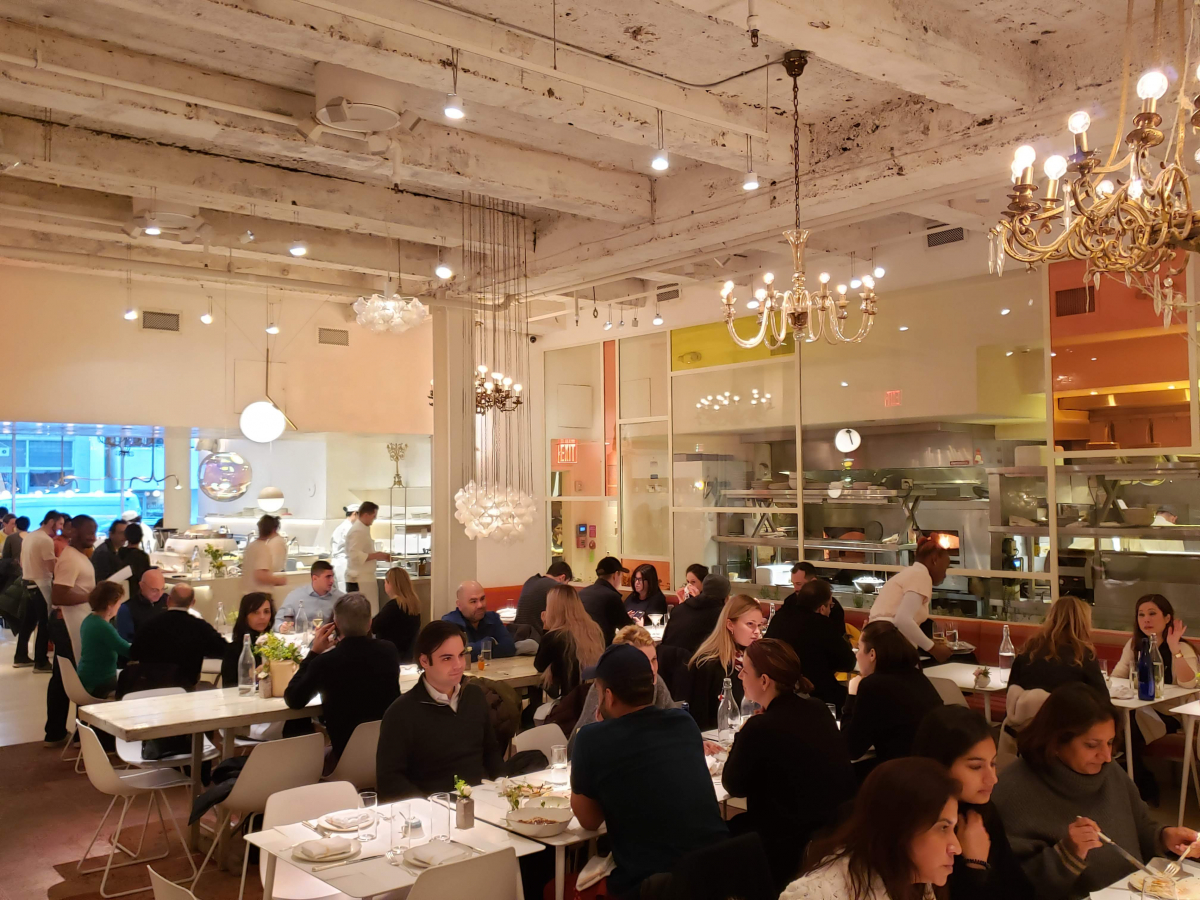
Modern design meets vintage elegance at abcV, super-chef Jean-Georges Vongerichten's vegetable-focused eatery where a glass wall separates the kitchen from the dining room. MUST CREDIT: Photo by Liza Weisstuch for The Washington Post.

Modern design meets vintage elegance at abcV, super-chef Jean-Georges Vongerichten’s vegetable-focused eatery where a glass wall separates the kitchen from the dining room. MUST CREDIT: Photo by Liza Weisstuch for The Washington Post.

There was no meat or dairy products in any of the dishes. The cheese is made from cashews. The steak tartare is made from a yellow split-pea creation colored with beet juice and jazzed up with cornichon slices, shallots, capers, mustard. The foie gras (perhaps better dubbed faux gras) is a tahini and cashew formulation. That beef? The same split-pea invention cooked with the classic bourguignon medley of thyme, bay leaves and pinot noir. The crepe is topped with coconut cream.

Traditional Mexican dishes like burritos, empanadas, ceviche and nachos are prepared with plant-based versions of meat, cheese, fish and eggs at Jajaja Plantas Mexicana. MUST CREDIT: Photo by Liza Weisstuch for The Washington Post.

Traditional Mexican dishes like burritos, empanadas, ceviche and nachos are prepared with plant-based versions of meat, cheese, fish and eggs at Jajaja Plantas Mexicana. MUST CREDIT: Photo by Liza Weisstuch for The Washington Post.

I ate it with the same disorienting fascination one experiences when watching a convincing celebrity impersonator.

The kitchen at this West Village bistro is run by chef-owner Yvette Caron, who was a surgical oncologist in France when she started researching and discovering the health effects of plant-based diets on people suffering from anything from arthritis to cancer. She found relief from arthritis herself when she radically changed her diet, her son Christophe, who co-owns the place with his parents, told me. She became disenchanted with the medical industry and wanted to help people in a different way, he explained. Christophe, a model, had moved to New York in 2010 and, craving an authentic taste of home, opened a creperie. He later recruited his mother to join, and the concept turned into a full-blown French bistro with an entirely plant-based menu.

At Avant Garden, a high-end farmhouse-chic plant-based restaurant in the East Village, chefs prepare vegetables in unconventional ways to astonishing effect. MUST CREDIT: Photo by Liza Weisstuch for The Washington Post.

At Avant Garden, a high-end farmhouse-chic plant-based restaurant in the East Village, chefs prepare vegetables in unconventional ways to astonishing effect. MUST CREDIT: Photo by Liza Weisstuch for The Washington Post.

Vegan food has made its way into the zeitgeist at an exponentially fast pace in the past few years as health and environmental concerns become part of everyday conversation.

In 2019, the Agriculture Department released data showing a 47% decline in milk consumption since 1970, a figure that led to Dean Foods, the country’s biggest milk producer, filing for bankruptcy in November. This comes on the tail (errr . . . stem?) of Impossible Burger and Beyond Meats, the two biggest players in the plant-based patty game, disrupting the fast-food industry. According to Barclays, the plant-based meat substitute category is expected to be worth $140 billion in the next decade.

Vegan cooking is making its mark on Manhattan, a place that’s historically been identified with foods that are the opposite. (See: pastrami, pizza, hot dogs, and bagels with lox and a schmear.) And in typical New York style, it’s being done with ferocious creativity.

Ravi DeRossi, a restaurateur with many plant-based restaurants and bars throughout the East Village, named his latest venture, a vegan barbecue and American whiskey bar, after his pitbull-greyhound mutt, Honeybee. MUST CREDIT: Photo by Liza Weisstuch for The Washington Post.

Ravi DeRossi, a restaurateur with many plant-based restaurants and bars throughout the East Village, named his latest venture, a vegan barbecue and American whiskey bar, after his pitbull-greyhound mutt, Honeybee. MUST CREDIT: Photo by Liza Weisstuch for The Washington Post.

In 2005, before any of this was au courant, Ronen Seri was simply looking for a restaurant that could support his vegan diet. The Israeli expat was studying acting in New York, and his restaurant quest continually came up empty. So he opened his own, Blossom, first in Chelsea in 2005 and then on the Upper West Side in 2007. In a comic twist, the latter is located a few storefronts up from a restaurant called the Viand, a nod to the French term for meat.

Ronen has a unique perspective, having watched his long-standing diet become more mainstream over time. “Years ago when we opened, you’d say ‘vegan’ and it was almost taboo,” Ronen told me. “Now ‘plant-based’ sounds more exotic. Vegan was this old-school hippie Woodstock-y kind of thing. ‘Plant-based’ sounds more like Jay-Z.”

I visited the casually elegant Upper West Side location on a blustery Sunday. It was bustling. My favorite part about exploring Manhattan’s vegan fare is hearing restaurant staff describe each dish. Vegan cooking is an exercise in sleight of hand, in hoodwinking your senses in ways that bewilder carnivores like myself. Things are not always what they seem, vegan chefs want to remind. And so it goes at Blossom, where the salmon and scallop entree is made of beet-marinated, flame-grilled tofu surrounded by trumpet mushrooms that, by tricks of grilling and seasoning, become stand-ins for scallops.

Approximating steak, cheese, eggs and seafood is one approach to plant-based fare. The other is to simply take veggies, fruits and beans and put them front and center, like shining the spotlight on performers who’ve sung backup their whole lives.

“How often do you see a meal where butter beans are the main focus?” said the waiter at abcV as he delivered a plate of applewood-smoked butter beans that sat atop a butter bean puree accompanied by crispy maitake, a curlicue mushroom, fried capers and ginger-rosemary vinaigrette.

AbcV, two blocks from Union Square, is the plant-based entrant in uber-chef Jean-Georges Vongerichten’s empire. (Unlike the other restaurants I tried, there are vegetarian dishes available here as well.) It’s a vast space with high ceilings, rustic-chic touches and a kitchen behind glass where cooks maneuver as if playing a team sport. I sat at a counter that faces an open prep area where staffers peeled and mashed beets, laid out Technicolor radish slices on a tray, and prepared dairy-free desserts like chocolate layer cake and chocolate mousse parfait.

The executive chef here is Neal Harden, a youthful Maine native who moved to Bali to open a restaurant there and traveled extensively in Southeast Asian. The region’s cooking customs inform his dishes today. He told me, for instance, that in much of Asia seitan is not used to impersonate meat; it’s an ingredient in its own right. He marvelously demonstrates how that works with a dish featuring tempeh glazed with spicy kecap, a sweet-and-spicy Indonesian-style soy sauce with charred banana, black garlic and cilantro.


It’s hardly unusual to find vegan food at a Manhattan restaurant, but what’s interesting is the sheer diversity of dedicated vegan eateries. In Harlem I stopped by Uptown Veg, where plant-based versions of Caribbean- and Latin American-accented fare are sold by the pound. Owner and longtime vegan David Simmons, who was born in Guyana, opened it in 1993. During a recent Thursday lunch rush, a woman in a suit, a man in a bus-driver uniform, a mother with a toddler and a teenager sporting a Yankees jersey waited in line for plates piled high with jerk chicken, stuffed chile peppers, rib cutlets and lasagna layered with yucca-based cheese.

I tried a margherita-style pizza with just-tangy-enough cashew mozzarella at Double Zero, a polished East Village restaurant that’s part of Matthew Kenney’s empire. The Californian, a plant-based-dining evangelist, has businesses in more than 20 cities, including Sydney and Bogota. And I did a double take, figuring I must have been in the wrong place, when I walked into Jajaja Plantas Mexicana and witnessed a couple digging into a towering plate of nachos, doused in cheese. The plant-based destination on the Lower East Side is retrofitted into an old ice cream shop, its original gorgeous tile still mostly intact. (There are sibling locations in the West Village and Williamsburg in Brooklyn.)

And I sampled an assortment of small plates, each a clever display of fragrant Indian-influenced fusion fare, at Night Music. It’s the latest project by Ravi DeRossi, the restaurant mogul who’s made waves on the New York dining circuit with his efforts to turn his empire – or at least most of it – vegan.


Ravi has created a radically diverse suite of bars and restaurants. He oversees the tiki bar Mother of Pearl; the craft-beer bar Proletariat; Amor y Amargo, an intimate bitters- and amari-focused haunt with tiled surfaces that evoke Madrid; Ladybird, a Baroque-accented “vegetable bar,” and more. A new addition to the collection is Honeybee’s, an Old West-style saloon specializing in vegan barbecue and American whiskey and named for his pit bull-greyhound mix. But perhaps the crowning jewel of the kingdom is Avant Garden, an upscale farmhouse-chic sanctuary with an open kitchen and imaginative plant-based menu.

Drew Brady, the general manager, described dishes in language that’s equal parts technical and whimsical. And intriguing entree that appeared to be noodles was spiralized celery root with a thick mushroom reduction that gets creamy when the vegetable moisture hits high heat. A carbonara dish gets its pancetta-like note from the mix of charred spring onion and smoked white onion.

And there was my guarantee that I’ll never think about vegetables the same way again.

– – –

If you go

Where to eat

abcV

38 E. 19th St.

212-475-5829

jean-georges.com/restaurants/united-states/new-york/abcv

Part of the Jean-Georges Vongerichten empire, this spacious restaurant, a study in muted glamour, is sibling to ABC Kitchen, the neighboring eatery, both located in the home store of the same name. Many of Chef Neal Harden’s vegetable-forward dishes nod to Southeast Asian flavors and techniques and showcase produce from local farmers. Open daily for breakfast, lunch and dinner; hours vary. Entrees from $17.

Avant Garden

130 E. Seventh St.

646-922-7948

avantgardennyc.com/

Nearly every dish is a surprise at this upscale farmhouse-chic plant-based spot in the East Village, part of a suite of hip, stylish and plant-based bars and eateries by New York restaurant magnate Ravi DeRossi. Senses do double takes at dishes that will mystify committed carnivores. Open daily 5 to 10 p.m. Entrees from $18.

Blossom on Columbus

507 Columbus Ave.

212-875-2600

blossomnyc.com/columbus

Since 2005, before Impossible Burger was a twinkle in a vegan’s eye, Blossom was making imaginative use of plant-based ingredients to create wholesome and intriguing dishes like jackfruit tacos, seitan piccata and rigatoni. Founder Ronen Seri runs two outposts – one on the Upper West Side and one in Chelsea – and co-authored a vegan cookbook in 2017. Open for lunch Monday to Saturday 11:30 a.m. to 3:30 p.m.; Sunday 10:30 a.m. to 3:30 p.m. Dinner nightly 5 to 9:45 p.m. Lunch entrees from $16 and dinner from $17.

Délice & Sarrasin

20 Christopher St.

212-243-7200

delicesarrasin.com/

Beef bourguignon, coq au vin, foie gras, escargot and all the other French standards are inventively prepared without any of the keystone meat or dairy ingredients at this cozy, elegant, family-owned West Village bistro, run by a former oncological surgeon. Open daily 10 a.m. to 11 p.m. First course from $9; entrees from $15.

Jajaja Plantas Mexicana Lower East Side

162 E. Broadway

646-883-5453

jajajamexicana.com/

Hearts of palm take the starring role in ceviche, hempseed- and flaxseed-battered chayote squash stands in for fish in a taco, and plant-based sausage and chorizo give Mexican staples their familiar smoky flavor at this trio of modern Mexican restaurants with locations in the West Village, Lower East Side and Williamsburg in Brooklyn. The Manhattan locales feature tequila- and mezcal-centric bars. Open Sunday to Wednesday 11 a.m. to midnight and Thursday to Saturday 11 a.m. to 1 a.m. Tacos from $8 and entrees from $12.

Night Music

111 E. 7th St.

646-767-0476

nightmusicny.com/

Located less than a half-block from Avant Garden, DeRossi’s moody, clubby hangout features small plates of plant-based Indian-fusion fare inspired by his mother’s cooking. Cauliflower tacos, turmeric crepes and mushroom-tofu-black pepper curry dumplings are just a few of the innovative options here. Open Monday to Thursday 5 to 11 p.m.; Friday and Saturday 5 p.m. to midnight; Sunday 4 p.m. to 10 p.m. Snacks like spring rolls, buns and chutneys from $4; small plates from $12.

Uptown Veg

52 E. 125th St.

212-987-2660

wapo.st/Uptown-Veg

Vegan food comes by the pound ($7.99 to $8.99 per pound) at this cafeteria-style Harlem restaurant. Choose from sweet-and-sour seitan, meatballs, vegetable curries, lasagna, jerk chicken and other plant-based selections, many of which nod to Caribbean classics. Fresh juices are on offer. Owner David Simmons also makes Kamuni Creek, a line of bottled drinks made with fruit pulp imported from the Caribbean. Open Monday through Friday 8 a.m. to 9 p.m.; Saturday 10 a.m. to 8 p.m. and Sunday 10 a.m. to 7 p.m.

Information

nycgo.com/

– L.W.

A woman shamed a man for punching her reclined seat. The Internet is split on who’s in the wrong. #ศาสตร์เกษตรดินปุ๋ย

#ศาสตร์เกษตรดินปุ๋ย : ขอบคุณแหล่งข้อมูล : หนังสือพิมพ์ The Nation

https://www.nationthailand.com/travel/30382107?utm_source=category&utm_medium=internal_referral

A woman shamed a man for punching her reclined seat. The Internet is split on who’s in the wrong.

Feb 14. 2020
By  The Washington Post · Drew Jones
A passenger on an American Airlines flight took to social media to shame a fellow passenger, who she said repeatedly nudged and punched her seat after she reclined it.

“After much consideration, and exhausting every opportunity for #AmericanAirlines to do the right thing, I’ve decided to share my assault, from the passenger behind me, and the further threats, from an American Airline flight attendant,” a user named Wendi Williams wrote on Twitter last week.

The incident began on an American Eagle regional flight from New Orleans to Charlotte after Williams was returning from a teaching convention. A man – who is unidentified in the video clip posted to her Twitter – allegedly asked Williams to position her seat upright as he ate. She did, and when he finished, Williams reclined her seat again.

“At that point, he started hammering away at me,” she wrote. “That’s when I started videoing and tried to call” the flight attendant.

Then, according to Williams, the man became agitated and began to perform a punching motion against the back of her seat, shaking her as the nudging continued. “He was angry that I reclined my seat and punched it about 9 times,” she wrote. “HARD, at which point I began videoing him, and he resigned to this behavior.”

Williams said after she called for a flight attendant to intervene, not only was she of no help but, in her view, she also made a bad situation worse. “She rolled her eyes at me and said, ‘What?’ she wrote. “She then told him it was tight back there and gave him rum!”

Another Twitter user, who responded to Williams’ tweets, asked how she was feeling after the experience, to which Williams replied using “#whiplash.” “I’m in pain,” she wrote. “I have 1 cervical disk left that isn’t fused – the first 1 which allows me some mobility. It’s scary bc it’s this the kind of injury that could do it in.”

In the time since the incident, Williams said she’s had to absorb medical costs and a loss of wages. “I’ve lost time at work, had to visit a doctor, got x-rays” and cited headaches for a week, she wrote.

Reaction across social media has been split, with hundreds of users admonishing the male passenger’s behavior: “There is no reason to allow people to act like he did. That’s why they allow you to pick your seat when you book your flight. Obviously he picked the wrong row or bought the cheapest ticket available,” one user wrote.

And hundreds more have criticized Williams for being cavalier about reclining her seat, which some fliers do not view as a right: It “seems you started this in the first place by reclining your seat too far. Just don’t recline,” one user wrote, adding, “Basic etiquette.”

As for the airline at the center of the incident, Williams said she spoke with American Airlines after causing a firestorm on Twitter – the video is nearing 300,000 views – but wasn’t satisfied that “they apologized but really didn’t accept any responsibility for the flight attendant’s actions”:


“I was contacted via phone by @AmericanAir, they apologized but really didn’t accept any responsibility for the flight attendant’s actions. I will be calling the FBI to press charges against the ‘man’ who mistook me for a punching bag. Anyone who doesn’t like it, I don’t care!

“- wendi (@steelersfanOG) February 9, 2020”


As of Thursday, it’s unclear whether Williams has or will pursue charges against the passenger or American Airlines.

“We are aware of a customer dispute that transpired on American Eagle flight 4392, operated by Republic Airways on January 31. The safety and comfort of our customers and team members is our top priority, and our team is looking into the issue,” the airline said in a statement to The Washington Post.

Soak up history in Arkansas’ Hot Springs National Park #ศาสตร์เกษตรดินปุ๋ย

#ศาสตร์เกษตรดินปุ๋ย : ขอบคุณแหล่งข้อมูล : หนังสือพิมพ์ The Nation

https://www.nationthailand.com/travel/30381873?utm_source=category&utm_medium=internal_referral

Soak up history in Arkansas’ Hot Springs National Park

Feb 10. 2020
I'll just come clean: Baths have never appealed to me. They're time-consuming, and now, with a toddler, just taking a peaceful three-minute shower is nigh impossible. So I was surprised that my favorite moment of a visit to Arkansas' Hot Springs National Park was soaking in a lavender-scented whirlpool tub, watching ceiling fans turn lazily in the hushed calm of a high-ceilinged, century-old bathhouse. It didn't hurt that I was luxuriating in thermal waters, which bubble up from dozens of underground springs in nearby Hot Spring Mountain and are piped directly into local bathhouses, allowing visitors to, as the saying goes,

I’ll just come clean: Baths have never appealed to me. They’re time-consuming, and now, with a toddler, just taking a peaceful three-minute shower is nigh impossible. So I was surprised that my favorite moment of a visit to Arkansas’ Hot Springs National Park was soaking in a lavender-scented whirlpool tub, watching ceiling fans turn lazily in the hushed calm of a high-ceilinged, century-old bathhouse. It didn’t hurt that I was luxuriating in thermal waters, which bubble up from dozens of underground springs in nearby Hot Spring Mountain and are piped directly into local bathhouses, allowing visitors to, as the saying goes, “take the waters.”
By The Washington Post · Christine Dell’Amore · FEATURES, TRAVEL

I’ll just come clean: Baths have never appealed to me. They’re time-consuming, and now, with a toddler, just taking a peaceful three-minute shower is nigh impossible. So I was surprised that my favorite moment of a visit to Arkansas’ Hot Springs National Park was soaking in a lavender-scented whirlpool tub, watching ceiling fans turn lazily in the hushed calm of a high-ceilinged, century-old bathhouse. It didn’t hurt that I was luxuriating in thermal waters, which bubble up from dozens of underg

Bathing in or drinking the water – a.k.a. “quaffing the elixir” – has been a public commodity since 1832, when President Andrew Jackson deemed what’s now Hot Springs National Park protected land – 40 years before Yellowstone. During the Golden Era of Bathing (1880 to 1950), the mineral-rich H2O was thought to have medicinal properties, and, encouraged by their doctors, the ailing flocked to them for relief from conditions such as arthritis and back pain. At first, accommodations were rudimentary – wooden shacks built atop a gurgling spring – but eventually, the waters’ healing reputation and laws requiring more sanitary and fireproof buildings shaped Hot Springs into a destination nicknamed “the American Spa.” Its marquee attraction is Bathhouse Row, a collection of eight imposing stone buildings that line Central Avenue in downtown Hot

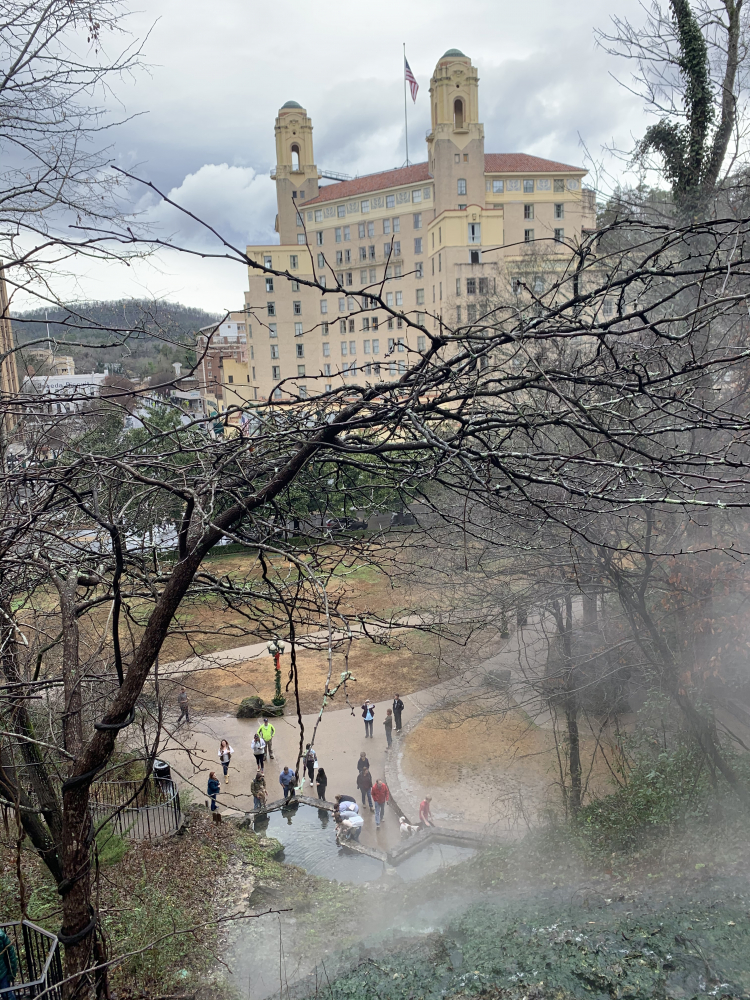
Steam from the Hot Water Cascade rises in front of the Arlington Hotel, built in 1924 and still the largest in Arkansas. MUST CREDIT: Photo for The Washington Post by Christine Dell'Amore

Steam from the Hot Water Cascade rises in front of the Arlington Hotel, built in 1924 and still the largest in Arkansas. MUST CREDIT: Photo for The Washington Post by Christine Dell’Amore

Springs, each with its own unique architectural style. Of course, these were white, wealthy endeavors; African Americans were mostly banned from using the bathhouses where they worked, forcing them to build their own nearby. What’s more, a bathhouse regimen could cost as much as 55 cents, an average worker’s daily salary in 1915 (the government did provide the needy a free bathhouse, which was later segregated). By 1921, the popularity of Hot Springs – whose baths were said to rival those of ancient Rome – led to its creation as our 18th national park. Yet as new medicines developed in the 1950s, therapeutic bathing declined, and business dried up. By 1985, only the Buckstaff Bathhouse remained open (and still is, boasting continuous operation from 1912).

The Fordyce Bathhouse was built in 1915 in the Renaissance Revival style, with Spanish and Italian elements. Now home to the national park's visitor center and museum, the opulent bathhouse was once considered

The Fordyce Bathhouse was built in 1915 in the Renaissance Revival style, with Spanish and Italian elements. Now home to the national park’s visitor center and museum, the opulent bathhouse was once considered

But that wasn’t the end of Bathhouse Row. The Park Service has restored and repurposed most of the buildings, from Superior, which houses a brewery and the world’s only thermal water beer; to the Hale, a luxury hotel; to Quapaw, a modern spa; to the Ozark, a cultural center and art gallery. The tour de force is the Fordyce Bathhouse, an ornate Renaissance Revival structure built in 1915 that’s now home to the national park’s visitor center and museum. Civil War veteran Samuel Fordyce, who was brought to Hot Springs on a stretcher and walked out six months later, believed so deeply in the powers of the hot springs that he set out to “erect the finest bathing establishment in the world.”

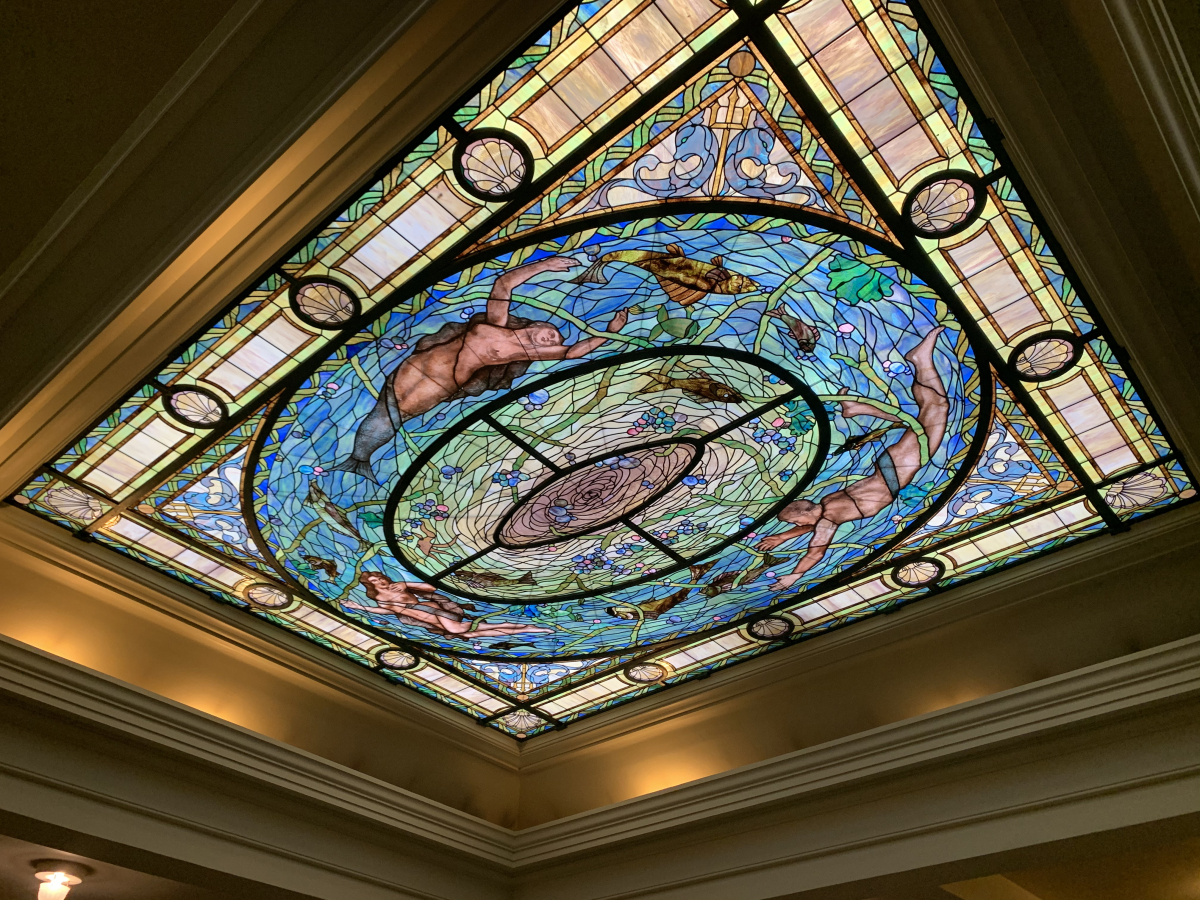
A stained-glass skylight depicts Neptune's daughter and other underwater whimsies in the men's dressing room at the Fordyce. In 1915, when the Fordyce opened, it cost a person 55 cents to take the waters-an average worker's daily salary. MUST CREDIT: Photo for The Washington Post by Christine Dell'Amore

A stained-glass skylight depicts Neptune’s daughter and other underwater whimsies in the men’s dressing room at the Fordyce. In 1915, when the Fordyce opened, it cost a person 55 cents to take the waters-an average worker’s daily salary. MUST CREDIT: Photo for The Washington Post by Christine Dell’Amore

On our first morning in Hot Springs, myself, my husband, and our 17-month-old son walked the short distance from our grandiose 1924-era hotel, the Arlington, down magnolia-lined Central Avenue to the marble lobby of the Fordyce for a tour. Ranger Kary Goetz got one thing out of the way: There aren’t any outdoor hot springs to bathe in. The water seeps out of the ground at a scalding 143 degrees, which is why the bathhouses control the temperature for bathers, at between 98 and 104. In the men’s white-tiled bath hall, Goetz passed around a plastic bottle of thermal water, still warm. “You’re holding history in your hands,” he said, explaining the water fell as rainwater 4,000 years ago and is just now rising to the surface via a complex geothermal process occurring within the rock layers under our feet. Goetz then took us through a 1900s-era day at the bathhouse: First, soaking in the tub while an attendant scrubs your back and limbs; then being wrapped in hot towels, called “hot packs”; next, a few minutes in the vapor, or steam cabinet (sort of like an outhouse-shaped sauna); a dip in the sitz bath, a bidet-like structure said to soothe hemorrhoids; and finally the needle shower, in which pressurized jets hit you with water all over.

The oddest contraption – and Goetz’s “absolute favorite” – is the long-defunct hydrotherapy bathtub, in which an attendant stuck an electric probe in the bathwater, issuing shocks to supposedly relax tight muscles or activate nonfunctioning ones. Our tour ended in the men’s dressing room, where a stained-glass skylight depicts Neptune’s daughter and other underwater whimsies in striking blues and greens. A statue of 16th-century Spanish explorer Hernando de Soto receiving a gift of thermal water from an American Indian sits at the center of the room – it’s unlikely he ever did, but it sure helped with advertising, Goetz said. The Quapaw and Caddo peoples lived here for thousands of years, mining the region’s ubiquitous novaculite, a type of flint stone, for weapons.

We wandered the rest of the museum, from the women’s bath hall (their dressing room was much less fancy) to the sunny third-floor assembly room, where the conservative Edwardian-era men and women mingled amid an opulence of mosaic floor tiles, a grand piano and decorative stained-glass ceilings. (I was miffed to read men were permitted to sunbathe nude in the third-floor courtyard, while women had to exercise in formal lace dresses.) Down the hall, a large, hardwood-floor gymnasium may have attracted bathers hoping to see famous baseball players in town for spring training, which originated in Hot Springs in the 1880s. Indeed, many well-known men, notorious and otherwise, passed through Hot Springs, including Babe Ruth and Al Capone. “This was Vegas before Vegas was even dreamed of,” Goetz told me. “Pick your vice.” Across the street from elegant Bathhouse Row, cocaine dens, brothels, gambling establishments and clubs thrived. Capone kept tabs on his favorite casino, the Southern Club – now the Josephine Tussaud Wax Museum – from the window of his fourth-floor suite in the Arlington.

Speaking of Scarface, he also regularly took the waters, and may have used the alias Al Brown to bathe on Bathhouse Row (though there are no records, of course). He also frequented the Arlington’s third-floor bathhouse, where I checked into my 2 p.m. appointment feeling a little nervous. Would it be weird being rubbed down by a stranger? I needn’t have worried; attendant Glenda Porter, a 31-year employee, put me instantly at ease. After giving me a quick loofah scrub in the porcelain tub, she wrapped me in a sheet, toga-like, and instructed me to lie down on a lounge chair in the main bathhall, covering me head-to-toe in steamy towels. The heavy cloth immobilized my limbs, the whirlpool baths churned pleasantly in the background, and, with no smartphone or other distractions, I was forced to succumb to the present. Aha, I thought: Now I get it. The waters’ medical benefit may be questionable, but the soothing impact on my mind was anything but.

The next afternoon at Buckstaff, I entered another beautiful marble lobby, where an attendant brought me into an old hand-operated elevator for a ride to the second floor. Though less spalike (no fragrant bath salts available with the tub soak, for instance) this bathhouse experience was more authentic, as I got to try a sitz bath, vapor cabinet and needle shower. The sitz bath was underwhelming, but I enjoyed the novelty of the vapor cabinet, where I sat sweating with my head in a wooden yoke. The needle shower was invigorating, the water reviving muscles made rubbery in the hot steam of the vapor cabinet.

Refreshed, we explored more of Hot Springs, which, as the second smallest national park (Gateway Arch edged it out in 2018) is compact and easy to navigate. At Hot Water Cascade, a waterfall near our hotel, tendrils of steam rose from the water as it tumbled down the rocks, prompting a chorus of “Wa wa!” (water) from my son. We strolled the Grand Promenade, a red-brick path above Bathhouse Row and a conduit to some of the park’s 26 miles of hiking trails on Hot Springs Mountain and North Mountain. At the town’s “jug fountains,” locals queued to fill bottles of thermal water; the public consumes about 700,000 gallons a day. “Good?” I asked one woman. “I wouldn’t be wasting all this energy hauling it if it weren’t,” she said, laughing.

Driving back to the Little Rock airport the next morning, a regret popped into my mind: Maybe I shouldn’t have sold that antique claw-foot bathtub that came with my apartment. I could use a good soak now and then.

– – –

If you go

Where to stay

The Arlington Hotel

239 Central Ave.

800-643-1502

arlingtonhotel.com/

The largest hotel in Arkansas, this Southern treasure features a grand lobby and elegant Venetian dining room. Try the Mineral Water Room, whose bathtub features thermal water straight from the hot springs. Standard rates for two adults from $135; Mineral Water Room from $179 per night.

– – –

Where to eat

Superior Bathhouse Brewery

329 Central Ave.

501-624-2337

superiorbathhouse.com/

Located in one of the historic bathhouses, this is the first brewery in a U.S. national park. The Hitchcock Spring Kolsch is delicious; pair it with a soft pretzel and the kolsch-infused beer cheese. Open daily at 11 a.m. Entrees from $9.

– – –

What to do

Hot Springs National Park

101 Reserve St.

501-620-6715

nps.gov/hosp/

Relax in thermal waters piped right from the hot springs, hike through rare shortleaf pine forests, or look out over the rolling Ouachita Mountains from the 216-foot-tall Hot Springs Mountain Tower. Daily ranger tours take visitors through the various bathing and medical facilities of the luxurious Fordyce Bathhouse, as well as to the park’s visible hot springs, where they explain geologic processes behind the mineral water. Free park admission and tours.

The Gangster Museum of America

510 Central Ave.

501-318-1717

tgmoa.com/

Get the lowdown on Hot Springs’ seamier side in this museum, whose audiovisual galleries explore the lives of famous criminals in the Valley of the Vapors. Highlights include John Dillinger’s death mask and original gambling equipment from a Prohibition-era speakeasy, including roulette tables. Open daily 10 a.m. to 6 p.m. Sunday to Thursday and 10 a.m. to 7 p.m. Friday and Saturday. General admission $15 adults, $14 seniors and $6 children 8 to 12.

Digital tipping is coming to a hotel near you #ศาสตร์เกษตรดินปุ๋ย

#ศาสตร์เกษตรดินปุ๋ย : ขอบคุณแหล่งข้อมูล : หนังสือพิมพ์ The Nation

https://www.nationthailand.com/travel/30381869?utm_source=category&utm_medium=internal_referral

Digital tipping is coming to a hotel near you

Feb 09. 2020
By Syndication Washington Post, Bloomberg · Nikki Ekstein · FEATURES, TRAVEL
It’s the universal travel faux pas: You arrive at a hotel, receive your luggage from the bellboy, reach into your pockets, scour your wallet, and turn up … nothing. Or, perhaps worse, a large-denomination bill you’re too embarrassed to ask them to break.

Bashar Wali, president of Provenance Hotels, lamented the sorry state of hotel tipping in a post on LinkedIn this past July, in which he argued around the idea of tipping as fair compensation, and that it’s more like an expression of gratitude, a “personal acknowledgment” to those who “are exposed to the worst parts of us [piles of dirty laundry, hangovers, room service leftovers] and get the least appreciation.”

An increasingly cashless society, digital checkout features, the mad dash to the airport-they all make tipping harder, but they aren’t good enough excuses.

The comments piled in. “If only there was an app for that …” multiple people said.

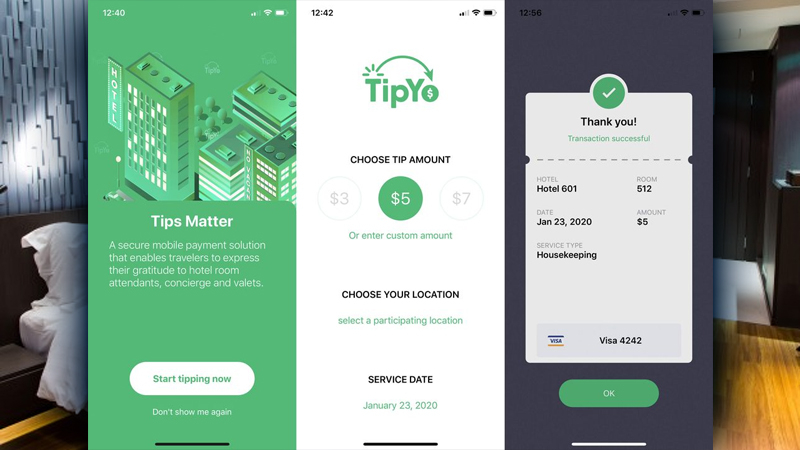
Now there is. TipYo debuted on Apple’s App Store in November, promising to streamline the tipping experience for travelers everywhere. Except that right now, it’s only available at Wali’s Hotel Murano, in Tacoma, Washington, where it’s been in a soft launch. (An Android version is coming in the first quarter of this year.)

The premise is simple: Once your receive your hotel room number, you can enter it in the app and have gratuities sent to a particular staffer or a general department (housekeeping, bell service, concierge, valet). Amounts can be selected from presets or customized, and the money is funded by Apple Pay (if you’ve set that up on your phone), or you can add a credit or debit card as a payment method. To ensure tips go to the correct person, even when you don’t remember their names, hotel managers upload employees’ shift schedules and can set rules around when tips should be pooled.

TipYo founder Brian Walsh isn’t a hospitality guy, but he had grown frustrated with the tipping experience. “I rarely carried cash-even less so than usual in the last five years, since now we live in an era where we can order an Uber, check our bank accounts, order food, and pay people directly from our phones,” Walsh tells Bloomberg. He wondered why tipping wasn’t the same.

But he knew the answer: “The payments world is not for the fainthearted,” he says.

His previous company helped churches process electronic donations, so he had experience clearing the regulatory hurdles that a tipping app would require. “We understand the space, its federal regulations, what’s expected from the IRS,” he says, making it easier for him to securely untangle a complicated money flow. The beauty of it, he says, “is you can confidently leave a gratuity and know that money is going into the right employees’ paychecks.” (Although unlike off-the-books cash, it can be taxed.)

So far, adoption is slow but encouraging, Walsh says. The app was quietly deployed at Wali’s 300-room Hotel Murano late last November; in the two months that followed, 80 guests tipped through the app. This is with low-season occupancy rates and almost zero promotion, Walsh says, adding that those early numbers exceeded expectations.

To encourage app downloads, the hotel’s first approach was to leave a little bit of marketing material on hotel room desks, but even Wali admits that “people don’t look at anything in the room.” So in the past month, the property has starting plugging TipYo in its pre-arrival emails.

“My concern was always the issue of adoption, because of the idea that you have to download an app and put your info in, but so far it looks like people are inclined to do it,” Wali says. “We’ve taken the pain out of the cash thing.”

Walsh knows that the market for TipYo could be enormous. “There are 5 million hotel rooms in the U.S. alone, and the independent luxury market [which is TipYo’s sweet spot] is roughly 800 to 1,000 hotels,” he says. TipYo signs monthly agreements with hotels, which pay a flat fee for the service; there’s no cost to the consumer or employees receiving tips.

“Beyond that, you have everybody from Marriott to Hilton and all the brands they own,” says Walsh, who’s hoping that once one big brand commits to the technology, pressure will mount for others to jump on the bandwagon. Ultimately these larger brands could also incorporate TipYo’s tech into their own digital platforms.

“After all, one of the greatest challenges in hospitality right now is employee retention, and we’re helping to increase the take-home pay of staff who could otherwise go down the street and work for Amazon for an extra $3 an hour,” he says.

Yet even for committed operators like Wali, syncing each hotel’s back-end system with TipYo’s platform can be a barrier-uploading those shift schedules and linking to payroll can seem like an encumbrance for managers already spread thin. And then there’s the fact that not every hotel uses the same back-end technology; getting the second Provenance property (out of 14 total) up and running will take another six months, give or take.

Add complex labor union legislation to that-which is preventing Walsh from partnering with hotels in certain parts of the country, like New York City-and the complications of regulations in different countries, and the road ahead is a long one. For now, TipYo is focusing on the domestic market, which makes the app less relevant for high-tipping Americans who may not carry foreign currency abroad.

“I’m not sure why I need it,” says Jack Ezon, founder and managing partner of Embark Beyond, a high-end travel agency that works equally in business and leisure bookings. But necessity isn’t the mother of all invention-see how Uber has generated millions in gratuities for drivers, despite serious initial reluctance from passengers.

Most of Ezon’s guests, he says, would be more likely to tip at checkout for easy expense itemization back at work. The potential he sees is largely outside the hotel. “If it could tell me how much to tip my driver, my guide, my head concierge, and give me both functionality and guidance that I could turn on and off-that would be a dream.”

How to dine around the world like a food writer #ศาสตร์เกษตรดินปุ๋ย

#ศาสตร์เกษตรดินปุ๋ย : ขอบคุณแหล่งข้อมูล : หนังสือพิมพ์ The Nation

https://www.nationthailand.com/travel/30381849?utm_source=category&utm_medium=internal_referral

How to dine around the world like a food writer

Feb 09. 2020
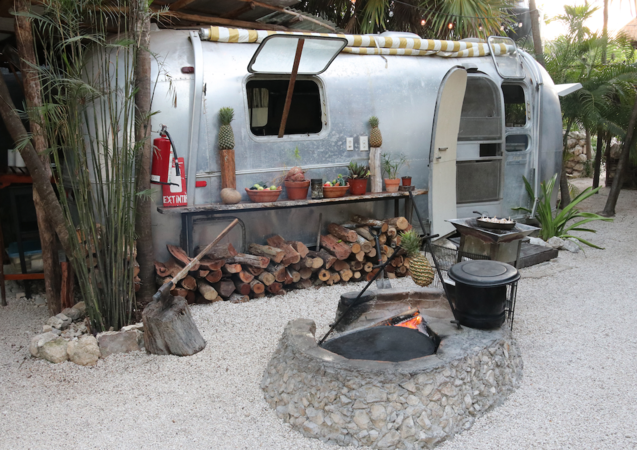
The Airstream-turned-kitchen and outdoor firepit at Safari Tulum in Tulum, Mexico. MUST CREDIT: Photo for The Washington Post by Nevin Martell

The Airstream-turned-kitchen and outdoor firepit at Safari Tulum in Tulum, Mexico. MUST CREDIT: Photo for The Washington Post by Nevin Martell
By Special to The Washington Post · Nevin Martell · FEATURES, TRAVEL

“I had to stop looking at your Instagram posts, because they were making me hungry and jealous,” a friend half-told, half-accused me after I returned from a trip to Tulum, Mexico, last year.

“Sorry, not sorry,” I replied good-naturedly. After all, I was just doing my job as a food and travel writer-photographer.

“So how do you figure out where you’re going to eat?” she asked.

Grilled green beans at Arca in Tulum, Mexico.MUST CREDIT: Photo for The Washington Post by Nevin Martell

Grilled green beans at Arca in Tulum, Mexico.MUST CREDIT: Photo for The Washington Post by Nevin Martell

It’s a question I get asked a lot. People seem to think I have to access secret information otherwise unavailable to the public. Don’t get me wrong, I have an edge thanks to more than two decades of experience and my industry connections, but I ferret out many of my favorite meals on the road through thorough research that people could do themselves. Frankly, I’m glad most travelers don’t bother, because I make a living from it. But by following a few simple tips, anyone can dine around the world like a food writer.

Garlic roasting over the outdoor fire-pit at Safari Tulum in Tulum, Mexico. MUST CREDIT: Photo for The Washington Post by Nevin Martell

Garlic roasting over the outdoor fire-pit at Safari Tulum in Tulum, Mexico. MUST CREDIT: Photo for The Washington Post by Nevin Martell

These days, I start my exploratory process on social media, usually months before a trip. On Facebook and Twitter, I’ll ask my friends and followers to chime in with suggestions on where to eat – no boundaries. In the case of Tulum, I was on the lookout for places ranging from humble roadside taco stands and open-air markets to high-end restaurants and hotels with great restaurants. Though my acquaintances in the hospitality world often have excellent recommendations, some of the best tips come from everyday travelers (or the friends they tag), eager to share their favorite discoveries. Next, I switch over to Instagram to see who is posting the most enticing food pics from the destination. I’ll virtually stalk regional influencers and food-focused influencers who have visited recently, then do deep dives into their posts and likes from the area.

Slicing off pork for al pastor tacos at La Chiapaneca in Tulum, Mexico. MUST CREDIT: Photo for The Washington Post by Nevin Martell

Slicing off pork for al pastor tacos at La Chiapaneca in Tulum, Mexico. MUST CREDIT: Photo for The Washington Post by Nevin Martell

It’s helpful to review the food and travel publications you trust. I always check out to see what Bon Appétit, Travel + Leisure, Food & Wine, Eater and The Washington Post have written about a destination. Review sites such as Tripadvisor and Yelp can be helpful for places not thoroughly covered by journalists, though I am leery of the advice of strangers whose motives and expertise I can’t ascertain. Another caveat: I seek out these sites’ advice only for restaurants in the low- to middle-price range, because I find the reviews of fine dining establishments are often uninformed and unhelpful on a variety of levels. Eating regularly at high-end restaurants requires a certain budget and lifestyle, so for many people, visiting them is a rare occasion. This often means they will either have unrealistic expectations or fail to notice the many small but immensely significant components that go into creating a next-level dining experience, such as service elements, the minutiae of the beverage program or rarefied culinary techniques.

You can’t just rely on the Web to guide your decisions. I personally ask anyone I know who might have been to the region – passionate travelers, die-hard foodies, hospitality professionals, and people with familial or cultural roots there. If you know the Italian chef at your favorite trattoria, by all means ask her where to eat before you go to Umbria. And don’t forget to reach out to the local visitor’s bureau, as it can offer a wealth of information, including news about restaurants that are on the verge of opening.

It’s helpful to read up on the culinary traditions and history of the region to ascertain what you should expect and what specialties to seek out, so pick up a few relevant guidebooks, cookbooks, travelogues or memoirs before you go. They will help give you a richer sense of a place and may push you to explore unexpected activities. Before departing for Tulum, I flipped through Moon’s Tulum guidebook and “Yucatán: Recipes From a Culinary Expedition” by David Sterling. The latter inspired me to seek out a cooking class at Riviera Maya Kitchen, where I made tortillas from scratch while learning about the foundational role corn plays in Mexican cuisine.

As I’m doing my online and offline survey, I compile a digital list of all the potential spots to visit, making sure to tally multiple mentions of a place. Ultimately, I save those that pique my interest most on Google Maps, so I can get an overview of options. The map also makes it easier to decide where to eat if I suddenly have a break in my schedule or if an establishment is unexpectedly closed.

Before leaving home, I’ll trace out a tentative itinerary and make any reservations necessary, especially at any hard-to-access restaurants. If you have personal connections to any of the places you’re dining, let your contact know when you plan on stopping by. It can be helpful to have a friendly face guiding you through the experience – and maybe offer you VIP perks, like a kitchen tour or an introduction to the chef.

Don’t think your work has ended once your travel begins. Keep your eyes open, quiz everyone you meet – cabdrivers, concierges, bartenders, chefs and fellow travelers can be particularly helpful – and adjust your itinerary accordingly. I often find a natural flow develops. Tulum was no different. Because it was the most recommended place on my list, I made a point of dining twice at Arca, an exceptionally executed, modernist minded venture from Mexican American chef Jose Luis Hinostroza, an alum of Noma and Alinea. I had a chance to chat with him, so I asked him about his favorite taquerias. He turned me on to the cochinita pibil stuffed ones at Honorio Taqueria and the al pastor tacos at La Chiapaneca, which were some of my favorite bites of the trip. While I was walking to the latter, I discovered Ki’bok Coffee, which serves excellent espresso and notable handmade pastries, including a jammy blackberry bar.

Other highlights included Safari, which I first saw on Instagram, a charmingly offbeat taqueria crafting unconventional options (the highlight was one packed with roasted octopus) out of an Airstream-turned-kitchen with an open fire out front. A rep from the visitor’s bureau mentioned NÜ, which specializes in picture-ready contemporary Mexican fare. And there were several outstanding breakfasts at Casa Malca, suggested by several friends on Facebook, a chic beachfront hotel populated by contemporary artworks sourced by its gallerist owner and designed to look good from every angle, so it was impossible to go more than a few minutes without seeing someone take a selfie in front of something.

All in all, my two weeks in Tulum were packed solid with memorable meals, many of which I documented in envy-inducing pictures I posted on Instagram. It was a trip worthy of a food writer – or anyone willing to do the research.

Hotel boom moving past Prague fuels deals across east europe #ศาสตร์เกษตรดินปุ๋ย

#ศาสตร์เกษตรดินปุ๋ย : ขอบคุณแหล่งข้อมูล : หนังสือพิมพ์ The Nation

https://www.nationthailand.com/travel/30381844?utm_source=category&utm_medium=internal_referral

Hotel boom moving past Prague fuels deals across east europe

Feb 08. 2020
By Syndication Washington Post, Bloomberg · Veronika Gulyas

From refurbished palaces in Budapest and Bucharest to gems on the Baltic coast, hoteliers who are seeking higher returns in eastern Europe are venturing outside the region’s saturated hubs.

With yields in Prague and the business districts of Warsaw dropping close to levels in Germany’s largest cities, it’s the capitals of Romania, Hungary and Serbia — as well as large secondary cities in Poland — that are increasingly attracting developers and investors, hotel executives said.

“Bucharest is what Warsaw was 10-15 years ago,” Adam Konieczny, development director for Europe at Paris-based Louvre Hotels Group, said at a recent hotel-industry conference in Budapest.

Goldman Sachs was among the sellers of a portfolio of 10 hotels, including four-stars in Budapest and Prague, to Indian conglomerate InterGlobe last year. There were 4.2 billion euros ($4.6 billion) in hotel deals in the region’s six main markets in the past five years, a third of it in 2019, according to CMS and Cushman & Wakefield.

Cranes dot the skyline in the Romanian capital, with projects including two Ibis hotels by Warsaw-listed Orbis. Apex Alliance, a Lithuania-based independent operator, recently completed a four-star Marriott in Bucharest and it has been turning an iconic bank building in the city’s Old Town into a five-star asset.

Major Polish cities outside of Warsaw are also booming. Over the next three years, nine hotels with a total of 1,900 rooms are scheduled to open in the Tricity area that includes Gdansk, Gdynia and Sopot on the Baltic Sea, increasing the local stock by 30%.

Bialystok, a university town in eastern Poland, is meanwhile a favored location for Warimpex, another major developer, because it has more fresh workforce available than Warsaw, CEO Franz Jurkowitsch said.

Krakow, Poland’s second-biggest city, has for long been a popular tourist destination though a surge in business centers there and across the region has also boosted demand for hotels.

“Poland and Romania are key because these are the two countries in eastern Europe which have strong domestic markets,” said Gilles Clavie, chief executive officer of Orbis, which develops hotels in the region under Accor SA’s brands such as Sofitel.

“Economic growth over the coming years is expected to stay bullish in the region; if not for any serious geopolitical issues, I can’t see investment activity slowing down,” he said.

There is ample room to boost the presence of international brands. The share of hotel chains is just 15% of the total in Hungary, 14% in Poland and 6% in Serbia, compared with more than 20% in many western European countries, advisory firm Horwath HTL said in a 2019 report.

Al Habtoor Group on Wednesday announced it would set up a regional office in Budapest to service its existing European operations, which include The Ritz-Carlton and InterContinental in the Hungarian capital in addition to hotels in London and Vienna.

“The less-explored markets in Europe are now gaining momentum, offering a competitive edge, an attractive investment climate and higher yield possibilities for foreign players,” Al Habtoor said in a statement on its website.

Budapest has about 3,000 new rooms scheduled for completion by the end of 2021. The Hyatt Regency will occupy a former post office building dating to the 1870s and W Budapest by Marriott will open in a palace that used to house Hungary’s state ballet school.

Last month, French real estate investment trust Covivio bought the iconic five-star New York Palace hotel in Budapest, part of a $685 million acquisition blitz of eight emblematic hotels across Europe, including the Carlo IV in Prague.

The group in November also purchased three hotels in Lodz, Warsaw and Krakow in Poland from B&B Hotels. Apex Alliance meanwhile is looking to buy in the Hungarian capital.

“There are three or four opportunities for us in Budapest, if I look at what we potentially have in the pipeline,” said Apex Alliance CEO Gerhard Erasmus.

Prague and Warsaw are far from losing all their allure.

Czech wealth manager R2G acquired InterContinental Prague for an estimated 225 million euros in January 2019, and U.K.-based private equity fund Patron Capital and U.S. hotel chain Marriott International bought the Sheraton Warsaw Hotel in February.

Patron Capital, which is mainly focused on western Europe and the U.K., has been attracted by the extra yield of as much as 2 percentage points in Poland, along with brisk economic growth and consumer spending across the region, Vice President Wiktor Lesinski said.

“Poland is especially attractive in this respect,” Lesinski said. “We continue to review opportunities in the region. We’re yet to see further yield contraction.”

Korat readies fragrant field of mums for annual festival #ศาสตร์เกษตรดินปุ๋ย

#ศาสตร์เกษตรดินปุ๋ย : ขอบคุณแหล่งข้อมูล : หนังสือพิมพ์ The Nation

https://www.nationthailand.com/travel/30381778?utm_source=category&utm_medium=internal_referral

Korat readies fragrant field of mums for annual festival

Feb 07. 2020
By THE NATION

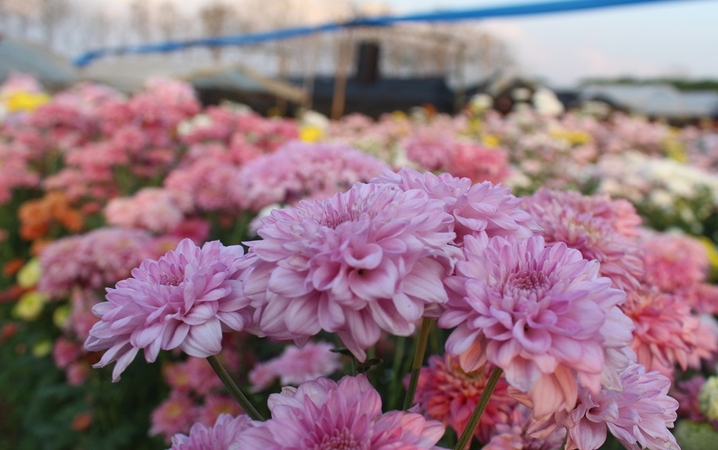
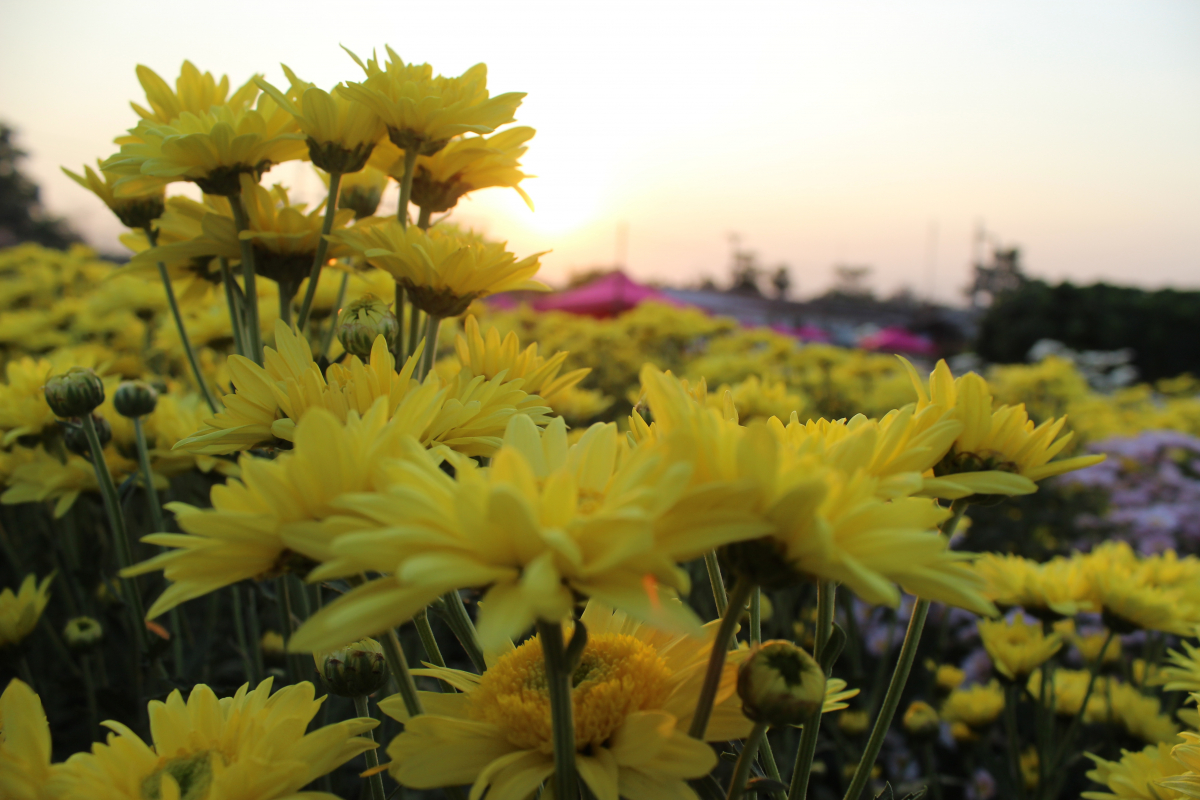
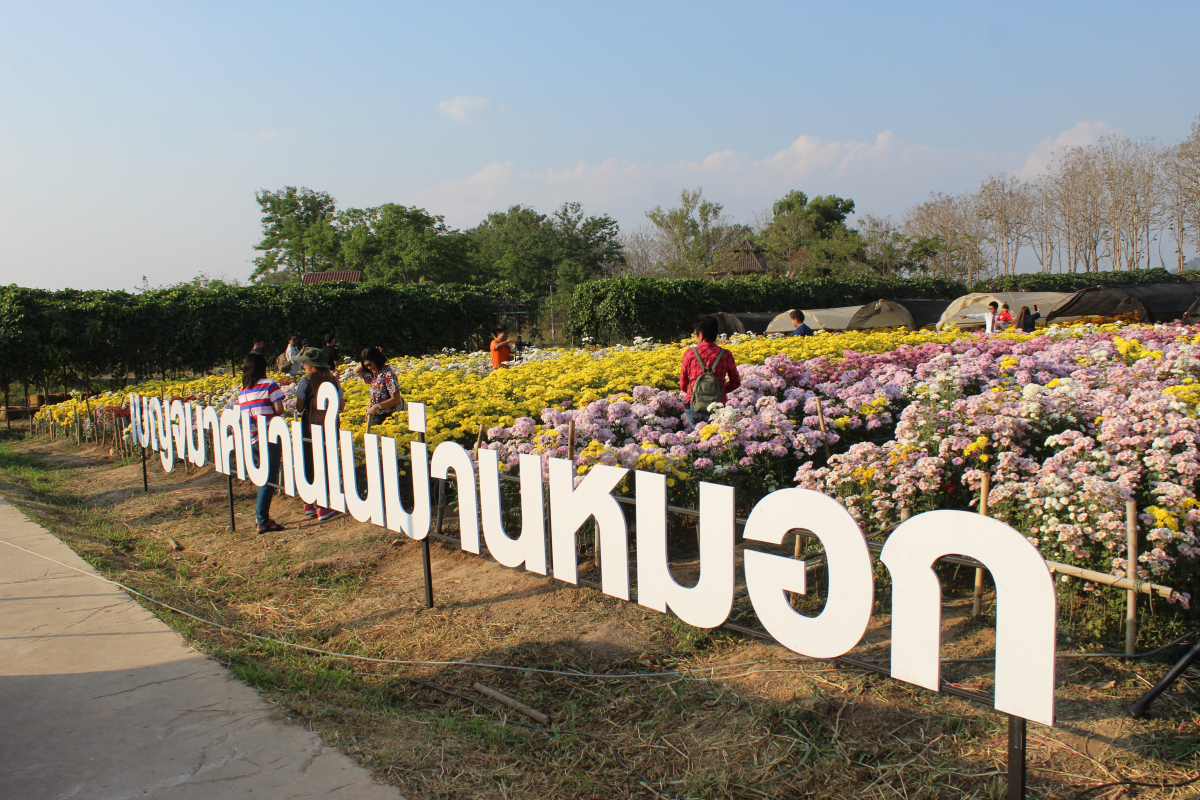
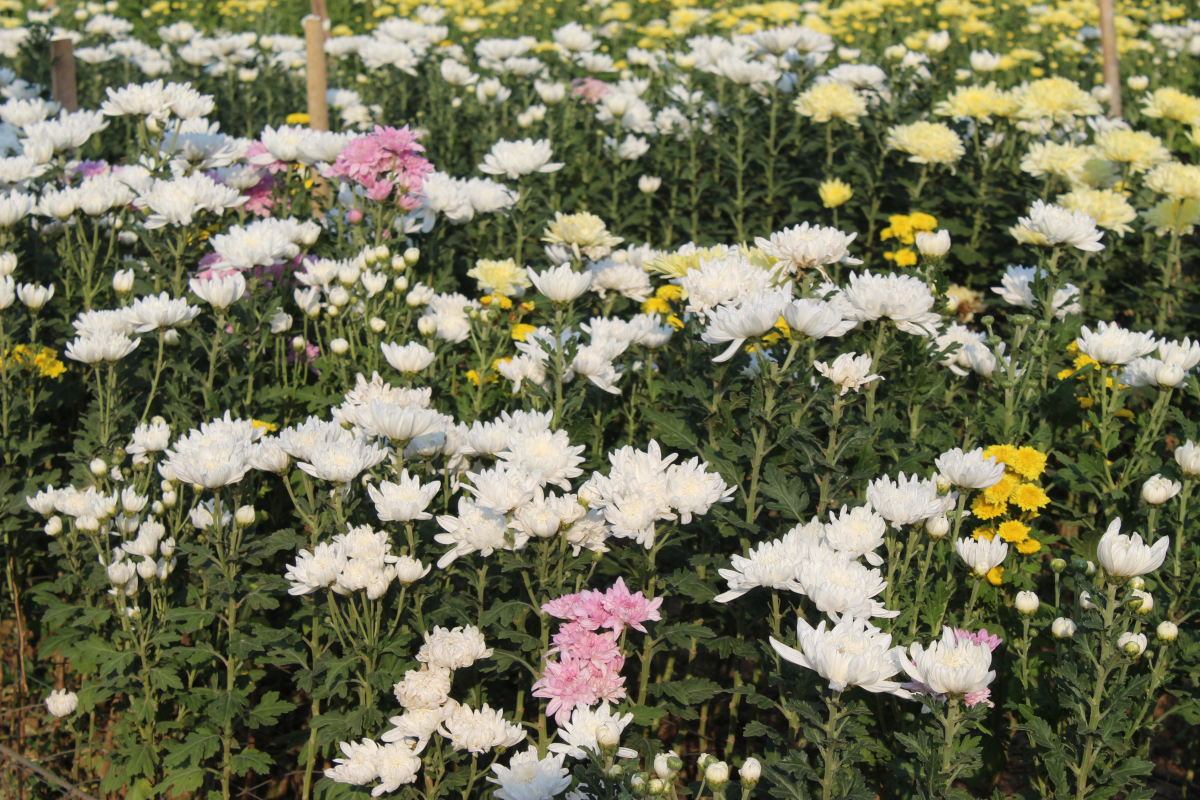
The head of Wang Nam Khiao district in Nakhon Ratchasima unveiled a 40-rai chrysanthemum garden on Friday (February 7), ready for the 18th Chrysanthemum in the Mist Fair from February 13-23.

Joining Pornthep Watchakeekul as he took a deep breath of the glorious earthy aroma were the mayor of the Thai Samakkhi sub-district administrative organisation and the president of the Wang Nam Khieo Tourism Promotion Association.
Southerners recall sad legend of Lim Ko Niao #ศาสตร์เกษตรดินปุ๋ย

#ศาสตร์เกษตรดินปุ๋ย : ขอบคุณแหล่งข้อมูล : หนังสือพิมพ์ The Nation

https://www.nationthailand.com/travel/30381759?utm_source=category&utm_medium=internal_referral

Southerners recall sad legend of Lim Ko Niao

Feb 07. 2020
By THE NATION

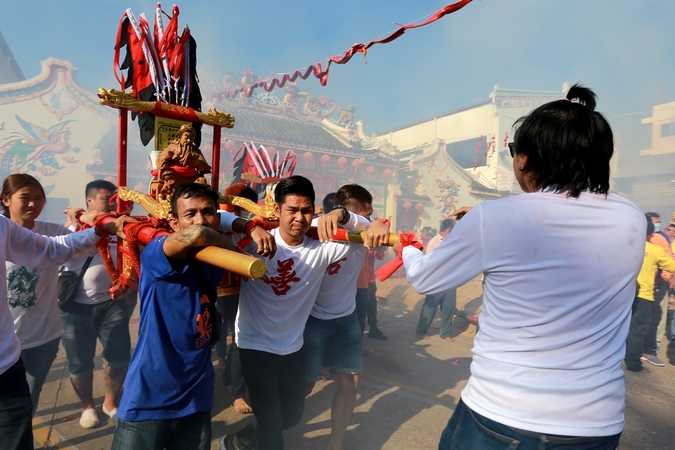
Wooden statues of Chinese deities were carried on litters through the streets of communities in Yala province on Friday (February 7) as part of the annual Chao Mae Lim Ko Niao festival.

Thais of Chinese ancestry celebrate the occasion honouring the goddess Lim Ko Niao – a tragic figure in Pattani lore – and other deities depicted in statues carried by staff of the Mae Ko Niao Foundation.

The occasion also features fire-walking rituals.

Lim Ko Niao supposedly travelled from China to Pattani to fetch her brother home because their mother was dying, but he refused to go, having married a daughter of Phraya Tani and converted to Islam.

Distraught, Lim Ko Niao hanged herself from a cashew tree, only to be subsequently mourned and honoured with a statue and shrine.

The annual celebration comes two weeks into the Lunar New Year.

Ryanair says coronavirus could keep Europeans closer to home #ศาสตร์เกษตรดินปุ๋ย

#ศาสตร์เกษตรดินปุ๋ย : ขอบคุณแหล่งข้อมูล : หนังสือพิมพ์ The Nation

https://www.nationthailand.com/travel/30381539?utm_source=category&utm_medium=internal_referral

Ryanair says coronavirus could keep Europeans closer to home

Feb 04. 2020
By Syndication Washington Post, Bloomberg · Siddharth Philip, Manus Cranny, Nejra Cehic

Ryanair Holdings said demand for air travel within Europe could receive an unlikely boost if the Chinese coronavirus epidemic persists, prompting people to holiday closer to home.

Trends from 2003, when travelers shunned Asia after the Severe Acute Respiratory Syndrome outbreak, suggest consumers may begin to alter their travel habits, Ryanair Chief Financial Officer Neil Sorahan said in an interview.

“People tended to stay close to home,” Sorahan told Bloomberg Television on Monday. “They holidayed in Europe as opposed to heading as far afield as Asia and elsewhere.”

The coronavirus that spread from Wuhan in recent weeks has killed more than 360 people and infected 17,000. Dozens of nations and airlines are restricting travel, with almost 10,000 flights canceled through Jan. 31, according to data provider Cirium, even though the World Health Organization has so far said that such limits aren’t needed to control the advance.

SARS affected 26 countries, resulting in close to 800 deaths from about 8,000 cases, according to the WHO. Fitch Group said in a note that a prolonged outbreak of the coronavirus would weigh on the tourist economy in Thailand, affecting not only Chinese demand but travel from elsewhere. As of Monday the Southeast Asian country had 19 confirmed cases, Fitch said.

For Ryanair, a surge in European travel would bolster margins as it grapples with the grounding of Boeing Co.’s 737 Max jet. The discount giant reaffirmed that deliveries from a 200-strong order won’t commence until September or October, so that fuel-efficiency savings won’t be realized until late in the fiscal year starting in April.

Chief Executive Officer Michael O’Leary said he expects Boeing to compensate Ryanair for lost revenue from the Max both this fiscal year and next, and that the focus will be on revising the order price. The carrier has specified a high-capacity variant that will take longer to certify than the baseline model.

Ryanair has also issued proposals for the purchase of bigger Max 10 jets seating up to 230 people, O’Leary said, while adding that it may be too early for Boeing to give the matter serious consideration. He said the planemaker needs to target orders from major clients such as his own company and Southwest Airlines Co. to rein in Airbus SE’s lead in the narrow-body sector.

Ryanair posted net income of 88 million euros ($98 million) for the third quarter through December from a year-ago loss, aided by last-minute sales over the Christmas holidays. Bookings are 1% up on last year, with planes 96% full, so an increase in regional travel would push up fares.

Shares of Europe’s biggest low-cost carrier were trading 5.2% higher at 15.68 euros as of 1:11 p.m. in Dublin, where it is based.

The joy of the Tat Wiman Thip waterfall in Bueng Kan #ศาสตร์เกษตรดินปุ๋ย

#ศาสตร์เกษตรดินปุ๋ย : ขอบคุณแหล่งข้อมูล : หนังสือพิมพ์ The Nation

https://www.nationthailand.com/travel/30381500?utm_source=category&utm_medium=internal_referral

The joy of the Tat Wiman Thip waterfall in Bueng Kan

Feb 03. 2020
By THE NATION

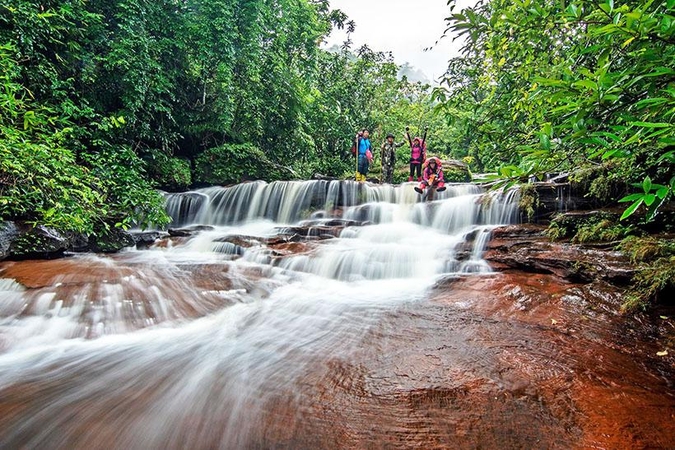
The Tat Wiman Thip waterfall situated in Phu Langka National Park is one of the major tourist attractions in Bueng Kan province, which is under the management of the Department of National Parks, Wildlife and Plant Conservation.

The rich white waterfall cascading down a large cliff is also made memorable by the resonance of the water pouring onto the rocks below.

Apart from its pristine beauty, the experience is made wonderful by the coolness of the water. People can splash about in the pool and have a good time in the lap of nature.

Generally, the weather in the national park is similar to other areas in the northeastern region of Thailand. The temperature on the park’s hilltops is around 0 to 5 degrees Celsius in winter, with an average of 25 to 36 degrees Celsius throughout the year.

Those interested in visiting the Phu Langka National Park and its attractions can take Highway No 212. The place is about 220 kilometres from Nong Khai province and six kilometres from Ban Phaeng district of Nakhon Pathom province.