Tourism businesses worldwide brace for a hit worse than SARS #ศาสตร์เกษตรดินปุ๋ย

#ศาสตร์เกษตรดินปุ๋ย : ขอบคุณแหล่งข้อมูล : หนังสือพิมพ์ The Nation

https://www.nationthailand.com/travel/30381410?utm_source=category&utm_medium=internal_referral

Tourism businesses worldwide brace for a hit worse than SARS

Feb 01. 2020
Passengers wear surgical masks at the check-in terminal at the Hong Kong International Airport in Hong Kong on Jan. 30, 2020. MUST CREDIT: Bloomberg photo by Ivan Abreu.

Passengers wear surgical masks at the check-in terminal at the Hong Kong International Airport in Hong Kong on Jan. 30, 2020. MUST CREDIT: Bloomberg photo by Ivan Abreu.
By Syndication Washington Post, Bloomberg · K. Oanh Ha · BUSINESS, WORLD, FEATURES, HEALTH, TRAVEL

Hotels, luxury shops and attractions around the world that came to rely on a flood of Chinese tourists are facing an even bigger crisis than during the SARS outbreak as the new viral outbreak infects more people than the 2003 pandemic.

From Tokyo to London, hotels, casinos, airlines and retailers are already recording a downturn and are bracing for weeks, if not months, of plummeting spending after China curbed outbound travel and governments tightened border controls.

About 163 million Chinese tourists made overseas trips in 2018 — more people than Russia’s population — accounting for more than 30% of travel retail sales worldwide. In 2003 when SARS broke out, only 20 million Chinese travelers went abroad. China’s increased affluence and consumption since SARS have made many international cities, luxury brands and retail industry groups more reliant than ever on Chinese travelers.

“It’s a triple whammy — Chinese travel more, they spend more and they spend more on beauty products,” said Stephanie Wissink, a Jefferies consumer analyst who recently issued a report on the virus’ impact on travel spending. “Chinese travelers are the most significant and most important customers for growth in the travel retail industry.”

The virus adds a new level of uncertainty to a global industry that was already suffering the effects of China’s economic slowdown.

“The benchmark everyone is comparing this to is SARS in 2003,” said Luya You, a Hong Kong-based transportation analyst at Bocom International. “The actual cost and negative impact of this virus could be greater because more Chinese are traveling than before. The cost of preventing travel, grounding flights is magnitudes higher than what it was in 2003.”

Chinese tourists spent $150 billion on purchases during last year’s Lunar New Year holiday, according to Jefferies. The travel retail industry, a segment that includes duty-free shopping and retail at airports and other transportation hubs, was a $79 billion business in 2018 and saw the biggest growth in Asia, according to research firm Generation Research.

Just before this year’s Lunar New Year holiday, when hundreds of millions of people in China visit family or take vacations, authorities locked down Wuhan, the city of 11 million people where the virus originated. Travel has been restricted from much of the surrounding Hubei province, home to about 50 million inhabitants.

Hong Kong, Singapore and Malaysia have tightened borders to restrict inbound travel from China as the number of infected people is on pace to surpass 10,000. Russia closed its border with China to most passenger travel, while the U.S. and Japan advised their citizens against traveling to the country. In China, at least 213 people have died from the coronavirus and cases of infection have been reported in more than a dozen other countries. During the SARS epidemic, there were 8,096 officially reported cases, according to the World Health Organization.

Carriers including British Airways, Cathay Pacific Airways, Delta Air Lines and American Airlines have suspended or reduced flights to and from destinations in China. Carnival Corp. and Royal Caribbean Cruises have suspended cruises departing from China.

“When airlines are cutting flights, that has impact on ports of entry that affects not just airports and shops, but surrounding nodes too,” said Jefferies’ Wissink. “It’s an entire ecosystem that’s being disrupted, with lots of spillover effects.”

Two of the hardest-hit cities are Hong Kong and Macau.

Hong Kong’s shops and hotels were already being clobbered by months of civil unrest that deterred mainland visitors and pushed the economy into recession. The virus is a further blow to the all-important retail sales and tourism from mainland visitors who come to the territory with empty suitcases to fill up with luxury and consumer goods.

In Macau, China’s gambling enclave, new travel restrictions and the growing fear of crowds, have slashed visitor numbers from the mainland by 83% so far during this year’s Lunar New Year holiday.

Las Vegas Sands Corp. Chief Executive Officer Sheldon Adelson said on Wednesday that employees of the casino operator are wearing protective masks and are checking the temperatures of guests.

“When I walk in there I think I’m going into an operating room,” Adelson told investors on a call. “Everybody’s got masks.”

Even if the virus outbreak is contained, the knock to China’s GDP may be significant, with repercussions felt across the world, according to analysis from Bloomberg Economics.

In Japan, the Wuhan virus may dent Prime Minister Shinzo Abe’s goal of attracting 40 million visitors this year as his country hosts the summer Olympic Games.

“Japan’s tourism industry, like many in the region, looks set to be clobbered by China’s suspension of package tour sales as it battles to curb the spread of the new coronavirus,” said Bloomberg economist Yuki Masujima. If Japan’s tourism industry is affected to the extent it was during SARS, it could cost the nation’s economy about 611 billion yen ($5.6 billion), he said.

Japanese consumer brands favored by Chinese buyers lowered their outlooks as the ban on Chinese outbound tour groups dealt a blow. Cosmetics maker Kose Corp. cut its full-year profit outlook by 19%, while retailer Isetan Mitsukoshi Holdings Ltd. slashed its full-year net income guidance by 50%.

Last year, almost 9.6 million Chinese tourists visited Japan and spent about $16.2 billion, according to the Japan Tourism Agency, which said hotels are reporting cancellations by Chinese tourists.

In South Korea, another hotspot for Chinese tourists, businesses such as duty-free sales and casinos are being affected, said Jun Young-hyun, an analyst at SK Securities Co. in Seoul. “Korea’s dependence on China has increased,” said Jun.

The economic impact could be much broader given that China is the nation’s largest trading partner.

Lotte Group, which runs shopping malls and hotels, has seen some hotel reservations canceled, but a representative said it’s too early to gauge the full impact of the virus.

Many analysts are warning that the toll on the tourism and hospitality industry could be worse than during the SARS epidemic, when Chinese travelers were a smaller group than they are today. “Global hotel giants are now more exposed to Asia, meaning any downfall in revenue could hurt deeper,” wrote Natixis SA economists Alicia Garcia Herrero and Gary Ng in a report Thursday. “Even without being certain about the extent and duration of the new virus, the impact of the novel coronavirus on Asian and global hospitality will be worse than in the past.”

Hotels across Southeast Asia have recorded cancellations after China banned outbound group tours. Tourism accounts for more than a fifth of gross domestic product in countries like Thailand and the Philippines, twice the global average.

Thailand, the most popular destination in the region for Chinese visitors, has been hardest hit in Southeast Asia, with at least 2 million fewer visitors expected from China this year, according to the Tourism Authority of Thailand. The nation is bracing for tourism revenue losses of as much as 50 billion baht ($1.6 billion) if China’s curbs remain in place for three months, and the government lowered its 2020 GDP forecast on Wednesday, in part because of the outbreak.

Last year, 11 million Chinese visitors spent almost $18 billion, more than a quarter of all foreign tourism receipts, according to government data. The Southeast Asian nation has 13 confirmed cases of Chinese nationals infected with the virus and one Thai who returned from Wuhan with the disease.

At Bangkok’s Suvarnabumhi Airport most travelers were wearing surgical masks during the Lunar New Year holiday and anyone coughing was given a wide berth. Hotels in the city offered masks to guests, but many of the local pharmacies had sold out.

In the Philippines, the Hotel Sales and Marketing Association said about 30 hotels have reported cancellations involving 600 hotel rooms in the Manila area. The government said it would stop issuing visas-on-arrival to Chinese groups.

Singapore, where 13 cases of the virus have been confirmed, said that from Wednesday it would stop allowing entry or transit of Chinese travelers with passports issued in Hubei.

China’s ban on tour groups will have a “direct impact on tourism arrivals and revenue,” said Terrence Voon, director of communications at the Singapore Tourism Board. “The situation is expected to persist.”

Shanghai-based Trip.com, which runs the popular Ctrip flight and hotel booking platform, said it has established a 200 million yuan ($29 million) fund to cover customers who booked trips but can’t travel. It extended waivers to about 30,000 hotels outside of China for voluntary cancellations of reservations booked on Ctrip before Jan. 24 with a check-in date through Feb. 8.

Trip.com Group Ltd. CEO Jane Sun said she’s confident of a rebound once the virus is contained.

“When SARS came under control, we saw double, triple demand,” said Sun. As long as “we can control this virus, the demand and buying power will be there.

Jewish family kicked off flight over ‘body odor’ sues American Airlines for discrimination #ศาสตร์เกษตรดินปุ๋ย

#ศาสตร์เกษตรดินปุ๋ย : ขอบคุณแหล่งข้อมูล : หนังสือพิมพ์ The Nation

https://www.nationthailand.com/travel/30381407?utm_source=category&utm_medium=internal_referral

Jewish family kicked off flight over ‘body odor’ sues American Airlines for discrimination

Feb 01. 2020
By  The Washington Post · Lateshia Beachum
An Orthodox Jewish couple is suing American Airlines for discrimination after being kicked off a flight over body-odor complaints – and, they say, being humiliated by a gate agent on their way off the plane.

Jennie and Yehuda Yosef Adler and their 19-month-old daughter were booked on an American flight from Miami to Detroit on Jan. 23, 2019, but were deplaned before departure over complaints about offensive body odor, according to a federal lawsuit filed this week in the Southern District of Texas.

About five minutes after the Adlers took their seats, an American Airlines gate agent approached the family, saying there was an emergency and that they needed to get off the plane, court records show.

Yehuda Adler, of Southfield, Michigan, told The Washington Post last year that he and his wife were concerned that something had happened with their eight other children, who were at home. He said that after they got off the plane they were told that they had been removed because of a stench. Adler told The Post that the couple was “humiliated,” “frustrated” and left wondering about the real reason they were told to deplane.

“Obviously, there was a reason,” Adler, who is Jewish, told The Post at the time. “But I think it was an anti-Semitic reason.”

The family is now suing the airline for racial and religious discrimination and equal rights violations. The family is seeking a jury trial and $75,000.

American Airlines disputed the claim that its employees discriminated against the Adlers, saying in a statement that “none of the decisions made by our team in handling this sensitive situation were based on the Adlers’ religion.”

The statement said that “the Adler family was asked to deplane after multiple passengers and our crew members complained about Mr. Adler’s body odor.” The airline said it provided the family with hotel accommodations and meals and rebooked them on a flight to Detroit the next morning.

Yehuda Adler told The Post last year that the alleged odor was “a fairy tale and cover for the reprehensible discrimination exhibited to myself and the insensitive treatment I and my family received by AA staff.”

A person who spoke to The Post last year agreed with the airline that there was a “stench,” and a woman who claimed to have been on the plane tweeted her agreement about the odor and said “it had nothing to do with religion.”

According to the lawsuit, the Adlers were among the last people to board American Airlines Flight 1023, and they claim they encountered hostility almost immediately after stepping aboard the plane.

The flight’s pilot told the family that nothing on the plane was complimentary after yarmulke-wearing Yehuda Adler asked a stewardess for headphones, according to the complaint.

The comment was “nasty and humiliating,” but Yehuda Adler ignored the pilot’s vitriol and made his way to his assigned seat with his wife, who was wearing a sheitel, or wig, the complaint said.

The gate agent then approached the family to tell them there was an emergency and they needed to exit the plane, according to the lawsuit.

Once off the plane, the gate agent allegedly drove insult deeper by telling the family he knew that Orthodox Jews bathed once a week, according to the complaint.

American Airlines declined to comment on the action of the gate agent.

The family left the plane and was told they were taken off because of “extremely offensive body odor,” according to the lawsuits. The family was stunned. They had never been subject to complaints about body odor on a plane before.

The mortified husband and wife surveyed more than 20 people in the airport to ask if they did have a bad smell and they all answered “no,” according to the lawsuit.

The flight took off without them with their luggage, diapers, car seat and stroller still onboard, according to the complaint.

According to the court records, the pilot violated the Adlers’ contractual right to flight all because the couple and their child were “flying while Orthodox Jews [ . . .] and having the guts to make a complimentary request.”

The lawsuit said that the publicly humiliating event has caused severe emotional stress and suffering. It said the Adler name was defamed after American Airlines released a statement that the family had body odor, resulting in online searches that yield “body odor” along with “Adler,” according to the complaint.

A Google search for “Adler” and “body odor” yielded pages of articles about last year’s event and American Airlines stating the family had body odor.

The enduring lure of Fukuoka and Oita #ศาสตร์เกษตรดินปุ๋ย

#ศาสตร์เกษตรดินปุ๋ย : ขอบคุณแหล่งข้อมูล : หนังสือพิมพ์ The Nation

https://www.nationthailand.com/travel/30381367?utm_source=category&utm_medium=internal_referral

The enduring lure of Fukuoka and Oita

Feb 01. 2020
By THE NATION

One of the most popular destinations for Thai people visiting Japan is the Fukuoka prefecture. It is a place famous for its tourist attractions, shopping areas and cool weather.

Fukuoka is a populous prefecture situated on the northern shore of Japan’s Kyushu island, where Kumamoto, Nagasaki, Miyazaki, Kagoshima, Saga and Oita prefectures also located.

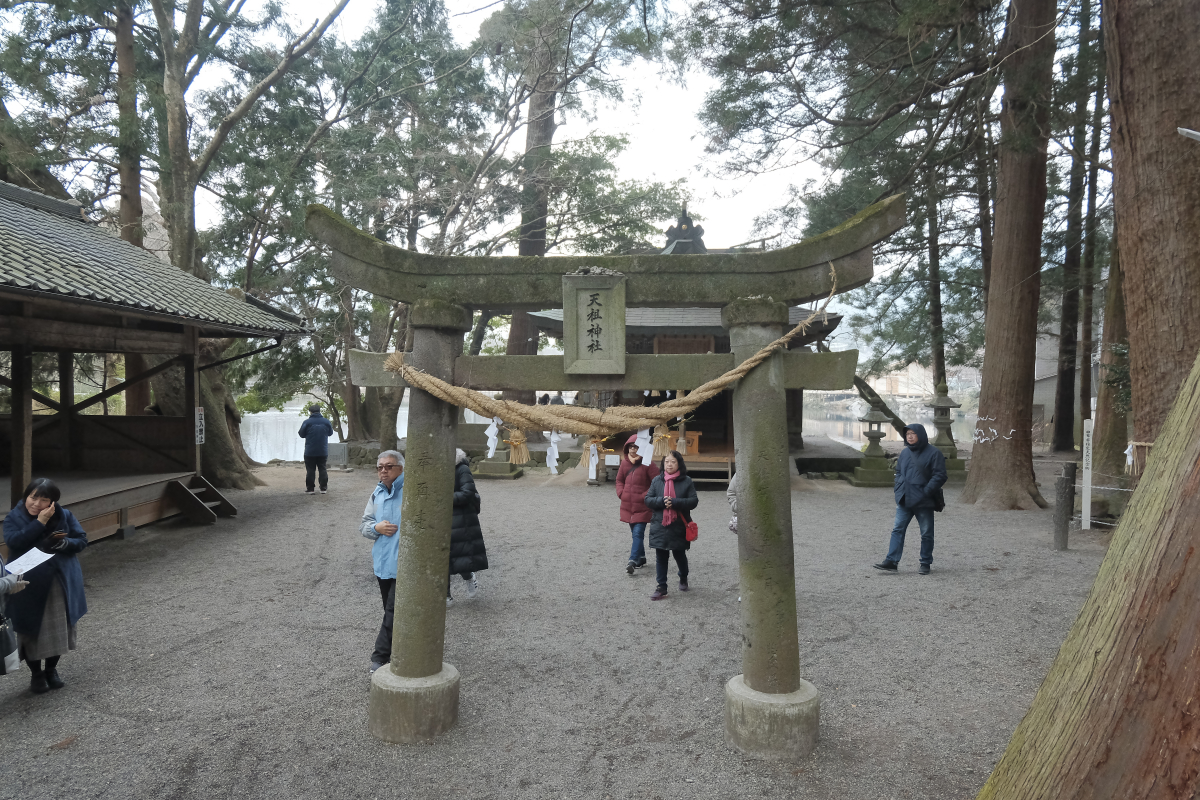
One of its tourist attractions was the “Dazaifu Tenmagu” shrine, visited frequently by Japanese students and their parents to pray for success in educational tests.

Some 700,000 people visit this shrine every year. The shrine is also home to more than 6,000 Chinese plum trees, whose flowers bloom in spring.

The Tenjin shopping area of Fukuoka has numerous shopping malls for high-end products, as well as local bars and stores, to lure shopaholics and those seeking unique products.

Apart from Fukuoka, the nearby prefecture of Oita is also worth a visit.

Oita was an agricultural prefecture, where the One Village One Product movement originally began in 1979, and helped enrich it after being the poorest prefecture in Japan.

The must-visit city in Oita is Beppu, where most of the hot springs in Japan are situated. Some of the springs are open to people for bathing while bathing is prohibited in some.
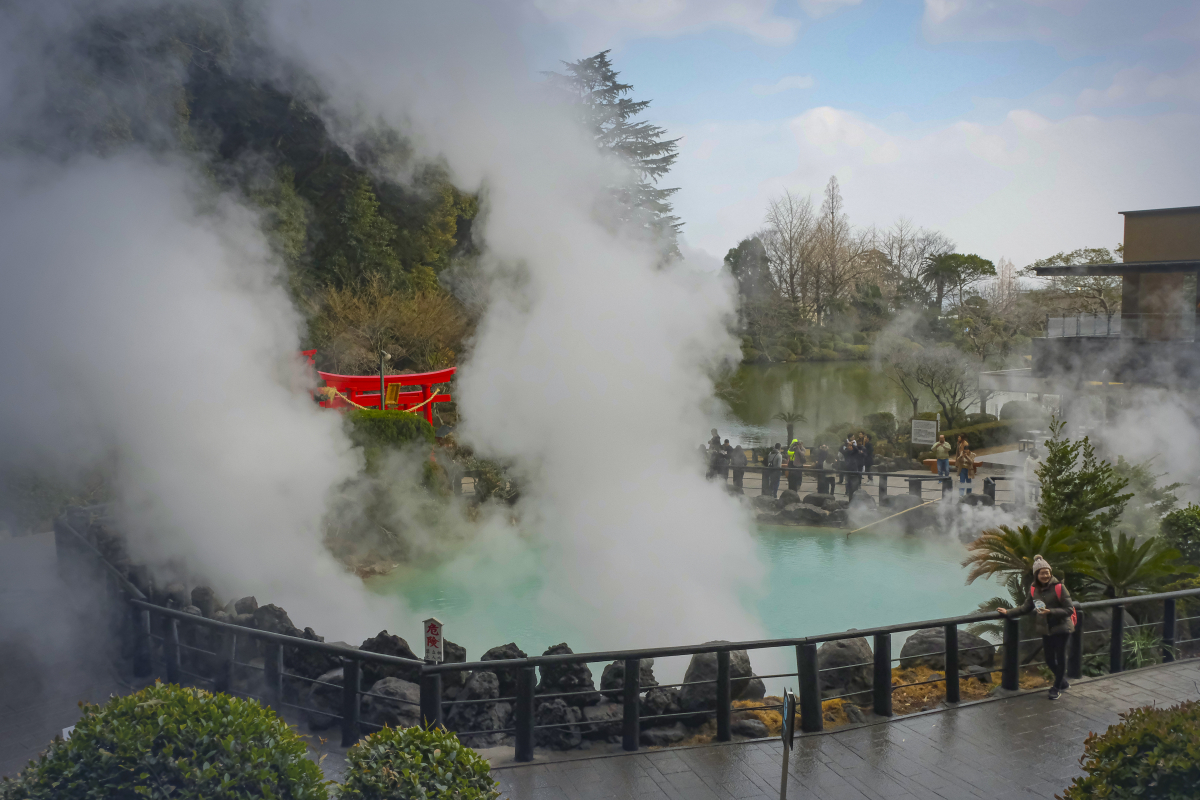
“Umi Jigoku” and “Chinoike Jigoku” are two springs where bathing is not allowed. “Umi Jigoku” is blue due to the cobalt in the water, while “Chinoike Jigoku” is red because of the numerous natural minerals.

In addition, there is a shopping area in Yufuin city in the prefecture. Shops located in this place sell cute souvenirs and local products.

Another highlight of Oita is the Kokonoe Yume Otsurihasi, or Kokonoe Suspension Bridge. The bridge opened in 2006 and is the highest in Japan at 173 metres above sea level.
The bridge’s length spans 390 metres, and along its two sides are beautiful valleys, including the “Shindo no taki” and “Medaki” waterfalls.


On Europe’s slow trains, the rewards are right outside your window #ศาสตร์เกษตรดินปุ๋ย

#ศาสตร์เกษตรดินปุ๋ย : ขอบคุณแหล่งข้อมูล : หนังสือพิมพ์ The Nation

https://www.nationthailand.com/travel/30381335?utm_source=category&utm_medium=internal_referral

On Europe’s slow trains, the rewards are right outside your window

Jan 31. 2020
The Glacier express makes it's way across a snowy landscape. MUST CREDIT: Glacier Express AG.

The Glacier express makes it’s way across a snowy landscape. MUST CREDIT: Glacier Express AG.
By Special To The Washington Post · Will Hawkes · FEATURES, TRAVEL

The day before our vacation in France, I asked my three children what they were most looking forward to. Was it the swimming, the sunshine, the beach or – and I would have put my house on this – eating ice cream every day? “The sleeper train,” said the oldest. His brother quickly concurred. And the 3-year-old? Also the train.

In this, they’re model Europeans. According to European Union statistics, rail use grew for the sixth consecutive year in 2018, the most recent year for which figures are available. The Eurostar, which links London to Paris, Brussels and Amsterdam, recorded a 7 percent year-on-year rise in passenger numbers in 2018. Trains are popular in Europe, and increasingly so.

Growing public awareness of air travel’s environmental cost is clearly a factor, but more important is the extent of Europe’s rail network. The continent is a complex tangle of train tracks. Among the very best services, in my view, are those that are genuinely slow. Trundling across Europe at a snail’s pace offers many simple pleasures: the landscape gradually opening up in front of you, a warm summer breeze blowing through an open window, and clocking each sleepy provincial station as they come and go.

I haven’t been on all of Europe’s rail lines, but I’ve experienced enough to know what a pleasure it can be. Here are 10 of my favorite slow-train journeys through Europe.

– Bilbao to San Sebastian, Spain. When you go online to book transport between Bilbao and San Sebastian, two of the Spanish Basque Country’s major cities, you will be directed toward a coach that takes just over an hour. It’s tempting – more time in San Sebastian means more pintxos, Spain’s tastiest tapas – but you should resist. Rail (about $7.20 each way) takes the best part of three hours, but it’s time well spent.

The service – a simple commuter shuttle – dives southward out of Bilbao into the lush, deep-green mountains of the Basque Country, before turning north to run along the coast toward San Sebastian. The highlight comes after Deba, where the train hugs the coast for a few miles. On one side, deep blue; on the other, steep descending Basque hills.

– Ceske Budejovice to Cesky Krumlov, Czech Republic. The Czech Republic has a comprehensive and cheap rail network. From Prague, you can reach much of the country, but you’ll have to change if you want to take one of its most charming journeys (about $1.75 one way; the journey takes 45 minutes). Ceske Budejovice is the home of Czechvar (the Czechs call it Budweiser, though it’s different from Budweiser in the United States), one of the country’s most famous beers, while Cesky Krumlov is among its most beautiful towns. The gently rolling south Bohemian landscape, with its low-slung farmsteads and forests, is equally beguiling.

– Copenhagen to Malmo, Sweden. There’s something thrilling about a bridge that not only crosses a huge expanse of water but also connects two nations. Copenhagen, the Danish capital, has been linked to Malmo in Sweden by the Oresund Bridge since 2000. (The 40-minute journey costs about $13.)

The train descends into a tunnel after Copenhagen Airport station, emerging on Peberholm island, where the five-mile bridge begins. You can see Malmo in the distance, particularly the 623-foot-tall Turning Torso, Scandinavia’s biggest skyscraper. In summer, sailboats skip and race across the water; in the colder months, there are miles of foam-flecked gray-blue ocean to admire.

– The Glacier Express, Switzerland. Most of the trips on this list are ordinary passenger services, but the Glacier Express is a tourist train. Sometimes billed as the “slowest express train in the world,” it runs between St. Moritz and Zermatt in Switzerland. It’s not cheap (prices start around $157, one-way, plus a seat reservation fee; journey time 7½ hours), but the traveling conditions are superb: huge windows, plenty of space and good food.

Watch out for the six-arch, 213-foot-high Landwasser Viaduct, which curves across the Landwasser river; the ascent from Chur up the Rhine Valley to the highest point, at 6,673 feet above sea level; and the steep rock walls of the Matter Valley, before you arrive in Zermatt.

– Lille, France, to Roeselare, Belgium. One of the beauties of Europe is that sometimes you’re not quite sure which country you’re in. Traveling from Lille, the capital of French Flanders, into Belgian Flanders can be like that, particularly if you take the wrong train, as I and a group of friends did a few years back (Lille to Roeselare, about $13.70 one way; change at Courtrai).

We found ourselves on the desolate concrete platform at Froyennes, in French-speaking Wallonia rather than Flemish-speaking Flanders. No matter: There was a connecting train heading north, toward Roeselare, arriving on the other platform. A one-hour journey took two, but no one cared.

– Marktredwitz to Regensburg, Germany. The Upper Palatinate, Bavaria’s northeastern corner, is perhaps Germany’s sleepiest region. It’s served by hourly trains that run from Marktredwitz in the north down to Regensburg. (A Bayern Ticket, which allows 24 hours of unlimited travel on all except high-speed trains in the state of Bavaria, costs about $27.50.)

The trains themselves are sparklingly modern, but everything else has a timeless charm: the decrepit stations at Marktredwitz and Windischeschenbach, the soft, heavily wooded countryside, and the fact that the line hugs the gently flowing river Naab for much of the 1½-hour journey.

– Paris to Portbou, Spain. This Intercités de Nuit sleeper service starts with a typically unruly French line at Paris’s Gare d’Austerlitz, but that’s soon forgotten. The bunks are not plush, but they’re comfortable, and prices are low (singles from about $38.50, with an additional fee if you want the compartment to yourself).

The train pulls out of Paris at just after 10 p.m. and the first stop, announced over the loudspeaker, is Toulouse at 6 a.m. From there, the train heads down the Mediterranean coast, skirting the Étang de Leucate, a huge and placid lagoon, and ends in the cavernous terminus in the border town of Portbou, a relic of a time when this was the main route from France to Spain.

– The Rhondda Line, Wales. There’s cause to pity regular travelers on the Rhondda Line between the Rhondda Valley town of Treherbert and the Welsh capital, Cardiff: The Pacer trains that serve this route are outdated, cramped and noisy.

But then, they have the Rhondda Valley to enjoy. Earlier this year, I took a late-morning train from Cardiff to Treorchy, one stop short of Treherbert (about $10.80 round trip; trains every half-hour; journey time just over an hour). Brooding gray summer clouds hung over hills decorated in a hundred shades of green; at Treorchy, where the line is single-track, grass was sprouting long and green between the sleepers. (Additional pleasure: The Rhondda Valley accent, soft and mellifluous, is Britain’s loveliest.)

– Tren de Sóller, Mallorca, Spain. To take the train from Palma de Mallorca to Sóller, on the north coast of this Mediterranean island, is to travel into the past. The wood-upholstered electric trains, built in the 1920s, glide through the backstreets of Palma and then past orange and lemon groves before climbing – via tunnels, bridges and switchbacks – up and down the Sierra de Alfabia mountain range en route to Sóller, a beautiful seaside town on Mallorca’s north coast (about $27.50 round-trip; tickets must be bought on the day, cash only).

– West Highland Line, Scotland. The West Highland Line (about $52 round-trip; journey takes five hours), which connects Glasgow with Mallaig in the Western Highlands, is memorable in two ways: for the views, from bleak Rannoch Moor to the elegant arches of Glenfinnan Viaduct, and for the people on board. It’s a sociable ride, partly because conditions are cramped and partly because the locals love a chat. On my last trip, the conductor sat down for a 10-minute talk with some regular customers, and a fellow passenger recommended the best station to get off for a smoke. (I don’t smoke, but it’s the thought that counts.)

RailEurope.com is a good resource for buying tickets on all but the Tren de Sóller, where tickets must be bought on the day. For the best in-depth information on rail travel in Europe, visit the regularly updated, comprehensive website seat61.com.

Pattaya to get new viewpoint #ศาสตร์เกษตรดินปุ๋ย

#ศาสตร์เกษตรดินปุ๋ย : ขอบคุณแหล่งข้อมูล : หนังสือพิมพ์ The Nation

https://www.nationthailand.com/travel/30381133?utm_source=category&utm_medium=internal_referral

Pattaya to get new viewpoint

Jan 27. 2020
By The Nation

Pattaya City plans to improve the scenery at Bali Hai Cape to make it a sunset viewpoint after the public area was reclaimed from entrepreneurs.

Pattaya City Mayor Pattana Bunsawat said that several entrepreneurs had intruded on Bali Hai Cape to make use of the land. Authorities have negotiated with them to improve the area so that it can become a sunset viewpoint to attract tourists.

“After the demolition of buildings is completed, we will coordinate with Nongnooch Garden Pattaya to improve the scenery of this cape so it becomes a new checkpoint of Pattaya,” he said.

Meanwhile, Nongnooch Garden director Kampol Tansajja said that after they have surveyed the area, he plans to plant sugar palm trees to improve the landscape.

“The reason we chose sugar palm trees is because they can grow in saline soil, especially at the seaside. In addition, this tree is durable, easy to take care of and will not obscure the scenery,” he said.

“If possible, we will grow 78 sugar palm trees to make the scenery as beautiful as Promthep Cape in Phuket,” Kampol added.

Trash problem chokes tourist attraction – again #ศาสตร์เกษตรดินปุ๋ย

#ศาสตร์เกษตรดินปุ๋ย : ขอบคุณแหล่งข้อมูล : หนังสือพิมพ์ The Nation

https://www.nationthailand.com/travel/30381125?utm_source=category&utm_medium=internal_referral

Trash problem chokes tourist attraction – again

Jan 27. 2020
By The Nation

The viewpoint at Ekkachai Bridge connecting Phatthalung’s Khuan Khanun district and Songkhla’s Ranod district has become a garbage dump as trash left by travellers piles up – yet again.

Tourists from other provinces have been drawn to the area’s beautiful scenery of forest, farms and a lake along the two sides of the 6-kilometre bridge.

The trash problem has hit this tourist attraction several times.

Clean-up campaigns have been held to solve the problem but the area always turns dirty again as more and more tourists visit.

Second hoar frost delights tourists at Ban Mai Rong Kla #ศาสตร์เกษตรดินปุ๋ย

#ศาสตร์เกษตรดินปุ๋ย : ขอบคุณแหล่งข้อมูล : หนังสือพิมพ์ The Nation

https://www.nationthailand.com/travel/30381126?utm_source=category&utm_medium=internal_referral

Second hoar frost delights tourists at Ban Mai Rong Kla

Jan 27. 2020
By The Nation

A cold spell gripped Phitsanulok’s Ban Mai Rong Kla, the heart of Phu Hin Rong Kla National Park, this morning (January 27) again as the temperature averaged 5 degrees Celsius, with the lowest being minus 1 degree Celsius.

Hoar frost painted the grass, leaves and rooftops white, creating a spectacular view, with visitors excitedly capturing photos.

Ban Mai Rong Kla village is located at an altitude of 1,400 metres above sea level. In the winter, the village normally witnesses frost, much to the delight of tourists.

Locals are inviting tourists to visit the area right now and shop for fresh vegetables.

If the winter lingers a bit longer, it might lead to more frost.

A Civil War-era ‘witch bottle’ may have been found on a Virginia highway, archaeologists say #ศาสตร์เกษตรดินปุ๋ย

#ศาสตร์เกษตรดินปุ๋ย : ขอบคุณแหล่งข้อมูล : หนังสือพิมพ์ The Nation

https://www.nationthailand.com/travel/30381059?utm_source=category&utm_medium=internal_referral

A Civil War-era ‘witch bottle’ may have been found on a Virginia highway, archaeologists say

Jan 26. 2020
Researchers at the College of William and Mary believe a piece of Civil War-era glassware found at the site of an old fort in York County, Va., may have been a

Researchers at the College of William and Mary believe a piece of Civil War-era glassware found at the site of an old fort in York County, Va., may have been a “witch bottle” used to ward off evil spirits. must credit: Robert Hunter of the William and Mary Center for Archaeological Research Photo by: Robert Hunter of the William and Mary Center for Archaeological Research — Handout
By  The Washington Post · Peter Jamison · FEATURES

When archaeologists digging between busy lanes of traffic on Virginia’s Interstate 64 unearthed a broken bottle filled with nails, they weren’t sure exactly what they had found.

The glass vessel discovered at an old Civil War fortification east of Williamsburg might simply have been an ad hoc toolbox for troops garrisoned at the site nearly 160 years ago. But researchers at the Center for Archaeological Research at the College of William & Mary advanced a far more intriguing theory this week.

The artifact may in fact be a “witch bottle,” they say, one of only a handful that have been found in the United States.

What’s a witch bottle? For centuries, they were used as occult countermeasures to the mischief of suspected sorceresses in England and America.

The evidence of a superstitious purpose is circumstantial but compelling, according to Joe Jones, the center’s director.

The bottle, which is jade blue and less than half a foot in height, was plucked in 2016 from the soil dividing traffic on Interstate 64 between exits 238 and 242 in York County. William & Mary archaeologists were inspecting the area for any remaining artifacts in advance of a highway-widening project by the Virginia Department of Transportation.

Known as Redoubt 9, the site was part of a string of fortifications between the James and York Rivers, originally built by Confederates to repel Union troops advancing on Richmond. But Redoubt 9 was taken over by Union forces after the Battle of Williamsburg in 1862, and the bottle – which carries the name of a manufacturer in eastern Pennsylvania – is probably a relic of those soldiers, Jones said.

Far from home, occupying enemy territory in a bloody and unpredictable conflict, some might have felt the need to keep evil at bay.

Witch bottles can be traced to the East Anglia region of England in the late Middle Ages, according to a summary of research on the subject by JSTOR Daily. The bottles typically included human urine, hair or fingernail clippings and sharp objects such as nails, pins or thorns.

The objects worked by luring witches or malevolent spirits with the urine, hair or fingernail clippings, then trapping them with nails or pins – a low-tech witch hunt. Nearly 200 have been found in Britain, where researchers have launched a multiyear survey and study of witch bottles, complete with a social media-aided #WitchBottleHunt campaign to educate the public on identifying the artifacts. Last year, contractors razing an old pub found a suspected witch bottle containing fish hooks, teeth and a mysterious liquid.

The situation on the I-64 median is less clear-cut. While its resting place was undisturbed, the neck of the bottle had been broken open – probably from the weight of accumulated soil, Jones said – at the time it was uncovered.

Was there urine?

“That’s the first question that people who know about witch bottles would ask,” Jones acknowledged. However, with an unsealed interior, the vessel could not be accurately tested, he said.

But other factors point to the superstitious purpose first suggested by two of Jones’s colleagues, Oliver Mueller-Heubach and Robert Hunter. The bottle was found next to what archaeologists think are the remains of a hearth or fire pit, a common spot for witch bottles. And the historical context of Redoubt 9 is compatible with the use of such a talisman.

“If you read the literature about witch bottles and what they are to the people who believe in them or use them,” Jones said, “they’re more abundant during periods of political turmoil, or drought, or bad harvests – general periods when people think there are bad spirits.” A lonely outpost of Union soldiers in the midst of the Civil War fits the bill.

The remnants of that outpost are gone, Redoubt 9′s earthworks graded to expand the interstate. And were this a tale told by M.R. James, the renowned British writer of ghost stories, the outcome would be predictable: Malignant spirits, up to and including long-confined witches, would emerge to torment the curious scholars who disturbed the bottle.

Asked whether any such adversity had befallen the archaeologists of William & Mary since the object’s discovery in 2016, Jones laughed, then thought for a moment.

“It would probably be easy to blame all kinds of things on the bottle,” he said.

Islands off Trang popular with tourists, divers #ศาสตร์เกษตรดินปุ๋ย

#ศาสตร์เกษตรดินปุ๋ย : ขอบคุณแหล่งข้อมูล : หนังสือพิมพ์ The Nation

https://www.nationthailand.com/travel/30381034?utm_source=category&utm_medium=internal_referral

Islands off Trang popular with tourists, divers

Jan 25. 2020
By THE NATION

Lao Liang and Changkap islands sit on the opposing side of Trang province in southern Thailand, known for the abundance of anemones, gorgonians, and soft corals.

Both islands, in the southern part of the sea off Trang and close to Satun province, are under the supervision of the Mu Ko Phetra National Park.

Many tourists visit the islands during the New Year period and the Songkran festival.

Preuk Ubonkerd, manager of Modtanoy Resort in Trang, said the islands were popular with tourists, especially Lao Liang which consists of Lao Liang Pi (the big one) and ‘Lao Liang Nong’ (the small one).

An major attraction of Lao Liang is its colorful anemones and soft corals under the sea.

“There are about ten days in a month when the sea is safe for diving” he added.

The ‘Changkap’ island is small, shaped like a pile of rocks in the middle of sea. It is located near ‘Phetra’ island, a attractive diving site with a large population of gorgonians in shallow water.

“In one month, there are about eight or ten days when conditions are right for diving activities at Changkap island, However, diving time is limited to two hours at the most as strong currents make it dangerous for divers in shallow water” he said.

Climate change is killing Alpine skiing as we know it #ศาสตร์เกษตรดินปุ๋ย

#ศาสตร์เกษตรดินปุ๋ย : ขอบคุณแหล่งข้อมูล : หนังสือพิมพ์ The Nation

https://www.nationthailand.com/travel/30380844?utm_source=category&utm_medium=internal_referral

Climate change is killing Alpine skiing as we know it

Jan 21. 2020
Snow covered jump seen in Olympic Stadium in Garmisch-Partenkirchen, Germany, on Wednesday, January 8, 2020. MUJST CREDIT: Bloomberg photo by Michaela Handrek-Rehle.

Snow covered jump seen in Olympic Stadium in Garmisch-Partenkirchen, Germany, on Wednesday, January 8, 2020. MUJST CREDIT: Bloomberg photo by Michaela Handrek-Rehle.
By Syndication Washington Post, Bloomberg · Catherine Bosley, Boris Groendahl

At the northern edge of the Alps, ski runs near the foot of Germany’s highest mountain snake down the greenish-brown slopes in narrow white ribbons of artificial snow.

Like other resorts at relatively low altitude, global warming has left its mark on Garmisch-Partenkirchen – the site of the 1936 Winter Olympics-putting the town’s identity and affluence at risk. It’s January, and there’s so little natural snow that anxiety is building whether upcoming ski races can go ahead.

A strip of artificial snow on a ski slope at the Alpine skiing resort in Garmisch-Partenkirchen, Germany, on Jan. 8, 2020. MUST CREDIT: Bloomberg photo by Michaela Handrek-Rehle.

A strip of artificial snow on a ski slope at the Alpine skiing resort in Garmisch-Partenkirchen, Germany, on Jan. 8, 2020. MUST CREDIT: Bloomberg photo by Michaela Handrek-Rehle.

In Garmisch and across the Alps, tourism is a key support for local economies. In neighboring Austria, it makes up just over 6% of economic output, while in the mountainous region of Tyrol the share is more like 18%. The ratio is similar for the Swiss canton of Graubünden, thanks to resorts like St. Moritz, Klosters and Davos.

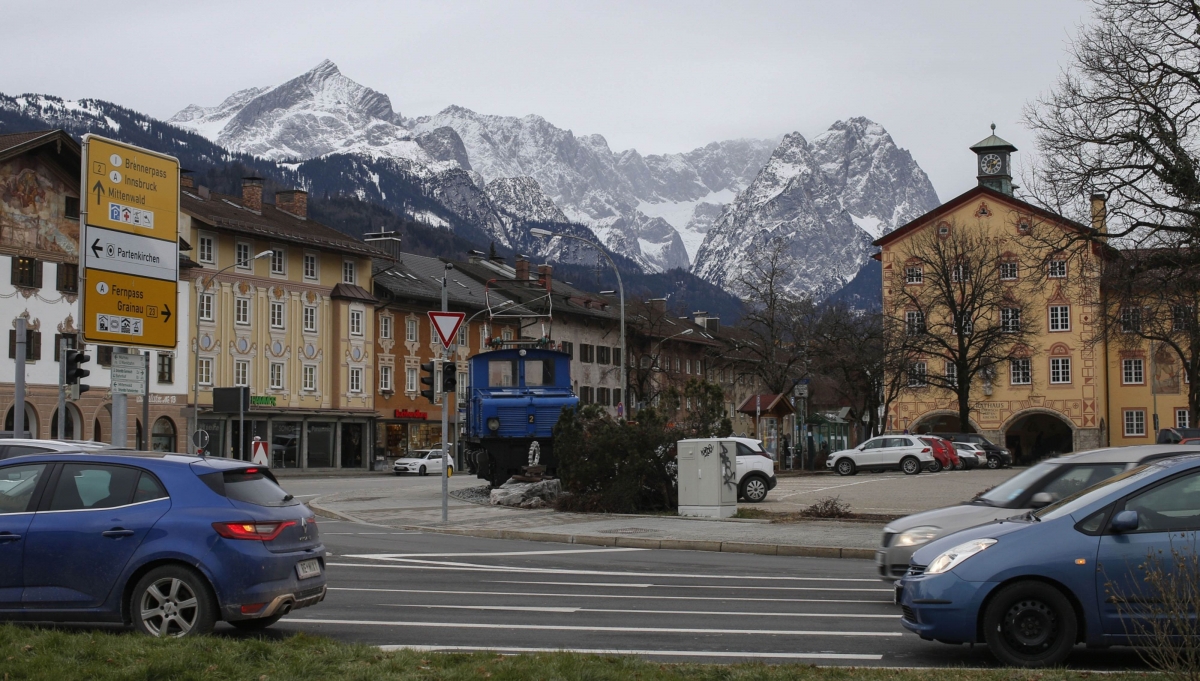
Automobiles sit at an intersection near the town hall and Alpine mountain range in Garmisch-Partenkirchen, Germany, on Jan. 8, 2020. MUST CREDIT: Bloomberg photo by Michaela Handrek-Rehle.

Automobiles sit at an intersection near the town hall and Alpine mountain range in Garmisch-Partenkirchen, Germany, on Jan. 8, 2020. MUST CREDIT: Bloomberg photo by Michaela Handrek-Rehle.

In France’s Auvergne-Rhone-Alpes region, home to Courchevel and Val d’Isere, tourist spending totaled 21 billion euros ($23 billion) in 2018, generating nearly a 10th of gross domestic product and 171,000 jobs.

That source of income is under genuine threat. Climate change is expected to cost Austrian tourism 300 million euros a year, according to one of the country’s leading environmental protection organizations. In France, authorities in Tignes delayed the start of the ski season by several weeks, citing the effects of global warming on the Grande Motte glacier.

“If greenhouse-gas emissions continue at the same level, snow will almost disappear at lower levels by the end of the century,” said Marc Olefs, head of department for climate research at Vienna’s Central Institute for Meteorology and Geodynamics.

At an elevation of 800 meters, Garmisch-known for its landmark ski jump-has little prospect of maintaining its status as a winter-sports mecca.

Among visitors, the changing conditions are accepted with quiet resignation.

Juergen Hilla, a school teacher from near Frankfurt, predicted that skiing and other winter sports may not be viable in Garmisch in the longer term and that he and his wife may have to consider alternatives for their ski vacation.

“Probably in 20 or 30 years, it won’t have the same role as it does now,” he added after a day on the slopes. The higher runs were in good shape but the lower ones needed cannons spraying artificial snow to keep them passable, Hilla said.

To make up for a lack of natural snowfall, resorts switch on the cannons, although they’re energy intensive and unpopular with environmentalists. Producing artificial snow will get harder as temperatures rise, Olefs predicted.

The practice didn’t start because of climate change originally-it was meant to make ski resorts less dependent on the whims of nature, according to Robert Steiger, an assistant professor at the University of Innsbruck. But it’s become unavoidable to cope with global warming.

“Some regions and areas will lose ski tourism by the mid of the century, or even earlier,” said Steiger, who has studied the impact of climate change on tourism. “Higher areas will survive, but they will have to invest more in snowmaking and to cope with the additional tourist inflow.”

Another option is snow farming, where mounds of the precious white flakes are collected in spring and covered with sawdust for use later in the year.

Areas most affected by warming are on the outskirts of the Alps-in Austria’s east, the foothills in France and Italy and in Germany. They were never as dependent on ski tourism as some regions in the central Alps, and are more attuned to welcoming guests around the year, Steiger said.

Already, the summer generates 60% of the tourism intake, according to Garmisch Mayor Sigrid Meierhofer. That’s a development seen elsewhere. In Switzerland, summer overnight hotel stays were a third higher than the winter of 2018-2019.

Summer bookings overtook winter in Austria as well a few years ago, even as revenue is still higher in the winter months because of equipment purchases and lift fees.

“Summer tourism growth is highest in the mountains,” according to Ulrike Proebstl-Haider, a professor at Vienna’s University of Natural Resources and Life Sciences. “That’s also partly driven by climate change, for instance because it’s helped make the autumn more attractive.”

In Saalbach-Hinterglemm in Austria, ski runs are transformed into tracks for summer mountain bikers, and cable cars are remodeled to accommodate the muddy riders on their way up.

Swiss towns are picking up on the trend. Both Gstaad and Verbier host concerts of classical music in the summer, while Davos also offers summer conferences, expanding its schedule beyond January’s World Economic Forum.

At Garmisch City Hall, Meierhofer is putting on a brave face, citing the town’s brisk conference business.

“Of course, we have to come up with concepts to maintain the winter tourism that we still have,” she said. “You say it’s brown-I say the hiking paths are open.”