Phitsanulok national park turns an autumnal beauty, but only for this week
MONDAY, JANUARY 09, 2023
Phitsanulok’s Phu Hin Rong Kla National Park was full of tourists on Sunday who had shown up to take photos of maple trees that are emblazoned in the autumnal colours of bright red, orange and yellow.
The autumn leaves on the ground, sheds and rocks by the creek in the park’s Mun Daeng zone have created a magnificent backdrop for selfies in the comfortably cool temperature of about 15 degrees Celsius.
A park official said the maple trees should finish shedding their leaves within next week and the bright leaves carpeting the floor will turn brown as they reach the end of their natural course.
He said people should grab this opportunity to witness the phenomenon this week, otherwise they will have to wait until next year.
Located mainly in Phitsanulok province some 130 kilometres from downtown, this 307-square-kilometre mountainous park extends east into Loei and Phetchabun provinces.
The park has recorded sightings of rare wild animals including leopards, leopard cats, Asian black bears, Asian golden cats, hog badgers, serows and barking deer, as well as more than 200 bird species.
Stop sending tour groups to Suvarnabhumi 10 hours before flights: AOT
SUNDAY, JANUARY 08, 2023
Airports of Thailand Plc (AOT) has sought cooperation from two associations of tour operators to reduce overcrowding at Suvarnabhumi International Airport by better organising outbound group tours.
AOT sent a letter to the Association of Thai Travel Agents and the Thai Travel Agents Association asking them to enhance cooperation from members scheduling outbound group tours, a source from the agency that manages six international airports said.
Suvarnabhumi International Airport has been crowded recently, especially in the outbound passenger terminal, the AOT source said.
AOT found that several outbound tour operators had told their clients to arrive at the airport more than 10 hours before departure, and some operators failed to manage their customers.
As a result, tour groups ended up stuck in the hall of the outbound passenger terminal.
The two associations were asked to tell their members to better schedule airport arrival times for their clients and tell them to gather only at the area in front of Gate 10 on the fourth floor of the outbound passenger terminal, the AOT source said.
Chinese tourism set to surge as 15 airlines open routes to Thailand
SATURDAY, JANUARY 07, 2023
The long-awaited return of Chinese tourists will be a surge, as the Civil Aviation Authority of Thailand has given permission for 15 Chinese carriers to fly from major cities in China to Thailand from Sunday.
After enduring more than two years of lockdowns and restrictions on travel, citizens of the world’s most populous nation are rushing to take advantage of the relaxation of China’s zero-Covid-19 policy to travel abroad, and Thailand remains a preferred destination.
Thailand welcomed more than 11 million Chinese tourists in 2019, the year before the Covid-19 pandemic paralysed air travel.
Civil Aviation Authority of Thailand director-general Suttipong Kongpool said on Saturday that 15 Chinese airlines have submitted schedules for winter flights to Thailand.
The commercial flights are from major cities, including Shanghai, Guangzhou, Hangzhou, Kunming, Nanning, Shenzhen, and Chengdu, Suttipong said.
Air China will fly between Bangkok and Hangzhou, China Eastern has two routes – Bangkok and Kunming, and Bangkok and Shanghai – while China Southern Airlines will connect Guangzhou and Wuhan to Bangkok.
China’s 9 Air will fly between Guangzhou and Bangkok as well as Guiyang and Bangkok. Guangxi Beibu Gulf Airlines will open a route between Bangkok and Nanning, while Hebei Airlines will fly between Bangkok and Hangzhou.
Juneyao Airlines offers four routes connecting Shanghai with Bangkok, Chiang Mai and Hat Yai, as well as Nanjing and Hat Yai.
Kunming Airlines and Lucky Air will fly between Kunming and Bangkok, and Ruili Airlines between Kunming and Chiang Mai.
Shanghai Airlines offers flights between the largest Chinese city and Thailand’s capital, while Shenzhen Airlines will fly between the eastern border city and Bangkok.
Spring Airlines will offer flights linking Shanghai and Bangkok, Chiang Mai and Hat Yai, Bangkok and Nanning, and Chiang Mai and Guangzhou.
Sichuan Airlines will fly between Chengdu and Bangkok and Chiang Mai. Xiamen Airlines offers two routes connecting Bangkok with Tianjin and Xiamen.
Banyan Tree Veya Phuket makes well-being easy for beginners
FRIDAY, JANUARY 06, 2023
It is the crack of dawn and my eyes are tightly shut. But instead of being snuggled up in bed, I am attempting – in vain – to walk barefooted in a straight line on a beautifully manicured lawn without sneaking a peek.
Even as I struggle to keep my balance, I quickly notice that my sense of touch has been heightened and I can feel every blade of dewy grass and the grainy texture of the soil beneath my feet.
I am doing “conscious grounding” at Veya Phuket, the new brand extension of Banyan Tree resorts. Launched in March 2022, this 12-villa property is the first wellness-centred resort by the home-grown hospitality group.
While it is situated in a tranquil enclave within the Banyan Tree Phuket resort grounds, guests at Veya have exclusive access to extra facilities including a well-being centre and a traditional herb farm-pharmacy where workshops are conducted.
They also have a separate gym and swimming pool for a more intimate experience.
Post-pandemic, the group itself has been on somewhat of an expansion binge, with two new hotel brands – Garrya, a contemporary well-being-centred concept, and Homm, which aims to evoke the homely, local atmosphere of a residential property.
Garrya has properties in Koh Samui, Huzhou, Kyoto and Xi’an. Homm can be found in Bangkok, Huzhou and Phuket.
There are also upcoming Veya resorts planned in Valle de Guadalupe, Mexico, and Ilha Caldeira, Mozambique.
Veya Pool Villa at Banyan Tree Veya Phuket. PHOTO: BANYAN TREE VEYA PHUKET
Back in Phuket, during my seven-minute grounding walk, I am surprised to discover that my “monkey mind” has stopped drifting with trivial thoughts, at least temporarily. It is one of the sessions that well-being practitioner Henba Laishram had recommended during a personalised consultation.
He explains that the line-up of activities – which include yoga and circuit exercise classes, aromatherapy room spray and massage oil workshops, meditation sessions and nutrition talks – are conducted at an approachable beginner’s level.
In this scenario, guests who are still new to the concept of self-care and well-being can sample an array of healthy practices that they can continue practising even when they check out.
Select activities are complimentary with the stay, while paid sessions cost 1,000 baht (S$39) each.
The concept fills a gap in the burgeoning wellness travel market, where retreats often focus on guests who are more accustomed to well-being practices.
Such retreats generally involve intensive exercise schedules, strict meal plans or “detox cleanses” and even esoteric treatments such as hydrotherapy or intravenous vitamin infusions that may be intimidating to newbies.
At Veya, the softer approach means guests may pick and choose freely from the range of activities so they can be as involved – or relaxed – as they wish.
That is a good thing because you will want to allocate sufficient time to enjoy the newly built Veya villas.
The spacious digs evoke a similar tropical resort vibe that Banyan Tree pioneered in the early 1990s but in a more contemporary style featuring minimalist furnishing and a colour scheme of light oak and mint green.
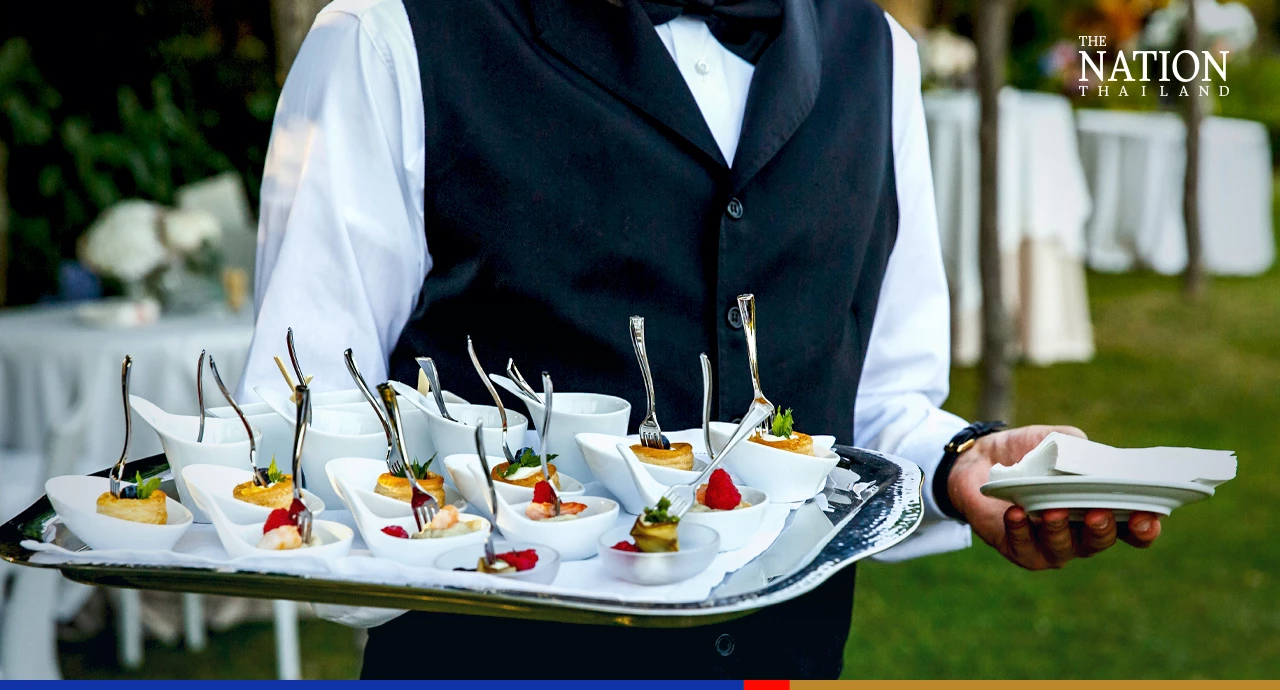
The on-site all-day Veya eatery makes it easy to eat well without feeling deprived with a plant-forward, seafood-leaning menu. PHOTO: BANYAN TREE VEYA PHUKET
Among the highlights are the generously sized private plunge pools and heated tubs in each villa, which are atmospheric for an after-dark soak while moon and star gazing.
What I appreciate most is how the villas are specially designed to foster a good night’s rest with luxuriously soft organic cotton bedlinen, black-out curtains and even a sleep light thoughtfully placed close to the floor to prevent beams from shining directly into one’s eyes.
In a nod to the wellness theme, the villas are equipped with a Tibetan singing bowl, yoga mat and exercise stretch bands for guests. I have every intention to use them on my private deck, but never do because I sleep so well every night and have to hit the snooze button repeatedly each morning.
However, I manage to rouse myself to try various activities, including a solid pilates core exercise class and a circuit-style “fat blast” workout which can be customised to a higher intensity for those so inclined.
My favourite is a soothing sound bath session where a practitioner creates harmonious hums and vibrations by using specially tuned metal bowls that lull me into a state of deep relaxation.
Alternatively, one cannot go wrong with spa sessions, which are conducted in private villas amid a tropical garden – a style popularised by Banyan Tree.
During my Signature Purposeful Massage (5,500 baht for 60 minutes), the brand’s famed therapists work their magic to soothe and rejuvenate my tense muscles.
The on-site all-day Veya eatery makes it easy to eat well without feeling deprived with a plant-forward, seafood-leaning menu.
For instance, breakfast comes with a tower of fresh bake and salad to encourage a balanced diet, while dishes for lunch and dinner, such as my favourite seared scallops (475 baht), are served with a generous portion of fresh greens.
That said, nobody will be made to feel guilty for indulging – there is organic wine on the menu and guests are free to dine at other eateries, including Banyan Tree’s excellent Thai restaurant, which is a two-minute walk away.
The resort is itself situated within the 300ha Laguna Phuket where the group’s other properties – including Angsana, Cassia and LagunaHoliday Club – are located.
Once an abandoned tin mine, the site was bought by Banyan Tree Holdings founder and executive chairman Ho Kwon Ping in 1984 when he was looking for a place to build a holiday home with his wife Claire Chiang.
The group invested heavily in revitalising the natural environment and, today, the regenerated lagoons are habitats for aquatic flora and fauna.
Tip: To fully enjoy the tranquillity of the lagoons, hop onto a free half-hourly ferry service for a ride around Laguna Phuket, which has stops at various locations, including the beach bar Xana.
At the other end of Laguna Phuket, keep a lookout for the soon-to-launch Ori9in Gourmet Park, which has a farm-to-table picnic cafe, fresh food market as well as a nature trail with a dog run and viewing decks.
Or to venture further afield, the town of Phuket is a 30-minute ride away via a shuttle bus service available at the lobby of Cassia.
In my current state of new-found zen, I decide to make my way to Bang Tao beach instead. This 3km stretch of white sandy shores is barely a 10-minute walk from Veya and is a popular gathering spot for locals and travellers alike.
It used to be lined with small beach shacks but had recently been cleared out by the authorities.
While some old-timers may bemoan the loss of “character”, for sunseekers hankering after some peace and quiet, this is possibly as close to untouched paradise as one might hope to get in these modern times.
That evening, as I gaze at the endless horizon, the setting sun setting the sky on fire, I am pretty sure I finally get a taste of that elusive sense of inner peace that many people have been seeking by signing up for this retreat.
Thai hotels in dire need of staff as tourists flock back
THURSDAY, JANUARY 05, 2023
The Thai hotel industry is seeking migrant workers to help relieve staff shortage as millions of tourists have returned to the country.
Marisa Sukosol Nunbhakdi, president of the Thai Hotels Association (THA), called on the government to relax the existing rules to make it easier for migrant workers to work in the hotel industry to help alleviate the shortage of workforce.
She suggested that the Thai government’s memorandum of understanding (MoU) with neighbouring countries allow more positions in which migrant workers can be hired, easier hiring of migrants, and allow more foreign nationals to work in the hotel industry.
At present, Thailand has MoUs on migrant workers with Myanmar, Laos and Cambodia. The THA wants such agreements to cover Indonesia, the Philippines, India and China. Also, the THA urged the government to revise the MoU to allow foreigners to work in the front office, which is now reserved for Thai nationals only.
Industry executives pointed out that hotels are suffering from a severe shortage of staff as many workers who were redundant during the Covid-19 crisis have not come back while Thai tourism is recovering. Several experienced hotel employees now have their own businesses or have taken up new jobs with more flexible work hours. Meanwhile, many young people avoid routine jobs.
Suksit Suvunditkul, president of the THA’s southern chapter, said that as many as 45 per cent of 1,463 hotels in the resort island province of Phuket are experiencing staff shortages. “Positions in high demand include receptionist, maid, food and beverage staff, maintenance mechanic, and spa therapist,” he said.
In order to help ease the problem, hotels in the South are now attempting to attract short-term trainees (college students), inexperienced workers willing to get training, and former hotel employees, according to the executive.
The MICE industry – which stands for meetings, incentives, conventions and exhibitions – is also in need of staff, as the sector is recovering from the Covid-19 crisis, according to Thamita Chongswatvorakul, director of corporate human resources at Impact Exhibition Management Co Ltd.
She said that as MICE is not popular among young job-seekers, Impact has come up with more flexible employment plans. Some jobs may be project-based while others are outsourced to independent contractors.
Speedboat queues build up ahead of Full Moon Party on Friday
THURSDAY, JANUARY 05, 2023
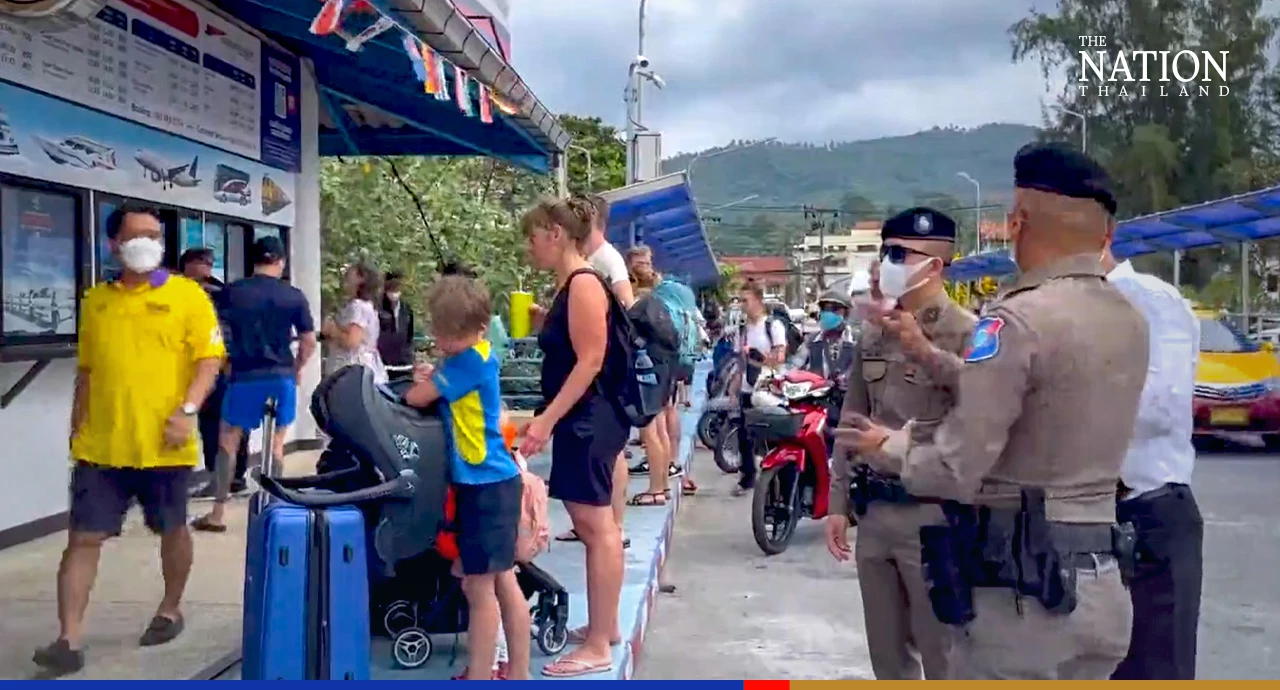
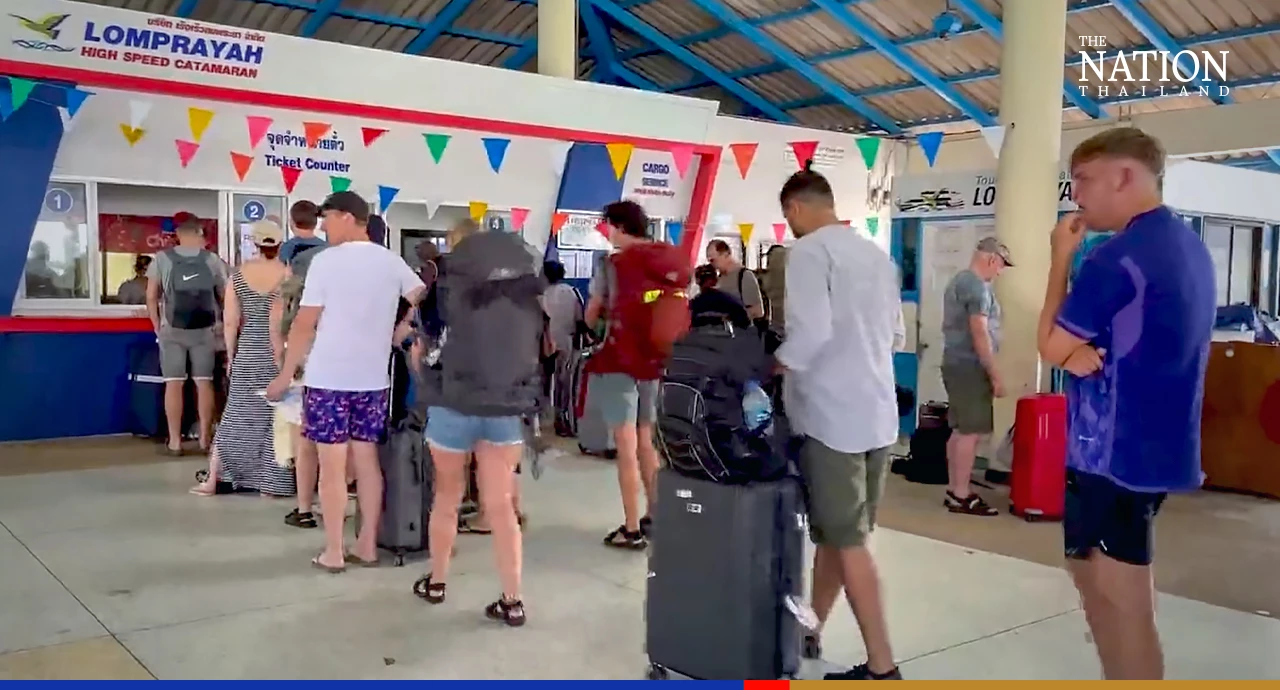
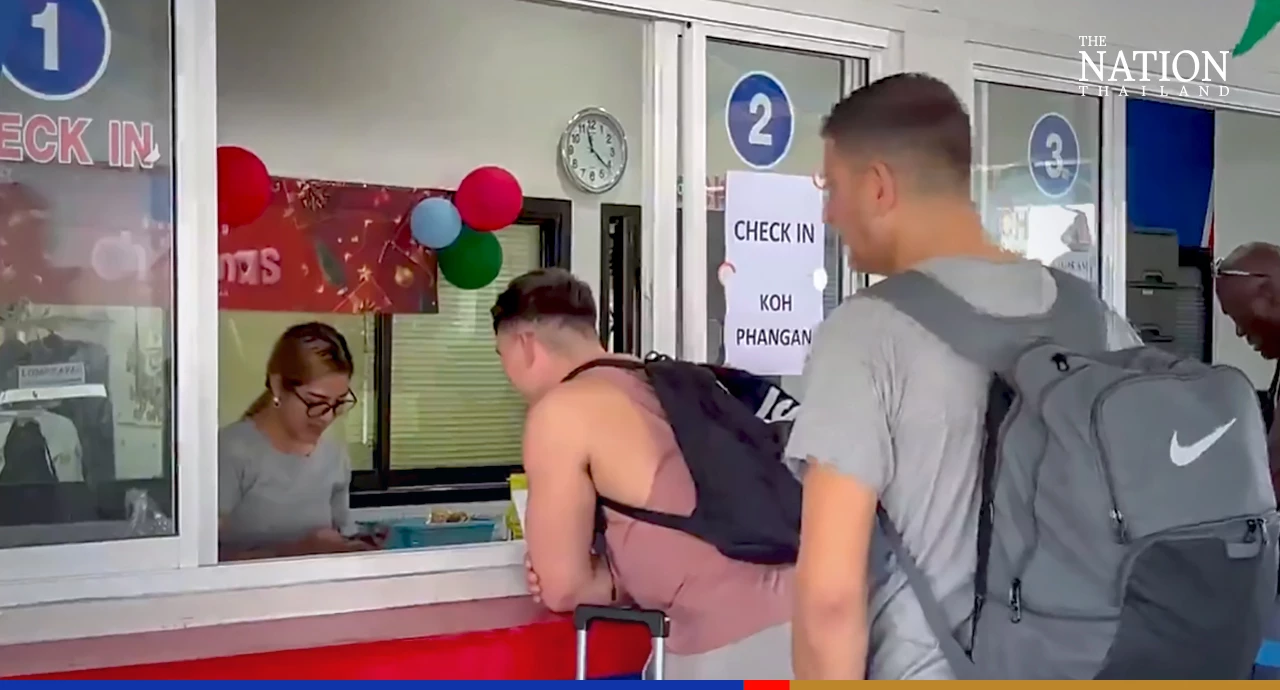
Hundreds of foreign tourists were seen queuing on Wednesday for speedboat rides from Koh Samui to Ko Pha-ngan, where the Full Moon Party will be held this week.
Koh Samui’s main Ban Na Thon pier has been crowded in recent days as holidaying foreigners flood back to the famed party island in Surat Thani province.
This Friday’s Full Moon Party is expected to draw thousands of tourists for a night of dancing, drinking and exotic shows on Haad Rin beach.
But Ko Pha-ngan also has plenty of daytime attractions for tourists to explore, including beautiful beaches, colourful coral reefs, mountains, waterfalls and the local lifestyle of coconut farmers and fishermen.
Kitti “Steven” Tharaphutthi, general manager of Samui’s Lomprayah Speedboat, said foreign tourists have been pouring into Samui, Pha-ngan and nearby Koh Tao since Christmas.
Although some had returned to their home countries after New Year, many are sticking around to attend the Full Moon Party on Friday, he said.
The company has responded to demand by increasing the number of daily speedboat trips to seven for Koh Pha-ngan and three for Koh Tao. It is now carrying around 1,000 passengers per day, most of whom are foreigners.
Thai hotels see positive growth as tourists start returning
TUESDAY, JANUARY 03, 2023
Nongluck Ajanapanya
Hotels in Thailand expect occupancy rates to start picking up in the second half of this year, especially since travel has become easier and China will lift restrictions from Sunday.
The Hotel Business Operator Sentiment Study, conducted by the Thai Hotel Association and the Bank of Thailand last month, shows that most hotels expect their revenue to rise by 10-30%.
The study, which covered 95 hotels, showed that most operators expect to welcome more guests this year.
This forecast is feasible because the average occupancy rate in December was 63%, up from 59% in November. Thailand expects arrivals to continue rising during the high season, which runs from November to March.
Though most hotels expect their occupancy rates to rise, hotels in the South expect to do far better with the arrival of European and American tourists.
The occupancy rate forecast for this month is about 60%.
However, despite the optimism, many hotels say they still face challenges like rising costs, global recession and labour shortage. They all hope the government will step in and lend a helping hand.
The survey showed that almost all hotel operators, especially small and medium-sized ones, want the government to help cut costs, provide low-interest loans, extend repayment periods and launch more subsidies like the “Rao Tiew Duay Kan” (We Travel Together) scheme. They also called on the government to ease regulations for migrant workers.
Tourism and hotel operators also want the government to provide training and upskill the workforce in a bid to propel forward the tourism and hotel industries.
Meanwhile, all hotel operators have pledged to help prevent a new Covid-19 wave by prioritising hygiene standards. They said they will ensure strict adherence to public health regulations, so the industry can drive the country’s economy and instil confidence in tourists.
The survey results were released shortly after the Tourism Authority of Thailand (TAT) announced that Thailand had seen 11.81 million foreign arrivals last year. Most visitors were from Malaysia, followed by India, Laos, Cambodia and Singapore.
TAT governor Yuthasak Supasorn said the agency’s goal this year is to attract at least 25 million foreigners and generate 2.38 trillion baht in tourism revenue.
South Korea, Thailand launch mutual tourism campaign for 2023-2024
TUESDAY, JANUARY 03, 2023
The Tourism Authority of Thailand (TAT) and its South Korean counterpart, the Korea Tourism Organisation (KTO), have signed a memorandum of understanding to work together to boost tourism in both countries.
The campaign, “2023-2024 Korea-Thailand Mutual Visit Years”, was officially launched on Monday.
Kim Jang-sil, KTO’s chief executive officer, said South Korea’s biggest visitors were Thais, with more than 570,000 visiting the country in 2019 before the Covid-19 pandemic brought tourism to a halt.
Thailand is also very popular with South Koreans, with as many as 1.89 million visiting the Kingdom in 2019. This put South Korea in the 4th position as Thailand’s biggest tourism market.
“Thailand and South Korea have been each other’s important tourism partners since before Covid-19, which affected the tourism industry globally,” he said.
Kim added that the outbreak situation was gradually improving, and KTO will focus on expanding its target for 2023 to also cover business travellers.
“Though the number of travellers in the MICE [meetings, incentives, conferences, exhibitions] group in Thailand is still small, they have high potential due to their tendency to seek quality tourism and high spending power,” Kim said.
He added that KTO will coordinate with TAT to make boost mutual travel by launching promotional campaigns.
“We will also introduce more flights to different cities to promote local and cultural tourism, bringing Thai travellers closer to the authentic Korean experience,” he added.
“During the Covid-19 shutdown, we prepared several aspects of tourism to welcome Thai travellers, including exchanging information with the TAT about changing consumer trends,” Kim added. “We believe long-standing bilateral ties and close cooperation, Thailand and South Korea will be able to bring the tourism industry back to pre-Covid levels.”
Six national parks to start e-ticketing from Saturday in pilot project
MONDAY, JANUARY 02, 2023
Six national parks will test e-ticketing from Saturday as an alternative to cash for tourists to pay entry fees, the Department of National Park, Wildlife and Plant Conservation announced on Monday.
The department said the e-tickets would be issued at Ao Phang Nga National Park, the Mu Ko Similan National Park, Hat Noppharat Thara-Mu Ko Phi Phi National Park, Khao Yai National Park, Doi Inthanon National Park and Erawan National Park from Saturday in a pilot project.
The department said tourists can start buying e-tickets from Monday by using the QueQ app but the e-tickets can be showed to park officials at the entrance of the six national parks from Saturday onwards.
Those who buy e-tickets on the QueQ app can pay for the tickets by using their credit card or using the Thai QR Payment service.
The department said the new e-ticketing system would reduce the burden on park officials in storing large amounts of cash before transferring them to the department.
The department explained that the e-ticket service was started at the six parks first because they had mobile phone signals that are needed for park officials to check QR codes on the purchased e-tickets.
Once the system is found to be stable and after mobile phone signals cover more parks, the services will be extended to cover all parks in the future, the department added.
Tourists flood Phi Phi on Jan 1 as Thailand ups 2023 forecast to 25m visitors
MONDAY, JANUARY 02, 2023
Phi Phi Islands National Park in Krabi province was flooded by over 5,000 tourists per day on New Year’s Eve and New Year’s Day, said a park official on Sunday.
Authorities deployed extra staff to oversee parking and increased the number of ticket booths to prevent crowding, as visitors poured in all day to witness the crystal-clear waters and white-sand islands of the 388-square-kilometre marine sanctuary, officially known as Hat Nappharat Thara-Mu Ko National Park.
Large crowds of tourists were seen at Railay Beach, Thale Waek (Separated Sea), Ko Poda and Pi Leh Bay.
Krabi logged a total of 62,927 tourists – 39,331 foreigners and 23,596 Thais – from December 30 to January 2, according to the local Tourism Authority of Thailand (TAT) office. The TAT estimated tourism revenue for Krabi during the New Year holidays was 908.73 million baht.
The first 11 months of the year (January to November) saw over 1.52 million tourists visit Krabi, generating total revenue of 14.3 billion baht. Most of them were Thais (1.27 million).
The TAT expects Krabi’s tourism revenue for the whole year to exceed the target of 1.5 billion baht.
Thailand received around 11 million foreign tourists in 2022. The TAT last week revised its forecast for 2023 to 25 million visitors after news that China will reopen on January 8.


 Veya Pool Villa at Banyan Tree Veya Phuket. PHOTO: BANYAN TREE VEYA PHUKET
 The on-site all-day Veya eatery makes it easy to eat well without feeling deprived with a plant-forward, seafood-leaning menu. PHOTO: BANYAN TREE VEYA PHUKET





 SootinClaimon.Com