And the Oscar goes to ….

ศาสตร์เกษตรดินปุ๋ย : ขอบคุณแหล่งข้อมูล : หนังสือพิมพ์ The Nation

http://www.nationmultimedia.com/detail/movie/30364385
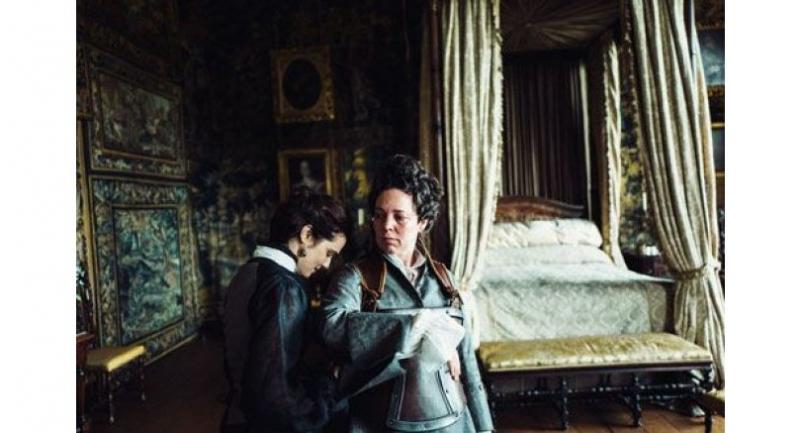
British film “The Favourite” has 10 nominations.

And the Oscar goes to ….

movie & TV February 21, 2019 01:00

By Agence France-Presse
Los Angeles

2,098 Viewed

Who votes for the Academy Awards and how does it work?

The ballots are almost all in!

Millions of television viewers around the globe will tune in Sunday (Monday morning Bangkok time) to watch the Oscars, the glitziest night in showbiz, but most don’t know how the winners are chosen.

Less than 8,000 people in the entertainment industry select the honourees – and Tuesday marked the final day of voting.

The following is a look at the complex, sometimes confounding process that leads to the winners of the 24 Academy Awards:


Who votes?

The Academy of Motion Picture Arts and Sciences in Los Angeles currently has 7,902 voting members.

Academy membership is divided into 17 branches – actors, directors, producers, costume designers, etc – and candidates must be active or otherwise have “achieved distinction” in the industry.

Applicants must be sponsored by two Academy members representing their branch.

Oscar winners and nominees are automatically considered for membership and don’t need sponsors.

Applications are reviewed once a year by the Academy’s Board of Governors, which has the final say on who joins the elite group.

Members used to enjoy voting rights for life but since 2016, “voting status” has been limited to 10 years, and is renewable, to avoid having voters who are no longer active in the business.

Lifetime voting rights only come after three 10year terms. Those not active become “emeritus” members who cannot vote.


“Roma” by Alfonso Cuaron also has 10 nominations


Who are the Academy members?

On principle, the Academy does not reveal its voting roll, though nothing prevents a member from saying he or she can cast a ballot.

Following the #OscarsSoWhite uproar in 2015 and 2016, about the lack of black nominees, the Academy has endeavoured to be more inclusive, vowing to double the number of women and minority members by 2020.

In June 2018, the Academy took the unusual step of revealing the names of all 928 people invited to join.

If they all agreed, 31 per cent of Academy members are now women and 16 per cent are people of colour, according to The Hollywood Reporter.


How are the nominees chosen?

Members of each of the 17 branches pick the nominees in their area of expertise. The actors’ branch – the largest voting group – submits nominations for the acting categories, directors submit nominations for best director and so on.

Nominations for certain awards, like for best foreign language film and best animated feature, are chosen by special committees.

The entire membership votes to choose the nominees for best picture.

How are the winners chosen?

All voting members choose the winners.

In 23 of 24 categories, the person with the most votes is the winner.

But when it comes to the coveted best picture award, the Oscar voters have since 2009 used a complicated preferential ballot system in which they rank the films from most favourite to least favourite.

Anywhere from five to 10 nominees can be chosen: this year, eight films are in contention.

If one film garners more than 50 per cent of the vote outright, it automatically wins.

Otherwise, accounting firm PricewaterhouseCoopers uses an instant-runoff voting system that ensures that the film that enjoys the widest consensus among Academy voters wins.

That means the count begins by eliminating the film that received the lowest number of firstplace votes and redistributing those ballots to those voters’ second choice.

The process of elimination continues until there is one film left with more than 50 per cent of the vote.

“The idea of the preferential ballot is to reflect the wishes of the greatest number of voters,” explained Ric Robertson, who was the Academy’s chief operating officer in 2009 when the process changed.

“Otherwise you might end up with a movie that, say, 25 per cent of the people love and the rest can’t stand,” he told the Los Angeles Times.

“This way, hopefully, you have a winner that most people can live with.”
The torture within

ศาสตร์เกษตรดินปุ๋ย : ขอบคุณแหล่งข้อมูล : หนังสือพิมพ์ The Nation

http://www.nationmultimedia.com/detail/movie/30364460

Singaporean Daniel Hui's fiction
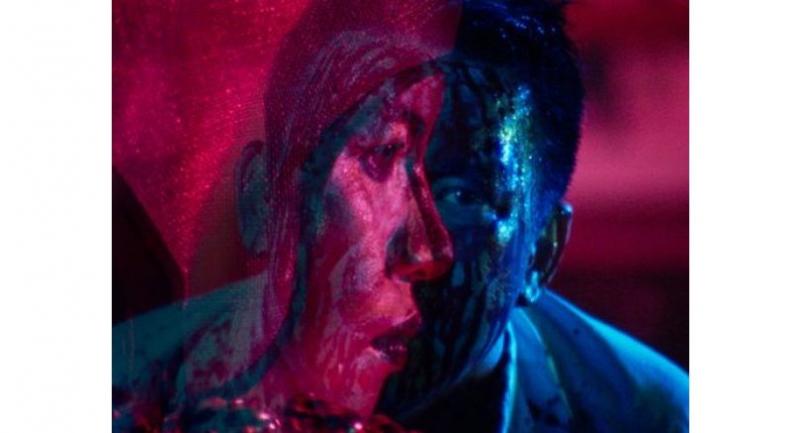
Singaporean Daniel Hui’s fiction “Demons” had a successful screening in the Forum section of Berlin festival. It stars famous filmmaker Glen Goei and newcomer Vicky Yang in a mysterious story about abuse, madness and cannibalism.

The torture within

movie & TV February 21, 2019 01:00

By Donsaron Kovitvanitcha
Special to The Nation

3,262 Viewed

Indonesia scores high at the Berlin Film Festival with a movie about food while Singaporean director Daniel Hui brings his little house of horrors to the big screen

The 69th edition of Berlin International Film Festival, which ran from February 7 to last Saturday, brought cinephiles films from around the world but sadly only a few Southeast Asian titles made it into the selection this year.

In the section Culinary Cinema, which presents films about food, Edwin’s latest feature “Aruna and Her Palate” became the first Indonesian film to be shown in this special section of the festival. The Indonesian-South Korean-Singaporean co-production was released in Indonesia in September and screened at the International Film Festival and Awards Macao in December.

Starring Dian Sastrowardoyo and Nicholas Saputra, “Aruna and Her Palate” is the story of Aruna, an epidemiologist who is sent to investigate an outbreak of bird flu and also uses the trip to satisfy her obsession with food.


Vietnam’s Pham Ngoc Lan brought his latest brief work “Blessed Land” to compete in Berlinale Shorts 2019.

Culinary Cinema is a special section of Berlin and ticket prices include a special dinner created to fit the theme of the film. For “Aruna and Her Palate”, ticket holders enjoyed an Indonesian-inspired dinner created by The Duc Ngo, a top Vietnamese chef based in Berlin.

In Berlinale Shorts, Singaporean Tan Wei Keong’s “Kingdom” and Vietnamese filmmaker Pham Ngoc Lan’s “Blessed Land” were screened in competition. Although neither film won a prize, it provided a good opportunity for young Southeast Asian filmmakers to present their films in Berlin.

Singaporean film “Demons” directed by Daniel Hui had its European premiere in the Forum section after making its debut at last year’s Busan International Film Festival. A graduate of the School of Film/Video at the California Institute of the Arts, Hui was also behind the 2011 feature “Eclipses” and 2014’s “Snakeskin”, which was shown at the World Film Festival of Bangkok in 2016. “Demons” is the director’s latest work and also his first fiction feature, and like his previous works was entirely shot on 16mm film. This time, he says, he wanted to make something that was more personal. “This is a very personal film and that makes it hard for me to talk about it,” Hui told The Nation after its successful screening.


“Aruna and Her Palate” by Edwin was the only Indonesian entry at this year’s Berlin International Film Festival. A commercial title, it’s co-produced by South Korea’s CJ Entertainment.


“I read a lot and I get many of my ideas from books,” he continued, adding that the inspiration for “Demons” came from Chinese literature.

“The original idea was to make a film about poetry. One part of it is based on a short story by Lu Xun called “A Madman’s Diary” about a man who is losing his mind. He reads lots of classical texts from Chinese literature that teach virtue and morality but in his confused mind sees that they all say that you should eat people. He starts to believe that cannibalism is part of his tradition and culture and goes out on to the street where he thinks he hears passersby people talking about eating people. The cannibalism in my film is inspired by this story,” he explained.

The main character in “Demons” is Vicky (Vicky Yang), a new actress who is thrilled when she lands the leading role in Daniel (Glen Goei)’s latest play. But her role casts her into endless torture at the esteemed director’s hands. When she turns to supposed allies for support, Vicki finds that they encourage Daniel’s abuse as part of her artistic growth and his genius.

“I started this project four years ago, and after that I kept writing and writing. The film has many different versions. The first version was an adaptation of Dostoyevsky, which is why it’s called ‘Demons’. Then it changed and changed until it became the way it is”, Hui says.


Short animation “Kingdom” by Singaporean Tan Wei-Keong had its international premiere in the festival’s Berlinale Shorts competition.

The film features several people from the Singaporean film scene, among them the producer Tan Bee Thiam and the director himself. For the main characters, Daniel chose to work with his friend Yang, even though she had little acting experience, and Goei, a well-known film and theatre director whose 1998 movie “Forever Fever” was the first Singaporean film to be distributed in the US by Miramax.

“Vicky is a close friend of mine,” Hui explains. “I’ve known her for 10 years. She played a small role in ‘Snakeskin’. We talked a lot about our pasts and our own experiences. She was hungry to perform something very personal.

“I needed somebody who already had a reputation as an artist. Glen is a very famous in Singapore and he’s very open to working with young filmmakers. He always finds it very challenging and stimulating for him. Without him, we couldn’t have made the film.

“We shot over 10 weeks but it was difficult. There were many accidents. Glen fell during the production and had to go to hospital. It was quite scary,” he continues, adding that because there was no script, much time was taken up trying new things,

“We had a general outline, which is not a script. We knew that we would show up at the location and that these people would be in the scene. I didn’t know what exactly they were going to say or react with each other, so the night before, I would write something and send it to them. Sometimes on the day, I’d just tell them. We rehearsed a lot and talked a lot and then shot the scenes. We would shoot for six hours a day, then go back and think about the next day’s scenes. I then spent 18 months editing the film.”

Daniel decided to ask Thai sound designer Akritchalerm Kalayanamitr to work on this project “I’m big fan of his works. Not only from Apichatpong [Weerasethakul]’s films but also from [Sompot Chidgasornpongse’s] ‘Railway Sleepers’. We worked together for five months. At one point, after he’d spent two months on the sound, I decided to reedit the film, so he had to rework the sound again, but he was extremely generous.”

Another part of the film deals with LGBT issues faced by the character Daniel and his boyfriend, who is played by Hui.

“LGBT in Singapore is still criminalised. I am gay myself, but I didn’t want to show that because you’re LGBT, you’re also a victim. I wanted everybody to be unsafe in the film. This guy is gay but he also rapes women, says Hui, adding that the Singapore authorities will not like the LGBT aspect.”

And despite the opposition to LGBT themes in his home country, Hui says he is still planning to release it in Singapore.

“I’m not how easy it will be but we will try. I don’t expect it to be plain sailing but I also don’t expect to be banned by the censorship board.”

New series on Cinemax to debut this summer

ศาสตร์เกษตรดินปุ๋ย : ขอบคุณแหล่งข้อมูล : หนังสือพิมพ์ The Nation

http://www.nationmultimedia.com/detail/movie/30364437

New series on Cinemax to debut this summer

movie & TV February 20, 2019 01:00

By THE NATION

2,372 Viewed

Two new Cinemax Original Series, “Warrior”, based on writings of martial arts legend Bruce Lee, and “Jett”, about a world-class thief, will premiere on Cinemax in April and June respectively.

Shot in Cape Town, South Africa, Warrior” is an action-packed crime drama set during the brutal Tong Wars of San Francisco’s Chinatown in the second half of the 19th century. The 10-episode drama series, executive produced by Jonathan Tropper and Justin Lin, premieres same time as the US on Saturday, April 6 at 9am exclusively on Cinemax.

The series follows Ah Sahm (played by Andrew Koji), a martial arts prodigy who emigrates from China to San Francisco under mysterious circumstances and becomes a hatchet man for one of Chinatown’s most powerful tongs (Chinese organised crime family).

Another series “Jett” will premiere in June on Cinemax and stars Carla Gugino as worldclass thief Daisy “Jett” Kowalski. Fresh out of prison, she is forced back into doing what she does best, and a cast of morally ambivalent, dangerous and eccentric criminals, from budding femme fatales to compromised law enforcers, are determined to exploit her skills for their own ends.

“Little Big Lies” returns alongside new drama “Chernobyl”

ศาสตร์เกษตรดินปุ๋ย : ขอบคุณแหล่งข้อมูล : หนังสือพิมพ์ The Nation

http://www.nationmultimedia.com/detail/movie/30364388

  • “Little Big Lies”

“Little Big Lies” returns alongside new drama “Chernobyl”

movie & TV February 19, 2019 15:12

By The Nation

2,964 Viewed

The second season of the highly anticipated award-winning HBO Original drama series “Big Little Lies” and a brand new HBO Original mini-series “Chernobyl” will premiere exclusively on HBO in June and May respectively.

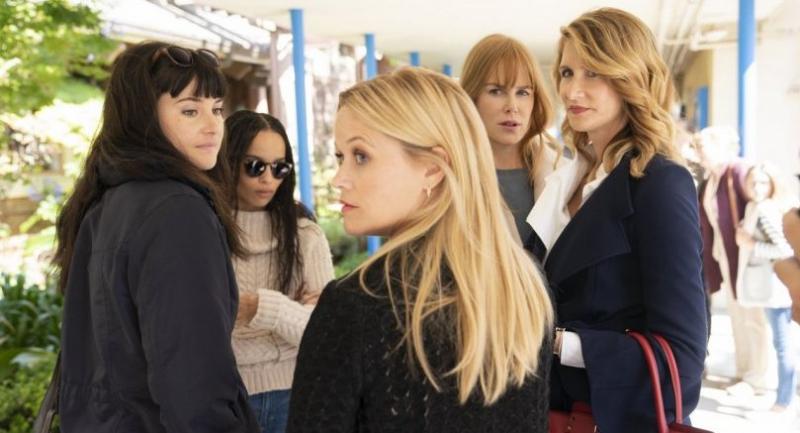
 Premiering in June, the seven-episode second season of “Big Little Lies” is set in the tranquil seaside town of Monterey, California. The night of the school fundraiser changed that peaceful life, leaving the community reeling as the “Monterey Five” – Madeline, Celeste, Jane, Renata and Bonnie – bond together to pick up the pieces of their shattered lives. The series explores the malignancy of lies, the durability of friendships, the fragility of marriage and the vicious ferocity of sound parenting.

Created by David E Kelley and based on the novel by Liane Moriarty, the series stars Reese Witherspoon, Nicole Kidman, Shailene Woodley, Laura Dern and Zoe Kravitz alongside new cast member Meryl Streep.

“Chernobyl” dramatises the story of the 1986 nuclear accident, one of the worst man-made catastrophes in history, and of the brave men and women who made incredible sacrifices to save Europe from unimaginable disaster. Starring Emmy nominee Jared Harris, Stellan Skarsgard and Oscar nominee Emily Watson, the five-part mini-series debuts in May.

The change within

ศาสตร์เกษตรดินปุ๋ย : ขอบคุณแหล่งข้อมูล : หนังสือพิมพ์ The Nation

http://www.nationmultimedia.com/detail/movie/30364349

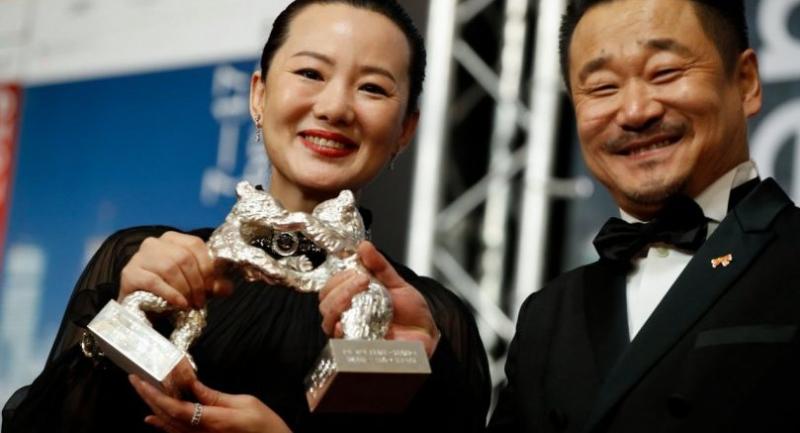
  • Chinese actors Wang Jingchun and Yong Mei pose with their Silver Bears for Best Actors in the film “Di Jiu Tian Chang?” (“So Long, My Son”) at the 69th Berlinale film festival./AFP Photo
    Chinese actors Wang Jingchun and Yong Mei pose with their Silver Bears for Best Actors in the film “Di Jiu Tian Chang?” (“So Long, My Son”) at the 69th Berlinale film festival./AFP Photo

The change within

movie & TV February 19, 2019 01:00

By DONSARON KOVITVANITCHA
SPECIAL TO THE NATION

2,144 Viewed

True-to-life tales resonate with judge and audiences at this year’s Berlin International Film Festival

For almost 70 years, the Berlin International Film Festival has been one of the best platforms for world and Asian cinema. And this year was no exception. Its 69th edition wrapped at the weekend with a major triumph for director Nadav Lapid whose film “Synonyms” became the first Israeli movie to win the prestigious Golden Bear.

The Franco-Israeli co-production is the third feature film directed by Lapid, who was praised as the rising star of Israeli cinema for his 2014 film “The Kindergarten Teacher”, which premiered at the Critic’s Week in Cannes and was later remade in an American version. This year was also the first time Lapid had been invited to screen his film in Berlin, with “Synonyms” taking home not only praise from film critics, but also one of the biggest awards in cinema.

“‘Synonyms’ might be a scandal in Israel and even in France, but for me the film is a big celebration of cinema,” Lapid said in his acceptance speech.

In the film, which is set in Paris, Lapid instils his own experiences, feelings and anger in his main character Yoav, a man who escapes from Israel to Paris and finds his way to an empty apartment and has his clothes stolen while he is taking a shower. Despite being saved by a young couple, Yoav struggles in the foreign city, and tries to get rid of his identity by speaking only French. But all too often, his Israeli persona comes back to haunt him in a Europe where migrants are not always warmly welcomed.

Francois Ozon’s latest film “By The Grace of God”, in which the main character decides to confront the priest who sexually abused him when he was a boy, won Grand Jury Prize, while German filmmaker Angela Schanelac won the Silver Bear for Best Director for her latest film “I Was a Home, But…”.

Chinese director Wang Xiaoshuai /AFP Photo

Chinese cinema also enjoyed another big year at the Berlinale, with Wang Xiaoshuai’s latest outing “So Long, My Son” winning both the Silver Bear for Best Actor and Silver Bear for Best Actress.

“Five years ago, I was down there in the audience. Today I am standing right here,” actor Wang Jingchun noted during his acceptance speech for the Silver Bear. A familiar face in Chinese cinema, he has starred in many successful films including “Black Coal, Thin Ice”, which won the Golden Bear in 2014.

“I had no idea that I would win this award,” added an emotional Yong Mei, who was in Berlin for the first time.

“I’d like to thank Berlin International Film Festival, |and the cast and crew of ‘So Long, My Son’.”

Wang Xiaoshuai has long regarded Berlin as the place where he started his career. His first feature film “The Days” was screened in the festival’s Forum section back in 1994. He has won a top prize twice: the Grand Jury Prize in 2001 for “Beijing Bicycle” and the Silver Bear for Best Screenplay for 2007’s “In Love We Trust”.

“People who grew up in China will see the changes very clearly in ‘So Long, My Son’. I don’t know if it is lucky or unlucky to go through that. As a creative artist, I am able to take that huge span of time and put a subjective angle on it. I guess the most extensive change is that people don’t recognise the place they use to live in,” he said.

Yong Mei and Wang Jingchun in a scene from the movie “So Long, My Son”.

“So Long, My Son”, which takes place over 30 years, starts with the death of Xing Xing, the only son of Yaojun and Liyun, then explores the lives of the couple before and after the loss of their only son in an period when Chinese citizens were allowed to have only one child or face persecution and even forced abortion.

Liyun is a victim of the One-Child Policy and was forced to have an abortion when the family planning department of her factory found out that she was expecting a second child. The abortion leaves her sterile and she and her husband are traumatised when they discover that the person who forced her to do abort caused the death of Xing Xing.

“During the cultural revolution, we had a saying, ‘Look forward and don’t think about the past’. At the time it was all about forgetting the economy and caring about ideology. An improved economy has changed all that. But even if we look back at the whole process, we still need to keep looking ahead and take lessons from the past to avoid certain mistakes,” Wang Xiaoshuai added.

“Our generation and our parents’ generation were really at the forefront of that change and they have experienced both the old society and new society. It gave me an opportunity as a director to try and show everything the Chinese have experienced. There are lots of people who want to go back to Chairman Mao’s era, which is fine, but society does need to develop. There are lots of problems in China, which you have to deal with during the process of development, but we also need a film to tell us the story of the past to avoid the mistakes of the future,” the director added.

Although the film touches on the dark history of China, it also allows a glimpse of how people can and do go on with their lives after traumatic events, of how they deal with guilt and let go of a grudge.

“The special policy that changed us is unavoidable because that was what we lived through, but what I am more interested in as an artist is people’s flexibility and their ability to love. My parents and grandparents underwent so many changes but they are still very brave and optimistic in the way they approach life and how they have tried to achieve the best out of life. I hope that message has come out from my film.”

But while “So Long, My Son” and “Ondog”, the Mongolian film by Chinese filmmaker Wang Quan-An both enjoyed successful screenings in Berlin, Zhang Yimou’s latest film “One Second” was mysteriously withdrawn from the festival’s competition line-up. Rumours indicated that this might have something to do with the strict censorship in China.

“It was very unexpected. I was getting off the plane when I heard the news and I was quite shocked. It was very tough process for any filmmaker so I feel a great deal of sympathy for Zhang Yimou. His first film came to Berlin and we’ve all been influenced by him. I was really looking forward to showing my film alongside his. I don’t know what happened but I am very sorry about it,” Wang Xiaoshuai continued, adding that young filmmaker Derek Kwok-cheung Tsang’s “Better Days”, which was expected to screen in the Generation section, was also pulled.

The 69th edition of Berlin International Film Festival marked the last edition for Dieter Kosslick, the festival director who has been in this position since 2002 and who received a standing ovation during the closing ceremony.

For the 70th edition of the festival, Carlo Chatrian of the Locarno Film Festival will move to Berlin as artistic director, while Mariette Rissenbeek, managing director of German Films has been appointed as executive director of the Berlin International Film Festival.

Hit Indian film to screen next month

ศาสตร์เกษตรดินปุ๋ย : ขอบคุณแหล่งข้อมูล : หนังสือพิมพ์ The Nation

http://www.nationmultimedia.com/detail/movie/30364321

Hit Indian film to screen next month

movie & TV February 18, 2019 01:00

By THE NATION

River City Bangkok Film Club will start its 2019 Movie Series with “English Vinglish” from India at RCB Forum on the second floor of the shopping centre on March 16 at 4pm.

Combining linguistics, domesticity and multiculturalism, the film stars one of the greatest actresses of the country, Sridevi, known for her superior dancing and dramatic skills, who appeared in more than 200 films before tragically dying in a drowning incident, last year.


In fact, this was the comeback film of the superstar, who had taken a 15-year hiatus to focus on her domestic life and bringing up her two daughters.

Directed by Gauri Shinde, “English Vinglish”, with English subtitles, centres around Shashi, a housewife and home-maker who is happy looking after her family, and making “laddus”, Indian traditional sweets. She is not too bothered about her lack of English-speaking skills despite the digs her husband and family make about that.


Things change, when she goes to New York, to help in the marriage of her niece, and finds herself in many embarrassing situations due to not knowing the English language. That’s when she decides to enrol for a short English-speaking course in the city. Shashi meets a bunch of lively, multiracial personalities, including a Pakistani cab driver, a Mexican nanny, a closeted African and a Frenchman who starts getting attracted to her. They love her innocent, effervescent personality, and have lots of fun together.


She is confused by the Frenchman’s attentions, though it raises her selfworth.

That’s when her family joins her in New York for the wedding. They are surprised by Shashi’s newly acquired English-language skills, and even more, by her impressive “English” toast to the wedding-couple.


The film, with its lively scenes and vibrant energy, pleased audiences around the world, starting with the prestigious Toronto International Film Festival. It won the Popular prize, and was a huge boxoffice hit, rocketing rookie Shinde, who was formerly in advertising, to the big time.

Amitabh Bachchan guest stars.


The RCB Film Club’s 2019 Movie Series is supported by the Embassy of India, who will host a reception after the screening with Indian wines and snacks. Newly arrived Indian ambassador Suchitra Durai will introduce the film.


For reservations, email: rcbfilmclub@rivercity.co.th or visit http://www.RiverCitybangkok.com.

The RCB boatservice leaves Saphan Taksin Pier at 3.30pm returning at 7pm. Contact the concierge counter on the first floor.

When you reserve seats for the film, indicate if you will need the RCB boat service

Inside looking out

ศาสตร์เกษตรดินปุ๋ย : ขอบคุณแหล่งข้อมูล : หนังสือพิมพ์ The Nation

http://www.nationmultimedia.com/detail/movie/30364116

Inside looking out

movie & TV February 15, 2019 01:00

By THE NATION

The new HBO Films drama O G is coming to Thailand on February 24, launching at the same time as the US at 10am exclusively with a same day encore at 10.30pm.

The film will also be available on HBO GO via AIS Play and AIS Playbox..

Starring Jeffrey Wright, the film is directed by Madeleine Sackler and written by Stephen Belber.

O G follows Louis (Wright), once the head of a prominent prison gang, in the final weeks of his 24-year sentence. His impending release is upended when he takes new arrival Beecher (Theothus Carter), who is being courted by gang leadership, under his wing. Coming to grips with the indelibility of his crime and the challenge of reentering society, Louis finds his freedom hanging in the balance as he struggles to save Beecher.

Also starring Theothus Carter and William Fichtner (“Crash”), OG premiered at the 2018 Tribeca Film Festival, where Wright won the award for Best Actor in a US Narrative Feature Film. It was filmed over a five-week period at Indiana’s maximum-security Pendleton Correctional Facility – an active prison with several of the incarcerated men and prison staff appearing as first-time actors.

O G takes an intimate and unflinching look at the journey of one man at the precipice of freedom.

Director Madeleine Sackler describes the inspiration behind the film’s uniquely realistic approach, nothing, “There have been so many prison films that it’s become a genre of its own. To me, when a type of story becomes a genre, it can lose its uniqueness or its specificity in the storytelling.

“My goal was to disregard the prison genre and start from scratch, starting with one character, a man preparing to leave after many years behind bars. To do that as authentically as possible, to truly understand and portray that experience, I wanted to make the film in close collaboration with people going through the experience themselves, so I started calling different departments of correction around the country. And I was very lucky when the state of Indiana called me back.

“This film wouldn’t be what it is if we hadn’t made it as a collaboration with the prison and with hundreds of men incarcerated there. And to have two films come out of the experience, one fiction and one nonfiction, is very exciting. We were able to explore many different themes.”

For Wright, filming inside an active prison was a unique experience and helped him step inside his character. He explains, “It was absolutely necessary for me to wrap my head and my body around who this character was and what the story was that we were trying to tell. It’s a pretty informative place. It’s an affecting place. There’s an energy inside that place unlike no other, no other. It’s heavy, it’s kind of laden with trauma. It’s just molecularly heavy inside, and it certainly informed our understanding of the story, of the issues, and in my case, the character that I was playing.”

Sackler describes her introduction to Theothus Carter, saying, “His audition was incredible. We were watching hundreds of people in one week, and you can’t imagine the array of men who are incarcerated, and the talent and depth that they bring to the dialogue. There’s just no replacement for the real way that people move and interact and talk. And then Theothus came in, and he just blew me and the casting director away. And then he worked harder than anyone else.”

Wright says, “Theothus was all business, and he has a force to him. He has capabilities that we see through this film, that he had never tapped into in a way as constructive as this, perhaps in his lifetime.”

After the screenplay for O G had been developed and Sackler was prepping to shoot the film, she began collaborating with 13 men incarcerated at the facility on a nonfiction film. In “It’s A Hard Truth Ain’t It”, codirected by Sackler and those men, several of whom were also first-time actors, they study filmmaking as a vehicle to explore their memories and examine how they ended up with decades-long sentences. Animated sequences by Yoni Goodman (“Waltz with Bashir”) bring their stories to life.

“In a way, O G and “It’s A Hard Truth Ain’t It” are two different sides of the same coin. In O G, Louis is preparing to leave prison after 24 years of incarceration. In “It’s A Hard Truth Ain’t It”, the men look deeper into the paths that got them to prison in the first place. In that sense, neither film is about being in prison, but something deeper,” says Sackler.

Invisible boundaries

ศาสตร์เกษตรดินปุ๋ย : ขอบคุณแหล่งข้อมูล : หนังสือพิมพ์ The Nation

http://www.nationmultimedia.com/detail/movie/30364064

Gink shows signs of losing control when she follows her boyfriend Ted Jason Young to Hong Kong.

Invisible boundaries

movie & TV February 14, 2019 01:00

By Parinyaporn Pajee
The Nation

In the new GDH film “Friend Zone”, the two protagonists have to decide between a platonic relationship and romance

Director Chayanop Boonprakob has a thing about imperfect characters his directorial debut “Suckseed Huay Khan Thep” focused on a group of high-school boys who formed a band despite having no talent for music. His second movie “May Nai Fai Raeng Frer” (“May Who?”) was a romantic comedy that again centred on a high-school boy who loved drawing cartoons but was too shy to talk about his hobby because he was convinced his drawings were awful.

Now, for his third outing, “Friend Zone Rawang Sinsud Thang Phuan” (“Friend Zone”), which goes on general release today, the director is stepping out from his comfort zone and swapping teen comedy for a romantic comedy about young adults. The main character Palm (Naphat Siangsomboon) is a handsome flight attendant who has been in love with his best friend Gink (Pimchanok Leuvisadpaibul) for more than a decade. The pair has kept their relationship purely platonic and each of them is dating someone else. However, as soon as either of them faces trouble in love, they automatically turn to each other. But Palm’s kindness is a problem for Gink’s boyfriend Ted (Jason Young). So it comes as something of a surprise to Palm when Gink asks him – “Have you wondered… what if we were an item?” but also raises his hopes that the two might finally became an item.


From left: Benjamin Joseph Varney, Naphat, Nutthasit Kotimanuswanich and Sukhapat Lohwacharin

From the tagline and trailer, “Friend Zone” appears to be just another feel good comedy from GDH, a formula that has sent the studio and its predecessor GTH to success at the box office. Yet “Friend Zone” has something more, with Chayanop’s talent for comedy making it a truly enjoyable movie.

The audience who watched the premiere on Monday was full of praise for the comedy, which though crazy was also genuinely funny. The chemistry between the two protagonists and the cast added to the entertainment and make “Friend Zone” the perfect movie to watch on Valentine’s Day.

The director says his lead character is inevitably a loser, enough though it might not be immediately obvious. Palm, he points out, might look perfect but Gink is his flaw, as he is constantly waiting for her to say yes and cross the line from friend to lovers.

“Personally I think the term ‘loser’ means having an imperfection in one’s life and we feel inferior because of it. I like imperfection in a person, I appreciate and accept it and don’t think it’s humiliating to show our true selves instead of opting to show how cool we are,” he says.


The relationship between a longtime friend Palm (Naphat Siangsomboon) and Gink (Pimchanok Leuvisadpaibul) is put to the test and they have to choose between being best friends forever or becoming lovers.

It’s the first time Chayanop has worked with the talented Pimchanok, who was praised for her ability to carry the whole story in the movie “Sing Lek Lek Thee Riak Wa Ruk”, and his second collaboration with Naphat, with whom he worked on the omnibus “Pohn Jak Fah” (“The Gift”)

The idea for the story was sparked when Chayanop attended a scriptwriting workshop held for trainees at GDH Studios. He was already a director but asked to participate to sharpen his skills. “Friend Zone” was the homework he submitted to trainers Jira Maligool and Vanridee Pongsittisak, both of them behind the success of GDH movies.

And just like with his previous films, it is inspired from his own experience.


Gink and her boyfriend Ted (Jason Young) and her best friend Palm (Naphat).


“We all have awkward relationships with our close friends, especially when they are of the opposite sex,” he says.

And despite working as a flight attendant for Thai Airways before Jira offered him the job of directing “Suck Seed” and Naphat’s work, the sponsorship from Thai Airways, he says, is pure coincidence.

“I was infused with a strange happiness when we shot the scenes on the plane. It reminded me of when I worked in the catering preparing meals for passengers,” he says.

The focus, however, remains firmly on Gink and Palm as they try to find out what her boyfriend is hiding during his travels to Hong Kong, Myanmar, Laos, Cambodia and Vietnam to work on a special project of recording a song covered by lovely vocalists in each country in a different language.

The original idea was to make both Palm and Gink flight attendants but was changed to Gink being the manager of an actor and her boyfriend, a famous music producer.


Director Chayanop Boonprakob

Chayanop is quick to admit that inviting singers from different countries for the soundtrack is a strategy designed to expand the market, even though GDH movies are already well known in the region. He adds that he enjoyed the experience of working with different teams in the countries where some of the scenes were shot.

“I am interested in the diversity of our neighbours and this tactic has never been used in a Thai movie before,” he says.

The highlight takes place in Hong Kong when the couple is riding a doubledecker bus and a crying Gink reaches and grabs hold of one of the neon lights where she remains hanging as the bus drives away. Fortunately, it comes back to collect her. Shooting at Shwedagon Pagoda in Yangon was less easy, as permission was hard to obtain.

But it’s the comedy rather than the romance that really makes the film and this ranges from gags to the dia¬logue and situations, drawing the audience to laugh even in the muchhated tiein product scenes.

The chemistry between the two protagonists and the dialogue are convincing enough for the audience to believe that the two are friends in real life. That proved a relief and over¬came initial concerns about the cast¬ing, especially of Naphat who’s a rel¬ative newcomer.

“He was inexperienced when we worked on ‘The Gift’ but he goes all out to do his best and sometimes that backfires. After ‘The Gift’, he worked in some TV dramas where he received help from director Yuthtana Lopanpaibul in acting more naturally and with better diction,” says the director.


Pimchanok once again shows her talent for making audiences laugh and cry. And even though Gink can be annoying at times, they believe in and love her. Her blunt and impulsive character might well remind viewers of the Korean romantic comedy classic “My Sassy Girl” but Pimchanok’s skill makes it obvious why Palm has been in love with her for 10 years.

“Pimchanok pays a lot of attention to detail and can play whatever I ask her to do,” he says.

The other actors are also well matched to their characters with Jason Young a good fit for Gink’s boyfriend and Nutthasit Kotimanuswanich, Benjamin Joseph Varney and Sukhapat Lohwacharin, as Palm and Gink’s friends, totally credible.

The guest singers from different countries – Joyce Chu Zhu Ai from Malaysia, Phyu Phyu Kyaw Thein, often referred to as the Lady Gaga of Myanmar, and Phonesavanh Inthavong from Laos also make a solid contribution.

And with the movie shot in different countries, Chayanop confirms it’s the toughest work he’s ever undertaken.

“The production scale is much than larger but shooting overseas has given me so much experience,” he says, adding that he is more than ready to make another movie, this time with a musical theme.

“Perhaps about the lives of families and teachers,” he says, adding that both his parents are teachers.

“The idea always begins from what we like as a writer and I always choose a story that I enjoy and want to see on the big screen,” says the director.

Struggling in the Iron City

ศาสตร์เกษตรดินปุ๋ย : ขอบคุณแหล่งข้อมูล : หนังสือพิมพ์ The Nation

http://www.nationmultimedia.com/detail/movie/30364052

Rosa Salazar and Keean Johnson in a scene from "Alita: Battle Angel"
Rosa Salazar and Keean Johnson in a scene from “Alita: Battle Angel”

Struggling in the Iron City

movie & TV February 14, 2019 01:00

By Special to The Nation

Young actor Keean Johnson, who plays Hugo in the manga adaptation “Alita: Battle Angel” talks about making his movie debut

A collaboration between two of the best filmmakers working today –James Cameron and Robert Rodriguez – “Alita: Battle Angel”, which opens today, is an adaptation of Yukito Kishiro’s popular manga of the same name.

The story is set in a devastated future world where society is split between the haves, who exist on the shining city of Zalem, floating above the Earth’s surface, and the havenots, who must eke out a hard-scrabble living in the Iron City, a place where Zalem dumps its garbage. It’s here that cyborg scientist Dr Dyson Ido (Christoph Waltz) discovers the frame of a mechanoid young woman. As Alita (Rosa Salazar) figures out who she really is and what she’s meant for, the world will never be the same again.

Keean Johnson plays Hugo, the young man who becomes an important part of Alita’s life. Struggling with his own quest to better his life, Hugo has the street smarts to help her cope with a confusing world but might not be as prepared as he thinks for everything that surrounds Alita. Johnson makes his film debut in “Battle Angel”, and here talks about auditioning and getting to do some of his own stunts.


How did you first get involved in Alita? Was it just a standard audition? Was it something that you found out about?

I first heard about this from my agent in December 2015 and I got called to go in. I went in, read for the role. And I didn’t hear anything for three or four months until I got a call from my manager. They said, “Robert really likes your tape”. And they told me he’d like to meet me. I met with Robert the first time, and I was so incredibly nervous. He seemed to think that I did a good job despite that. Then I came in for a second meeting with Robert and this time I thought, ‘okay, I met the guy. Now I can really show him without being nervous at all.’ And the second audition went really great. A month later I was told I’d go to Austin, and going to test for the role with Rosa. So, I auditioned. I put my best foot forward. Rosa and I hit it off right away, and I think Robert and I just clicked and it worked out: I was in Alita!

How did you react then when you actually got the part?

I had to wait for 36 days, I think. The most agonising email refreshing, every hour on the hour. I got an email from Robert and the subject said, “Guess What?” and then in the body was a photo of Yukito Kishiro’s Alita and it was the moment where Hugo is kissed by Alita. Finally I got the call and was on a flight within five or six days, ready to work for five months.

Who is Hugo and sort of how does he fit into the story?

Hugo’s a kid who’s been torn apart by Iron City for years and he’s learned how to adapt, how to actually thrive there. But all he wants to do is get out and when he meets Alita, he sees a moment where this place becomes interesting for once.


From left: Rosa Salazar, Keean, Jorge Lendeborg Jr and Lara Condor


What was it about him that appealed to you? And did you look for something you could add to him?

Hugo comes across as this tough, street smart, doesn’t-need-anyone type of guy. But he’s very vulnerable. think he hasn’t been able to show it to anyone in his life until he finally meets Alita, someone who loves him just the way he is. He doesn’t have to put on a face or put up a front.

You said that you and Rosa found a fairly easy chemistry. How was it working with her and was that bond the two characters share fairly easy to find?

The very first time I met her when we were testing, I was so nervous. And I think that the second I met her, she just came out with open arms and we immediately became friends from the first take that we did. Then when I got the part, we thought it was really important to spend time off set with each other as well, to get to know each other. And we really bonded.

Did you have to get used to her motion capture gear?

It was definitely interesting to get used to the facial camera, because it protruded a foot from her face. So, doing any sort of kissing scenes or anything like that, you always had to be aware of this huge, metal fist coming right at your face!


You also worked Christoph Waltz. Was it intimidating working with a two-time Oscar winner?

When you think of him as Christoph Waltz, the extraordinary Oscar winning actor, he is that guy, but he’s not that guy. You meet him and he’s instantly just another actor doing his job. Every single person was incredible. Jennifer Connelly. Ed Skrein, Mahershala Ali, they were all just people who love to act. This being my first film, it was so cool to see people who have been doing it half their lives and are still just so in love with it.

Did they let you do much stunt work? Any bumps or bruises?

I was able to do a few stunts. I grew up as a dancer, so my physicality is strong. When I was training with Garrett Warren and Steve Brown from stunts, I said, “I would love to try to do any stunts.” They said, “we’ll definitely see if you can do a few runs of certain things”. And I was able to do a few runs of the parkour stunts. There’s a scene with me and Ed Skrein and I was actually able to do a few of the stunts there. Fell a few times. Got some good scratches.

What are you hoping people take away from the movie?

I think the people at Weta and the people who are creating the world of Alita are truly making something that hasn’t been done before. And on top of that, it’s just an epic love story between two young kids. So I think everyone will be able to relate to that. And then even further it’s about a father figure trying to protect someone he calls his daughter.

Winning pictures

ศาสตร์เกษตรดินปุ๋ย : ขอบคุณแหล่งข้อมูล : หนังสือพิมพ์ The Nation

http://www.nationmultimedia.com/detail/movie/30363618

Cambodian filmmaker Kavich Neang came to International Film Festival Rotterdam for the first time with "Last Night I Saw You Smiling", the story of the White Building, where he and his family lived until it was demolished in 2017.
Cambodian filmmaker Kavich Neang came to International Film Festival Rotterdam for the first time with “Last Night I Saw You Smiling”, the story of the White Building, where he and his family lived until it was demolished in 2017.

Winning pictures

movie & TV February 07, 2019 01:00

By Donsaron Kovitvanitcha
Special to The Nation

6,373 Viewed

Films from Cambodia and Thailand keep audiences entertained at the International Film Festival Rotterdam

One of the biggest platforms for international films in Europe, the International Film Festival Rotterdam wrapped its 48th edition last Saturday with the screening of “The Hummingbird Project” by Canadian director Kim Nguyen.

The previous evening, the festival jury – which included Thai filmmaker and Singapore International Film Festival programme director Pimpaka Towira – announced the winners of all the awards, giving the Tiger Award to Chinese film “Present.Perfect.” by female Chinese filmmaker Zhu Shangze and the Special Jury Award to Serbian filmmaker Ena Sendijarevic for her film “Take Me Somewhere Nice”.


Nawapol Thamrongrattanarit, right, was in Rotterdam to present his latest documentary “BNK48: Girls Don’t Cry”. 

The Portuguese film “Around the World When You Were My Age” made by Japanese-Portuguese female filmmaker Aya Koretzky won the Bright Future Award for Best Film in Bright Future Competition.

One of the other winners at Rotterdam was “Last Night I Saw You Smiling”, a Cambodian feature documentary by Kavich Neang, which won the NETPAC Award and became the first Cambodian film ever to be recognised by the festival.

One of the few homegrown filmmakers from Cambodia to bring his work to an international audience, Kavich Neang made a name for himself with his 2013 documentary “Where I Go”, which was screened at Singapore International Film Festival. His 2015 short “Three Wheels” had its world premiere at Busan International Film Festival 2015 in competition, and was shown at several other events. Today, he is building on the success of his first outings with his first feature film project “The White Building”. Before starting on this international coproduction though, he is concentrating on his latest documentary “Last Night I Saw You Smiling”. It was filmed at The White Building, a place where he and his family lived until they and all the other tenants were forced out when it was bought by a Japanese company and finally demolished in July 2017.

“My family moved to live in this building in 1990, a few years after the Khmer Rouge era,” Kavich tells XP. “My father formerly lived outside the capital. At that time, the Ministry of Culture and Fine Arts wanted to rebuild our culture, so they invited all the artists who had survived the Khmer Rouge to live in Phnom Penh. My father was a sculptor. He brought my mother to Phnom Penh and my brother and I were born there. I grew up seeing artists working in the White Building.”


Cambodian filmmaker Kavich Neang, right, won the NETPAC Award from the International Film Festival Rotterdam 2019 for his documentary “Last Night I Saw You Smiling”. Photo also shows festival programmer Muge Demir, centre, and Pimpaka Towira, left, Thai filmmaker and jury member of the Tiger Competition. 

Constructed in 1963 to a plan drawn by Lu Ban Hap, a Khmer architect and Russian-French engineer Vladimir Bodiansky under the supervision of well-known state architect Vann Molyvann, the White Building was originally designed for low income families. After the forced evacuation of Phnom Penh citizens by the Khmer Rouge in 1975, the building fell into a state of disrepair. Later and despite the many artists that came to live there, it became infamous for the poverty of the people living there and drug abuse. The documentary dwells on the tenants, many of them artists.

“My neighbour taught me Cambodian traditional dance and music. When I was young, I would hear music and see the artists perform, After school, I visited him, and he asked me if I wanted to learn Cambodian traditional dance,” says Kavich with a sad smile.


Last Night I Saw You Smiling

In “Last Night I Saw You Smiling”, we see his family and his neighbours, many of whom had lived in the building for more than 30 years, saying that their eviction felt just like the day when the Khmer Rouge forced everybody in Phnom Penh to leave the city.

Kavich had planned to make a feature film about people living in the White Building, but with the apartment block about to be demolished, he decided to film it as a final memory. “I started writing my first fiction film in 2016. It is about the White Building. But finding funding took so long that we had to wait. We didn’t expect that the building would be demolished, so my team and myself decided to film this documentary. The most important thing in my head for this project was to capture everything that I could because I knew that the building would be empty soon, and then it would be gone for good. I wanted to capture every moment of it. I want to make this film more about my memory, and show the connection between me and the building,” he says.


Thai artist and filmmaker Taiki Sakpisit’s latest short “The Mental Traveller” was screened in the festival’s Ammodo Tiger Short Competition. In this experimental film, which explores the mental state of the country, Taiki turns his camera on five men in a psychiatric ward.


Kavich filmed his building from May 2017 until August of the same year. “The filming process was three months, and we got between 40 and 60 hours of footage. We got some funding and then we hired a French editor to edit them.”

That person was French editor Felix Rehm, who also edited the award winning Indian film “Village Rockstar”.

“I was in Paris and I couldn’t find any editor in Phnom Penh. We needed someone with an outsider’s perspective. I lived in the White Building for too long, so I needed someone with a fresh eye to edit the film. We found an editor in Paris and showed him the footage and he liked it, so that’s how we came to work together,” Kavich explains.

“I was very happy to show this film in Rotterdam. It’s an important festival,” Kavich says, adding that it was also the first time he had seen the final images of the place where he grew up on the big screen. “It was quite an emotional experience. The memories flooded back. I was happy to show the film to the audience in Rotterdam and pleased that they felt the documentary connected with their own memories of where they grew up.”

Also presented at the International Film Festival Rotterdam was the Thai film “Manta Ray” by Phuttiphong Aroonpheng, which has been travelling on the festival circuit since premiering in Venice last year. Nawapol Thamrongrattanarit, who came to Rotterdam six years ago to screen his first feature film “36” was back for the European premiere of his latest documentary feature “BNK48: Girls Don’t Cry”, which had a successful four screenings and drew fans of the idol group from other cities in Europe.

Thai artist Taiki Sakpisit was in Rotterdam for the first time with his experimental short “The Mental Traveller”, which was screened in the Ammodo Tiger Short Film Competition. Tulapop Saenjaroen’s “A Room with a Coconut View”, which premiered at the Locarno Film Festival last year and has enjoyed subsequent successful screenings on the circuit, was shown in the Perspective section. Cambodian short “A Million Years” by female filmmaker Danech San, which premiered at the 2018 Busan International Film Festival, travelled to Rotterdam for the Voices section and Korakrit Arunanondchai returned to Rotterdam with his latest work “No history in a room filled with people with funny names 5” in Bright Future section, which features footage from the Tham Luang cave rescue.