Tesla, Toyota help obscure Japanese supplier Odarawa thrive
Jul 20. 2020A sample coil winding machine, which winds copper wires in three different ways. MUST CREDIT: Odawara Engineering Co.
By Syndication Washington Post, Bloomberg · Shiho Takezawa, Tsuyoshi Inajima · BUSINESS
Deep in the electric-vehicle industry’s supply chain is a little-known Japanese manufacturer that makes a seemingly mundane, but essential, device: coil-winding machines.
If the motor is the heart of an EV, then coils in turn are the heart of the electric motor. Odawara Engineering Co., founded 70 years ago as a supplier for appliance makers, is an expert in the making the dense loops of wire that go into those motors. Tesla Inc., manufacturer of the Model S and Model 3 sedans and most recently the world’s most-valuable automaker, is one of its biggest customers.
A fully automated winding and assembling line for a refrigerator motor. MUST CREDIT: Odawara Engineering Co.
Although the coronavirus pandemic has depressed global auto sales, BloombergNEF predicts that economies will speed up adoption of EVs as some countries choose to bolster funding for low-emission cars and infrastructure. The global market for coil-winding machines is projected to expand at 10% annually and will reach $1.3 billion in 2024, according to Global Info Research.
“We have to keep making our machines better,” said Masahiko Hoshina, vice president at Odawara Engineering. “Our clients can’t win if they can’t differentiate their products.”
Electromagnetic coils interact with magnets to turn electric energy into motion, the basic principle behind the motors that power everything from drills to commuter trains. The shares of Odawara Engineering jumped 21% on Monday.
Located in Odawara, a city 56 miles (90 kilometers) west of Tokyo, the company’s prime business during Japan’s postwar economic boom was building coil-winding machines for makers of refrigerators and air conditioners. Apart from Tesla, the company also counts Toyota Motor Corp. and Nissan Motor Co. among its customers. In 2018, Tesla made up 12% of Odawara Engineering’s sales, but in 2019 that probably slipped below 10%, the threshold for reporting such figures.
Robust demand for Odawara Engineering’s machines means it will probably keep its outlook intact for the current year. The company maintained its forecast for operating profit of $6.5 million (700 million yen) and revenue of $135 million (14.5 billion yen) intact when it reported results in May, as the covid-19 outbreak shuttered economies across the globe.
“The shift toward electrification and automation won’t change” even during the pandemic, said Akihiko Kawazoe, an analyst at Toyo Securities. “The company probably won’t be impacted by the coronavirus as much. Its sales will likely be in line with its outlook.”
Odawara Engineering’s Hoshina said the company’s backlog for coil-winding machines has increased since December, and he said the manufacturer is now focused on cutting costs. Bigger companies in the sector are buying smaller ones, and competition is becoming more global, he said.
In 2018, Germany’s Schaeffler AG bought Elmotec Statomat GmbH & Co., a winding technology company. ABB Ltd and ThyssenKrupp AG have joined CWIEME, a global trade and expo group for coil winding and electric motors. Odawara Engineering also competes with Tana Automation Co., Nittoku Co. and China’s Changzhou Jinkang Precision Mechanism Co.
In order to fit more wire into motors, Odawara is working on “hairpin” winding machines. Instead of round wires, square-shaped wires are used to pack more into electric motors, improving their efficiency and performance. Denso Corp. was among the pioneers in developing hairpin-winding technology.
Even though the market is getting bigger, Odawara Engineering will focus on developing innovations instead of rushing to add capacity, according to Hoshina. Because the machines are complicated and made by hand, merely adding more workers wouldn’t work, he said.
“We plan to grow gradually by choosing our clients,” Hoshina said. “By looking at which clients and what motors are promising.”
Electric-car subsidies make Renaults free in Germany
Jul 15. 2020An electric charging station stands beside a Renault SA K-ZE electric SUV at the Paris Motor Show in Paris, France, on Oct. 1, 2018. MUST CREDIT: Bloomberg photo by Marlene Awaad.
By Syndication Washington Post, Bloomberg · Elisa Miebach, Stefan Nicola · BUSINESS, WORLD, US-GLOBAL-MARKETS, RETAIL, EUROPE Car buyers in Europe can now get their hands on a brand-new electric vehicle for less than the typical cost of a mobile-phone contract. Thanks to newly generous subsidies, some are even free.
Shoppers have swarmed virtual showrooms in Germany and France — the region’s two largest passenger-car markets — after their national governments boosted electric-vehicle incentives to stimulate demand. Their purchase subsidies are now among the most favorable in the world, according to BloombergNEF.
The state support is allowing Autohaus Koenig, a dealership chain with more than 50 locations across Germany, to advertise a lease for the battery-powered Renault Zoe that is entirely covered by subsidies. In the 20 days since it put the offer online, roughly 3,000 people have inquired and about 300 have signed contracts.
“If we had more sales staff, we would have sold even more,” said Wolfgang Huber, head of electric-car sales for the dealer in Berlin, who published a Facebook post asking customers to be patient. “We did expect an increase in sales with the subsidies, but this run really struck us.”
Chancellor Angela Merkel and President Emmanuel Macron have sought to soften the coronavirus pandemic’s blow to the badly hit car sector. Sales in Europe have recovered more slowly in Europe than in China or North America, pressuring policy makers to support major sources of employment and economic activity.
In France, sales of Renault’s Zoe model are on track to double this year even as demand for gasoline vehicles has cratered. And in the Netherlands, where the city of Amsterdam is banning non-electric cars from 2030, a 10 million-euro ($11.4 million) fund to support EV purchases was used up in just eight days this month.
“There are a lot of attractive offers right now because of higher subsidies, and that’s boosting demand,” said Aleksandra O’Donovan, an analyst with BloombergNEF. “The EU is pushing toward decarbonizing transport, and the coronavirus crisis has allowed them to accelerate that.”
Germany’s subsidies of as much as 9,000 euros per electric vehicle have boosted sales for Carfellows, a German auto-trading website, about tenfold.
“This is a golden moment for us,” said Rainer Westdoerp, a spokesman for the Berlin-based startup, which on Wednesday will start offering leases of Daimler’s battery-powered Smart EQ for 9.90 euros a month.
Carfellows took down a similar offer for the Smart model in June after about 1,000 customers reached out within three days and the automaker couldn’t supply cars fast enough, Westdoerp said.
While the best deals — including Carfellows’s Smart offering — are usually for buyers of company cars because of perks including tax and risk rebates, private drivers in Germany can still lease an electric car from the site for as little as 39 euros a month. In France, where the government raised subsidies to 7,000 euros per car this year, customers can lease the Zoe from 79 euros a month.
Buyers will have to read the fine print, as some offers come with additional one-time fees or down payments. And not everyone in Europe is spending more to speed up EV adoption, with the U.K. and Belgium recently cutting aid. China had planned to end its subsidies this year but extended them to 2022 in response to the pandemic.
But in general, the picture looks attractive for European buyers as the continent is home to eight of the nine countries with the largest national purchasing-subsidies, according to BNEF.
Governments will have to weigh carefully when to let those subsidies run out to avoid sales falling off a cliff. But there will come a time when that won’t be a concern anymore, O’Donovan said.
“The decreasing price of batteries suggests that EVs should be cheaper to buy than gasoline cars from the mid-2020s,” she said. “Once that happens, the market will accelerate even without subsidies.”
Jul 15. 2020Makoto Uchida, CEO of Nissan, unveils the company’s Ariya electric crossover SUV at Nissan Pavilion in Yokohama, Japan, on July 15, 2020. MUST CREDIT: Bloomberg photo by Noriko Hayashi.
By Syndication Washington Post, Bloomberg · Shiho Takezawa, Masatsugu Horie, Tsuyoshi Inajima · BUSINESS, US-GLOBAL-MARKETS Nissan unveiled a new electric vehicle and redesign of its “hamburger” corporate logo, seeking to make a fresh start after months of management turmoil and declining profitability.
The Ariya, an all-electric SUV with a range of as much as 610 kilometers (379 miles), is the first entirely new product to be launched under new management that took over in December. The debut of the model, which has a starting price of about 5 million yen ($46,600), is the automaker’s latest effort to refresh an aging lineup.
“Ariya has all the essence of Nissan’s technology,” said Makoto Uchida, Nissan’s chief executive officer.
Nissan could benefit from the buzz surrounding a new vehicle, even though it isn’t scheduled to go on sale until mid-2021. The Japanese automaker had its biggest loss in two decades for the year that ended in March, and the November 2018 arrest of former leader Carlos Ghosn triggered management turmoil that lingers to this day. The Ariya serves as a reminder that Nissan is still Japan’s second-biggest automaker by output, and that it has been working for years in preparation for the EV and autonomous driving era.
“Expectations are high,” said Koji Endo, an analyst at SBI Securities. “Whether this will sell is going to have a large effect on Nissan’s performance.”
Shares of Nissan advanced 7.3% in Tokyo, with analysts citing retail investor excitement about the Ariya’s debut. The stock has lost 34% this year.
The Ariya is a successor to the all-electric Leaf, which went on sale a decade ago in Japan and the U.S. refreshed once in 2017. The five-door hatchback is one of the best-selling EVs in the world, with about 500,000 shipped so far. One drawback of the Leaf, however, has been its limited range of about 322 kilometers, or about 200 miles.
With a length of 4.6 meters and height of 1.6 meters, the Ariya fits squarely within the compact SUV category. The interior space, however, is comparable to that of a larger vehicle, thanks to the placement of batteries at the floor of the chassis, like in Tesla Inc.’s models.
The Ariya comes with ProPilot 2.0, the latest version of Nissan’s autonomous driving technology. The feature, which was rolled out last year for the refreshed Skyline, offers lane-changing and driver-monitoring capabilities. The Ariya also has a self-parking feature, and Amazon.com’s voice-based digital assistant Alexa.
The big question is whether consumers will be ready to buy the Ariya when it goes on sale in Japan mid-2021, and whether Nissan can get its business back on surer footing by then. For the coming fiscal year through March, analysts project, on average, a loss of 323 billion yen and a 17% decline in sales. In China, the Ariya will face tough competition from Tesla, which has a local plant churning out Model 3 electric sedans and, later on, Model Y SUVs.
“This car is extremely important for Nissan,” Senior Vice President Ivan Espinosa said in an interview. It is “the first car in a complete shift in our lineup and the way we want to address the market moving forward.”
On Wednesday, Nissan priced 70 billion yen of notes in three tranches, in its first yen debt sale since 2016. The coupons on the securities are the highest among all yen notes from Japanese firms this fiscal year, according to Bloomberg data.
Nissan is also using the Ariya’s debut to show off a new corporate brand logo, to be used on vehicles and official communication. It’s a simplified version of the prior design, with just two half-circles depicting the sun, fronted by the letters of the company’s name.
The Ariya is debuting just as the pandemic weighs on car demand and depresses economic activity across the globe. Global passenger vehicle sales are on track to slump 23% this year and EVs are set to drop 18%, the first decline in the modern era, according to BloombergNEF. The recovery will be mild in 2021, with China and Europe leading the way, according to researchers.
After going on sale next year, the Ariya will hit the markets of Europe, U.S. and China during the next fiscal year, which ends March 2022.
The Ariya will be available in four versions: a pair of two-wheel drive versions with a choice of different battery capacities, and two high-performance four-wheel drive models with different ranges. The two-wheel drive with the larger battery offers the greatest driving range.
“We now have a dedicated EV platform that will carry over into new vehicles,” Uchida said. “It’s my job, my responsibility, to bring Nissan back to the market.”
Mazda readies impressive line-up for Bangkok Motor Show
Jul 14. 2020
By THE NATION
Mazda is confident that a large number of visitors will show up at the Bangkok International Motor Show 2020, which kicks off on July 15 until July 26, and is all set to unveil its new crossover SUV, CX-3, under the “Leap Forward” concept.
The new model offers good value for money, shows off the Skyactive-G 2 litre engine and is packed with safety and comfort features.
Apart from displaying an impressive line-up, Mazda will also be offering special deals, like 0 per cent interest, a year’s free premium insurance, a five-year or 15,000-kilometre extended warranty, five years or 10,000km, of free maintenance, a Bt100,000 discount and other special offers.
Chanchai Trakarnudomsuk, president of Mazda Sales (Thailand), said: “Though we all have been affected by the coronavirus outbreak, and our way of life has changed, I believe Thailand’s economy and the automotive industry will recover gradually.”
Over the past few months, Mazda has tried to stimulate the market by adjusting its marketing strategies both at its showrooms and online channels.
The new Mazda CX-3 comes in four models:
BASE: Fully equipped with all features starting from Bt768,000
COMFORT: Designed for comfort and convenience and priced at Bt848,000
PROACTIVE: Complete with “i-ACTIVSENSE” safety technology and priced at Bt948,000
STYLE: Designed for exclusivity and going for Bt1,048,000
The event is being held at IMPACT Exhibition and Convention Centre.
BMW expands e-car making at biggest European site to rival Tesla
Jul 03. 2020
By Bloomberg · Oliver Sachgau · BUSINESS, TECHNOLOGY, US-GLOBAL-MARKETS BMW pledged to invest 500 million euros ($563 million) at its largest European factory as the German carmaker bolsters its electric-car manufacturing capabilities to better compete with rivals including Tesla.
BMW will add eight production lines for battery modules and electric motors at the Dingolfing plant in Bavaria, with four additional lines to be added later, the company said Thursday. By 2022, the site will be able to churn out electric drives for more than 500,000 cars a year, according to Chief Executive Officer Oliver Zipse.
The upgrades are coming at a crucial time for Zipse, who’s trying to prove that his strategy of making combustion, hybrid and electric vehicles on the same production line can result in products capable of competing with those made by Elon Musk’s Tesla.
Volkswagen, in contrast, spent billions of euros on developing a dedicated platform for its e-cars and has switched an entire factory in Zwickau to make battery-powered vehicles based on the new technology.
BMW’s newest battery motors made in Dingolfing and elsewhere are to power the company’s EVs in the coming years. The first car produced with the new technology will be the iX3 sports utility vehicle that’s assembled in China. BMW’s flagship iNEXT SUV and its i4 electric sedan, both slated for a 2021 release, will also use the technology.
Zipse is trying to balance the investment with cost-cutting needed to survive the slump sparked by the coronavirus pandemic. Like other carmakers, BMW saw its sales crater between March and May, and is now working to reduce headcount by about 6,000 people. The company also scrapped a joint venture with Daimler meant to research next-generation self-driving cars.
Automakers laud resilience of U.S. consumers buoying sales
Jul 02. 2020Photo credit: Prostooleh
By Syndication Washington Post, Bloomberg · David Welch, Gabrielle Coppola, Sophia Cai · BUSINESS, US-GLOBAL-MARKETS General Motors and Fiat Chrysler Automobiles heaped praise on U.S. consumers after their quarterly sales held up better than analysts expected and left dealerships with lean vehicle inventory.
Deliveries dropped 34% for GM and 39% for Fiat Chrysler, both better than projected. Although Toyota Motor Corp. narrowly missed estimates, its decline tempered toward the end of the quarter, with June sales falling 27%.
“This quarter demonstrated the resilience of the U.S. consumer,” Jeff Kommor, head of U.S. sales for Fiat Chrysler, said in a statement. “Retail sales have been rebounding since April as the reopening of the economy, steady gas prices and access to low interest loans spur people to buy.”
Automakers are overcoming a decimation of demand from rental-car companies that have sworn off purchases in the wake of the coronavirus outbreak that has hammered the travel industry. Retail sales actually jumped the last two months for Hyundai Motor in an extreme example of how quickly consumers are returning to showrooms.
“We’ve learned a great deal in the past 90 days,” said Randy Parker, U.S. sales chief for Hyundai, which in March reinstated a job-loss assurance incentive program. “It has given us the confidence to fight our way through the pandemic.”
Hyundai is making as much as six months of payments for customers who buy or lease through its finance unit and lose their job. Ford Motor has started a similar program, covering up to $15,000 of vehicle owners’ remaining balance if they need to return their car or truck.
GM is beginning the second half of the year with tight inventory of pickups. Supplies were depleted by a 40-day labor strike in the second half of last year, and the automaker has run low again the last few months due to factory shutdowns related to Covid-19 containment measures.
The largest automaker by U.S. sales has raced to get production lines back to pre-virus levels even as it cautions there could be fresh setbacks ahead.
“We expect continued sales recovery as businesses ramp back up, but recognize that the path forward may not be linear,” Elaine Buckberg, GM’s chief economist, said in a statement. “Rising infections in many states may lead to steps backward in the reopening process.”
GM shares dipped 1% as of 2 p.m. Wednesday in New York trading, while Fiat Chrysler was down 3.8%. Ford will publicly release sales results on Thursday.
Tesla gave workers permission to stay home rather than risk getting covid-19. Then it sent termination notices.
Jun 26. 2020
By The Washington Post · Faiz Siddiqui · BUSINESS, TECHNOLOGY, CAREER-WORKPLACE SAN FRANCISCO – When he defiantly reopened the company’s Fremont plant against county orders last month, Elon Musk promised Tesla employees they could stay home if they felt uneasy. They would not be penalized.
If “you feel uncomfortable coming back to work at this time, please do not feel obligated to do so,” he wrote in an email sent to the company’s factory workers in early May that was viewed by The Washington Post.
Nonetheless, two Tesla workers say they received termination notices alleging a “failure to return to work” after they opted to take unpaid leave to protect themselves and their family members when the factory restarted production the second week of May.
The workers, Carlos Gabriel and Jessica Naro, said they both received the notices last week from Tesla’s human resources department citing their apparent failure to show up and the company’s inability to reach them. The workers provided evidence of their continuing correspondence with managers. They believe they received the notifications for speaking up about their concerns with working conditions at the plant.
Since they received the notices last week, both Gabriel and Naro said they have received calls from HR representatives. Naro was told she could come back, though she was prompted to offer a date of return.
Their concerns about safety are shared by a half-dozen workers who spoke with The Post, some on the condition of anonymity for fear of losing their jobs. They said that Tesla is failing to follow social distancing guidelines, with lax enforcement of rules concerning masks and sanitation of machinery. They also complain of little transparency by the company about new cases of infection, as well as its response.
Employees are “hovering over each other,” said one worker. Some workers disappear for two weeks and their peers are told they’re “sick,” without further explanation, said another worker. Supervisors cite health privacy law in not disclosing particular cases, but workers say Tesla hasn’t even described broadly how widespread the novel coronavirus is at the plant.
Already, workers at Tesla’s seat plant down the road from its main factory were told of two confirmed cases among workers on the morning and evening shifts, with at least three others exposed to the coronavirus.
Branton Phillips, who works on Tesla’s Model S sedan and Model X SUV lines, said he embarks on a daily ritual on returning from the plant: spraying down equipment and removing and bagging his clothes. He showers before saying hi to his wife, Shirley, who has diabetes and heart ailments. Phillips said he takes the risk into account but also needs to work to keep a steady paycheck.
He compared the lack of mask use at work to the push and pull of wearing them in areas across the country. “You’re reflecting what’s outside in the world inside the plant,” he added.
Tesla’s standoff, first with public health officials, then with its own workers, has become one of the most dramatic corporate battles taking place over response to the global coronavirus pandemic. Musk and the company have argued that the work is essential, something the county disputed. Some workers say that the company’s opaque approach is endangering their lives to build cars.
Companies around the world are struggling to balance measures to limit the spread of the virus with the need to reopen. Amazon, for example, has kept its warehouses running as essential for supply, but dozens of cases have been reported there. (Amazon founder and chief executive Jeff Bezos owns The Washington Post.) Grocery stores, too, have seen a spread of cases.
Tesla and Alameda County, home to Tesla’s Fremont factory, have so far declined to say how many cases have been reported at the plant, which employs about 10,000.
Meanwhile, cases of the novel coronavirus are spiking in California. Alameda County, in particular, has been hard-hit, recording some of the highest case numbers among California counties – with more than 5,000 total by this week.
Tesla did not respond to a request for comment. Alameda County spokeswoman Neetu Balram said officials there were reviewing their policies to determine what type of outbreak-related information concerning Tesla could be released, given the public interest in the subject.
“Tesla is reporting their cases among employees directly to [the Alameda County Public Health Department] as required by their Site Specific Plan, which is also a requirement for all businesses that are reopening,” she said.
Though Tesla’s CEO has garnered a reputation for outspokenness on social media, the maker of electric cars is among the most secretive companies in Silicon Valley. Employees, like the broader public, are left to learn of Musk’s mind-set through his sporadic 280-character posts on Twitter.
Initially, he dismissed the coronavirus panic as “dumb” in early March.
Shortly after, Alameda County enacted a sweeping stay-at-home order in mid-March, joining other Bay Area counties that were among the first in the country to take drastic measures aimed at curbing the spread of the coronavirus and covid-19, the illness it causes. Musk told employees in an email at the time that the factory would remain open and that he would personally report to work, but that they could stay home if they felt uncomfortable or ill.
Ultimately, city and county officials intervened, and Tesla agreed to wind down to the “minimum basic operations” allowed under the rules. But that wasn’t the end of the battle.
In late April, Musk went on an erratic tweetstorm that culminated in his writing “FREE AMERICA NOW” in response to widespread stay-at-home orders. He launched into an expletive-laden rant on the company’s earnings call the next day, labeling quarantine measures “fascist” and demanding that politicians return people’s “freedom.” Musk defiantly reopened the factory in early May, winning President Donald Trump’s support as he bucked the county’s orders once more.
Ultimately, county officials backed down and agreed to allow Tesla to fully reopen May 18.
The Post reported earlier in June that workers at the factory’s seat assembly plant were told multiple colleagues had tested positive for the novel coronavirus – and Alameda County officials confirmed Tesla had reported coronavirus cases in Fremont. Laurie Shelby, Tesla’s vice president for environment, health and safety, told workers in an email that there had been no workplace transmissions of the illness, though it was unknown how the exact origin of each of the cases would have been determined.
Jane McAlevey, a union organizer who serves as senior policy fellow at the University of California at Berkeley’s Center for Labor Research and Education, said Musk’s treatment of his workforce was typical of tech companies in Silicon Valley.
“He is causing untold problems for his workers,” she said. “He has stressed them out – there’s a huge history there before the covid crisis of health and safety violations. They’re saddled by the kind of promises and rushed production that get people hurt, and now he’s doing it again during a pandemic.”
Since learning of the cases, some workers say they’ve been beset by fear of coming down with covid-19. It’s a matter of particular concern on the vehicle production lines, where multiple workers touch components and share machinery. Some pool into an outdoor tent where they assemble cars.
At some meetings, workers stand three feet apart instead of six feet, one worker said. They rely on masks to keep them safe, the worker said, wearing them for up to 12 hours. Workers periodically sanitize equipment, particularly after breaks, but there’s little enforcement and “we hardly do that,” the worker said.
“It’s all a big aggravation,” said plant employee Phillips. “At the same time it’s hot and sweaty inside there, we’re working 11-hour days and we’re stressed out. It’s making for real – sometimes very – tense situations inside.”
These concerns have prompted some workers to stay home, comforted by Tesla’s promises that they could keep their job without pay in the interim. Ultimately, Gabriel and Naro, who were told they were being fired last week, believe Tesla’s actions were retaliation for their appearance this month at a news conference where they spoke about conditions at the plant and their fear of returning to work. The San Jose Mercury News previously reported on Gabriel’s termination notice.
“Carlos, there is no need to feel that you are going to lose your job,” wrote Vince Woodard, Tesla’s acting human resources director, in a May email to Gabriel viewed by The Post. “If at this time you do not feel comfortable returning to work, you can stay home without penalty and take the time unpaid.”
A day after the June 15 news conference, however, Gabriel and Naro received emails from the company’s human resources department titled “Failure to Return to Work.” The company’s HR department informed them they would be let go. But they also could dispute the matter and be brought back on – but with the implication that they would have to return to work.
Naro and Gabriel said they both responded to the email. Naro was able to secure her job. Gabriel, who declined to speak with the human resources representative unless the call could be recorded or the conversation could be moved to email, said Tesla has lost his trust. He hasn’t heard back. He is convinced he has lost his position on the powertrain floor, where he installs battery packs on the Model S and X vehicles, because he cannot risk going back with the conditions he’s learned about.
“Some people don’t really care about wearing [personal protective equipment],” he said. “PPE is thrown on the ground after being used. People are afraid to go to the bathroom. People are afraid to eat.”
Naro, who has opted not to return because her 6-year-old son was hospitalized with a respiratory illness this year, said that with distancing requirements only loosely followed, it is unthinkable for her to work in the resulting conditions: hours-long shifts with shared machinery, in close quarters with others. She said she took Musk at his word in early May but thinks her job was threatened because she did so and then spoke out.
“I actually spoke with a [supervisor] … and he said, ‘Do you have any idea when you’re gonna be returning back?’ and I said, ‘When covid-19 is over.’ “
Japan automakers launch new cars, aiming at early sales recovery
Jun 25. 2020
By The Japan News-Yomiuri
From the beginning of this month, launches of a series of new car models have been announced by automakers in Japan, who had been refraining from doing so due to the coronavirus outbreak. Amid a sharp decrease in automobile sales around the world, companies have continued to adjust production while planning to promptly recover by featuring cars with newly equipped technology.
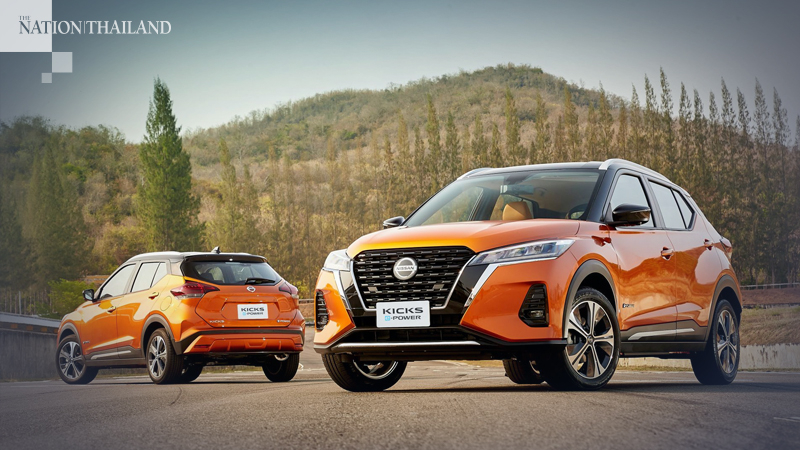
Nissan Motor Co. held a presentation of its new brand of small sports utility vehicle (SUV) “Kicks” on Wednesday. The hybrid vehicle uses e-Power, the company’s unique technology, to strengthen acceleration performance. This was the first time in about 10 years that Nissan has domestically introduced a new brand of ordinary car.
This new brand is the first step to recover for Nissan, which has delayed launching new models within Japan, resulting in its sluggish domestic sales.
“Japan is an important market,” Asako Hoshino, an executive vice president of the company, said at an online briefing. “Beginning with the Kicks line, we will deliver more of our attractive cars.”
Toyota Motor Corp. released luxury SUV “Harrier,” which has been fully revamped for the first time in seven years, on June 17. Daihatsu Motor Co. launched Taft, a light SUV with enhancing collision safety performance using a newly-developed sensor, on June 10. Honda Motor Co. and Mazda Motor Corp. also plan to introduce mass-produced electric vehicles for the first time in the future.
The domestic sales of new cars in May dropped by 45% from the figure in the same month last year. Because the economic prospects are uncertain, many people concerned are adopting a cautious approach with an official of Japan Automobile Dealers Association saying, “It is difficult to recover all at once,” after June.
In response to the recovery of demand for new cars, on the other hand, Toyota will reduce the scale of production adjustment to a roughly 10% drop in July and a roughly 40% reduction in June, differing from their initial plans. Mazda’s production in June almost halved from the same month last year. But the company is expected to recover up to 75% in July.
Whether a series of new car launches will trigger a turnaround in sales is under great scrutiny.
DOJ defends autos probe ahead of House inquiry on enforcement
Jun 23. 2020
By Syndication Washington Post, Bloomberg · David McLaughlin · NATIONAL, BUSINESS, COURTSLAW The U.S. Justice Department denied politics played a role in its decision last year to open an antitrust investigation of four automakers that reached an agreement with California on fuel-efficiency standards.
The department said it had a legitimate legal basis to believe that the companies — Volkswagen, BMW, Honda and Ford — violated antitrust laws, according to a June 19 letter to Sen. Sheldon Whitehouse, D-R.I.
“We share the view that political interference from outside the Department must never govern law enforcement efforts,” according to the letter obtained by Bloomberg News. “This inquiry was, based on the information known to it at the time, entirely reasonable.”
The letter is the first detailed explanation about why the Trump administration opened the investigation. The inquiry, which was closed six months later, was widely criticized as motivated by the administration’s clash with the automakers over national standards on tailpipe emissions. House Speaker Nancy Pelosi called it a “sham investigation” and accused the Justice Department of trying to “weaponize law enforcement for partisan political purposes.”
Congress could revisit the controversy Wednesday when the House Judiciary Committee holds a hearing on what the panel called the “unprecedented politicization” of the Justice Department under Trump. A lawyer with the Justice Department’s antitrust division, John Elias, is scheduled to testify at the hearing along with Aaron Zelinsky, who was a prosecutor in the Justice Department’s case against Trump associate Roger Stone. He withdrew from the case after Attorney General William Barr ordered prosecutors to reduce their sentencing recommendation.
It’s not clear what Elias will testify about. He worked as chief of staff to the head of the antitrust division, Makan Delrahim, before taking a job in the division’s unit that prosecutes price-fixing and bid-rigging cases.
The investigation of the automakers wasn’t the first time Delrahim was accused of politically-motivated antitrust enforcement. Shortly after taking over the division, he sued to block AT&T Inc.’s takeover of Time Warner Inc. The lawsuit came after Trump’s repeated criticism of Time Warner network CNN. The Justice Department lost at trial and the deal closed.
Whitehouse said he’s not satisfied by the Justice Department’s explanation. At an oversight hearing in September, he grilled Delrahim about the investigation and said it appeared the department was retaliating against companies that defied the Trump’s effort to ease vehicle emissions standards.
“The letter is light on details and provides no documentary support for its claims,” Whitehouse said in a statement. “I still have unanswered questions, and I hope the House Judiciary Committee hearing on Wednesday will help us get to the bottom of this.”
The Justice Department explained in the letter that it began the investigation because it was concerned that the companies had reached an agreement with one another on emissions, a potential antitrust violation. The announcement of the deal was signed by four companies and explicitly stated that “we all agree” to the framework.
After determining that the automakers had in fact reached bilateral agreements with California, the investigation was closed, according to the letter. To determine whether an antitrust violation occurred, enforcers have to investigate fact-specific questions regardless of politics, the department said.
Law enforcement “requires that the department review possible anticompetitive conduct even if it would be politically unpopular to do so,” the letter states. “Indeed, declining to investigate potentially anticompetitive collusive conduct purely out of support for certain policy goals would reflect inappropriate political consideration.”
Auto production revs up in May but down 69 per cent year on year
Jun 19. 2020
By THE NATION
Auto production fell to 56,035 vehicles in May, plummeting 69.1 per cent year on year, but more than doubled the output in April, the Automotive Industry Club, under the Federation of Thai Industries, reported.
“This signals that the lowest point for automotive manufacturing has passed, as in April we only produced 24,711 vehicles, which is considered the lowest in 30 years due to the Covid-19 situation that has affected automotive manufacturers and markets globally,” said Surapong Pisitpattanapong, vice president and spokesman of the club.
“The production volume in May, although still low compared to the same period last year, has jumped 126.76 per cent from April, thanks to several factories that have resumed their manufacturing lines after almost two months of shutting down.”
Surapong predicted that if the Covid-19 situation were resolved by September, Thailand will have average production volume of 60,000 vehicle per month in the rest seven months of the year, totalling 420,000 vehicles.
“Combined with the 534,428 vehicles that were produced so far, the annual production volume should stand at around 900,000 vehicles, which is close to the estimated target of 1 million to 1.4 million vehicles,” he said. “In the best-case scenario, domestic factories must be able to produce at least 140,000 vehicles per month until the year-end in order to reach the 1.4 million vehicles annual target. However, this scenario is extremely unlikely considering the current economy.”
Surapong added that although the Covid-19 situation in Thailand is improving, the situation is escalating overseas which will impact automobile export markets. “Production for export in May stands at 35,965 vehicles, decreasing 61.93 per cent year on year, while the actual export volume stands at 29,894 vehicles, decreasing 68.64 per cent year on year,” he added.
“Meanwhile, production for domestic sales in May was 20,070 vehicles, also down 76.89 per cent year on year, due to sellers still having cars in showrooms,” added Surapong.
“Total domestic sales in May were 40,418 vehicles, decreasing 54.12 per cent year on year but increasing 34.24 per cent from April, thanks to the improving Covid-19 situation. We expect that total sales in 2020 will be in the range of 500,000 to 700,000 vehicles, depending on how fast the Covid-19 situation resolves.”
 A sample coil winding machine, which winds copper wires in three different ways. MUST CREDIT: Odawara Engineering Co.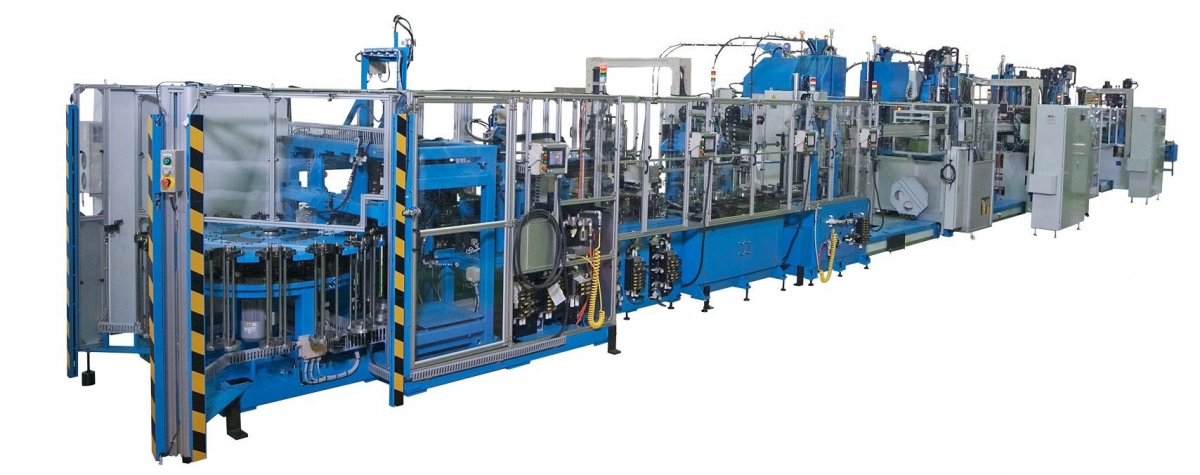
 An electric charging station stands beside a Renault SA K-ZE electric SUV at the Paris Motor Show in Paris, France, on Oct. 1, 2018. MUST CREDIT: Bloomberg photo by Marlene Awaad.
 Makoto Uchida, CEO of Nissan, unveils the company’s Ariya electric crossover SUV at Nissan Pavilion in Yokohama, Japan, on July 15, 2020. MUST CREDIT: Bloomberg photo by Noriko Hayashi.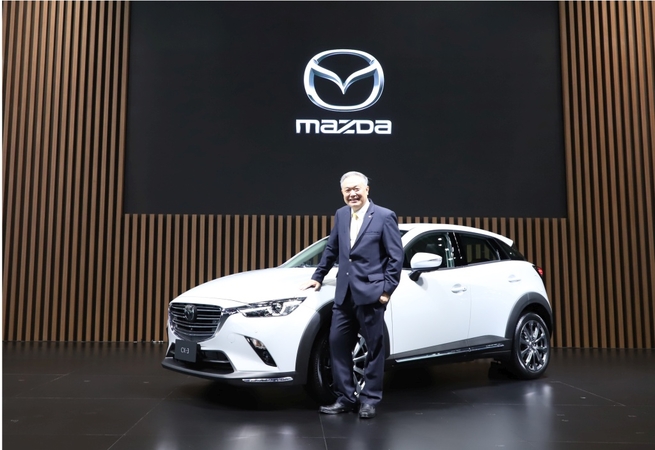
 Photo credit: Prostooleh
 SootinClaimon.Com