Loophole in FTAs allows more electric vehicles to be imported from next year
Dec 14. 2020
By The Nation
Electric vehicles (EVs) from China are expected to start flowing into Thailand, while the Thai Auto Industry Association is calling on the government to further improve the existing free-trade agreements (FTAs) with China.
As per the China-Asean FTA, China can already send 100-per-cent electric vehicles to Thailand tariff free, which goes against the government’s policy of promoting the production of EVs locally in a bid to support the Thai automotive industry.
Automaker MG, a British brand with a Chinese owner, has taken advantage of this loophole to enter the Thai market with two EV models – the MG ZS EV SUV going for Bt1.19 million and the MG EP station wagon for Bt988,000.
The release of these vehicles adversely affects Japanese automakers, who are having to pay 20 per cent import duty under the Japan-Thai FTA.
For instance, Nissan Leaf which was initially launched at Bt1.99 million and recently reduced to 1.49 million, is still not moving. From June last year to December this year, barely 200 units of the car have been sold, though the Metropolitan Electricity Authority recently bought 24 Nissan Leaf units. Ramesh Narasimhan, president of Nissan Motor Thailand, admitted that the car was overpriced at Bt1.99 million.
Meanwhile, European carmakers have different policies when it comes to launching EVs in Thailand, and the Covid-19 outbreak is affecting their plans significantly. For instance, Mercedes-Benz has had to postpone plans to set up an assembly plant in Thonburi to the end of 2021, while Audi too has indefinitely put off its plan to set up a factory in Thailand.
Volvo, which imports the plug-in hybrid Recharge from Malaysia, will import its fully electric version from China in the second half of 2021.
BMW Thailand Group, which already assembles five plug-in hybrid models at its assembly plant in Rayong, will launch the fully electric BMW iX3 imported from China next year.
Apart from the import of many European brands from China, Chinese brands like the Great Wall Motor will also be entering the Thai market from 2021.
Ongarj Pongkijvorasin, chairman of the Federation of Thai Industries’ Automotive Industry Club, said recently that he has urged Prime Minister Prayut Chan-o-cha to consider bringing the tariff for EVs from China down to zero per cent as it will attract more foreign investment in the country.
“The government should have a clear policy on electric vehicles and all departments should coordinate and move in the same direction. More importantly, plans should be realistic and should take into consideration our potential, while preserving the original production base,” Ongari said.
Hybrids are quietly selling faster than fully electric cars
Dec 12. 2020A Toyota Prius hybrid electric vehicle drives down past the Ballona Wetlands Ecological Reserve in Los Angeles on Sept. 19, 2019. MUST CREDIT: Bloomberg photo by Patrick T. Fallon. Photo by: Patrick T. Fallon — Bloomberg Location: Los Angeles, United States
By Syndication The Washington Post, Bloomberg · River Davis
Hybrid cars are seeing a quiet resurgence as the boom in electric vehicles spurs automakers to give the older, cheaper technology a second look.
This year has been an extraordinary one for electric-car manufacturers. Investors have embraced makers of pure-electric vehicles, driving the share prices of Tesla Inc. and Chinese competitor Nio Inc. to stratospheric levels. Drivers are also coming on board, with EV sales from China to Europe rising despite the pandemic.
But the market risks becoming a crowded one, with more than 500 EV models expected to be available globally by 2022. Many conventional automakers are mulling their options, trying to decide which technologies will reign in the decades between now and a full transition away from combustion engines. The investment decisions they make today could determine whether they sink or swim.
While hybrids, which blend the power of a gasoline engine with electric motors and batteries, are now more than two decades old – the first Prius debuted in Japan in 1997 – they’re still seeing demand even as EVs loom large. Ford and Toyota are among those releasing fresh hybrid versions of their flagship marques and investing anew in their hybrid component supply chains. While non plug-in hybrids aren’t subject to the same sort of generous subsidies meted out to electric vehicles in China, Europe and California, their appeal has been rising after a multiyear slump.
Hybrid sales in the U.S. rose 17% last year from 2018; in the European Union they rose 22% over the same period as the region braces for tightening emissions regulations. In China, Japanese brands – which claim the biggest share of the hybrid market globally – sold about 30% more hybrids, making the segment one of the market’s fastest growing. Electric-car sales by contrast increased 6% in 2019 from 2018, well down on previous years’ double-digit growth.
The reasons are severalfold. Hybrids offer savings at the pump, while not sparking the same range anxiety as EVs. And because hybrid cars are supported by a gasoline engine, therefore requiring smaller and less expensive battery packs, their overall costs are lower – an attractive prospect for a consumer wanting a car that’s better for the environment but who’s not able to shell out top dollar for a Tesla.
That’s the dilemma facing car buyers such as John Briggs, a mechanical engineer living in Massachusetts who values fuel efficiency but isn’t ready to make a complete transition to EVs. He’s keeping his trusty hybrid Prius even though he bought Nissan Motor Co.’s popular electric Leaf five years ago.
“The nice thing about our Prius, it’s an efficient car and its range isn’t limiting like our EV’s is,” said Briggs, whose wife uses the Leaf for a short commute to and from work. They take the Prius for longer trips to go hiking on weekends. “It’s just not practical to have to stop and the charging time takes too long.”
Ford’s 2021 inaugural F-150 truck, part of the 43-year-best-selling F-series, is set to be the first full-hybrid, full-size truck available on the market. Toyota’s 2021 iteration of its bestselling crossover Rav4 is a plug-in hybrid called the RAV4 Prime that’s the automaker’s most powerful model of the car yet.
In fact, hybrid sales are projected to keep growing until they peak in 2027 with a market value of $792 billion, according to IDTechEx.
Hybrid Rav4s outsold their gas-only counterparts in the U.S. in June, a rare occurrence that lends credence to Toyota’s theory that there’s demand for new hybrid versions of its existing models that come with added fuel-economy, torque and power.
In April, a Toyota and Panasonic Corp.-led battery venture called Prime Planet Energy & Solutions Inc. began operations. It aims to produce batteries for 500,000 hybrid vehicles a year, starting in 2022.
“For now, we’re going to firmly move forward with making batteries for hybrid vehicles as they are today’s standard,” Prime Planet Chief Executive Officer Hiroaki Koda said, acknowledging that an industry shift to full-electric or fuel-cell vehicles will require flexibility and some change in direction.
That’s a question mark in some analysts’ minds, too. Will tying up too much capital in the hybrid-vehicle pipeline inhibit carmakers’ ability to invest in electric vehicles down the track? It is, after all, a segment that’s expected to skyrocket to 64 million units from about 2 million units in annual sales over the next two decades as battery costs fall and consumer tastes shift.
Similarly, while elevated oil prices and strict fuel-economy regulations can drive up hybrid sales, if either of those factors gets too strong, the market will be pushed toward full EVs, according to Colin McKerracher, head of advanced transport at Bloomberg New Energy Finance.
Indeed, Honda is set to stop selling gas and diesel-only cars in Europe by 2022, Honda Europe Senior Vice President Ian Howells told Autocar in an interview published last week, suggesting a more decisive shift to hybrids.
Toyota sees hybrids making up a quarter of sales, Bob Carter, Toyota’s executive vice president for North America sales, told reporters last week. That’s up from about 16% currently and capacity constraints are the only reason the company isn’t selling more hybrids now, he said.
Toyota, which hasn’t released a mass-market all-electric car in any major market except China, will have to “quickly change its tune” on plug-in vehicles and EVs and sell more of them or risk falling short of the European Union’s regulations on fleet emissions by 2025, McKerracher said. “Eventually you reach a place where you’re at 70, 80, 90% hybrids and then you’re out of room to keep hitting those tightening regulations just by hybridizing vehicles.”
Toyota however sees hybrids as a necessary stepping stone to other next-generation technologies. The world’s second-largest automaker is investing heavily in fuel-cell vehicles and battery EVs, Chief Competitive Officer Shigeki Terashi said at a briefing last month, but until those technologies mature, “hybrid vehicles are most practical.” Toyota is expected to invest about $13.5 billion through the end of the decade in electrifying its vehicles, as it targets sales of 4.5 million hybrids and one million full-EVs and fuel cell vehicles a year by 2030 or sooner.
37th Motor Expo organisers confident booking target will be met this year
Dec 09. 2020
By The Nation
This year’s Motor Expo has seen the booking of as many as 15,777 cars and motorcycles in the first seven days.
Kwanchai Paphatphong, organising chairman of the event, said between December 1 and 7, 13,549 cars were booked, down 1.6 per cent from last year’s fair. The fair was opened for press and guests on December 1 and for the general public on December 2.
Toyota is leading the bookings with 2,061 units, followed by Honda at 2,032, Mazda 1,786, Isuzu 1,506 and MG 928 units.
So far, only 2,228 motorbikes have been booked, 30.7 per cent less from the last fair. The top five brands are Honda 543 units, Yamaha 385, GPX 336 units, Kawasaki 189 and Vespa 201.
The fair expects to attract as many as 1 million visitors and have 25,000 to 30,000 cars and 5,000 motorcycles booked, and expects more than Bt35 billion to be spent.
Kwanchai said more bookings are expected during the December 10-13 long weekend and is confident targets will be met.
The 37th Motor Expo runs until December 13 at Nonthaburi’s IMPACT Challenger Hall, Muang Thong Thani.
The best car I drove in 2020-plus eight runners-up
Dec 06. 2020The Porsche 911. MUST CREDIT: Bloomberg photo by Hannah Elliott.
By Syndication Washington Post, Bloomberg · Hannah Elliott · BUSINESS, FEATURES
A longtime New Yorker, I am deeply missing the beautiful, messy, glorious humanity of crowding into the concerts, airplanes, museums, bacchanals, and bars that coronavirus has rendered unsafe.
But at least the highway is open.
One of the bright spots in this most surreal year has been the fact that, for those of us interested in cars-for that matter, interested in any escape whatsoever, however brief-we can still get in our vehicles and drive.
And while the automotive shows and glitzy world debuts that traditionally launch new products have stalled, that doesn’t mean car manufacturers aren’t selling new products. Far from it. They punched back with everything from unveilings via livestream video feeds, as Lamborghini did for its Huracán STO, to one-on-one journalist viewings in airplane hangars at near-abandoned airports, as General Motors did with its new Hummer EV.
I’ve driven 66 (by my count) of those new vehicles so far in 2020: such coupes as the Chevrolet Corvette, SUVs like the Genesis GV80 and Land Rover Defender, convertibles such as the Lamborghini Huracán RWD Spyder, wagons like the Audi RS6 Avant, and even some motorcycles and electric bicycles.
Plenty were forgettable. (More about those in an upcoming column.) Some, like the Volvo XC90 and Audi A6 Allroad achieved the right things: Thoughtful design, fair pricing, intuitive technology, and performance that live up to whatever their manufacturer has promise in advertising and marketing. A very few, including the delicious Corvette C8 and decadent Ferrari Roma, also added to the mix of sex-appeal, thrilling driving excitement, and engineering references that show the cars knows their places in the brand’s future-and history.
One or two cars each year combine all that and add a certain X factor that makes them memorable for generations. Scroll down for the ultimate winner. But first, here are the best in their class of what I drove in 2020.
— Best grand tourer: Ferrari Roma. The Roma is the car that made me the happiest to be around, inside and out, all year. And although it ultimately didn’t win top spot, it’s nearly perfect-and the most beautiful Ferrari to roll off the line since forever. It marries impeccable elegance with 612-horsepower performance, refreshingly intuitive technology, and enough creature comforts to make it doable on a daily basis.
— Best electric vehicle: Polestar 2. The Porsche Taycan may have been the one car I most wanted to drive this year, but the Polestar 2 wins the electric beat. Impressively quick and nimble for about a third of the cost, the 402 hp, all-wheel-drive hatchback offers the solidity of Volvo safety systems, an ingeniously unique cabin, and a body style that combines the practicality and ride height of a small crossover SUV with a front end that looks like a sedan. Driving range: 233 miles.
– Best family SUV: Volvo XC90. In a segment laden with boring appliances, the XC90 manages to be quietly elegant, memorable, and moreover, fun to drive. Plus its values are applicable for many families: sustainable materials, laudable efficiency ratings, beaucoup safety systems, and sensible entertainment technology.
– Best monster SUV: Cadillac Escalade. The king of American SUVs is not for the faint of heart: It’s nearly five inches longer than the previous generation, and the same ride height as a UPS truck, although with a new independent rear suspension that improves handling. In the maximalist, upscale SUV market (the cabin of one I drove was covered in glamorous, delightfully impractical white leather), you could spend a half-million dollars on the exceptional Rolls-Royce Cullinan or a fraction of that on the redesigned Escalade.
– Best wagon: Mercedes-Benz E63AMG. In the sledgehammer-shaped E63AMG wagon, Mercedes finds a way to make a grocery-getter feel like Darth Vader. It has 602 horsepower, a 3.4 second sprint time, and a silky smooth, nine-speed transmission with massive sport brakes that bite the instant you hit them. The raw, roaring intensity outmatches the Porsche and Audi wagons in its class, while cool new factory paint colors and prohibitively small production volumes spell out b-a-d-a-s-s without saying a word.
– Best track star: Lamborghini Huracán EVO RWD. Driving this volatile rear-wheel-drive Huracán feels like a throwback to days when Lamborghinis were wild, gas-gulping bulls meant to impose themselves on anyone and anything in their path. A thoughtful, cockpit-style interior and intuitive entertainment systems make it comfortable to shuttle between your home and its true home: the track. The 631-horsepower V10 engine and zero-to-62 mph sprint time of 2.9 seconds match a body chiseled to aerodynamic, aggressive perfection.
– Best convertible: Ferrari F8 Tributo Spider. Ferrari revved it up in the convertible category this year, too. The F8 Tributo Spider has jaw-dropping body styling, leather handiwork unparalleled within the segment, exciting rear wheel drive, and a hardtop that drops in just 14 second at speeds of nearly 30 mph. But the refined engine note on its 710 hp V8 is the most commendable thing about it, having left me refreshed-not buzzing and frayed-after hours of driving, as other screaming machines in the segment do. Full review here
— Best sedan: Rolls-Royce Ghost. There’s a reason the phrase “it’s the Rolls-Royce of [insert appliance here]” exists, and the next-generation “post-luxury” Ghost does nothing to dispel that. The powerful V12 engine, imposing new grille, deep-pile lambswool carpeting, and blessed silence has road presence enough to satisfy the heads of state who ride in it, while my multiday test drive felt like joining a regal club that has stretched a century. No other production sedan approximates the upscale accoutrement, total exclusivity-or price tag.
– The best car of 2020. Even with all those winners, the single best car I drove this year will be memorable for years to come. It combines performance, looks, cost-to-value, and comfort with a true X factor that made me fall in love. It’s the 2021 Porsche 911 Turbo S. (If you’re tracking, this also makes it the year’s best coupe.)
The eighth-generation installment updates an iconic design that started in 1964 with new modern cabin and safety technologies but without rendering it unrecognizable. Most of all, it provides intoxicating performance in a package that is drivable every day-arguably more capable over uneven or steep terrain, and in inclement weather, than that Roma-while still feeling special every time you slip behind the wheel.
It is faster and more powerful than previous generations, with a 640 hp, twin-turbo, six-cylinder engine (60 hp more than the previous 911 Turbo S) and 590 pound-feet of torque (37 pound-feet more). It goes from zero to 60 mph in 2.6 seconds, a 0.2-second improvement. Top speed is 205 mph-the same as the scintillating, track-targeted 2021 McLaren 765LT.
Impressive stats. But the truly brilliant side to the car is its control. With the 911 Turbo S, driving becomes a meditation on a knife’s edge. It is the roaring, gas-gulping embodiment of power controlled by precision, like those muscled Lipizzan stallions that seem to pirouette on a thimble. It’s a balance that evades many sports cars with more cylinders, more horsepower, and more torque.
I love the 911 Turbo S because it made me a better driver than I actually am-better able to dip into corners and carry speed faster through them, braking later and getting back on the gas sooner than I normally am able to do. But instead of being scary or reckless, forcing me to drive beyond my ability, it instilled utter confidence from behind the wheel.
Plus, there are (a few) cup holders.
There’s also a usable trunk and rear “seat” for storage, all-terrain capable AWD, a beautiful interior cabin, ingenious infotainment, and enough ride height to handle cobbled and messy streets. Call it the Swiss Army Knife of sports cars wrapped in a legendary package; for 2020, the Porsche 911 Turbo S is the clear winner.
Automakers accelerate promotions as govt puts brakes on ‘Old Car for New Car’ scheme
Dec 03. 2020
By The Nation
Automakers are not waiting for the government’s planned “Old Car for New Car” scheme and are driving promotion campaigns worth as much as Bt100,000 to boost sales at the end of the year, insisting customers will benefit more from their promotions than from the government programme when it is introduced.
The Old Car for New Car scheme was postponed at a Cabinet meeting chaired by Prime Minister Prayut Chan-o-cha, who asked relevant departments to undertake another study of the scheme for more clarity.
The Industry Ministry is preparing to call in automakers individually for talks this week, while the Finance Ministry has not yet agreed to the scheme since it hasn’t seen a clear project framework or worked out proper financial support, wondering whether to deduct annual income tax (just as in the “Shop Dee Mee Kuen” campaign) or reduce excise tax per vehicle as demanded by car manufacturers (such as the highly successful first-car tax rebate policy by then-PM Yingluck Shinawatra’s government).
Mazda Sales (Thailand) chief executive officer Chanchai Trakarnudomsuk said the company still does not know the exact details of the Old Car for New Car scheme, but is confident that promotions being given to customers now are more beneficial than those that would be offered under the government scheme.
“If it’s just a tax deduction, the customer will not probably get much money back. Promotions by carmakers will give them more. Anyway, if really incentivised, the first car project model should be taken as a base [reduced excise tax] and run for a long period,” Chanchai said.
Suzuki Motor Thailand’s executive director for Sales and Marketing Wallop Treererkngam said that if the Old Car for New Car scheme only involves electric cars or hybrids, this might not make sense since small vehicles such as eco-cars also produce low emissions. More importantly, at their prices they are easily accessible.
“Yes, the government project is a good one. But the conditions are still difficult: for instance, under the planned scheme, people who have used their cars for more than 10 years have to change to a high-priced electric car. And financial support is still unclear. Therefore, many automakers at the Motor Expo 2020 are already offering promotions worth more than Bt100,000 on sedans and pick-up trucks,” Wallop said.
Major Japanese automaker Toyota did not have much comment on the government scheme.
Toyota Motor Thailand executive vice president Surasak Suthongwan said he wants to wait for the policy to be introduced before giving his opinion.
But it has not affected sales right now as the automaker has various agencies and networks, including a strong dealer network of new cars, Toyota Sure (used cars) and Toyota Kinto (long-term personal rental cars), he said.
A number of vehicle manufacturers have launched new models at the huge Motor Expo 2020, which is on until December 13 at Challenger Halls 1-3, Impact Arena, Muang Thong Thani. Automakers have hit the road with a variety of financial offers, including Bt0 down payment, 0 per cent interest, free first-class insurance, free distance maintenance, and more.
Royal Enfield’s new Meteor 350 roars into 37th Thailand Motor Expo
Dec 01. 2020
By The Nation
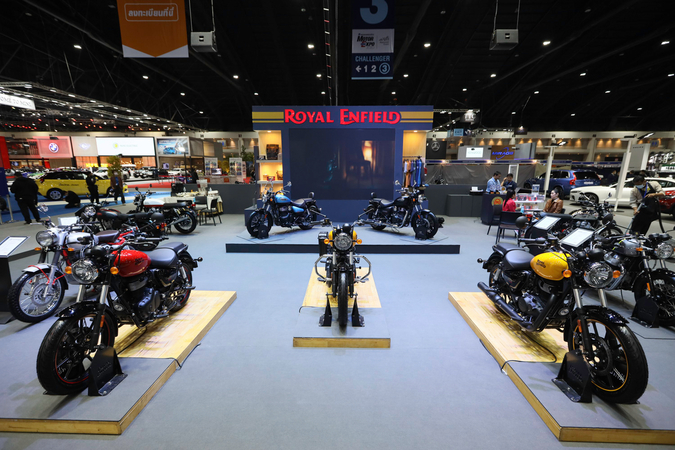
Royal Enfield, global leader in the mid-size (250-750cc) motorcycle segment, is showcasing its iconic motorcycles at the much-anticipated 37th Thailand International Motor Expo 2020, Impact Challenger Hall 3, Muang Thong Thani. Included in the display is the firm’s recently launched Meteor 350, an easy-cruiser motorcycle.
“We are delighted to showcase the very first 350cc motorcycle from Royal Enfield for the Thai market,” said Vimal Sumbly, Asia-Pacific head of business for Royal Enfield.
“Our motorcycles have received an excellent response in Thailand right from the very start, and Thailand is our No 1 market within the APAC region.
“Thailand is the third home for the brand after the UK and India. The Meteor 350 is the latest in a planned series of new models, building on the enormous success of the 650 Twin models that we launched two years ago.”
Vimal Sumbly, Asia-Pacific head of business for Royal Enfield
Royal Enfield boasts 30 outlets across Thailand – 15 exclusive showrooms and 15 authorised service centres. By March 2021, it expects to have 36 stores, making the brand more accessible to motorcycling enthusiasts.
The 37th Thailand International Motor Expo runs from December 2-13 at Impact.
Ford unveiling new Ranger and Everest at International Motor Expo
Dec 01. 2020
By The Nation
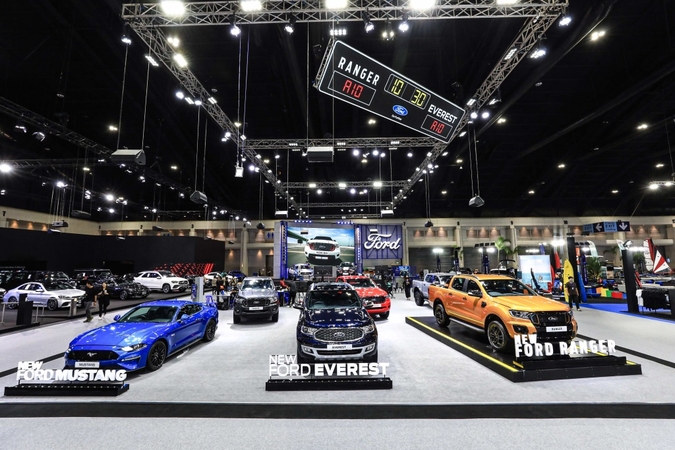
Ford’s recently launched new Ranger and Everest, as well as a Mustang Special Edition, are being showcased on the Ford stand at the 37th Thailand International Motor Expo at Impact Challenger Hall 1, Muang Thong Thani from December 2-13.
Ford is offering a number of special promotions during the expo. Every purchase of the new Ranger and Everest with 2-litre engine also comes with Ford’s 10-Year Driveline Care Programme covering the vehicle’s driveline components for 10 years or 150,000 kilometres, whichever occurs first.
Visitors can also get an up-close view of Ford Thailand Racing (FTR)’s customised and modified Ranger pickup truck, which recently bagged two podium finishes at the Thailand Super Series 2020.
Wichit Wongwattanakan, managing director of Ford Thailand
“The modified FTR Ranger race truck and Mustang Special Edition to commemorate its 55th Anniversary help provide an extra dose of excitement to the Ford stand that we know Expo attendees will appreciate,” said Wichit Wongwattanakan, managing director of Ford Thailand.
“We’re also confident that our upgraded new Ranger and Everest, offered with our Ford 10-Year Driveline Care Programme, will attract a lot of customer interest at the expo and our Ford dealerships across the country.”
This year’s Motor Expo expected to generate Bt35 billion in revenue
Dec 01. 2020
By The Nation
Organisers expect 25,000 to 30,000 cars and 5,000 motorcycles to be booked at this year’s Motor Expo, which is expected to attract as many as 1 million visitors and more than Bt35 billion in spending.
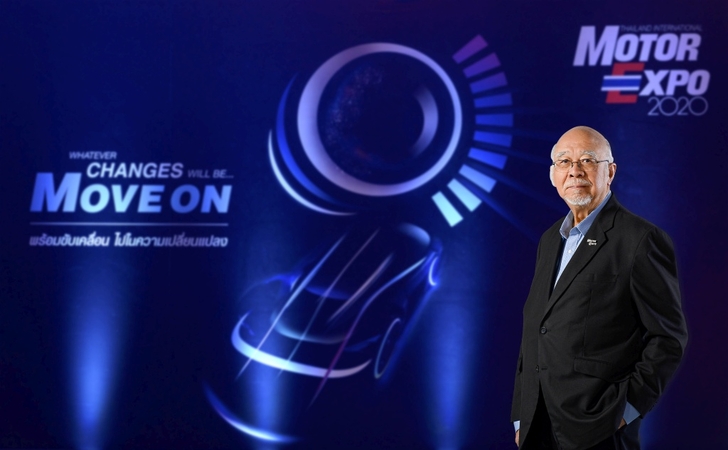
Kwanchai Paphatphong, organising chairman of the 37th Motor Expo, said the event held under the concept of “Whatever Changes Will Be… Move On” features 31 auto brands from eight countries and 21 motorcycle brands from 10 nations as well as a boat show and loads of auto accessories.
New car launches at the event include the world premiere of Nissan Navara Pro Series, the Asia launch of Kia Carnival and Thailand launch of the BMW 4 Series, Peugeot 2008 SUV and Porsche Panamera.
Every booth is expected to offer promotions, while the organiser has prepared many special offers such as “Buy a Car Win a Car”, “Buy a Ticket Win a Car”, “Buy Merchandise to Win a Car”, “Buy a Motorbike Win a Big Bike”, “View Motor Expo Online to Win a Prize” etc.
The 37th Motor Expo runs from Wednesday to December 13 at IMPACT Challenger, Muang Thong Thani.
Mercedes-Benz offers more affordable, locally assembled options at this year’s Motor Expo
Dec 01. 2020
By The Nation
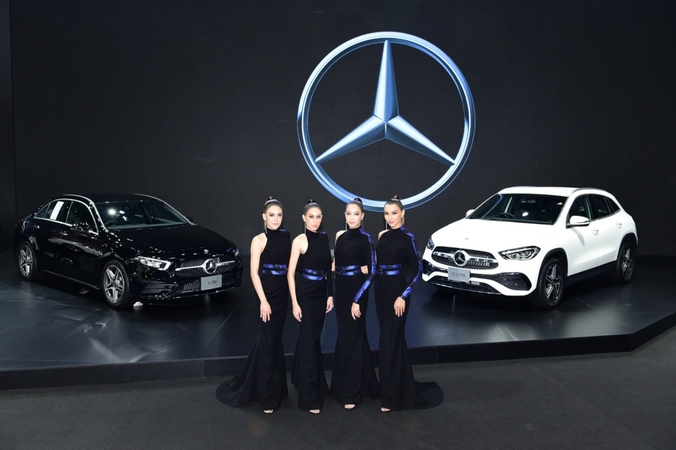
Much to the delight of car enthusiasts, Mercedes-Benz has brought more than 25 luxury vehicles to the 37th Motor Expo, which kicks off on Wednesday.
The line-up covers several segments under the Mercedes brand, including compact cars, contemporary luxury, dream cars and SUV, as well as high-performance vehicles under the Mercedes-AMG brand and plug-in hybrid cars from the EQ brand, catering to every lifestyle.
Highlights include the locally assembled edition of the Mercedes-Benz GLA 200 AMG Dynamic, a second-generation compact SUV that offers more space and additional safety features, and the sleeker, sportier Mercedes-Benz A-Class.
The automaker is offering a special yearend deal at this year’s Motor Expo, which will run until December 13 at the Impact Challenger Hall 1 in Muang Thong Thani.
Customers who purchase Mercedes-Benz and Mercedes-AMG vehicles (participating models only), with deliveries until December 31, will receive an iPhone 12 worth more than Bt32,000.
Roland Folger, president and CEO of Mercedes-Benz (Thailand), said the two new locally assembled vehicles – the Mercedes-Benz GLA 200 AMG Dynamic and the Mercedes-Benz A-Class – are expected to boost sales in the luxury car market at the end of the year.
Roland Folger, president and CEO of Mercedes-Benz (Thailand) Company Limited
He said these locally assembled versions are being offered at highly competitive prices, which will surely attract new customers.
The company is confident that new GLA and A-Class as well as other premium models showcased at the expo will receive an overwhelming welcome, he added.
The new Mercedes-Benz GLA 200 AMG Dynamic is priced at Bt2,399,000, while the Mercedes-Benz A-Class comes in two models: the Mercedes-Benz A 200 Progressive, priced at Bt1,990,000 and Mercedes-Benz A 200 AMG Dynamic, priced at Bt2,150,000.
By The Washington Post · Ian Duncan · NATIONAL, BUSINESS, SCIENCE-ENVIRONMENT, US-GLOBAL-MARKETS Until a few years ago, the top spot on the lot at Sport Chevrolet in Silver Spring, Md., was occupied by Corvettes. But visit now and the sports cars have been shunted aside. In their place are battery-powered Bolts.
Gibbs Fogarty, one of the dealership’s owners, said they saw which way the industry was moving. Their customers were going to want electric vehicles.
“We’ve been all-in from the start,” Fogarty said.
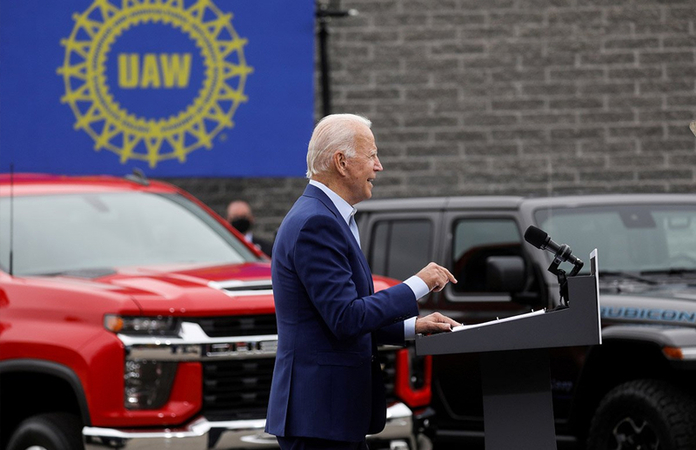
Electric vehicles make up less than 2% of the 17 million or so new cars and SUVs sold each year in the United States, but President-elect Joe Biden, the son of a car salesman and himself the owner of a vintage Corvette, also wants the country to be all-in on electric vehicles. He has pitched them as a way to fight climate change and reinvigorate American manufacturing.
“I believe that we can own the 21st century market again by moving to electric vehicles,” Biden says while gripping the wheel of his 1967 Corvette Sting Ray. In a campaign video that used the rumble of the car’s engine as a soundtrack, Biden grins at the prospect of an electric version with a 200 mph top speed.
Biden’s campaign set out a raft of policies designed to speed the adoption of electric vehicles – including funding for a network of half a million charging points, tax credits for people who buy them, and money to fund research and development. He has staffed his Department of Transportation transition team with advocates for the new technology.
The incoming administration’s plans for electric vehicles underscore how its approach to transportation policy will be shaped by the battle against climate change, as it seeks to reshape the sector of the economy responsible for the largest share of greenhouse gas emissions.
Biden also has pledged to dramatically increase the federal government’s support for transit, another way of reducing emissions, but that effort probably will play out over a longer time frame and face stiff opposition from Republicans. Plus, in a country where the vast majority of people drive to work, getting them behind the wheel of an electric car is asking for a smaller change than convincing them to take a bus.
The president-elect got a significant boost this week, when General Motors announced it was ditching an alliance with President Donald Trump that was forged last year to challenge California’s efforts to impose more stringent fuel standards on automakers. Instead, the company announced in a letter to environmental groups that it supported Biden’s electric vision.
“We believe the ambitious electrification goals of the President-elect, California, and General Motors are aligned to address climate change by drastically reducing automobile emissions,” GM chief executive Mary Barra wrote.
Biden said he raised his ideas in a call with industry leaders, including Barra, last week. And on Twitter, Ron Klain, who will be Biden’s chief of staff, welcomed her announcement.
“Glad to see @JoeBiden’s leadership – bringing business and labor together a week ago today – is already encouraging progress,” he wrote.
Significant hurdles remain to making a shift to electric on a large scale. About 242,000 fully electric vehicles were sold in the United States last year, according to data compiled by the Argonne National Laboratory. Of those, 189,000 were Teslas.
The owners of Sport Chevrolet say they’re among the top sellers of electric vehicles on the East Coast, but even so, saleswoman Esmerelda Ponce estimated they sell one Bolt for every five gas-powered cars and SUVs sold.
Advocates for the technology say they are excited about the prospects of a boost from the new administration, but it is tempered by the size of the challenge and realities of politics.
“We shouldn’t be deluded in believing that just because we have a president who might be more excited about EVs or who has demonstrated more interest that this is going to be an easy path,” Ben Prochazka, national director of the Electrification Coalition, said in a recent briefing.
Biden’s campaign and transition team committed to the installation of 500,000 electric vehicle charging stations by 2030 and extending a tax credit for the purchase of the vehicles. Advocates see the second move as an important bridge for coming years until the cost of electric vehicles falls to the same levels as gas-powered vehicles.
The full buyer credit of up to $7,500 begins to phase out after a manufacturer sells 200,000 vehicles, and has run out entirely for Tesla and GM. At Sport Chevrolet, a new Bolt in the premier trim costs about $28,000 after discounts from the dealership and manufacturer are taken into account, far more than a similar small gas-powered car.
Fogarty said the credit could make the difference: “Customers look at that and it may give them the boost they needed to make that decision,” he said.
Biden’s team also has pledged to undo Trump’s rollback of fuel emissions standards, one of the administration’s signature and most controversial environmental policies. The rollback prompted the bitter battle between the federal government and California, with each side lining up an alliance of automakers in support of its position.
Biden has said he would set stricter rules to encourage the adoption of electric vehicles, while he also could end the Trump administration’s challenge to California’s authority to set its own standards.
He is also looking to California for personnel. Biden is said to be considering Mary Nichols, the head of California’s clean air regulator, to lead the Environmental Protection Agency, which shares responsibility with the National Highway Traffic Safety Administration for setting emissions standards. Patty Monahan, a state energy commissioner with responsibility for clean transportation, is a member of Biden’s Department of Transportation transition team.
But the president-elect has stopped short of spelling out a goal for when sales of new gas vehicles would be phased out, a step California and some European nations have taken, generally targeting 2030 or 2035.
“That’s going to be based upon whether or not we can make it economically feasible,” Biden said during a CNN town hall in September, adding, “We have to take the combustion engine vehicles off the road as rapidly as we can.”
Designing policies to encourage automakers to build electric vehicles and the public to buy them is only the first step. Most states and the federal government fund a significant proportion of their highway budgets through taxes on gasoline – revenue that would dwindle as more cars are powered by batteries.
Ultimately, a wholesale shift to electric vehicles will represent a disruption to a huge segment of the economy, from manufacturing to dealerships – and even gas stations.
Biden has said his electric vehicle policies will help create 1 million new jobs. But in a report last year, the United Auto Workers warned that ongoing prosperity for the employees of car factories can’t be taken for granted. Electric vehicles require less labor to put together, and supply chains could shift with more parts being made in low-wage countries, the union said.
“This shift is an opportunity to reinvest in U.S. manufacturing,” the union concluded. “But this opportunity will be lost if EVs or their components are imported or made by low-road suppliers who underpay workers.”
The Biden campaign has said his administration would use the government’s purchase of vehicle fleets and strict Buy American rules – along with grants to help manufacturers retool plants – to encourage the development of domestic production.
Democrats in Congress already have advanced plans to develop electric vehicle infrastructure. A House proposal for the next five years of highway funding would have made$1.4 billion in grants available for chargers and another $8.3 billion for states to pursue emissions-reducing projects that could include vehicle charging.
But Republicans dismissed the bill, which also shifted money toward transit, as an environmental wish list.
A bipartisan bill in the Senate also included money for charging infrastructure, but Sen. John Barrasso, R-Wyo., chairman of the committee that crafted the legislation, expressed only tepid support.
Instead, Republicans have emphasized the need to account for the effect electric vehicles will have on gas tax revenue – probably by developing a system known as vehicle miles traveled – that would charge drivers based on how far they go.
Nevertheless, electric vehicle advocates hope that a message that combines the environmental case with one about boosting American manufacturing, sometimes framed as part of a broader global struggle with China, will be able to secure bipartisan support.
Katherine Stainken, policy director of the advocacy group Plug In America, said electric vehicle companies already are setting up operations in parts of the country led by Republicans.
“Those auto jobs are hugely valuable,” she said. “This should not be a partisan issue.”

 A Toyota Prius hybrid electric vehicle drives down past the Ballona Wetlands Ecological Reserve in Los Angeles on Sept. 19, 2019. MUST CREDIT: Bloomberg photo by Patrick T. Fallon. Photo by: Patrick T. Fallon — Bloomberg Location: Los Angeles, United States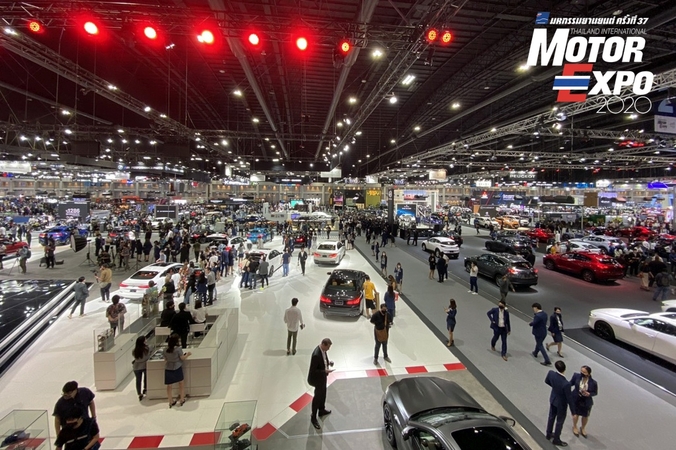
 The Porsche 911. MUST CREDIT: Bloomberg photo by Hannah Elliott.

.jpeg)
%20Company%20Limited.jpg)
 SootinClaimon.Com