Immigrants who are first-time voters know how much is at stake next week
InternationalOct 30. 2020Ahmed “A.J.” Mikhlif and his wife, Hend, when they became U.S. citizens in December 2019, the culmination of a five-year journey that began with their resettlement in Charlottesville, Va., in 2014 as Special Immigrant Visa holders because Mikhlif’s service as an interpreter to the U.S. government in Iraq meant they were no longer safe there. MUST CREDIT: Kari Miller/International Neighbors
By The Washington Post · Petula Dvorak · NATIONAL, POLITICS Ahmed “A.J.” Mikhlif is 42 and he’s voting for the first time in his life next week.
Because back in Iraq, where civil unrest and corrupt regimes roil the government, voting was always “voting.”
“Here, you vote for two people or maybe three people,” Mikhlif said. “In Iraq, there was one person. It wasn’t voting. You like or you dislike that person. And that was all.”
Mikhlif and his wife became U.S. citizens in December, and they are joining the swelling population of naturalized citizens who are eligible voters.
Their numbers have nearly doubled in the last 20 years, according to the Pew Research Center – and they range from translators to busboys, physical education teachers to doctors.
They also include Dame Helen Mirren, who recently became a U.S. citizen and cast her ballot in the dusty town of Minden, Nev., and comic Jimmy O. Yang, whose shtick on his immigrant parents has endeared him to generations of kids both mortified and proud of their parents’ accents and quirks.
And they include Maha al-Obaidi. It took 66 years for her to feel like she was part of her own government. In Iraq, she said ballots were changing, and no one knew if anything was fair. Then two of her sons and husband were kidnapped and the family had to pay exorbitant ransoms. They had to flee.
Today, she is in Astoria, Queens, voting as an American.
“Now, I feel this is my country, this is it. I have my roots here now,” she said.
She is hoping her vote can help change the U.S. policy – President Donald Trump’s travel ban – that is keeping her two sons trapped in Jordan.
Saba Barkneh’s first vote as an American couldn’t have been more, well, American.
“It was a drive-through,” she said. “It was easy. Done in 10 minutes. And I got a sticker.”
Nothing like what her relatives back in Ethiopia endure at the polls – including an effort just to travel to them.
“I’m learning from my family members that voting is a struggle there,” said Barkneh, 45, a marathoner and a nutritionist at Goodwin House in Prince William County, a senior-living facility that has a program helping new immigrants become naturalized citizens. “Being able to reach the voting sites, people thinking, ‘My vote is not counting.’ … People don’t feel like their vote is making a difference.”
These first-time voters bring with them an appreciation for American democracy, the ideals they’ve been worshiping from afar for years. And they have the fire and urgency to keep this shining city upon a hill bright, especially as they see the darkness of this year’s election.
Mikhlif, who worked as a translator for the United States military in Iraq for eight years, was stunned to see the anti-immigrant and anti-Muslim sentiment when he, his wife and their children arrived in Charlottesville, Va.
He works with other immigrants through the International Neighbors program there and is hoping to cast a ballot on Tuesday that will make some difference in not only policies toward immigrants, but also attitudes.
“America was built on the shoulders of immigrants,” he said.
The division and strife in America today has been shocking for the family of Diana Mateo, who immigrated from Guatemala when she was 9.
“That ideal they had in mind is tarnished,” said the 25-year-old paralegal in D.C.
Andrew Martin never voted when he lived in his native South Africa, which he left when he was 25.
“I am now 39. One thing that inspired me to vote here is the idea that my vote may actually count,” said Martin, who left his native country as it was still reckoning with perilous inequities despite the end of apartheid. “In South Africa, I never felt that way.”
He arrived in America in 2007 as “a wide-eyed young immigrant who was hopeful that he stepped right into the ‘American Dream.’ “
“What I’ve seen since 2016 is not only embarrassing, it’s sad, often scary, and frankly extremely depressing,” he said, of the rise of anti-Semitism, white supremacy and shades of authoritarianism.
“I know I am fortunate. I’m a White man who speaks English,” he said. “But I am completely turned off when people mention the ‘American Dream.’ This America is no dream – this is what people come to America to escape.”
Grace Okono is urgent in her mission to get other Americans to understand the danger the nation is facing.
“Americans should be on guard,” said Okono, 45, who lived in Cameroon, Ghana and Nigeria before coming to the United States to study in D.C. more than 20 years ago. “When you have something very good, as good as Americans have it, they have to learn to fight to keep it and protect it, just like anything that is bequeathed to you.”
The arguments about voter suppression, the court hearings about mail-in ballots and the confusion in this election worry her. They’re too familiar.
“They are reminiscent of a corrupt regime,” she said.
So it was with a deliberate urgency that Okono completed her citizenship process and took her daughter with her to vote in their new hometown of Frisco, Texas.
“Some of us who are immigrants, we’ve come from a place where things are much worse,” she said. “And we know how important this next week is.”
InternationalOct 30. 2020A demonstrator in Philadelphia on Tuesday protesting the fatal police shooting of Walter Wallace Jr. wears a hoodie with a photo of Trayvon Martin. Wallace’s family said he was having a psychiatric crisis when they called authorities to get help for him. MUST CREDIT: Washington Post photo by Joshua Lott
By The Washington Post · Maura Ewing, Robert Klemko, Mark Berman · NATIONAL, POLITICS, COURTSLAW, RACE
PHILADELPHIA – A lawyer for Walter Wallace Jr.’s family said Thursday that Wallace was clearly suffering mental distress when Philadelphia police officers fatally shot him this week. But he said Wallace’s relatives are not demanding murder charges in the case, saying the police officers lacked the training to handle the encounter.
Shaka Johnson, the family’s attorney, said that earlier Thursday he had watched body-camera footage from the shooting. Police arrived at the scene Monday after Wallace’s family members called for help multiple times amid what Johnson described as chaos and medical concerns in the Philadelphia home.
“There was a person in obvious mental health crisis,” Johnson said, adding that Wallace’s family had “asked for the whole buffet of services from 911,” including police officers, but said those who showed up were not prepared for what they found.
Police officers arriving on the scene shot and killed Wallace, a 27-year-old Black man, setting off successive nights of protests, looting and property damage. His death is the latest chapter in the often-painful history between this city’s police department and many of its residents.
Police say the officers who encountered Wallace were responding to a call about a man with a knife. The Philadelphia police union’s president said Wallace was “aggressively” approaching the officers. Wallace’s family has said he was in the midst of a mental crisis and wondered why responding officers did not use a Taser to subdue him; the police department later said neither officer was equipped with the less-lethal device.
“I understand he had a knife . . . that does not give you carte blanche to execute a man,” Johnson said.
Wallace is one of at least 806 people whom police have fatally shot in 2020, according to a Washington Post database. Mental health issues are a consistent factor in many of the shootings, with about 1 in 5 of those fatally shot by police known to have been dealing with such concerns or experiencing crises at the time of the encounters.
Speaking briefly Thursday, Wallace’s parents both called for “justice” in the case. Johnson said the family did not think the officers should be charged with murder, because “they were improperly trained and did not have the proper equipment.”
He declined to say whether either officer should face any criminal charges, leaving that decision to the office of District Attorney Larry Krasner, who has pledged to consider the case carefully. Police did not respond to requests for comment about Johnson’s remarks.
After the protests gave way to looting and unrest Monday and Tuesday nights, the city imposed a curfew Wednesday, which was considerably calmer. The city said Thursday that there had been more than 200 arrests and more than 50 officers injured since the unrest began this week. Officials encouraged people to stay home Thursday night but did not impose another curfew.
Wallace’s shooting echoed a circumstance seen this year in other cities – including Minneapolis, Louisville, Atlanta and Kenosha, Wis. – where long-standing tensions between police departments and their communities burst to the fore after a violent encounter.
“There is a lot of animosity – and I think rightly so – when it comes to local law enforcement,” said the Rev. Mark Tyler of Mother Bethel AME Church. “No matter what, regardless what the policy is, the interaction between African American men and law enforcement tends to be hostile.”
For some residents, the shooting was a reminder that despite promises of reform from the city and police, the work has still not been enough to prevent incidents like Monday’s shooting.
“A lot changed, but we still can’t call them for help,” said Johnathan Riddick, 41, who lives on the block where Wallace was shot. “This is what happens.”
When Danielle Outlaw was tapped to lead the police department late last year, Mayor Jim Kenney, a Democrat, repeatedly brought up the need for reforming the department in touting the selection. This week, Outlaw has emphasized that she heard the community’s anger and sadness, saying that “everyone involved, including the officers, will forever be impacted by this tragedy.”
City officials have provided scant details about the shooting. John McNesby, the president of the Philadelphia police union, called on the city to “release what you have” about the shooting and to “support your officers.”
Outlaw took over a department with a troubled past, said David Rudovsky, a senior fellow at the University of Pennsylvania law school and a longtime civil rights lawyer in Philadelphia.
“There’s a long, long history of antagonism between the police department and the community, at least the minority community,” Rudovsky said. Outlaw and Kenney have shown promise on reforms, he said, “but they’re living with a legacy of bad policing.”
What unfolded in Philadelphia this week stems from both the local history and the nationwide climate surrounding policing, said Chuck Wexler, the executive director of the Police Executive Research Forum, whose group was hired by Philadelphia to help with the search that picked Outlaw.
“We’re in the middle of a major sea change in American policing,” Wexler said. “And in a city like Philadelphia, it can be like a powder keg.”
The city and the department have faced lawsuits, including over stop-and-frisk policies. They also have taken some proactive steps to address issues facing police forces across the country, including when Charles H. Ramsey, as police commissioner, called in the Justice Department to review how Philadelphia’s police use deadly force.
Residents have more recently criticized Philadelphia police for using tear gas and rubber bullets on demonstrators in the protests that followed George Floyd’s death in police custody in Minneapolis. On Thursday, the Philadelphia City Council barred police from using “less lethal” tactics on demonstrators.
More policing issues will come before Philadelphia residents on Election Day, with ballot questions asking whether voters want to create a citizens’ police oversight group and to “end the practice of unconstitutional stop and frisk.”
Standing on the sidewalk not far from where Wallace was killed, Riddick and Marc “Spark” Willfly, also a resident, said that since Kenney took office, they had fewer interactions with police in their community. That meant fewer bad encounters but also that officers rarely stopped to meet residents.
“They ride up and down here all day, but they don’t mess with people,” said Willfly, 45.
Ramsey, the former police chief, said the unrest in Philadelphia and other cities this year showed how “fragile” the relationships between police and their communities can be.
“It takes time to build relationships,” said Ramsey, who retired in 2016. “But it doesn’t take that long for those relationships to dissolve.”
In campaign’s waning days, both candidates seek to shore up support from Latino voters
InternationalOct 30. 2020Supporters of Joe Biden and Kamala Harris ride on horseback during a rally at the Walnut Community Center’s early-voting location in Las Vegas. Labor unions and liberal organizers have created a model of Latino engagement in Nevada that scarcely exists elsewhere. Recent polling shows Biden with a single-digit lead in the state. MUST CREDIT: Washington Post photo by Melina Mara
By The Washington Post · Jose A. Del Real, Amy Gardner, Jenna Johnson · NATIONAL, POLITICS
In the closing days of the 2020 election, the Trump campaign is seeking to seize on a perceived opening with conservative-leaning Latinos, hoping to chip away at margins that Democratic presidential nominee Joe Biden needs to win in tight battleground races like Pennsylvania and Texas.
On Thursday, the Trump campaign unveiled a television ad targeting Latinos in South and Central Florida, Arizona and Nevada that drew a connection between the hopes of immigrant communities and the president’s pandemic response.
“Why did we come here? Why did we sacrifice everything to start over? Because here, we all have the opportunity to live our dreams and to give our families a better future. Today we decide if we will save the American Dream or if we will allow the pandemic to threaten our destiny,” the ad’s narrator says in Spanish. “And like President Trump, we will win this war against coronavirus and continue fighting for our people.”
Biden announced Thursday that he would sign an executive order on the first day of his presidency establishing a task force to find the parents of what advocates say are 545 minors who are still separated from their families as a result of Trump’s immigration crackdown at the U.S.-Mexico border. Biden’s plan is featured in a new digital ad highlighting what the campaign says were “inhumane” conditions at the border.
The efforts come as some Democratic consultants worry that early turnout among Latinos in some key states is lagging expectations so far.
Polls show that Latinos could be a decisive constituency in battleground states across the country – not only where they are recognized as a burgeoning political force, like in Nevada and Arizona, but also in places like Michigan and North Carolina, where they are a growing part of the electorate. Nationally, an estimated 32 million Latinos are eligible to vote in the 2020 election, according to Pew Research Center, a trend driven by the huge number of young American-born Latinos who have recently reached voting age.
But experts who study Latino communities say that many of these eligible voters remain alienated from the political process or have received little information from the campaigns about how to vote, which could matter especially in low-income households besieged by the pandemic. And they remain misunderstood by political strategists. While Biden overwhelmingly leads among Latino voters, about 3 in 10 say they will vote for President Donald Trump, according to national polls that also reflect surveys done in battleground states.
“So often, political strategists have been like, ‘We don’t get the Latino community. It’s a mystery,’ ” said Edgar Flores, a Democratic assemblyman in Nevada, who hosted a recent cabalgata, or Mexican horseback parade, in Clark County to raise awareness about early voting. The state’s political apparatus is widely viewed as a model for Latino political organizing.
“Give Latinos resources. Put the camera on them,” Flores said, noting the event came together through local feedback and participation. “We need to meet people where they are and we need to energize people by amplifying their voices.”
Such Latino-focused outreach is at once a paradigm of what is possible and a marker of what is missing in many other states which, unlike Nevada, do not have robust networks of Latino activists or organized labor to engage voters on both sides of the aisle.
For many political observers, the question is not merely whether they will vote Democratic or Republican, but whether they will vote at all, which could be decisive, too.
While Democratic officials have celebrated early-voting numbers that show Democrats outnumber Republicans in key states that track such data – North Carolina and Florida among them – the Hispanic vote is one asterisk to their bullish view.
In North Carolina, Hispanics are voting early at lower rates than White or Black voters, but comparable to previous cycles, said Morgan Jackson, a Democratic strategist in the state. Jackson said that, like many Black voters, many Hispanic voters prefer voting in person, and he is optimistic that higher numbers will continue to turn out for early in-person voting as well as on Election Day on Tuesday.
In Florida, a Democratic strategist who spoke on the condition of anonymity to speak candidly shared data showing that the ballot return rate for voters who requested mail ballots is slightly higher among Republican Hispanics than Democrats – 38% to 35% as of Sunday evening. The raw number of Democratic Hispanics who have voted, however, is higher. And unaffiliated Hispanics have turned out robustly as well.
In Nevada, where 1 in 5 voters is Latino, limited polling and the unusual circumstances caused by the pandemic have made it difficult to assess how competitive the race is, and the state does not break down early vote totals by demographics. Recent polling shows Biden with a single-digit lead in the state, which Hillary Clinton won by 2 percentage points in 2016.
In a call with reporters Thursday, the Biden campaign said its internal polling shows they are “100 percent on track to match or exceed the Obama vote numbers” among Latinos.
Since September, the campaign said it has invested tens of millions of dollars on Latino turnout efforts across battleground states, which it called an “unprecedented” amount. One week out from Election Day, 5 million Latinos had already voted, compared with 2.5 million in 2016, according to the campaign, which expects the bulk of Latinos to show up on Election Day.
Biden campaigned Thursday in Broward County, Fla., where he made explicit appeals to Venezuelan Americans and Cuban Americans, who make up a significant part of the electorate in South Florida.
Biden has had to contend with a torrent of GOP attacks in South Florida seeking to cast him as sympathetic to socialists and communists, despite his long-standing rejection of these political philosophies. The attacks tap into existing worries about leftist regimes in Latin America in countries where many Florida voters fled or have roots. Democrats have said the attacks have taken a toll.
At a rally Thursday in Tampa, Trump said Biden has “betrayed” Latino Americans over his long political career. He did not say how.
“Biden’s agenda will devastate the Hispanic American community,” Trump said.
In Nevada, victory for Democrats runs through the robust turnout effort organized by the Culinary Workers Union. Every election cycle, hundreds of its members take paid political leave from their jobs as housekeepers and restaurant servers to fan out across Las Vegas and Reno to canvass on behalf of political candidates endorsed by the union. Notably, 54% of the union’s 60,000 hospitality workers are Latino; an additional 15% of members are Asian and another 10% are Black. Fifty-five percent of union members are women.
Even so, doubts linger about how those efforts will play out this year. During the peak of the economic turmoil caused by the pandemic, as many as 98% of the union’s members were furloughed and put on unemployment. Today, just about 50% are back at work. And while Nevada Gov. Steve Sisolak, a Democrat, signed a bill in August expanding vote-by-mail in the state, the Trump campaign has repeatedly attacked the expanded voting options with tweets and lawsuits.
The pandemic has not slowed down the union’s political canvassing efforts, said Bethany Khan, a spokeswoman for the Culinary Union. Today, they have more than 400 canvassers working full time, about 100 more than in the 2016 election, when they knocked on more than 350,000 doors and talked to 75,000 voters, Khan said. This year, they also began their canvassing program on Aug. 1, more than a month earlier than previous years.
Elizabeth Renteria, 32, a Latina housekeeper at Caesars Palace, is one of those people going door-to-door to encourage people to vote. Although she does not consider herself a very political person, she raised her hand to participate in the union’s canvassing program, she said, because it felt like an effective way to contribute to the community. She is unable to vote herself in this election because her citizenship exam was delayed by the coronavirus pandemic.
“It’s about my family. It’s personal. My husband, he’s a ‘dreamer,’ and when Trump said that he was going to stop DACA, we went through a lot of stress. The first thought in my head was that my family was going to be broken,” she said, referring to the Deferred Action for Childhood Arrivals immigration policy. “Donald Trump is very racist. He doesn’t like Latinos. He doesn’t like anyone. So I think it’s time for us to stand up and make a change.”
But the kind of Latino-oriented political turnout infrastructure that has brought Renteria into the process scarcely exists elsewhere in the country.
North Carolina and Pennsylvania, which having growing populations of Latino voters, are examples of political battleground states where the Democratic Party continues to overlook Latino voters who would be receptive to their message, said Sonja Diaz, the director of the Latino Policy & Politics Initiative at the University of California at Los Angeles. States like Arizona that have significant turnout programs have them because community organizations, which do not have deep financial resources, often have built them from scratch without much help from the national Democratic Party.
Political campaigns by their nature often focus on reaching “likely voters,” said Diaz, because it is more cost-effective than investing heavily in outreach to first-time voters that do not show up on existing voter files used by campaigns. That feeds a feedback loop of political alienation among newly eligible Latino voters, especially from low-income households: Campaigns do not make their case to these would-be first-time voters, and so they do not vote, and so future campaigns do not reach out to them. White voters, on the other hand, often benefit from a political information ecosystem in which vast amounts of resources are spent on persuading them and educating them about whom to vote for and how to vote, Diaz said.
“We’ve seen again and again that voters of color are second-tier in the minds of political strategists who favor persuading likely voters. There is not sound data on these voters, making them more costly in the eyes of political operatives,” she said. “It’s a failure of American electoral politics. And both parties are to blame.”
Turning out Latino voters does take a certain amount of cultural political sophistication. Despite the phrase, “Latino voters” are not a single electorate. Though these voters are bound by a shared ethnic label, their political beliefs often diverge based on factors like where they live, their race, ancestry, gender, income and faith, among other variables.
That is not always well understood by Anglo political observers and strategists.
“For the last four years we’ve been saying that we have to figure out how to get the Obama-Trump White working-class voters, or that we have to get suburban White women back to the table,” said Kristian Ramos, a Democratic political strategist with experience on Hispanic voter outreach. “You know, there are working-class people of color. There are people of color who were Obama-Trump voters. There are Latinas in the suburbs. A lot of them. This is so absurd.”
In the election’s final stretch, questions about the role that “machismo” plays in growing Trump support among male Latino voters have become common in political circles. Broken down by gender, about 35% of Latino men and 23% of Latinas support Trump, according to a recent national survey by Pew Research Center. But the emphasis on “machismo” implies it is a foreign import, said several Latino-focused pollsters. The gap between the political preferences of Latino men and Latinas, in fact, reflects gender differences among American voters overall.
Fernando Romero, a longtime Chicano organizer in Las Vegas, said that religion plays a big role in the political calculations of Latinos who support Trump – and, in particular, the politics of abortion.
And the Trump campaign has made a concerted effort to reach these religious Latinos with digital advertisements and by sending high-level surrogates at their churches.
Republicans’ efforts have paid off in some places. For instance, a recent New York Times-Siena College survey showed that 57% of Latino voters in Texas support Biden compared with 34% who support Trump, which is higher support for the president than expected by some political strategists.
With Texas appearing more competitive than in previous elections, the Biden campaign and the Biden Victory Fund allocated $4.5 million to advertising spread over the final five weeks of the election, including Spanish-language radio and TV ads. This year, the state Democratic Party launched efforts geared toward helping young Latinos register and organize their relatives. For the past several months, the state party has focused heavily on the Rio Grande Valley in South Texas near the border with Mexico, a heavily Democratic and Hispanic region where early voting numbers are not as high as expected.
Some wonder whether these new efforts are coming too late. In the past, the difficult work of reaching out to first-time voters in Texas has fallen to nonprofit groups and liberal organizing groups like the Texas Organizing Project and Jolt.
On the other hand, Biden is drawing more support from White voters than Clinton did in 2016, which could mitigate anemic turnout among Hispanics.
“The Biden coalition is definitely whiter this year,” said Juan Peñalosa, executive director of the Florida Democratic Party.
In Las Vegas, Flores said engaging Latino communities is not a mystery waiting to be solved, it just takes resources and relationship-building. He said that he would like to see national Democrats invest in sustained outreach in Latino communities like his across the country between election years, to build community centers where people feel comfortable being themselves while learning how to be involved in politics. He stressed, as a Democrat, that he is hopeful Biden will do that in the years to come.
In a recent conversation with community members, Flores recalled, “one of the things they said was, ‘I don’t know how to be political.’ And I said, ‘What you don’t realize is that your mere existence, your mere presence is political. By being present is sending a statement.’ “
“And they looked at me baffled, because I don’t think anyone had ever told them that them just being them is powerful,” he said.
Afghan man arrested in 2008 kidnapping of American journalist David Rohde
InternationalOct 29. 2020Journalist David Rohde was abducted in Afghanistan in 2008 and held for month in neighboring Pakistan. (Gary Cameron/ Reuters)
By The Washington Post · Shayna Jacobs · NATIONAL, WORLD, COURTSLAW, MEDIA, MIDDLE-EAST NEW YORK – An Afghan man has been arrested and charged with the 2008 abduction of American journalist David Rohde, who was held hostage for seven months along with two others in a terrifying episode that garnered international attention.
Federal authorities in New York announced Wednesday that Haji Najibullah, 42, was taken into custody in Ukraine and transferred to the United States on Tuesday.
An alleged co-conspirator, Akhund Zada, who remains at large, is accused of taking Rohde at gunpoint while the journalist, then with the New York Times, was reporting in war-torn Afghanistan for a book about the conflict. Rohde and the others, both Afghan nationals who were working with him, were later moved across the border to a Taliban complex in Pakistan where Najibullah forced Rohde to call his wife and helped to monitor the hostages, authorities said.
Najibullah faces kidnapping, conspiracy and weapons charges, authorities said. If convicted, he could face life in prison.
Najibullah appeared virtually for his first court appearance Wednesday, and U.S. Magistrate Judge Ona Wang granted the government’s request to detain him without bail. The circumstances surrounding Najibullah’s apprehension in Ukraine were not disclosed.
As part of his application for a public defender in the case, Najibullah reported that he works as an importer and has homes in Afghanistan and Dubai. He also said he is married with seven children.
At one point, Najibullah spoke out of turn asking the judge through a Pashto interpreter if he could be released “by bond,” prompting the judge to call a recess so he could present the question to Mark Gombiner, his Federal Defenders attorney.
Gombiner declined to make a bid for bail but said he may consider doing so later.
Rohde, now an editor with the New Yorker magazine, made a daring escape from the compound along with another of the hostages, Afghan journalist Tahir Ludin. The third captive, Asadullah Mangal, stayed behind. Rohde wrote a detailed account of their time in captivity months after he returned home.
The two other suspects, Zada and Timor Shah, are named in the indictment, but the U.S. attorney’s office in Manhattan did not say whether their whereabouts are known.
Authorities say the suspects forced Rohde and the other captives to make videos in which they begged for help. In one video, Rohde pleaded for his life while Najibullah aimed a machine gun at his face, officials said.
The abductors asked Rohde’s family for money in exchange for their release, and pushed the U.S. government to release Taliban prisoners, according to the indictment.
Rohde, who in the 1990s was briefly held captive while on a reporting assignment in the Balkans, did not respond to a request for comment. In a 2010 interview, he said the videos were intended to make his family feel responsible for his abduction.
“I was never beaten or physically abused,” he said. “. . . But my captors terrorized my family. . . . I told my captors about my reporting in Bosnia, which helped expose the mass executions of thousands of Muslims. I hoped they would see me as an independent journalist and release me. Instead, they thought, ‘You must be worth a lot of money.’ “
Assistant Attorney General for National Security John Demers said in a statement that the Justice Department was committed to seeking justice for Rohde and other journalists facing the dangers of covering conflict internationally.
“Journalists risk their lives bringing us news from conflict zones, and no matter how much time may pass, our resolve to find and hold accountable those who target and harm them and other Americans will never wane,” Demers said.
The case was handled by the Joint Terrorism Task Force, which is composed of FBI agents and members of the New York Police Department, as well as the Terrorism and International Narcotics Unit of the U.S. attorney’s office for the Southern District of New York.
U.S. arrests five alleged Chinese agents, accusing them of targeting dissidents
InternationalOct 29. 2020Assistant Attorney General John C. Demers, left, and FBI Director Christopher A. Wray on Wednesday.
By The Washington Post · Devlin Barrett · NATIONAL, WORLD, ASIA-PACIFIC WASHINGTON – The FBI has arrested five individuals on charges they conspired as foreign agents in an operation called “Fox Hunt” to try to force immigrants from China who angered that country’s leadership to return there to be punished, officials announced Wednesday.
“China is violating norms and laws left and right,” said FBI Director Christopher Wray, adding that the unprecedented case sends a clear message to the Chinese government that “surveilling, stalking, harassing and blackmailing our citizens and lawful permanent residents carry serious risks.”
Assistant Attorney General John Demers said Fox Hunt sometimes targeted individuals who might have violated financial laws and were legitimate targets of law enforcement investigations. But many other targets, he said, were political rivals, dissidents or critics of the Chinese government. Pursuing those people with threats and coercion, sometimes directed at the relatives of those targeted, represents “a clear violation of the rule of law and international norms,” he said.
Rather than use established legal systems such as Interpol or requests for assistance from U.S. law enforcement, the Chinese agents took matters into their own hands and tried to intimidate people into returning to China, U.S. officials said.
The announcement marks the latest effort by the United States to fight back against what it says is China’s wanton disregard of laws regarding computer hacking, surreptitious influence operations and intellectual-property theft. It also highlights an ongoing tension between the two countries over law enforcement issues – the People’s Republic of China and the United States have long been at odds over a host of extradition issues, and the charges announced Wednesday show how much more contentious that disagreement has become.
Arrests were made in New York, New Jersey and California, officials said. Four of those said to be Chinese government operatives were identified as Zhu Yong, Hongru Jin, Rong Jing and Zheng Congying. The fifth person in custody is Michael McMahon, a New Jersey private investigator who assisted in the surveillance and pressure tactics, according to U.S. officials.
Three other suspects – Zhu Feng, Hu Ji and Li Minjun – were charged as participants in the conspiracy but are not believed to be in the country.
“With today’s charges, we have turned the PRC’s Operation Fox Hunt on its head – the hunters became the hunted, the pursuers the pursued,” Demers said.
Court papers say the surveillance and harassment of Chinese American targets stretched from 2016 to 2019. In one case, the ring allegedly brought the elderly father of one target from China to the New York area to “threaten and attempt to coerce” the man, identified only as John Doe-1, to return to China.
China also allegedly tried to pressure the same man’s adult daughter, taking pictures and videos of her as part of their pressure campaign. In September 2018, they allegedly left a note on the man’s door, stating: “If you are willing to go back to mainland and spend 10 years in prison, your wife and children will be alright. That’s the end of this matter!”
The charges, which include conspiracy to act as an agent of China and conspiracy to commit interstate and international stalking, carry a maximum possible prison sentence of five years.
Last month, the Justice Department charged five Chinese nationals in separate global hacking schemes targeting more than 100 video game companies, universities and other victims. At the time, Washington accused Beijing of tolerating such crimes because the defendants allegedly worked on behalf of the country’s spy services as well.
The Trump administration has made criticism of China a centerpiece of its foreign policy, chiefly on issues surrounding trade and competition in the global marketplace.
“No country can be respected as a global leader while paying only lip service to the rule of law and without taking steps to disrupt brazen criminal acts like these,” Deputy Attorney General Jeffrey Rosen said in September when the hacking charges were announced.
Hong Kong activists turned away in bid for refuge at U.S. Consulate, advocacy group says
InternationalOct 29. 2020Activist Tony Chung protests in Hong Kong in 2017. (AP)
By The Washington Post · Shibani Mahtani · WORLD, ASIA-PACIFIC
HONG KONG – Tony Chung had been planning his asylum bid for weeks. He had sent documents to Washington earlier this month, the advocacy group helping him with the process said, and he hoped he could soon resettle in the United States.
But Chung – a founder of a pro-independence student group in Hong Kong who was among the first to be arrested under Beijing’s new national security law imposed in late June – was growing nervous ahead of a scheduled check at a police station, part of his bail terms.
So on Tuesday, Chung and four other Hong Kong activists sought to reach the U.S. Consulate in hopes of speeding up the process, according to the London-based advocacy group Friends of Hong Kong and local media reports.
Chung, 19, was apprehended by several men and taken away before he could reach the consulate gates, a video of the incident obtained by the South China Morning Post showed. The other four – a U.S. citizen among them, according to Friends of Hong Kong – briefly entered the consulate later that afternoon, but they had their requests for refuge inside the compound rebuffed and were turned away.
Two other former members of Chung’s group, Studentlocalism, were separately arrested Tuesday.
The scenes underscored the desperation of Hong Kong protesters and activists in the city, who fear political persecution and unfair trials. It also raises questions about why the U.S. Consulate in Hong Kong would have turned away an American citizen appealing for help.
The State Department “cannot comment on our communications with U.S. citizens,” said a spokesperson, citing privacy concerns. Asylum “can only be requested upon arrival in the United States,” the spokesperson added.
The United States, in very rare cases, has protected Chinese activists at the U.S. Embassy in Beijing, and it is also rare for the United States to grant refuge inside its other diplomatic compounds around the world.
The Hong Kong police said they had arrested three people between the ages of 19 and 21 on Tuesday, and have released two on police bail, without naming them. A 19-year-old remains in custody, police said. The Hong Kong police declined to comment further on the asylum seekers, referring The Washington Post instead to the Security Bureau, a government department.
In responses to questions from The Post, a spokesman for the Hong Kong government said it “does not comment on media reports.” The spokesman added that “people in Hong Kong are prosecuted for acts in contravention with the laws of Hong Kong regardless of their political beliefs or backgrounds.”
“There is no justification for any so-called ‘political asylum’ for people in Hong Kong,” the spokesman added.
Hong Kong officials have previously asserted there is no “political persecution” in the territory.
Friends of Hong Kong, which describes itself as defending “rights, freedom and democracy” in Hong Kong, said Chung contacted the group in October, wishing to petition the U.S. government for asylum. The group spoke to The Post on the condition that the other four who sought refuge at the consulate were not named. The Post was unable to independently contact them or Chung.
Chung was arrested in July shortly after Beijing passed a new national security law in Hong Kong, designed to put an end to the political unrest and street protests last year by punishing broadly worded crimes like “terrorism” and “secession” with up to life in prison. He and three other former members of Studentlocalism, the group he helped found, were accused of posting a message on social media that advocated for Hong Kong to be independent from China.
Chung described his arrest as politically motivated.
The other four people who attempted to enter the U.S. Consulate were not members of Studentlocalism, the group said in a social media post. According to Friends of Hong Kong, which was similarly helping them with their asylum bid, the other four had all been arrested in connection with anti-government protests in Hong Kong that began in June 2019 and all have impending court trials on a variety of charges. One among them was a U.S. citizen.
The national security law, and the fear it has caused among Hong Kong activists, has prompted Western countries and Taiwan to put in place assistance programs and “lifeboat” policies for residents of the financial center hoping to flee.
Countries including Germany, Australia, the United States and Canada have recently granted asylum requests from Hong Kong residents, angering Beijing.
The United States, in particular, risks further deterioration in the relationship with China over the issue. Many activists favor asylum in the United States, perceiving the Trump administration as broadly backing the goals of Hong Kong’s pro-democracy movement after it signed legislation that opened the door to sanctions against those who had undermined Hong Kong’s autonomy.
Eleven Hong Kong and Chinese officials, including Chief Executive Carrie Lam, were targeted in August for restricting Hong Kong’s freedoms and undermining the territory’s autonomy, and President Donald Trump has ended the territory’s special status that allowed it to be treated separately from the Chinese mainland.
In July, the United States was forced to close its consulate in Chengdu, amid escalating U.S.-China tensions. Chinese state newspaper the Global Times in a tweet warned that the U.S. Consulate in Hong Kong could face a similar fate if it were to start granting asylum to Hong Kong residents from its premises in the city. There is no indication that the U.S. Consulate in Hong Kong was processing asylum requests or that it plans to offer protection for Hong Kong activists.
The U.S. Embassy in Beijing has on very rare occasions shielded Chinese activists, including astrophysicist and pro-democracy advocate Fang Lizhi, who was allowed to travel to Britain in 1990 after a year at the embassy.
Job recovery in S’pore likely slow and uneven despite immediate rebound in retail, F&B: MAS
InternationalOct 29. 2020MAS noted that Covid-19 has also led to changes in consumption patterns, which could dampen labour demand. ST PHOTO: LIM YAOHUI
By Charmaine Ng The Straits Times/ANN
SINGAPORE – The road to recovery for the labour market is likely to be slow and uneven, with resident unemployment rates taking a longer time to reach pre-crisis levels compared with during the global financial crisis, said the Monetary Authority of Singapore (MAS).
In its review of the macroeconomic situation released on Wednesday (Oct 28), MAS said the unemployment rate of Singaporeans and permanent residents is expected to decrease gradually next year after peaking in the second half of 2020, but will remain elevated overall.
It added that this will weigh on wages for the rest of this year and possibly into 2021.
These projections for the labour market are despite employment prospects looking up in the immediate term in the retail and food and beverage (F&B) sectors, and in support services such as cleaning and security industries.
These business areas rebounded quickly with Singapore exiting the circuit breaker in June, said MAS.
In construction, the gradual resumption of activities in the second half of this year would also likely lead to more hiring.
As for the travel-related sector, MAS said some modest employment recovery can be expected with the easing of safe distancing measures and, in particular, the resumption of meetings, incentives, conventions and exhibitions (Mice) events and some cruise operations.
However, longer term recovery will be protracted, as activity in the travel-related sector is expected to be weak for an extended period of time, leading to spillovers to the rest of the economy which will weigh on the overall labour market.
These include land transport operators such as taxi and private hire car services, which have likely seen a sizeable shortfall in income due to the lack of inbound leisure and business travellers.
MAS noted that Covid-19 has also led to changes in consumption patterns, which could dampen labour demand.
For example, working from home could become more prevalent, reducing demand for transportation services as well as social and recreational activities.
The uncertain macroeconomic outlook will also hold back overall labour market prospects, as activity in many sectors could be weaker than expected with further balance sheet strains, said MAS.
This is likely so even in better-performing industries, as firms may have brought forward hiring, encouraged by temporary government incentives such as the Jobs Growth Incentive.
But when compared with foreign employment, local employment is expected to rebound more strongly, partly due to government wage subsidies supporting the hiring of locals.
However, the resident unemployment rate will likely take a longer time to recover than during the global financial crisis.
Residents who were previously discouraged from seeking employment could re-enter the labour force as the economy recovers, and individuals under the SGUnited training programmes could add to the number of unemployed workers when looking for jobs.
Skills mismatches could also hamper hiring, as Covid-19 is likely to accelerate the decline of low- and mid-skill services jobs being replaced by less labour-intensive, automated processes.
More jobs are expected mainly in modern services sectors, which includes firms that provide professional, financial and technology services such as cyber security and banking services.
“These emergent skills mismatches between excess labour supply and new labour demand may increase search frictions and impede labour market re-allocation,” said MAS.
US officials told to stop stirring trouble in Asia
InternationalOct 29. 2020Activists protest outside the United States embassy in Colombo against US intervention in Sri Lanka’s domestic affairs on Oct 27, 2020. The protest came a day ahead of US Secretary of State Mike Pompeo’s visit. [Photo/Agencies]
By MO JINGXI China Daily/ANN
China urged some US politicians on Wednesday to stop hyping up the so-called “China threat” and undermining regional peace, stability and development.
Foreign Ministry spokesman Wang Wenbin made the remark as United States Secretary of State Mike Pompeo and Defense Secretary Mark Esper pushed an anti-China message as they attended the US-India 2+2 Ministerial Dialogue.
The two US Cabinet officials said that increased US-Indian military and strategic cooperation will help the two nations manage China’s growing influence in Asia. The countries signed a defense agreement that allows the US to share top-secret satellite and sensor data with India.
It is the latest in a series of US-India military agreements designed to counter China’s presence in the Indo-Pacific region.
“We always believe that the development of bilateral relations between any countries should be conducive to peace, stability and development of the region. It should not harm the interests of a third party,” Wang told reporters at a news briefing in Beijing.
Wang said that any concept of regional cooperation should conform to the trend of the times for peace and development as well as win-win cooperation.
But the Indo-Pacific strategy proposed by the US is preaching the old-fashioned Cold War mentality, group confrontation and political games. It is aimed at upholding the hegemony of the US, he added.
“We urge some politicians in the US to abandon the Cold War and the zero-sum mentality …and to stop the wrong actions of denigrating China’s relations with other countries in the region,” Wang said.
Calling the border issue between China and India a bilateral matter, Wang also said that the two sides are currently dealing properly with related issues through negotiations and talks.
The Chinese embassy in India said in a statement that there is no space for a third party to intervene in the issue.
“China and India have the wisdom and ability to handle their differences properly,” the embassy said.
Pompeo arrived on Wednesday in Sri Lanka, the second leg of his Asia tour. Speaking at a televised news conference in the capital, Colombo, Pompeo described China as a predator and the US a friend and partner.
Wang said that forcing small-and medium-sized countries to pick sides is a habitual behavior of certain US officials.
“Friendly cooperation between China and Sri Lanka on the basis of equal coordination and mutual benefit has brought tangible benefits to the two peoples, and this cannot be altered by any smear or slander by others,” he said.
Ruan Zongze, executive vice-president of the China Institute of International Studies, said that one purpose of Pompeo’s visit to South Asia, where many countries have good relations with China, is to try to organize an exclusive, anti-China clique by attacking China with rumors and slander.
“Such an attempt is doomed to fail. It only shows how the US has been tirelessly fabricating contradictions in order to contain China’s development,” Ruan said.
[Philippines] Easy entry of 4 million Chinese raises fears of ‘soft invasion’
InternationalOct 29. 2020CHINESE PRESENCE Chinese workers help build the China-funded Estrella-Pantaleon bridge project to connect Mandaluyong and Makati cities. Sen. Francis “Kiko” Pangilinan is seeking a Senate investigation into the presence of 4 million Chinese nationals in the country since 2017, saying it has national security implications amid fears of an “orchestrated soft invasion” by China. —RICHARD A. REYES
By DJ Yap Philippine Daily Inquirer/ANN
MANILA, Philippines — The unhampered entry of millions of Chinese nationals into the Philippines may be the start of an “orchestrated soft invasion” by China, an opposition senator warned on Wednesday.
In a proposed resolution, Sen. Francis Pangilinan called for an inquiry into the “national security implications of the entry of around 4 million Chinese into the country since 2017.”
“It is worrying, especially considering we have issues [with China] in the West Philippine Sea,” he said.
Immigration rackets
The proposed inquiry in aid of legislation stemmed from the findings of a Senate committee that corrupt Bureau of Immigration (BI) officers had allowed the hitch-free entry of 4 million Chinese nationals since 2017 in exchange for billions of pesos in bribes through various rackets.
The moneymaking operations uncovered during hearings held by the committee on women, children, family relations and gender equality included the “pastillas” racket and the visa-upon-arrival (VUA) policy.
The panel chair, Sen. Risa Hontiveros, estimated that P40 billion had exchanged hands in these rackets.
“Given the lenient requirements for foreign national retirees and the seemingly unchecked entry of some 4 million Chinese nationals into the country, there is a need to look into whether this is an orchestrated ‘soft invasion’ of our country,” Pangilinan said in the proposed resolution he filed on Tuesday.
Cash-strapped neighbors
Soft invasion was the term used by Capt. Jim Fanell, former intelligence chief of the US Navy’s Pacific Fleet, to describe China’s strategy of “invading” its cash-strapped neighbors, especially the island nations in the region.
Fanell said in a November 2019 television interview that the Chinese were “coming in with soft power and lots of cash to buy out local officials, to gain access to ports and airfields, and resources that give them a controlling monopoly in the islands.”
Pangilinan noted that the hearings led by Hontiveros found that it was Department of Justice Order No. 41 issued by Justice Secretary Vitaliano Aguirre II in 2017 that paved the way for the virtually unhampered entry of Chinese nationals under the VUA policy.
Senators learned that of the 4 million Chinese who entered the country since 2017, 150,000 did so under the VUA.
Pangilinan also cited the recent disclosure by the Philippine Retirement Authority (PRA) that the Chinese comprised the biggest group of foreigners who had availed themselves of the special retirees residence visa (SRRV), which makes the Philippines their “second home” that they could freely enter anytime.
Soldier’s age
The PRA, an agency under the tourism department, said nearly 40 percent of the foreign retirees, or about 28,000, were Chinese. Many of them were as young as 35.
After Sen. Richard Gordon raised the alarm that retirees of “soldier’s age” could pose a national security problem, the PRA suspended issuing new SRRVs pending a review of the retirement program.
In his resolution, Pangilinan said China’s increased presence in the country was not limited to the millions of its nationals who had entered the Philippines since 2017.
“In July, the Philippine government protested the presence of more than a hundred Chinese vessels, which are believed to be part of China’s fishing militia, [at] Pag-asa Island and the West Philippine Sea,” he said.
“Filipino fishermen in the area who are civilians and have no military training, unlike their Chinese counterparts, are subjected to threats and harassment. Moreover, the country’s natural resources are exploited,” he added.
China funds
Pangilinan cited other soft invasion concerns involving the investment and infrastructure projects funded by China, as well as debt exposure, geopolitical risks, and sovereignty issues.
He said the government must not be tempted to sell out to China.
“The Philippines is for Filipinos. Some of our officials should not be blinded by money and exchange the Philippines for a few pieces of silver,” Pangilinan said.
Diplomats of South Korea and Japan held talks in Seoul on Thursday that were expected to focus on a prolonged row between the two countries over Tokyo’s wartime forced labor and export curbs.
The meeting between Kim Jung-han, director general for Asia and Pacific affairs at the foreign ministry, and his Japanese counterpart, Shigeki Takizaki, marked the first such talks since Japan’s Prime Minister Yoshihide Suga took office last month.
Takizaki arrived here Wednesday on a three-day visit.
Ahead of the talks with Kim, the Japanese official also met separately with Seoul’s top nuclear negotiator, Lee Do-hoon, for discussions on the Korean Peninsula and North Korea’s denuclearization. Takizaki doubles as Japan’s chief nuclear envoy.
His visit comes at a time when relations between Seoul and Tokyo remain badly frayed over the issue of compensating Korean forced labor victims and Tokyo’s export restrictions on Seoul imposed in retaliation for South Korean court rulings that ordered Japanese companies to pay damages to the victims.
South Korea has taken steps to auction off some of the South Korea-based assets owned by Nippon Steel Corp. to cash them out for the compensation.
Japan has warned of countermeasures if the procedure goes ahead and urged South Korea to come up with a solution, based on its claim that reparation issues stemming from the 1910-45 period when Korea was a Japanese colony were settled by a 1965 treaty that normalized their bilateral relations.
Also on the agenda for the talks was likely to be Japan’s potential discharge into the sea of contaminated water from its Fukushima nuclear plant, to which Seoul is paying close attention in terms of potential environmental impacts.
Thursday’s talks also marked the first in-person meeting between Kim and Takizaki since February, as the coronavirus pandemic has put restraints on physical meetings. Their last working level talks took place virtually in June. (Yonhap)

 Ahmed “A.J.” Mikhlif and his wife, Hend, when they became U.S. citizens in December 2019, the culmination of a five-year journey that began with their resettlement in Charlottesville, Va., in 2014 as Special Immigrant Visa holders because Mikhlif’s service as an interpreter to the U.S. government in Iraq meant they were no longer safe there. MUST CREDIT: Kari Miller/International Neighbors
 A demonstrator in Philadelphia on Tuesday protesting the fatal police shooting of Walter Wallace Jr. wears a hoodie with a photo of Trayvon Martin. Wallace’s family said he was having a psychiatric crisis when they called authorities to get help for him. MUST CREDIT: Washington Post photo by Joshua Lott
 Supporters of Joe Biden and Kamala Harris ride on horseback during a rally at the Walnut Community Center’s early-voting location in Las Vegas. Labor unions and liberal organizers have created a model of Latino engagement in Nevada that scarcely exists elsewhere. Recent polling shows Biden with a single-digit lead in the state. MUST CREDIT: Washington Post photo by Melina Mara
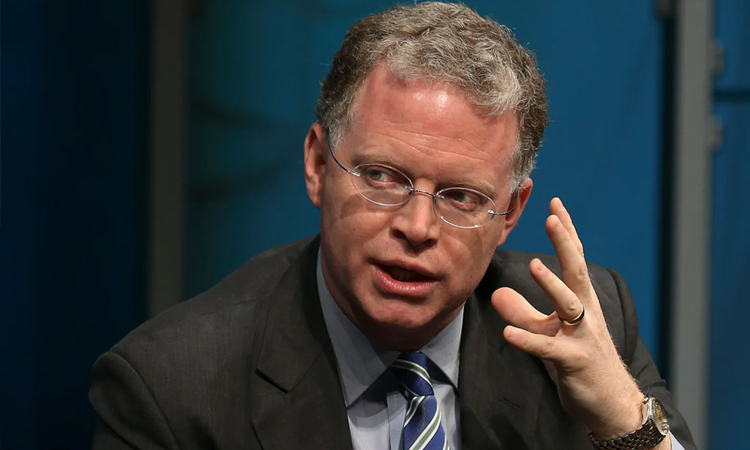 Journalist David Rohde was abducted in Afghanistan in 2008 and held for month in neighboring Pakistan. (Gary Cameron/ Reuters)
 Assistant Attorney General John C. Demers, left, and FBI Director Christopher A. Wray on Wednesday.
 Activist Tony Chung protests in Hong Kong in 2017. (AP)
 MAS noted that Covid-19 has also led to changes in consumption patterns, which could dampen labour demand. ST PHOTO: LIM YAOHUI
 Activists protest outside the United States embassy in Colombo against US intervention in Sri Lanka’s domestic affairs on Oct 27, 2020. The protest came a day ahead of US Secretary of State Mike Pompeo’s visit. [Photo/Agencies]
 CHINESE PRESENCE Chinese workers help build the China-funded Estrella-Pantaleon bridge project to connect Mandaluyong and Makati cities. Sen. Francis “Kiko” Pangilinan is seeking a Senate investigation into the presence of 4 million Chinese nationals in the country since 2017, saying it has national security implications amid fears of an “orchestrated soft invasion” by China. —RICHARD A. REYES
 Shigeki Takizaki (Yonhap)

