Pence skips final confirmation vote for Barrett after latest coronavirus outbreak at White House
InternationalOct 27. 2020Vice President Pence attends a rally in Kinston, N.C., on Sunday. (Jonathan Drake/ Reuters)
By The Washington Post John Wagner, Josh Dawsey, Paulina Firozi
WASHINGTON – Vice President Mike Pence did not preside over the Senate during the final confirmation vote of Supreme Court nominee Amy Coney Barrett.
A group of 10 Democratic senators, led by Minority Leader Chuck Schumer of New York had urged Pence in a letter to stay away from the chamber given the latest outbreak of the coronavirus at the White House.
An aide to the vice president said midday Monday that he was not planning to attend the vote despite his original intent to be present for the likely confirmation of President Trump’s third Supreme Court justice.
Sen. Chuck Grassley, R-Iowa, the president pro tempore of the Senate, presided over the chamber during the vote.
In their letter, the Democratic senators argued Pence’s presence would not only violate guidelines from the Centers for Disease Control and Prevention but would “be a violation of common decency and courtesy” after five people who work for or advise Pence tested positive for the coronavirus.
“Your presence alone could be very dangerous to many people – not just to senators, but to all the truly essential staff – Democratic and Republican – who must be physically present inside the U.S. Capitol for it to function,” they wrote.
The senators said Pence will not be needed to break a tie and his presence would be purely “ceremonial.”
Republicans hold a 53-47 advantage in the Senate, and only one GOP senator – Susan Collins of Maine -voted against confirmation.
Pence had indicated this past weekend that he wanted to preside over the vote for Barrett, who comes from Pence’s home state of Indiana.
“As vice president, I’m president of the Senate. And I’m going to be in the chair, because I wouldn’t miss that vote for the world,” Pence said Saturday night at a campaign rally in Tallahassee, shortly before the disclosure of the coronavirus outbreak within his staff. “Come this Monday night, Judge Amy Coney Barrett is going to be Justice Amy Coney Barrett. We’re going to fill that seat.”
White House Chief of Staff Mark Meadows told reporters Monday that plans for Pence to preside over the confirmation vote were “in flux.”
“The vice president obviously has great knowledge about the disease and the pandemic, and he knows the right protocols to follow, and I have every confidence that he’s following those protocols,” Jared Kushner, the president’s son-in-law, said of Pence, who serves as chairman of the White House coronavirus task force.
Pence is regularly summoned to the Capitol to preside over major votes for the administration or if he needs to break a tie.
Pence’s public schedule for Monday, released Sunday night, did not include a trip to the Capitol, although his plans can be revised during the day. He was set to return to Washington shortly after 6 p.m. Monday after campaigning in Minnesota.
Senate Majority Leader Mitch McConnell, R-Ky., who has been highly critical of how the White House has not abided by public health guidelines on its property, declined Sunday to answer multiple times whether he preferred that Pence stay away from the Capitol for the confirmation vote.
Although Pence has had close contact with his chief of staff, Marc Short, who tested positive for the virus, aides said the vice president will continue with his scheduled events because he is considered essential.
Pence’s office said Monday that he and his wife, Karen Pence, have tested negative for the coronavirus.
– – –
The Washingotn Post’s Seung Min Kim contributed to this report.
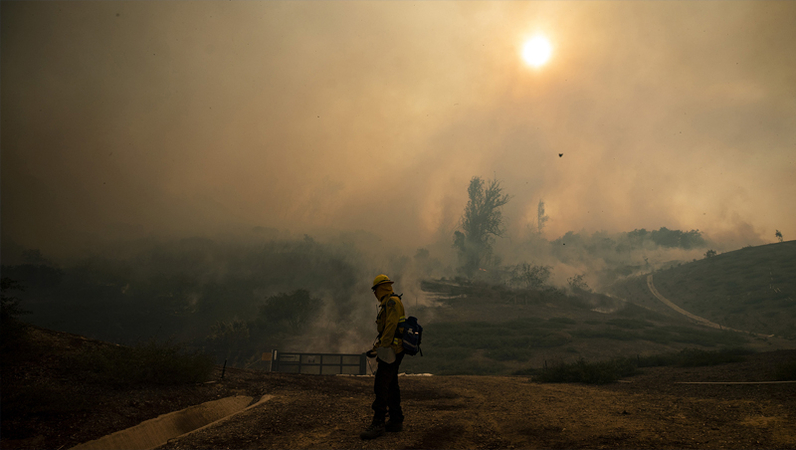
California is enduring its day of highest wildfire risk in a year that has featured unrelenting assaults from Mother Nature, with a fire season that has set records for the total amount of acres burned (more than 4.1 million) and for the size and destructiveness of the blazes.
On Monday, in Southern California, the fire danger rapidly ramped up with grassland fires and other spot fires popping up around Los Angeles County as winds reached 70 mph and above. The Silverado Fire in Irvine in Orange County prompted the evacuation of about 90,000 as fierce winds spread flames and smoke horizontally across the landscape. The fire grew to 7,200 acres Monday at midday, threatening numerous homes.
Two Orange County firefighters were critically injured battling the blaze, according to the county fire chief.
Other fires have also developed across the heavily populated region, including one threatening homes in Yorba Linda.
The National Weather Service office in Los Angeles warned of winds gusting as high as 90 mph in higher elevations, calling it “a particularly dangerous situation.”
“That area has a lot of grasses and they burn fast,” said Alex Tardy, warning coordination meteorologist for the Weather Service’s San Diego office, about the Silverado Fire. “It’s just moving very quickly into the urban areas.”
Smoke from the fire is moving horizontally or “laying flat” – a sign of a dangerous fire that is being pushed by very strong winds. Winds are gusting to 40 mph in the area, and Fremont Canyon, a typically windy zone north of the fire, recorded a peak gust of 88 mph Monday.
Southern California had some light rain and clouds Sunday, but the weather quickly shifted and a rapid drying occurred with the arrival of Santa Ana winds early this morning.
Meanwhile, powerful northerly winds were blowing in Northern California. Winds in the Sierra Nevada Mountains have been the strongest in the state, with a gust to 140 mph recorded at Kirkwood Mountain, where sustained winds were clocked above 100 mph.
These land-to-sea winds, locally known in northern parts of the state as “El Diablo,” and “Santa Ana” winds in the south have brought in extremely dry air, causing the relative humidity to plunge into the single digits.
With the air so dry, winds so strong and vegetation, or fuels, already at record dry levels for this time of year, the state is poised to burn. The focus for officials has been on depriving lands of an ignition source.
Red flag warnings are up throughout the Golden State, from San Francisco to Sacramento all the way to the northern border with Oregon, and extending south into the Los Angeles and San Diego metropolitan areas as well. In some locations, these warnings last through Wednesday.
As of Monday afternoon, fires flaring up in Southern California were the main focus of concern.
Any blaze that occurs Monday will probably exhibit extreme fire behavior, including rapid rate of spread. The strong winds even halted flights for at least one California airport, with Ontario Airport shutting down for a time because of severe crosswinds.
In addition to networks of fire-spotting cameras, firefighters are using heat-sensing equipment aboard a National Oceanic and Atmospheric Administration (NOAA) satellite to quickly find any developing blazes and direct firefighters to them.
The Weather Service forecast office in Los Angeles said the Santa Ana winds there are the strongest the region has seen this year and have the potential to contribute to a conflagration through Tuesday. So far, winds have gusted as high as 96 mph in the San Gabriel Mountains, the Weather Service reported.
Forecasters called this severe weather event “the most dangerous fire weather conditions we have seen since October 2019.”
“A particularly dangerous situation is expected for the Los Angeles County mountains from 2 pm to 11 pm [Monday] due to the combination of damaging wind gusts of 60 to 75 mph, single digit humidities, and critically dry fuels,” forecasters wrote in a technical discussion on a Weather Service website. “New fire ignitions in Los Angeles and Ventura counties will have the potential for very rapid fire growth, extreme fire behavior, and long range spotting, resulting in a significant threat to life and property.”
The Storm Prediction Center in Norman, Okla., which issues fire risk outlooks for the United States, placed Southern California in its highest threat category of “extremely critical” fire danger because of high winds, low humidity and record dry vegetation.
In preparation for the winds and fire risk, the utility company Pacific Gas & Electric preemptively cut power to hundreds of thousands of Californians. On Monday at about 5:45 p.m. Eastern time, about 456,000 customers were without power across the state, according to Poweroutage.us.
During the past few years, the company’s infrastructure, including transmission lines, have been blamed for some of the state’s deadliest and most destructive blazes, including some of the wine country fires and the 2018 Camp Fire, which nearly destroyed the town of Paradise, Calif., and killed dozens.
On Friday, Berkeley took an extraordinary step in recommending that residents who live in the fire-prone hills of the city consider evacuating ahead of Sunday’s predicted winds – and even noted hotels that are offering discounts in the better-protected urban core. The Weather Service has expressed concern about upcoming conditions in the East Bay hills, referencing the 1923 fire in Berkeley and the 1991 Tunnel Fire in the Oakland Hills.
California is in the midst of its worst wildfire season on record, with more than 4.1 million acres burned, which is more than double the acreage burned in the previous record-breaking year. In addition, at least 9,200 structures have been destroyed and 31 people killed. A staggering five of the top six largest fires on record in the state have occurred this season, including the largest, the August Complex.
That fire is also the state’s first “gigafire” on record, having burned more than 1 million acres.
To see a longer-term perspective: 17 of the top 20 largest blazes in the state have taken place since 2000.
Scientific studies show that by increasing air temperatures and drying out soils and vegetation, climate change increases the frequency and severity of days with extreme fire risk. This is true in the West, but also in other parts of the world, according to a recent review of the scientific literature.
California has seen its fire season lengthen, which causes the driest time of year to increasingly overlap with the typical season for the state’s strongest fall offshore wind events.
This year, the state saw its hottest August on record, with sizzling temperature records. Then an even more severe heat wave struck in early September, leading to a firestorm of historic proportions. Fuels that have not burned are at or near record-dry levels.
Land management practices, along with the building of homes closer to forested areas susceptible to fires, are other significant factors driving wildfire trends in the West, but they don’t explain the major uptick in large fires in recent years.
One study, for example, found that climate change has doubled the days during the fall with extreme wildfire conditions in parts of California since the 1980s.
– – –
The Washington Post’s Diana Leonard contributed to this report.
Senate confirms Barrett to Supreme Court, cementing its conservative majority
InternationalOct 27. 2020Groups supporting the nomination and confirmation of Judge Amy Coney Barrett gather outside the Supreme Court on Monday, Oct. 26. Photo for The Washington
By The Washington Post Seung Min Kim
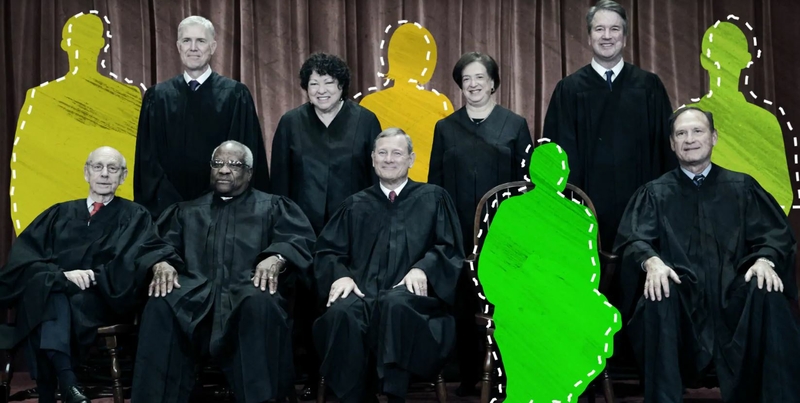
WASHINGTON – A bitterly divided Senate confirmed Amy Coney Barrett as the 115th justice to the Supreme Court on Monday, elevating just the fifth woman to the court in its 231-year history and one who further cements its conservative shift – a legacy that will last even if Republicans lose power in next week’s elections.
The vote was 52-48 for Barrett, President Trump’s third nominee to the Supreme Court. The 48-year-old jurist solidifies a judicial legacy for the White House and Senate Republicans that also includes dozens of younger and more ideologically conservative judges to the federal appeals courts. An acolyte of the late Justice Antonin Scalia, Barrett is certain to diverge dramatically from the woman she will succeed: Justice Ruth Bader Ginsburg, who died Sept. 18 and was for decades an enduring icon for liberals.
The battle to confirm Barrett – whose installation occurred as more than 60 million people had already cast their ballots for president – also plunged a Senate already bruised by years of tit-for-tat skirmishes in the judicial wars into deeper partisan acrimony. Incensed Democrats charged Republicans with hypocrisy for blocking President Barack Obama’s Supreme Court nominee for eight months in 2016 and repeatedly pointed out that no justice has been confirmed this close to a presidential election.
“The American people will never forget this blatant act of bad faith. They will never forget your complete disregard for their voices, for the people standing in line right now voting their choice, not your choice,” Senate Minority Leader Chuck Schumer, D-N.Y. said shortly before the vote.
But Republicans asserted their raw power, muscling Barrett’s nomination through in just over four weeks and with no bipartisan support – the first time that has occurred for a Supreme Court nominee in generations and a reflection of the politicized atmosphere around judicial fights.
“The reason we were able to do what we did in 2016, 2018 and 2020 is because we had the majority,” Senate Majority Leader Mitch McConnell, R-Ky., said moments after Schumer. “No rules were broken whatsoever. So all of these outlandish claims are utterly absurd, and the louder they scream, the more inaccurate they are.”
In an outdoor ceremony at the White House an hour later, Justice Clarence Thomas administered the constitutional oath to Barrett, with Trump and several Republican senators looking on.
Barrett, who faced repeated questions at her confirmation hearings about Trump’s preferred outcome for court rulings, delivered brief remarks on judicial independence in an unusual move for a new justice.
“A judge declares independence not only from Congress and the president, but also from the private beliefs that might otherwise move her. … My fellow Americans, even though we judges don’t face elections, we still work for you,” she said.
Supreme Court justices take two oaths – one to protect and uphold the Constitution, and another about judicial conduct. Chief Justice John Roberts will administer the judicial oath in a private ceremony at the court on Tuesday.
Barrett will solidify a 6-to-3 conservative majority on the court and will be in position to immediately hear contentious cases on elections and health care. A centerpiece of the Democrats’ strategy against Barrett was the pending case on the fate of the Affordable Care Act, set for oral arguments at the Supreme Court on Nov. 10. The Trump administration and Republican attorneys general argue that the entire 2010 health care law and its protections for millions of Americans with preexisting medical conditions should be invalidated.
From the moment Barrett was nominated, one Democratic senator after another warned that the judge, who currently sits on the U.S. Court of Appeals for the 7th Circuit, would pose a significant threat to the Affordable Care Act, having critically written about legal reasonings that had previously rescued it.
“It’s becoming clear that we have a binary choice: We can have the Affordable Care Act, or we can have Amy Coney Barrett on the Supreme Court,” Sen. Edward Markey, D-Mass., said. “We can have the ACA or we can have the ACB, but we can’t have both.”
Barrett assiduously declined to hint at how she would rule on that case, California v. Texas, as well as evaluate existing Supreme Court precedents on abortion, gay rights and use of contraceptives.
She attempted to differentiate herself from her mentor, Scalia, and, despite her personal and well-documented opposition to abortion, told senators that she would not abide by the “law of Amy,” but rather that of the American people. She also came under pressure from Democratic senators to recuse herself from any election-related challenges involving the president who nominated her, but Barrett declined to do so, instead promising that she will be an independent jurist.
“I certainly hope that all members of the committee have more confidence in my integrity than to think that I would allow myself to be used as a pawn to decide this election for the American people,” Barrett told senators during her confirmation hearing.
Her repeated pledges of independence did not satisfy Democrats.
“You deserve a Supreme Court nominee who will speak truth to power or at least acknowledge when basic precedent exists, even if it’s inconvenient to the president who nominated her,” said Sen. Amy Klobuchar, D-Minn., a member of the Senate Judiciary Committee.
Barrett’s qualifications – two federal clerkships, including with Scalia, a lengthy tenure as a law professor at the University of Notre Dame and three years as a federal appeals court judge – were not questioned by her opponents. She also came to the national spotlight with a compelling personal story as a mother of seven children, including two adopted from Haiti.
“She is an unparalleled nominee and will be a dazzling originalist on the Supreme Court,” said Sen. Ben Sasse, R-Neb., one of Barrett’s most ardent defenders. “Democrats didn’t lay a glove on Judge Barrett in her confirmation hearings and I think she ran circles around politicians who want to outsource lawmaking to unelected judges.”
Sen. Josh Hawley, R-Mo., said of Barrett: “This is the most openly pro-life judicial nominee to the Supreme Court in my lifetime.”
If Barrett follows the pattern of her colleagues, she will get to work immediately.
The court resumes oral arguments next Monday, and two of its biggest cases of the term are scheduled, including the challenge to the health-care law. While the rest of the country is still counting votes Nov. 4, the court will take up a legal fight from Philadelphia, where city officials ended a contract with Catholic Social Services to provide foster care services because the agency said it would not accept applications from married same-sex couples. A lower court has agreed the city can enforce its anti-discrimination policy, which protects sexual orientation.
A broad ruling could decide when religious organizations deserve exemptions from anti-discrimination laws that the groups say would cause them to violate deeply held beliefs, such as what constitutes a marriage.
But Barrett will have work to do before then. The court will meet in private conference Friday – most likely by teleconference – to review cases that could still be added to this term’s docket.
And there are four emergency requests pending at the court – three involving election procedures in the battleground states of Wisconsin, North Carolina and Pennsylvania, plus a request from Trump that the court temporarily stop a subpoena from Manhattan District Attorney Cyrus Vance, D, seeking the president’s private financial records.
McConnell marshaled support from all but two of his Republican senators to proceed with Barrett before the Nov. 3 election. The duo opposed to doing so were Sens. Susan Collins of Maine and Lisa Murkowski of Alaska, although Murkowski supported Barrett in the final confirmation vote on the merits. And Collins stressed that her “no” vote was meant to register her disagreement with confirming her amid a presidential campaign, not any conclusion about Barrett’s qualifications.
Murkowski, who along with Collins are the only two GOP senators who support access to abortion, said that based on her conversation with Barrett and her testimony before the committee, she doesn’t believe the newest justice would vote to overturn Roe v. Wade, the landmark 1973 decision that legalized the procedure.
With only Republicans supporting her confirmation, Barrett is the first Supreme Court justice since Edwin Stanton in 1869 to be confirmed without bipartisan support, according to a review of Senate voting data by National Journal. Even Sen. Joe Manchin, D-W.Va., who backed now-Justice Brett Kavanaugh in 2018 and Barrett for her circuit court seat three years ago, did not support her.
There were other factors that made the circumstances of Barrett’s confirmation unique, including the ongoing coronavirus pandemic – meaning a nomination that would’ve surely drawn large throngs of protests to the Capitol in a normal time instead operated in a literally sanitized sphere.
Monday’s planned White House ceremony gives a fitting bookend to her nomination, as Trump hosted a similar Rose Garden event on Sept. 26 to unveil Barrett as his pick, a ceremony which later was deemed a superspreader event. Numerous attendees were later diagnosed with covid-19, the disease caused by the coronavirus, including the president and first lady Melania Trump, two GOP senators and the president of the University of Notre Dame.
Most in attendance Monday night wore masks.
Vice President Mike Pence, who said on Saturday that he wouldn’t miss Barrett’s confirmation vote “for the world,” instead stayed away from his initial plans to preside over the Senate on Monday evening amid a fresh outbreak of covid-19 among his staff, including some of his closest aides. Democrats urged Pence not to come to the Capitol on Monday, and Schumer advised his ranks to limit time in the chamber because of the virus.
Barrett has also played a significant role in the 2020 campaigns for both the presidency and the Senate, with most GOP senators in competitive races latching onto the confirmation fight to energize conservative voters. Democratic challengers, meanwhile, have assailed Republicans for charging ahead with a lifetime appointment to the Supreme Court at the expense of a relief bill for millions of Americans suffering from the health and economic impact of the pandemic.
The Barrett confirmation has also fueled an internal Democratic debate over the issue of expanding the court, with the party’s presidential nominee, Joe Biden, under significant pressure from the party base to embrace a plan to increase the number of seats on the Supreme Court if he wins the White House.
Few elected Democratic officials have definitively supported the idea ahead of the closely contested elections for both the White House and the Senate. Biden has said he would appoint a bipartisan commission to propose changes to the Supreme Court and federal judiciary.
“This is to me, a real threat,” said Sen. John Barrasso, R-Wyo. “If they weren’t going to do it, former vice president Joe Biden, nominee Joe Biden, would have put an end to this early on.”
– – –
The Washington Post’s Robert Barnes contributed to this report.
WASHINGTON – President Donald Trump’s first-term record on the federal judiciary – which reached its apex Monday with the confirmation of Amy Coney Barrett as his third Supreme Court justice – will be difficult to roll back even if Democrats win both the White House and the Senate majority.
But the pipeline of conservative judges and the fast-track procedures Republicans have used to confirm them give a potential President Joe Biden and a Democratic-led Senate a rough playbook to try to install their own stream of liberal nominees.
The judicial legacy set by Trump but engineered primarily by Senate Majority Leader Mitch McConnell, R-Ky., includes several significant milestones, including the trio on the Supreme Court and the fact that for the first time in 40 years, there were no openings on the circuit courts. That has been a monumental achievement for a majority leader whose mantra has been “leave no vacancy behind” and for a president who simply likes to win.
“I have three Supreme Court justices. I have a great one coming,” Trump said Saturday at a campaign rally in Circle-ville, Ohio. Inflating the total number of judges confirmed under his tenure, the president added: “Think of that, 300 federal judges, I think close to 60 court of appeals judges and three Supreme Court justices. I mean – can you believe it? Even I can’t believe it!”
Barrett, 48, was confirmed with Republican-only votes Monday night, cementing a 6-to-3 conservative majority on the Supreme Court. She will be the 220th federal judge confirmed under the Trump presidency and the McConnell-led Senate – a figure that includes not only her and Justices Neil Gorsuch and Brett Kavanaugh, but also 53 circuit court judges, 162 district court judges and two to the U.S. Court of International Trade.
For the first time in more than four decades, there were no vacancies on the circuit court level, where approximately 30 percent of those sitting on the bench have been nominated by Trump.(That changed Monday with the death of Judge Juan Torruella of the U.S. Court of Appeals for the 1st Circuit, who was nominated by President Ronald Reagan.) Only President Jimmy Carter had more circuit court judges, as well as a larger share of the entire federal appellate bench, confirmed in his first term, and that was before the number of seats in the circuit courts was expanded.
Since 2017, McConnell and Senate Republicans have prioritized filling vacancies on the Supreme Court and the circuit courts, where the vast majority of cases on a litany of matters, including health care, the environment and government regulations, are settled.
“We do a lot of stuff here that is small ball, but this is something that may last 25 or 30 years,” said Sen. John Cornyn, R-Texas, one of the majority leader’s closest allies. “I give Senator McConnell a lot of credit for keeping us focused on it.”
Few issues have energized and united the Republican base more than the issue of the judiciary, and it has been a decades-long project of the right to steadily fill seats on the federal bench with reliable conservatives. Once viewed skeptically by traditional GOP voters, Trump released a list of potential Supreme Court nominees during his campaign in 2016, a move that reassured conservatives while a seat on the court was vacant.
Still, public polling has started to show a shift in which party cares more about the judiciary. A Pew Research Center poll in August found that 66% of registered voters who supported Biden said the matter of Supreme Court appointments was “very important” in considering their vote for president, compared with 61% of Trump backers.
That same question in 2016 drew the reverse response, with 70% of Trump’s supporters saying the issue was “very important,” while 62% of backers of Democrat Hillary Clinton said the same.
To reach their judicial goals, Republicans and the White House revised Senate rules and reversed key practices used by their Democratic predecessors in evaluating nominees – traditions that some Senate Democrats have said they should similarly disregard if they take control of the Senate.
Two of the most significant changes involve floor deliberations. During Gorsuch’s nomination fight in 2017, Senate Republicans invoked the “nuclear option” to change rules for Supreme Court nominees so that they no longer needed 60 senators to advance to a final confirmation vote. That effectively finished the task Senate Democrats began in 2013, when they deployed the same maneuver to change confirmation rules for all executive branch picks and nearly all judicial nominees.
In 2019, Senate Republicans changed the rules to significantly trim the time available for floor debate for district court judges. Before the change, nominations could be debated for a total of 30 hours before a confirmation vote, but GOP senators slashed that to two hours for all nominees except those to the Cabinet, the Supreme Court, the circuit courts and some independent boards.
A Biden White House and a Democratic-controlled Senate could certainly take advantage of the floor changes by being able to confirm Supreme Court picks with a simple majority and process district court nominees more quickly on the floor, should they prioritize the judiciary.
There are other practices generally used by the previous Democratic-led Senate that Republicans have neglected. They include the “blue slip” tradition for circuit court nominees – which effectively gave a state senator veto power over judicial picks from his or her state.
Democrats also complained when the Senate Judiciary Committee in the past four years – first under Sen. Chuck Grassley, R-Iowa, and now Sen. Lindsey Graham, R-S.C. – questioned multiple circuit court nominees at the same confirmation hearing, which Democrats said offered less time for senators to vet each one individually. Republicans said previous committee leaders, including Democrats, have held hearings featuring more than one circuit court nominee.
Meanwhile, at the Trump White House, the counsel’s office has declined to allow the American Bar Association to review potential candidates before they are formally nominated. That was the process used by the Obama White House – which helped weed out “not qualified” candidates before their names were made public – but the Trump administration returned to the process followed under President George W. Bush, which allowed for American Bar Association evaluations after people were nominated.
There has been no clamoring from Democrats to return to many of these practices. Sen. Dianne Feinstein, D-Calif., who would be in line to be Judiciary Committee chairwoman under Democratic control, has not publicly committed to any particular policy for processing nominees if she ran the panel.
Other senators on the Judiciary Committee aren’t as gun-shy, a reflection of the acrimony after years of partisan fighting in the judicial wars.
“No,” said Sen. Mazie Hirono, D-Hawaii, when asked whether Democrats should offer deference to Republican home-state senators if they do not sign off on circuit court nominees from a Biden administration. “The rules have changed. Do I look stupid to you?”
Sen. Richard Blumenthal, D-Conn., another Judiciary Committee member, also stressed that he believes Democrats “ought to play complete hardball” on judges.
“The question is whether we should allow states where there are two Republican senators to dictate who the judge here should be. I would say no,” Blumenthal said.
Still, some other Democrats are more cautious at this point about embracing some of those practices.
Sen. Christopher Coons, D-Del., said he would have to think about whether he would support reinstating the blue-slip practice for circuit court nominees. Coons, perhaps Biden’s closest ally in the Senate, also noted that the American Bar Association has “long played an important role of providing an early warning” about unqualified picks.
“We need to have a focused, deliberate conversation about which are the features of the confirmation process from before that are constructive, appropriate, necessary and we want to restore, and which are the features that, frankly, given they’ve been broken, we’re not going to reinstate them,” Coons said.
Those are arcane, yet critical, process decisions that Democrats may have to make soon.
About 30 circuit court judges nominated by Democratic presidents may be eligible to take senior status – a kind of semiretirement – but have not chosen to do so, according to Russell Wheeler, a fellow at the Brookings Institution who is an expert on the federal judiciary. (One seat on the U.S. Court of Appeals for the 7th Circuit opened up with Barrett’s confirmation, although the Trump White House has already nominated her replacement.)
Trump’s influence on the circuit courts is already deeply felt. He and Senate Republicans have turned three federal appeals courts once dominated by Democratic-appointed judges – the U.S. Court of Appeals for the 2nd Circuit, based in New York; the 3rd Circuit, based in Philadelphia; and the 11th Circuit, based in Atlanta – into courts with a majority of Republican appointees, according to Wheeler.
Even the U.S. Court of Appeals for the 9th Circuit, often a bane for legal conservatives and a target of efforts by Republican senators to break it up, has become less Democratic as Trump picks have been tapped for the San Francisco-based court.
Should eligible Democrats take senior status or leave the bench in coming months, that would give the next president a significant pot of openings in the appeals courts to fill.
“You’re likely to see . . . a splurge of Democrats taking senior status” if Biden wins, Wheeler said.
The bottom line is that few are publicly predicting a de-escalation of the judicial wars that have been continuously ramped up by both Democrats and Republicans over the past few decades, with few political incentives for senators to reinstitute practices meant to encourage bipartisan sign-off on judges.
Democrats were responsible for the first partisan filibuster of a circuit court nominee and went “nuclear” to make it easier to confirm nearly all nominees. Republicans repeatedly blocked President Barack Obama’s choices for the influential U.S. Court of Appeals for the District of Columbia Circuit and ignored the nomination of Merrick Garland, Obama’s third Supreme Court pick, for eight months in 2016.
“It cuts both ways,” Cornyn said. “And that’s part of the problem.”
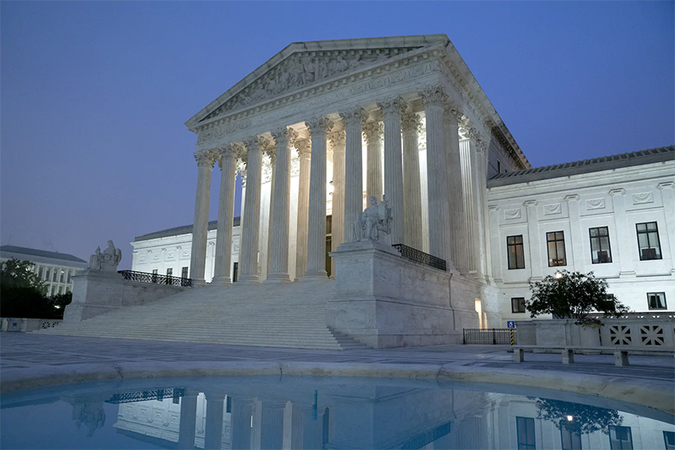
Lights illuminate the Supreme Court building in Washington last week. (Stefani Reynolds/ Bloomberg News)
By The Washington Post Robert Barnes
WASHINGTON – The Supreme Court on Monday night rejected a pandemic-related request from Democrats and civil rights groups to extend the deadline for counting mail-in ballots received after Election Day in the key battleground state of Wisconsin.
The vote was 5-3, with the Republican-nominated conservatives in the majority and the Democratic-nominated liberals in dissent. The court’s order showed the deep division within the court about the series of pandemic-related election cases that have come to dominate its agenda.
The court’s conservatives say they must defer to state officials on election decisions made in the largely Republican-run states, and the liberal justices say there is a need for dramatic action by judges to ensure the franchise for endangered voters during an unprecedented time.
“On the scales of both constitutional justice and electoral accuracy, protecting the right to vote in a health crisis outweighs conforming to a deadline created in safer days,” liberal Justice Elena Kagan wrote in dissent.
Conservative Justice Brett Kavanaugh answered that Kagan’s “green light to federal courts to rewrite dozens of state election laws around the country over the next two weeks seems to be rooted in a belief that federal judges know better than state legislators about how to run elections during a pandemic.”
The decision was a victory for Republicans and President Donald Trump in a state where he narrowly won in 2016 and polls show him behind this year. While Democrats have embraced mail-in voting, Trump has railed against it.
“The most powerful rebuke to Republican judicial activism is to defeat Trump and elect Joe Biden and Kamala Harris in a landslide,” Wisconsin Democratic Party Chairman Ben Wikler said in a statement after the Supreme Court’s ruling was announced. “The Democratic Party of Wisconsin will double down on making sure that every Wisconsin voter knows how to exercise their right to vote in the final eight days of this election.”
Wisconsin Republican Party Chairman Andrew Hitt said: “Democrats’ attempts to get the courts to rewrite Wisconsin’s election laws on the eve of an election have failed.”
The court in coming days will consider a similar issue in other battleground states. Republicans in North Carolina are challenging an extension for ballots postmarked before and on Election Day but received afterward. And the Pennsylvania GOP has again asked the court to overturn an extension granted there by the state Supreme Court.
The court just last week allowed that decision to stand on a 4-4 vote, with Chief Justice John Roberts siding with the liberals. But new Justice Amy Coney Barrett begins work Tuesday, and that could shift the court’s balance yet again.
In Wisconsin, a district judge had ruled with the plaintiffs, and extended by six days the deadline to receive ballots postmarked by Election Day. He accepted the argument that the coronavirus pandemic and the accompanying surge in mail voting demand changes to accommodate voters and ensure ballots are counted.
But the Republican National Committee, the Wisconsin Republican Party and the state’s majority-GOP legislature intervened to defend the existing deadline, and earlier this month a divided panel of the U.S. Court of Appeals for the 7th Circuit reinstated the requirement that mail ballots be returned by 8 p.m. on Election Day.
Judges Frank Easterbrook and Amy St. Eve – appointees of Presidents Ronald Reagan and Donald Trump, respectively – wrote that decisions about how to cope with the effects of the pandemic are “principally a task for the elected branches of government.”
Judge Ilana Diamond Rovner issued a sharp dissent, calling the situation facing Wisconsin voters “a travesty.”
“We cannot turn a blind eye to the present circumstances and treat this as an ordinary election,” wrote Rovner, an appointee of President George H.W. Bush. “Today, in the midst of a pandemic and significantly slowed mail delivery, this court leaves voters to their own devices. Good luck and G-d bless, Wisconsin. You are going to need it.”
The civil rights groups and Democrats say they were seeking only similar accommodations to those the Supreme Court approved in April during the state’s primary. Faced with a crush of requests for mail-in ballots the week before the primary, the court agreed that ballots postmarked by the primary date but received days afterward should be counted.
That action “resulted in approximately 80,000 ballots being counted that would have otherwise been rejected as untimely,” said a brief for the groups, which included Black Leaders Organizing for Communities.
The Supreme Court has been refereeing similar fights in emergency requests, and rarely explaining its decision-making. But the order in the Wisconsin case was different, with four justices writing.
Roberts was the justice in the middle.
He said that, in general, he opposed federal judges intervening in the “thick of election season to enjoin enforcement of a State’s laws.” But the Pennsylvania case involved the authority of state courts to interpret their own constitutions.
“Different bodies of law and different precedents govern these two situations and require, in these particular circumstances, that we allow the modification of election rules in Pennsylvania but not Wisconsin,” he wrote.
Kavanaugh and Justice Neil Gorsuch opposed the extensions in both cases. Both said that it is up to state legislatures to make decisions, not courts.
“It’s indisputable that Wisconsin has made considerable efforts to accommodate early voting and respond to COVID,” wrote Justice Neil Gorsuch, referring to the disease caused by the novel coronavirus. “The district court’s only possible complaint is that the state hasn’t done enough. But how much is enough? . . . The Constitution provides that state legislatures – not federal judges, not state judges, not state governors, not other state officials – bear primary responsibility for setting election rules.”
Kavanaugh agreed with Wisconsin officials that they had already done plenty to make voting easier during the pandemic, with early voting and fewer restrictions on absentee voting.
“The Wisconsin Elections Commission has mailed 1,706,771 absentee ballots to Wisconsin voters. And it has already received back from voters 1,344,535 completed absentee ballots,” he wrote. “As those statistics suggest, the dissent’s charge that Wisconsin has disenfranchised absentee voters is not tenable.”
He added: “Wisconsin’s deadline is the same as that in 30 other States and is a reasonable deadline given all the circumstances.”
The other justices in the majority, Clarence Thomas and Samuel Alito, did not state the reasons for their votes.
Kagan, joined by Justices Stephen Breyer and Sonia Sotomayor, said it was unreasonable for the court not to extend the same extension it granted during Wisconsin’s April primary.
“Because of the court’s ruling, state officials counted 80,000 ballots – about five percent of the total cast – that were postmarked by Election Day but would have been discarded for arriving a few days later,” she wrote.
“Today, millions of Wisconsin citizens are preparing to vote in the November election. But COVID is not over. In Wisconsin, the pandemic is much worse – more than 20 times worse, by one measure – than it was in the spring.”
She said the state legislature has “not for a moment” considered whether new accommodations are needed to ensure voters can cast ballots safely, and that the majority did not dispute the lower court’s finding that as many as 100,000 ballots might arrive too late to be counted.
Kagan said that the court’s usual reason for not agreeing to election changes is that it could confuse voters. But she said that could not be the case here.
“To the contrary, it would prevent the state from throwing away the votes of people actively participating in the democratic process,” she wrote. “And what will undermine the ‘integrity’ of that process is not the counting but instead the discarding of timely cast ballots that, because of pandemic conditions, arrive a bit after Election Day.”
– – –
The Washington Post’s Elise Viebeck and Rosalind S. Helderman contributed to this report.
Secretary of State Mike Pompeo, left, stands with Sudanese Gen. Abdel-Fattah al-Burhan, head of the transitional military government, in Khartoum on Aug. 25. (Sudanese Cabinet/ AP)
By The Washington Post John Hudson, Max Bearak
WASHINGTON – President Donald Trump announced Monday his intention to remove Sudan from a list of state sponsors of terrorism in a pre-election gambit that U.S. officials expect will lead to the country’s recognition of Israel and payment of millions of dollars to the families of terrorism victims.
“GREAT news! New government of Sudan, which is making great progress, agreed to pay $335 MILLION to U.S. terror victims and families,” Trump said in a tweet as he traveled to Arizona for a campaign event. “Once deposited, I will lift Sudan from the State Sponsors of Terrorism list.”
In a response to the tweet, Sudanese Prime Minister Abdalla Hamdok thanked Trump and underscored that the designation had caused serious “harm” to Sudan.
Removing Sudan from the list is expected to provide a significant economic boost to the country. Since 1993, the designation has barred the government from international dollar transactions and thwarted investments in the country and its ability to pay off interest-laden loans totaling tens of billions of dollars.
The expected move comes as Sudan faces chronic food and gasoline shortages, but it also carries risks for the fledging government in Khartoum.
The deal nearly faltered in the past several weeks as Sudanese officials feared that a rushed recognition of Israel, without a large-enough economic relief package to sweeten the deal, could turn popular support against Sudan’s precarious, unelected transitional government, which took power after the country’s longtime autocratic ruler was overthrown last year.
As a result, the Monday announcement did not include any mention of Israel, which is unpopular in Sudan.
“At long last, JUSTICE for the American people and BIG step for Sudan!” Trump tweeted.
The president added that for the agreement to take place, Sudan would need to deposit the funds first.
Officials expect Sudanese officials to announce the recognition of Israel at a later date.
Still, analysts described it as a watershed moment for a fragile government seeking to overcome its pariah status.
“This announcement has both huge symbolic and practical meaning to Sudan,” said Cameron Hudson, a senior fellow at the Atlantic Council and former chief of staff to the State Department’s special envoy to Sudan. “Practically, it removes a stigma that has deterred outside investment. It also frees up the international financial institutions and other commercial banks to reenter the country. This will move Sudan away from cash-based financing and through more diverse and reputable banking partners in the U.S. and Europe.”
Some in Congress have worried that a deal would jeopardize compensation funds for the families of American victims of the terrorist attacks targeting the U.S. embassies in Kenya and Tanzania in 1998 and the USS Cole Navy destroyer in 2000. The victims’ families are seeking a $335 million settlement from Sudan because of its role in harboring the men who carried out the plots.
Democrats in Congress are holding up legislation that would restore Sudan’s sovereign immunity, the legal doctrine that makes governments immune to civil suits or criminal prosecution. Sudan lost that immunity when it was put on the U.S. terrorism-sponsor list.
The delisting comes at a crucial moment of economic vulnerability for Sudan. Inflation has risen past 200%, and basic items including wheat and gas are in short supply. In some cases, lines at food stores and gas stations stretch for miles. Meanwhile, the worst flooding in a century has left more than half a million people homeless and destroyed a season of harvest. Pandemic-related border closures have dramatically reduced exports and driven up unemployment.
Much of Sudan’s hinterland remains in low-level conflict, suppressing regional economies, and the country has still barely recovered from the economic shock of South Sudan’s secession in 2011, which caused a sudden decline in oil revenue for the government in Khartoum.
Economic troubles, and bread lines in particular, served as the spark for street protests that swept Sudan in early 2019 and precipitated the military’s ouster of Omar al-Bashir, an autocrat who had led the country for 30 years and stands accused of war crimes and genocide by the International Criminal Court in addition to claims by his critics of ruinous economic mismanagement. (ICC representatives were in Sudan this week to discuss the possibility of trying Bashir without removing him from prison in Khartoum.)
Sudan’s prime minister, formerly an economist and now head of a transitional civilian government that shares power with a council of generals, had been pushing through economic reforms. Last month, the International Monetary Fund announced a key step forward in that process: a year-long monitoring program that, once complete, could couple with the terrorism delisting as the basis for clearing all of Sudan’s arrears to international lending institutions if the country’s reforms were found to be sincere and fully implemented.
“Sudan’s external debt is high and with long-standing arrears which severely limit access to external borrowing,” Antoinette Sayeh, deputy managing director and acting chair of the IMF’s executive board, said in a statement. “A strong track record of macroeconomic performance and implementation of reforms, together with a comprehensive strategy of arrears clearance and debt relief supported by Sudan’s development partners, is required for addressing Sudan’s high debt overhang.”
The upcoming rapprochement with Israel represents a major reversal from the Bashir era. For decades, Sudan was one of Israel’s staunchest opponents, and Bashir offered funding and arms to the Palestine Liberation Organization, Hamas and Hezbollah – part of the United States’ reasoning for designating Sudan as a state sponsor of terrorism. Sudan also harbored Osama bin Laden until 1996, though it denies any role in the Sept. 11 attacks. Many Sudanese say that now that Bashir has been removed from office, their country should already have been taken off the terrorism list.
While both governments have sought to portray the two issues as separate, the normalization of ties with Israel had not been part of Hamdok’s plan until American negotiators introduced it as part of a delisting deal. The issue remains hugely contentious in Sudan, where pro-Palestinian sentiment is strong, and groups from across the political spectrum have expressed displeasure, if not anger, with the unelected transitional government for allowing it into the delisting process.
For that reason, some analysts criticized the Trump administration effort as self-serving and potentially reckless.
“Washington should already have delivered the kind of political and economic relief necessary for Sudan’s make-or-break transition to succeed,” said Zach Vertin, a nonresident fellow at the Brookings Institution. “Instead, the Trump administration held out, extorting a fragile democracy in the service of its own domestic political ends.”
By Rejaul Karim Byron and Wasim Bin Habib The Daily Star/ANN
Govt decides to make coronavirus vaccines available for all citizens once those are procured.
The government has decided to administer Covid-19 vaccines to all the citizens free of cost once those are procured.
As per the decision at a high-level meeting recently, the government will purchase vaccines as soon as those are out in the market and administer those to all like it does under the existing immunisation programmes, said finance ministry officials.
The finance ministry has already sought $2 billion in financial assistance from four development partners to purchase, store, transport and administer the vaccines.
It has written to the World Bank, the Asian Development Bank, the Asian Infrastructure Investment Bank, and the Japan International Cooperation Agency, seeking from them $500 million each.
In the letters to the multilateral lenders, the ministry said the government decided to procure and administer the vaccines at its own cost.
It also mentioned that large-scale commercial production of the vaccine is expected by the end of this year.
“In this context, a major initiative is afoot to import vaccines to Bangladesh in order to make the vaccines available for all the citizens,” the ministry wrote.
Seeking anonymity, a top official of the finance ministry, told The Daily Star, “We have already sent letters to the development partners, seeking $2 billion in financial assistance. We are still not sure how much we will get. Whatever amount we get, the rest will be managed from government funds.”
A special allocation of Tk 12,000 crore was made in this year’s budget for procuring medical supplies for emergency response to Covid-19, the official mentioned.
Once procured, the vaccines will be administered to people as it’s done under the existing vaccination programmes to prevent diseases like measles, polio and diphtheria, the official added.
Finance ministry officials said a rough estimate shows that Bangladesh will require $1.65 billion to $2 billion to bring its population of 165 million under the Covid-19 vaccination coverage. Each person is likely to need two shots which may cost $10-12.
They further said the government is asking for low-interest soft loans from the development partners.
Contacted, Md Abdul Mannan, secretary at the Health Services Division of the health ministry, said, “The vaccines should be given to all free of cost.”
He, however, said those would be given as per the government’s policy guidelines which are yet to be finalised.
At a virtual meeting with the WB vice president for the South Asia region on Thursday, Finance Minister AHM Mustafa Kamal urged the global lender to take necessary steps to expedite the disbursement of assistance on the basis of population.
“Bangladesh ranks third among the International Development Association (IDA) countries in terms of population,” the minister noted.
The coronavirus pandemic is taking a heavy toll on human lives and businesses across the globe. Rapid access to vaccine doses can bring outbreaks under control and also help avert economic shocks that may send more people back into poverty.
The World Health Organization has said that a vaccine against the novel coronavirus will be ready for registration by the end of this year or early next year at the earliest.
Vaccines typically require years of research and testing before reaching clinics, but scientists are racing to produce a safe and effective coronavirus vaccine by next year.
The first vaccine safety trial for humans began in March and six vaccine candidates have so far been approved for limited use. At least 12 more have reached the final stages of testing as of October 24, according to the New York Times Coronavirus Vaccine Tracker.
Though the government has not made a deal with any country to get a Covid-19 vaccine at the early stage, health ministry officials insist that they are in talks with the makers of five front-running vaccine candidates.
On September 26, Prime Minister Sheikh Hasina asked the world community to treat the Covid-19 vaccine as a “global public good” and urged the United Nations to ensure its timely availability to all countries at the same time.
Bangladesh also could get 20 percent of the vaccines it needs from the WHO and the Global Alliance for Vaccines and Immunisation under the COVAX Facility, a mechanism designed to guarantee rapid, fair and equitable access to Covid-19 vaccines worldwide.
COVAX currently covers nine vaccine candidates, and its aim is to secure supply and delivery of two billion shots by the end of 2021 to over 170 countries that have signed up for vaccines.
InternationalOct 27. 2020Zhang Jifu (right), secretary of the Datong Municipal Committee of the Communist Party of China, congratulates the opening of the largest single data center in Asia on Oct 25, 2020. [Photo provided to China Daily]
By ZHENG YIRAN China Daily/ANN
The largest single data center in Asia, located in Datong, North China’s Shanxi province, went into operation on Sunday, marking China’s latest achievement in information technology.
The center, built by Chindata Group, supports artificial intelligence-based computing power basic services. It is based in Chindata’s energy data industrial base in Datong, namely Taihang Mountain Energy and Information Technology Industrial Campus of the Pan-Beijing Area, and has an IT volume of 50 megawatts – Asia’s highest level for a single data center.
Zhang Jifu, secretary of the Datong municipal Committee of the Communist Party of China, said: “The opening of the data center is of great importance to boosting Datong’s energy information technology development. Chindata’s energy data industrial base, where the data center is based, is a strategic project in Datong. Currently, the industrial base is taking shape. It is injecting strong impetus to the city’s development of new infrastructure, new technology, new material and new equipment.”
“The company should seize opportunities to make full use of the integration of data center and renewable energy, to turn Datong’s advantage in energy to the advantage in strategic newly emerged industries,” he added.
On the same day, Chindata and the Datong government signed an investment agreement of another data center in Chindata’s energy data industrial base. With a total investment of 15 billion yuan ($2.2 billion), the next-generation hyperscale data center, which covers 500 mu (33.3 hectares), will be further expanded, to support the tremendous computing power demand in AI, automatic drive and quantum communication.
Chindata’s energy data industrial base in Datong was established in 2018. According to the company, the planning area of the industrial base is 2,500 mu, and there are a total of seven phases of the construction project. The first and second phases of the project were put into operation in 2019. The third and fourth phases will come into service by the end of this year.
The company said when the seven phases are all put into operation, the industrial base in Datong, together with the company’s hyperscale data zones in Beijing and Hebei, will form an integrated data aggregation. The aggregation will effectively meet the digital demands from Beijing and Tianjin as well as the Xiong’an New Area in Hebei province.
Under late tycoon’s 27-year leadership, Samsung market cap grew 350 times
InternationalOct 27. 2020The photo shows late Samsung Group Chairman Lee Kun-hee shaking hands with Samsung Electronics` employees in 2011. (Samsung Group)
By Kim Young-won The Korea Herald/ANN
Death of Samsung chairman likely to have limited impact on Samsung stocks, analysts say.
The market capitalization of Samsung Group under the late Chairman Lee Kun-hee’s leadership of 27 years grew nearly 350 times, as the corporate empire he built turned into a global information technology powerhouse from a mere home appliance maker.
The combined market value of the conglomerate’s affiliates — including crown jewel Samsung Electronics and construction firm Samsung C&T — reached 318.7 trillion won ($282.4 billion) in 2014, when the late chairman had a heart attack and became incapacitated. That figure was 348 times higher than Samsung’s 1987 market value, which stood at 900 billion won. Lee took the chairmanship from his father, Samsung founder Lee Byung-chull, that year.
As Samsung’s stock value surged over the years, the value of Lee’s personal ownership in Samsung affiliates also grew dramatically, making the second-generation chaebol scion South Korea’s richest man. As of Friday, Lee held 18.22 trillion won in Samsung stocks, according to the Korea Exchange.
The death of Samsung’s leader will likely have a limited impact on the stocks of Samsung subsidiaries and affiliates, according to some market analysts, since the group has long prepared for the leadership transition.
“Since Lee’s son and Vice Chairman Jae-yong has been at the helm of Samsung Electronics for years, the tech giant’s stock price will less likely be affected by the passing of the chairman,” said Kim Ji-san, an analyst from Kiwoom Securities.
Inheritance taxes, involving the late chairman’s shares in companies that include Samsung Life Insurance, Samsung C&T and Samsung Electronics, could become a critical issue down the road, according to other analysts.
“The conglomerate has not yet announced measures to solve the inheritance issues, but many eyes will be on how the vice chairman prepares for money to pay for inheritance tax,” said Kim Yang-jae, an analyst at KTB Investment & Securities.
It is estimated that the bereaved family members will have to pay more than 10 trillion won in inheritance taxes.
Lee Jae-yong was the second-richest man in Korea as of last week, with the value of his stocks in Samsung affiliates reaching 7.2 trillion won.
The Samsung Group chairman died in a hospital in Seoul on Sunday at age 78, having been bedridden since his heart attack in 2014.
Based on a survey by Forbes earlier this year, the Samsung chairman was one of the 100 richest people in the world and his assets were worth $20.9 billion.
South Korea’s economy returned to modest growth in the third quarter, marking the first quarterly expansion since the coronavirus pandemic began, as exports showed signs of improvement, the Bank of Korea (BOK) said Tuesday.
In the July-September period, the nation’s real gross domestic product (GDP) grew 1.9 percent from the previous quarter, when it shrank 3.2 percent, according to the BOK data.
The third-quarter reading marked the fastest expansion since the first quarter of 2010.
Compared with a year ago, however, the economy, Asia’s fourth largest, contracted 1.3 percent, the BOK said.
In August, the BOK expected South Korea’s economy to contract 1.3 percent this year.
If the nation meets the target, the economy should grow around 1.5 percent in the third and fourth quarters.
Park Yang-su, head of the BOK’s economic statistics department, told a media briefing that the nation could meet this year’s growth target, as the third-quarter results were better than expected.
Also, the economy could contract less than predicted this year if it expands by at least 0.4 percent in the fourth quarter, Park said.
However, the pace of recovery may be moderate for the trade-driven economy because new waves of coronavirus infections recently gripped the United States and European nations, Park said.
“Given the risk factors, annual growth rates are still in the range of previous projections,” Park said.
Shortly after the data was released, Finance Minister Hong Nam-ki said the nation’s economy is on the road to recovery, helped by robust growth in exports.
“The economy entered a recovery path for normalization of the economy,” Hong told a policy meeting.
The economy is also expected to report an expansion in the fourth quarter, as advanced nations eased restrictions against the pandemic, Hong said.
Hong said the government will take measures to boost local consumption in the fourth quarter.
During the third quarter, exports grew by 15.6 percent, as overseas shipments of automobiles and semiconductors expanded, the BOK said.
Although the pandemic-caused trade slump eased as advanced nations lifted lockdown measures, domestic spending was still weak because of a resurgence of the new coronavirus in mid-August.
Last month, South Korea saw exports rebound for the first time in seven months as major trade partners gradually resumed their business activities amid the pandemic.
Outbound shipments came to $48 billion last month, up 7.7 percent from $44.6 billion posted a year earlier.
Facility investment rose 6.7 percent on-quarter in the third quarter, the BOK said.
Private spending edged down 0.1 percent in the quarter, while government spending inched up 0.1 percent.
The government has so far boosted its budget spending by at least 67 trillion won ($59.3 billion) with four batches of supplementary budgets to boost the virus-hit economy.
By sector, output by the manufacturing industry gained 7.6 percent on-quarter in the third quarter, a turnaround from a 8.9 percent plunge in the second quarter.
Output by the construction sector dipped 5.5 percent in the third quarter, while that of the service sector grew 0.7 percent. (Yonhap)

 Vice President Pence attends a rally in Kinston, N.C., on Sunday. (Jonathan Drake/ Reuters)
 Groups supporting the nomination and confirmation of Judge Amy Coney Barrett gather outside the Supreme Court on Monday, Oct. 26. Photo for The Washington


 Zhang Jifu (right), secretary of the Datong Municipal Committee of the Communist Party of China, congratulates the opening of the largest single data center in Asia on Oct 25, 2020. [Photo provided to China Daily]
 The photo shows late Samsung Group Chairman Lee Kun-hee shaking hands with Samsung Electronics` employees in 2011. (Samsung Group)
 (Yonhap)

