No Turkish support for Sweden’s Nato membership – Erdogan
TUESDAY, JANUARY 24, 2023
The US State Department on Monday said Finland and Sweden are ready to join the Nato alliance after Turkish President Tayyip Erdogan said Sweden should not expect Turkey’s support for its membership after the burning of a copy of the Koran near the Turkish embassy in Stockholm at the weekend.
Sweden should not expect Turkey’s support for its Nato membership after a protest near the Turkish embassy in Stockholm at the weekend including the burning of a copy of the Koran, President Tayyip Erdogan said on Monday.
“Those who allow such blasphemy in front of our embassy (in Stockholm) can no longer expect our support for their Nato membership,” Erdogan said in a speech after a cabinet meeting.
Protests in Stockholm on Saturday against Turkey and against Sweden’s bid to join Nato, during which a copy of the Koran was burned, have heightened tensions with Turkey, whose backing Sweden needs to gain entry to the military alliance.
State Department spokesperson Ned Price told reporters that burning books that are holy to many is a deeply disrespectful act, adding that “something can be lawful but awful.”
The Koran burning was carried out by Rasmus Paludan, leader of the Danish far-right political party Hard Line. Paludan, who also has Swedish citizenship, has staged a number of demonstrations in the past where he burned the Koran.
Several Arab countries including Saudi Arabia, Jordan and Kuwait denounced the event. Turkey had already summoned Sweden’s ambassador and cancelled a planned visit by the Swedish defence minister to Ankara.
Sweden and Finland applied last year to join Nato following Russia‘s invasion of Ukraine but all 30 member states must approve their bids. Ankara has previously said Sweden in particular must first take a clearer stance against what it sees as terrorists, mainly Kurdish militants and a group it blames for a 2016 coup attempt in Turkey.
Cambodia has taken the position that it will use the term “Kun Khmer” to refer to the sport of kickboxing at the upcoming Southeast Asian (SEA) Games, and has removed the term Muay from all references to the sport.
Despite strong reactions from the Thai side – and threats of a boycott – the Cambodian SEA Games Organising Committee (CAMSOC) says it will not be budged.
CAMSOC secretary-general Vath Chamroeun said the decision had been affirmed in an informed letter shared with all of the participating nations. The letter explained that the term “Kun Khmer” was chosen as an expression of the host country’s national identity.
“Even if the Thai sporting federation takes issue with our decision and threatens to boycott, Kun Khmer will remain an event at the 32nd SEA Games. According to the rules, if there are four or more participating countries, it is eligible for the games. So far, Indonesia, Vietnam, the Philippines, Laos, Myanmar and Malaysia are planning to enter, so we don’t care if one nation decides not to take part,” he stressed.
The firm position followed strong reactions from Thai officials.
Sakchye Tapsuwan, president of the International Federation of Muaythai Associations (IFMA) and the Amateur Muaythai Association of Thailand, threatened a boycott in an interview with Thai PBS Sport on January 21.
“The association will not send athletes to compete. We have spoken with the Olympic Committee of Thailand and they concur. We will not send athletes to Cambodia,” he said.
The IFMA also announced that it will impose fines on all countries that send kickboxers to the games in Cambodia. Citing the SEA Games rules, it said both Khmer boxing and kickboxing in the SEA Games shall use the name Muay or Muay Thai.
“The IFMA has sent a letter to the countries of the ASEAN region, warning them that if they opt to participate, they will not be allowed to participate at the IFMA’s sporting events, especially the upcoming Asian Indoor Games,” said Sakchye.
Chamroeun did not express any concern over the withdrawal of the Thai boxing team, saying that it was up to each country to decide whether or not to participate in any sport. However, he made it clear that Cambodia would not send kickboxers to the 33rd SEA Games 2025, to be hosted by Thailand.
“If Thailand includes Muay Thai in the 2025 SEA Games, we will not participate. They decided to boycott us over the name, so we will respond in kind. I am sure that many other countries will participate,” he said.
“We remain united in the development of Kun Khmer and Muay Thai in the form of friendly matches, no matter what. Multi-sport events like the SEA Games are different because we are representing our country. We must adhere to the principles of our nation’s cultural identity,” he concluded.
By Chhorn Norn The Phnom Penh Post/Asia News Network
Asia News Network: The Nation (Thailand), The Korea Herald, The Straits Times (Singapore), China Daily, Jakarta Post, The Star and Sin Chew Daily (Malaysia), The Statesman (India), Philippine Daily Inquirer, Yomiuri Shimbun and The Japan News, Gogo Mongolia, Dawn (Pakistan), The Island (Sri Lanka), Kuensel (Bhutan), Kathmandu Post (Nepal), Daily Star (Bangladesh), Eleven Media (Myanmar), the Phnom Penh Post and Rasmei Kampuchea (Cambodia), The Borneo Bulletin (Brunei), Vietnam News, and Vientiane Times (Laos).
Onshore Wind Power Projects Face Local Opposition in Northeast Japan
MONDAY, JANUARY 23, 2023
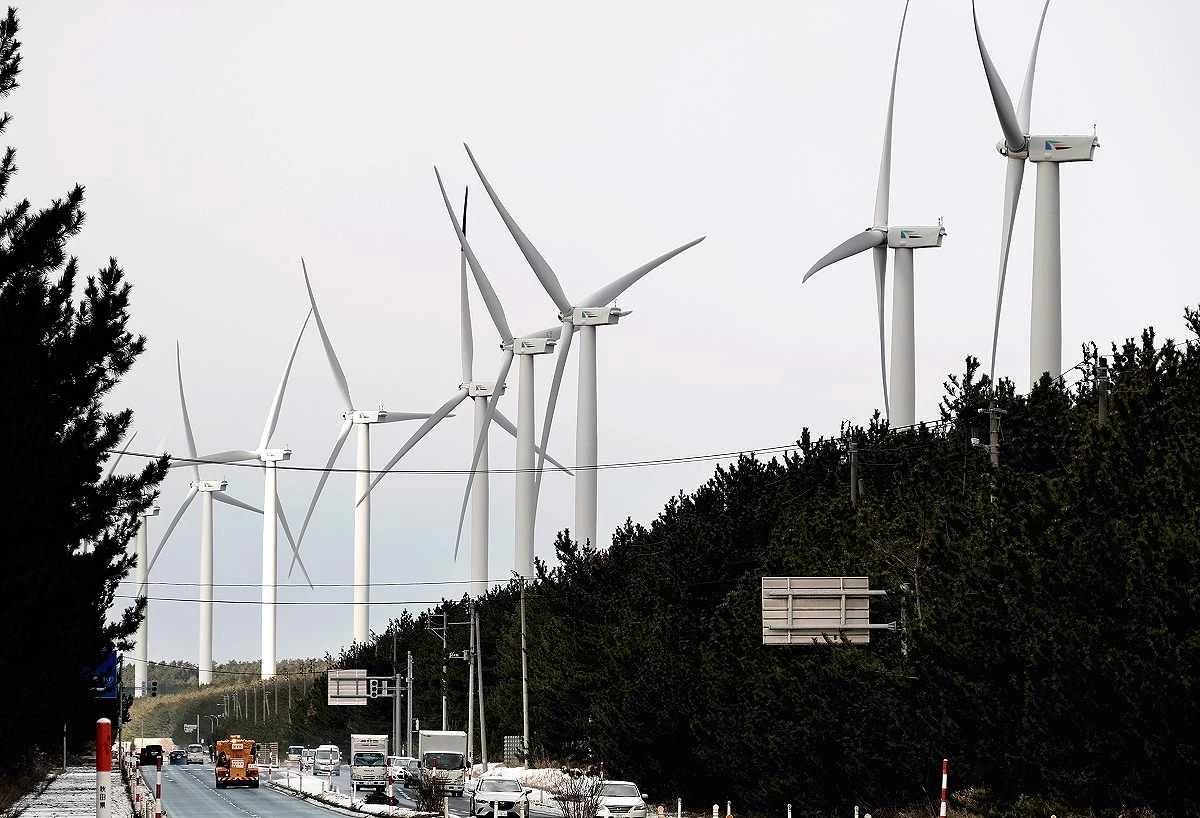
Several wind power plant construction projects in the Tohoku region are facing opposition from local mayors and residents concerned over potential damage to the environment.
In the last several months alone, a number of projects have been scrapped in the face of strong opposition, though one particular project is moving ahead after the operator coordinated closely with locals.
According to one expert, projects that are green-lighted have a common theme: Companies deal sincerely with the concerned local communities.
On Dec. 2 last year, Tsutomu Komata, the mayor of Shichinohe Town in Aomori Prefecture, voiced disquiet over an ongoing onshore wind power farm project in the Hakkoda Mountains in the prefecture.
“The town is clearly opposed to the project,” Komata said of the Michinoku Furyoku Hatsuden Jigyo project. The mayor’s worries stemmed from the possible impact of deforestation on water sources, among other factors.
The construction of up to 150 wind turbines with a combined generation capacity of 0.6 million kilowatts had been planned over about 17,300 hectares spanning six municipalities in the prefecture – including Shichinohe. The project was led by Tokyo-based Eurus Energy Holdings Corp. and invested by Toyota Tsusho Corp. and other companies. Operations were slated to start in April 2030. However, in the face of local opposition, the company announced it would scale back what was to be one of the nation’s largest planned wind power projects by reducing wind turbine numbers to around 100.
Other projects, meanwhile, have been cancelled. In July last year, Osaka-based Kansai Electric Power Co. was planning to build up to 23 windmills that would have generated 96,600 kilowatts of electricity in the Zao Mountains in the town of Kawasaki in Miyagi Prefecture. However, the plan was scrubbed after running into criticism from Miyagi Gov. Yoshihiro Murai, among others, over claims that the construction of a cluster of wind turbines around the Okama crater lake “would destroy a precious landscape” that was popular with tourists.
Similarly, a project planned by Osaka-based Hitachi Zosen Corp. on the borders of four municipalities in Fukushima Prefecture, including the village of Showa, was nixed in August last year because of opposition from locals.
Strong winds blow steadily along the Tohoku region’s coastal areas, making it a preferred location for wind power generation. Aomori Prefecture was Japan’s largest producer of wind power in fiscal 2021, registering some 1,255.15 million kilowatt-hours, according to a Natural Resources and Energy Agency survey. Three other Tohoku region prefectures were among the nation’s top 10 wind power producers in that fiscal year: Akita (930.46 million kilowatt-hours) was third, Iwate (396.76 million kilowatt-hours) fifth and Fukushima (313.17 million kilowatt-hours) eighth.
But some Tohoku region mayors are growing distrustful of project developers, claiming they do not coordinate closely enough with local communities.
For example, Aomori Gov. Shingo Mimura criticized the Michinoku Furyoku Hatsuden Jigyo project last November, saying, “It’s unacceptable that they do everything [based purely] on their own business plans.”
In September last year, Miyagi Gov. Murai revealed a plan to create an ordinance for taxing businesses that build new renewable energy facilities in forested areas in the prefecture. Murai wants to slow projects that conflict with local communities, saying, “There are no means for local governments to stop such project plans.”
However, some project operators reach out to and thoroughly engage with local communities. In April last year, Fukushima Reconstruction Wind Power GK – a Fukushima city-based joint venture created by nine companies, including Sumitomo Corp. – began constructing Abukuma Wind Power Plants in four municipalities, including the city of Tamura in Fukushima Prefecture. The plants will have a combined output capacity of 147,000 kilowatts.
The company has spent seven years coordinating with locals since the Fukushima prefectural government began environmental-impact assessments for the project in fiscal 2015. The firm plans to hire local engineers who will be responsible for maintaining and managing the projects. A total of 46 wind turbines will be constructed and operations are scheduled to begin in spring 2025.
Yoshiaki Shibata, an expert on renewable energy and a researcher at the Institute of Energy Economics, Japan, said, “It’s important [for project operators] to establish a scheme to collaborate with local communities and have local residents participate in the project from the onset while informing them about specific benefits to their communities.”
President Jokowi’s approval rating at all-time high
MONDAY, JANUARY 23, 2023
President Joko “Jokowi” Widodo’s approval rating has hit an all-time high after the government eased COVID-19 restrictions last month, a poll showed on Sunday.
Figures released by pollster Lembaga Survei Indonesia (LSI) showed satisfaction with the president had risen consistently over recent months to reach 76.2 % at the start of 2023.
“In the last three months, the president’s performance has increased in (terms of) positive public perception from 62.6 % in September 2022 to 76.2 %. If we look at the last three months, the increase is quite significant,” LSI executive director Djayadi Hanan said.
The more than 10-point jump put Jokowi on his highest approval rating recorded by LSI during his current term which began in 2014.
“I think this was mostly because of the lifting of (Covid-19) social restrictions and a decrease in fuel prices,” Djayadi told Reuters. “The narrative that the economy will be very difficult, particularly in 2023, has been there since the beginning of last year.”
Jokowi’s announcement in December of the end of pandemic restrictions was well received, the pollster said, as the restrictions had been seen as hurting the economy.
The LSI poll, conducted between Jan. 7-11 and covering more than 1,200 respondents, also comes months after the start of a high-profile trial against a former police general.
The case sparked public uproar about alleged corruption and impunity within the police, but the fact that the case was made so public was taken as a sign that the government was at least trying to tackle the issues.
LSI cited improvements in perceptions of the economy and law enforcement as reasons for the ratings jump.
Jokowi’s poll rating appears to have been unaffected by both the passing last month of a controversial new criminal code and his issuing of an emergency regulation to replace the jobs law.
Jokowi is serving his second and final term in office with the next election scheduled for February 2024.
Sunday’s poll found Central Java Governor Ganjar Pranowo was the favoured candidate to succeed Jokowi, although his candidacy is yet to be announced.
The other top candidates were Defence MinisterPrabowo Subianto and former Jakarta governorAnies Baswedan, both of whom have announced their intentions to run.
Earlier this month, Jokowi expressed regret over mass human rights violations committed in the country’s past, including a violent anti-communist purge in the 1960s and the disappearance of student protesters in the late 1990s.
“With a clear mind and a sincere heart, I as the leader of this country, admit that gross human rights violations have happened in several incidents and I regret they happened very much,” Widodo said in a speech at the state palace in the capital Jakarta.
“I have sympathy and empathy for the victims and their families.”
Police find body in van believed to be linked to California mass shooting suspect
MONDAY, JANUARY 23, 2023
Police in Torrance, California, used armoured vehicles to surround a white cargo van that may be connected to a suspect in a fatal shooting in Monterey Park, about 20 miles (34km away), officials said.
Television images showed a body slumped over the steering wheel of that van.
Los AngelesCounty Sheriff Robert Luna said at a briefing on Sunday (January 22) afternoon that a man resembling the suspect had been seen in Torrance and police believed there was a person inside the vehicle.
A man fatally shot 10 people and injured at least 10 others at a ballroom dance hall during a Chinese Lunar New Year celebration late on Saturday (January 21) near Los Angeles before fleeing the scene, police said.
The shooter, still at large 12 hours after the attack in the city of Monterey Park, was believed to be an Asian man between 30 and 50 years old based on eyewitness descriptions, law enforcement officials said.
Earlier Sunday morning, the sheriff’s department said it did not know whether the attack was racially motivated. Five of the victims were male and five were female, Luna said. Their identities have not been made public.
Germany will coordinate with allies on Ukraine weapons decisions – Scholz
MONDAY, JANUARY 23, 2023
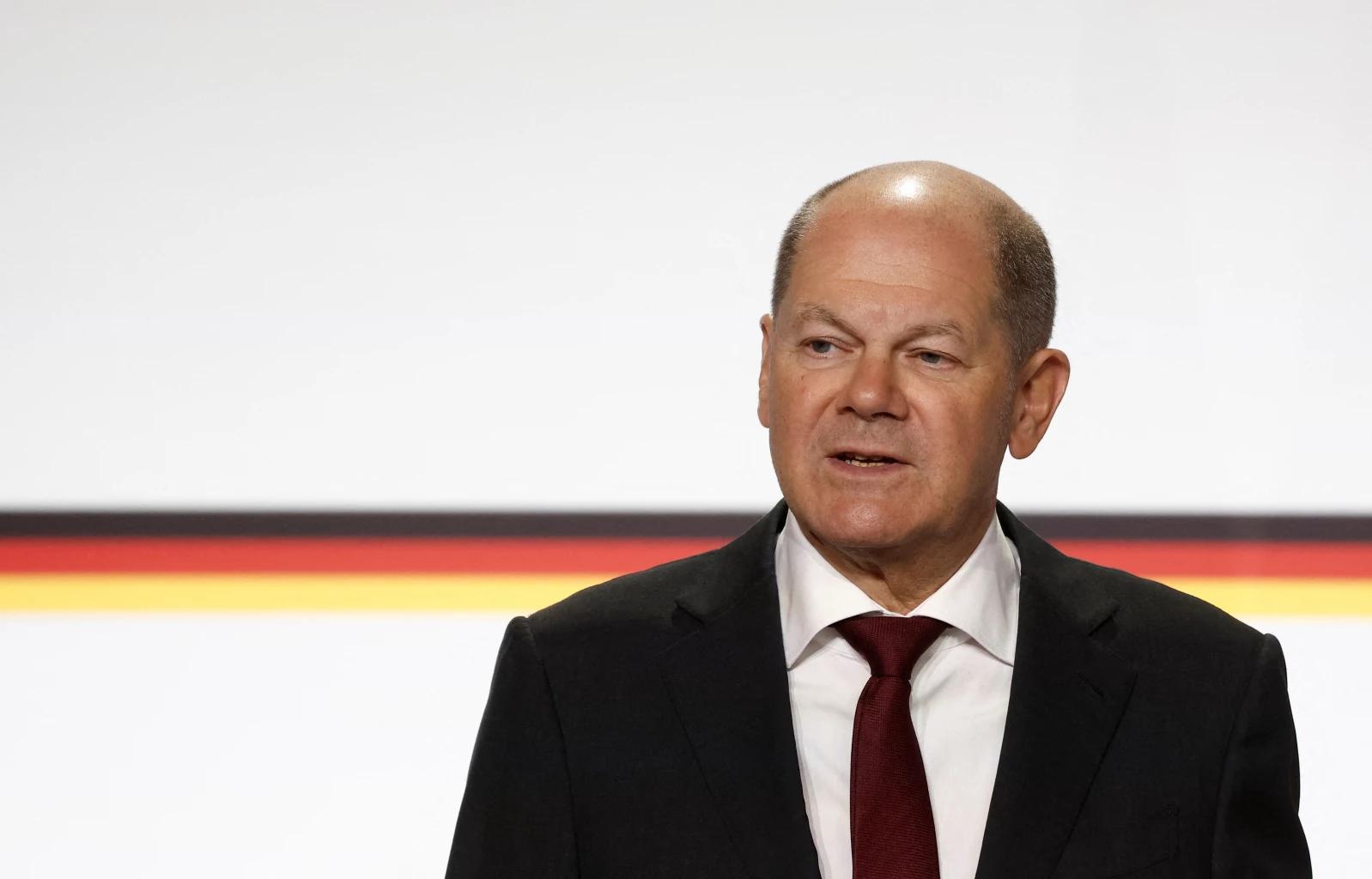
German Chancellor Olaf Scholz, under pressure to allow the shipment of German-made tanks to Ukraine, said on Sunday all decisions on weapons deliveries would be made in coordination with allies including the United States.
Last week Germany and Western allies reached no decision on whether Germany would agree to send Leopard 2 tanks to Ukraine, or permit other countries that have them to do so, despite Ukraine’s pleas for modern tanks to boost its defence efforts.
Scholz, asked at a news conference in Paris about providing tanks to Ukraine, said all weapons deliveries to Ukraine so far had taken place in close coordination with Western partners. “We will do that in the future,” he said.
Speaking at the same news conference, French President Emmanuel Macron said he did not rule out the possibility of sending Leclerc tanks to Ukraine.
Macron said that sending tanks must not escalate the situation, must take into account the time to train Ukrainians to be effective, and must not endanger France’s own security.
German sources have told Reuters they would allow German-made tanks to be sent to Ukraine to help its defence against Russia if the United States agrees to send its own tanks. But U.S. officials have said President Joe Biden’s administration is not poised to send its own tanks, including the M1 Abrams.
Scholz was in Paris with top leaders of his government for a meeting with his French counterparts and to attend ceremonies to mark the 60th anniversary of the Elysee Treaty.
Ten people were killed in a mass shooting in the city of Monterey Park, California, late on Saturday, the Los Angeles County Sheriff’s Department said.
Another 10 people were taken to local hospitals to be treated for injuries, and at least one was in critical condition.
“Los Angeles County Sheriff‘s Homicide detectives are responding to assist Monterey Park Police Department with a shooting death investigation. There are ten deceased,” the department said in a brief statement.
“There is no additional information available at this time.”
The department said the suspect was male, but it was not clear if he was still at large.
The shooting took place after 10 p.m. (0600 GMT on Sunday, January 22) around the location of a Chinese Lunar New Year celebration held in Monterey Park, US media reported.
Footage posted on social media showed injured people on stretchers being taken to ambulances by emergency staff. Around the scene of the shooting – reported to have been at a dance club – police guarded cordoned-off streets, the video showed.
“Our hearts go out to those who lost loved ones tonight in our neighbouring city, Monterey Park, where a mass shooting just occurred,” Los Angeles City Controller Kenneth Mejia said in a tweet.
Tens of thousands of people had attended the festival earlier in the day.
The Los Angeles Times quoted the owner of a nearby restaurant as saying that people who sought shelter in his property told him there was a man with a machine gun in the area.
Seung Won Choi told the newspaper that he believed the shooting took place at a dance club.
Monterey Park is a city in Los Angeles county, around 7 miles (11 km) from downtown Los Angeles.
Year of the Rabbit: Three faces of the Chinese rabbit you may not know
SUNDAY, JANUARY 22, 2023
The Year of the Rabbit should not just conjure images of lithe, fluffy Peter Rabbits or Judy from Zootopia.
As China ushers in the Year of the Rabbit, a variety of bunnies have stormed the country’s shopping malls, parks and social media platforms. Clad in golden armour, riding on ferocious tigers or holding herb-pounding pestles, some may be less recognizable for non-Chinese rabbit lovers.
On the eve of the Chinese Lunar New Year, which falls on Sunday, Xinhua has rounded up some of the most famed rabbits in China and is offering explanations of their changing symbolism in modern-day China.
Jade Rabbit
This is probably the most famous rabbit in China. It features on the special stamps issued by China Post to celebrate the Year of the Rabbit and was mentioned when the Chinese leadership extended Lunar New Year greetings.
Known as Yutu, or Jade Rabbit, the pet (or pets) of Lunar GoddessChang’e often appears grinding herbal medicines with a pestle in the Lunar Palace.
Photo taken by the landform camera on the Chang
Legend has it that Chang’e, after swallowing a magic pill, took her pet and flew toward the moon where she became a goddess, and she has lived there with the white jade rabbit ever since.
Archaeologists say that rabbits and toads have long been imagined as inhabitants of the moon in Chinese mythology, probably due to their resemblance to the dark spots on the lunar surface.
The relationship between rabbits and the moon had been established in the Western Han Dynasty (202 BC-25 AD) or earlier, evidenced by unearthed silk paintings carrying images of running rabbits on the moon, said Ai Lulu, a researcher at the Chongqing China Three Gorges Museum.
As for images of rabbits crushing herbal medicines with a mortar and pestle, Ai suggests they may have derived from the story of another goddess Xiwangmu, or Queen Mother of the West, who has a retinue of rabbits making elixirs of immortality.
The rabbit’s common association with Earth’s only natural satellite led China to name its first moon rover “Yutu.” Aboard the Chang’e lunar probe, the buggy steered onto the surface of the moon in 2013.
Instead of concocting elixirs of immortality, the Yutu rover sampled moon rocks and conducted experiments. It operated on the moon for over two years, outliving its designed lifespan of just three months.
In 2019, China sent another rabbit visitor to the moon. The Yutu-2 rover and the Chang’e-4 probe soft-landed on the dark side of the moon — a first for humanity. Still in good condition, the robotic rabbit has travelled 1,455 meters on the moon’s far side as of Jan. 3.
White Rabbit
The image of a white rabbit often leaves a sweet taste in the minds of Chinese children.
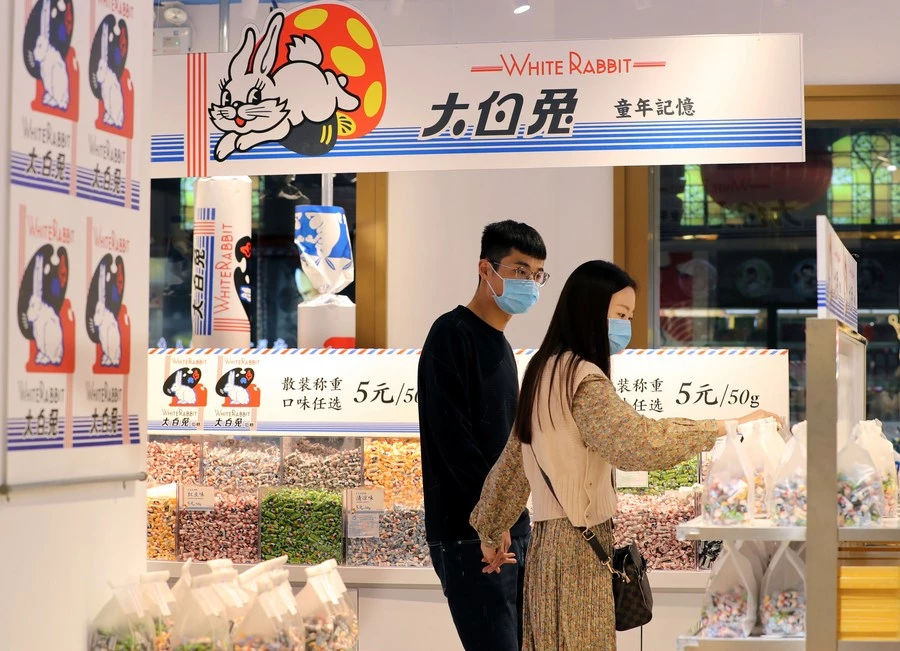
Born in 1959 in Shanghai, White Rabbit milk candies are a household name in China.
People shop at a White Rabbit candy franchise shop at Yuyuan Garden in Shanghai, east China, Oct. 8, 2020. (Xinhua/Liu Ying)
Milk powder is the main ingredient of the candy, giving it its iconic creamy taste and texture. In times of food shortages, White Rabbit candies were hailed as nutritional boosters and gifted to children during festivals.
The 64-year-old rabbit sweets have enjoyed renewed popularity among young consumers in recent years, with the roll-out of White Rabbit-flavored milk tea, ice cream, and even lip balm.
The candy’s bunny mascot has also been incorporated into the designs of global cosmetics brands and luxury houses, which have shown rising interest in China’s Zodiac animal culture.
At the 5th China International Import Expo held last November, Coach and White Rabbit globally debuted a co-branded collection, including clothing, handbags, footwear and children’s wear collections.
Lord Rabbit
Lord Rabbit, known as Tu’er Ye in Chinese, is an auspicious clay toy for children in Beijing.
With a human body and a rabbit’s ears and mouth, Lord Rabbit is actually a deity governing health and medicine, and an alternate version of the jade rabbit.
Citizens buy rabbit dolls at the Dongyue Temple in Beijing, capital of China, Sept. 12, 2011, to celebrate the traditional Mid-autumn festival. (Xinhua/Zhao Bing)
The legend goes that Beijing once suffered a plague before the Mid-Autumn Festival. The goddess Chang’e dispatched the rabbit to cure the disease. In gratitude, Beijing people made clay figurines to pay homage to the plague dispeller.
The iconic image of Lord Rabbit depicts the creature as a general, wearing a golden helmet and armour, and riding a tiger.
Despite its military air and male title “ye,” meaning “lord,” some craftspeople argue the deified rabbit was actually a female doctor.
“She borrowed a helmet and armour from a deity in a temple, and dressed like a man to treat patients in the then feudal society,” said Shuang Yan, a Lord Rabbit craftsman.
Chinese astronauts send Chinese New Year greetings from space station
SUNDAY, JANUARY 22, 2023
The Shenzhou-15 astronauts Fei Junlong, Deng Qingming and Zhang Lu sent their Chinese New Year greetings from China’s Tiangong space station in a video released by the China Manned Space Agency (CMSA) on New Year’s Eve.
The trio, dressed in blue jumpsuits with dark red patterns, each held a sticker showing their own calligraphy. Two of the stickers were written with the Chinese character “fu”, meaning good luck, and the other sent good luck wishes from Tiangong.
“Wearing new clothes, eating dumplings and sending blessings — the festive customs and atmosphere are the same here,” said Zhang.
The astronauts have decorated the orbiting space station, about 400 km above Earth, with red couplets and Chinese knots.
“I believe that, at the moment, many people are sticking to their work posts just like us, which is also a kind of happiness,” said Deng, adding that each individual’s dreams and efforts can converge together into a vigorous force to promote the country’s modernization drive.
Fei, the commander, wished the country and its people peace and prosperity.
In another video also released by the CMSA Saturday, the astronauts displayed 40 paintings by children in a “space painting exhibition” as a New Year gift to all Chinese people.
The paintings, launched together with the Shenzhou-15 mission on Nov. 29 last year, depicted the children’s impressions and expectations of the country’s rapid development, diverse cultural traditions and brave space exploration.
The Shenzhou-15 mission wraps up the last stage of the space station construction and kicks off the first stage of its application and development.
During their six-month stay in orbit, the Shenzhou-15 crew will carry out more than 40 experiments and tests in the fields of space science research and application, space medicine and space technology, and will conduct extravehicular activities on three to four occasions.
Sydney’s Chinatown hops back into business for Year of the Rabbit
SUNDAY, JANUARY 22, 2023
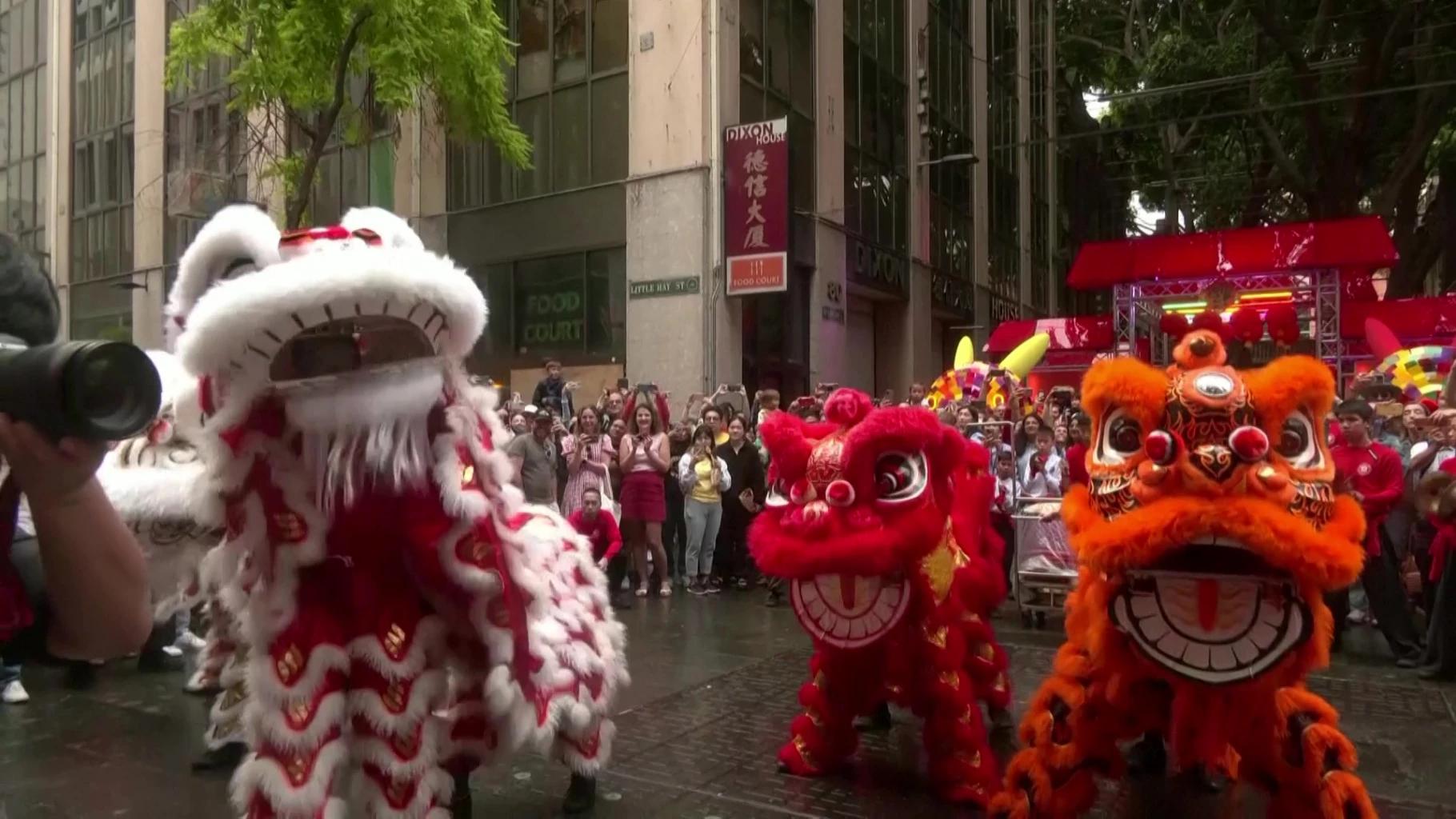
Sydney’s Chinatown hopped back into business on Saturday to welcome in the Lunar New Year dedicated to the rabbit, with locals and tourists taking to the streets after years of on-off Covid-19 lockdowns.
As a dance troupe performed the iconic lion dance, visitors photographed rabbit-inspired installations and embraced the spirit of the Lunar New Year.
Businesses like Sharetea in the heart of Chinatown were pleased with Covid-induced lockdowns coming to an end and thousands of people out to celebrate.
“It’s very busy, obviously after two years of Covid and right now we can actually can celebrate an actual Lunar New Year,” Sharetea employee Jayzer Nguyen told Reuters from the store.
Nguyen added that with borders open with the rest of the world it would be good for business.
“There are many and many Chinese people going out and not only Chinese people but also other Asian people like Vietnamese, and Indonesian. And it’s like a breakthrough for the business,” he said adding that in the new year, he would hope the business expands and he continues to sell more tea.
Covid-19 restrictions had hampered Lunar New Year festivities since 2020 but Sydneysider Eric Kha said that all the hustle and liveliness is how Chinatown should be.
“It feels great. It feels like the city is back to normal, lively again just like pre-covid and this is how it’s supposed to be for Chinatown,” he told Reuters.
Some Chinese students studying in Sydney have different views of the situation back home.
Dong Shu Lin said the situation in China was stable and with his family and friends having had Covid already he was not worried about the pandemic in China, adding it was similar to Sydney. While Crystal Li is still worried for her family back home as she can’t return during the festive season.
Russians flock to see Chinese New Year celebration in Moscow
Hundreds of Muscovites visited on Saturday (January 21) Chinese Lunar New Year celebration in the Russian capital.
The event was staged at a famous VDNKH (Exhibition of Economic Achievements) exhibition centre, known for its Soviet-style surroundings.
Despite the fact that the Chinese population in Moscow is relatively small, interest in China and Chinese culture is on the rise in Russia. Last week the Russian foreign minister Sergei Lavrov said that the relations between the two countries were as good as ever.
The interest in China comes at a time when the relations between Russia and the West hit the lowest point over what Russia calls a “Special Military Operation in Ukraine.”






 People shop at a White Rabbit candy franchise shop at Yuyuan Garden in Shanghai, east China, Oct. 8, 2020. (Xinhua/Liu Ying)
 Citizens buy rabbit dolls at the Dongyue Temple in Beijing, capital of China, Sept. 12, 2011, to celebrate the traditional Mid-autumn festival. (Xinhua/Zhao Bing)
 SootinClaimon.Com