Syria forces enter Douma, last holdout in rebel bastion: state media

ศาสตร์เกษตรดินปุ๋ย : ขอบคุณแหล่งข้อมูล : หนังสือพิมพ์ The Nation

http://www.nationmultimedia.com/detail/asean-plus/30343177

  • A group of tourists from France looking over the Israeli- Syrian borer at Ben Tal near the Israeli Syrian border in the Golan Heights, 14 April 2018. EPA-EFE
  • Buses carrying Jaish al-Islam fighters and their families from their former rebel bastion of Douma, arrive at the Abu al-Zindeen checkpoint controlled by Turkish-backed rebel fighters near the northern Syrian town of al-Bab, on April 13, 2018. AFP

Syria forces enter Douma, last holdout in rebel bastion: state media

Breaking News April 14, 2018 15:54

By Agence France-Presse
Damascus, Syria

Syria’s internal security forces entered Douma on Saturday, state media reported, saying the final rebel holdout on the edge of Damascus would be secured within “hours”.

Douma was the last rebel-held town in the Eastern Ghouta suburb of Damascus, and is the site of the alleged gas attack that prompted a volley of Western air strikes on Saturday.

Rebels had captured it in 2012, and Syrian government fighters had not entered it since.

“Units from the internal security forces entered Douma in Eastern Ghouta,” state television reported.

“We are hours away from ending the terrorist presence in Douma,” it added.

The Syrian Observatory for Human Rights, a Britain-based monitor, said the units had entered after the last buses of opposition fighters left Douma on Saturday for northern Syria.

The departures come under a negotiated withdrawal reached last weekend between the Jaish al-Islam Islamist rebel faction, Syria’s regime, and its Russian ally.

Under the deal, Russian military police were to deploy in the town but Syrian forces were not to enter.

Jaish al-Islam has said it only agreed to the deal because of the Syrian government’s purported use of toxic chemicals on Douma, which medics said killed more than 40 people.

Syria and Russia have both denied using chemical weapons and said the claims were fabrications used to justify Western military action.

A team from the global chemical watchdog was meant to start an investigation inside Douma on Saturday.

Syria said the US, French, and British strikes were an attempt to “hinder the mission’s work”.

UN chief urges restraint after strikes on Syria

ศาสตร์เกษตรดินปุ๋ย : ขอบคุณแหล่งข้อมูล : หนังสือพิมพ์ The Nation

http://www.nationmultimedia.com/detail/asean-plus/30343163

File photo : UN Secretary General Guterres//AFP

UN chief urges restraint after strikes on Syria

ASEAN+ April 14, 2018 12:14

United Nations, United States – UN Secretary-General Antonio Guterres on Saturday called for restraint and for countries to avoid any acts that could escalate the situation in Syria after the United States, France and Britain carried out strikes.

Guterres delayed a planned trip to Saudi Arabia to deal with the aftermath of the military action.

“I urge all member states to show restraint in these dangerous circumstances and to avoid any acts that could escalate the situation and worsen the suffering of the Syrian people,” Guterres said in a statement.

The military operation was ordered in retaliation for what the West says was repeated use of chemical weapons by Syrian President Bashar al-Assad’s forces against civilians.

“Any use of chemical weapons is abhorrent. The suffering it causes is horrendous,” Guterres said.

The UN chief said it was important to act in line with the UN charter and international law.

He urged the UN Security Council to agree on establishing an inquiry that would identify the perpetrators of chemical attacks.

Russia this week vetoed a US proposal to set up such a panel following an alleged chemical weapons attack on the rebel-held town of Douma that killed more than 40 people, according to medics and rescuers.//AFP

Syria: seven years of conflict

ศาสตร์เกษตรดินปุ๋ย : ขอบคุณแหล่งข้อมูล : หนังสือพิมพ์ The Nation

http://www.nationmultimedia.com/detail/asean-plus/30343157

A photo of the US-led strikes on the outskirts of Damascus. (AFP)

Syria: seven years of conflict

ASEAN+ April 14, 2018 10:46

2,206 Viewed

Beirut, Lebanon – From the bloody repression of peaceful protests against President Bashar al-Assad’s regime to several foreign interventions, below are key dates in Syria’s civil war.

The conflict has left more than 350,000 people dead, according to the Britain-based Syrian Observatory for Human Rights. Millions more have been displaced and the country lies in ruins.

– Revolt, repression –

In March 2011 unprecedented protests break out to demand civil liberties and the release of political prisoners after four decades of repressive rule by the Assad dynasty.

The regime represses demonstrations but rallies continue. In July a defecting army colonel sets up the Turkey-based rebel Free Syrian Army (FSA).

– Air strikes, Hezbollah, Iran –

In March 2012 regime forces retake control of the third city Homs, which had fallen into the hands of the rebels. It carries out other bloody operations, notably in the central city of Hama, after massive anti-regime protests.

In July FSA fighters launch a battle for Damascus but the government holds firm. From 2013 regime helicopters and planes unleash crude barrel bombs on rebel zones.

The same year Iran-backed Lebanese Shiite militant group Hezbollah says it is fighting alongside Syrian government forces.

Iran also boosts its military support for longtime ally Assad.

– Chemical weapons –

In August 2013 Washington accuses the regime of killing more than 1,400 people with chemical weapons in rebel-held districts near Damascus.

In September the United States and Assad ally Russia agree on a plan to eliminate Syria’s chemical weapons, averting punitive US strikes against the regime for crossing a “red line”.

But since then forces on the ground, in particular from the regime, have regularly been accused of using chemical weapons.

– Rise of the jihadists –

In January 2014 hostilities between jihadists of the Islamic State of Iraq and the Levant (ISIL) and rebel groups turn into an open war in the north.

ISIL, the future Islamic State (IS) group, takes Raqa — the first provincial capital to fall out of regime control — from rebel forces.

The jihadist offensive allows Damascus to justify its fight as a battle against “terrorism”.

In September 2014 a US-led coalition launches air strikes against IS in Syria.

The strikes benefit Kurdish groups, which since 2013 have run autonomous administrations in Kurdish-majority areas and go on to oust IS from key areas.

– Russia to Assad’s aid –

In September 2015 Russia launches air strikes in support of Assad’s troops, who are on the back foot. Russian firepower helps turn the tables for the regime, which begins to retake rebel-held territory, including second city Aleppo in December 2016.

In January 2017 Syrian regime backers Russia and Iran, and rebel supporter Turkey organise peace talks in Kazakhstan.

The peace efforts run parallel those led by the United Nations.

– US strikes –

In April 2017 a sarin gas attack on the rebel-held town of Khan Sheikhun kills more than 80 people, prompting Washington to bomb a regime air base.

In retaliation US President Donald Trump unleashes strikes by Tomahawk missiles against the regime’s Shayrat airbase.

– Turkish offensive –

Turkey launches an operation in January 2018 against the Kurdish People’s Protection Units (YPG) which played a key role in beating back IS with US support.

Ankara is wary of Kurdish aspirations for autonomy. In March it captures the Afrin region, chasing out YPG which it labels a “terrorist group”.

– Blitz of Eastern Ghouta –

On February 18 the Syrian regime launches a ferocious assault on Eastern Ghouta, the final rebel-held enclave near Damascus.

In seven weeks the Russian-backed onslaught kills more than 1,700 civilians. The regime captures more than 90 percent of the area, securing negotiated withdrawals of hold-out rebels.

– New chemical attack alleged –

There are claims of a new chemical attack on April 7 in Eastern Ghouta’s main town of Douma, still held by rebels, with first responders saying more than 40 people died.

The Syrian government and Russia reject the claims as the US, France, and Britain pledge a forceful response.

On Saturday the United States, Britain and France carry out a wave of punitive strikes in response to alleged chemical weapons attacks.//AFP

UK jets fire at Syrian base in ‘limited and targeted strike’

ศาสตร์เกษตรดินปุ๋ย : ขอบคุณแหล่งข้อมูล : หนังสือพิมพ์ The Nation

http://www.nationmultimedia.com/detail/asean-plus/30343155

Anti-war movement members protested during a rally against the possibility of an attack on Syria outside the US Embassy, in Athens, Greece, on April 13.//EPA-EFE

UK jets fire at Syrian base in ‘limited and targeted strike’

ASEAN+ April 14, 2018 10:30

2,081 Viewed

London, United Kingdom – British jets fired missiles at a Syrian military base suspected of holding chemical weapons ingredients on Saturday in Britain’s first military action against President Bashar al-Assad’s regime.

Prime Minister Theresa May said the “limited and targeted strike” was part of joint action with France and the United States in response to Syria’s latest alleged chemical weapons atrocity.

“There is no practicable alternative to the use of force to degrade and deter the use of chemical weapons by the Syrian regime,” May said in a televised statement.

“This is not about intervening in a civil war. It is not about regime change.

“It is about a limited and targeted strike that does not further escalate tensions in the region and that does everything possible to prevent civilian casualties,” she said.

May said “a significant body of information including intelligence” pointed to Syrian government responsibility for a suspected chemical attack in Douma last Saturday.

She said the strikes would “send a clear signal to anyone else who believes they can use chemical weapons with impunity”.

“This is the first time as prime minister that I have had to take the decision to commit our armed forces in combat — and it is not a decision I have taken lightly.

“I have done so because I judge this action to be in Britain’s national interest,” she added.


– ‘Meticulous target planning’ –


Britain’s defence ministry said in a statement that four British Tornado jets had fired Storm Shadow missiles at the base 15 miles (24 kilometres) west of Homs at 0100 GMT.

The ministry said the facility was “a former missile base… where the regime is assessed to keep chemical weapon precursors”.

“Initial indications are that the precision of the Storm Shadow weapons and meticulous target planning have resulted in a successful attack,” it said.

“Very careful scientific analysis was applied to determine where best to target the Storm Shadows to maximise the destruction of the stockpiled chemicals and to minimise any risks of contamination to the surrounding area.

“The facility which was struck is located some distance from any known concentrations of civilian habitation, reducing yet further any such risk,” it added.

Defence Secretary Gavin Williamson said in the statement that the strikes were a “legal and proportionate” response to the use of chemical weapons by the Syrian regime.

May held an emergency cabinet meeting to discuss possible action on Thursday and there had been calls for the British parliament to be consulted before any air strikes.

Polls in recent days have shown public wariness of military intervention in Syria, with Britain still haunted by its participation in the US-led invasion of Iraq.

A YouGov poll in The Times conducted this week found that 43 percent of voters opposed strikes in Syria, with 34 percent unsure and only 22 percent supportive.

British lawmakers voted down taking military against Damascus in 2013, in what was widely viewed as an assertion of parliamentary sovereignty on the use of force.

But they backed action in Iraq the following year, and again in Syria in 2015, strictly limiting strikes to Islamic State (IS) group targets.

Britain continues to support the US-led coalition targeting IS jihadists in Iraq and Syria, and has conducted more than 1,700 strikes.

Labour leader Jeremy Corbyn had on Friday accused the government of “waiting for instructions” from US President Donald Trump on what to do over Syria.

“Further UK military intervention in Syria’s appalling multi-sided war risks escalating an already devastating conflict,” he said.//AFP

PH privacy watchdog to Zuckerberg: Cooperate in our FB leak probe

ศาสตร์เกษตรดินปุ๋ย : ขอบคุณแหล่งข้อมูล : หนังสือพิมพ์ The Nation

http://www.nationmultimedia.com/detail/asean-plus/30343152

Mark Zuckerberg —AFP

PH privacy watchdog to Zuckerberg: Cooperate in our FB leak probe

ASEAN+ April 14, 2018 09:28

By DJ Yap
Philippine Daily Inquirer
Asia News Network
Manila

Facebook CEO Mark Zuckerberg has been directed by the Philippines’s privacy watchdog to cooperate with an investigation of the improper sharing of the personal information of more than 1 million Filipino users of the social media platform with the British political consulting company Cambridge Analytica.

In an April 11 letter to Zuckerberg made public on Friday, the National Privacy Commission (NPC) said the investigation was intended “to determine whether there is unauthorized processing of personal data of Filipinos, and other possible violations of the Data Privacy Act.”

The NPC’s move followed a decision by EU privacy watchdogs to look deeper into the harvesting of personal data from social networks for economic or political purposes.

Outside the United States, the Philippines had the largest amount of user data acquired by Cambridge Analytica, with 1.18 million accounts in the country affected, according to the NPC.

“As the Philippine data privacy authority, we are directing you to furnish this commission with information relevant to the processing of Facebook data of affected Filipinos, and how personal data is generally shared with third parties using your platform,” the NPC told Zuckerberg.

“Submit to us the documents required within 15 days from receipt. The failure on your end to comply with these requirements will prompt us to take further corrective actions to protect the interests of Filipino data subjects,” the letter said.

‘Improperly shared’

The letter was signed by NPC Commissioner Raymund Liboro and his two deputies.

It did not specify what actions the NPC would take if the documents were not submitted.

The watchdog sought documentation on the actions taken by Facebook when it discovered the unauthorized processing of user data.

Private data from about 87 million Facebook users worldwide was “improperly shared” by Cambridge Analytica through software developed by data scientist Aleksandr Kogan.

The NPC noted that Kogan was required by Facebook to destroy the data that were collected and processed outside its terms of service and that Cambridge Analytica’s data science officer had confirmed the information was destroyed.

“Kindly submit documentation between Facebook and Cambridge Analytica, and any evidence which led Facebook to believe that the data had indeed been destroyed, as well as any documentation of the extent of information shared between Facebook and Dr. Kogan, and from Dr. Kogan to Cambridge Analytica,” it added.

A Facebook spokesperson said the company was committed to protecting people’s information and is engaged with the Philippines’ privacy watchdog.

“We’ve recently made significant updates to make our privacy tools easier to find, restrict data access on Facebook, and make our terms and data policy clearer,” Facebook said.

Recent research has shown Filipinos to be among the most active social media users in the world, spending on average more than four hours a day on platforms like Facebook.

Cambridge Analytica has counted US President Donald Trump’s election campaign among its clients.

A Hong Kong newspaper has said several people involved in President Duterte’s 2016 election campaign had met in 2015 with Alexander Nix, the now-suspended chief executive of Cambridge Analytica.

Those people said the meeting with Nix was during a lunch break at an information technology seminar in Manila and there has been no contact since.

Presidential spokesperson Harry Roque on Tuesday said that Mr. Duterte’s election campaign did not rely on information bought from anybody, nor did it hire Cambridge Analytica’s services.

Duterte campaign

Returning from his trip to China on Thursday, Mr. Duterte dismissed reports that his campaign may have benefited from the Facebook data.

“I had no Cambridge, Cambridge … All that I had was just a simple campaign,” Mr. Duterte said.

He said that during a massive rally in Luneta days before the elections, he asked those who believe in God, in the priests and those against killing drug offenders not vote for him.

“Then I said, ‘Those who want to go to hell and kill the druggies, vote for me.’ See what happened,” he said.

“Also why would I pay that stupid Cambridge to run my campaign? The more I’ll lose,” he added.

US, France, Britain launch strikes on Syria: Trump

ศาสตร์เกษตรดินปุ๋ย : ขอบคุณแหล่งข้อมูล : หนังสือพิมพ์ The Nation

http://www.nationmultimedia.com/detail/asean-plus/30343146

US President Donald Trump addresses the nation on the situation in Syria April 13, 2018 at the White House in Washington, DC. Trump said strikes on Syria are under way. / AFP PHOTO / Mandel NGAN

US, France, Britain launch strikes on Syria: Trump

ASEAN+ April 14, 2018 08:48

By Agence France-Presse
Washington/Damascus, United States

The United States, Britain and France launched punitive military strikes against Bashar al-Assad’s Syrian regime in response to its latest alleged chemical weapons atrocity, President Donald Trump announced Friday.

Shortly after Trump began a White House address to announce the action, large explosions were heard in the Syrian capital Damascus, signalling a new chapter in a brutal seven-year-old civil war.

“A short time ago, I ordered the United States armed forces to launch precision strikes on targets associated with the chemical weapons capabilities of Syrian dictator Bashar al-Assad,” Trump said in a primetime televised speech to the nation.

“A combined operation with the armed forces of France and the United Kingdom is now under way. We thank them both. This massacre was a significant escalation in a pattern of chemical weapons use by that very terrible regime.”

A US official said the strikes had targeted chemical production facilities. Another official said multiple types of bombs were used, and a variety of targets chosen.

Trump also warned Russia and Iran not to stand by their ally in Damascus.

“Russia must decide if it will continue down this dark path or if it will join with civilized nations as a force for stability and peace,” he argued.

The strikes had been expected since harrowing footage surfaced of the aftermath of the alleged toxic gas attack in the Damascus suburb of Douma, which took place a week ago, and Trump reacted in an emotional tweet.

“Many dead, including women and children, in mindless CHEMICAL attack in Syria,” he declared.

“President Putin, Russia and Iran are responsible for backing Animal Assad. Big price to pay.”

Trump’s anger and apparent determination was quickly matched by France’s President Emmanuel Macron, who signed his country up for a joint response.

Britain’s Prime Minister Theresa May was more cautious, but by the time the first precision cruise missile was launched, Trump had a mini-coalition.

May said there was “no practicable alternative” to the use of force against Assad.

Trump’s language was more brutal: “They are crimes of a monster.”

‘Proof’

In the six days between the attack and the US-led response, Washington and Moscow clashed repeatedly in duelling press statements and US debates.

Moscow denied its ally Assad had any role in the outrage, pushing a variety of alternative theories that peaked with a claim that Britain had staged the event.

More practically, at the United Nations, Russia’s diplomats vetoed a US motion to re-establish an international investigation into chemical weapons use in Syria that could have established blame.

Washington, Paris and London have nevertheless insisted that their own secret intelligence points to Assad’s guilt, and on Friday, a US spokeswoman said they had “proof.”

The western leaders apparently found this convincing enough reason to launch a punitive strike, but other observers are concerned that the crisis could escalate.

The Russian military had vowed to respond to any attack, and Russian President Vladimir Putin’s administration had repeatedly warned that Trump was taking America down a dangerous path.

That concern was mirrored by United Nations Secretary-General Antonio Guterres, who on Friday warned the rival camps against “full-blown military escalation.”

“Let us not forget that, ultimately, our efforts must be about ending the terrible suffering of the Syrian people,” he urged the United States, Russia, China, France and Britain.

And he stressed the need “the need to avoid the situation spiraling out of control.”

Decision to act

But Trump has long criticized his predecessor Barack Obama for failing to enforce a previous US “red line” in 2013 after earlier chemical attacks blamed on Assad’s forces.

And he set his own precedent just over a year ago when he ordered a cruise missile strike on a Syrian air base after sarin was fired at civilians in the town of Khan Sheikhun.

Backed by his hawkish new national security adviser John Bolton, who took office on Monday, Trump has been meeting with advisors and generals all week to plan.

Defense Secretary Jim Mattis has reportedly been arguing for a cautious response that would minimize the risk of the US being dragged deeper into Syria’s civil war.

But other advisors want to use the opportunity to convince Trump, who wants to pull US forces out of Syria once the Islamic State jihadist group is defeated, to take a tough stance.

These hardliners, along with influential US allies Israel and Saudi Arabia, want Washington to counter Iran’s growing power in Syria — even if it means risking a perilous stand-off with Russia.

US claims ‘proof’ of Syria gas attack, readies response

ศาสตร์เกษตรดินปุ๋ย : ขอบคุณแหล่งข้อมูล : หนังสือพิมพ์ The Nation

http://www.nationmultimedia.com/detail/asean-plus/30343140

x

US claims ‘proof’ of Syria gas attack, readies response

ASEAN+ April 14, 2018 07:10

By Agence France-Presse
Washington, United States

The United States claimed Friday to have proof that the Syrian regime carried out a chemical massacre that has set western powers on a collision course with Russia, as President Donald Trump readied his response.

Western leaders have made clear the alleged toxic gas strike on the Damascus suburb of Douma must not go unanswered — despite a warning from the UN secretary-general that the crisis could trigger a “full-blown military escalation.”

Trump vowed a “strong” response the day after the April 7 attack — since then, he has been in consultation with his military advisors, and allies France and Britain, on what form that should take.

British Prime Minister Theresa May spoke with French President Emmanuel Macron late Friday and agreed to “keep working closely” on a response to the attack, which the British government now believes killed as many as 75 people.

With experts from the Organisation for the Prohibition of Chemical Weapons (OPCW) headed to Syria to probe the strike, Russia defiantly claimed Friday the attack was staged by rescue workers acting on Britain’s behalf.

Western powers have been increasingly categorical in laying responsibility with Syria’s Bashar al-Assad — and Moscow.

Asked whether Washington has proof Assad launched the attack on Douma, the main city in the former rebel bastion of Eastern Ghouta, State Department spokeswoman Heather Nauert said: “Yes.”

“We know for a fact that it was a chemical weapon,” she said, but added that she would not be able to release US “intelligence information” as it was still classified.

Trump’s spokeswoman Sarah Sanders said Washington also holds Assad’s ally “Russia responsible for their failure to stop chemical weapons attacks from taking place.”

– Military escalation –

Trump’s National Security Council was meeting Friday evening at the level of agency deputy heads, she said.

Any intervention would increase the risk of a clash with Russian forces in Syria to defend Assad, and UN chief Antonio Guterres warned the UN Security Council — where the US and Russia faced off — to beware a “full-blown military escalation.”

France’s Macron earlier called for stepped-up talks with Moscow, and spoke to President Vladimir Putin by phone.

But France’s UN ambassador Francois Delattre told the Security Council that in choosing once again to use banned chemical weapons against civilians, Assad’s regime had “reached a point of no-return.”

And US ambassador Nikki Haley, while allowing that Washington is still weighing its options and pursuing its own investigation, warned her colleagues, “At one point, you have to do something.”

“All nations and all people will be harmed if we allow Assad to normalize the use of chemical weapons,” she said.

Russia, in addition to its unproven allegations against Britain, alleged the West was feigning outrage over the attack as a cover for a plan to overthrow Assad’s government.

“We continue to observe dangerous military preparations for an illegal act of force against a sovereign state,” Russian Ambassador Vassily Nebenzia told the Security Council.

Rebels give up Ghouta

Since last weekend, when images of ashen toddlers struggling for breath emerged, there has been a sustained military buildup in the eastern Mediterranean.

A French frigate, British Royal Navy submarines and the USS Donald Cook, an American destroyer equipped with Tomahawk land attack missiles, have all moved into range of Syria’s coast.

On the ground, rebels and civilians were evacuating from Douma on Friday after anti-regime fighters in Eastern Ghouta surrendered their heavy weapons and their leader left the enclave.

This signaled the end of one of the bloodiest assaults of the seven-year war and a major win for the Assad regime.

Western officials believe chlorine was used in the April 7 attack on Douma.

What is less clear is whether sarin, the agent used in a chemical attack that prompted US missile strikes last year, was also used.

Russia, which has stonewalled diplomatic efforts at the UN Security Council, has vehemently denied a chemical attack took place.

OPCW inspectors are expected to arrive in Syria at the weekend to investigate, following an invitation from Damascus.

Diplomats have expressed concern that the experts could be used as hostages or human shields.

Britain says Russia spied on Skripals before poisoning

ศาสตร์เกษตรดินปุ๋ย : ขอบคุณแหล่งข้อมูล : หนังสือพิมพ์ The Nation

http://www.nationmultimedia.com/detail/asean-plus/30343137

A still image from CCTV footage recorded on February 27, 2018 shows former Russian spy Sergei Skripal buying groceries at the Bargain Stop convenience store in Salisbury on February 27, 2018. //AFP

Britain says Russia spied on Skripals before poisoning

ASEAN+ April 14, 2018 01:00

London, United Kingdom – Russian intelligence was spying on former double agent Sergei Skripal and his daughter Yulia for at least five years before they were poisoned in a nerve agent attack, Britain’s National Security Adviser Mark Sedwill said in a letter to NATO on Friday.

Sedwill also said that Russia has tested means of delivering chemical agents “including by application to door handles”, pointing out that the highest concentration of the chemical found after the attack was on Skripal’s front door handle.

“We have information indicating Russian intelligence service interest in the Skripals, dating back at least as far as 2013, when email accounts belonging to Yulia Skripal were targeted by GRU cyber specialists,” Sedwill wrote in the letter, referring to Russia’s foreign military intelligence agency.

The Skripals were found slumped on a bench in the English city of Salisbury on March 4. Britain has blamed Russia for the attack — a charge that Moscow has strongly denied.

After testing samples from Salisbury, the Organisation for the Prohibition of Chemical Weapons (OPCW) on Thursday confirmed Britain’s findings about the nerve agent used in the attack.

Sedwill’s letter to NATO Secretary General Jens Stoltenberg alleged that Russia had “the technical means, operational experience and motive for the attack on the Skripals and that it is highly likely that the Russian state was responsible”.

Sedwill said “credible open-source reporting and intelligence” showed that in the 1980s the Soviet Union developed a family of nerve agents known as Novichoks at a base in Shikhany near Volgograd.

“The codeword for the offensive chemical weapons programme (of which Novichoks were one part) was FOLIANT,” he said.

“It is highly likely that Novichoks were developed to prevent detection by the West and to circumvent international chemical weapons controls,” he said.

By 1993, when Russia signed the Chemical Weapons Convention, Sedwill said it was “likely” that some Novichoks had passed testing to allow their use by the Russian military.

In the 2000s, Sedwill said Russia had trained military personnel in using these weapons, including on door handles.

“Within the last decade, Russia has produced and stockpiled small quantities of Novichoks under the same programme,” he said.///AFO

Here’s why you shouldn’t believe all the copycat claims on the internet

ศาสตร์เกษตรดินปุ๋ย : ขอบคุณแหล่งข้อมูล : หนังสือพิมพ์ The Nation

http://www.nationmultimedia.com/detail/asean-plus/30343121

Here’s why you shouldn’t believe all the copycat claims on the internet

Tech April 14, 2018 01:00

By Philippine Daily Inquirer
Asia News Network

2,323 Viewed

These days it’s easy to plagiarize just about anything through technology. It is also easy to make people think that something is true, when it isn’t. It wouldn’t even be a surprise if you have encountered works that were plagiarized blatantly and yet, people behind it are still proud of it.

But then again, not all claims can be considered true. Take for example this case back in 2016. Blogger
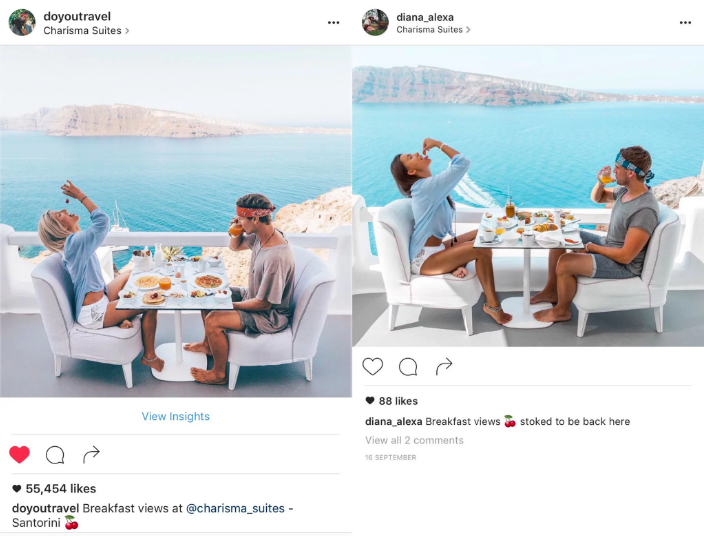
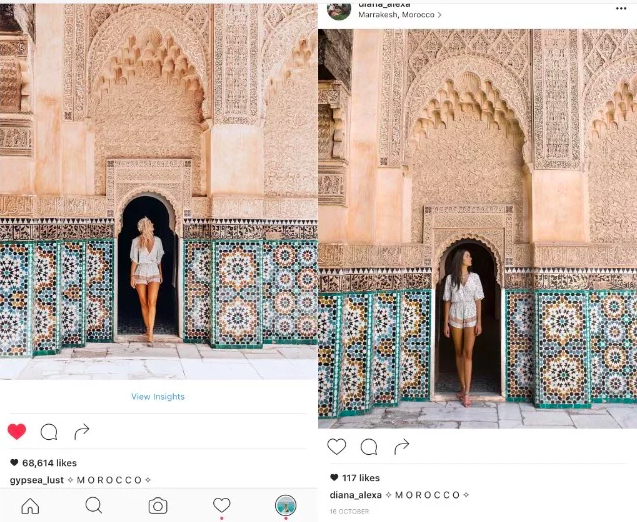
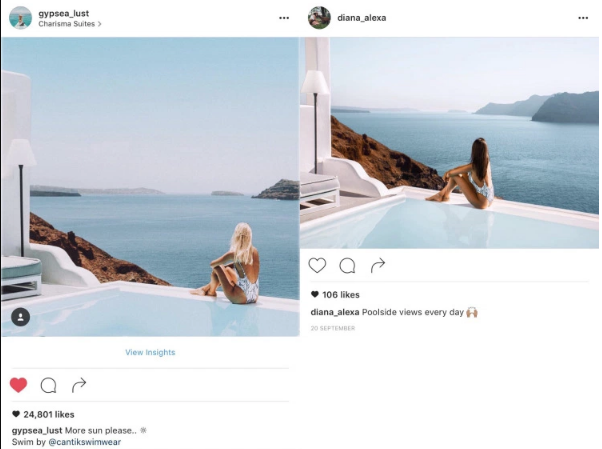
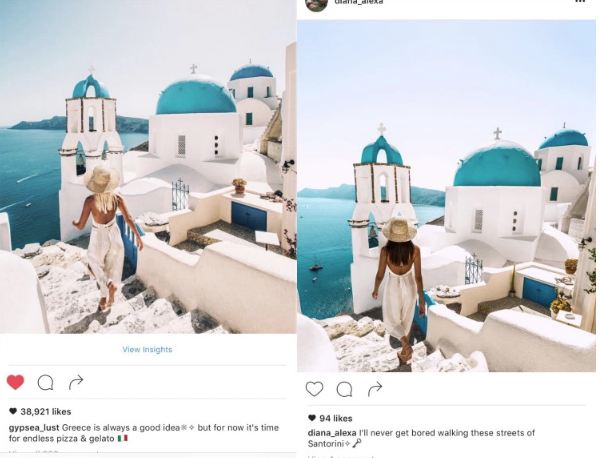
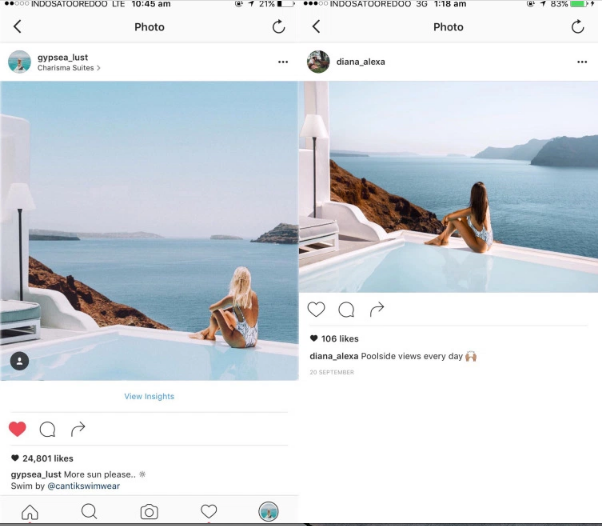
But the Blogger Lauren Bullen claimed that someone is copying most of her Instagram photos. The copycat was very meticulous that it was already creepy. Everything was copied — the location, clothes, pose, and even the captions.

Lauren Bullen, Instagram, copycat, 2016

Lauren Bullen, Instagram, copycat, 2016

Lauren Bullen, Instagram, copycat, 2016

Image source

Lauren Bullen, Instagram, copycat, 2016

But something was problematic about the whole scenario: why would someone go to great lengths of following after her, buying the same set of clothes, and going to the exact locations she went just to copy her Instagram photos?
That’s absurd, and well, very expensive.  It would have been more convincing if she just stole Bullen’s photos and pretended it to be her. That happens more often on the internet and let’s admit it, it’s easier to do and less expensive. The alleged copycat does not even have a lot of followers on her account that it will make you wonder why she would bother spending a lot of money just to copy someone’s photos.

Interesting, right? Some thought so too. They tried to look into the matter and an interesting theory came up. Since they cannot scrub any other information about the alleged copycat, someone found a cached data that indicates the relationship of Diana with Bullen.
In the cached data of Diana’s Twitter account, she listed Bullen’s email and blog (gypsea_lust) that made people conclude that the two were actually associated. After all, Bullen did say that she settled things with Diana after discovering the plagiarized photos (the account has since been made private).

Though Bullen defended that the whole incident wasn’t a hoax, the evidences remain circumstantial.

A word of advice then: don’t believe everything you see on the internet. Verify, research, and take everything with a grain of salt.

Massive Japan manhunt for ‘model’ convict who fled open jail

ศาสตร์เกษตรดินปุ๋ย : ขอบคุณแหล่งข้อมูล : หนังสือพิมพ์ The Nation

http://www.nationmultimedia.com/detail/asean-plus/30343114

Tatsuma Hirao//Photo : Youtube

Massive Japan manhunt for ‘model’ convict who fled open jail

ASEAN+ April 13, 2018 15:24

Tokyo, Japan – More than 1,000 Japanese police were on the hunt Friday for a “model” inmate who fled an open prison, officials said.

Tatsuma Hirao, 27, who was serving time for multiple thefts, had been working at a shipbuilding yard at the Matsuyama prison in the southwestern city of Imabari.

But he gave guards the slip on Sunday night, disappearing from the facility he shared with around 20 other inmates.

“We deployed a total of 1,200 officers” to find the prisoner as soon as possible, said Masafumi Shigematsu, a local police investigator.

Hirao was caught on security cameras running away from the dorm, according to the investigator.

It was “an open institution” where inmates can walk around freely, said prison official Mutsuhiro Kawauchi.

“The inmates at the facility are trusted. They are believed to be able to control their desire to run away,” Kawauchi told AFP.

A total of 21 inmates have escaped since the opening of the prison in 1961, but Kawauchi said it had no plans to increase security.

“The purpose of the facility is to teach prisoners about building a relationship of trust… We have a lower re-offending rate, so that’s the merit” of the facility, he added.

After Hirao’s escape, a car was stolen nearby and later found abandoned on Mukaishima island, which is tens of kilometres (miles) away.

Residents on the island reported to police that socks, a mobile phone, a wallet and a pair of sandals were stolen, according to local media.

A resident on the island also reported his car keys had been stolen and said he found a note saying “I’m borrowing your car but I’ll never damage it.”

Japan enjoys one of the lowest crime rates in the developed world but a relatively high re-offending rate.///AFP