UK MPs demand Zuckerberg testify on data row after he offers deputy

ศาสตร์เกษตรดินปุ๋ย : ขอบคุณแหล่งข้อมูล : หนังสือพิมพ์ The Nation

http://www.nationmultimedia.com/detail/asean-plus/30341870

File photo : Mark Zuckerberg

UK MPs demand Zuckerberg testify on data row after he offers deputy

ASEAN+ March 27, 2018 17:50

London – British MPs renewed a demand on Tuesday to interview Facebook chief Mark Zuckerberg personally over a data privacy row, after he responded to an earlier request by offering to send one of his deputies.

    Damian Collins, the chairman of the House of Commons digital, culture and media committee, said that the seriousness of the allegations meant it was “appropriate” for Zuckerberg to offer an explanation himself, whether in person or via videolink.

In a letter published by the committee on Tuesday, a senior British Facebook executive offered to send chief technology office Mike Schroepfer or chief product officer Chris Cox to London next month.

“We’d be very happy to invite Mr Cox to give evidence,” Collins said at the start of a committee hearing on Tuesday.

“However we would still like to hear from Mr Zuckerberg as well.

“We will seek to clarify with Facebook whether he is available to give evidence or not, because that wasn’t clear from our correspondence, and if he is available to give evidence then we would be happy to do that either in person or via video link if that would be more convenient for him.”

In the letter to Collins, Rebecca Stimson, head of public policy for Facebook UK, wrote: “Facebook fully recognizes the level of public and parliamentary interest in these issues and support your belief that these issues must be addressed at the most senior levels of the company by those in an authoritative position to answer your questions.

“As such Mr Zuckerberg has personally asked one of his deputies to make themselves available to give evidence in person to the committee.”

She said either Schroepfer or Cox could attend “straight after the Easter parliamentary recess”, meaning April 16 at the earliest.

The committee’s request to Facebook followed allegations that data from up to 50 million users was harvested by a British company, Cambridge Analytica, for use in election campaigns, namely that of US President Donald Trump in 2016.

The social media giant said it did not know the data was being used in a political campaign, although it did allow an academic researcher to create an app that picked up the information from users and their friends.

In the letter, Stimson revealed that Facebook was working with regulators around the world to assess how many people in each country were affected.

“We can now confirm that around one percent of the global downloads of the app came from users in the EU, including the UK,” she wrote.//AFP

It’s not Richard Mille : son of Penang chief minister

ศาสตร์เกษตรดินปุ๋ย : ขอบคุณแหล่งข้อมูล : หนังสือพิมพ์ The Nation

http://www.nationmultimedia.com/detail/asean-plus/30341859

It’s not Richard Mille : son of Penang chief minister

ASEAN+ March 27, 2018 16:27

By The Star
Asia News Network

2,968 Viewed

George Town : The son of Penang Chief Minister Lim Guan Eng denies that the watch he wears costs almost RM350,000.

Messages spreading on social media and messaging apps claimed that Clint Lim Way Chau was seen wearing a watch from designer brand Richard Mille, which costs US$89,995 (RM349,000).

The 25-year-old Royal Melbourne Institute of Technology accounting graduate showed his watch to The Star on Tuesday (March 27), which turned out to be a “T-Race” model from Swiss manufacturers Tissot.


A check showed that the watch can be purchased online in Malaysia at a discounted price of RM1,880.

The design and faces of both watches were completely different, with the only similarity being a red wrist strap.

“That is not my watch. How I wish I can have that kind of watch,” he said when met outside the Penang High Court on Tuesday for his father’s corruption trial.

Clad in a green shirt and wearing sunglasses, Clint arrived in the morning and left the courthouse during proceedings to have a drink at a nearby cafe.

China will give information on Kim Jong Un visit rumours ‘in due course’

ศาสตร์เกษตรดินปุ๋ย : ขอบคุณแหล่งข้อมูล : หนังสือพิมพ์ The Nation

http://www.nationmultimedia.com/detail/asean-plus/30341851

A man watches a television news about a suspected visit to China by North Korean leader Kim Jong Un, at a railway station in Seoul on March 27.//AFP

 China will give information on Kim Jong Un visit rumours ‘in due course’

ASEAN+ March 27, 2018 15:00

Beijing – China said on Tuesday it would release information on rumours that Kim Jong Un or another high-level North Korean official paid a visit to Beijing “in due course”.

Chinese foreign ministry spokeswoman Hua Chunying told a regular briefing in Beijing that she had “no information for the moment. Information will be published in due course.”

Meanwhile a train thought to be carrying a senior North Korean official left Beijing station Tuesday, Japan’s Kyodo News reported, with speculation rife that the North’s leader Kim Jong Un was making a surprise visit.

It was not clear if Kim was aboard, Kyodo added, after the reported arrival Monday from Pyongyang of a special train met in Beijing by an honour guard.//AFP

Malaysian and Indonesians travelling from Bangkok arrested in Bali with meth hidden in rectum

ศาสตร์เกษตรดินปุ๋ย : ขอบคุณแหล่งข้อมูล : หนังสือพิมพ์ The Nation

http://www.nationmultimedia.com/detail/asean-plus/30341849

Ngurah Rai Airport's Customs and Excise Office personnel present three drug suspects, a Malaysian and two Indonesians, on Monday, March 26. The three were found hiding crystal methamphetamine in their bodies.
Ngurah Rai Airport’s Customs and Excise Office personnel present three drug suspects, a Malaysian and two Indonesians, on Monday, March 26. The three were found hiding crystal methamphetamine in their bodies.

Malaysian and Indonesians travelling from Bangkok arrested in Bali with meth hidden in rectum

ASEAN+ March 27, 2018 14:50

By The Jakarta Post
Asia News Network

2,400 Viewed

A Malaysian has been arrested in Bali for allegedly attempting to smuggle drugs onto the resort island.The police found crystal methamphetamine hidden in his rectum.

AA, 23, was arrested by Ngurah Rai Airport customs and excise officers on March 11 upon his arrival at the international airport via Thai AirAsia FD 396 from Bangkok. AA was arrested along with his two Indonesian friends, S, 24, and AP, 25, who also brought drugs into Bali.

AA, S and AP were looking suspicious when they were passing the security check at the customs desk of the airport’s international terminal.

“X-ray scanning showed that there were suspicious things in their bodies and among their belongings,” Ngurah Rai Customs and Excise office head Himawan Indarjono told a press conference on Monday.

Following the X-ray, the police took them to the customs and excise room for a further check, including a body search. Customs officers found 36.2 grams methamphetamine in AA’s bag. A body search yielded three small packets of methamphetamine weighing 36.25 grams, 33.73 grams and 20.73 grams. “All those three packets were hidden in his rectum,” Himawan said.

A body search on S and AP also revealed drugs hidden in both of their rectums. From S, customs seized four small packets of meth, weighing 42.32 g, 44.81 g, 39.66 g and 38.78 g.

Officers found four packets of meth on AP — two in her rectum and two others in her vagina. In total she allegedly carried about 140 g of meth.

The three suspects are now facing drug charges, which carry a death penalty

Archaeologists confident they have found body of fabled Chinese warlord Cao Cao

ศาสตร์เกษตรดินปุ๋ย : ขอบคุณแหล่งข้อมูล : หนังสือพิมพ์ The Nation

http://www.nationmultimedia.com/detail/asean-plus/30341845

Archaeologists confident they have found body of fabled Chinese warlord Cao Cao

ASEAN+ March 27, 2018 14:13

By The Star
Asia News Network

2,397 Viewed

Archaeologists are convinced they have found the remains of Cao Cao, the most prominent warlord in China 1,800 years ago.

Experts at the Henan Provincial Institute of Cultural Heritage and Archaeology recently concluded that the remains of an adult male in his sixties found at a burial site in central China was Cao Cao, the news portal Red Star News reported on Sunday.

Cao Cao was a central figure in China’s Three Kingdoms period (220-280) and later featured as a central character in the classic novel Romance of the Three Kingdoms.

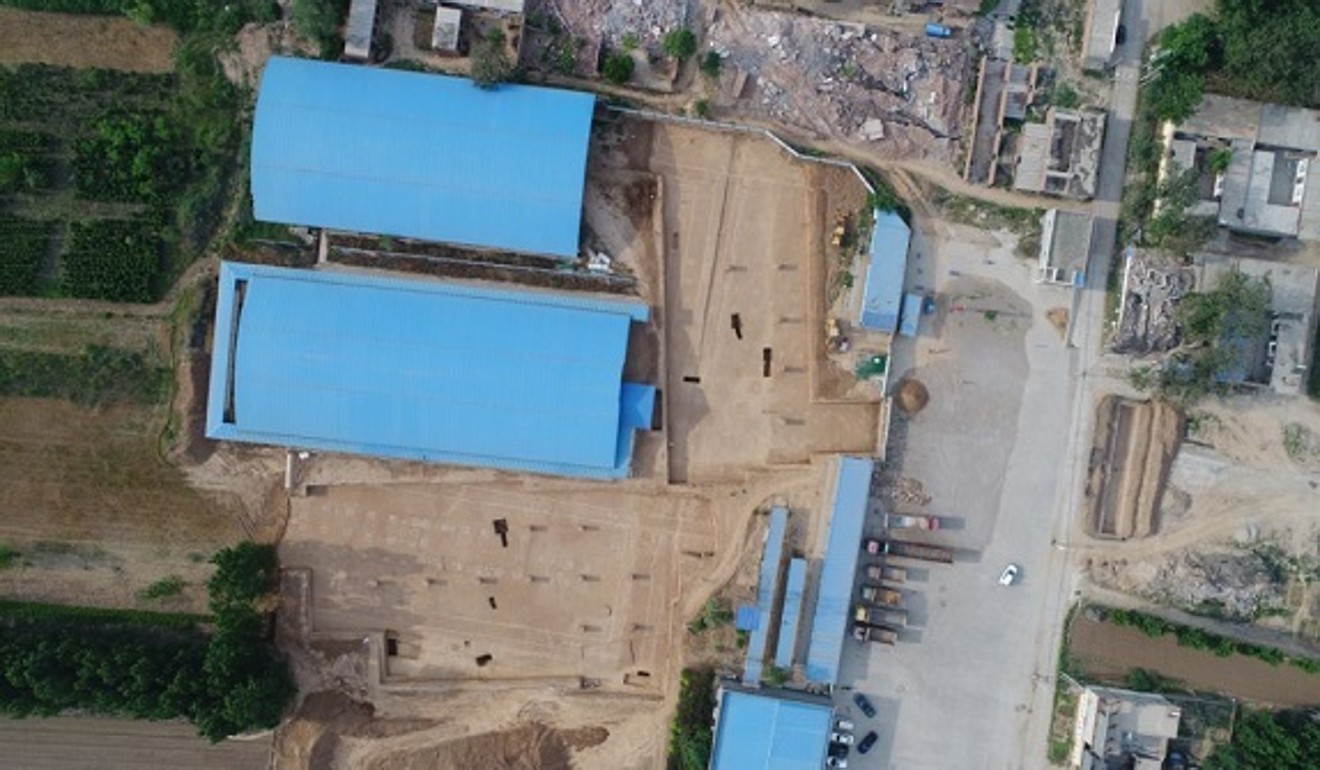
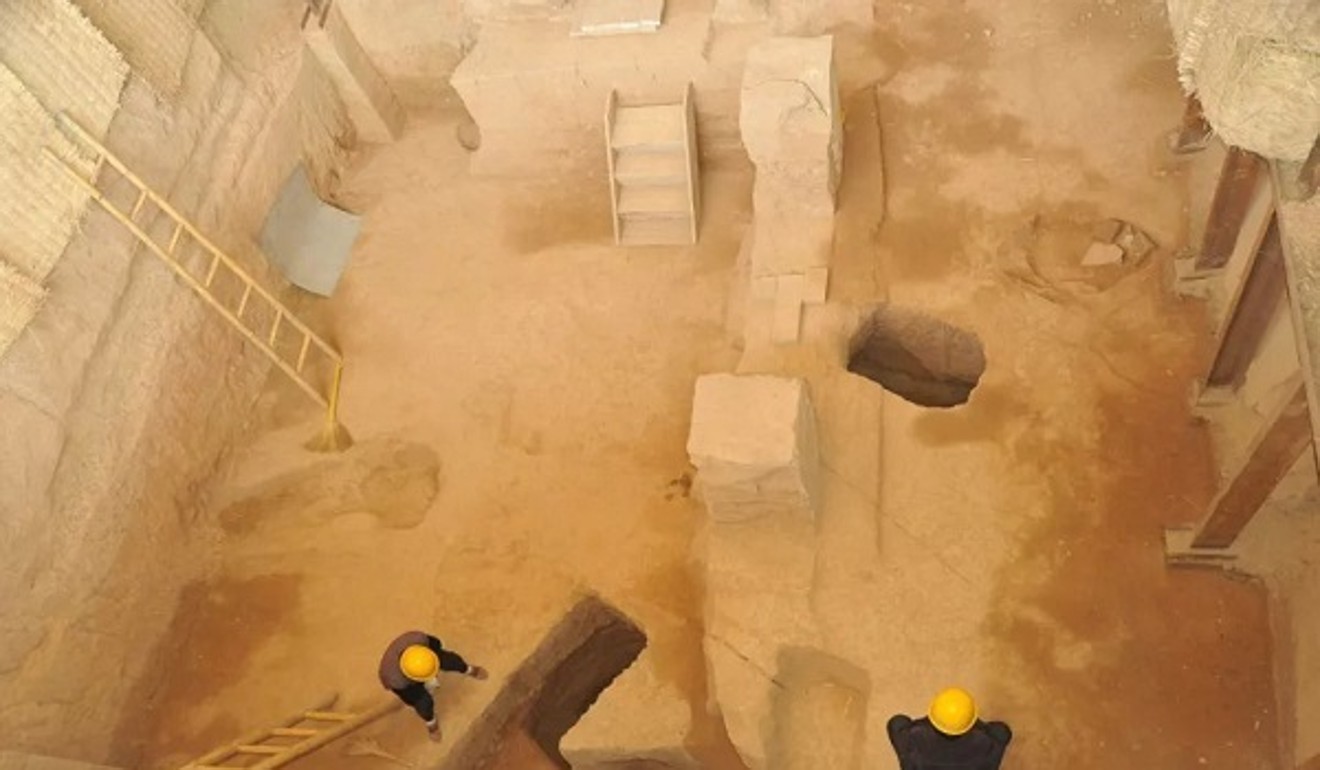
The archaeologists said they had discovered the ruins of a massive mausoleum park that included two constructions as well as a tunnel.

Experts said that such massive mausoleum was unusual at that time, which indicates Cao’s great power.


The discovery, made during an archaeological dig that took place in 2016 and 2017, has only just been made public.

Historical texts say that Cao made a will that ordered that his burial site should not be marked, but Zhou Ligang, a researcher at the institute who is in charge of the archaeological programme, said that the latest findings showed that Cao Pi, the son who succeeded him, did not follow his father’s will but built a great cemetery to honour his father and emphasise his filial piety.

But experts believe that the son later ordered the destruction of the monuments on the surface for fear that his father’s tomb would be targeted by opponents or robbers.

This would also explain why experts did not find massive piles of debris at the site. “This means that the demolition was not an act of revenge but was planned,” Zhou said.

“If the construction was knocked down by his opponents, there would be plenty of debris at the scene, but at Cao Cao’s mausoleum that is not in that case.”

To honour his father, Cao Pi must have ordered that all the debris be cleared, Zhou said.

Such findings have bolstered the theory that the remains of the male adult discovered in the main grave room of the mausoleum is likely to be Cao Cao.

A smaller grave found near the main grave room is believed to be that of Cao’s first son Cao Ang, who died at a young age, according to Pan Weibin, another expert at the institute.

The location of the burial site of Cao Cao has been shrouded in mystery for centuries as Cao, who appointed himself as a chancellor to the last emperor of the Han dynasty, ordered a ban on lavish burials, including his own.

But the first clues emerged in 2009, when archaeologists seized a stone tablet allegedly found in a tomb in Gaoxixue village in Anyang county, which bore the inscription “King Wu of Wei”, Cao Cao’s posthumous title.

The local authorities announced that this had identified the tomb as Cao Cao’s burial site, although experts remained sceptical at first.

Zhou said experts were still trying to figure out the identities of the two female adults buried in the same grave room of Cao Cao.

According to historical texts, Cao Cao was buried with his wife, who died in her seventies but one of the female adults was in her fifties and the other was in her twenties.

Zhou, said that a museum was being built at the site and it was expected to be finished within three years.

Speculation rife over surprise Kim Jong Un visit to Beijing

ศาสตร์เกษตรดินปุ๋ย : ขอบคุณแหล่งข้อมูล : หนังสือพิมพ์ The Nation

http://www.nationmultimedia.com/detail/asean-plus/30341844

Police officers take position near Tiananmen Square in Beijing on March 27. Speculation intensified that North Korean leader Kim Jong-Un was in Beijing for a surprise visit.//AFP

Speculation rife over surprise Kim Jong Un visit to Beijing

ASEAN+ March 27, 2018 13:56

Beijing – Beijing was under tight security Tuesday with speculation rife that North Korean leader Kim Jong Un was making a surprise visit, after the reported arrival from Pyongyang of a special train met by an honour guard.

 If confirmed, it would mark Kim’s first trip abroad since coming to power in 2011 and signal an intriguing twist in a fast-developing diplomatic exercise that has opened the door to separate summits between Kim and the presidents of South Korea and the United States.

Some analysts had suggested China — the North’s only major ally — had been sidelined by the overtures from Pyongyang to Seoul and Washington, but a visit by Kim would put Beijing firmly back at the centre of the diplomatic equation.

Bill Bishop, publisher of the Sinocism China Newsletter, said President Xi Jinping likely wanted to meet with Kim before a summit with US President Donald Trump, which could take place in May.

“They’re concerned about being left out, with the North Koreans directly cutting a deal with the Americans that doesn’t necessarily reflect Chinese interests,” Bishop told AFP.

A possible visit was first reported by Japan’s Kyodo news agency, citing unidentified sources as saying that a high-ranking North Korean official had arrived in the Chinese capital on Monday.

Japanese broadcaster Nippon TV showed footage of a train — similar to that used for foreign visits by Kim’s late father Kim Jong Il — pulling in to Beijing Station and being met by a military honour guard and a convoy of black limousines.

At the Diaoyutai guest house, where Kim Jong Il stayed during his visits to Beijing, there was an unusually heavy police presence with officers stationed every 50-100 metres in front of the imposing compound.

An AFP photographer saw a motorcade of limousines leave the guest house under a police escort on Tuesday morning.

There was also heightened security at two possible venues for a high-level meeting —  the Great Hall of the People and Zhongnanhai, the central leadership compound next to Beijing’s Forbidden City.


– Official silence –


There was no mention of any visit by either the Chinese or North Korean state media, and a Chinese foreign ministry official told AFP on Tuesday that it was “not aware of the situation”.

China’s Weibo micro-blog was censoring searches for Kim Jong Un’s name and variations on it Tuesday. Beijing often tightens news controls during sensitive political periods.

South Korean broadcaster SBS TV said that guests at a hotel in the border city of Dandong, overlooking the train link from China to North Korea, had been asked to leave and curtains were drawn across the hotel windows.

The hotel will resume bookings on Wednesday afternoon, the broadcaster said, suggesting the train, and whoever might be on board, would have returned by then.

Kim Jong Il, who was known to be fearful of flying, visited China several times on his private, armoured train. His visits were confirmed by Chinese and North Korean state media only after he had left the country.

The younger Kim has not undertaken any official trip abroad since taking power following his father’s death in 2011. And he has yet to host a single head of state, having snubbed the president of Mongolia who visited Pyongyang in 2013.

In Washington, the White House said it was unable to confirm Kim’s presence in Pyongyang and the government in Seoul said only that it was closely monitoring the situation.

For decades Beijing has been Pyongyang’s key diplomatic protector and main source of trade and aid, but their relationship has soured in recent years.

Kim broke with tradition by not travelling to Beijing to pay his respects to Xi after the Chinese leader came to power, and Beijing has become increasingly frustrated with its neighbour’s nuclear weapon programme — showing a new willingness to agree to, and enforce, tougher UN sanctions.

At the same time, Beijing fears the collapse of the regime in Pyongyang and the instability it would bring, potentially sending waves of refugees into China and the possibility of US troops stationed on its border in a unified Korea.

High-level inter-Korean talks are scheduled for Thursday to pave the way for a summit between Kim and South Korean President Moon Jae-in in late April. Discussions have also begun on a possible summit with Trump in May.//AFP

Speculation rife over surprise Kim Jong Un visit to Beijing

ศาสตร์เกษตรดินปุ๋ย : ขอบคุณแหล่งข้อมูล : หนังสือพิมพ์ The Nation

http://www.nationmultimedia.com/detail/asean-plus/30341843

x

Speculation rife over surprise Kim Jong Un visit to Beijing

ASEAN+ March 27, 2018 13:47

By Agence France-Presse
Beijing

Beijing was under tight security Tuesday with speculation rife that North Korean leader Kim Jong Un was making a surprise visit, after the reported arrival from Pyongyang of a special train met by an honour guard.

If confirmed, it would mark Kim’s first trip abroad since coming to power in 2011 and signal an intriguing twist in a fast-developing diplomatic exercise that has opened the door to separate summits between Kim and the presidents of South Korea and the United States.

Some analysts had suggested China — the North’s only major ally — had been sidelined by the overtures from Pyongyang to Seoul and Washington, but a visit by Kim would put Beijing firmly back at the centre of the diplomatic equation.

Bill Bishop, publisher of the Sinocism China Newsletter, said President Xi Jinping likely wanted to meet with Kim before a summit with US President Donald Trump, which could take place in May.

“They’re concerned about being left out, with the North Koreans directly cutting a deal with the Americans that doesn’t necessarily reflect Chinese interests,” Bishop told AFP.

A possible visit was first reported by Japan’s Kyodo news agency, citing unidentified sources as saying that a high-ranking North Korean official had arrived in the Chinese capital on Monday.

Japanese broadcaster Nippon TV showed footage of a train — similar to that used for foreign visits by Kim’s late father Kim Jong Il — pulling in to Beijing Station and being met by a military honour guard and a convoy of black limousines.

At the Diaoyutai guest house, where Kim Jong Il stayed during his visits to Beijing, there was an unusually heavy police presence with officers stationed every 50-100 metres in front of the imposing compound.

An AFP photographer saw a motorcade of limousines leave the guest house under a police escort on Tuesday morning.

There was also heightened security at two possible venues for a high-level meeting — the Great Hall of the People and Zhongnanhai, the central leadership compound next to Beijing’s Forbidden City.

– Official silence –

There was no mention of any visit by either the Chinese or North Korean state media, and a Chinese foreign ministry official told AFP on Tuesday that it was “not aware of the situation”.

China’s Weibo micro-blog was censoring searches for Kim Jong Un’s name and variations on it Tuesday. Beijing often tightens news controls during sensitive political periods.

South Korean broadcaster SBS TV said that guests at a hotel in the border city of Dandong, overlooking the train link from China to North Korea, had been asked to leave and curtains were drawn across the hotel windows.

The hotel will resume bookings on Wednesday afternoon, the broadcaster said, suggesting the train, and whoever might be on board, would have returned by then.

Kim Jong Il, who was known to be fearful of flying, visited China several times on his private, armoured train. His visits were confirmed by Chinese and North Korean state media only after he had left the country.

The younger Kim has not undertaken any official trip abroad since taking power following his father’s death in 2011. And he has yet to host a single head of state, having snubbed the president of Mongolia who visited Pyongyang in 2013.

In Washington, the White House said it was unable to confirm Kim’s presence in Pyongyang and the government in Seoul said only that it was closely monitoring the situation.

For decades Beijing has been Pyongyang’s key diplomatic protector and main source of trade and aid, but their relationship has soured in recent years.

Kim broke with tradition by not travelling to Beijing to pay his respects to Xi after the Chinese leader came to power, and Beijing has become increasingly frustrated with its neighbour’s nuclear weapon programme — showing a new willingness to agree to, and enforce, tougher UN sanctions.

At the same time, Beijing fears the collapse of the regime in Pyongyang and the instability it would bring, potentially sending waves of refugees into China and the possibility of US troops stationed on its border in a unified Korea.

High-level inter-Korean talks are scheduled for Thursday to pave the way for a summit between Kim and South Korean President Moon Jae-in in late April. Discussions have also begun on a possible summit with Trump in May.

Sony evokes glory days with incubator

ศาสตร์เกษตรดินปุ๋ย : ขอบคุณแหล่งข้อมูล : หนังสือพิมพ์ The Nation

http://www.nationmultimedia.com/detail/asean-plus/30341787

x

Sony evokes glory days with incubator

ASEAN+ March 27, 2018 01:00

By THE JAPAN NEWS
ASIA NEWS NETWORK
TOKYO

AIMING to recover the Sony corporate culture that produced the Walkman and PlayStation, Sony Corp’s Seed Acceleration Programme seeks to promote new businesses proposed by Sony Group employees.

Since it was launched about four years ago, a total of 13 products and services have emerged, including the Tojo toy platform that the company unveiled in June last year and for which it began filling pre-orders in January.

Toio is the first product for children made by the in-house incubator. Children use a controller to make small cubes equipped with motors and sensors move around on a tabletop or floor. The cubes are a base upon which users can build robots or vehicles, and they can use the moving objects to play action games and do puzzles.

Toio is based on a study by Sony Computer Science Laboratories and is recommended for children aged six and up. While the platform was still in development, students played with it in a collaboration with a neighbouring elementary school. They tended to concentrate for a long time, because of the platform’s characteristic of allowing users to modify and operate the cubes any way they like.

“I like to present my products whenever I come up with something interesting,” said Sony senior manager Akichika Tanaka. “I think Sony style means changing lifestyles by creating new value.”

The incubator started under the prodding of Sony president and chief executive officer Kazuo Hirai. As of March 2017, the company had held nine auditions in which a total of about 1,600 participants submitted about 600 entries.

“We are encouraging open innovation through greater networking and bringing together individuals from both inside and outside the company,” said Hirai at the 2015 IFA electronics show in Berlin.

“By encouraging entrepreneurship and pursuing unconventional ideas and ventures, we continue to create an ecosystem essential to the development and growth of new businesses,” Hirai said, while holding new products developed through the seed acceleration programme in his hands.

New products and services from the program have been garnering a lot of attention among various industries. For instance, the “wena wrist” project proposed that analogue watches could be turned into smartwatches.

The employee who proposed this was new to the company, but even they could collect about 100 million yen using a crowd-funding framework established by Sony and seek for it to become a full-fledged business. There is also the Huis Remote Controller, which allows users to arrange their remote control buttons as they like, and a personal aromatherapy diffuser that contains five different aromas. In April 2016, Sony expanded the European branch of its incubator. The company later launched its smart office solutions business, which was selected by the European seed acceleration programme and introduced to European countries in September last year. This service aims to solve common office problems such as finding available meeting rooms and locating colleagues.

Sony has forecast an operating profit of 720 billion for the year ending March, the best ever in its 72-year history. Hirai will step down from his post on April 1 and become chairman of the company without representation rights. Some observers are saying that the time has come to move the incubation program from a symbol of organisational reform to a fully developed business.

Cambodian duo’s Eco-Plastic takes 2nd in startup challenge

ศาสตร์เกษตรดินปุ๋ย : ขอบคุณแหล่งข้อมูล : หนังสือพิมพ์ The Nation

http://www.nationmultimedia.com/detail/asean-plus/30341783

x

Cambodian duo’s Eco-Plastic takes 2nd in startup challenge

ASEAN+ March 27, 2018 01:00

By THE PHNOM PENH POST
ASIA NEWS NETWORK
PHNOM PENH

A PAIR OF FEMALE Cambodian entrepreneurs placed second in a regional business competition on Saturday, beating out university teams from six countries with their startup idea – called Eco-Plastic – that could utilise Cambodia’s plastic waste to pave cheaper, more durable roads.

The Mekong Business Challenge (MBC), an annual competition that launched in Phnom Penh 12 years ago, welcomed 11 entrepreneurial teams from six nations at their contest held in Bhutan last week. The grand prize for the first-place team was a spot in the International Business Model Challenge competition in the US in May.

Stephen Paterson, co-founder and organiser of the MBC, said the contest’s judges – which included representatives from international companies including McKinsey & Company, Google and ManuLife – were impressed by the initiative taken by the Cambodian team in pursuing expansion options for their startup.

“Eco-Plastic came in second in the Cambodian competition [last month], but since [then] they have made so much progress,” Paterson said. “We want to emphasise methodology in our judging, and our criteria takes a look at the failures these teams have had to overcome to make their business models more realistic.”

Since taking home the silver medal, the Eco-Plastic team – female duo Bunhourng Tan and Sokanha Ly – have received funding from a US investor, travelled to China to tour plastic recycling facilities and met with the Ministry of Public Works and Transport to discuss implementing their idea.

“We had a great honour to meet the [Transport] Minister, His Excellency Sun Chanthol, who was very supportive of our idea,” said Sokhana. “We got permission to use the ministry’s laboratory to build and test our samples there, before we went to the MBC.”

“Plastic waste is a curse to the environment, to health and to the economy and people face a high risk driving on roads in Cambodia, which are often poorly constructed and damaged by high traffic,” Sokhana said. “By establishing Eco-Plastic, we can use plastic waste to improve our roads, transforming landfill waste into a roadfill product.”

Teammate Tan said that the pair had learned a lot since first coming up with their idea at the end of 2016, having entered several different local startup competitions and coming away with different lessons each time.

“During the last year, we’ve been to many startup competitions and throughout the programmes, our team gained more hands-on experience,” she said. “It’s been quite a journey, of going up and down, of failing and of learning from mistakes, of listening and then adjusting to incorporate the feedback.”

Though a Bhutanese team took first place for their startup called Shogjur – which has already turned a profit from sales of recycled paper jewellery and souvenirs – the runner-up Cambodian team won a pair of laptops and has been encouraged to bring the Eco-Plastic business model to the US competition in May via another application process.

“The Eco-Plastic team will be applying for the open spot” in the US competition, Paterson said, adding he had “a very strong feeling they’ll get it”.

Cambodia’s win in a regional competition was a sign of the growing entrepreneurial scene in the Kingdom, according to Paterson, and was likely due in-part to the many local programs and competitions that cater to university students. The next step for the Kingdom’s startups would be to think bigger.

“There are businesses attracting small- to medium-size returns, but there’s still a lack of investable ideas,” he said. “There is still a lack of projects that can be scaled up to a larger level.”

Facebook faces probe, plunge in reputation

ศาสตร์เกษตรดินปุ๋ย : ขอบคุณแหล่งข้อมูล : หนังสือพิมพ์ The Nation

http://www.nationmultimedia.com/detail/asean-plus/30341782

x

Facebook faces probe, plunge in reputation

ASEAN+ March 27, 2018 01:00

By THE KOREA HERALD
ASIA NEWS NETWORK
SEOUL

FACEBOOK is neck-deep in troubles as its worst data breach crisis to date deepens. Governments around the world have begun to pursue investigations that could result in a hefty fine for the social network, while concerned users and advertisers are considering leaving the platform.

Facebook’s reputation has taken a massive hit in the past week, after the revelation that it allowed Cambridge Analytica, a political consultancy working for the Donald Trump campaign, to wrongfully harvest the profiles of 50 million Facebook users without their permission to identify and target potential voters during the 2016 US election.

The incident greatly undercut the public’s trust in Facebook and ignited serious privacy concerns that many speculate could set off a mass exodus of users worldwide from the social network.

Though South Korean accounts were not included among the Facebook profiles breached in the recent scandal, many users here are alarmed over the safety of their data stored on Facebook.

“Facebook has been complacent about its data security, to the point of irresponsibility. I know a lot of people are shutting down their accounts, but there are many others who are afraid to cut off the relationships they’ve built over the network,” said Kim So-jung, a 29-year-old office worker in Seoul who has been using Facebook for the past 14 years.

“Unless Facebook comes up with a way to remedy the situation and gain back trust, it won’t be long before it is replaced by another viable social network.”

Amid mounting criticism, Facebook CEO Mark Zuckerberg last week issued a formal apology and a timeline of the events that had happened. The firm also announced a set of new measures to strengthen its data protection mechanisms in order to regain the public’s trust.

“I’ve been working to understand exactly what happened and how to make sure this doesn’t happen again,” Zuckerberg said in a post on Facebook.

In 2007, Facebook launched a new platform that allowed people to log into apps and share a part of their own profiles and the identity of their friends. Through this platform, a Cambridge University researcher named Aleksandr Kogan in 2013 created a personality quiz app which was installed by 300,000 people, collecting the data of those users as well as their friends.

Then in 2014, Facebook changed the app-sharing platform to significantly limit the data apps could access, in order to prevent abuse. This meant apps could no longer ask for data about a person’s friends unless they had also authorized the app.

In 2015, Facebook became aware that Kogan had sold the data from his app to Cambridge Analytica, and asked the firm to delete the information.

However, a string of news reports last week revealed that Cambridge Analytica had not deleted the data, but used them to target potential voters during the 2016 US presidential election.

Facebook is now facing investigations, probes and hearings from authorities in the US, the UK, the European Union and Canada, while some of its major advertising clients are considering to stop placing ads on the social network.

Facebook said it would investigate all the apps that had access to large amounts of information prior to Facebook’s 2014 policy change to address potential data misuse. The social network will also turn off access for unused apps, restrict the data that an app can request, make app management and control easier and more visible for users and reward those who find misuses of data by app developers.

Despite Zuckerberg’s plans for a privacy policy revamp, criticisms of Facebook linger, and the CEO is expected to be summoned for questioning by authorities in the US and elsewhere.

Following the Cambridge Analytica scandal, Facebook’s shares have continued to slide, by a total of around 10 per cent this week.

Meanwhile, Facebook was ordered to pay a 396 million won ($369,600) penalty in Korea earlier this week, for causing slower internet speeds by re-routing networks while negotiating network usage fees with local internet service providers.

The penalty, handed by the Korea Communications Commission, addresses a dispute among Facebook and local ISPs that had been ongoing since 2015, and is unrelated to the ongoing data breach incident involving Facebook.