Over 200 million USD worth of drugs burnt in Yangon
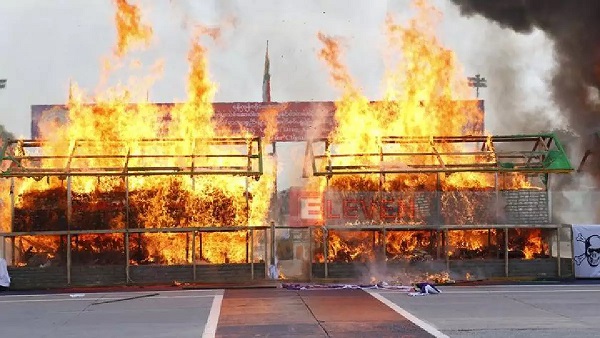
Over 200 million US dollars worth of confiscated drugs and chemicals were burnt on June 26 in Hlaingtharyar Township to commemorate the 34th International Day Against Drug Abuse and Illicit Trafficking 2021.
The items were incineratedat a container truck parking lot in Hlaingtharyar Township, and the ceremony was attended by Home Affairs Union Minister Lieutenant General Soe Htut, Chairman Hla Soe of the Yangon Region Administration Council and council member Major General Win Tint, Police Major General Aung Naing Thu as well as other high ranking officers from the military’s Yangon Region Command, Police Force and other distinguised guests.
U Hla Soe give an opening speech with Major General Win Tint reading out the missive from Union Minister for Home Affairs. Officials also reported the exact amount of drugs confiscated and to be burnt during the ceremony.
“From January 1, 755 culprits from 499 drug related cases were taken action against as per the laws. There are 25 types of drugs to be burnt and the total worth, in current market prices, is at over 200 million US dollars,” said Yangon’s Police Chief Myo Min Htike.
He goes on to say the destroyed drugs came from a total of 4030 cases from Yangon, Tanintharyi, Bago, Ayeyawaddy, Rakhine, Mon, Kayin states and regions that have settled legal proceedings in court.
There were over 246 kilograms of Heroin, over 6.8 million stimulant tablets, 92 kilograms of marijuana, over 5331 kilograms of Ice.
Election will definitely be held in around two years: Senior General
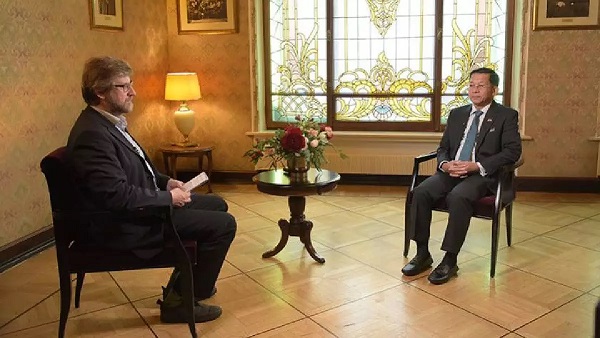
According to an interview with Russia 24 news media, the general election will be certainly be held and will take around two years to do so, said Senior General Min Aung Hlaing.
The interview, recorded on June 22, was aired on MRTV on June 25.
In the interview, the State Administration Council’s Chairman and Commander-in-Chief of Defence Services Senior General Min Aung Hlaing said that ever since the takeover, five objectives have been highlighted and will be carried out after the emergency period and everything else that needs to be done had concluded.
“It will definitely be done. But it needs to reach a stable and peaceful situation first. Preparations also have to be made regarding the next elections. I want to assure that if those things are done, the election will be carried out.
THe Senior General says that according to the constitution, the state of emergency will only be allowed for one year and is extendable, should things be unfinished, by up to six months twice.
“As of now, the nation’s affairs are a point where it is not a 100 percent complete in terms of peace and stability. By taking that into account, it will be roughly around two years even though it is too early for me to say so.”
He goes to on say that electoral fraud being committed and the refusal to address them early through discussion and other means had led to the current turmoil.
The Senior general says that these were unexpected difficulties on the path to develop democracy in Myanmar, also saying that acts of terror, from any side, will be dealt with according to the law.
“If it goes over, it will be dealt with according to the law. Everything will be carried out according to the law if any groups go overboard. There is nothing to debate over this whle thing for us,” said Senior General Min Aung Hlaing.
He also says that there are many misunderstandings and accusations on the military forces that were retaliating against acts of terror and that while every nation usually allow its citizens to protest against a government, peace must be kept by security forces to safeguard civilians and rule of law.
Japan to give AstraZeneca vaccine to Indonesia, Thailand, Philippines, Malaysia
Japan will provide about 1 million doses of AstraZeneca PLC’s COVID-19 vaccine each to Indonesia, Thailand, the Philippines and Malaysia as early as the first half of July, Foreign Minister Toshimitsu Motegi has announced.
Japan has approved the vaccines manufactured by the British drugmaker, but they are yet to be used domestically.
The government will also give an additional 1 million doses of vaccine each to Taiwan and Vietnam by mid-July. Japan also plans to provide a total of 11 million doses of vaccine to other Southeast Asian countries and Pacific island countries sometime after mid-July through the COVAX international framework for joint purchase and distribution of coronavirus vaccines.
The Foreign Ministry also announced Friday that it would provide emergency grant aid of about $9.26 million to India to support its vaccine cold chain, to maintain and transport the vials at low temperatures.
7-day quarantine for fully vaccinated arrivals to be trialled
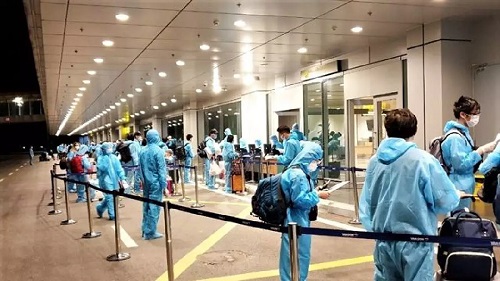
HÀ NỘI — The northern province of Quảng Ninh has been selected as the location to pilot a seven-day quarantine policy for foreign arrivals that have been fully vaccinated against COVID-19 starting this July, according to a health ministry decision issued on Saturday.
They will need to introduce proof of vaccination, with the types of vaccines approved by World Health Organisation (WHO), US Centres for Disease Control and Prevention (CDC), European Medicines Agency (EMA), or Vietnamese authorities.
The second dose must be administered no less than 14 days and no more than 12 months prior to entry.
The policy will also apply to people who have proof showing their full recovery from COVID-19.
The discharge date from hospital after recovering from COVID-19 must not be more than 12 months prior to entry.
But in both cases of above mentioned arrivals, they will need to have negative lab tests for the virus prior to entry and will be tested on the first day of quarantine (antigen tests) and the sixth day (RT-PCR test).
COVID-19 vaccination records or recovery certificates must be available in English.
Other cases of arrivals will undergo 14-day quarantine (with a third RT-PCR test on the 13th day of quarantine).
All arrivals however will need to self-isolate at their residence or home for another seven days.
The categories of arrivals allowed in this pilot programme are foreign experts, business executives, highly skilled workers (grouped under the term ‘experts’) along with their relatives, foreign students, athletes, diplomatic guests, or people on business trips, etc.
Since reports of novel coronavirus outbreaks in China, even before the border closures against nearly all foreign arrivals starting March last year, Việt Nam has imposed mandatory 14-day centralised quarantine for all arrivals, but has raised the quarantine period to 21 days (plus seven days in home isolation) in May this year over concerns of more highly transmissible variants.
The health ministry’s decision does not apply to people who entered the country for trips lasting less than 14 days, who will need to just stay at their hotels, resorts, or designated accommodation facility.
Further requirements
The arrivals will need to make health declarations and fill in the registered quarantine facilities and subsequent places for self-isolation on the Bluezone app (available on both iOS and Android) or on the website https://tokhaiyte.vn 36 hours prior to planned departure and save the QR code on their mobile devices (or print the code in cases of elderly people, children, or people with disabilities).
In cases of arrivals via land border or port border gate, they can make health declarations at the border gates of entry either online or via paper forms.
Previously, on June 11, the health ministry had a meeting with Quảng Ninh on the conducting of the pilot policy for arrivals via Vân Đồn International Airport.
According to Quảng Ninh’s authorities, since 2020, the province has received some 200 flights bringing in repatriated Vietnamese citizens, foreign experts or business executives.
ADVERTISEMENT
The COVID-19 prevention and control at the airport, transportation of the arrivals and quarantine work have been carried out methodically and smoothly.
The Government is also looking at the southern island of Phú Quốc in Kiên Giang Province to pilot a vaccine passport programme in which fully inoculated foreign tourists can enter the country, once the population on the island (including children) has achieved herd immunity via vaccination. — VNS
WHOs Li: Covid Delta variant a cause for concern in Cambodia
World Health Organisation (WHO) representative to Cambodia Li Ailan warned that more cases of the Delta variant of Covid-19, which was first discovered in India, are expected in Cambodia.
“We must act urgently, act responsibly together. The current covid-19 tools and measures help confront new challenges, if implemented effectively,” she tweeted.
She said the dangerous and invisible virus continues to be circulating across the Kingdom. It may eventually reach every corner of the country.
“We are facing both ongoing and new challenges in suppressing transmission. Let’s implement all covid-19 measures together,” she said.
Li said that as of June 25, at least 85 countries around the world have detecting the Delta variant.
“The virus continues to mutate… We must be very vigilant. We all need to make our right choices to stop virus spread and prevent the worst case scenario,” she said.
At least 10 Delta variant cases have been detected in returning Cambodian migrant workers this month, prompting the Ministry of Health to push the provincial authorities to restrict border crossing by requiring all inbound passengers to undergo quarantine at designated centres on the border.
Kathmandu’s street vendors find no respite despite loosening of lockdown
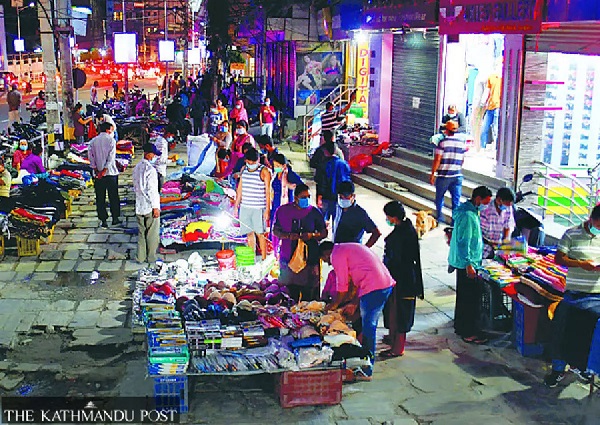
Indrachowk, Kathmandu’s most crowded and noisiest shopping area that had remained eerily silent for nearly two months due to the prohibitory orders since April 29, came to life on Tuesday after the easing of various restrictions. The prohibitory orders in the three districts of the Kathmandu Valley were loosened after 52 days amid slowing down of Covid-19 cases.
From early morning, the Indrachowk crossroads was full of street vendors—over two dozen of them selling food, vegetables, clothes, kitchen utensils and other household items—and shoppers and joggers.
Laxmi Thapa, 43, and her nine-year-old son Dilip were shouting at the passing pedestrians to buy their wares. The mother and son sell socks and ladies’ undergarments.
She said her husband was at home preparing the morning meal.
Then suddenly a police siren screamed at a distance and the vendors ran helter skelter clutching their wares. When the white truck full of municipal police finally arrived at the scene, the crossroads was already clear of street vendors as most of them fled to the back alleys.
“Today was the first day my son and I came here for business. But the City police chased us,” said Thapa, who is also a mother of two daughters aged 13 and 21. She said she had thought they would be able to start street vending with the easing of restrictions, but she was wrong.
According to the City Police Chief Dhanapati Sapkota, on Tuesday they seized goods of half a dozen street vendors from the New Road and Indrachowk area because street vending is still restricted. “From Wednesday onwards we will be stricter against illegal street vending,” said Sapkota. He said the City Police will patrol the streets from 7am to 7pm every day.
Meanwhile, Thapa said her family has lost all their savings after the whole family came down with Covid-19 in the first week of April. “After three weeks we recovered. Life is getting more and more difficult so I came here today hoping to earn some money but they are chasing us as if we are criminals,” said Thapa, whose family came to Kathmandu after the 2015 earthquake flattened their house in Sindhupalchowk.
“We didn’t have much land back in the village. We became homeless after the earthquake, which also killed our livestock. After that we left the village and have been selling clothes on the streets,” said Thapa.
Like Thapa, hundreds of street vendors have lost their means of livelihood to the Covid-19 restrictions.
Although the administrations of the three districts of the Kathmandu Valley on Sunday decided to ease many of the lockdown restrictions allowing most shops to reopen albeit only for a few hours daily and vehicles to operate on the basis of odd-even number rule, they have continued the ban on roadside vending.
“Street vendors are among those most affected by the lockdown, because they need to work every day for survival and most of them have already run out of their savings,” said Raj Kumar Shrestha, deputy general secretary at Nepal Street Vendors’ Trade Union, which has 10,000 members.
He said the Union is planning to visit the District Administration Office and the Kathmandu Metropolitan City this week asking them to lift the ban on street vending.
“It seems like the government is only concerned about the well-being of big businesses and rich people and ignores the poor,” complained Shrestha.
The union estimates there are around 30,000 street vendors in the Valley.
ADVERTISEMENT
When the Post contacted the chief district officer of Kathmandu Kali Prasad Parajuli and asked about the concerns of the street vendors, he said his office will look into this issue again. “We thought street vendors would cause crowding in the street which is not good in the time of the pandemic, but we will discuss the issue further and see what can be done,” said Parajuli.
The city authorities have long regarded street vendors as a nuisance. Over a decade there have been many recommendations and promises authorities have made to relocate the street vendors, but that has not been successful yet.
A decade ago, the government had formed a committee to relocate the street vendors from the Khula Manch, Tinkune, Kalanki and Balaju areas. The committee’s recommendations were not implemented and street vendors continued to ply their businesses wherever they found convenient, preferably at places that saw high footfall.
Then in 2014, Bamdev Gautam, the home minister at the time, issued an order to evict all street vendors, but the latter refused to give in.
Kathmandu Mayor Bidya Sundar Shakya after his election in 2017 had promised to solve the problem of street vending with better relocation options, but he has done nothing towards this end.
“We have visited the mayor’s office on numerous occasions with memoranda, but he does not listen to us,” said union secretary Shrestha. “He ignores us because we are poor and not city residents and have no voting rights. This is a sick mentality,” said Shrestha.
People stream out of capital disregarding safety rules; city dwellers rush to buy essentials
The same old pictures of thousands of people leaving the capital have returned as the country braces for another lockdown.
Until last night the decision was to enforce a seven-day lockdown from tomorrow amid the alarming rise in new cases of Covid-19 and deaths.
But Sk Rafiqul Islam, additional secretary at cabinet division, last night told The Daily Star that the countrywide lockdown will be enforced from July 1.
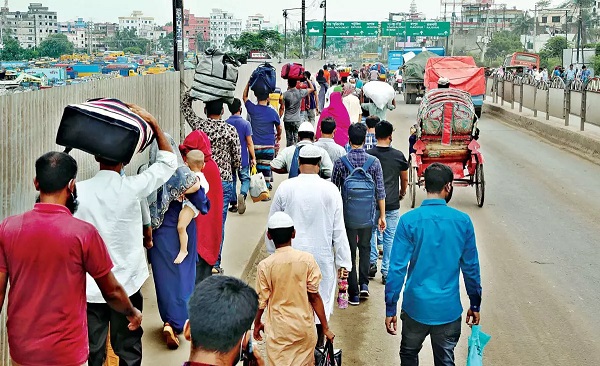
Meanwhile, the news that the lockdown will be from tomorrow triggered the exodus. Due to travel restrictions between Dhaka and the rest of the country, the usual mode of transport has not been available.
As a result, hundreds of people boarded trucks, pick-ups, three-wheelers, human hauliers and rode motorcycles to reach their destinations.
Long-haul buses have not been entering or leaving Dhaka since June 23.
Shimulia-Banglabazar and Paturia-Daulatdia ferry terminals remained extremely crowded yesterday as people headed for the southern districts across the Padma.
Grocery stores, and kitchen markets across Dhaka there were more shoppers than usual.
The Press Information Department’s statement on Friday said nobody would be allowed outdoors unless there is an emergency. This is the first time the government has used the word “lockdown” while announcing coronavirus restrictions.
Healthcare facilities are struggling with the number of new patients as the delta variant of coronavirus has spread in the communities.
ADVERTISEMENT
Farhad Hossain, state minister for public administration, told The Daily Star that the army and Border Guard Bangladesh (BGB) personnel along with the police would be deployed to ensure proper enforcement of the lockdown.
Throughout yesterday, hundreds of people, including women and children, thronged the roads at the outer edge of the city with luggage and other essentials. Many have said that the seven-day lockdown will be extended.
At Gabtoli bus terminal, people were arriving throughout the day on rickshaws and auto-rickshaws. They went across the Gabtoli bridge on foot and boarded local buses in Amin Bazar to reach their destinations. A large number of people were also entering the capital in the same way.
In Amin Bazar, small vehicles were being hired in exchange for exorbitant sums by the people.
Microbuses were charging Tk 2,000 per person to go to Rangpur.
Jahidul Islam, a 33-year-old construction worker, was returning to his village in Kurigram, fearing that he would not be able to find work during the lockdown.
“How can I pay Tk 2,000 to go to Rangpur and more to reach Kurigram? But I will have to starve if I stay here without a job,” he said.
Law enforcers stopped the vehicles on Dhaka-Mymensingh highway at the entrance of Gazipur to prevent people from reaching the capital from the districts. This forced many people to walk or get on small vehicles to reach their destinations.
Our correspondent in Munshiganj reports that Shimulia and Banglabazar ferry terminals remained crowded since early morning. Maintaining physical distancing was out of the question on the packed ferries.
Safayet Ahmed, manager at Shimulia ghat, said 14 ferries were operating between Shimulia and Banglabazar. Only the vehicles providing emergency services were supposed to board the ferries.
At kitchen markets in Mohammadpur, Karwan Bazar, Mirpur and other areas of the capital, people were buying goods in large quantities even though the government has said nothing about closing down kitchen markets.
Traders said it seemed that most of the buyers appeared to be stocking up for a week or longer.
Shopkeepers at Karwan Bazar kitchen market said the number of shoppers increased after around 12:00pm. Sellers at Yousuf General Store said people were mostly buying groceries and sanitary products.
He added that the wholesale price of onion rose from Tk 42-45 a kg to Tk 50-55 a kg and the price of potatoes rose from Tk 16-19 per kg to Tk 25.
A salesperson at a store in Mohammadpur said there were more shoppers than usual yesterday.
Artificial intelligence is key to sustaining the future of the manufacturing industry, with the pandemic showing the need for efficient and automatic production, an AI expert said on Friday at a webinar in Hong Kong.
Wang Yu, research fellow at the College of Intelligence and Computing in Tianjin University, said while many businesses suffered because of the pandemic, this “huge public health crisis” has also made them “realize the importance of artificial intelligence and intelligent manufacturing”.
These enterprises now “understand that intelligent manufacturing can reduce the need for large numbers of people (to be physically present in factories),” Wang said in his keynote speech at the online forum on “The Future of AI in Manufacturing Industries”. The forum was jointly organized by the Tianjin Municipal People’s Government Information Office, China Daily and the Asia News Network, an alliance of 23 leading media outlets across 20 Asian countries.
Wang said that “efficient automated production is the future of the manufacturing industry”. He cited how businesses in Tianjin are keen to implement intelligent manufacturing in their operations. The northern Chinese city of Tianjin is home to some of China’s biggest manufacturing companies.
Wang said a survey of 472 enterprises in Tianjin last year revealed that “generally, they’re paying more attention to intelligent manufacturing”. He said that more than 45 percent of respondents have overall planning, and the production planning for intelligent manufacturing. Over 65 percent, meanwhile, are carrying out standard implementation of an integrated management system.
“Tianjin considers intelligent manufacturing as a rare opportunity for economic development,” he said.
Wang said that AI is being developed in the rest of China, too — and was even before the pandemic. He noted that in 2017, the State Council launched the Next Generation Artificial Intelligence Development Plan. This, he said, has led China to nurture homegrown talent, increased the number of patent applications and papers published on artificial intelligence.
Neale G. O’Connor, professor and head of the Department of Accounting at Monash University in Malaysia, said that AI can help solve various problems in manufacturing. But in most companies across Asia, “A big challenge in some factories is the owner’s mindset,” O’Connor told the webinar. “Many owners don’t have a strategic vision for making it possible for the factory to make A-class products. They have gone from product to product very much, not so focused on developing the talent and the skills in their organizations.”
He said Asian manufacturers need to “focus on continuous improvement and trying to digitalize different areas where you are collecting data, just like in the assembly line”. These companies can also learn from original equipment manufacturers in developed countries which have put such systems in place, he said.
“A lot of factories today (are) at the continuous improvement stage. We need a lot more effort to move to the next stage of digitalizing so we can start to capitalize on the opportunities that AI brings us,” O’Connor said.
He said that while AI can benefit many industries, it’s currently the automotive sector that “is actually leading the field in this area”.
“Major auto manufacturers around the world and in China are adopting Industry 4.0 and AI already, and they are able to do that because of a large volume and automated systems. (They) save lots and lots of data, which makes it amenable to AI algorithms and machine learning and deep learning,” O’Connor said.
Masahiro Nakamura, CEO of Tokyo-based Lexer Research Inc, said most companies are “racing to the AI technologies for much functioning more recently, but there are different difficulties in the production process, production and resource management”.
ADVERTISEMENT
He proposed the use of “deep thinking” as an alternative approach to deep learning, or machine learning. He said deep thinking can be used in factory planning, automation and intelligent logistic design.
South Korean refiners turn to hydrogen in search of next oil
South Korean refiners are jacking up investment in the burgeoning hydrogen market to secure their place in a world shifting away from fossil fuels and to get ahead of the next big change in the energy industry.
Hydrogen, which burns clean when mixed with oxygen in a fuel cell, can be used for various industrial purposes, vehicles and ships, but it has been mostly used in oil refining and production of fertilizers.
Large-scale usage of hydrogen requires not only manufacturing factories but also compression, transportation, distribution and conversion facilities, which gives petrochemical companies a competitive edge in building the hydrogen value chain.
As major economies toughen the carbon emission targets and investors get serious about sustainability, major refiners in Asia’s fourth-largest economy have been stepping up investment in hydrogen to capture a slice of the growing energy market.
Top refiner SK Innovation is well positioned to take the lead in the hydrogen industry, as its petrochemical and gas subsidiaries can utilize their existing infrastructure and put on a united front under their parent SK Group, the nation’s third-largest conglomerate.
Under the group’s net-zero emission goal by 2050, its holding firm SK Inc. vowed to pour 18.5 trillion won ($16.5 billion) by 2025 into building hydrogen production facilities and charging stations.
“Hydrogen is an eco-friendly energy source suited for the domestic environment as it is not affected by climate and requires less space for production,” SK Group Chairman Chey Tae-won said upon announcing the investment plan in March.
As the first stage, SK E&S and SK Incheon Petrochem will join hands to build a liquid hydrogen plant capable of producing 30,000 tons a year in the western port city of Incheon by 2023.
SK E&S will refine byproduct hydrogen from SK Incheon Petrochem’s factory to produce liquid hydrogen, which will be supplied to the Seoul metropolitan area.
As part of plans to go beyond its home turf, SK in January acquired 9.9 percent of U.S. fuel cell company Plug Power for $1.6 billion, and it made another strategic investment in Monolith Materials Inc., an American company known for its clean hydrogen production technology, earlier this month. The company did not reveal the amount of investment.
GS Caltex Corp., a joint venture between GS Energy Co. and US oil producer Chevron, is tapping into the liquid hydrogen business in partnership with the state-run Korea Gas Corp. (KOGAS).
GS Caltex and KOGAS plan to build a liquid hydrogen factory with an annual capacity of 10,000 tons on idle land at a KOGAS LNG terminal, which will be enough to power around 80,000 fuel cell cars per year.
The two companies also agreed to build hydrogen charging stations around Seoul and other select regions in time for the completion of the factory in 2024.
“By combining GS Caltex’s experience in running gas and charging stations and the experience of KOGAS in the LNG business, the two companies will create synergy in the hydrogen business,” GS Caltex CEO Hur Sae-hong said in a release.
In April, Hyundai Oilbank Corp. signed a memorandum of understanding with US hydrogen giant Air Products & Chemicals to use the gas industry leader’s technology to produce hydrogen from its crude oil byproducts and natural gas.
Hyundai Oilbank has set a goal to produce 100,000 tons of “blue” hydrogen by 2025, using carbon capture and storage technology to cut CO2 emissions.
Grey hydrogen is produced when the element is stripped out of fossil fuels, while blue hydrogen is produced from natural gas and produces less CO2. Green hydrogen is the cleanest variety as it uses renewable energy to produce hydrogen from water.
“The company aims to reduce its reliance on refining business to 40 percent of the total revenue by 2030 from the current 85 percent,” Hyundai Oilbank CEO Kang Dal-ho said. “We’ll become a leading green energy platform that earns nearly 70 percent of operating profit from the blue hydrogen, white bio, and eco-friendly chemicals and materials businesses.”
S-Oil Corp., the nation’s No. 3 refiner owned by Saudi Aramco, has been focusing on the fuel cell system, which converts chemical energy stored by hydrogen fuel into electricity.
In March, S-Oil acquired a 20 percent stake in Fuel Cell Innovations (FCI), a joint venture between Korea and Saudi Arabia, for 8.2 billion won, saying it will invest up to 100 billion won by 2027 to have over 100 megawatts of annual production capacity.
The refiners are not alone in believing hydrogen has potential to become a clean energy fuel in the future.
The government has been promoting hydrogen as one of the growth drivers in the green energy sector and implemented the world’s first hydrogen law in February to boost related industries and expand infrastructure.
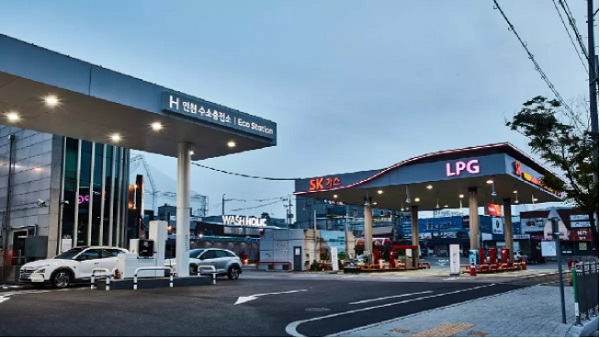
There are 94 hydrogen fueling stations in the nation as of June, and the government plans to increase the number to 180 by the end of the year.
The hydrogen stations are mainly used for fueling Hyundai Motor’s NEXO, the only commercial fuel cell vehicle available in the nation.
Market watchers say that industry players will have to explore ways to drive down expensive prices of hydrogen in the early stage and gradually increase the ratio of green hydrogen to make the fuel a clean alternative.
Currently, hydrogen is priced around 7,000-8,000 won per kilogram, and the government’s hydrogen economy road map aims to lower the price to 6,000 won by 2022 and to 4,000 won by 2030.
“For hydrogen to have competitiveness in terms of price, transportation costs, which account for 40 percent of the wholesale price, need to go down,” Jun Hye-young, an analyst at KTB Investment & Securities, said. “That’s why local companies are focusing on liquid hydrogen, which can save more than 70 percent of logistics costs compared with compressed gaseous hydrogen.”
Thai cavalry troops deployed along Moei River to contain illegal border crossing
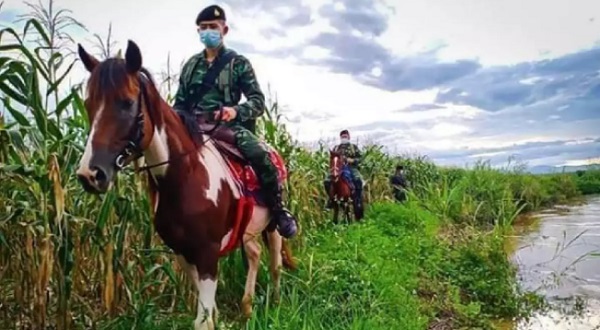
The Thai cavalry has tightened security along the Moei River (Thaungyin River) as a measure to prevent border crossing during the Covid-19 pandemic, according to local sources.
Alocal resident in Mae Sot said border police, administrative officials and Thai royal army troops are monitoring the area along the Moei River, the borderline between Myanmar and Thailand, to prevent illegal entry into Thailand. Moreover, the places where cars cannot be used are being patrolled by the Thai cavalry troops.
“The third wave of Covid-19 in Thailand is very severe. Security has been tightened since March, April and May. Barbed wire fences are being set up along the beach. The cavalry members are patrolling the areas where cars cannot be used. Despite tightened security, people are illegally entering Thailand every day. And they are being arrested. Fifteen Myanmar citizens were arrested on June 23,” the local resident said.
Seven men and eight women were arrested by combined border security forces on June 23 for illegal entry into Thailand. Although they were undocumented, they planned to go and work in Bangkok with the help of a broker whom they trusted.
The arrested Myanmar citizens would be handed over to the police station after receiving health tests. They are facing legal action for illegal border crossing.
A Mae Sot resident quoted a statement of Thai anti-human trafficking authorities as saying that over 15,000 Myanmar workers had been arrested for illegal entry into Thailand during the Covid-19 pandemic.