Vaccination important factor in Southeast Asia growth: Oxford Economics report #SootinClaimon.Com

#SootinClaimon.Com : ขอบคุณแหล่งข้อมูล : หนังสือพิมพ์ The Nation.

https://www.nationthailand.com/international/40001934

Vaccination important factor in Southeast Asia growth: Oxford Economics report


Progress in vaccination will continue to be an important barometer for growth in the second half of 2021 in Southeast Asia including Viet Nam, experts have said.
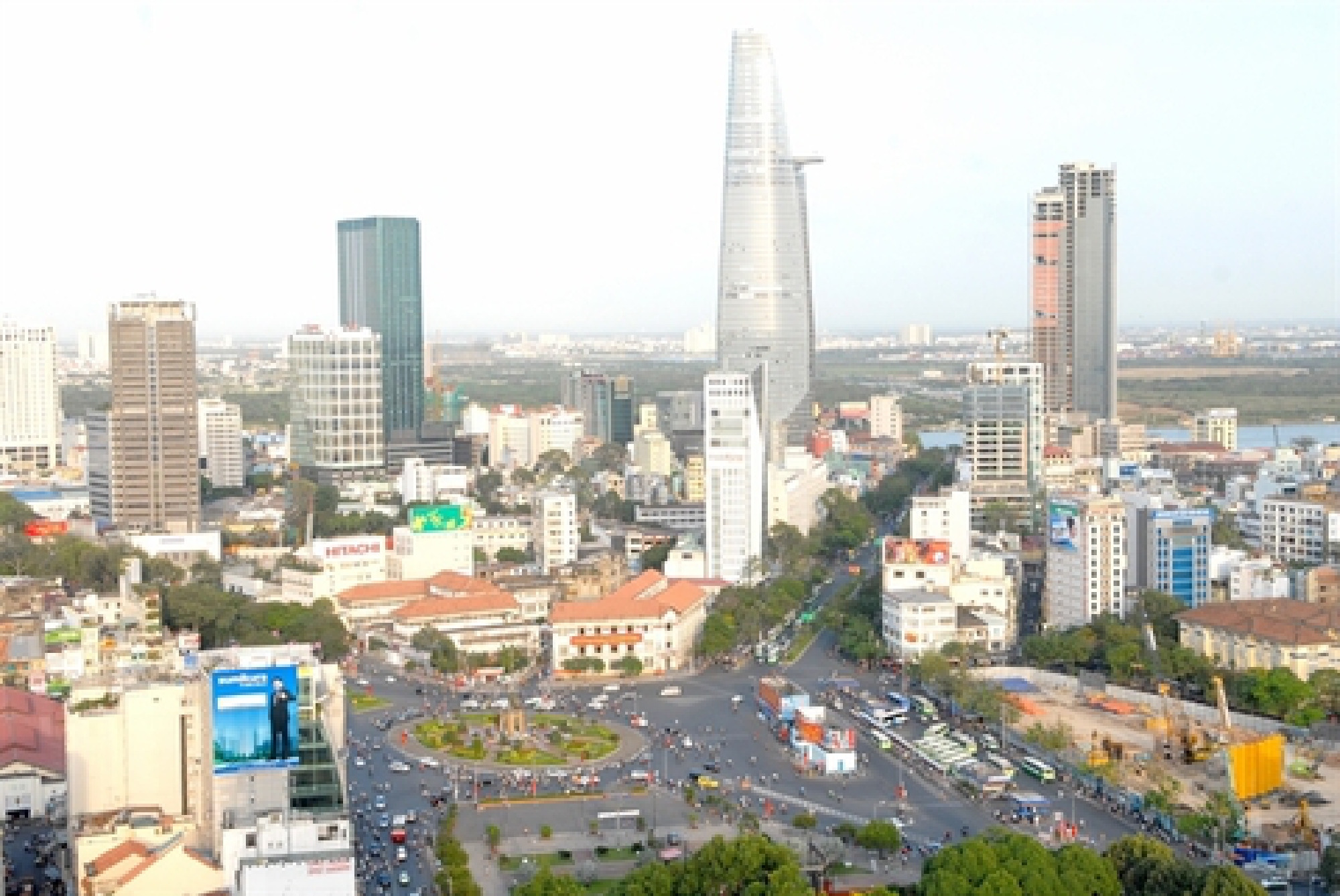
Vaccination important factor in Southeast Asia growth: Oxford Economics report

In the latest economic outlook report from Oxford Economics (OE), commissioned by the Institute of Chartered Accountants in England and Wales (ICAEW), Mark Billington, managing director international, ICAEW, said: “We expect that countries which are able to contain new COVID-19 cases and reach high levels of vaccinations will outperform the rest of the region and be better placed for recovery.

“While most Southeast Asian economies have experienced a surge in COVID-19 cases since the start of 2021, leading to the reinstatement of social distancing measures, this has dimmed but not derailed economic recovery.”

According to the report, despite the recent resurgence in COVID, Viet Nam’s growth outlook remains optimistic and the economy is expected to return to pre-Covid levels by the second half of 2021.

The country’s GDP is forecast to grow at 7.6 per cent in 2021, among the highest rates in the region.

Viet Nam was one of the few economies in the world to grow in 2020 due to its success in containing the pandemic, the report said.

“This early success enabled the economy to benefit from the surge in global trade activity and enjoy strong foreign direct investment flows that boosted export-oriented and manufacturing industries.

“Singapore and Viet Nam are expected to continue leading the region in recovery. Despite a resurgence of COVID-19 cases in Viet Nam, which has affected its manufacturing sector and export industries, its economy is predicted to rebound swiftly once restrictions are lifted.”

Southeast Asia’s GDP would rebound strongly to grow at 4.8 per cent this year, after contracting 4.1 per cent last year, it said.

ICAEW and Oxford attributed the rebound to an improvement in global trade activities, accommodative policies, continued government fiscal support and low interest rates across the region, adding growth is forecast to improve to 6.5 per cent in 2022 as countries move closer to herd immunity and the recovery becomes more synchronised across sectors.

The report said Southeast Asian economies would continue experiencing varying speeds of recovery in 2021 driven by their ability to contain fresh waves of COVID infections and procure and distribute vaccines.

Uncertainties remain as rates of recovery depend on the progress of vaccine rollouts and whether the possibility of further lockdowns remains high in the near-term, it said.

However, the economic outlook is optimistic in the medium to long terms, it said.

Recent lockdowns in Singapore, Viet Nam and Malaysia mean household spending reduced in the second quarter of 2021, but it is unlikely to dip significantly since households and businesses are better equipped with digitisation to enable them to work and shop remotely, it said, adding Governments have also used more targeted measures than nation-wide lockdowns, which have minimised disruption. — VNS

Published : June 12, 2021

By : Viet Nam News/ANN
More in Singapore opting for Pfizer Covid-19 vaccine despite longer wait than for Moderna #SootinClaimon.Com

#SootinClaimon.Com : ขอบคุณแหล่งข้อมูล : หนังสือพิมพ์ The Nation.

https://www.nationthailand.com/international/40001933

More in Singapore opting for Pfizer Covid-19 vaccine despite longer wait than for Moderna


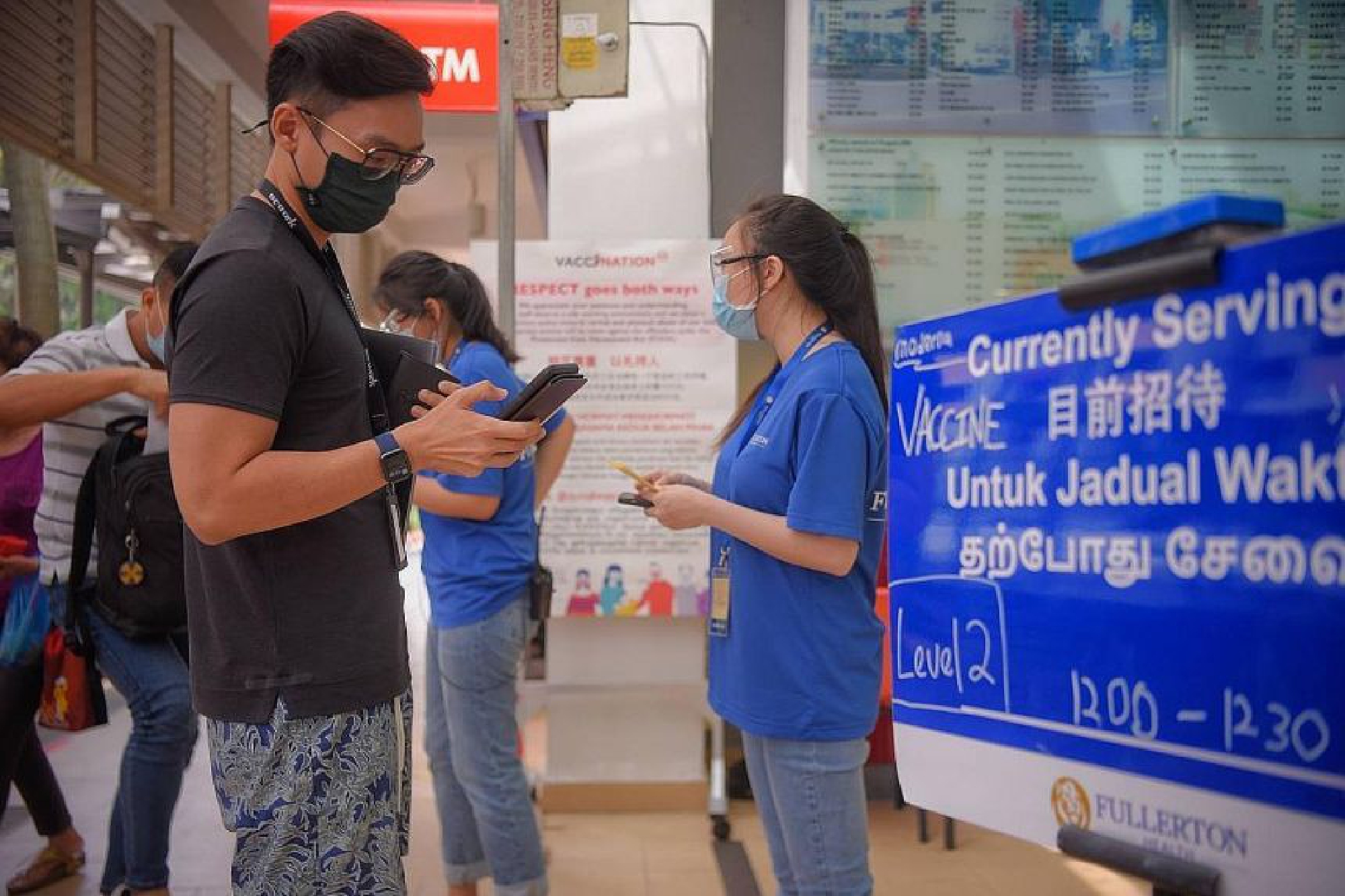
SINGAPORE – Slots at vaccination centres offering the Pfizer-BioNTech Covid-19 vaccine are being taken up more quickly than those for Moderna, after vaccination bookings were made available for those aged 12 to 39 on Friday (June 11).

More in Singapore opting for Pfizer Covid-19 vaccine despite longer wait than for Moderna

As people can opt for either of the two available vaccines here, some have preferred the Pfizer-BioNTech vaccine because its side effects are said to be less severe, among other reasons. It is also the only one here approved for those under the age of 18.

At the media conference by the multi-ministry task force tackling Covid-19 on Thursday (June 10), Health Minister Ong Ye Kung said those who choose to go to vaccination centres that offer the Moderna vaccine are much likelier to get an earlier slot, since students under 18 can take only the Pfizer-BioNTech jab. The vaccination drive for 400,000 students aged 12 and above began on June 3.

Checks by The Straits Times on Friday afternoon showed that the earliest slot available for the Moderna vaccine is June 12, compared with June 21 for the Pfizer-BioNTech vaccine. All vaccination centres tagged “more slots available” on a Covid-19 vaccination appointment booking page seen by ST offer the Moderna vaccine.

Ms Germaine Koh, 22, a student at Nanyang Technological University, chose the Pfizer jab after observing the side effects of those around her who had been vaccinated.

She said: “My parents took Moderna and they had slight fevers after taking the jab, but some others who took Pfizer said that they had little to no side effects.”

Some, such as university student Isabel Dyason, 22, chose vaccination centres that offer the Pfizer-BioNTech vaccine even though they were farther away from home. Ms Dyason, who lives in Tampines, booked her first jab on June 25 at Bedok Community Centre.

The shorter waiting period between doses for the Pfizer-BioNTech vaccine – 21 days against Moderna’s 28 days – also appeals to some, while others said they chose it because more vaccination centres are offering it.

There were also those who thought the two vaccines are equally safe and effective, and chose their vaccination centres based on convenience.

Ms Goy Shi Yi, 32, a communications manager, said: “I wanted to get it done early and as soon as possible, because the situation may worsen very quickly as we’ve seen from all the recent clusters.”

She booked a slot for Saturday at Radin Mas Community Club, which is just a few bus stops from her home.

“I did read up on the differences between Moderna and Pfizer, but from what I see, they have similar efficacy levels and side effects. Side effects like fever aren’t of much concern to me. If we’re talking about rashes or some blood clots, then perhaps I’d be more worried,” she added.

A study, conducted by the United States Centres for Disease Control and Prevention and published in the Journal of the American Medical Association in April, found that those who received the Moderna vaccine more frequently reported side effects – such as redness over the injection site, muscle aches and fevers – than those who received the Pfizer-BioNTech vaccine.

After the second dose, 74.8 per cent of Moderna recipients reported reactions such as fever, headache and fatigue, compared with 64.2 per cent of those who received the Pfizer-BioNTech vaccine.

Associate Professor Hsu Li Yang of the National University of Singapore Saw Swee Hock School of Public Health said the reasons for the difference are still unknown.

However, in terms of severe or life-threatening side effects, the two vaccines are similar and the risks are very low.

“In fact, the risk of anaphylaxis (severe allergic reaction) to the Moderna vaccine is about half or less than half of the Pfizer vaccine,” he added.

Dr Ling Li Min, an infectious diseases expert from Rophi Clinic, said: “Experts conclude that both vaccines are similar and equally good when it comes to efficacy, and that side effects depend more on the person than the shot itself.”

Published : June 12, 2021

By : Joyanne Li, Natalie Tan and Fang Yiyang/The Straits Times/ANN

27 stolen Cambodian antiquities to be returned from US #SootinClaimon.Com

#SootinClaimon.Com : ขอบคุณแหล่งข้อมูล : หนังสือพิมพ์ The Nation.

https://www.nationthailand.com/international/40001909

27 stolen Cambodian antiquities to be returned from US


A total of 27 antiquities valued at around $3.8 million are to be returned from the US to Cambodia, according to a press statement of the Ministry of Culture and Fine Arts and the US embassy in Phnom Penh.

27 stolen Cambodian antiquities to be returned from US

The repatriation was announced by Manhattan District Attorney Cy Vance during a handover ceremony attended by Cambodian ambassador to the US Chum Sounry on June 9.

The 27 antiquities consist of Buddhism and Hinduism statues from the Angkorian era, such as a bronze meditating Buddha on a Naga throne, a Shiva idol, and a Buddhist sandstone sculpture of Prajnaparamita.

“Today’s event is a powerful reminder that individuals who plunder and sell culturally significant items are committing crimes not only against a country’s heritage but also its present and future,” the district attorney said during the ceremony.

It was not immediately clear as to when the antiquities would arrive in the Kingdom.

Published : June 11, 2021

By : The Phnom Penh Post/ANN

ADVERTISEMENT

UN calls on security forces to allow humanitarian aid to Kayah and other conflicts areas #SootinClaimon.Com

#SootinClaimon.Com : ขอบคุณแหล่งข้อมูล : หนังสือพิมพ์ The Nation.

https://www.nationthailand.com/international/40001908

UN calls on security forces to allow humanitarian aid to Kayah and other conflicts areas


The United Nations (UN) has called on security forces to allow safe access to humanitarian aid in other parts of the country, including Kayah State.

UN calls on security forces to allow humanitarian aid to Kayah and other conflicts areas

It said the UN is concerned about the rapidly deteriorating security and humanitarian situation in Kayah State and other parts in southeast Myanmar. Due to the ongoing violence in Kayah State, approximately about 100,000 people, including women and children, have been displaced.

Most of the displaced are taking refuge in safer areas and forests in Kayah State and adjoining southern Shan State. The United Nations considers that the issue, as seen elsewhere in Myanmar, could lead to the displacement of people across the border.

It said the UN urged all parties involved in the conflict to take the necessary precautions and precautions to protect civilian and civilian-related infrastructure especially medical facilities and medical staff, and to identify between attackers and civilians, to shoot if only necessary and not to use excessive force. The statement reiterated its call for adherence to the principles of protection of civilians.

It said displaced people and those left in the conflict-affected areas are urgently needed food, water, shelters, fuel and medical care and although local people can make a respond immediately, it is still required to reach out to those in remote areas.

In these circumstances, the UN and its partners working to provide food, shelter and other relief supplies to local communities are delayed due to the ongoing security situation, restrictions imposed by security forces and poor transport links.

Due to the fighting in Kayah, Kayin and Mon states and, eastern Bago Region, the UN announced in early May there were more than 150,000 refugees, and the number is likely to increase.

Published : June 11, 2021

By : Zaw Min Naing/Eleven Media/ANN

[Singapore] Target for 3 in 4 residents to be fully vaccinated against Covid-19 by October: Lawrence Wong #SootinClaimon.Com

#SootinClaimon.Com : ขอบคุณแหล่งข้อมูล : หนังสือพิมพ์ The Nation.

https://www.nationthailand.com/international/40001907

[Singapore] Target for 3 in 4 residents to be fully vaccinated against Covid-19 by October: Lawrence Wong


SINGAPORE – Singapore is aiming for half its residents to be fully vaccinated by August, and at least 75 per cent by October.

[Singapore] Target for 3 in 4 residents to be fully vaccinated against Covid-19 by October: Lawrence Wong

As at Monday (June 7), more than 1.8 million people, or about 30 per cent of the population, have been fully vaccinated.

Finance Minister Lawrence Wong gave the projection at a news conference on Thursday (June 10), as he noted that the United States saw infection rates steadily come down – from a peak in January this year – when about half the population developed immunity to the coronavirus which causes Covid-19.

He added that more than 40 per cent of people in the US are fully vaccinated, and about 10 per cent have been infected with the virus.

Singapore has not reached that level of immunity yet, but “we will get there soon”, said Mr Wong.

In his national address on May 31, Prime Minister Lee Hsien Loong said the country’s target is for everyone who is eligible for a vaccination and wants everyone to get at least their first jab by National Day on Aug 9.

With a higher vaccination rate, compliance with social distancing and safe management measures, regular testing, and faster and more comprehensive contact tracing, Singapore will ease restrictions and gradually restore “our normal lives, both within Singapore and at our borders”, said Mr Wong, who is co-chair of the multi-ministry task force tackling Covid-19.

For now, phase two (heightened alert) measures will be rolled back from Monday in a cautious and controlled manner, while maintaining strict controls at borders.

The maximum group size for social gatherings will increase from two people to five, among other relaxation of rules.

The second stage of the reopening will happen from June 21, when dining in at eateries may be allowed, with a maximum group size of five.

Such restrictions are needed in phase three (heightened alert) until Singapore’s vaccination rate is higher, said Mr Wong.

“It is not quite the full phase three, we call this phase three (heightened alert) because there are still these restrictions in place.”

The announcement on the relaxation of rules comes amid a decline in community cases in the past three weeks.

Mr Wong said: “As we progress through these stages (of reopening), we will ease our restrictions and gradually restore our normal lives, both within Singapore and at our borders. Then we will move to phase three, and even beyond phase three, to a new normal phase of living with endemic Covid.”

Published : June 11, 2021

By : Lim Min Zhang/The Straits Times/ANN

H.eco Forum 2021 calls for climate action to create net-zero society #SootinClaimon.Com

#SootinClaimon.Com : ขอบคุณแหล่งข้อมูล : หนังสือพิมพ์ The Nation.

https://www.nationthailand.com/international/40001906

H.eco Forum 2021 calls for climate action to create net-zero society

Herald Corp.’s first H.eco Forum opened in Seoul on Thursday, delivering a reality check — that the Earth has about six years and 235 days to prevent the effects of global warming from becoming irreversible — and yet signaling hope that we can still avert a climate catastrophe.

H.eco Forum 2021 calls for climate action to create net-zero society

Under the theme “We face the Climate Clock,” the forum, which was livestreamed, gathered global leaders, businesspeople and activists to discuss solutions to the climate emergency at every level and show a path toward a net-zero, sustainable future.

Due to the COVID-19 pandemic, H.eco Forum 2021 was held in a hybrid format, with speakers based in Seoul giving speeches in person and foreign speakers participating virtually — from countries including Colombia, Switzerland and the UK.

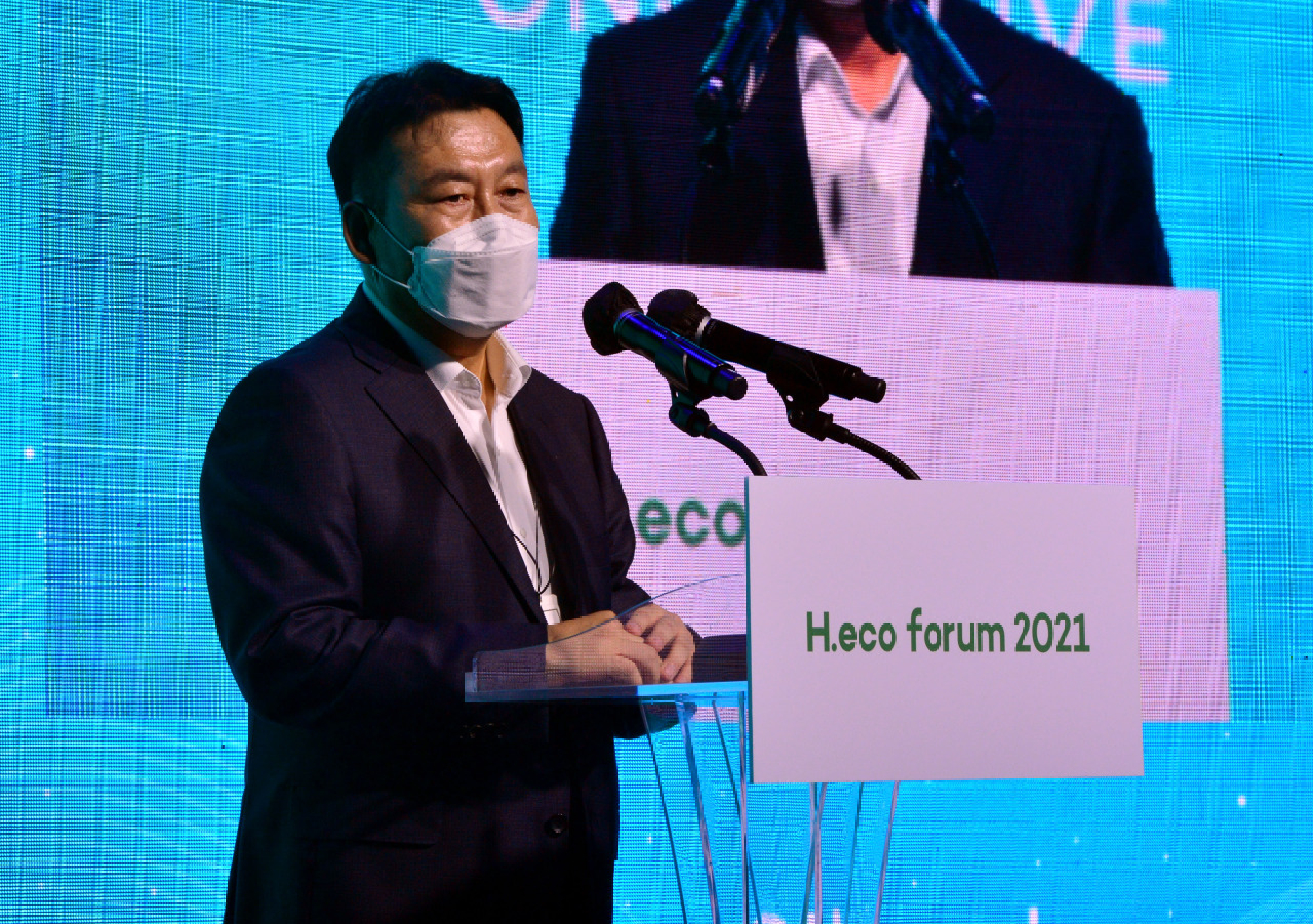
In compliance with the government’s social distancing rules, only a limited number of distinguished speakers and guests were present at the forum in person, including Jungheung Group Vice Chairman Jung Won-ju and Kim Dong-yeon, chairman of the Joyful Rebellion Foundation and former deputy prime minister. 

H.eco Forum 2021 calls for climate action to create net-zero societyH.eco Forum 2021 calls for climate action to create net-zero society
“Six years and 220 days. Depending on how we see it, it could be a long time or a short time,” Jeon Chang-hyeop, Herald Corp. CEO and publisher, said in his welcoming remarks, referring to the Climate Clock installed on the roof of Herald Corp.’s headquarters.

Last month, Herald Corp. installed the monumental Climate Clock, the third in the world and the first in Asia, as part of a campaign to raise awareness of the climate crisis and send a direct visual warning that the Earth has a deadline. 


H.eco Forum 2021 calls for climate action to create net-zero societyH.eco Forum 2021 calls for climate action to create net-zero society

“It is a warning that we will not be able to lead such a normal daily life that we have if emissions continue at the current rate,” he said. “That’s why Herald Corp. is launching the H.eco Forum, declaring itself as an environmentally friendly company.”

President Moon Jae-in welcomed the launch of the H.eco Forum, hailing Herald Corp. for “taking the initiative in responding to climate change.”

“The Climate Clock that has been installed on the roof of Herald Corp. shows the seriousness of carbon dioxide emissions into the environment,” Moon said in a congratulatory message. “I would hope that today’s forum will be able to discuss the issue of climate change in various dimensions.”
Vice Environment Minister Hong Jeong-kee and Kim Sung-joo of the Democratic Party of Korea, who heads the National Assembly’s ESG forum, also welcomed the hosting of the forum, expressing hope that it would be a platform to raise awareness of environmental challenges.

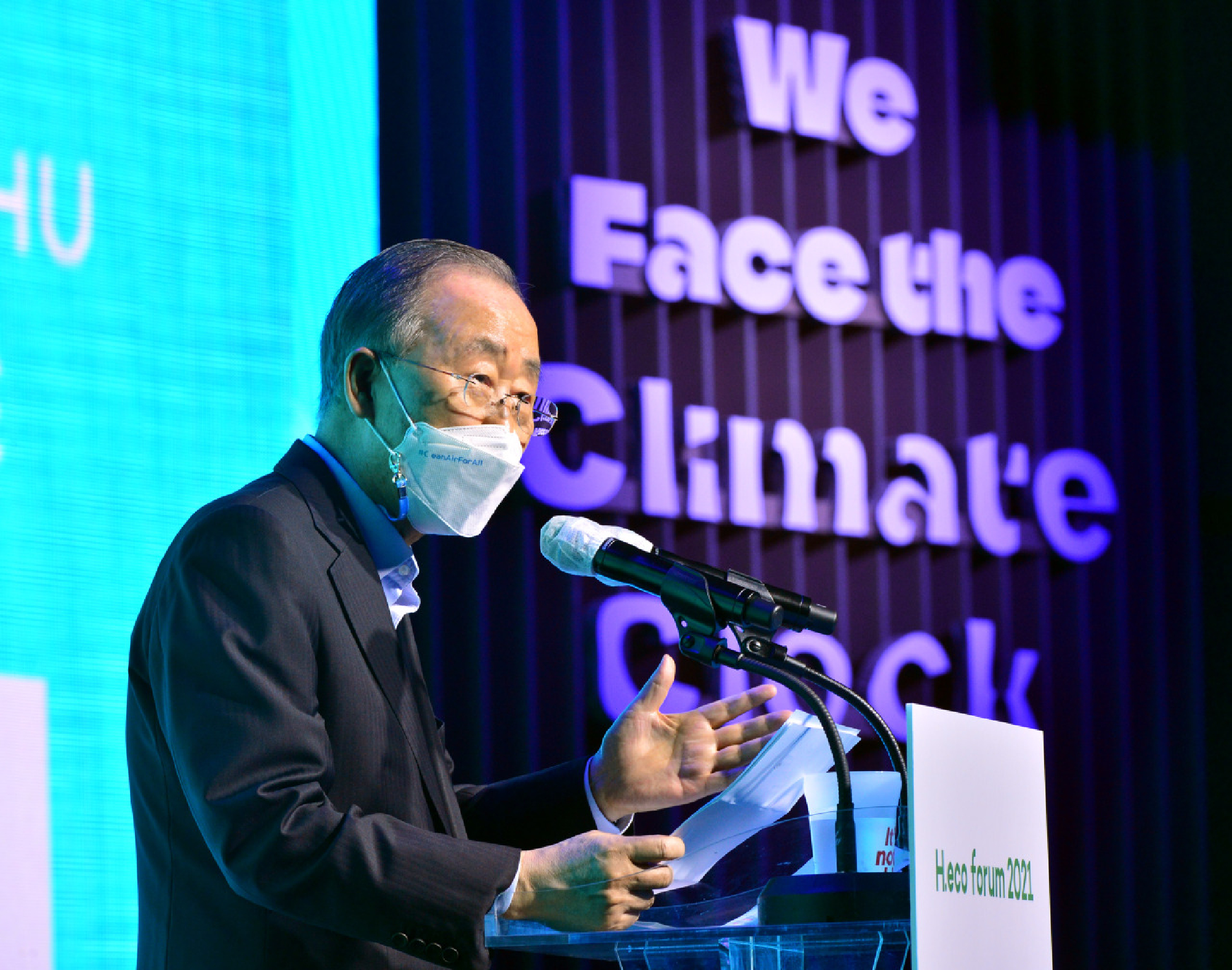
Opening the forum was a keynote speech by former UN Secretary-General Ban Ki-moon, whose role was critical in bringing the entire world together to the Paris Climate Agreement during his 10-year tenure.

In a speech titled “Humankind’s response to climate crisis,” Ban called for a unified response at the transnational, governmental, business and individual levels to tackle climate change.

President Moon’s pledge to go carbon-free by 2050 entails a political and moral burden, Ban said, stressing the need to follow up on the vow no matter who becomes president in the coming decade.

“The goal of achieving carbon neutrality by 2050 was laid out by this administration, but the next six administrations must have will and determination to accomplish the goal,” he said, adding that technological innovation, policy suitability and market movement should go hand in hand to make Korea carbon neutral. 

Participating from Switzerland, Gerd Leonhard, a renowned futurist and CEO of The Futures Agency, talked in his keynote speech about how the traditional economic model — focusing on profit and growth — is unfit for the future.

“We are going to have more money but there won’t be any planet to spend it on. You can’t do business on a broken planet,” he said, showing global capital stocks per capita in which produced capital is increasing, human capital is staying stagnant and natural capital is declining.

“The future of our world is the circular economy, is sustainable, or there will not be a future,” he said, adding that we have all the tools — science and technology — and what we need now is the will. 

ADVERTISEMENT

Following the keynote speeches, the forum went on to explore the role of governments, businesses and individuals in fighting climate change.

Opening the first session was Yun Sun-jin, co-chairperson of Korea’s 2050 Carbon Neutrality Commission, who discussed the country’s road to a green transition and net zero emissions. Juan Manuel Santos, who was president of Colombia from 2010 to 2018 and won the Nobel Peace Prize in 2016, shared Colombia’s experience of protecting biodiversity and highlighted the need for a global green recovery from the COVID-19 pandemic. John Murton, the UK government’s COP26 envoy, said that focus should be on four areas — mitigation, adaptation, finance and collaboration — to overcome the climate crisis.

The second session, which started after lunch, looked into industry efforts for a green transition. Matthias Bausenwein, president of Orsted Asia Pacific, shared the Danish firm’s experiences surrounding its remarkable transformation from a traditional fossil-fuel company into a renewable energy giant. Sam Kimmins, who is leading the Climate Group’s global RE100 campaign, introduced how the initiative is accelerating change toward zero-carbon grids at scale and why more companies should join it for their own survival. The session ended with Oh Jeong-hwa, director of Amorepacific’s Sustainability Division, introducing the cosmetics firm’s eco-friendly drive to cut emissions in its production lines.

The special session featured celebrated artists who produced a series of experimental artworks called “Heartbeat of the Earth,” in collaboration with the Google Arts & Culture Lab. Using their creative interpretation, the artists showcased their take on climate data to visualize rising sea levels, acidifying oceans and more.

In the third session, themed climate change activism, Yoon Hyeon-jeong, teenage activist for Youth 4 Climate Action, emphasized that the climate crisis is a human rights problem and requires action by the government, rather than individuals, to combat it. On the other hand, American rapper and filmmaker Prince Ea motivated the audience to act on climate change as individuals – changing their lifestyles, habits and mindset — to make a difference for the planet.

Closing H.eco Forum 2021 was a panel discussion moderated by Greenpeace campaigner Jane Yu. Activists including Kim Seo-gyung, who is a member of a global group of K-pop fans fighting for climate change, Jo Eun-byeol and film director Kim Jae-han had a fierce discussion about the importance of solidarity for climate action.

Published : June 11, 2021

By : Ock Hyun-ju/The Korea Herald/ANN

Anti-sanctions law to protect Chinas interests #SootinClaimon.Com

#SootinClaimon.Com : ขอบคุณแหล่งข้อมูล : หนังสือพิมพ์ The Nation.

https://www.nationthailand.com/international/40001905

Anti-sanctions law to protect Chinas interests


NPC Standing Committee approves bill to better safeguard national sovereignty

Anti-sanctions law to protect Chinas interests

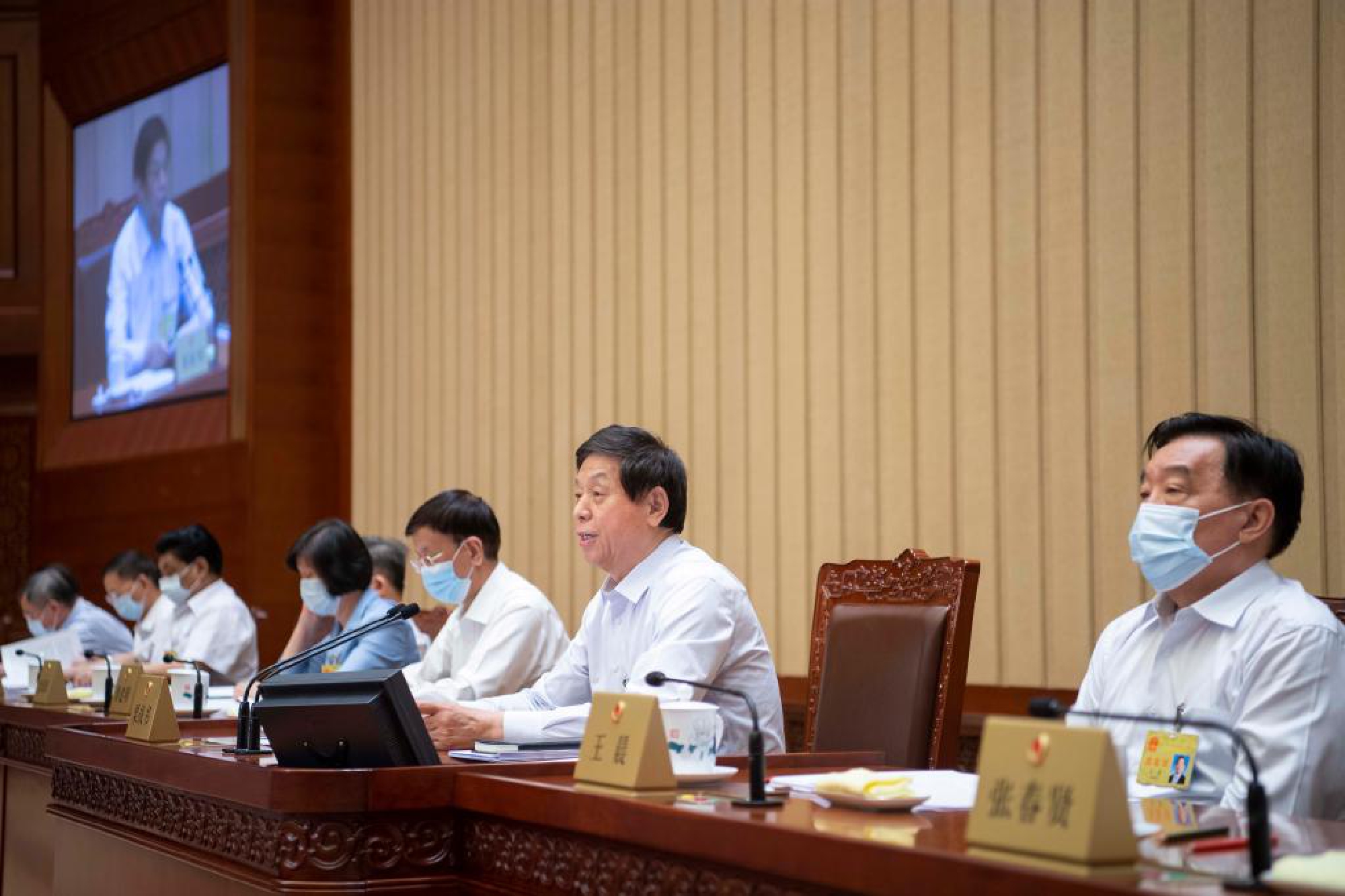
China’s top legislature passed a law on countering foreign sanctions on Thursday to better safeguard the country’s sovereignty, security and development interests.

President Xi Jinping signed a presidential order to promulgate the law, which takes effect immediately.

After a second deliberation, the Standing Committee of the National People’s Congress, the nation’s top legislature, adopted the law on countering foreign sanctions when it concluded its session.

Li Zhanshu, chairman of the NPC Standing Committee, presided over the closing meeting and said the law is an important step in implementing Xi Jinping Thought on Rule of Law and on Diplomacy and accelerating legislation involving foreign affairs.

“China has always adhered to an independent foreign policy of peace and is committed to pursuing mutual benefits and common growth with other countries,” Li said. “But we never give up our legitimate rights and interests. No one should expect China to accept any action that damages its own interests.

“The Chinese government and people resolutely oppose any sanctions and interference,” he added.

The top legislature followed international practice to make and review the law, he said, noting that the law provides legal support not only to counter hegemony and power politics, but also to protect the interests of the country and people.

While emphasizing that the law should be fully and accurately understood and needed to be promptly applied to fight against sanctions, he also called for the acceleration of legislation relating to foreign affairs in order to better safeguard China’s sovereignty, security and development interests.

According to the 16-article law, relevant departments of the State Council can decide to put foreign individuals or organizations on a sanctions list if they find them to have violated international law and basic norms of international relations, used various excuses or their own laws to contain or suppress China, taken discriminatory restrictive measures against Chinese citizens or organizations, or interfered in China’s internal affairs. The countermeasures for those on the list include denial of visa issuance, denial of entry into China, cancellation of a visa or expulsion from the country, the law said.

The Legislative Affairs Commission of the NPC Standing Committee said in a statement on Thursday that drafting, reviewing and passing such a law in a short time met an urgent need to counter the hegemony and power politics of some Western countries as well as to safeguard China’s sovereignty, security and development interests. It also will promote the rule of law at home and abroad in a coordinated way.

The law is of great practical and long-term significance, the commission said, adding that it will effectively improve China’s legal capabilities in dealing with external risks and challenges and accelerate the formation of a comprehensive legal system involving foreign affairs.

It clarified that the law will not affect China’s opening-up, adding that the country’s determination to deepen reforms and open wider to the world is unshakable, as is its determination to safeguard its national sovereignty, security and development interests.

Besides the law, China has similar anti-sanctions measures in some current laws, such as a law on export control, and its legislation on opening-up has also been speeded up in recent years, according to the commission.

Li Qingming, an associate professor at the Institute of International Law of the China Academy of Social Sciences, said that the law was a major step forward in strengthening the rule of law in legislation concerning foreign affairs, saying that it provides a stronger legal basis for China in fighting the discriminatory measures of foreign nations.

Huo Zhengxin, a law professor from the School of International Law at China University of Political Science and Law, said, “When we fought against foreign sanctions in the past, this was mainly with administrative or economic measures, but now we have legal support against such behavior.”

Major task

Meanwhile, the law implements a major task set out in the NPC Standing Committee’s annual work report released in March, which was to upgrade the legal toolkit for meeting challenges and guarding against risks in order to oppose foreign sanctions, interference and long-arm jurisdiction, he said.

Both legal experts said foreign investors have no need to worry about the Chinese business environment after the law was adopted.

“The target of the legislation has never been those coming to invest and develop in proper ways,” said Li Qingming. “Investors will not be affected, as China will continue promoting a market-oriented, sound, international and legal business environment to ensure liberalization in trade and investment.”

Huo agreed, saying that China’s determination in opening-up, the path of peaceful development and its will to embrace economic globalization will not change and China will also give stronger legal support to investors.

Published : June 11, 2021

By : CAO YIN/China Daily/ANN

Survey: European companies optimistic about growth in China #SootinClaimon.Com

#SootinClaimon.Com : ขอบคุณแหล่งข้อมูล : หนังสือพิมพ์ The Nation.

https://www.nationthailand.com/international/40001863

Survey: European companies optimistic about growth in China


SHANGHAI/BEIJING – Over two-thirds of European companies polled are optimistic about their future growth in China and their commitment to the Chinese market remains strong, according to a recent survey by the European Union Chamber of Commerce in China that was released Tuesday.

Survey: European companies optimistic about growth in China

Atotal of 585 member companies took part in the survey, answering questions about their 2020 performance and future outlooks.

In contrary to gloomy expectations in last year’s survey due to the COVID-19 epidemic, European companies are much more optimistic this year. “After a rapid recovery from last year’s epidemic, China has become a more important source of European economic growth and profit,” the survey report reads.

ADVERTISEMENT

According to the report, only a quarter of respondents reported revenue declines, while 42 percent witnessed growth. Three out of four respondents turned to a profit in 2020, the same proportion as the last five years. About 68 percent of respondents are optimistic about future growth in the Chinese market, a whopping increase of 20 percentage points year on year.

Only 9 percent of respondents are considering shifting any current or planned investment out of China, the lowest share on record, the survey showed.

“European companies both contributed to and benefited from China’s strong and speedy economic recovery,” said Denis Depoux, global managing director of Roland Berger, which jointly conducted the survey.

“If given the right opportunities, they are ready to deepen their positions here, and have a wealth of technology and expertise to drive not only growth, but also help with China’s decarbonization goals and its industrial upgrade,” Depoux added. 

In response to the report, a foreign ministry spokesperson said on Wednesday that China would continue to provide a better business environment for foreign enterprises, including those from EU nations.

Meanwhile, China hopes that relevant parties, including the EU, can provide an open, transparent, and non-discriminatory business environment for Chinese companies to invest and operate overseas, spokesperson Wang Wenbin said.

Wang said amid the spread of COVID-19 and the global economic recession, relevant statistics in the report fully demonstrate the resilience, vitality, and prospects of economic and trade cooperation between China and the EU.

Published : June 10, 2021

By : China Daily/ANN

Committee proposes postponing Southeast Asian Games #SootinClaimon.Com

#SootinClaimon.Com : ขอบคุณแหล่งข้อมูล : หนังสือพิมพ์ The Nation.

https://www.nationthailand.com/international/40001862

Committee proposes postponing Southeast Asian Games


HÀ NÔI — The Việt Nam Olympic Committee has proposed postponing the 31st Southeast Asian (SEA) Games to July next year due to the spread of COVID-19 in the region.

Committee proposes postponing Southeast Asian Games

Officials made the suggestion during an online meeting with representatives of the Olympic committees of the participating nations and the Southeast Asian Sports Federation Coordinating Office on Wednesday.

The region’s biggest sporting event was slated to be held in November and December this year, but with coronavirus cases increasing in Việt Nam and other nations set to take part, the committee called for delaying the biennial event until next year.

The pandemic has also made it difficult for athletes and their coaches across the region to prepare for the Games.

In addition, officials also want to study more about how to hold such an event amid the pandemic, particularly by referring to the example of the Tokyo Olympic Games slated for this summer.

The representatives of the national Olympic committees will report back to higher authorities in their home countries and then reconvene to decide together on how to hold the 31st edition of the event within two weeks.

The final decision will be made by the Southeast Asian Sports Council.

Experts had previously said hosting the Games during the pandemic would not be feasible in terms of public safety or to ensure a successful event, as a key component is bringing people from across the region together, would not be possible with social distancing restrictions in place.

Hà Nội and 11 neighbouring localities have been preparing to host the SEA Games competitions with 40 sports and some 10,000 people coming to Việt Nam as part of sporting delegations or as spectators.

SEA Games events are due to take place in some of the worst affected provinces including Bắc Ninh and Bắc Giang, in the country’s northeast and one badminton venue in Bắc Giang has already been turned into a field hospital.

Việt Nam last held the event in 2003, its first year undertaking hosting duties. VNS

Published : June 10, 2021

By : Viet Nam News/ANN

Suga: Vaccinations in Japan to be completed in autumn #SootinClaimon.Com

#SootinClaimon.Com : ขอบคุณแหล่งข้อมูล : หนังสือพิมพ์ The Nation.

https://www.nationthailand.com/international/40001861

Suga: Vaccinations in Japan to be completed in autumn


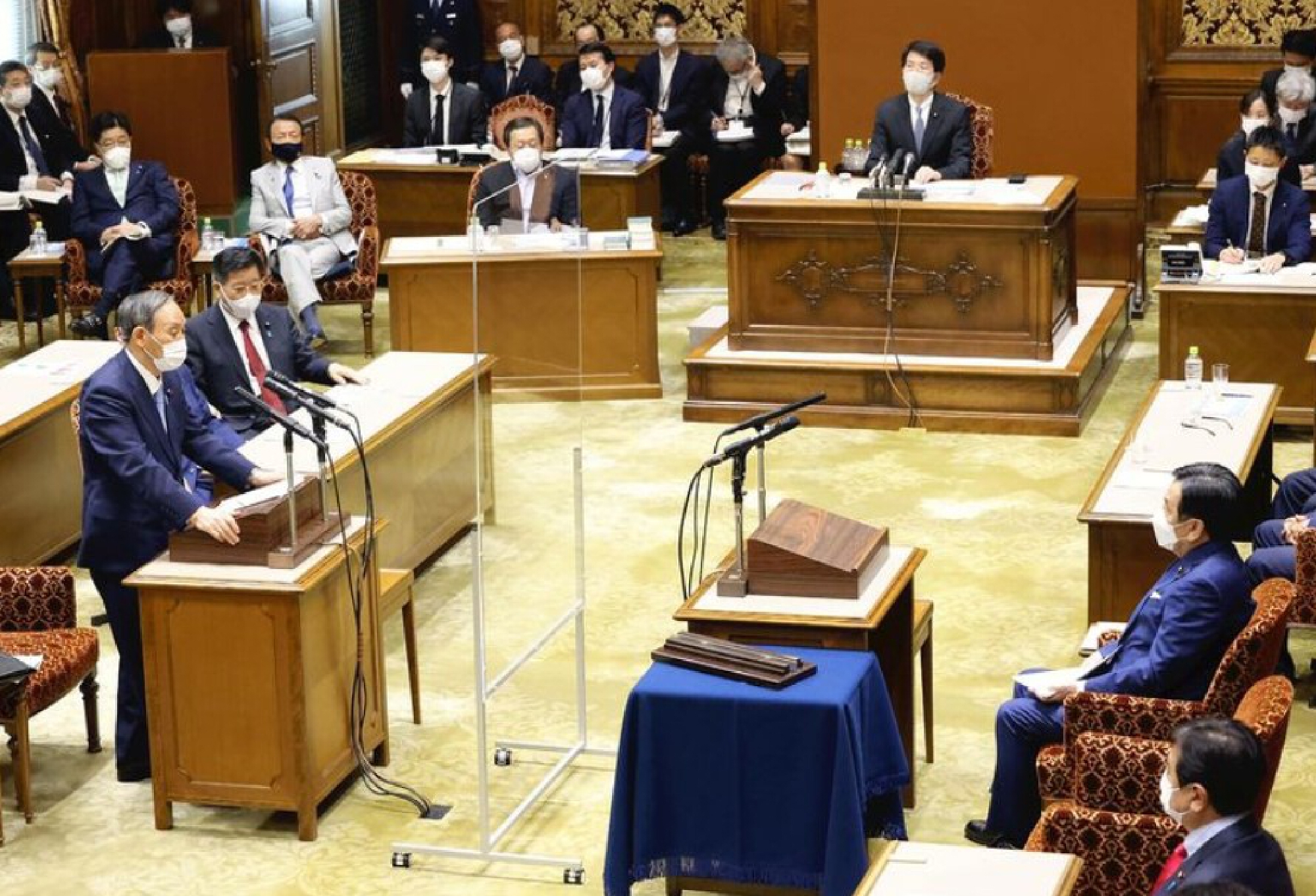
Prime Minister Yoshihide Suga said Wednesday vaccinations will be completed before the end of the year in a debate between the leaders of the ruling Liberal Democratic Party and opposition parties in the Diet, the first such debate in two years.

Suga: Vaccinations in Japan to be completed in autumn

“Vaccinations will be administered to everybody who wants to be vaccinated by October or November,” said Suga, who was participating in his first leaders’ debate since becoming prime minister last year.

Yukio Edano, leader of the Constitutional Democratic Party of Japan, and other opposition party leaders debated with Suga over issues such as government policy on the COVID-19 pandemic and the Tokyo Games, which are scheduled to start next month.

“We want to send a message that the world has been able to cope with and overcome the challenges of the coronavirus pandemic,” Suga said.

Edano debated with the prime minister for the first 30 minutes, after which the leaders of the other three main opposition parties had the stand for about 5 minutes each.

Published : June 10, 2021

By : The Japan News/ANN