Chinas Zhurong rover moves onto Martian surface to begin scientific operations
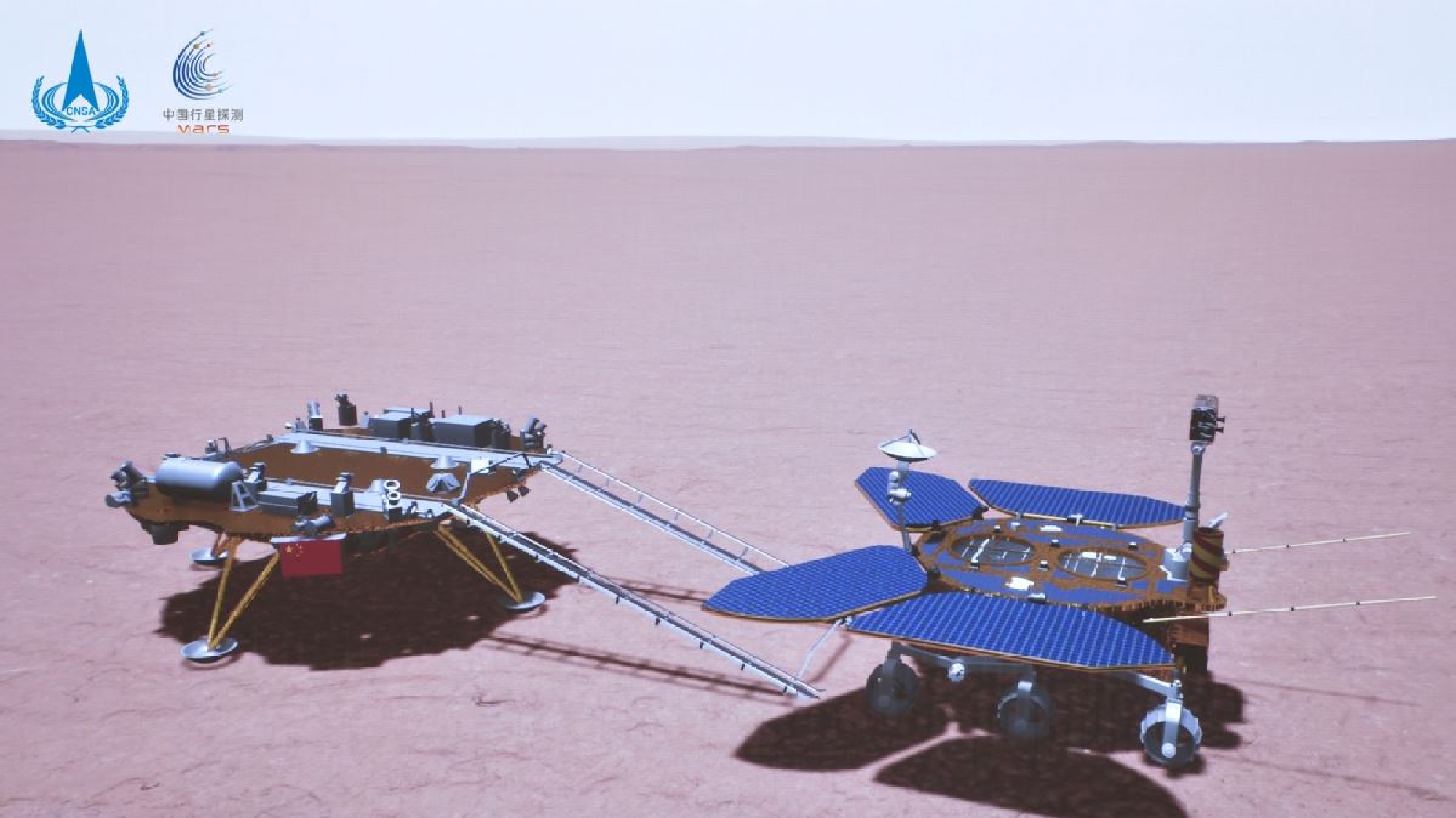
The Chinese Martian rover Zhurong moved from its landing platform onto the surface of the Red Plane at 10:40 am Saturday, starting its exploration around the landing site, according to the China National Space Administration.
The administration said in a statement on Saturday afternoon that according to data sent back to the ground control, the rover’s deployment was carried out safely and smoothly, adding that it has formally embarked on scientific tasks.
The 240-kilogram robot is tasked with surveying Mars’ landforms, geological structures, soil characteristics, locations of water and ice, atmospheric and environmental traits as well as magnetic, gravitational and other physical fields, the statement said.
Saturday’s deployment marked the beginning of a new challenging chapter in the Tianwen 1 mission, one of the most sophisticated space adventures mankind has ever attempted.
Before Tianwen 1, no country had ever tried to send an orbiter, a lander and a rover in one single expedition to Mars.
Tianwen 1’s landing capsule touched down on Mars on the morning of May 15, becoming the first Chinese spacecraft that has ever landed on another planet. President Xi Jinping called the probe’s arrival in Mars a landmark achievement in China’s space cause as it left the nation’s first mark on the Red Planet.
Named after an ancient Chinese god of fire, Zhurong is now about 320 million kilometers from Earth. It is the sixth rover on Mars, following five predecessors launched by the United States.
The 1.85-meter-tall machine is propelled by six wheels and powered by four solar panels, being capable of moving at 200 meters an hour on the Martian surface.
Developed by the China Academy of Space Technology in Beijing, major maker of Chinese spacecraft, Zhurong carries six scientific instruments including multispectral camera, shallow subsurface radar and meteorological measurer.
If the semi-autonomous vehicle functions efficiently, it will work for at least three months and undertake comprehensive surveys of the planet.
Sun Zezhou, chief designer of the Tianwen 1 probe, earlier said that a rover will have to overcome an array of difficulties on Mars, such as disturbances in sunlight reception and extreme weather, in order to survive and operate.
He said the Chinese rover has been programmed to inactivate under extreme circumstances and reactivate itself when it is safe to do so.
Tianwen 1, named after an ancient Chinese poem, was launched by a Long March 5 heavy-lift carrier rocket on July 23 from the Wenchang Space Launch Center in the southernmost island province of Hainan, kick-starting China’s first mission to another planet in our solar system.
Propelled by a mixture of 48 large and small engines, the spacecraft rocketed more than 470 million km and carried out four midcourse corrections and a deep-space trajectory maneuver before entering the orbit of Mars on Feb 10.
At that time, Mars was 193 million km from Earth. Because the two celestial bodies keep moving in their own orbits, a Mars-bound spacecraft must fly in a carefully calculated, curved trajectory to reach Mars.
On Feb 24, Tianwen 1 entered a preset parking orbit above Mars. The spacecraft was programmed to maintain that orbit for about three months to examine the preset landing site.
Tianwen 1 is the 46th Mars exploration mission since October 1960, when the former Soviet Union launched the first Mars-bound spacecraft. It followed the US’ Mars 2020 mission, which has already deployed a rover, named Perseverance, and the first Mars-based rotorcraft, called Ingenuity.
Only 19 Mars missions so far have been considered successful.
Eight Mars orbiters are in active service as well as three operational rovers-the US’ Curiosity and Perseverance and China’s Zhurong.
Myanmar ethnic army attacks jade mining town: Media
YANGON (REUTERS) – Forces of the Kachin Independence Army (KIA), one of the ethnic factions opposed to Myanmars coup, attacked military positions at the north-western jade mining town of Hkamti on Saturday (May 22), local media reported.
The attack marks an advance into new territory by the KIA at a time Myanmar has been plunged into chaos since the army seized power on Feb 1, detained elected leader Aung San Suu Kyi and cut short a decade of democratic reforms.
KIA fighters attacked an army post at Hkamti township in the Sagaing region early on Saturday, the Irrawaddy and Mizzima online publications said. Pictures showed columns of dark smoke rising from what they said was the scene of the attack.
KIA spokesman Naw Bu told Reuters he was aware of the attack but could give no details. Reuters was unable to reach a junta spokesman for comment on the reports.
“The fighting is still ongoing. I can still hear the gunshots,” Mizzima quoted one resident as saying.
It said the site attacked was near a mining venture that involves the military-owned Myanma Economic Holdings Ltd conglomerate.
Reuters was unable to confirm the reports independently.
Since the coup, open conflict resumed between the army and the KIA, which has been fighting for greater autonomy for the Kachin people for some six decades and has voiced support for anti-junta protesters.
Mizzima said the army was using jets in attacks on the KIA at Hkamti, a town on the Chindwin river in a remote region rich in jade and gold that lies about 50 km (30 miles) from the border with India.
The army has carried out numerous bombing attacks on KIA positions in recent weeks and has also clashed with ethnic armies in the east and west of Myanmar.
Security forces have killed at least 812 people since the coup, according to the Assistance Association for Political Prisoners activist group. The military disputes this figure and says at least two dozen members of the security forces have also been killed.
The army seized power alleging fraud in a November election won by Ms Suu Kyi’s National League for Democracy. The then electoral commission had rejected its accusations.
On Friday, local media quoted an official of the new electoral commission appointed by the junta as saying there was a plan to dissolve the NLD.
Singapores largest active Covid-19 cluster: What went wrong at Changi Airport?
SINGAPORE – In less than a month, the Covid-19 cluster at Changi Airport has swelled to more than 100 people, including airport workers whose jobs did not require them to interact with passengers, family members of front-line staff and visitors.
It is now the largest active cluster in Singapore, and accounts for four of the 30 new community cases reported on Friday (May 21).
Stringent measures – including strict limits on social gatherings and proactive testing of airport staff – are currently in place to ring-fence the cluster and prevent further transmission in the wider community.
But how did Singapore land itself in this situation?
Border controls
In early April, Covid-19 cases in India began to rise, leading to questions being raised about whether Singapore should take pre-emptive measures to stop flights from the country.
On April 22, the country announced it would ban all long-term pass holders and short-term visitors who had travelled to India in the past 14 days. A week later, these restrictions were extended to four neighbouring countries: Bangladesh, Nepal, Pakistan and Sri Lanka.
But by then, the new, more transmissible B1617 strain had already made significant inroads here.
As an outward-looking country with a globalised economy, highly dependent on workers from abroad for several key industries, Singapore took “the strategic decision to remain open as long as possible”, noted Associate Professor Natasha Howard from the National University of Singapore’s Saw Swee Hock School of Public Health.
It was therefore to be expected that some cases would be imported even with rigorous border control measures, given how differently the virus has been controlled in many countries, she said.
In other words, cutting off flights from high-risk countries would simply have delayed the inevitable, said Associate Professor Jeremy Lim, also from the Saw Swee Hock School.
Even so, this delay could have been crucial in “bolstering the bulwarks”, Prof Lim added. “Could we have closed off for a short period, to review and tighten our defences?”
Associate Professor Hsu Li Yang, vice-dean of global health at the school, also pointed out that the World Health Organisation and other agencies classified the B1617 strain as a variant of concern only in early May, after the infections in Singapore had occurred.
“I think hindsight is 20/20 here,” he said. “Although the overwhelming outbreak in India – and perhaps more importantly, the displacement of all other variants in India by this variant – would have signalled that greater caution was necessary here.”
Spreading the virus
Phylogenetic test results from an initial batch of infected airport workers found that they had the B1617 variant, and were similar enough that they pointed to a common source of infection.
Early signs suggest that this initial transmission could have occurred through an airport worker who had assisted a family from South Asia, said the Civil Aviation Authority of Singapore and Changi Airport Group in a joint statement on Friday (May 21). The family later tested positive for the virus.
It remains unclear exactly how the virus subsequently spread to other workers and members of the public, although doctors have pointed to the air-conditioned environment as a possible contributing factor.
Some infected workers having their meals in the Terminal 3 foodcourt could also have exposed other diners to the virus.
In addition, the airport has segregated the immigration halls, baggage belts and toilets used by incoming passengers from different risk categories, suggesting that these areas may also be suspect.
As the more transmissible Covid-19 variants appear able to spread in such enclosed spaces despite existing infection prevention and control protocols, these measures may need to be enhanced, Prof Howard said.
It is also possible that the current polymerase chain reaction tests may not have picked up some infections caused by virus variants, added infectious diseases expert Paul Tambyah, president of the Asia Pacific Society of Clinical Microbiology and Infection. “That may have contributed to silent transmission by people who may have tested negative, but had actually been infected,” he said.
The discomfort of working long hours in personal protective equipment – including N95 masks, face shields and medical gowns and gloves – may also have increased the likelihood of lapses in infection control measures, said Dr Leong Hoe Nam, another infectious diseases expert from Rophi Clinic.
“I have trouble myself… Wearing full headgear without a break is extremely challenging,” he said. “Hence, implementation and practicality is a big concern.”
All the experts stressed the importance of vaccination in helping to keep cases mild and the cluster under control, with Professor Teo Yik Ying, dean of the Saw Swee Hock School, summing it up as follows: “I believe the outbreak among airport front-line workers would be bigger, if not for the fact that many of these workers have already been vaccinated.”
Plugging the gaps
What can Singapore now do to plug the gaps in its defences that the Changi Airport cluster has revealed?
First, employers should ensure that front-line workers are properly trained and equipped for their tasks. Unvaccinated staff should also be redeployed to less risky environments, especially if they are elderly.
“We would not send partially or untrained soldiers into battle,” Prof Lim said. “The parallel here would be whether our front-line staff – like airline staff, cleaners and immigration officers – are adequately trained and resourced for the pivotal roles they play.”
Importantly, such workers should have access to “good quality standardised occupational health services which encourage them to get tested for all infectious diseases”, Prof Tambyah added. In particular, they should be able to take medical leave without being penalised, he said.
Next, those reviewing the cluster should look beyond the individual, scrutinising instead the complex systems involved in stopping viruses from spreading.
As the healthcare sector has learnt, the design and engineering of buildings and work processes are equally important as, if not more than, the individual’s role in preventing infection, Prof Hsu said.
Lastly, Singapore has to remain open to the fact that new gaps will emerge, and be poised to adapt quickly to these challenges.
Dr Arpana Vidyarthi, an academic hospitalist with the University of California in San Francisco, pointed out that blind spots exist and will continually evolve.
“Our systems are complex and adaptive – we fix one hole, and another reveals itself,” said Dr Vidyarthi, an American specialist physician who worked in leadership positions at Duke-NUS Medical School and the National University Hospital for eight years before returning to the United States. “The key is to expect them, keep fixing them, and continually search for new ones.”
Although the new variants are more transmissible, they are not impenetrable, she said, adding that Singapore has one of the most advanced public health infrastructures in the world. “Trust the experts, there are many of them.”
Added Prof Teo: “Despite the best planning and forward planning, there will be new gaps that emerge and we will need to remain agile.”
This is why the country has not eased off on measures such as mask wearing and social distancing, and continues to encourage Singaporeans to work from home to some degree, he said.
“We know that there will be the inevitable spillovers from time to time, and we need to minimise the chance that these spillovers result in an uncontrollable community outbreak.”
Calls grow for another state of emergency extension
The declaration of a novel coronavirus state of emergency in Okinawa Prefecture from Sunday through June 20 increases the list of prefectures under emergency measures to 10, including Tokyo and Osaka. The emergency period is scheduled to end on May 31 in all of the prefectures except Okinawa, but there have been calls in the government to push back the deadline again, possibly until June 20.
Osaka has begun coordinating views on another extension. “The situation continues to be extremely harsh. The current state of affairs does not warrant a discussion on ending the state of emergency,” Osaka Gov. Hirofumi Yoshimura said on Friday.
The governors of Tokyo, Saitama, Chiba, and Kanagawa prefectures held a teleconference on the day to share opinions on what action to take when the state of emergency period ends.
Speaking to reporters on Friday, Prime Minister Yoshihide Suga said, “I will keep a close eye on the infection situation and make a decision at the end of this month.”
There have been calls for the emergency period to be pushed back to June 20, the same day the state of emergency is scheduled to end in Okinawa.
The government will hold discussions with its COVID-19 subcommittee of experts next week on the matter.
As there has been no considerable improvement in the infection situation, “Another extension is inevitable,” said a senior government official.
The central government’s decision-making has been influenced by experts and local government officials who attach importance to the impact of a state of emergency declaration.
The central government was not in favor of the proposal to declare an emergency for Okinawa Prefecture when it received a request on Wednesday, because the prefectural government had not asked eateries and bars to stop serving alcohol even though priority measures had been in place since April 12.
“It has not taken even the minimum required measures that are being implemented in other districts,” a senior government official said.
However, experts called for a state of emergency to be declared for the prefecture, believing that the declaration would serve as a “strong message” to Okinawans, with the infection situation at its most severe level, according to several indicators.
The government fears the impact of the state of emergency could be weakened if the areas subject to the declaration increase or the emergency period is extended repeatedly.
On May 14, the central government tried to avoid declaring a state of emergency for Hokkaido and two other prefectures, but the COVID-19 subcommittee was against the move.
It accepted Okinawa’s request for a state of emergency on the condition that the prefectural government asks local restaurants and bars to refrain from serving alcohol.
Seven of the 10 prefectures under a state of emergency had measures upgraded from quasi-emergency priority measures.
Yasutoshi Nishimura, the minister in charge of coronavirus measures, said that “the priority measures had had recognizable effects.”
However, Miyagi and Ehime are the only prefectures where the measures have been or are to be lifted after success was achieved in curbing infections.
Samsung Biologics signs vaccine production deal with Moderna
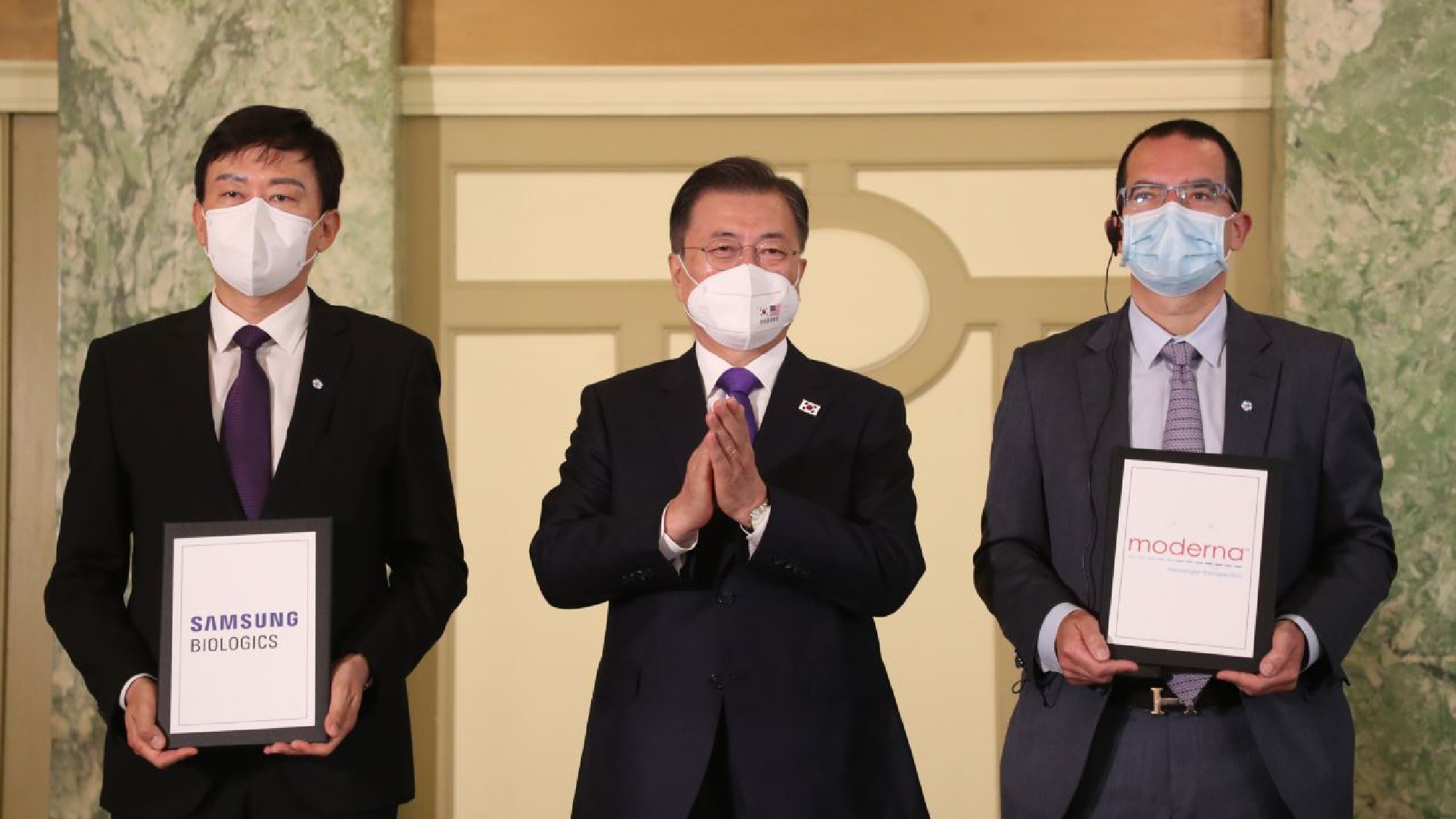
WASHINGTON/SEOUL — Samsung Biologics, a South Korean biopharmaceutical firm, signed a deal Saturday to manufacture Modernas COVID-19 vaccine at its local factory.
Under the agreement, the biotech unit of Samsung Group will provide the US drugmaker with contract manufacturing organization (CMO) services for its mRNA vaccine. It means that some of the Moderna vaccine would be produced in South Korea.
The two sides signed the contract during a South Korea-US vaccine partnership event held in Washington, D.C., with President Moon Jae-in attendance. Also present were John Rim, CEO of Samsung Biologics, and his Moderna counterpart Stephane Bancel, along with Stanley Erck, CEO of Novavax, another American vaccine production company.
The deal is expected to contribute to the stable and speedy supply of the Moderna vaccine in South Korea, according to Moon’s office, Cheong Wa Dae.
Moon pledged his government’s full support for the vaccine developers and manufacturers, citing the nation’s goal of emerging as a “global vaccine production hub.”
Moon pointed out that he and US President Joe Biden agreed to establish a comprehensive global vaccine partnership between the allies during their summit talks the previous day.
The president described it as a “vaccine alliance” to help combine the original technologies of the US and the drug production capability of South Korea.
AstraZeneca, Novavax and Sputnik V vaccines are already being manufactured in the country.
Moderna also signed a memorandum of understanding (MOU) with South Korea’s Ministry of Trade, Industry and Energy and the Ministry of Health and Welfare.
Under the MOU, Moderna agreed to strive for investments in the mRNA vaccine production facility and hiring of manpower in South Korea. The ministries plan to offer support for Moderna’s investment and business activities.
South Korea’s National Institute of Health also signed an MOU with Moderna on strengthening cooperation on research into infectious diseases.
Separately, the health ministry signed a trilateral MOU with SK Bioscience, a South Korean biotechnology company, and Novavax on the development and production of vaccines. (Joint Press Corps)
Recent studies from Thailand, Indonesia and Chile have affirmed the efficacy of a COVID-19 vaccine produced by Chinas Sinovac Biotech.
Anew study conducted by Thailand’s Chulalongkorn University showed that 99.49 percent of Thai recipients of the vaccine, known as CoronaVac, had developed antibody responses four weeks after their second shots, the Bangkok Post reported.
Three weeks after the first shot, around 66 percent of the recipients had developed immune responses, according to the Center of Excellence in Clinical Virology of the Faculty of Medicine at the university.
“Two doses of CoronaVac were immunogenic in vaccinated volunteers,” said Yong Poovorawan, head of the center, noting that the result is consistent with the preliminary findings previously reported in medical journal The Lancet Infectious Diseases last year, which found that the Chinese vaccine can induce a quick immune response.
The Chinese embassy in Thailand said China donated a new batch of 500,000 doses of Sinovac’s vaccine to Thailand on Monday. Since the first batch of Chinese vaccines arrived on Feb 24, China has provided 4.5 million doses of China-made vaccines to Thailand.
An additional 1.5 million doses are expected to arrive in Bangkok soon, according to the embassy.
Tang Zhimin, director of China ASEAN Studies at the Panyapiwat Institute of Management in Bangkok, said the supply from China is “substantial and timely” for the ambitious vaccination plan proposed by the Thai government.
“Thailand was the first ASEAN country to import Sinovac jabs on a commercial basis,” Tang told China Daily. “The support from China to Thailand during the pandemic contributes to bilateral ties.”
Earlier, a study by the Indonesian Health Ministry showed that CoronaVac had effectively reduced the risk of COVID-19 symptoms in medical workers by 94 percent.
The study, from Jan 13 to March 18, involved 128,290 medical workers who were not infected with COVID-19, according to the research team’s head Pandji Dhewantara. The study’s conclusion was made after those medical workers received their second dose.
The study also concluded that the Sinovac vaccine was 96 percent effective in protecting medical workers from hospitalization resulting from COVID-19 infection, and 98 percent effective in preventing deaths from the virus.
In Santiago, Chile’s Health Ministry said an updated study showed CoronaVac is 65.3 percent efficacious in preventing COVID-19.
Despite the COVID-19 variants in circulation, Rafael Araos, an adviser to the Undersecretariat of Public Health, said on Monday that “the vaccine is performing adequately”.
The vaccine’s efficacy in preventing hospitalization rose to 87 percent; in preventing admission to an intensive care unit, to 90.3 percent; and in preventing deaths caused by COVID-19, to 86 percent, Araos said.
In a midnight drama, Nepal President dissolves House and calls polls for November 12 and 19
After failing to get reappointed as prime minister, KP Sharma Oli repeats his December 20 move, taking the country towards elections amid the raging Covid-19 pandemic.
President Bidya Devi Bhandari on Friday night dissolved the House of Representatives and announced mid-term elections for November 12 and 19.
A midnight Cabinet meeting had made the recommendation to dissolve the House.
The move followed a notice from the Office of the President that it could apppoint neither KP Sharma Oli, the incumbent prime minister, nor Sher Bahadur Deuba, Nepali Congress president, as claims made by both to form a new government were insufficient.
In a notice issued at around 2am, the Office of the President said Bhandari dissolved the House of Representatives as per Article 76 (7) and declared elections in two phases—on November 12 and November 19—on the recommendation of the Council of Ministers.
This is the second time the House was dissolved in five months. On December 20 last year, Oli had suddenly dissolved the House and called for snap polls for April 30 and May 10, throwing the country into political uncertainties. However, the Supreme Court overturned his decision on February 23, calling it unconstitutional.
But a dramatic verdict by the Supreme Court on March 7, the day the meeting of the restored House was scheduled, revived the CPN-UML and the Communist Party of Nepal (Maoist Centre), invalidating the Nepal Communist Party (NCP), which the two parties had formed in May 2018. That led to more political confusion.
Oli tried his best to justify that the House had become irrelevant. He, however, ignored calls from opposition parties to step down.
Oli’s Machiavellian tricks continued and President Bhandari played complicit roles.
Oli on Thursday attacked the constitution one more time and made Sheetal Niwas initiate the process for forming a new government under Article 76 (5)—without resigning or going for the constitutionally mandated floor test after being reappointed the prime minister under Article 76 (3).
The President complied and gave the parties until Friday 5pm to stake their claim to a new government.
But in a spectacular display of brinkmanship, Oli himself reached out to the President to demand that he be appointed prime minister again.
Earlier in the day, the Congress-led alliance, backed by the Communist Party of Nepal (Maoist Centre), a section of the Janata Samajbadi Party and the Madhav Nepal-Jhala Nath Khanal faction of the CPN-UML, presented the signatures of 149 lawmakers, requesting President Bhandari to appoint Deuba as new prime minister.
But Oli too presented his claim before the President, saying he had the support of 153 lawmakers and that he be appointed the prime minister.
President Bhandari on Thursday, on the recommendation of the government, had invoked Article 76 (5) for the formation of a new government.
In a statement late on Friday night, the Office of the President said though Oli had claimed to have the backing of 121 lawmakers from the CPN-UML and 32 from the Janata Samajbadi Party, 26 lawmakers of the UML had signed the letter presented by Deuba to stake claim to the new government.
According to lawyers, Oli’s claim was not legitimate and it made a mockery of the constitution, parliamentary system, democracy and the rule of law.
Shambhu Thapa, a senior advocate, said the incumbent prime minister cannot make a claim to form a new government under Article 76 (5).
“It is for any member of the Parliament… who needs to prove a majority to form a government,” Thapa told the Post. “Our constitution is clear on this. Oli cannot claim the post of prime minister under Article 76 (5) as he has already been unseated as per Article 100(2) and Article 100 (3) after he refused to go for a floor test.”
Oli was reappointed prime minister on May 13, four days after he lost a confidence vote in Parliament, under Article 76 (3) as the leader of the party which has the highest number of members in the House.
Constitutional provisions required Oli to secure a vote of confidence within 30 days from the date of his appointment. But instead of following the mandatory constitutional process, Oli went on to make an unconstitutional move to request the President to invoke Article 76 (5), robbing the House of its prerogative.
In a statement on Thursday, the Office of the President said since the prime minister believes there is no political ground to secure a trust vote, the government has recommenced invoking Article 76 (5). Hence, the Office of the President gives until 5pm Friday to stake claim to a new government, the statement read.
Analysts wondered how a prime minister who a day ago said he lacked the votes to win the House confidence suddenly garnered the support of 153 lawmakers. And if he had the support of those many lawmakers, why did he trample upon the constitution to ask the President to invoke Article 76 (5), according to them.
Earlier on Friday, hours before he claimed before the President to have the support of 153 lawmakers, Oli, at a press conference, which was broadcast live, said that he had paved the way for the formation of a new government because there was no condition for him to win the trust vote. The Post was not invited to the presser.
Opposition parties expressed doubts how Oli had gone on to claim that he had the support of 153 lawmakers—27 more than their required number to win the trust vote. They described Oli’s Friday move as exceptional, illegal, unconstitutional and politically incorrect.
“When Oli recommended that the President initiate the process to form a new government, it was a clear admission that he was not able to secure a vote of confidence,” said Ramesh Lekhak, a Congress leader. “If Oli again goes to stake his claim to the new government, it is wrong politically, constitutionally, legally and morally.”
Moral grounds, however, do not seem to mean much for Oli, as had he followed that principle, it would have required him to step down in February—when the Supreme Court overturned his December decision to dissolve the House, calling it unconstitutional.
Constitutional experts say both the prime minister and the President colluded to trick everyone. Though the statement from the President gives a sense that a call has been made to form a new government under Article 76 (5), it goes on to call for forming a new government under Article 76 (2) based on Article 76 (5).
Though Article 76 (5), in essence, is an extension of Article 76 (2), there is a fundamental difference, according to the experts.
While Article 76 (2) calls on any party to seek to form a government with the support of two or more parties, Article 76 (5) calls on an individual lawmaker to do so with the support of the majority lawmakers.
When a party stakes its claim to the government under Article 76 (2), according to experts, the decision of the Parliamentary Party is as good as the decision of all the lawmakers of the concerned party. But in case of Article 76 (5), a lawmaker who wants to claim the government leadership must prove that he has the support of individual lawmakers, and a party whip is not applicable in this case.
Oli presented his claim to lead the government with signatures of his, as he is the party chair and leader of the UML Parliamentary Party; Rajendra Mahato, who is the Parliamentary Party leader of the Janata Samajbadi Party, and Mahantha Thakur, chair of the Janata Samajbadi. On this basis, he claimed to have the support of 153 lawmakers—121 from his party and 32 from the Janata Samajbadi.
But the Upendra Yadav-Baburam Bhattarai faction of the Janata Samajbadi stood against Oli and its 13 lawmakers threw their weight behind Congress President Deuba, by providing their signatures to him.
“It’s a given that President Bhandari has been complicit in Oli’s unconstitutional actions over the years,” said Raju Chapagain, chairperson of the Constitutional Lawyers’ Forum. However, in essence, the call to form a new government was under 76 (5), he added.
The opposition alliance claimed that it presented the signatures of 149 lawmakers, unlike Oli, who said he had the “support” of 153 lawmakers.
The situation itself was impossible in a parliamentary system, as the total number of lawmakers exceeds the strength of the House, which has 271 members, including the Speaker.
Oli’s political drama comes at a time when the coronavirus pandemic has engulfed the country. When Oli was reappointed on May 13 even after losing the confidence vote, political parties and analysts had said it would be better for him to focus on the fight against Covid-19, which has claimed 6,024 lives so far.
Nepal on Friday reported 8,407 new Covid-19 cases. The Health Minister said 177 deaths were reported from across the country. The number of active cases stands at 116,192.
The country currently has no stock of vaccines to inoculate its population.
Hospitals have been turning away patients for the lack of beds and oxygen. Nepalis at home and abroad have been filing online petitions to call on the global powers to provide Nepal with vaccines, oxygen, therapeutics and other medical supplies.
The Oli government has faced widespread criticism for its poor handling of the pandemic.
Only on Friday, the United Nations in Nepal called for international support to fight the pandemic.
Oli, however, after his reappointment on May 13, stoked a political storm, taking the focus away from the pandemic.
Experts, however, say who remains the prime minister is not the question, rather the question is whether both the implementer and the protector of the constitution maintain the dignity of the country’s top law.
“Oli is clearly playing the games of deceit and trickery and the President, as she has been in the past, is complicit with him,” said Thapa, the senior advocate. “What they are doing is tantamount to committing fraud.”
PH, China agree on importance of dialogue to ease West PH Sea tension — DFA
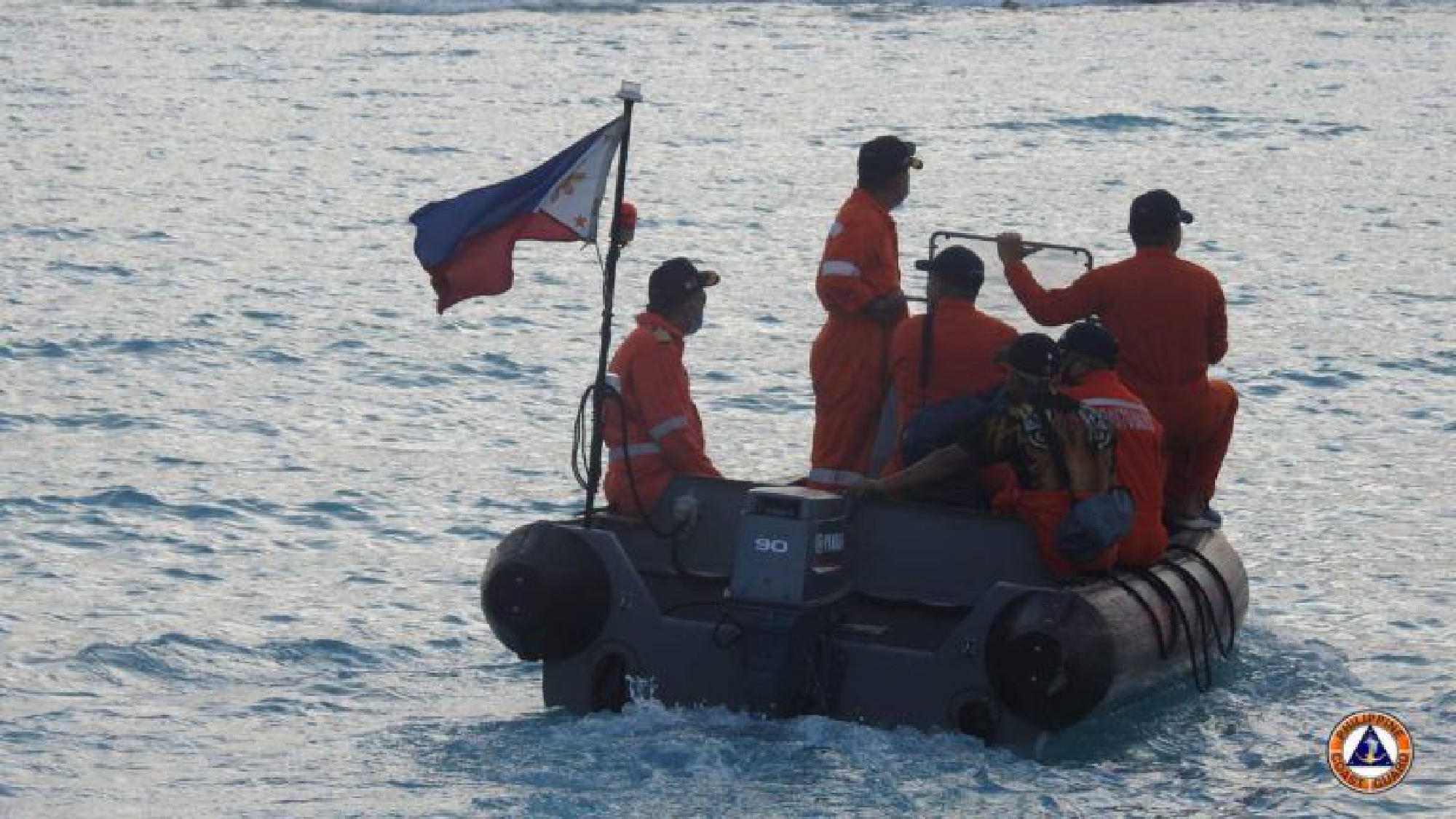
MANILA, Philippines — The Philippines and China have agreed on the importance of holding dialogues on territorial disputes in the West Philippine Sea (WPS) to deescalate tension over the disputed waters.
The Department of Foreign Affairs (DFA) said there were “friendly and candid exchanges” on the situation and concern over the WPS during the sixth meeting of the Bilateral Consultation Mechanism on the South China Sea (BCM) held on Friday.
The BCM is a bilateral forum formed by President Rodrigo Duterte and Chinese president Xi Jinping during their 2016 meeting.
“There was mutual recognition of the importance of dialogue in easing tensions and understanding each country’s position and intentions in the area. Both sides acknowledged the importance of addressing differences in an atmosphere of openness and cordiality to pave the way for practical cooperation and initiatives,” DFA said in a statement on Saturday.
“The Philippines reiterated its long-standing call for full respect and adherence to international law, including the 1982 United Nations Convention on the Law of the Sea (UNCLOS) and its authoritative interpretation and application – the final and binding 2016 South China Sea Arbitral Award,” it added.
The recent talks on the WPS came after the National Task Force on the West Philippine Sea (NTF-WPS) reported the presence of over 200 Chinese boats last March near the Julian Felipe Reef, which is well within the country’s exclusive economic zone.
Former Supreme Court Senior Associate Justice Antonio Carpio has urged President Duterte to bring forward the Permanent Court of Arbitration (PCA) ruling in 2016, which invalidated China’s nine-dash line claim.
Duterte, however, reiterated that bringing up the ruling would only trigger conflict with China.
Aside from Acting Undersecretary for Bilateral Relations and ASEAN Affairs Elizabeth Buensuceso and Chinese Assistant Foreign Minister Wu Jianghao, several other officials participated in the talks.
The Philippine delegation included officials from the Bureau of Fisheries and Aquatic Resources (BFAR), Department of Environment and Natural Resources (DENR), National Security Council (NSC), Department of National Defense (DND), Philippine Coast Guard (PCG), Department of Justice DOJ) and other agencies.
Another issue that, according to DFA, was discussed, was progress of the settlement for fishermen of the fishing boat Gem-Ver, which sank after a collision with a Chinese boat.
The sinking of Gem-Ver became controversial as local authorities reported that the crew of the Chinese vessel did not try avoid the collision — aside from the fact that the Filipino fishermen were abandoned at sea and were rescued by Vietnamese counterparts.
“Encouraged by the positive momentum in the bilateral relations of the two countries, the three working groups of the BCM (political-security, fisheries cooperation, and marine environmental protection/marine scientific research) tackled common issues and possible areas of cooperation,” the DFA added.
Pfizer Covid-19 vaccine safe, effective for those aged 12 to 15, says expert committee responding to open letter from some doctors
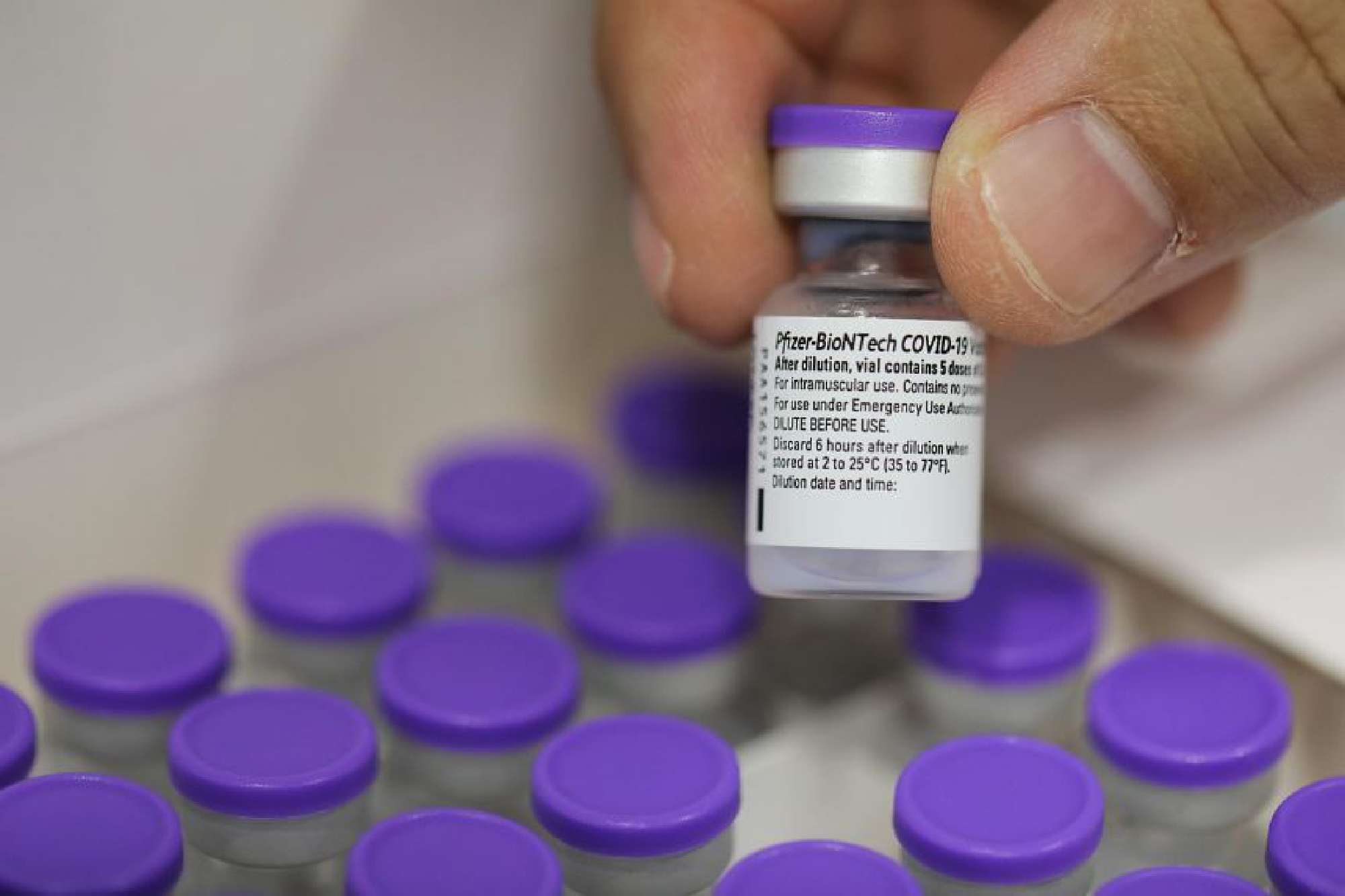
SINGAPORE – The Pfizer-BioNTech vaccine is safe and effective for children aged 12 to 15, said the Expert Committee on Covid-19 Vaccination on Friday night (May 21), in response to an open letter penned by some doctors which was later retracted.
“The Pfizer-BioNTech vaccine is currently the only Covid-19 vaccine anywhere in the world that has been authorised for use in adolescents aged 12 to 15 years,” the committee said.
“The safety profile of the vaccine is consistent with the known safety profile in the adult population and the standards set for other registered vaccines used in the immunisation against other diseases,” it said.
On Thursday night, 12 doctors posted an open letter calling for children to be given traditional Covid-19 vaccines instead of mRNA ones.
Singapore currently uses two vaccines – Pzifer-BioNTech and Moderna. Both use mRNA technology which gets cells to make a protein piece on its surface that triggers an immune response.
The Health Sciences Authority (HSA) is still studying the Sinovac vaccine, which is made using a traditional method where killed virus is used. The body recognises this and mounts an immune response.
Eleven of the 12 doctors later retracted the letter, saying that “some of our thoughts may be misunderstood by some laypersons. We will henceforth, ponder in a more professional and private forum”.
The open letter was posted on the HardwareZone forum and also appeared in at least one Telegram chat on vaccination. The retraction appeared in some chats and was confirmed by Dr Paul Yang, the author of the letter.
Dr Yang, a general practitioner, told The Straits Times: “The letter was posted prematurely. It is a letter of advice to my church parents’ group. The technical issues are unfortunately too complicated, but accurate factually.”
The open letter, which was addressed to “all parents deciding to vaccinate or not to vaccinate their child”, caused concern among some parents of young children, especially as two of the doctors who signed it had also signed an open letter in February last year urging people to wear masks when going out – about two months before it was made mandatory here.
In its response on Friday, the Expert Committee on Covid-19 Vaccination said it had recommended that the Pfizer vaccine be used among those aged 12 to 15 years following HSA’s approval.
“Our assessment remains that the Pfizer-BioNTech vaccine is safe and efficacious for this age group. There is currently no credible evidence of a inactivated virus vaccine demonstrating a high vaccine efficacy and safety profile among this age group,” it said.
The statement said the committee had noted the contents of the open letter and that 11 of the 12 doctors have retracted their statement.
The committee said the Singapore population, including adolescents, continue to remain at risk of infection and onward transmission to their close contacts.
“This is seen in the recent local cases and outbreaks involving schoolgoing children who had been infected with Covid-19 and transmitted it to their family members and schoolmates,” it said.
While the international experience is that Covid-19 appears milder in the younger age groups, there remains a risk of complications and long-lasting symptoms in children and adolescents.
“The expert committee therefore recommends that with the availability of a safe and efficacious vaccine, all eligible persons should receive the vaccine to attain as high a population coverage of Covid-19 vaccination as possible.”
Responding to what was in the open letter, the committee said: “Covid-19 vaccines cannot alter your DNA. The Pfizer-BioNTech Covid-19 vaccine comprises messenger RNA (mRNA) that contains the instructions to enable the vaccine recipient to build a protein component of the Sars-CoV-2 virus (“spike protein”).
“The spike protein does not cause infection, but is recognised by the body’s immune system as foreign. The body then mounts an immune response and produces antibodies that protects against future infection by the virus. The vaccine mRNA is broken down by the body rapidly after the spike protein is built. The mRNA is unable to produce more copies of itself, and cannot enter the nucleus of the human cells where human genetic material (“DNA”) is stored.
“Since the human genome is made up of DNA, it is not biologically plausible for the vaccine mRNA to be integrated or to interfere with the DNA of the vaccine recipient.”
The chairman of the expert committee, Associate Professor Benjamin Ong, added that the vaccine was assessed to be safe and effective for the 12-15 age group “after careful assessment and deliberation of the available clinical data”. “There is no inactivated Covid-19 vaccine approved for use in children yet.”
The committee said that with more than 200 million doses of the Pfizer vaccine used worldwide, “there is currently no evidence for rare but serious effects of the Pfizer-BioNTech Covid-19 vaccine beyond anaphylaxis”. Anaphylaxis is a severe allergic reaction that can kill unless treated promptly.
The committee and HSA will continue to monitor and review evidence and information that emerge from further ongoing studies on long-term safety and efficacy, it said.
“Singapore remains at risk of a surge in cases and it is therefore important that we achieve as comprehensive a coverage of Covid-19 vaccination as possible across the entire population. We strongly encourage all persons who are medically eligible to be vaccinated when the vaccine is made available to them.”
Some doctors and scientists said they were aghast at what was put out in the open letter.
Professor Ooi Eng Eong of Duke-NUS Medical School, an expert on emerging infectious diseases who has been involved in developing an mRNA vaccine, said their argument is “pseudoscience” and based on “a lot of misunderstanding of molecular biology and immunology”.
He said: “The development of mRNA vaccine, although rapid, was based on more than 20 years of painstaking research. This vaccine technology was not assembled in a hurry. Instead, the world was fortunate that this technology matured at a time when it was needed most.”
Dr Desmond Wai, a gastroenterologist in private practice, took exception to the open letter because “as a doctor, if I have an academic question, I should ask the Ministry of Health (MOH), or the experts, directly – especially if my viewpoint/interpretation is different from the mainstream”.
He added: “Giving an opinion in the public domain causes confusion to the public. I am aware that as a doctor, the public will take my opinion seriously. So all the more I should be careful when I give opinions in public.”
Dr Kenneth Lyen, a paediatrician in private practice, also disagreed with several of the points raised in the letter. He said: “We are all concerned about the safety and efficacy of vaccines. Life is full of risks and balances. It is safer to be vaccinated than to cross a Singapore street. The choice is yours.”
Debunking the open letter
Prof Ooi and Dr Lyen also debunked some of the points raised in the letter about why children should not be given the mRna vaccines.
• The letter referred to an article by authors from three universities in the United States (Whitehead Institute for Biomedical Research, Harvard University and Massachusetts Institute of Technology) published in the Proceedings of the National Academy of Sciences of the United States last year, and noted that “mRNA themselves are very fragile in the human body and are easily attacked by ribonucleases that are distributed very widely in our body”.
It also said: “Reverse transcriptase, which converts RNA to DNA, is very troubling. It is not naturally found in our body but becomes readily available if you are very sick with a chronic virus, like hepatitis B.”
Prof Ooi said that if that statement were true, “persons living with HIV and hepatitis B would have their entire genome scrambled by the virus”.
“Whole human genome sequencing, which is now increasingly common, would have discovered dengue and other RNA virus genome being incorporated into the DNA of these persons. This has never happened.”
Dr Lyen added: “The vaccine mRNA degrades within a short period of time, and the integration risk is considered negligible.”
• The letter stated that “mRNA vaccines do not stop adults from transmitting Covid-19 variants of concern. We can assume that this will also be the case with children”.
Prof Ooi said several studies have consistently found that mRNA vaccination reduces the rate of transmission. The same should apply to children.
Dr Lyen added: “No vaccine is 100 per cent protective. Therefore, some vaccinated individuals can still catch Covid-19, and spread it to others. If both adults and children are protected against Covid-19, they are less likely to catch Covid-19, and therefore the virus will not replicate in the body, and if there is no replication, there is no chance of mutations.”
• The letter said “it is not very wise to try on Singaporean children novel mRNA technology when they do not really need it and it does not effectively stop them from becoming vectors”. It also said: “The good news is that children are doing amazingly well, without any Covid-19 vaccines.”
Prof Ooi said vaccines “are not being tried in children”. They are licensed for use in children after clinical trials have proven them to be safe, he said.
Dr Lyen added: “While children may not be so seriously affected, in that they do not usually require intensive care, they can still fall quite seriously ill. The statement also overlooks another important reason for vaccination, and that is to prevent spread to other members of the family and to other people in contact with them.”
• The letter said “killed-virus technology has been around for decades and has a very long and safe track record. For mRNA, long-term side effects are unknown and unstudied. This point is supported by all experts”.
Prof Ooi disputed this. While killed-virus vaccines are an older technology, such vaccines have “been associated with the development of severe disease in those vaccinated”, he said.
One such vaccine was developed to prevent respiratory syncytial virus, a common childhood respiratory illness. Development of that vaccine in the 1960s was stopped because it caused more severe disease.
Although Singapore has bought, and received, the more traditional Sinovac vaccine, it has not been approved for use here, as information on its safety and effectiveness has not been sufficient for HSA, the regulator.
• The letter said “we have no evidence that the mRNA vaccines are safe in the longer term (10 to 20 years)”.
Dr Lyen said: “If the risk of not vaccinating and getting Covid-19 results in severe long-term illness and even death, then one should vaccinate. Medical science progresses at incredible speed, so we should not worry about what happens 10 to 20 years later. We will deal with future problems if and when they arise.”
Added Prof Ooi: “There is absolutely no evidence to support the notion that there are vaccines that can cause problems 10 to 20 years after vaccination. This is a myth.”
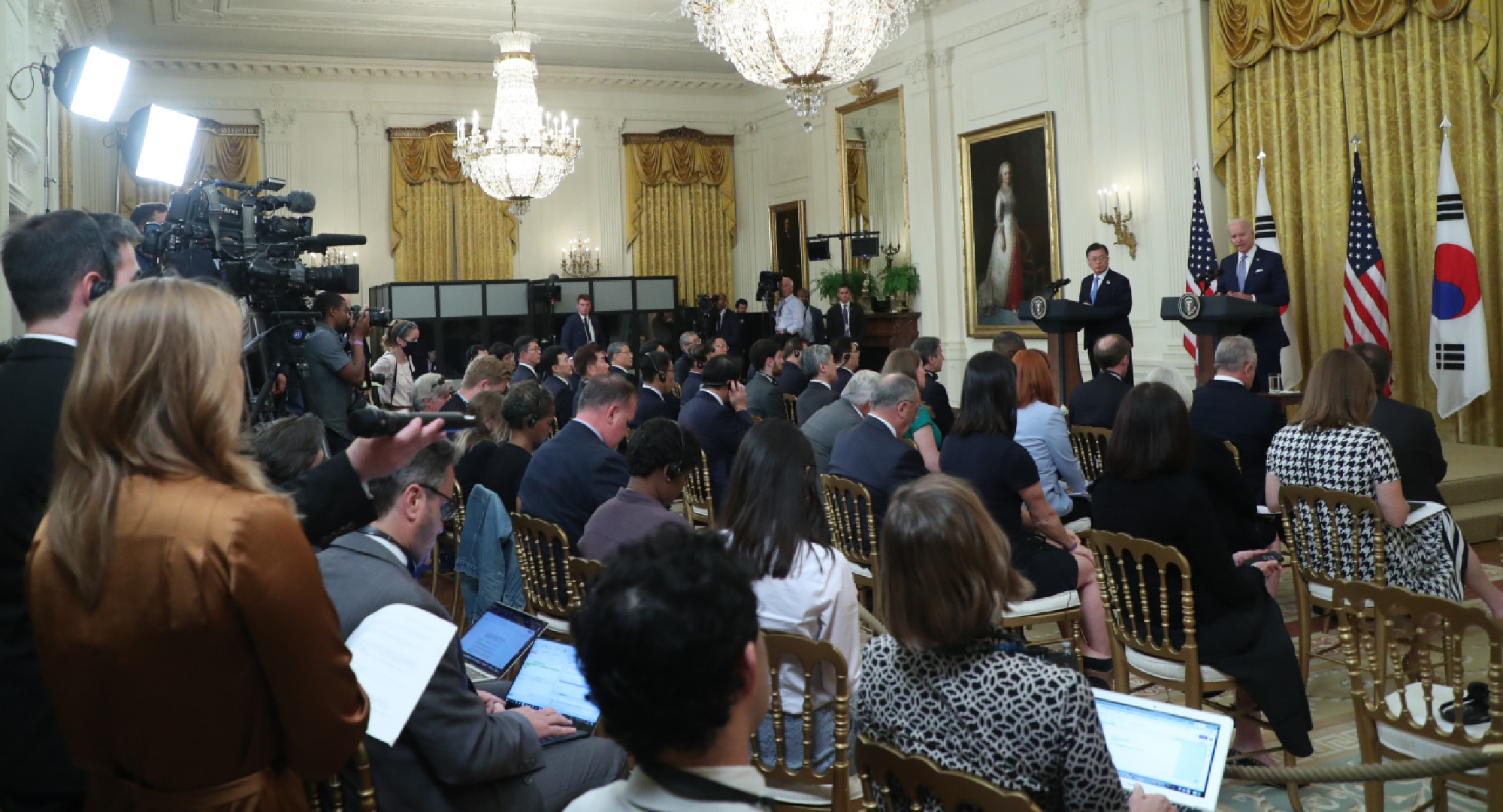
WASHINGTON/SEOUL — South Korean President Moon Jae-in announced a joint decision Friday with the United States to terminate guidelines that have long restricted Seouls development of missiles.
He was speaking right after the summit with President Joe Biden at the White House.
“I am pleased to announce the termination of the missile guidelines,” Moon told reporters, with Biden standing next to him.
Moon described it as a “symbolic and substantive” measure demonstrating the robustness of the alliance along with a recent deal on sharing the cost for American troops stationed on the peninsula.
First signed in 1979 and revised four times, the guidelines have put limits on South Korea’s missile development program.
The accord was introduced under the Park Chung-hee government’s bid to secure related technology transfer from the ally. In return, Seoul agreed to cap its ballistic missiles to a range of 180 kilometers and a payload to 500 kilograms.
Through ensuing revisions, the range was extended to 800km with the payload restriction lifted. In the latest revision made public in July 2020, Seoul won Washington’s approval for the development of solid-propellant space rockets.
The liberal Moon administration has been pushing to beef up South Korea’s own defense capabilities. Moon’s aides say the termination of the bilateral guidelines means “missile sovereignty” for South Korea.
Moon added that the allies have agreed to bolster the combined defense posture and reaffirmed their commitment to the transition of operational control (OPCON) of Korean forces in the event of war. The U.S. maintains the OPCON in a legacy of the 1950-53 Korean War and it has an agreement on “conditions-based” transfer to South Korea.
Longtime tensions in southern Chinese waters were also discussed in the Moon-Biden summit.
Moon said the two sides agreed to work more closely for peace and stability in the Taiwan Strait especially in consideration of the uneasy characteristics of China-Taiwan relations. (Joint Press Corps)