Hyundai Motor, Aptiv complete deal for autonomous driving #ศาสตร์เกษตรดินปุ๋ย

#ศาสตร์เกษตรดินปุ๋ย : ขอบคุณแหล่งข้อมูล : หนังสือพิมพ์ The Nation

https://www.nationthailand.com/auto/30384919?utm_source=category&utm_medium=internal_referral

Hyundai Motor, Aptiv complete deal for autonomous driving

Mar 27. 2020
Hyundai Motor Group Executive Vice Chairman Chung Euisun (left) and Aptiv CEO Kevin Clark pose for a photo after clinching a deal in the US on Sept. 23, 2019. (Hyundai Motor Group)

Hyundai Motor Group Executive Vice Chairman Chung Euisun (left) and Aptiv CEO Kevin Clark pose for a photo after clinching a deal in the US on Sept. 23, 2019. (Hyundai Motor Group)
By Kim Da-sol
The Korea Herald

Hyundai Motor Group said Friday that it has completed the establishment of a 50:50 joint venture with the US software developer of autonomous vehicles Aptiv.

The headquarters of the joint venture will be set up in Boston, Massachusetts, and it will run research centers in both the US and Asia, the company said, adding that the company mission will be announced in the near future.

In September last year, Hyundai Motor Group clinched a deal with Aptiv, formerly known as Delphi, for a $4 billion joint venture to develop autonomous technology. The two firms agreed to test-operate autonomous driving vehicles in 2022 and start mass-producing them from 2024.

The Korean automaker said in a statement it expects to consolidate Hyundai’s position as “a pathfinder in the field of autonomous technology,” breaking from its previous position as a fast follower.

The company said that the group’s three subsidiaries — Hyundai Motor, Kia Motors and Hyundai Mobis — will inject a combined $1.6 billion in cash and $400 million worth of engineering services, research and development capability and intellectual property rights.

By Kim Da-sol (ddd@heraldcorp.com)

For your motoring pleasure, the perfect Porsche #ศาสตร์เกษตรดินปุ๋ย

#ศาสตร์เกษตรดินปุ๋ย : ขอบคุณแหล่งข้อมูล : หนังสือพิมพ์ The Nation

https://www.nationthailand.com/auto/30384794?utm_source=category&utm_medium=internal_referral

For your motoring pleasure, the perfect Porsche

Mar 25. 2020
By The Nation

TECHART Premium Refinement for Porsche cars moves into Thailand. Official Sole Distributor B Autohaus Co. Ltd presents TECHART lineup at their Vibhavadi-Rangsit Flagship Showroom.

Porsche owners and new buyers can order individually customised Porsches using ideas incorporated by Techart Automobildesign GmbH of Stuttgart, from aerodynamic improvement and exterior styling to technical optimisations such as engine power kits, exhaust systems, wheels and suspension, as well as bespoke interior personalisation.

The first Techart-refined 992 model of the Porsche 911 to become available in Thailand features handcrafted interior refinement, intelligent engine power enhancements, exhaust sound upgrades and two all new forged wheels fitting the 911’s mixed 20-21-inch tire configuration.

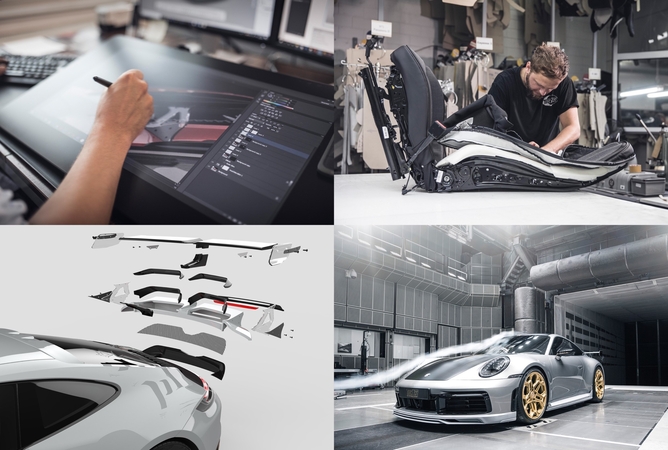
Techart has merged traditional workmanship and new digital design engineering. Aerodynamic body parts have been created in both virtual reality and clay modelling. State-of-the-art 3D prototyping has been combined with wind tunnel and on-track and testing.

New high-tensile materials for Techart exterior parts have been introduced, creating ultra-modern touches such as the transparent rear wing uprights. Natural raw materials and new textures have been processed in its interior manufactory. Besides the forged variant of Techart’s renowned Formula V multi-spoke wheel, the revolutionary Daytona II is the new interpretation of a Techart classic.

Every part contributes to well-balanced aerodynamics at the front and at the rear of the 911.

Using the standard mounting points, the installation of Techart body parts can be done without hassle. A contrasting colour concept can enhance its elegant or sporty touch.

A new power kit provides increased individual driving pleasure at any time. Available for the new 911 Carrera 4S, the Techtronic-based power upgrade provides an additional 60 horsepower, which results in an overall power output of 510 horsepower. The maximum torque is increased by 80 Newtonmetres to 610 Newtonmetres.

The sports exhaust system with carbon fibre exhaust tips fits the new 911’s rear perfectly and creates impressive soundscapes at the same time.

The interior boasts supple leather, Alcantara and even Merino wool, lacquered finishes and carbon-fibre trims. Illuminated carbon door-sill plates, sporty aluminium pedals, handcrafted sports steering wheels and much more are among the choices.

Tesla to suspend operations at California factory following local intervention amid coronavirus outbreak #ศาสตร์เกษตรดินปุ๋ย

#ศาสตร์เกษตรดินปุ๋ย : ขอบคุณแหล่งข้อมูล : หนังสือพิมพ์ The Nation

https://www.nationthailand.com/auto/30384490?utm_source=category&utm_medium=internal_referral

Tesla to suspend operations at California factory following local intervention amid coronavirus outbreak

Mar 20. 2020
File photo by Syndication Washington Post, Bloomberg

File photo by Syndication Washington Post, Bloomberg
By The Washington Post · Faiz Siddiqui · BUSINESS, US-GLOBAL-MARKETS 

SAN FRANCISCO – Tesla is suspending production at its factory in Fremont, California, amid widespread criticism over keeping its production line active despite a Bay Area shelter-in-place order.

In a news release issued Thursday, the company said it had decided to “temporarily suspend” production at the Fremont factory that employs about 10,000 workers beginning Monday. That timeline, the company said, “will allow an orderly shutdown.”

“Basic operations will continue in order to support our vehicle and energy service operations and charging infrastructure, as directed by the local, state and federal authorities,” the company said, adding that a Buffalo factory location would also suspend production.

Tesla’s action came after intervention from local officials including the Alameda County Sheriff’s Office, who said this week Tesla was not an “essential business” under the order, and Fremont Police, who said they were meeting with factory management Thursday.

In the Bay Area, companies are allowed to maintain “minimum basic operation” amid the orders that took effect Tuesday. But Tesla CEO Elon Musk sent an email to employees Monday saying he would be coming to work, and that employees shouldn’t feel obligated to do the same.

Earlier Thursday, workers said they reported to the factory as usual and saw a full parking lot. Line workers were given face masks and had their temperature taken as they walked in the door, they said.

Tesla’s stock closed up 18 percent Thursday, but fell sharply in after-hours trading, dropping by 9 percent.

Musk has repeatedly downplayed the seriousness of the crisis, at one point calling the panic over the novel coronavirus “dumb.” After he shared a link about China’s reporting no new locally acquired infections, he speculated that the U.S., too, would be on track to report no new cases by the end of April. China implemented extreme measures such as blocking off cities at the center of the outbreak and enabling widespread testing of its population, measures not yet implemented in the U.S. Medical experts have also cautioned that China is not entirely in the clear, because there could be subsequent waves of the illness.

Biggest factory closing since World War II hits U.S., Europe #ศาสตร์เกษตรดินปุ๋ย

#ศาสตร์เกษตรดินปุ๋ย : ขอบคุณแหล่งข้อมูล : หนังสือพิมพ์ The Nation

https://www.nationthailand.com/auto/30384465?utm_source=category&utm_medium=internal_referral

Biggest factory closing since World War II hits U.S., Europe

Mar 20. 2020
By Syndication Washington Post, Bloomberg · Shawn Donnan, Gabrielle Coppola · BUSINESS

The economic impact of the growing coronavirus outbreak is shifting from service-driven industries like hotels and restaurants to the manufacturing sector on both sides of the Atlantic, leading to a synchronized shutdown of heavy industry that historians and industry experts say is unlike any seen since the 1940s.

Automakers in the U.S. and Europe are idling plants in response to the crisis, echoing the industrial shutdown in China that reverberated through global supply chains earlier this year and adding to the case that a global recession may already be under way.

It also may justify President Donald Trump’s declaration Wednesday that he has become a “wartime president” leading the fight against an “invisible enemy” in the virus.

Among Trump’s moves was his authorization of powers under the Defense Production Act, which was established at the time of the Korean War to allow the government to direct industrial capacity. Larry Kudlow, his top economic adviser, later told Fox News that the administration was already in discussions with General Motors and other automakers to start producing ventilators vital to treating people affected by the virus.

Such a move to retool and shift production dramatically would echo the industrial transformation seen in the 1940s as factories moved from producing consumer goods like cars to turning out tanks and guns for the war effort on both sides of the Atlantic.

But since then, experts couldn’t recall a similar synchronized shutdown in such a huge portion of the global auto industry. The closures in Europe and the U.S. announced this week follow hits the industry has taken in other big producing nations like China, Japan and South Korea.

“I don’t know that there is an analog in recent history. World War II might be the best analogy,” said Kristin Dziczek, head of research at the Center for Automotive Research in Ann Arbor, Michigan. “Every automaker? Every region in the world? I don’t think that has ever happened.”

Data released Thursday gave a glimpse of the deterioration that’s coming. Filings for U.S. unemployment benefits rose by 70,000 to 281,000 in the week ended March 14, according to Labor Department figures. The Federal Reserve Bank of Philadelphia’s survey of factories showed conditions in the area worsened in March by the most on record.

Timothy Guinnane, an economic historian at Yale University, argues the better parallel may be with what came after the end of the war in 1945, specifically with post-war Germany, “where the whole country came to a halt for a few months.”

Guinnane argues the shutdown now under way in Europe and the U.S. follows an encouraging example in China where life has started to return to normal after a six-week closure. Plus, he said, it’s not clear – yet – that there will be longer-lasting damage to the U.S. economy.

“If you waved a hand and got rid of the virus tomorrow we’d be back to normal in a week,” Guinnane said. “So it’s not like a war.”

That may be the hopeful view. JPMorgan Chase & Co. economists titled a note to clients about the global slowdown “The day the earth stood still.”

“There is no longer doubt that the longest global expansion on record will end this quarter,” they wrote.

Dziczek says a week of lost auto sales in the U.S. alone is equivalent to losing 94,400 jobs, $7.3 billion in personal income and $2 billion in tax revenue.

The damage to the auto sector this time will depend on how long the shutdowns last. But the auto sector around the world, Dziczek says, is in far better shape than it was in 2008 – when the global financial crisis led to government bailouts and a grinding crisis that saw mass layoffs and the permanent closure of many plants.

The shutdowns this time, however, are also coming after a bad 2019 for manufacturers around the globe. Many were battered by the impact of Trump’s trade wars and tariffs on supply chains and a slump in business investment. Europe’s industrial giant, Germany, was teetering on the edge of recession before the coronavirus crisis hit. U.S. manufacturers saw their production contract by 0.2% in 2019. The path forward looks grimmer still. China’s manufacturing output fell 15.7% in January and February from a year earlier, according to official data earlier this week. The result is that China is now expected to record its slowest growth since 1976, the year Mao Zedong died and the Cultural Revolution ended.

In Germany, car companies are expected to shut down for about two weeks, leading to a significant dislocation in workers. Volkswagen is Europe’s largest industrial company and employs about 475,000 people on the Continent.

In the U.S. the closures have spread beyond the Detroit three with Hyundai, Honda and Toyota announcing temporary closings Wednesday, while VW had already shuttered its Chattanooga, Tennessee, plant.

Also affected are carmakers’ vast supplier networks, already shaky as a result of the shutdown in China. Ford had been forced to shut a plant in Chicago because a seating supplier halted output to clean after a worker tested positive for the virus. At a Mercedes-Benz plant in Alabama, managers have warned that the shutdown in Europe may force production to stop soon because of a lack of parts.

The impetus for the auto plant closures in the U.S. isn’t entirely economic. They came after Detroit automakers capitulated to worker demands to shutter factories because of concerns on the factory floor about the spread of the virus.

GM, Ford and Fiat Chrysler Automobiles NV all said Wednesday they would halt production through the end of March to sanitize plants and adjust to a dropoff in auto sales.

Automakers had been trying to work out a compromise with union leaders that would allow them to keep production lines running by stepping up cleaning and staggering shifts to put workers at a greater distance from each other. But that became more difficult as cases of the virus began to appear in plants.

Two Fiat Chrysler workers – one at a transmission plant in Indiana and another at a truck plant in Michigan – had tested positive for the virus as of Wednesday, while Ford confirmed two cases among its U.S. workforce and GM has one.

“Our members are scared, frustrated, and there is panic amongst them,” LaShawn English, president of UAW Local 1264, which represents Fiat workers at a Michigan stamping plant, wrote in a letter Tuesday to CEO Mike Manley. “We are pleading that you make a stance today and temporarily halt production.”

Still, like other workers now confronting changed circumstances, many autoworkers are also displaying plenty of forbearance.

“There’s no bad guy here. This is unchartered territory for all of us,” said Bruce Baumhower, president of UAW Local 12 in Toledo, Ohio, which represents workers at a plant producing the Jeep Wrangler SUV. “If things deteriorate more over the next two weeks, we’ll just need more time off. We just can’t put our people in that kind of environment. The jobs are tough enough to do and fully concentrate on without worrying about staying alive.”

Uber rides are down 70% in some markets amid coronavirus pandemic #ศาสตร์เกษตรดินปุ๋ย

#ศาสตร์เกษตรดินปุ๋ย : ขอบคุณแหล่งข้อมูล : หนังสือพิมพ์ The Nation

https://www.nationthailand.com/auto/30384463?utm_source=category&utm_medium=internal_referral

Uber rides are down 70% in some markets amid coronavirus pandemic

Mar 20. 2020
File photo by Syndication Washington Post

File photo by Syndication Washington Post
By The Washington Post · Jacob Bogage · NATIONAL, BUSINESS

Uber executives rushed to assure investors Thursday that it could weather the coronavirus storm, even as they discussed a worst-case projection of ridership dropping as much as 80% for the rest of the year.

Already, passenger trips have declined by 60% to 70% in cities worst hit by the spread of the novel coronavirus, including Seattle, Uber chief executive Dara Khosrowshahi said in a call with analysts. Trips declined in Hong Kong by 45% but are on the rebound.

The ride hailing giant, which went public last year, has lost billions of dollars and laid off hundreds of workers in recent months, even before the coronavirus outbreak. This week, the company canceled its pool option and some investors have questioned how the company will make it through the pandemic.

Khosrowshahi said Thursday that it was too early to update its guidance for the coming quarter, which ends in June. But the company has $10 billion of cash on hand, something he said will give the company flexibility to withstand significant drops in demand.

“We’ve certainly got the balance sheet to stay the course,” he said.

He added that Uber has already taken aggressive measures to cut costs internally, including freezing its head count and clawing back recruiting and marketing efforts, saving the company $150 million.

The company’s stock rose 30% after the call in early trading to sell at around $19 per share, a $4 increase from the opening bell. That’s down from the company’s opening trading price of $42 per share last year.

The company’s more realistic projection, Khosrowshahi said, was that cities that suffered outbreaks would recover in two-month cycles, the low point of which would hit in the coming quarter.

“As soon as cities start moving, Uber will too,” Khosrowshahi told investors. “… The first use case that we see coming back is the commute use case, it’s getting to work. People want to get back to work, they want to get back to living.”

In the meantime, he said, the company has experienced a rapid demand increase in its Uber Eats food delivery service, as customers remain cloistered in their homes in the name of social isolation. Bars and restaurants around the country have shuttered by public order, though officials in many cases have allowed restaurants to continue a carryout-only business.

Uber has encouraged drivers who ferry passengers to transition to meals. “Our Eats business has an instant inflow of people who are ready to work,” Khosrowshahi said. He said the company has used the crisis to cross-promote its Eats platform to passengers who typically just used the ride-hailing feature.

The majority of Uber rides customers don’t use Eats, but they do use other food delivery services. The company is being “aggressive,” he said, in trying to move customers over to both business lines.

Ford, General Motors to pause production to clean factories amid coronavirus fears #ศาสตร์เกษตรดินปุ๋ย

#ศาสตร์เกษตรดินปุ๋ย : ขอบคุณแหล่งข้อมูล : หนังสือพิมพ์ The Nation

https://www.nationthailand.com/auto/30384386?utm_source=category&utm_medium=internal_referral

Ford, General Motors to pause production to clean factories amid coronavirus fears

Mar 19. 2020
By The Washington Post · Aaron Gregg

Adds details Ford Motor Co., General Motors and Chrysler will halt production at all North American factories for at least two weeks to slow the spread of the coronavirus.

After initially committing only to a “rotating partial shutdown” that would have kept factories open while staggering shifts to reduce exposure, all of the “big three” automakers now say they are halting production indefinitely at plants across North America. The shutdowns will continue at least until March 30, at which point the companies will reevaluate their options.

“Working with the UAW, and having visited many of our plants yesterday, we need to ensure employees feel safe at work and that we are taking every step possible to protect them. We will continue to do what is right for our people through this period of uncertainty,” Fiat Chrysler chief executive Mike Manley said in a statement.

GM executives said shutting down production is “the right thing to do” to protect workers’ health.

“GM and the UAW have always put the health and safety of the people entering GM plants first, and we have agreed to a systematic, orderly suspension of production to aid in fighting COVID-19/coronavirus,” GM chairman and CEO Mary Barra said in a statement. “We have been taking extraordinary precautions around the world to keep our plant environments safe and recent developments in North America make it clear this is the right thing to do now.”

Ford described its production halt as a temporary measure to keep workers safe.

“UAW and Ford leaders will work together on how to best structure plant restart plans ― along with health and safety procedures,” Ford said in a statement.

The virus prevention measures from the Big Three automakers came after extensive negotiation with the union, which had pushed to temporarily shut down factories, as Ford and GM have now agreed to do. Company leadership initially balked at halting production, instead asking for 48 hours to come up with an alternative plan.

“We spent hours tonight in talks with the leadership of the Big 3, demanding that they do the right thing for our members,” the UAW said in a statement. “All three companies have agreed to new measures that will increase adherence to CDC recommendations on social distancing in the workplace.”

All three companies are struggling to prevent the virus from spreading throughout the workforce while also taking steps to maintain the long-term stability of their businesses. All three companies have seen their stock prices plummet by roughly 50 percent on fears that the pandemic could lead to a recession.

A lot is at stake for the U.S. economy and for workers across the country. The automotive manufacturing industry employed about a million people in the United States as of February 2019, according to the Bureau of Labor Statistics.

White House officials have been working with congressional Republicans on an emergency stimulus package that could add up to $1 trillion, with an estimated $50 billion for the aviation industry. A Treasury Department document outlining the parameters of a possible stimulus plan did not specifically mention automakers, although it did call for $150 billion for “secured lending or loan guarantees to assist other critical sectors of the U.S. economy experiencing severe financial distress due to the covid-19 outbreak.”

– – –

The Washington Post’s Rachel Siegel and Alice Crites contributed to this report.

BMW adds to worst annual start for European car sales since 2013 #ศาสตร์เกษตรดินปุ๋ย

#ศาสตร์เกษตรดินปุ๋ย : ขอบคุณแหล่งข้อมูล : หนังสือพิมพ์ The Nation

https://www.nationthailand.com/auto/30384365?utm_source=category&utm_medium=internal_referral

BMW adds to worst annual start for European car sales since 2013

Mar 18. 2020
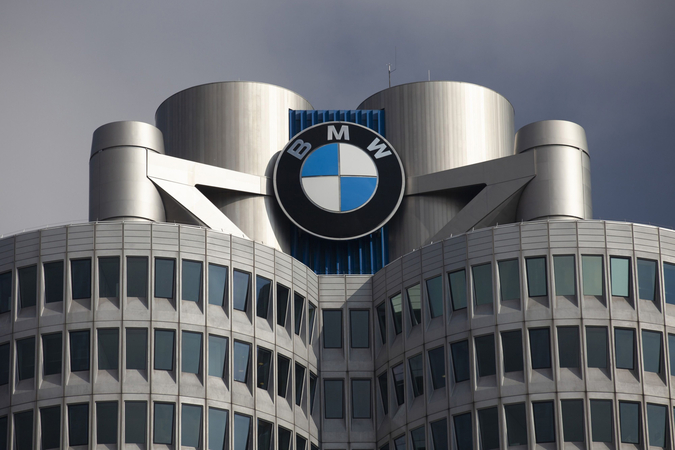
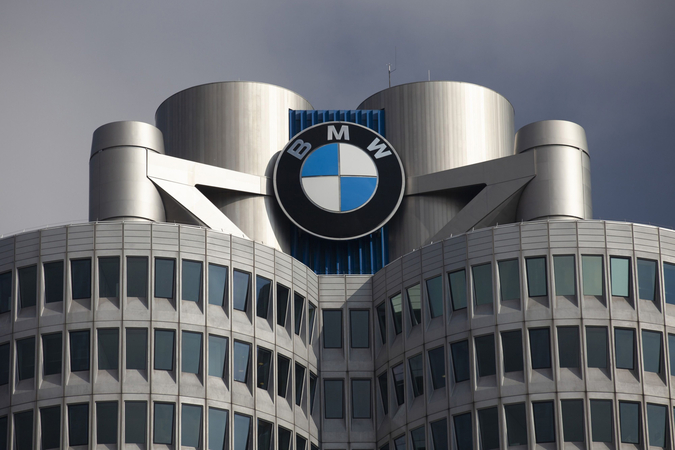
BMW headquarters in Munich, on Oct. 8, 2018. MUST CREDIT: Bloomberg photo by Matthias Doering.

BMW headquarters in Munich, on Oct. 8, 2018. MUST CREDIT: Bloomberg photo by Matthias Doering.
By Bloomberg · Oliver Sachgau · BUSINESS, WORLD, US-GLOBAL-MARKETS, EUROPE 

BMW became the latest European automaker to shutter plants as the coronavirus pandemic pushed regional car sales to their worst start to a year since 2013.

Chief Executive Officer Oliver Zipse on Wednesday announced the idling of factories around Europe, while a site in South Africa will also be closed. He delivered the decision after the German carnaker delivered a downbeat financial update, warning that sales will be significantly below 2019 levels and profitability the weakest for some years.

European markets like France have already closed dealerships and other manufacturers including Volkswagen, Daimler, Renault and Peugeot-maker PSA Group have cut production. With other manufacturers including planemaker Airbus idling plants, Europe is facing its biggest industrial shutdown in decades.

That suggests even bigger declines ahead for car sales — even after passenger registrations slid 7.3% for the first two months of the year, according to the European Automobile Manufacturers Association.

BMW shares declined 7.5% to 37.30 euros as of 10:21 a.m. in Frankfurt, and are trading around 10-year lows.

The ACEA in January predicted a 2% contraction in registrations for the year, but that was before the spread of coronavirus in the region really took off. Countries including Italy and Spain are now hotspots for the pandemic, with economies grinding to a halt. The February drop in car sales totaled 7.2%, the ACEA said.

The ACEA didn’t comment on any potential effects the virus could have on 2020 sales, though analysts have been making predictions. Global production is likely to slump 16% for the full year, according to RBC. Automakers face “a landscape of plummeting worldwide demand,” Bloomberg Intelligence analysts Kevin Tynan and Michael Dean said in a report this week.

Governments in countries from Germany to Italy and Spain have shut borders, closed restaurants and urged people to shelter to slow the spread of the disease, damaging economic growth. Daimler shares fell 5.6% in Frankfurt after the German company said late Tuesday it will suspend the majority of its production in Europe for an initial period of two weeks.

In addition to shutting production sites in France this week, Renault said two other factories in Morocco would be closed, affecting nearly 11,000 workers. The French company is also idling a Dacia site in southern Romania because of the virus, profit.ro reported, citing unidentified officials from the company.

VW, the world’s largest automaker, said it will halt production at its plants in Europe for at least two weeks. The company’s main passenger-car unit on Wednesday echoed comments from its parent, saying the business outlook is complicated by uncertainty triggered by the coronavirus crisis.

The brand that accounts for about half of VW’s global deliveries will close its European factories for 10 business days.

How China bent over backward to help Tesla when the virus hit #ศาสตร์เกษตรดินปุ๋ย

#ศาสตร์เกษตรดินปุ๋ย : ขอบคุณแหล่งข้อมูล : หนังสือพิมพ์ The Nation

https://www.nationthailand.com/auto/30384364?utm_source=category&utm_medium=internal_referral

How China bent over backward to help Tesla when the virus hit

Mar 18. 2020
A worker walks past gates at the Tesla gigafactory in Shanghai on Feb. 17, 2020. MUST CREDIT: Bloomberg photo by Qilai Shen.

A worker walks past gates at the Tesla gigafactory in Shanghai on Feb. 17, 2020. MUST CREDIT: Bloomberg photo by Qilai Shen.
By Syndication Washington Post, Bloomberg · No Author · BUSINESS, WORLD, US-GLOBAL-MARKETS, ASIA-PACIFIC

After the coronavirus outbreak caused a nationwide shortage of face masks in January, Chinese officials were quick to ensure that Tesla wouldn’t be left without.

China’s government helped the California-based carmaker secure the sought-after supplies that allowed it to reopen at a time when many of its competitors were still shut down. Tesla received 10,000 masks, cases of disinfectant that require a government permit, thermometers and other materials that allowed the company to restart its factory near Shanghai the first working day after the extended Lunar New Year break, according to state-run media.

The support for Tesla — which also included providing accommodation for some employees as the outbreak snowballed — is emblematic of China’s wider embrace of Elon Musk’s car venture. The billionaire has waged a charm offensive since deciding to build his first plant outside the U.S. in China, home to the world’s biggest electric-vehicle market, and has been rewarded with the support of officials even as the trade war strained relations with the U.S.

That backing is crucial for Musk’s vision to make China a centerpiece of his automotive ambitions, but also serves a purpose for Beijing, with Tesla’s new factory south of Shanghai becoming a symbol of the government’s efforts to open the economy to global competition and be the world’s EV pioneer.

“Given Tesla’s image of having advanced electric-vehicle technology and expected strong demand for made-in-China Tesla Model 3s this year, no local government anywhere in the world would neglect such a new project,” said Yale Zhang, founder of AutoForesight, a Shanghai-based consultancy.

As Beijing pushed local authorities to get the country back to work last month, officials in Lingang singled out Tesla as an example of their success in helping the area’s industry to recover.

The management committee of Lingang “will make all efforts to help key companies including Tesla return to normal production,” Xu Wei, a spokesperson for the Shanghai municipal government, said at a briefing in February. Tesla representatives in China declined to comment on the help it received from authorities.

Tesla has been impacted along with the broader auto sector in China as the virus prompts customers to stay home, causing a historic plunge in car sales. But the support allowed the automaker to recover from shutdowns aimed at slowing the virus’ spread that virtually paralyzed industry in China. A gauge of Chinese manufacturing plunged to a record low in February, according to government data.

Besides the protective materials, Chinese authorities helped arrange dormitories for hundreds of Tesla employees, as well as transport to and from the plant amid the turmoil. Shanghai Lingang Human Resources Co., a government-backed agency that coordinates hiring in the area, said it has helped Tesla add more than 100 new workers since the outbreak, plus it’s assisted with virus screening and online interviews.

Authorities are also trying to ensure that Tesla’s parts suppliers in China resume production as soon as possible by providing epidemic-prevention materials, Sun Xiaohe, a local official in charge of assisting Tesla, told state media. Catering was also arranged, they reported.

While other automakers such as China’s Zhejiang Geely Holding Group Co. also received masks and other support, the actions to help Tesla have been trumpeted in state media and by local government-backed outlets. Footage of locally built Model 3 sedans being assembled amid the epidemic have proliferated on TV and online.

Even before the virus, a swift regulatory-approval process enabled Tesla to start deliveries to customers in China in January, a year after it first broke ground on the factory.

“The Gigafactory project illustrated the cooperation between Tesla and the Shanghai government, and that the city has improved its business environment,” Wu Qing, deputy mayor of Shanghai, said at a ceremony that saw Tesla hand over its first China-made car.

Local banks provided financing for Tesla’s China push, including a $1.6 billion injection announced at the end of last year. The acquisition of land for the plant and a slew of local permits were cleared swiftly, and the factory was hooked to the nation’s power grid quicker than the average for other firms.

As the facilitiy was being planned and local permits were pending, Musk visited China often for meetings with figures ranging from Alibaba Group Holding Ltd. founder Jack Ma to Transport Minister Li Xiaopeng and other government officials. He met with Premier Li Keqiang in Zhongnanhai, the leadership compound next to the Forbidden City in central Beijing where the country hosts its most high-profile foreign visitors. Musk was also photographed eating steamed buns during a visit to the capital last year.

In China, Elon Musk Sure Felt the Love That Was Missing at Home

Soon afterward, Tesla obtained an exemption from China’s 10% sales tax on cars. Typically, only electric vehicles made by Chinese companies have been exempt.

“The fact that Tesla received significant government support to overcome the current crisis shows China is delivering its promises to treat foreign firms on equal footing with local ones,” said Ivan Su, an analyst at Morningstar Inc. in Hong Kong.

Carmakers from VW to PSA close factories on virus pandemic #ศาสตร์เกษตรดินปุ๋ย

#ศาสตร์เกษตรดินปุ๋ย : ขอบคุณแหล่งข้อมูล : หนังสือพิมพ์ The Nation

https://www.nationthailand.com/auto/30384207?utm_source=category&utm_medium=internal_referral

Carmakers from VW to PSA close factories on virus pandemic

Mar 17. 2020
Volkswagen headquarters in Wolfsburg, Germany, on March 12, 2020. MUST CREDIT: Bloomberg photo by Krisztian Bocsi.

Volkswagen headquarters in Wolfsburg, Germany, on March 12, 2020. MUST CREDIT: Bloomberg photo by Krisztian Bocsi.
By Syndication Washington Post, Bloomberg · Christoph Rauwald, Tara Patel, Joao Lima · BUSINESS, WORLD, US-GLOBAL-MARKETS, EUROPE

European carmakers from PSA Group to Volkswagen are shutting down production across the region as health concerns over the coronavirus pandemic and border restrictions snarling trade hurt their ability to run plants and get supplies.

Peugeot maker PSA said Monday it will gradually close all European production sites this week starting with Mulhouse in France, citing “serious” Covid-19 cases near some sites, supply disruptions and a sudden decline in auto markets.

At VW, a spokesman said by phone that restricted access to sites, particularly in hard-hit areas like Italy and Spain, have complicated the movement of parts and finished cars. Fiat Chrysler Automobiles is also winding down output at some of its factories.

VW, the world’s largest automaker, said impact from production stops, including in Spain and at its Lamborghini site in Italy, are starting to ripple out to plants including its U.S. factory in Chattanooga, Tennessee. Earlier Monday, Fiat Chrysler said its Italian unit and the Maserati brand would suspend production in Europe. Renault-Nissan has halted output at its Barcelona site in Spain as well.

The PSA factory halts will include plants in France, Spain, Germany, the U.K., Poland, Portugal and Slovakia, and will be carried out between March 16 and March 19, according to the statement. They coincide with a tightening of confinement measures by European governments including a shutdown of many stores, schools and restaurants in France.

European countries including Germany have tightened border controls to stop the spread of the coronavirus, though they’ve so far allowed goods to traverse freely. Governments across Europe have restricted internal movements, while many workers are staying home, slowing the pace of output.

VW’s plant in Portugal started measuring the temperature of truck drivers at factory gates.

After the Portuguese government’s decision to close schools VW’s factory moved to use “down days” flexibility tool to allow workers to assist their families without losing compensation. With absences expected from the night shift of March 16 the site suspended Monday’s production shifts, according to a statement.

VW, Europe’s largest industrial company, is set to provide an update on its business prospects at its annual earnings press conference on Tuesday. The manufacturer employs some 670,000 people at 122 factories across the globe.

Chief Executive Officer Herbert Diess told Bloomberg TV on Friday that the Chinese market has started to recover, but the situation in Europe remains difficult to predict and warned that closed borders could trigger factory shutdowns.

VW’s management board and top labor leaders have called on workers to prepare for more difficulties ahead, according to a letter to staff seen by Bloomberg. “The next weeks will be strenuous, maybe hard as well,” Diess, works council head Bernd Osterloh, his deputy Daniela Cavallo as well as VW personnel chief Gunnar Kilian, said in the letter. “But as Volkswagen team we can hold our ground together.”

Labor union IG Metall and employer organization Suedwestmetall on Monday postponed a meeting to discuss wage demands in upcoming collective bargaining talks for the metals and electronics industry in the German state of Baden-Wuerttemberg. The region is home to the headquarters of Daimler, Robert Bosch and Porsche.

It currently takes priority to find solutions for the many employees that are affected by shorter working hours, factory shutdowns and school closings, the union and Suedwestmetall said in a joint statement.

The ultimate vintage unicorn isn’t a Ferrari – it’s a Bizzarrini #ศาสตร์เกษตรดินปุ๋ย

#ศาสตร์เกษตรดินปุ๋ย : ขอบคุณแหล่งข้อมูล : หนังสือพิมพ์ The Nation

https://www.nationthailand.com/auto/30384142?utm_source=category&utm_medium=internal_referral

The ultimate vintage unicorn isn’t a Ferrari – it’s a Bizzarrini

Mar 15. 2020
By Syndication Washington Post, Bloomberg · Hannah Elliott · BUSINESS, TRANSPORTATION 
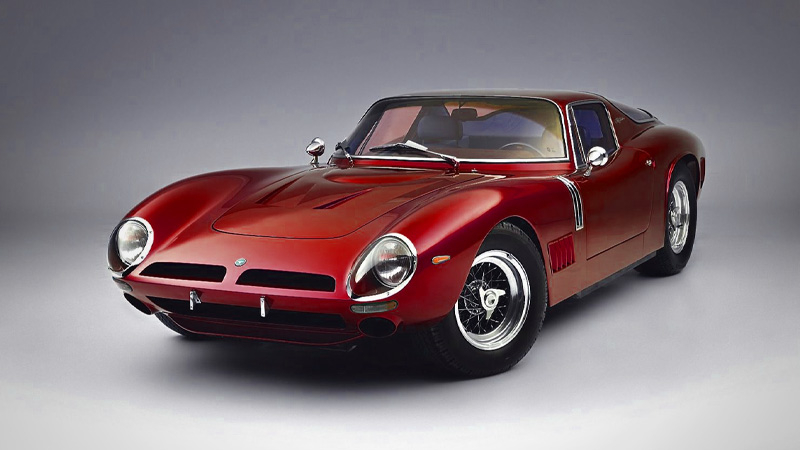
There’s a theory that all the best cars have names that are fun to say. FerrrRRRRari. (Use your hands.) MUS-tang. (Say it with a growl.) Cor-VETTE. (It forces your mouth into a smile even as you say it.)

The same applies to Bizzarrini, the obscure Italian marque that produced fewer than 200 cars for four years in the 1960s. Say it the way your Italian grandmother pronounces a favorite dish of pasta: BITZAaRRini!!

Conceived by the same man who engineered the now multimillion-dollar 1950s racing Ferraris that form the pinnacle of the blue-chip collectable car world, Giotto Bizzarrini’s eponymous brand stands among the greats. Experts call it the evolution of Ferrari – a unicorn obtained only by those who work for years to afford, locate and then charm one into their stable. The world’s wealthiest collectors hoard Bizzarrini cars the way Gollum guarded the Precious.

Bizzarrinis occupy a strange space in the collecting world. They are rare, of course, and often mistaken for Ferraris. Unless you’re deep into that world, you probably haven’t heard of them. They were beloved for their low, curvy bodies and sporty, loud, adrenaline-junkie performance, influencing the design of such other famous, late-1960s-era cars as the Pantera and Mangusta, both made by Alejandro de Tomaso. But they were also derided in their day for being anti-Ferrari because they were made by Giotto Bizzarrini, who had departed that company under sour terms. (Bizzarrini had led an infamous “palace coup” at Ferrari in 1960, when he and four other key Ferrari staff members staged a walkout to protest internal politics.)

These days, enthusiasts such as Chuck Wray, an accomplished mechanic who specializes in Italian race cars, call Bizzarrini “the thinking man’s Ferrari” because they share obvious design cues and styling elements but are even rarer and more difficult to authenticate.

“The Bizzarrini is an evolution to the Ferrari,” Wray told a group of collectors at a Road Scholars forum in January in Scottsdale, Arizona. “My father had been a mechanic, so I had grown up with Ferrari GTs and had fallen in love with Italian cars. And when I found out about Bizzarrini, it was just … Wow! That was the next level.”

It took no time after his walkout for Bizzarrini to find work. Almost immediately, he started consulting for other Italian car brands, including Lamborghini and Iso. At Iso, he styled a chassis for the made-in-America Chevrolet V8 engine that became famous for powering the Corvette. The Iso Grifo cars were legends, having raced through the 1964 season at the 12 Hours of Sebring and winning a First in Class at the 24 Hours of Le Mans. These days, they sell for $400,000 to $800,000 at auction. More importantly, given our purposes here, one of the aluminum-bodied Iso A3/C race cars became the blueprint for the first in Bizzarrini’s line of self-branded cars. He called it the Bizzarrini GT 5300 Strada.

The GT 5300 Strada was special: It had had the ultra-low, wide styling of the A3/C with a front-mid-mounted, 365-horsepower Corvette V8 engine and four-speed manual gearbox. Its front fenders swooped like bananas over the wheels; its side vents breathed like gills on an eel. The car is incredibly low, the interior incredibly small – you’ll be lucky to get in if you have back or knee issues or a gut. It possesses no such modern comforts as power steering or crisp, biting brakes. But on the racetrack, the Strada was known for blazing, deafening speed and sophisticated handling that could match all comers among its Italian compatriots.

Most were built with aluminum alloy body work; others at that time used fiberglass panels over a pressed steel platform chassis. The original GT 5300 that was sold in the U.S. cost $10,500, roughly $78,500 at today’s rates, according to Hemmings’ Mark McCourt. The 1900 GT Europa and P538S would follow before Bizzarrini was declared bankrupt in 1969. (At age 94, Bizzarrini currently lives in Italy, teaches, and continues to build cars as personal projects and commissions.)

Bizzarini is such a rare brand that classic car insurer Hagerty barely compiles its model history data. The most recent sale on record at Hagerty was in 2018; other notable sales took place in 2014, 2013 and 2009. (Additional sales may have happened more recently, though data on them isn’t clear.)

“Consignments at auction peaked in 2015 at five,” says John Wiley, Hagerty’s senior analyst. Only one was publicly consigned in 2018 and one in 2019, he noted. (The 2019 consignment it is a race car prototype that doesn’t fit within the Hagerty database architecture, Wiley said.)

Most career car guys have never seen one in the wild. The cars exist by hearsay and ghost stories, literally. One Bizzarrini Chassis 0254 was hidden in Pennsylvania for 30 years in a garage watched over by a benevolent spirit – at least according to its owner. That car is in line to be restored by Paul Russell and Co. in Essex, Massachusetts, and set to be sold for what will undoubtedly be a king’s ransom.

Meanwhile, half of the people who think they’ve seen a Bizzarrini saw a fake. In 2018, RM Sotheby’s pulled a white Bizzarrini 5300 Strada, chassis 0323, from its Paris auction after the guy who owned the real car – also chassis 0323 – showed up. A representative from RM Sotheby’s did not respond to a request for comment.

The discrepancy is rampant: At the 2018 RM Sotheby’s auction in Paris, the 1900 Europa on sale was cataloged as from 1968. But it is listed in Hagerty’s records as a 1967. “It is plausible that replicas were built,” says Wiley.

Indeed, RM Sotheby’s sold that car for €212,750 ($244,000) at the 2018 sale. But records of just how many were made, and when, are scarce. Hagerty’s historian, Glenn Arlt, uses a book published in 1970, “The Complete Encyclopedia of Automobiles: 1885 to the Present,” to corroborate his data. According to Arlt, Bizzarrini built 15 Europas during the 1960s. After the company went bust, automotive scavengers co-opted the handful of extraneous body shells and over the next 40 years built them out into complete cars – to varying degrees of fidelity, although none is legitimate. In one official register by Jack Koobs de Hartog, three Bizzarrini 1900 Europas share the same chassis number.

“It’s a minefield,” says Steve Serio, an automotive broker who has sold nine in his three-decade-long career. If a Bizzarrini’s ownership history gets murky for the years prior to the 1980s, you can be sure it’s fake, he says.

That does nothing to deter those who want them. If anything, it adds pleasure to the pain of discovery. After all, the Bizzarrini 1900 Europa, a swooping study in la dolce vita, is like a sip of frosty limoncello on a sunny afternoon. The moment of seeing one for the first time will seep onto your memory like a tattoo. Serio recently uncovered a selection of period Bizzarrini photos for sale at a swap meet in Los Angeles. The seller wanted more than $13,700 for them – just the photos.

There is an upside to all the trouble. Bizzarrinis are still much more affordable; for decades, the presence of that Corvette engine kept Bizzarrini values well below those of the equivalent Ferrari, Lamborghini or Maserati cars because purists and collectors considered it sacrilegious to have American parts in Italian cars. Although Bizzarrini values began to increase in the late 2000s, with the greatest jump happening from late 2006 through the market crash toward the end of 2008, it wasn’t until late 2013 that values began to rise in earnest, matching that of the rest of the exotic Italian collector-car market. They have risen steadily since.

The average value of a Bizzarrini 5300 GT Strada in perfect condition is $1.2 million, triple what it was in 2010, according to Jonathan Klinger, a spokesman for Hagerty. Today a Bizzarrini 5300 GT America in perfect condition has an average value of $850,000 – more than 2 1/2 times its value in 2010.

Values are difficult to forecast because so few real Bizzarrini cars come to the public market; most trade via a whisper network of high-rolling collectors. The fakes that waft through from time to time contaminate that already delicate market, so when bona fide, above-reproach, authenticated examples are found, their prices skyrocket. In 2015, the Keno Brothers Fine Automobile Auctioneers set a record with a 1968 Bizzarrini 5300 Strada sold for just over $1 million, including fees. Five years later, an authentic, good-condition GT 5300 Strada with an alloy body requires $1.2 million to $1.5 million to own, Serio says. And the asking price will be higher.

Despite the dearth of official sale results, the rise in popularity of vintage racing and driving events such as the Colorado Grand, Mille Miglia and California Mille – all requiring specific marques and early model cars for entry among their ultra-elite ranks – as fed the interest as well. In 2016, Pebble Beach Concours d’Elegance organizers featured them in a special class on the lawn of the 18th fairway at the exclusive golf course, spotlighting the owners and those who aspire to own such a rare car.

“At a small fraction of the value of a (Ferrari) GTO, there is plenty of room for further appreciation,” Klinger says. “The cars are likely to continue to gain fans.”

Even better, that once-lamented Corvette engine makes them easier and cheaper to repair than other rare exotics, both on vintage rally drives and at home. “It takes nothing to maintain them,” says Serio. Now, that’s something you definitely can’t say for a Ferrari of the same vintage.