Europe floors it in the race to dominate car batteries #ศาสตร์เกษตรดินปุ๋ย

#ศาสตร์เกษตรดินปุ๋ย : ขอบคุณแหล่งข้อมูล : หนังสือพิมพ์ The Nation

https://www.nationthailand.com/auto/30382647?utm_source=category&utm_medium=internal_referral

Europe floors it in the race to dominate car batteries

Feb 22. 2020
The Contemporary Amperex Technology factory in Arnstadt, Germany. MUST CREDIT: Bloomberg photo by Krisztian Bocsi.

The Contemporary Amperex Technology factory in Arnstadt, Germany. MUST CREDIT: Bloomberg photo by Krisztian Bocsi.
By Syndication Washington Post, Bloomberg · Laura Millan Lombrana, Chris Reiter, Richard Weiss · BUSINESS, WORLD, US-GLOBAL-MARKETS, EUROPE 

Outside the German town of Arnstadt, workers for China’s Contemporary Amperex Technology Co. Ltd. (CATL) are hustling to build Europe’s biggest electric-car battery plant.

The site, which covers an area equivalent to about 100 football fields, previously housed one of the continent’s largest solar-panel factories. During a visit in October, wooden crates filled with surplus equipment were stacked up outside the metal-clad structure to make way for car-battery-making equipment. Roaring bulldozers swarmed a nearby lot to prep for construction of a new building.

The $2 billion project-one of about a half dozen battery factories under construction in Germany alone-worries European policymakers, who are desperate to ensure their auto industry doesn’t lose competitiveness in the transition to electric vehicles. EV sales in Europe are expected to jump to 7.7 million in 2030 from just under half a million in 2019, according to forecasts from BloombergNEF. Those vehicles will mainly be powered by batteries from Asian manufacturers like CATL, unless European companies fight back and build a local supply chain.

EVs and clean transportation are at the heart of the European Union’s Green Deal, a more than 1 trillion euro ($1.1 trillion) European Commission policy initiative aimed at making the EU carbon neutral by 2050. The plan includes replacing large power plants with smaller, more local, renewable energy sources while eliminating combustion engines in buses, cars, and trucks. After betting on dirty diesel for too long, European politicians and the heads of Volkswagen, Daimler, and BMW are vowing to build a greener supply chain for all of those vehicles.

“If we let China own the battery, then we lose out on the centerpiece of electric cars,” says German Deputy Economy Minister Thomas Bareiss. “I’m not sure that’s the best approach for our auto industry.”

Europe has only a patchwork of small battery players. The biggest chunk of the value of a European-made electric car belongs to Asia-China, Korea, and Japan account for more than 80% of the world’s EV battery production, and companies such as CATL, LG Chem, and Samsung SDI control Europe’s biggest battery factories.

To change that, the European Commission set up the Battery Alliance initiative. In December it approved 3.2 billion euros in aid for projects approved or currently under way at 17 companies, including BASF, BMW, and Fortum. The measure is meant to encourage greater investment in factories by these and other European companies.

National governments are also committing large sums to battery efforts, especially in Germany. In early February its economy minister, Peter Altmaier, announced a 5 billion euro project for battery cells in Germany and France. Altmaier has been a leading proponent of developing a local battery sector. The goal, as he sees it, is to build “the best and most sustainable batteries in Germany and Europe.” There is no other option, he has said, if its carmakers are to succeed.

European players, including Belgian materials technology company Umicore and German chemical company BASF, make battery materials from catalysts to cathodes. But there is little mining of key ingredients like lithium, and no capacity to turn those resources into high quality vehicle batteries. A desire to bring lithium and other materials closer to the production line is partly driving the efforts. “Lithium hydroxide doesn’t travel well,” say Andreas Scherer of AMG Advanced Metallurgical Group. “It doesn’t like to sit in a bag in the belly of a ship for six weeks-that’s bad for quality.”

Stringent environmental rules and community opposition to more mines could slow the momentum. Land owners and environmental groups fear the resulting emissions and pollution. Finland’s Keliber in November postponed its planned initial public offering and the construction of a lithium mine on appeals against its environmental permit.

Some countries are pushing ahead. Support from the European Commission to mine battery metals-and the potential riches-motivated Dietrich Wanke to trade a career in Australian mining for the green hills of the Lavant valley in Wolfsberg, Austria. Wanke is the Chief Executive Officer of European Lithium, a startup mining company that aims to become a supplier of raw material for batteries. It operates from an abandoned test tunnel in Austria, where government geologists looking for uranium in the 1980s found lithium instead.

“We won’t be able to produce the absolute cheapest material. It is clearly a commodity mined in Europe, according to European laws and environmental standards,” Wanke says. “It must be seen as a unique product, contributing to the reduction in carbon dioxide emissions in Europe.”

The Wolfsberg project is traditional hard-rock mining, with the ensuing environmental consequences. Another startup, or junior, miner, Vulcan Energy Resources Ltd., claims it will produce the material with no CO₂ emissions by adding lithium-extraction facilities to existing geothermal power plants feeding on underground reservoirs in southern Germany. The method is similar to what Warren Buffett’s Berkshire Hathaway Inc. is researching in California’s Salton Sea. “By 2028, forecasters see Europe alone needing more lithium than is being produced in the entire world today,” says Vulcan Energy’s managing director, Francis Wedin.

Still, the efforts now could be too little, too late. “European manufacturers have dragged their feet,” says Jose Lazuen, senior automotive practice analyst at Roskill. “Asian producers started taking positions in Europe two or three years ago, because they knew Europeans would need batteries.”

While others are talking, the Chinese are busy building out capacity in Arnstadt for what’s shaping up to be another clean energy fight. The battleground is a former solar panel factory where two previous German owners failed to compete against low-price competition from China. As Germany’s deputy economy minister, Bareiss, says, “It’s about staying in the game and playing a role in a critical technology.”
Daimler warns Germany may get tougher on Mercedes diesel cars #ศาสตร์เกษตรดินปุ๋ย

#ศาสตร์เกษตรดินปุ๋ย : ขอบคุณแหล่งข้อมูล : หนังสือพิมพ์ The Nation

https://www.nationthailand.com/auto/30382599?utm_source=category&utm_medium=internal_referral

Daimler warns Germany may get tougher on Mercedes diesel cars

Feb 22. 2020
By Syndication Washington Post, Bloomberg · Christoph Rauwald, Karin Matussek · BUSINESS, WORLD, US-GLOBAL-MARKETS, EUROPE
Daimler is warning of a further crackdown on Mercedes-Benz diesel vehicles in Germany, after mounting legal and regulatory costs already crimped profits last year.

It is likely the country’s motor industry watchdog, KBA, will rule that other vehicles made by the luxury brand were also “equipped with impermissible defeat devices,” Daimler said Friday in its annual report, referring to banned software designed to bypass emissions tests.

Daimler has temporarily halted delivery and registration of some models, according to the report. The German manufacturer also said that complying with stricter emissions rules in some countries will be difficult.

The carmaker’s comments indicate further difficulties lie ahead on diesel cars. Daimler took a massive earnings hit in 2019 and slashed its payout to investors to the lowest level since the financial crisis, blaming an 870 million euro ($940 million) fine by German prosecutors and costs related to reducing diesel-car emissions. The penalty coincided with record investments to boost the manufacturer’s electric-car lineup and expansion of software operations. Daimler is also putting aside 2 billion euros in restructuring costs.

Chief Executive Officer Ola Kallenius has acknowledged in recent months that meeting Europe’s tougher emission targets will be a challenge in the next two years because consumers may not move away from choosing combustion engines fast enough.

Under the bloc’s rules, carmakers face penalties if the average of the total passenger vehicles they sell exceeds a level of CO2 emissions. Mercedes-Benz, which makes large-cylinder gas and diesel guzzlers in addition to battery-run models, plans to make use of so-called super credit incentives on electric and plug-in hybrid models to lower its average.

Daimler could face a total of more than 1.5 billion euros in fines in 2020 and 2021 for missing European CO2 limits, according to BloombergNEF estimates. To avoid such penalties, electric vehicles sales must account for about 10% of total deliveries in the region by 2021, compared with about 2.8% last year.

The company’s average fleet emission in Europe was 137 grams in 2019, well above the 95 grams per kilometer stipulated by the rules that start taking effect this year and gradually get tougher by the end of 2021.

Hyundai develops world’s first automated gearshift that reads traffic ahead #ศาสตร์เกษตรดินปุ๋ย

#ศาสตร์เกษตรดินปุ๋ย : ขอบคุณแหล่งข้อมูล : หนังสือพิมพ์ The Nation

https://www.nationthailand.com/auto/30382517?utm_source=category&utm_medium=internal_referral

Hyundai develops world’s first automated gearshift that reads traffic ahead

Feb 20. 2020
(Hyundai Motor Group)

(Hyundai Motor Group)
By The Korea Herald/ANN

Hyundai Motor Group said Thursday that it has developed a self-controlling gearshift that measures traffic ahead and predicts optimized gearing, which it said is the first of its kind in the world.

While existing smart drive modes work by learning the pattern of the drivers, the new information and communication technology-connected transmission system recognizes road situations and automatically changes gears for speed, the automaker said. The new technology will be adopted in upcoming models, it added.

The technology is different from existing automated transmission systems, but more similar to a stick shift or continuously variable transmission, the company said.

The ICT-connected system works by controlling a gearshift through artificial intelligence algorithm software that collects data from 3D navigation. Signals sent from camera and radar are then used for the car’s smart cruise mode.

The collecting data include high and low parts of the road, curvature, road type, speed of the car in the front and the distance from the car in the front.

Development of such technology involved some 40 patents registered domestically and globally, the group said.

The new software can improve fuel efficiency and also help alleviate driving fatigue. The automaker cited a road test which showed that the frequency of shifting gears dropped by 43 percent when cornering curvy roads, while the use of brakes also declined by about 11 percent.

Hyundai Motor said the latest technology is in line with the company’s current development for self-driving cars. Such function will offer stable driving performance on self-driving cars, the company said.

“We will continue to apply ICT and AI technologies to various auto parts, such as the power train, to continue to develop our goal to evolve a car from means of transportation into smart mobility,” said a Hyundai Motor official.

By Kim Da-sol (ddd@heraldcorp.com)

Get away in a Chevrolet – and a lot more cheaply #ศาสตร์เกษตรดินปุ๋ย

#ศาสตร์เกษตรดินปุ๋ย : ขอบคุณแหล่งข้อมูล : หนังสือพิมพ์ The Nation

https://www.nationthailand.com/auto/30382479?utm_source=category&utm_medium=internal_referral

Get away in a Chevrolet – and a lot more cheaply

Feb 20. 2020
By The Nation

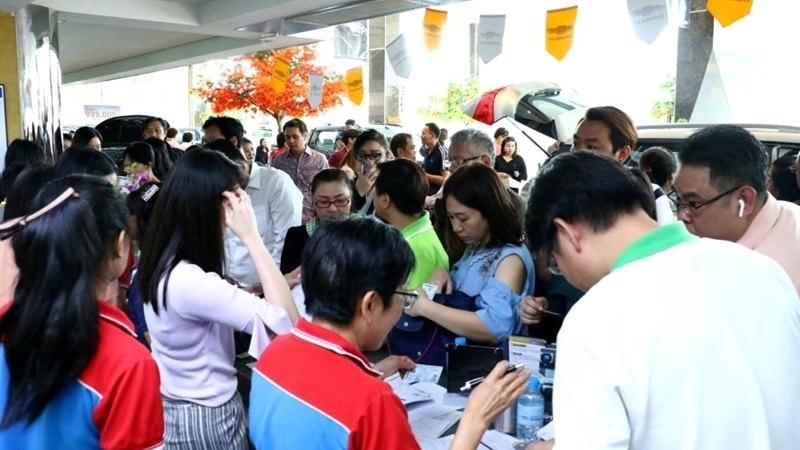
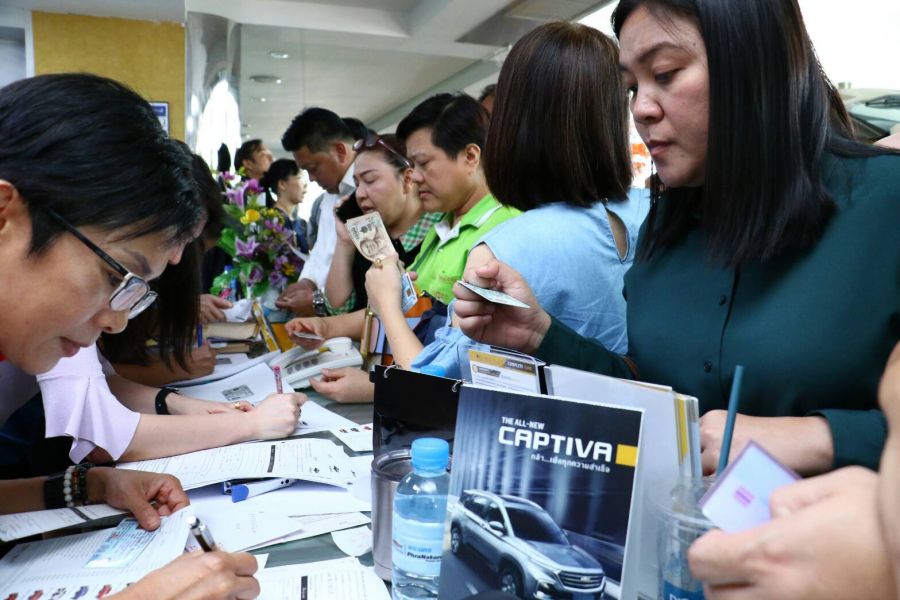
The promise of slashed prices packed the Chevrolet showroom near Vibhavadi Rangsit Road in Bangkok on Wednesday (February 19) – the silver lining to General Motors’ announcement earlier this week that it will shut down production and sales of Chevrolet in Thailand by the end of the year.

Chevrolet (Thailand) has some 4,000 vehicles to sell, so its dealers have been dropping attractive bait on Facebook.

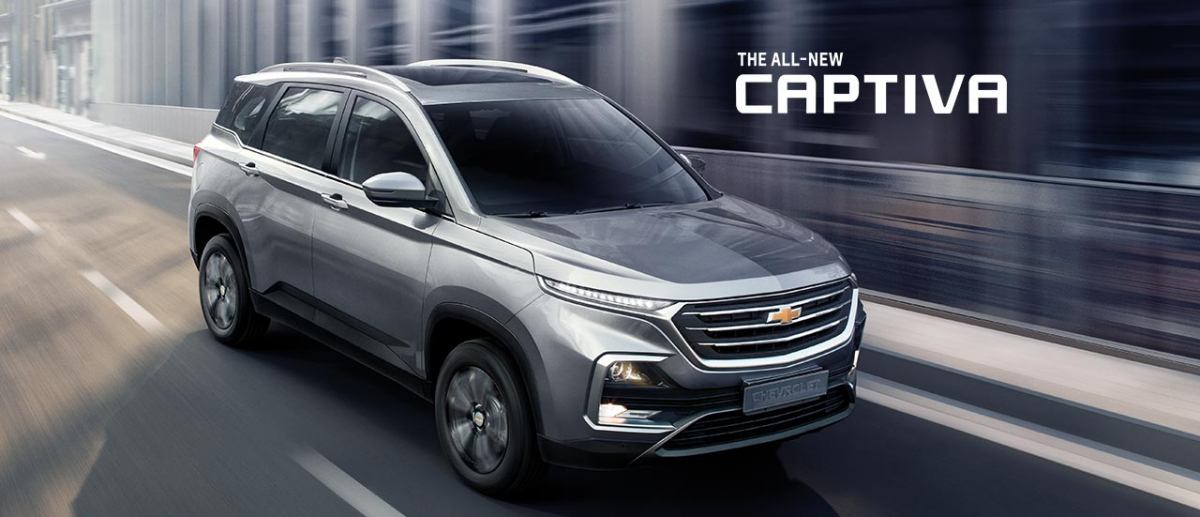
The price of a Captiva 1.5 LS Turbo has been halved from Bt999,000 to Bt499,000.

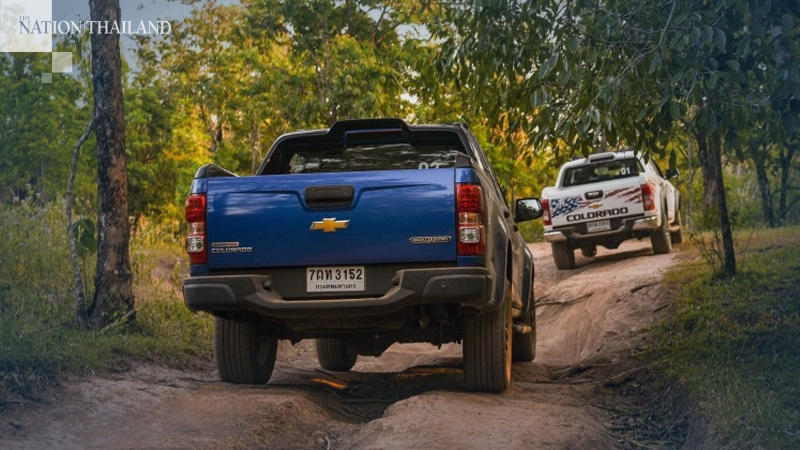
Other discounts on offer: The Trailblazer 2.5 LT 2WD from Bt1.144 million to Bt895,000, the Colorado High Country 2WD from Bt998,000 to Bt775,000 and the Colorado Trailboss MT 2WD from Bt859,000 to Bt655,000.

Buyers still get a three-year or 100,000-kilometre warranty to maintain customer confidence.

The Captiva is the newest model in Thailand, imported from China last year, but only 250 units a month were selling. The other models are built in Rayong province.

Chevy’s going-out-of-business sale sees prices halved #ศาสตร์เกษตรดินปุ๋ย

#ศาสตร์เกษตรดินปุ๋ย : ขอบคุณแหล่งข้อมูล : หนังสือพิมพ์ The Nation

https://www.nationthailand.com/auto/30382421?utm_source=category&utm_medium=internal_referral

Chevy’s going-out-of-business sale sees prices halved

Feb 19. 2020
By The Nation

With General Motors set to end production and sales of its Chevrolet line in Thailand by the end of the year, the prices of all new Chevrolets have been slashed in half. That means the starting price for the latest SUV, the Captiva, is now just Bt499,000.

The end of Chevrolet in Thailand will see 1,500 people lose their jobs at two factories in the East, but it also means more than 4,000 Chevrolets will go on sale for prices starting between Bt200,000 and Bt500,000 less than previously.

Although there’s been no official announcement, all Chevrolet dealerships have posted calculated prices after the discount.

Photo credit: Chevrolet Thailand official

Photo credit: Chevrolet Thailand official

The cost of a Captiva LS drops from Bt999,000 to Bt499,000 and the LT models from Bt1.099 million to Bt599,000. The premier model is Bt699,000, down from Bt1.199 million.

Smaller discounts apply to Colorado models and Trailblazers. The Colorado Trailboss manual version is priced at Bt775,000, down from Bt859,000. The Colorado High Country 2WD model is Bt775,000, down from Bt998,000, and the Trailblazer 2.5 LT is Bt895,000, down from Bt1.144 million.

The three-year or 100,000-kilometre warrantee still applies on all models.

Chevrolet has said its service centres will continue operating, but has not yet specified which dealers will continue offering service.

Hyundai’s electric Prophecy ready for debut #ศาสตร์เกษตรดินปุ๋ย

#ศาสตร์เกษตรดินปุ๋ย : ขอบคุณแหล่งข้อมูล : หนังสือพิมพ์ The Nation

https://www.nationthailand.com/auto/30382409?utm_source=category&utm_medium=internal_referral

Hyundai’s electric Prophecy ready for debut

Feb 19. 2020
By The Nation

Hyundai will be unveiling its new electric car the Prophecy at the Geneva Motor Show in Switzerland from March 3-15.

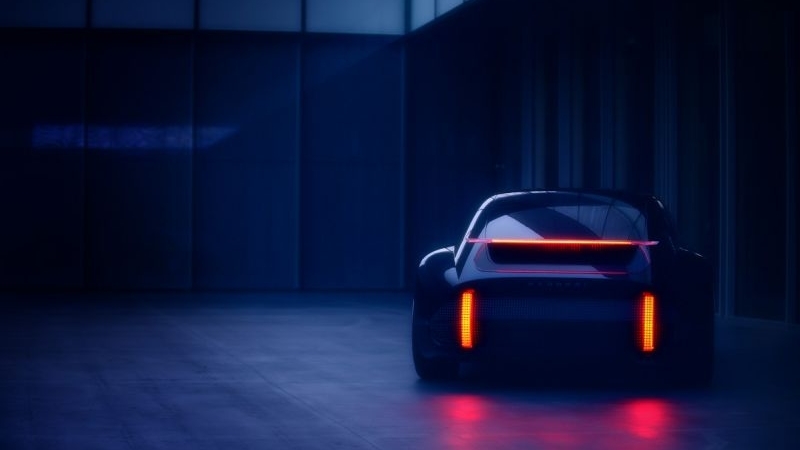
The Korean carmaker is calling the concept “Real Progress is in the Air” and the design language “Sensuous Sportiness”, saying the Prophecy combines curviness through wide back wings and a beautiful spoiler decorated with LED pixel lights.

“The Prophecy does not follow trends,” said SangYup Lee, head of Hyundai’s Global Design Centre. “It accentuates timeless beauty that will stand the test of time. Its iconic design stands to expand Hyundai’s design spectrum toward even broader horizons.”

European car sales sank in January on new emissions rules, lower incentives #ศาสตร์เกษตรดินปุ๋ย

#ศาสตร์เกษตรดินปุ๋ย : ขอบคุณแหล่งข้อมูล : หนังสือพิมพ์ The Nation

https://www.nationthailand.com/auto/30382371?utm_source=category&utm_medium=internal_referral

European car sales sank in January on new emissions rules, lower incentives

Feb 19. 2020
Used Fiat Chrysler Automobiles automobiles in Rome on Oct. 31, 2019. MUST CREDIT: Bloomberg photo by Alessia Pierdomenico.

Used Fiat Chrysler Automobiles automobiles in Rome on Oct. 31, 2019. MUST CREDIT: Bloomberg photo by Alessia Pierdomenico.
By Syndication Washington Post, Bloomberg · Oliver Sachgau · BUSINESS, WORLD, US-GLOBAL-MARKETS, EUROPE

European carmakers started off the year with their first sales decline in five months after changes to emission rules and consumer incentives crimped demand for some models.

January passenger-car registrations declined 7.4% to 1.1 million vehicles in the EU, EFTA and the U.K., according to a statement Tuesday from the European Automobile Manufacturers Association.

Some sales that would otherwise have taken place in January were pulled into December, when volumes jumped 21% as dealers rushed cars to buyers ahead of the year-end policy shifts that added new taxes on many models.

“Other contributing factors included weakening global economic conditions and uncertainty caused by the U.K.’s departure from the European Union,” the association said in the statement. The U.K. left the bloc on Jan. 31.

The EU is prodding carmakers to accelerate the transition to battery- and hybrid-electric cars, with fleet-emissions limits that slap manufacturers with hefty fines if they go over. Some countries like Sweden and France have also overhauled incentives to encourage electric-vehicle purchases.

Sales of gasoline- and diesel-powered dropped off in some markets during January, only partially offset by more clean-car sales. It’s not clear whether the changes will continue to damp overall sales throughout the year.

The latest figures highlight the challenges facing European carmakers. The industry is likely to contract by 2% in 2020, the ACEA forecast in January, with environmental and trade concerns being the chief causes.

The Stoxx 600 Automobiles & Parts Index fell as much as 1.7% Tuesday morning, making it the second-worst performing segment on the broader European share gauge.

Markets that saw strong growth in December endured a proportional decline the following month: France seesawed to a 13% January drop from a 28% gain, while Sweden slid 18% after a doubling in registrations in the final month of 2019. Changes to emissions-based taxes in both countries at the start of 2020 pulled purchasing decisions forward into 2019, the association said.

Carmakers that suffered the worst slumps in volume included Sweden’s Volvo Cars, France’s Renault and PSA Group, the maker of Peugeot and Citroen vehicles, which all fell in the mid-teens in percentage terms. Daimler posted a 10% skid while German peer Volkswagen held almost steady and BMW AG eked out a 3.8% gain.

The coronavirus outbreak in China has added uncertainty for carmakers across the globe. Hyundai and Toyota halted production in China in response to the virus, with some output resuming this week. Fiat Chrysler Automobiles has said it’ll temporarily pause operations at a Serbian assembly plant due to component shortages from China.

The full impact of the coronavirus outbreak has so far proven hard to quantify, with analysts predicting short-term disruptions to the flow of goods as long as the outbreak is short-lived. The disease has killed more than 1,775 people globally.

Ford not to apply brakes on Asean investment #ศาสตร์เกษตรดินปุ๋ย

#ศาสตร์เกษตรดินปุ๋ย : ขอบคุณแหล่งข้อมูล : หนังสือพิมพ์ The Nation

https://www.nationthailand.com/auto/30382338?utm_source=category&utm_medium=internal_referral

Ford not to apply brakes on Asean investment

Feb 18. 2020
By THE NATION

Ford has given an assurance that it will continue to invest in the Asean region, in response to General Motors’ announcement on February 17 that it would cease Chevrolet sales in Thailand by the end of 2020.

American automaker Ford recently invested more than $82 million (Bt2.5 billion) in its northern Vietnam factory to increase manufacturing capacity.

Ford is among the large automotive companies in Thailand, with cumulated investment of more than $2.5 billion since 1995.

In 2019, the automaker sold 43,375 Ford Rangers in Thailand – the third biggest in pick-up sales volume for four consecutive years.

Ford’s total vehicle sales in 2019 were 50,006.

Tesla Berlin factory preparation delayed by German court #ศาสตร์เกษตรดินปุ๋ย

#ศาสตร์เกษตรดินปุ๋ย : ขอบคุณแหล่งข้อมูล : หนังสือพิมพ์ The Nation

https://www.nationthailand.com/auto/30382265?utm_source=category&utm_medium=internal_referral

Tesla Berlin factory preparation delayed by German court

Feb 17. 2020
File Photo by Syndication Washington Post, Bloomberg

File Photo by Syndication Washington Post, Bloomberg
By Syndication Washington Post, Bloomberg · Richard Weiss, Stefan Nicola, Karin Matussek · BUSINESS

Elon Musk’s plan to build an electric car plant in Germany has run into legal trouble after a court said clearing a forest near Berlin for a new Tesla Inc. factory must stop immediately while it considers a challenge by environmentalists.

The Berlin-Brandenburg higher administrative court issued an injunction against further construction after overturning a lower court ruling against environmental group Gruene Liga Brandenburg. The group is seeking to prevent Tesla from clearing more of the surrounding forest, and the court said it will make a final decision on the complaint in the coming days.

Tesla and the local government have already filed their response to the complaint and are now “relying on the prompt decision” of the court, Joerg Steinbach, spokesman for the regional government said on Twitter.

The injunction threatens Tesla’s ambitious timetable of having the plant up and running from mid-2021. If it does clear Germany’s red tape, the site could churn out as many as 500,000 cars a year, employ 12,000 people and pose a serious challenge to Volkswagen, Daimler and BMW. Musk recently tried to ease local concerns about water usage for the plant, which would border a nature reserve.

Workers have already scoured the equivalent of about 150 soccer fields of forest and removed most of the World War II ammunition found there.

The project’s environmental stipulations include scaring off or relocating wolves, hibernating bats, snakes and lizards until construction is over. Under German environmental regulations, the project in the small town of Gruenheide must also consider the breeding period for local wildlife in spring.

Renault rebounds as Delbos outlines disposals, cost cuts #ศาสตร์เกษตรดินปุ๋ย

#ศาสตร์เกษตรดินปุ๋ย : ขอบคุณแหล่งข้อมูล : หนังสือพิมพ์ The Nation

https://www.nationthailand.com/auto/30382157?utm_source=category&utm_medium=internal_referral

Renault rebounds as Delbos outlines disposals, cost cuts

Feb 14. 2020
By Syndication Washington Post, Bloomberg · Angelina Rascouet 

Renault shares rebounded after acting Chief Executive Officer Clotilde Delbos said the carmaker would consider asset sales and plant closures as part of a cost-cutting plan.

The company is conducting a strategic review of assets in China, and expense reductions could include factory closures in France, Delbos told reporters at a press conference near Paris Friday. Renault aims to lower structural costs by 2 billion euros ($2.2 billion) over three years.

“We don’t have any taboos, and we don’t exclude anything,” Delbos said. “Considering the situation of the global market and considering that we maybe had too much capacity for volume goals that were higher than what we have today, we don’t exclude any taboo, whether in the world or in France.”

The stock rose as much as 4% following her remarks, after tumbling 4.7% to a seven-year low earlier Friday when the carmaker reported disappointing 2019 results and announced plans to slash its dividend.

Slumping sales in key markets and a dismal performance at long-time partner Nissan Motor pushed Renault to its first annual loss since the financial crisis. Nissan’s decision Thursday to scrap its year-end dividend represented a big financial hit for Renault, which owns 43% of the Japanese carmaker.