Nissan is worth less than Subaru after shares plummet #ศาสตร์เกษตรดินปุ๋ย

#ศาสตร์เกษตรดินปุ๋ย : ขอบคุณแหล่งข้อมูล : หนังสือพิมพ์ The Nation

https://www.nationthailand.com/auto/30382156?utm_source=category&utm_medium=internal_referral

Nissan is worth less than Subaru after shares plummet

Feb 14. 2020
File Photo by Syndication Washington Post, Bloomberg

File Photo by Syndication Washington Post, Bloomberg
By Syndication Washington Post, Bloomberg · Chester Dawson 

Nissan shares fell to a decade low after the company cut its full-year profit outlook and scrapped its year-end dividend payout, slipping to fifth place by market value among Japan’s automakers.

Nissan shares fell 9.6% to their lowest since 2009 in Tokyo on Friday, leaving the company with a market capitalization of 2.17 trillion yen ($19.8 billion), behind Subaru, Suzuki, Honda and Toyota. Nissan’s stock is down 19% since the start of the year, after declining 28% in 2019 and 22% in 2018.

Dogged by falling sales in the U.S., Japan and Europe, as well as instability in its most senior management ranks following the arrest of former Chairman Carlos Ghosn, Nissan reduced its full-year operating profit forecast to 85 billion yen, down from an earlier estimate of 150 billion yen. The shares of Renault SA, which owns 43% of Nissan and relies on dividends from the Japanese company, were mostly unchanged in Paris after the figures were released.

By slashing its dividend payment to the lowest level since 2011 and pursuing a previously announced plan to cut 12,500 jobs globally, Nissan is trying to free up cash for investment in next-generation technology needed to stay competitive in areas such as electric vehicles and self-driving cars.

“Unfortunately, our business performance has worsened more than we anticipated, and there’s no letting up on investing in the future,” Chief Executive Officer Makoto Uchida said at a press conference at the company’s Yokohama headquarters. “In order to invest in growth, we ended up with this dividend.”

The results and outlook underscore the challenges facing Uchida, who took over as CEO in December and promised to unveil a revised midterm plan in May for Nissan and its two-decade alliance with France’s Renault, which has itself recently appointed a new CEO.

The carmaker had initially projected an operating profit of 230 billion yen for the fiscal year through March, but trimmed that last quarter. A year ago, it earned 318 billion yen – which at the time marked its lowest annual income in a decade.

Nissan’s total dividend for the current fiscal year is on track to be 10 yen a share, including the prior payout. In November, the Japanese company withdrew its dividend outlook after cutting it in May – the first reduction since it suspended dividends in 2009 amid an industrywide recession.

Executives sought to downplay concern about its negative free cash flow, which ballooned to minus 256 billion last quarter compared with minus 70 billion a year ago.

Rakesh Kochhar, a senior vice president in charge of global treasury and automotive sales finance operations, told reporters that liquidity isn’t an issue. “If we need to borrow more money we can do so, and at the right time we will also issue financial bonds,” he said, a reference to an issuance originally anticipated last fall.

For its latest three-month period, Nissan posted an operating profit of 23 billion yen, short of analysts’ average estimate for 59 billion yen. Quarterly sales fell 18% to 2.5 trillion yen, missing analysts’ prediction for 2.7 trillion yen.

“There’s no magic potion,” said Bloomberg Intelligence analyst Tatsuo Yoshida. “They’re going to have to make bold cutbacks in production.”

Revenue and income fell in all of Nissan’s core sales regions, including in China and its home market of Japan. In North American, its largest and most lucrative market, profits fell by more than 25% compared to a year ago to 21.6 billion.

“We know exactly what the problem is,” said Ashwani Gupta, Nissan’s chief operating officer. “We are confident that the U.S. will come back” once eight new models are launched over the next two years, he said.

Worldwide sales volumes at Nissan slid 8.4% to 5.18 million vehicles last year, pulling down its combined performance with Renault to third place globally after top-ranked Volkswagen and – for the first time since 2016 – Japanese rival Toyota. For the year through March, Nissan cut its automobile sales outlook by 3.6% to 5.05 million units.

The results are beginning to overshadow Nissan’s other big headache, the charges against Ghosn on alleged financial crimes. Sluggish profits, stuck near a decade low, also weaken the Japanese company’s position in its three-way carmaking alliance.

Ghosn, who has denied all charges, fled trial in Japan late last year, making his way to Lebanon in a private jet. The former executive and Nissan are now suing each other.

After years of sales incentives that eroded margins and pushing businesses to buy cars, CEO Uchida said Nissan needs to rebuild its brand image and focus on appealing to retail customers.

Uchida, Nissan’s third CEO since 2017, joined Nissan in 2003 from metals and machinery company Nissho Iwai. He was most recently in charge of the Japanese automaker’s operations in China.

The CEO said that Nissan plans to reopen three of its Chinese factories shuttered by the coronavirus outbreak from Feb. 17 and two others from Feb. 20. Those plants have been closed since late January as a planned break for the Lunar New Year was extended amid concerns about the spread of the contagion.

“Considering that we won’t resume production until mid-February, that will have some impact” on income and revenue in the current quarter, Uchida said.

Ford board leaves embattled CEO with little room for error #ศาสตร์เกษตรดินปุ๋ย

#ศาสตร์เกษตรดินปุ๋ย : ขอบคุณแหล่งข้อมูล : หนังสือพิมพ์ The Nation

https://www.nationthailand.com/auto/30381911?utm_source=category&utm_medium=internal_referral

Ford board leaves embattled CEO with little room for error

Feb 11. 2020
Jim Hackett, president and chief executive officer of Ford Motor Co., in Hawthorne, Calif., on Nov. 17, 2019. MUST CREDIT: Bloomberg photo by Patrick T. Fallon.

Jim Hackett, president and chief executive officer of Ford Motor Co., in Hawthorne, Calif., on Nov. 17, 2019. MUST CREDIT: Bloomberg photo by Patrick T. Fallon.
By Syndication Washington Post, Bloomberg · Keith Naughton 

A little executive bloodletting can sometimes ease the pressure on an embattled chief executive officer. But Jim Hackett is unlikely to see any letup from Ford’s board following the surprise early retirement of one his two top lieutenants.

Joe Hinrichs, Ford’s 53-year-old automotive president, will leave on March 1 after almost two decades with the company. As a rising star under celebrated former CEO Alan Mulally, he was put on the fast track to be a potential heir to the top job.

With Hinrichs out of the picture, Ford is elevating Jim Farley, the company’s only other president, to become the first chief operating officer since the automaker planned for Mulally’s succession seven years ago. The announcement that the board will revive the role of COO came days after Hackett reported dismal earnings results, dogged by the disastrous rollout of the redesigned Explorer SUV, and forecast more disappointing numbers for the upcoming year.

“This signals to everyone that Farley is Hackett’s successor, unless they plan to go outside the company,” said David Whiston, an analyst with Morningstar in Chicago. “Perhaps it could be nine months from now, or it could be 18 months from now, but they will make an announcement that Hackett is retiring and Farley takes over as CEO.”

Hackett, who was asked by an analyst 18 months ago whether he expected to last in the job, told reporters Friday he’s not going anywhere.

“As far as my tenure, this is the kind of thing I love to do and I’m having a really fulfilling assignment here,” said the former CEO of office-furniture maker Steelcase Inc. “I need to be here.”

Since being pressed into duty almost three years ago by Executive Chairman Bill Ford to stabilize his family’s foundering automaker, Hackett, 64, has promised to accelerate the 116-year-old company’s “clock speed.” But Wall Street analysts have long groused that Hackett’s global restructuring has moved at a plodding pace.

“There is a long way to go,” Michael Ward, a Benchmark Co. analyst who rates Ford a hold, wrote in a report Monday, cutting his projection for earnings this year and warning that cash needs for restructuring are likely to remain a headwind into 2021. Morgan Stanley’s Adam Jonas wrote separately that he made the “wrong call” upgrading Ford to the equivalent of a buy in August and making it his top pick among U.S. auto stocks.

Ford shares slipped as much as 0.5% to $8.07 as of 10:30 a.m. in New York. The stock has fallen 25% under Hackett and by more than half since the departure of Mulally, the only CEO of a Detroit automaker who kept his company out of bankruptcy in 2009.

Hackett himself acknowledged Ford has run out of margin for error when he told analysts during last week’s earnings call: “It does boil down to we can’t miss a beat now in the product launches.”

On Friday, he addressed the costly mistakes made with the Explorer sport utility vehicle again, telling reporters there’s “no room for that type of miss” anymore.

In an interview Friday, Farley, 57, didn’t want to talk executive succession. But he said he’s eager to pick up the pace as Ford rolls out a redesigned F-150 pickup — its most profitable model — and pours billions into the electric and self-driving cars upending the industry.

“We cannot wait years and years,” Farley said by phone. “In the context of our industry and how it’s changing, we have to accelerate.”

Farley joined Ford from Toyota in 2007, just before the bottom fell out of the U.S. auto market. He helped navigate the company through the Great Recession without resorting to the government bailouts and bankruptcies that befell General Motors and Chrysler.

A marketing specialist and cousin of the late actor and comedian Chris Farley, Jim Farley broadened his skills over the years with stints running Ford’s European operations and launching a comeback at Lincoln. Most recently, he’s been head of strategy and technology, cutting deals with Volkswagen AG and Rivian Automotive Inc. on electric and autonomous vehicles.

Along the way, Farley earned a reputation as a tough taskmaster, never afraid to speak his mind and throw a few elbows.

“F— GM, I hate them and their company,” he was quoted as saying in the 2011 book “Once Upon a Car” by then-New York Times Detroit Bureau Chief Bill Vlasic. “I’m going to beat Chevrolet on the head with a bat.”

Farley’s tone may have softened since then, but his drive remains and Ford insiders are bracing for an extremely demanding new boss.

“Farley is very blunt, and I think Wall Street is actually going to like that because it’s such a contrast from Jim Hackett being very indirect,” said Whiston, who has the equivalent of a buy rating on Ford. “Farley has worked on his temperament a bit and tends to give more diplomatic answers now. The f-bombs are probably a thing of the past.”

As for when Hackett might become a thing of the past, Farley isn’t speculating.

“That’s for the board to decide,” Farley said. “My job is to get the most out of this team, just like we did many years ago, and bend that curve of financial performance and make the right bets strategically.”

How to build a morally ethical self-driving car #ศาสตร์เกษตรดินปุ๋ย

#ศาสตร์เกษตรดินปุ๋ย : ขอบคุณแหล่งข้อมูล : หนังสือพิมพ์ The Nation

https://www.nationthailand.com/auto/30381868?utm_source=category&utm_medium=internal_referral

How to build a morally ethical self-driving car

Feb 10. 2020
File Photo/ Getty Images

File Photo/ Getty Images
By Syndication Washington Post, Bloomberg Opinion · Mark Buchanan · OPINION, OP-ED 

Not too long ago, tech enthusiasts were telling us that by 2020, we’d see self-driving cars hit the mainstream, with some 10 million on the roads.

That turned out to be a wild overestimation. The actual number of vehicles in testing is thousands of times smaller, and they’re still driving mostly in controlled conditions. Companies have also scaled back their ambitions, aiming more for driver support than full autonomy, just as sober-minded transport experts told us to expect.

But slower development is probably just as well, as it should help improve vehicle safety and give engineers time to prepare for other threats, such as hackers turning cars into destructive weapons. Slower rollout also gives us a chance to form some social consensus on the built-in ethics of autonomous vehicles, which will inevitably face decisions with moral implications – being forced to choose, for example, between killing the car’s passengers by hitting a tree or veering into a nearby group of pedestrians.

Programmers will have to prepare cars to make such decisions when certain conditions arise, and they will need some justifiable basis to do so. This need is creating a somewhat bizarre research alliance, as professional ethicists work alongside experts in artificial intelligence. We have a lot to learn – and many mistakes to make – before we find acceptable solutions.

So far, only one national government has laid out actual guidelines for how autonomous vehicles should make decisions. That nation is Germany, where official guidelines take a strongly egalitarian view: “In the event of unavoidable accident situations, any distinction based on personal features (age, gender, physical or mental constitution) is strictly prohibited. It is also prohibited to offset victims against one another. General programming to reduce the number of personal injuries may be justifiable.”

This position tries to steer clear of any weighing of one person over another – male versus female, old versus young, skilled surgeon versus well-known local drug dealer. All people, in this view, count equally. This seems natural enough, although such egalitarian notions could run up against local cultural variations in moral attitudes, as is clear from a large survey of people’s moral intuitions.

A couple of years ago, researchers used a website to collect some 40 million choices involving theoretical self-driving dilemmas from people in 233 regions around the world, spanning many cultures. They found that while people do generally prioritize human lives over animal lives, and they would like to save more rather than fewer lives, they also tend to prefer saving the young over the old. People from countries in Central and South America tended to prioritize the lives of females and the physically fit. In many regions, people also expressed a preference for high-status individuals – valuing an executive over a homeless individual.

Studies of this kind offer a rough guide to real moral preferences and how they vary from place to place, and trying to align with them might be a good starting point for engineers. Even so, surveys can’t be the only guide, either, as prevailing moral attitudes change with time. Historically, in many places, explicitly racist or sexist values have held sway, despite widely being viewed as unethical by most people.

A better way to identify reliable rules, some experts argue, would be to combine the survey-based approach with analysis based on prevailing ethical theories developed by moral philosophers. One might start with public views but then put these through the filter of ethical theory to see if a rule is, on closer scrutiny, truly defensible. Ethicists refer to views that survive this test as “laundered preferences.” For example, all ethical theories would reject preferences for one gender over another, even though the survey found such preferences in some regions. In contrast, preferences to save the largest number of people would survive, as would a preference for the very young over the very old.

In this obviously messy area, policies will have to be guided by some mixture of the empirical and the theoretical. When a self-driving car makes a choice and kills some children, it won’t be obvious how that decision was made. But people will want to know. And the rules at work had better survive systematic ethical scrutiny.

– – –

Mark Buchanan, a physicist and science writer, is the author of the book “Forecast: What Physics, Meteorology and the Natural Sciences Can Teach Us About Economics.”

Toyota in growth mode defies slowdown in global vehicle demand #ศาสตร์เกษตรดินปุ๋ย

#ศาสตร์เกษตรดินปุ๋ย : ขอบคุณแหล่งข้อมูล : หนังสือพิมพ์ The Nation

https://www.nationthailand.com/auto/30381720?utm_source=category&utm_medium=internal_referral

Toyota in growth mode defies slowdown in global vehicle demand

Feb 06. 2020
The Prius hybrid and Priyus hybrid plug-in production line of the Toyota plant in Toyota City, Japan, on Dec. 8, 2017. MUST CREDIT: Bloomberg photo by Noriko Hayashi.

The Prius hybrid and Priyus hybrid plug-in production line of the Toyota plant in Toyota City, Japan, on Dec. 8, 2017. MUST CREDIT: Bloomberg photo by Noriko Hayashi.
By Syndication Washington Post, Bloomberg · Chester Dawson

Toyota isn’t letting a global slowdown get in the way of its plans to grow, reporting a higher-than-expected quarterly profit on Thursday and raising its full-year forecast.

Even as a production shutdown in China, the world’s largest car market, has cast a pall over global automakers already struggling to cope with a downshift in demand and rising costs on next-generation technology, Toyota is betting it can sell more cars.

“The global market in 2020 will be probably lower than what was the market in 2019, but you saw our forecast in terms of sales volume for 2020 and we plan to sell more cars than in 2019 — even if the market is declining,” Didier Leroy, a Toyota executive vice president, said at a press conference in Tokyo.

Toyota is targeting operating profit of 2.5 trillion yen ($22.7 billion) for the full fiscal year through March, up from a previous projection for 2.4 trillion yen and broadly in line with analysts’ expectations.

That contrasts with U.S. rivals General Motors Co. and Ford Motor Co., both of which lost money in the last quarter of 2019. GM expects earnings to be flat this calendar year while Ford forecast a larger-than-expected drop in profits.

Shares of Toyota rose 2.6% in Tokyo, the biggest jump since July. The stock is just shy of its four-year high.

Toyota’s bullish outlook reflects less severe yen appreciation than it had feared, higher profit margins in North America and Europe, and relentless cost cutting — much of which has been borne by the company’s tight network of suppliers.

Japanese auto parts manufacturer Denso Corp. last month slashed its profit outlook, and both it and fellow Toyota group components maker Aisin Seiki Co. missed analysts’ forecasts for quarterly earnings. Toyota owns 35% of Denso and 39% of Aisin.

“It’s a very severe situation for our suppliers,” Masayoshi Shirayanagi, Toyota’s operating officer in charge of purchasing, told reporters in Tokyo. He said the automaker is working to strengthen those ties by taking suggestions for loosening tight specifications and easing exacting standards where possible.

“Last year, we met with the heads of companies in our supplier associations in a group discussion and they expressed some unhappiness with Toyota,” Shirayanagi said.

Operating income in the fiscal third quarter, which ended in December, was 654 billion yen, topping the average analyst forecast of 643.8 billion yen. Revenue came to 7.54 trillion yen, compared with the consensus estimate for 7.42 trillion yen.

Despite softening sales volumes in Japan, North America and China, Toyota benefited from steady growth in Europe, where hybrid gas-electric vehicles accounted for 52% of its sales last year. Profit margin in the region climbed in the latest quarter to 4.6% from 3.2% a year ago.

“Hybrid vehicles are chosen by more than half of our customers and this has boosted our overall sales in Europe,” Leroy said.

That has given a boost to the company’s mainstream Toyota brand — sales of which last year exceeded 1 million vehicles for the first time since 2008 — and helped its Lexus luxury brand post a double-digit sales growth.

In North America, operating profit rose to 105.9 billion yen, nearly four times the 26.4 billion in the year-earlier period. That came despite a 2% slide in sales volume to 668,000.

Company officials attributed that profit surge to a number of factors, including a shift in production toward more light trucks such as sport utility vehicles and pickups. The company has been reworking its manufacturing footprint in the U.S. to crank out more SUVs such as its best-selling RAV4 and popular mid-size Highlander and cope with slow sales of sedans like its Camry model.

“The U.S. Highlander is fresh while RAV4 is very strong,” said Tatsuo Yoshida, senior auto analyst at Bloomberg Intelligence. “Full-year guidance was revised up, but fourth-quarter assumptions are conservative and it is likely Toyota eventually beats its guidance.”

Virus Impact

Toyota expects its global sales volume for the fiscal year to hit 8.95 million vehicles, unchanged from an earlier projection. Including group companies, it sold 10.7 million vehicles last calendar year, second only to Volkswagen AG’s 10.9 million. GM sold 8.4 million vehicles last year and Ford shipped about 5.4 million.

One wild card is the impact from the production shutdown in China due to the spread of a deadly virus. Toyota said late last month it would extend a planned work stoppage at its Chinese factories until at least Feb. 9.

Japan’s largest automaker said its profit forecast doesn’t take the shutdown into account and that it is still assessing the likely impact on its earnings and global supply chain from a protracted work stoppage.

“The impact of this new additional problem is really unclear at this stage,” Toyota’s Leroy said.

Toyota said sales in its home market were hit hard by an October sales tax hike, with income and sales declining in the latest quarter. But Japan is still its most lucrative market, where it earned more than 400 billion yen in profit and boasted margins topping 10%.

Ford falls further behind Tesla after Musk-like mistakes #ศาสตร์เกษตรดินปุ๋ย

#ศาสตร์เกษตรดินปุ๋ย : ขอบคุณแหล่งข้อมูล : หนังสือพิมพ์ The Nation

https://www.nationthailand.com/auto/30381666?utm_source=category&utm_medium=internal_referral

Ford falls further behind Tesla after Musk-like mistakes

Feb 05. 2020
The 2020 Ford Explorer on display in Detroit on Jan. 9, 2018. MUST CREDIT: Bloomberg photo by Jeff Kowalsky.

The 2020 Ford Explorer on display in Detroit on Jan. 9, 2018. MUST CREDIT: Bloomberg photo by Jeff Kowalsky.
By Syndication Washington Post, Bloomberg · Keith Naughton, Ed Ludlow

Ford Motor Co., founded 100 years and 15 days before Tesla Inc., is paying the price for a sudden role reversal: It’s now the one struggling to produce a new model on time, at scale and without losing money.

Ford shares fell as much as 10% Wednesday after the automaker projected lower-than-expected profit for this year and reported that 2019 ended with a quarterly net loss. Costs linked to launching revamped F-150 pickups will hurt upcoming results and extend an earnings slump partly blamed on the botched rollout of its signature SUV, the Explorer.

The disappointing forecast and faulty introduction of a crucial vehicle are reminiscent of the struggles investors watched Elon Musk go through for years. Tesla almost went out of business, the billionaire chief executive officer has said, because of the “production hell” the electric-car company went through ramping up output of its Model 3 sedan.

Now, a week after Musk accelerated the introduction of his new Model Y crossover for the second time in as many quarters, Tesla had a market capitalization just shy of $160 billion as of Tuesday. Ford was valued at just a quarter of that — $36.4 billion — and is poised to fall further behind.

“We can’t miss a beat now in the product launches,” Ford Chief Executive Officer Jim Hackett said on an earnings call, just after Chief Financial Officer Tim Stone summed up the company’s financial performance as “not OK” in an interview.

Ford management “went to the desert to get to the bottom” of what went wrong with the Explorer, Hackett added. “I have zero questions that we have identified what was at risk there, what bad decisions we made, what things we have to change. That’s all in the rearview mirror and now it’s about executing.”

Tesla shares more than doubled this year through Tuesday’s close, an ascent that’s left some on Wall Street in awe and others aghast. The stock gave back a bit of those gains Wednesday, dropping as much as 11% to $787. Ford declined 9% to $8.36.

Musk’s next-largest U.S. foe, General Motors Co., earlier today forecast flat earnings for 2020. Its market value peaked at about $67 billion in October 2017 and has crept below $50 billion.

Ford trades at a steep discount to Tesla despite continuing to handily outperform Musk’s company on several metrics. For one, Ford shipped more than 5.4 million cars and trucks to dealers worldwide last year, more than 14 times the 367,500 vehicles Tesla delivered to customers.

But the direction those respective numbers are heading trouble Ford’s investors and excite Tesla’s. Ford’s shipments fell 10% last year, and the company didn’t give a projection for 2020. Tesla just increased annual deliveries by 50% and is projecting at least 35% growth for 2020.

Ford sees earnings before interest and taxes falling to a range of $5.6 billion to $6.6 billion this year, trailing analysts’ average estimate of $7.4 billion. Adjusted profit in the last quarter of the year also missed projections.

On a GAAP basis, Ford recorded a net loss of $1.67 billion for the fourth quarter. Investors typically focus on adjusted figures that back out special items such as restructuring costs and the remeasurement of pension plans. Ford has said it expects to rack up $11 billion in charges over several years making its operations more financially fit.

Credit-ratings companies have raised concerns about the efficacy of the restructuring efforts, with Moody’s Investors Service downgrading Ford to junk in September. S&P Global Ratings then cut the company to the lowest investment-grade rating in October.

Tesla, by contrast, could be due for upgrades after ending last year with a record cash balance and three straight quarters of positive cash flow.

In closing his call with analysts — who at times sounded frustrated about the lack of specifics Ford provided in its guidance for the upcoming year — Hackett pleaded for patience and vowed progress.

“Can we execute? Of course we can. We will promise that we will earn your trust,” Hackett said. “I don’t want you to think that we have to struggle on the way to the future. We aren’t going to cancel the future because of the focus on earnings. We think that the improvement in earnings that we all want and the requirement that we have to get to our future can live in a synergistic way.”

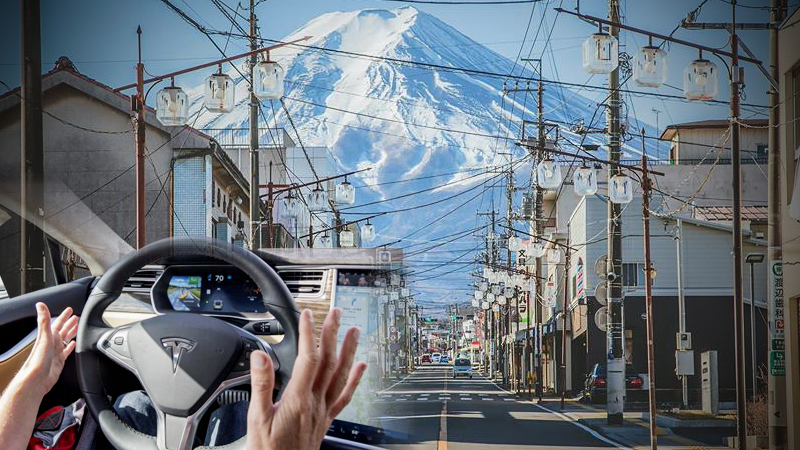
In Japan, local governments to find new uses for self-driving vehicles #ศาสตร์เกษตรดินปุ๋ย

#ศาสตร์เกษตรดินปุ๋ย : ขอบคุณแหล่งข้อมูล : หนังสือพิมพ์ The Nation

https://www.nationthailand.com/auto/30381657?utm_source=category&utm_medium=internal_referral

In Japan, local governments to find new uses for self-driving vehicles

Feb 05. 2020
By Syndication Washington Post, Japan News-Yomiuri 
The Japanese government plans to begin testing autonomous driving services around the country in fiscal 2020 through partnerships across a wide variety of industries, including logistics, welfare and tourism.

Local governments will be able to make proposals from April and promising programs are to be selected by about June. The central government plans to support the legislation and funding necessary to implement these services.

So far, the main purposes of self-driving experiments have been to reduce traffic congestion in urban areas or to provide means of transportation for elderly people in regional areas. Now, the government wants to support the spread of autonomous driving by combining it with services people use in their daily lives.

Some of the main areas envisioned for the use of self-driving technology are: mobility services through partnerships among the tourism, real estate and other industries; partnerships that combine different mobility services, such as for logistics, nursing care, and commuting to work and school; and mobile retail services.

For instance, residents could use a simple smartphone application to commute to work or school in a self-driving nursing care vehicle, or to have a self-driving bus deliver goods from a supermarket.

These services could be used as a means of transportation in areas with few transport options and to help people who live far away from stores. Nursing care service providers could use self-driving technology to monetize unused time and space.

Some municipalities are conducting independent experiments with a view to expanding the use of self-driving services.

In Kamishihoro, Hokkaido, a self-driving bus both carries passengers and delivers goods from local supermarkets. Users make a reservation or order food and other products from supermarkets on a smartphone app.

The city of Otsu provides services in English for foreign tourists through an application that links self-driving buses with tourist information.

Mercedes-Benz opens showroom in Chiang Rai #ศาสตร์เกษตรดินปุ๋ย

#ศาสตร์เกษตรดินปุ๋ย : ขอบคุณแหล่งข้อมูล : หนังสือพิมพ์ The Nation

https://www.nationthailand.com/auto/30381623?utm_source=category&utm_medium=internal_referral

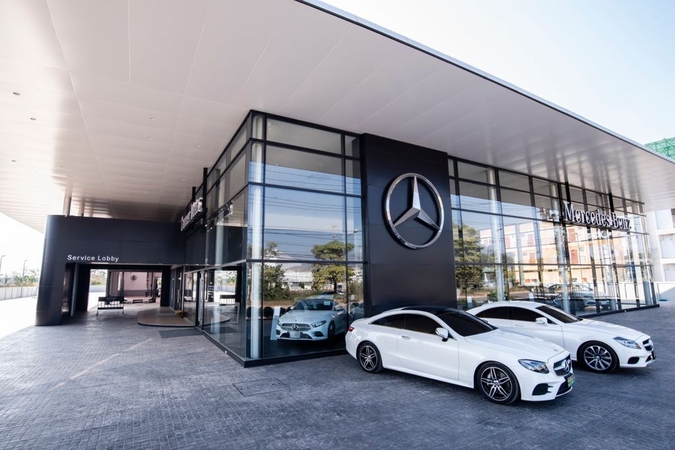
Mercedes-Benz opens showroom in Chiang Rai

Feb 05. 2020
By THE NATION

Mercedes-Benz has opened its latest showroom and service centre with Charoen Motor Chiang Rai. “Mercedes-Benz has always been committed to serving our customers across Thailand to the best of our abilities, and this commitment involves expanding our dealer network in order to enhance strength in our business around the country,” said Roland Folger, president and chief executive of Mercedes-Benz (Thailand) Limited.

“We have seen potential growth in the luxury car market in the northern region with increasing demand from target consumers over the years. This is the reason we’re opening a new showroom and service centre here today, because we want to offer more comfort to our customers and serve them better in terms of after-sales service.

“At the same time, we want them to get closer to our new line-up of Mercedes-Benz vehicles, which we will bring to our existing and prospective customers in the northern region.

“This makes it a total of 35 locations across the country, with 18 authorised dealers in Bangkok and 17 locations upcountry.”

Charoen Motor Chiang Rai occupies four rai next to Chiang Rai-Terng Road in the Mueang Chiang Rai district.

It has four repair bays able to provide maintenance service for up to 1,000 cars per year.

Tesla stock surges nearly 14%, sending short-sellers scrambling #ศาสตร์เกษตรดินปุ๋ย

#ศาสตร์เกษตรดินปุ๋ย : ขอบคุณแหล่งข้อมูล : หนังสือพิมพ์ The Nation

https://www.nationthailand.com/auto/30381602?utm_source=category&utm_medium=internal_referral

Tesla stock surges nearly 14%, sending short-sellers scrambling

Feb 05. 2020
By The Washington Post · Rachel Siegeland Faiz Siddiqui

Tesla’s red-hot run reached new heights Tuesday, as shares surged past $900 in a rally that stunned Wall Street, a dramatic reversal of fortune from the electric vehicle manufacturer’s situation just eight months ago.

Shares spiked more than 15% in morning trading, just after the automaker closed Monday up 20% at a record-high $780. Propelled by better-than-expected quarterly profits and car deliveries, Tesla now has a market cap of $160 billion – more than three times that of legacy automaker General Motors.

The stock finally closed at nearly $890, after notching a daytime high Tuesday of $969 that dropped sharply just before the market closed.

The electric-car maker often makes headlines for its eclectic co-founder and chief executive Elon Musk. But the company’s share price stands on it own. In the past six months, it’s soared 220%. This year alone, it’s up 86%, outperforming every stock in the Standard & Poor’s 500, plus bitcoin and gold.

“Tesla shares continue to move higher in an eye-popping fashion,” wrote Wedbush Securities analyst Daniel Ives. “For Musk, despite all the noise over the last year and balancing myriad projects at Tesla (while running SpaceX and launch targets) last week’s earnings [and] guidance completed a ‘comeback story for the history books.’ ”

Musk famously tweeted he had “funding secured” to take the company private in August 2018, kicking off a spate of legal and regulatory problems and investor concerns that depressed the stock through the end of that year and kicked off a volatile 2019. Meanwhile, Tesla faced mounting problems including concerns over demand, mounting quarterly losses and a shortage of cash. Ultimately, Tesla’s stock dropped to a low of about $177 in early June.

But the tides turned as Tesla beat Wall Street expectations by turning a profit in the fall. Meanwhile, demand concerns coinciding with the expiration of a federal tax credit for its vehicles never materialized. Musk’s court battles, along with his and Tesla’s regulatory scrutiny were resolved.

Last week, Tesla posted another profit, pushing stocks up further. The company said that it would increase vehicle sales by more than a third this year and that it was forging ahead on producing its next car, a compact sport-utility vehicle. The company also told investors that it should be profitable moving forward – something it has never achieved on an annual basis.

Tesla is now the second-most valuable automaker after Toyota, which is worth roughly $232 billion. But Tesla sales are a fraction of its rivals: GM and Ford each delivered more than 2 million cars in the United States in 2019. Tesla, meanwhile, delivered 367,500 vehicles globally.

This week’s advance came as billionaire investor Ron Baron said Tesla could reach “at least” $1 trillion in revenue in a decade. He said his investment firm, Baron Capital, would be holding onto its nearly 1.63 million shares because their ascent is “just the beginning.”

“It’s nowhere near ended at that point and time,” Baron said Tuesday on CNBC. “There’s a lot of growth opportunities from that point going forward.”

Tesla also got a boost after Argus Research raised its share price target to $808 from $556 on Monday. But the stock still bulldozed past those expectations at Tuesday’s open.

The rally hasn’t played well for investors betting against Tesla. Research from S3 Partners estimates that short-sellers have lost more than $8 billion since the start of 2020, which includes nearly $2.5 billion in losses on Monday’s performance. S3 Partners lists Tesla as the largest short in the domestic market.

Craig Irwin of Roth Capital Partners told CNBC that much of the attention on Tesla has come from financial heavyweights.

“I think this is largely the fear of missing out,” Irwin said. “The number of large hedge funds calling in, the number of institutional investors calling in, saying ‘Where does it stop? What’s the catalyst?’ ”

The stock surge follows a run of good news for Musk, where he’s survived several legal and regulatory battles – including a 2018 Securities and Exchange Commission settlement that required him to step aside as Tesla chairman, leaving both he and the company on the hook for separate $20 million fines.

Musk sparred with the SEC over his allegedly market-moving tweets, including one in 2018 that he had “funding secured” to take the company private at $420 a share. Last year, the SEC asked a federal judge to hold Musk in contempt over an apparent violation of the prior agreement – stemming from the 2018 tweet dispute – that would require Musk to have his communications prescreened by securities experts.

The SEC alleged Musk had issued misleading figures when he said Tesla was on pace to produce 500,000 cars last year, when in reality it would only deliver up to 400,000. Ultimately, however, the parties resolved their dispute with little fanfare, settling on an expanded criteria over which of Musk’s communications must be vetted.

In December, Musk was cleared in a civil suit brought by a cave rescue volunteer, who alleged Musk defamed him by calling him a “pedo guy” amid coverage surrounding the rescue of a Thai boys’ soccer team from a flooded cave.

Meanwhile, Tesla posted consecutive profitable quarters to round out 2019 and met the low end of its delivery estimate: 360,000 to 400,000 cars for the year.

On the company’s earnings call last week, Musk said Tesla is has started production of its Model Y, the crossover based on the platform of its best-selling Model 3, surprising investors and close observers who expected it later in the year. Tesla expects to put the first deliveries in the hands of customers by March. And Musk has said he expects the Model Y to be Tesla’s best-selling vehicle.

Meanwhile, as the company has seemed to find its footing on its core business of selling cars, Musk has sounded a lot more like a corporate CEO – tamping down expectations on some of his wilder predictions, such as a promised fleet of 1 million robotaxis by 2020. It was partially a reference to Tesla’s plans for “full self-driving,” Tesla’s Autopilot driver-assistance function that would enable vehicles to travel on city streets, highways, parking lots and elsewhere without human input. On the earnings call, Musk was asked about his promise that the system would be “feature complete” by the end of last year.

“The feature complete just means like it has some chance of going from your home to work let’s say with no interventions,” he said on the call last week. “So that’s – it doesn’t mean the features are working well, but it means it has above zero chance. So I think that’s looking like maybe it’s going to be couple of months for now.”

Hyundai Motor halts production at local plants on parts supply disruption #ศาสตร์เกษตรดินปุ๋ย

#ศาสตร์เกษตรดินปุ๋ย : ขอบคุณแหล่งข้อมูล : หนังสือพิมพ์ The Nation

https://www.nationthailand.com/auto/30381579?utm_source=category&utm_medium=internal_referral

Hyundai Motor halts production at local plants on parts supply disruption

Feb 04. 2020
Hyundai Motor workers leave the office at the main gate of the factory located in Ulsan on Tuesday afternoon, as the automaker decides to suspend all production lines at local plants in phases due to the disruption of parts supplies from China. (Yonhap)

Hyundai Motor workers leave the office at the main gate of the factory located in Ulsan on Tuesday afternoon, as the automaker decides to suspend all production lines at local plants in phases due to the disruption of parts supplies from China. (Yonhap)
By The Korea Herald/ANN

The nation’s largest automaker Hyundai Motor confirmed Tuesday it will suspend all production lines at local plants in phases due to the disruption of parts supplies from China.

The decision follows three-hour talks between the labor union and management, and the suspension is expected to last until around Monday.

The production shutdown is due mainly to the inventory shortage of wiring harnesses, which are mostly produced in China. Handmade wiring harnesses need to be laid on the floor of vehicles during their initial assembly. Because every car model uses a different wiring harness, inventories are not usually accumulated due to difficulties in management, industry watchers said.

A day earlier, Hyundai Motor President Ha Eon-tae said that closing (factories) is “inevitable” due to the “disruption of parts supplies” from China.

One of the two production lines making Genesis vehicles at the Ulsan plant was suspended earlier in the day. The line producing Porter was also suspended in the afternoon.

By Friday, production at all five plants in Ulsan will cease operations, while plants in Jeonju and Asan will also take time off on Thursday and Friday.

The management and labor union have agreed to a 70 percent wage payment for workers during the suspension period.

Its sister affiliate Kia Motors, meanwhile, began reducing production at its Hwaseong and Gwangju plants.

SsangYong Motor will also shut down its Pyeongtaek plant from Tuesday for nine days, while Renault Samsung Motors and GM Korea are checking their inventory levels and are considering canceling or delaying overtime.

The prolonged outbreak of China’s coronavirus is also posing a threat to Korean tech firms as many of their key factories are located in the country.

LG Display’s plant in Nanjing ceased operations over the weekend. LG Chem also shut down its battery plant in Nanjing, polarizer plants in Beijing and Guangzhou, and the automotive materials plant in Tianjin. SK Innovation too has suspended production lines in its Changzhou battery assembly plant.

“Stocks were secured for the Lunar New Year holiday, but supply will be tight if it turns into a prolonged outbreak,” SK Innovation said.

LG Chem said it is preparing and implementing detailed emergency plans “to minimize management risks.”

The nation’s two largest chipmakers, Samsung Electronics and SK hynix, are operating their factories with minimum personnel during the Lunar New Year holiday — which has been extended until Feb. 9 in China. Samsung’s plant is located in Xian, about 700 kilometers from Wuhan, the epicenter of the new coronavirus outbreak. SK hynix has production lines in Wuxi and Chongqing, about 600 to 800 kilometers away from the city.

Samsung said its factories are currently fully functional. Noting, “We will look closely at the situation and are considering various options.”

An SK hynix official said during an earnings conference call on Friday that the company is preparing a contingency plan because it cannot “rule out the possibility of the operations being affected” if the situation is prolonged.

“The industries with long tails in the supply chain, such as automobiles and information technology, will suffer first. But, other manufacturing sectors may also gradually see disruption in their supply chains because almost everything is produced in China,” said Chung In-kyo, a professor at Inha University.

By Shin Ji-hye (shinjh@heraldcorp.com)

Tesla surges past $700 on Panasonic profit, bullish price target #ศาสตร์เกษตรดินปุ๋ย

#ศาสตร์เกษตรดินปุ๋ย : ขอบคุณแหล่งข้อมูล : หนังสือพิมพ์ The Nation

https://www.nationthailand.com/auto/30381552?utm_source=category&utm_medium=internal_referral

Tesla surges past $700 on Panasonic profit, bullish price target

Feb 04. 2020
A Tesla logo marks a parking bay at a supercharger station in Girona, Spain, on July 10, 2019. MUST CREDIT: Bloomberg photo by Angel Garcia.

A Tesla logo marks a parking bay at a supercharger station in Girona, Spain, on July 10, 2019. MUST CREDIT: Bloomberg photo by Angel Garcia.
By Syndication Washington Post, Bloomberg · Esha Dey 

Tesla Inc.’s shares rallied for a fifth day Monday, adding more than $100 per share, as a torrent of good news further boosted investor sentiment.

The stock rose as much as 21% to $786.14, its highest price ever, and the stock’s best intraday gain since May 2013.

Earlier Monday, Panasonic Corp., which makes batteries for Tesla at its jointly operated battery plant in Nevada, said the business turned profitable in the quarter ended Dec. 31. The rapid increase in Tesla’s output helped push that business into the black, Panasonic Chief Financial Officer Hirokazu Umeda told reporters in Tokyo on Monday, declining to give specific figures.

Another boost came from Argus analyst Bill Selesky, who raised his price target on Tesla to a Street-high of $808 from $556, reflecting revenue growth from the legacy Model S and Model X cars, as well as strong demand for the new Model 3, which accounted for more than 80% of fourth-quarter production.

“Despite past production delays, parts shortages, labor cost overruns, and other difficulties, we expect Tesla to benefit from its dominant position in the electric vehicle industry and to improve performance in 2020 and beyond,” the analyst wrote in a note to clients. Selesky reiterated a buy rating.

Also, over the weekend, ardent Tesla bull Catherine Wood of ARK Investment Management said in an interview with Bloomberg that the stock is still “incredibly undervalued.” According to ARK’s latest note, published on Jan. 31, its 2024 expected value per share for Tesla is $7,000.

Lastly, Baillie Gifford & Co, Tesla’s biggest outside shareholder after CEO Elon Musk, increased its stake in the company, according to a regulatory filing earlier today. Baillie Gifford now holds a 7.67% stake in the company, up from 7.46% previously.

After kicking off 2019 on unsure footing, with doubts about demand and profitability swirling and weighing on the shares, Tesla’s stock bounced back in the second half of the year and has taken off over the past few months, as the company posted profits for both the third and fourth quarters, deliveries impressed investors and a China factory came online faster than expected.

Tesla shares have now risen 83% in just 2020 alone, and have tripled in value since third-quarter results were reported in mid-October.