Swag EV launches ‘powerful’ electric motorbikes in Thailand #ศาสตร์เกษตรดินปุ๋ย

#ศาสตร์เกษตรดินปุ๋ย : ขอบคุณแหล่งข้อมูล : หนังสือพิมพ์ The Nation

https://www.nationthailand.com/auto/30381177?utm_source=category&utm_medium=internal_referral

Swag EV launches ‘powerful’ electric motorbikes in Thailand

Jan 28. 2020
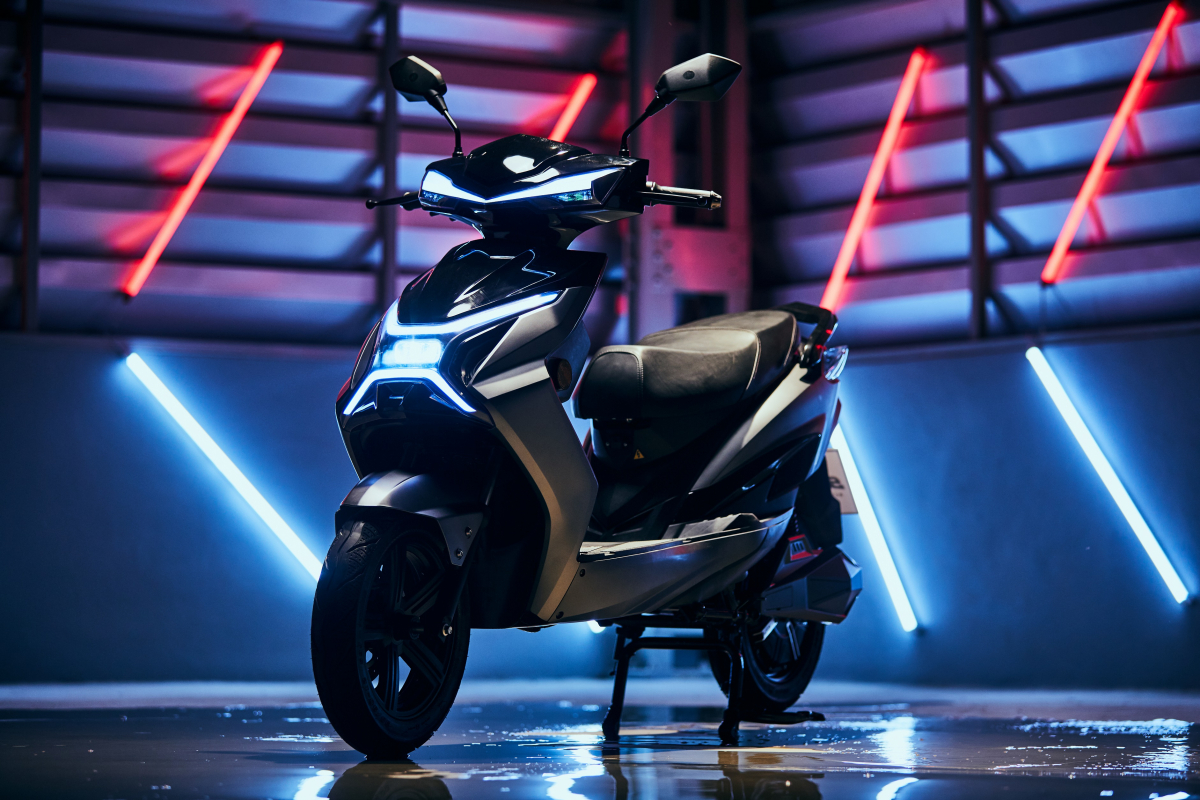
Swag EV Type S

Swag EV Type S
By The Nation

Swag EV is offering an eco-friendly alternative to urbanites, introducing its flagship electric motorcycles at its first showroom in Thailand at Siam Square One.

According to a company statement, Swag EV (Supreme Wagon Automotive Group Electric Vehicle) motorcycles “are environmentally friendly and suit every lifestyle, from city life to the great outdoors”.

Swag EV Type X

Swag EV Type X

The motorcycles come with removable batteries that can be plugged into an electric socket for charging and “take only 2-3 hours to fully charge. They can cover a distance of 80-90 kilometres on a full charge”.

The launch event was joined by Toni Rakkaen and Baifern – Pimchanok Luevisadpaibul – together with motorcycle expert and motorsport event emcee John Rider – Ariyapong Charoensuk.

Swag EV rolled out two flagship models – the Type-X and the Type-S. The 2000W brushless hub-motors were developed by Bosch, a leader in automobile technology from Germany, and delivers impressive acceleration, the company said.

The motorcycles also come with a detachable 60-volt 26 AH battery from Samsung.

“Swag electric motorcycles are equipped with high-performance lithium-ion batteries, as well as other modern technologies developed for lightweight yet powerful electric motorcycles. Both models are now available at Swag EV’s showroom on the 2nd floor of Siam Square One. The Type-S model is priced at Bt62,900, while the Type-X costs Bt65,900,” the firm added.

“The future of electric mobility is here and we are honoured to officially launch our products and services in Thailand,” executive director Janson Chen said. “Swag EV was created on the idea of wanting to bring smarter, better mobility to urban life without the consequences of damaging the environment. We are not just a motorcycle manufacturer: our main focus lies on cutting edge IoT technologies and creative branding collaboration with designers and celebrities. We strongly believe the EV industry is growing rapidly in Southeast Asia and we wish to position ourselves among one of the most important players,” he added.

Said motorcycle expert Ariyapong: “I always use a motorcycle because it is convenient and it’s faster in traffic. I love the specifications of Swag EV because they use Bosch motors, while the very important battery is made by Samsung. The prices are also very reasonable, and the motorcycles are registered, so I think they are very interesting choices.”

Swag EV was founded in Singapore.

Hyundai Motor sales surpass W100tr ($90 bn)for first time in 2019 #ศาสตร์เกษตรดินปุ๋ย

#ศาสตร์เกษตรดินปุ๋ย : ขอบคุณแหล่งข้อมูล : หนังสือพิมพ์ The Nation

https://www.nationthailand.com/auto/30380927?utm_source=category&utm_medium=internal_referral

Hyundai Motor sales surpass W100tr ($90 bn)for first time in 2019

Jan 22. 2020
Hyundai Motor Group

Hyundai Motor Group
By The Korea Herald/ANN

Automaker sees boost from higher-end models; firm to maintain year-end dividend at the 3,000 won level.

Hyundai Motor Group said Wednesday that its sales last year hit a record high of 105 trillion won ($90 billion), surpassing the 100 trillion won mark for the first time, and its operating profit grew more than 52 percent.

The conglomerate is the third to join the so-called “100 trillion won club,” after Samsung Electronics in 2008 and SK in 2018.

Hyundai Motor’s sales exceeded 90 trillion won in 2015.

According to Hyundai Motor’s 2019 financial statements, its annual sales rose by 9.3 percent on-year to 105.79 trillion won.

The company said its operating profit was 3.68 trillion won in 2019, up 52.2 percent from the previous year, with its operating profit rate reaching 3.5 percent, up 1 percentage point from the previous year. Its net profit recorded 3.26 trillion won, an increase of 98.5 percent over the same period.

The automaker attributed last year’s performance to increased sales of its Genesis luxury brand and profitable sport utility vehicles such as the Palisade.

The weakened Korean won also played a role in the company’s increased profitability, industry sources said.

“We will continue the sales momentum with the latest launch of GV80 as well as other main models including Avante and Tucson that are soon to be launched,” said a Hyundai Motor official.

“Although business uncertainties lie ahead of us, we will do our best to achieve an operating profit rate of 5 percent this year through an optimized strategy for profitability, improved cost effectiveness and the expansion of new models and sales of SUVs,” an official added.

The company also vowed to enhance the profitability of eco-friendly cars this year, accelerate its push to become a smart mobility solution provider and actively expand investment in setting up a new mobility ecosystem based on automotive driving and mobility service.

A total of 4.42 million vehicles were delivered last year. The number had inched down by 3.6 percent, mainly due to the global trends toward reduced automotive demand and increased use of car-sharing services.

According to Hyundai Motor, its goal is to sell 4.57 million cars globally this year, including around 732,000 in Korea and about 3.84 million abroad.

Meanwhile, the company said it had decided to maintain the same 3,000 won level for its 2019 year-end dividend.

Total dividends amounted to 790.4 billion won, in line with a 2.4 percent market price dividend rate for common stock and 3.7 percent for preferred stock.

By Kim Da-sol (ddd@heraldcorp.com)

Registration of electric vehicles rose by 380 per cent #ศาสตร์เกษตรดินปุ๋ย

#ศาสตร์เกษตรดินปุ๋ย : ขอบคุณแหล่งข้อมูล : หนังสือพิมพ์ The Nation

https://www.nationthailand.com/auto/30380873?utm_source=category&utm_medium=internal_referral

Registration of electric vehicles rose by 380 per cent

Jan 21. 2020
By The Nation

There has been a sharp increase in the number of electric vehicles registered in 2019, according to the Electric Vehicle Association of Thailand (EVAT).

According to the statistics of the Department of Land Transport, as of December 31, 2019 there were 2,854 electric vehicles (EV) registrations, including 1,572 new cars, up 380 per cent over 2018 when only 325 vehicles were registered.

Meanwhile, hybrid electric vehicles (HEV) and plug-in hybrid electric vehicles (PHEV) reached a total of 153,184 vehicles.

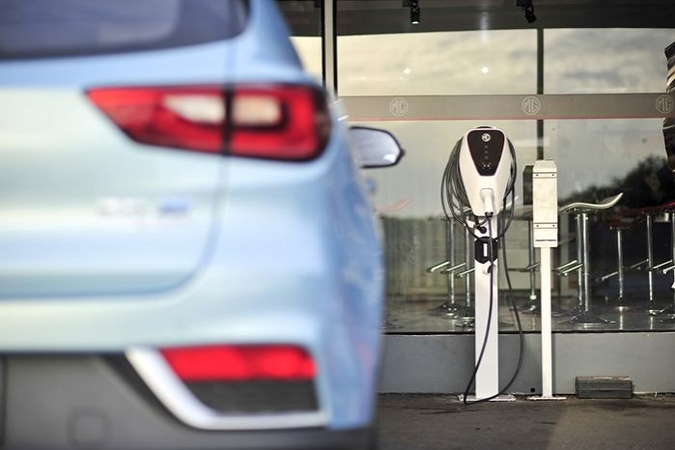
“The growth rate of PHEV and EV is up more than 51 per cent from a year earlier,” Yossapong Laoonual, EVAT president, said. “The increase in electric vehicle registration will have an effect shortly as the need for charging stations will increase as well. Therefore, this year may see full model commercial charging stations, with the private sector playing an increasingly important role.”

The EVAT has the policy to promote and support the exchange of academic knowledge about technology and innovation for all types of electric vehicles including regulatory, standards and operations consultation in the development of electric vehicle technology in Thailand. There are more than 200 members from the private sector, educational institutions, state enterprises and individuals.

Waymo’s long-term commitment to safety drivers in autonomous cars #ศาสตร์เกษตรดินปุ๋ย

#ศาสตร์เกษตรดินปุ๋ย : ขอบคุณแหล่งข้อมูล : หนังสือพิมพ์ The Nation

https://www.nationthailand.com/auto/30380769?utm_source=category&utm_medium=internal_referral

Waymo’s long-term commitment to safety drivers in autonomous cars

Jan 19. 2020
A Waymo Chrysler Pacifica autonomous vehicle in Chandler, Ariz., on July 30, 2018. MUSTS CREDIT: Bloomberg photo by Caitlin O'Hara.

A Waymo Chrysler Pacifica autonomous vehicle in Chandler, Ariz., on July 30, 2018. MUSTS CREDIT: Bloomberg photo by Caitlin O’Hara.
By Syndication Washington Post, Bloomberg · Ira Boudway, Joshua Brustein 

Alphabet Inc.’s Waymo took a big step forward last fall when it began ferrying riders around the Phoenix area in robotaxis without human safety drivers. Humans have been behind the wheel for almost all of the 20 million miles of testing the company says it’s completed on public roads.

The driverless rides in Arizona don’t mean the end for Waymo’s human operators. Last summer, the company quietly finalized a multiyear contract with Transdev North America, which provides bus drivers, streetcar conductors and other transportation workers to airports and cities. The partnership is an acknowledgement that Waymo will be relying on test drivers for many years to come.

“For the foreseeable future, as we expand and are driving in some of these new areas, it’s critical that we have vehicle operators,” said Rocky Garff, Waymo’s head of operations. “They’re part of the equation that gets us to fully self-driving.”

Rather than supply Waymo with contractors for its driving operations, the deal provides test-driving as a service-a subtle but key distinction. Transdev replaces a handful of staffing companies that have subcontracted drivers to Waymo. Under those previous arrangements, drivers could work for only two years at a time with six-month breaks between stints-a rule meant to shield Waymo from claims that it was their employer.

The partnership puts more legal space between the drivers and Waymo, allowing them to stay on indefinitely, as employees of Transdev. The value of the deal in its first year is in the tens of millions of dollars, and could eventually reach nine figures, according to someone with direct knowledge who asked not to be named discussing private business details.

For the new contract, Waymo required bidders to guarantee they’d hire drivers as full-time employees and to articulate a strategy for career development, according to a person familiar with the process. “We’re working on having a much clearer career path for these operators,” Garff said.

Before Transdev, the goal for many safety drivers was to get hired as a Waymo employee, also known as a “white badge,” before the clock ran out. “Everyone’s dream is to become a full-time employee through Waymo,” said Morgan, a 26-year-old driver who was provided by the company for an interview and who asked to be identified by only his first name. Morgan started driving for Waymo in the summer of 2018 through Adecco USA, a staffing company that supplies about 70,000 temporary workers to hospitals, warehouses, factories and call centers. Until the Transdev deal, Adecco served as Waymo’s chief source of drivers.

Morgan said he’s glad for the change to Transdev. As he approached his one-year anniversary, he’d begun looking for other work. “I was definitely excited because I was kind of getting to that not-quite-panic point,” he said. He also said that Adecco oversold the possibility of getting hired by Waymo. “I remember in my interview, they were like, ‘Three people just got hired on full time,’ but they didn’t mention the size of the fleet, the positions they got hired for and what kind of experience they had.” Adecco, in an emailed statement, said this does not square with its policies and procedures. “We are very clear that our roles at Waymo are temporary, not temp-to-hire positions,” the statement said.

Two former drivers who worked under Adecco told Bloomberg they’d also held out hope of direct employment at Waymo. (The drivers spoke under condition of anonymity for fear of hurting future job prospects.) But staff positions were scarce and the competition fierce. The promotion process, according to the former drivers, was opaque. Adecco managers were formally in charge of performance reviews but were rarely around. “I don’t think I even went to an Adecco office ever, except to turn in my badge and equipment,” said one of the drivers. “It was all Waymo all the time.”

“Feedback from our associate base has been largely positive, and our employee care teams are entirely dedicated to addressing their questions, input or concerns,” Adecco said in its statement.

Transdev’s record as an employer isn’t without its own controversies. It’s faced multiple strikes in recent years from unions representing workers in public transportation services it operates in the U.S., including a weeklong strike in Phoenix in 2015, where talks stalled over salary, the company’s approach to benefits and its bathroom break policy. Transdev also faces several open National Labor Relations Board complaints about working conditions.

In a statement provided by Waymo, Transdev North America Chief Executive Officer Yann Leriche said the partnership would create a “high functioning operating environment focused on safety, quality, employee engagement and a positive customer experience.” A Transdev spokesperson declined to answer additional questions.

Veena Dubal, a law professor at the University of California at Hastings who specializes in gig work and the tech industry, said technology companies want to directly employ as few people as possible in part to avoid liability, a consideration that’s particularly germane in a field such as autonomous vehicles, where there’s inherent physical risk. If a self-driving car with a test pilot is involved in an accident, Dubal said, Waymo could argue it hired Transdev specifically for its expertise in test-driving. “They could just employ everyone, protect them and say, ‘This is the cost of doing business in the autonomous-driving world,’ ” she said. Waymo declined to comment on whether liability concerns were a factor in retaining Transdev.

Despite their complaints about Adecco, the drivers who were interviewed said Waymo test-pilot gigs aren’t bad. “Not only do I get to drive around in a cool car all day,” said Morgan, “I’m doing something that I think is going to change the future. And it’s going to hopefully make roads safer for not only myself, but hopefully for my kids and for everybody else’s kids.”

Under Adecco, pay started at about $20 per hour. Most time was spent as a passenger, being driven around the sunny Phoenix suburbs. “I was telling my friends it was the greatest scam I had ever uncovered,” said one former driver. “It was an awful lot of money for an awful little bit of work.”

The greatest difficulty of the job, according to multiple former drivers, is staying alert through the dull, repetitive hours of cruising. One took breaks to do jumping jacks, rolled down the windows and turned up the radio to combat drowsiness. “You really go into podcasts,” said another. Still, the driver said, not everyone stayed alert all the time. “We even had people eat full meals behind the wheel, which is not safe.”

Drivers are keenly aware of the contradiction at the heart of their jobs. “The whole goal is to work to eliminate your own position, which is a really weird thing to come in every day thinking,” said one former driver.

Withholding the white badge is one of many ways Waymo reminds its drivers that it’s looking forward to the day when they’re no longer around. Both drivers and riders are instructed to keep interactions minimal. “It was a very awkward experience,” said a former driver. “They’re instructed not to talk to you. They’re supposed to treat it like it’s a completely unmanned vehicle.”

“You could say hi,” said another. “And then you would be quiet to try to simulate an actual self-driving car.”

Toyota pumps another $700 million into American SUV expansion #ศาสตร์เกษตรดินปุ๋ย

#ศาสตร์เกษตรดินปุ๋ย : ขอบคุณแหล่งข้อมูล : หนังสือพิมพ์ The Nation

https://www.nationthailand.com/auto/30380746?utm_source=category&utm_medium=internal_referral

Toyota pumps another $700 million into American SUV expansion

Jan 18. 2020
By Syndication Washington Post, Bloomberg · Chester Dawson 

Toyota Motor Corp. has poured more money into yet another North American plant to boost production of the SUVs and trucks U.S. customers increasingly seek instead of sedans.

The Japanese automaker said Friday it has spent $700 million and hired 150 new workers at its plant in Princeton, Indiana, mostly to increase production of its Highlander sport utility vehicle.

The outlay is part of a $1.3 billion injection into the factory and a broader pledge by Toyota to invest $13 billion at its U.S. facilities through next year, about half of which the company will detail into next year. The spending – which has helped Toyota fend off tariff threats made by President Donald Trump – is designed to align production with demand for more SUVs and trucks.

As sales of once-dominant sedans including the Corolla and Camry have dropped, Toyota has had a hard time maintaining enough stock of its best-selling RAV4 crossover and growing range of hybrids. The shift in demand has already prompted the company to revamp factories in Kentucky, Texas and Ontario in just the last year and shift more SUV assembly to the U.S. market.

“Part of Toyota’s tremendous success in North America is building vehicles where we sell them,” Christopher Reynolds, Toyota’s chief administration officer in North America, said in a statement.

The investment in Princeton boosts the plant’s annual capacity by almost 10% to 420,000 vehicles and focuses production on the conventional mid-size Highlander and a gas-electric hybrid version. Toyota said it will shift output of the full-size Sequoia SUV from Indiana to a truck factory in Texas in 2022.

That should allow the company to improve productivity in Princeton, which made about 362,000 vehicles last year but was capable of manufacturing 383,000. The Highlander accounted for 73% of the total, trailed by Sienna’s 24% and Sequoia’s 2.5%.

To make room for the Sequoia alongside the full-size Tundra truck at its San Antonio plant, Toyota will stop producing the mid-size Tacoma there next year and move all manufacturing of that popular pickup to two factories in Mexico that already assemble the model.

Capacity in San Antonio will remain at 208,000 vehicles a year and no jobs will be cut, the company said.

It’s not clear what will make up for the slack left by the Tacoma. About 40% of the more than 275,000 Tacomas produced last year were built in San Antonio, where Toyota said it is spending $391 million on “multi-vehicle production capabilities” for unspecified models.

Tesla faces federal review of complaints its cars accelerate without warning #ศาสตร์เกษตรดินปุ๋ย

#ศาสตร์เกษตรดินปุ๋ย : ขอบคุณแหล่งข้อมูล : หนังสือพิมพ์ The Nation

https://www.nationthailand.com/auto/30380742?utm_source=category&utm_medium=internal_referral

Tesla faces federal review of complaints its cars accelerate without warning

Jan 18. 2020
File Photo of Tesla cars

File Photo of Tesla cars
By The Washington Post · Ian Duncan, Faiz Siddiqui

WASHINGTON – The federal auto safety regulator said Friday that it has begun a review of complaints that Tesla cars have suddenly accelerated, crashing into a palm tree in one instance, and walls, a fire hydrant, and parked cars in others.

A photo included in the agency’s complaint records shows a Tesla Model S that smashed through a wall in a person’s home after they tried to park in their garage.

The National Highway Traffic Safety Administration has received 127 similar complaints about sudden acceleration resulting in 52 injuries. Their inquiry into the incidents could involve as many as half a million vehicles, according to the agency’s summary of the review.

While many of the complaints involve allegations that the driver was parking when their car suddenly sped away, a few of the complaints involve high-speed incidents recorded by law enforcement.

A witness to a 10-vehicle crash on a Oregon highway in August told police that it appeared a speeding Tesla Model 3 that careened through traffic “was not controllable and that it seemed like she was watching a movie.”

NHTSA said it launched the review after receiving what’s known as a defect petition, a type of complaint that members of the public can use to compel the agency to act. The review involves Model S and 3 sedans and Model X SUVs in model years 2012 through 2019.

“As is the agency’s standard practice in such matters, NHTSA will carefully review the petition and relevant data,” the agency said in a statement.

Tesla, which makes electric vehicles only, did not respond to a request for comment.

The review is the second that NHTSA has launched involving Tesla in recent months: In November, it said it would review complaints about battery defects.

Automakers have faced complaints about their vehicles suddenly accelerating before, but it has proved difficult to determine whether a defective design or the driver was at fault. Jason Levine, the director of the Center for Auto Safety, said the amount of data Tesla collects on its vehicles could lead to greater clarity, and he hoped NHTSA would force them to turn over the information.

A McLean, Virginia, woman’s husband filed a complaint with the agency after her Model 3 crashed in her parking garage at work last April. The woman said she was trying to roll forward into a parking space when, “I felt like someone had taken control from me.”

The car smashed into a pole and was totaled, said the woman, who asked that her name not be used to protect her privacy. Her husband said Tesla investigated and told them the accelerator was pushed all the way down, a conclusion they reject.

The woman’s experience was typical, according to a review of the Tesla complaints in NHTSA’s records. People reported vehicles approaching parking spaces or garage doors – or otherwise traveling at a low speed – when they violently lurched forward despite an apparent lack of accelerator input from the driver.

In some of the complaints, people reported that Tesla refused to turn over computer reports on the force of the pedal or the incident logs from the episodes and blamed driver error.

Details of the Oregon crash were submitted to NHTSA by police, who told the federal agency that witness accounts “appear to verify” the driver and passenger’s account that the car experienced unintended acceleration.

The complainants themselves insisted they hadn’t depressed the accelerator pedal. One couple, a 42-year-old pilot and 37-year-old physician, said they both experienced instances of sudden unintended acceleration in the span of about two weeks.

Several of the drivers suspected Tesla’s advanced driver-assistance suite, Autopilot, was a potential culprit. In one instance, a driver in Olympia, Washington, said they were attempting to park their Tesla Model S at a Costco when “the car bolted.”

“It felt like it was in Autopilot mode without me engaging it manually,” the complaint said. “I can still drive the car and feel fairly safe as I believe the computer accidentally engaged the Autopilot and now the Autopilot isn’t operational. However, I no longer trust this car.”

Renault-Nissan alliance being rebuilt after Carlos Ghosn era #ศาสตร์เกษตรดินปุ๋ย

#ศาสตร์เกษตรดินปุ๋ย : ขอบคุณแหล่งข้อมูล : หนังสือพิมพ์ The Nation

https://www.nationthailand.com/auto/30380701?utm_source=category&utm_medium=internal_referral

Renault-Nissan alliance being rebuilt after Carlos Ghosn era

Jan 17. 2020
Jean-Dominique Senard, chairman of Renault, in Paris on Oct. 11, 2019. MUST CREDIT: Bloomberg photo by Christophe Morin.

Jean-Dominique Senard, chairman of Renault, in Paris on Oct. 11, 2019. MUST CREDIT: Bloomberg photo by Christophe Morin.
By Syndication Washington Post, Bloomberg · Tara Patel

Renault Chairman Jean-Dominique Senard said the two-decade automotive partnership with Nissan has moved on from the Carlos Ghosn era, dismissing reports it’s in danger of collapse and signaling the “anguish” of last year is over.

The governing board is working “very satisfactorily,” made up of responsible members who back the alliance and want to make it a success, Senard, 66, told reporters in Paris on Thursday. Nissan’s governance has also been revolutionized and now has a properly functioning board and executives who favor the partnership, he added.

A next step will be the naming of a new chief executive officer for Renault, which is expected relatively soon, the chairman said.

The future of the partnership was thrown into turmoil over the past year after the arrest of Ghosn, who led both carmakers and headed the alliance that also includes Mitsubishi Motors Corp. Detained in Tokyo in November 2018 and charged with financial misconduct, Ghosn fled Japan at the end of last month to escape trial. He has denied the charges.

In a wide-ranging 1 1/2-hour discussion, Senard said he was “surprised and shocked” by a report in the Financial Times this week that Nissan, since Ghosn’s escape, had accelerated secret contingency planning for a potential split with its French partner.

“It’s fake news, malicious and goes totally against the reality,” said Senard, who added that the partnership is being rebuilt with new top management at both companies.

The board of the alliance will decide on new, common projects at a meeting this month, and the partnership is moving toward greater convergence of platforms and technology in the face of the massive investment needed to develop new cars, said Senard.

While he declined to comment on Ghosn’s escape or his subsequent attacks on the performance of the alliance at a press conference last week, he didn’t hold back on criticism, describing a “toxic” atmosphere that long reigned between Renault and Nissan stemming from a lack of decision making.

Senard also had strong words for RNBV, the entity that led the alliance, which he said was supposed to be the nerve center of the partnership but was instead an expensive and totally inefficient operation.

Bloomberg reported Monday that since last year Nissan has been exploring the pros and cons of sustaining the alliance, particularly when it comes to engineering and technology sharing, according to a person familiar with the matter. It’s unclear how feasible any separation would be given that Renault is Nissan’s biggest shareholder and has been pushing to repair ties.

Nissan and Renault both denied that the alliance would be dissolved.

Ghosn held the partnership together for years despite a lopsided shareholding relationship favoring Renault that was put in place when Nissan was financially ailing. The French carmaker owns 43% of Nissan, with full voting rights, while the Japanese company holds only a 15% stake in Renault and lacks the ability to vote its shares. Yet Renault’s power within Nissan is crimped by a shareholder agreement known as Rama.

“I’ve never seen a structure like this, with one group having 43% of the other but in reality having no legal power,” Senard said. “It’s baroque and completely extraordinary.”

While changing the shareholding structure “isn’t the priority,” he said it could evolve in the future and also take in new partners.

“The alliance is 20 years old and really needed a serious overhaul,” he said, adding that the “anguish” he felt last year is over and he hopes to be able to show in 2020 that the partners are doing better.

Detroit braces for year of slower sales by idling auto plants #ศาสตร์เกษตรดินปุ๋ย

#ศาสตร์เกษตรดินปุ๋ย : ขอบคุณแหล่งข้อมูล : หนังสือพิมพ์ The Nation

https://www.nationthailand.com/auto/30380682?utm_source=category&utm_medium=internal_referral

Detroit braces for year of slower sales by idling auto plants

Jan 17. 2020
By Syndication Washington Post, Bloomberg · Gabrielle Coppola 

Fiat Chrysler is sending workers home at four factories. Ford has two operating on fewer shifts and two others no longer building discontinued products. And General Motors Co. may dial back output despite being just a couple months removed from enduring its longest strike in almost half a century.

Detroit’s three automakers are bracing for a slower year of U.S. sales by tapping the brakes on production. And they’re not alone: Researcher LMC Automotive projects that five of the six largest North American manufacturers will assemble fewer vehicles this quarter than a year ago.

Arguably the biggest concern the auto industry has going into 2020 is how much longer the good times will last after years of strong demand and rich pricing. While companies just sold over 17 million vehicles for a fifth consecutive year, more of their volume went to rental companies and other fleet purchasers. American consumers, who have been buying fewer new cars and trucks for several years, are finding them less affordable as the average window sticker approaches $35,000.

“It’s hard to argue why consumers would buy more vehicles this year, given these higher price points, given we’re so long in the tooth in this economic recovery period,” Charlie Chesbrough, senior economist at Cox Automotive, said during a presentation in Detroit this week.

Fiat Chrysler’s expected cutbacks are the least surprising. The Italian-American automaker built up a stock of as many as 70,000 unassigned vehicles in December, rankling sales staff who were forced to work overtime coaxing dealers to place orders. The pileup contributed to discounts the company billed as its most aggressive since 2008.

The carmaker is idling plants making minivans in Ontario and Jeep Cherokee sport utility vehicles in Illinois this week and next. It’s also pausing production for a few days in January at two Mexico factories that assemble key models including Ram trucks and Jeep Compass SUVs, according to a spokeswoman. LMC estimates the company will reduce North American production by about 5% from a year ago.

“We always balance our inventories with our dealers,” Jim Morrison, the head of Jeep for North America, said in a Jan. 13 interview. “We want to make sure there’s a good balance.”

LMC’s expectation for a small decline in GM production is a bit more confounding. United Auto Workers union members walked off assembly lines for 40 days last fall, costing the carmaker about $2.9 billion. Still, the company is expected to trim output by almost 2%.

Ford, which is projected to pare back by about 5%, has plants in Kentucky and Michigan each running one fewer shift than a year ago. A factory in Mexico is down while preparing to make the Mustang Mach-E electric crossover, while an Ontario facility stopped building the discontinued Ford Flex and Lincoln MKT models.

Honda Motor Co. is expected to make the most significant cut at 11%, while Toyota Motor Corp. is the only one of the top six producers LMC sees manufacturing more vehicles than a year ago. Industrywide, output may be little changed.

Most automakers anticipate weaker demand in 2020 and are trying to trim inventory accordingly, said Sam Fiorani, vice president at AutoForecast Solutions in Chester Springs, Pennsylvania.

“Further slowing of production – either less overtime or week-long closures – is expected in the first and second quarters to keep inventories from getting out of control,” he said.

VW CEO urges ‘radical overhaul’ to tackle technology shift #ศาสตร์เกษตรดินปุ๋ย

#ศาสตร์เกษตรดินปุ๋ย : ขอบคุณแหล่งข้อมูล : หนังสือพิมพ์ The Nation

https://www.nationthailand.com/auto/30380676?utm_source=category&utm_medium=internal_referral

VW CEO urges ‘radical overhaul’ to tackle technology shift

Jan 17. 2020
By Syndication Washington Post, Bloomberg · Christoph Rauwald

Volkswagen Chief Executive Officer Herbert Diess told top managers that the world’s largest automaker needs to undergo a “radical overhaul” in the face of industry change or risk being pushed aside.

“The time of traditional car manufacturers is over,” Diess said in prepared remarks at an internal meeting on Thursday. The company must boost software operations to harness data from future cars, he said, citing a recent surge in electric-car rival Tesla’s share price as evidence of a changing competitive landscape.

Diess has called for deep changes at the industrial giant before, but his latest comments add a sense of urgency and risk reigniting tension with labor unions because he raises the possibility of additional cost cuts. It may be necessary to “slaughter holy cows” for VW to reach its full potential, he said.

His remarks echoed comments by former Porsche CEO Wendelin Wiedeking a decade ago during his bold attempt to take over control of much-larger Volkswagen. The comment sparked fierce clashes with VW’s workforce. Wiedeking succeeded in acquiring a majority stake in VW but ran out of funds when the financial crisis erupted. The sportscar maker was folded into VW and Wiedeking left.

If VW fails to keep up with data and software, it could end up like Nokia, which overlooked the threat posed by Apple’s iPhone, Diess warned, calling for a stronger focus on profits and cash.

So far, VW has been relatively resilient to industry headwinds, eking out a small sales gain last year and record deliveries. Global demand for new vehicles declined in 2019 as sales in China, VW’s largest market, contracted and trade disputes stoked uncertainty across regions.

VW executives must recognize “the magnitude of our task and the brevity of time” the company has left to react, Diess said. “It gives us exactly one single try.”

VW, Nissan chase African market where car loans are rare #ศาสตร์เกษตรดินปุ๋ย

#ศาสตร์เกษตรดินปุ๋ย : ขอบคุณแหล่งข้อมูล : หนังสือพิมพ์ The Nation

https://www.nationthailand.com/auto/30380459?utm_source=category&utm_medium=internal_referral

VW, Nissan chase African market where car loans are rare

Jan 13. 2020
Heavy automobile traffic passes by Makola market in Accra, Ghana, on March 15, 2018. MUST CREDIT: Bloomberg photo by Nicholas Seun Adatsi.

Heavy automobile traffic passes by Makola market in Accra, Ghana, on March 15, 2018. MUST CREDIT: Bloomberg photo by Nicholas Seun Adatsi.
By Syndication Washington Post, Bloomberg · Yinka Ibukun

Volkswagen and Nissan are among automakers planning new plants in Ghana to target West Africa’s 382 million people. Their challenge: Finding banks that will offer loans to make new cars affordable.

In a country where about 70% of imports are second-hand, new car ownership is rare, said Believe Alorbu, who sells older models shipped from the U.S. at half the price of a new one.

“People will sometimes leave the plastic wrapping on their seats” when they buy new cars, she said at her dealership in the capital, Accra. “Even if the government increases tariffs on used cars, people will still not be able to afford new ones if they don’t get access to financing.”

Less than 5% of new car sales are financed by banks, according to the Ghana Automobile Dealers Association. In some cases, lenders demand employers agree to redirect part of the purchaser’s salary toward the debt, or that the owner take out insurance to cover a default. Interest rates of 22%-30% also make loans “largely” unaffordable, said Koketso Tsoai, an auto-industry analyst at Fitch Solutions.

Once their facilities are running, VW, Toyota, Nissan, and possibly Renault will need to contend with second-hand cars like those sold by Alorbu. Ghana’s government is trying to make it more attractive with planned import duties on second-hand cars of 35%, from 5%-20%, and tax breaks that improve as the companies move from assembly to local production. It has also pledged to promote regional exports.

“We don’t look at it only for today,” Nissan Africa Chairman Mike Whitfield said by phone from Cairo. “We continue to see Africa as the last frontier left in the automotive market, West Africa being a key part of it.”

About 10% of West Africa’s population are able to spend more than $11 a day, according to data compiled by World Data Lab. It is this group that the industry is targeting on a continent that adds some 10 million new consumers annually. By 2030, Africa’s middle- and upper-income class is expected to exceed 300 million of the world’s 4-billion consumer market, the data shows.

Standard Bank Group Ltd., Africa’s largest lender, is also preparing for future growth by replicating its South African car-financing business in other parts of the continent, including Ghana.

About three quarters of auto loans still go to companies, Patrick Koduah, head of vehicle and asset finance at the company’s Stanbic Ghana unit, said in an interview. “There’s a huge opportunity to grow personal demand.”

About 30,000 passenger vehicles were imported into Ghana in 2018, according to estimates from Fitch Solutions. Ghana had 7,073 new vehicle registrations in 2018, of which 4,268 were passenger cars, according to the International Organization of Motor Vehicle Manufacturers.

While the government has said its auto-incentives program would include the creation of an asset-based vehicle financing component, a trade ministry spokesman couldn’t provide details on how it would work.

Pan-African lender Ecobank Transnational Inc. said in an email that the average car loan in Ghana amounts to $30,000. Banks typically demand a high down payment and limit loans to no longer than five years if they do grant credit, while dealers sometimes allow buyers to spread repayments over six months.

More than 90% of new vehicle sales in South Africa, the continent’s biggest market, are probably financed, Thomas Schaefer, the head of Volkswagen’s local unit, estimated. The country had a penetration rate of 132 passenger cars per 1,000 people in 2019, compared with 22 per 1,000 people in Ghana, according to Fitch Solutions.

“If I would take out the financing options in South Africa, our market would disappear,” Schaefer said.

The Wolfsburg-based carmaker plans to start a ride-hailing service in Accra, modeled after a similar one in the Rwandan capital, Kigali, to ensure its output is absorbed.

“The assumption is that in Africa, out of the more than 1 billion people, there are only about 100 million people who can afford a new car, but you may have a couple 100 million people who need to go from A to B and a bit of money in their pocket,” said Schaefer. “You need to tap into this market.”

Nissan sees its assembly plant starting by the end of the year, depending on when Ghana’s auto-policy is signed into law. Volkswagen plans to start by April. Toyota, which described Ghana as “an extremely important market in West Africa,” declined to share details about its strategy.

Ghana won’t be the first country to position itself as a gateway to West Africa. Nigeria announced a very similar policy in 2013. However, after a change in government and years in the legislative system, President Muhammadu Buhari rejected the bill in July last year. Automakers have also signed agreements with Ivory Coast’s government.

“Ivory Coast has already taken some steps in the right direction, which aim to limit the import of used vehicles,” said Leonce Yace, managing director of Ivorian lender NSIA Banque. The company, one of the key players in vehicle finance in the country saw a 41% year-on-year increase in auto loans in 2019.

“It is not about who should be the hub, it’s about who offers the best deal,” said Chris Ndala, managing director of CICA Motors Liberia, a subsidiary of the French group CFAO SA.

The car companies are beginning small in Ghana, with 5,000 units a year or less, and are expected to partner with local firms.

“We’ll all go as the business and the market goes,” Nissan’s Whitfield said. “The critical thing is that it’s starting.”

Alorbu, the second-hand dealer, doesn’t see the used-car business getting displaced anytime soon.

“They make it sound like used-car dealers are the enemy, but we are helping the consumer,” she said. “If the government is not ready or willing to provide financing, selling new cars will be a problem.”