How resiliency forms the strongest link in the digital supply chain #SootinClaimon.Com

#SootinClaimon.Com : ขอบคุณแหล่งข้อมูล : หนังสือพิมพ์ The Nation.

How resiliency forms the strongest link in the digital supply chain

Biz insightsNov 11. 2020Fabio Tiviti, vice president for Asean, InforFabio Tiviti, vice president for Asean, Infor 

By Fabio Tiviti
Special to The Nation
Recent times have brought the importance of supply chain resiliency into even sharper focus. Organisations that had already built resilience into both their technology and operational networks have weathered the turbulent times through the Covid-19 pandemic better. For others, it has been a huge wake-up call.

As we now stand back and attempt to regroup, rebuild and regenerate, every business has a chance to reflect and decide how to become better prepared.

This is the point at which organisations in every vertical market should realise that resiliency needs to be built in at a granular executional level; it is a function that should apply to and connect with the architectural foundations of every process in the company. It is not some sort of dial or switch that you simply turn on or up at the start of a crisis, whether it is a global contagion or some other form of economic upheaval.

The shape of change

But before we consider the nature of resiliency, we need to decide what we really mean by “change” itself in order to understand the various forms that it manifests itself in.

At the force majeure level, there is sudden catastrophic change, the likes of which we have of course witnessed in 2020. Outside of pandemics, we should also include other “black swan” events that disrupt supply chains, such as a sunken container ship, a hurricane, or perhaps a widespread contamination incident.

While these massively disruptive and dreadful events typically cause chaos and the loss of life, they are comparatively infrequent and so (in any normal world) they don’t threaten the long term viability of a business with the same types of market forces and fluctuations that emanate from deeper-set market trends.

There are more ground level changes in demand patterns that nibble away at margins and service capabilities slowly. Less cataclysmic, these changes can ultimately have even more impact than a hurricane.

Even longer term, when securing essential strategic resources for the business itself is threatened, change happens in a form that can lead to business closure. Knowing how and why change itself occurs (and what shape it comes in) can help us to build a resilient supply chain capable of driving business operations today, with a constant eye on every variable factor that could impact business tomorrow.

Visibility, intelligence, digital connection

A resilient supply chain is based on three core capabilities: visibility, intelligence and a digitally connected ecosystem. To restate these cornerstones in more depth, we are talking about end-to-end real-time visibility; intelligence across root cause identification, exception detection and resolution management; and an exceptional ability to execute through a digitised ecosystem that provides a path to autonomous “sense and respond” activities.

Taking each of these elements in turn, let’s look at visibility. In a traditional business model, an enterprise bases its visibility only on what its suppliers are telling it. You don’t really know where your order is, or when it’s going to arrive. However, cloud-based supply chain networks offer the opportunity for all parties to view and interact with one single view of an order in real time. The net result is that the business, its suppliers, and its carriers operate using a single instance and version of data – a single source of truth.

This singularity is important. It cuts out uncertainty, delays and eradicates separation so that there is little or no contingency factor in daily operations. But visibility needs to run end-to-end for true clarity. The business needs to know the impact of its actions upstream (on its suppliers) and as far as possible downstream (into its sales channel and customer base).

Additionally, end-to-end visibility needs to happen in real-time, that is all the information relating to all supply chain transactions, movements, price fluctuations and so on needs to be available all of the time, in real time. Without real-time super high data quality, it is not possible to drive the supply chain by exception and take advantage of machine learning technologies.

Intelligence, to separate the noise

As the resilient supply chain company moves forward, it has the advantage of software algorithms that are able to detect events that can cause disruptive issues. It’s important to remember that there will always be an element of “operational noise” throughout both the physical and financial supply chain, so the organisation will need to qualify just how much noise it can live with in the normal course of business.

At this point we can then drill down into the root causes behind any single event. When there is a shortage of materials for a production plant, or perhaps a shortfall in the supply of finished materials for a retail store, we need to understand the why-factor behind these events. Knowing the difference between a shortage caused by a shift in market demands and scarcity resulting from a container ship being stuck in a port is fundamentally important.

The real intelligence here comes from being able to group together different events happening in various locations around an organisation’s total global supply chain. If the business can pinpoint the same root cause across multiple operational issues, then it can deliver resolution management more quickly.

The digital ecosystem

An intelligent resilient supply chain can process thousands of variables and data sources across a single cloud-based platform in order to help the business navigate forwards. Working at speeds far in advance of any human capabilities, a digital supply chain ecosystem helps all parties connect and collaborate over dates, times, shipping orders, financing and so on. When all partners open up the external-facing portions of their own systems accordingly, business decisions happen faster, with improved accuracy and less uncertainty. More problematic is the fact that it is an uncertainty that breeds contingency and cost.

Onward from automation 1.0

In the immediate future, more and more of the actions we take inside our most resilient digital supply chains will be carried out autonomously by intelligent agents and smart algorithms. Our physical and our accompanying financial supply chain networks will reflect the automation intelligence already being applied to manufacturing via Industry 4.0 practices.

If today we stand at automation stage 1.0, then business is set to apply more algorithmic intelligence in the future. When and where this intelligence is not just smart, but also resilient, is when it starts to make decisions not just based on short term prices, supply availability and market demand, but also on perceived business longevity. The core truth is, building a supply chain capable of resiliency to “normal” change will allow a business to adapt to massive upheavals if and when we have to adjust to some wildly different “new normal”.

As for Thailand, according to kidkah.com, a website under the Commerce Ministry, the logistics services sector’s GDP (transportation and warehouse) in the first half of 2020 accounted for Bt300.91 billion, ranking as the fourth of the highest valued-services industries.

The Department of Business Development indicates, as of August 2020, that Thailand has registered 20,077 of supply chains and logistics providers, but since the country’s logistics services’ GDP has been wrecked by the Covid-19 pandemic, the real GDP shrinks to a negative growth of -21.7 per cent when compared to the first half of the previous year.

However, postal / documents / goods delivery are continuously achieving a leap in growth in accordance with e-commerce and online shopping expansion, especially express delivery services and food deliveries.

One of the challenges Thai logistics providers have faced is how to leverage the use of expensive logistics technology and elevate their businesses to the next step. And of course, like the other countries, innovations and technologies will be deployed for logistics services, in both IT and communications improvement, to support working networks, real-time display, monitoring and tracking, punctuality, including data analysis to meet customers’ needs, for enhanced performance and continuous changes.

Fabio Tiviti is vice president for Asean, Infor.

Here’s what a Biden victory means for the Federal Reserve #SootinClaimon.Com

#SootinClaimon.Com : ขอบคุณแหล่งข้อมูล : หนังสือพิมพ์ The Nation.

Here’s what a Biden victory means for the Federal Reserve

Biz insightsNov 09. 2020Jerome Powell, chairman of the U.S. Federal Reserve, listens during a House Select Subcommittee hearing in Washington, on Sept. 23, 2020. MUST CREDIT: Bloomberg photo by Stefani Reynolds.Jerome Powell, chairman of the U.S. Federal Reserve, listens during a House Select Subcommittee hearing in Washington, on Sept. 23, 2020. MUST CREDIT: Bloomberg photo by Stefani Reynolds. 

By Syndication Washington Post, Bloomberg · Christopher Condon · NATIONAL, BUSINESS, POLITICS, WHITEHOUSE, RACE, US-GLOBAL-MARKETS 
A victory for Joe Biden in the U.S. presidential election may eventually reshape the Federal Reserve’s leadership and the way it regulates big banks, but it won’t change what matters most for financial markets and the economy: monetary policy.

With the economy struggling to regain its pre-pandemic strength, Fed officials have telegraphed clearly that interest rates will stay near zero for at least three more years. Moreover, in August the Fed’s rate-setting panel unanimously endorsed a new long-run strategy that promises to keep rates lower coming out of this recession than officials had dared during previous recoveries.

That strategy won’t change. On Thursday, Fed officials voted once again to hold rates at rock-bottom levels for the foreseeable future as risks to the economy remain elevated.

“We are committed to using our full range of tools to support the economy and to help assure that the recovery from this difficult period will be as robust as possible,” Chair Jerome Powell told reporters after the Fed’s decision. A divided Congress through at least the end of this year means Powell will keep calling on lawmakers to reach a deal on more fiscal support, especially for those out of work. He sounded hopeful during the press conference on the prospects for more aid, noting that “plenty of people on Capitol Hill” see the need for more action.

Biden can remake the Fed’s leadership by 2022. By then, Powell’s term — as well as the terms of both vice chairs — will expire.

Powell’s fate under Biden is difficult to predict. In a recent survey of economists, 57% said they expected a President Biden would offer him another four-year term. Powell hasn’t said whether he would accept another term if asked to stay.

The chair has earned a high degree of respect from both sides of the political aisle, first for how he handled President Donald Trump’s attacks on the Fed for much of the past four years, and second for how he managed the Fed’s response to the pandemic. Biden certainly will be pleased with the Fed’s pledge to provide as much monetary policy as is needed.

But the new president could come under pressure from some in his party to pick a Democrat. For most of the last 50 years, presidents have reappointed first-term chairs chosen by their predecessor. Trump broke with that when he dumped former Chair Janet Yellen in 2018 in favor of Powell, a Republican and then a Fed governor. Powell was appointed to the Fed in 2012 by President Barack Obama.

Extra pressure will come from Democrats displeased by the Fed’s steady push to soften some of the regulatory reforms introduced following the global financial crisis with the 2010 Dodd-Frank Act.

At the least, Biden is expected by economists who follow the Fed to replace Randal Quarles, the vice chair in charge of banking supervision. His term expires in October 2021.

The other vice chair belongs to Richard Clarida, the Fed’s highest ranking Ph.D., whose term runs through September 2022.

Biden is already being lobbied by some groups to use appointments to improve diversity at the Fed, which has traditionally been dominated by White men, notwithstanding Yellen’s four-year term. There are also currently two vacant Fed board seats, and possibly a third if Biden, as some expect, makes Fed Governor Lael Brainard his Treasury secretary. Already a strong candidate for the job four years ago had Democrat Hillary Clinton defeated Trump, Brainard looks even stronger now, given that close coordination between the Fed and Treasury may prove crucial in helping the economy recover from the pandemic-induced recession.

Trump failed multiple times to fill those vacant Fed seats when he couldn’t convince enough Republican senators to back his nominees. His most recent selections — Judy Shelton and Christopher Waller — are unlikely to be approved in the lame-duck session following the election, and their nominations will expire when the current Congress adjourns at the end of the year.

Biden’s economic team also wants the Fed to focus more on racial inequality in the economy. Democrats in Congress have introduced legislation to add that goal to the Fed’s existing mandate for price stability and maximum employment. This could have implications for the central bank if a Biden administration decided to endorse it.

But Powell and his colleagues have repeatedly addressed this topic themselves, particularly since Black Lives Matter protests swept through the nation earlier this year. Importantly, their new strategy introduced in August explicitly promises more patience in raising interest rates than in the past to push the benefits of a tight labor market deeper into minority communities.

No matter what changes Biden introduces, the public relationship between the White House and Fed is widely expected to improve. The days of the president calling the Fed chair an “enemy” are likely soon over.

Inside the chaotic unraveling of Jack Ma’s $35 billion IPO #SootinClaimon.Com

#SootinClaimon.Com : ขอบคุณแหล่งข้อมูล : หนังสือพิมพ์ The Nation.

Inside the chaotic unraveling of Jack Ma’s $35 billion IPO

Biz insightsNov 06. 2020Jack Ma in 2017. MUST CREDIT: Bloomberg photo by Cole BurstonJack Ma in 2017. MUST CREDIT: Bloomberg photo by Cole Burston 
By Syndication Washington Post, Bloomberg · BUSINESS, WORLD, US-GLOBAL-MARKETS, ASIA-PACIFIC 
The midlevel bureaucrats left China’s richest man waiting as they prepared for a meeting that would send shock waves across the financial world.

It was Monday morning in Beijing, and Jack Ma had been summoned to a conference room at the China Securities Regulatory Commission (CSRC) just days before he was set to take Ant Group public in the biggest stock-market debut of all time.

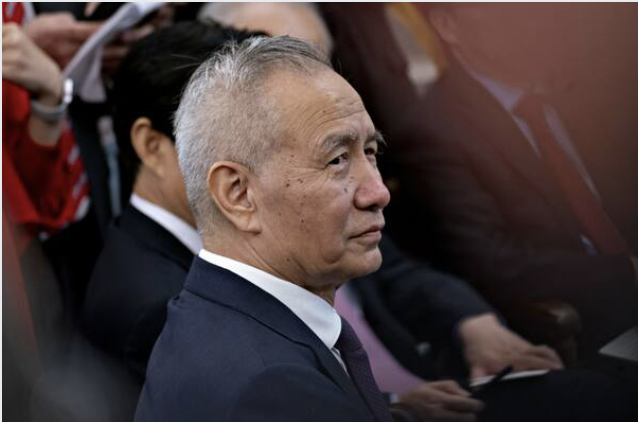
Liu He in 2019. MUST CREDIT: Bloomberg photo by Andrew Harrer

Liu He in 2019. MUST CREDIT: Bloomberg photo by Andrew Harrer

When the bureaucrats finally turned up, they skipped over pleasantries and delivered an ominous message: Ant’s days of relaxed government oversight and minimal capital requirements were over. The meeting ended without a discussion of Ant’s IPO, but it was a sign that things might not go as planned.

The subsequent unraveling of the $35 billion share sale has thrust Ma’s fintech giant into turmoil, offering a stark reminder that even China’s most celebrated businessman is not immune to the whims of a Communist Party that has steadily tightened its grip on the world’s second-largest economy under Xi Jinping’s leadership.

Among the questions that linger as international investors try to make sense of a chaotic 72 hours: Why would China scuttle Ant’s IPO at the last minute after months of meticulous preparation? And what does the future hold for one of the country’s most important companies?

Interviews with regulators, bankers and Ant executives offer some answers, though even insiders say only China’s top leaders can be confident of what happens next. Most of the people who spoke for this report did so on the condition of anonymity to discuss sensitive matters.

Ma’s meeting in Beijing on Monday triggered a behind-the-scenes scramble by Ant and its bankers for more clarity from Chinese regulators. While CSRC officials signaled at the time that they were not aware of any changes to the IPO plans, the regulator’s cryptic social media post later that day about a “supervisory interview” with Ma set tongues wagging from Hong Kong to New York.

By Tuesday afternoon, the mood had worsened as whispers of a delay began circulating in Shanghai. At about 8 p.m., the city’s stock exchange called Ant to say the IPO would be suspended.

When the official statement landed less than an hour later, it cited a “significant change” in the regulatory environment but offered few additional details on why authorities would scupper the listing two days before shares were expected to start trading.

At a hastily arranged meeting between Ant’s bankers and the CSRC later that evening, officials noted the company’s need for more capital and new licenses to comply with a spate of regulations for financial conglomerates that had begun taking effect at the start of November. There was no discussion of how quickly the IPO could be restarted.

An Ant spokesman said the need for more capital and new licenses was not discussed in the meeting, but he declined to provide more details.

One concern among regulators was that the stricter rules may not have been fully disclosed in Ant’s prospectus. On top of the new financial conglomerate regulations, the government had on Monday released stringent draft rules for consumer loans that would require Ant to provide at least 30% of the funding for loans it underwrites for banks and other financial institutions. Ant funds 2% of its loans, with the rest taken up by third parties or packaged as securities.

Several officials said it was better to stop the listing at the 11th hour than to let it proceed and expose investors to potential losses.

That sentiment was shared by at least one institutional money manager, who said he had practically begged an Ant executive for an IPO allocation during a meeting at the Mandarin Oriental hotel in Hong Kong. Now that he has a clearer idea of the regulatory risks, he’s relieved the share sale was shelved.

The CSRC said in a statement on Wednesday that preventing a “hasty” listing of Ant in a changing regulatory environment was a responsible move for the market and investors.

Still, some China watchers have an alternative theory for why Xi’s government acted the way it did: It wanted to send a message.

Ma, a former teacher who’s widely revered in China, faced an unusual amount of criticism in state media after he criticized the country’s financial rules for stifling innovation at a conference in Shanghai on Oct. 24. His remarks came after Vice President Wang Qishan – a Xi confidante – called for a balance between innovation and strong regulations to prevent financial risks.

“It appeared that, intentionally or not, Ma was openly defying and criticizing the Chinese government’s approach to financial regulation,” Andrew Batson, China research director at Gavekal Research, wrote in a report.

The weekend before Ma was summoned to Beijing, the Financial Stability and Development Committee led by Vice Premier Liu He stressed the need for fintech firms to be regulated.

In one sign authorities may keep up the pressure on Ant, people familiar with the matter said on Wednesday that regulators plan to discourage banks from using the fintech firm’s online lending platforms. The directive strikes at the heart of Ant’s commission-based lending model, which generated about 29 billion yuan ($4.4 billion) of revenue in the six months ended June.

Any suggestion that banks will stop using its platforms is unsubstantiated, Ant said in a response to questions from Bloomberg.

Some investors are bracing for tougher times at Ant and the rest of Ma’s business empire. Shares of Alibaba Group Holding, which owns about a third of Ant, tumbled more than 8% on Tuesday in New York for the steepest drop in five years. The slump cut Ma’s wealth by almost $3 billion, to $58 billion, dragging him down to No. 2 on China’s rich list behind Tencent Holdings’s Pony Ma.

The IPO debacle has also raised broader concerns about China’s commitment to transparency as it tries to lure international investors.

On Tuesday, confusion over the suspension triggered a flood of calls to Ant’s bankers from baffled money managers. The sense of whiplash in some cases was stark: An hour or two before the suspension was announced, Ant’s investor relations team was still trying to confirm attendance at a post-IPO gala in Hong Kong. One of the company’s biggest foreign investors predicted the episode could do lasting damage to confidence in China’s capital markets.

It may also have spillover effects on Hong Kong, whose status as a premier financial hub has already come under question amid increased influence from Beijing. Nearly a fifth of the city’s population by one estimate had signed up to buy Ant shares; many who had planned on a windfall were instead stuck paying interest expenses on useless margin loans.

“The lack of transparency reminds us that the ‘Chinese way’ remains fraught with issues,” said Fraser Howie, author of “Red Capitalism: The Fragile Financial Foundation of China’s Extraordinary Rise.”

As for Ant itself, it’s unlikely that the IPO suspension will deal a fatal blow. The company had 71 billion yuan of cash and equivalents as of June and is one of China’s most systemically important institutions. The last thing authorities want is a destabilizing loss of confidence in a business that plays a key role in the nation’s financial plumbing.

The more pertinent risk for Ant is a decline in its breakneck pace of growth and lofty valuation. China’s new regulations will force the company to act more like a traditional lender and less like an asset-light provider of technology services to the financial industry. That will almost certainly mean a lower price-earnings ratio for the stock if it eventually lists.

Also looming is the introduction of China’s central bank digital currency, which threatens to erode Ant’s dominance in payments. That could have implications for the company’s other businesses as well. Ant’s credit platform, for instance, utilizes its huge trove of payments data to assess the financial strength of borrowers who often lack collateral or formal credit histories.

All of that will be bad news for shareholders who propelled Ant’s valuation to $315 billion – higher than that of JPMorgan Chase & Co. But it may suit regulators and party leaders who worry that Ma’s creation has grown too big, too fast.

Fed has the economy’s weight on its shoulders again #SootinClaimon.Com

#SootinClaimon.Com : ขอบคุณแหล่งข้อมูล : หนังสือพิมพ์ The Nation.

Fed has the economy’s weight on its shoulders again

Biz insightsNov 05. 2020Jerome Powell, chairman of the Federal Reserve, during a news conference in Washington on March 3, 2020. CREDIT: Bloomberg photo by Andrew Harrer.
Jerome Powell, chairman of the Federal Reserve, during a news conference in Washington on March 3, 2020. CREDIT: Bloomberg photo by Andrew Harrer. 

By Syndication Washington Post, Bloomberg Opinion · Brian Chappatta · OPINION, BUSINESS, US-GLOBAL-MARKETS 
For the past few weeks, investors dared to dream of a U.S. government that worked hand-in-hand with the Federal Reserve to provide ample fiscal aid and get the world’s largest economy through the coronavirus pandemic.

This “blue wave” scenario has come crashing down in the wake of Tuesday’s election results. Yes, Democrat Joe Biden looks as if he has the advantage in reaching 270 Electoral College votes, but his party fell far short of expectations in the Senate, where Republicans are all but guaranteed to retain control, and it lost some seats in the House. Democrats alone won’t be able to pass legislation to send money out to unemployed Americans, closed small businesses and strapped state and local governments.

At least for a day after his re-election, Republican Senator Mitch McConnell sounded amicable to compromise, even on the thorny issue of large-scale aid to states and cities. “Hopefully the partisan passions that prevented us from doing a rescue package have subsided,” McConnell, who pushed for a much smaller package than the $2 trillion one that had been discussed by the Trump administration and Democratic leaders, said on Wednesday. “That’s job one when we get back.”

Yet even taking McConnell’s comments at face value, it’s hard to imagine Senate Republicans willing to do “whatever it takes” on the fiscal spending side to get the U.S. economy back to its pre-covid levels, especially if Biden is in the White House and can take credit for the rebound. More likely, the burden of stimulus will once again fall to the Fed and Chair Jerome Powell.

A prolonged presidential election and political gridlock are the backdrop to the Federal Open Market Committee’s decision on Thursday, when Powell and his colleagues aren’t expected to offer much in the way of new information. Recall that at the last meeting in September, they unveiled enhanced forward guidance that pledged to keep the fed funds rate unchanged in a range of 0% to 0.25% “until labor market conditions have reached levels consistent with the Committee’s assessments of maximum employment and inflation has risen to 2 percent and is on track to moderately exceed 2 percent for some time.” That followed Powell’s August reveal of the central bank’s new monetary policy framework, which would seek inflation that “averages” 2% over time, therefore allowing overshoots after periods in which it falls short of the target.

Heading into this week, it looked as if the biggest question for the Fed was whether it would step in to combat an aggressive steepening of the Treasury yield curve, with traders positioned for a large round of fiscal stimulus. The election aftermath took care of that question: 10-year yields fell 14 basis points on Wednesday, the most since March, to 0.76%, while 30-year yields tumbled by roughly the same amount to 1.54%. That’s well within the central bank’s comfort zone.

But judging by the reaction across other financial markets, it’s clear traders are thinking beyond the votes and betting on the Fed having to shoulder almost the entire burden of resuscitating the U.S. economy. These investors most likely remember 2011 through 2015, when a tea party Congress brought the U.S. to the brink of default under President Barack Obama and forced the budget deficit to narrow each year in the name of “fiscal responsibility.” 

What happened during that period? From the time of the debt-ceiling showdown in 2011 through the Fed’s first interest-rate increase of the cycle in December 2015, the S&P 500 Index returned 90%, or 15.8% on an annual equivalent basis. The 30-year Treasury yield fell from about 4% to 3%, dipping to as low as 2.22% along the way. Corporate bonds delivered strong returns. In other words, it was a great period for financial assets. Meanwhile, the average annual increase in U.S. hourly earnings was barely above 2% – hardly enough to keep pace with inflation.

This is the conundrum the Fed finds itself in now, less than 48 hours after the U.S. elections. Is it possible, given the current set of tools, for monetary policy to deliver broad-based economic prosperity? Or is it confined to primarily propping up asset holders and debtors, then counting on the wealth effect to make its way through the economy?

I’ve tackled this question from a number of angles in the past month with a fiscal aid package stalled in Washington. For one, the Fed could make a more explicit link between its bond purchases and fiscal policy initiatives to push lawmakers into more aid, but it’s unclear whether Powell wants to open that potential Pandora’s box. The central bank could also throw the doors wide open to its Municipal Liquidity Facility, lowering interest rates and encouraging more states and cities to take out a loan. But it seems keen for the facility to remain a last-resort backstop rather than a substitute for federal grants.

Put it all together, and it’s hard to see how the Fed would make up for a smaller dose of fiscal aid on its own. Yes, it moved last week to sharply reduce the minimum loan size in its Main Street Lending Program to $100,000 from $250,000, potentially making it open to a broader swath of U.S. businesses. But with fewer than 400 loans made since the program became operational in July, and just 14% of Main Street lending done through the end of September for loans of less than $1 million, it’s questionable at best whether it’ll receive widespread interest. Powell himself has stressed that these businesses may need grants, not loans that they have to repay, to get through the pandemic. Also, as it stands, the program is set to expire on Dec. 31, as is the muni facility, though that could change at a moment’s notice.

So that leaves the Fed with its tried-and-true monetary policy toolkit: Simply keep interest rates near zero for even longer and perhaps increase the size of its bond-buying program or have it target the long end of the yield curve. That should keep bonds well-bid, corporate debt deals flowing and equity markets elevated. As for fiscal aid, though, that’s looking as if it still has to run through Capitol Hill. 

What a contested election means for the economy — and your wallet #SootinClaimon.Com

#SootinClaimon.Com : ขอบคุณแหล่งข้อมูล : หนังสือพิมพ์ The Nation.

https://www.nationthailand.com/business/30397362

What a contested election means for the economy — and your wallet

Biz insightsNov 05. 2020Photo by: The Washington Post — The Washington Post
Photo by: The Washington Post — The Washington Post 

By The Washington Post · Heather Long · BUSINESS 
ECON-ANALYSIS

Americans woke up Wednesday to an undecided presidential election, which could be the case for some time, depending on legal challenges and recounts. For the economy, that means uncertainty is here to stay in 2020.

Business leaders and investors tend to hate uncertainty, and this political situation adds more of it as the nation is already dealing with a second big wave of coronavirus cases and a contentious battle in Congress over another stimulus package.

The early read among economists and Wall Street analysts is to buckle up for a wild few weeks.

Many economists are marking down their forecasts for growth, at least slightly, in the final months of 2020 and early 2021, as uncertainty and covid-19 cases mount. A stimulus package of some sort is still expected to pass, but economists no longer expect it to be more than $2 trillion like it might have been in a “blue wave” scenario, where Democrats won the White House and the Senate.

Regardless of who wins the presidency, it looks increasingly likely that the United States is going to keep experiencing a “K-shaped recovery,” in which much of the upper half continues doing pretty well and many at the bottom continue to slip.

Stocks soared Wednesday, with the Dow Jones industrial average rising 368 points (1.3%) and the Nasdaq gaining 3.9% as Wall Street increasingly priced in a presidential victory by Joe Biden and a Republican-led Senate. Wall Street analysts were quick to point out that kind of gridlock has been very good for stocks in the past and it’s likely to mean no major changes for tax or climate policy as well as health care.

An analysis by Sam Stovall, chief investment strategist at CFRA Research, found that since World War II stocks had the highest gains when there was a Democratic president and a split Congress (one party controlling the House and the other controlling the Senate). Wall Street traders see an increasing chance of that big-return scenario occurring with a Biden presidency, GOP-led Senate and Democratic House. PredictIt and Betfair, two websites traders often use to express their views on who will win elections, were both showing Biden with about an 80% chance of winning.

“Senate control is at least as important as the White House. Under a narrow Republican Senate majority, we would expect no major tax increases but also a fiscal stimulus package of less than $1 trillion,” Goldman Sachs wrote Wednesday in a note to clients.

The Federal Reserve, which will hold a news conference Thursday, is widely expected to keep interest rates near zero for years, which should continue to make it attractive for relatively well-off Americans to keep buying stocks and homes. The uncertainty could even push the Fed to attempt more of its own stimulus for the economy.

But it’s a much more pessimistic outlook for jobs, which are barely half recovered. Hiring has been slowing, and the latest Labor Department jobs report that comes out Friday is expected to show more loss in momentum for job growth. More than 22 million people remain on unemployment, a figure that has fallen little since the summer. Jobless benefits have been scaled back sharply for the unemployed. Measures aimed to help those facing student loan debt and evictions are set to expire at the end of the year. The struggles are growing for millions unable to get back to work.

“People need this unemployment money now. I’ve never had to live like this before. I’ve always been good with money, but you can’t survive on this,” said Ronnie Lauth, 24, an actor and barista in New York City who has not been able to find another job.

Lauth is living on $300 a week in unemployment benefits, which barely covers rent. His roommates who still have jobs have been buying him food.

All of this sets up an anxious situation for many Americans this winter.

The future of the economy — and to some extent markets — depends heavily on three key questions, many analysts say: What happens with the virus and stimulus; How quickly Americans start spending again on services like travel, restaurants and entertainment; And whether the hotly contested election sparks social unrest.

If the political situation triggers more social unrest, that could have long-lasting consequences for the nation and economy, weighing on consumer spending and potentially hurting businesses, especially restaurants and stores in downturn areas. In preparation for this election, stores across the country boarded up in anticipation of marches and protests that could turn ugly, and companies like United Airlines moved their flight crews out of hotels in urban areas.

The United States is “even more divided than it was in 2016,” said Peter Atwater, founder of Financial Insyghts and a professor at the College of William & Mary. “The conditions are ripe for outrage.”

The U.S. economy still depends heavily on consumer spending. That’s already heavily depressed because of the coronavirus, but protests and, especially, rioting would likely dampen it even further.

The biggest problem for the economy for months now has been the deadly coronavirus. It remains far from under control, and Americans are staying home and spending only a fraction of what they used to in the pre-covid era. Until that changes, the service sector will remain anemic and the recovery is likely to stall, says Constance Hunter, chief economist at KPMG.

“Until we get a handle on the virus, the economy will remain in a world of hurt,” Hunter said.

Hunter points out that spending on services typically makes up more than 45 percent of economic growth. But in the third quarter – when the United States saw a big rebound – spending on services like restaurants, travel and entertainment remained sluggish, at below 43 percent of economic growth. That might not sound like a big difference, but it amounted to over $500 billion less flowing through the economy in the third quarter of 2020 vs. the same period last year.

There’s hope that if the virus gets under control, there will be a flood of spending again, but businesses have to survive until that point. Small businesses, in particular, are on edge. It’s unclear if that rebound will happen summer 2021 or much later than that.

What’s shaping up for the economy and markets was perhaps best summarized by JPMorgan in a note Wednesday morning: It’s “unclear on the next President but fairly clear that he’ll face Congressional resistance on anything transformational, whether on the budgetary or regulatory front.”

The gridlock might be good for markets and investors. But a lot of pain remains for small business owners and the unemployed. For them, much is still highly uncertain.

A rising deficit isn’t the U.S. economy’s worst problem #SootinClaimon.Com

#SootinClaimon.Com : ขอบคุณแหล่งข้อมูล : หนังสือพิมพ์ The Nation.

A rising deficit isn’t the U.S. economy’s worst problem

Biz insightsOct 28. 2020 Noah SmithNoah Smith 

By Syndication Washington Post, Bloomberg Opinion · Noah Smith · OPINION, BUSINESS 
The covid-19 pandemic will eventually subside, but the economic hangover from the recession it brought will be long and painful.

As calls grow for government to step up and spend money in order to get the economy back on its feet, deficit hawks already are raising their voices in response. Hastening the post-covid recovery will require overcoming the doctrine of austerity, which did so much to hurt the U.S. and other countries during the last recession.

When the financial crisis led to the Great Recession back in 2008, the idea of fiscal austerity was quick to rear its head. A number of prominent right-leaning economists disparaged the notion that government spending could ameliorate the downturn. Some even argued that cutting spending would expand the economy, by increasing confidence in the government’s solvency. Others warned that too much government debt would slow down economic growth.

Ultimately, pro-austerity arguments helped to limit the size of President Barack Obama’s fiscal stimulus, and found an even more receptive audience in some parts of Europe. Austerity — helped by the activism of conservative Tea Party Republicans — won the day, and most of the deficit spending initiated in the early years of the Great Recession was reversed.

The idea of austerity is attractive for several reasons. Many people tend to think of the government as being like a household; a government that borrows to spend is seen as irresponsible. What’s more, conservatives often fear that emergency government spending will become permanent when a recession is over, thus ratcheting up the size of government. Economists who watched crises in emerging markets were long accustomed to recommending that these countries strengthen their fiscal position in order to gain the confidence of fickle international capital. And cynical politicians may invoke austerity in order to prevent a president from the opposing party from giving the economy a boost.

But the U.S. must avoid the siren song of austerity this time around. Theory and evidence both come down strongly against cutting spending in a downturn. And although government borrowing can be bad in some situations, now is not one of those times.

As it turns out, the notion that reducing government spending can stimulate the economy doesn’t have much empirical support. A team of International Monetary Fund economists reexamined the idea in 2011, measuring changes in fiscal policy by looking at direct evidence from government speeches and internal documents. They found that government spending cuts tend to reduce private investment and depress economic activity. The research showing otherwise, they argue, had made a mistake by confusing natural economic forces with changes in government policy.

Meanwhile, the minority of economists who pooh-poohed fiscal stimulus didn’t have much of a leg to stand on. The theoretical justification for spending to boost the economy — especially in a deep recession, when interest rates can’t be cut past zero — is as solid as macroeconomic theory ever gets. What’s more, a slew of empirical analyses since 2008 almost all show the effectiveness of fiscal stimulus during recessions. The respected macroeconomist Robert Hall concluded that Obama’s stimulus, modest and short-lived as it was, still managed to cushion about one-fifth of the blow of the Great Recession. Meanwhile, European countries that indulged in austerity performed generally worse than others.

The reason, of course, is that the government isn’t like a household. Though some governments borrow mainly from foreign countries, the U.S. borrows mainly from U.S. bond investors. Since most federal debt is money the U.S. owes to itself, it’s not really being spendthrift when it borrows. The main question is whether private bond investors will continue to finance the U.S. deficit. So far, persistently low interest rates show that they’re perfectly willing to do so.

If interest rates someday rise, the Federal Reserve might have to increase the money supply in order to push them back down, which might create inflation. But the lack of inflation — even in countries with far more government debt than the U.S. — means that this point is still probably far off.

What’s more, when the government spends, it often benefits society even if it doesn’t make its money back. Investments in scientific research, infrastructure and education can produce big dividends for the private sector, even though the increased tax revenue might not be enough to pay for the spending. In this case, the debt is always worth it.

So austerity is a false prophet — at least, during recessions. But false prophets have real power, and this one is already doing some damage. When Congress’ concern over deficits caused special unemployment benefits to lapse, millions of Americans fell into poverty. That’s certain to hurt the economy going forward. Meanwhile, a Joe Biden victory in the upcoming presidential election might cause Republicans to dig in their heels against further government action, as they did during the Obama administration. The result would be a human and economic tragedy.

Austerity has its place — but in good times, not during recessions. Until the covid-induced downturn is firmly in the rearview mirror, the U.S. government shouldn’t be afraid to spend.

– – – 

Smith is a Bloomberg Opinion columnist. He was an assistant professor of finance at Stony Brook University, and he blogs at Noahpinion.

Five takeaways from the Google antitrust lawsuit #SootinClaimon.Com

#SootinClaimon.Com : ขอบคุณแหล่งข้อมูล : หนังสือพิมพ์ The Nation.

Five takeaways from the Google antitrust lawsuit

Biz insightsOct 21. 2020

By The Washington Post · Heather Kelly · NATIONAL, BUSINESS, TECHNOLOGY 
Whether you want to look up facts about the moon or find the lowest prices on sweatpants, Google’s search engine is unavoidable. That’s a problem for consumers, said the U.S. government in a new, long awaited antitrust lawsuit filed against the company Tuesday.

In the 64-page complaint, the Department of Justice lays out its case against Google’s alleged search monopoly by focusing on one part of its business. It looks at all the deals Google has struck to be the path of least resistance for most consumers. Years of partnering with other companies, expanding its own line of products, and user complacency have made it the default search engine everywhere from our laptops to smartwatches.

Here are five interesting takeaways from the lawsuit.

– – –

Google’s search competitors aren’t very competitive

Google has a search monopoly, says the lawsuit, because it has 88% of the search market in the U.S. According to the complaint, there are only three other search providers worth mentioning: Bing, Yahoo! and the privacy-focused DuckDuckGo.

Microsoft’s Bing search engine, launched in 2009, makes up 7% of the market. Microsoft can make Bing the default search engine on its own products, but since discontinuing its own competitor to the Android and iOS mobile operating systems, Microsoft Phone, it doesn’t have an advantage in the mobile market.

With less than 4% of the market, Yahoo! isn’t even really a full search engine, says the filing. Instead of crawling the web for search results, it purchases them from Bing.

– – –

It sees Apple as a key enabler

Two of the largest tech companies, Apple and Google, are often viewed as direct competitors. But the relationship between the two companies is far more complicated, according to the lawsuit.

Their smartphone operating systems, Android and iOS, are the two most dominant options in the world, with third options barely registering as a blip in the U.S. Globally, Android is the dominant mobile operating system, but in the U.S. they are much closer in market share. They have competing smart assistants, Siri and Google Assistant, as well as rival smart speakers, smartwatches, streaming platforms, cloud services and more.

Apple, however, doesn’t do search.

That’s how Google came to pay Apple to be the default search option on its Safari browser on Mac computers, iPhones and iPads. It started in 2005 when Google gave Apple a percentage of ad revenue from searches from Apple devices, and Apple made Google the default search engine. It expanded from Macs to mobile devices and eventually Siri and Spotlight searches. Between its own Chrome browser and Safari, Google is the default search engine on more than 90% of mobile browser searches, says the lawsuit.

“Today, Google’s distribution agreement with Apple gives Google the coveted, preset default position on all significant search access points for Apple computers and mobile devices,” says the complaint.

Offering Google is a very lucrative business for Apple. The lawsuit says Apple’s share of Google’s ad revenue is between $8 and $12 billion a year, and that it makes up as much as 20% of Apple’s net income.

– – –

The ghost of Google in Amazon’s smartphone flop?

In 2014, Amazon launched a smartphone called the Fire phone. The device didn’t last long and was the e-commerce giant’s final attempt at a traditional smartphone. The DOJ’s lawsuit floats a possible factor in its failure after one year: it used Bing as its default search engine. (Amazon chief executive Jeff Bezos owns The Washington Post.)

The Fire phone ran a “forked” version of Google’s Android mobile operating system, meaning it started with Android and customized it for its own products. Amazon installed its own apps and app store instead of the usual Google offerings, and went with Microsoft’s search engine.

“Google’s anti-forking provisions and policies limited the growth of Amazon’s mobile phone, and of Fire OS, because major manufacturers declined to support Amazon’s phone out of fear doing so would risk their lucrative deals with Google,” says the lawsuit.

Fire OS, Amazon’s customized operating system, is still used on products like Amazon’s Fire tablets.

– – –

Easy access to Google causes consumer harm, lawsuit says

The lawsuit goes into why consumers, who are presumably getting answers to their Googled questions without much thought, should care about its business practices. The government points out what it says are some potential ways they are being harmed. For example, if you always accept Google as your default browser, you are also accepting its controversial privacy approaches, such as the way it collects and uses user data.

“American consumers are forced to accept Google’s policies, privacy practices, and use of personal data; and new companies with innovative business models cannot emerge from Google’s long shadow,” says the filing.

Having the dominant search engine also means Google can reduce the quality of search services. An example the lawsuit gives of innovation happening, but not reaching many consumers, is DuckDuckGo. It has a subscription based search option, which doesn’t rely on advertising. Google is already everywhere, argues the lawsuit, and a court order is needed to make room for other options.

– – –

The government is worried about how we’ll search in the future

The lawsuit primarily focuses on the dominant way Google is used now: for typing search terms into a smartphone or computer. But the DOJ is worried about a possible future monopoly on how people will search in the years to come and what Google’s advantages will be.

It names smartwatches, TVs and connected cars, but voice searches are one of the fastest growing search areas right now. Most people are familiar with Amazon’s Alexa’s voice-assistant, which lets you ask questions instead of typing them in. Amazon is still the market leader in the smart speaker market, followed by Google with Apple trailing in third place. But those voice assistants are gaining users outside of speakers. Google’s Assistant, for example, is already built into other products like Android and smartwatches as the default voice interface.

“Google is positioning itself to control these emerging channels for search distribution, excluding new and established rivals,” says the filing.

Apple’s new 5G iPhones may be left on the shelf #SootinClaimon.Com

#SootinClaimon.Com : ขอบคุณแหล่งข้อมูล : หนังสือพิมพ์ The Nation.

Apple’s new 5G iPhones may be left on the shelf

Biz insightsOct 09. 2020Shoppers stand in line at the Apple store at the Queens Center shopping mall in the Queens borough of New York, on Sept. 9, 2020. MUST CREDIT: Bloomberg photo by Peter Foley.Shoppers stand in line at the Apple store at the Queens Center shopping mall in the Queens borough of New York, on Sept. 9, 2020. MUST CREDIT: Bloomberg photo by Peter Foley. 

By Syndication Washington Post,  Bloomberg Opinion · Tae Kim · OPINION, BUSINESS, TECHNOLOGY, OP-ED, US-GLOBAL-MARKETS, RETAIL 
APPLE-COMMENT
Apple has been in the spotlight lately, between antitrust scrutiny of its mobile operating system and the legal battle it’s waging with Fortnite-maker Epic Games over its App Store.

Those developments pale, however, in comparison to the company’s main event next week: the unveiling of its latest iPhones.

For all the talk about Apple’s shift to services and subscriptions, the tech giant’s business is still dependent on its core hardware products, so Tuesday’s presentation will be a must-see for investors. There could be a problem this year, though. The lineup’s most vaunted feature — fifth-generation wireless capability — may not be ready for prime time. 

The Cupertino, California-based company is expected to unveil four new iPhone models with 5G capabilities as well as a different physical design and a wider choice of screen sizes, Bloomberg News reported last month. Apple is already touting the new technology’s attributes: Earlier this week, it sent the press an invitation to Tuesday’s event with the cheeky pun “Hi, Speed” as the subject line, referencing the fast new 5G networks.

Investors are betting the iPhones will be a blockbuster success and spur consumers to upgrade. Shares of Apple have risen more than 50% this year and now trade at roughly 31 times the next four quarters’ earnings, nearly double its historical five-year average of 16. And those earnings estimates also have high embedded assumptions. To take one example, Morgan Stanley forecasts Apple’s iPhone sales will grow by 28% in its fiscal year ending in September 2021. That would mark a dramatic turnaround from the 14% sales drop in fiscal 2019 and the estimated 7% decline for 2020.

An elevated valuation would be fine if the new iPhones sell well, but the lackluster reality surrounding the current state of 5G networks could lead to underwhelming demand. PC Mag found the new wireless technology was often slower than 4G after it recently conducted tests in 26 U.S. cities, adding “5G results were disappointing all around on every carrier.” The Washington Post had similar conclusions and found no speed improvement for 5G phones and in many cases slower numbers. There are several technical reasons for the weak results, ranging from the more prevalent use of the slower “mid-band” 5G spectrum to the anemic coverage buildout of the faster 5G millimeter wave service. Bottom line, the 5G experience for U.S. wireless carriers in most circumstances isn’t better than 4G right now. It will take time, so why shell out hundreds of dollars for an upgrade now?

Key industry figures are already lowering expectations. A few weeks ago, AT&T CEO John Stankey said demand for the 5G iPhone may not be as strong as anticipated owing to the economic uncertainty from the pandemic and the less dramatic wireless speed improvements. Before that, Hock Tan — CEO of iPhone chipmaker Broadcom — answered a question on near-term trends for 5G on a call with the investors by saying, “To be honest about this, we don’t know how fast the ramp on 5G will occur.” It’s pretty telling when the leader of one of Apple’s largest wireless chip suppliers seems hesitant to extol the promise of his industry’s most-talked about growth driver.

Even if 5G network coverage was amazing, there is another problem. Almost all the most-used mobile apps, including TikTok, Instagram and FaceTime, work fine on 4G networks. There simply isn’t a need for 5G right now. Yes, there will be new killer apps some day that will require faster speeds, but they haven’t arrived yet.

Amid the anticipation and excitement going into Tuesday’s product event, Apple investors may want to reassess their risks.

– – –

This column does not necessarily reflect the opinion of the editorial board or Bloomberg LP and its owners. Tae Kim is a Bloomberg Opinion columnist covering technology. 

Economy’s cracks deepened as Washington fumbled relief talks in recent months #SootinClaimon.Com

#SootinClaimon.Com : ขอบคุณแหล่งข้อมูล : หนังสือพิมพ์ The Nation.

Economy’s cracks deepened as Washington fumbled relief talks in recent months

Biz insightsOct 09. 2020David J. Lynch David J. Lynch 

By The Washington Post · David J. Lynch · NATIONAL, BUSINESS, POLITICS 

ECON-ANALYSIS

Katie Button has put her bar stools into storage, laid off about half of her 130 employees and learned how to run a half-empty restaurant. But she remains at the mercy of Washington, D.C.

With the recession having blown a $3 million hole in her business, Button, 37, was counting on the federal government to provide one more round of financial aid to get Curate, her Asheville, N.C., restaurant, through the winter.

The coronavirus pandemic already has permanently shuttered 24 eateries in her scenic town of about 93,000 people. Button is trying desperately to avoid becoming the 25th.

“They can’t just walk away and go home to campaign,” she said. “It’s getting worse and worse…We need help.”

Button’s plight illustrates the economic consequences of Washington’s failure, after months of intermittent negotiation, to deliver a fresh economic stimulus package. Negotiations between President Donald Trump’s team at the White House and congressional Democrats have been on and off for months, though they appeared to be on again as of Thursday evening.

The president and his congressional adversaries picked a bad time for gridlock. Job growth is slowing, businesses are closing, and cooler weather is driving people inside where the virus flourishes. In September, for the first time since the pandemic began, the Homebase gauge of small business activity declined, signaling weakness ahead.

Failure now to agree on new help for struggling workers, companies and public agencies risks greater misery for millions of Americans, lower future living standards and a longer, slower road back to prosperity, economists said.

“It is completely avoidable, if they would just provide some stimulus. It is so obvious what needs to be happening,” said Nan Whaley, mayor of Dayton, Ohio, who confronts a $10 million budget gap that will likely force cuts to police and fire services.

When the coronavirus shutdowns began in March, the White House and Congress quickly agreed to spend nearly $3 trillion to help the economy through the worst of the pandemic. But much of that aid lapsed months ago, leaving households and businesses exposed.

The expiration this summer of enhanced unemployment payments triggered a decline in August’s disposable income reading. On again, off again negotiations between the administration and lawmakers failed to reach agreement on new measures to contain the virus and repair the economic damage.

In recent days, companies that endured the pandemic’s first half-year without permanentjob losses — such as Walt Disney, Houghton Mifflin and Allstate — announced layoffs. United Airlines, American Airlines and other air carriers hurt by the collapse of travel have also begun tens of thousands of cuts.

Earlier this week, the owner of Regal Cinemas announced it would close all of its 663 movie theaters in the U.S. and United Kingdom, imperiling 45,000 jobs. And state and local governments, which already have trimmed 1.2 million workers over the past year, face budget shortfalls that will require additional pink slips.

Furloughs once billed as temporary have hardened into permanent job loss for an increasing number of workers. And almost 11 million Americans who had jobs in February remain unemployed, even as the labor market is slowing.

A total of 661,000 people were hired in September, down sharply from June’s 4.8 million.

At last month’s hiring pace, it will take until early 2022 to regain February’s number of jobs.

In Bowling Green, Ky., Amy Perry, 51, a former loan company customer service representative, filed for unemployment on June 1. But more than four months later, state backlogs mean she’s still waiting for her first check.

“I have not gotten a penny of unemployment. I get a robo-call every two or three days, saying I’m in the queue,” she said. “I’m at a loss. I don’t know what to do.”

She and her husband, Jonathan, 49, have secured six months of forbearance on their mortgage payments. And they expect to cover their other bills with his salary as a driver for UPS.

“We’re like everyone else,” she said. “We have a mortgage. We have bills to pay. It’s been hard.”

Perry has autoimmune disorder, and her employment prospects amid a contagion are slim. She and her husband plan to sell their home in the spring and downsize to a smaller place. Even if Washington eventually provides additional help, she worries about the long run.

“How long can they continue the stimulus packages?” she said. “Our country is so much in the hole. I worry about what we’re leaving our children.”

The unique nature of this recession also worries some economists. The U.S. failure to contain the coronavirus has interrupted the education of millions of American schoolchildren and caused a sizable labor force exodus of women who lack adequate childcare.

“This could be permanently damaging,” said Lisa Cook, an economics professor at Michigan State University, who worked in the Obama White House. “The whole economy is going to be worse off because these kids are worse off. We are losing our future labor force. We’re settling for lower living standards in the future.”

To be sure, after suffering the sharpest plunge in recorded history during the second quarter, when output contracted at an annual rate of 31 percent, the economy has bounced back stronger than many economists anticipated in the dark days of March.

Tom Porcelli, chief U.S. economist for RBC Capital Markets, cites a steady decline in the total of continuing claims for unemployment benefits as a sign of genuine progress. From a peak of 22.8 million in early May, the number of those receiving jobless benefits has been cut in half, according to the Bureau of Labor Statistics.

Yet at year end, the U.S. economy is still expected to be smaller than it was a year ago. And nearly 98,000 businesses have permanently closed their doors, according to Yelp, the online review site.

“The economy needs a bridge and the bridge is fiscal stimulus,” he said. “There is absolutely a need.”

Without immediate pump-priming, the economy may come dangerously close to “stall speed” in the last three months of the year, according to Oxford Economics. Economist Michael Feroli of JPMorgan Chase is more upbeat, projecting annualized growth of 2.5 percent in the fourth quarter.

The president’s abandonment of talks with Pelosi sent the Dow Jones industrial average sharply lower on Tuesday into a nearly 600-point plunge on Tuesday. Investors Wednesday took solace from late-night Trump tweets backing separate measures for a new round of $1,200 individual checks or an airline industry bailout, which already have been rejected by Democrats who favor a comprehensive approach.

The importance of fiscal support was evident this summer, when Walmart credited government stimulus checks for delivering a more than 9 percent gain in same-store sales compared to the same period in 2019.

But in July, the final month of the company’s second quarter, that increase dipped to 4 percent, as customers retrenched in anticipation of the expiration of enhanced unemployment benefits, executives told investors.

The earlier benefits were critical to supporting consumer spending at a time of high unemployment. By halting support, at least for now, the administration and Congress are defying increasingly loud pleas for help from the Federal Reserve.

Earlier this week, Federal Reserve Chairman Jerome Powell told an audience of economists that the Fed had “deployed the full range of tools at our disposal,” but needed those who control government spending to act.

“There is still a long way to go,” he said. “…Too little support would lead to a weak recovery, creating unnecessary hardship for households and businesses.”

To some economists, a premature end to government support risks repeating mistakes made after the 2008 housing bubble collapse. Layoffs then by cash-strapped state and local agencies delayed the return to pre-recession unemployment rates by four years, according to the Economic Policy Institute.

The current recession is gouging similar holes in public accounts, forcing officials to ax teachers, recreation aides and first responders. Such belt-tightening only hurts the local economy, depressing tax revenue and requiring further layoffs, officials said.

In Dayton, Whaley said she already has laid off “dozens” of workers at the city’s airport and closed two of the three municipal golf courses. Further cuts are likely in police and fire services.

“These are real tough decisions we’re going to have to make. There’s no fat left here,” she said.

In Asheville, with the state limiting indoor dining, Curate’s revenue is stalled at just 40 percent of last year’s figure. But Button’s loss is not her problem alone. Her customary payments to area workers and farmers have dropped by $2.5 million.

Button, who owns two successful eateries, got a government-backed small business loan that she says helped her navigate the pandemic’s first months. But she’s watched in frustration as lawmakers and administration officials spent months debating additional economic aid even as public health officials warn Americans to be cautious about venturing into restaurants.

The Independent Restaurant Coalition, an industry group, hoped for a $120 billion bailout in any final stimulus measure.

“You can’t say we’re not different from other industries,” she said. “Ninety to ninety-fie percent of every dollar that we take in is going right back out the door into our communities. The risk of doing nothing is far greater than the risk of giving restaurants what they need.

—-

David J. Lynch is a staff writer on the financial desk who joined The Washington Post in November 2017 after working for the Financial Times, Bloomberg News and USA Today.

How will Thailand’s new e-services tax impact your online business? #SootinClaimon.Com

#SootinClaimon.Com : ขอบคุณแหล่งข้อมูล : หนังสือพิมพ์ The Nation.

How will Thailand’s new e-services tax impact your online business?

Biz insightsOct 07. 2020

By Nu To Van, Sukanok Suthinan
Special to The Nation

The following article explains the key principles of the proposed e-services tax, scheduled to come into effect in Thailand in mid-2021.

First, a short recap: the e-services tax will be in the form of VAT imposed on online activities. Companies that are covered by the e-services tax need to register for VAT (either as service provider or electronic platform) and pay VAT electronically through a new simplified monthly return.

Due to the broad definition of digital services and its expected broad coverage, in this article we will focus on practical questions companies may have once the e-services tax is implemented. For example, what type of services will be covered, does it make any difference to whom the services are provided, etc.

To illustrate the different tax treatment and implications, we will use a fictitious case study and examples of transactions to highlight whether or not these transactions would be covered under the e-services tax.

Case study – ‘In The Cloud Services’

Our fictitious company “In The Cloud Services” (“ITCS”) is based in the US and is trying to increase its online business footprint in Thailand. The company’s physical servers are all located in the US and the company does not have any office or staff in Thailand.

The company has a variety of online businesses and provides them to customers in Thailand – both to businesses (B2B) and consumers (B2C), including the following:

1. Online cloud storage services and providing digital content streaming services

2. Selling products through their US-based platform

3. Platform services to online sellers

So, does ITCS have to be worried about the new e-services tax?

Let’s go through the company’s online services one by one.

1. Provision of online cloud storage and digital content:

The company provides online cloud storage and digital content streaming services to its customers in Thailand who are both Thai consumer (B2C) and Thai VAT-registered entities (B2B). Customers in Thailand simply subscribe for these online services through ITCS’ website and pay online for these services by monthly subscription.

Although the services and the fees charged to its customers are the same, the tax implications and treatment of both transactions are different, as illustrated by the pictures below.

a. B2C as a service recipient

b. B2B as a service recipient

2. Online sale of products:

ITCS operates an online platform selling a wide range of products to both Thai consumers and Thai entities.

Once products are ordered online, ITCS arranges the shipments, clearance in Thailand, and delivery to its customers (both consumers and companies) in Thailand. The customs clearance and delivery of products is carried out by a local Thai company.

Selling of goods online is currently not covered by the proposed e-services tax. However, there may be other considerations relevant to ITCS, such as whether or not the Thai local company might be considered an agent from a VAT perspective, which could lead to a taxable presence in Thailand.

3. Use of its platform:

ITCS also allows other online retailers to sell their products online to both Thai consumers and Thai entities through its platform. In return for using its platform, ITCS charges these online retailers a service/commission fee. The tax implications and treatments are illustrated below.

What should companies do to prepare themselves prior to the enforcement of e-services tax?

Based on the above simplified scenarios, it is clear that different transactions may lead to different tax treatments. For our fictitious company, it would mean that for the B2C services that they provide to their customers in Thailand, they need to register for VAT purposes in Thailand once the e-services tax is implemented. This could mean that going forward, ITCS may need to make a commercial decision and choose whether or not to potentially upset its customers (by increasing its selling prices) or accept lower profits due to higher tax costs.

There is still time for companies to prepare as the supplemental regulations have not yet been published. Facilities such as simplified registration and monthly VAT return submission are expected to be available at the Thai Revenue Department (TRD)’s website in order to encourage more registration from foreign digital service providers.

However, foreign digital service providers may be more or less likely to comply with the requirements depending on how strongly the TRD enforces the new e-services tax.

The current penalty for non-compliance is two times the VAT shortfall plus a 1.5 per cent monthly surcharge and imprisonment not exceeding one month or a fine not exceeding Bt5,000, or both. The question is whether or not companies will be allowed a certain transition/grace period (similar to what has happened in Malaysia) or whether the TRD will start enforcing the new tax very strictly as it searches for more revenue sources.

Adding to the complexity are other potential tax implications and considerations, such as whether or not the registration of the company for VAT purposes will trigger risk from a corporate tax perspective or whether the company has to obtain a (online) business licence in Thailand.

Although there is still time before the e-services tax is implemented, it would be prudent for foreign service providers/platforms to already start mapping out their online service activities and determine which ones are affected by the new e-services tax, since it is very likely that some (if not all!) of their activities will be caught by the e-services tax net.

Nu To Van and Sukanok Suthinan are, respectively, partner and senior manager for Tax & Legal Services at Deloitte Thailand.