Here’s what is actually in Trump’s four executive orders #ศาสตร์เกษตรดินปุ๋ย

#ศาสตร์เกษตรดินปุ๋ย : ขอบคุณแหล่งข้อมูล : หนังสือพิมพ์ The Nation.

Here’s what is actually in Trump’s four executive orders

Biz insightsAug 09. 2020Heather Long, economics correspondent

Heather Long, economics correspondent

By The Washington Post · Heather Long · NATIONAL, BUSINESS, WHITEHOUSE 
STIMULUS-ANALYSIS

President Donald Trump took the unusual – and controversial – step Saturday of attempting to provide additional economic relief to millions of Americans on his own, without the approval of Congress.

At his golf club in Bedminster, N.J., Trump announced he was postponing payroll taxes through the end of the year, extending the unemployment “bonus” at $400 a week (down from $600), helping people “stay in their homes” and waiving student debt payments through the end of 2020. The details, however, are not as generous as he made them sound.

He is ordering a payroll tax deferral, not a cut, meaning the taxes won’t be collected for a while but they will still be due at a later date. On housing, he instructs key officials to “consider” whether there should be a ban on evictions. He also insists that state governments pick up the tab for some of the unemployment aid.

It is likely Trump will face a legal challenge over these actions. The U.S. Constitution gives Congress the power of the purse. Any changes to taxes or spending are supposed to come from Congress.

Here’s a rundown of what Trump actually did. He says he signed four “executive orders,” but in reality, only the one on housing is an actual executive order. The other three actions are marked as “memorandum,” which carries less heft.

1. He delays payroll tax collection for those making under $104,000

Trump instructs the U.S. Treasury to halt collection of payroll taxes from Sept. 1 through Dec. 31 for workers who earn under less than $4,000 every two weeks (that’s people earning under about $104,000 a year).

This will feel like a tax cut for a few weeks because workers will end up with larger paychecks while the tax is not collected. But it is technically a tax deferral, meaning the taxes will still be due at a later date.

The president called on Congress (and presumptive Democratic presidential nominee Joe Biden) to make the tax deferral a permanent tax cut, but Trump is acknowledging he does not have the power to cut taxes on his own. That would take action from Congress.

Payroll taxes help pay for Social Security and Medicare. Trump is attempting to postpone the 6.2 percent tax that employees pay in every paycheck for Social Security. Employers are also required to kick in another 6.2 percent that comes out of the company’s pocket for each employee.

Congress already deferred most employer payroll taxes for the rest of 2020, so Trump is now attempting to defer workers’ payroll taxes. This relief only applies to people who are working and collecting a paycheck, and it is only temporary since the taxes must still be paid. If the taxes were not repaid, it would lower the funds in the Social Security Trust Fund.

2. Unemployment aid is (sorta) extended at $400

The United States currently has more than 30 million people on unemployment aid. They had been receiving an extra $600 a week from the federal government on top of their state aid (which averaged $330 a week), but Congress set the federal funding expire at the end of July. Democrats want to continue at the $600 a week level. Republicans proposed $200. They have yet to agree.

Trump’s memo calls for federal aid to restart at a level of $400 a week. But there’s a catch: The federal government is only paying for $300 of that. States have to kick in the other $100. Many states are currently cash-strapped as they fight the coronavirus, and there’s concern governors won’t sign on to do this.

There are also a lot of legal questions about the money Trump is attempting to use to pay for this. He calls for $44 billion of funding from the Department of Homeland Security’s Disaster Relief Fund that is normally used for hurricanes, tornadoes and massive fires to be shifted over to unemployment.

“The basic notion here is the president is rejecting Congress’s power of the purse,” said David Super, a constitutional law expert at Georgetown Law. “That is something nobody who cares about separation of powers can let slide, even if they like what the money is being spent on.”

Trump’s memo orders the aid to last through Dec. 6 or until funding runs out. But on top of legal questions, $44 billion would cover less than five weeks of payments for 30 million unemployed Americans. That isn’t enough money to make it to October, unless the number of people on unemployment falls dramatically.

3. Top officials can “consider” halting evictions

The United States has about 110 million renters, and many have been hit hard by the layoffs in retail, restaurants and hospitality during the pandemic. Trump’s executive order does little to help them.

Trump has said many times in recent days he wants to prevent evictions, but his latest executive order does not ban evictions. Instead, Trump calls for Health and Human Services Secretary Alex Azar and Centers for Disease Control and Prevention Director Robert Redfield to “consider” whether an eviction ban is needed.

Trump also didn’t provide any more money to help renters. The executive order calls only for Treasury Secretary Steven Mnuchin and Housing and Urban Development Secretary Ben Carson to see if they can find any more funds to help out. It doesn’t promise more aid.

Many housing advocates and landlords were surprised Trump didn’t do more to help renters. The federal government owns the vast majority of mortgages in the nation through Fannie Mae, Freddie Mac and other entities. Back in March, Congress passed a federal moratorium preventing many evictions, but it expired on July 24. That moratorium covered all renters living in places that had a federally owned mortgage. Many thought Trump likely did have the authority to extend at least that eviction ban, but he did chose not to do so.

There could be 30 million to 40 million renters at risk of eviction in the coming months, according to report last week by a group of housing advocates and researchers. That compares with an average of 3.6 million evictions a year before the coronavirus pandemic.

4. Student loan payments are deferred until Dec. 31

Trump’s final memo waives all interest on student loans held by the federal government through the end of 2020 and allows people to delay payments until Dec. 31.

The Education Department does have the authority to defer or even cancel student loan payments to the federal government, says Alexis Goldstein of Americans for Financial Reform.

Trump used this authority to temporarily cancel interest payments, which helps relieve the financial burden on millions of Americans. But the debt is not canceled forever. Principal payments are due on Dec. 31 and full payments are slated to restart Jan. 1.

5. What happens next

There will likely be court challenges to Trump’s actions this weekend, making it unclear how quickly any money would reach the unemployed. On top of that, it’s unclear how many states will want to participate in this enhanced unemployment program or how many companies will want to suspend payroll taxes for employees only to have to pay them in 2021.

Overall, this a limited action. It still would take a deal between Republicans and Democrats to pass a broad economic aid package that would substantially address the needs of small businesses, renters, unemployed workers and more.

Heather Long is an economics correspondent. Before joining The Washington Post, she was a senior economics reporter at CNN and a columnist and deputy editor at the Patriot-News in Harrisburg, Pa. She also worked at an investment firm in London.

Five myths about George Soros #ศาสตร์เกษตรดินปุ๋ย

#ศาสตร์เกษตรดินปุ๋ย : ขอบคุณแหล่งข้อมูล : หนังสือพิมพ์ The Nation.

Five myths about George Soros

Biz insightsAug 07. 2020

George Soros

George Soros

By Special To The Washington Post · Emily Tamkin · OPINION, OP-ED 

George Soros, who turns 90 on Wednesday, is arguably the world’s most famous boogeyman. He’s one of the great hedge fund managers and is arguably the most successful currency speculator in history; he is a major political donor; and he has given billions to his charity, the Open Society Foundations, dedicated to ensuring that all people are empowered and able to participate in their communities and countries. But much of that real influence is buried beneath persistent conspiracy theories.

Myth No. 1: George Soros helped the Nazis.

This is the ugliest conspiracy theory about Soros. In a “60 Minutes” segment in 1998, the interviewer, Steve Kroft, said that Soros’s survival during the Holocaust “carried a heavy price tag” and that “as hundreds of thousands of Jews were being shipped off to the Nazi death camps, a 13-year-old George Soros accompanied his phony godfather on his rounds, confiscating property from the Jews.” In June, social media users circulated a photo of a young man in a Nazi uniform and claimed it was a picture of Soros. Other fans of this conspiracy theory include comedian Rosanne Barr, who tweeted in 2018 that Soros was a Nazi who had turned in fellow Jews to be murdered.

In actuality Soros, whose father, Tivadar, had previously changed the family’s last name from Schwartz to Soros so as to be less obviously Jewish in an increasingly anti-Semitic Budapest, disguised himself as a Christian during the Second World War. His father procured identity papers for his own family and others. At one point, the man with whom young Soros was hiding out did bring him along when he went to take inventory of a Jewish person’s house, but Soros was not involved in the confiscation of Jewish goods. Likewise, while Soros was, as a student, sent to run errands at the Judenrat, a council of Jews whom the Nazis forced to do their bidding, he did not round up Jewish people. In fact, per Soros’s recollection, when he was given a list of names, with instructions to tell them to report to a location from which they would be deported, his father said he should not tell them to go.

Myth No. 2: Soros pays people to protest.

Soros was accused of paying protesters who spoke out in 2017 against corruption in Romania. In 2018, Turkish President Recep Tayyip Erdogan said Soros was supporting activist Osman Kavala,whom the president blamed for the 2013 Gezi Park protests: “He has so much money and he spends it this way,” Erdogan said. That same year, President Donald Trump alleged that Soros had paid for the posters used in protests against the confirmation of Brett Kavanaugh to the Supreme Court. Just Wednesday, Trump asserted in an interview that people say Soros and others are financing antifa, or anti-fascist, protesters.

Open Society does support anti-corruption organizations across Central and Eastern Europe, and it did back a group with which some of the Kavanaugh protesters were affiliated. More recently, Open Society announced a “$220 million investment” in groups working on racial justice.

But there is a difference between “George Soros pays for and orchestrates protests” and “George Soros’s philanthropic foundation supports groups that employ people who are part of protests.” There are, surely, people around the world who show up at protests and who work for organizations that receive grants from Open Society, but they are not being paid to protest. To say they are attributes too much agency to Soros, playing on an anti-Semitic trope of Jewish people pulling society’s strings, and strips demonstrators who are taking to the streets with legitimate grievances – like corruption and police brutality – of theirs.

Myth No. 3: Soros isn’t really Jewish.

“I’m more of a Jew than Soros is . . . He doesn’t support Israel, he’s an enemy of Israel,” Rudolph W. Giuliani, who is not Jewish, said in 2019. When I interviewed Hungarian government spokesman Zoltán Kovács for my book on Soros, he said that Hungarians think of Soros not as a Jewish person but as a globalist. “Just look at his attitude, his relationship with Israel,” Kovacs told me.

In his 1991 book, Soros wrote: “My Jewishness did not express itself in a sense of tribal loyalty that would have led me to support Israel. On the contrary, I took pride in being in the minority, an outsider who was capable of seeing the other point of view.” His philanthropic support has therefore not focused on Jewish people specifically or on Israel, and in fact has often gone to groups, like Human Rights Watch, that are critical of Israel’s human rights record and treatment of Palestinians.

But that isn’t to say Soros is somehow not Jewish. “I was facing extermination at the age of 14 because I was Jewish,” as he once put it. “Wouldn’t that make an impression on you?” Soros has referred over the years to his “Jewishness” and spoken about what his Jewish identity means to him. If he considers being Jewish to be a matter of ancestry and culture, and not of religion, then he has that in common with 62 percent of Jewish Americans, according to a 2013 Pew study.

Myth No. 4: Soros single-handedly broke the Bank of England.

The exact role that Soros played in “breaking the Bank of England” has been debated for almost 30 years. Nevertheless, the idea that he was solely responsible for the notorious 1992 incident – in which Soros’s Quantum Fund shorted the British pound, resulting in Britain leaving the European Exchange Rate Mechanism – and “broke” a central bank has been uncritically repeated by outlets including Forbes and Investopedia.

In truth, Britain’s position within the ERM – a kind of precursor to the euro, in which each currency could become only so strong or so weak – was, because of the British and German economic conditions during the two years that Britain was in the band, essentially untenable. Soros and his colleagues knew that the pound could rise only so high, and therefore they could lose only so much by shorting it. If they were correct in their speculation, there was no telling how far the pound could fall.

They were right, and in the end, the British pound crashed out of the ERM. Soros was not the only speculator who bet against the pound, but his fund is the one that’s estimated to have made a $1 billion profit. No bank was broken – some say “Black Wednesday” gave way to “White Wednesday,” because Britain proceeded to get its economy in better shape – but Soros and his colleagues did play a major role in forcing the currency out of the ERM.

Myth No. 5: Soros is plotting a destructive revolution in America.

The Color Revolutions were a series of protests that led to new governments in Eastern Europe in the early 2000s. Soros has been accused by conspiracy theorists and fringe sites of being the motivating force behind revolutions abroad and even of trying to stage one in the United States. After Soros backed the election campaign of Philadelphia District Attorney Larry Krasner, Tucker Carlson said that Soros’s support for progressive DA candidates is akin to “hijacking” and “remaking” American democracy. Earlier this year, the Washington Times ran an article under the headline, “George Soros, 89, is still on a quest to destroy America.”

Soros is simply a large political donor who entered the fray in 2004, when he contributed $27 million to groups trying to oust President George W. Bush. He also has supported progressive district attorney candidates and is putting millions into defeating Trump. But there’s a difference between making political donations – something many rich people do – and plotting a revolution. According to the Center for Responsive Politics, Timothy Mellon, a great-grandson of the founder of Mellon Bank, is the third-largest individual political contributor of the 2020 cycle. The myth of the Mellon revolution, however, has somehow gone untold. 

The future of hotel F&B in the post-Covid era #ศาสตร์เกษตรดินปุ๋ย

#ศาสตร์เกษตรดินปุ๋ย : ขอบคุณแหล่งข้อมูล : หนังสือพิมพ์ The Nation.

The future of hotel F&B in the post-Covid era

Biz insightsAug 04. 2020Jean-Michel Dixte, Dusit International Bangkok’s global vice president of Food & BeverageJean-Michel Dixte, Dusit International Bangkok’s global vice president of Food & Beverage

By The Nation

Jean-Michel Dixte, Dusit International Bangkok’s global vice president of Food & Beverage, shares views on the future of his industry in the post-Covid-19 era.

With the world now facing one of the worst economic crises on record, and millions of people in the hotel F&B industry losing their jobs, all indications are that the true consequences of the Covid-19 crisis are yet to be felt, with more seismic shifts to come – socially and economically.

Changing tastes in focus

Following the pandemic, wellness trends in the dining market will rise. Eating and living with a conscience is going to become a strong food industry ethos, with more businesses taking a greener and sustainable approach.

“Growing local” and “buying local” are two key concepts which have come to the fore in these difficult times, and they will continue to grow as people have fallen in love with this new-found connection in their lives.

People have also woken up to the fact that any green effort to save the planet ultimately equates to an effort to save themselves. They have realised that, for us to live better quality lives for longer, we must treat ourselves and our environments better. Wellness and care must come first.

This will bring a rise in circular economy business models and a resurgence of people “going back to basics”, with many using food as medicines (particularly herbs and vegetables), and learning to live without modern technology. In this environment, wellness will become more mainstream and popular across all levels of society. It will no longer be viewed as the reserve of the elite.

Following the crisis, the vast majority of people will also choose to fuel their happiness by leading healthier lifestyles – replacing any unhealthy eating and drinking habits they may have had with a better balanced diet. Home cooking and street food will be major facilitators of this change.

The impact of tech on service

Technology has changed the dining scene dramatically.

Today, customers can do almost anything with their smartphones – searching restaurants, writing reviews, booking tables, viewing menus, placing orders, and making payments via banks or with cryptocurrency.

Cloud tech and algorithms can enhance the efficiency of any restaurant operation and ensure services are best tailored to meet guests’ needs.

Artificial Intelligence will only become more prevalent in hotel F&B industry over the next few year.

It will also vastly change the home dining experience. With people’s lives becoming increasingly hectic and more difficult to manage, convenience will take over cooking from scratch. Food delivery, convenience foods on the go, frozen meals, and dining kits will all be in high demand. With Deliveroo teaming up with Amazon, the Blue Ocean Strategy they adopt will dominate the food delivery sector.

Social and economic factors

As business leaders pursue more cost-effective models, hotel companies will subsequently invest less in F&B operations and related manpower, and F&B programming may be massively reduced overall.

Quick Service Restaurants and Fast Casuals will take over the standalone market, each featuring minimum layers of staff – and requiring minimal skills – but still providing decent dining experiences in their related segments.

To compete, hotels will increasingly use high-speed ovens, sous vide techniques, and other versatile cooking machines and methods that offer consistent levels of performance while simplifying cooking processes, allowing for smaller kitchens, and requiring less staff.

Expediting such models will be the fact that sourcing quality staff will only become more difficult – especially for the mid- to high-end segments. Younger generations do not want to do physical labour, at unsocial hours, for little money. They’d much prefer to make a YouTube channel or dance on TikTok for a legion of adoring fans.

As such, the luxury dining sector will become super niche – with table service led by staff who are skilled, knowledgeable, and passionate about their craft. Michelin Star chefs will become affordable by the 1 per cent controlling the planet. High-end restaurants as we know them will become a thing of the past, remembered only by a few, Snowpiercer-style.

How can hotel restaurants respond?

Having developed hundreds of concepts – and operated quite a few – throughout his career, Dixte sees the need for a bar-dining concept that’s focused on local street food and crafted drinks. He believes that F&B in hotels will become more connected to local communities, especially street food culture, giving guests the opportunity to enjoy a genuine taste of each respective destination.

This will certainly be the case at ASAI Hotels, Dusit’s new lifestyle brand for millennial-minded travellers, which is designed to connect guests with immersive local experiences in vibrant destinations. The first ASAI hotel is slated to open this September in Bangkok’s Chinatown.

Following the virus crisis, the entire market will be more price-driven than ever before, and with consumers having less disposable income, affordable meals will be in high demand. People will also look for added value experiences – something that can bring loyalty to a brand – and hotels must respond accordingly.

As for branding, this will become more important than ever – especially when it comes to cementing competitive advantage.

Branding will not only reassure people about the cleanliness and safety of a property, but it will also help customers to express their social and political viewpoints.

Hotels and restaurants have always been strictly neutral when it comes to politics. This is going to change, and branded restaurant and hotel companies will have to take a firm stand for what they believe in.

Think increased transparency across the board – from supply chain and food origin, to social and political views. The world of tomorrow, headed for a better balance of rights, is facing a battle of powers – the haves and have nots. Consumers will be looking closely at their moral compasses, and they will only buy from brands they can trust and really relate to.

Final thoughts

It’s important to remember we are now living in an experience-driven market in which people buy products or services to feel a certain way.

Providing them with high quality guest rooms, food, and drinks is no longer enough. Customers want to live emotions; they crave experiences – especially personalised ones that will transport their senses to those different dimensions of happiness where indelible memories are made.

While technology is a great enabler of this personalisation, it can never replace the human touch which delivers the authenticity, warmth and genuine care that truly resonates with guests. Post-Covid-19, this kind of service will become a real luxury, and people will be looking for more of it to truly feel alive.

The true nature of success in the hospitality industry will be defined by those who always have their community’s best interests at heart. And in a world where extremes are prevalent, the victors will be those who always put genuine empathy, thoughtfulness, and emotional intelligence first.

Jean-Michel Dixte is the global vice president of Food & Beverage for Dusit International Bangkok.

Automation in the ‘Age of With’ – speeding up your business with the human element #ศาสตร์เกษตรดินปุ๋ย

#ศาสตร์เกษตรดินปุ๋ย : ขอบคุณแหล่งข้อมูล : หนังสือพิมพ์ The Nation.

Automation in the ‘Age of With’ – speeding up your business with the human element

Biz insightsJul 30. 2020Nitin Modi, director of Business Process Solutions, Deloitte ThailandNitin Modi, director of Business Process Solutions, Deloitte Thailand

By Nitin Modi
Special to The Nation

With “Work from Anywhere” becoming the new normal in the Covid-19 era, organisations are increasingly looking to adopt virtual business operational models, such as enterprise-wide digitisation and automation of back-office processes.

It remains the case that advanced digital technologies – such as artificial intelligence, robotics and cloud transformation – will be the principal enabler of business reinvention. Despite the rise of the machine, the imperative is that the technological and human domains work together to enhance value, and eventually lead to better outcomes.

What do the new human resources and finance of today, tomorrow and thereafter look like and how can your organisation respond, recover and thrive in the new age of “Humans with Machines”.

Artificial intelligence has now come of age. Deloitte refers to this as “the Age of With” – a world where humans are aided and augmented by automation.

The power of automation is the power to reimagine the way organisations do things. But that can only happen when organisations understand the tools AI gives them and are ready to absorb and adopt these technologies.

The Age of With is about human collaboration made greater with the machines we invent. It’s about business leaders shifting their thinking from humans versus machines to humans with machines. In the Age of With, AI with automation can deliver business processes with speed and precision, and a human workforce with the freedom to focus on what is important.

The same business process automation capabilities can also be applied to high-value, decision-making tasks to help organisations thrive in the Age of With.

It’s about embracing technology transformation and new ways of doing business to gain competitive advantage and be more agile. Intelligent automation (IA) combines AI with automation. When this is brought together with Robotic Process Automation (RPA), it gives bots cognitive and sensory abilities that can increase the number and breadth of business processes, which can be automated and thus the value that can be captured.

The potential opportunities are significant: greater speed, more precision and accuracy, new, richer data enabling better decisions, and increased workforce capacity that frees workers to focus on higher-level, more fulfilling and value-add tasks.

According to Deloitte’s most recent Global Robotics survey, 53 per cent of respondents are already on their RPA journey.

While a simple rule-based RPA is currently most commonly used, it provides a compelling path to more advanced technologies. Of these, 38 per cent are piloting (1-10 automations), 12 per cent implementing (11-50 automations) and 8 per cent automating at scale (51+ automations) – twice as many as in previous years.

Organisations believe they can transform their business processes, achieving higher speed and accuracy by automating decisions on the basis of structured and unstructured inputs. They expect an average payback period of 15 months – and in the scaling phase just nine months.

What are the key factors for a successful business process automation journey?

• An enterprise-wide strategy for intelligent automation which helps to generate higher returns in workforce capacity, cost reduction and revenues.

• Combining RPA and artificial intelligence (AI), leading to an average increase in revenue of 9 per cent, against 3 per cent in those that do not combine the technologies.

• Technology, infrastructure and cybersecurity in place, enabling a 21 per cent reduction in costs, compared to 13 per cent among organisations that lack these functions.

• Mature process definitions, standards and processes, which produce an average increase in back-office workforce capacity of 19 per cent compared to 12 per cent among organisations which do not.

• Clear understanding of how to capture value, leading to an average cost reduction of 21 per cent, against 15 per cent in firms with less understanding.

A supportive workforce

There is a widespread perception that automation may eliminate jobs. But 74 per cent of Deloitte’s survey respondents believe their workforce is either supportive or highly supportive of their intelligent automation strategy. The perceived level of stakeholder support tends to grow significantly as organisations move further along their automation journey. Thirty-two per cent of executives whose organisations are piloting said their workforce is unsupportive, compared to just 12 per cent which are in the process of implementing or scaling.

In conclusion, while companies have targeted traditionally low-value opportunities for task-based automation, going forward they will increasingly seek to incorporate more advanced analytical and AI technologies as part of their solutions.

Organisations that have mature process definitions, standards and process management and have the support of an effective Centre of Excellence are most likely to benefit most from intelligent automation.

Likewise, those organisations that develop the skills to redesign workflows and enhance the capabilities needed to harness intelligent automation will be better placed to take advantage of the opportunities.

As RPA can free up the workforce to focus on more strategic activities or customer-focused tasks, companies are now seeking to scale these solutions and make them smarter by integrating AI capabilities. With the advantage of robotic and intelligent automation (R&IA) technologies, companies can transform business processes – augmenting human labour with a digital workforce to drive better outcomes with enhanced productivity.

Nitin Modi is director of Business Process Solutions at Deloitte Thailand

The biggest takeaways from the Big Tech antitrust hearing #ศาสตร์เกษตรดินปุ๋ย

#ศาสตร์เกษตรดินปุ๋ย : ขอบคุณแหล่งข้อมูล : หนังสือพิมพ์ The Nation.

The biggest takeaways from the Big Tech antitrust hearing

Biz insightsJul 30. 2020

Heather Kelly

Heather Kelly

By The Washington Post · Heather Kelly · NATIONAL, BUSINESS, TECHNOLOGY, CONGRESS 

They came for blood.

For more than five hours, lawmakers questioned the CEOs of four of the world’s largest technology companies about antitrust, anti-conservative bias and more. It was an aggressive, wide-ranging hearing that was held to determine whether the companies’ outsize power and influence was bad for competition and consumers.

And the lawmakers showed up with evidence – both in the form of documents and people – to hold the CEOs accountable. It was clear many had also done their research, navigating complicated tech jargon to try to pin the executives down.

Both Facebook’s Mark Zuckerberg and Google’s Sundar Pichai faced a flood of questions on whether their platforms are biased against conservatives. Apple’s Tim Cook, who received the fewest questions, was confronted on the company’s app store policies. Amazon CEO Jeff Bezos was quizzed on how the e-commerce site uses competitive data from third-party sellers, with real-life examples of people who said they were hurt by the company’s tactics. (Bezos owns The Washington Post.)

Lawmakers did not let up on the intensity just because the subjects were beaming in over video connections and in-person attendees were in masks. The hearing was peppered with interruptions of the CEOs, even as they tried to keep sharing their talking points.

Here are some of the biggest takeaways from tech’s big day on Capitol Hill.

– – –

Lawmakers came prepared

Not everyone stuck to the topic of the hearing, but the lawmakers who focused on antitrust questions had clearly absorbed the specifics from the committee’s year-long investigation. They also displayed a better understanding of the technology itself than in previous tech hearings.

It was evidenced out of the gate, as Rep. David Cicilline, D-R.I., chairman of the House Judiciary antitrust subcommittee, asked detailed questions about how Google has developed its business.

“The evidence seems very clear to me: As Google became the gateway to the Internet, it began to abuse its power,” Cicilline said. “It used its surveillance over Web traffic to begin to identify competitive threats and crush them. It has dampened innovation and new business growth, and it has dramatically increased the price of accessing users on the Internet, virtually ensuring that any business that wants to be found on the Web must pay Google a tax.”

A report on the companies’ investigation into the companies is expected to be released in August.

– – –

Republicans asked about anti-conservative bias

There were quite a few off-topic moments during the hearing, from complaining about emails going straight to spam, to asking each CEO to commit to not working with suppliers who use “slave labor.” But it was complaints of anti-conservative bias that popped up again and again throughout the hearing, often with a dramatic flair that seemed directed more at people outside the hearing than lawmakers or executives.

In his opening remarks, Rep. James Sensenbrenner of Wisconsin, the top Republican on the subcommittee, signaled that it would be a line of questioning for many members on the committee.

“Conservatives are consumers, too, and they need the protection of antitrust laws,” he said.

The CEO’s batted away most of the questions.

Bezos at one point, when questioned about “cancel culture,” described social media as a “nuance-destruction machine.”

– – –

CEOs were put on the defensive

Over the course of the more-than-five-hour hearing, the executives were interrupted and cut off repeatedly by lawmakers on all sides. While Republican and Democrats’ main issues with the companies varied, their unhappiness with the companies was consistent.

The CEOs have been trained to not give away too much and fill in the blanks with stock phrases, but with just five minutes on the clock for each question, lawmakers quickly cut them off when it was clear that they were not being direct.

It was a change of pace for the wealthy and powerful CEOs who are used to calling the shots at their own companies. The aggressive questioning often used the executives own past words against them as lawmakers quoted lines from old emails.

Rep. Pramila Jayapal, D-Wash., unearthed an email in which Zuckerberg told the founder of Instagram, in the process of negotiations to acquire the photo-sharing service in 2012, that he was building a copycat camera service. The Instagram founder confided in an investor at the time that he feared Zuckerberg would “go into destroy mode” if he did not sell Instagram to him.

“Facebook’s very model makes it hard for new companies to flourish,” Jayapal said.

Zuckerberg said he did not recall some of the exchanges she was referring to.

– – –

Even Bezos forgets to unmute

While most lawmakers were present in person for the hearing, the CEOs all appeared over video chat due to the pandemic. Classic teleconferencing high jinks ensued.

At one point, Bezos tried speaking without unmuting his line. Earlier in the day, a slow connection delayed Zuckerberg’s voice so his words were not in sync with his lips. The hearing paused early on to fix issues with Bezos’ video. And like any regular marathon video-call participants, Zuckerberg and Bezos grabbed a few snacks while on camera.

Overall, the distance did not alter the intensity of the process. Each executive seemed the proper amount of serious and under-pressure during questioning, and lawmakers did not hold back when it came to interrupting or talking over them to make a point or force the CEOs to get to the point.

– – –

Amazon was in the hot seat; Apple flew under the radar

The lawmakers took their time getting to questions for Bezos, but ended the day spending much of the time on the head of Amazon. Meanwhile, Cook received the fewest questions from the 15 member panel.

In one notable moment, Bezos said he could not guarantee that data collected from third-party sellers was not used to launch Amazon’s own options. The company’s relationship with – and power over – its third-party sellers was a frequent topic.

Jayapal, who represents the Seattle area where many Amazon employees work, pressed Bezos on whether Amazon ever used third-party-seller data to make business decisions.

“What I can tell you is we have a policy against using seller-specific data to aid our private label business,” Bezos replied. “But I can’t guarantee you that policy has never been violated.”

At one point, Rep. Ken Buck, R-Colo., asked all four CEOs to pledge to avoid using “slave labor.”

Cook said, “We would terminate a supplier relationship if it were found.”

Heather Kelly is a reporter covering the ways technology affects everyday life. Based in San Francisco, she joined The Washington Post in 2019 after seven years at CNN, where she worked as a writer and editor covering consumer technology trends and Silicon Valley.

Europe struck down its data deal with the U.S. Facebook, other companies are in trouble. #ศาสตร์เกษตรดินปุ๋ย

#ศาสตร์เกษตรดินปุ๋ย : ขอบคุณแหล่งข้อมูล : หนังสือพิมพ์ The Nation.

Europe struck down its data deal with the U.S. Facebook, other companies are in trouble.

Biz insightsJul 18. 2020

By Special To The Washington Post · Michael F. Harsch, Vlagyiszlav Makszimov, David B. Ramsey · OPINION, BUSINESS, TECHNOLOGY, OP-ED, US-GLOBAL-MARKETS 
Thursday, in a landmark decision, the European Union’s top court invalidated the Privacy Shield, a key mechanism that businesses use for transferring personal data across the Atlantic.

It also set clear limits on the other main tool that businesses use to transfer data: standard contractual clauses (SCCs). The Court of Justice of the European Union (CJEU) found that the Privacy Shield did not protect European citizens against U.S. surveillance, and suggested that contractual clauses would only work for transfers of data to jurisdictions that had equivalent privacy protections to the European Union. This means trouble for Facebook and other similar companies that rely on these data flows as part of their business model, as well as other big companies.

Here are three key takeaways from the ruling.

– Businesses can expect a turbulent time

The CJEU was deciding on a case that most people are calling Schrems II – after the Austrian privacy activist Max Schrems. The court ruled on the validity of the Privacy Shield, the U.S.-E.U. agreement which over 5,300 companies use to send sensitive data across the Atlantic, including tech giants such as Facebook, Twitter, Google and Amazon; and SCCs, which contractually oblige companies to follow E.U.-level privacy standards once they transfer personal data outside Europe.

The court annulled Privacy Shield, arguing that U.S. law does not limit surveillance programs to what is strictly necessary and that exposing the data of Europeans to U.S. intelligence agencies violates their privacy rights. In addition, the court found that the system offers insufficient legal recourse for Europeans to challenge U.S. practices. With transatlantic relations severely strained, the European Union and the United States face the daunting task of finding a new arrangement that satisfies the court’s concerns without disrupting the transatlantic economy. Recent history will loom large over these negotiations: when the CJEU quashed Privacy Shield’s predecessor, Safe Harbor in its Schrems I decision of 2015, regulatory chaos ensued.

SCCs could help in the short term, but they have problems, too. The court found that SCCs are generally sufficient for transferring personal data. However, the court said that E.U. data protection authorities are obliged to stop SCC-based transfers if they have concerns about data protection in the receiving country. The ruling thus creates significant uncertainty for any firm based in Europe that operates in countries such as China or India where governments have broad surveillance powers. Max Schrems’s nonprofit organization claims the court’s decision means that SCCs cannot be used anymore for data transfers to the United States, and Hamburg’s activist data protection authority seems to agree. Facebook says it will await guidance, putting pressure on the European Union and the United States to find a solution.

– The European Court is becoming more activist on fundamental rights

Schrems and other recent decisions suggest the European Court is becoming more sensitive to public opinion and hence emphasizing fundamental rights. In the wake of 9/11, Europeans broadly supported U.S. counterterrorism measures, but over the past decade, Europeans have begun to favor safeguarding fundamental rights over security concerns, and the courts have followed. For example, in the Kadi case, an E.U. court in 2005 first upheld the U.N. Security Council’s ability to freeze assets of alleged terror suspects. Yet in 2008, the highest court reversed course, ruling that blacklisted suspects deserve full judicial review and that governments must explain their reasons for imposing sanctions. The court ultimately upheld this decision in 2013, when only 1 in 50 Europeans still considered terrorism an important issue. That same year, Edward Snowden revealed that Facebook was affected by the National Security Agency’s mass surveillance programs, which led to the original Schrems case.

Public concerns in Europe about data protection remain high. In a 2019 E.U.-wide survey, over 80 percent of respondents said they had only “partial” or “no control at all” over the information they provide online – despite the introduction of the E.U.’s General Data Protection Regulation in 2018. The Kadi and Schrems cases both suggest that Europe’s highest court has become more similar to the U.S. Supreme Court, whose responsiveness to public opinion is well documented. As long as the CJEU does not face a public backlash, expect more bold rulings from the court defending fundamental rights.

– Europe and California are replacing Washington as standard-setters

With Schrems II, the CJEU has asserted its role as international standard-setter in data protection and privacy law. While Congress remains divided over establishing national standards, California’s Consumer Privacy Act came into effect in 2020. The regulations under that law are poised to lead to more stringent standards nationwide.

To advance privacy protection, both the European Union and California are using a powerful legal principle also used by the federal government, “extraterritoriality,” or the application of one country’s domestic laws in other countries. The United States has long sought to enforce certain domestic legal standards abroad. A key example is the Foreign Corrupt Practices Act of 1977, which resulted in U.S. sanctions against several European companies and led to the adoption of the 1997 OECD Anti-Bribery Convention. In the Schrems II case, the CJEU effectively asserts the extraterritoriality of E.U. data protection regulations. Some now raise concerns about a “balkanization of the internet.” But when faced with the choice of either complying with E.U. law or separating their European operations, U.S. tech giants previously stated they will comply. If the field of anti-corruption is any guidance, extraterritorial application of E.U. privacy rules could lead to stronger international standards and support the push for privacy rights in the United States.

Minor International proves that diversification will allow safe landing after Covid-19 #ศาสตร์เกษตรดินปุ๋ย

#ศาสตร์เกษตรดินปุ๋ย : ขอบคุณแหล่งข้อมูล : หนังสือพิมพ์ The Nation.

Minor International proves that diversification will allow safe landing after Covid-19

Biz insights

Jul 09. 2020

By THE NATION

The Covid-19 pandemic has posed one of the toughest challenges, taking not just people’s lives but also bankrupting businesses.

Many industries across the world have had to halt economic activities in order to prevent or control infections, and though the outbreak has started to abate, the economies have not started recovering. At this period, countries are starting to cautiously lift lockdowns to prevent a potential second wave of infections.

Nevertheless, the business sector can consider this crisis as a lesson in strengthening their preparedness. One of these businesses is Minor International Pcl (MINT), a global leader in hospitality, food and lifestyle industries. It has persevered through the deep recession triggered by the pandemic, and is illustrating that diversification will help it grow stronger.

William Heinecke, chair of Minor International’s board, said the outbreak has taught the company lessons.

William Heinecke, chair of Minor International’s board

William Heinecke, chair of Minor International’s board

The first is that hygiene certificates will convince customers to use services during the period of lifting of lockdown measures.

For instance, the Anantara Siam Bangkok Hotel was awarded the Tourism of Authority of Thailand (TAT)’s “Amazing Thailand Safety and Health Administration: SHA” certificate as well as the Hotel Facility with High Hygiene and Safety Standards certificate from the Public Health Ministry’s Department of Health. These certificates help guarantee guests’ safety.

Other hotels under Minor International have also submitted requests for hygiene and safety certificates in order to reassure guests using Minor Hotels, which are using Ecolab and Diversy brand sanitising equipment. These brands offer high-quality cleaning tools designed specifically for the food service industry as well as for food processing, hospitality and healthcare industries.

Cleaning products used in Minor Hotels have the same level of quality as those used in hospitals, and every effort is being made to keep items touched by guests, such as keycards and pens in lobbies and hotel rooms, regularly disinfected.

Minor International is also adapting to the digital age in operations. In the post-Covid era, more and more people are leaning towards digital transactions, which are both convenient and safe. Though restaurants were stopped from providing dine-in services during the lockdown period, Minor International began providing online food-delivery services.

Minor owns more than 530 hotels in 55 countries, as well as many large restaurant brands.

Minor owns more than 530 hotels in 55 countries, as well as many large restaurant brands.

Heinecke added that one of the most important lessons learned is diversifying investment. He said operating in just one particular industry will pose a lot of problems, but if businesses diversity across multiple industries and regions, they will still gain revenue and manage to survive. They will also be able to reduce risks and limit losses caused by economic instability.

Minor operates in the Asia-Pacific, Middle East, Africa, Indian Ocean, Europe and America markets.

Despite the impact of Covid-19, the food delivery business and the online lifestyle store business have grown due to changes in consumer behaviour.

However, the impact of this crisis will not be permanent. Though the tourism industry has suffered from natural disasters and political instability, it has always recovered and now that countries are carefully lifting restrictions, domestic tourism will pick up followed by regional tourism, which will benefit Minor Hotels.

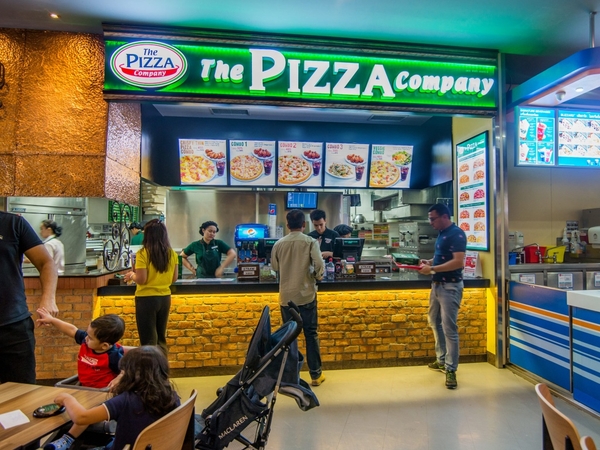
Minor owns more than 530 hotels in 55 countries, as well as many large restaurant brands such as Sizzler, The Pizza Company and Burger King that serve western food, and Thai Benihana, Thai Express and Bonchon for Asian tastes. It also has popular dessert brands such as Swensen’s and Dairy Queen.

Heinecke also said that Minor International also sells lifestyle products under Anello, Bodum, Bossini, Brooks Brothers, Charles & Keith, Esprit, Etam, Joseph Joseph, OVS, Radley, Scomadi, Zwilling JA. Henckels and Minor Smart Kids brands. He said business diversification will help support the business once consumer demand returns. Minor International is ready to respond to demand everywhere regardless of the industry or region.

Thailand set to join the race on taxing digital services #ศาสตร์เกษตรดินปุ๋ย

#ศาสตร์เกษตรดินปุ๋ย : ขอบคุณแหล่งข้อมูล : หนังสือพิมพ์ The Nation.

Thailand set to join the race on taxing digital services

Biz insights

Jul 09. 2020

By Nu To Van,
Sukanok Suthinan
Special to the Nation

At a time when people are spending more time at home and companies are increasingly digitising their business and shifting “online”, it may not come as a surprise that governments are looking for ways to cast their tax net on these online activities.

Much like some other Southeast Asian countries, like Malaysia and Singapore, Thailand is in the process of introducing its own version of a digital services tax.

Only June 9, the Cabinet approved a draft bill to impose VAT on digital services that require foreign digital service providers, while platforms have to register for pay VAT in Thailand. In line with guidelines from the Organisation for Economic Cooperation and Development (OECD), the draft bill focuses on providing “clarity” on VAT taken for transactions between businesses and consumers.

What does it cover and what are the key requirements?

In Thailand, the digital services tax will be in the form of VAT imposed on electronic services transactions. Based on a broad definition of electronic services in the draft bill, most online activities are expected to be covered. For instance, services related to the supplying of digital content, like online gaming, music and movie streaming, e-books, online advertising services, providing online learning courses or webinars as well as online subscriptions to news website are all likely to be covered under the new digital services tax.

Companies that are caught by this new digital tax need to register for VAT (either as a service provider or electronic platform). They can do this electronically and the Revenue Department is expected to introduce a new simplified monthly VAT return to accommodate this process. Companies required to pay this digital tax are however not required to issue tax invoices to their customers and they cannot claim any input VAT from expenses incurred in Thailand.

Who will bear the impact?

Only foreign digital service providers or electronic platforms with an annual turnover exceeding Bt1.8 million are required to register for and pay VAT in Thailand. For electronic platforms like online shopping platforms and online travel agencies, the revenue threshold would apply to two sources – revenue generated by their own platform and revenue generated from foreign digital service providers who use their platform to provide services to customers (non-VAT registrants).

Upon becoming a VAT registrant, 7 per cent VAT of the revenue generated from digital services needs to be reported and remitted to the Revenue Department on a monthly basis.

Given the relatively low turnover threshold, it is likely that most digital service providers or digital platform owners will have to start paying VAT in Thailand once the new digital services tax is introduced. The big question, of course, is who will ultimately be “paying” the VAT. Given that the service providers and platforms will not be able to recover the VAT, it may well be that Thai consumers will ultimately have to pay a higher price to receive the same digital services in the future.

So, what’s next?

The draft bill will now be forwarded to the House for further consideration. Hopefully things will be fleshed out during this process, particularly on some of the practical implementation issues. For example, the current definition of the digital services is very broad, and as mentioned earlier could cover a wide range of online activities. Whether or not this was by design or unintentional, it would be helpful for companies to clearly understand the exact digital services coverage and to assess whether they are being impacted by this new tax.

It would also be interesting to see how the Thai Revenue Department is going to enforce the new digital services tax in the future. For example, how will the Revenue Department track and audit the reported revenue by overseas service providers/platforms?

Will they require local banks to start disclosing their customer’s credit card or payment information or will they start using Multilateral Convention on Mutual Administrative Assistance in Tax Matters (MAC) with other countries to obtain this information? And what happens in case of non-compliance? Will this lead to potential penalties or will the Revenue Department simply start blocking their IP addresses?

Many practical questions still remain, and it is hoped that before the law is implemented (expected to be by 2021), these issues will at least be considered and addressed by the government in guidelines and secondary laws. But what is clear is that Thailand has jumped on the “digital services tax” bandwagon and it won’t be long before digital service providers and platforms need to start preparing for this new tax.

In our next article, we will be looking at how other countries are implementing their digital services tax, how they deal with some of the abovementioned practical issues and how companies can start preparing for this new digital services tax in Thailand.

Sukanok Suthinan

Sukanok Suthinan

Nu To Van is partner, while Sukanok Suthinan is senior manager of tax and legal services at Deloitte Thailand.

The Disney Co. is now in business with Colin Kaepernick. That says more about him than it does about Disney. #ศาสตร์เกษตรดินปุ๋ย

#ศาสตร์เกษตรดินปุ๋ย : ขอบคุณแหล่งข้อมูล : หนังสือพิมพ์ The Nation.

The Disney Co. is now in business with Colin Kaepernick. That says more about him than it does about Disney.

Biz insights

Jul 08. 2020

By The Washington Post · Steven Zeitchik · NATIONAL, BUSINESS, WORLD, ENTERTAINMENT, SPORTS, RACE, FOOTBALL
DISNEY-ANALYSIS

Disney is boldly choosing a side in the culture wars. Or is it?

On Monday, Disney announced that it had made a first-look deal – a mutual commitment to develop content – with former San Francisco 49ers quarterback Colin Kaepernick. Among the potential projects are shows with Hulu, movies with Pixar and an ESPN docuseries about the activist-athlete’s roller coaster recent years.

The announcement comes at a moment when politics, sports and entertainment are entwining in new ways, now converging at the country’s largest entertainment company. And on its face, it represents a shocking turnaround. Kaepernick’s protests, which began with kneeling during the national anthem and also included wearing socks that depicted police as pigs, created a legion of followers, a large number of detractors and a culture war that went all the way to the White House. He has been cheered, shunned and become, no matter one’s politics, a lightning rod. And Disney has long been careful in the extreme to avoid lightning rods.

As a company with a record $70 billion in 2019 revenue, the firm relies on selling the greatest amount of goods to the greatest number of people. Most of its big-screen heroes, from Tony Stark to Moana, peddle general values of innovation and determination, avoiding both an overt nationalism and a spirit of protest. Disney has long avoided political commentary on the small screen too, largely eschewing the Stephen Colbert and “Saturday Night Live” ethos’ of rivals CBS and NBC.

Yet here it stands, embracing Kaepernick across its brands.

The announcement even arrived with official Walt Disney Co. bells and whistles; the news release came with comments not just from executives at The Undefeated, the socially minded ESPN-owned website that will help oversee the partnership, but hosannas from Robert Iger, Disney’s executive chairman. “Colin’s experience gives him a unique perspective on the intersection of sports, culture and race,” he noted.

As if to underline the shift, Disney also announced that former ESPN personality Jemele Hill, who left first “SportsCenter” and then the network over clashes with management regarding her political outspokenness, would help produce the Kaepernick docuseries. It was a homecoming for a prodigal daughter to go along with the minting of a new favorite son. (A homecoming of sorts – Hill was brought in by Kaepernick, according to a person familiar with the negotiations who was not authorized to talk about them publicly, not by ESPN.)

The apparent meaning of the effort did not go unnoticed by experts. As the longtime media journalist Anthony Crupi pointed out, the deal marked “a reversal of the play nice with 345 Park Ave/Stick to Sports initiatives” that Disney and ESPN had long practiced, referring to the NFL’s New York headquarters.

The announcement also seemed to satisfy what the University of Virginia’s Carmenita Higginbotham, who teaches and studies Disney, told The Washington Post just last week was required of the company.

“What Disney has to do is figure out how to make itself matter, how to get in front of audiences in very different ways than it has in the past,” she said. “Because the previous rules . . . of just riding safely down the middle of American society” no longer work.

But the Kaepernick deal may also be less subversive than it appears. Kaepernick and his approach – which deployed a visually potent image to call attention to systemic racism and police misconduct – were in fact endorsed by Disney only after many entities had already pivoted to embrace the athlete during the past six weeks of Black Lives Matter protests. As a larger political movement has gone from marginal to mainstream – and, not insignificantly, as President Trump’s poll numbers suggest his waning ability to win this particular culture war or use it to his political advantage – it has made the former QB safe for a lot of companies, and ultimately for Disney.

The Kaepernick signing, in other words, says a lot more about the distance his message has traveled than how far Disney has come.

When he first took a seat, then a knee, in 2016 and explained his actions (“I am not going to stand up to show pride in a flag for a country that oppresses Black people and people of color”), Kaepernick prompted many other players to do the same. He also prompted a weeks-long attack by the president, who among other things said protesters were “disrespecting our country” and suggested they should be fired for kneeling. Also following was a possibly related drop in NFL ratings; Kaepernick’s blackballing by NFL owners; a backlash-filled Nike ad campaign; and many impassioned defenders who decried his treatment by NFL owners.

The league, in the aftermath of the kneeling movement he kick-started, in 2018 even rewrote its rules to require players on the field to stand for the anthem.

But Kaepernick is hardly non-grata anymore. As protests against police brutality and on behalf of the Black Lives Matter movement took worldwide root following the police killing of George Floyd, they significantly changed Kaepernick’s standing and broadened his acceptance into places he’d never previously found it. Even Roger Goodell, the NFL commissioner who oversaw the anthem policy, released a video apologizing and endorsing Black Lives Matter.

The climate made Kaepernick go from outlier to fixture – and, even more, made him a must-have symbol for companies looking to show they are on the right side of history. For a large entertainment outfit, Kaepernick now presents a prize not easily obtained: the chance to appear activist in a moment when some of the country’s biggest celebrities are crying out for action.

Disney was hardly out front in working with Kaepernick even among other entertainment giants. Netflix, Disney’s sometimes more quick-footed rival, had announced a deal to produce a show based on his life a week earlier.

Even Trump appears to have decided Kaepernick is no longer a worthy target for his purposes. While the president continues to wage a culture war – just on Monday he tweeted criticism for NASCAR’s decision to ban Confederate flags and said Bubba Wallace should apologize for the noose “hoax” – he has dramatically changed his stance on Kaepernick. “If he deserves it, he should” the president said about landing a spot on an NFL roster. It was a far cry from his comments at a rally in 2017 that, upon seeing a player knee, an NFL owner should tell a coach to “get that…off the field right now,” using an obscenity. “Out. He’s fired. He’s fired.”

But all of this mainstreaming and revisionism over Kaepernick’s brand of course doesn’t mean there aren’t plenty of shots left in the culture war. It just means they won’t be fired over him.

None of the Kaepernick or kneeling acceptance, for instance, speaks to how some of the constituencies that have softened on it will respond when he or others push the protests further, when it goes beyond a kneel to more overtly political messages about the government, about candidates, about the police. Or how Disney will react when they do. Already athletes are objecting to how the NBA, with which ESPN partners on a three-company $24 billion broadcasting deal, has managed the question of messages on jerseys when the league restarts later this month. (Philadelphia 76ers forward Mike Scott criticized the move on Monday as “a bad miss” the limiting nature of the process, in which players can choose from a handful of NBA-approved slogans but do no more.)

Nor, for that matter, does it speak to how ESPN and Disney will react when(ever) the NFL season starts and, say, Dallas Cowboys owner Jerry Jones, historically outspoken against liberal politicians and causes, chooses to end his recent silence. Or if ratings drop. Or in the event of many other developments that force a more difficult choice than signing a first-look deal with a valuable brand.

The Kaepernick signing is historic – but for the recently fomented cultural change it epitomizes, not for a broader shift it augurs. And certainly not for any long-term change it yet suggests at Disney.

Disney, of course, is not in any way required to practice activism; as a publicly traded firm, it will make decisions on the basis of shareholders, not politics. But activists and academics are also within their rights to tamp down their enthusiasm about the move.

Some commentators on Monday did just that.

“This is more than offering platitudes, they’re spending money,” Todd Boyd, a University of Southern California professor and expert on pop culture and black history, told The Post of the Kaepernick deal. “But they’re also doing something that is within their own self-interest to do. He poses no real risk to their business, other than the money they’re investing.” Boyd noted that Kaepernick’s “iconic value is especially high at the moment.”

Disney is taking the lead from other companies in accepting Kaepernick, showing that America’s most politically cautious media company is changing – but only regarding one personality, only when it’s likely to provide benefit and only after many other institutions have already paved the way. Whether other entities will still follow an activist celebrity no matter where they may go – and whether Disney will in turn continue to follow them – remains the more important and less answerable question.

Some jobs are coming back, but economy will need years to heal #ศาสตร์เกษตรดินปุ๋ย

#ศาสตร์เกษตรดินปุ๋ย : ขอบคุณแหล่งข้อมูล : หนังสือพิมพ์ The Nation.

Some jobs are coming back, but economy will need years to heal

Biz insights

Jul 04. 2020

 David J. Lynch 

David J. Lynch

By The Washington Post · David J. Lynch · NATIONAL, BUSINESS, CAREER-WORKPLACE 
ECON-ANALYSIS

Sales were stronger than expected when Macy’s reopened its first stores in early May, after a nearly seven-week coronavirus shutdown. But that initial surge soon fizzled, leaving the retailer’s brick-and-mortar business down more than one-third.

Some stores reopened in malls where restaurants and movie theaters remained closed, limiting foot traffic. Outlets in major cities suffered from the absence of foreign tourists. And recent coronavirus flare-ups across the South and West convinced executives they faced a grueling recovery that could take until 2022.

“The situation is really fluid. And it changes day by day,” Jeff Gennette, Macy’s chief executive, told investors this week on an earnings call.

The same could be said of the entire U.S. economy, which has defied the most pessimistic forecasts yet still faces an uncertain trek back to its former heights. With the unemployment rate at 11.1 percent, worse than at any point during the Great Recession, and output continuing to decline, the healing could go on for years.

Employers are rehiring workers faster than economists anticipated, at least as of mid-June when the latest Labor Department survey was taken. But more recent setbacks in the economic reopening, as the daily number of coronavirus cases topped 50,000 for the first time, have blackened the outlook.

“It’s going to be pretty slow going. The bottom line is this is all about public health, public health, public health,” said Narayana Kocherlakota, a former Federal Reserve Bank president. “This is absolutely a multiyear recovery.” 

More than half of the country has now paused or reversed plans to reopen for business, according to Goldman Sachs. Almost four months after the first shutdowns, the health situation is getting worse, not better, in states such as Florida, Texas, Arizona and California. New national data on credit card spending, restaurant reservations and small-business hours show that the recovery from the recession that began in February may already be losing steam.

On Thursday, the Congressional Budget Office released its new forecast, calling for the economy to expand at an annual rate of 12.4 percent in the second half of the year, down from the 15.8 percent it projected in May. That represents unusually rapid growth, but it will follow a three-month period that is widely expected to be the worst in modern history.

The Atlanta Fed’s real-time model estimates that the economy shrank in the quarter that ended June 30 at a rate of 35 percent.

Still, the situation is not as bad as many economists feared. In March, as the economy plunged into the deepest recession in decades, many warned that the unemployment rate would hit 20 percent by summer.

On Thursday, in contrast, the Labor Department reported that the economy created 4.8 million jobs in June, shattering the record set in May. At the White House, President Trump took a victory lap, heralding the development as “spectacular . . . record setting . . . astonishing.” 

The president boasted of the rising stock market, robust retail sales, and a revival of consumer confidence. With customary bravado, he took credit for the rebound while laying the blame elsewhere for the plummet that had preceded it.

“This is not just luck, what’s happening; this is a lot of talent,” Trump said. “All of this incredible news is the result of historic actions my administration has taken working with our partners in Congress to rescue the U.S. economy from a horrible event that was formed, took place in China, and came here.” 

Indeed, Congress approved spending $3 trillion to rescue the economy while the Fed expanded its balance sheet by an additional $3 trillion to support lending to businesses, households and local governments.

Yet Democrats have charged that the president’s failure to combat the coronavirus by encouraging the use of masks and implementing a national testing program helped fuel the latest surge in cases.

The economy remains badly wounded. Nearly 19.3 million Americans are receiving unemployment benefits, almost three times the peak during the worst of the 2008-09 financial crisis and up from just 1.7 million in early March.

The situation is still so dire that the Fed for the first time in its 107-year history has created a program to buy the corporate bonds of blue-chip companies such as Apple, Walmart and AT&T to facilitate lending.

Trump’s salesmanship also risks opening a credibility gap between his rosy comments and reality. In a Fox Business interview on Wednesday, he again predicted a swift “V-shaped” recovery, an expectation that few economists outside his administration share. And he repeated his unfounded claim that the coronavirus will “just disappear” one day.

“We’re headed back in a very strong fashion with a ‘V,’ and I think we’re going to be very good with the coronavirus,” the president said. “I think that at some point that is going to sort of just disappear.” 

Instead, the outlook is a start-and-stop recovery with the economy held hostage by a failure to contain the pandemic, some economists said. Adjusted for inflation, the economy will be smaller than it was at the end of 2019 until the middle of 2022, according to the CBO.

Megan Greene, an economist with Harvard University’s Kennedy School of Government, expects the unemployment rate to increase in July. Many small businesses that took advantage of a government loan program for small businesses may exhaust their borrowings next month, and enhanced unemployment insurance payments will also expire unless Congress acts.

“It’s a massive cash cliff for the economy,” she said.

Elsewhere, Apple, which had been among the first retailers to close during the initial pandemic shutdown, this week shuttered 77 stores in seven states for a second time. Credit and debit card spending, which had recovered steadily since mid-April, fell back in the week ending June 27, according to JP Morgan.

The investment bank cited findings from a panel of 30 million Chase cardholders and said the decline was “surprisingly widespread across states and demographic groups.” 

Restaurant reservations also have lost ground in recent days. On July 1, bookings were down 64.7 percent from one year ago, having worsened from the 57 percent decline on June 27, according to the online dining service Open Table.

And Homebase, a provider of scheduling software, warned that small businesses were hitting a “reopening plateau.” After a rush to reopen in May, progress in cities such as Houston and Phoenix has stalled, the company said. Up to 20 percent of small businesses might not survive, it added.

“Going forward, my expectation is it will be more mixed,” said Nathan Sheets, chief economist at PGIM Fixed Income. “The biggest question is what happens with the virus. If we could get the virus out of the way, we have an economy that is itching to get back to normal.” 

There is ample evidence that the pandemic retains its iron grip on the $21 trillion economy.

In Texas, United Auto Workers Local 276 last week asked General Motors to halt production at its Arlington assembly plant out of concern over the spreading virus, a request the automaker refused as unnecessary in light of company safety protocols. “Every day we are setting new records in the number of people who are testing positive in the Dallas-Fort Worth area,” the union said on its website.

In New York City, Mayor Bill de Blasio halted indefinitely plans to allow restaurants and bars to resume indoor dining.

In California, Gov. Gavin Newsom ordered mandatory business closures in 19 counties where the coronavirus is raging.

While the stock market gives off a scent of euphoria – the tech-heavy Nasdaq sits at a record high – bond investors are sending a different signal. The yield on the 10-year Treasury security sits at 0.67 percent, little different from where it traded in late March, and proof that traders anticipate anemic growth.

Continued cause for concern was evident in the 1.4 million Americans who filed for first-time unemployment benefits in the week ending June 27. That marked the 16th consecutive week that jobless claims have topped 1 million. Before March, the previous record had been 695,000 in 1982.

Companies in some of the states struggling amid the worst coronavirus outbreaks continue to let workers go, contrary to the president’s cheery forecast. In Florida, Levy Premium Foodservice, which handles concessions at sports facilities that are home to the NBA’s Miami Heat and Orlando Magic and Major League Baseball’s Tampa Bay Rays, notified the state of plans to lay off or reduce by more than 50 percent the hours worked for more than 1,400 employees.

It may be years before many Americans can count on complete recovery.

Over the past 70 years, the unemployment rate has declined from its recession peaks by 0.85 percentage points per year, according to a recent paper by Robert Hall, an economics professor at Stanford University, and Marianna Kudlyak, a research adviser at the Federal Reserve Bank of San Francisco.

The Fed expects the unemployment rate to be 9.3 percent at the end of this year. If the economy replays its previous performance, it would take nearly seven years for the economy to get back to February’s 3.5 percent jobless rate.