By The Washington Post · Rachel Siegel · BUSINESS, HEALTH, US-GLOBAL-MARKETS JOBS-ANALYSIS
WASHINGTON – The U.S. unemployment rate is expected to stay above its pre-pandemic levels through the end of 2030, according to a 10-year economic report released Thursday by the Congressional Budget Office.
The agency is predicting that the unemployment rate in the fourth quarter of 2030 will be 4.4%. The current level, according to data published Thursday by the Labor Department, is 11.1%. Before the spread of the coronavirus pandemic shut down vast swaths of the American economy, unemployment had reached 50-year lows, coming in at 3.5% in February.
The new projection shows the long-term tail impact that economists believe the coronavirus pandemic will have on the U.S. economy, which is the largest economy in the world. A severe disruption to production and hiring in March and April has had a jarring impact on the United States.
The country’s economic outlook over the coming decade has “deteriorated significantly” since the CBO published its full baseline economic projections in January, the agency said. The agency on Thursday also said that economic growth for the second half of 2020 is now expected to be slower than projections published in May, which focused on the U.S. economy this year and next.
The latest projections showed that real GDP is expected to grow at a 12.4% annual rate in the second half of 2020 and recover to pre-pandemic levels by mid-2022. The unemployment rate is expected to peak at over 14% in the third quarter of this year, the report said.
In May, the CBO estimated that real GDP would contract by 11% in the second quarter of this year, equivalent to a 38% drop at an annual rate. The May report also projected that in the second quarter, almost 26 million fewer Americans would be employed than in the fourth quarter of 2019.
At a news conference following Thursday morning’s jobs report, President Donald Trump said the economy was “coming back extremely strong.” Earlier this week, senior White House economist Larry Kudlow said that the “overwhelming” evidence pointed to a V-shaped recovery.
But many economists and lawmakers caution that the jobs data reflects a survey taken in the middle of June – before a surge in cases pushed multiple states to reimposed restrictions and scale back reopening plans. That means scores of Americans have now been kicked out of the workforce for a second time. This week also marked the 15th straight week of unemployment claims that topped 1 million.
On Wednesday, the country reported 52,789 new coronavirus cases, marking the largest single-day total since the start of the pandemic. A growing number of health officials, lawmakers and economists say controlling the virus is crucial for the economic recovery. Minutes released Thursday from the Federal Reserve’s June meeting showed that officials at the central bank are concerned that the United States could enter a much worse recession later this year if infections continue to mount.
Jun 29. 2020Roch Gauthier Senior Product Management Director, Aspen Technology
By Roch Gauthier Senior Product Management Director, Aspen Technology Special to The Nation
Before the onset of the current pandemic, companies were already increasingly interested in the idea of a self-healing supply chain.
Steve Banker of ARC Advisory Group stated in a recent Forbes article: “The term ‘self-healing supply chain’ is beginning to be used. This term reflects the idea that parameters should automatically be updated. It also includes the idea that the best plan is useless if unexpected events occur. It is important not just to create an optimum plan, but to be able to replan using a robust control tower as needed. A self-healing supply chain is impossible without a robust supply chain digital twin.”
Business continuity refers to maintaining, adjusting or rapidly resuming business functions in the event of a major disruption.
In a recent report titled “Beyond Covid-19: supply chain resilience holds key to recovery”, Baker McKenzie and Oxford Economics cited that the pandemic has resulted in an unprecedented global supply chain crisis. Forecasting global recovery as early as H1 2021 in the hardest-hit manufacturing sectors, the firm alluded to digitalisation of supply chains as strategic for businesses to achieve resilience and sustainability.
On this road to recovery, it is essential that businesses continue to stay ahead of the curve. In the recent months, I had conversed with supply chain professionals in process manufacturing industries to learn how their organisations were adapting and achieving business continuity by leveraging digital twins.
Let me share with you what I have observed and learned in different phases since the onset of the pandemic.
Phase I: Protect people and the business
Keep plant operations personnel safe
The priority at the onset of the pandemic was to keep employees safe. I learned about a North American company that rapidly incorporated social distancing into their production planning and scheduled digital twins in order to help keep their manufacturing operations personnel safe. While generating optimal manufacturing plans and schedules, digital twin technology ensures that operations personnel work in a section of the production facility with adequate physical distancing to keep people safe while simultaneously considering complex manufacturing equipment constraints related to using alternating lines/equipment on various days of the week.
Gain insights into financial and operational implications of business scenarios
The other priority was to protect the financial health of the business. Many organisations mobilised a team responsible for evaluating the financial and operational implications of numerous short- to mid-term business scenarios. I learned that an European company had been using their end-to-end supply chain planning optimisation digital twin to run and analyse a significant number of scenarios every day immediately at the onset of the pandemic. Their digital twin allowed them to easily change time period specific data assumptions related to supply and demand conditions spanning their global supply chain. Since their digital twin makes use of holistic mathematical optimisation, they were able to rapidly develop a portfolio of supply chain “game plans” on how to best respond to circumstances as the future unfolds. My big takeaway is that supply/demand scenarios analysis has rocketed in importance in the process manufacturing industries since the beginning of the pandemic.
Phase II: Adjust processes to achieve continuity as supply/demand conditions fluctuate
Keep work-from-home and on-site teams aligned constantly
Maintaining business continuity and safe reliable supply chain and manufacturing operations became much more challenging when some of the people who usually work at the manufacturing sites were directed to work from home. This included schedulers, material planners, engineers, supply chain planners, shipping coordinators, to name a few. I learned a wonderful story about an Asian production site that is using a digital twin that helps their supply chain and manufacturing operations teams stay aligned and on the same page throughout the day. The technology allows them to interact with a live web-based view of the latest published schedule, view projected inventory positions, identify problems ahead of time and help everyone maintain situational awareness about what is happening at the manufacturing facility and working towards a common goal.
Quickly adjust to keep demands, capacity, supply and operations execution in synchronisation
I learned of a company that produces some materials that have been in higher demand in past months that leverages a scheduling optimisation digital twin, which helps them to align demands, capacity, supply and operations execution by team members daily. The digital twin allows them to adjust to changing conditions and helps them improve cash flow, ensure on-time shipping performance and flex production output.
Phase III: Prepare for the recovery
Monitor demand for signs of recovery and hopefully rebound
Since the beginning of the pandemic, most companies that I have spoken to are reporting that the accuracy of their demand forecasts are considerably less accurate than before. Forecasting digital twins were never designed to handle the profound and fundamental changes that have occurred in consumer behaviour and upstream business demand patterns as a result of the pandemic. There is a good article that was published recently in the MIT Technology Review on this topic entitled “Our weird behaviour during the pandemic is messing with AI models”. In preparing for a recovery, some companies are using digital twins to help them closely monitor changes in demand trends week-over-week as part of their weekly sales and operations execution meetings.
Redesigning supply chain and manufacturing to be more resilient
The pandemic has exposed vulnerabilities in today’s global supply chains that were designed for efficiency. There is an opportunity for manufacturers to (re)design their businesses to make them more resilient. This will involve analysing and building redundancies for critical product lines and associated production and supply capabilities, including reviewing existing suppliers and locations; substitution options; as well as existing manufacturing locations and the current flexibility of manufacturing resources.
This is an area where an end-to-end supply chain optimisation digital twin can be leveraged to explore and analyse various supply chain and manufacturing (re)design alternatives to build more resilient businesses.
Strengthen your supply chain with self-healing capabilities
Digital supply chain planning and scheduling twins are often used to make customer order promises and commitments. There are significant risks to customer service levels and on-time in-full KPIs if digital twins get out of synch with reality. Self-healing supply chain capabilities ensure that supply chain digital twins remain as accurate as possible, reflecting demonstrated plant, equipment and process performance. This is achieved by automatic detection of data inputs that may no longer be valid among the tens to hundreds of thousands of manufacturing data inputs (for example, processing times, yields, set-up times, cleanout times, transition times, etc) using supply chain digital twins. Self-healing supply chain capabilities help identify these proverbial needles in the haystack with minimal time and talent input.
Self-healing supply chain capabilities can also combine both predictive and prescriptive technology. For example, low-touch machine learning is used to predict with high degrees of certainty manufacturing equipment/asset failures weeks in advance. Prescriptive mathematical optimisation methods in supply chain planning and scheduling digital twins make use of these advance equipment failure warnings to answer the question: “When should we take planned downtime (in advance of the predicted failure event) to ensure minimal disruptions, costs and impact to customer order commitments and relationships?”
Closing thoughts
Digital twins are proving to be critical tools for many manufacturers in processing industries during these uncertain times. Digital twins provide insight so organisations can adapt to this new operating environment and keep supply chain and manufacturing operations running as nimbly and efficiently as possible. Building digital capabilities now will help organisations prepare for the uncertainty that is likely to continue into 2021 and beyond.
By Tony Ng Special to The Nation As the Covid-19 outbreak spread, customers quickly adapted to social distancing measures by adopting new online methods to buy everyday groceries. Though lockdown measures in Thailand have eased and restaurants and businesses are starting to reopen, online grocery shopping behaviours are here to stay.
Now the habit has formed, consumers will continue to rely on digital-first shopping, though they will still expect the special in-store service they received when shopping in person. Here are five lessons retailers can apply to their businesses going forward.
Lesson 1: Personalised shopping experiences
The goods people buy during a pandemic may not reflect their typical buying habits. Post-pandemic, normal purchasing habits will likely resume. Grocery shopping will go from a long-term play – in which consumers buy groceries to last weeks or months – back to a routine task for in-the-moment purchases.
As purchasing habits shift back, grocers will need to deliver personalised experiences to move more shoppers past transactions and build increased loyalty.
There are three ways grocery retailers can do this.
Artificial intelligence (AI): AI learns from customer data to suggest relevant items based on past and recurring purchases. Connect AI to your customer relationship management (CRM) system to build tailored customer journeys across marketing, commerce, and service.
Customer surveys: Surveys and quizzes let customers tell you exactly what they want – and when they need it. Create email surveys and a section on your site for feedback. Include questions on lifestyle and dietary restrictions to deliver new product options.
Chatbots: Chatbot usage has increased since Covid-19. Besides helping service teams scale, bots can provide curated information for customers. Use bots to set up order subscriptions and recommend products. Bonus: Bots make service agents more efficient because they free them up to focus on higher-value cases.
Lesson 2: Increase pickup options
Consumers will still want flexibility after shelter-in-place orders lift. Continue special considerations and services, including special pickup times and delivery options.
Take curbside pickup a step further. Reserve a certain number of spaces in your parking lot for pickup. Enable customers with an app to schedule their pickups and match them with a time and zone. Let them add their phone numbers to receive text updates. Text ahead of time with a pickup reminder and special instructions. You can also add staff to assist with curbside pickup zones by maximising self-checkout lanes inside the store. Lastly, be sure to embed service so customers can connect with an associate and ask any questions.
Third-party delivery partners will continue to play an integral role. Find ways to evolve the partnership to continue to offer at-home delivery options. For example, make it easier for customers to receive items through subscription-based delivery from the store. Or explore automated vehicles for in-town deliveries.
Lesson 3: Partner with restaurants for wider reach
Restaurants were hit hard during Covid-19 and were quick to collaborate to create new revenue streams. Offer support to the industry by using your business as a platform for change. Create strategic partnerships with restaurants to make a positive impact.
To do this, consider offering ready-made or heat-and-serve restaurant meals. Then cross-promote to both restaurant and grocery customers for maximum reach. If there’s a bundled meal for Taco Tuesday, customers could click one button and add the ingredients to their cart. This expedites the service and creates a seamless experience.
Another approach is to co-create digital content such as recipes, how-to’s, and blogs to increase consumer engagement between purchases. For example, a restaurant that features recipe content on its website can link to online grocery ordering.
Lesson 4: Empower associates to reduce contact risks
During the pandemic, store associates, warehouse workers, and delivery drivers became frontline heroes. Consumers trust and respect companies that recognise and fairly compensate these employees. According to a recent survey, after discounts, safety of employees was the top influencer for shopper purchases and loyalty.
When countries reopen, frontline employees will be tasked with even more safety measures. Empower associates to handle customer questions while reducing contact and risk. For smaller grocers, this may mean scheduling appointments for at-risk in-store shoppers. For larger grocers, formalising training on proper safety and social distancing protocol is key for one-to-one interactions.
Many grocers are implementing ways to reduce employee contact with customers such as encouraging shoppers to pay by card and use self-checkout. Safety screens and increased sanitizing can also protect workers.
Lesson 5: Change how you track inventory
Long delivery times and order substitutions marred the Covid-19 shopping experience. Post-crisis, consumers will have less patience for delays and inconsistencies.
To get ahead of expectations, track inventory the day of the order, not the day of delivery. Remove ordered items from the inventory system and keep them in the back of the store or in a dedicated section of your warehouse. If a customer tried to order an item but it was out-of-stock, notify them if it becomes available before their delivery time, so they can add it.
Evaluate order management capabilities as well. Ingest orders from online and route them to the correct store locations.
Prepare for new shopping habits, future disruptions:
While the future is uncertain, digital commerce will be increasingly important for both large grocers and small shops. Small grocers may actually have an agility advantage without disparate, legacy systems.
Grocery retailers will begin to focus on transformational projects to prepare for future disruptions. Such projects don’t have to take months or even years. For example, the Salesforce Commerce Cloud Quick Start for Grocery and Food Service is a tailored, out-of-the-box solution that has everything you need to offer buy online, pickup and curbside experiences.
Tony Ng is Asean region vice president for Salesforce
Jun 27. 2020David Oxford, Country Director, Nokia Thailand
By David Oxford Special to The Nation The Covid-19 pandemic is the biggest health emergency the world has faced in generations. The unprecedented magnitude of this crisis means everyone is making a concerted effort to improve safety while trying to keep social and economic activities running – from governments and businesses to communities and individuals.
As Thailand is gradually easing movement and business restrictions, the question now is: where does the nation go from here? Talk of a ‘new normal’ is commonplace now, but how exactly will Thailand transition towards it, and how can the nation harness new technologies such as 5G to create a smarter and safer society?
Why Thailand’s technological ambitions are not derailed
Before the pandemic, countries around the world were moving full steam ahead with digital transformation to bring societies to the future and unlock new economic possibilities.
From the outset, it may seem that the Covid-19 outbreak dampened Thailand’s digitalisation ambitions, but the pandemic is, instead, accelerating them. This includes the creation of mobile apps that can identify Covid-19 hotspots and allow people to self-assess their health, in addition to the development of chatbots that the public can communicate with to find out information on the coronavirus and steps to prevent its spread.
These efforts are solidifying the robustness of Thailand’s national healthcare system, which is ranked sixth in the 2019 Global Health Security Index and has been vital to the country’s readiness to weather the pandemic.
Thailand is already working towards building a smarter world. Yet, the challenge now – as the country gears up for its ‘new normal’ – is jumpstarting digital transformation across other key sectors, especially enterprises, although that may require more radical changes.
Adapting for efficiency
Going the radical route is often precipitated by critical periods such as the current pandemic. We have seen drastic changes by global enterprises to support relief efforts, such as scent manufacturers reworking operations to make sanitisers and luxury automakers retooling production lines to create respirators. These may be novel, unprecedented circumstances borne by the Covid-19 spread, but it highlights how important it is for manufacturing and supply chain actors to adapt their resources quickly to solve pressing societal problems.
We need to double down on what these enterprises are already doing, yet at speeds which can help improve their adaptability and supplying solutions to society more quickly. This requires communication service providers (CSPs) – and the enterprises they work with – to harness the move to 5G.
This is – as 5G can give connected enterprises the flexibility and adaptability that provides the gift of time – a valuable commodity under normal circumstances, but an extremely vital one in times like now. With 5G, the digitalisation of industries will reduce the time taken to design and build solutions.
A ‘connected’ enterprise gives it flexibility to quickly retool and change systems on demand. That ‘on-demand change’ can mean leveraging automation and remote operations to rapidly increase output, improve employee safety, and ensure the business continuity that is crucial to the production and distribution of essential products and services.
Network slicing – the essential ingredient to 5G transformation
‘Time to market’ is just as important as ‘time to manufacture’, and the key to 5G enabling rapid deployment of solutions is network slicing. Slicing is not a new concept. Virtual network capabilities have been part of packet networking for decades. However, 5G deployments will extend this virtualisation to an end-to-end and top-to-bottom functional scope, and then embed slicing as a core function of the network. The benefits include the ability to differentiate broad classes of services that require certain characteristics or resource parameters with performance characteristics that fit the needs of new segments – something that conventional one-size-fits-all networks cannot achieve.
With network slicing, 5G can support diverse and extreme requirements for latency, throughput, capacity, and availability. It will enable services that were impractical with previous wireless technologies.
For instance, 5G networks will connect ‘factories of the future’ by creating fully automated and flexible production systems – something that Thailand’s automotive manufacturing sector can leverage to improve its competitive regional position. In healthcare, hospitals can arrange greater telemedicine distribution and even arrange robotic surgeries whereas city governments can use 5G to transform urban transport management via real-time traffic management.
All of this will be possible with 5G – with network slicing support – as it helps aggregate vast amounts of data from multiple, dispersed sources for better insight into operational status. It also allows for new levels of supply chain visibility and transparency, an attribute that could prove highly valuable in pandemic tracing.
Coming out better, faster, and stronger
Fortunately, CSPs in Thailand are taking advantage of 5G’s potential to support efforts to flatten the curve and provide relief to those impacted by lockdown measures.
Such efforts should be lauded, and we are doing our own part to help CSPs and their enterprise customers stay prepared amid the pandemic. Through our Covid-19 network traffic dashboard, we are analysing global network traffic to help them anticipate capacity requirements and optimise resources.
Right now, we must all remain steadfast in enduring Covid-19, but I am confident that we will come out stronger. When we do, 5G is there to help us create a world that is smarter, safer, and – most importantly – prepared to weather this sort of challenge more effectively in the future.
CIMB Thai Plc will adjust its loan expansion target due to the Covid-19 situation that has had a significant impact on Thai economy, the bank’s president and chief executive officer Adisorn Sermchaiwong said.
“We had set this year’s loan growth target at 12 per cent over last year, but due to the current situation the bank might see no expansion in loans at all,” he said.
“Our mission for this year therefore has to shift from increasing the amount of loans granted to maintaining the quality of loans and focusing on granting loans to target groups that have higher potential,” he said.
“CIMBT also estimates that non-performing loans [NPLs] this year will be at the same level as the previous year despite the Covid-19 outbreak, thanks to the supportive policies of the Bank of Thailand,” added Adisorn. “We aim to maintain NPLs at 4 per cent until the end of 2020 and are planning to sell NPLs of around Bt1 billion to Bt2 billion to achieve the goal.”
Adisorn added that in the past five months the bank has seen over 80 per cent increase in banking transactions on digital platform. “This year we have added more services on digital platform including mobile banking, mutual fund digital buying and digital lending in response to changing customers behaviour in the new normal era,” he said.
“The bank estimates that until the year-end the bank’s transactions via digital platform could rise to 90 per cent of overall transactions.”
“As for the investment budget for 2020, we still maintain the original target of Bt500 million to Bt600 million, with main focus on IT infrastructure,” he added. “Although in the past few months the bank did not invest much in IT due to lockdown measures, towards the end of the year we may invest in other aspects to prepare for the post Covid-19 era.”
CIMBT’s shareholder meeting on Friday (June 26) approved the payment of 2019 interim dividends to shareholders at Bt0.005 per share, amounting to Bt174.11 million.
By Dennis Khoo Special to The Nation When the Covid-19 pandemic forced you to move your office to your home and to shift online, did it feel like a disruption or merely an inconvenience?
I would argue that for many of us, using digital services is not unfamiliar. Covid-19 has simply increased our dependence on and accelerated the frequency with which we use digital services.
This continual behavioural shift towards digital is not new, especially in the banking industry. Doomsayers for incumbent banks have always been around. These voices are even louder now with the proliferation of financial technology firms (Fintechs) and especially after the global financial crisis in 2009.
Fintechs are often touted as the disrupter of incumbent banks, which are said to be too big and too weighed down by legacy to be innovative. “Lite” financial outlets, such as neo-banks or digital banks, are said to be displacing their incumbent counterparts. If you are a traditional bank, your days are numbered.
United Overseas Bank, where I work and head our digital bank business, is seen to be such an incumbent bank – big, traditional and with legacy systems.
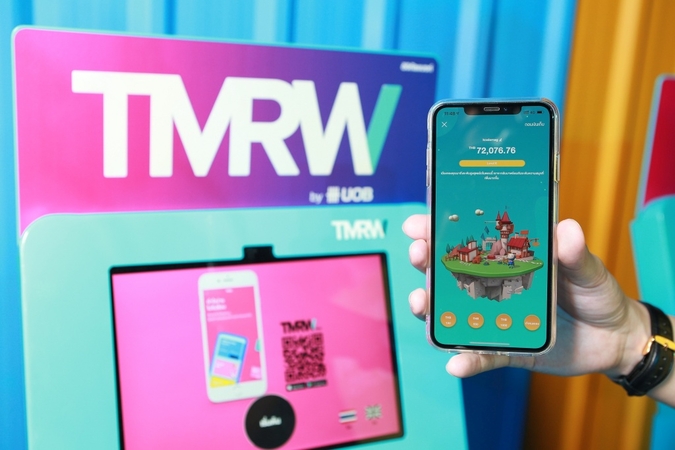
And yet in the past year alone we have been recognised by the global banking industry for our digital transformation initiatives including the launch of TMRW (pronounced “tomorrow”), the Asean region’s first digital bank for the digital generation.
Designed and built in a little over a year, TMRW was launched in Thailand in March 2019 and expanded into Indonesia earlier this year.
TMRW runs on a new business model that focuses on customer engagement as our primary performance indicator instead of revenue or profit. Those are important – we run a business after all – but our model hypothesises that if we deepen engagement, the bottom-line benefits will follow.
But what’s new here? Many traditional banks have launched digital banks. Many of these banks have also shuttered their digital bank operations or have admitted that their digital banks have not performed to expectations.
On the contrary, TMRW has shown in just one year of operations that our new business model works and is bearing fruit. In Thailand, a market with one of the highest digital banking standards in the Asean region, TMRW has the third highest net promoter score (NPS) among all banks.
NPS (which tracks how likely customers will recommend a brand to their friends and family on a scale of one to 10) is one of the key indicators of customer satisfaction, loyalty, and more importantly engagement and advocacy.
It is a very stringent measure as NPS only recognises customer advocacy if customers indicate nine or 10 on the scale. Customers who indicate a six or below are considered detractors, which affects the net promoter score. Three in four of our customers have become our advocates, referring TMRW to their circle of influence.
There is a need to challenge the status quo even if you’re a successful and growing traditional bank today. Our customers are increasingly going online and the next generation of customers who are digital natives will likely choose digital-first or digital only channels.
Every bank is different and has its own sets of challenges and business objectives. I have listed three principles which we took that have helped UOB to meet its strategic digital objectives.
1. Make the case for change:
Be a catalyst for mindset change within the company.
Any new initiatives require investment, time and more importantly the buy-in of all your stakeholders, from the board to your senior management team, for long-term success. My team and I were able to count on the support of the senior management team who saw TMRW as a long-term strategic investment and trusted us with the time needed to develop a business model and to build a full-fledged digital bank from the ground up.
2. Don’t be afraid of a blank slate:
We built TMRW for regional scale within just 14 months. We were able to do so because we took the time we needed to develop a robust business model in which we were confident and which offered us a clear blueprint on which we could build our digital bank quickly. This is easier said than done as there is always a pressure and a temptation to go to market as soon as possible.
We studied leading global and local banks and talked to experts around the world even as we workshopped and developed our unique digital bank model that could be scaled easily across diverse markets.
After much research, design thinking and testing, we concluded that data-driven insights, rapid learning and feedback loops are the new currency for success in tomorrow’s retail banking landscape. The bank of tomorrow needs to be customer- and engagement-focused. Simplicity is key, which means a digital bank must be targeted in what it offers and for whom it serves.
This also means it cannot stand alone to serve a universal set of customers across different life stages, but should coexist with existing traditional banks offering digital banking as part of their omni-channel strategy. Digital banks and digital banking should serve different customer segments and are likely to have different growth trajectories.
3. Integrate your customers into your business model:
Progressive companies today are already focusing on ensuring a customer-centric experience. We believe that the customer experience is not just an element of the future of service. Instead, a service-driven business such as banking should rethink its business model where customer-centricity is the goal rather than a by-product.
That is what UOB did for TMRW. We invented a new business model we call ATGIE to power our new digital bank. Designed to start small, to lower the cost to serve and to scale quickly in the medium term, ATGIE stands for Acquire, Transact, Generate data, harness Insights, and to use these insights to Engage the customer. Through a flywheel effect in which customer engagement is deepened with every interaction, TMRW is able to grow the number of quality customers organically through advocates and to keep the cost of acquisition down.
The current pandemic has accelerated a consumer shift towards digital bank and digital banking services at an unprecedented pace, and customer expectations for a superior digital experience will continue to grow in tandem. It’s never too early to start thinking about how you can serve tomorrow’s customers, but it can be too late.
Dennis Khoo is head of TMRW Digital Group, United Overseas Bank.
By Montri Khongkruephan Special to THE NATION The Covid-19 pandemic has had a significant impact on most businesses across the world. Many countries have been implementing extensive mitigation measures to turn their downside scenario to a recovery scenario; they include social distancing, “shelter in place” orders and “lockdown” to reduce growth in the number of Covid-19 infections.
These measures have widely and deeply impacted the businesses both from commercial and operation points of view. Most of the organisations have had to announce either mandatory “work-from-home” policy or a split team working environment to comply with those measures.
CFOs and their team currently play a strategic role in supporting the organisation during this period. From financial accounting and reporting perspectives, there are four key activities that CFOs would need to put more efforts in to support the organisation during the pandemic.
▪︎Risk assessment – Performing risk assessments in potential risk areas that impact businesses and markets in three stages of the pandemic situation — respond, recover and thrive — in order to bring the businesses back to normal as soon as possible. Thus, re-forecasting revenues, costs and investment projects are the outcomes from this key activity.
▪︎Cost Control – All expenditures need to be re-evaluated and realigned with challenging business conditions and risk assessment provided. CFOs need to drive down the costs by eliminating non-essential costs. Furthermore, assessing opportunities to improve resources and spending allocations and processes are also important for the organisation to help their businesses recover once the government lockdown measures are lifted.
▪︎Cash flow management – Optimising and monitoring working capital will enable the business to identify and unlock cash release opportunities. Examining the operational, strategic and financing levers among accounts receivable, accounts payable and inventory can also help improve liquidity. Usually, most companies accelerate their collections and delay payments to suppliers. Considering your company is also a supplier of your customers, they are likely to delay their payment as well. However, business trust is as important as their cash flow.
▪︎Financial reporting – Considering how the management ensures that their teams are doing proper work while staying compliant during the working-from-home period.
In order to perform those four key activities effectively, organisations need to have the right infrastructure in place to be able to provide accurate and timely financial information.
CFOs are currently facing extreme challenges and constraints during this difficult time and it is getting worse due to the lockdown and mandatory work-from-home policy or split-team working arrangements.
The question remains as to why finance teams are unable to work remotely. Prior to the Covid-19 situation, most of the organisations were convinced that they have gone digital with ERP and robotics, and various other digital initiatives in recent years.
However, the current pandemic has revealed that in reality, financial operations still remain hybrid — between digital and manual.
Whilst some processes and data have been automated, the majority is still required to be done manually. Therefore finance teams are not able to operate outside the office as they need to access their desktops and hard documents to process and reconcile information in the office. Such a hybrid state creates five key challenges for financial operation activities with respect to working remotely:
▪︎Limited mobility – Over 40 per cent of organisations have shown that their finance teams cannot work remotely as they need access to the desktops and manual files at the office.
▪︎Labour and time-intensive – Around 61 per cent of organisations still manually do finance work offline eg approving the JV entries, signing documents, finance memos, preparing reconciliation, etc.
▪︎Higher risk of error – Over 50 per cent of CFOs are not completely confident with the accuracy of their financial reporting, which is the first priority of CFOs. This challenge becomes critical during a pandemic if your organisation has been operating in many countries.
▪︎Low morale – Some 42 per cent feel that they put too much efforts on tedious data-gathering, copy and paste function rather than doing the data analysis. Although the organisation can hire low-cost personnel to support such tasks but they are still concerned about staff morale.
▪︎Lack of analytical capabilities – Over 60 per cent find lack of analytical capabilities. The question is: will CFOs invest in training to upskill their team or find a right analytic tool to help them?
Taking into account the above-mentioned challenges, organisations need to accelerate their adoption of automation in Finance “Virtual Finance Operations”. There are four steps for CFOs to consider:
1 Go paperless – Organisations can start considering an end to the use of paper in several processes eg memo approval, document approval, procure-to-pay, and order-to-cash processes, etc. Moreover, utilising e-payments and encouraging suppliers to issue electronic invoices, including establishing a central portal for uploading documents, will be supportive of the paperless processes.
2 Go mobile – Organisations may consider replacing all desktop computers with laptops, including looking into possibilities of processing on-the-go via mobile applications eg approval workflow on your mobile phone.
3 Go automation – Organisations need to accelerate their adoption of automation. The examples are “Optical Character Recognition” and “Natural Language Processing” to automate the data capture of physical documents. Furthermore, leveraging “Robotics Process Automation” technology to automate repetitive, rule-based accounting activities.
4 Go cloud – Moving to cloud-based ERP systems, including implementing a cloud-based solution extension from those ERP related to a financial close and reporting platform, which enables the finance teams to work, manage and monitor the close, consolidation and reporting activities online from anywhere.
In conclusion, finance teams need to put more effort in the four key finance operation activities to support and monitor the organisation in a remote working environment, as CFOs are nowadays facing more challenges from managing their finance team during the lockdown and the mandatory work-from-home policy in many countries due to the pandemic. This could soon be a “new normal” in the business environment.
Most of the challenges are a result of the digital-manual hybrid state of financial operations, which keeps CFOs awake at night.
“Virtual finance operations” will be a sleeping pill for CFOs, which consist of four steps: Go paperless; go mobile; go automation; and go cloud.
Virtual finance operations introduce efficiencies into the organisation and keep the finance team running smoothly even in times of crisis.
Another important matter is that CFOs and controllers should empower their finance teams with the “flexibility” to work from anywhere, real-time collaboration and minimising tedious and manual processes. Rethinking on transforming the current practices of financial operations to virtual finance operations will become a long-term competitive advantage, not only to survive during the pandemic, but also to stand out in the “New Normal” trend for financial operations in the near future.
The author is partner, audit and assurance, Deloitte Thailand
By The Washington Post · Steven Pearlstein · BUSINESS, US-GLOBAL-MARKETS On Monday, the Federal Reserve announced it was expanding its program to get more credit into the hands of large corporations by buying a broad cross-section of investment-grade bonds, part of its pledge to inject $4 trillion into the global financial system to lessen the blow of a pandemic-induced recession.
Why, exactly, the Fed feels it necessary to inject more dollars into the corporate credit market is hard to fathom. The interest rate at which investment-grade companies can borrow on the bond market is now below 4%, about as low as anyone can remember. And the pace of bond issuance so far this year, at over $1.2 trillion, has been double that of last year’s torrid pace. Indeed, there’s so much capital sloshing around that investors are lining up to lend money to companies such as Boeing and Macy’s and the cruise-line operator Carnival, although these companies’ revenue has plummeted with along revenue in much of the travel and retail sectors. And this flurry of borrowing and lending comes despite warnings from Standard & Poor’s that the number of companies facing a downgrade in its credit ratings is at an all-time high.
The best explanation for this confidence is the widespread belief on Wall Street that the Fed will do “whatever it takes” – that is, print money to buy as many bonds as necessary – to keep credit flowing to the business sector, no matter the risk. By placing a floor under bond prices, the Fed makes it possible for over-indebted, sales-starved companies to borrow even more to cover operating losses, or refinance existing loans, allowing them to avoid, or at least delay, the day when they cannot pay their bills.
It’s not just creditors, however, who benefit from the Fed’s bond buying – by shielding shareholders from the risk of being wiped out through bankruptcy, their shares are also worth more. And it is that, more than the prospect of a quick recovery or the day-trading of individual investors, that has allowed what had been an overpriced stock market to regain almost all that it lost during the scary early days of the pandemic, despite an unemployment rate that is expected to remain close to double digits for the rest of the year. Things have become so crazy that Hertz stock, which should have become worthless when the company filed for bankruptcy last month, was trading at $6 a share at one point last week. The company has since announced plans to raise $1 billion to pay creditors by issuing new stock.
It is worth noting that, other than the airlines, very few big companies have taken advantage of the $500 billion that Congress allocated for rescue loans from the Treasury. And why would they? At the insistence of Democrats, those Treasury loans come with all sorts of conditions limiting executive pay, requiring that employees not be laid off and prohibiting the use of the money to pay dividends and buy back stock. By promising to inject hundreds of billions of dollars into private credit markets, however, the Fed has given companies access to credit without those nettlesome restrictions.
Back in March, with stock prices plunging and credit markets frozen, there was good reason for the Fed to promise to provide whatever it took to ensure that otherwise-sound businesses could get the credit they needed to get them through the pandemic. But with credit markets operating smoothly, the Fed now has no mandate to reflate the credit and stock bubbles that existed before the crisis, in the process propping up zombie companies and forestalling the long-overdue restructuring of industries with too much capacity and companies with too much debt.
That may not have been the Fed’s intent, but it is how things have worked out. At this point, putting even more liquidity into credit markets already awash in it is does very little to accelerate the economic recovery. What it does do, however, is hand an undeserved and unseemly windfall to corporate executives, bankers, hedge fund managers and Wall Street investors.
Ever since the chairmanship of Alan Greenspan, the Fed has been playing a cute game when it comes to characterizing its relationship to financial markets.
When the markets are buoyant, Fed officials claim that central bankers should never second-guess markets by declaring that there are financial bubbles that might need to be deflated. Markets on their own, they assure, will correct whatever excesses may develop.
But when bubbles burst or markets spiral downward, the Fed suddenly comes around to the idea that markets aren’t so rational and self-correcting and that it is the Fed’s job to second-guess them by lending copiously when nobody else will.
In essence, the Fed has adopted a strategy that works like a one-way ratchet, providing a floor for stock and bond prices but never a ceiling. The result in part has been a series of financial crises, each requiring a bigger bailout than the last. But when the storm finally passes and it’s time to begin sopping up all that emergency credit, the Fed inevitably caves in to pressure from Wall Street, the White House, business leaders and unions and conjures up some rationalization for keeping the party going.
Testifying Tuesday before the Senate Banking Committee, Fed Chair Jerome Powell was pressed on that very point by Sen. Pat Toomey, R-Pa., who asked why the Fed was continuing to intervene in credit markets that are working just fine.
“If market functioning continues to improve, then we’re happy to slow or even stop the purchases,” Powell replied, never mentioning the possibility of selling off the bonds already bought.
What Powell knows better than anyone is that the moment the Fed makes any such announcement, it will trigger a sharp sell-off by investors who have become addicted to monetary stimulus. And at this point, with so much other economic uncertainty, the Fed seems to feel it needs the support of markets as much as the markets need the Fed.
—
Steven Pearlstein, a Washington Post economics columnist and the Robinson professor of public affairs at George Mason University, is the author of “Moral Capitalism.”
Covid-19 has affected millions of people worldwide, claiming hundreds of thousands of lives and drastically impacting the global economy. However, the full impacts of the disease are still unknown as the contagion continues to spread.
Meanwhile almost every business sector has been hit hard, with profits plummeting, liquidity scarce, and financial restructuring or even bankruptcy now common.
However, the dark picture also contains a bright spot, namely opportunities to acquire talent and assets at very competitive prices – but only if companies are agile enough to cope with changes demanded by the “new normal” for business.
In the heat of the moment, chief financial officers (CFOs) must adapt quickly to the virus crisis if their companies are to prosper. We suggest that CFOs consider the following imperatives and take appropriate action.
First, liquidity management has become a top priority. Many business sectors are now struggling with a lack of liquidity due to low demand, declining sales volume, and the shrinking stock market caused by market volatility and uncertainty.
Companies with a high debt-to-equity ratio are struggling to stop their credit rating from being downgraded, while even those with strong balance sheets are facing higher financial risks related to assets such as cash, receivables, short-term loans, etc.
Thus, it is important for CFOs to make “scenario plans” to ensure the company’s cash flow viability, reforecasting the short-term liquidity position on even a weekly basis.
They must also look for opportunities to accelerate collection of receivables, shorten the cash conversion cycle, seek out alternative cash sources, diversify new lines of credit and arrange current debt by requesting debt covenant resets and/or waivers with financing partners.
Additionally, CFOs should not ignore the financial risks for key trading partners, customers and suppliers. To reduce company risk, they must carefully monitor and quickly respond to changes in customer behaviour, while diversifying suppliers and third-party partners.
The second imperative concerns internal and external relationship management. During the time of social distancing, clear and frequent communication is difficult since the majority of people are currently sheltering at home.
This requires individuals to work remotely and businesses to promote work virtualisation.
To engage with external stakeholders, CFOs should encourage companies to provide current and forward-looking information to their investors and to proactively reach out to regulators for financing negotiations and resilience purposes.
For internal business operations, finance seems better suited to remote working practices than manufacturing and other functions.
CFOs should engage with HR and IT departments to ensure active interaction among staff with efficient systems and data in place, while managing any extra cyber-risk. Usage of digital communication platforms like Skype, ZOOM, Microsoft team and Google Meet is rocketing during this time. Companies need to consider the pros and cons of this tech, balancing convenience against concerns over security, privacy, user-friendliness and the price factor. Those staff unable to work from home require new ways of organising workspaces for social distancing.
Operations must be enhanced under the continuous impact of new remote working conditions and market disruption. It’s vital for organisations to stay aware of negative shifts in demand and disruption of supply during the current crisis.
In addition, CFOs should consider the whole value chain when they assess the needs to change and/or enhance finance and business operations. When scenario planning, they should also consider initiatives to transform operations so as to optimise cost and operational excellence to ensure the company can bounce back after the Covid-19 is defeated.
Currently, many firms are focused on minimising operational costs and managing the bottom line via SG&A, procurement and the supply chain.
For example, converting fixed costs to variable costs via outsourcing, contracted manufacturing, leasing the transport fleet, and third-party warehousing, can potentially preserve your core business operations while simultaneously providing companies flexibility on the fringes and creating long-term cash flow viability.
Integrating digital tech into daily operations where possible is another development.
Besides virtualisation of work, companies should also consider reconfiguring their marketing, go-to-market, and supply chain operations with greater automation, leaner processes, and more real-time data flow, which will help them to respond to future disruption efficiently.
The virus pandemic is a global crisis that’s attacking businesses in every industry, generating big losses and huge changes. From an optimistic viewpoint, though, it comes as a test of how businesses can prepare for, confront and survive the crisis and rebound to embrace the new normal in its aftermath.
Post-crisis, the business ecosystem will no longer be the same. Remote-working tools will disrupt traditional ways of operating, forcing workers and businesses into different communication and working styles.
New business models will emerge in response to the social-distancing world, such as cultivation of direct-to-customer (D2C) models. It is crucial for business owners, executives and management to rethink the way they currently operate and look to gain long-term competitive advantages, not only to survive but to get ahead in the “new normal”.
Photo by: The Washington Post — The Washington Post
By The Washington Post · Aaron Gregg, Andrew Van Dam · NATIONAL, BUSINESS
After three chaotic months during which bureaucratic delays and a lack of communication left millions of business owners wondering when help would arrive, the federal government’s coronavirus disaster-loan program is gaining momentum.
The Small Business Administration had approved just over 1.1 million coronavirus disaster loans as of Saturday, according a recent SBA report, up from about 39,000 in late April. It has spent $80 billion out of about $365 billion in available loan funds.
But the agency still has a long way to go toward addressing the more than 5 million disaster-loan applications it received as the economic crisis set in. And questions linger about whether the loan funds – which are part of a separate program from the larger Paycheck Protection Program – are being distributed fairly and effectively.
A state-by-state Washington Post analysis of SBA spending found drastic variation in loan receipts, highlighting how the current effort to bolster the economy with federal funds could contribute to stark inequalities in how wealth is distributed across the United States.
The Post’s analysis is based on loan figures published Saturday by the SBA. The figures were then adjusted based on the number of small businesses in the state. Because not all small business applied for an Economic Injury Disaster Loans program, known as EIDL, loan (about half did, according to a survey from the National Federation for Independent Business) the average size of each loan is likely to be larger than depicted above.
About 40 percent of the SBA’s EIDL funding as of Saturday was captured by four states: California, New York, Florida and Texas. A few states with relatively small economies received an outsize share of the disaster-loan funding after adjusting for the number of small businesses in the state. Meanwhile, several states that were hit hard by the coronavirus received a relatively low amount of funding through the EIDL, even after adjusting for the number of small businesses in the state.
When adjusted for the size of its small-business community, West Virginia did worse than every other state, for example. Small businesses in West Virginia received 2,781 EIDL loans for a total of $178 million.
In response to questions from The Post, Sen. Joe Manchin, D-W.V., expressed frustration that businesses in his state had received such relatively little funding.
“It is clear there is something very wrong with the distribution of these funds,” Manchin wrote in a statement. “I will demand the SBA provide an explanation for this unacceptable difference and urge them to correct the unequal distribution of the EIDL funds. West Virginia businesses are struggling to stay afloat during this healthcare crisis and deserve to be supported at the same level as other small businesses across the nation.”
The SBA has refused to release records showing which businesses received federal coronavirus assistance, even though such information has been released on the agency’s website in the past. The Post is among 11 news organizations suing SBA for access to the data.
The EIDL program is different from the $660 billion Paycheck Protection Program that is part of the Cares Act. The EIDL loans are handled directly by the government rather than private lenders, making them more appropriate for entrepreneurs who don’t have deep banking-industry connections. They are favored by many business owners because more of the funding can be spent on bills including rent and utilities.
The EIDL program was activated March 12, several weeks before Congress passed the Cares Act, making it the first federal small business aid program to address the economic crisis.
But the program did not address the crisis as quickly as members of Congress and federal officials had hoped. The SBA’s Office of Disaster Assistance received an unprecedented crush of applications in mid-March when the economic crisis deepened, and it did not have the infrastructure in place to process so many applications in a timely manner.
The agency received several million loan applications within a few days, SBA officials have said. A person familiar with the matter who was not authorized to discuss the issue said the total amount of loans received eventually climbed to between 5 million and 6 million applications before the SBA closed its application portal in late April.
The SBA initially said it would be able to process most loans in three weeks, but it took six weeks to approve the first 39,000 EIDL loans, amounting to less than 1% of its total application backlog.
And some business owners are finding the loans too small to be of much help. To try to avoid running out of funding, the SBA slashed the size of its EIDL loans to $150,000 per application, a drop in the bucket for all but the smallest companies.
Early on in the process, the SBA attempted to solve the problem by outsourcing much of its loan evaluation work to Rocket Loans. The Rocket Loans work is being handled through an existing contract with a Herndon, Va.-based company called RER Solutions, worth at least $350 million, to manage loan recommendations and analysis, according to contract documents.
Over the past few months, the SBA has hired new loan reviewers, largely through contractors, according to people involved in the process who were not authorized to discuss the issue publicly. And the agency has changed its processes in ways that have sped up loan approvals while decreasing the size of loans and grants that businesses receive, according to SBA officials and people familiar with the matter.
The first 1.1 million EIDL loans have been allocated in a widely divergent manner from one state to the next, according to the figures released Saturday by the SBA.
Businesses in California led the way in EIDL loan receipts, with $15.1 billion going to 196,365 businesses. Texas and Florida received $6.7 billion and $6.9 billion, respectively. New York, with the biggest coronavirus outbreak in the country, received just over $6 billion in EIDL loans.
Several states with smaller economies managed to nab an outsize share of small business aid through the EIDL program. When adjusted for the number of small businesses operating in the state, Nevada, Hawaii and Louisiana received the most help by far. Nevada received about $12,200 per small business, about twice as much as a typical state.
Midwestern and Intermountain West states that depend heavily on agribusiness fared poorly in the EIDL program’s first three months, possibly because farms were initially excluded. Among 12 states that received less than $6,000 per small business, seven were agriculture-heavy states, including Missouri, Iowa and Nebraska.


 Roch Gauthier Senior Product Management Director, Aspen Technology
.jpg)
 David Oxford, Country Director, Nokia Thailand

 Montri Khongkruephan


 SootinClaimon.Com