Warren Buffett preparing Berkshire Hathaway shareholders for the day he won’t be there #ศาสตร์เกษตรดินปุ๋ย

#ศาสตร์เกษตรดินปุ๋ย : ขอบคุณแหล่งข้อมูล : หนังสือพิมพ์ The Nation

https://www.nationthailand.com/business/30382760?utm_source=category&utm_medium=internal_referral

Warren Buffett preparing Berkshire Hathaway shareholders for the day he won’t be there

Feb 24. 2020
File Photo /Warren Buffett/Syndication Washington Post, Bloomberg

File Photo /Warren Buffett/Syndication Washington Post, Bloomberg
By Syndication Washington Post, Bloomberg Opinion · Tara Lachapelle · OPINION, BUSINESS, OP-ED

Warren Buffett says he’s in the “urgent zone.” It’s the folksy billionaire’s way of calling himself old. But even as Buffett approaches 90, the spotlight-loving chairman and CEO of Berkshire Hathaway isn’t ready just yet to talk about who will run his giant company when he’s gone. He still has more to say, and more to do – and that could make for an interesting year ahead.

Buffett’s annual letter of intrigue arrived Saturday morning, a roundup of thoughts that the Oracle of Omaha has been publishing for six decades. It’s evolved over time into what reads like a love letter to shareholders, to insurance float – the lucrative gift that keeps on giving at Berkshire – and to America as a whole, while taking the occasional jab at Wall Street’s fee-giddy bankers and anyone who thinks Ebitda is an honest profit gauge. Lately, he’s also lamented the lack of cheap takeover targets. The company’s last splashy acquisition was in 2015, when it struck a $37 billion deal for airplane-parts supplier Precision Castparts. Berkshire had $128 billion of cash as of December, about the same level as the previous quarter and many billions more than Buffett would like to see sitting in a bank.

The letter, one of two major yearly events for Berkshire investors and Buffett groupies (the other is the shareholder meeting each May) has become more condensed in recent years. But more important to readers is what’s written between the lines – hints of a major deal and signs that the world’s most celebrated businessman is about to step aside. I suspect the former will come before the latter, though not even Buffett can truly know.

As mentioned, Buffett will turn 90 this summer, and his right-hand man Charlie Munger is 96. His letter contained an anecdote about a friend from his past who, at the relatively ripe age of 80-something, kept receiving requests from a local newspaper for biographical data so that it could prep the man’s obituary. The request was marked “URGENT.” “Charlie and I long ago entered the urgent zone,” Buffett wrote, assuring shareholders that their company is “100% prepared” for the sad day of their departure and even sharing some details about his will. In my decade covering Berkshire, it’s the most I can remember Buffett discussing what will happen when he’s gone.

Over 12 to 15 years after his death, Buffett’s class A shares will be converted into B shares and distributed to various charities; the executors and trustees are otherwise instructed not to sell any Berkshire stock, no matter what. That’s putting a lot of faith in the next CEO, whoever it is.

Buffett’s still keeping hush about his succession plans. But in a first this year, he said that shareholders can direct questions directly to his lieutenants, Greg Abel and Ajit Jain, at the May investor meeting. It’s something I suggested Berkshire should start doing at last year’s meeting, and indeed Buffett did hand Abel the mic in a rather symbolic, if impromptu, moment during the Q&A session. Not long ago, Abel’s title was expanded from head of Berkshire Hathaway Energy to vice chairman of all the company’s various operations – except for insurance, which is overseen by Jain.

Notably, this year’s letter signaled a desire to invest more of the energy division’s retained earnings to take on large utility projects. He said Berkshire’s operations in the Omaha-based company’s neighboring state of Iowa will be wind self-sufficient by next year thanks to investments in wind turbines, which have helped to keep rates lower than the competition as profits soar. Berkshire Hathaway Energy and BNSF – the railroad Berkshire bought in 2009 – together earned $8.3 billion last year, making them two of the biggest contributors to profit. Abel’s rising profile, along with the emphasis on energy, leads me to wonder whether he’s not only being groomed to take over for Buffett, but also whether Abel could soon make his own M&A splash.

Separately, Todd Combs, who manages some of Berkshire’s stock-market portfolio, was recently tapped to be CEO of its Geico insurance business. Despite his dual-function sparking succession curiosity, he didn’t get a shout-out in the letter.

Buffett’s letter always includes a rant on the topics du jour, and this year’s was corporate governance. He penned a section on the “vexing problem” of subservient corporate boards made up of overpaid aging directors, especially those who don’t tap into their own savings to buy shares in the companies they serve. Of course, Berkshire is guilty of some of that. The average age of its board is 74 (including three nonagenarians). Buffett’s celebrity and track record has also allowed him to skirt many of the corporate governance customs expected of other CEOs, such as quarterly earnings calls, more detailed filings and returning cash to shareholders. His successor may not be given so much leeway, especially not with $128 billion sitting around.

Reading that finger-wagging section, it was hard not to think of Boeing and General Electric – one company that was once seen as Buffett-investment quality, and another that in many ways tried to be like Berkshire. The downfall of each has been a devastating display of what can happen when leadership isn’t held to account, and I imagine that’s the sort of thing Buffett had in mind when he was writing. Then again, his investment in Kraft Heinz is almost the pot calling the kettle black. Kraft Heinz juiced Ebitda by irresponsibly under-investing in its business – which goes completely against the Buffett way – and all the while it happened under Buffett’s nose. Berkshire is the largest shareholder, and while the Kraft Heinz holding is carried at $13.8 billion on its balance sheet, it had a market value of only $10.5 billion as of Dec. 31 (and is worth even less than that now).

Buffett only reveals what he wants to, and it’s clear that succession is on his mind, as is his unending hunger for deals. Is it urgent enough for him to strike soon?

How one company’s tax-avoidance move could be OK through donating stock #ศาสตร์เกษตรดินปุ๋ย

#ศาสตร์เกษตรดินปุ๋ย : ขอบคุณแหล่งข้อมูล : หนังสือพิมพ์ The Nation

https://www.nationthailand.com/business/30382695?utm_source=category&utm_medium=internal_referral

How one company’s tax-avoidance move could be OK through donating stock

Feb 23. 2020
Allan Sloan is a columnist for The Washington Post. He is a seven-time winner of the Loeb Award, business journalism's highest honor.

Allan Sloan is a columnist for The Washington Post. He is a seven-time winner of the Loeb Award, business journalism’s highest honor.
By  The Washington Post · Allan Sloan · BUSINESS, PERSONAL-FINANCE 

OK, tax-filing season is almost upon us. So let me offer you a tax quiz.

How can a company make a charitable contribution and then show itself getting a tax benefit that’s much higher than its income tax rate?

No, the answer isn’t “fraud.” Or a special ruling from the IRS. Or some ultra-clever, ultra-tacky tax dodging.

Rather, it’s a classic example of how corporate accounting works. Or doesn’t work.

And it’s also a classic example of why, as I wrote last month, you can’t figure out from a company’s financial statements how much federal income tax (if any) it pays for a given year.

So now, let me show you how BlackRock Inc., the nation’s biggest asset manager, managed to show a $241 million tax benefit by donating to charity $589 million of stock it owned in a mortgage company called PennyMac. Those PennyMac shares went to two foundations affiliated with BlackRock, which over time will sell them and use the money to fund various programs.

That $241 million benefit is a bit more than 40 percent of the size of the donation. On first blush, that doesn’t seem right. According to BlackRock’s 2019 financial statement, the company paid a combined federal, state and local income tax rate of 22 percent. So a $589 million donation should have yielded around $132 million in tax savings.

So what closes the gap in its reported tax benefit? It’s the result of a benefit that appears only in the company’s accounting – but doesn’t actually involve real dollars the company has to pay or that taxpayers do or don’t receive.

It does have a practical effect, however. For years, BlackRock’s reported earnings were artificially reduced by accounting charges for taxes that it might have to pay in the future. And for this year, BlackRock’s earnings will be artificially inflated because those charges have just been reversed.

Let me explain. Or try to explain.

In 2008, with the financial crisis in full swing, BlackRock invested $34 million to help create PennyMac. To invoke a baseball cliché, that investment was a grand slam home run (without requiring BlackRock’s players to steal any competitors’ signs) that ultimately became worth more than 20 times what BlackRock paid for it.

Under accounting rules, BlackRock had to set up a “deferred tax” account for taxes that it would have owed had it sold its PennyMac stake or distributed it to BlackRock shareholders. This account is simply a line in the company’s books – it did not actually require the company to set aside any cash.

But because BlackRock donated its entire PennyMac holding to charity earlier this month, there will never be any tax due on the gain. So BlackRock wiped out the deferred tax account, generating a tax benefit. Combine that with the deduction from donating the stock and – voilà – you have a 40 percent tax benefit.

Normally, I’m critical of companies’ tax avoidance moves. But this one strikes me as perfectly OK. After all, BlackRock is getting the same deal that you would get if you paid $1,000 for stock that was worth $20,000 when you donated it to charity.

Like BlackRock, you’d get a tax deduction equal to the value of the shares you donated and wouldn’t owe any tax on the difference between your cost and the shares’ value on Donation Day.

This is the second time that BlackRock donated PennyMac stock. In 2013, it donated $124 million worth, and showed a $57 million tax benefit for earnings purposes. (That 46 percent rate is higher than the 40 percent rate on its recent donation, presumably because the federal corporate tax rate was 35 percent in 2013, compared with today’s 21 percent.)

“People donate appreciated securities all the time, it’s a standard practice,” said Bob Willens, of Robert Willens, who first brought the deal to my attention. “But this is the first time I’ve seen a company do it.”

Perhaps this donation and its related tax will spur other companies to make similar donations of appreciated holdings.

And perhaps BlackRock, which preaches – quite properly – about the need for corporate transparency and social consciousness, will someday show us the detailed tax numbers for its PennyMac donations. And for that matter, disclose how much federal tax it owes for a given year, and urge companies in which it’s a major investor to do the same.

I’m not predicting that will happen. But hey, you never know.

Virgin Galactic’s share price has left the stratosphere #ศาสตร์เกษตรดินปุ๋ย

#ศาสตร์เกษตรดินปุ๋ย : ขอบคุณแหล่งข้อมูล : หนังสือพิมพ์ The Nation

https://www.nationthailand.com/business/30382611?utm_source=category&utm_medium=internal_referral

Virgin Galactic’s share price has left the stratosphere

Feb 22. 2020
By Syndication Washington Post, Bloomberg Opinion · Chris Bryant · BUSINESS
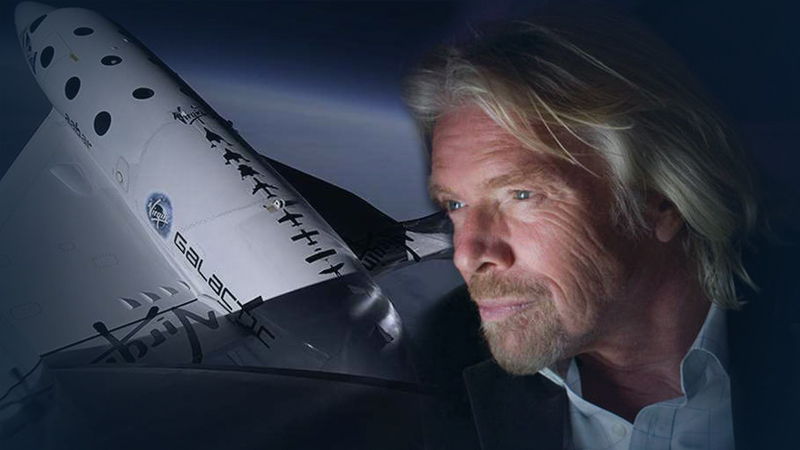
A year ago Richard Branson was on his private island, Necker, when the former Twitter executive Adam Bain came to see him with a proposal for how to take Branson’s suborbital space travel company public.

The bearded British billionaire is doubtless glad he took the meeting: After an unsteady start, Virgin Galactic Holdings Inc.’s valuation has rocketed. The stock has surged more than 400% since a low in December, valuing the company at close to $8 billion, or almost 2,000 times the revenues it’s estimated to have generated in 2019. (For comparison, Uber Technologies Inc. trades on about 5.5 times last year’s revenue).

Vieco USA, a Virgin-controlled entity, still owns more than half of the shares, meaning Branson’s net worth – estimated by the Bloomberg Billionaires Index at about $5 billion before the listing – is suddenly a whole lot bigger. The loss-making company is now his most valuable asset.

There haven’t been any big company developments to justify such market euphoria, which makes you wonder whether it’s sustainable. The stock gains since the start of this year are about double those enjoyed by Tesla Inc.’s rip-snorting shares.

Several hedge funds, including Suvretta Capital Management, which owns 3.4% of Virgin Galactic’s equity, have profited from the surge but plenty of its peers are betting that a meeting with cold reality is inevitable. About 30% of the free float has been shorted, according to IHS Markit data. This space battle isn’t for the fainthearted, and there’s a danger that overenthusiastic retail investors end up getting hurt. On Thursday, the stock rose as much as 13%, erased all those gains, then fell as much as 18%, before closing broadly unchanged.

In fairness, Virgin Galactic’s technical achievements are impressive, even inspiring. Branson’s company has spent years perfecting its product, giving it a head start in the nascent space tourism business. At $250,000 a ticket for a 90-minute flight (including a few minutes of zero-gravity weightlessness) it could prove to be pretty lucrative. The company might have almost $600 million of yearly revenue by 2023, according to a management projection.

But a lot can go wrong when your business is carrying tourists into suborbital space and twitchy regulators are poring over your every move. Any unexpected delays or interruptions (never mind an accident) would cause the stock to swiftly lose altitude.

As with Elon Musk’s Tesla faithful, Virgin Galactic’s fans don’t seem too bothered by these near-term challenges. One hope among investors is that the company will use the technology and experience gained from ferrying tourists into space to build a potentially far more lucrative market: intercontinental hypersonic flight.

Yet the regulatory hurdles to launching such flights will be daunting. Perfecting the technology will require much more than the $430 million in net proceeds that Virgin Galactic received from the listing. (Virgin Galactic could receive a further cash boost if warrants conveying the right to purchase a total of 31 million shares are exercised for cash.)

It’s conceivable, then, that the huge run-up in the stock – if sustained – might tempt Branson to raise more money, just as Tesla did last week with a $2 billion stock offering.

The investor enthusiasm shown for Branson’s company won’t have escaped Musk’s attention either. His Space Exploration Technologies Corp. (SpaceX) has had no trouble raising money in private markets; it’s been valued at about $33 billion. But the Tesla founder is also considering a public offering of SpaceX’s internet offshoot, Starlink, in a few years, and any market fervor around space investing would make that easier. A hard landing for Virgin Galactic investors could change the dynamic.

For now, Branson could afford to splash out on another private island if he wanted. Or maybe some acreage on the moon.

_ _ _

Bryant is a Bloomberg Opinion columnist covering industrial companies. He previously worked for the Financial Times.

BITCOIN-COMMENT: The key to bitcoin’s future: Inflation #ศาสตร์เกษตรดินปุ๋ย

#ศาสตร์เกษตรดินปุ๋ย : ขอบคุณแหล่งข้อมูล : หนังสือพิมพ์ The Nation

https://www.nationthailand.com/business/30382598?utm_source=category&utm_medium=internal_referral

BITCOIN-COMMENT: The key to bitcoin’s future: Inflation

Feb 22. 2020
By Syndication Washington Post, Bloomberg Opinion · Noah Smith · OPINION, BUSINESS, OP-ED, US-GLOBAL-MARKETS 

Bitcoin is back, sort of. The original cryptocurrency hasn’t regained the lofty highs of its bubble peak in late 2017, but it has climbed back up to about $10,000.

Predictions that bitcoin would collapse have not borne fruit. Despite its bubbles and crashes, the cryptocurrency is now a semi-permanent feature of the global financial landscape.

What it is not, however, is a generally accepted currency. Although many retailers now accept bitcoin, the overwhelming majority of day-to-day payments are done in regular old fiat currency. The mere fact that the dollar price of bitcoin remains an important metric indicates that bitcoin’s central value is as a speculative asset, rather than its usefulness as a medium of exchange.

It’s fairly obvious why. Because of bitcoin’s price volatility, people don’t want to hang onto it for very long. No one wants to get their paycheck only to find that it has halved in value by the time it comes to buy groceries. Also, optimists who think bitcoin’s value will continue to go up on average over time will be reluctant to part with it in exchange for something ephemeral like a pizza; better to hang onto the BTC and buy pizza with depreciating dollars instead. (Disclosure: I still own a small amount of bitcoin.)

In fact, these two reasons are just different sides of the same coin: Basic finance theory says that in a reasonably efficient market, high expected returns come at the expense of high volatility. An asset like bitcoin, or the U.S. dollar, can be a good investment or can be good for buying stuff, but unless the economy is deeply dysfunctional, it can’t be both.

Some economists, however, are thinking about how this situation might change, and whether bitcoin – or some alternative cryptocurrency – might actually replace fiat money as the standard means of payment. This has big policy implications, because if it did become real money, cryptocurrency could interfere with central banks’ ability to manage the economy and the price level. It also matters for crypto investors’ wallets.

One possibility is that nothing needs to be done, and eventually bitcoin will settle into a new low-volatility equilibrium, making it more suitable as a means of payment. Economists Michael Choi and Guillaume Rocheteau have made a model in which this happens. The problem is that the model sees bitcoin competing with other commodity-like forms of money, such as gold or other cryptocurrencies. Their result relies on the idea that liquid assets will always be in short supply. In reality, bitcoin is competing against fiat currencies that can be produced more or less costlessly.

A more plausible prediction comes from economists Jonathan Chiu and Thorsten Koeppl. Like other economists who have theorized about bitcoin, they view cryptocurrency’s fundamental challenge as that of preventing double-spending – in other words, verifying electronically that someone really has the money when they make a payment. This issue of digital trust, after all, is the problem bitcoin was designed to solve.

Chiu and Koeppl suggest that to become useful as a form of money, a cryptocurrency should be inflationary. The people who verify bitcoin transactions, called miners, are now compensated for their usage of computing power by being awarded new bitcoins, but the rewards are decreasing over time. One of the basic ideas of bitcoin, which stems partly from the hard-money beliefs of its creators, is that the cryptocurrency should be deflationary – that its supply should be limited, and its value should increase over time due to increasing scarcity. This means that eventually, miners will have to be rewarded with transaction fees instead of new bitcoins.

Chiu and Koeppl say this is a bad idea. Transaction fees, they note, are levied on a small population – that is, whoever is doing the transaction. To make it worth the miners’ while, the fees must be very high, which discourages people from transacting in bitcoin. If miners are instead paid with inflation, the cost gets spread out among everyone who owns bitcoin. Also, transaction fees make a double-spending attack more potentially lucrative, because creating a fake transaction would also save money on the fee. Thus, they recommend sticking with the inflation method of payment, and letting cryptocurrency depreciate over time like the U.S. dollar does.

This could be exactly what cryptocurrency needs in order to turn into real money. Negative expected returns – essentially, a low and stable inflation target – would make bitcoin less attractive as a long-term investment. Instead of hoarding it, people would be fine getting rid of it in exchange for pizza. The currency’s value might then stabilize, as speculation decreased.

Abandoning the dream of deflationary digital gold might be hard for bitcoin’s adherents to accept. But other cryptocurrencies, such as ZCash, Monero, Dash or Facebook Inc.’s Libra might step in to fill the gap. Of course, they would still have to overcome the technical problem of being able to handle large transaction volumes as cheaply and easily as a credit card company, but Chiu and Koeppl are confident that this is possible.

So ironically, cryptocurrency might only become a currency if it acts more like the U.S. dollar, with a low but predictable inflation target.

– – –

This column does not necessarily reflect the opinion of Bloomberg LP and its owners. Noah Smith is a Bloomberg Opinion columnist. He was an assistant professor of finance at Stony Brook University, and he blogs at Noahpinion.

Trump’s recent trade moves show adversarial approach has only just begun #ศาสตร์เกษตรดินปุ๋ย

#ศาสตร์เกษตรดินปุ๋ย : ขอบคุณแหล่งข้อมูล : หนังสือพิมพ์ The Nation

https://www.nationthailand.com/business/30382354?utm_source=category&utm_medium=internal_referral

Trump’s recent trade moves show adversarial approach has only just begun

Feb 18. 2020
David J. Lynch is a staff writer on the financial desk who joined The Washington Post in November 2017 after working for the Financial Times, Bloomberg News and USA Today.

David J. Lynch is a staff writer on the financial desk who joined The Washington Post in November 2017 after working for the Financial Times, Bloomberg News and USA Today.
By The Washington Post · David J. Lynch · NATIONAL, BUSINESS, POLITICS, US-GLOBAL-MARKETS

TRADE-ANALYSIS: In White House ceremonies and raucous campaign rallies, President Donald Trump has celebrated a pair of “America First” trade deals he says will end the unfair treatment of American workers.

“Unlike so many who came before me, I keep my promises. We did our job,” he said during the State of the Union address, referring to new trade deals with Mexico, Canada, and China. “. . . Our strategy has worked.”

The new deals rewrite the trade rules that Trump says were responsible for “the catastrophe” that struck American manufacturing over the past quarter century. Yet with fresh tariffs this month on European aircraft and products such as steel nails and aluminum vehicle bumpers, it’s clear that the high-profile accords have not completed the president’s planned overhaul of U.S. trade relations.

In fact, they are just the start.

Even as Trump celebrated hard-won gains in negotiations with the nation’s largest trading partners, he laid the groundwork for more tariffs, more challenges to longstanding trade norms and more disruption to global commercial flows in the months ahead.

“There’s a lot still to come. I think they believe they have a playbook that works,” said Michael Smart, managing director at Rock Creek Global Advisors. “There’s been a lot of talk about how confident Trump is following his acquittal on impeachment. If you look specifically at the trade ledger, he feels he’s right on track.”

In the past four weeks, the president expanded his March 2018 steel and aluminum tariffs to cover products made from those materials, an implicit acknowledgment that his original approach to curbing a flood of imported industrial metals hadn’t worked.

He authorized the Commerce Department to begin imposing tariffs on U.S. trading partners that allegedly used undervalued currencies to subsidize their exports. And he considered withdrawing the U.S. from a global agreement on government procurement, alarming foreign allies.

These actions come as the president sparred with his next trade war target, the European Union, a longtime U.S. ally he says treats American businesses even worse than China, and mulled additional deals with the United Kingdom, Kenya and India. On Feb. 14, Trump fired a new shot in a long-running dispute over Europe’s subsidies for aircraft maker Airbus, increasing to 15 percent an existing 10 percent tariff on European planes.

His chief trade negotiator, Robert Lighthizer, issued a 174-page report blasting the World Trade Organization’s appellate body for “chronically” violating its own rules and undermining U.S. rights. Administration officials are also mulling a frontal assault on WTO limits on the tariffs that the U.S. can charge other nations.

The flurry of activity is evidence that despite two years of intense bargaining with multiple countries and whiplash-inducing tariff threats, the president still has a lengthy to-do list on trade.

“Prior to the election, it’s probably a mix of stirring the pot and claiming credit,” said Dean Pinkert, senior counsel at Hughes Hubbard & Reed and a former commissioner with the International Trade Commission.

Trump and his team remain determined to upend the patterns of global trade that have arisen since the fall of the Berlin Wall. In a Feb. 6 speech in London, Commerce Secretary Wilbur Ross complained that before Trump took office, globalization had “gotten out of control,” citing as an example the fact that “it takes 200 suppliers in 43 countries on six continents to make an iPhone.”

Rebalancing global trade so that the U.S. produces more, and countries like Germany consume more, remains the objective for a president who sees the chronic U.S. merchandise trade deficit as a sign of economic weakness.

Speaking in Oxford, England, Ross suggested new digital production technologies associated with the so-called “Fourth Industrial Revolution” could redistribute production of goods such as textiles and apparel away from developing countries to advanced economies like the United States.

Those U.S. industries have been in a long-term decline as low-wage foreign rivals gobbled up market share.

The president’s renewed activism means that the business community’s hopes for an end to trade-related uncertainty will be disappointed. In a seven-country survey of 1,770 executives for TMF Group, a London-based professional services firm, 39 percent said “trade wars” were their key concern this year. That was the highest figure any issue received.

“You can no longer assume a relatively benign global trade regime. You have to factor in tariffs,” said Mark Weil, TMF’s global chief executive. “They can be changed extremely quickly. That’s just the new reality.”

Trade issues are expected to be at the center of the president’s re-election effort and this month’s State of the Union address previewed his central themes.

“Unfair trade is perhaps the single biggest reason that I decided to run for president,” Trump told a joint session of Congress.

Trump’s handling of trade negotiations represents a sharp break with the bipartisan consensus of the last several decades. He prefers negotiating with U.S. trading partners one at a time rather than in larger groups. To gain leverage in those talks, he has wielded tariffs to a greater degree than any president since the 1930s.

The president, who frames his policies as designed to benefit workers rather than “the financial elite,” was rewarded with labor union support for his NAFTA replacement, the U.S.-Mexico-Canada Agreement.

Trump’s supporters feel vindicated and not just by his achievements at the negotiating table. The U.S. economy is in its 11th consecutive year of growth, its longest such run, and the unemployment rate is near a half-century low.

“He had a theory we would get more leverage by using tariffs. He implemented the theory and he was right,” said Stephen Vaughn, former general counsel of the office of U.S. trade representative. “He said we could do this and it wouldn’t have a dramatically harmful effect on the U.S. economy and he was right about that.”

Ross, in last week’s speech, said the president’s tariff threats were responsible for the China and USMCA agreements as well as smaller deals with Japan and South Korea. Yet, rather than serve as just a temporary negotiating tool, the vast majority of the tariffs Trump imposed on Chinese products remain in place.

Ross also called the $887 billion deficit between the value of American exports and the larger total of goods imported into the U.S. in 2018 “unsustainable.” (He spoke before the government released updated figures showing the gap had narrowed slightly in 2019 to $852 billion.)

The U.S. runs such trade deficits with 97 countries, though only five — China, the E.U., Mexico, Japan and Vietnam — account for 92 percent of the total, he said.

Still, the president’s future trade initiatives may confront even tougher obstacles. His Jan. 24 decision to extend tariffs to downstream products made of steel and aluminum already has drawn a legal challenge from an American importer facing an unexpected multi-million dollar import tab.

In a Feb. 4 complaint to the U.S. Court of International Trade, PrimeSource Building Products of Irving, Texas, argued that the president’s extension of his steel and aluminum tariffs was “unlawful and unconstitutional”and should be blocked.

Trump’s action came 638 days after his authority to do so expired, according to the company’s complaint. The distributor of building materials said Commerce also had violated the law by failing to give notice of the new tariffs or to hold a public hearing on the matter.

Chief Judge Timothy Stanceu last week barred U.S. Customs officials from imposing the new duties on PrimeSource after the company and the government agreed to a temporary cease-fire while the legal challenge proceeds.

A crowded calendar means the president also is unlikely to make progress on major new agreements. Implementing the “phase one” China deal, including promised Chinese purchases of U.S. products, will preoccupy U.S. and Chinese negotiators for months. That will slow progress toward a second, more ambitious deal, which the president has acknowledged might be delayed until after the election.

“The China thing is probably on hold until after the election, so long as the Chinese follow through on the agriculture purchase commitments. That’s important for Trump politically,” said Warren Maruyama, a partner at Hogan Lovells and a former USTR general counsel.

Likewise, initial talks with the European Union have advanced at a glacial pace and most analysts anticipate only a partial deal, if that, before November. The president has complained about European barriers to U.S. automobile and farm goods.

“Europe has been treating us very badly,” Trump told almost three dozen governors at the White House on Feb. 10. “…They have barriers that are incredible.”

With less than nine months until Election Day, Trump likely will refrain from imposing significant tariffs that could damage the economy, several analysts said. That means his oft-repeated threats to impose tariffs on imported European automobiles are unlikely to be carried out.

But even as Trump touts his trade record, some analysts said he is vulnerable.

“The criticism will center on the unpredictability of the Trump trade policy,” said Miriam Sapiro, vice chair of Sard Verbinnen & Co. and a former deputy U.S. trade representative. “It makes it very hard for U.S. businesses to make investments when it’s not clear which sector, or country or region the president may choose to punish next.”

Why it’s important to remember what we don’t know about stocks #ศาสตร์เกษตรดินปุ๋ย

#ศาสตร์เกษตรดินปุ๋ย : ขอบคุณแหล่งข้อมูล : หนังสือพิมพ์ The Nation

https://www.nationthailand.com/business/30382216?utm_source=category&utm_medium=internal_referral

Why it’s important to remember what we don’t know about stocks

Feb 15. 2020
Thomas Heath is a local business reporter and columnist, writing about entrepreneurs and various companies big and small in the Washington metropolitan area. Previously, he wrote about the business of sports for The Washington Post’s sports section for most of a decade.

Thomas Heath is a local business reporter and columnist, writing about entrepreneurs and various companies big and small in the Washington metropolitan area. Previously, he wrote about the business of sports for The Washington Post’s sports section for most of a decade.
By The Washington Post · Thomas Heath · BUSINESS, PERSONAL-FINANCE 

The nosebleed heights of today’s stock prices have me, like many other investors, a bit on edge.

Have equities become too risky? How much longer will the decade-long bull market last? Is a stock crash or a recession coming? Should I sell?

I called Burton Malkiel at his home in Florida recently to talk about the state of the stock market and what it means for average investors, people, like me, who have been stashing money in 401(k) accounts or who might own stocks in taxable accounts.

Malkiel, 87, wrote “A Random Walk Down Wall Street,” the investment classic first published in 1973. He has served as dean of the Yale School of Management, as a director of the Vanguard Group and as a member of the president’s Council of Economic Advisers. He is currently a professor emeritus of economics at Princeton University.

Malkiel is part of an influential cohort – along with the late John C. “Jack” Bogle and legendary stock picker Warren Buffett – that has warned most of us against trying to divine which stocks will beat the overall market. Most people, this persuasive line of reasoning goes, are better off investing in index funds or a diversified portfolio with low fees.

But with the Dow Jones industrial average approaching 30,000, another, broader issue arises: Have stocks, in general, become too expensive?

“What we can say is that relative to historical valuations, the stock market is quite richly valued,”Malkiel said.

Malkiel stated the obvious: Stocks have had a tremendous run in the past 10 years, but no bull market runs forever. History tells us, he said, that the next 10 years aren’t going to be quite so merry.

“We are in an era when, I think, we are going to clearly have very low returns and much lower than average stock returns,” Malkiel said. “If you look at the empirical work, you would suggest the stock market over the next 10 years is likely to give you mid-single-digit returns.”

Over the next decade, he said, we would be “very fortunate” to see 5 percent a year.

That’s a heartburn number for pension fund managers counting on 8, 9 and even 10 percent annual returns. So what’s an investor to do?

Start with rebalancing, Malkiel said. “If the big rise in the stock market has put your stock holdings much higher than normal levels for you, then I would say take some out and put it in other categories.”

Malkiel sits on the investment committee of Rebalance, an online financial advisory firm based in Bethesda, Maryland, and Palo Alto, California that puts clients’ money in long-term, low-cost index funds, mostly Vanguard Group’s exchange-traded funds.

I wrote about Rebalance, then known as Rebalance-IRA, a couple of years ago. Rebalancing, in its simplest form, means buying and selling stocks and bonds annually to keep your holdings in line with your ability to tolerate risk.

“Given that asset prices shift, sometimes significantly, it’s normal for investors to look at their portfolio allocations periodically and rebalance, in order to avoid over- or under-weighting exposures to certain asset classes,” said Shelly Antoniewicz, senior director of industry and financial analysis at the Investment Company Institute, which represents the mutual fund industry.

Take last year’s U.S. stock boom, which returned 31 percent, compared with a 9 percent return in bonds.

“If you did nothing, your asset allocations will have moved to include more equity than you intended,” Antoniewicz said. “If you aim for a 60-40 allocation between equity and bond fund holdings and have not yet rebalanced, your current equity allocation would be 64 percent, not 60 percent, and your current bond allocation would be 36 percent, not 40 percent. So, investors who want to rebalance back to a 60-40 split will sell stock funds and buy bond funds.”

Malkiel said rebalancing a portfolio cures many ills for investors who are not – and I emphasize NOT – professional stock pickers.

“Nobody, and I mean nobody, can consistently predict the short-term moves in the stock markets,’ Malkiel said.

“There’s a lot of people who get it right sometimes. But nobody gets it right consistently. Don’t try to time the market,” Malkiel said. “You will get it wrong. Ride things out. Be well diversified.”

Diversified means buying a variety of stocks across multiple industries or, better yet, holding a healthy mix of mutual funds that include large and small companies, U.S. and international stocks, and even some bonds.

I asked Malkiel whether he follows his own advice.

“Am I still holding equities? Yes,” the professor said, speaking by telephone from Florida. “But I hold other things as well. I am broadly diversified. I hold fixed-income investments. And I hold real estate.”

When asked about the likelihood of a recession or other economic pullback in 2020, Malkiel said he avoids making predictions on short-term market behavior because, well, it is just too difficult.

“The biggest threat is something that will come out of nowhere,” Malkiel said. “Just think of the last few days. We have this new virus coming out of China. Is it going to be contained? Is it something that affects the whole world? In [former defense secretary] Donald Rumsfeld’s parlance, it’s not what we know now. It’s what we don’t know.”

I can’t do anything about that. But I can rebalance to make sure that I am takinga market risk that I have decided is tolerable for me.

The rich can probably escape new laws on inherited IRAs. But the rest of us can’t. #ศาสตร์เกษตรดินปุ๋ย

#ศาสตร์เกษตรดินปุ๋ย : ขอบคุณแหล่งข้อมูล : หนังสือพิมพ์ The Nation

https://www.nationthailand.com/business/30382158?utm_source=category&utm_medium=internal_referral

The rich can probably escape new laws on inherited IRAs. But the rest of us can’t.

Feb 14. 2020
Allan Sloan is a columnist for The Washington Post. He is a seven-time winner of the Loeb Award, business journalism's highest honor.

Allan Sloan is a columnist for The Washington Post. He is a seven-time winner of the Loeb Award, business journalism’s highest honor.
By The Washington Post · Allan Sloan · OPINION

If you’ve got tons of money in your Individual Retirement Accounts, you can probably buy your way around the new rules for inherited IRAs. But if you’ve got merely pounds of IRA money, you’ve gotten sandbagged.

No one is shouting this from the rooftops, of course. But it’s the logical -and distasteful- conclusion that you reach if, like me, you’ve taken a look at ways to get around the new laws that limit the life of bequeathed IRAs to 10 years if you give them to anyone but a surviving spouse or sick or disabled beneficiaries.

Before this year started, you could bequeath your IRAs to anyone you wanted. The recipient had to take “required minimum distributions” every year – but those distributions -which are taxable- were stretched out based on the recipient’s presumed life span. The younger the recipient, the smaller the distributions the inheritor had to take.

You can see why estate planners loved these “stretch IRAs.” IRA holders could pass on assets to people two or three generations younger, no muss, no fuss, no estate tax.

Under the new rules – which took effect Jan. 1, less than two weeks after the SECURE Act became law – stretch IRAs for non-spouses were pretty much eliminated.

However, if you’ve got the money and the incentive, you can probably create what I call a “synthetic stretch IRA.” For example, you can set up a trust to which you bequeath your IRA, with the trust instructed to pay lifetime income to whomever you choose on whatever terms you like.

I’m sure there are other, less obvious work-arounds, all of which – at least for now – are high-cost and possibly legally risky. But over time, I’m sure, specialists will find loopholes for their clients’ IRAs to squeeze through.

People with tons of money – let’s call them the rich – will be able to afford to play the games required to create synthetic stretch IRAs. People with pounds of money – the middle class and upper-middle class – won’t be able to play.

To be sure – three of my favorite weasel words – being able to sit on an inherited IRA for up to 10 years without being required to take annual distributions isn’t ungenerous. But it’s nowhere as generous as the old rules, which lots of people, including me, used as part of their estate planning.

I’ve got no problem with people who say – correctly – it was ridiculous for IRA holders who were saving for their own retirement to be able to bequeath IRAs to people two or three generations behind them.

But I’ve got a big problem with the way that Congress and President Donald Trump changed the rules, which had been in effect since 1985, with essentially no notice. The change took effect on Jan. 1 – a mere 12 days after the SECURE Act became law.

I would have had no problem with cutting back stretch IRAs had there been a phase-in period of several years. Or better yet, if the new rules applied only to IRAs created after the legislation was passed.

However, Congress and Trump felt the need to limit stretch IRAs to make up for federal revenue losses created by raising the age at which IRA holders have to begin taking required minimum distributions to 72 from the previous 70 1/2.

That change was fair, given the rising life spans for people who make it into their eighth decade. Why Congress and Trump felt the need to make up the revenue losses from this change – but not from reducing estate taxes in 2017 – is beyond me.

The SECURE Act was the second time in three years that the government changed long-standing tax rules – with little notice – that people relied on. The first one, of course, was the tax law that Trump and congressional Republicans passed in late 2017 that limited federal deductions for state and local taxes to $10,000 a year. Those deductions had been unlimited since the creation of the federal income tax in 1913.

I’ll spare you my customary rant about this law, which Trump signed on Dec. 22 and took effect 10 days later. It has hurt people who live in high-home-price, high-tax blue states, including my home state of New Jersey, and homeowners all over the country. And as I wrote in October the law has held home equity – the biggest financial asset for tens of millions of homeowners about $1 trillion below where it would otherwise have been.

I’m linking the SECURE Act and the 2017 tax law because in both cases, long-standing federal tax benefits were stripped away almost overnight.

The stretch IRA situation is especially interesting. According to Steve Rosenthal, senior fellow at the Urban-Brookings Tax Policy Center, stretch IRAs were created by the Deficit Reduction Act of 1984 and took effect on Jan. 1, 1985. Before that, any non-spouse inheritor of an IRA had to liquidate it within five years.

Congress’s intention, Rosenthal said, based on information he found in the Congressional Joint Committee on Taxation’s 1984 Bluebook, was to help participants plan their estates better. Which is ironic, considering what the SECURE Act has now done.

The bottom line here? “Perhaps Congress should add ‘buyer beware’ to any legislated tax benefits,” Rosenthal said.

To which I can only add, amen.

Germany is one of the biggest Brexit losers #ศาสตร์เกษตรดินปุ๋ย

#ศาสตร์เกษตรดินปุ๋ย : ขอบคุณแหล่งข้อมูล : หนังสือพิมพ์ The Nation

https://www.nationthailand.com/business/30381985?utm_source=category&utm_medium=internal_referral

Germany is one of the biggest Brexit losers

Feb 12. 2020
By  Syndication Washington Post, Bloomberg Opinion · Andreas Kluth · OPINION, OP-ED 
A somber feeling is spreading among Germany’s elites as the long-term implications of Brexit sink in. Of the European Union’s 27 member states, Ireland obviously has the most to fear from the U.K.’s departure. But Germany may be second. That’s because Brexit changes not only the remaining EU but also Germany’s role within it – and in ways the Germans have for half a century been trying to avoid.

European integration, starting in the 1950s, was for West Germany a way of atoning for its own nationalist and belligerent past. Its citizens were eager to subsume part of their identity in a “post-nationalist,” rules-based, non-militarist and largely mercantile entity, in return for being accepted again by their neighbors. Occupied by three of the Allied Powers, they didn’t have full national sovereignty, so they didn’t worry about ceding more of it to Brussels.

To move this European project forward, the Germans relied on different kinds of support from the Allies. To build the structures that later became the EU, they needed France. The French, however, especially under President Charles de Gaulle, saw “Europe” differently: as reconciliation with Germany, yes, but also as a new vector to project French power, the better to keep the mightier “Anglo-Saxons” at bay.

Those Anglo-Saxons were of course the U.S. and the U.K., the other two powers the West Germans needed. The U.S. protected them against the Soviets, and kept international order generally. And the Brits were basically a smaller, more familiar – and European – version of the Americans, and thus a welcome counterweight against the French.

In fact, German Francophilia was always less a phenomenon than a policy, imposed top-down; by contrast, German Anglophilia spread from the bottom up (even if it wasn’t often reciprocated). It helped that the Brits after the war competently ran and rebuilt northwestern Germany – the ancestral homelands, as Germans noted tongue-in-cheek, of the Anglo-Saxons and the Hanoverian kings of England. Once the Beatles showed up in Hamburg, it was basically love all the way.

The West Germans also had political motivations for wanting to hug the U.K. inside the European club, against the stubborn resistance of de Gaulle. Germany and France have always had clashing economic traditions. The French one, called dirigisme, is based on state intervention and looks askance at free markets and free trade. The German one, called ordoliberalism, is based on restricting the state to narrow functions (such as antitrust) and otherwise leaving markets and trade pretty free.

The Germans thus saw the Brits, like the Dutch, as more naturally aligned in values than the French. Having the U.K. in the club meant that the “north” could gang up in the Council of Ministers (the body in Brussels where member states decide policy). And it did. A fluid “Nordic” bloc has usually had enough votes to veto “southern” ideas it didn’t like, even as the European club expanded its membership. Projects driven primarily by the Brits and Germans include the single market, rigorous competition policy and liberal trade deals. Projects they successfully prevented (at least until now) include a European “industrial policy,” which tends to be French code for coddling national champions.

Brexit means that the center of gravity in the EU has now shifted southeast, in the European Parliament but above all in the Council. With the U.K., the north (defined as Germany, Sweden, Denmark, Finland, Ireland and the Netherlands) had a blocking minority of 36.8%. Without the U.K., that share has dropped to 27.8%, too small for a veto. Even when Austria and the Baltics are included, the north can now be overruled.

Other fault lines crisscross this political geography that are just as treacherous for Germany. They run not only between north and south but also between west and east. For example, the Visegrad four (Poland, the Czech Republic, Slovakia and Hungary) have joined to reject the EU’s migrant policy, which they see as dictated by Germany after the refugee crisis of 2015, and they’ve rallied support from Germany’s traditional partners, such as Austria. Depending on the issue, other alliances are constantly taking shape, often aimed against the largest member state, Germany.

Geographically and politically, Germany thus finds itself, once again, squeezed in the uncomfortable middle. Historically, this tension is known the German Question and has repeatedly led to troubles. Owing to its “awkward scale,” as one former West German chancellor put it, Germany was always either too weak (in the 17th and 18th centuries) or too strong (in the late 19th and early 20th) for the continent to be stable. Other powers either ganged up against it or were dominated by it. As the writer Thomas Mann memorably put it, the continent is forever condemned to choosing between “a German Europe” or “a European Germany.”

Having the U.K. in the EU mitigated that dilemma. Britain was weighty enough – economically, demographically, militarily – to balance Germany, France and the continent. And nobody was happier about being balanced than the Germans, for the last thing they want is to be forced to lead, knowing that this will invariably rekindle old resentments against them. Brexit means that balance is gone again. The German Question is back.

The Brits shouldn’t have been surprised that Germany wasn’t more forthcoming during Brexit negotiations; for Germans, the cohesion of the EU, and the relationship with France, simply takes precedence. Nonetheless, many Germans have regrets. Some are pushing for a German-British Friendship Treaty to complement whatever deal the EU and the U.K. come up with. Unspoken is an almost primal plea: Dear Brits, please don’t leave us continentals to ourselves.

Harry’s fixes shaving, breaks exit strategy #ศาสตร์เกษตรดินปุ๋ย

#ศาสตร์เกษตรดินปุ๋ย : ขอบคุณแหล่งข้อมูล : หนังสือพิมพ์ The Nation

https://www.nationthailand.com/business/30381928?utm_source=category&utm_medium=internal_referral

Harry’s fixes shaving, breaks exit strategy

Feb 11. 2020
By Syndication Washington Post, Bloomberg Opinion · Brooke Sutherland · OPINION

Harry’s billed itself as an alternative to overpriced razors, and the sales pitch worked – too well, in fact.

The shaving company’s planned sale to Schick razor maker Edgewell Personal Care Co. officially collapsed on Monday after the Federal Trade Commission sued to block the $1.37 billion deal on anti-competitive grounds.

There had been some thought that Edgewell would fight for the Harry’s deal in court, but the company said Monday it’s instead walking away, “given the inherent uncertainty of a potential trial, the required investment of resources and time and the distraction that a continuing court battle would entail.” Shareholders are fine with that: The stock rose more than 20% on Monday after climbing 13% on Feb. 3, when the FTC’s opposition was announced. While investors may be happy to say goodbye to an acquisition that was arguably overpriced, regulators’ opposition to the takeover has wide-ranging ramifications. Among other things, this threatens to close the door on one of the more sure-fire exit strategies for would-be direct to consumer unicorns.

In advertisements, Harry’s pitched itself as “the shaving company that’s fixing shaving.” In its complaint, the FTC argues that Harry’s successfully disrupted an effective duopoly between Edgewell and Gillette-maker Procter & Gamble Co. and forced the incumbents to start lowering their prices for razors. Curiously, it argues that this only happened once Harry’s products migrated out of the e-commerce-only environment in which they launched and started appearing on shelves at Target and Walmart stores. Using similar logic, the FTC dismisses Dollar Shave Club – acquired by Unilever in 2016 for $1 billion – as a full-blown competitor capable of making up for the loss of an independent Harry’s in part because it still mainly sells razors via an online direct-to-consumer model.

The idea that firm lines exist between the online and brick-and-mortar worlds – and that pricing dynamics in one don’t affect the other – feels rather silly in this day and age. Most consumers wouldn’t distinguish between the two marketplaces, and increasingly, neither would businesses. The FTC’s decision to block the Harry’s purchase is reminiscent of pushback to the merger of Staples and Office Depot in 2016, where the regulator ignored the stream of sales defecting to Amazon and declined to view it as a strong enough competitor in commercial office supplies. Amazon’s 2017 acquisition of Whole Foods Market, by contrast, was waved through without a second glance and closed in just two months.

Notably, without Harry’s and without the sales from an infant and pet-care business Edgewell sold in December, the company now expects total revenue to decline as much as 5% this year. When Edgewell had announced the Harry’s purchase last year, it projected a $20 million increase to Ebitda by 2023 from annual cost savings and an additional $20 million boost from revenue benefits, including new brand launches and international expansion opportunities.

Antitrust regulation isn’t a forward-looking industry and I don’t think anyone would want to task the FTC or the Department of Justice with picking out the winners and losers of the future. But the result is a system that seems ill-suited to navigating the changes to the economy from e-commerce and direct-to-consumer business models. And while regulators may not want to predict the future, their actions will have a significant impact on what unfolds from here.

One of the odd messages being sent by this decision is that it may be better for upstart consumer brands to avoid brick-and-mortar stores if they want to sell themselves to a more-established organization down the road. That’s not going to be helpful for Target, Walmart or the bevy of aging department stores trying to compete with Amazon and make themselves relevant to today’s consumer. Another alternative is for startups to sell out before they get big enough to matter, which raises the odds that smaller brands get swallowed up and killed off rather than nourished into viable competitors. The IPO route looks increasingly closed, at least at the valuations many had enjoyed in the private markets. Some brands will still succeed as independent entities – Glossier, Allbirds and Warby Parker come to mind – but the road to making it big arguably just got tougher.

Fed’s leveraged-lending stress test is a start to easing Wall Street fears #ศาสตร์เกษตรดินปุ๋ย

#ศาสตร์เกษตรดินปุ๋ย : ขอบคุณแหล่งข้อมูล : หนังสือพิมพ์ The Nation

https://www.nationthailand.com/business/30381916?utm_source=category&utm_medium=internal_referral

Fed’s leveraged-lending stress test is a start to easing Wall Street fears

Feb 11. 2020
By Syndication Washington Post, Bloomberg Opinion · Brian Chappatta · OPINION

Ask just about anyone on Wall Street what worries them the most, and corporate leverage will most likely rank among their top fears. In August, Bank of America surveyed 224 fund managers with a combined $553 billion in assets and found that a record 50% of them were concerned about excessive debt on company balance sheets.

It’s not hard to see why that’s the case. For one, a growing number of well-known U.S. companies are now rated triple-B, potentially just one economic downturn from becoming junk and facing a spike in borrowing costs. But at least that’s more or less out in the open. More ominous is the explosive growth in the market for leveraged loans and collateralized loan obligations. Global regulators haven’t found a way to quantify the threat they may pose to the financial system in a worst-case scenario. At least not yet.

The Federal Reserve is apparently ready to take a stab at measuring that risk itself. It announced last week that as part of its annual stress tests, Wall Street’s biggest banks must prove they can withstand a “wave of corporate sector defaults” and outflows from leveraged-loan funds that cause steep enough price declines to flow through into CLO tranches. The scenario anticipates that such a sell-off would also spill over into other types of risky credit and private equity.

“This year’s stress test will help us evaluate how large banks perform during a severe recession and give us increased information on how leveraged loans and collateralized loan obligations may respond,” Randal Quarles, the Fed’s vice chairman for supervision, said in a statement. The banks have until April 6 to submit their plans; the results will come out at the end of June.

The message from the Fed to Wall Street is quite clear: Leveraged lending is seen as a big risk and now is the time to look carefully through your books to make sure you haven’t missed any potential exposures. The central bank seems to believe it staved off a recession with its three quarter-point interest-rate cuts last year. Chair Jerome Powell’s recent refrain is that the economy and monetary policy are now in a “good place.”

In September, though, he warned that the elevated level of corporate debt is “a real issue” and could serve as an “amplifier” of any slowdown. Boston Fed President Eric Rosengren dissented on lowering rates last year in part because of financial stability concerns around “near-record equity prices and corporate leverage.” The special focus on leveraged loans in the 2020 stress tests can likely trace its origins back to these remarks.

Yet I wouldn’t hold my breath for significant revelations from this exercise. For one thing, announcing that leveraged lending will be a crucial component of this year’s test creates the appearance that the Fed is tipping off Wall Street in advance of the exam. This kind of transparency is just one of the ways in which the Fed softened its process: It also eliminated the “qualitative objection,” which gave the Fed the power to fail even well-capitalized banks if it judged that their handle on risk wasn’t adequate. Overall, the fact that the Fed’s stress tests are arguably easier than before minimizes how much markets might learn from this go-around.

It’s also worth remembering the findings from the Financial Stability Board’s December report on the leveraged-lending market. Here’s what the global regulatory organization that comprises central banks, finance ministries, international bodies and regulatory authorities managed to conclude about stress-testing credit-risk exposure at banks:

“There are inherent difficulties in modelling what the impact of a severe yet plausible scenario could be on complex debt products that have been originated under loose credit conditions. Furthermore, the cross-border dimension of the risks may not be fully covered by the stress tests, as interconnectedness is challenging to assess for individual jurisdictions.”

This does not inspire much confidence. Quarles just so happens to be the chair of the stability board in addition to the Fed’s regulation chief. It’s a smart move for the Fed to test whether banks can withstand a global recession in which the markets for corporate debt and commercial real estate are hit especially hard. But as the board said, it’s hard to accurately model for the worst case given the unprecedented nature of credit markets in the post-financial crisis era.

There’s no harm in trying, though. The stability board report provided interesting figures on banks’ exposure to leveraged loans and CLOs relative to their capital adequacy ratios, for instance. Any additional insight into the leveraged-lending market, and just how intertwined it is with the biggest U.S. banks like JPMorgan Chase & Co., Citigroup and Goldman Sachs, would go a long way toward confirming or assuaging investors’ fears. It’s the unknown that’s scary.

– – –

Brian Chappatta is a Bloomberg Opinion columnist covering debt markets. He previously covered bonds for Bloomberg News. He is also a CFA charterholder.