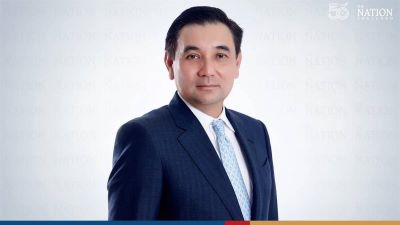
Gulf Energy Development CEO Sarath Ratanavadi is the wealthiest Thai stockholder for the third consecutive year, according to rankings compiled by Money & Banking magazine and Chulalongkorn University’s Faculty of Commerce and Accountancy.
The rankings list major shareholders at close of trade on September 30, after the Stock Exchange of Thailand Index rose to 1,605.68 from 1,237.04 points last year.
The top ten wealthiest Thai shareholders in 2021 are:
1: Sarath Ratanavadi, Gulf Energy Development CEO, with total shareholding of THB173 billion, up by THB57.80 billion or 50.14 per cent last year.
2: Prasert Prasattong-Osoth, founder of Bangkok Dusit Medical Services and Bangkok Airways, with total shareholding of THB58.21 billion, up by THB8.13 billion or 16.25 per cent last year.
3: Niti Osathanugrah, heir to the Osotspa beverage empire, with total shareholding of THB56.25 billion, up by THB8.07 billion or 16.75 per cent last year.
4: Somphote Ahunai, CEO of Energy Absolute, with total shareholding of THB53.02 billion, up by THB18.61 billion or 54.09 per cent. Somphote moved up from eighth place last year.
5 and 6: Daonapa Petampai and Chuchat Petaumpai, who own shares in Muangthai Capital moved up one place from sixth and seventh last year, respectively.
Daonapa’s holdings were worth THB41.94 billion, up by THB6.48 billion or 18.27 per cent, while those of Chuchat were THB41.63 billion, up by THB6.35 billion or 18.01 per cent.
7: Vonnarat Tangkaravakoon, director of TOA Paints (Thailand), with total shareholding of THB35.10 billion, down THB6.11 billion or 14.83 per cent. Vonnarat moved down from fourth place last year.
8: Harald Link, chairman of B Grimm Power, with total shareholding of THB26.02 billion, down THB770.38 million or 2.87 per cent. Link moved up from tenth place last year.
9: Nutchamai Thanombooncharoen, managing director of Carabao Group, with total shareholding of THB25.20 billion, up by THB630 million or 2.56 per cent. Nutchamai moved up from eleventh place last year.
10: Keeree Kanjanapas, chairman of BTS Group Holdings, with total shareholding of THB24.63 billion, up by THB4.05 billion or 19.69 per cent. Keeree moved up from twelfth place last year.
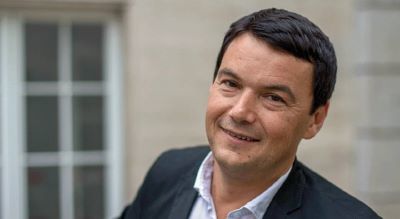
The share of global wealth held by billionaires surged to a record during the Covid-19 crisis, according to a group founded by French economist Thomas Piketty.
About 2,750 billionaires control 3.5% of the world’s wealth, the Paris-based Global Inequality Lab said in a report Tuesday. That’s up from 1% in 1995, with the fastest gains coming since the pandemic hit, the group said. The poorest half of the planet’s population owns about 2% of its riches.
The study’s findings add to a debate about worsening inequality during a public health crisis that’s hurt developing economies — which are short of vaccines as well as financial resources to cushion the blow — even more than advanced ones. Within the rich world too, financial and real-estate markets have soared since the depths of the slump last year, widening domestic gaps.
Those pandemic trends come after decades of policy that was often geared toward people at the top, on the expectation that it would “trickle down” and everyone else would ultimately benefit too, according to Lucas Chancel, one of the report’s authors.
“There is really this polarization on top of a world that was already very unequal before the pandemic,” Chancel, co-director of the World Inequality Lab, said in an interview. He said billionaires accumulated 3.6 trillion euros ($4.1 trillion) of wealth during a crisis in which the World Bank estimates that some 100 million people have fallen into extreme poverty.
Across most parts of the world, the richest 10% of people control roughly 60% to 80% of wealth. But the report highlights some clear regional distinctions.
Overall, poorer countries have been catching up with richer ones — but within those developing nations, inequality has soared. Same-country disparities now account for more than two-thirds of global inequality, up from roughly half in 2000, according to the Lab.
Latin America and the Middle East are the world’s most unequal regions, with more than 75% of wealth in the hands of the top 10%, the report says. Russia and sub-Saharan Africa aren’t far behind.
Other emerging economies like India still suffer from a “missing middle class,” Chancel said. “Colonial inequalities have been replaced by market inequality.”
Wealth gaps are reflected in bigger carbon footprints, too. In North America, for example, the top 10% emits an average 73 metric tons per capita each year, compared with less than 10 tons for the poorest half.
Measured by both income and wealth, Europe is the most equitable region, according to the report. The 19% of total income earned by the poorest half of Europeans is higher than the equivalent share for that group anywhere else. Pandemic policies like income support for workers thrown out of their jobs likely helped prevent that gap from widening further.
“The Covid crisis has exacerbated inequalities between the very wealthy and the rest of the population,” said Chancel. “Yet in rich countries, government intervention prevented a massive rise in poverty.”
The World Inequality Report 2022 is based on work by more than 100 researchers around the globe, led by economists at the Paris School of Economics and the University of California at Berkeley. The first version of the study came out in 2018.
Jitta Wealth Asset Management advised people to invest in businesses related to megatrends during a webinar titled “Trends: Driving the Future” organised by Krungthep Turakij
Jitta Wealth Asset Management advised people to invest in businesses related to megatrends during a webinar titled “Trends: Driving the Future” organised by Krungthep Turakij on November 27. Asset management CEO Trawut Luangsomboon pointed out that megatrends are changing economic and social structures in the long term, such as electric vehicles (EV), digital health, robotics and artificial intelligence. He said 34 per cent of people are now involved in megatrends such as e-commerce and cloud computing.
He recommended investment in four trends that would continue to grow in the next ten years with expected returns of 20-30 per cent annually:
1. Cloud computing: the market value of this technology, which has disrupted the software business to facilitate data sharing, is US$371 billion (THB12.5 trillion), which is expected to hit $832 billion in five years. Asana and Bill.com are recommended for investment.
2. Fintech: the market value of this technology is $1 billion (THB33 billion) and is expected to reach $188 billion in three years, or 11.7 per cent annually, thanks to the growth of the payment business as many have used fintech amid the Covid-19 crisis. Adyen and Coinbase are recommended for investment.
3. Genomics: the market value of this technology, which will disrupt medical services with its high accuracy to improve people’s health, is expected to hit $72.13 billion (THB2.5 trillion) by 2030. Invitae and Moderna are recommended for investment.
4. Global clean energy: demand for this energy is expected to increase as its cost will be cheaper than current prices. Also, it has gained positive sentiment from the EV trend. Sunrun and XPeng are recommended for investment. Trawut also advised investors to follow metaverse after Facebook announced a name change to Meta with a mission to encourage people to connect with the online world. “Initially, the market value of metaverse is expected to reach $800 billion (THB27 trillion) with growth of 40 per cent annually. Hence, we advise investing in Meta and Nvidia,” he added.
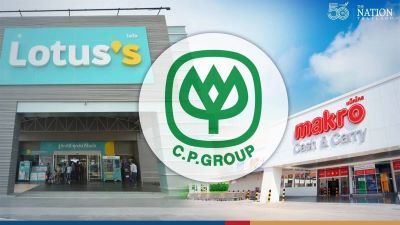
Siam Makro’s 218-billion-baht acquisition of Lotus’s stores from CP Retail Holding in September bumped the number of business liquidations in Thailand up by 31 per cent in October.
However, Thosapol Thangsubut, director-general of the Department of Business Development (DBD), said on Saturday that 5,555 new businesses valued at about 22 billion baht were registered in October. This was about 5 per cent lower than new businesses registered in September, but 3 per cent more compared to the same period last year.
He said 1,976 companies had shut down in October with total registered capital coming in at 207.65 billion baht, which was consistent with the trend of business closures over the past five years.
The registered capital of businesses that ceased operations in October surged by 3,502 per cent or 201.88 billion baht compared to September, and up 2,564 per cent compared to October last year.
“The registered capital numbers are high in October because CP Retail Holding, with a registered capital of 199.48 billion baht, had transferred a majority holding of its Lotus’s stores in Thailand and Malaysia to Siam Makro,” Thosapol said.
However, he added, that as of October 31, a total of 809,410 businesses with a capital value of 19.26 trillion baht were still in operation nationwide.
Start-ups should develop technology that will help them survive and succeed in the post-Covid era, several experts said at the “Thailand Start-up in Post-Covid Era 2022” on Friday.
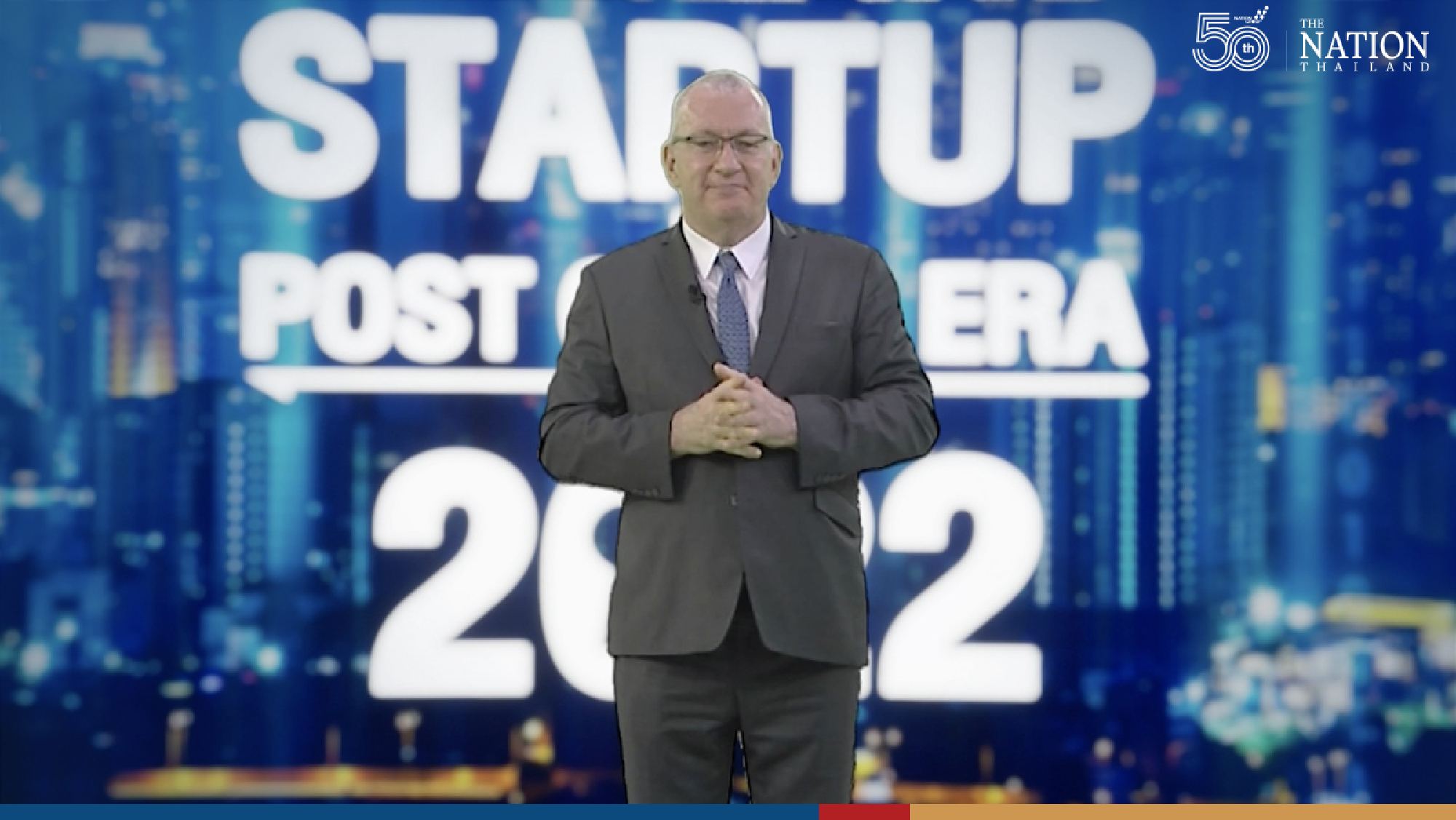
The virtual seminar, jointly hosted by the Nation Thailand and SpringNews, featured Australian Ambassador Allan McKinnon’s discourse on “Australia’s experience on start-up development”.
Also attending were PTT senior executive vice president Dr Buranin Rattanasombat, QueQ (Thailand) CEO and co-founder Rungsun Promprasith and Bitkub Capital Group Holdings’ CEO Jirayut Srupsrisopha. They spoke about “Start-ups – the newest warlords of Thai economy”.
In his discourse, McKinnon pointed out that Australia and Thailand were similar in tourism, have world-class universities and systems to support start-ups worldwide.
“Apart from China and Singapore, Australia is also one of the Asia-Pacific countries which is outstanding in start-ups. Australia also has entrepreneurship indicators similar to Sweden and Singapore,” he said.
“In the beginning, Australia started by holding activities for start-ups in Melbourne and Sydney before expanding to other countries. These activities helped boost the GDP of countries with start-ups by US$1.3 trillion.”
Australian Ambassador Allan McKinnon
He added that Australia prioritises support for start-ups such as opening the door for interaction with investors, business mentors and partners, at least until they grow to become important economic drivers.
“Start-ups will play an important role in helping the economy to recover in the post-Covid-19 era,” he said.
Meanwhile, PTT’s Buranin said the company was in the process of restructuring to become a multinational energy company to become a part of society in the future.
“In the future, fuel-oriented businesses will face environment-related issues, such as [demands for a] low-carbon society and new green technologies,” he said.
He added that there will be more cooperation between organisations, but it is still unclear as to who will become the main protagonist in the post-Covid era.
“I think many large companies are worried about this issue as well because the post-Covid-19 era will be the time when technology plays an important role and goes deeper,” he added.
Virtual seminar sheds light on changing regional landscape of start-ups in post-Covid era
Bitkub Capital’s Jirayut said Covid-19 is a key factor that has accelerated a change in technology, evidenced by the fact that more people are working online and the headquarters of many large firms no longer being based in large cities.
He said Bitkub uses more than 50 applications and works on a cloud system to facilitate business operation.
“We pay a monthly subscription fee for such technologies and we can stop using them any time we want,” he said.
QueQ’s co-founder Rungsun said his company is pushing for its queuing application to play an important role in Thailand’s public health and immigration sectors.
He added that the Thai government can support the development of start-ups directly without having to come up with terms of reference (TOR) agreements because these start-ups are already developing technology that can support the health, agriculture and education sectors of the country.
“It takes at least three years for government support to reach start-ups, and by then it’s too late due to fast-changing modern technology,” he added.
Bangkok, Thailand 27 October 2021 – The startup landscape in Thailand is heating up, following the latest successful funding round of Thailand’s first ‘Unicorn,’ Flash Group – AKA a privately-owned startup with a valuation of over $1 billion (around 30 billion Thai Baht).
This excitement in the air is further reinforced as startups prepare to emerge and take advantage of the ‘here and now’ era and all potential future investments opportunities.
What does it take to run a successful startup? Infobip, a global cloud communications company and fellow unicorn from Croatia shares five ‘not so’ secret tips for a successful startup with the goal of helping Thai entrepreneurs accelerate the growth of their business ventures.
Finding ‘THE IDEA’ to jumpstart innovation
Everyone has ideas, but the importance is to have a winning idea – one that will help win over investors, give them a reason to invest, and drive forward successes in the long run with an on-going flow of sales and profit. A good business plan must be both innovative and sustainable. The key here is to stay focused and be prepared to make sacrifices. As the old saying goes, ‘Good things take time.’
Innovation is not limited to just the business idea itself but extends across all business units. For instance, your products or services might not be one-of-a-kind in the market, but having an innovative marketing plan, distribution channels, and – most importantly – customer communication tools can help make your business stand out. Setting yourself apart from competitors with customers and finding a unique selling point through enhanced customer communication and personalised engagement can significantly improve customer experience and set your business up for success.
Preparing to scale in style
Once a great business idea is built, another key feature to incorporate is a concrete execution and scalability plan. A good business idea is nothing if not scalable in the future. Therefore, businesses must consider this at the beginning to attract investors and get their backing. Investors often look for scalable businesses that have the potential to multiply revenue with minimal incremental cost.
Startups should not just aim for high profit margins, it also needs a strong and scalable back-of-house system. A system that allows for remote work, provides immediate customer interactions, and innovates employee automation. This will allow companies to streamline the company, reduce operational expenditure, and prepare them to scale for the future, especially now where work is not only applicable at the office!
Hiring the right people, at the right time with the right tools for workflow optimisation
Have you ever heard of the saying, ‘employees can make or break your business?’ This is very true, as talents are what drives a business forward. Therefore, identifying the right personnel with passion and right skill sets for the job is an essential part to any successful startup. This is especially true in the beginning, where hard work and long hours are expected to setup and drive operations.
Finding the right people for the job will significantly increase productivity and help shape startups grow into the organisation that they aspire to be. To do this, it’s a good idea to establish a clear baseline of your company culture, values, and growth path in order to attract and retain like-minded individuals. At the same time, it’s very important to make sure that the business not only engage employees properly but also have a proper customer engagement platform that can help optimise workflow for all and increase overall operational efficiency, innovate work productivity, and gather consumer insights. This is especially true for customer service agents who are the frontliners of the company and handle direct contact with your customers.
Providing constant connected customer experiences
Once you have set up your business idea and explored potential customers, it is time to take the business public. To do this, a very important question to consider is ‘How do I best communicate with my customers and their needs?’ Building a connected network that communicates effectively between a business and its customers is extremely important. This is especially true in today’s ‘here and now’ era where customers expect to communicate with a business anywhere at anytime, and on their preferred channel. Having a strong and seamless customer communication platform is essential, moreso for customer-centric startups that put their customers first. They are the likely ones that tend to have an advantage in the long run.
Moreover, it’s also useful to keep a record of your customers’ preferences and purchase history, so it will be easier to provide a more personalised experience. Thankfully, modern communication tools, such as Moments from Infobip, have made it possible for businesses to securely keep a record of customer communications and create tailor-made message tracking and user experience. A tool that helps to manage and improve over-all conversations will ensure each interaction is specifically catered to the customer’s unique relationship, with reference to time, content, context, and channel.
Adapting with the possibility of the unknown
There is no denying that, with the recent coronavirus pandemic, the business world had experienced unprecedented changes across the board. Therefore, the challenge now not only lies with building a successful business, but how it can also adapt and make profit in times of change. During the pandemic, many businesses have switched to working from home, with difficulties associated with data management and customer communication. Therefore, having a system in place that allows for a seamless transition between home and office work that allows you and your team to stay in constant contact with customers is one of the greatest business tools of the modern era.
Infobip, with its solution, Conversations – a one-stop cloud contact center solution, can enable businesses and sales agents to manage work from anywhere, anytime. This includes providing the ability to seamlessly manage all customer communication across multiple platforms in one single workspace, improving employee performance, and enhancing the customer experience.
To help startups in Thailand to grow and strive in the ever-changing business landscape of the ‘here and now era’, Infobip had launched its very own Infobip Startup Tribe programme in Asia Pacific. This initiative will help foster a community of startups, right from their early stages, with unparalleled growth tools, scalable back-of-house solutions, and direct access to advisor experts and advisor investors from the most reputable global and local VC funds and accelerators. A ‘not so’ secret tribe that will help you and your business to strive and scale at ease, with focus on your products, vision, and mission.
For more information about how to propel your startup to the next level, join Infobip’s Startup Tribe programme today at https://startups.infobip.com/.
The worlds steelmakers need a makeover. Their industry is one of the dirtiest, and its blamed for about 7% of global carbon emissions.
The biggest producers essentially rely on the same manufacturing processes they used a century ago, and now they face a reckoning. With the planet’s viability at stake because of global warming, producers know they must adapt to survive in a low-carbon future.
Sweden’s SSAB, with operations from Alabama to Shanghai, partnered with utility Vattenfall and miner LKAB to produce the first fossil-free steel by substituting green hydrogen for coal. Deliveries of the clean metal started in August, with customers including Volvo, Mercedes-Benz and Cargotec Oyj of Finland.
It all starts at LKAB’s mines deep inside the Arctic Circle. The area has one of the richest iron ore deposits in the world, and the raw material has been extracted from there since the late 19th century. The stuff is mixed with additives and rolled into pellets about the size of a marble – but heavier – and then taken by electric train to Lulea, home to the hydrogen-powered Hybrit works.
Hybrit is a venture between the companies, who are spending $232 million (2 billion Swedish kronor) on a trial run through 2024. The main building, emblazoned with the logo “Fossil-Free Steel,” is relatively small and indistinct, but the companies are drawing up an industrial-scale version for about $1.15 billion (10 billion kronor). It would be a few hours’ drive away in Gallivare and could open by 2026.
Many producers are pursuing green steel, but huge barriers remain. The technologies are limited to pilot projects capable of producing only small amounts of the alloy, and they have higher operating costs than carbon-intensive methods. Spotify Technology’s billionaire founder, Daniel Ek, is backing H2 Green Steel, a Swedish startup set to begin production by 2024.
The steel industry needs investments of $30 billion annually just to keep pace with demand over the next 30 years, according to the Mission Possible Partnership, an advocate for speeding up decarbonization in the highest-emitting industries. Making those assets net-zero compliant will require another $6 billion a year.
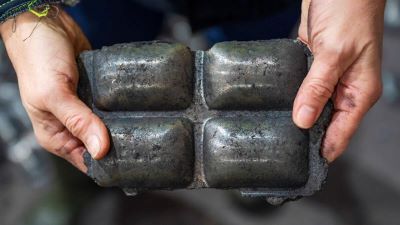
Hybrit’s path to green steel continues in a tent about the size of an ice hockey rink, with heaps of the pellets riding a conveyor belt to the plant. Inside, they’re heated and then shaped into bricks of sponge iron – the raw material for steelmaking. What’s unique is Hybrit’s use of green hydrogen, still a nascent technology but already central to net-zero pledges by the European Union and China.
Iron pellets await melting at the Hybrit fossil-fuel free plant in Lulea, Sweden, on Oct. 6, 2021. MUST CREDIT: Bloomberg photo by Mikael Sjoberg
Hybrit burns the clean fuel – and not dirty coal – to remove oxygen from the iron ore. That emits only water vapor. Hydrogen isn’t a new invention – it’s been used in zeppelins and space rockets – but producing it with renewable energy makes it virtually emissions-free. Governments and companies want to use green hydrogen to power vehicles, ships, planes and factories.
While northern Sweden is rich in renewable energy, the weather makes supplies intermittent, so the Hybrit project is assembling a storage system for green hydrogen. “The industry wants to run 24/7,” said Mikael Nordlander, a decarbonization executive at Vattenfall.
The prototype will be buried about 30 meters underground. Since spring, workers have been blasting away granite and gneiss. It’s wet, smelly and noisy. After completion, the fuel will be held in a tank about 100 cubic meters in size, equal to a couple of shipping containers. If tests are successful, the setup could be supersized to hold 1,000 times more hydrogen – enough to fill London’s Royal Albert Hall.
What comes out of the Hybrit plant is fossil-free sponge iron brickets, resembling a cluster of soap bars. They’re shipped to SSAB’s plant in Oxelosund, south of Stockholm. The first steel plates were made this summer and delivered to Volvo in August.
Volvo unveiled the first vehicle made with green steel Oct. 13. The electric dump truck weighs 8 tons, has a virtual driver and is meant for quarries and mines. “If you look into the microscope, the steel is identical,” said Lars Stenqvist, Volvo’s chief technology officer. “Going fossil-free is something many of our customers are asking for.”
It was the worst oil spill Marathon Petroleum had seen in years. A crack in a 60-year-old underground pipeline released 1,400 barrels of diesel fuel into an Indiana creek, staining the banks of the waterway and threatening a population of endangered freshwater mussels.
The incident barely registered, however, in the performance reviews of Marathon’s top executives, who earn part of their annual bonus by meeting environmental goals. Because these reviews account for the company’s number of significant oil spills in a year – not the total volume of oil – the Indiana spill counted as just one of 23 incidents in 2018.
The way Marathon evaluated its executives, 2018 was the company’s best environmental performance in at least eight years. The board of directors awarded chief executive Gary Heminger $272,251 for “excellence in environmental, personal safety and process safety improvement.”
ADVERTISEMENT
Many of the largest fossil fuel companies reward top executives for meeting environmental goals, a compensation tactic they adopted over the past two decades as a response to regulators and investors concerned with pollution and worker safety.
But the way some of these incentive programs are designed allows companies to award executives their full bonuses even in years when the firms cause major environmental damage or total emissions go up, according to a review of pay disclosures from six of the largest U.S. oil and gas companies and interviews with experts in compensation and environmental data.
Four of the companies – Chevron, Valero, Phillips 66 and Occidental Petroleum – have never missed their environmental targets in all the years they have publicly disclosed such goals, filings show. And yet, researchers who study environmental data for MSCI, an investment analytics firm, said three of the companies – Valero, Phillips 66 and Occidental – still lag behind the industry average for reducing toxic emissions, carbon emissions or both.
Marathon, which only missed its environmental targets once in the past decade, was rated average for toxic emissions and carbon emissions among oil and gas refining companies reviewed by MSCI.
“When you meet the metrics every year, that suggests that the metrics haven’t been sufficiently challenging,” said Rosanna Landis Weaver, executive pay program manager for As You Sow, a nonprofit group backed by foundation grants and individual donors that advocates for corporate social responsibility.
In some cases, experts say, companies are using metrics that don’t provide a full picture. Marathon’s focus on the number of environmental incidents across all of its operations means “very poor performance at one or two sites” – such as a large oil spill – “can be diluted by outperformance at other facilities,” Trillium Asset Management, an investor in Marathon that pressures companies to improve their social, governance and environmental practices, said in a letter to the company’s shareholders last year.
In emailed responses to questions, Marathon spokesman Jamal Kheiry said the company uses incentives to “measure the effectiveness of our environmental management system, and drive continuous improvement in environmental stewardship.”
Another oil giant, Occidental Petroleum, has given bonuses to executives for investing in carbon-capture projects even as the company’s total carbon emissions have gone up, filings and company emissions data show.
Occidental spokesman Eric Moses said the company has pledged to eliminate carbon emissions by 2050 and would soon begin evaluating executives on progress toward that goal. The carbon capture projects will “help both Occidental and businesses in other industry sectors to achieve shared net-zero goals.”
Lillian Riojas, a spokeswoman for Valero, said the company has “been able to meet our environmental targets because we have made very significant progress over the last decade” in areas including safety and toxic air emissions.
Chevron spokesman Sean Comey said the company’s board has updated its annual bonus program three times in the past three years to add incentives for reducing methane flaring, greenhouse gas emissions and investments in carbon offsetting.
Bernardo Fallas, a spokesman for Phillips 66, declined to comment.
Critics say climate goals are usually such a small portion of bonus plans that they have little influence over executive behavior. When Shell made emission reduction goals 10 percent of its executive bonus last year, some environmentally minded investors opposed the plan, arguing that over 50 percent of the annual bonus was still based on growing the company’s production of gas.
The pay package “encourages executives to chase higher levels of fossil fuel output,” said Simon Rawson, a director at ShareAction, a United Kingdom-based nonprofit that works to promote better corporate behavior and receives the majority of its funding through charitable grants.
This year, Shell said it would make emission reductions a greater portion of annual bonus incentives and remove natural gas production goals completely. Anna Arata, a Shell spokeswoman, said the pay packages of 16,500 employees partially depend on meeting companywide short-term emission goals.
The failure of some pay programs to promote better corporate behavior highlights a lack of oversight by corporate boards of directors, who approve executive pay at publicly traded companies and are tasked with managing long-term risks such as climate change, Rawson said. Even as many boards acknowledge this mandate – creating climate committees and designating sustainability chairs – they’ve failed to hold executives accountable for real action on environmental issues, he said.
The energy industry’s experience is a cautionary tale for the broader business world. Dozens of large companies, including Coca-Cola, Walmart, Ford Motor Co. and Procter & Gamble, have tied executive pay plans to environmental targets as they face pressure from investors to mitigate climate change, said Mindy Lubber, chief executive of climate advocacy group Ceres.
“CEOs do what they are paid to do,” said Lubber, whose Climate Action 100+ initiative pushes large companies to set carbon emission goals and have at least one senior executive’s pay tied to the company’s progress toward those emission goals.
But as evidence from oil and gas companies shows, executives can score highly on environmental goals even when their companies have mixed track records on the environment.
During Heminger’s tenure as Marathon CEO, from 2011 to 2020, climate advocates criticized the company for being slow to adopt a carbon reduction plan and for its role in orchestrating a Washington lobbying campaign aimed at loosening restrictions on vehicle pollution. Marathon says it was advocating for a review of the “feasibility” of current vehicle pollution standards and never took a position on whether changes to those standards were needed.
Pollution at Marathon refineries led to Clean Air Act violations and congressional scrutiny over toxic air emissions at a Detroit refinery, where local residents have complained for years about the facility’s release of toxic chemicals which they believe contribute to a high rate of respiratory illness in their community.
In Marathon’s annual pay disclosures, Heminger is credited with meeting or surpassing environmental targets during nine of his 10 years as CEO. He earned a total of $1.9 million for meeting these goals, including added payouts for exceeding expectations in five of those years, a Post analysis of energy company bonuses shows.
Heminger, who retired last year, declined to comment.
Marathon’s bonus system was questioned last year by Trillium Asset Management, which saw a disconnect between the way executives were rewarded and the way company facilities had harmed communities in places like Detroit. The investor asked Marathon to publish a report exploring how it could better incorporate community concerns into its bonus system.
In a proxy filing, Marathon’s board opposed the measure, saying unlike its current, quantifiable metrics, community concerns “would be difficult to measure and audit.” The board said it had the power “to reduce or completely eliminate awards” if it finds “our performance in any area, including our impact on the communities where we live and operate, has been unsatisfactory.”
Trillium has since sold its shares in Marathon, said Jonas Kron, Trillium’s chief advocacy officer.
Under its bonus system, Marathon classifies all spills, air emissions, permit violations and regulatory actions into four tiers, based on their severity, and only counts the most severe incidents in the annual bonus plan. Oil spills, for example, are only counted if they release 10 or more barrels into water or 100 or more barrels onto land.
By this measure, the company has been fairly consistent: Every year from 2013 to 2019, the company experienced one or two pipeline oil spills of over 100 barrels, according to data from the Pipeline and Hazardous Materials Safety Administration.
But these numbers fail to account for the larger impact of spills like the one at Indiana’s Big Creek – at the time, Marathon’s largest pipeline spill by volume in seven years. Marathon sent around 80 responders to clean up the site, according to Kevin Turner, an on-scene coordinator with the Environmental Protection Agency, and agreed to fund an effort to propagate the mussel population.
Kheiry, the Marathon spokesman, said the company continually updates its technology and procedures to prevent oil spills and that this spill represented an “unanticipated risk” because it was caused by bank collapse, which usually doesn’t happen on flat terrain. The company recovered most of the spilled oil and cleaned up the banks of the creek. He said one bird died as a result of the spill and “there is no evidence that mussels were impacted.” He added that Marathon does try to account for the severity of incidents by using its tier system; the Indiana oil spill counted in the highest tier.
Because Marathon has grown its operations, it’s hard to assess whether the company has reduced its overall environmental harm. In four different years, Marathon counted a higher number of environmental incidents than the year before, but Heminger got his full environmental bonus anyway, because the board set higher limits for the number of incidents those years.
Marathon’s Kheiry said the company has grown significantly over the past decade, including with its acquisition of oil refining rival Andeavor, in 2018. Because it has more pipelines, refineries, gas processing plants and other facilities, the company is exposed to more environmental risk, and therefore its board sometimes raises the limits, Kheiry said.
“We believe our record of reducing incidents at newly acquired assets and maintaining superior performance at our existing assets shows that the [compensation] program has been a success,” Kheiry said.
Marathon says its environmental metrics are checked by its internal auditing group but are not reviewed by any independent third party.
Some of the people who live near Marathon’s Detroit refinery say air pollution remains an ongoing problem in their community. Vicki Dobbins, who lives blocks away from the refinery, says her neighborhood still smells like “old garbage” due to gas emissions.
“You can sometimes ride through here and the air is so strong you have to hold your breath,” Dobbins said.
After a release of toxic air emissions at the refinery in 2019, dozens of residents called local health officials to complain of a noxious gas affecting their breathing, according to the Michigan Department of Environment, Great Lakes, and Energy, which cited the company for causing a nuisance. Rep. Rashida Tlaib, D-Mich., convened a field hearing in Detroit and the House Committee on Oversight and Reform asked the EPA to investigate the problem of chemical leaks at the refinery.
Earlier this year, Marathon settled with Michigan over 10 different environmental violations covering several incidents from the past four years, agreeing to take new precautions including a community air quality website visible to the public. Tim Carroll, an EPA spokesman, said the agency conducted an inspection of the refinery in July of this year and “will share more information about it when it becomes publicly available.”
Marathon, citing data from Michigan’s state pollution database, said air emissions at the Detroit facility have declined 80 percent over the past 20 years, and said the vast majority of air pollutants in that area of the city are now generated by other neighboring industrial facilities, such as steel and automobile plants and a sewage treatment center.
The company says it’s working with residents of southwest Detroit. As part of its settlement, Marathon agreed to install a new air filtration system at a public pre-k-8 school less than a mile from the refinery. Marathon says it also set aside $5 million this year to buy the homes of some residents who want out.
The threat of climate change has forced many companies to rethink their pay practices. Investors are pushing energy giants to go beyond pollution goals and incorporate carbon emission targets into CEO pay, claiming that may be the best way to motivate executives to take the drastic actions necessary to meet long-term carbon reduction goals.
The challenge, says U.K. researcher Dario Kenner, is that oil executives are already hardwired to grow profits and revenue from fossil fuels, which often means generating more carbon emissions. Kenner, who researches wealth and climate change, co-authored a study this year that found executives of BP, Chevron, ExxonMobil and Shell all have strong personal incentives to delay significant carbon reducing measures.
While Marathon, Occidental, Chevron and Valero all began linking executive bonuses to carbon emission goals within the past two years, these companies all still incentivize executives to grow financial or production metrics, such as earnings, cash flow or total oil production, filings show.
“If you have big chunky metrics that are linked to production and growth, that is going to drive executive behavior,” says ShareAction’s Rawson, who helped lead the opposition to Shell’s pay programs last year.
For the past three years, Houston-based energy giant Occidental has rewarded CEO Vicki Hollub a total of over $600,000 for meeting the company’s environmental, safety and sustainability goals, the Post analysis of bonuses shows. These goals encouraged Hollub to make investments in carbon capture technologies, which the company described as “an important feature of Occidental’s strategy to reduce its greenhouse gas emissions while growing its business.”
But scientists say capturing carbon is energy-intensive and not yet contributing to a meaningful reduction in carbon emissions. Rather than decreasing its emissions, Occidental’s total carbon emissions from its direct operations grew by 30 percent from 2017 to 2019, according to company data.
The company’s efforts in carbon capture “have not yet translated into quantitative evidence in terms of overall improvement in the company’s performance for carbon emissions,” said Antonios Panagiotopoulos, a vice president at MSCI.
Moses, the Occidental spokesman, says its emissions numbers reflect an increase due to its 2019 acquisition of Anadarko Petroleum.
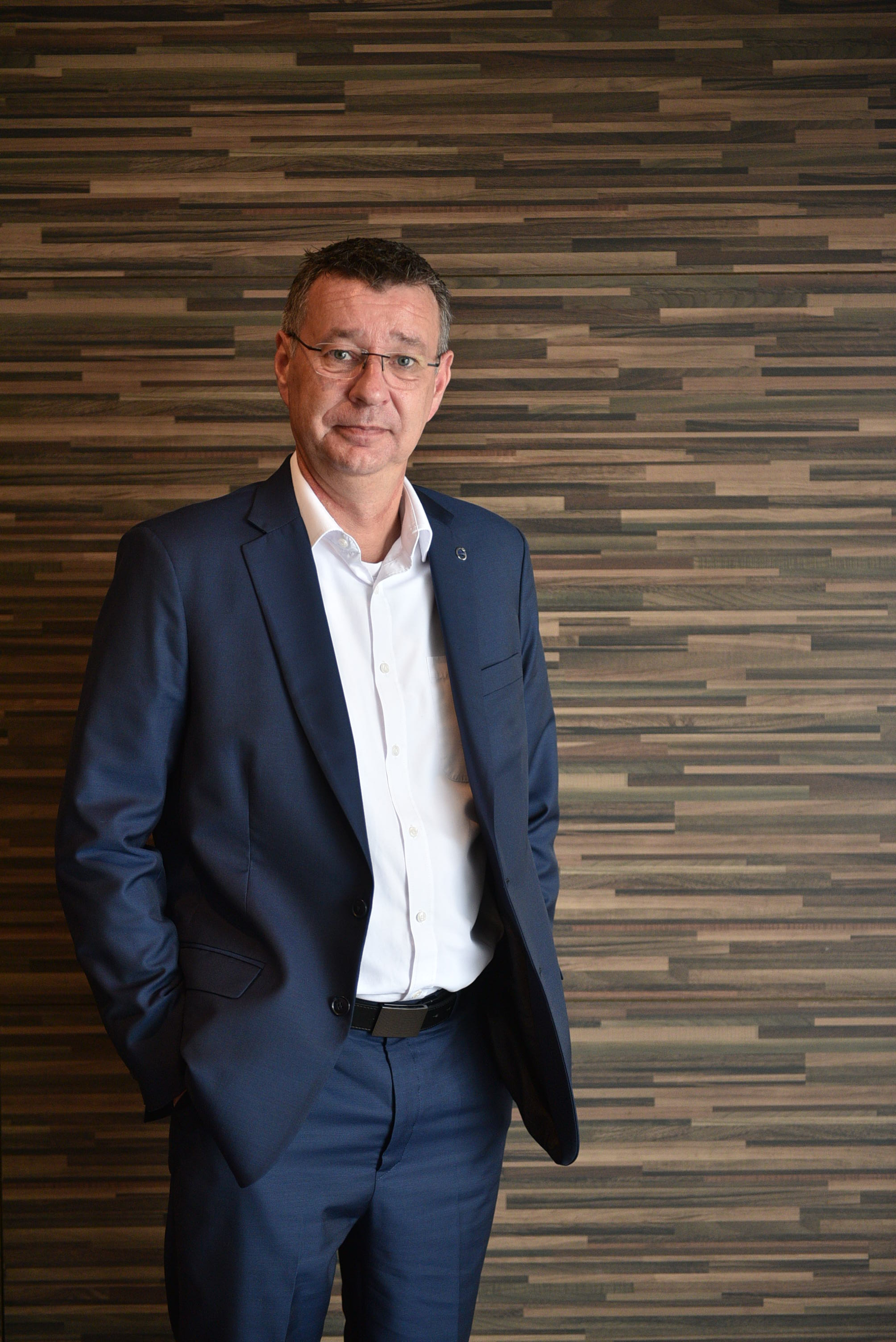
The Nation Thailand has a chat with Mr. Chris Wailes, Managing Director of Volvo Car (Thailand) Limited, on the automaker’s strategy for 2022.
The Nation Thailand has a chat with Mr.Chris Wailes, Managing Director of Volvo Car (Thailand) Limited, on the automaker’s strategy for 2022.
Q: Volvo cars have, for decades, been seen as the safest cars in the world. Is this still part of Volvo’s core strategy today?
A: Yes, I mean safety has been part of Volvo’s heart and DNA since 1927, when the company was first founded. It has remained a cornerstone of what we do. But as times change, technology changes… people tend to look at safety in a slightly different way. And what we’re looking at in particular is how we continue to make electric cars.
Pure electric cars are the safest in the world as they utilize new technologies that are available, from sensors to laser radar, in different forms. We still believe both today and as well as tomorrow that we will continue to be one of the safest cars in the world. So, it will always be. We will use technology and showcase our technology to make our customers’ lives much easier when they’re driving the car because it will be very simple to use and will only intervene when is necessary.
Mr.Chris Wailes, Managing Director of Volvo Car (Thailand) Limited
ADVERTISEMENT
Q: With the changing car market in Thailand, and as you say the electric car is now the world trend, what is Volvo’s stance on this technology?
A: We were one of the first traditional car manufacturers to come out in 2019 to state that all our new cars will be electric moving forwards. And we have a very clear goal, especially here in Thailand. From my perspective, it’s much easier generally to convert to electric cars in Europe because electricity infrastructure is a little bit more widely available.
But in Thailand, we took the decision in 2018 that we would move away from traditional internal combustion engines to electrification starting with plug-in hybrid cars last year. And we found that investing in charging stations will just not be able to cover everyone.
We included for every customer a wall box fitted to their home or their office as part of the car. So in that sense, we’ve already setup many charging stations in people’s homes, so it makes the transition to move from plug-in hybrid cars to pure electric cars much easier. And what we do know is that customers, who drive an electric car, whether it’s a plug-in hybrid or full electric car, tend not to go back to a traditional internal combustion engine car.
So, our strategy is, by 2025 over half of the cars that we sell in Thailand will be pure electric cars only. And we will continue to launch, as we have done this year, a new pure electric car model into the Thailand market every year for the next four or five years. So, we are very much sure that electric cars are the future and of course we will take all the technology that we have to make sure it incorporates into a car that is very much appreciated by the Thai consumer.
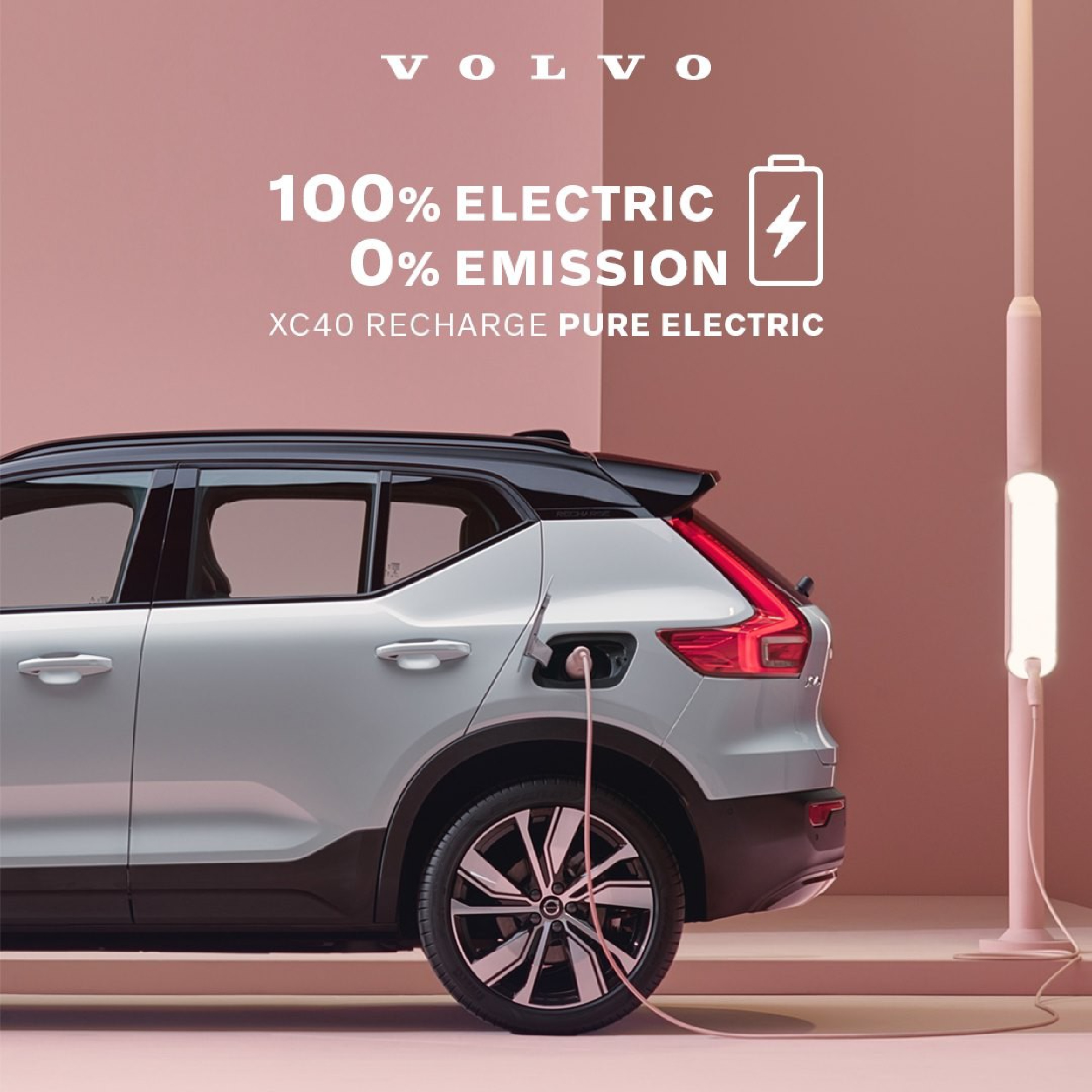
Volvo XC40 Recharge Pure Electric
Q: What is Volvo’s goal for 2022 and how will it reach this goal?
A: We’ve already launched our first pure electric car in Thailand and we received the response from consumers that they are very satisfied and delighted with their car. So, we will continue with the Volvo XC40 Recharge Pure Electric and then next year we will launch another model another pure electric model in Thailand, which will come in the first half of next year.
Q: Could you tell us about the car that you just launched this year? How is it different from other electric cars in the market?
A: It very much depends on what the consumer is looking for, which will decide what they want to buy. Our first pure electric car is the Volvo XC40 Recharge Pure Electric. From the outside, it looks very similar to the traditional XC40 with an internal combustion engine or a plug-in hybrid engine car.
Apart from the front grille obviously it’s converted because there’s no engine. So you’ll see that there’s a slight difference at the front of the car and of course when you lift the hood of the car at the front there is now additional storage area for bags or clothes or whatever you want to put in. For the range of the car, you can travel up to just over 400 kilometers on a single charge. The car will be charged with a DC charger up to 80 per cent of the battery capacity in under 40 minutes. It’s a very useful for city travel. You’ve got more than enough range to meet normal daily use.
If you want to drive further distance we’ve tried to cover that as well, so we include in the price of the car access to our friends at each site anywhere and we include 25,000 baht of electricity in the application so if the customers decide to move away from their home and travel for the distance, for example, from Bangkok to Chiang Mai they can use the “EA Anywhere” application which offers access to the biggest number of charging stations in Thailand.
In addition, we will include what we call a Volvo care package. What we’re trying to do is make the ownership of a car a lot easier and much more seamless for customers. So when a customer looks at an electric car from Volvo, included in the price of the car will be five years warranty and five years of maintenance.
It will also have four years digital services because of course the car is a fully connected car and includes things like Google Maps, Google Play store, Google voice control as well so it’s exactly the same as an Android mobile phone. In addition, we will include your insurance for three years, and of course it comes with an idea factory warranty on that and everything else.
It’s a full package. Basically, for the customer, when they drive away in the car all they have to do is charge and that’s what we believe is the future of mobility.
Volvo XC40 Recharge Pure Electric
Q: How has Volvo coped with the Covid-19 pandemic and ongoing situation?
A: Volvo has been no different to anybody else, I mean everybody has been affected by Covid-19. We saw a reduction last year, but it was a much smaller reductions than the general market. This year, obviously since April it’s been a lot harder to manage than last year. Mainly because we closed the office for nearly six months. We’ve closely followed the advice from the CCSA (Centre for Covid-19 Situation Administration) and we’ve had all the staff work from home.
But our focus has very much been on everybody’s health and welfare. We’re very aware of the economic impact it has on people, so actually what we did was increase people’s salary shifts and their benefits this year. So, actually we tried to offset some of the negative sides of Covid-19 with something positive and have given them security and safety, so they have nothing to worry about. And because we’ve been working from home for so long, we are very much concerned about people’s mental welfare.
When you’re working from home for long periods of time, you miss being in an office environment, talking to your friends and colleagues on a daily basis and interacting with people, when that stops and you’re working from home and are isolated for long periods of time, it can affect people’s mental wellbeing. So, we’ve organized online booster sessions where we send care packages through the mail to let everybody know that we care.
Volvo XC40 Recharge Pure Electric
Q: The young generation’s perspective right now in Thailand is different from their parents, who were Baby Boomers. What do you think about this market and what is the most challenging factor?
A: Thailand is no different to the rest of the world. The whole world is changing now and things are moving very fast. We see digitalization is certainly expanding here in Thailand. More people buying things online and even ordering food.
So, what we need to do for the car manufacturer is to look at what people need and what people desire and make that technology included in the car that is easy for people to use as possible. Because there is no point, in my opinion, in importing technology in a car if people don’t understand how to use the technology or benefit from technology. So we very much focus on design and of course safety technology, but more importantly we focus on sustainability that we made a core part of our business and we will not back away from it. And we will reduce our carbon footprint here in Thailand as well as across the rest of the world by 40 per cent by 2025.
That includes everything from manufacturing through to logistics, for example here in the headquarters; we replace single-use plastic with recyclable materials. For me it is a very important part moving forward because I have children myself. Our children are going to blame us if we don’t try and fix things now for their benefit. Today people have to go and visit a retailer to have the car serviced or maintained.
Volvo XC40 Recharge Pure Electric
Tomorrow, there will be no need for the customer to go because the retailers can service the car at their home or their office. Because with electric cars, there’s very little to actually maintain on the car so instead of people having to travel to come to us actually we will go to the consumer – very different from how it’s been over the last 40 years. We welcome suggestions from people on what they believe we should be looking at moving forward because like everybody else we don’t know everything, but we try our best.




 How video clips generate revenue on different platforms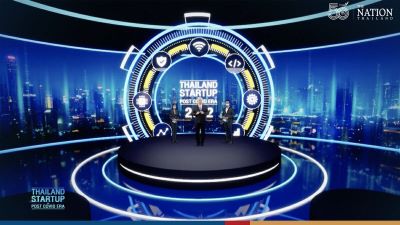
 Australian Ambassador Allan McKinnon
 Virtual seminar sheds light on changing regional landscape of start-ups in post-Covid era
 Iron pellets await melting at the Hybrit fossil-fuel free plant in Lulea, Sweden, on Oct. 6, 2021. MUST CREDIT: Bloomberg photo by Mikael Sjoberg

 Mr.Chris Wailes, Managing Director of Volvo Car (Thailand) Limited
 Volvo XC40 Recharge Pure Electric
 Volvo XC40 Recharge Pure Electric
 Volvo XC40 Recharge Pure Electric
 Volvo XC40 Recharge Pure Electric
 SootinClaimon.Com