PTT president says fuel price passed lowest point as global economy recovers #SootinClaimon.Com

#SootinClaimon.Com : ขอบคุณแหล่งข้อมูล : หนังสือพิมพ์ The Nation.

PTT president says fuel price passed lowest point as global economy recovers (nationthailand.com)

PTT president says fuel price passed lowest point as global economy recovers

EconNov 27. 2020

By The Nation

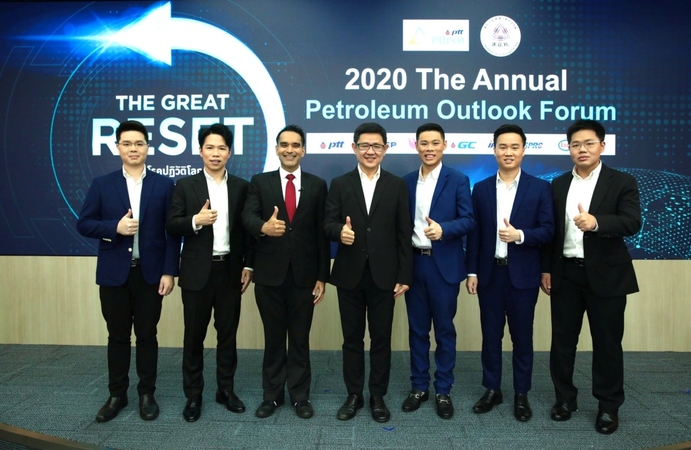
Attapon Rerkpiboon, chief executive officer and president of PTT Plc (PTT), told the Annual Petroleum Outlook Forum on Thursday that demand for fuel and energy had passed their lowest point and were increasing in line with the economic recovery. However, he added

that PTT had a crucial part to play in Thailand’s energy security and economic recovery after Covid-19 and said strategic plans for unforeseen changes are always necessary.

“PTT and the fuel company group realise that they must play an important role in building energy security for the country,” said Attapon.

“We must adjust to build strength and sustainability for organisations and countries to drive the country through this economic crisis by disseminating information on energy to society … A well-rounded understanding will strengthen Thai society and bring the greatest benefits to all sectors, both now and in the future.”

Bandhit Thamprajamchit, chairman of the Petroleum Refining Industry Club, called Covid-19 “the great reset” that had triggered history’s biggest ever drop in oil demand. This had resulted the world’s major oil exporters coming together to find a way to balance the oil market, he said. 

Metha Veeraolarnkul, international trade officer at PTT, noted that Covid-19 had seen global oil consumption drop about 9 per cent on average, spiking to as much as 20 per cent, compared to last year. During the 2008 economic crisis, oil consumption only fell by 4 per cent, he said.

Driving this trend was the drop in consumption of big economies like the United States and China, with the US using 2.3 million barrels per day (-12 per cent) and China using less to 600,000 barrels per day (-4 per cent). Chinese consumption was now increasing as effective Covid-19 control enabled resumption of economic activities, he said.  

Meanwhile, oil consumption in the transportation sector is also down, with a 47 per cent drop in jet fuel use as 55 per cent of global flights were halted – with a return to normal not expected until 2024.

However, the world economy would continue to recover next year, driven by travel by car and the auto industry, where sales have returned to normal levels. New US president Joe Biden would also launch a short-term stimulus policy to help the US and world economy recover.

Two scenarios for next year’s oil demand were presented at the forum. 

Best case: If Covid-19 can be controlled, the global economy will grows about 5.2 per cent and oil demand will increase by 5.3 million barrels per day.

Worst case: If the spread of Covid-19 is not contained and the mortality rate remains high, the global economy may expand by 3.4 per cent and oil consumption increase by about 1.3 million barrels per day.

PPT’s PRISM Expert predicts Dubai crude oil prices in 2021 at $45-$55 per barrel, an increase from 2020 due to Covid-19 vaccine hopes, international economic stimulus packages and trends in renewable energy. However, the analysts estimate Dubai crude oil will be $35-$45 if Covid-19 cannot be controlled.

Amonthep Chawla, chief economist of CIMB Thai Bank, said the Thai economy will expand around 3-4 per cent next year, but there are still four factors to be monitored: Political factors, including a Cabinet reshuffle that may affect continuity of economic policy; baht appreciation that will affect exports; the second phase of the coronavirus outbreak; and the risk of a trade war continuing even after the US gets a new president.

Thai export sector hit by rising shipment costs, labour shortage #SootinClaimon.Com

#SootinClaimon.Com : ขอบคุณแหล่งข้อมูล : หนังสือพิมพ์ The Nation.

Thai export sector hit by rising shipment costs, labour shortage (nationthailand.com)

Thai export sector hit by rising shipment costs, labour shortage

EconNov 27. 2020

By The Nation

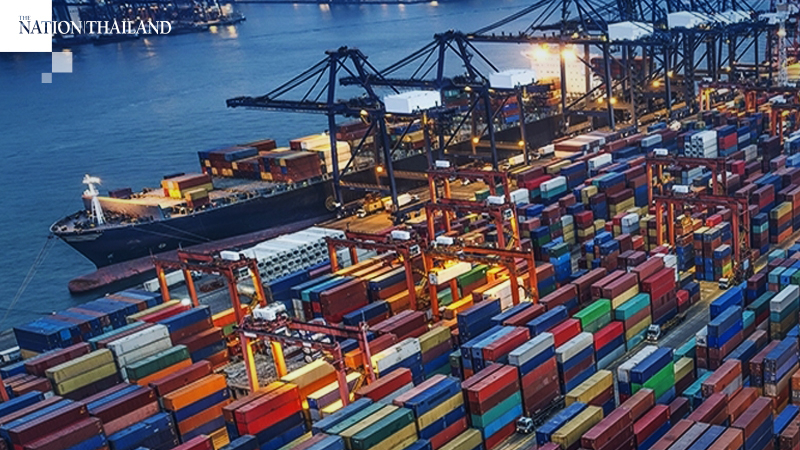
Thailand’s private sector is confident the global economic outlook will improve next year, said Kalin Sarasin, chairman of the Thai Chamber of Commerce.

However, he said the Thai export sector is facing rising shipment costs and a shortage of both containers and labour.

The private sector is also worried that prolonged anti-government rallies could dent consumer spending. He urged the government to seek ways to solve the political turmoil peacefully.

Meanwhile Thanavat Phonvichai, president of the University of the Thai Chamber of Commerce (UTCC), expects to see the economy improve in the fourth quarter this year with reduced contraction of 4-5 per cent.

Don’t rush to open the country, warns former WTO chief #SootinClaimon.Com

#SootinClaimon.Com : ขอบคุณแหล่งข้อมูล : หนังสือพิมพ์ The Nation.

Don’t rush to open the country, warns former WTO chief (nationthailand.com)

Don’t rush to open the country, warns former WTO chief

EconNov 27. 2020Former director general of the World Trade Organisation, Supachai Panitchpakdi. File photo.Former director general of the World Trade Organisation, Supachai Panitchpakdi. File photo. 
By The Nation

Former director general of the World Trade Organisation, Supachai Panitchpakdi, has urged the Thai government not to rush to open the country to foreign tourists amid the ongoing threat from Covid-19.

He pointed out that Western countries are loosening and re-imposing lockdowns in a cycle that is resulting in a large number of infections and deaths, as well as severely hurting economies.

He warned of the long-term impact of Thailand lifting its restrictions on foreign travellers. 

“Thailand should gradually open the country, because human resources are the most important factor. It takes about 20 to 30 years for human development, and if those people die it will be very difficult to restore the lost human resources,” he said.

Saving lives is the best way to aid economic recovery post-Covid-19, said Supachai, who is also a former secretary-general of the UN Conference on Trade and Development (UNCTAD).

The government has opened the country to a limited number of foreign tourists, in a bid to help tourism recover from the devastating impact of the virus.

Supachai noted the economy is expected to contract 5 to 6 per cent this year, up from the previous forecast of 7-8 per cent contraction.

He expressed optimism that Thai economic growth and exports would return to positive territory next year. Faster recovery of China and Asean countries would benefit Thai exports, he predicted.

However, he warned exporters not to rely on a weaker baht. Baht appreciation could dampen exports, so exporters should reorganise their businesses to increase their competitive advantage, he suggested.

Meanwhile he urged the central bank to raise the interest rate since its low level of 0.5 per cent was hitting savers’ income.

Rising household debt was also a worry, he said. Thais are getting into debt at a younger age, in contrast to people in other countries who don’t get indebted until much older, he added.

PTT, Thai refineries forecast oil at $45-55 in 2021 #SootinClaimon.Com

#SootinClaimon.Com : ขอบคุณแหล่งข้อมูล : หนังสือพิมพ์ The Nation.

PTT, Thai refineries forecast oil at $45-55 in 2021 (nationthailand.com)

PTT, Thai refineries forecast oil at $45-55 in 2021

EconNov 26. 2020

By The Nation

PTT Group Oil Situation Analysts (PRISM Expert) together with the Federation of Thai Industries’ Petroleum Refinery Industry Club have forecast the 2021 Dubai crude oil price at US$45-55 per barrel – higher than 2020 due to Covid-19 vaccine development, international stimulus measures and renewable energy trends.

However, the analysts warn recovery of the oil market is still at risk. If the virus outbreak continues and becomes difficult to control, Dubai crude prices would stay at $35-$45 per barrel, they said.

Bandhit Thamprajamchit, chairman of the Petroleum Refining Industry Club, said Covid-19 was “the Great Reset, or a major turning point” that forced oil demand in 2020 to drop to its lowest level in history.

The discovery of Covid-19 vaccines was a crucial signal for each country to set measures and stimulate the economy, he added.

IPO activity proves Southeast Asian markets robust despite crisis #SootinClaimon.Com

#SootinClaimon.Com : ขอบคุณแหล่งข้อมูล : หนังสือพิมพ์ The Nation.

IPO activity proves Southeast Asian markets robust despite crisis (nationthailand.com)

IPO activity proves Southeast Asian markets robust despite crisis

EconNov 26. 2020Wilasinee Krishnamra, disruptive events advisory leader for Deloitte ThailandWilasinee Krishnamra, disruptive events advisory leader for Deloitte Thailand 
By The Nation

Capital markets across Southeast Asia have remained resilient this year despite uncertainties from the global health crisis to the worsening US-China trade tensions and impact of the US presidential elections, according to Deloitte Southeast Asia.

Initial public offerings (IPOs) in the region over 10 and a half months this year bucked the overall downward trend to inch up to pre-Covid levels with up to US$6.44 billion raised in 100 IPOs. from 100 initial public offerings (IPOs).

Though the number of IPOs dropped by 38 per cent from 161 in 2019 and IPO proceeds dropped by 12 per cent from $7.34 billion, the total IPO market capitalisation in 2020 rose by 3 per cent to $25.96 billion.

The good news is capital markets in Southeast Asia appear to be navigating global economic headwinds well so far.

For the second consecutive year, Thailand remains in pole position for the highest funds raised across Southeast Asia.

Taking the top two spots on the region’s leaderboard this year are Thailand’s Central Retail Corporation Public Co Ltd and SCG Packaging Public Co Ltd with $1.77 billion and $ 1.27 billion raised, respectively. The two listings collectively accounted for almost half of the total funds raised in Southeast Asia.

A stable economic growth, strong currency, low interest rates and consistently strong domestic liquidity allowed the Stock Exchange of Thailand to net $3.94 billion in IPO proceeds as of November 15, which accounted for 61 per cent of total funds in 2020 to emerge as one of the bright spots in the region.

This marks the fourth consecutive year that Thailand has raised more than $2 billion from IPO listings and the first time since 2015 to break the $3 billion mark.

“Thailand’s IPO market continues to show its growth potential as one of the stronger IPO markets in Southeast Asia. Largely driven by homegrown companies and fuelled by increasing investor interests in firms focused on consumer businesses, it continues to appeal strongly to investors and fund managers,” said Wilasinee Krishnamra, disruptive events advisory leader for Deloitte Thailand.

Across the border, the Malaysian stock exchange scored the biggest boost from the listing of Mr DIY Group, which raised $362 million, making it the largest listing in three years, while new listings fell to 18 this year, as compared to 30 listings in 2019.

Overall, Bursa Malaysia mustered a total fund raising of $481 million for 2020, registering growth from $447 million raised in 2019.

In the Philippines, the listing of AREIT marked the country’s first-ever REIT (real-estate investment trust) listing, lifting the bourse with a $255 million IPO in August. The IPO contributed to 31 per cent of the total funds raised by the Philippine Stock Exchange, in addition to the 65 per cent of funds contributed by Converge Information and Communications Technology Solutions Inc, which raised $523 million.

Indonesia was responsible for 46 IPOs in the first 10 and a half months of 2020, which accounted for the highest number of IPOs across Southeast Asia in 2020. The high IPO activity can be attributed to the easing of listing for small and medium-sized enterprises since 2017.

Singapore saw its largest homegrown listing through Nanofilm Technologies International, which raised $345 million on the SGX Mainboard, a platform typically dominated by REITs listings in recent years.

As of November 15, the Singapore Exchange (SGX) raised a total of $852 million in IPO proceeds from eight IPO deals. In addition to Nanofilm Technologies, this includes two REIT IPOs on SGX Mainboard with $479 million funds raised and five deals on the Catalist board that raised $29 million. In comparison, the exchange raised $2.26 billion in proceeds from 11 IPO deals in 2019.

For some countries, REITs continue to remain an attractive asset class with low volatility, above-market dividend yields and provide exposure to high-quality properties, healthcare facilities, e-commerce or digitalisation related assets. The growth potential for REITs across Southeast Asia region is promising, given the region’s population and urbanisation-led growth trends.

On the outlook for 2021, Tay Hwee Ling, disruptive events advisory leader for Deloitte Southeast Asia and Singapore, believes the region will continue to see good growth and expects an upswing in listings as a soon as a vaccine is proven safe and effective.

“Covid has made companies re-evaluate their business and growth forecast; and companies are looking into windows of opportunity to raise funds from stock markets to support their growth and stay resilient in this challenging climate. Though we are not out of the woods yet, the listing markets in Southeast Asia are still dynamic and attractive to investors.”

SET extend gains despite worries of political turmoil #SootinClaimon.Com

#SootinClaimon.Com : ขอบคุณแหล่งข้อมูล : หนังสือพิมพ์ The Nation.

SET extend gains despite worries of political turmoil (nationthailand.com)

SET extend gains despite worries of political turmoil

EconNov 26. 2020

By The Nation

The Stock Exchange of Thailand (SET) Index closed at 1,433.56 on Thursday, up 17.84 points or 1.26 per cent. Total transactions amounted to Bt80 billion with an index high of 1,433.47 and a low of 1,416.79.

In the morning session, an analyst at Krungsri Securities expected the day’s index to fluctuate between 1,405 and 1,425 points amid forecasts of a smooth US presidential transition, progress on Covid-19 vaccines and the rising oil price.

“However, investors should beware of mass selloffs due to uncertainty over Thailand’s political unrest and signs of overbought stocks,” he said.

The 10 stocks with the highest trade value today were KBANK, PTT, SCGP, ADVANC, DELTA, MINT, STGT, BANPU, PTTEP and CBG.

As of 4.30pm, the price of oil dropped by US$0.76 or 1.66 per cent to $44.95 per barrel, while gold rose by $8 or 0.44 per cent, to $1,819.20 per ounce.

Other Asian indices were rise, except for Shenzhen SE Component Index:

Japan’s Nikkei Index closed at 26,537.31, up 240.45 points or 0.91 per cent.

China’s Shang Hai SE Composite Index closed at 3,369.73, up 7.41 points or 0.22 per cent, while Shenzhen SE Component Index closed at 13,599.99, down 56.10 points or 0.41 per cent.

Hong Kong’s Hang Seng Index closed at 26,819.45, up 149.70 points or 0.56 per cent.

South Korea’s KOSPI Index closed at 2,625.91, up 24.37 points or 0.94 per cent.

Taiwan’s TAIEX Index closed at 13,845.66, up 106.83 points or 0.78 per cent.

Green economy offers $1bn boost to Southeast Asia: study #SootinClaimon.Com

#SootinClaimon.Com : ขอบคุณแหล่งข้อมูล : หนังสือพิมพ์ The Nation.

Green economy offers $1bn boost to Southeast Asia: study (nationthailand.com)

Green economy offers $1bn boost to Southeast Asia: study

EconNov 26. 2020

By The Nation

Southeast Asia is waking up to a US$1 trillion (Bt30.3 trillion) annual economic opportunity if it pursues the economic and social potential of the green economy.

This is among the findings of global consultancy Bain & Company’s Southeast Asia sustainability outlook, “Southeast Asia’s Green Economy: Pathway to Full Potential”, released on Thursday.

The region could be greener by 2030, spurred on by accelerating global momentum and investment to address sustainability and climate challenges.

Yet Southeast Asia still has a long way to go. With its share of global population, biodiversity and resources, the region can play a far bigger role, offering significant growth potential moving forward, the report said.

Accelerating development of the Southeast Asian green economy offers a $1 trillion economic opportunity annually for businesses by 2030, enabling regional companies and societies to build a competitive advantage for the future.

As part of Bain’s continued efforts to drive sustainability transformation across the globe, the firm has launched a Global Sustainability Innovation Centre (GSIC), with the support of the Singapore Economic Development Board.

The GSIC will seek to pioneer innovative solutions to accelerate corporates’ sustainability journeys, tackling some of the planet’s biggest challenges. The centre will be based in Singapore and will support Bain’s deep expertise in sustainability in the region – helping companies to reach their ESG goals.

“Globally, countries are prioritising sustainability investments as concerns about climate change and the resulting transition to a green economy gathers speed and urgency,” said Gerry Mattios, co-director of the Singapore centre and co-author of the report.

“Stimulus programmes injected into economies around the world to address the Covid-19 pandemic and promote ‘build back better’ initiatives are accelerating the push towards greener, more sustainable industries. Yet in this race, Southeast Asia can build a lot more momentum to seize the opportunity.”

The report says Southeast Asia is lagging behind other regions in their green initiatives. This lag presents a threat to Southeast Asia’s global competitiveness but also creates immense opportunities for the region, it adds.

“Adopting green practices will meet the region’s wider environmental, social and governance (ESG) ambitions and in turn deliver societal benefits such as preservation of the earth’s natural ecosystems and social inclusivity – ends in themselves that also underpin increased growth,” explained Dale Hardcastle, co-director of the Global Sustainability Innovation Centre in Singapore and report co-author. “By unlocking the green economy, the economic growth of a wide range of sectors in the region would immediately follow.”

Southeast Asia has pathways across industries that can unlock the trillion-dollar potential of the green economy, says the report. It also identifies areas where Southeast Asia can be a global leader:

Sustainable energy and resources: Where excessive resource extraction and energy consumption followed by waste mismanagement were the norm, the region could benefit from a $270 billion opportunity as it embarks on decarbonisation and electrification, a sustainable energy transition, responsible consumption and embedded circularity.

Healthy and sustainable food systems: Where agricultural growth has typically been inefficient and wasteful, Southeast Asia has the potential to innovate and increase production in a regenerative and conscious manner that will make nutrition widely accessible. This represents an $205 billion opportunity for the region.

Efficient industrial operations and logistics: As industrial activity in Southeast Asia expands due to geopolitical shifts, manufacturing processes can be reimagined and supply chains connected and made transparent with full traceability. The region can help ensure low carbon footprint and capture an $200 billion opportunity while doing so.

Green and connected cities: As urban populations grow, the way is clear to build affordable green homes in satellite settlements connected by green public transportation, representing a $185 billion opportunity in Southeast Asia.

Green financing and liquid carbon markets: While sustainable initiatives have struggled for financing and carbon-offset revenues have gone to waste, Southeast Asia can take the lead in green financing be a home for a liquid carbon market where incentives to reduce emissions can be part of the prescription.

BCH projects 10-15% growth next year #SootinClaimon.Com

#SootinClaimon.Com : ขอบคุณแหล่งข้อมูล : หนังสือพิมพ์ The Nation.

BCH projects 10-15% growth next year (nationthailand.com)

BCH projects 10-15% growth next year

CorporateNov 26. 2020

By The Nation

SET-listed Bangkok Chain Hospital (BCH) projects annual revenue growth of between 10 and 15 per cent next year, said director of finance and investor relations Pumipat Chatnoraset.

The operator will open two new facilities next year – Kasemrad Hospital in Prachinburi and Kasemrad Hospital in Vientiane, Laos.

Pumipat said competition in the hospital sector would be intensify in the premium customer segment as hospitals focused on attracting foreign patients.

EA battery plant to turbo-boost Thai EV industry from January #SootinClaimon.Com

#SootinClaimon.Com : ขอบคุณแหล่งข้อมูล : หนังสือพิมพ์ The Nation.

EA battery plant to turbo-boost Thai EV industry from January (nationthailand.com)

EA battery plant to turbo-boost Thai EV industry from January

CorporateNov 26. 2020

By The Nation

Energy Absolute Plc (EA) expects Thailand’s electric vehicle (EV) industry to grow quickly once its battery plant starts production in the first quarter of next year.

Amorn Sapthaweekul, EA deputy CEO, said the company is focusing on investments in new businesses to boost new S-curve industries next year.

He said construction of the battery factory was 90 per cent complete, with production expected to start in January next year.

“The factory will enable the company’s subsidiaries to produce various types of electric vehicle, such as cars, buses and ferries,” he said.

Next year, the company will focus on investing in EV and power plant businesses, both domestic and overseas.

EA has allocated Bt17.2 billion for investment next year – 5.19 billion for the battery business, Bt5.13 billion for industrial estate development, and Bt3.35 billion for an EV plant in Chachoengsao.

The rest will be spent on other businesses, such as electric boats and renewable energy.

“Thailand’s automotive market is transforming from traditional to modern, so it still has a chance to expand,” said Omsin Siri, EA’s vice president of corporate communication.

She added that the company will participate in bidding to provide about 3,000 electric buses by the first quarter next year.

EA also plans to apply its bio-based phase change material business to the textile industry, with gains expected to be realised by the fourth quarter this year, she said.

“In addition, a joint venture with Nex Point Pcl will enable the company to develop more electric vehicles, which should result in gains next year,” she said.

She expects the company’s fourth-quarter performance to rise quarter on quarter, on profits from wind and solar power plants.

“The company’s revenue and net profit in the first nine months this year was Bt12.73 billion and Bt3.72 billion, respectively. Revenue from the biodiesel business was Bt4.63 billion, up 72 per cent, while revenue from the electrical business was Bt7.79 billion, down 2 per cent,” she added.

Gold price falls despite rise in US market #SootinClaimon.Com

#SootinClaimon.Com : ขอบคุณแหล่งข้อมูล : หนังสือพิมพ์ The Nation.

Gold price falls despite rise in US market (nationthailand.com)

Gold price falls despite rise in US market

EconNov 26. 2020

By The Nation

The price of gold dropped by Bt50 per baht weight in morning trade on Thursday after falling by Bt250 per baht weight at close on Wednesday, the Gold Traders Association reported.

As of 9.27am, the buying price of a gold bar was Bt25,900 per baht weight and selling price Bt26,000, while gold ornaments cost Bt25,438.48 and Bt26,500, respectively.

At close on Wednesday, the buying price of a gold bar was Bt25,950 per baht weight and selling price Bt26,050, while gold ornaments cost Bt25,483.96 and Bt26,550, respectively.

The spot gold price moved to US$1,811 (Bt54,921) per ounce in the morning, while the Comex (Commodity Exchange) gold price to be delivered in December rose to $1,805.50 per ounce on Wednesday from a weakening dollar and mass buy ups of the precious metal in response to a rise in US jobless claims.