Goldman CEO shops his sprawling Aspen estate as rich flee cities
CorporateSep 17. 2020David Solomon, chief executive officer of Goldman Sachs, looks on during a Bloomberg Television interview on the sidelines of the Bloomberg New Economy Forum in Singapore, on Nov. 7, 2018. MUST CREDIT: Bloomberg photo by Giulia Marchi.
By Bloomberg · Sridhar Natarajan · BUSINESS, US-GLOBAL-MARKETS David Solomon is taking another shot at unloading his expansive estate in the ski town of Aspen, Colorado, as wealthy Americans seek property away from urban areas.
The Goldman Sachs chief executive officer is seeking to sell the 83-acre spread, with an estimated value of about $25 million, and has been speaking with potential buyers over the summer, according to people familiar with the matter. The property boasts a 13,000-square-foot (1,200-square-meter) wood-and-stone mansion and panoramic views of the Aspen upper valley.
Solomon’s renewed attempts to sell the property come at a time when real estate nestled away from urban centers and their coronavirus risks are drawing increasing interest from fleeing city dwellers. The dollar value of single-family home sales in Aspen surged 440% in August from a year earlier, according to the Estin Report.
The 58-year-old CEO purchased the property, split across two lots, starting in 2005. Before Solomon, former senior Goldman Sachs banker Robert Hurst owned the estate, according to county filings.
Solomon, through a representative, declined to comment.
The Goldman CEO had previously listed the spread for $36 million in 2017, but failed to find buyers at that price.
Solomon is hoping to attract serious interest this time around amid rising demand for homes in less-densely populated areas. The National Association of Realtors said last month that picturesque Kingston, north of New York City, has the fastest-rising home prices in the U.S., and the Hamptons have seen a similar trend. Home sales in the resort town of Park City, Utah, doubled in July and August from a year earlier, according to the Salt Lake Tribune.
Solomon is the second-highest-paid CEO of a big bank after drawing a 20% pay jump at the start of the year. He’s known for his interests outside Goldman Sachs, including a controversial appearance as a DJ at a Hamptons concert earlier in the summer, and has stakes in high-end restaurants in New York City.
He was among business leaders last week who scolded Bill De Blasio, blaming the New York mayor for what they called “quality of life issues” that are keeping their workers from coming back to offices in the city.
FedEx surges as e-commerce demand sends profit climbing
CorporateSep 17. 2020A pedestrian wearing a protective mask carries FedEx boxes in the Diamond District of New York on June 10, 2020. MUST CREDIT: Bloomberg photo by Nina Westervelt.
By Syndication Washington Post, Bloomberg · Thomas Black · BUSINESS, US-GLOBAL-MARKETS FedEx Corp. surged as a wave of e-commerce demand bolstered pricing power and propelled earnings amid the coronavirus pandemic.
Sales at the ground-delivery unit jumped 36% to $7 billion and operating margins rose to 11.8%, the highest in a year, FedEx said in a statement Tuesday. That helped push the courier’s total earnings beyond Wall Street’s highest estimate in the fiscal quarter ending Aug. 31.
“Demand is so strong at this point that they’re emboldened to start taking price to a greater extent, which can be a very powerful driver of profitability,” said Matt Arnold, an analyst with Edward Jones.
FedEx is cashing in surcharges for big customers that are making home deliveries more profitable after years in which residential shipments weighed on margins. Like rival United Parcel Service Inc., which dazzled Wall Street with its results less than two months ago, FedEx is getting an early payoff on investments to boost efficiency and automation to handle demand spurred by the rise of online shopping.
“Our earnings growth underscores the importance of our business initiatives and investments over the last several years,” FedEx Chief Executive Officer Fred Smith said on a conference call with analysts. “In many ways, the world has accelerated to meet our strategies.”
FedEx surged 9.2% to $258.40 before the start of regular trading Wednesday in New York, on track toward the highest close since June 2018. The stock had gained 57% this year through Tuesday, outpacing UPS’s 38% advance and a 5.3% increase in the S&P 500.
An additional surcharge of 30 cents a package for large Ground customers is helping FedEx offset the extra costs of operating during the pandemic. Higher pricing pushed package yields to an increase of 2.2%, reversing declines in the previous three quarters.
At the Express air-cargo unit, revenue rose 7.8% to $9.65 billion. Operating margins more than doubled to 7.4% from a year earlier, showing more signs of pricing strength. FedEx is benefiting from the steep decline in passenger flights, which often carry cargo at lower rates.
The gains helped FedEx make up for revenue it lost after parting ways with Amazon.com Inc. FedEx’s total sales rose 13% to $19.3 billion. Analysts had expected $17.55 billion.
Adjusted operating profit margins climbed 2.4 percentage points from a year earlier to 8.5%, That helped lift adjusted earnings to $4.87 a share, topping the highest estimate compiled by Bloomberg. Analysts had predicted $2.69.
During the quarter, the company was helped by lower fuel costs, a $65 million reduction in aviation excise taxes under the U.S. Cares Act and an extra operating day that added $130 million of revenue. Coronavirus-related expenses cost the company an extra $100 million in the quarter, said FedEx Chief Financial Officer Alan Graf.
The courier expects higher revenue and operating income at its Ground and Express units for the remainder of fiscal year 2021, which concludes at the end of May, said Graf, speaking on his last earnings call before retiring. He will be replaced by Mike Lenz on Sept. 22.
FedEx already is preparing for the rollout of a potential coronavirus vaccine. The company has 90 “cold-chain” facilities worldwide for speedy distribution if and when a vaccine is ready, said Chief Operating Officer Raj Subramaniam.
Delta to borrow $9 billion in largest airline debt deal ever
CorporateSep 17. 2020Delta Air Lines Inc. aircraft sit parked at a field in Victorville, Calif., on March 23, 2020. MUST CREDIT: Bloomberg photo by Patrick T. Fallon.
By Syndication Washington Post, Bloomberg · Paula Seligson · BUSINESS, TRANSPORTATION, US-GLOBAL-MARKETS Delta Air Lines is raising $9 billion in the largest debt deal ever in the aviation industry, as the carrier garners massive investor support to make its way through the pandemic.
That’s up from an original $6.5 billion, which was comprised of $4 billion of bonds and $2.5 billion of loans. Both will be backed by Delta’s frequent-flier program, a popular collateral pledge inspired by United Airlines Holdings Inc.
The debt will help boost Delta’s liquidity as it burns about $750 million in cash a month, and passenger volumes are only 30% of what they were this time last year, according to a memo by Chief Executive Officer Ed Bastian on Tuesday. With the new financing, Delta doesn’t intend to take an additional loan backed by the U.S. government under the CARES Act.
Delta is looking to borrow bonds maturing in five years that may yield around 4.75%, and another portion due in eight years that is being marketed near 5%, according to a person with knowledge of the matter. They carry investment-grade ratings and are expected to price Wednesday, the person said, who asked not to be identified as the details are private.
Goldman Sachs is lead manager on the bond sale, while Barclays Plc s leading the loan component. Those commitments are due Wednesday.
CorporateSep 16. 2020Pinya Nittayakasetwat, Country General Manager, Gojek Thailand
By The Nation
Gojek, Southeast Asia’s leading mobile on-demand services and payments platform, officially launched its app in Thailand from 6am on Wednesday (September 16).
Now customers in Thailand can order food via GoFood, hail motorbikes via GoRide, send parcels via GoSend and make digital payments via GoPay. The app is available for download via iOS and Android systems.
The move follows GET app’s recent announcement that it was rebranding as Gojek as part of its long-term strategy.
GoViet, the company’s operation in Vietnam, was also relaunched as Gojek on August 5.
Gojek’s co-CEOs Kevin Aluwi and Andre Soelistyo, said: “Today marks a significant moment in Gojek’s journey, and in our long-term commitment to Thailand. We’re grateful to our incredible Thai team, headed by Pinya [Nittayakasetwat], who will lead us into this new chapter and for the many customers, partners and other valued stakeholders in Thailand who have supported us along the way.”
Pinya, who holds the post of country general manager for Gojek Thailand, said the company is delivering three new super apps – Gojek for consumers, GoPartner for drivers and GoBiz for merchants.
“We appreciate all who have continued to place their trust and support in us since the early days as GET. Joining us on this first day as Gojek are more than 50,000 driver partners and 30,000 merchant partners, as well as strategic partners like Siam Commercial Bank, The Mall Group and many more.”
Gojek is also introducing “GoFood Pickup”, which allows users to order in advance and pick up food from restaurants without having to wait. GoFood Pickup is in a pilot phase with more than 500 participating outlets in central Bangkok.
The Gojek app can be used in all countries where Gojek operates, including Vietnam, Indonesia, Singapore and Thailand.
The Bangkok Mass Transit System (BTS) is threatening to go to court after Mass Rapid Transit Authority (MRTA) changed its evaluation criteria for bids on the MRT Orange Line.
Surapong Laoha-Unya, chief executive officer of BTS, one of the bidders for the MRT Orange Line which runs from Bang Khun Non to Min Buri, said MRTA’s recent decision to change the bidding criteria is unfair because the change was announced after bidding papers were sold to bidders.
MRTA decided that instead of basing 100 per cent of the evaluation on bidders’ technical proposal, it would base 30 per cent of the evaluation on technical proposal and 70 per cent on the price proposed.
So far, 10 companies have bought bidding envelopes for this Bt142.7 billion project, namely Bangkok Expressway and Metro, Bangkok Mass Transit System, BTS Group Holdings, Sino-Thai Engineering and Construction, Italian-Thai Development, Ratch Group, Ch Karnchang, Gulf Energy Development, Sinohydro Corporation and Woranitath Development.
The project comprises the construction of a 13.4-kilometre track from Thailand Cultural Centre to Bang Khun Non stations as well as the installation and operation of a train system for the 35.9km from Min Buri to Bang Khun Non.
“We have filed an appeal with the State Enterprise Policy Office and MRTA board of directors to demand justice, as nothing like this happened in the past,” he said. “We are also thinking of taking this to court, but if in the end, the authorities say this change in criteria is within the law, then BTS will enter the bidding.”
Surapong also said the company is waiting for the Cabinet to approve the extension of its concession for the newly extended Green Line.
“Once the contract is signed, BTS will start adjusting the fare structure to a maximum of Bt65 for the line, while its extension from Lat Phrao to Khu Khot should be open to public within December,” he added.
Top Thai energy producers sign pact to develop power plant in Vietnam
CorporateSep 16. 2020From left: Egco Group’s president Thepparat Theppitak, acting president of Egat International Santichai Osotpavapusit and Ratch Group’s chief executive officer Kijja Sripatthangkura pose after signing the joint development pact.
By The Nation
Egco Group, Egat International and Ratch Group signed a joint development agreement on Wednesday (September 16) to develop the Quang Tri 1 thermal power plant in Vietnam.
Santichai Osotpavapusit, Egat International’s senior executive vice president, said: “The thermal power project is fully supported by both Thai and Vietnamese governments, as well as Egat.”
The Quang Tri 1 plant is located in Quang Tri province’s Hai Lang district. Egat International will hold a 40 per cent stake in it, while the remaining 60 per cent will be equally divided between Egco Group and Ratch Group.
With an installed capacity of 1,320 megawatts, the project is expected to go into commercial operation by 2025.
The generated electricity will be sold to Vietnam under a long-term power purchase agreement.
CIMB Thai Bank (CIMBT) plans to launch more bonds, derivatives and loans based on the Thai Overnight Repurchase Rate (THOR) in order to boost its standing in the financial market to 30 per cent from 20 to 25 per cent.
Pao Chatakanonta, CIMBT’s head for treasury and markets, said after the Bank of Thailand (BOT) announced a new reference rate based on THOR, CIMBT and Kasikornbank completed their first Overnight Index Swap (OIS) derivative transaction based on THOR worth Bt800 million since August.
“So far, four banks have conducted derivative transactions with CIMBT, in which Bt8.3 billion worth of derivatives were based on THOR. Hence, we expect banks to launch more derivatives, loans and bonds based on THOR in the future,” he said.
He added that CIMBT used reference interest rates based on THOR in several different types of contracts, such as derivatives, interbank agreements and loans, and expects to gain 30 per cent of the financial market share by the end of this year based on Thai Baht Interest Rate Fixing (THBFIX) worth around Bt4 trillion per year.
“However, we expect CIMBT customers to make transactions based on fallback THBFIX by yearend and transactions based on THOR in the future,” he said.
“Meanwhile, we expect the business sector to launch more bonds, especially large businesses, utilities agencies and consumer groups.”
He added that CIMBT’s treasury management business is performing well and expects to exceed its revenue target this year by 15 to 20 per cent.
“Though the decline in import and export volumes has had an impact on CIMBT’s foreign exchange business, the bank has been able to generate revenue from other businesses,” he said.
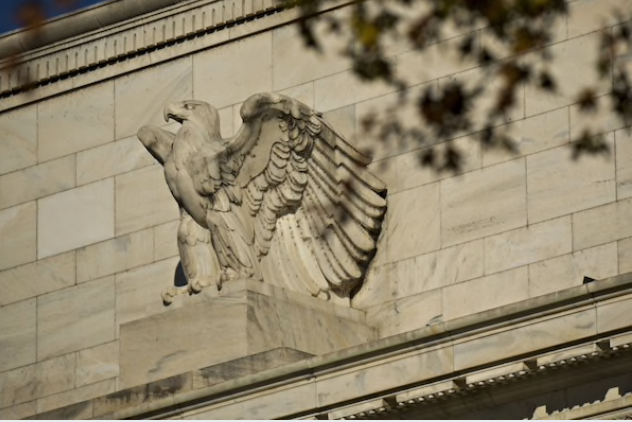
By Syndication Washington Post, Bloomberg · Rita Nazareth, Claire Ballentine · BUSINESS Stocks fell amid a sell-off in technology companies and after Federal Reserve Chairman Jerome Powell’s remarks that he’s not sure if the faster-than-expected economic recovery will continue.
Earlier Wednesday, equities jumped to session highs after the Fed left rates near zero and signaled it would hold them there through at least 2023. Stocks wiped out gains amid a slide in giants such Adobe, Apple and Facebook. Treasurys fell after Powell stopped short of offering new specifics on the Fed’s approach to the monthly bond purchases that have buttressed markets, saying the program could be adjusted “to make it smaller, make it larger” or target different ares of the yield curve.
Fed officials have stressed in recent weeks that the U.S. recovery is highly dependent on the nation’s ability to better control the coronavirus, and that further fiscal stimulus is likely needed to support jobs and incomes. “The recovery has progressed more quickly than generally expected,” Powell said, while cautioning that “the path ahead remains highly uncertain.” It was the Federal Open Market Committee’s final scheduled meeting before the U.S. presidential election on Nov. 3.
“Rates are likely to remain at zero through 2023, but this does not alleviate the need for additional fiscal support,” said Adam Phillips, director of portfolio strategy at EP Wealth Advisors. “The ball is now in Washington’s court.”
The White House strongly signaled Wednesday that it is willing to increase its offer in talks with Democrats, and that Senate Republicans should go along to seal a stimulus deal in the next week to 10 days.
These are some of the main moves in markets:
Stocks
–The S&P 500 Index fell 0.5% as of 4 p.m. EDT.
–The Stoxx Europe 600 Index increased 0.6%.
–The MSCI Asia Pacific Index climbed 0.5%.
Currencies
–The Bloomberg Dollar Spot Index fell 0.1%.
–The euro declined 0.4% to $1.18.
–The Japanese yen appreciated 0.4% to 104.99 per dollar.
Bonds
–The yield on 10-year Treasurys gained one basis point to 0.69%.
–Germany’s 10-year yield fell one basis point to -0.48%.
–Britain’s 10-year yield decreased one basis point to 0.211%.
Commodities
–The Bloomberg Commodity Index increased 0.7%.
–West Texas Intermediate crude jumped 5% to $40.18 a barrel.
By The Washington Post · Rachel Siegel · NATIONAL, BUSINESS, US-GLOBAL-MARKETS WASHINGTON – Federal Reserve leaders predict that unemployment will fall to 7.6% by the end of this year, and to 5.5% by the end of 2021, even as much about the path of the virus and its influence over the economic recovery remain unknown.
As the Fed concluded two days of policy meetings on Wednesday, the projections suggest Fed leaders are growing more optimistic about the recovery than they were earlier this summer. By 2023, policymakers’ projections put the unemployment rate at 4%.
“The recovery has progressed more quickly than generally expected. Even so, overall activity remains well below, and the path ahead remains highly uncertain,” Chairman Jerome Powell said at a news conference.
At the same time, Fed officials signaled the benchmark interest rate could stay at or near zero through 2023. The Fed also said it would increase holdings of Treasury securities and agency mortgage-backed securities at the current pace. Fed leaders say these moves have staved off an even deeper financial crisis.
“We think our stance is appropriate today, and with this very strong powerful forward guidance…rates will remain highly accommodative unless we are very far along in our recovery,” Powell said. “Right now we think our policy support is enough to support the expansion.”
By August, the unemployment rate had already fallen to 8.4%, lifting hopes that the economy was finding its footing. The last time Fed policymakers released their projections in June, they expected the unemployment rate to fall to 9.3% by the end of the year, 6.5% by the end of 2021 and 5.5% by the end of 2022.
Policymakers’ estimates for how far GDP would fall this year also improved. Officials now predict a decline of 3.7% by the end of the year, compared to June expectations of a 6.5% drop.
“The COVID-19 pandemic is causing tremendous human and economic hardship across the United States and around the world,” policy makers said in a statement released Wednesday. “Economic activity and employment have picked up in recent months but remain well below their levels at the beginning of the year.”
The projections, which are completed anonymously by Fed policymakers, offer a snapshot into how Fed leaders think unemployment will trend in the years to come. But there is plenty the estimates do not account for.
For example, economists and policymakers fear that the upcoming flu season, paired with a potential rise in coronavirus cases, could weigh on the broader recovery. Congress is also stalled on another massive stimulus bill, so the projections don’t factor in what the economic benefits of a rescue package might be, or how the absence of more aid could weigh on struggling households and businesses.
At the news conference, Powell said that his “sense is more fiscal support is likely to be needed.” Powell said that Congress’s relief through the Cares Act, including the now-expired $600 enhanced unemployment benefits, “has been essential” and warned of the hazards of cutting off all aid prematurely.
“If there’s no additional support…that’s going to show up in economic activity, and in things like evictions and foreclosures and things that will scar and damage the economy,” Powell said. “That’s a downside risk. I think the questions [of another stimulus bill] of when and how much and what will be the content – and no one has any certainty around that. If we don’t get that, there would certainly be downside risks.”
The Fed, for its part, can lend to struggling businesses and local governments, as it is doing through two of its emergency programs. But the Fed cannot offer grants. Powell noted that for many businesses in need of relief, “getting a loan that may be difficult to repay may not be the answer.”
“In these cases, direct fiscal support may be needed,” Powell said.
Fed policymakers expect rates to remain at zero “until labor market conditions have reached levels consistent with the Committee’s assessments of maximum employment and inflation has risen to 2 percent and is on track to moderately exceed 2 percent for some time,” according to the statement.
That’s due to the scale of the current crisis and the Fed’s new policy framework, which signals that the central bank won’t increase interest rates to respond to low levels of unemployment, and that leaders won’t worry as much about low rates triggering a rise in prices. Still, the Fed has offered little concrete information on how the new framework will be put into practice.
The framework also allows for a temporary overshoot of the Fed’s 2 percent inflation target to balance out periods when inflation skirted below. According to the latest projections, officials did not see inflation topping 2 percent by the end of 2023, raising further questions about how the Fed expects prices to rise in such a way that the new strategy is put to the test.
The economy added 1.4 million jobs in August, an encouraging sign that people were able to go back to work after Powell warned that a summer surge in coronavirus cases was starting to slow the pace of the recovery. The auto and residential real estate sector have also posted strong sales. And retail sales figures released Wednesday showed positive signs for consumer spending.
But there’s a long way to go. Just over half of the 22 million total jobs lost between February and April have not returned. Many of the Fed’s interventions lift the stock market but do little for Americans who don’t hold investments. And as more time passes, many businesses teetering on the brink risk permanent closure.
U.S. retail sales rebound slows after extra jobless aid lapses
EconSep 17. 2020Customers wearing protective masks wait to shop in an appointment only open-air boutique suite inside The Pavilion at South Coast Plaza in Costa Mesa, Calif., on Aug. 11, 2020. MUST CREDIT: Bloomberg photo by Patrick T. Fallon.
By Syndication Washington Post, Bloomberg · Reade Pickert · BUSINESS, RETAIL The rebound in U.S. retail sales slowed by more than expected in August as federal relief for jobless Americans and small businesses dried up and the pandemic continued to weigh on activity.
The value of overall sales increased 0.6% after a downwardly revised 0.9% increase the prior month, Commerce Department figures showed Wednesday. The median estimate in a Bloomberg survey of economists called for a 1% advance.
So-called control group sales, which exclude food services, car dealers, building-materials stores and gasoline stations, fell 0.1%, also missing forecasts. The measure is often considered more reflective of underlying consumer demand.
With many more stores and restaurants now open, the initial boost in spending driven by reopenings is moderating. At the same time, the expiration of the supplemental $600 weekly payments at the end of July as well as slowdowns in back-to-school spending likely weighed on retail activity during the month.
Those benefits bolstered incomes during the pandemic, and without them, millions of unemployed Americans will have significantly less cash to support the nation’s retailers. Meanwhile, federal support for small businesses is running dry with the Paycheck Protection Program closing in early August. Lawmakers appear increasingly unlikely to approve additional stimulus until after the election, despite still-elevated joblessness.
“These are disappointing numbers, and they’re probably a hint of what’s to come in the wake of the ending of enhanced unemployment benefits,” Ian Shepherdson, chief economist at Pantheon Macroeconomics, said in a note. “The key story here is that momentum has faded, but sales continue to rise.”
With total retail sales data above pre-pandemic levels, the data underscore a shift in where consumers are spending their money. Some categories, like restaurants and clothing stores, are still below year-ago levels. Meanwhile, purchases at nonstore retailers are up 22.4% from August of last year.
Nine out of 13 major categories increased in August, led by restaurants, clothing stores and furniture outlets. Receipts at motor vehicle and parts dealers posted a modest gain, while sales at nonstore retailers barely improved. Sporting goods and hobby stores posted the biggest percentage decline from the prior month and receipts at department stores weakened. Grocery store sales fell as well.
Retail sales don’t capture all consumer spending though, and the pandemic continues to have a clear impact on services outlays. While the value of retail receipts exceeded February levels back in June, personal consumption — which includes spending on goods and services — was still below its pre-pandemic level in July, the latest available data. The Commerce Department will release the August figures Oct. 1.
Another factor to keep in mind is the Lost Wages Assistance program. That’s the program President Donald Trump authorized in early August to temporarily offset part of the income gap unemployed Americans faced after the expiration of the extra $600 in weekly benefits. However, rollout of the program has been patchy across states.

 David Solomon, chief executive officer of Goldman Sachs, looks on during a Bloomberg Television interview on the sidelines of the Bloomberg New Economy Forum in Singapore, on Nov. 7, 2018. MUST CREDIT: Bloomberg photo by Giulia Marchi.
 A pedestrian wearing a protective mask carries FedEx boxes in the Diamond District of New York on June 10, 2020. MUST CREDIT: Bloomberg photo by Nina Westervelt.
 Delta Air Lines Inc. aircraft sit parked at a field in Victorville, Calif., on March 23, 2020. MUST CREDIT: Bloomberg photo by Patrick T. Fallon.
 Pinya Nittayakasetwat, Country General Manager, Gojek Thailand

 From left: Egco Group’s president Thepparat Theppitak, acting president of Egat International Santichai Osotpavapusit and Ratch Group’s chief executive officer Kijja Sripatthangkura pose after signing the joint development pact.


 Customers wearing protective masks wait to shop in an appointment only open-air boutique suite inside The Pavilion at South Coast Plaza in Costa Mesa, Calif., on Aug. 11, 2020. MUST CREDIT: Bloomberg photo by Patrick T. Fallon.

