CP All Laos Co Ltd, which is 99.99 per cent held by Albuera International Limited, CP All Plc’s 100 per cent owned subsidiary, has entered into a master franchise agreement with 7-Eleven, Inc to establish and operate 7-Eleven convenience stores in Laos for 30 years.
CP All Plc reported to the Stock Exchange of Thailand (SET) on Friday (August 28) that under this contract, both parties may consider extending the contract two times, each time after 20 years.
On February 21, 2019, CP All Plc had reported to the SET that it would negotiate a master franchise agreement in relation to the establishment and operation of 7-Eleven stores in neighbouring countries.
CP All Laos is a newly found company under Laos laws to establish and operate 7-Eleven stores in the country under said master franchise contract, with registered capital of 20 billion kip (Bt68 million).
Kasikorn Securities aims to boost the weight on bank and energy shares seeing as the Thai stock market is expected to rise to 1,400 points at the end of this year thanks to the expected development of a Covid-19 vaccine.
Vasin Vanichvoranun, the securities company’s CEO, said he does not expect the second wave of Covid-19 infections to be very severe.
“Also, commercial banks still have a lot of capital, and since they are under the central bank’s supervision, they will not fail that easily,” he said. “Meanwhile, listed companies’ profits have improved, though investors should keep an eye out or the US-China conflict which may affect investment in the short term.”
Hence, he said, Kasikorn Securities will put more weight on investment in bank and energy stocks, instead of weighting e-commerce, food and electronics stocks as it had done previously.
“Since interest returns will remain low for a while, we expect investors to gradually invest in equities and short-term debt instruments instead of holding on to cash,” he said.
“We also believe that foreign investments is another way of diversifying risks and generating good returns, such as stocks in Europe, China, South Korea and Taiwan.”
In addition, he said, Kasikorn Securities will launch three funds, namely foreign fund, fixed income fund and retirement mutual fund, this year which should attract investors. He added that he expects Kasikorn Securities’ assets under management this year to be as good as or even better than that of last year’s Bt1 trillion.
“The securities company currently holds assets worth Bt1.3 trillion, Bt1 trillion of which is mutual funds, Bt188 billion retirement mutual funds and Bt168 billion private funds. The market share of these funds is 21.4 per cent, 15.5 per cent and 15.3 per cent, respectively,” he said.
“According to the Association of Investment Management Companies’ data on July 31 this year, our securities company was given the top ranking among securities companies that have the most market share in the mutual fund industry,” he added.
Gulf Energy Development (GULF)’s board of directors have decided to hold no more than 10 per cent stake in Intouch Holdings (INTUCH).
A GULF official said the company will buy INTUCH shares via the Stock Exchange of Thailand (SET) or other methods under Securities and Exchange Commission (SEC) rules.
“As of August 21, GULF is holding a 7.99 per cent stake in INTUCH,” the official said, adding that the board has agreed to have an authorised person negotiate and change conditions on trading of INTUCH common shares, financing, signing of contracts and contacting government for the company’s best interests.
“The company will use circulating funds and loans from financial institutions to buy INTUCH shares,” the official said.
INTUCH is a holding company that invests in leading Thai telecommunications companies, which still have high potential. Hence, the official said, GULF believes this investment will generate consistent, long-term dividends.
Gulf Energy Development plans to raise funds through increase in share capital to finance investments and enhance investment potential to at least Bt110 billion.
The company expects revenue next year to jump over 50 per cent year on year.
Sarath Ratanavadi, Gulf’s chief executive officer, said during the shareholders meeting that the company expected to raise around Bt30 billion from the capital increase, adding that the company has a lot of projects waiting for investment.
“We will invest in power plant construction and renewable energy projects both in Thailand and overseas, such as the Hin Kong 1,400-megawatt power plant and Burapa Power 540MW power plant, as well as mergers and acquisitions of foreign power plants in Europe, US and Britain,” he said.
For short-term investment, he said the company had a plan to invest or acquire power plants that already supplied electricity for commerce because it would generate returns quickly.
“So far, the company has invested in a German wind power plant with a 50 per cent stake, expecting to recognise the return on investment of Bt1.2 billion to Bt1.5 billion yearly,” he said, adding that the company’s construction of large power plants would be completed in 2022.
He added that although the increase in capital would cause a decline in earnings per share (EPS), the company’s EPS would grow steadily from the recognition of revenue and profit from various projects.
“We expect the company’s production capacity to increase to 10,000MW by 2022,” he added.
Meanwhile, Yupapin Wangviwat, Gulf executive director and chief financial officer, said that after increasing capital, the company’s debt-to-equity would fall to between 1.7 and 1.8 times.
“The company’s price to earnings that was recently high would fall in line with the increasing profit,” she said
“We expect profit next year to jump by over 50 per cent from this year’s 15 per cent because the company would recognise revenue from the German wind power plant and the 2,500MW GSRC power plant, while large power plants would gradually open within 2022-25.”
CPF pilots Thailand’s new standard on cage-free farming practices
CorporateAug 27. 2020Somkid Wannalukkhee, CPF’s senior vice president for egg business
By The Nation
Charoen Pokphand Foods (CPF) is supporting Thailand’s planned new standard on cage-free farming practices through a pilot project at Wang Somboon farm that will share knowledge with farmers on the humane raising of laying hens.
Farming is integral to the operations of CPF, which focuses on animal welfare to deliver consumers safe food and address an increasing global demand for animal welfare products, said Somkid Wannalukkhee, CPF’s senior vice president for egg business.
Wang Somboon farm in central Thailand’s Saraburi province was turned into a pilot cage-free farm in 2018, with a plan to develop corporate practices that will be replicated at other farms. CPF has exchanged views with Thailand’s Department of Livestock Development, which is drafting a new standard so that Thai farmers can satisfy consumer demand.
“Once the cage-free standard is officially promulgated, Thailand’s egg products will enjoy greater trade and marketing opportunities, particularly when it concerns premium restaurants and leading modern trade channels thanks to their policy and also increasing demand for cage-free eggs as well as their concrete push for animal welfare products. This will enhance laying-hen raisers’ competitiveness,” Somkid said.
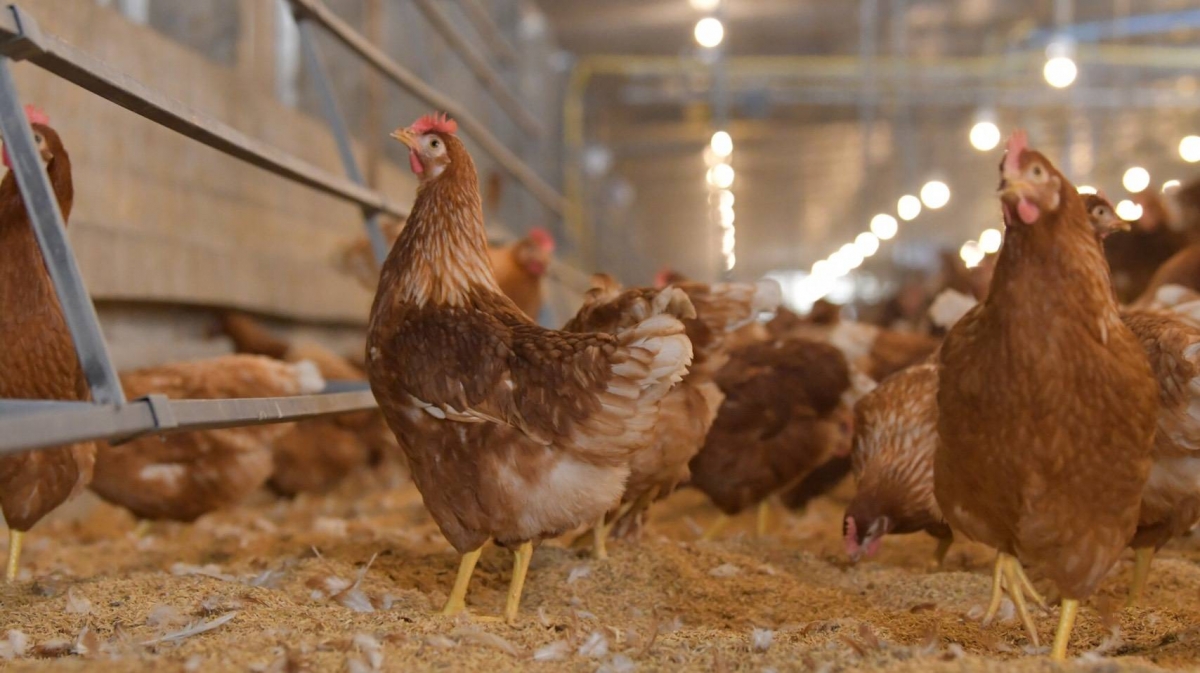
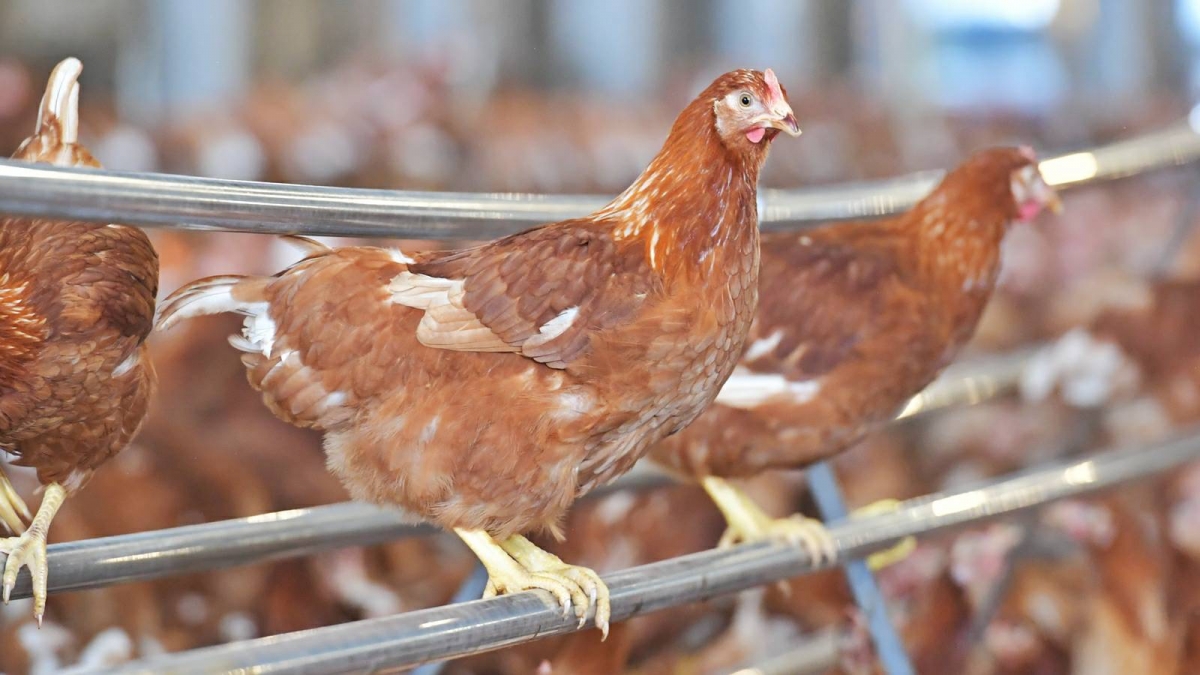
CPF has applied the European cage-free standard at Wang Somboon farm. The closed chicken house has a low stocking density of seven laying hens per square metre compared with general standard of a maximum nine hens per square metre. An enriched environment also allows chickens to express their behaviour freely. They can rest on perches. The flooring supports foraging and self-cleaning. The house is equipped with an egg-laying spot as well as an automatic lighting, temperature and air ventilation control system. Chickens are adequately fed. Living in comfortable environment, laying hens are happy and enjoy good health, making antibiotics unnecessary throughout their life.
The cage-free farm also employs a computerised production system: eggs are automatically transferred from the laying spot to the stock room while the farm’s sanitary and biosafety system is controlled in accordance with the Biosecurity Hi-tech Farming guidelines. Disease carriers like rats, lizards and insects are kept out of the farm, while environmental contamination is prevented. As such, CPF’s cage-free eggs have won world-class recognition.
Aside, CPF’s F100 egg-laying hens are selected for the farm. A wholegrain feed meal was developed to promote health and natural growth. Cage-free eggs are thus fresher than the eggs from other farms. They do not give off foul odour, while the egg yolks are of fresh orange colour. The eggs thus contain high quality and nutritious values, for consumers’ good health.
Wang Somboon farm is not only a pilot project for CPF’s cage-free farming, but also a learning centre where farmers can study and exchange experiences to improve cage-free farming practices and sustainably add value to Thailand’s agricultural products.
Food and beverage manufacturers ‘must change with the times’
Biz insightsAug 27. 2020Fabio Tiviti, vice president Asean for Infor
By The Nation
In a move to meet consumers’ shift in habits, food and beverage manufacturers must speed up product introductions and develop new offerings that reflect changing views on what is fresh, healthy and mindful – and technology can help, said Fabio Tiviti, vice president Asean for Infor, a global leader in business cloud software.
It’s not just taste, freshness and convenience that drive food purchases today. Conscientious consumers also focus on health, wellness and social issues as they shop for meals.
They take nutrition labels, traceability of suppliers, humane treatment of animals and environmental sustainability into consideration when shopping for food. While these expectations put added pressure on food and beverage manufacturers, companies that already have technological systems in place should seize the opportunity. Meeting the demands of today’s socially aware consumers can be a valuable differentiator.
Growing demands
It starts with the farm. Consumers today want to learn more about the origin of their food and its journey from farm to fork. The International Food Information Council (IFIC) Foundation said in a 2019 paper on food trends: “Americans have a growing appetite for more information about their food, and technology is enabling eaters like never before … it’s also driving transparency across the food supply chain.”
Meanwhile, it is not just millennials looking for health-related options. People of all ages are turning to vitamins, minerals, and other ingredients that are potentially beneficial for bone, joint, immune system, digestive, and brain health. Research shows that 20 per cent of US consumers aged 65-plus currently use a supplement for joint health.
As consumers seek food and drink products that reduce inflammation, more products are featuring ginger, turmeric, green tea extract, and medicinal mushrooms. Food and beverage manufacturers can also benefit from research done by the beauty industry, which has found that certain berries and spices can have anti-ageing benefits.
The IFIC Foundation says: “There is a movement towards circularity as new approaches to sustainability span the entire life of a product, from ingredient sourcing to package design, disposal, or reuse. The 360-degree approach reflects the principles of a circular economy, where resources are kept in use for as long as possible, extracting the maximum value while in use and then recovering materials at the end of use.”
Rethinking plastic
Plastics have come under fire globally, pushing demand for new packaging innovations. Bio-based packaging materials will likely be key components to the next generation of responsible packaging. Additionally, initiatives such as “Loop” are attempting to bring back the idea of returnable and re-usable packaging.
Meanwhile, in 2018, awareness around “ugly produce” grew. Fruit and vegetables, that fall outside of the specifications retailers typically insist upon, got a second chance. Tesco became the exclusive retailer for a range of fruit juices, Waste NOT, which are made from produce designated as “ugly”.
Also, companies have started playing a part in replenishing soil to ensure healthy food. For example, US baby food brand Gerber’s is hoping its organic agriculture, featured in its “Clean Field Farming” line, will pay-off and increase biodiversity as well as enhance ecosystems. Additionally, Annie’s Homegrown is another brand helping to raise awareness in this area.
Many people are also responding to dietary guidance that recommends eating less added sugar, with 77 per cent saying they are taking steps to limit or avoid sugars in their diet, and 59 per cent viewing sugars as negative, according to the 2015–2020 Dietary Guidelines for Americans report. New plant-based and dairy sweeteners are gaining attention and providing new opportunities for updating classic product offerings.
Plant-based eating continues to gain adoption, with sales of “vegetarian alternatives” growing by 20 per cent since 2017. Only 5 per cent of Americans identify as vegetarians and 3 per cent as vegans, according to a Gallup poll, but others are adding vegetables and reducing protein consumption for general health benefits.
How technology can help
In order to remain relevant, food and beverage manufacturers must continually stay tuned into trends and update product offerings. Fortunately, technology can help in several ways:
Product innovation: Introducing new products quickly is a necessity. New product lines can represent healthier choices and include minerals and nutrients associated with wellness.
Reducing sugars, artificial colours and preservatives will also appeal to many modern consumers. Advanced enterprise resource planning (ERP) solutions, purpose-built for the food and beverage industry, will help manage recipes, raw ingredients, and formulations – ensuring quality is maintained. Product lifecycle management solutions (PLM) also help speed launches, managing the various steps and enabling improved project management, collaboration and product testing.
Clean labels: Transparency and visibility into how food is produced is increasingly important. Labels are the key tactic for conveying messages.
“With today’s instant access to information, if a consumer can’t understand or find out where and how a product is made and what’s in it, they’ll be more inclined to leave it behind,” says RSM, which serves as a consultant to the industry. Food and beverage manufacturers can turn to technology to help comply with current mandates for clean label formatting and content. PLM solutions help streamline the process, making it easier to stay within compliance.
Supply planning: As new ingredients come to market and the demand for them starts to expand, the challenge may quickly become a supply shortage. Companies must work closely with their suppliers and leverage supply chain planning tools so retailers can meet the demand.
Supply chain traceability: This is one of the top five food trends in 2019, according to IFIC Foundation, and will cause demand for technology solutions that provide clear product information. They note that as technologies become cheaper and therefore more accessible, more food manufacturers will be able to utilise them to manage supply chain activities. Modern supply chain management solutions are essential for full visibility and tracking suppliers.
Predictive analytics: Modern business intelligence solutions, with built-in artificial intelligence, will help companies project trends and anticipate market demands. This insight into the future helps procure raw ingredients and plan use of resources, like machinery, packaging, and personnel.
The world of food and beverage manufacturing is ever-changing – with taste becoming just one of many factors influencing a consumer’s decisions. Today, health, wellness and social issues like environmental sustainability are just as important. Manufacturers can see this as a challenge or as an opportunity to align with customers. With modern technology in place, companies can seize the chance to speed introductions and offer new product line-ups which will appeal to consumers. This can be the ticket to future growth.
Pilot launch of new ‘Phuket Model’ to let tourists in likely next month
EconAug 29. 2020Tourism and Sports Minister Phiphat Ratchakitprakarn
By The Nation
A new model to reopen Phuket to foreign tourists was expected to be piloted in the middle of next month, Tourism and Sports Minister Phiphat Ratchakitprakarn said.
He said that on August 25, the Cabinet had approved in principle that Thailand Longstay, in which Tourism Authority of Thailand (TAT) owns 30 per cent, should coodinate with tourists on visa application and purchase of insurance. But the tourists would have to bear the cost of visa and insurance.
The tourists will be required to undergo Covid-19 test 48 hours before their departure for Phuket and they will be tested again when they arrive. They will have to stay in alternative state quarantine in Thailand for 14 days before they are allowed to travel in Phuket.
If they want to travel to other provinces outside Phuket, they will have to stay in the quarantine facility for 21 days.
The minister added that this new model should assure people that the tourists would not bring the infection to Thailand.
Phiphat said that this model was expected to be piloted in the middle of September with a first group of around 200 tourists. Most of them will be from Australia and New Zealand.
He said that tourists under this model must be from the countries where there has been no outbreak for at least 30 days.
The ministry will work out final details of the model, which will be forwarded to Prime Minister Prayut Chan-o-cha.
He added that this new model was different from the first “Phuket Model” that allowed tourists to travel only in “sealed areas”.
He said the ministry would push for the Phuket Model to be piloted in October. Around 10 hotels in Phuket are keen to participate in the Phuket Model.
He assured that utmost care would be taken to reopen the country.
Representatives from TAT, Public Health, Interior and Transport ministries, will visit Phuket on September 5-6 to survey the opinions of Phuket residents on the new model and the Phuket Model. The same team will also visit Samui Island next month to see if it is ready to serve the “Samui Bubble” model.
Deputy Government Spokesperson Traisulee Traisoranakul said on Friday (August 28) that Thailand would not be fully reopened to foreign tourists along the lines of the so-called “Phuket Model” any time soon because the government has to consider too many details.
She added that Phuket residents and Thai tourists can rest assured that no steps to reopen the country had been taken, and that utmost precaution would be ensured when borders are reopened.
Thai Airways International announced on Thursday it planned to launch charter flightsto Phuket from six international destinations in late November this year.
The six destinations are: Denmark, Germany, Britain, South Korea, Japan, and Hong Kong. The airline will operate flights twice a month or more on each route based on demand. THAI is also expected to fly charter flight tourists from China to Phuket.
Phiphat said that the ministry had maintained the target of 2 million foreign visitors during October 2020 to March 2021, focusing on high-end tourists who want to escape winter to stay longer than one month in Thailand. Most of them are regular visitors.
Investors have been advised to keep an eye on the government, as the domestic political situation and their move to launch economic stimulus measures could affect the Stock Exchange of Thailand (SET) Index next week.
The SET Index on Friday (August 28) closed at 1,327.05, down 3.50 points or 0.26 per cent, while total transactions stood at Bt54.671 billion.
An analyst at Asia Plus Securities expected the index next week to fluctuate in a narrow range between 1,310 and 1,350, as the index would be under pressure from the political situation in the country.
“International factors, the global economy and listed companies’ profit are still not worrisome during this time,” the analyst said.
“We advise investors to follow the government’s move whether they will issue additional economic stimulus measures or not.”
The price of gold on Friday stood at US$1,957.65 per ounce, while the price in Thailand was Bt28,850 per baht weight.
An analyst at YLG Bullion International advised investors to buy gold for short-term speculation when the price moves to a support line between $1,909 and $1,932 per ounce.
“If the price rises to the resistance line between $1,963 and $1,976 per ounce, investors can sell some of the metal,” the analyst said.
“Gold price could fall if it cannot rise over the resistance line, so investors should set up the stop loss point if it does not materialise as expected.”
By Syndication Washington Post, Bloomberg · Vildana Hajric, Claire Ballentine · BUSINESS
U.S. stocks capped the week with fresh highs and the dollar weakened to a more than two-year low as the Federal Reserve’s new inflation approach rippled through global markets.
The benchmark S&P 500 closed at an all-time high for a sixth consecutive trading session, while the Nasdaq Composite also reached unseen levels a day after Jerome Powell signaled that the Fed will stay accommodative for longer through more tolerance toward consumer-price increases. The Dow Jones industrial average turned positive for the year. The Stoxx Europe 600 Index retreated as the euro strengthened against the dollar, which posted its worst daily decline in about three months against a basket of its peers. Gold advanced.
“Stocks seem to be enjoying the best of both worlds as they are seeing signs of improving economic momentum while monetary stimulus continues to be very accommodative — and more fiscal stimulus is likely on the way,” said Yousef Abbasi, global market strategist at StoneX. “Yesterday’s action by the Fed likely provides risk-assets with the assurance they need — easy money is here to stay.”
The greenback was also hurt by a surge in the yen on news that Japanese Prime Minister Shinzo Abe will resign due to health reasons. European bonds pared earlier declines after a euro-area economic-confidence measure improved.
Powell’s shift provided another tail wind for stocks globally, which are heading for a fifth week of gains as investors monitor progress on vaccine developments for the pandemic. It also helped move the U.S. yield curve to its steepest in two months.
Treasury securities mostly rebounded from Thursday’s rout, benefiting from some buying to match duration changes in benchmark indexes at month-end.
“The Fed still has the market’s back and the market is responding positively to that prospect,” said Tracie McMillion, head of global asset allocation strategy for Wells Fargo Investment Institute. “That was confirmation that yes, we are going to see these lower rates for longer.”
Elsewhere, crude oil fluctuated as Hurricane Laura weakened while crossing over land in the refinery and LNG-rich Gulf of Mexico region. Emerging-market currencies gained, with South Africa’s rand strengthening as much as 2%.
Here are the main market moves:
Stocks
The S&P 500 Index rose 0.7% to 3,507.95 as of 4:01 p.m. EDT, hitting the highest on record with its seventh consecutive advance.
The Dow Jones industrial average increased 0.6% to 28,653.32, the highest in about six months.
The Nasdaq Composite Index gained 0.6% to 11,695.63, the highest on record.
The Stoxx Europe 600 Index decreased 0.5% to 368.80, the lowest in a week.
Currencies
The Bloomberg Dollar Spot Index sank 0.9% to 1,161.61, the lowest in more than two years on the largest decrease in more than three months.
The euro jumped 0.6% to $1.1898, the strongest in more than a week on the biggest increase in a month.
The Japanese yen appreciated 1.1% to 105.36 per dollar, the strongest in more than four weeks on the largest jump in five months.
Bonds
The yield on two-year Treasurys decreased two basis points to 0.13%, the lowest in more than two weeks on the biggest tumble in more than 11 weeks.
The yield on 10-year Treasurys declined two basis points to 0.73%, the first retreat in a week and the largest drop in more than a week.
The yield on 30-year Treasurys decreased less than one basis point to 1.51%, the first retreat in a week.
Commodities
West Texas Intermediate crude dipped 0.1% to $42.98 a barrel.
Gold strengthened 1.8% to $1,963.79 an ounce, the highest in more than a week on the biggest increase in more than a week.
Copper increased 1.3% to $3.03 a pound, hitting the highest in more than a week with its fifth straight advance and the largest climb in more than a week.
The central bank’s latest debt-relief measure will cost banks Bt10 billion a year, Kasikorn Research Centre said on Friday.
On Thursday, the Bank of Thailand announced a debt consolidation measure to allow borrowers to bundle their credit card, personal and mortgage loans into one sum. Borrowers can then utilise collateral in their mortgage loans to restructure their debt total with financial institutions. This will cut their interest on personal loans from the usual 16-25 per cent to the minimum retail rate (MRR) of 5.75 to 8.8 per cent, said the central bank. Borrowers will be also allowed to extend their debt payment period.
“The debt relief will greatly benefit retail borrowers, but is expected to reduce banks’ income from interest by 1.67 per cent annually,” said Thanyalak Vacharachaisurapol, deputy managing director at Kasikorn Research.
For the rest of this year, bank revenue from interest payments is expected to drop by 0.56 per cent, she added.
Annual revenue from loan interest in the banking sector totals around Bt700 billion.
Thanyalak said banks will get some benefit from the debt consolidation as it may enable them to reduce their reserves-against-risk assets.
Meanwhile, Kittipat Chonwut, CEO of personal loans company J Fintech, said he supports the central bank’s measure and will advise J Fintech borrowers to refinance their debts with banks. But banks would first have to accept their requests, he cautioned.
J Fintech has loaned money to about 8,000 people affected by the Covid-19 fallout. The company also joined a previous central bank scheme designed to help borrowers restructure their debts. Kittipat said only 100-200 J Fintech borrowers were asking for more support and their combined debt was not large.





 Somkid Wannalukkhee, CPF’s senior vice president for egg business
 Fabio Tiviti, vice president Asean for Infor
 Tourism and Sports Minister Phiphat Ratchakitprakarn