Glove maker stock mania in Malaysia outpaces even Tesla
CorporateJul 20. 2020An employee monitors latex gloves on hand-shaped molds moving along an automated production line at a Top Glove Corp. factory in Setia Alam, Malaysia, on Feb. 18, 2020. MUST CREDIT: Bloomberg photo by Samsul Said.
By Syndication Washington Post, Bloomberg · Abhishek Vishnoi · BUSINESS, WORLD, US-GLOBAL-MARKETS, ASIA-PACIFIC
A relatively low-tech stock trade is making Tesla’s dizzying rally look like an under-performance.
In Southeast Asia, makers of rubber gloves are attracting more investor fervor than even the electric cars and flame throwers of Elon Musk. Top Glove Corp. is up 428% this year in Kuala Lumpur, the most on the MSCI Asia Pacific Index, while Supermax Corp. has leaped more than 1,200%, compared with Tesla’s 259%. That’s due to the boom in glove demand thanks to the coronavirus pandemic, aided by a short-selling ban in Malaysia till year-end.
The meteoric rise has been unprecedented by Malaysian standards, with the top three glove makers adding about 109 billion ringgit ($26 billion) in combined market value this year. More than $1 of every $10 invested in the nation’s stock market right now is a bet on gloves — a feat that makes the Southeast Asian nation a play on global hygiene, much like South Korea and Taiwan are for semiconductors. Top Glove resumed its rally Friday even after the U.S. moved to block imports from two of its units.
“The rally in glove makers reminds many of Tesla but the sector’s earnings outlook is more certain than that of Tesla,” said Ross Cameron, a fund manager at Northcape Capital Ltd., which overseas about $7 billion in assets globally. The short-selling ban has had a minor contribution to the rally while “we expect the sector to report significantly more than 100% earnings growth next year,” he said.
Fund managers at Northcape and Samsung Asset Management have increased their bets on the sector this year, saying the shift in glove demand is structural and many market participants are still behind the curve.
Some of the glove makers are planning bonus share issues after this year’s eye-popping rally. The odds of some stocks getting more institutional allocation are set to increase as the companies have become big enough to be included in key indexes followed by international investors.
Supermax and Kossan Rubber Industries Bhd. are set to join the MSCI Malaysia Index after a review next month due to the meteoric rise in their stock price, Brian Freitas, an analyst on Smartkarma wrote in a note last week. “The stocks now rank very highly on free float market cap,” the note added. Kossan shares have climbed 224% year-to-date.
Still, a faster-than-expected development of a vaccine to treat Covid-19 risks putting the brakes on the spectacular rally in glove makers’ shares. The U.S. Customs and Border Patrol has placed a detention order on disposable gloves made by Top Glove. Top Glove said in a statement on Thursday that the issue may be linked to foreign labor and it is reaching out to U.S. Customs to seek to resolve the matter within two weeks.
Fund managers and analysts said the company could still ship its gloves to the U.S. using other units. Also any cancellation of orders would be offset by demand from other countries due to the acute shortage.
The Malaysian Rubber Glove Manufacturers Association expects global glove demand to rise 20% to 330 billion gloves this year, according to Hong Leong Investment Bank Bhd. analyst Farah Diyana Kamaludin, who attended its briefing last week.
For now, the order books have swelled, glove prices have skyrocketed and companies are aggressively expanding their capacity to meet orders.
Chevron to buy Noble Energy for $5 billion in rare oil-bust deal
CorporateJul 20. 2020A Chevron sign at the company’s El Segundo Refinery in El Segundo, Calif., on April 27, 2020. MUST CREDIT: Bloomberg photo by Kyle Grillot. Photo by: Kyle Grillot — Bloomberg Location: El Segundo, United States
By Syndication The Washington Post, Bloomberg · David Wethe
Chevron Corp. agreed to buy Noble Energy Inc. for about $5 billion in shares as the oil giant looks to beef up amid the wreckage of the worst-ever crude crash.
The takeover is the industry’s first major deal since the coronavirus triggered a severe slump and the largest since Occidental Petroleum Corp. acquired Anadarko Petroleum last year.
The deal will grow Chevron’s shale presence in both the Denver-Julesburg Basin of Colorado and the Permian Basin, which was once the heartland of the U.S. shale boom but is now experiencing a sharp reduction in drilling. It will increase the company’s proved reserves, as reported at the end of 2019, by about 18%. The deal also strengthens Chevron’s stake in the Eastern Mediterranean with assets off the coast of Israel.
“Our strong balance sheet and financial discipline gives us the flexibility to be a buyer of quality assets during these challenging times,” Chevron Chief Executive Officer Michael Wirth said in a statement Monday. “This is a cost-effective opportunity for Chevron to acquire additional proved reserves and resources.”
Consolidation in the shale patch has been largely non-existent this year as the combination of a severe oil-price slump and pressure on companies from investors to return cash leaves explorers with little remaining firepower to make deals. Energy mergers and acquisitions activity so far this year totals about $122 billion, according to data compiled by Bloomberg, down by almost two-thirds year on year.
Last year, Chevron lost a takeover battle for Anadarko. Occidental won with a higher bid, but has subsequently struggled with the large debt pile resulting from that deal.
After Anadarko, Noble was among the top four potential candidates that Chevron could have gone after as it closely resembled Anadarko’s portfolio at a smaller scale, Bob Brackett, an analyst at Bernstein, said Monday in a note to investors.
“We still don’t embrace the Permian M&A theme as a money maker,” Brackett wrote.
Highlights of the deal:
– Investors will get 0.1191 of a Chevron share for each Noble share. That’s equivalent to $10.38 a share, or a 7.5% premium over Friday’s closing price.
– The total enterprise value of the deal is $13 billion.
– Noble’s stock is down 54% over the past 12 months through Friday.
– Noble was up 9.8% at $10.60 as of 7:50 a.m. before the start of regular trading in New York. Chevron was 0.3% lower.
– The transaction is expected to close in the fourth quarter, subject to regulatory approvals.
CorporateJul 20. 2020Suphachai Chearavanont, CEO of Charoen Pokphand and GCNT chairperson
By The Nation
Fifty-four leading Thai companies under the Global Compact Network Thailand (GCNT) have agreed to adopt United Nations sustainable development goals (SDGs) strategies for 2020.
Formed under the auspices of the UN in 2018, the GCNT pushes for responsible corporate practices and integration of SDGs into Thai business strategies.
“This action is to bring significant changes and uplift corporate governance standards in business operations,” said Suphachai Chearavanont, CEO of Charoen Pokphand and GCNT chairperson. “GCNT focuses on the four core principles – human rights, labour, environment, and anti-corruption, including education and public health … particularly in the Covid-19 crises,” he added. “Someday, this crisis will end, but sustainability will become an essential issue for everyone. Hence, to reach the sustainable development goals is necessary and we must collaborate onwards.”
The GCNT’s five SDGs strategies are:
Strategy 1: Creating awareness through establishing the “Thailand Sustainability Index” Report for the private sector to create indicators and necessary information in sustainable development.
Strategy 2: Using market mechanisms to drive sustainability through public-private partnerships. Creating and share sustainability insights of each organisation through activities based on the 17 SDGs, such as weekend workshops where members will share and discuss operations, new knowledge and world trends in sustainable development.
Strategy 3: Building new leaders across all levels of companies, from the C-level to new managers, and implementing an annual sustainability report in accordance with the 10 Principles of the United Nations Global Compact (UNGC), which focuses on Human Rights, Labour, Environment, and Anti-Corruption.
Strategy 4: Recognising working people in sustainability to empower members to achieve SDGs through sharing solutions for societal issues through internal and external organisation activities to accomplish measurable outcomes. Participants with outstanding performance will be recognised at the “SDGs Pioneer 2020” event scheduled to take place in early 2021.
Strategy 5: Applying technology and innovation to solve societal issues, for example by reducing carbon dioxide emissions to achieve “carbon neutral”, using disruptive technology to impact positively on people’s lives, practicing zero-waste principles, reducing inequality via digital education, and building a network of startup communities.
Speaking after a meeting with the National Committee on Sustainable Development (NCSD) along with the Global Compact Network Thailand, and the National Economic and Social Development Council.
Said Somchai Wangwattanapanich, Federation of Thai Industries vice president: “The Federation of Thai Industries attended the meeting with the National Committee on Sustainable Development along with the Global Compact Network Thailand, and the National Economic and Social Development Council.
“The National Committee on Sustainable Development [NCSD] is driving Thailand SDG targets through their strategies, which align with the GCNT’s. Thus GCNT should coordinate closely with them to drive sustainability together in the same direction, particularly link to civil society,” said Federation of Thai Industries vice president Somchai Wangwattanapanich, after meeting with the GCNT, NCSD and National Economic and Social Development Council.
By Syndication Washington Post, Bloomberg · No Author · BUSINESS, WORLD
Governments that raced to the rescue as the coronavirus hit their economies now face the dilemma of whether to extend their massive bailouts of businesses and labor markets.
So-called cliff edges are emerging around the world as programs head for their expiry dates. The decision policymakers must make is whether to continue pumping cash into their economies in the hope of driving a rebound from the recession.
The risks of doing so are that the longer the intervention lasts, the bigger budget deficits will swell, and the return to business as normal will be delayed.
Here are the key dates in the Group of Seven economies, with analysis from Bloomberg Economics:
GERMANY
Companies and households don’t face a “cliff edge” so much as a slow petering out of multiple support measures that are likely to be reassessed and adapted as needed. That’s because one of the most significant policies — wage subsidies for furloughed workers — has been around in some form for more than a century, and companies regularly use it in times of economic weakness. The government offers up to 12 months of support, or as much as 21 months for businesses which began making use of it last year.
As for other measures, $29 billion (25 billion euros) of liquidity injections for small and medium-sized enterprises are due to expire at the end of August, while other tools such as a sales-tax cut and loan guarantees are set to last longer. Companies generally point to the Fall as the point when they see aid becoming scarce, though Germany’s economy minister has said the government will reassess the situation at that point to see if further help is needed.
WHAT OUR ECONOMISTS SAY: “By getting on top of the virus early and offering huge fiscal support, a substantial part of Germany’s economy will see a V-shaped recovery. Even so, some businesses won’t be back to normal capacity this year, or perhaps at all. The danger is that generous wage support delays a necessary reallocation of labor.” – Jamie Rush
FRANCE
The French government already reduced its financing for furloughs in June by leaving employers in most sectors to cover a slightly larger share of the cost of paying idled workers. Starting in October, the current system will be replaced by a new, standardized mechanism that is less generous for both employers and employees. However, France has also introduced a new tool that covers a larger chunk of lost incomes for up to two years if unions and businesses strike deals, typically including job guarantees.
State loan guarantees will be available to the end of the year, but the government is working on new tools to avoid a cliff edge. That would involve injecting some form of equity into smaller companies in collaboration with banks and private sector funds.
As part of its crisis fighting package, France also set up a “solidarity fund” to provide direct grants to cover the lost income of the self-employed and very small companies during the lockdown. Around 5 billion euros have been tapped from the fund, which remained open through June and will be available for the worst-hit sectors until the end of 2020.
WHAT OUR ECONOMISTS SAY: “The French government is gradually moving from blanket insurance to targeted aid and has already pledged to maintain generous support for the hospitality and tourism sectors, while tightening conditions for other businesses. This step by step approach is likely to pay off but won’t prevent job losses, as parts of the economy slowly rescale to the new environment.” – Maeva Cousin
U.S.
The most dangerous deadline in the U.S. looms at the end of July when extra unemployment payments of $600 a week are due to run out. Congress is deadlocked over whether to extend them. With jobless rates still near Great Depression-era levels, the Treasury paid out some $116 billion of the benefits in June — equivalent to more than 6% of last year’s monthly GDP.
A mini-cliff comes at the end of September, when the freeze on student-debt repayments, which the New York Fed says is saving Americans about $7 billion a month, is set to end. It’s also when the government’s payroll support for the biggest U.S. airlines, worth $25 billion, is scheduled to run out. United Airlines already told almost half its U.S.-based workforce that their jobs will be at risk from the start of October.
WHAT OUR ECONOMISTS SAY: “If no action is taken, U.S. consumers will find themselves between a rock and a hard place with delayed payments coming due and no money to pay them. We believe Congress will agree on extended aid by the end of July. Still, less generous terms and an untamed virus means after an initial rebound, the recovery is set to be slow and shallow.” — Yelena Shulyatyeva
CANADA
Prime Minister Justin Trudeau is searching for a way to shift citizens from a $1,470 (C$2000) per month benefit fund back into the workforce. The $59.4 billion (C$80 billion) Canada Emergency Response Benefit runs until Oct. 3 — a recently published government fiscal snapshot revealed plans to begin a transition in September.
The $60.9 billion (C$82 billion) wage subsidy plan, which gives employers 75% of salaries for workers kept on the books, is being extended until December. The administration’s most successful business program is the Canada Emergency Business Account, which provides $29,744 (C$40,000) interest-free loans with $7436 (C$10,000) of that forgivable. Companies need to apply by Aug. 31 to receive the money and have until Dec. 31, 2022, to repay the government to benefit from the forgiveness.
WHAT OUR ECONOMISTS SAY: “Well-targeted income support has been essential — and expensive — enabled by a strong federal fiscal backdrop ahead of the crisis. A minority government for rime minister Trudeau and the Liberals means each extension of aid will be a delicate process. On the left flank, the NDP warns against premature rollback while advocating a wealth tax, while Conservatives stress the worsening fiscal profile. Minority governments in Canada have difficulty lasting more than two years, and fault lines are brewing.” – Andrew Husby
BRITAIN.
The U.K. will begin tapering its furlough program — which has helped support more than 9 million jobs by paying 80% of their wages – in August, with employers gradually taking on more of the burden until it comes to an end on Oct. 31.That’s also the date on which support for 2.7 million self-employed workers will finish. Meanwhile, other stimulus measures announced by Chancellor of the Exchequer Rishi Sunak in July also have a firm end date. The reduction in sales tax for hospitality firms expires on Jan. 12, while the removal of a levy of the first $627,000 (500,000 pounds) of any house purchases runs out on March 31.
WHAT OUR ECONOMISTS SAY: “As support is withdrawn in coming months, the hope is that the reopening of the economy will provide enough impetus to demand for most jobs to remain viable. More likely, consumer caution will hold the recovery back and a second wave of unemployment will hit in the Fall.” – Dan Hanson
ITALY
Italy’s government plans to extend a ban on layoffs that is due to expire Aug. 17 until the end of the year. Furloughs have already been extended to 18 weeks from 14 weeks. Prime Minister Giuseppe Conte has said the country “doesn’t abandon workers” and will do whatever is needed to keep supporting the economy.So far Italy has passed $85.8 billion (75 billion euros) worth of stimulus measures to prop up companies and workers damaged by the pandemic, and further measures are planned in July. A further $572 billion (500 billion euros) in government-backed loans is available to small and medium-sized companies that have been damaged by the pandemic.
WHAT OUR ECONOMISTS SAY: “The Italian government eventually opened its purse strings wide, but the relief came late in the day. In all likelihood, some firms will go bankrupt and jobs will be lost. This damage will be hard to reverse.” – David Powell
JAPAN
March 31 is the current cliff edge for the Bank of Japan’s two lending programs and its additional buying of corporate bonds and commercial paper.The $930 (100,000 yen) universal cash handouts approved at the end of April must be applied for within three months of the start date — the time each local government started accepting applications varies.The deadline for applications for cash to help freelancers and small firms is Jan. 15. Japan’s furlough equivalent is an ongoing program that has been ramped up on a temporary basis until Sept. 30 this year to pay up to 80% more per day.
WHAT OUR ECONOMISTS SAY: “Japan’s debt problem is getting so bad, Prime Minister Shinzo Abe’s administration doesn’t even want to think about it anymore — that’s the uncharitable interpretation of its decision to not to include a road map for fiscal consolidation in this year’s basic economic policy framework, a first since Abe revived the annual big-picture policy plans in 2013. In reality, it was probably more a practical decision: the government’s focus is now squarely on rescuing the economy.” – Yuki Masujima
Hard-hit southern Europe heaves sigh of relief as E.U. strikes deal on coronavirus recovery
EconJul 22. 2020File photo shows shoppers in Italy practicing social distancing .
By The Washington Post · Chico Harlan · WORLD, EUROPE
ROME – European Union leaders on Tuesday provided a vital lifeline for the Mediterranean countries that have sometimes felt abandoned by Brussels amid the coronavirus pandemic, reaching a deal to pump money into their hard-hit economies.
Though the rescue package was celebrated by nearly all the leaders after tense, four-day negotiations, the reaction was perhaps most notable in Europe’s south – particularly in Italy, where months ago politicians on the left and the right had expressed fury at the disunified European response.
Under the deal struck Tuesday, Italy will receive the largest share of the stimulus money, with Spain receiving the second-largest. Nearly as important as the result were the political dynamics: Though some northern nations wanted a smaller rescue package with tighter conditions, German Chancellor Angela Merkel and French President Emmanuel Macron pushed back, smoothing over a north-south divide that has plagued previous crises.
“It’s a historic day for Italy,” Prime Minister Giuseppe Conte said. “We have a chance to relaunch Italy with strength, to change the face of our country.”
He said Italy, which will receive $240 billion of the $859 billion recovery fund, would receive even more than had been earmarked in earlier proposals. That money comes in a form of loans and grants – the grants being more important for southern European countries, which are already saddled with high levels of debt.
In Greece, whose economy last decade had required a bailout with onerous E.U.-dictated terms, Prime Minister Kyriakos Mitsotakis called the stimulus deal a “national success.” Spanish Prime Minister Pedro Sánchez, whose country is set to receive $160 billion, said, “One of the most brilliant pages in E.U. history has been written.”
In April, the bloc’s finance ministers approved a smaller stimulus package, but Italy and other countries walked away, saying a broader effort – involving the joint issuing of debt – was still needed. In the deal reached Tuesday, Europe plans to raise money by selling bonds, the first time it has used such a mechanism.
Europe’s southern countries, as well as France, are forecast to see their economies contract in the range of 10 percent this year. Spain and Italy emerged as coronavirus epicenters in the spring, and both imposed lengthy, rigid lockdowns that brought business activity to a near-halt. Even though the virus’s spread has since slowed dramatically, southern European economies are being battered by a collapse in tourism.
When debate about the pandemic response kicked off, many southern Europeans were fearful that any ambitious plan might unravel amid rancor – in a replay of the divisions among E.U. nations over sharing the duties of accepting asylum seekers during the height of the migration crisis.
In Italy, in March and April, even reliably pro-European politicians had been warning that the future of the bloc was at risk. France and Germany were initially reluctant to share medical equipment, and Italy’s proposal for “coronabonds” was shot down.
Nathalie Tocci, director of the Italian International Affairs Institute, said Tuesday that the tune in Rome toward Europe has “changed fairly dramatically” since then. She said this European deal would prove to be the enduring memory.
“The E.U. had been doing the bare minimum to survive, and this time it didn’t,” she said. “All of the divisions that we’re so used to talking about, notwithstanding all of that, we did it.”
The Euroskeptic, far-right League party remains Italy’s most popular, and its leader, Matteo Salvini, criticized the rescue package as a “big rip-off” in which Rome would be subservient to Brussels. But the League and Salvini personally have bled support during the pandemic, while the centrist Conte has risen in popularity.
Matteo Renzi, a former Italian prime minister and member of Conte’s governing coalition, said the deal was an “excellent result” for Italy and a “masterpiece” for Europe.
“The sovereigntists lose,” Renzi wrote on Twitter. “The agreement shows that a pro-European government is good for Italy.”
By Syndication Washington Post, Bloomberg · Todd White · BUSINESS, US-GLOBAL-MARKETS
U.S. stocks eked out a third straight gain, though finished well off session highs after Senate Majority Leader Mitch McConnell, R-Ky., cast doubt on reaching a fresh rescue bill before some current benefits expire.
The S&P 500 rode a rally in energy and financial stocks to a fresh four-month high. Its advance was checked when McConnell told Politico he doesn’t expect a bill to pass within two weeks. Stocks were higher for most of the session after European Union leaders clinched a rescue package. That also sent the euro to the highest since 2019.
“We are very likely getting a deal, but we should also expect dramatic headlines and the volatility associated with them,” said Dennis DeBusschere, a strategist at Evercore ISI.
Tech shares led declines a day after the biggest rally since April. Corporate earnings and positive vaccine news had boosted sentiment. Texas Instruments reported earnings after the close. Oil surged, lifting Exxon Mobil and Chevron in the Dow Jones industrial average.
The Nasdaq 100 edged lower after closing at an all-time high, with investors awaiting a spate of megacap tech earnings later this week. The gauge has surged 25% in 2020, in large part to a meteoric advance in Amazon.com Inc., which added $117 billion to its market value just on Monday.
These are the main moves in markets:
Stocks
– The S&P 500 Index rose 0.2% as of 4 p.m. EDT.
– The Nasdaq 100 Index fell 1.1%.
– The Stoxx Europe 600 Index increased 0.3%.
– The MSCI Emerging Market Index increased 2.1%.
Currencies
– The Bloomberg Dollar Spot Index declined 0.7%.
– The euro rose 0.6% to $1.1521.
– The British pound gained 0.6% to $1.2732.
– The Japanese yen strengthened 0.4% to 106.80 per dollar.
Bonds
– The yield on 10-year Treasurys slipped to 0.60%.
– The two-year rate fell to 0.139%
– Germany’s 10-year yield rose less than one basis point to -0.46%.
– Britain’s 10-year yield dipped less two basis points to 0.136%.
Commodities
– West Texas Intermediate crude increased 2.8% to $41.96 a barrel.
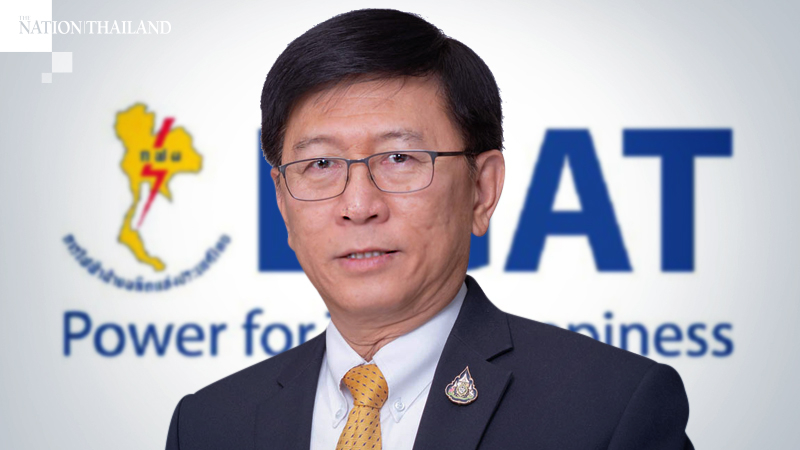
The Electricity Generating Authority of Thailand (Egat)’s board is set to consider a project to construct a floating storage and regasification unit (FSRU), said governor Viboon Rerksirathai.
The unit will be located in the Gulf of Thailand with capacity for 5 million tonnes of liquefied natural gas (LNG) per year.
If the board approves the project, Egat will press ahead by calling for bids to build the unit.
The unit’s capacity was expanded from the original 3 million tonnes per year to make it more commercially viable, said Viboon.
The estimated cost of the project is Bt24.5 billion.
The state agency is ready to start development this year and construction is expected to be complete in the next four years.
The unit will store LNG to feed Egat’s South Bangkok power plant.
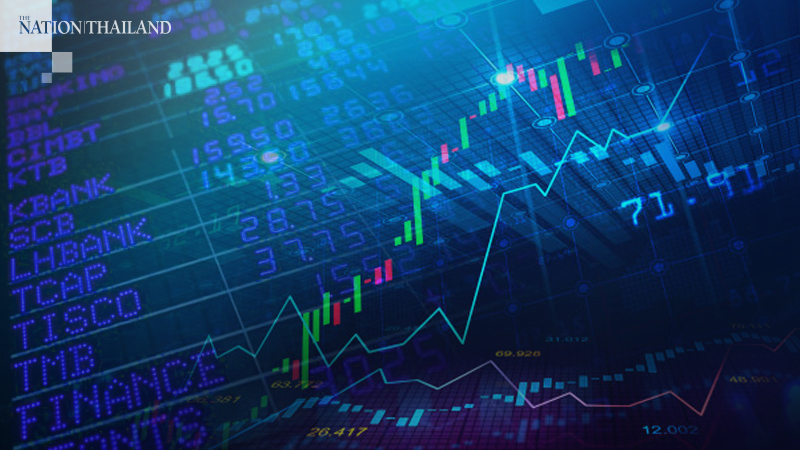
Institutional investors have reduced the proportion of banking stocks in their portfolios as share prices continue their downward trend in 2020.
As of July 20, the banking index had contracted 36.62 per cent while the Stock Exchange of Thailand (SET) Index had fallen 14.02 per cent this year.
Most Thai banking stocks have fallen 30-40 per cent this year, though shares in CIMB Thai Bank (CIMBT) have risen by 11.32 per cent. Meanwhile, banks’ market capitalisation is Bt1.23 trillion, down by as much as Bt700 billion.
The downward trend shows that institutional investors’ mass sell-offs are still pressuring share prices, especially of large banks.
This year, major domestic and foreign investors have reduced their holdings of Tisco Financial Group (Tisco) shares from 505.76 million to 408.49 million shares, down 19.23 per cent.
The Social Security Office (SSO) has cut its Tisco shareholding proportion from 3.13 per cent to 1.86 per cent, Krungsri Dividend Stock Long Term Equity Fund from 2.78 per cent to 1.95 per cent, and the Thai Non-Voting Depository Receipt (ThaiNVDR) from 13.34 to 11.17 per cent.
Meanwhile, major Bangkok Bank (BBL) shareholders have reduced their holdings from 1.16 billion to 1.01 billion shares, down 13.01 per cent. ThaiNVDR cut its BBL shareholding from 31.12 per cent to 23.5 per cent, though South East Asia UK and SSO increased BBL shares in their portfolios to 5.17 per cent and 4.5 per cent, respectively.
Major shareholders, especially ThaiNVDR, have also reduced their proportion of Siam Commercial Bank (SCB), Kasikorn Bank (KBANK) and Kiatnakin Bank (KKP) shares, though the SSO increased its ratio of SCB and KBANK shares.
Banks enjoying increased shareholding ratios were Krungthai Bank (KTB) at 2.64 per cent, TMB Bank (TMB) at 46.48 per cent, Thanachart Capital (TCAP) at 3.23 per cent, and LH Financial Group (LHFG) at 1.6 per cent. Shareholding ratios for Bank of Ayudhya (BAY) and CIMBT have remained the same as last year.
Korakot Sawetkruttamat, assistant director at Kasikorn Securities’ Research Division, said that banks’ shareholding ratio was very low because they still have risks and their share price had dropped sharply.
“We expect net profits of banks that have extended lots of allowances for doubtful accounts to increase in the second half of this year because their profits [will have] bottomed out during the lockdown,” he said.
“However, net profit of banks that have not extended much allowance for doubtful accounts would drop after the measure to suspend debt repayments ends.”
He added that the ratio of banks’ share prices to book value was currently at 0.5 times or minus-2.5 standard deviation.
“If the situation gets worse, the price of bank shares will drop by another 10 to 15 per cent,” he predicted.
“On the other hand, if the situation is not too bad, there is a 30 to 35 per cent chance that the price of bank shares’ can be traded at minus-2 standard deviation.”
The Stock Exchange of Thailand (SET) Index closed at 1,377 today (July 21), up 18.71 points or 1.38 per cent. Total transactions amounted to Bt64.234 billion with an index high of 1,379.15 and a low of 1,366.59.
In the morning session, a stock analyst at Krungsri Securities expected the index to rise to 1,370 points in response to good news on a Covid-19 vaccine and the rising crude oil price, before falling back.
“AstraZeneca and Oxford University revealed that Phase 1 clinical trials of their nCoV-19 vaccine boosted immunity in humans,” the analyst explained.
However, the index would be under pressure from banks’ weak second-quarter performances and the increasing number of non-performing loans, said the expert.
“Uncertainty following the increase in the number of Covid-19 cases would also pressure the index.”
The 10 stocks with the highest trade value today were MINT, BAM, PTT, PTTGC, PTTEP, KBANK, ADVANC, AOT, EA and CPALL.
As of 4.30pm, the price of crude oil had risen by US$0.94 or 2.30 per cent to $41.75 per barrel, while gold rose by $7.40 or 0.41 per cent, to $1,824.80 per ounce.
Asian indices were on the rise:
Japan’s Nikkei Index closed at 22,884.22, up 166.74 points, or 0.73 per cent.
China’s Shang Hai SE Composite Index closed at 3,320.89, up 6.75 points, or 0.20 per cent, while the Shenzhen SE Component Index closed at 13,536.17, up 87.32 points, or 0.65 per cent.
Hong Kong’s Hang Seng Index closed at 25,635.66, up 577.67 points, or 2.31 per cent.
South Korea’s KOSPI Index closed at 2,228.83, up 30.63 points, or 1.39 per cent.
Taiwan’s TAIEX Index closed at 12,397.55, up 223.01 points, or 1.83 per cent.
With people across the world having to cook at home due to the Covid-19 outbreak and subsequent lockdown, the demand for Thai seasoning has been rising so fast that it now holds the third place in the global market.
Auramon Supthaweethum, director-general of the Trade Negotiations Department, said recently that seasoning is one of the star products from Thailand and demand for it has risen due to the change in consumer behaviour. The biggest sellers are chilli sauce, soy sauce, fish sauce, curry paste, seasoning powder etc.
Based on exports in the first two months of this year, Thailand came in third globally for the shipment of food seasonings worth US$135.5 million, growing 18 per cent compared to last year. The top seasonings exporters are the United States and China.
Meanwhile, Thailand’s major markets such as South Korea grew by 33 per cent, while shipments to Asean countries and Australia rose by 25 per cent.
One of the biggest factors supporting the export market is the free-trade agreements (FTA) Thailand has signed with 15 countries, namely Cambodia, Indonesia, Laos, Malaysia, Myanmar, Philippines, Singapore, Vietnam, Brunei, Australia, New Zealand, China, Hong Kong, Chile and Peru.
The brand holding the largest market share of about 75 per cent is Ajinomoto (Thailand), which was established in 1960. This year, Ajinomoto’s revenue stands at Bt26 billion with net profit at Bt5.10 billion, which is Bt957 million or approximately 23.09 per cent more than the previous year.
Thai Churos Co occupies about 20 per cent of the market, while Thai Fermentation Industry Co 5 holds per cent.

 An employee monitors latex gloves on hand-shaped molds moving along an automated production line at a Top Glove Corp. factory in Setia Alam, Malaysia, on Feb. 18, 2020. MUST CREDIT: Bloomberg photo by Samsul Said.
 A Chevron sign at the company’s El Segundo Refinery in El Segundo, Calif., on April 27, 2020. MUST CREDIT: Bloomberg photo by Kyle Grillot. Photo by: Kyle Grillot — Bloomberg Location: El Segundo, United States
 Suphachai Chearavanont, CEO of Charoen Pokphand and GCNT chairperson
 File photo
 File photo shows shoppers in Italy practicing social distancing .