CP earns international praise for virus crisis response #ศาสตร์เกษตรดินปุ๋ย

#ศาสตร์เกษตรดินปุ๋ย : ขอบคุณแหล่งข้อมูล : หนังสือพิมพ์ The Nation.

CP earns international praise for virus crisis response

Corporate

Jul 17. 2020

By The Nation

Charoen Pokphand (CP) Group shared its Covid-19 experiences at this week’s international “High-Level Political Forum on Sustainable Development 2020”, organised by the World Business Council for Sustainable Development and United Nations Department of Economic and Social Affairs.

Speaking at the “Building Back Better: Navigating Business Risks and Opportunities in a Post-Covid World” video conference, CP’s chief sustainability officer Noppadol Dej-Udom said the group had mitigated Covid-19 impacts and will continue to aid economic and social development after the pandemic in line with UN Sustainable Development Goals (SDGs).

Noppadol said CP faced three major challenges during the virus crisis.

The first was to ensure job security, whereby the company formed policy to not layoff any of its 360,000 employees worldwide. This initiative had boosted Thailand’s economy by ensuring the security of employees’ families and business partners along the supply chain, he said.

The second challenge was food security. As people began panicking and stockpiling food supplies during the first phase of lockdown, CP created confidence for consumers by providing sufficient and safe food to meet their needs, said Noppadol. The company also delivered free food to those who had lost their incomes and to those quarantined at home, as well as developing affordable ready-to-eat food to help reduce living costs for those suffering amid the pandemic.

The third challenge was health and well-being. Due to the shortage of face masks, CP established a surgical face mask factory within five weeks with a production capacity of 3 million masks per month to be distributed to medical personnel, hospitals, humanitarian organisations and the general public nationwide.

“The Covid-19 pandemic has provided us with the opportunity to reassess our strategies. Some suggest that the virus is a rehearsal for a bigger crisis to come, which is climate change. The virus crisis will enable us to learn and better prepare for the future. In addition to donating goods and money to tackle this crisis, a new collaborative effort has been formed, based on integration of ideas and expertise from all sectors. We must synergise and unite globally to get through this crisis together.” said Noppadol.

Other panellists highlighted the importance of innovation in agriculture to increase productivity, reduce land use and chemicals, and boost resilience to climate change. The importance of maintaining the globe’s commitment to reduce greenhouse gas emissions and reach “zero Carbon” targets to prevent the global temperature rising more than 2C was also emphasised. Caroline Rees president & CEO of human rights agency Shift, worried that Covid-19 could widen economic and social inequality, adding that private sector must look after employees and other other stakeholders, not only their shareholders. Rees praised CP Group for retaining its employees and for providing concrete assistance to those affected by the crisis.

Haier adapts to ‘new normal’ with smarter home appliances #ศาสตร์เกษตรดินปุ๋ย

#ศาสตร์เกษตรดินปุ๋ย : ขอบคุณแหล่งข้อมูล : หนังสือพิมพ์ The Nation.

Haier adapts to ‘new normal’ with smarter home appliances

Corporate

Jul 17. 2020Zhang Zhenghui, president of Haier Electrical Appliances (Thailand)Zhang Zhenghui, president of Haier Electrical Appliances (Thailand)

By The Nation

Home-appliances brand Haier said it has met 31 per cent of its sales growth target in the first half of this year, and is expanding its presence in the smart-home appliances market with several products, including air-conditioners, refrigerators and washing machines. It is also launching a smart-sharing AC campaign to meet demands amid the Covid-19 pandemic.

Haier is now aiming for a 34 per cent growth in the latter half of the year, with sales worth about Bt2.63 billion.

The Covid-19 crisis has dramatically changed consumer behaviour, with buyers now expecting a lot more and thinking twice about price and quality before making a purchase. This challenge has driven Haier to adjust to the situation and get ready for the unexpected, which has resulted in a proactive business approach to suit the new normal.

At a press conference on Friday (July 17), Zhang Zhenghui, president of Haier Electrical Appliances (Thailand), said: “Haier expects continuous success this year, with an estimated total sales revenue of Bt6.205 billion, up 38 per cent from last year. This total revenue comprises Bt2.94 billion from home air-conditioners, up 21 per cent from last year; Bt1.16 billion from refrigerators, up 45 per cent; Bt835 million from washing machines, up 37 per cent; Bt590 million from freezers, up 41 per cent; Bt365 million from commercial air-conditioners, up 45 per cent; and Bt322 million from other products, up 65 per cent. We will further extend our market share actively in the latter half of this year to achieve our annual sales target.”

In its marketing strategy for the second half of this year, Haier will introduce new products that have strength in quality, design, innovation and unique functionality to meet diverse needs. It also provides cutting-edge products as part of its Haier Smart Home Range. With Bt170 million earmarked for boosting brand awareness and sales through both online and off-line channels as well as increasing marketing channels, penetrating the B2B segment, revamping distributors’ shops, and improving pre- and post-sales services.

“Despite the coronavirus’s impact on consumers’ purchasing power, Haier still enjoys continued sales growth, especially for air-conditioners and refrigerators. I think it is highly possible that we can reach the annual sales growth of 38 per cent with a revenue of Bt6.205 billion this year,” Zhang said.

In the air-conditioning category, Haier introduced a Smart-Sharing AC campaign, in which consumers pay for actual power used at the rate of Bt4 per hour, which can be paid via a smartphone app. These aircons are installed for free and come with free post-sales service. Each aircon is installed on a three-year or 5,200 hours contract.

This campaign uses Advanced Info Service (AIS)’s NB-IoT technology which automatically connects the air-conditioners to the NB-IoT network nationwide without the need for Wi-Fi connection or SIM cards, and usage data is recorded and sent to the Smart Sharing AC mobile app, allowing users to control and check on their air-conditioners from anywhere. The app also allows them to change the aircon’s settings, turn it on and off, change the wind direction and temperature as well as schedule servicing.

Haier air-conditioners have a built-in self-cleaning technology, which allows them to clean every 20 minutes, while its self-purifying technology filters out 99.99 per cent of dust particles that are even smaller than PM2.5 particles.

Haier has stepped up the development of its “self-hygiene” technology, using silver nano-particle coating to keep air-conditioners free of bacteria and fungi, as well as the hyper PCB electronic board to protect against unstable voltage, humidity and certain insects, making the air-conditioners more durable and energy-saving.

The company has also come up with the HRF-MD758 smart refrigerator in its IOT Smart Series, featuring a large touchscreen interface, voice-controlled virtual assistant and a Food Manage function that keeps track of what is in the fridge. The refrigerator’s “ultra cam” shows what’s in stock, so users can order groceries online or thanks to the internet of things (IoT) technology, find recipes that use what’s available.

There is also the Ice Bar LC-132 or living room refrigerator, with a top shelf that is specially designed to store wine, along with other shelves with adjustable temperature levels to store different things, ranging from breast milk to tea leaves and beverages.

Haier has also introduced a self-cleaning top-loading washing machine equipped with a smart ball technology, which removes 99.9 per cent of dirt and impurities in every wash, has a direct-motion motor delivering quiet, smooth, energy-saving operation and a control panel at the back.

This washing machine, which comes in 13-kilogram and 14kg capacity, was launched this month.

Another new product from Haier is its Android Smart AI TV, which can be connected to security devices like a CCTV, as well as the doorbell. It can also be used to turn the lights in the house on and off.

“For the rest of this year, Haier will focus on an integrated marketing approach covering both online and off-line markets. This includes launching more TV commercials for our refrigerators, boosting brand awareness with our brand ambassador, enhancing positive brand image through Haier Brand shops in Bangkok and Khon Kaen, expanding sales channels and B2B opportunities, renovating our distribution outlets and seek new marketing opportunities to keep the business growing,” Zhang said.

MQDC unveils new normal for Bt300 billion property development #ศาสตร์เกษตรดินปุ๋ย

#ศาสตร์เกษตรดินปุ๋ย : ขอบคุณแหล่งข้อมูล : หนังสือพิมพ์ The Nation.

MQDC unveils new normal for Bt300 billion property development

Corporate

Jul 17. 2020Visit Malaisirirat, MQDC CEOVisit Malaisirirat, MQDC CEO

By The Nation

Real estate developer Magnolia Quality Development (MQDC) is turning the virus crisis into an opportunity by focusing on the “home-based economy/lifestyle” as the new normal for home-buying decisions. The company is also forging ahead with residential projects under the “For All Well-Being” concept, which prioritises space and green areas under the new home-based living trend.

“The spread of Covid-19 has brought a “new normal” behaviours, including working from home to reduce their exposure to others,” said MQDC CEO Visit Malaisirirat. “Some people have started cooking their own meals instead of eating out because restaurants were closed for a time. Others have taken up gardening as a hobby after being forced to stay home for days on end. It’s safe to say that demand for homes is also changing: Buyers no longer look just for a place to live, but for a home that caters to their various needs, which include working and leisure activities that will allow them to stay physically, mentally, and emotionally healthy when they are home.”

Said Karndee Leopairote, chief adviser to MQDC’s FutureTales Lab: “This is in line with FutureTales Lab research which found that being home-quarantined … has affected home-buying decisions as society is transitioning into a home-based economy/lifestyle, which we might call an ‘Everything at Home’ way of life. Consumers are now prioritising space over convenience. Consumers previously valued properties in the heart of the city, particularly along mass transit lines. But the pandemic has had profound effects on the future of work. Many businesses have made some operations remote, removing the need for daily commutes. This means people no longer need to live in the city or in a small condo unit in the city centre. Many will look for suburban homes that are more spacious and come with a garden as their primary place of residence.”

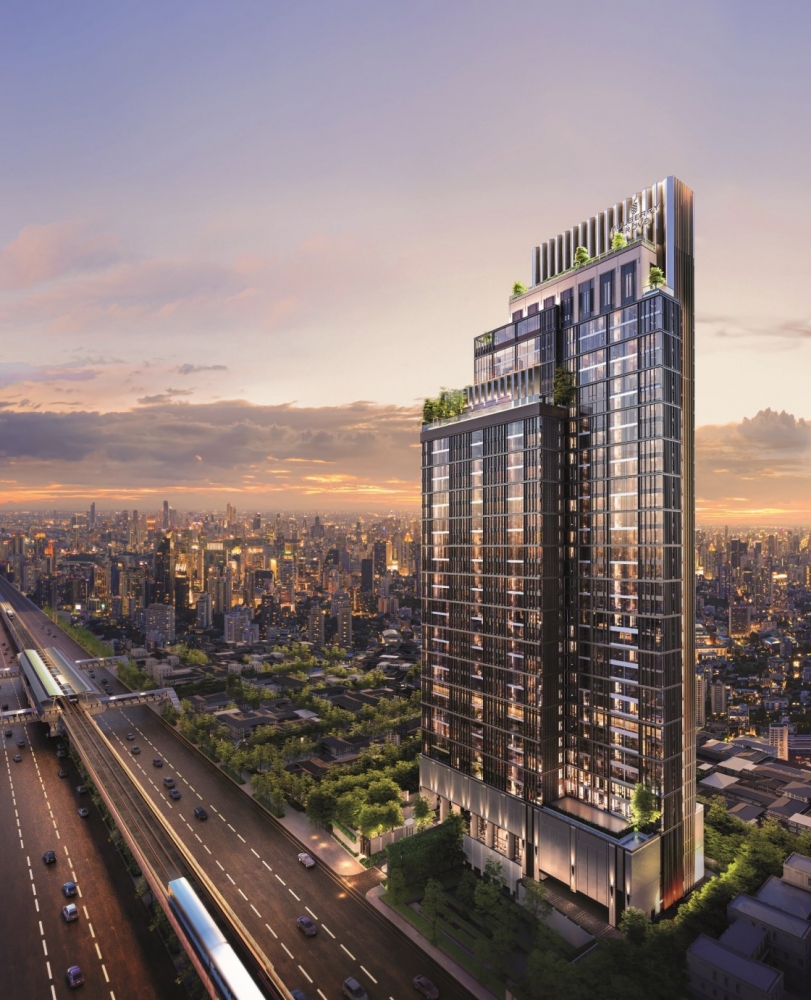
The company said this “new normal” now serves as the DNA of MQDC projects, along with eco-friendly innovations like the urban air purifier towers in use at Magnolias Ratchadamri Boulevard and Whizdom Sukhumvit projects.

In response to studies conducted by the world’s leading universities, including Harvard and the Massachusetts Institute of Technology (MIT), which show that spending time in nature every day reduces stress and boosts well-being, MQDC is introducing sustainable green space in its megaproject The Forestias, which will feature 30 rai of real forest in Bangkok’s southeastern suburbs. The company says over 70 per cent of this project will be covered in greenery, making it the first residential project of its kind: a city in its own right complete with facilities and large green areas. It will also feature a Six Senses hotel and residences, along with other international facilities, as well as a Huawei smart city platform.

A total of 24 MQDC property projects are now at the planning stage, available for sale, in construction, or awaiting ownership transfer, worth a combined Bt300 billion, said the company. These include luxury projects such as Magnolias Waterfront Residences ICONSIAM (379 units) and The Residences at Mandarin Oriental, Bangkok (146 units), whose ownership transfer rates stand at nearly 100 per cent and 60 per cent, respectively, it said, adding the two projects combined value is more than Bt20 billion and the total transferred amount stands at Bt15 billion.

Vietnam seen as investment magnet as virus saps ageing Thailand #ศาสตร์เกษตรดินปุ๋ย

#ศาสตร์เกษตรดินปุ๋ย : ขอบคุณแหล่งข้อมูล : หนังสือพิมพ์ The Nation.

Vietnam seen as investment magnet as virus saps ageing Thailand 

Corporate

Jul 17. 2020Thiti Tantikulanan, executive chairman of Kasikorn SecuritiesThiti Tantikulanan, executive chairman of Kasikorn Securities

By The Nation

Vietnamese stocks are outshining their Thai counterparts due to Vietnam’s high potential for economic growth, prominent investor Niwes Hemvachiravarakorn said on Thursday.

Among emerging markets, Vietnam’s equities are the most attractive for investors seeking high returns in the next 10 to 20 years, he said during a seminar hosted by Kasikornbank yesterday.

The Thai stock market is mature so would not move up much, while Thailand’s economy had long passed its peak, he warned. An ageing society and no technological advantages have put the Thai economy on a slowing growth path, he added.

In contrast, Vietnam is on the path of high economic growth once experienced by South Korea, Taiwan, Malaysia and Thailand. The Vietnamese economy has continued to expand during the virus outbreak while Thailand has suffered a sharp economic contraction.

However, Vietnam’s stock market is currently underdeveloped since wealthy Vietnamese prefer to make money from doing business, including manufacturing products for export. And since a high proportion of Vietnamese are young, they do not have incentives to save money for retirement. As a result, share prices and the stock index do not increase much.

Investors, however, can enjoy annual dividend yields from Vietnam’s listed companies of as much as 10 per cent, he said.

He also forecast that Vietnamese stocks will perform very well over the next 10 to 20 years.

Among advanced markets, he pinpointed the US as the most attractive investment destination.

While Thailand would see little change among big and small businesses post-Covid-19, the US has seen market caps of tech companies overtake traditional large corporates such as energy firms, he said.

The Stock Exchange of Thailand (SET) Index’s 15-per-cent drop this year was reasonable while shares that had recently risen would retreat in the coming years, he predicted.

Niwes is optimistic, however, about the global economy and expects a V-shaped recovery in the post-virus era. This was because the downturn was caused by people not working during lockdown, rather than by underlying financial woes, he said. So, when people return to work, growth will resume.

Thiti Tantikulanan, executive chairman of Kasikorn Securities, was also pessimistic about Thai equities. There was a high chance the SET Index would slide from its current level of around 1350, he said. He also cited uncertainty over whether a virus vaccine would be available by the end of this this year, and cautioned that any vaccine may not be effective in protecting people from the disease.

A second wave of infections could send the SET Index to a new low, while a delayed or ineffective vaccine may hurt global Thai equities, he warned.

Thai banks will not pay interim dividends this year as the central bank wants them to retain capital levels. Meanwhile property developers have cut their residential unit prices as they struggle to get rid of mounting surplus stock. It will take time before share prices in the property sector rebound, he added.

Kasikorn Securities advises investors to hold cash and wait for share prices to fall, suggesting that investors buy gold as a hedge against stock market volatility. Kasikorn analysts, however, still prefer equities over bonds, arguing that equities yield higher returns.

Wild oil market, Reliance’s cash flood hold up Aramco deal #ศาสตร์เกษตรดินปุ๋ย

#ศาสตร์เกษตรดินปุ๋ย : ขอบคุณแหล่งข้อมูล : หนังสือพิมพ์ The Nation.

Wild oil market, Reliance’s cash flood hold up Aramco deal

Corporate

Jul 16. 2020A storage tank containing liquid gas stands at the Natural Gas Liquids (NGL) facility in Saudi Aramco's Shaybah oil field in the Rub' Al-Khali (Empty Quarter) desert in Shaybah, Saudi Arabia. Photographer: Simon Dawson/Bloomberg
A storage tank containing liquid gas stands at the Natural Gas Liquids (NGL) facility in Saudi Aramco’s Shaybah oil field in the Rub’ Al-Khali (Empty Quarter) desert in Shaybah, Saudi Arabia. Photographer: Simon Dawson/Bloomberg

By Syndication Washington Post, Bloomberg · Saket Sundria, Debjit Chakraborty · BUSINESS

It’s not typical of Mukesh Ambani, Asia’s richest tycoon, to announce a deal before signing a document.

But that’s exactly what he did last year when he told a packed hall of shareholders that Saudi Aramco, the world’s biggest oil producer, was set to buy a 20% stake in Reliance Industries Ltd.’s refining and petrochemicals business, valuing it at $75 billion. So it may have come as a shock to some of those investors when Ambani said on Wednesday that a deal hadn’t been worked out yet with the delay partly down to the coronavirus.

With oil prices around a third lower than a year ago, a typical Asian complex refinery is losing money on every barrel it processes, compared with earnings of almost $7 a barrel last year. The International Energy Agency estimates global oil consumption will slump by 7.9 million barrels a day, or about 8%, in 2020, a big change from the 1.2 million barrels a day of growth it was predicting at the start of the year.

“While the partnership is undoubtedly a prolific one, one could easily imagine the road to fruition is not an easy one,” said Sri Paravaikkarasu, head of Asia oil at industry consultant FGE. “With Covid-19 sending the oil market into a tailspin, Aramco’s earlier strategies will be reevaluated.”

There’s also another reason for the delay in the deal that was originally expected to close by March: Ambani doesn’t need Aramco’s money as desperately as he did a year ago, something that he didn’t shy away from mentioning to his investors.

“Our equity requirements have already been met,” Ambani said. The Aramco “deal has not progressed as per the original timeline” due to “unforeseen circumstances in the energy market and the covid-19 situation,” he said.

Reliance has amassed almost $30 billion in recent months through investments in its digital unit and by selling shares to existing stakeholders, easing the pressure to raise cash to meet its goal of becoming net debt free by 2021. Ambani has already declared his flagship company free of net debt without relying on Aramco.

Even before the virus sent oil prices into a tailspin, differences over valuations and structure early in the talks had slowed progress. The Indian government also threw a spanner in the works after it asked a court to stop the proposed sale, in an attempt to force Reliance to pay arbitration claims in an unrelated case. While oil demand in India is recovering after dropping to the lowest level in more than a decade in April, it’s still about 10% below pre-pandemic levels.

“The market has changed very significantly since the letter of intent was signed last year,” Neil Beveridge, senior resources analyst at Sanford C. Bernstein & Co. in Hong Kong, said in a phone interview. “The deal is still quite strategic for Aramco to get a foothold in the Indian downstream oil market but clearly not at a $75 billion price tag.”

The deal is possible at a lower valuation of $57 billion, Sanford C. Bernstein & Co. analysts wrote in a note separately.

Ambani, meanwhile, plans to create a separate business unit for his refining and petrochemicals operations. Reliance will approach India’s National Company Law Tribunal to spin off the oil-to-chemicals division, and expects to complete the process by early 2021. The firm has been approached by global companies for strategic partnerships in its petrochemical business, he said without divulging any names.

“Nevertheless, we at Reliance value our over two-decade long relationship with Saudi Aramco and are committed to a long-term partnership,” Ambani said, leaving the door open for a potential transaction.

The deal is crucial for Aramco, formally called Saudi Arabian Oil Co., as well. Iraq has replaced Saudi Arabia as India’s top supplier of crude and its lead has been widening.

“It does make more economic sense to integrate an existing refinery fully with petrochemicals and Aramco will continue pursuing the opportunity with Reliance,” Paravaikkarasu said. “More roadblocks can be expected along the way, even if Covid-19 leaves us.”

Morgan Stanley joins Wall Street gold rush on record profit #ศาสตร์เกษตรดินปุ๋ย

#ศาสตร์เกษตรดินปุ๋ย : ขอบคุณแหล่งข้อมูล : หนังสือพิมพ์ The Nation.

Morgan Stanley joins Wall Street gold rush on record profit

Corporate

Jul 16. 2020The Morgan Stanley building stands in New York on Tuesday, June 9, 2020. MUST CREDIT: Bloomberg photo by Nina WesterveltThe Morgan Stanley building stands in New York on Tuesday, June 9, 2020. MUST CREDIT: Bloomberg photo by Nina Westervelt

By  Syndication Washington Post, Bloomberg · Sridhar Natarajan · BUSINESS 

Morgan Stanley wrapped up a week of wins for Wall Street trading desks, capitalizing on the Federal Reserve’s extraordinary rescue measures with record profit.

Fixed-income trading revenue almost tripled, driving a 73% jump in total trading that surged past expectations, according to a statement Thursday. That spurred firmwide revenue and earnings to all-time highs amid wild market swings caused by the coronavirus pandemic.

“It’s clear that a lot of people did well in light of client activity,” Chief Financial Officer Jonathan Pruzan said in an interview. While much of that has continued in the first few weeks of the third quarter, “we would expect a reversion to a more normalized level,” he said.

The gains brought the overall trading haul total for the five biggest U.S. investment banks to $33 billion, a windfall that helped all of them survive the brunt of the coronavirus pandemic with profits intact.

As the covid-19 outbreak intensified earlier this year, the Fed cleared the way for companies to access desperately needed cash with programs that effectively served as credit backstops, allowing markets to thaw. That, in turn, spurred demand for Wall Street’s trading and underwriting services.

“Our decade long business transformation was intended to provide stability during times of serious stress,” chief executive James Gorman said in the statement. “The second quarter tested the model and we performed exceedingly well, delivering record results.”

Morgan Stanley’s trading gains come at a critical juncture for the bank, which is leaning on the business to shore up earnings as it makes a bigger pivot toward managing money for others. The bank’s pact to purchase E-Trade Financial in February is set to be the biggest acquisition by a top U.S. bank since the financial crisis, and a sign of Gorman doubling down on the success of his firm’s Smith Barney purchase a decade ago.

Fixed-income trading revenue at Morgan Stanley came in at $3.03 billion, compared with the $1.81 billion analysts were predicting, based on estimates compiled by Bloomberg. Equities trading revenue rose to $2.62 billion, higher than the $2.27 billion average estimate.

Morgan Stanley’s stock is little changed since the start of the year, the best performance among the top five banks and a show of resilience that kept the firm’s market capitalization above that of Goldman Sachs – a perennial rival – for much of the year. Since July 9, shares of the company had gained 8.1% as of Thursday morning.

Investment bankers at the firm posted revenue of $2.05 billion on the strength of a 64% jump in underwriting revenue as the firm took its share of the surge in new stock and debt issuance by corporate America.

Wealth-management revenue, which typically accounts for about half of Morgan Stanley’s total, rose 6%, to $4.68 billion.

Warren Buffett sees natural gas sticking around #ศาสตร์เกษตรดินปุ๋ย

#ศาสตร์เกษตรดินปุ๋ย : ขอบคุณแหล่งข้อมูล : หนังสือพิมพ์ The Nation.

Warren Buffett sees natural gas sticking around

Corporate

Jul 16. 2020Warren Buffett, chairman and chief executive officer of Berkshire Hathaway Inc., speaks during the virtual Berkshire Hathaway annual shareholders meeting seen on a laptop computer in Arlington, Va., on May 2, 2020. MUST CREDIT: Bloomberg photo by Andrew HarrerWarren Buffett, chairman and chief executive officer of Berkshire Hathaway Inc., speaks during the virtual Berkshire Hathaway annual shareholders meeting seen on a laptop computer in Arlington, Va., on May 2, 2020. MUST CREDIT: Bloomberg photo by Andrew Harrer

By Syndication Washington Post, Bloomberg · Katherine Chiglinsky, Brian Eckhouse, Naureen Malik, Dave Merrill · BUSINESS

Warren Buffett’s $9.7 billion bet on natural gas looks even more contrarian today.

As Democrat Joe Biden unveils a staggering $2 trillion clean-energy plan-the most ambitious climate package ever offered by a presumptive presidential nominee-Buffett’s recent deal to buy Dominion Energy Inc.’s natural gas assets is a stark sign he’s expecting that the market’s shift away from fossil fuels won’t happen overnight.

The deal is “a bet that the future doesn’t come as fast as some people think,” said Jim Shanahan, an analyst who covers Buffett’s Berkshire Hathaway Inc. at Edward Jones. “I think they want to be bigger in renewables, but it’s going to take time. In the meantime, they have to be able to provide power generation to their customers.”

On its face, Berkshire’s deal last week to buy gas assets including some 7,700 miles of pipelines seems risky even for a contrarian like Buffett. The energy industry is under increasing pressure from public officials and investors to abandon coal and natural gas. The use of natural gas for power generation, once hailed as a cleaner, cheaper alternative to coal, is now projected to drop to 36% in 2021 from 41% this year. In the last decade, prices for solar and onshore wind power have plummeted 90% and 70% respectively per megawatt-hour, according to BloombergNEF. Renewables now supply 20% of Americans’ power needs, up from 13% five years ago, according to the U.S. Energy Information Administration.

Biden’s plan, unveiled Tuesday, is an attempt to propel that surge, calling for spending $2 trillion for a clean-electricity economy and outlining a goal to have a carbon-free power sector by 2035.

But despite, or, more likely, because of those trends, Buffett is following his well-worn investing path-buying assets cheap in a buyers’ market. Natural gas futures in the U.S. dropped last month to their lowest point in 25 years. Plus, he’s one of the few buyers in a market where many utilities are searching for ways to get out. Political, regulatory and legal pressure have stymied the building of new pipelines and other infrastructure. Just last week, Dominion Energy and Duke Energy Corp. shelved a plan for a new gas pipeline crossing the Appalachian Trail in the face of stiff environmental opposition.

The prices and political pressure are likely to deter any new entrants, potentially allowing Buffett to reap natural gas’s historically good returns for some years coming.

“People assume we’re getting rid of coal, and then we’re getting rid of gas next,” said Noah Kaufman, a research scholar at Columbia’s Center on Global Energy Policy. But because gas is plentiful, cheap and provides round-the-clock electricity it’s “a lot harder to get rid of.”

The deal reinforces the idea that Berkshire, despite its expansive clean-energy portfolio, isn’t a friend to environmentalists, who want a quicker shift to renewable energy. Berkshire routinely faces criticism for the company’s ties to fossil fuels. Buffett comes in at No. 3 on Bloomberg Green’s list of billionaires whose fortunes derive largely from climate-damaging industries. He’s faced shareholder proposals from groups such as the Nebraska Peace Foundation urging Berkshire to disclose how climate change will affect its insurance subsidiaries, a significant chunk of the Berkshire empire.

“Berkshire has made some bad fossil fuel investments over the last few years and we expect this one to be a similarly bad investment, and ultimately a losing investment,” said Mark Kresowik, a regional director of the Sierra Club’s Beyond Coal campaign. (The Sierra Club has received funding from Bloomberg Philanthropies, the charitable organization founded by Michael Bloomberg, the majority owner of Bloomberg LP.)

Buffett has acknowledged the risks from the changing climate, saying in a shareholder letter in 2016 that it seemed “highly likely” that it would be a “major problem” for the world. But he has also previously said climate change can’t be a decisive factor in deciding investments.

Buffett didn’t respond to a request for comment. Berkshire Hathaway Energy declined to comment.

In explaining the Dominion Energy deal, Berkshire positioned natural gas as part of its strategy for sustainability. Its energy company called it a “reliable” and “less-carbon intensive” energy source in a slide show. Of the company’s generation capacity at the end of 2019, about 36% was from wind and solar, while 32% came from natural gas and 26% coal. The remainder came from hydroelectric, geothermal, nuclear and other sources, according to a filing.

Buffett has gotten caught flat-footed in the past by burrowing into a market that was soon to be upended. Last year, he invested $10 billion to help finance oil-producer Occidental Petroleum Corp.’s bid for Anadarko Petroleum Corp. But the investment has struggled since because of a volatile market. Occidental slashed its common dividend when oil prices crashed earlier this year and ended up paying the dividend on Berkshire’s preferred stock in Occidental shares.

And Buffett’s been burned by volatile natural gas prices before. Berkshire bought about $2 billion of the debt of Energy Future Holdings, but ended up suffering a pretax loss of $873 million as that business filed for bankruptcy in 2014, according to his annual letter in 2014.

For now, Berkshire is simply betting that controlling a wide swath of the natural gas transmission lines will be profitable for the immediate future, climate issues aside.

“It’s wrong to say that he loves fossil fuels,” said Jigar Shah, president of clean-energy financier Generate Capital. “He’s just indifferent.”

Thai AirAsia’s plan to also fly out of Suvarnabhumi gets initial okay #ศาสตร์เกษตรดินปุ๋ย

#ศาสตร์เกษตรดินปุ๋ย : ขอบคุณแหล่งข้อมูล : หนังสือพิมพ์ The Nation.

Thai AirAsia’s plan to also fly out of Suvarnabhumi gets initial okay

Corporate

Jul 16. 2020

By The Nation

The Airports of Thailand (AOT)’s revenue committee has approved Thai AirAsia’s plan to start flying from Suvarnabhumi airport, AOT president Nitinai Sirismatthakarn said on Thursday (July 16).

The plan will be submitted to the AOT board for consideration on July 29, he added.

The carrier flies from many hubs, including Don Mueang Airport.

‘Signs of recovery’ in business sectors, says Krungsri #ศาสตร์เกษตรดินปุ๋ย

#ศาสตร์เกษตรดินปุ๋ย : ขอบคุณแหล่งข้อมูล : หนังสือพิมพ์ The Nation.

‘Signs of recovery’ in business sectors, says Krungsri

Corporate

Jul 16. 2020Pornsanong Tuchinda, Krungsri Head of Commercial BankingPornsanong Tuchinda, Krungsri Head of Commercial Banking

By The Nation

Krungsri (Bank of Ayudhya) has reported signs of recovery among some of its business customers.

The bank said it had so far provided debt payment holidays to more than 8,800 customers for outstanding loans worth Bt200 billion, while rolling out government soft loans worth Bt19 billion to more than 6,300 SME customers to help boost their liquidity.

Krungsri’s head of Commercial Banking Pornsanong Tuchinda reported that some of the bank’s business customers were bouncing back after the virus crisis.

“The healthcare sector has potential for faster recovery than other sectors due to growing health concerns, especially businesses related to hygiene and germ-prevention products. Meanwhile, our customers in the food sector are also recovering as they have adapted new distribution channels for delivery services. On the contrary, tourism and tourism-related sectors, such as airlines and hotels, have been severely affected by the lockdown measures and will take longer to recover. Therefore, the bank will keep a close watch and provide appropriate assistance measures to these sectors,” he said.

Krungsri’s commercial banking group has classified business customers into three groups: unaffected customers, for which the bank is providing additional loans; slightly or moderately affected customers, for which Krungsri is extending debt repayment periods, reducing interest rates and providing soft loans; and severely affected customers, who are being offered debt restructuring and soft loans to help keep them afloat through the virus crisis.

Krungsri said it will focus on offering total financial solutions to support liquidity and risk management in the second half of 2020 for businesses it called the backbone of the economy – food and beverage, healthcare, and tourism and hospitality, as well as infrastructure-related industries and investments in Eastern Economic Corridor (EEC).

“Krungsri continues to support customers with Krungsri Business Empowerment, knowledge-sharing and business networking activities via exclusive online platforms, which customers can access from anywhere,” Pornsanong added.

In the second quarter of this year, Krungsri organised a series of online seminars for its commercial banking customers. The bank is also organising Krungsri Virtual Business Matching from July 8-22, an online business matching activity to connect SMEs with large corporate customers. Meanwhile, it will launch Krungsri-MUFG Virtual Business Matching at the end of 2020 to create opportunities for business customers to link with Japanese and Asean companies. In addition, the annual “Krungsri Business Forum 2020 – Business Under Uncertainties”, will be held in late 2020, to share insights and perspectives on doing business in difficult times.

Ex-energy minister expects petroleum exploration bidding to go ahead #ศาสตร์เกษตรดินปุ๋ย

#ศาสตร์เกษตรดินปุ๋ย : ขอบคุณแหล่งข้อมูล : หนังสือพิมพ์ The Nation.

Ex-energy minister expects petroleum exploration bidding to go ahead

Econ

Jul 17. 2020Former Energy Minister Sontirat Sontijirawong Former Energy Minister Sontirat Sontijirawong

By The Nation

Former Energy Minister Sontirat Sontijirawong today said it was now the task of the incoming minister to call bids for the 23rd round of petroleum exploration and production in the Gulf of Thailand.

Sontirat had planned to invite interested bidders next week but he resigned from his post yesterday, effective immediately.

The Round 23 exploration and production covers three offshore blocks. Sontirat said it should create 4,000 new jobs.

Meanwhile, Sontirat said he was confident that the project to construct community power plants will also be continued.