Fuel sales at PTT filling stations in June were almost back to the same level as this time last year, after further easing of the country’s Covid-19 lockdown.
Sales from July onward were expected to grow further, following the launch of numerous government measures to stimulate the economy and boost domestic tourism, said Jiraphon Kawswat, president and chief executive officer of PTT Oil and Retail Business Plc.
She added that it was too soon to tell how much overall sales would decline this year, as the company was waiting to see what direction the economy takes.
However, the company forecasts that sales for 2020 will come close to matching 2019’s monthly average of 460,000 litres if there is no second wave of Covid-19 infections, she said.
Jul 01. 2020Sara Lamsam, president and chief executive officer at Thai Life Assurance Plc
By The Nation
The Covid-19 impact has triggered a significant change in the life-assurance industry, which is expected to contract by 3 to 5 per cent this year, said Sara Lamsam, president and chief executive officer at Thai Life Assurance Plc.
Total premium receipts for life insurance in April plunged 20 per cent and is expected to drop further during the rest of the year, he said.
Due to the Covid-19 outbreak, consumers are more interested in health insurance, while their interest in savings policies is dropping due to the low-interest environment.
As for his company’s performance, Sara said total premiums fell sharply by 19 per cent in the first four months of the year to Bt22.4 billion, as new policies fell 19 per cent to Bt5.9 billion and renewed policies dropped 20 per cent to Bt16.5 billion.
Hence, he said, in line with consumers’ health awareness, his company will start focusing on health insurance products at a premium that is much cheaper than saving products. For instance, a Bt1 million insurance will be sold at a yearly premium of Bt17,000 for men aged 35 and up and Bt18,000 for women in the same age range.
Also, in line with the digital lifestyle, the company has developed an app called MTL Click, which will make it easier for consumers to access services. He projected that his company’s health insurance business will jump 99 per cent this year after growing between 30 and 35 per cent in the first four months.
Jun 30. 2020Abel Deng, CEO, Huawei Technologies (Thailand) Co., Ltd
By THE NATION
Thailand is a 5G leader in the Asean region and is building an ultra-fast 5G ecosystem will help create new business opportunities in almost every sector, says tech giant Huawei.
Applications and new services that come with the 5G network will also help revive a Thai tourism and hospitality sector hit hard by the Covid-19 pandemic, said the company.
“Thailand has a lot of potential to implement 5G technology,” said Abel Deng, CEO of Huawei Technologies (Thailand), at a seminar titled “5G Ecosystem and the Future of Thailand”.
5G technology will be the key driving force for the Thai economy’s recovery, and drive new economic and societal growth for the country in every aspect, Deng added.
“The 5G ecosystem will not just serve the individual but the whole digital society, playing an important role to increase productivity, reduce expenditure, and improve the quality of products and services.”
Huawei Thailand’s mission was to grow with the country, backing Thailand in its utilisation of the 5G network to support businesses, said Deng. He added that the country was already advanced in implementation of the technology after being an early adopter of 5G in the Asean region.
The 5G ecosystem will consist of the four key factors, said Woragarn Likhitdechasakdi, deputy chief technology officer of carrier network, Huawei Technologies (Thailand).
These are:
• Business Mode Innovation: 5G adoption will not be limited to smartphones, as the 5G ecosystem can generate new kinds of services with more diversity. Apart from the business-to-consumer service, 5G will be also adopted in the business-to-business field.
• Local Ecosystem Integration: To build the most effective network that suits every industry, the ecosystem will need partners from all areas of various industries – including network operators, large and small entrepreneurs in vertical intra-industry, hardware and software vendors like Huawei, and local solution providers and integrators.
• Real Use Cases: This year, 5G will become more concrete and affordable, moving beyond proof-of-concept testing or successful case presentation, with networks and solutions available for real usage and adoption across various fields.
• Global Best Practices: Huawei is using its considerable experience and achievements in other markets globally to adapt solutions for the Thai market.
Deng added that the combination of 5G connectivity with Artificial Intelligence (AI) will create infinite possibilities.
“In the future, every industry will integrate Cloud, AI and Big Data with 5G technology, and ‘smart’ tech will be integrated into every aspect of business procedures, creating Smart Manufacturing, Smart Healthcare, and even Smart Cities. These will improve business capabilities, help generate more profits, and pioneer new business opportunities.”
Woragarn said that new user-based experiences that come with 5G may include Virtual Reality (VR), Augmented Reality (AR), Cloud Gaming through the full-scale internet network, through live-streaming with 4K resolution, or through VR/AR, etc.
For the business sector, 5G technology can provide better solutions for various industries including agriculture, covering three areas:
1. Increase productivity.
2. Reduce defection rate.
3. Reduce manufacturing and operation costs.
In addition, 5G would also help improve “digital society” in Thailand, creating a new standard for the healthcare industry, supporting online education, and reducing digital inequality to help facilitate nationwide access to digital resources.
These enablers will improve Thailand’s basic infrastructure and elevate the country’s digital-economy potential in the agricultural, industrial, e-commerce, and tourism sectors, which are key drivers for Thailand’s economic recovery from Covid-19 challenges. Many nations are also currently undergoing digital technology integration to drive their economies.
“The tourism and hospitality industry, as one of the most essential sectors in Thailand, can be amplified through the utilisation of 5G, especially during this challenging period. The two main ways of using 5G in the industry are for tourism promotion and building trust,” Woragarn added.
Using 5G to promote tourism
5G can be used to create environmentally-friendly tours to experience smart agriculture. This will bring three benefits to farmers: better quality of agricultural products, more visitors to their smart farms, and more income from sale of agricultural products.
5G technology can also boost domestic tourism through the development of new multimedia that provides more immersive experiences. This can be created by partnering with famous YouTubers, content creators, and related agencies to create VR/AR content in order to promote tourist destinations, hotels and restaurants. This will help promote “Unseen Thailand” and distinctive travelling experiences for tourists, reinforcing the “new normal” lifestyle and boosting domestic tourism.
Using 5G to build trust
Thailand has implemented 5G technology to cope with Covid-19 over recent months, helping to regain confidence in the tourism industry.
The technology includes remote medical services through Telemedicine, with AI speeding up diagnosis. The advanced analysis solutions are adding to the efficiency of medical personnel in the region and enhancing the healthcare industry in Thailand. This is also helping to reinforce the reliability of the country’s medical tourism.
“The 5G innovations will enable the creation of “smart airports” that will boost tourist trust and help Thailand to rapidly restore its status as a regional and global destination,” Woragarn concluded.
Huawei said it is working closely with telecoms operators in Thailand to deliver a quality 5G network with strong coverage, with the aim of driving ICT investment and development in Thailand.
The Stock Exchange of Thailand (SET) Index opened on Wednesday (July 1) at 1,345.28, up 6.25 points, or 0.47 per cent.
A stock analyst at Krungsri Securities expected the index to fluctuate between 1,330 and 1,350 due to lack of new factors to boost investment.
“The market gained positive sentiment from strong US economic data as the US house price index in April rose by 4.7 per cent year on year, while the US consumer confidence index in June rose to 98.1,” the analyst said.
“However, the index is still under pressure from uncertainty following the second wave of coronavirus as the number of new cases in the US is still increasing.”
He recommended investors buy:
▪ Energy stocks that benefit from a rising crude oil price, such as PTT, PTTEP, Top, PTTGC, IRPC, SPRC, and IVL.
▪ Stocks whose second-quarter performance will improve, such as CKP, Tasco, and STA.
▪ Stocks that benefit from the Cabinet’s domestic tourism stimulus measures, such as MINT, CENTEL, ERW, AOT, and AAV.
The SET Index rose by 9.27 points, or 0.70 per cent, on Tuesday, closing at 1,339.03. Total transactions amounted to Bt58 billion.
By Syndication Washington Post, Bloomberg · Hailey Waller, Andrew Marquardt · BUSINESS
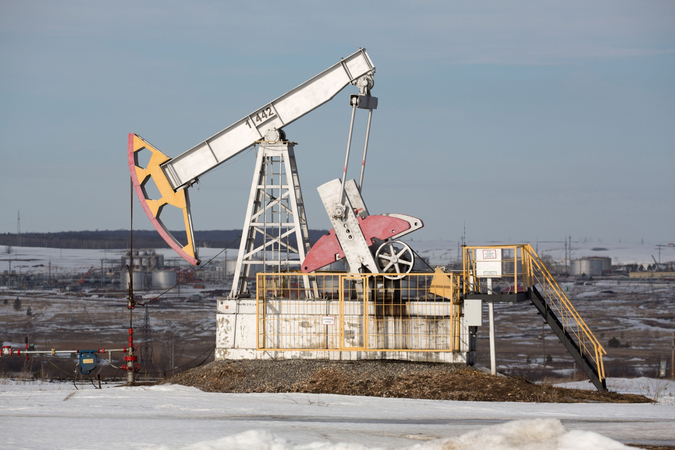
After posting its worst quarter on record, oil is now headed for its best three months in 30 years as it bounces back from this year’s historic crash. Yet the rebound remains tenuous.
Futures in New York have almost doubled in value this quarter, buoyed by OPEC+ production cuts and rebounding oil consumption in post-lockdown China. The market’s climb from negative territory in April has been swift but bumpy, with the U.S. benchmark struggling to hold above $40 a barrel amid a stubborn supply glut and a resurgence of Covid-19 cases that’s darkened the demand outlook.
“It’s not going to jump back up to $60 overnight, but to get to where we are now from where we were at is an incredible story,” said Phil Flynn, an analyst at Price Futures Group Inc. How quickly the market can complete its recovery is an open question. “Coming out of the rut will have to happen one day at a time,” he said.
While demand is gradually improving, it’s still a long way off pre-crisis levels. In the U.S., a spike in virus cases is prompting many states to pause or reverse re-openings, which could curb summer travel just as fuel consumption was beginning to ramp up. Across the Atlantic, European Union governments extended a travel ban for U.S. residents.
Rising American inventories are also weighing on prices, which are still 35% down from last year. Crude stockpiles have expanded for the last three weeks to the highest level on record while diesel supplies have swelled for 11 of the last 12 weeks. Government data to be released on Wednesday will reveal whether the situation is worsening.
“It could be a slaughter,” said Robert Yawger, director of the futures division at Mizuho Securities USA. “We could have three records tomorrow in gasoline, distillate and crude oil at all-time record storage levels.”
In yet another threat to the market recovery, rising prices have prompted some U.S. producers to restart wells they shuttered after the crash. ConocoPhillips is the last to announce it will restore some curtailed production next month.
While increasing U.S. output complicates OPEC+’s goal of balancing the market, the producer alliance has made good on its historic pledge to cut production but almost 10 million barrels a day. Saudi Arabia and Russia have both slashed exports to multiyear lows, supporting physical prices in some parts of the world.
In another bright spot for the oil market, China’s recovery is continuing with manufacturing data for June beating estimates, pointing to stronger demand from the world’s largest consumer.
“The worst is behind us,” Amin Nasser, chief executive officer of Saudi Aramco, said in an interview with consultant IHS Markit. “I’m very optimistic about the second half of this year. We see it in China today, it’s almost at 90%.”
By The Washington Post · Thomas Heath, Hamza Shaban · NATIONAL, BUSINESS, US-GLOBAL-MARKETS Stocks overcame weeks of uncertainty, social unrest and a resurgence in coronavirus infections to finish one of Wall Street’s best quarters in history.
Two of the three major stock indexes are still down for the first six months of the year, and Federal Reserve chairman Jerome Powell on Tuesday cautioned that the economic recovery remains “extraordinarily uncertain” in the face of the stubborn coronavirus.
But indexes have rebounded from their March lows as investors placed their faith and money on the transformative power of remote technology and on their belief that a slow-but-sure broad recovery – backed by trillions in federal guarantees – is in the works.
The Dow Jones industrial average jumped nearly 300 points, or 1.1 percent, as the session came to a close. The Dow sealed a 16 percent comeback in the second quarter, leaving the blue chips 10 percent short of break even for the year. Apple, Home Depot, Dow and Microsoft muscled the index higher in the quarter.
“The second quarter revival was like Lazarus coming back from the dead,” said Howard Silverblatt of S&P Dow Jones Indices.
The Standard & Poor’s 500 index jumped 1.5 percent on Tuesday to cap its best quarter since the fourth quarter of 1998 – in the midst of the dot-com bubble – with a 19 percent gain. Energy, technology and discretionary spending – all industries that are tied to a broad economic recovery – led the S&P for the quarter. The index closed Tuesday at 3,100.23 and is down 4 percent on the year.
The Nasdaq – led by a handful of technology powerhouses – is up more than 11 percent on the year. Stay-at-home stocks like Zoom, payments firm PayPal Holdings, online marketplace MercadoLibre and the electric carmaker Tesla lifted the Nasdaq to a 30 percent gain in the second quarter.
The comeback follows a swift and frightening economic freeze caused by a plague that swept through the globe, closing countries, demolishing economies and killing hundreds of thousands.
The broad S&P plunged 31 percent for the year on March 23 after states shut down, telling people to stay inside, putting nearly 30 million Americans out of work, grounding airlines, closing schools, sports and businesses and bringing commerce to a standstill.
Much of Wall Street believes the economy bottomed in April, followed by positive economic news has filtered up in May and June. Personal incomes rose by 10.5 percent, thanks largely to federal stimulus checks. First-time unemployment filings have leveled off. As more drivers took to the roads, the price of oil doubled in June, aiding a crucial industry that supports millions of jobs. The housing market is on the rise, thanks to record-low interest rates. Early in June, a closely-watched report on private payrolls showed 2.8 million jobs lost in May, far fewer than the nearly 9 million experts had predicted. The next private payroll report is due out on Thursday.
“The Great Recession of 2020 may go down in history as the deepest but shortest recession,” said Kristina Hooper, chief global market strategist at Invesco.
Analysts said that the quarterly 401(k) retirement plan statements that will be mailed to tens of millions of participants in the next few weeks will show the big stock gains, which could instill confidence in consumers and cause them to feel more comfortable about spending. But much could still go wrong with the economy if the virus spreads and causes more economic slowing or even contraction.
“Many investors lived through 2008 and 2009, and learned from that experience the swiftness with which markets can rebound,” said Nicole Tanenbaum of Chequers Financial Management. “Those investors were rewarded for staying the course, and when they open their 401(k) statements later this month and see green numbers, they will again feel justified.”
Most investors have sat tight through the turmoil. From mid-February through the end of May, fewer that 1 percent of Vanguard’s household and retirement plan participants abandoned equities for safer harbors, according to Vanguard, which has $5.7 trillion under management.
“Very few people panicked,” said Vanguard senior investment strategist Jean Young. “And of those that traded, two-thirds bought equities instead of selling. Vanguard investors largely stayed the course.”
Fidelity Investments said its most recent data covering January through early May show only a tiny number of individual investors in retirement plans sold out of stocks.
“Despite some significant market volatility earlier this year, most of our retirement savers stuck to their long-term savings plan,” said Fidelity spokesperson Mike Shamrell.
An extraordinary committee tasked with studying whether Thailand should join the Comprehensive and Progressive Agreement for Trans-Pacific Partnership (CPTPP) has said it requires another 60 days.
The committee’s chairman Veerakorn Kamprakob said this was necessary as its three subcommittees need more time to complete their work. The original deadline for the job was early July.
The three subcommittees were assigned the job of studying the pact from the aspects of economy, agriculture and public health. Given that Thailand is an agriculture-oriented country, this aspect needs to be studied very carefully.
The committee, which was appointed by the House of Representatives last month, will put in for an extension at the House meeting on July 10.
The CPTPP is a free-trade agreement between Australia, Brunei, Canada, Chile, Japan, Malaysia, Mexico, Peru, New Zealand, Singapore and Vietnam.
Nine out of 19 stocks in the SET100 Index generated returns of more than 10 per cent, while 51 out of 81 stocks performed worse than expected in the first half of this year.
The stock that rose the highest was Sri Trang Agro Industry (STA), which spiked 167.5 per cent to Bt26.75 per share.
STA stocks did well after the company decided to list its subsidiary Sri Trang Gloves (STGT) in the Stock Exchange of Thailand (SET) in July.
Through the listing, STA will be able to raise approximately Bt15 billion to expand its production of rubber gloves worth about Bt11 billion, while STA will hold 50.7 per cent of STGT shares after launching initial public offerings.
Other stocks that did well were TQM Corporation (TQM) and Super Energy Corporation (SUPER), which rose by 104.55 and 66.07 per cent, respectively.
Investors were positive about these stocks as TQM’s net profits rose from Bt404 million in 2018 to Bt507 million in 2019 and Bt179 million in the first quarter of this year, while SUPER’s net profit rose from Bt1.045 billion in 2018 to Bt2.137 billion in 2019 and Bt718 million in the first quarter of this year.
Meanwhile, the stock that fell the most was that of Banpu (BANPU), which dropped 49.16 per cent to Bt6.05 per share, followed by Thai Airways International (THAI) and Minor International (MINT), which dropped by 45.99 per cent and 45.28 per cent respectively due to the Covid-19 fallout.
Sornchai Pitthayaprug, a stock analyst at Capital Nomura Securities, said BANPU’s net profits dropped due to a decline in coal prices as many countries are opting for clean energy. The coal business accounts for approximately 70 per cent of BANPU’s earnings before interest, tax, depreciation, and amortisation (EBITDA).
“In the second half of this year, coal businesses may face oversupply as many countries are aiming to cut down on the consumption of coal,” he said, adding that BANPU’s move to invest in natural gas may also result in oversupply due to the economic slowdown and the Covid-19 impact.
“However, the price of BANPU stock is likely to rise because there is always a demand for natural gas, but it also depends on the world’s economy,” he said, adding that BANPU’s net profits in the first quarter rose to Bt1.7 billion from a loss of Bt552 million in 2019 thanks to Bt3.3 billion in profits from foreign exchange.
“We expect BANPU’s second-quarter performance to drop to its lowest this year,” he added.
Meanwhile, a stock analyst at Phillip Securities expects BANPU to make a loss of about Bt3.2 billion this year.
“However, we are advising investors to buy this stock at Bt8 per share as its price to book value ratio [P/BV] was 0.6 times,” the analyst said.
In its meeting on Tuesday (June 30), the Cabinet approved the Finance Ministry’s proposal to cut down on state-owned banks’ contribution to specialised financial institutions’ (SFIs) development fund due to the impact the Covid-19 crisis has had on SFIs’ financial standing.
Government spokesperson Narumon Pinyonsinwat said the Cabinet had agreed to reduce contributions to SFI development funds in order to ease the burden on state-owned banks such as the Bank for Agriculture and Agricultural Cooperatives (BAAC), the Government Savings Bank, the Government Housing Bank and the Islamic Bank of Thailand.
Currently, these banks pay 0.25 per cent of their deposit base annually to the SFI fund.
According to the Cabinet’s decision on Tuesday, their contribution will be reduced to 0.125 per cent for this year and next, before they return to paying 0.25 per cent in 2022.
In its proposal, the Finance Ministry cited the impact of Covid-19 on state-run banks, and this new rate will ease their financial costs. It will also be in line with the central bank’s decision to halve commercial banks’ contribution to the Financial Institutions Development Fund.
The Bank of Thailand and the Finance Ministry are closely monitoring bad debts in the financial system, which have the potential of rising due to the severe impact the virus has had on the country.
The banks’ contribution is designed to save taxpayers from bearing the cost of government rescue financial institutions should a crisis take place in the future as it did during the 1997 financial crisis.
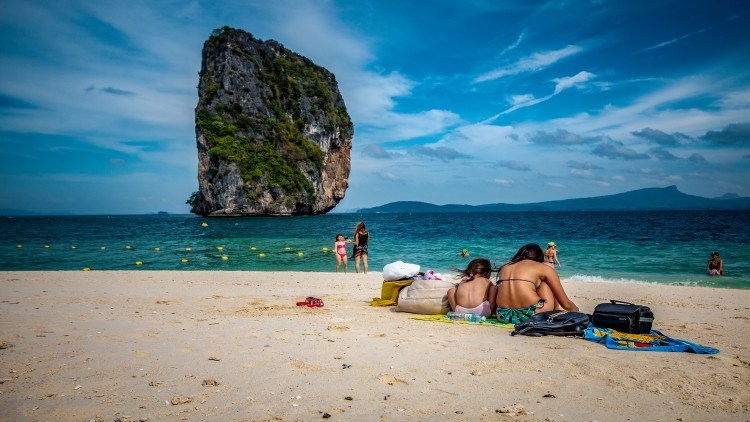
The Cabinet approved the amended version of the Bt22.4-billion domestic tourism campaign at its meeting on Tuesday (June 30), said deputy government spokesperson Traisulee Traisoranakul.
The campaign, which will run from July 1 to October 31, aims to bring the tourism industry back to life after it was brought to its knees by the Covid-19 outbreak.
The campaign includes a government subsidy on hotel stays totalling 5 million nights, restaurants and tourism activities as well as up to 2 million domestic air tickets.
The air ticket subsidy gives travellers a 40 per cent discount on airfare, but not exceeding Bt1,000 per seat.
The campaign also includes a Bt2,000-per-head subsidy for 1.2 million village health volunteers and medical staff at tambon hospitals for study tours.


 Sara Lamsam, president and chief executive officer at Thai Life Assurance Plc
 Abel Deng, CEO, Huawei Technologies (Thailand) Co., Ltd