Insurance brokerage company, TQM Corporation (TQM) has set its sales target at Bt50 billion by 2026, the company’s president Anchalin Pannipa said on Tuesday (September 1).
She said the company’s sale of insurance policies will rise in the next six years thanks to the expansion of marketing channels, the launching of new products as well as mergers and acquisitions of both local and foreign insurance companies.
“The company is currently negotiating investments in two insurance firms and is expected to close the deal by yearend,” she said. “This will help boost the company’s potential, and we expect our revenue and profits to rise once the deal is closed.”
She added that TQM will maintain its sales target for this year at Bt15 billion.
“We expect performance in the second half to be better than the first half as many businesses will improve in the fourth quarter,” she said. “TQM will also launch new products and tie up with other insurance companies to boost revenue and profit.”
She added that TQM will also cooperate with Forth Smart Service to sell insurance products via Boonterm top-up machines.
“There are currently 130,274 Boonterm top-up machines nationwide with more than 21 million customers making over 1.5 million transactions daily,” she added.
“This cooperation will help the company expand its customer base and market channels to other provinces.”
Oil and gas conglomerate PTT has conducted a feasibility study to supply liquefied natural gas (LNG) for industrial use to industrial estates in Yangon, said the company’s senior executive vice president for Gas Business Wuttikorn Stithit.
Yangon, the commercial capital of Myanmar, has more than a dozen industrial estates.
Wuttikorn added that PTT estimates LNG demand in CLMV (Cambodia, Laos, Myanmar and Vietnam) markets as well as the Philippines and southern China at more than 1 million tonnes per year.
Demand for natural gas worldwide has fallen due to the Covid-19 impact, but PTT believes it will recover by mid- or late next year.
BGrimm Power shows interest in community power plants
CorporateAug 31. 2020BGrimm Power president Preeyanart Soontornwata
By The Nation
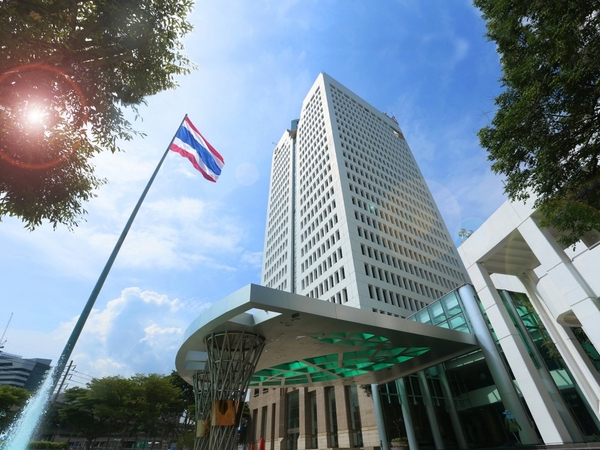
Energy company BGrimm Power is keen to invest in community power plants, its president Preeyanart Soontornwata said in response to Energy Minister Supattanapong Punmeechaow’s recent declaration that he will continue with these projects pending revision of details.
Preeyanart said BGrimm has seen potential in six to seven locations where bio-mass power plants can be set up. Most of these sites are in the South and the Central region.
She said the company wants to share its experience and help communities generate sustainable income.
CP All Laos Co Ltd, which is 99.99 per cent held by Albuera International Limited, CP All Plc’s 100 per cent owned subsidiary, has entered into a master franchise agreement with 7-Eleven, Inc to establish and operate 7-Eleven convenience stores in Laos for 30 years.
CP All Plc reported to the Stock Exchange of Thailand (SET) on Friday (August 28) that under this contract, both parties may consider extending the contract two times, each time after 20 years.
On February 21, 2019, CP All Plc had reported to the SET that it would negotiate a master franchise agreement in relation to the establishment and operation of 7-Eleven stores in neighbouring countries.
CP All Laos is a newly found company under Laos laws to establish and operate 7-Eleven stores in the country under said master franchise contract, with registered capital of 20 billion kip (Bt68 million).
Kasikorn Securities aims to boost the weight on bank and energy shares seeing as the Thai stock market is expected to rise to 1,400 points at the end of this year thanks to the expected development of a Covid-19 vaccine.
Vasin Vanichvoranun, the securities company’s CEO, said he does not expect the second wave of Covid-19 infections to be very severe.
“Also, commercial banks still have a lot of capital, and since they are under the central bank’s supervision, they will not fail that easily,” he said. “Meanwhile, listed companies’ profits have improved, though investors should keep an eye out or the US-China conflict which may affect investment in the short term.”
Hence, he said, Kasikorn Securities will put more weight on investment in bank and energy stocks, instead of weighting e-commerce, food and electronics stocks as it had done previously.
“Since interest returns will remain low for a while, we expect investors to gradually invest in equities and short-term debt instruments instead of holding on to cash,” he said.
“We also believe that foreign investments is another way of diversifying risks and generating good returns, such as stocks in Europe, China, South Korea and Taiwan.”
In addition, he said, Kasikorn Securities will launch three funds, namely foreign fund, fixed income fund and retirement mutual fund, this year which should attract investors. He added that he expects Kasikorn Securities’ assets under management this year to be as good as or even better than that of last year’s Bt1 trillion.
“The securities company currently holds assets worth Bt1.3 trillion, Bt1 trillion of which is mutual funds, Bt188 billion retirement mutual funds and Bt168 billion private funds. The market share of these funds is 21.4 per cent, 15.5 per cent and 15.3 per cent, respectively,” he said.
“According to the Association of Investment Management Companies’ data on July 31 this year, our securities company was given the top ranking among securities companies that have the most market share in the mutual fund industry,” he added.
Gulf Energy Development (GULF)’s board of directors have decided to hold no more than 10 per cent stake in Intouch Holdings (INTUCH).
A GULF official said the company will buy INTUCH shares via the Stock Exchange of Thailand (SET) or other methods under Securities and Exchange Commission (SEC) rules.
“As of August 21, GULF is holding a 7.99 per cent stake in INTUCH,” the official said, adding that the board has agreed to have an authorised person negotiate and change conditions on trading of INTUCH common shares, financing, signing of contracts and contacting government for the company’s best interests.
“The company will use circulating funds and loans from financial institutions to buy INTUCH shares,” the official said.
INTUCH is a holding company that invests in leading Thai telecommunications companies, which still have high potential. Hence, the official said, GULF believes this investment will generate consistent, long-term dividends.
Gulf Energy Development plans to raise funds through increase in share capital to finance investments and enhance investment potential to at least Bt110 billion.
The company expects revenue next year to jump over 50 per cent year on year.
Sarath Ratanavadi, Gulf’s chief executive officer, said during the shareholders meeting that the company expected to raise around Bt30 billion from the capital increase, adding that the company has a lot of projects waiting for investment.
“We will invest in power plant construction and renewable energy projects both in Thailand and overseas, such as the Hin Kong 1,400-megawatt power plant and Burapa Power 540MW power plant, as well as mergers and acquisitions of foreign power plants in Europe, US and Britain,” he said.
For short-term investment, he said the company had a plan to invest or acquire power plants that already supplied electricity for commerce because it would generate returns quickly.
“So far, the company has invested in a German wind power plant with a 50 per cent stake, expecting to recognise the return on investment of Bt1.2 billion to Bt1.5 billion yearly,” he said, adding that the company’s construction of large power plants would be completed in 2022.
He added that although the increase in capital would cause a decline in earnings per share (EPS), the company’s EPS would grow steadily from the recognition of revenue and profit from various projects.
“We expect the company’s production capacity to increase to 10,000MW by 2022,” he added.
Meanwhile, Yupapin Wangviwat, Gulf executive director and chief financial officer, said that after increasing capital, the company’s debt-to-equity would fall to between 1.7 and 1.8 times.
“The company’s price to earnings that was recently high would fall in line with the increasing profit,” she said
“We expect profit next year to jump by over 50 per cent from this year’s 15 per cent because the company would recognise revenue from the German wind power plant and the 2,500MW GSRC power plant, while large power plants would gradually open within 2022-25.”
CPF pilots Thailand’s new standard on cage-free farming practices
CorporateAug 27. 2020Somkid Wannalukkhee, CPF’s senior vice president for egg business
By The Nation
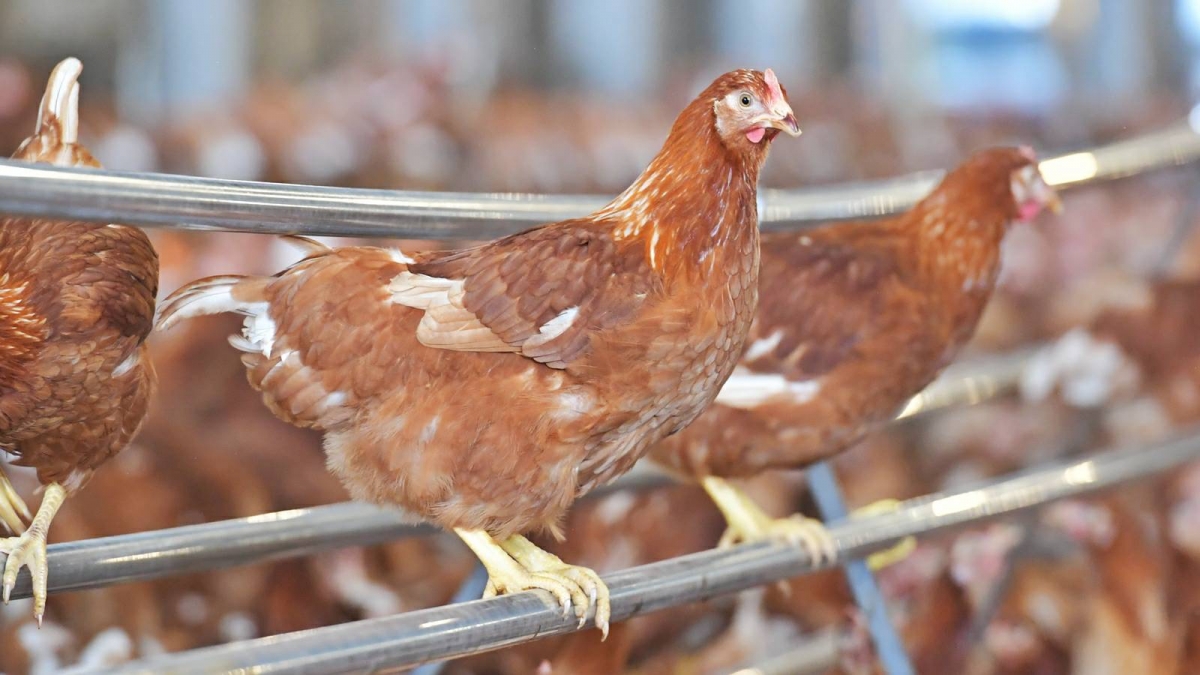
Charoen Pokphand Foods (CPF) is supporting Thailand’s planned new standard on cage-free farming practices through a pilot project at Wang Somboon farm that will share knowledge with farmers on the humane raising of laying hens.
Farming is integral to the operations of CPF, which focuses on animal welfare to deliver consumers safe food and address an increasing global demand for animal welfare products, said Somkid Wannalukkhee, CPF’s senior vice president for egg business.
Wang Somboon farm in central Thailand’s Saraburi province was turned into a pilot cage-free farm in 2018, with a plan to develop corporate practices that will be replicated at other farms. CPF has exchanged views with Thailand’s Department of Livestock Development, which is drafting a new standard so that Thai farmers can satisfy consumer demand.
“Once the cage-free standard is officially promulgated, Thailand’s egg products will enjoy greater trade and marketing opportunities, particularly when it concerns premium restaurants and leading modern trade channels thanks to their policy and also increasing demand for cage-free eggs as well as their concrete push for animal welfare products. This will enhance laying-hen raisers’ competitiveness,” Somkid said.
CPF has applied the European cage-free standard at Wang Somboon farm. The closed chicken house has a low stocking density of seven laying hens per square metre compared with general standard of a maximum nine hens per square metre. An enriched environment also allows chickens to express their behaviour freely. They can rest on perches. The flooring supports foraging and self-cleaning. The house is equipped with an egg-laying spot as well as an automatic lighting, temperature and air ventilation control system. Chickens are adequately fed. Living in comfortable environment, laying hens are happy and enjoy good health, making antibiotics unnecessary throughout their life.
The cage-free farm also employs a computerised production system: eggs are automatically transferred from the laying spot to the stock room while the farm’s sanitary and biosafety system is controlled in accordance with the Biosecurity Hi-tech Farming guidelines. Disease carriers like rats, lizards and insects are kept out of the farm, while environmental contamination is prevented. As such, CPF’s cage-free eggs have won world-class recognition.
Aside, CPF’s F100 egg-laying hens are selected for the farm. A wholegrain feed meal was developed to promote health and natural growth. Cage-free eggs are thus fresher than the eggs from other farms. They do not give off foul odour, while the egg yolks are of fresh orange colour. The eggs thus contain high quality and nutritious values, for consumers’ good health.
Wang Somboon farm is not only a pilot project for CPF’s cage-free farming, but also a learning centre where farmers can study and exchange experiences to improve cage-free farming practices and sustainably add value to Thailand’s agricultural products.
CorporateAug 27. 2020EGCO Group president Thepparat Theppitak
By The Nation
The Electricity Generating Co (EGCO Group) is set to apply for a licence from the Energy Regulatory Commission to import liquefied natural gas (LNG), said EGCO Group president Thepparat Theppitak.
The imported LNG will fuel its own power plants, he added.
The company also plans to join with its existing community enterprise partners to invest in community power plants in many areas.
Thepparat expects the company’s operating profit this year will be close to last year’s figure of Bt10.368 billion.
EGCO Group reported net second-quarter profit of Bt5.075 billion, up 29 per cent year on year. The increase was contributed mainly by foreign exchange gain. Net profit for the first half of 2020 was Bt4.662 billion, down 39 per cent year on year.
However, EGCO Group has managed to maintain a debt to equity ratio of only 1.19.
In response to the operating performance, EGCO’s board of directors resolved to pay an interim first-half dividend of Bt3 per share on September 17.
The group also reports good progress in all of its four projects – three power plants and one related business.
The Gangdong Fuel Cell Project in South Korea is 98 per cent complete and expected to start commercial operation in the fourth quarter of this year.
The Nam Theun 1 Hydropower Project in Laos is 74 per cent complete and scheduled to begin operating in the second quarter of 2022.
The Yunlin Offshore Windfarm in Taiwan is 48 per cent complete and set to launch commercial operations in the third quarter of 2021.
Meanwhile, the extension of the petroleum pipeline in Northeast Thailand is 43 per cent complete and expected to come online in the fourth quarter of 2021.
The company is also looking for new opportunities to invest in upstream fuel infrastructure to boost the value of its core business.
Video conferencing tech goes viral in Asia’s New Normal
CorporateAug 26. 2020Samir Sayed, Poly’s managing director for Asean and South Korea
By Sirivish Toomgum
The Nation
Global communications company Poly has seen growing demand for its video conferencing tech in Southeast Asia during the “new normal” of the Covid-19 pandemic.
Samir Sayed, Poly’s managing director for Asean and South Korea, said today the company’s products were in demand as more employees work from home in response to lockdowns after the outbreak.
Poly products range from headsets, software, and desk phones, to audio and video conferencing services.
The firm says Covid-19 has disrupted workplace norms, forcing many organisations to quickly accommodate a large remote workforce, but also rethink strategies and investments for continued communication and collaboration during this challenging time.
As economies around the world look to reopen and restore normalcy, changes in companies’ working practices are here for good.
Workers around the world are shifting their focus from “place” to “purpose” in a model where their time is split between the office, and the home office. So-called hybrid working is here to stay.
Businesses are looking to find better ways to adapt to this new model, and at the same time to realign business priorities, as well as reset their values, culture and purpose to reflect the realities of the “Next Normal”.
Poly recently launched two new reports discussing the future of the workforce, titled “The Future of Work in the New Normal: Re-thinking your Digital Priorities”, and “Hybrid Working: Creating the ‘next normal’ in work practices, spaces and culture”.
They highlight the evolving trends of today’s modern workplace (and work spaces), where hybrid working will become the norm, and continued investments in the right technologies and collaboration solutions will go a long way in helping organisations plan for the future.
Work in the New Normal: Re-thinking your Digital Priorities
A new study from Ecosystm 360 commissioned by Poly discusses key priorities of business and IT leaders in Asia Pacific as the Next Normal emerges, and provides guidance to enterprises on how to negotiate the changes in their business and employee engagement models.
The study revealed that hybrid working will become the norm for many organisations, with continued investments in cybersecurity, education and technology as key digital priorities to focus on. Some highlights from the study include:
Hybrid Work Model is Here to Stay
• Working from home will become the norm for many organisations. Forty per cent of organisations surveyed expected to continue using virtual meetings, even after Covid-19, irrespective of location. In the Philippines, for example, business process outsourcing (BPO) providers are piloting different models by having some employees work from home and some in the office.
• The nature of the workplace will change; workplaces will be fitted out based on the need to meet and collaborate on projects; 55 per cent of respondents expect increased use of digital technologies for Employee Experience; 47 per cent of respondents expect increased use of collaborative tools and platforms even after the Covid-19 crisis is over.
While just 15 per cent of business leaders in Asia Pacific state they will reduce investments, business leaders in Malaysia bucked the trend, with 33 per cent indicating they expect to reduce the use of commercial office space post-Covid-19.
Organisations Will Focus on Making Remote Working Possible
• Implementing Virtual Private Network (VPN) access – 44 per cent of organisations surveyed implemented or boosted their VPN infrastructure in order to let more employees securely access internal tools and confidential data, in order to make remote working possible for a larger portion of their workforce.
• Investments in laptops and collaborative software – Many organisations had to invest in laptops for employees using desktops (36 per cent) and collaborative software (41 per cent) during this crisis. Across several countries in Asia Pacific – and mainly in the emerging economies – employees were just not equipped to work effectively from home. Laptops, monitors, and headsets had to be purchased for the home environment.
• Proactive changes to data protection and HR policies – Organisations took the opportunity to revamp data protection and compliance policies (43 per cent), re-evaluate HR policies (34 per cent), and implement measures to monitor the emotional well-being of their employees (31 per cent).
Videoconferencing will Drive Workplace Engagement and Collaboration
• Videoconferencing is the new voice – 63 per cent of organisations in Asia Pacific significantly increased their investments in conferencing devices and headsets to address the collaboration challenges during the Covid-19 crisis, with 41 per cent increasing investments in videoconferencing devices significantly.
• Cloud video adoption to continue growing – 33 per cent of organisations increased their investments in cloud video and collaboration solutions due to the pandemic, with demand expected to continue over the next 12 months, as they scale their technology capabilities to meet the needs of an increasingly remote workforce.
________________________________________
Hybrid Working: Creating the “next normal” in work practices, spaces and culture
Drawing on experts and futurists in the future of work, workspace design and psychology, this Poly report sets out the path to the “next normal”, where employees enjoy flexibility and choice, and businesses thrive through motivated collaborative and productive teams.
Highlights from the study include:
Post-lockdown work practices will incorporate ‘hybrid working’
• New working patterns – new working policies that bring employees flexibility on when and where they work.
• Outcome-based working – taking the onus off the hours and location, to being productive and delivering results.
• Optimised investment – looking beyond the company office to create collaborative, technology-enabled personal workspaces anywhere.
Creating the best environments for employees to be productive and collaborative will be vital to the new hybrid working era:
• Home offices will be given as much attention as the kitchen – ergonomically organised and crafted into places that inspire.
• A prevalence of co-working – organizations will invest in co-working spaces outside of cities to attract talent. Group collaboration and social connections with colleagues and others will lead to cross-fertilisation of ideas and innovation.
• Cityscapes will change – will we continue to see high-rise office buildings? The city as a structure will stay as apartment living means the city is integrated into people’s lives; restaurants are an extension of their kitchen and gyms their workout space.
As organisations respond, redesign and reinvent their business models, technology will play a fundamental role in enabling the shift to hybrid working.

 BGrimm Power president Preeyanart Soontornwata


 Somkid Wannalukkhee, CPF’s senior vice president for egg business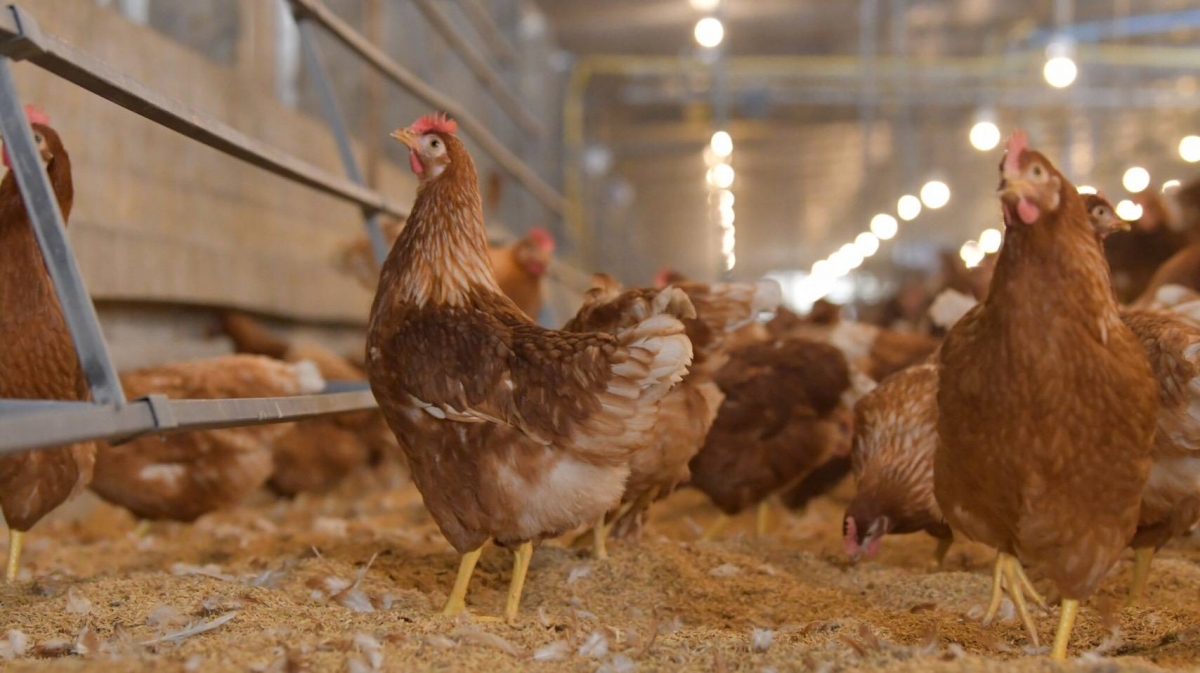
 EGCO Group president Thepparat Theppitak
  Samir Sayed, Poly’s managing director for Asean and South Korea
 .jpg)

