Amazon’s virus stumbles have been a boon for Walmart and Target #ศาสตร์เกษตรดินปุ๋ย

#ศาสตร์เกษตรดินปุ๋ย : ขอบคุณแหล่งข้อมูล : หนังสือพิมพ์ The Nation.

Amazon’s virus stumbles have been a boon for Walmart and Target

CorporateJul 31. 2020The Kent fulfillment center in May. Amazon has seen a slip in market share amid the pandemic. MUST CREDIT: photo for The Washington Post by Jovelle Tamayo.The Kent fulfillment center in May. Amazon has seen a slip in market share amid the pandemic. MUST CREDIT: photo for The Washington Post by Jovelle Tamayo.

By The Washington Post · Jay Greene, Abha Bhattarai · BUSINESS, TECHNOLOGY, RETAIL 

SEATTLE – For Amazon, five straight months of sustained mania triggered by the pandemic has shaken the retail giant and created an abrupt opening for rivals.

Amazon is still the big gorilla online, and sales have surged amid the pandemic. But Amazon’s shipping delays and out-of-stock items meant online shoppers turned to retailers including Walmart and Target, whose networks of brick-and-mortar shops suddenly became an advantage for picking up and shipping e-commerce purchases quickly. Within Amazon’s warehouses, coronavirus safety measures have resulted in workers picking items from shelves and loading them into trucks more slowly – and with no end to the virus in sight, it is difficult to forecast a return to full, precrisis efficiency.

Its share of U.S. e-commerce fell from 42.1% in January to 38.5% in June, according to data from Rakuten Intelligence. In April, it hit a low of 34.2%. At the same time, Target’s share grew from 2.2% to 3.5 percent and Walmart’s grew from 4.2% to 5%.

Amazon reported a 40% surge in revenue Thursday, to $88.9 billion, part of an overall rising tide in sales amid the pandemic that has benefited online retailers. But its slip in market share in comparison with other retailers reveals an unexpected fickleness in consumer habits.

Mike Mastela, a cloud security specialist in Livonia, Mich., who used to buy everything on Amazon Prime, has started opting for same-day pickup from Target for items such as undershirts and dog food. “I’m honestly thinking about dropping my Prime membership simply because I have yet to see a two-day delivery in months,” the 67-year-old said.

More than a dozen interviews with warehouse workers, third-party sellers, current and former executives, and retail experts painted a portrait of a company renowned for its wealth of consumer data and logistics expertise scrambling to adapt and recover from the coronavirus crisis, even months into it.

“It was a shocking display from a company that built itself up as a distribution company,” said Paula Rosenblum, an analyst for Retail Systems Research in Miami. “When the rubber met the road, they couldn’t get the products people wanted.”

Chief executive Jeff Bezos acknowledged as much during his testimony Wednesday before a House subcommittee looking into claims that Amazon, Apple, Google and Facebook have abused their dominant positions as tech leaders to thwart competition. Asked if Amazon designated devices such as its Fire TV, Echo speakers and Ring doorbell as essential items at the start of the pandemic, giving them the same sort of shipping priority as disinfectant and toilet paper, Bezos said he didn’t know.

“What I can tell you is that we had there was no playbook for this,” Bezos said. “We moved very quickly. Demand went through the roof, (and it) was like having a holiday selling season but in March, and we had to make a lot of decisions very rapidly.”

(Bezos owns The Washington Post.)

The company is “balancing capacity across our network of fulfillment centers while ensuring we’re meeting social distancing and safety measures to keep our teams safe,” spokesman Dan Perlet said in a statement. He said the company is moving quickly to restore delivery speeds. 

Amazon declined to make senior executives available for interviews.

Former and current Amazon executives who spoke on the condition of anonymity because they weren’t authorized to speak publicly say no company could fully prepare for the crush of orders stemming from a global pandemic. Amazon spends six months preparing for inventory needs for the holidays, then three staffing up. The pandemic gave Amazon no time to prepare, while snarling supply chains and scaring warehouse staffers who often work side by side with colleagues.

Of course, Amazon’s revenue has continued to grow in recent months amid a surge in online shopping as people stay home and many stores remain closed. But the company lost an opportunity to extend its lead over rivals.

All of the executives said they expect Amazon to eventually regain its footing as shoppers edge back toward patterns that were in place before the pandemic, when the digital marketplace was often the first stop for online shoppers. And its market-share dip appeared to bottom out in June at 34.2%, according to Rakuten.

But even several months into the pandemic, Amazon still cannot always deliver packages to its Prime customers within two days. And its annual Prime Day marketing event – typically held in July – has yet to be scheduled.

As the coronavirus spread and local and state governments ordered people to stay home, Amazon’s logistics empire broke down. The vast network of hundreds of warehouses, return facilities and distribution stations, connected by vans, trucks and airplanes owned by Amazon and its partners, had previously enabled Amazon to deliver orders within a day or two to shoppers who signed up for Prime, which now counts more than 100 million members globally.

Since March, Amazon’s 23-person senior leadership team has been holding virtual meetings every few days to brainstorm responses to the company’s supply-chain and labor challenges, said a person familiar with the meetings who was not authorized to discuss them publicly and commented on the condition of anonymity.

The system was buckling under the weight of orders that had surged as though every day was Black Friday. But Amazon had not hired the tens of thousands of warehouse workers it typically does for the holidays. By April, the company had announced it would hire 175,000 new employees, pushing its total global workforce to 840,400.

But at first, work in the warehouses was not adapted for the virus, which emerged in some of its locations in Italy and Spain by mid-March and days later in its U.S. warehouses, from New York to California and Michigan to Texas. Amazon initially continued to hold meetings at the start of each shift, discussing safety precautions while scores of workers stood shoulder to shoulder, according to interviews with workers. It continued to press warehouse staffs to meet the rate at which it wanted workers to fulfill orders.

Amazon eliminated stand-up meetings during shifts in favor of new communication methods such as signboards and text messages, and began staggering shift start times and break times to reduce congestion, the company said March 24. Workers said the company suspended requirements to fill orders within time limits after complaints that tallying those metrics discouraged sanitary practices such as washing hands after sneezing.

Warehouse workers pressed for paid time off for employees who felt sick or needed to quarantine, and for the temporarily closure of warehouses where workers tested positive, so the facilities could be cleaned. Workers protested and complained that Amazon was not doing enough to protect them; the company countered that it was following public health guidelines.

As the company’s woes became more public, executives scrambled to come up with a plan. Workers in its headquarters were reassigned to work on safety, handling tasks such as procuring masks, developing screening systems and setting up testing labs. Amazon cut the number of warehouse workers loading parcels onto trucks from two to one to better allow social distancing.

“People’s only job became how to keep workers safe,” said one of the former executives, who requested anonymity because the person still does business with the company.

But the safety changes heightened delays. Amazon still struggles to get packages out of its warehouses at pre-pandemic rates.

In late May, in its warehouse in the Seattle suburb of Kent, Amazon showed off its reconfigured break rooms, spreading tables out to encourage social distancing. The warehouse floors were dotted with hand sanitizer stations, and tape marked directions employees should walk so as not create bottlenecks.

At some, but not all, of its warehouses, Amazon has resumed pushing workers to meet specific targets for the speeds at which they stow, pick and pack items, according to workers at warehouses in New Jersey, Michigan and California. Amazon’s Perlet disputed that, but didn’t say whether the company tracked speeds at all its warehouses.

Regardless, the pace is brisk, and the company is pushing workers to log long hours as though every day is Prime Day, said Rachel Belz, who stocks shelves at Amazon’s West Deptford, N.J., warehouse.

“They’re just not calling it that. But we’re all working extra,” said Belz, who is logging 55-hour workweeks now, up from the 44-hour weeks she normally works.

For consumers, the delays in getting products were only partly caused by the unexpected flood of orders and warehouse processes. Many goods were also out of stock. On March 17, Amazon told sellers they could no longer ship nonessential goods to its warehouses, effectively forcing them to ship the items to consumers themselves if they hoped to register sales. And it delayed shipping on products not deemed crucial, leaving consumers with long waits.

Many of the items that were in short supply at the start of the pandemic, such as toilet paper and liquid hand soap, are readily available on the site now. But Amazon shoppers still have a hard time finding Purell hand sanitizer and Lysol disinfectant wipes. Given demand, manufacturers are allocating supplies, which often means Amazon can’t keep the items in stock, Perlet said.

More than half of the retail sales on Amazon are from third-party merchants who sell at the company’s digital bazaar. Amazon’s emphasis on essential items forced many sellers to take on their own shipping, a task many were ill-equipped to handle. That caused so many struggles that shoppers’ negative reviews for third-party sellers are at record levels, according to the e-commerce research firm Marketplace Pulse.

As Amazon’s selection dried up or got delayed, consumers turned to competitors such as Walmart and Target and placed online orders for pickup at the chains’ stores. They have a combined 6,600 stores nationwide. Amazon has about 560 stores, the vast majority of them Whole Foods Markets.

Amazon has lost some customers like Jade Wang, who used to do almost all of her shopping on the site. She grew frustrated in March at the lack of basic items such as paper towels and disposable gloves and delayed or canceled orders.

So Wang, who lives in Austin, turned to Target, Office Depot, Chewy and AliExpress instead, as well as smaller online shops.

“At the beginning of the pandemic, it was item availability that drove me to other retailers,” said Wang, 36, who runs the start-up program at Cloudflare, a website security company. Four months later, she says, she is “relying a lot more on Target because their shipping is fast.” Plus, she can opt for same-day delivery.

Amazon’s rivals fared better in large measure, experts said, because of one distinct advantage: physical stores spread across the country. Walmart customers, for example, were able to order some items online and have them dropped into their trunks at local stores the same day, offering more-reliable selection and faster delivery.

Walmart moved quickly to offer “contactless” pickup and delivery options. By April, it had rolled out two-hour express deliveries from many of its 4,750 U.S. stores and had hired more than 150,000 workers to stock shelves, pick groceries and handle pickup orders.

Walmart’s U.S. e-commerce sales grew 74% in the three months ending May 1. Online sales at Target, meanwhile, have more than doubled during the pandemic, with e-commerce growing a record 282% in April alone.

“We’ve just seen Cyber Monday occur almost every day, except the volume is twice the size,” Brian Cornell, Target’s chief executive, said in an earnings call in May.

Target now fills about 80% of its online orders from its 1,900 stores. When the pandemic hit, the company quickly doubled the number of workers at its same-day home delivery service, Shipt, from 100,000 to 200,000 and rerouted merchandise to the stores that needed it most.

More than 5 million shoppers used the company’s drive-up pickup service during the first quarter, with drive-up orders – the company’s most popular service – increasingly nearly 1,000% in April from a year earlier, John Mulligan, Target’s chief operating officer, said in the earnings call.

Some of that growth was cannibalized from in-store sales, Robert W. Baird & Co. analyst Colin Sebastian said, as loyal Walmart and Target shoppers switched from in-store to online shopping. Sebastian is bullish on Amazon and believes the company has stabilized its logistics operations.

Still, he added, “Amazon is typically the disrupter. And in this case, Amazon was disrupted.”

PTTEP reveals 10-year strategy for growth after Covid-19 #ศาสตร์เกษตรดินปุ๋ย

#ศาสตร์เกษตรดินปุ๋ย : ขอบคุณแหล่งข้อมูล : หนังสือพิมพ์ The Nation.

PTTEP reveals 10-year strategy for growth after Covid-19

CorporateJul 30. 2020

By The Nation

PTT Exploration and Production (PTTEP) has refocused its 10-year business strategy for the post-pandemic era.

“After evaluating the impact of the Covid-19 pandemic and the changing industry landscape, PTTEP has sharpened business plans and set goals for 2030 of maintaining our competitiveness and ensuring sustainable growth,” said president and chief executive officer Phongsthorn Thavisin today.

“Our goals are going to be quite a challenge, especially in this dynamic business environment. Under the revised plans, the company will focus on continuously reducing unit costs to reach the top quartile in the industry. This will give us resilience to oil price volatility while sustaining operating cash flow to support investment in exploration and production projects as well as business acquisitions.”

Thailand, Myanmar, Malaysia and the Middle East would remain the focus for PTTEP investments, said Phongsthorn.

“We expect an average production growth rate [CAGR] of 5 per cent and aim to maintain a reserves-to-production ratio [R/P ratio] of 7 years,” he added.

As part of its 10-year strategy, the company is also hunting new business.

“In addition to our core business, PTTEP is also seeking opportunities to boost the fully integrated liquefied natural gas [LNG] business, both upstream and liquefaction, and investing in new businesses including power, and robotics and artificial intelligence, to overcome challenges in energy transition and to create long-term growth. The new business is targeted to contribute 20 per cent to net income in 2030,” Phongsthorn said.

president and chief executive officer Phongsthorn Thavisin

president and chief executive officer Phongsthorn Thavisin

In the first half of this year, PTTEP generated total revenue of US$2.779 billion (Bt87.549 billion) – 7 per cent down from the $3.001 billion (Bt94.830 billion) it generated in the same period of 2019.

Average sales volume in the first half was 345,207 barrels of oil equivalent per day (BOED), a rise of by 6 per cent from the 326,971 BOED in the same period last year, driven by the acquisition of Murphy Oil Corporation’s business in Malaysia and Partex Holding.

However, as a consequence of the Covid-19 outbreak and oil price war between Saudi Arabia and Russia in March this year, global demand for energy has crashed while the oil price has fallen more than 50 per cent this year.

As a result, PTTEP’s average selling price dropped 15 per cent to $40.15 per barrel compared to $47.26 in the same period last year.

Nonetheless, the company’s selling price fell proportionately less than the crude oil price since the natural gas price has already been secured with sales agreements where the price formula is linked to fuel oil and the average price over the past six to 24 months.

While crude oil accounts for roughly 30 per cent of PTTEP’s total sales volume and is directly impacted by oil price volatility, the company has entered into oil price hedging contracts for a certain portion of its trade. Meanwhile, PTTEP recorded an impairment loss of $47 million, primarily from its Mariana Oil Sands project in Canada as forecasted long-term low oil prices indicated project development was uncommercial.

Accordingly, PTTEP reported a net profit of $409 million (Bt12.935 billion) in the first half of 2019, a drop of 51 per cent from the previous year’s $827 million (Bt26.163 billion).

In the second quarter of 2020, PTTEP posted total revenue of $1.095 billion (equivalent to Bt34.954 billion) and net profit of $134 million (Bt4.323 billion). This was mainly due to the lower sales volume and average selling price, following lower energy demand amid the impact of Covid-19 and the falling global oil price.

Today (July 30) PTTEP’s board approved an interim dividend payment for the first six months of Bt1.50 per share, to be made on August 28.

Phongsthorn said the volatile global oil price together with the Covid-19 outbreak continue to have an impact on domestic energy demand.

Asa result, PTTEP has cut its 2020 sales target by 9 per cent to 355,000 BOED.

However, the company said it has cut its initial 2020 expenditure of Bt143.012 billion by 15-20 per cent by reducing operating costs and deferring exploration activities in some projects. The move will have no impact on future operations or the energy supply of the country, said PTTEP.

KTC cutting credit card interest rate #ศาสตร์เกษตรดินปุ๋ย

#ศาสตร์เกษตรดินปุ๋ย : ขอบคุณแหล่งข้อมูล : หนังสือพิมพ์ The Nation.

KTC cutting credit card interest rate

CorporateJul 30. 2020

By The Nation

Krungthai Card (KTC) is lowering interest rates and usage fees from August 1, in line with the rate specified by the Bank of Thailand.

Annual interest and usage fee rates will be cut to 16 per cent for all KTC credit cards and adjusted to 25 per cent for KTC Proud revolving loans and KTC Cash installment loans.

Said KTC president and CEO Rathian Srimongkol: “[T]he firm is supporting the Finance Ministry and Bank of Thailand’s policies to provide aid in the form of personal loans to card members who have been affected by Covid-19 in a full force and consistent manner, having covered over 3.5 million accounts for all KTC credit card, personal loan and car title deed loan members.”

KTC has also cut minimum payment rates for credit cards from 10 per cent to 5 per cent from April 2020 to 2021, 8 per cent in 2022, and 10 per cent in 2023.

Meanwhile, KTC Proud revolving loan customers currently have a minimum payment rate of 3 per cent, which is within the relief guidelines.

KTC said it has also provided relief for customers directly affected by the Covid-19 situation, for instance by switching them to long-term personal loans and cutting installment payments by 30 per cent until December 31.

As of June 30, about 4,000 customers have switched to long-term personal loans worth a total Bt300 million, with 90 customers opting for debt payment suspension, said the firm.

Apple Central World all set for grand opening tomorrow #ศาสตร์เกษตรดินปุ๋ย

#ศาสตร์เกษตรดินปุ๋ย : ขอบคุณแหล่งข้อมูล : หนังสือพิมพ์ The Nation.

Apple Central World all set for grand opening tomorrow

CorporateJul 30. 2020

By THE NATION

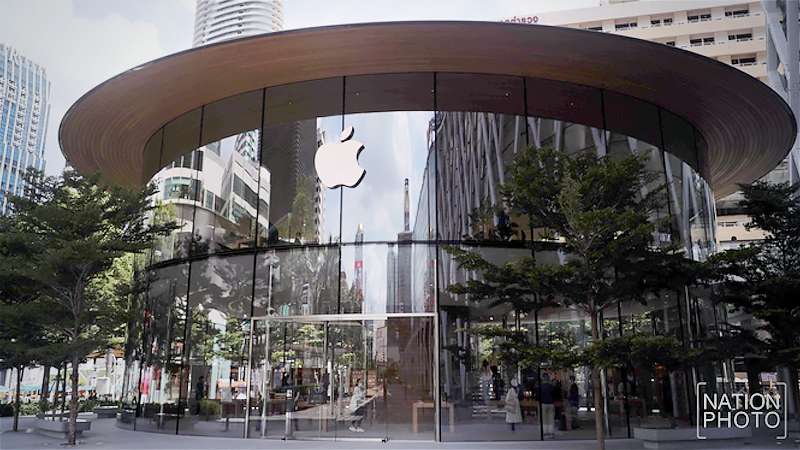
After the success of the first official Apple Store in Thailand at Iconsiam, which opened in November 2018, the tech giant is now set to open a second, larger store at Central World in Bangkok’s Pathumwan district.

Apple Central World is scheduled to open at 10am tomorrow (July 31).

Customers need to make an appointment via https://www.apple.com/th/retail/centralworld/ as the store has limits on the number of people allowed to enter to adhere to social distancing rules in this Covid-19 situation. All customers and staff must also undergo thermal screening and wear a face mask before entering.

Apple Central World features an all-glass design under a giant tree canopy accented by stainless-steel spiral staircases that present a futuristic look and serve as a link between its three levels. Thanks to the large space, it also offers several bench seats for customers to sit on and relax, as well as a boardroom and a “forum stage” for music performances and other activities.

The store has a “crew of 130 staff to serve customers in 17 languages”, according to the company.

Boeing chops output, sees 19,000 lost jobs on sagging jet demand #ศาสตร์เกษตรดินปุ๋ย

#ศาสตร์เกษตรดินปุ๋ย : ขอบคุณแหล่งข้อมูล : หนังสือพิมพ์ The Nation.

Boeing chops output, sees 19,000 lost jobs on sagging jet demand

CorporateJul 30. 2020

By Syndication Washington Post, Bloomberg · Julie Johnsson · BUSINESS, TRANSPORTATION, US-GLOBAL-MARKETS 

Boeing delayed the debut of its newest plane and slowed production across the heart of its jetliner lineup as the company burned more cash amid the coronavirus pandemic

The planemaker intends to make deeper cuts to its commercial-aircraft and services business, with total job losses reaching 19,000 this year — 3,000 more than it said before. The new 777X won’t carry passengers until 2022 instead of next year. And Boeing again pared production plans for the 787 Dreamliner as a saturated market left the company with a stockpile of undelivered jets.

With the reduced manufacturing rates for the 787, Boeing is studying whether to consolidate assembly in a single site instead of building the model in Washington state and South Carolina. Boeing will also ramp up work at its 737 Max factory more gradually than initially planned due to the virus. And the company is winding down one of its most iconic aircraft: the humpbacked 747 jumbo jets.

Executives are trying to resize operations for a market shrunken by the virus outbreak — but without cutting so deeply that Boeing’s recovery is damaged later this decade. The pandemic’s devastating effect on the outlook for jetliner sales is compounding the financial stress from the 737 Max, Boeing’s best-selling jet, which has been grounded since March 2019 after two deadly crashes.

“This is a true business transformation effort,” Chief Financial Officer Greg Smith said on a call with analysts to discuss Boeing’s earnings.

Boeing had previously announced a 10% workforce reduction, or approximately 16,000 jobs. The total cut will still be about one-tenth of employees since Boeing is hiring for its defense and space business.

The shares fell 3% to $165.68 at 12:45 p.m. in New York, the biggest drop on the Dow Jones Industrial Average. Boeing tumbled 48% this year through Tuesday, also the most on the Dow.

While the company’s free cash burn worsened to $5.63 billion in the second quarter, that was better than Wall Street’s expectations. Analysts had predicted a drain of $6.57 billion as the company cut costs and slowed work on key aircraft programs to save cash while demand crumbles.

Smith said he saw a path to positive cash flow next year. For that to happen, Boeing will need to start delivering the 737 Max while airlines are reluctant to add new planes. But appetites for additional aircraft could rebound sharply, particularly if one of the multiple vaccines under study bring the pandemic under greater control.

Investors had braced for an awful quarter after Boeing delivered just 20 commercial jets in the three-month period, down from 149 a year earlier. Sales plunged 25% to $11.8 billion, compared with the $13 billion average of analyst estimates compiled by Bloomberg. Total debt soared to $61.4 billion from $38.9 billion at the end of the first quarter.

The company’s global services business was hit especially hard as cash-constrained airlines parked thousands of planes and accelerated retirement plans for entire fleets of aircraft types. The division reported an impairment charge of $923 million on excess parts and inventory and severance costs.

The weakness in services and production “just a few months after the last update points to the softening markets,” said Ken Herbert, an analyst at Canaccord Genuity.

Regulators are making progress toward certifying the 737 Max, which in normal times would be the company’s biggest cash generator. But the surging virus has further delayed Boeing’s plans to win regulatory approval to return the jet to service, a milestone anticipated for later this year.

Boeing doesn’t expect to make much headway this year toward clearing the stockpile of about 450 jets built during the flying ban, which was imposed in March 2019 after two deadly crashes killed 346 people. Boeing paused production at its 737 plant for about four months through late May, as the grounding dragged on.

Boeing’s bill for the Max flying ban was already approaching $20 billion before the pandemic struck. The company took another accounting charge in the quarter to reflect the $551 million it expects to pay customers for lost flying and other considerations.

That liability is growing as more cash-strapped airlines seek to defer or cancel Max deliveries, or press Boeing to refund advance payments. The collapse in travel hit as the Max grounding passed the year mark, the point where contract provisions often allow airlines to ditch delayed deliveries without forfeiting so-called progress payments.

Max customers continue to walk away from earlier deals. The latest to do so is AerCap Holdings, the world’s largest independent leasing company, which revealed Wednesday that it was scrapping 15 of its 95 orders for the jetliner after customers canceled leases.

Another drag on Boeing’s results came from $712 million in “abnormal” production costs after it halted and restarted the 737 final assembly lines. The manufacturer rang up an additional $133 million in costs from temporarily shuttering plants around Seattle and in South Carolina because of the virus outbreak.

The company now has to contend with “the worst demand environment ever” weighing on its commercial and global services divisions, said George Ferguson, an analyst with Bloomberg Intelligence.

“Not only do you have to get the Max through certification — and I feel like they’re well on their way — but they have to shepherd a bunch of airlines through taking deliveries,” Ferguson said in an interview before the results were announced.

Online lenders fizzling in crisis with On Deck agreeing to sale #ศาสตร์เกษตรดินปุ๋ย

#ศาสตร์เกษตรดินปุ๋ย : ขอบคุณแหล่งข้อมูล : หนังสือพิมพ์ The Nation.

Online lenders fizzling in crisis with On Deck agreeing to sale

CorporateJul 30. 2020Rob Young, president of international at On Deck Capital Inc., speaks during the Canada Fintech Forum in Montreal on Oct. 23, 2019. MUST CREDIT: Bloomberg photo by Christinne Muschi.Rob Young, president of international at On Deck Capital Inc., speaks during the Canada Fintech Forum in Montreal on Oct. 23, 2019. MUST CREDIT: Bloomberg photo by Christinne Muschi.


By Syndication Washington Post, Bloomberg · Jenny Surane, Payne Lubbers · BUSINESS, PERSONAL-FINANCE 

Many online lenders were born in the last crisis. In their latest test, they’re fizzling.

On Deck Capital Inc. said late Tuesday it had agreed to sell itself for $90 million, almost six years after an initial public offering that valued the online small-business lender at $1.85 billion.

Shares of On Deck and competitors including LendingClub Corp. and GreenSky Inc. have tumbled this year as the covid-19 pandemic raised doubts about customers’ ability to repay loans. Kabbage Inc., which is backed by Japan’s SoftBank Group Corp., began suspending customers’ credit lines in the early days of the outbreak as small businesses across the U.S. shut their doors to help stem the spread of the virus.

On Deck Chief Executive Officer Noah Breslow warned in April that the company could no longer prioritize growth in its core business. “Our current focus is on improving cash flow and mitigating risk for our small-business customers and ourselves alike,” Breslow said on a conference call.

During the financial crisis, banks were short on firepower for lending and wary of risks, which cleared the way for new entrants. Now the problem isn’t a shortage of cash, but of information. It’s hard to predict who will keep their jobs or stay afloat as the pandemic evolves. Even established credit-card lenders such as Capital One Financial Corp. are conceding they don’t know which of their longtime customers still have a job.

“I don’t think we have a rigorous measure of how many of our current borrowers are unemployed,” Capital One Chief Executive Officer Richard Fairbank said on a conference call earlier this month. “There are a lot of people that are in different degrees of unemployment right now, and so, even as there is such great credit performance right now, what we’re obsessing about is looking beyond that.”

On Deck said its deal with Enova International Inc. was its best option to grapple with the new environment.

“Joining forces with Enova, a highly respected and well-capitalized leader in online lending, and leveraging our combined scale and strengths provides the best opportunity for our long-term success,” Breslow told analysts on a conference call Tuesday.

Shares of New York-based On Deck, which lost almost 80% this year through Tuesday, surged 61% at 9:45 a.m. in New York.

The pandemic hasn’t been the only problem for On Deck. Its shares tumbled last year after JPMorgan Chase, the country’s largest lender, decided to no longer use On Deck’s technology to originate online small-business loans.

IRPC seeks Bt28bn via bond issuance #ศาสตร์เกษตรดินปุ๋ย

#ศาสตร์เกษตรดินปุ๋ย : ขอบคุณแหล่งข้อมูล : หนังสือพิมพ์ The Nation.

IRPC seeks Bt28bn via bond issuance

CorporateJul 30. 2020

By The Nation

PTT subsidiary IRPC is issuing Bt28 billion in senior bonds to boost liquidity, support business growth and investment opportunities, and repay debts.

Noppadol Pinsupa, IRPC president and CEO, explained that the bonds have bondholders’ representatives but no guarantor and are rated A-(tha) by Fitch Ratings.

“Six financial institutions, namely Krungthai Bank, Kasikorn Bank, Siam Commercial Bank, CIMB Thai Bank, TMB Bank, and Phatra Securities will responsible for the bond offering,” he said, adding the bonds were a good choice for investors seeking consistent returns in volatile market conditions.

The issuance aims to raise funds for investment, debt repayments, boosting liquidity, and enhancing company potential and competitiveness in line with its strategic plan.

“The company aims to invest in projects, such as upgrading petroleum refining to the Euro 5 standard, transporting fuel via pipelines, dredging ports, increasing production of value-added products, and applying digital systems,” he said.

“We expect the abovementioned projects to generate over Bt4.6 billion in revenue.”

IRPC was still able to invest in line with its five-year (2020-24) plan and was prioritising investments to ensure it has sufficient liquidity and could meet customers’ needs during the current situation and in the future, said Noppadol.

IRPC operates a full range of petroleum and petrochemical businesses to meet customers’ needs in industries such as electrical appliances, automotive, medical, and public health,” he said. “IRPC also operates utility business, such as ports, oil depots, and power plants, which are important for the country’s industry and economic development.

More information about IRPC’s bonds can be found at the Securities & Exchange Commission (SEC)’s website, www.sec.or.th, or by contacting Krungthai Bank on (02) 111 1111, Kasikorn Bank on (02) 888-8888 ext 819, Siam Commercial Bank on (02) 777 6784, CIMB Thai Bank on (02) 626 7777, TMB Bank on 1558 ext 9, and Phatra Securities on (02) 305 9442.

Chevrolet assures customers it’s committed to aftersales service #ศาสตร์เกษตรดินปุ๋ย

#ศาสตร์เกษตรดินปุ๋ย : ขอบคุณแหล่งข้อมูล : หนังสือพิมพ์ The Nation.

Chevrolet assures customers it’s committed to aftersales service

CorporateJul 29. 2020

By The Nation

Chevrolet Sales Thailand has reaffirmed its commitment to providing aftersales service to its customers nationwide, announcing today (July 29) that all current Chevrolet dealerships around Thailand will become authorised Chevrolet service centres as new car sales cease.

“This means all existing Chevrolet customers can have total peace of mind that they will continue to receive certified maintenance, parts, warranty repairs and roadside assistance services through a national network of authorised Chevrolet service outlets,” the automaker said in a press statement.

“This is a very important announcement for our customers around Thailand,” said Hector Villarreal, president of GM Southeast Asia. “We are happy to confirm that all our current dealer partners will transition to become authorised Chevrolet service outlets, ensuring we have a national network of outlets for our customers to get expert maintenance, repairs and warranty services, along with genuine GM and ACDelco spare parts. It’s another important milestone in our continued commitment to look after our valued customers across Thailand beyond the end of new vehicle sales,” he added.

Said Vanchana Unakul, general director of aftersales at General Motors Thailand: “We are ensuring ongoing excellent customer service satisfaction. There is no better way to do so or illustrate this than by confirming that our national dealer network will become Chevrolet service outlets. It demonstrates not just Chevrolet Thailand’s commitment to our customers, but also the commitment of our dealer partners to look after their loyal customers.”

According to the company, the aftersales services include:

• Bumper-to-bumper factory warranty of 3 years or 100,000 km, whichever comes first, covering workmanship, parts and manufacturing defects.

• Service by certified technicians to make repairs and carry out vehicle maintenance.

• 100 per cent genuine GM parts and guaranteed quality products such as GM engine oil with high-performance lubricant oil technology and ACDelco products.

• 24-hour roadside assistance by certified technicians for all vehicle problems.

• A Chevrolet 1734 Customer Assistance Centre, opened from Monday to Saturday, 9am-6pm.

SCG reveals one-year plan to weather Covid-19 storm #ศาสตร์เกษตรดินปุ๋ย

#ศาสตร์เกษตรดินปุ๋ย : ขอบคุณแหล่งข้อมูล : หนังสือพิมพ์ The Nation.

SCG reveals one-year plan to weather Covid-19 storm

CorporateJul 29. 2020

By The Nation

Siam Cement Group (SCG) has created a “Plan for the Best” roadmap for its three business segments to adapt during the Covid-19 crisis, while forging ahead with its Vietnam petrochemical plant project.

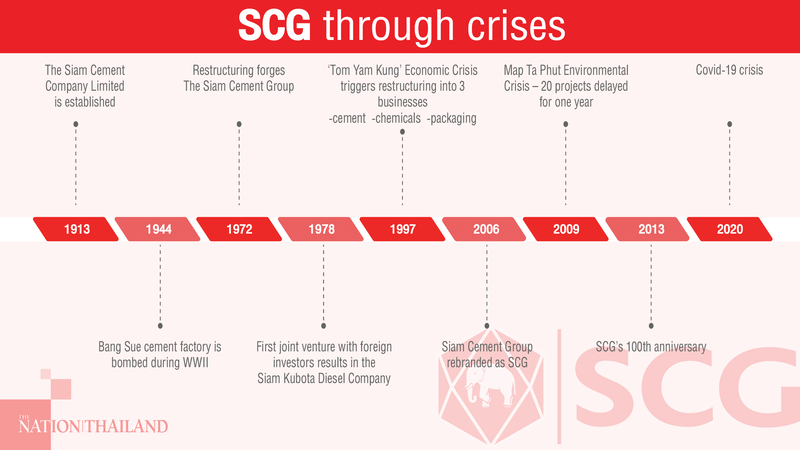
Over the years, SCG has overcome business setbacks ranging from the 1997 Asian financial crisis, which saw SCG restructure, to 2009’s Map Ta Phut environmental crisis which put the brakes on 20 investment projects for one year.

However, Roongrote Rangsiyopash, President and CEO of SCG, said the global Covid-19 outbreak is different and more severe than the 1997 financial crisis, when Thai exports still grew to meet demand outside Asia. SCG was nevertheless heavily affected as business was diversified, resulting in huge investments and liabilities as the company narrowed its focus to three business groups – cement and construction products, chemicals, and packaging.

Next came the so-called Hamburger Crisis of 2007-08, which hit the United States and Europe but had a softer impact on Thailand through reduced investment flows. Meanwhile the impact of Thailand’s 2011 flood crisis on SCG was minimal as offices were temporarily relocated before things quickly returned to normal.

Roongrote said the Covid-19 crisis had no precedent in his lifetime, noting you had to go back a century to the Spanish flu pandemic for a comparable event.

As Covid-19 spread quickly from China to Asean countries and beyond, many Thai businesses began struggling for survival amid a climate of public fear. Businesses related to entertainment, tourism and travel have been especially hard hit.

SCG boosts crisis management

SCG is considered lucky because its main business is not in a sector that has been severely affected, like airlines, hotels or entertainment. The company also has experience coping with previous crises, including the 2011 floods when SCG relocated its headquarters, arranged for employees to work from home, and launched a Business Continuity Management Unit (BCM) to enhance teamwork.

Now, SCG has invited virus experts to lecture staff on disease prevention, while arranging for 90 per cent of its employees to work from home.

‘Digital’ survival

SCG uses digital systems to monitor and run most of its global business, meaning staff can work outside the office to manage e-mail billing and e-documents via blockchain systems to guarantee security.

Meanwhile, transferring meetings online via Zoom has helped staff to work more efficiently and solve a greater range of issues.

4X management speed

According to Roongrote, crisis management must adapt by speeding up decision-making and working processes. SCG managers have now switched from their normal monthly meetings to meetings once a week, which has made the work process four times faster. The acceleration is needed in order to solve problems quickly, even if there are fewer customers during the virus crisis. Meanwhile, SCG’s construction projects with the government sector are still continuing and its packaging business is operating as usual.

2021

Vaccine production that will end the virus crisis is expected to begin next year, but SCG has plans to cover two scenarios.

1. Prepare for the worst: The Covid-19 crisis drags on until the end of 2021 when a vaccine is finally delivered. Meanwhile, Thai cases increase beyond 100,000 and an Italy-like lockdown prohibits people from leaving the house so that economic activities, including construction, come to a halt.

In this scenario, SCG will employ a business management strategy to weather the storm until the end of 2021.

“In the period from February-April, staff were told not to look ahead and focus only on sustaining the business with the same goal – to get this boat through the storm and patch any holes to survive,” said Roongrote.

2. Plan for the best: Encourage each SCG business group to develop products to meet demand caused by the virus crisis. The packaging business should increase deliveries and use more packaging that is sealed and safe from contamination. The construction materials business must think of new products – such as a touchless toilet with sensor system and batteries that only need to be changed once a year. Chemical Business must find new channels for the “new normal” market.

Vietnam petro project goes ahead as planned

With no new domestic cases for many weeks, the outbreak in Thailand has died down, bringing a brighter picture for business plans and investment.

The virus crisis prompted SCG to cut its investment budget of Bt70-80 billion by 20 per cent and pause some projects, but those figures will be revised when the outbreak has been further controlled.

However, SCG is proceeding as planned with investment to construct a petrochemical plant in Vietnam, where Covid-19 is under control and the economy is expected to recover quickly since it is not heavily reliant on tourism and has a population of almost 100 million.

Emerald Hotel to reopen on Saturday #ศาสตร์เกษตรดินปุ๋ย

#ศาสตร์เกษตรดินปุ๋ย : ขอบคุณแหล่งข้อมูล : หนังสือพิมพ์ The Nation.

Emerald Hotel to reopen on Saturday

CorporateJul 29. 2020

By THE NATION

The Emerald Hotel in Bangkok will reopen on August 1 after having been shut since May 1 due to the Covid-19 crisis, the hotel said yesterday (July 28).

The 619-room hotel is located on Ratchadaphisek Road in Bangkok’s Din Daeng district.

Like many hotels nationwide, The Emerald temporarily ceased operations in compliance with the government’s measures to reduce public assembly to minimise the risk of the virus spreading.

“We are glad to inform you that from August 1, the Emerald will be ready to serve all guests,” the hotel’s management said. “We have employed appropriate sanitary measures to ensure the safety of both staff and customers. Furthermore, the hotel will offer a special room rate of Bt999 per night throughout the month of August.”

The promotion is available only for Thais.

For further information, visit the hotel’s Facebook page at @theemeraldhotel.