Google’s app choice screen still favors Google, rival says #ศาสตร์เกษตรดินปุ๋ย

#ศาสตร์เกษตรดินปุ๋ย : ขอบคุณแหล่งข้อมูล : หนังสือพิมพ์ The Nation

https://www.nationthailand.com/business/30381255?utm_source=category&utm_medium=internal_referral

Google’s app choice screen still favors Google, rival says

Jan 30. 2020
By Syndication Washington Post, Bloomberg · Aoife White 

Google’s response to a European Union order to give rival search apps a foothold on its Android phones may fail to steer users to alternatives, warned U.S. upstart DuckDuckGo, the only competitor to win the right to appear as another search option on new handsets across Europe.

Google has to prompt users to pick alternative search and web browser apps under the terms of a 2018 EU antitrust ruling that found the company unfairly ties moneymaking services to the Android software it gives away.

It chose to set up an auction format for smaller rivals where they will pay to appear as a one of three non-Google options on the choice screen across Europe from March to June.

But the user experience of the screens “is designed in a way that is subconsciously influencing people to use Google more than they otherwise should or would like to,” Gabriel Weinberg, chief executive officer of DuckDuckGo, a U.S. search engine that says it doesn’t track users, said in a phone interview.

“Ultimately it will not be effective if it remains like that, if only because the auction format will push out a private option and that is the number one thing besides Google that people want to select,” he said.

The auction will be re-run every three months. DuckDuckGo and Google are the only search apps that will appear on the choice screens in 31 countries in the region.

Users trying to set up their phones will be shown a choice of four search engines, without much explanation of the apps or the possibility to change their choice later, DuckDuckGo said in a separate blog post on Tuesday.

By passing up other ways of designing the prompts that could draw users to non-Google options, DuckDuckGo said Google is potentially undermining the EU order’s aim to widen alternatives to its apps.

Google declined to comment, referring to a detailed January blog post where it said the “choice screen design was developed in consultation with the European Commission.”

The commission’s press office said regulators “will continue monitoring closely the implementation of the choice screen mechanism” which comes after discussions with Google and feedback from other companies “in particular in relation to the presentation and mechanics of the choice screen and to the selection mechanism of rival search providers.”

“As regards DuckDuckGo, as a result of the choice screen mechanism, they will be on every new Android device in the European Economic Area, and it will be for consumers to choose which search engine to install and use,” the EU said in an emailed statement. The EU’s Android decision also allows rival search engines to be exclusively pre-installed on phone and tablets which “was not possible before.”

Google said it was possible to pre-install other search providers prior to the EU ruling. The company is separately challenging the EU decision on Android at the bloc’s second-highest court. The same court will hold a three-day hearing in February on Google’s appeal to an earlier antitrust decision on its search service.

Weinberg said DuckDuckGo has discussed its concerns with the European Commission.

Margrethe Vestager, the EU’s competition commissioner, told reporters on Monday that she’s “very very closely” following Google’s efforts to comply with the order. She said she’s aware of the detail of the design, adding that officials were “doubting if people would use unlimited scroll” to show a large number of alternatives.

Prices rivals must pay Google to appear on the screen “came down quite dramatically in the latest auction,” she said.

The EU has never formally signed off on how Google opted to comply with the order, leaving it uncertain whether the company has done enough to avoid more fines. Regulators could seek further changes to the choice screen from Google if necessary.

Google’s Chrome browser partly owes its own initial surge in popularity to choice screens that Microsoft Corp. agreed to show under EU pressure to offer people an alternative to the browser it loaded on to new personal computers with its Windows software.

Microsoft’s screen “wasn’t limited in choice and had 12 different browsers” and “most or all of the elements that we are suggesting here,” Weinberg said.

Losses from Max grounding continue, as Boeing reports another dismal quarter #ศาสตร์เกษตรดินปุ๋ย

#ศาสตร์เกษตรดินปุ๋ย : ขอบคุณแหล่งข้อมูล : หนังสือพิมพ์ The Nation

https://www.nationthailand.com/business/30381254?utm_source=category&utm_medium=internal_referral

Losses from Max grounding continue, as Boeing reports another dismal quarter

Jan 30. 2020
File Photo of 737 Max / Getty Images

File Photo of 737 Max / Getty Images
By The Washington  Post · Aaron Gregg

Boeing reached new financial lows in 2019 as the 737 Max ― a once-promising line of commercial jets whose flawed control systems played a role in two deadly crashes ― remains at the center of a historic safety crisis with no end in sight.

Boeing closed out the fourth quarter with $17.9 billion in revenue, the company announced Wednesday, a 37% decline from the fourth quarter of 2018.

The company’s 2019 net losses of $636 million mark its first annual loss since 1997.

The losses stem from the continued worldwide grounding of Boeing’s Max jets and a production halt this year in the wake of two fatal crashes. On Wednesday, the company incurred another $2.6 billion in costs related to the indefinite grounding, and it expects the grounding to cost it an estimated $4 billion throughout 2020, something that should put a drag on future results.

The company’s stock price has lost about 13% of its value over the past year at a time when the market has surged.

“We recognize we have a lot of work to do,” Boeing President and CEO David Calhoun said in a statement. “We are focused on returning the 737 MAX to service safely and restoring the long-standing trust that the Boeing brand represents with the flying public.”

Once a cash-generating machine that was the envy of its competitors and a darling of Wall Street, Boeing has been forced to borrow billions of dollars to cover the cost of building airplanes it can’t deliver to customers. (CNBC reported Monday that Boeing has secured more than $12 billion in loans from banks to provide cash for operations over the next two years.)

Boeing has been forced to compensate airlines for the cost of flight cancellations, taking a $5.6 billion charge in July. And a bruising congressional inquiry has pointed to deeper problems with the company’s management culture, leading to the ouster of its two highest-ranking executives.

The 737 Max has been out of commission for more than 10 months as regulators remain unconvinced it is safe to fly. It was grounded in mid-March when the Federal Aviation Administration recognized similarities in a pair of deadly plane crashes in Indonesia and Ethiopia, both of them involving new 737 Max jets, that killed 346 people.

Boeing later admitted that a new flight-control program, interacting with bad data from the planes’ external sensors, had in both cases pushed the jets into an uncontrollable nosedive.

The FAA has made the jets’ return to the sky contingent on a set of software and display changes designed to prevent the same problems from occurring again. But the timeline for approval has continually shifted over the past year as regulators discovered more problems with the plane.

Throughout most of 2019, Boeing continued churning out new planes under the assumption regulations would soon clear them to fly. However, in December, the company announced it would indefinitely halt production of the embattled jets.

That production halt has rippled throughout the company’s supply chain, resulting in about 2,800 layoffs at Spirit AeroSystems in Wichita, Kansas. About half of Spirit’s revenue comes from supplying parts to the Max.

In addition to scrutiny over the Max jets, the company has faced wider criticism about its culture.

Internal messages between Boeing employees were recently disclosed to congressional investigators. The messages, made public last month as part of a long-running investigation into how the Max was designed and certified, could further damage the company’s relationship with regulators and the flying public.

One Boeing employee said in 2018, “I still haven’t been forgiven by god for the covering up I did last year.” Another said, “This is what these regulators get when they try and get in the way.” And in 2017, long before either of the crashes, a Boeing employee wrote, “This airplane is designed by clowns, who in turn are supervised by monkeys.”

The crisis has raised questions about whether Boeing’s top management understands the company’s own production lines, analysts said. The Chicago-based corporate office has come under criticism for being too focused on Wall Street, at the expense of the company’s Seattle-based production lines.

Calhoun will be under intense pressure to navigate the company back to financial health.

“Chicago has been a distant asset manager that’s there to extract cash. That needs to change,” said Richard Aboulafia, a longtime aerospace analyst with Teal Group.

Aboulafia attributed Boeing’s broader problems to a “combination of bad communication and very aggressive wage and conditions pressure in the midst of unprecedented prosperity,” calling it a “mixture for a toxic soup.”

Calhoun visited with workers at Boeing’s Seattle production facilities last week and held an all-hands meeting with employees, during which he pledged to be more transparent about management’s decisions and to work to rebuild their confidence.

In his statement Wednesday, Calhoun said the company was prepared for the challenges ahead.

“We are committed to transparency and excellence in everything we do. Safety will underwrite every decision, every action and every step we take as we move forward. Fortunately, the strength of our overall Boeing portfolio of businesses provides the financial liquidity to follow a thorough and disciplined recovery process.”

JPMorgan to slash hundreds of jobs across its consumer unit #ศาสตร์เกษตรดินปุ๋ย

#ศาสตร์เกษตรดินปุ๋ย : ขอบคุณแหล่งข้อมูล : หนังสือพิมพ์ The Nation

https://www.nationthailand.com/business/30381247?utm_source=category&utm_medium=internal_referral

JPMorgan to slash hundreds of jobs across its consumer unit

Jan 30. 2020
Pedestrians pass in front of a JPMorgan Chase bank branch in New York on July 2, 2019. MUST CREDIT: Bloomberg photo by Victor J. Blue.

Pedestrians pass in front of a JPMorgan Chase bank branch in New York on July 2, 2019. MUST CREDIT: Bloomberg photo by Victor J. Blue.
By Syndication Washington Post, Bloomberg · Michelle F. Davis 

JPMorgan Chase plans to dismiss several hundred workers from its consumer unit as the lender seeks to rein in costs, according to people briefed on the matter.

The biggest U.S. bank intends to notify employees on Feb. 6 and cuts will be scattered across the division, said one of the people, who asked not to be identified discussing personnel decisions. The retail unit, which houses the deposit, credit-card, home-loan and auto-lending businesses, contributes almost half of the firm’s revenue.

Banks around the world have cut thousands of jobs as they slash costs to weather a slowing economy and adapt to shifts in consumer behavior and in digital technology. At JPMorgan, the reductions are part of a broader review of operations as customers increasingly access banking services online or through mobile apps.

A JPMorgan spokeswoman declined to comment. The planned cuts represent about 1% of employees in the unit, and workers will be given the chance to apply for other roles in the firm, another person said.

Expense management has been an area of intense focus under co-President Gordon Smith, who leads the consumer bank. JPMorgan cut about 7,000 operations jobs from the unit in the four years through 2018, replacing some of them with roles for technologists, according to a presentation last February. Smith said at the time that reductions would continue and that “technology and digital and mobile people are building the company for the future.”

Headcount in the unit fell 2% to 127,137 at the end of last year, the lowest since 2015, according to the New York-basedbank’s latest quarterly report.

JPMorgan has poured billions of dollars into technology to make it easier for customers to access services without the help of traditional workers. More than 80% of transactions in the consumer bank were completed through so-called “self-service” channels in 2018, according to the presentation last year. The bank said in February it expects its technology investments from 2018 to generate more than $1 billion of annual run-rate savings for the retail unit over five years.

At the same time, JPMorgan has been opening up hundreds of branches in new states to attract customers and boost lending — even as its total count has slipped. Retail locations fell to less than 5,000 last year for the first time since before JPMorgan took over Washington Mutual Inc.’s banking operations during the height of the last financial crisis.

The latest moves are in line with a broader focus on cutting costs and managing risk across the firm amid a growing number of potential pitfalls in the economy.

JPMorgan has been shrinking its workforce in New York and building up its employee presence in lower-cost locations such as Plano, Texas; Columbus, Ohio; and Wilmington, Delaware. It’s also considering selling its investment-banking building at 383 Madison Ave. as part of a facilities review taking place while the bank constructs a new headquarters in Manhattan.

The company plans to hosts an investor day next month, when it’s expected to provide strategy details and its outlook for expenses and revenue for the year.

Buoyed by retailers, KBank shoots for 4-6% jump in loans #ศาสตร์เกษตรดินปุ๋ย

#ศาสตร์เกษตรดินปุ๋ย : ขอบคุณแหล่งข้อมูล : หนังสือพิมพ์ The Nation

https://www.nationthailand.com/business/30381232?utm_source=category&utm_medium=internal_referral

Buoyed by retailers, KBank shoots for 4-6% jump in loans

Jan 29. 2020
Presidents of KBank, Predee Daochai, second left, Kattiya Indaravijaya, centre, Pipit Aneaknithi, second right, Patchara Samalapa, left, together with chairman of KASIKORN Business-Technology Group (KBTG), Ruangroj Poonpol, right, in a press conference on January 29 to unveil KBank vision 2020.

Presidents of KBank, Predee Daochai, second left, Kattiya Indaravijaya, centre, Pipit Aneaknithi, second right, Patchara Samalapa, left, together with chairman of KASIKORN Business-Technology Group (KBTG), Ruangroj Poonpol, right, in a press conference on January 29 to unveil KBank vision 2020.
By THE NATION

Kasikornbank (KBank) aims to increase loans by 4-6 per cent this year, it said in a statement on Wednesday (January 29), forecasting the rise to come mainly in retail business loans, which are expected to grow between 9 and 11 per cent.

SME credit is expected to grow 1-3 per cent and corporate loans 2-4 per cent.

Non-interest income is expected to fall 5-17 per cent as a result of the new TFRS9 accounting standard, a high base effect of income earned from sales of securities, and a slowdown in the insurance business.

At the same time, the non-performing loan ratio is expected to rise to between 3.6 and 4 per cent amid the economic slowdown.

KBank has fine-tuned strategies for NPL management by keeping under its own management the portion that are expected to see a higher long-term recovery rate.

KBank president Kattiya Indaravijaya said the bank is using smart data to offer a personalised lending experience and achieve fair risk-adjusted returns.

It has also proactively identified potential risks and established loss prevention and detection.

The bank will continue to explore new growth opportunities in the region, she added.

Moreover, it has expanded its data analytics capability to enhance business opportunities and operational efficiency.

Kattiya said KBank equips all employees with essential skills to bolster their capabilities and agility.

President Predee Daochai said KBank has adopted a set of financial security measures to maintain financial health and customers’ deposits and investments. One of those measures is to steadily maintain its capital and liquidity at levels above the regulatory requirements.

Currently, KBank’s capital adequacy ratio (CAR) is at 19.6 per cent, accounting for 171 per cent of the regulatory requirement, while its liquidity coverage ratio (LCR) is 188 per cent of the requirement.

The bank has carried out stress tests on economic scenarios and new regulations while devising and testing contingency plans for the supervision of its capital and liquidity on a regular basis.

It has also bolstered its capacities in data analytics and management to better understand its customers and their risks.

KBank has installed both transaction and application-fraud monitoring systems, as well as an internal fraud monitoring system, worth over Bt500 million. Its fraud-to-sales ratio has steadily improved.

This year KBank plans to give cybersecurity and customer data privacy top priority and use AI and machine learning to track cybercrime and cyber-risk.

President Patchara Samalapa said consumers have increasingly migrated to digital banking services, as evidenced by the number of transactions via its mobile application K Plus, which have risen by over 200 per cent in the past three years.

However, the number of transactions at branches remains high – topping 100 million.

KBank has thus focused mainly on multi-service channels so as to offer customers services via multiple channels and platforms, as client convenience holds the first priority.

To meet multiple lifestyle needs of customers, KBank has teamed with leading business partners at both the global and national levels.

These partners include Grab, Facebook, Line, Central JD FinTech, JD Central, PTTOR, the CU NEX project, Lazada and Shopee.

KBank has also collaborated with startups such as YouTech in Singapore. Based on the “Better Together” concept, these collaborative efforts aim to develop platforms that link spending formats in each business for a seamless customer experience.

Last year, KBank introduced unsecured loan via all channels. Focus is on online lending via K Plus and platforms of KBank’s business partners.

KBank joined with Line Financial Co Ltd last year to establish Kasikorn Line Co Ltd. The company will be fully operational under the Line BK brand in the second quarter of 2020, offering unsecured personal loan on K Plus, thus allowing K Plus users, both retail customers and small business owners, improved access to small-scale funding sources with greater convenience and swiftness.

In 2019, KBank extended more than Bt36 billion in unsecured loans.

For 2020, KBank has set a target of increasing its consumer lending by Bt178 billion, representing an increase of 30 per cent over the year.

SCB offers grace period for loan repayment to hotels hurt by virus outbreak #ศาสตร์เกษตรดินปุ๋ย

#ศาสตร์เกษตรดินปุ๋ย : ขอบคุณแหล่งข้อมูล : หนังสือพิมพ์ The Nation

https://www.nationthailand.com/business/30381224?utm_source=category&utm_medium=internal_referral

SCB offers grace period for loan repayment to hotels hurt by virus outbreak

Jan 29. 2020
SCB president Sarut Ruttanaporn

SCB president Sarut Ruttanaporn
By THE NATION

Siam Commercial Bank (SCB) is offering a six-month grace period for repayment of the loan principal amount to existing customers in the hotel business as an urgent measure to help mitigate the impact on their business from the coronavirus crisis.

SCB president Sarut Ruttanaporn said on Wednesday (January 29) that after having closely observed the new coronavirus outbreak spreading to many countries, including Thailand, the SCB was deeply concerned about its impact and was prepared to fully support its clients in overcoming any challenges arising from this situation.

As an interim measure, SCB has approved urgent help to affected hotel operators in dealing with any short-term impact and to make them ready to withstand any future situations.

He added that SCB understood how the hotel and tourism segment will be impacted by the outbreak, one of the key drivers of the Thai economy. Therefore, the bank has deemed it necessary to launch emergency measures to support both big and small and medium-sized hotels nationwide to alleviate their concerns, while offering flexibility to businesses to help them deal with the situation.

Initially, the bank will help lessen short-term impact by offering a grace period of up to six months, and will closely monitor and evaluate the situation.

If the crisis prolongs, the bank said it was ready for more measures to support its customers.

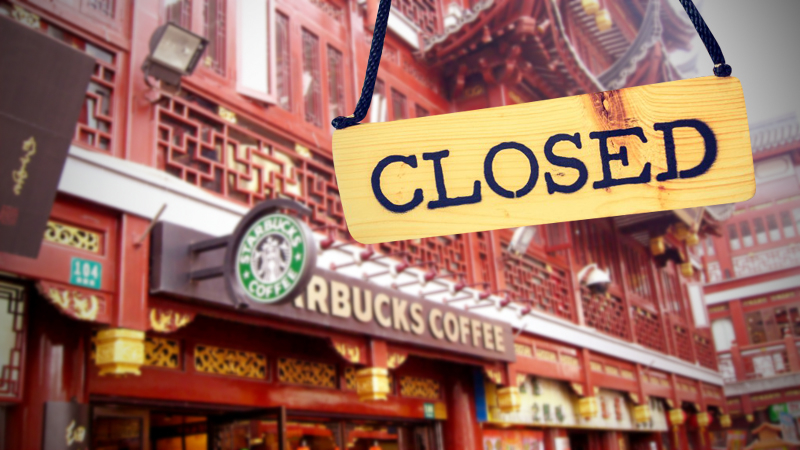
Starbucks closes half its China stores during virus outbreak #ศาสตร์เกษตรดินปุ๋ย

#ศาสตร์เกษตรดินปุ๋ย : ขอบคุณแหล่งข้อมูล : หนังสือพิมพ์ The Nation

https://www.nationthailand.com/business/30381218?utm_source=category&utm_medium=internal_referral

Starbucks closes half its China stores during virus outbreak

Jan 29. 2020
By Syndication Washington Post, Bloomberg · Leslie Patton · BUSINESS, WORLD, ASIA-PACIFIC

Starbucks Corp. has closed more than 2,000 locations in mainland China because of a viral outbreak that has killed more than 100 people and disrupted daily life in the coffee chain’s most important growth market.

The news cast gloom over what otherwise would have been an upbeat earnings report. Same-store sales, an important gauge of success for restaurant chains, rose 5% in the fiscal first quarter that ended Dec. 29, outpacing the 4.6% average estimate compiled by Consensus Metrix.

The company maintained its 2020 forecast but said it doesn’t include the impact of temporarily closing so many stores because it can’t yet calculate it.

“We will be transparent with all stakeholders in communicating how we are responding to these extraordinary circumstances and the implications for our near-term business results,” Chief Executive Officer Kevin Johnson said in a statement. He also reaffirmed the company’s commitment to China.

On a call with analysts, Johnson said Starbucks had planned to raise its financial projections for the year, but changed course as measures to prevent the spread of coronavirus intensified.

Starbucks shares reversed an initial gain in late trading, falling as much 1.4% to $87.40 as of 4:57 p.m in New York. The stock has been mostly flat in 2020 after jumping almost 37% last year.

McDonald’s Corp. and Yum China Holdings Inc., which operates Pizza Hut and KFC in the country, have also announced restaurant closures in areas near the center of the outbreak. Starbucks, however, appears to be carrying out a broader suspension of activities than its counterparts.

China and the U.S. are the most important markets for Starbucks as the Seattle-based chain seeks to recapture its rapid growth of past years. The results show the strategy is paying off — with higher customer traffic in the two nations particularly encouraging.

The coronavirus, of course, will be the wild card in whether Starbucks can maintain its pace. The company is expanding aggressively there, with global store growth of 6% in the quarter led by China, where the chain has more than 4,000 locations. Starbucks said it couldn’t “reasonably” estimate the impact of the coronavirus, but expects the outbreak to “materially affect” fiscal second-quarter and full-year results.

Operating margin expanded in the quarter to 17.2%, compared with 15.3% a year ago. While higher sales and supply-chain savings helped, the company is still facing higher wage and employee benefits costs.

Britain to allow some Huawei equipment in 5G networks, resisting U.S. pressure #ศาสตร์เกษตรดินปุ๋ย

#ศาสตร์เกษตรดินปุ๋ย : ขอบคุณแหล่งข้อมูล : หนังสือพิมพ์ The Nation

https://www.nationthailand.com/business/30381216?utm_source=category&utm_medium=internal_referral

Britain to allow some Huawei equipment in 5G networks, resisting U.S. pressure

Jan 29. 2020
By The Washington Post · William Booth, Jeanne Whalen, Ellen Nakashima 

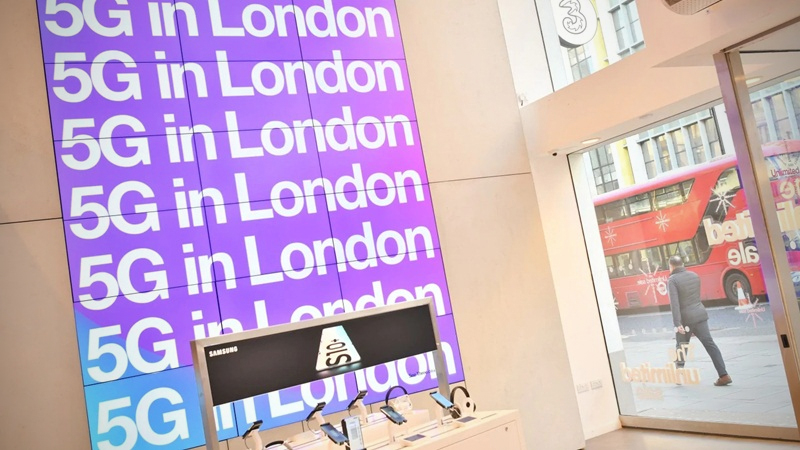
LONDON – The British government on Tuesday handed the U.S. government a major defeat in its months-long campaign against the Chinese tech giant Huawei by agreeing to use Huawei equipment in part of its telecommunications network.

The decision marked a rare split between the transatlantic allies and a blow to Washington as it battles China for dominance over the installation of the new communications technology known as 5G.

The United States has put Huawei at the forefront of that battle, arguing that installing the company’s telecommunications equipment would leave allied countries vulnerable to Chinese espionage.

China critics in the United States quickly panned the announcement and warned that sit could damage U.S.-U.K. trade relations.

“This decision has the potential to jeopardize US-UK intelligence sharing agreements and could greatly complicate a US-UK free trade agreement,” Sen. Lindsey Graham, R-S.C., said in a tweet. “I hope the British government will reconsider its decision.”

“America has never been weaker,” said Sen. Chris Murphy, D-Conn. “We have never had less influence. Not even our closest ally, Britain, with a Trump soulmate in Downing Street, listens to us anymore.”

British officials portrayed those reactions as overwrought. They noted that the decision limits Huawei’s market share of Britain’s “non-core” 5G network to 35%, labels it a “high risk” vendor and bars the use of its equipment in “core” parts of the network, including intelligence, military and nuclear sites.

“We have looked at the issue of how to maintain network security and resilience over many months and in great technical detail,” Foreign Secretary Dominic Raab said. “We would never take decisions that threaten our national security or the security of our Five Eyes partners,” a reference to the intelligence sharing consortium that includes Britain, the United States, Australia, Canada and New Zealand.

Other British government officials scoffed at suggestions that Washington might reduce intelligence-sharing with its key ally because of security concerns with Huawei in the 5G network.

“There is absolutely no reason” for the United States to lessen intelligence-sharing “because this [decision] upholds the security of our 5G network,” said one who requested anonymity to discuss intelligence matters, adding that intelligence is exchanged on separate, highly secure systems. “So there is absolutely no reason why intelligence-sharing should be called into question by this decision.”

Still, the British decision shows the challenges the Trump administration faces as it asks countries to pick a side in the battle over Huawei. Germany, Brazil and other nations are still deciding how and whether to use Huawei equipment in the super-fast 5G wireless networks they are building.

“I worry the U.K. decision could potentially be a preview of other decisions around the world,” said Kelly Magsamen, a former Pentagon official who also served on the National Security Council during the Obama and George W. Bush administrations.

Sen. Mark Warner, D-Va., a former communications executive, suggested in a statement that the decision shows the need for the U.S. and its allies to work together “to build more diverse and secure telecommunication options.”

Huawei is the world’s leading provider of 5G equipment. The other major providers are Finland’s Nokia and Sweden’s Ericsson. There are no major U.S.-based providers.

Prime Minister Boris Johnson chaired the meeting of Britain’s National Security Council, where the plan was approved. The British government will now seek to legislate the proposals through Parliament. It is possible that the House of Commons could amend Johnson’s plan – loosening or strengthening Huawei’s hand. But after a landslide win in last month’s general election for Johnson and his Conservative Party, the government can count on parliamentary approval for most of its proposals.

Huawei, which has dismissed U.S. security concerns as unfounded, described Britain’s announcement Tuesday as a win.

“This evidence-based decision will result in a more advanced, more secure and more cost-effective telecoms infrastructure that is fit for the future. It gives the U.K. access to world-leading technology and ensures a competitive market,” Huawei Vice President Victor Zhang said in a statement.

In a telephone call after the decision was announced, Trump and Johnson “underlined the importance of like-minded countries working together to diversify the market and break the dominance of a small number of companies,” a Downing Street spokesman said via email.

The U.K. decision follows months of pressure from U.S. officials. Secretary of State Mike Pompeo tweeted Sunday that Britain had a “momentous decision ahead on 5G.” On Friday, Trump called Johnson to talk about Huawei.

And in meetings in London this month, top national-security and State Department officials warned that the U.S. would have to reassess whether Britain could sufficiently protect shared intelligence if it let Huawei into its 5G network. The British press quoted the officials saying that using Huawei gear would be “nothing short of madness.”

Major U.K. telecommunications companies such as British Telecom already use Huawei gear in their 3G and 4G networks, and Britain does not want to fall behind in the 5G world.

“The British public deserve to have access to the best possible technology,” Johnson said in a BBC interview earlier this month. “On the other hand, let’s be clear. I don’t want, as the U.K. prime minister, to put in any infrastructure that is going to prejudice our national security or our ability to cooperate with Five Eyes intelligence partners.”

Foreign minister Raab said the lack of a wide choice of providers played a part in the decision. “Currently, the U.K. faces a choice of only three major players to supply key parts of our telecoms networks,” he said. “It is a market failure that must be addressed,” he said, adding that the U.K. planned to support new technology that could help diversify the market.

“It is essential that we are never again in a position of having such limited choices when deploying such important new technologies,” Raab said.

The coming super-fast 5G networks are expected to power the “Internet of things,” enabling industrial, transport and everyday devices to be connected, to “talk” to one another and to share data constantly, powering future technologies such as driverless cars and smart household appliances.

The U.S. has taken several steps to try to isolate Huawei. Last year it banned the sale of some U.S. technology to Huawei. It has also blocked the Chinese company from installing telecom equipment in the United States.

Japan and Australia effectively also have banned Huawei from their 5G networks.

Facebook will now show you exactly how it stalks you – even when you’re not using Facebook #ศาสตร์เกษตรดินปุ๋ย

#ศาสตร์เกษตรดินปุ๋ย : ขอบคุณแหล่งข้อมูล : หนังสือพิมพ์ The Nation

https://www.nationthailand.com/business/30381214?utm_source=category&utm_medium=internal_referral

Facebook will now show you exactly how it stalks you – even when you’re not using Facebook

Jan 29. 2020
This page, buried behind lots of settings menus, is the product of a promise CEO Mark Zuckerberg made during the height of the 2018 Cambridge Analytica scandal to provide ways we can

This page, buried behind lots of settings menus, is the product of a promise CEO Mark Zuckerberg made during the height of the 2018 Cambridge Analytica scandal to provide ways we can “clear the history” in our accounts. File Photo of Zuckerberg/ Credit : Syndication Washington Post, Bloomberg
By The Washington Post · Geoffrey A. Fowler · BUSINESS, TECHNOLOGY

Ever suspect the Facebook app is listening to you? What we now know is even creepier.

Facebook is giving us a new way to glimpse just how much it knows about us: On Tuesday, the social network made a long-delayed “Off-Facebook Activity” tracker available to its 2 billion members. It shows Facebook and sister apps Instagram and Messenger don’t need a microphone to target you with those eerily specific ads and posts – they’re all up in your business countless other ways.

Even with Facebook closed on my phone, the social network gets notified when I use the Peet’s Coffee app. It knows when I read the website of presidential candidate Pete Buttigieg or view articles from The Atlantic. Facebook knows when I click on my Home Depot shopping cart and when I open the Ring app to answer my video doorbell. It uses all this information from my not-on-Facebook, real-world life to shape the messages I see from businesses and politicians alike.

You can see how Facebook is stalking you, too. The “Off-Facebook Activity” tracker will show you 180 days’ worth of the data Facebook collects about you from the many organizations and advertisers in cahoots with it. This page, buried behind lots of settings menus, is the product of a promise CEO Mark Zuckerberg made during the height of the 2018 Cambridge Analytica scandal to provide ways we can “clear the history” in our accounts.

Facebook’s new tool isn’t nearly as useful as your web browser’s clear-history button – it doesn’t let you reset your entire relationship with Facebook. But along with the transparency, it does give you a way to unlink some of its surveillance from your Facebook account.

You might be shocked or at least a little embarrassed by what you find in there. My Washington Post colleagues found Facebook knew about a visit to sperm-measurement service, log-ins to medical insurance and even the website to register for the Equifax breach settlement. Even when your phone is entirely off, businesses can upload information about you making an in-store purchase. One colleague found 974 apps and websites shared his activity.

There’s not necessarily a new privacy violation here. Facebook has been partnering with websites, apps and stores to track and target customers for years. And it’s hardly alone. Lots of companies send information about us to ad and data firms. Think of it more as a reminder that we’re all living in a reality TV program where the cameras are always on.

Anyone who’s concerned about the power Facebook has to manipulate people and shape elections should care about how it tracks us. It’s easy to forget in the constant barrage of Zuckerberg’s privacy apologies and fines, but here’s the reality: Facebook keeps gathering more and more data about us, with few laws restricting how it can use it.

Rivals such as Google don’t offer anything comparable to the “Off-Facebook Activity” page.

“Despite how commonplace this activity is across the internet, we believe it’s important to help people understand why they’re seeing the ads they see and to give them control over how their data is used, regardless of the services they use,” says Facebook spokesman Jay Nancarrow.

But hold the applause: Laws such as this year’s California Consumer Privacy Act require companies to let us know exactly what data they’ve collected about us.

Regardless, I’ll take Facebook’s new tool as a win for us. It offers an opportunity to see in ugly detail how Facebook’s advertising surveillance system actually works. Chances are, it’s not at all like you think.

If all of this sounds confusing, it’s not your fault. A Pew survey published in 2019 found 74 percent of American Facebook members were unaware the social network builds a dossier on each of us to target ads. Facebook makes its surveillance systems so convoluted and, frankly, boring that we’re less likely to object. I’m not letting that stop me.

Here’s the big picture: Everybody’s experience on Facebook and Instagram is different. Your feed might be filled with stories about luxury real estate and ads from Mike Bloomberg, while mine might be NASCAR and Donald Trump commercials. That’s because Facebook’s software uses the data it gathers about us to tailor what it shows us. Facebook also lets advertisers target messages to the people the data suggests might be most receptive – or, in the case of political advertisers, easily swayed.

Facebook uses some data to put you into “interest” categories, such as people who live in Washington, D.C., and are into cats. You can see the boxes Facebook has put you in by looking under its “ad preferences” menus.

A part of this is easy to understand. Facebook obviously knows who your friends are, what you “like,” and what and where you post. You entered that information yourself.

But there’s also a world of information Facebook gathers that you didn’t volunteer to the social network – and probably didn’t know was being collected.

How does Facebook get this info? The social network provides partners tracking software they embed in apps, websites, loyalty cards and other systems. According to research by the Electronic Frontier Foundation, Facebook has so-called tracker pixels or cookie-sharing code on about 30 percent of the top 10,000 websites.

Facebook’s surveillance is hard to avoid. It doesn’t require you to click “like” or use a “log-in with Facebook” button. You don’t necessarily have to be logged in to the Facebook app or website on your phone – companies can report other identifying information to Facebook, which will marry up the activity to your account after the fact.

Your off-Facebook activity isn’t exposed to your friends; they won’t see it in the News Feed. The social network also doesn’t pass your personal information back to businesses – they just get the chance to target ads to people with Facebook accounts who triggered the trackers. A company could, for example, ask Facebook to show ads to people who looked at a certain style of shoe. (Off-Facebook activity doesn’t contribute to Facebook’s dossier of your ad “interests,” but the social network might use it to suggest groups, events or Marketplace items to buy.)

Thanks to the “Off-Facebook Activity” tool, I now know that Home Depot told Facebook when I visited its online store, viewed an item or added an item to a shopping cart. The Atlantic shared the pages I viewed and devices I used, which it says inform its distribution strategy and help it target campaigns. The Washington Post says it stopped using the Facebook tracking pixel, along with some other social-networking trackers, on content pages as of Oct. 24.

The Buttigieg campaign says it used the Facebook tracking pixel to target ads at people who have visited its website or engaged with its donation link. Peet’s Coffee didn’t respond to my questions.

Ring, which is owned by Amazon, let Facebook know when I installed or opened its app. Spokeswoman Yassi Shahmiri says Ring uses the information to “optimize our marketing campaigns on Facebook,” including advertising less to people who already own the product.

But is that a good reason to share information about my doorbell with Facebook? Shahmiri says Ring doesn’t share specific camera data, such as a motion detected at your door. But Ring does ping Facebook when I open the app, which is almost always when there’s someone at my door. Guess I was foolish to presume what happens on my doorstep stays between me and Ring. (Amazon CEO Jeff Bezos owns The Washington Post, but I review all tech with the same critical eye.)

Facebook says it puts limits on the information organizations can share with it. For example, they’re not supposed to pass along health and financial information. But it’s unclear how well Facebook polices this. Using forensic software, I found Facebook tracker code on the website for an HIV drug. Nancarrow, the Facebook spokesman, says that “a health site with a Facebook Pixel does not mean that they are sharing sensitive medical information with Facebook.”

Don’t businesses worry we’ll find this to be oversharing? Most probably never thought we’d find out. Facebook says companies are required to provide us “robust notice” that they’re sending data about our activity to the social network. But I found very few explained this tracking in clear terms.

Facebook wants to paint surveillance as totally normal. Zuckerberg often says people want to see “relevant” ads. I wonder whom he’s asking. About 81 percent “of the public say that the potential risks they face because of data collection by companies outweigh the benefits,” according to Pew.

You can do a few things to fight back against Facebook’s surveillance, some of which haven’t been available before.

The new “Off-Facebook Activity” page includes ways to ask Facebook to cut it out. From that page, click on “Clear History” to tell Facebook remove that data from your account.

After you’ve done that, you still need to inform Facebook you want them to stop adding this data to your profile in the future. On the same “Off-Facebook Activity” page, look for another option to “Manage Future Activity.” (To find it, you may first have to click “More Options” – sorry, I know they’re not making this easy.) Click that, and then click the additional button labeled “Manage Future Activity,” and then toggle off the button next to “Future Off-Facebook Activity.”

An important caveat: Turning off your off-Facebook activity will mean losing access to apps and websites you’ve used Facebook to login to in the past. (Aside from privacy concerns, there are also security reasons why Facebook logins are a bad idea.)

While we’re adjusting things, I also recommend changing one other bad Facebook default setting. Under the settings menu, go to “Your Ad Preferences” (click here to go directly). Under the heading “Ad settings,” look for “Ads based on data from partners.” Make sure it is set to “Not allowed.”

Now I have to share a bummer: Changing these settings doesn’t actually stop Facebook from collecting data about you from other businesses. Facebook will just “disconnect” it from your profile, to use the social network’s carefully chosen word. Mostly they’re just promising they’ll no longer use it to target you with ads on Facebook and Instagram – which means you’ll be less likely to be manipulated based on your data. (Facebook has separately said that starting this summer we will be able to adjust a setting to see fewer political and social issue ads on Facebook and Instagram.)

So what can you do if you don’t want Facebook collecting all this data about you in the first place? That requires more hand-to-hand combat.

On your computer, use a web browser that fights trackers, like Mozilla’s Firefox. Or go even further by adding an ad or tracking-blocking extension to your browser, such as the EFF’s Privacy Badger. My account tallied much less off-Facebook activity than most of my colleagues because I use Firefox along with Mozilla’s Facebook Container add-on, which prevents Facebook’s software from connecting with other sites.

In smartphone apps, where tracking is also increasingly common, tracking even is harder to stop. A few services, such as Disconnect’s Privacy Pro, scan app activity and block tracker traffic, but they may also interfere with the way apps function.

Or there’s the ultimate fix: Say farewell to Facebook and Instagram forever, and close your accounts. So far, though, that’s not a choice most people have been willing to make.


New Amazon-Arlington solar farm on pace to fulfill renewable pledges #ศาสตร์เกษตรดินปุ๋ย

#ศาสตร์เกษตรดินปุ๋ย : ขอบคุณแหล่งข้อมูล : หนังสือพิมพ์ The Nation

https://www.nationthailand.com/business/30381209?utm_source=category&utm_medium=internal_referral

New Amazon-Arlington solar farm on pace to fulfill renewable pledges

Jan 29. 2020
By The Washington Post · Patricia Sullivan 

Amazon and Arlington County have agreed to buy all the electricity generated from a new Dominion Energy solar power farm, a major step toward fulfilling their promises to rely fully on renewable energy in the coming decade.

The agreement, which Amazon has signed and the Arlington County Board approved by a 5-to-0 vote Tuesday night, would name a 1,500-acre site near the North Carolina border the “Amazon Arlington Solar Farm Virginia.” Beginning in 2022, the farm will be capable of generating about 250 million kilowatt-hours per year, according to Dominion officials.

Amazon will buy about 68 percent of the energy, and Arlington will buy about 32 percent, which equals 83 percent of the electricity used by the county government for its buildings, streetlights, traffic signals, water pumping stations and wastewater treatment.

Amazon is building an East Coast headquarters in the Arlington neighborhood of Crystal City, and the county and the retail giant have pledged to cooperate on issues from affordable housing to infrastructure to the environment. (Amazon founder and chief executive Jeff Bezos owns The Washington Post.)

Dominion will build, own and operate the shared site in Pittsylvania County, said Dianne Corsello, the utility’s director of business development. There will be no charge to other ratepayers. Arlington officials said the project entails no upfront cost from them and should be revenue neutral.

The power generated at the new site, which is now farmland, will go into the regional grid. Arlington and Amazon will get renewable energy credits for their share of the power. The county has been buying similar credits equal to 30 percent of its energy needs. When the new agreement takes effect, Arlington will end those purchases, which cost about $30,000 per year.

“All these kinds of agreements and purchases make solar more viable for everybody,” said Libby Garvey, the County Board chair. “The next step [for Arlington] is going carbon neutral by 2050, and this gives us some breathing room.”

Although the property had earlier been described as “treeless,” between 10 to 15 percent of the land does have trees of varying sizes on it, Corsello said. She told the board Tuesday that Dominion will seek to minimize tree-clearing as the land is developed.

The revelation was not enough to thwart the deal. Garvey called it a “hiccup,” and said if the county wants to be innovative, it has to be willing to accept mistakes. She then asked Corsello to save any “big, beautiful trees” on the property.

The county’s goal is to use 100 percent renewable energy for government functions by 2025 and have county residents and businesses achieve that goal by 2035. The agreement approved Tuesdaygets it much of the way there.

A “bigger reach,” Garvey said, is carbon neutrality – which means the county would not release more carbon into the atmosphere (through gas emissions, for example) than it replaces with carbon-consuming products (such as trees).

Virginia’s state government recently purchased a significant amount of energy, mostly from solar farms, from Dominion, which Gov. Ralph Northam (D) called the largest such contract negotiated by any state.

That deal says state agencies will get 30 percent of their electricity from renewable sources by 2022. Fairfax County is also moving to buy energy from contractors that would install solar panels on more than 100 county buildings, part of an effort that aims to remove protections against competition given to Dominion.

Amazon said its portion of the deal will power the tech giant’s new headquarters along with other Amazon-owned operations across the commonwealth, including Whole Foods Markets and fulfillment centers. It already has agreements in place with Dominion to buy solar energy on Virginia’s Eastern Shore in Accomack, as well as in nine other locations in Virginia. It has 84 renewable energy projects that are projected to deliver more than 5.5 million megawatt hours of renewable energy annually globally. The company has said its aim is to be net-zero in carbon emissions by 2040.

The Arlington agreement has been in the works since last fall, said John Morrill, the county’s energy manager. The price Arlington will pay for the power is 3.35 cents per kilowatt-hour; the county government would have to cover any differential between that price and what the hourly wholesale power price is.

“Fluctuations in the wholesale price of electricity may cause some months to have net savings and other months to have net expenses,” Morrill wrote in a report to the County Board, which assured them the financial risk was small. “Over the course of a year, these are expected to offset each other and be neutral in the aggregate.”

Samsung launches new AI laundry appliances #ศาสตร์เกษตรดินปุ๋ย

#ศาสตร์เกษตรดินปุ๋ย : ขอบคุณแหล่งข้อมูล : หนังสือพิมพ์ The Nation

https://www.nationthailand.com/business/30381208?utm_source=category&utm_medium=internal_referral

Samsung launches new AI laundry appliances

Jan 29. 2020
(Samsung Electronics Co.-Yonhap)

(Samsung Electronics Co.-Yonhap)
By The Korea Herald/ANN

Samsung Electronics Co. on Wednesday launched new laundry appliances with upgraded artificial intelligence features for the South Korean market.

The tech giant unveiled its Grande AI range of washing machines and dryers — part of the company’s Project Prism, which aims to reflect consumers’ lifestyles and offer personalized products.

Samsung’s first Project Prism product was Bespoke, a customizable refrigerator launched last year.

The new washers and dryers come with an upgraded self-learning ability offering customized washing and drying, according to Samsung.

Samsung said its “all-in-one” function allows consumers to control their dryer through their washer.

The latest products can also remember frequently used wash or drying modes and propose optimal settings. Based on the washing machine’s settings, the AI can automatically set up the best dryer cycle, the company added.

Samsung said its AI learned from more than 12 million laundry cycles and will get smarter as consumers provide it with their laundry routines.

The new washing machines can also detect the volume and weight of clothes and determine the level of soiling, and the dryers are equipped with bigger compressors and heat exchangers, providing upgraded drying performance, according to Samsung.

With its AI, Samsung claimed that it only takes 36 minutes to wash and dry a batch of shirts.

The Grande AI washers are priced between 1.84 million won ($1,565) and 1.94 million won depending on colors and options, while the dryers will sell for between 1.89 million won and 1.99 million won in South Korea. (Yonhap)