Facebook wins dismissal of U.S., states monopoly lawsuits
Facebook Inc. won the dismissal of two antitrust cases filed by the federal government and a coalition of states when a judge threw out the lawsuits. The social media platform shares rose.
U.S. District Judge James Boasberg in Washington on Monday granted Facebook’s request to dismiss the complaints, filed last year by the U.S. Federal Trade Commission and state attorneys general led by New York’s Letitia James.
The judge said in the opinion that the FTC failed to meet the burden for establishing that Facebook has a monopoly in social networking. He said the agency could refile the complaint within 30 days.
“Although the court does not agree with all of Facebook’s contentions here, it ultimately concurs that the agency’s complaint is legally insufficient and must therefore be dismissed,” Boasberg wrote.
With the ruling, Facebook has escaped — at least for now — the most significant regulatory threat to its business to emerge out of the wider crackdown on U.S. technology giants.
The decision delivers a blow to the FTC and the states, which claimed Facebook violated antitrust laws by buying photo-sharing app Instagram and messaging service WhatsApp to cut off emerging competitive threats and protect its monopoly.
It puts new emphasis on antitrust legislation advanced by the Judiciary Committee last week that would make it easier for enforcers to challenge anticompetitive conduct by the biggest tech platforms.
Boasberg’s decision to toss the Facebook complaints shows the hurdles U.S. antitrust enforcers face in trying to take on the internet giants. Officials on their own can’t break up companies or impose other remedies, but instead must persuade judges to take action. The process can take years.
The Facebook lawsuits were filed in December as part of a widening crackdown on America’s tech giants. The cases followed a Justice Department complaint against Alphabet Inc. for allegedly monopolizing internet search, and the findings of a House investigation that accused tech companies of abusing their dominance. Lawmakers have since proposed a pile of bills that would cast a broad regulatory net over the companies.
The Facebook lawsuits centered on the 2012 acquisition of Instagram and the 2014 takeover of WhatsApp. Officials say Facebook made the deals because it saw both companies as threats to its business. Rather than compete with its own products, Facebook followed Chief Executive Officer Mark Zuckerberg’s mantra: “it is better to buy than compete,” according to the FTC complaint.
Facebook offered $1 billion for Instagram when it had only 25 million users and no revenue, but had already started to capture the market for mobile photo-sharing. Zuckerberg said the threat from Instagram was “really scary,” according to the FTC complaint. The company paid $19 billion for WhatsApp because it saw messaging apps as another danger to its business. A Facebook executive said the apps “might be the biggest threat we’ve ever faced as a company,” the FTC complaint said.
Facebook attacked the complaints on several grounds. One of its key arguments was that the FTC investigated both acquisitions when they were announced and allowed both deals to proceed. While antitrust enforcers can challenge completed mergers, Facebook argued the FTC’s case was unprecedented and the agency never explained why its prior decisions approving the purchases were mistaken. The government simply wants a “do-over,” Facebook said.
The company also had argued that a U.S. Supreme Court ruling in April that curtailed the FTC’s authority to recover money for defrauded consumers required that the complaint be dismissed.
Published : June 29, 2021
By : Syndication Washington Post, Bloomberg · David McLaughlin
Buffett exits as Gates Foundation trustee, sidestepping rift
Warren Buffett resigned as a trustee at the Bill and Melinda Gates Foundation as the charity grapples with upheaval created by the divorce of its namesake founders, and the billionaire finds himself at the center of controversy over the ultra-wealthy and taxes.
“My goals are 100% in sync with those of the foundation,” Buffett, 90, said Wednesday in a statement that also announced he had reached the halfway mark in giving all of his Berkshire Hathaway Inc. shares to charity.
Buffett, 90, has contributed more than $27 billion of his own money to the charity over the past 15 years. He’s one of the Gates Foundation’s three board members, alongside Bill Gates and Melinda French Gates, who announced last month they’re splitting after 27 years of marriage. Buffett, who said he played “an inactive” role as trustee, didn’t mention the divorce as a reason for his resignation, while giving a broader statement about his philanthropy, taxes and dynastic wealth.
Buffett has faced criticism in recent weeks amid an investigation by ProPublica into how certain wealthy individuals, including the Berkshire chairman and chief executive officer, pay low tax rates relative to their fortunes. Buffett said that his $41 billion of contributions to five foundations has produced only about 40 cents of tax savings per $1,000 given.
“That’s because I have relatively little income,” Buffett said in the statement. “My wealth remains almost entirely deployed in tax-paying businesses that I own through my Berkshire stockholdings, and Berkshire regularly reinvests earnings to further grow its output, employment and earnings. The income I receive from other assets allows me to live as I wish.”
He said it’s “fitting” for Congress to periodically revisit tax policy for charitable contributions, especially when certain donors get “imaginative.”
Buffett’s resignation from the Bill and Melinda Gates Foundation board marks another shift in the long-time partnership, and friendship, with Bill Gates.
Both Buffett and Gates frequently play bridge together and have traveled to places including China as a group. Gates previously served on Berkshire’s board, before announcing last year that he would step down from that post. Berkshire’s CEO decided in 2006 to donate the bulk of his wealth to the Gates foundation in part because the pair does a “much better job” at running those charity operations than Buffett says he could.
Gates has built the foundation into a powerhouse of charitable giving, in part due to his riches as the fourth-wealthiest person, with a $144.7 billion fortune, according to the Bloomberg Billionaires Index.
Three trustees is an unusually small number for an organization of its size. The Ford Foundation, which is roughly a fifth the size of the Gates Foundation, has 15 members on its board. The Rockefeller Foundation, at a 10th the size, has no fewer than 12 at any time.
The divorce put him in an awkward position, as tie-breaker for the two exes, said Greg Witkowski, a senior lecturer of nonprofit management at Columbia University.
“With only three board members, it does really put a lot of attention on Warren Buffett’s role in the middle of that,” Witkowski said soon after the divorce. “In an ideal setup, they would have had more trustees.”
Mark Suzman, the foundation’s chief executive officer, told employees last month that he’s in talks to strengthen “the long-term sustainability and stability of the foundation.”
Suzman “is an outstanding recent selection who has my full support,” Buffett said in the statement.
Suzman said last month that no decisions have been made about what future steps need to be taken, but added that Bill Gates and Melinda French Gates have “reaffirmed their commitment to the foundation and continue to work together on behalf of our mission.”
Buffett has been pulling back on travel commitments in recent years, including stepping down from the Kraft Heinz Co. board in 2018. The CEO still runs his sprawling conglomerate that’s valued at more than $634 billion, but recently shared that Greg Abel, a vice chairman who oversees all of Berkshire’s non-insurance operations, is currently the top candidate to succeed him if he steps back.
In 2006, Buffett said that he would distribute all of his shares of the company to charity. He said in Wednesday’s statement that his most-recent $4.1 billion distribution brought him halfway to that target.
ADVERTISEMENT
“In June of 2006, I owned 474,998 ‘A’ shares. Now, I own 238,624 shares, worth about $100 billion,” he said, with all of them destined for philanthropy.
“Please understand that these remarks are no swan song,” the billionaire investor said in the statement. “I still relish being on the field and carrying the ball. But I’m clearly playing in a game that, for me, has moved past the fourth quarter into overtime.”
Published : June 24, 2021
By : Syndication Washington Post, Bloomberg · Katherine Chiglinsky
Longtime Southwest Airlines CEO Gary Kelly to step down
Longtime Southwest Airlines chief executive Gary Kelly, who has steered the company through the coronavirus pandemic and other crises, is stepping down and will be succeeded by the carriers executive vice president, Southwest announced Wednesday.
Kelly, 66, one of the longest-serving U.S. airline chiefs and Southwest’s top executive since 2004, will leave his post in early 2022. He will serve as the airline’s executive chairman through at least 2026, the airline said.
Kelly was at the helm through the global financial meltdown in 2008 and the 2019 grounding of Boeing’s 737 Max jets after two fatal overseas crashes less than five months apart. Southwest was particularly hard hit by the nearly two-year grounding because it operates a fleet of only Boeing jets.
Bob Jordan, Southwest’s executive vice president of corporate services, will become CEO of the nation’s fourth-largest air carrier on Feb. 1.
“He is a gifted and experienced executive and well-prepared to take on this important role,” Kelly said in a statement, noting the two have worked together for 30 years.
In separate statements, Casey Murray, president of Southwest’s pilots association, and Lyn Montgomery, president of Transport Workers Union Local 556, which represents Southwest’s flight attendants, congratulated both men.
“We look forward to working together in collaboration to enhance the people-centric culture of our company so that our customers and the flight attendants who are proud to serve them can enjoy the unparalleled Southwest Airlines experience for many years to come,” Montgomery said.
Henry Harteveldt, president of Atmosphere Research Group, an aviation consulting group, said Jordan will face several pressing issues when he takes over as the company celebrates its 50th year. He said the airline has built a reputation for customer service with a work culture that is the envy of many in the industry, but the pandemic has transformed the market.
Not only must Southwest compete with the big three air carriers – American, Delta and United, which offer a premium experience and multiple classes of service – it also must reckon with a new and expanding crop of ultra-low-cost carriers that offer cheap fares but few amenities, Harteveldt said. He said Southwest also must keep an eye on niche carriers such as Alaska Airlines, JetBlue and Hawaiian Airlines.
“Southwest is now the man in the middle, if you will,” Harteveldt said. “. . . They’re really boxed in.”
Southwest also has resisted changing a model that has worked so well for the company – a single class of service with no fees for checked bags.
Kelly began his tenure at Southwest 35 years ago when he was hired at the airline’s controller. He then became the carrier’s chief financial officer, while carrying the title of vice president for finance and later executive vice president. He was appointed chief executive and vice chairman in July 2004, then became chairman and president in 2008.
In January 2017, Kelly gave up the title of president and named former Southwest board member and executive Tom Nealon as president.
Before joining Southwest in 1986, Kelly was a certified public accountant with Arthur Young & Co. in Dallas and controller for Systems Center.
During his tenure, Kelly also oversaw Southwest’s acquisition of AirTran Airways and launched service to the airline’s first international destinations. In March 2019, the carrier began offering flights to Hawaii. Still, Kelly has said his biggest source of pride is that the airline never laid off or furloughed workers.
“Gary has been an outstanding CEO for Southwest for nearly two decades and has developed an excellent group of senior leaders to shepherd the airline into its next 50 years,” said William Cunningham, lead director on Southwest’s board.
In tapping Jordan, the board is turning to an executive who, like Kelly, has deep roots at the airline.
Jordan, 60, joined Southwest in 1988 and has served in several roles, including director of revenue accounting, corporate controller, executive vice president and chief commercial officer. During the pandemic, Jordan led Southwest’s efforts to reduce labor costs through voluntary leave and early separation programs, which have been credited with enabling the carrier to avoid layoffs and furloughs as passenger counts tumbled amid the pandemic.
ADVERTISEMENT
Before Southwest, Jordan worked for Hewlett-Packard as a programmer and financial analyst. He holds bachelor’s and master’s degrees from Texas A&M University.
Google to open first retail store steps away from Apple in NYC
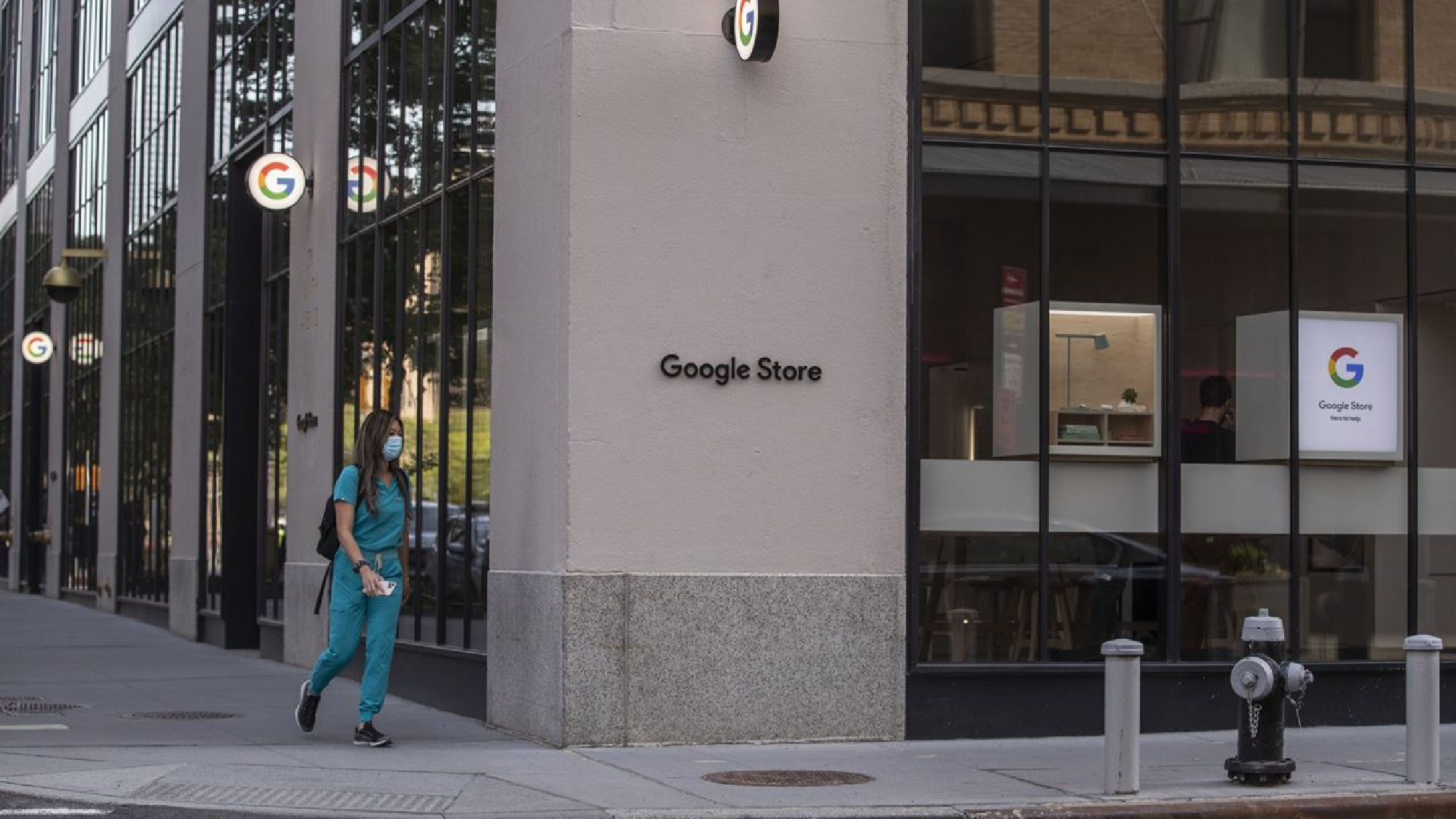
Google will open its first retail store in New York City, highlighting the internet giants effort to promote its consumer hardware devices.
The store, in Manhattan’s trendy Chelsea neighborhood, will open to the public Thursday, the Mountain View, California-based company said Wednesday in a blog post. The shop, which is a block away from rival Apple Inc.’s 14th Street store, occupies part of the first floor of Google’s New York offices.
Google began experimenting with pop-up stores in 2016, the same year it debuted its Pixel smartphone and Nest smart home speaker. In the years since, the company has introduced a plethora of hardware devices and hosted subsequent pop-ups to learn more about what consumers expect from a retail store, said Jason Rosenthal, Google’s vice president of direct channels and membership.
“It’s like walking into a dream,” Ivy Ross, vice president of design, user experience and research for design and services, said during a virtual tour. “I hope customers feel the same way. I want them to be happy and inspired, like I am being in here.”
Ross oversaw the planning for the store. “It’s very rewarding to see everything come together, especially during Covid after once not being able to be in the space,” she added.
The store was designed like a social space, with sitting areas, tables and other furniture that invites a level of public intimacy and intermingling that has been a rare experience during the Covid-19 pandemic. The company said it will limit the number of people who can be in the store at once and that associates as well as customers will have to wear masks inside.
The furniture, including sofas and oval-shaped tables, are made of blond wood and cork — neutral colors so the products would stand out, Ross said. The company also wanted customers to see what Google’s products would look like “in context,” so in the store, speakers may be placed next to piles of books and other design knick-knacks to give it more a feel of being in someone’s home. Phones, tablets and other devices are operational and untethered, so visitors can fiddle around with them.
Ross said there’s a children’s room, to “park your children while shopping.” There’s also a space where people can use the Pixel phone’s Night Sight feature to take images in the dark and email the photos to themselves. There’s a room where three people can play video games through Google’s Stadia streaming service. And there’s the Imagination Space — partially enclosed by a 17-foot-tall glass round structure, with screens inside. On the screens, visitors can experience advanced or experimental Google services that may not be available to the public yet.
Rosenthal said it was important for Google to create a direct retail channel that embodies the Google brand and lets customers hear straight from the company, and gives Google feedback from customers. He declined to comment on whether the tech giant would open additional stores.
Ross touted the store’s Leadership in Energy and Environmental Design Platinum certification by the U.S. Green Building Council, pointing to the flooring, made of recycled bottles, the low-energy light bulbs, conservative water usage and other measures. As with its hardware, “we believe that you don’t have to sacrifice Mother Nature with making great products,” Ross said.
Published : June 17, 2021
By : Syndication Washington Post, Bloomberg · Nico Grant
JBS paid $11 million in ransom after hackers shut down meat plants
JBS, the worlds largest meat supplier, confirmed Wednesday that it paid the equivalent of $11 million in ransom to hackers that targeted and temporarily crippled its business.
The company confirmed it made the payment in a statement Wednesday, saying it did so after most of its plants started operating again last week. The company consulted with its own IT workers and external cybersecurity experts, it said, and decided to pay the ransom to make sure no data was stolen.
The payment was first reported by The Wall Street Journal.
“This was a very difficult decision to make for our company and for me personally,” JBS USA CEO Andre Nogueira said in a statement.
JBS was the victim of a ransomware attack last week that temporarily halted operations at its nine beef processing plants in the United States and caused disruptions at other facilities. The FBI attributed the attack to a Russian-linked ransomware group known as both REvil and Sodinokibi.
JBS got many of its plants operating again by the end of last week, but the company told the Journal it decided to pay the ransom to lower the consequences for its customers, including farmers and restaurants.
Ransomware attacks have dramatically increased across the country in the past two years, and have recently hit high-profile targets including JBS and major pipeline Colonial Pipeline. The latter caused long lines and gas shortages at the pumps on the East Coast and sent government regulators scrambling to crack down on cybersecurity in both public and private realms.
ADVERTISEMENT
Ransomware attacks are generally relatively unsophisticated – hackers often use a tactic called “phishing” by sending employees emails containing suspicious links or attachments. If someone clicks, hackers can gain access to companies’ systems and make their way into valuable databases.
Once inside, cybercriminals will lock down key computer systems and demand a ransom to hand control back to the company. Increasingly, hackers will also demand a payment to stop them from stealing and leaking private company data online.
The attacks can be difficult to guard against because of all the entry points hackers can try to target. Cybercriminals often work together as part of loosely defined ransomware gangs, sharing resources to get as many payments as possible.
JBS said Wednesday that it spends more than $200 million annually on information technology and employs more than 850 IT workers in the world.
The company said experts are still investigating its hack, but preliminary findings suggest no employee or customer data was compromised.
Alibaba kicks off spending spree with $1 billion for cloud
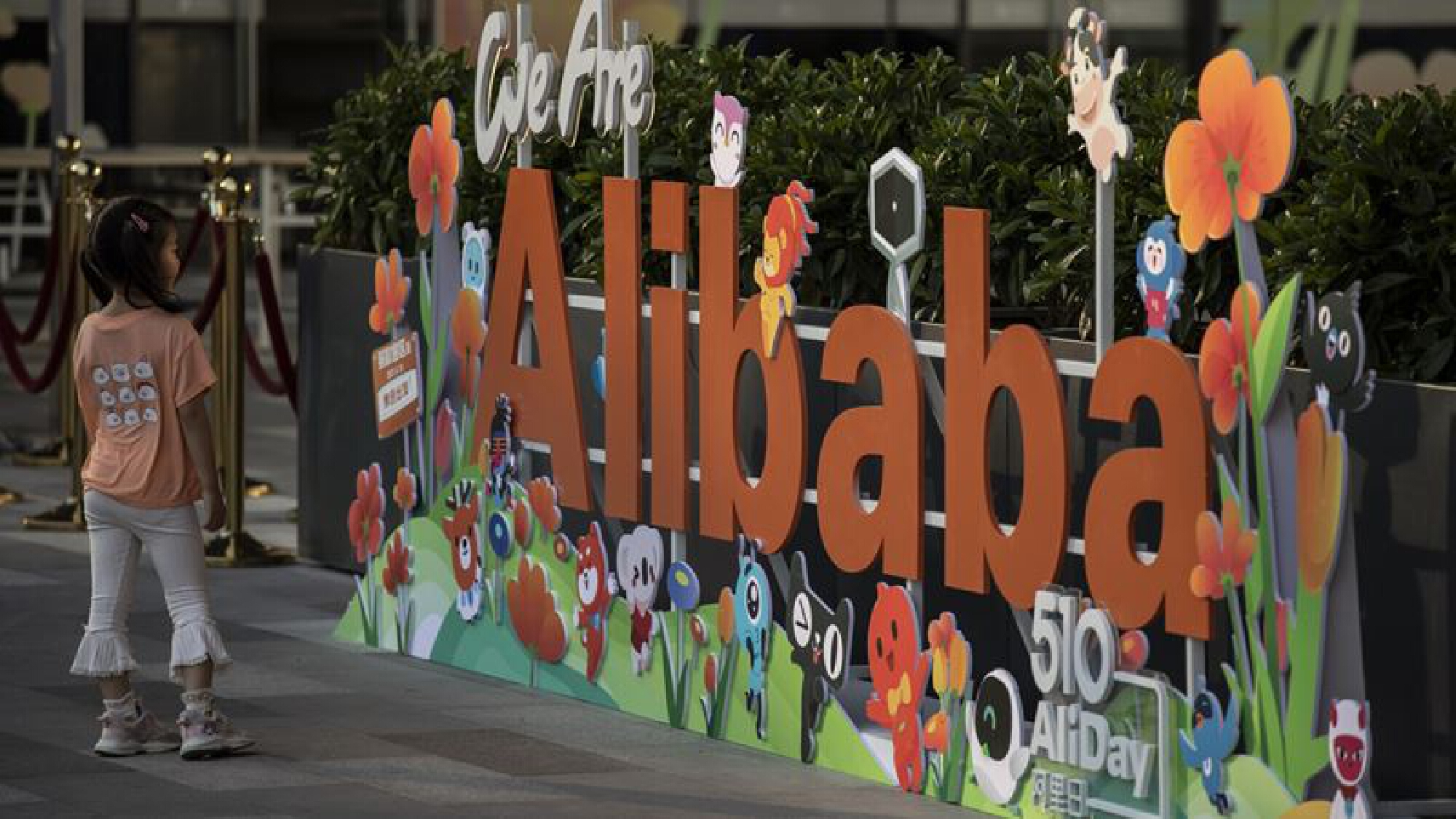
Alibaba Group Holdings cloud division has pledged $1 billion to support startups in Asia, marking one of its largest outlays since the tech giant pledged to boost spending and move past a bruising antitrust investigation at home.
The $1 billion will be the initial funding for Project AsiaForward, which aims to nurture 100,000 developers and tech startups over the next three years, Alibaba said in a statement Tuesday. The company aims to build a million-strong talent pool by providing training for developers, as well as connecting entrepreneurs with venture capital and other opportunities.
Jack Ma’s e-commerce titan said last month it will invest all incremental profits into areas like technology and e-commerce, after Chinese antitrust regulators imposed a record $2.8 billion fine that drove the firm to its first quarterly loss in nine years. Chinese tech giants from Alibaba to Tencent Holdings and Meituan have all pledged to dramatically boost spending, as Beijing’s crackdown on the industry forces companies to find new growth drivers.
“We are seeing a strong demand for cloud-native technologies in emerging verticals across the region, from e-commerce and logistics platforms to fintech and online entertainment,” Jeff Zhang, president of Alibaba Cloud Intelligence, said in the statement. “Our focus on innovation and data center investments, as well as talent development is in anticipation of a digital-first future.”
Alibaba’s cloud business, modeled on Amazon Web Services, grew from the needs of its massive online shopping operation to become one of the e-commerce giant’s biggest growth engines. But its expansion is slowing in the wake of competition from Tencent and Huawei Technologies. Its cloud revenue rose just 37% in the March quarter, the slowest pace since 2014, after a major customer pulled out.
ByteDance’s viral video service TikTok decided to drop Alibaba as a cloud provider during the period and instead relied more on its own inhouse servers and American rivals such as AWS, a person familiar with the matter said, asking not to be identified talking about a private decision.
ADVERTISEMENT
Alibaba Cloud is opening its first datacenter in the Philippines by the end of this year and will build an innovation center in Malaysia. Currently operating in 75 so-called availability zones in 24 regions, the firm has also launched a third datacenter in Indonesia. It was the No. 3 Infrastructure-as-a-Service, or IaaS cloud provider globally in 2020, behind Amazon.com Inc. and Microsoft Corp., according to industry researcher Gartner.
“Our strategic roadmap for APAC includes targeted investments to facilitate the digital transformation of local businesses,” Selina Yuan, general manager of Alibaba Cloud Intelligence’s international business unit, said in the statement. “We see these investments as all the more timely given the impact of the pandemic and the sharp rise in demand for digital business tools.”
Fierce rival Tencent said last week it’s launching four datacenters in Bangkok, Frankfurt, Hong Kong and Tokyo, giving its cloud business a presence in 27 regions worldwide.
Published : June 09, 2021
By : Syndication Washington Post, Bloomberg · Coco Liu
Thai Central Chemical Public Company Limited cares for people in community
Thai Central Chemical Public Company Limited (“TCCC”) cares for people in community, delivered consumer goods and survival kits to people affected by the COVID-19 pandemic.
Mr. Chalermphol Samarkhom (3nd-Left) – General Manager of Operation Support Division and the representatives of Thai Central Chemical Public Company Limited (TCCC), delivered consumer goods and survival kits to people affected by the COVID-19 pandemic in community at Moo5, Klong Sakae sub-district, Nakhon Luang District, Phra Nakhon Si Ayutthaya Province, received by village headman, Assistant Village Headman, Medical personnel and Village Health Volunteer.
Le Méridien Hotels & Resorts Entices Travellers to Take Flight Into a Summer
Le Méridien created a contemporary yet playfully illustrated ‘in-flight’ short film called “Now Departing for Golden Hour” Global Programme “Au Soleil by Le Méridien” Encourages Guests to Channel the Spirit of a Chic European Summer All Year Round
Le Méridien Hotels & Resorts, part of Marriott Bonvoy’s portfolio of 30 extraordinary brands, is helping sun-seekers savour the simple joys of the season this summer and beyond with Au Soleil by Le Méridien. Following a year of missed moments, milestones and the summer that never was, Le Méridien welcomes travelers and locals alike to take back the season and chase endless summers with outdoor activations, food & beverage programming and limited-edition packages that evoke the glamour of a summer spent on the French Riviera — wherever you are in the world.
To kick off the programme, Le Méridien created a contemporary yet playfully illustrated ‘in-flight’ short film called “Now Departing for Golden Hour”, which acts as a ‘How-to-Summer Guide’ and will be featured in hotels, on the brand’s website, social media and more. The animated film is a nod to the brand’s founding during the golden era of travel and the influence this has on the Le Méridien experience. At hotels around the world, the timeless chic of mid-century modern design takes travelers back to the glamorous halcyon days of air travel and invites them to savour the good life. Embodying the idea that the sun never sets on the jet set, the film celebrates the effervescence of warm weather days in Le Méridien style.
Le Méridien Hotels & Resorts Entices Travellers to Take Flight Into a Summer
The Glamour of Golden Hour
Personifying the laid-back elegance of European summers and the allure of the Côte d’Azur, this season’s global series of events revolve around ‘Golden Hour,’ the magical hour at the end of the day under the sun – a sacred moment in time to slow down and indulge in simple pleasures through all the senses. Guests will be able to soak up this perfect moment in time and take in the views from one of Le Méridien’s unrivalled rooftops, courtyards and terraces in key destinations around the world.
Launching in June and continuing throughout the year, participating Le Méridien hotels will put their own spin on this moment in time through programming that takes guests from the last rays of afternoon sunshine all the way through to dinner time. Sun-seekers are encouraged to ease themselves into Golden Hour by indulging in the brand’s Le Scoop by Le Méridien programme, which offers a decadent afternoon treat of refreshing gelato and sorbet, designed to be enjoyed while taking part in the European summer tradition of a “passeggiata” to unlock the destination’s locale. “Passeggiata” is an Italian term referring to a traditional evening stroll in the town’s piazza. At select properties, guests will be able to book an “Au Soleil” room package, which includes breakfast and a complimentary Le Scoop by Le Méridien gelato or sorbet.
Passeggiata complete, next up are Petit Plates of light and local seasonal bites paired with rosé spritzers and aperitifs, with guests encouraged to enjoy this warm weather drink as the French do, “Piscine” (on ice). As the last rays of the day start to fade, vintage games and the classic seaside pastime of backgammon will be accompanied by a soundtrack of sun-soaked beats, encouraging guests to revel in French nostalgia and linger a little longer.
For those who prefer to take summer on-the-go with them to discover the city or sunbathe at the beach, pas de problème – there is the Au-Soleil-To-Go kit, inspired by an idyllic summer day on the Côte d’Azur, available at participating properties.
Across the Street, and Around the World
Global jetsetters and locals alike can indulge in chic soirées and glamorous activations throughout the year in locations around the world . Whether relaxing against the backdrop of the majestic mountain in Sichuan or laying poolside in Maldives, there’s something for everyone to add a touch of Au Soleil glamour to the rest of their year. Locations featuring Au Soleil activations this year include (among others):
The Glamour of Golden Hour
Personifying the laid-back elegance of European summers and the allure of the Côte d’Azur, this season’s global series of events revolve around ‘Golden Hour,’ the magical hour at the end of the day under the sun – a sacred moment in time to slow down and indulge in simple pleasures through all the senses. Guests will be able to soak up this perfect moment in time and take in the views from one of Le Méridien’s unrivalled rooftops, courtyards and terraces in key destinations around the world.
Launching in June and continuing throughout the year, participating Le Méridien hotels will put their own spin on this moment in time through programming that takes guests from the last rays of afternoon sunshine all the way through to dinner time. Sun-seekers are encouraged to ease themselves into Golden Hour by indulging in the brand’s Le Scoop by Le Méridien programme, which offers a decadent afternoon treat of refreshing gelato and sorbet, designed to be enjoyed while taking part in the European summer tradition of a “passeggiata” to unlock the destination’s locale. “Passeggiata” is an Italian term referring to a traditional evening stroll in the town’s piazza. At select properties, guests will be able to book an “Au Soleil” room package, which includes breakfast and a complimentary Le Scoop by Le Méridien gelato or sorbet.
Passeggiata complete, next up are Petit Plates of light and local seasonal bites paired with rosé spritzers and aperitifs, with guests encouraged to enjoy this warm weather drink as the French do, “Piscine” (on ice). As the last rays of the day start to fade, vintage games and the classic seaside pastime of backgammon will be accompanied by a soundtrack of sun-soaked beats, encouraging guests to revel in French nostalgia and linger a little longer.
For those who prefer to take summer on-the-go with them to discover the city or sunbathe at the beach, pas de problème – there is the Au-Soleil-To-Go kit, inspired by an idyllic summer day on the Côte d’Azur, available at participating properties.
Across the Street, and Around the World
Global jetsetters and locals alike can indulge in chic soirées and glamorous activations throughout the year in locations around the world . Whether relaxing against the backdrop of the majestic mountain in Sichuan or laying poolside in Maldives, there’s something for everyone to add a touch of Au Soleil glamour to the rest of their year. Locations featuring Au Soleil activations this year include (among others):
Le Méridien Hotels & Resorts Entices Travellers to Take Flight Into a Summer
Asia Pacific
• Le Méridien Maldives Resort & Spa – opening in August
• Le Méridien Khao Lak Resort & Spa
• Le Méridien Phuket
• Le Méridien Bangkok
• Le Méridien Chongqing, Na’an
• Le Méridien Zhengzhou
• Le Méridien Xiaojing Bay
• Le Méridien Emei Mountain Resort
• Le Méridien Putrajaya
• Le Méridien Nagpur
“Au Soleil is more than an activity, it’s a state of mind,” said Jason Nuell, Senior Vice President, Premium Brands, Marriott International. “After a year like no other, this year’s Au Soleil Golden Hour programming allows people who are ready to come back together at the perfect time of day, whether across the street or around the world, to reconnect over a glass of rosé, a scoop of gelato or a classic summer game. To celebrate the essence and lifestyle of our signature summer soirée programme, modish activations and chic touchpoints will inspire guests to savour the moment and linger longer at our urban and resort destinations across the globe.”
For more information about Au Soleil by Le Méridien, please visit http://www.lemeridien.com/ausoleil and follow along on social media with #LMAuSoleil. To get into the spirit of endless summer, follow the Le Méridien Au Soleil playlist on Spotify.
Le Méridien Hotels & Resorts Entices Travellers to Take Flight Into a Summer
Google to let Android users opt out of tracking, following Apple
Google will let Android mobile software users opt out of being tracked by advertisers on their smartphone applications, following an earlier move by rival Apple Inc. to bolster privacy on iPhones.
The option will become available in late 2021, with a Google Play services update, the Alphabet Inc. unit said on a support website. Developers will no longer be able to see a user’s unique advertising ID if that person has declined to receive personalized ads. Unlike Apple’s feature, users won’t be opted out of ad tracking by default.
For months, Google has been mulling a way to give Android users more control over ad tracking with a less stringent approach than Apple’s, Bloomberg reported. In May, Google said it would create a safety section in its Play Store in 2022 so Android users can see what data developers collect about them and share, plus give access to additional privacy and security information.
Apple roiled the mobile advertising industry in April when it debuted its App Tracking Transparency feature, which requires users to opt in to being tracked by apps for personalized advertising. Developers expect to lose revenue from the change because most consumers likely won’t agree to have their data collected.
Google said the Play services rollout will affect apps running on Android 12 devices starting in late 2021 and migrate to other devices with Google Play in early 2022.
Published : June 04, 2021
By : Syndication Washington Post, Bloomberg · Nico Grant
Amazon-MGM seen winning antitrust nod as tech critics cry foul
Amazon.coms takeover of Metro-Goldwyn-Mayer is sparking fresh criticism about the spreading tentacles of Americas technology giants, but the deal underscores how competition watchdogs have their hands tied when it comes to curbing the companies growth.
Critics of tech firms in Washington on Wednesday slammed the MGM deal as the latest example of how the industry’s biggest players snap up companies to expand their reach, even as they face a flurry of antitrust lawsuits and moves by lawmakers to rein them in.
“Another day. Another mega merger,” tweeted Rep. David Cicilline, the Rhode Island Democrat who led a sweeping investigation of Amazon, Facebook, Alphabet and Apple. “Amazon’s proposed purchase of MGM reinforces what we already know — they are laser-focused on expanding and entrenching their monopoly power.”
Amazon announced the MGM deal a day after being sued by the attorney general of Washington, D.C., who said the online retailer is engaging in anticompetitive conduct that’s leading to higher prices for consumers. The case, the first government antitrust lawsuit against Amazon in the U.S., opened a new front in the regulatory assault on the tech industry.
The deal presents an early test for the Biden administration’s antitrust agenda. The president has yet to nominate an assistant attorney general to run the Justice Department’s antitrust division, which would probably review the MGM deal.
For those troubled about the relentless growth of the biggest tech companies, the MGM acquisition could highlight how antitrust law falls short, said Sam Weinstein, who teaches antitrust at Cardozo School of Law in New York. Under traditional antitrust analysis, which would look at whether Amazon will gain outsized market power in film and TV content, the MGM deal is very likely to be cleared by regulators, he said.
“If you’re really concerned about how big a company is — just how big it is, not that it’s creating a monopoly in a particular market — this acquisition will bother you, and the antitrust laws as currently constituted aren’t designed to deal with something like this,” Weinstein said.
Amazon is the second-largest paid streaming service in the world behind Netflix, and the MGM acquisition will give it more than 4,000 movies and 17,000 TV shows, including “Rocky,” “RoboCop” and “The Handmaid’s Tale.”
But the combination still leaves many studios competing to produce content. MGM doesn’t even rank among the top five Hollywood studios by box office share: Walt Disney, Warner Bros., Universal Pictures, Sony Group and Lions Gate Entertainment. Then there’s Netflix, which produces its own content for its streaming service, including hits like “Bridgerton,” “Stranger Things” and “The Queen’s Gambit.”
That’s not stopping criticism of the takeover.
“In acquiring MGM Studios, Amazon is brazenly trying to take over another sector of the economy,” said Sarah Miller, the executive director of the American Economic Liberties Project, an anti-monopoly organization in Washington. “Congress should respond quickly by passing bipartisan legislation to ban mergers by large tech firms.”
On Capitol Hill, Republican Sen. Josh Hawley of Missouri, a fierce critic of tech platforms, said on Twitter that Amazon is a monopoly that “shouldn’t be able to buy anything else. Period.”
“This is a major acquisition that has the potential to impact millions of consumers,” said Sen. Amy Klobuchar of Minnesota, who chairs the Senate’s antitrust panel. “The Department of Justice must conduct a thorough investigation to ensure that this deal won’t risk harming competition.”
Amazon and its tech peers have bought hundreds of companies in the last decade, none of which has been stopped by antitrust enforcers. Their buying spree has triggered criticism that antitrust cops aren’t being aggressive enough to challenge the companies. It’s also fueling calls for new legislation that would revise antitrust laws.
The $8.45 billion MGM deal is Amazon’s second-largest acquisition after Whole Foods Market, the grocery chain Amazon bought for about $13.7 billion in 2017. That deal was cleared by antitrust officials at the Federal Trade Commission without an in-depth investigation.
With the Whole Foods deal, Amazon was making a major acquisition in a market where it wasn’t a big player, so it didn’t raise competition concerns. The MGM acquisition fits the same pattern, said Jennifer Rie, an analyst at Bloomberg Intelligence, who expects the deal will clear the antitrust review. That will probably help build support for antitrust legislation that will give enforcers new tools to stop deals, she said.
The biggest critics of the tech companies “simply don’t think these companies should be able to get any bigger,” Rie said. “That’s not where the law stands now.”
Published : May 28, 2021
By : Syndication Washington Post, Bloomberg · David McLaughlin




 Le Méridien Hotels & Resorts Entices Travellers to Take Flight Into a Summer
 Le Méridien Hotels & Resorts Entices Travellers to Take Flight Into a Summer
 Le Méridien Hotels & Resorts Entices Travellers to Take Flight Into a Summer