
Companies that backed Trump for years are facing a reckoning after the attack on the Capitol #SootinClaimon.Com

#SootinClaimon.Com : ขอบคุณแหล่งข้อมูล : หนังสือพิมพ์ The Nation.

Companies that backed Trump for years are facing a reckoning after the attack on the Capitol

CorporateJan 09. 2021A statue of Zachary Taylor was defaced at the U.S. Capitol after Trump supporters breached the U.S. Capitol Jan. 7, 2021, in Washington, D.C. MUST CREDIT: Washington Post photo by Katherine FreyA statue of Zachary Taylor was defaced at the U.S. Capitol after Trump supporters breached the U.S. Capitol Jan. 7, 2021, in Washington, D.C. MUST CREDIT: Washington Post photo by Katherine Frey

By The Washington Post · Todd C. Frankel, Jeff Stein, Jena McGregor, Jonathan O’Connell · NATIONAL, BUSINESS, POLITICS 

The bargain with the business world worked like this: They mostly tolerated President Donald Trump’s sometimes outrageous behavior in exchange for business-friendly corporate tax cuts and regulatory rollbacks, deals they celebrated over Oval Office handshakes.

But that arrangement started to sour in the last year with the Trump’s administration’s missteps on the pandemic and Black Lives Matter protests before swiftly deteriorating in recent days with a mob assault on the Capitol prodded on by the president. That led the National Association of Manufacturers – comprised of exactly the kind of companies he considered key to his “Make America Great Again” mission – to call for Trump’s immediate removal from office for actions by the pro-Trump mob described as “sedition.”

The message was not the typical corporate condemnation. It was something the trade group of 14,000 companies – which usually avoids politics – never before imagined issuing.

“It was a clear and present danger to our democracy,” said Jay Timmons, the group’s president. “And we couldn’t stand for that. That transcended everything.”

Business groups big and small largely stuck by Trump as he broke one norm after another over the past four years, including insulting immigrants, appearing to empathize with White supremacists in Charlottesville, Va., and clearing a Black Lives Matter protest in Washington for a photo op. They stuck by him still after he threatened the Ukrainian prime minister to help his election chances, after his impeachment, after he intentionally downplayed the effects of the coronavirus and last week after he was recorded pressuring the Georgia Secretary of State to overturn election results.

The once-comfortable alliance between Trump and Corporate America has shown unprecedented strain since Wednesday’s attack, forcing a re-examination of everything that businesses had won over the last four years from a White House now thrown into chaos.

Following the attack on the Capitol, advisers crucial to the president’s economic policies tried to distance themselves from the Trump-induced mayhem. Some resigned, such as former chief of staff Mick Mulvaney, who was serving as envoy to Northern Ireland, explaining to CNBC that, “we signed up for lower taxes and less regulation.” Companies considered cutting off the money spigot to the politicians seen as fomenting the worst of it. Firms that did business with theTrump family were re-examining the cost of being associated with a historic insurrection.

Yet some officials sought to maintain a neat separation between Trump’s economic policies and what had occurred at the Capitol.

“It isn’t going to affect tax rates. How about monetary policy? Allow me to stay pure to my turf,” Art Laffer, a supply side economist who is close with White House economic officials and speaks to the president, said in a brief interview.

But there remained plenty of criticism for the business world’s willingness to go along with Trump for so long.

“Their attitude was: ‘Let’s take the big tax cuts and hold our noses for the obvious xenophobia and authoritarianism.’ It was a classic Faustian bargain,'” said Rep. Brendan Boyle, D-Pa., a member of the House Ways & Means Committee. “They should have known from the beginning.”

The economy provided Trump with cover after he previously ran into trouble, such as for his “very fine people on both sides” comment following the Charlottesville clashes and his administration’s defense of the images of “kids in cages” along the southern U.S. border.

Many companies abandoned the various policy councils set up by the White House as a result. Others issued statements. But little was different.

Events of the last year seemed to change those corporate calculations for some groups, including by the National Association of Manufacturers.

The trade group had worked closely with the Trump administration on tax reform and regulatory issues. When Timmons, the group’s president, visited the White House in March 2017, he told Trump that manufacturers increasingly felt the country was on the right track.

“And that’s because of the focus on taxes, regulations, infrastructure investment,” Timmons said, according to a meeting transcript. “We appreciate your commitment to investment in job creation and manufacturing. And we’re going to deliver.”

But everything changed when Vice President Mike Pence delivered a speech last February at the manufacturing group’s board meeting, where he seemed to downplay the threat posed by a then-still novel coronavirus, according to three senior leaders.

That was followed by the nation’s problems with personal protective equipment and ventilators. Manufacturers struggled to figure out how to help, stymied by a chaotic federal response. The trade group launched its own “wear a mask” ad campaign while Trump and other Republicans continued to cast doubt on facemasks. The group condemned the death of George Floyd over the summer. And after the election, it called on Trump’s administration to provide help to President-elect Joseph Biden’s transition team.

But the scenes from Wednesday were the breaking point. Senior leaders quickly drafted a statement – while police were still trying to clear the Capitol – calling on Trump to be removed from office and pointing a finger at any politician involved in doubting election results.

“The outgoing president incited violence in an attempt to retain power, and any elected leader defending him is violating their oath to the Constitution and rejecting democracy in favor of anarchy,” said the statement from Timmons.

The manufacturers were not unanimous in supporting Timmons’ stance.

Chuck Wetherington, a member of the executive committee and president of BTE Technologies in Hanover, Md., said the group and Trump had increasing differences over trade, immigration and racism. He said he was proud of Timmons’s courage in making the statement.

“What we saw Wednesday was democracy under attack,” he said.

But another member of the executive committee, Steve Straub, president of a Dayton, Ohio metal fabrication supplier, said in an email he didn’t support the statement. “There are other board members who feel the same way,” he said. He continued displaying a photo of him alongside Trump on his company website.

Other companies and business groups issued various statements, among them the U.S. Chamber of Commerce, the heads of financial giants Citi and J.P. Morgan. The Business Roundtable, a group representing the nation’s most powerful chief executives, said in a statement to The Washington Post that because of the falsehoods from politicians about the election outcome “many of our companies are evaluating their contributions.”

None of the groups went as far as the manufacturing group.

The stance was starker than the ones taken by several of the corporations on the manufacturing group’s executive committee. Some failed to mention Trump’s name. Others offered general calls for unity.

In an email to employees, Caterpillar’s chief executive, Jim Umpleby, said: “We watched in disbelief as protestors broke through security barricades” and strongly condemned “the resulting chaos, destruction and loss of life” but did not mention Trump’s role in the events.

Ted Doheny, president of packaging firm Sealed Air, said in an emailed statement to The Washington Post that he condemned the violence and “I stand with others in the business community who are calling for unity and a smooth transition of power.”

Another large company on the manufacturing group’s executive committee, Emerson Electric, did not respond to a request for comment. According to the Center for Responsive Politics’ Open Secrets website, the St. Louis-based company gave individual and PAC contributions totaling $51,900 to the campaign of Sen. Josh Hawley, R-Mo., one of the lawmakers who voted to object to certifying election results.

Emerson’s CEO, David Farr, gave Trump Victory – a committee raising money for Trump’s reelection and the Republican party – $100,000 in 2020, according to Federal Elections Commission data. Spokesman David Baldridge said in an email that Farr was not available for an interview and the company declined comment.

The flood of corporate statements was the result of companies suddenly finding themselves in the strange position of needing to defend democracy.

“They spoke out because overturning an election is not simply a threat to our political system,” said Ronnie Chatterji, a business professor at Duke University and former economic advisor to President Obama. “The rule of law that ensures peaceful transitions of power also makes business possible.”

A major outstanding question is whether executives or political action committees affiliated with companies will reduce their donations to GOP candidates who supported Trump’s efforts to overturn the election and incite violence.

Some companies have asked about the pressure to stop political contributions to congressional members who voted against certifying the election, said Nick DeSarno, director of digital and policy communications for the trade group of policy officials at large corporations and advocacy groups.

“Companies are actively considering if these lawmakers will be supported by their PAC in the future,” DeSarno said.

Bruce Haynes, chairman of Sard Verbinen & Co.’s public affairs group, said his firm has been contacted by clients trying to determine whether they should make a statement amid this week’s turmoil, and if so, what should be said.

“Nothing like this has ever happened before,” Haynes said. “It’s not in the playbook.”

Haynes said it is too early to know, but he expected companies to have to look harder at their political donations and relationships.

“I’d say that scrutiny is about to rise significantly,” he said.

One major union group that had supported Republican lawmakers on matters such as project labor agreements had also decided to cut ties with Republicans who voted against the vote certification, according to one labor official granted anonymity to discuss the private matter.

More than half of the 33 chief executives gathered on a virtual call this week said they would reconsider investments in states where elected officials are impeding an orderly presidential succession, said Yale School of Management’s Chief Executive Leadership Institute founder Jeffrey Sonnenfeld, who organized the call.

Sonnenfeld, who argued CEOs have opposed the Trump administration at times throughout his term, including on environmental regulatory rollbacks and immigration issues, said he believed companies would be limiting contributions to lawmakers who denied election results in the future. But others were skeptical about a major shift in lobbying and campaign contributions.

While companies may face pressure to change, Chatterji said, “I do not think it will happen.”

The costs of the Capitol insurrection have been felt inside the White House. Tyler Goodspeed, acting chair of the White House Council of Economic Advisers, submitted his resignation a day after the storming of the Capitol. His departure means there are no remaining members of the White House Council of Economic Advisers.

Several senior White House officials called outside advisers Wednesday weighing whether they should also depart the administration amid a broader exodus of senior White House officials, according to three people granted anonymity to share details of private conversations.

But even those who have not cut ties to the White House’s economics team are worried.

“It’s a disaster. It’s been a disaster. My main concern as a policy guy is that this tarnishes his economic achievements, that’s my main concern right now,” said Stephen Moore, a longtime White House economic adviser and conservative.

It’s also unclear if fallout from the Capitol melee will have a major effect on Trump and his business when he leaves office.

Shopify, the company that runs online stores for the Trump Organization and the Trump campaign, pulled down both sites Thursday. It issued a statement saying the company “does not tolerate actions that incite violence.” Trump earned $930,869 in income from his company’s site in 2019, according to his most recent government disclosure. Shopify’s decision was first reported by the Wall Street Journal.

JLL, the real estate services firm that the Trump Organization hired in a failed attempt to sell his D.C. hotel lease, told The Washington Post on Friday that it will no longer be helping Trump with the sale.

“Our previous listing agreement with the Trump Organization to sell its hotel in Washington D.C. has expired and we are no longer doing business with them,” said spokesman Jesse Tron in a statement.

Lawyers are abandoning Trump, too, for the challenge to the election results and what they view as his role in the riot. The most recent came from Philadelphia attorney Jerome M. Marcus, who filed a motion in federal court Thursday withdrawing from the case. “The client has used the lawyer’s services to perpetrate a crime,” the motion states.

But any impact on companies could be fleeting.

On Wednesday, pro-Trump insurrectionists still occupied the Capitol building. The emergency had not waned. A peaceful transfer of power remained in doubt.

Yet U.S. stock markets were still up for the day.

Vibhavadi Hospital shares rise after vaccine news #SootinClaimon.Com

#SootinClaimon.Com : ขอบคุณแหล่งข้อมูล : หนังสือพิมพ์ The Nation.

Vibhavadi Hospital shares rise after vaccine news

CorporateJan 08. 2021

By The Nation

The share price of Vibhavadi Hospital (Vibha) rose by Bt0.19, or 10.56 per cent, to Bt1.99 per share in the morning session on Friday over news that the hospital had ordered up to 60,000 doses of Moderna’s Covid-19 vaccine.

Managing director Pijit Viriyamettakul said the hospital’s move was aimed at giving people access to a vaccine amid the present second Covid-19 wave, adding that the US Food and Drug Administration (FDA) has approved the vaccine.

He expected Thailand’s FDA to allow the hospital to vaccinate people in February this year.

“After receiving FDA approval, we will allow people to reserve their vaccination,” he said, adding that each person would be charged Bt6,000-Bt10,000.

He added that Thailand’s FDA had earlier ordered the hospital to refund money to people who had subscribed for Moderna’s vaccine because at that time it hadn’t received US FDA approval.

“However, we still have a list of people who had subscribed for the vaccine,” he added.

B Grimm Power to enter growing independent power supply market #SootinClaimon.Com

#SootinClaimon.Com : ขอบคุณแหล่งข้อมูล : หนังสือพิมพ์ The Nation.

B Grimm Power to enter growing independent power supply market

CorporateJan 08. 2021B Grim CEO Harald Link B Grim CEO Harald Link

By The Nation

B Grimm Power has unveiled plans to enter the independent power supply (IPS) market, whereby companies produce electricity for their own use.

The IPS market has significant potential for expansion given large companies are seeking to lower their energy costs, said B Grim CEO Harald Link on Thursday. 

Mixed-use projects (shops, offices and residential) are currently looking to produce their own electricity to cut high energy costs, he added.

Link revealed he is in talks for electricity production projects with five or six clients, saying B Grim plans to begin investing in the market this year.

The company will leverage its expertise in energy equipment, air conditioners, construction materials, and solar and gas-generating electricity production, he said.

B Grimm said electricity production technology has advanced quickly and costs have fallen to a point where it envisages producing 20 to 30 megawatts for the IPS market.

The IPS venture will add to its existing operations in the small power producer (SPP) and rooftop solar energy markets.

Alibaba plans to sell up to $8 billion bonds in show of strength #SootinClaimon.Com

#SootinClaimon.Com : ขอบคุณแหล่งข้อมูล : หนังสือพิมพ์ The Nation.

Alibaba plans to sell up to $8 billion bonds in show of strength

CorporateJan 07. 2021Employees walk through the campus at the Alibaba Group in Hangzhou, China, on Nov. 11, 2019. MUST CREDIT: Bloomberg photo by Qilai Shen.Employees walk through the campus at the Alibaba Group in Hangzhou, China, on Nov. 11, 2019. MUST CREDIT: Bloomberg photo by Qilai Shen.


By Syndication Washington Post, Bloomberg · Ina Zhou, Rebecca Choong Wilkins

Alibaba Group Holding is looking to raise as much as $8 billion selling dollar bonds as early as next week, according to people familiar with the matter.

The e-commerce giant aims to raise at least $5 billion but could wind up with more depending on the reception, said the people who aren’t authorized to speak publicly and asked not to be identified. The deal will be a multi-tranche offering, with specific tenors yet to be determined, they said. Alibaba declined to comment. Reuters earlier reported the planned sale.

Pulling off the sale at a time when Jack Ma’s empire is facing intense government pressure back home would be a sign of global investor confidence in the company. In recent months, officials blocked Ant Group Co.’s $35 billion IPO, proposed new rules to curb the dominance of internet giants and fined Alibaba over acquisitions from years before. Closer scrutiny of mergers and acquisitions could add uncertainty over the growth of large internet firms.

“We view the issuance as somewhat exploratory given the broader uncertainty around Ant/Jack Ma,” said Chuanyi Zhou, a credit analyst at Lucror Analytics in Singapore. “It may well reveal how seriously global investors perceive the rapidly evolving regulatory environment in China and the potential impact on Alibaba.”

Alibaba raised about $11 billion from its Hong Kong stock sale in late 2019, and had a cash hoard of almost $90 billion at the end of September.

The sale comes as companies flock to issue bonds. Borrowers have sold more than $65 billion of dollar bonds globally so far this year, following a record of over $3.6 trillion in 2020, according to data compiled by Bloomberg.

The firm tapped the global debt market in 2014 for the first time to raise $8 billion shortly after its landmark New York stock debut. It last came to the offshore market with a bumper $7 billion bond deal in 2017 and needs to repay or refinance some $1.5 billion of dollar debt which comes due this year, Bloomberg-compiled data show..

Alibaba’s dollar bond due 2027 is trading at about 111 cents on the dollar, Bloomberg-compiled prices show.

Alibaba has in recent years spent billions acquiring stakes in promising startups, expanding its logistics network and cloud-hosting services, and building up an international business via Singapore-based online mall Lazada. It is now engaged in a bruising battle with Meituan in food delivery, while fending off rivals like JD.com Inc. and Tencent Holdings Ltd. in businesses from groceries to retail.

Online food orders tripled in ‘red’ provinces during New Year holidays #SootinClaimon.Com

#SootinClaimon.Com : ขอบคุณแหล่งข้อมูล : หนังสือพิมพ์ The Nation.

Online food orders tripled in ‘red’ provinces during New Year holidays

CorporateJan 06. 2021

By THE NATION

Food delivery orders from customers in Covid-19 red-coded provinces saw a three-time increase during the New Year festival compared to the same period last year, an executive at an online platform said.

Yod Chinsupakkul, chief executive officer of Lineman Wongnai, an online food delivery platform, said that “The new wave of Covid-19 outbreak and restricted opening hours of restaurants compelled people to order food online, especially in controlled provinces.”

The Centre for Covid-19 Situation Administration (CCSA) has classified controlled provinces as ‘red’ in its colour code, as they have high danger of becoming a Covid-19 hotspot. The red-coded provinces are: Tak, Nonthaburi, Pathum Thani, Ayutthaya, Saraburi, Lopburi, Singburi, Ang Thong, Nakhon Nayok, Kanchanaburi, Nakhon Pathom, Ratchaburi, Suphanburi, Prachuap Khiri Khan, Phetchaburi, Samut Songkhram, Samut Sakhon, Chachoengsao, Prachinburi, Sa Kaew, Samut Prakarn, Chanthaburi, Chonburi, Trat, Rayong, Chumphon, Rayong and Bangkok.

“Lineman Wongnai is planning to expand its fleet with new delivery persons and drivers, as we estimate the food delivery market will continue to expand throughout 2021,” added Yod. “However, due to the high volume of orders during meal times, it is highly recommended to place your order before 11am or between 2-4pm to avoid delivery delays, he suggested.

Restaurants are also recommended to open before 10am so that they can serve customers who wish to order before lunch.”

“The company has enforced strict preventive measures to ensure the safety of customers and delivery staff from Covid-19. We also urge users to tap our digital payment channels to reduce the risk of germs spreading from touching cash,” added Yod.

Erawan Group buys back some shares despite suffering losses in the new normal #SootinClaimon.Com

#SootinClaimon.Com : ขอบคุณแหล่งข้อมูล : หนังสือพิมพ์ The Nation.

Erawan Group buys back some shares despite suffering losses in the new normal

CorporateJan 05. 2021

By The Nation

Hotelier Erawan Group (ERW) has bought back 182,000 of its shares worth a total of Bt651,560 or Bt3.58 per share, the Stock Exchange of Thailand reported on Monday.

ERW shares have been rising gradually over the past two months. In December, the ERW shares were going for Bt3.60 apiece, up 3.44 per cent from Bt3.48. The ERW shares hit the highest point at Bt4.04 apiece and lowest at Bt3.36 apiece in December.

Yuanta Securities said it expects ERW to suffer losses of Bt1.5 million and Bt184 million in 2020 and 2021 respectively, before making profits worth Bt188 million in 2022.

The securities firm also expects ERW revenue per available room (RevPAR) to be at -70 per cent in 2020, +67 per cent in 2021 and +68 per cent in 2022.

Meanwhile, the group’s selling, general and administrative expense (SG&A) for 2020 is expected to drop by 38 per cent.

“Though ERW shares have risen in response to positive news about the Covid-19 vaccine, we expect the company’s performance to be gloomy until foreign tourists are allowed to travel across the country,” an analyst said, adding that the company’s revenue from domestic tourists cannot compensate the 70 per cent revenue lost from foreign tourists.

The analyst further added that ERW will have to raise capital if it faces consecutive losses.

At the end of the third quarter last year, ERW had Bt1.4 billion in cash and Bt57 billion in loans, though it was able to half its cash burn rate to Bt250 million from Bt500 million in the second quarter.

World’s richest men added billions to their fortunes last year as others struggled #SootinClaimon.Com

#SootinClaimon.Com : ขอบคุณแหล่งข้อมูล : หนังสือพิมพ์ The Nation.

World’s richest men added billions to their fortunes last year as others struggled

CorporateJan 04. 2021Elon Musk of Tesla and SpaceX fame/file photo


Elon Musk of Tesla and SpaceX fame/file photo
By The Washington Post · Christopher Ingraham · BUSINESS, TECHNOLOGY 

The pandemic has forced untold hardships onto many Americans, with tens of millions of families now reporting that they don’t have enough to eat and millions more out of work on account of layoffs and lockdowns.

America’s wealthiest, on the other hand, had a very different kind of year: Billionaires as a class have added about $1 trillion to their total net worth since the pandemic began. And roughly one-fifth of that haul flowed into the pockets of just two men: Jeff Bezos, chief executive of Amazon (and owner of The Washington Post), and Elon Musk of Tesla and SpaceX fame.

Musk has quintupled his net worth since January, according to estimates put together by Bloomberg, adding $132 billion to his wealth and vaulting him to the No. 2 spot among the world’s richest with a fortune of about $159 billion. Bezos’s wealth has grown by roughly $70 billion over the same period, putting his net worth estimate at roughly $186 billion as the year came to an end.

The fortunes of both men owe largely to the stock gains posted by the companies they run, Tesla in Musk’s case and Amazon in Bezos’s. Shares of Tesla are up roughly 800 percent this year after a five-to-one stock split in August. The meteoric rise is driven by a number of factors: its massive factory in Shanghai started churning out vehicles this year, the company began posting consistent quarterly profits and demand for electric vehicles in general is expected to surge in 2021.

Amazon’s stock, on the other hand, has risen around 70 percent this year, a figure that is modest only in comparison to Tesla’s gains. Much of Amazon’s performance is due to homebound Americans turning to the e-commerce giant to order products they would have otherwise purchased at retail outlets shut down by the pandemic. Amazon Web Services, a big profit generator for the company, has also experienced increased demand during the pandemic.

All told, the two men increased their net worth by a staggering $200 billion last year, a sum greater than the gross domestic products of 139 countries. A billion dollars – a radically life-changing sum in nearly any other context – becomes just “an entry in a database,” as Musk recently characterized his Tesla assets.

Such a rapid accumulation of individual wealth hasn’t happened in the United States since the time of the Rockefellers and Carnegies a century ago, and we as a society are only just beginning to grapple with the ethical implications.

What does it mean, for instance, that two men amassed enough wealth this year to end all hunger in America (with a price tag of $25 billion, according to one estimate) eight times over? Or that the $200 billion accumulated by Bezos and Musk is greater than the amount of coronavirus relief allocated to state and local governments in the Cares Act?

Of course, the wealth of Bezos and Musk exists largely on paper, as it’s mostly tied up in the company stock they own. In order to convert that stock to tangible assets, they would have to sell it, which could potentially crater the stock’s value on top of incurring tax obligations.

Beyond that, the task of ending hunger or plugging state budget holes is a lot more complicated than simply writing a check. If you have the money on hand, the challenge is delivering it in a useful form to the myriad places that need it. It’s a lot harder to spend billions in practice than it is in theory, or at least billionaires often say it is.

In 2018, for instance, the 10 wealthiest people donated an average of less than 1 percent of their net worth to charitable causes, according to an analysis by economist Gabriel Zucman.

Bezos last year announced he would give $10 billion to fight climate change, and in November he announced the recipients of the first $800 million in spending on Instagram. A Washington Post analysis in June of charitable spending by the wealthiest Americans – when Bezos’s fortune totaled $143 billion – showed he gave $100 million to Feeding America and up to $25 million for All in WA, a statewide relief effort in Washington state. For the median American, Bezos’s giving was the equivalent of donating $85 at that time.

Musk has given at least $257 million to his own charitable foundation, or less than one-fifth of 1 percent of his estimated wealth since founding it in 2002, according to an analysis by Quartz.

Representatives from Amazon declined to comment, while representatives from Tesla did not respond to a request for comment.

The evident difficulty of getting billionaire wealth to trickle down to everyone else is a challenge for policymakers in our new gilded era. The runaway accumulation of riches at a time of widespread deprivation and hardship is one of the widely recognized drivers of democratic decline. Most political scientists believe the erosion has already started.

Our ability to reverse that erosion will depend, in part, on whether the staggering amounts of money flowing to the top of society can be put to work to improve the lives of those at the bottom.

Gulf paying Bt8.9bn to increase Intuch stake #SootinClaimon.Com

#SootinClaimon.Com : ขอบคุณแหล่งข้อมูล : หนังสือพิมพ์ The Nation.

Gulf paying Bt8.9bn to increase Intuch stake

CorporateDec 31. 2020

By The Nation

Gulf Energy Development informed the Stock Exchange of Thailand on Wednesday that the company’s board of directors had approved a Bt8.92 billion budget to boost its Intouch Holdings (Intuch) shareholding by up to 5 per cent.

The move by Thailand’s top private power producer is part of an expansion that also saw Gulf take a 40 per cent stake in PTT Natural Gas Co at a cost of Bt2.7 billion earlier this month.

Gulf executive director and CFO Yupapin Wangviwat said that as of December 28, Gulf held 14.39 per cent of Intuch shares, up 4.39 per cent from the 10 per cent it held previously.

“We have confidence that this investment will generate returns to the company in the long term,” she said.

An analyst at Asia Plus Securities said Gulf’s additional investment in Intuch will help increase the company’s revenue by around Bt324.1 million to Bt1.1 billion annually, at earning-per-share of Bt2.3.

“The company has maintained the fundamental value of Gulf shares at Bt38.5 per share, while the share price is likely to increase,” said the analyst, advising investors to buy Gulf shares.

CIMBT targets 5 per cent expansion in retail loans next year #SootinClaimon.Com

#SootinClaimon.Com : ขอบคุณแหล่งข้อมูล : หนังสือพิมพ์ The Nation.

CIMBT targets 5 per cent expansion in retail loans next year

CorporateDec 25. 2020

By THE NATION

CIMB Thai Bank (CIMBT) has said that the bank has set a target for retail loans in 2021 to expand from Bt138 billion to Bt145 billion, or 5 per cent.

Tan Keat Jin, deputy Head of Consumer Banking, said this year loans in this category contracted by 1-3 per cent due to the impact of the Covid-19 outbreak.

“We expect loans for buying houses and used cars to grow significantly next year as in the second half of this year the demand in these categories has been continually rising,” he said.

“Currently home loans are accountable for 60 per cent of total retail roans, while used-car loans take up 30 per cent.

“Used-car loans have higher profit margin at around 6-7 per cent compared to loans to buy new cars at only 1-2 per cent,” he added.

Tan added that next year CIMBT expected to keep the amount of non-performing loans (NPLs) at a suitable level, as he believed the economy would start to recover provided the new Covid-19 outbreak is limited to only some provinces.

“One of our missions is to provide borrowers with moratorium and debt restructuring service to prevent them from becoming NPLs,” he said.

“Statistics show that after the repayment suspension, up to 70 per cent of customers were able to continue repaying their debt, while 20 per cent are still in need of additional assistance. We hope to reduce this number down to 5-10 per cent next year.”

CIMBT also targets up to 25 per cent expansion in fee from its wealth management services, which it has developed into a digital wealth management platform to provide customised services to its ‘CIMBT Preferred’ and private banking customers.

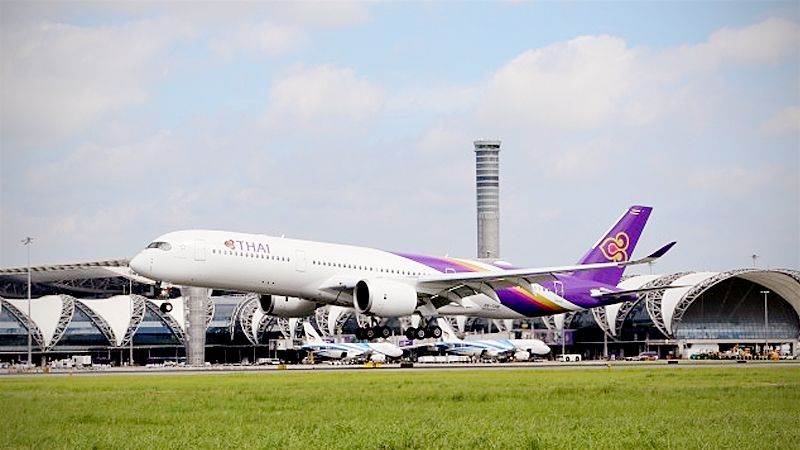
THAI to request more time to finalise rehab plan #SootinClaimon.Com

#SootinClaimon.Com : ขอบคุณแหล่งข้อมูล : หนังสือพิมพ์ The Nation.

THAI to request more time to finalise rehab plan

CorporateDec 25. 2020

By The Nation

Thai Airways International (THAI) will next week ask the central bankruptcy court to extend the deadline for submission of its business rehabilitation plan by a month, from January 2 to February 2, said acting president Chansin Treenuchagron.

Chansin said he was confident the carrier could carry out the plan successfully. According to law, the rehabilitation plan must be fully implemented in five years, after which the rehab process can be extended twice for one year each time.

The carrier has continued to see revenue from both its aviation and non-aviation businesses, said the acting president.

He said THAI planned to trim costs by another 30 per cent next year.