RH International (Singapore) Corporation Pte Ltd, a wholly-owned indirect subsidiary of Ratch Group Pcl, has signed a joint development agreement with Nexif Energy Pte Ltd in Vietnam on Friday for developing the Nexif Ben Tre wind power project.
Ratch chief executive officer Kijja Sripatthangkura informed the Stock Exchange of Thailand that the project participation would be at 50:50 per cent after further development and any required approvals.
He explained that the Nexif Ben Tre wind power project would generate 80 megawatts of wind power at Ben Tre province in southern Vietnam. The electricity will be sold to Vietnam Electricity under a long-term power purchase agreement.
“Currently, the project is under green-field development and under negotiation, expected to be ready for commercial use in 2022,” he said.
BioNTech founder vaults into world’s richest on 250% surge
CorporateDec 05. 2020The BioNTech covid-19 production facility in Marburg, Germany, on Dec. 2, 2020. MUST CREDIT: Bloomberg photo by Alex Kraus.
By Syndication Washington Post, Bloomberg · Ben Stupples
Ugur Sahin just reached another milestone.
The co-founder of BioNTech on Thursday joined the world’s 500 richest people after the U.K. this week approved use of a covid-19 vaccine that the German firm created with Pfizer Inc.
BioNTech’s shares have jumped almost 8% this week and are up more than 250% for the year. Sahin is now the 493rd-richest person on the planet with a net worth of $5.1 billion, according to the Bloomberg Billionaires Index.
Sahin didn’t respond to a request for comment made through BioNTech’s press office.
The U.K. was the first western country to approve a covid-19 vaccine, clearing the way for the deployment of a shot that Pfizer and BioNTech have said is 95% effective in preventing illness. BioNTech is still waiting on a decision from the U.S. Food and Drug Administration and European Union regulators.
The German firm previously focused on fighting cancer, but Sahin and his wife Ozlem Tureci — BioNTech’s chief medical officer — sharpened their focus on covid-19 in January after reading a troubling study about the spread of the virus in a family that had visited Wuhan, China. Their results are a validation of the new type of drug that they’ve spent their careers chasing.
“It could open the pharmaceutical field for a new class of molecules,” Sahin said last month.
Turkish-born scientist Sahin is the sole shareholder of a German firm that controls an 18% stake in BioNTech, which raised $150 million from its U.S. initial public offering last year, filings show.
Sahin joins Germany’s Struengmann brothers among the world’s 500 richest. They own about half of BioNTech and backed the previous biotech venture that Sahin set up with his wife, Ganymed Pharmaceuticals. The siblings’ fortune is estimated at more than $24 billion combined.
The race to produce a covid-19 vaccine has also lifted a group of investors at BioNTech’s closest rival, Moderna.
Shares of the Cambridge, Massachusetts-based company have surged more than 700% this year, making billionaires of some early investors, including Massachusetts Institute of Technology professor Bob Langer and Harvard University professor Tim Springer, as well as Chief Executive Officer Stephane Bancel, who is now worth $4.9 billion.
Nestle plans to invest $3.6 billion in climate change fight
CorporateDec 04. 2020A bird’s nest logo sits on display at the Nestle headquarters in Vevey, Switzerland, on Wednesday, Feb. 12, 2019. MUST CREDIT: Bloomberg photo by Stefan Wermuth
By Syndication Washington Post, Bloomberg · Corinne Gretler, Todd Gillespie
Nestle SA, the world’s largest food company, said it will invest $3.6 billion (3.2 billion Swiss francs) over the next five years in an effort to fight climate change.
The company will plant 200 million trees during the next decade and help farmers and suppliers shift toward regenerative agriculture, the KitKat maker said Thursday. Nespresso, Perrier and San Pellegrino will become carbon-neutral by 2022, with the rest of its bottled water portfolio doing so by 2025.
The food industry is stepping up attempts to burnish its reputation amid criticism for environmental damage and packaging waste. Nestle is already spending as much as 2 billion francs in an attempt to promote more food-safe recycled plastics. PepsiCo Inc. pledged Wednesday to only use recycled plastic in its namesake brand’s bottles in nine European markets by 2022. And Danone, which bottles Evian, has announced a $2.4 billion (2 billion-euro) sustainability investment over the next three years.
“Business leaders can no longer afford to be skeptical and interminably patient,” Nestle Chief Executive Officer Mark Schneider said in an op-ed in Fortune magazine. “We should not expect comprehensive public policy and unanimity to do the job for us.”
Schneider compared the situation to what executives in the car industry faced in the 1970s and 1980s, choosing to invest billions of dollars to make smaller, more fuel-efficient cars that were less profitable.
Nestle aims for all of the electricity at its 800 factories to come from renewable sources within the next five years, and will expand its offering of plant-based food and beverages.
The company will start linking executive board members’ remuneration to climate targets from next year as well as the CEO bonus package, Schneider told journalists.
When Nestle set a target last year to reach zero net greenhouse-gas emissions by 2050, Schneider said climate change was one of the greatest risks to the business. The company also aims to reach net-zero in its supply chain, known as Scope 3.
Nestle will offset emissions it can’t reduce at source, using third-party certified and traceable carbon credits, said Magdi Batato, head of operations.
The company said the measures it’s taking will help reduce emissions by a fifth in the next five years, and cut them in half by 2030.
Nok Airlines expects to enter positive performance next year, as the government will likely ease the 14-day mandatory quarantine measure to curb Covid-19 infections, the airline’s chief executive officer Wutthiphum Jurangkool said.
The easing of quarantine will result in more travel, which will boost the airline’s load factor to between 85 and 90 per cent from its current 60 per cent.
He said he expects the Central Bankruptcy Court to publish an announcement in the Royal Gazette mid this month allowing the airline’s local and foreign creditors to register for debt repayment.
The CEO said he is confident the airline will succeed in its business rehabilitation and exit the rehab programme in the next three to five years.
The airline is working on cutting costs and boosting revenue to keep afloat. It is studying the possibility of flying from Don Mueang to Roi Et and Nakhon Phanom.
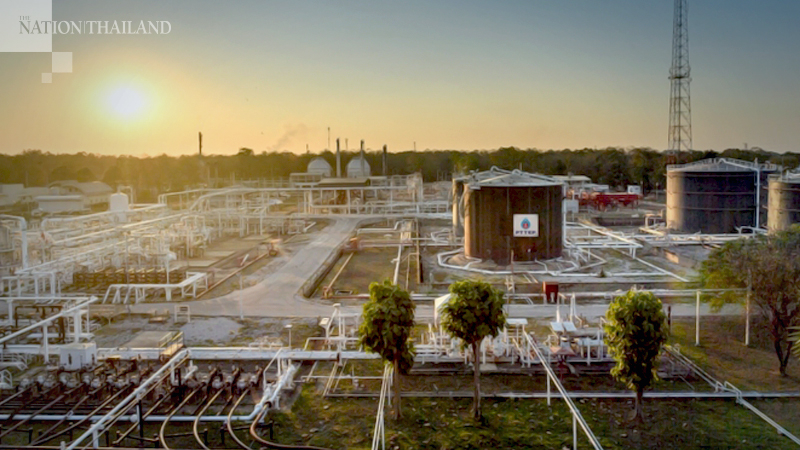
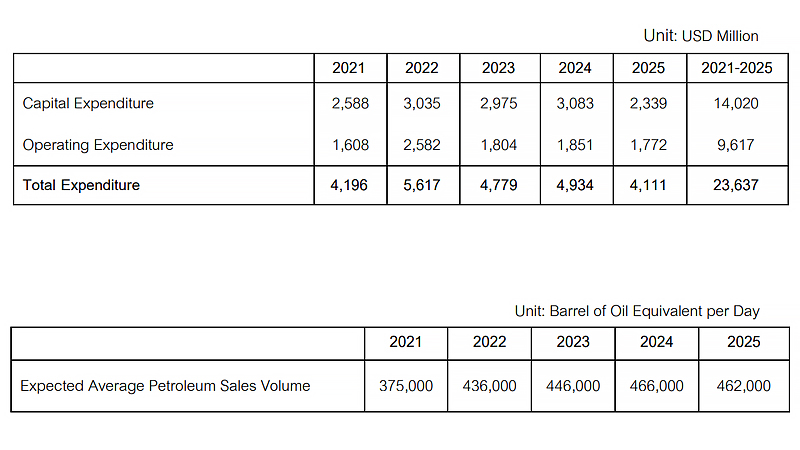
PTT Exploration and Production (PTTEP) has unveiled investment plans for 2021 and for the next five years (2021-2025). The plans aim to maintain production volumes, accelerate key projects, and capture new business opportunities for long-term growth, targeting a 6 per cent growth in oil sales volume over the next five years.
PTTEP CEO Phongsthorn Thavisin said the company has set aside total expenditure for 2021 of US$4.196 billion (Bt132.174 billion) – of which Bt81.522 billion is capital expenditure and Bt50.652 billion is operating expenditure.
The company lists three key business objectives.
The first is to maintain production levels of the existing S1 Project, Bongkot Project, Arthit Project, Malaysia Project, and Zawtika Project, as well as prepare for planned operations of the G1/61 (Erawan field) and G2/61 Projects (Bongkot field). This plan will involve capital expenditure totalling Bt61.204 billion.
The second is to increasing future production volume by developing major projects including the Mozambique Area 1 Project and the Algeria Hassi Bir Rekaiz Project to start production as planned. The company will also accelerate development of Sarawak SK410B in Malaysia, where gas has been discovered, in order to reach the final investment decision (FID). Capital expenditure of Bt15.530 billion will support these activities.
The third is to accelerate exploration activities to enhance contingent resources for supporting long-term growth. Total capital expenditure for activities is Bt4.788 billion, mainly devoted to the drilling of exploration and appraisal wells in Malaysia and Mexico.
PTTEP’s five-year investment plan (2021-2025) has a budget of Bt734.845 billion. The five-year plan targets a CAGR for petroleum sales volumes of around 6 per cent.
Said Phongsthorn: “2021 is going to be another challenging year for the exploration and production industry due to uncertainty over the Covid-19 pandemic and global economic recovery, which continue to have a direct impact on energy demand and oil price. PTTEP has adjusted its organisational structure and business plan, especially reducing the unit cost, to strengthen operations and make the company resilient for the volatile market.”
He added that PTTEP had reviewed its five-year investment plan under an “Execute and Expand” strategy designed to serve domestic demand and ensure sustainable growth. “With a robust capital structure and operating cash flow, the company will be able to support the above investment plan and other business opportunities despite the effect of a low oil price environment,” he said.
PTTEP said it is also evaluating new business opportunities in the gas-to-power value chain in Myanmar where the company says it can add value to its existing natural gas fields, as well as scale-up its AI & Robotics Venture (ARV), and seek investment opportunities in renewable energy.
Asian Sea Corporation, producer and exporter of frozen seafood, has earmarked Bt500 million for acquiring factories manufacturing pet food pellets along with businesses related to distribution in Asean markets. The budget will also be used for investing in international brands.
Akamon Prasoppolsujarit, Asian Sea’s chief financial officer, said the company has also set aside Bt400 million to invest in machines to enhance productivity and capacity in the manufacturing of animal feed and frozen food businesses without needing to hire more personnel.
Varanratch Assanupong, the firm’s finance and investor relations manager, confirmed that Asian Sea’s earnings will hit Bt8.4 billion, higher than Bt8.33 billion last year, because revenue in the first nine months of 2020 alone stood at Bt6.45 billion.
“We expect the fourth-quarter revenue to increase quarter on quarter as a new dog food brand to penetrate the low-income market is expected to help boost the company’s sales in the last quarter,” she said, adding that the sale of canned tuna, frozen food and aquatic feed have also risen.
She added that the company will maintain its gross profit margin at 15 per cent, down from 16.90 per cent in the past nine months due to the appreciation of the baht, while the company’s revenue from exports has risen by 80 per cent.
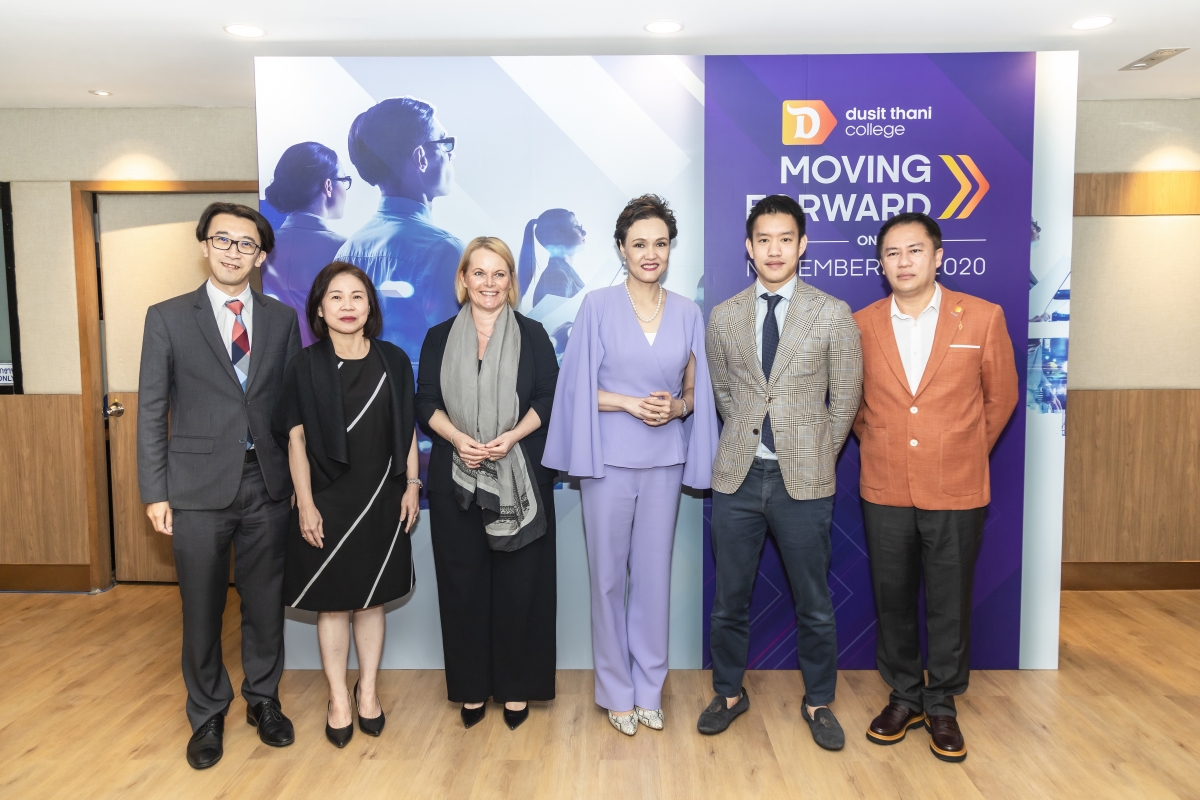
Dusit Thani College, one of Thailand’s top culinary schools, has welcomed its new rector, Frouke Gerbens, with a ceremony themed “Dusit Thani College… Moving Forward”.
Frouke joined the Dusit Group two years ago to help launch the Dusit Hospitality Management College in Manila, a pioneering hospitality education concept fully integrated with the new 125-room dusitD2 The Fort hotel. She now brings her expertise to the Thai hospitality industry, a key driver of the country’s economy.
What do you think of Dusit Thani College, and will there be any changes?
It’s a pleasure to arrive in Bangkok and start my new role as college rector. I am a great admirer of Than Phu Ying Chanut Piyaoui, who founded the Dusit Thani College in 1993. It is an honour to realise that, after 28 years, I am the first foreign rector of this college. This is a big change, not only for me, but all students and people working here. We have to adapt to the change with new ways of working. The language issue automatically comes up since I don’t speak Thai, which means communicating will take extra effort. In the future, our college will gradually become a bilingual college and an international educational institute.
Do you have any specific strategies to promote excellence at Dusit Thani College?
Striving for excellence has always been at the core of the Dusit Thani’s values, including in education where we aim to be a hospitality educational hub in the Asia region. There are four key agendas to move us forward: sustainability, integration, digitisation, and nationalisation. On sustainability, before Covid-19, hospitality and tourism accounted for 20 per cent of the Thai economy. Now the globe is conscious of the importance of taking care of resources. At some point, they will run out. Consumers and travellers are now increasingly demanding that what they consume is sustainable and will not destroy nature. We should point out that sustainability is not just about the planet or environment, but how we utilise resources from nature and from people who prepare such products. These people should also be treated in a sustainable way so that in the long term they will continue to be passionate to contribute.
As a non-Thai, are there any challenges or obstacles in running the college?
As I said, being a non-Thai speaker, the language becomes a barrier to communication. However, it’s an opportunity for the college to go beyond Thai borders, allowing us to grow and bring in more diversity with people from different backgrounds around the world.
How does Dusit Thani College prepare itself to produce a young professional workforce for the industry?
I feel what makes Dusit Thani College unique among hospitality colleges is the “head, hand, heart” principle that governs all our courses. Hand is the technical skill, head is the cognitive skill, and heart refers to the value and passion that people have. All these skills determine whether guests will come back. Apart from that, the quality of infrastructure and lecturers is vital since they have real industry experience to share with students. They integrate learning to help student productivity since they already have real-world experiences.
Alumni receive flower bouquet and award from the college to celebrate their success in business and food competition.
How will the tourism and hospitality industry change after Covid-19?
I think we were already seeing a transition before the Covid-19 outbreak. The business is renewing its focus on wellness and health. People will look for more healthy options and want to experience something that benefits them. Covid-19 underlined unsustainability in our industry, and young travellers will now demand [sustainable practices] from hotels and restaurants they visit. Technology will also play important roles in change, including smart farming, plant-based food, and mobile delivery and hotel-booking apps.
Do you think about sustainable development in hospitality? Can it happen?
As people in the hospitality industry, we don’t have a choice. Younger clients like millennials are demanding it. It is in our own interest. The resources we use are not endless. If we use them in a wise way, we can continue to make a living and profit from this planet. Sustainable efforts have already come a long way at Dusit Thani College since we introduced a green concept by aiming to cut out plastic products – plastic bottles, cutlery and plastic bands. Unfortunately, Covid-19 has led to the reintroduction of plastic for hygiene reasons. I hope that when the crisis ends, we can continue the green initiative toward the goal of a plastic-free college.
In our business, we follow the “Four Ps” sustainability approach – Planet (the source of all resources), People (employees and others we work with), Purpose (the reason for being), and Passion, which when combined will help our business profit.
Executives of Dusit Thani College.
What will we see from Dusit Thani College in the future under your leadership?
I feel fortunate because we have many strengths in the quality of our faculties and facilities. We have just completed Bt300 million investment in infrastructure and facilities. We have fantastically talented and award-winning students. I’m looking forward to building on these strengths that underpin the Dusit Thani Colleges’ reputation, and taking the college to neighbouring countries. We would also like to attract students from outside Thailand. In the US, Thailand ranks as the 10th most attractive country for study abroad. I do believe that Thailand is an attractive destination for study, which combined with the local hospitality sector makes it the ideal place to learn. Dusit Thani College is the country’s oldest college of culinary arts and hotel management, which should attract more students [to Thailand].
BCPG Pcl, a leader in the renewable energy business in Thailand and the Asia-Pacific region, is targeting 30-40 per cent expansion in earnings before interest, taxes, depreciation and amortisation (Ebitda) in 2021 after estimated growth of 20 per cent this year.
“This year’s expansion is due to income from the hydro-power plant in Laos and adjustment of electricity fee in the Philippines,” said Phatpuree Chinkulkitnivat, BCPG’s senior executive vice president of finance, accounting and corporate strategy.
“Next year, many of the company’s power plants will start supplying approximately 390 megawatts of power commercially, such as the solar power plant in Komagane, Japan 25MW, the Yabiki power plant 20MW and the Shiba 1 power plant 20MW.”
BCPG’s total portfolio is currently at 8,361MW, she added.
“Next year, the company has earmarked Bt18 billion for additional investment, merging and acquisition of power plants in both Thailand and Asia-Pacific region,” she said. “This comes from the Bt40-billion budget of our five-year plan [2021-2025] that focuses on expanding our power plants network in neighbouring countries.
“The company’s current balance sheet is stronger than ever. We have recently raised Bt10 billion of funds and can still borrow 2-3 times more to support our future investment projects,” she added.
“In the past nine months, our Ebitda has grown more than 30 per cent year on year, and is estimated to grow at 20 per cent by the year-end.”
By The Washington Post · Carolyn Y. Johnson · BUSINESS, HEALTH
The federal government could begin distributing two coronavirus vaccines in the next few weeks – a record-shattering accomplishment that now hinges on the decisions of U.S. regulators.
Biotechnology company Moderna filed Monday for emergency authorization of its coronavirus vaccine, capping a scientific sprint that began in January. Moderna’s two-dose regimen is about a week behind a similar vaccine developed by Pfizer and German biotechnology company BioNTech.
No vaccine can arrive soon enough to blunt an anticipated blitz of coronavirus cases seeded by Thanksgiving travels and gatherings – a surge expected to materialize in the coming days and weeks. But less than a year after a novel virus began hopscotching around the world, U.S. government officials project an unprecedented scientific feat: About 40 million doses of two remarkably effective vaccines could be available by year’s end, enough for 20 million people to receive full protection. Manufacturing will continue to ramp up through early next year, and other vaccines are expected to follow to steadily increase the supply available each month.
“You don’t want to get ahead of yourself and claim any victories, but this has the makings of a very, very important positive impact on ending this outbreak,” said Anthony Fauci, director of the National Institute of Allergy and Infectious Diseases. “A vaccine that is highly efficacious, if taken by a very, very high percentage of people, could potentially crush this outbreak – similar to what was done with outbreaks of measles and polio and smallpox and other diseases.”
The news comes as health systems approach a potential crisis with surging daily infections and hospitalizations leading into the Christmas and the new year. The Association of American Medical Colleges on Monday called on the nation’s medical schools, teaching hospitals and health systems to prepare to implement crisis standards over the next few months in case triaging and rationing is necessary as a result of shortages of health-care workers, hospital beds or supplies. Those have been used in response to natural disasters and mass-casualty events such as the Sept. 11 terrorist attacks.
“The next few months of the pandemic, while we are awaiting the distribution of vaccines, are going to stretch the nation’s health-care capacity to its limits,” said the group’s president and CEO, David Skorton.
California Gov. Gavin Newsom, a Democrat, said Monday that he’s considering imposing stay-home orders on California counties to curb an explosion in coronavirus cases that threaten to overwhelm hospitals by Christmas.
Before Thanksgiving weekend, the United States had reached a daily coronavirus death toll not seen since May, as more than 2,000 people died Tuesday through Wednesday. Case counts over weekends and holidays tend to reflect lags in testing and reporting, but hospitalizations continued to climb, surpassing 95,000 covid-19 patients for the first time Monday.
Reflecting the urgency of the situation in the United States, an advisory committee to the Centers for Disease Control and Prevention that typically meets after vaccines are approved is holding an unusual emergency virtual meeting Tuesday to vote on which groups of people should get the first, limited shots. Health-care workers and residents of long-term care facilities are expected to be included in the first case, a strategy intended to ensure that the first doses have the greatest societal impact. But even if manufacturing timelines are on track, there will not be quite enough vaccine for everyone in those groups to be fully vaccinated by year’s end.
“Prioritizing health-care workers first is . . . to keep our health care system functioning and to protect them,” said Natalie Dean, a biostatistician at the University of Florida.
The regulatory approval process will move into high gear Thursday, when independent advisers to the Food and Drug Administration meet to make recommendations about the Pfizer and BioNTech vaccine. A week later, they will do the same for Moderna.
The FDA is undertaking an exhaustive review to vet the safety, effectiveness and manufacturing of the vaccines, and is expected to make a decision shortly after its advisers meet. The review period, from company filing to a decision, probably will take weeks – not the year that is more typical after a company submits a vaccine for approval.
Moderna’s vaccine was 94% effective at preventing illness in a 30,000-person clinical trial, the company said in a news release – a performance that exceeds expectations and is on par with the best pediatric vaccines. There were 196 cases of covid-19, the illness that can be caused by the novel coronavirus, in Moderna’s study, 11 of which occurred in the vaccine group – a decisive signal that the vaccine protected people from illness. The 30 severe cases of covid-19 in the trial, including one death, all occurred in the group that received a placebo.
“The data are very, very promising, but I would like to see more data than is currently in the press release,” said Walter Orenstein, associate director of the Emory Vaccine Center, who is also a member of Moderna’s scientific advisory board and a trial participant. The results are similar to those from Pfizer and BioNTech, which announced a 95% effective vaccine earlier this month.
Even with a vaccine that is very effective, Orenstein cautioned that the world would not snap back to normal. Those first in line to receive two doses of the vaccine probably will be encouraged to continue taking precautions, such as wearing masks, if there is virus circulating at high levels in their communities. Tens of millions more people who are not considered at high risk of severe illness probably will not have access to doses until late spring or summer, experts caution.
The vaccines from Moderna and Pfizer and BioNTech are a major proof of concept for a flexible and fast medical technology, years in the making, that utilizes a snippet of genetic material called messenger RNA that teaches cells to build the spiky protein found on the surface of the coronavirus. The immune system learns to recognize and block the real virus.
The vaccines are on track to make history because of years of basic science research and an all-out coordinated effort from pharmaceutical companies and government that removed the financial risks of failure to move fast.
The U.S. government, through Operation Warp Speed, has preordered 100 million doses from Moderna and Pfizer, and helped underwrite the research and development of Moderna’s vaccine to the tune of $955 million. Moderna also signed a contract to provide 100 million doses to the U.S. for $1.5 billion. Pfizer will provide 100 million doses at a cost of $1.95 billion. In addition, the government has an option to buy hundreds of millions more doses.
“Pfizer and Moderna’s incredibly promising and impressive efficacy data further demonstrate that President Trump’s Operation Warp Speed is rapidly advancing on a trajectory of success to save millions of American lives – five times faster than any other vaccine in history,” White House spokesman Michael Bars said in an email.
Both companies have said they would be ready to distribute a vaccine almost immediately after receiving a green light from the FDA. Results reported last week from a third coronavirus vaccine candidate, from AstraZeneca and the University of Oxford, were positive but confusing, and it is unclear whether that vaccine can move forward in the United States without more data.
The AstraZeneca trial is continuing in the United States, and a single-shot vaccine from Johnson & Johnson is being tested. Novavax, another leading vaccine candidate in the United States, announced Monday that its large U.S. trial, which had been expected to begin this month, would start in the coming weeks.
The full data from Moderna and Pfizer will likely leave some questions unanswered. No one knows yet how long immune protection will last, and it is unclear whether the vaccine will decrease transmission in addition to preventing illness. One worst-case scenario debated by scientists is a vaccine that prevents symptoms and disease but does not decrease the spread of the virus by asymptomatic people.
In its news release Monday, Moderna reported that the vaccine performance was consistent across all ages, races, ethnicities and genders. There were 33 cases of covid-19 in people over 65; 29 cases in people who identified as Hispanic; six cases in Black people; four cases among Asian Americans; and three in multiracial people.
Most reactions to the vaccine were mild or moderate, according to a previous news release from the company. The adverse events rated as “severe” in the trial were soreness at the injection site, tiredness, muscle aches, headache and pain.
“We believe that our vaccine will provide a new and powerful tool that may change the course of this pandemic and help prevent severe disease, hospitalizations and death,” Stéphane Bancel, Moderna’s chief executive, said in a statement.
Moderna will also file for approval from the European Medicines Agency and has an open application with regulators in the United Kingdom, Switzerland, Canada, Israel and Singapore.
Moderna’s vaccine can be stored frozen at minus-20 degrees Celsius and lasts at refrigerator temperatures for up to a month, which probably would make it easier to deploy than the candidate from Pfizer and BioNTech, which requires ultracold storage conditions not typically found at pharmacies and doctors’ offices.
Universal Studios to open $580 million Nintendo Park in February
CorporateDec 01. 2020A statue of Bowser, a character for Nintendo Co. video game Super Mario Kart, at Super Nintendo World inside the Universal Studios Japan theme park in Osaka, Japan, on Nov. 30, 2020. Bloomberg photo by Soichiro Koriyama
By Syndication Washington Post, Bloomberg · Takashi Mochizuki
Universal Studios Japan plans to open its $580 million Nintendo attraction on Feb. 4, finally debuting a long-delayed effort to introduce Mario and other beloved characters to real-world theme park visitors.
Super Nintendo World, built on the existing Universal Studios Japan site, is envisioned as a life-size replica of Nintendo Co.’s most popular games with rides, shops and walk-through activities. One of the first attractions will be a Mario Kart ride inside a recreation of Bowser’s Castle. Borrowing an idea from the Super Mario franchise, visitors can collect virtual coins by wearing a dedicated wristband as they explore the area and interact with park features via a Switch console.
The showcase is one of the largest projects ever conceived by the Osaka-based amusement park operator, which invested more than $578 million (60 billion yen). It was originally slated for a summer opening but got postponed during the pandemic. Its kickoff could still get pushed back, as Japan grapples with a fresh outbreak and Osaka, where the park is located, becomes one of the nation’s worst-affected cities.
A lot is riding on Super Nintendo World as the theme-park industry struggles with falling revenue and Japan debates whether to promote domestic tourism. Walt Disney Co. is cutting jobs while Comcast Corp.’s NBCUniversal, the owner of the Osaka park, is suspending plans to open another Nintendo area within its Orlando location. Universal Studios Japan is also operating at half its full capacity to help curb the spread of the virus.
The project, which licensed characters from Nintendo, is part of efforts by the Kyoto-based games company to broaden its franchises beyond console players. Movies, merchandise stores and smartphone apps are all designed as a hook to lure new users to buy game-dedicated machines and software.

 The BioNTech covid-19 production facility in Marburg, Germany, on Dec. 2, 2020. MUST CREDIT: Bloomberg photo by Alex Kraus.
  A bird’s nest logo sits on display at the Nestle headquarters in Vevey, Switzerland, on Wednesday, Feb. 12, 2019. MUST CREDIT: Bloomberg photo by Stefan Wermuth

 Frouke Gerbens




 A statue of Bowser, a character for Nintendo Co. video game Super Mario Kart, at Super Nintendo World inside the Universal Studios Japan theme park in Osaka, Japan, on Nov. 30, 2020. Bloomberg photo by Soichiro Koriyama
