GSB targets 1m customers in first year of auto-title loans business
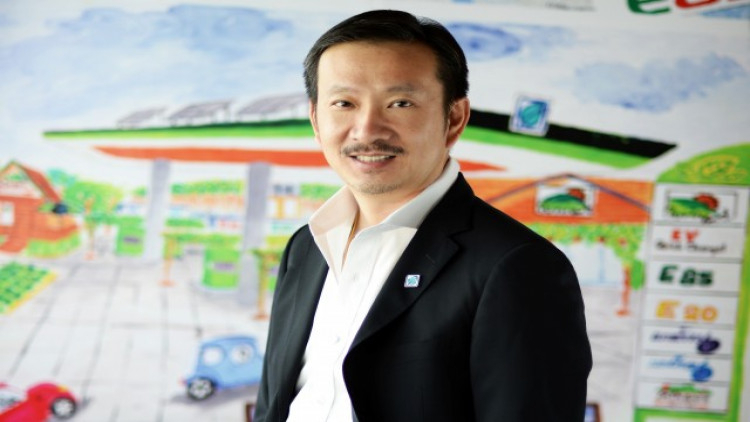
CorporateNov 18. 2020GSB president Vitai Ratanakorn
By The Nation
The Government Savings Bank (GSB) has set a target of one million customers and Bt20 billion in loans for the first year of its new auto-title loan business, said bank president Vitai Ratanakorn.
The service will be offered through GSB’s joint investment in Fast Money, the auto-title lending arm of Srisawad Corporation (Sawad).
The boards of both companies have approved the deal.
GSB will jointly invest Bt1.5 billion with Sawad, purchasing Bt1.3 billion of FM’s newly issued ordinary shares and Bt198.9 million of FM’s existing ordinary shares.
Vitai said the auto title loan business is set to launch in the first quarter next year. GSB aims to list Fast Money in the stock exchange in next three years.
He estimates there are around 3 million existing auto title loan borrowers in Thailand and 3 million potential customers which GSB will tap. The bank will capitalise its 1,000 bank branches and Sawad’s 5,000 outlets to serve loan customers.
Srisawad Corporation’s (Sawad) board of directors has approved joint investment with Government Savings Bank (GSB) in Fast Money (FM), the company’s wholly owned subsidiary, to operate an auto title loan business.
According to Sawad’s notification to the Stock Exchange of Thailand (SET), the GSB intends to make a joint investment with Sawad of not more than Bt1.5 billion, with Bt1.3 billion being the value of subscription for FM’s newly issued ordinary shares, and not more than Bt198.9 million being set aside to purchase FM’s existing ordinary shares.
The value of FM’s new ordinary shares and existing ordinary shares are Bt306 per share.
After the joint investment, GSB will hold no more than 49 per cent of the total shares in FM and Sawad will hold not less than 49 per cent after a raised capital fund.
“The company, GSB and FM will enter into relevant contracts or agreements setting out conditions and details of the joint investment. This investment will not cause a conflict of interest between the company and its subsidiary because the group’s companies have explicit rules for segregating businesses, as well as having appropriate and sufficient measures to prevent or diminish conflicts of interest,” Sawad said.
Tesla to join S&P 500 next month as largest-ever new member
CorporateNov 18. 2020A Tesla vehicle charges at a Tesla Supercharger station in Petaluma, Calif., on Sept. 24, 2020. MUST CREDIT: Bloomberg photo by David Paul Morris
By Syndication Washington Post, Bloomberg · Esha Dey, Dana Hull · BUSINESS
Tesla Inc., Elon Musk’s 17-year-old upstart carmaker, took a giant step toward blue-chip respectability on Monday, getting named to one of the world’s most famous stock indexes in an action that will greatly broaden its investor base.
The announcement that Tesla will enter the S&P 500 on Dec. 21 follows months of speculation, and one temporary setback, after the stock failed to make the cut during the index’s quarterly rebalancing in early September. The anticipation has helped drive a nearly fivefold rally in the stock this year to almost $390 billion, making the electric vehicle pioneer the biggest company ever to be added to the gauge. It will also be one of the index’s most influential constituents with a weighting that falls around those of Berkshire Hathaway Inc., Johnson & Johnson and Procter & Gamble Co.
It’s so big that S&P Dow Jones Indices said it is seeking feedback from the investment community to determine if Tesla should be added all at once or in two separate pieces. The company that Tesla is to replace in the index will be named later, the index provider said.
The news of S&P 500 inclusion “will of course likely drive a rally in the stock today,” JMP Securities analyst Joseph Osha wrote in a note to clients. “We think there is still upside,” he said, adding that Tesla should be valued like other “category killer” companies such as Apple Inc., instead of compared with other car companies. Osha reiterated his market outperform rating and price target of $516. Tesla shares jumped 12% in premarket trading to $456.
“This was a little unexpected happy day for me,” said Ross Gerber, chief executive officer at Gerber Kawasaki Inc. Tesla is the top holding for the Santa Monica, Calif.-based wealth management firm, with approximately 130,000 shares worth about $55 million as of Monday’s close.
After analyzing the index just last week, “it was just kind of mind blowing that Tesla still wasn’t in the S&P,” Gerber said in a telephone interview. “So sure enough, here it is.”
While entry into the benchmark is a rite of maturity that may dim some of Tesla’s cult stock appeal, membership comes with benefits, including forced purchases by index-tracking investors and mutual funds. The inclusion and the rapid rally over the past few months mean money managers overseeing passive funds will have to sell tens of billions of dollars worth of shares in their existing S&P holdings to make room for Palo Alto, California-based Tesla. On the other hand, longtime investors looking to exit their positions may now try to get out, knowing that index funds have to buy.
These crosscurrents may mean more trading volatility, though that is not new for Tesla. Ever since going public in 2010, the company’s popularity with Musk acolytes and legions of day traders has made it one of the more volatile stocks of its size in America. A steadier, more institutional ownership base could help to eventually ease those swings.
Tesla has solidified its position as the leading electric carmaker globally, even though competition is slowly heating up. It has overcome challenges including sometimes-severe production snarls, a massive cash burn rate and concerns about the demand for battery-powered vehicles in an industry dominated by gas-powered cars. In mid-September, Tesla reported a fifth consecutive quarterly profit, quieting critics who questioned its ability to make money.
Indeed, all it had taken was Musk hinting at the second-quarter profit — the company’s fourth consecutive profitable quarter — in a letter to employees in late June to trigger a 66% surge in the stock over a span of 17 trading days, since the results checked off the last requirement for S&P 500 inclusion.
Tesla’s sky-high share price also prompted a 5-for-1 stock split, a move aimed at making it more accessible to individual investors. The shares started trading on a split-adjusted basis on Aug. 31.
“We believe the sustained profitability trajectory as evidenced in the September quarter was the final straw that got Musk & Co. into the S&P 500 this time around,” Wedbush Securities analyst Daniel Ives wrote in a note to investors. He has a neutral rating on the stock.
Joining one of the world’s most exclusive clubs is a validation for Musk and his unorthodox management style. His chief lieutenants are little known and rarely made available to the media or investors, and Musk courts controversy like few other corporate captains. He has picked fights with securities analysts, smoked marijuana during an interview and been sued for fraud by securities regulators for tweets claiming he had “funding secured” to take the company private.
He also has complained more than once that Tesla’s stock price is too high. But that hasn’t deterred investors.
Tesla has tapped into that investor goodwill with multiple secondary share offerings over the past decade, raising $14 billion through February and another $5 billion in September. That’s helped it fund new vehicle development and rapidly expand manufacturing capacity.
Musk’s latest mission is to make Tesla more of a global player in markets such as Asia and Europe. The automaker recently opened a plant in Shanghai and is building a factory in Berlin, which Musk visited last week for meetings with local officials. Tesla also has a second U.S. plant under construction near Austin, Texas, which is expected to expand the company’s model range to include a pickup called the Cybertruck.
Musk is intent on cementing first-mover advantage in the market for EVs as the entire auto industry shifts to embrace electric powertrains, and his company’s valuation on Nov. 13 was larger than Volkswagen AG, Toyota Motor Corp. and General Motors Co. combined.
While Tesla is being rewarded by investors for dominating the global electric-car market, demand is still a small fraction of new vehicle sales — amounting to less than 3% of U.S. sales last year. That presents plenty of growth opportunity, but illustrates the challenge of making battery-powered cars more of a mainstream choice.
Still, the company’s recent success and its burgeoning valuation has also forced a spotlight on the entire electric vehicle space, sparking a surge in shares of several new entrants, some of whom still have a ways to go before production begins. Shares of China’s Nio Inc. rose 44% in October, and the company currently commands a market value that is bigger than GM.
Apple targeted by privacy campaigner who took on Facebook
CorporateNov 17. 2020The Apple iPhone 12 Pro Max is shown during a product launch event in Sydney, Australia, on Nov. 13, 2020. MUST CREDIT: Bloomberg photo by Brendon Thorne.
By Syndication Washington Post, Bloomberg · Aoife White, Stephanie Bodoni · BUSINESS, WORLD, TECHNOLOGY, US-GLOBAL-MARKETS, EUROPE
Apple’s ad tracking is the target of two complaints to Spanish and German authorities by a privacy advocate whose earlier legal battles are forcing Facebook to change the way it transfers data.
Noyb, a group founded by privacy activist Max Schrems, is accusing Apple of unlawfully installing so-called identification for advertisers on its devices. The service helps Apple and apps track users’ behavior and their consumption preferences without their consent, the group said.
“With our complaints we want to enforce a simple principle: Trackers are illegal, unless a user freely consents,” Noyb lawyer Stefano Rossetti said in a statement on Monday. “Smartphones are the most intimate device for most people and they must be tracker-free by default.”
Schrems made a name for himself as a law student by taking on Facebook over the safety of people’s data when it was shipped to the U.S. He won a landmark European Union court ruling in 2015 and his complaints led to a second key judgment in July that has forced regulators on both sides of Atlantic to rethink data transfer rules. The EU’s revamped data protection rules in 2018 opened the door to mass lawsuits, which led to the creation of Noyb and a promise by Schrems to “look for the bigger cases” with the biggest impact.
Rossetti said the complaints aren’t based on the EU’s General Data Protection Regulation, or GDPR, which forces EU regulators to cooperate on probes where the alleged violations had a bloc-wide effect and gives the regulators the power to impose hefty fines. The issues raised won’t need the involvement of the data protection authority in Ireland, where Apple has its main EU base.
The latest complaints by Noyb are based on an old EU law regulating firms’ use of cookies and other tracking devices. They “do not trigger the cooperation mechanism” and “we are trying to avoid endless procedures,” Rossetti said.
“The action refers to only German and Spanish users” who complained about Apple, Rossetti said in an email. Still, he said the effects of any decision could extend beyond Germany and Spain and “it would be difficult for the company to continue doing with millions” of people “what was declared illegal for two” countries.
Apple and the two data protection authorities didn’t immediately respond to requests for comment.
App developers have historically used IDFA to help target users with ads and track the performance of ads across different devices. The iPhone maker will require app developers from early next year to show a warning label to users before collecting IDFA info on iOS 14, and will also require that users opt in to sharing it. Those changes have triggered an antitrust complaint from French advertisers who say it could make their revenue plummet.
Noyb in May also took aim at Google in a complaint, accusing the U.S. tech giant of tracking users of Android phones through a unique ID that allowed the firm and third parties to monitor people’s behavior. The Irish Data Protection Commission, which is also the lead EU regulator for Google on privacy matters, in February opened a probe into Google’s processing of location data.
Siam Commercial Bank (SCB) said it has extended its debt moratorium for hotel operators and small and medium enterprises (SMEs) until March next year, after the first phase expired on October 22 this year.
SCB president Apiphan Charoenanusorn said that as of October, the bank was assisting 220 SMEs and 350 hotel operators, adding that the number of debtors has decreased since the first phase.
She said some debtors needed another three to six months of debt suspension because they were unable to generate revenue, especially tourism-dependent hotel operators, while some needed to restructure their debt to support business operations.
“After the second phase of debt moratorium expires in March next year, the bank will evaluate hotel operators’ ability to repay debts again before launching other measures to assist them,” she said.
She said SCB non-performing loans (NPLs) have increased only slightly after the bank launched measures to reduce NPLs.
“The bank’s tier 1 capital adequacy ratio is currently at 18 per cent, so we do not plan to increase funds at this time,” she said.
She said SCB would have to continue assisting debtors next year amid various crises, especially SMEs.
“Meanwhile, we expect large businesses to borrow more next year in line with the many investment projects launched by the government and private sectors,” she said.
She added that the bank and the Tourism Authority of Thailand (TAT) are organising the “SCB IEP Bootcamp: Hospitality Survival” to help hotel operators nationwide survive the economic crisis with four strategies. The four strategies are to join hands with digital partners to increase booking channels, use content marketing and influencers to attract Thai tourists, promote work-from-hotel trends, and monitor the tourism situation in the post-Covid-19 era.
PNC’s $11.6 Billion BBVA deal to boost U.S. banking presence
CorporateNov 16. 2020An American flag flies next to PNC Financial Services Group signage outside a bank branch in New York City on Jan. 11, 2020. MUST CREDIT: Bloomberg photo by Gabriela Bhaskar. Photo by: Gabriela Bhaskar — Bloomberg
By Syndication Washington Post, Bloomberg · Scott Deveau, Hannah Levitt, Charlie Devereux · BUSINESS, US-GLOBAL-MARKETS PNC Financial Services Group agreed to buy Banco Bilbao Vizcaya Argentaria’s banking operations in the U.S. for $11.6 billion, vaulting past rivals to become the country’s largest regional bank.
The cash deal will boost PNC’s earnings by about 21% in 2022 and generate more than $900 million of cost savings, the bank said in a statement on Monday. The addition of BBVA branches across the southern and southwestern U.S. gives PNC a presence in 29 of the country’s 30 largest markets.
U.S. regional lenders are seeking to bulk up to compete with banking giants such as JPMorgan Chase and Bank of America, which are moving into new states and spending billions annually on digital offerings. Last year’s $28 billion combination of BB&T and SunTrust Banks was widely seen as the possible start of a new wave of mergers with the potential to build regional banks into national players.
Then the Covid-19 pandemic hit, bringing concerns about a potential wave of loan losses and the prospect of years of prolonged low interest rates weighing on revenue. PNC saw the turmoil as a possible opportunity, and has been on the prowl for a takeover candidate since raising $14 billion earlier this year through the sale of a stake in BlackRock.
Monday’s acquisition is the largest U.S. banking deal since the merger of BB&T and SunTrust. The deal will vault PNC in size past U.S. Bancorp and Truist Financial, which is the new name of the combined BB&T and SunTrust.
For BBVA, the deal allows it to exit a business which has weighed on group earnings while at the same time bolstering its firepower to pay dividends or make acquisitions as consolidation in Spanish banking takes hold.
BBVA took a 2.1 billion-euro ($2.5 billion) goodwill impairment charge on the business in the first quarter, which followed a writedown of 1.4 billion euros in the previous three-month period.
The all-cash deal values the business at 1.34 times its tangible book value as of September and will boost the bank’s capital ratio by about 300 basis points to a pro-forma CET1 ratio of 14.5%. The Spanish lender said the deal will give it the option of carrying out buybacks to boost a share price that has plunged by 36% this year.
“There may be value-creating opportunities in the markets where we have superior franchises,” BBVA Chairman Carlos Torres said on a conference call. “The buyback is very exciting and tremendously attractive, investing in organic growth as well. Those are the options to redeploy.”
BBVA USA has more than 600 branches in several states, including Texas, Florida and Alabama. About half of the business’s deposits are located in Texas, according to Bloomberg Intelligence. BBVA acquired the company in 2007, when it was called Compass Bancshares, according to its website.
The transaction excludes broker dealer BBVA Securities and the branch in New York, which will continue to provide corporate & investment banking services to large corporate and institutional clients. It also excludes the representative office in San Francisco and fintech investment fund Propel Venture Partners.
PNC, which is based in Pittsburgh, primarily has branches in the mid-Atlantic, southeast and midwest U.S.
The deal “would bolster PNC’s existing southeastern presence and jump-start the bank’s forays into Texas, where it currently employs a branch-lite model in Dallas and Houston,” Herman Chan, a Bloomberg Intelligence analyst, wrote in a note Sunday.
BTS Group Holdings (BTS) became the third-largest shareholder in Ananda Development after buying 249.97 million shares at a cost of Bt332.46 million on Sunday.
According to the Securities and Exchange Commission (SEC), BTS bought 249.97 million shares of Ananda, accounting for 7.5 per cent of total shareholding at Bt1.33 per share from Ananda’s president and chief executive officer Chanond Ruangkritya.
The top five shareholders in Ananda as of May 12 were:
▪︎ Chanond Ruangkritya — 1.29 billion shares, accounting for 38.98 per cent of total shares.
▪︎ Pipat Paniangwet — 272.73 million shares, 8.18 per cent stake.
▪︎ Patcharavalai Ruangkritya — 165.65 million shares, 4.97 per cent stake.
▪︎ Malika Ruangkritya — 147.11 million shares, 4.41 per cent stake.
▪︎ Natthavipha Ruangkritya — 102.95 million shares, 3.09 per cent stake.
Worawat Pitayasiri, president and chief executive officer of Global Power Synergy Public Company (GPSC), the power flagship of PTT Group, said the company’s board has approved Global Renewable Power (GRP)’s plan to set up a new subsidiary called Global Renewable Power One by purchasing a 90-per-cent stake in Sheng Yang Energy Co Ltd.
GRP is a wholly-owned subsidiary of GPSC.
Sheng Yang Energy, meanwhile, is owned by Tatung Forever Energy (TFE), a subsidiary of Tatung Co Ltd that is listed in the Taiwan Stock Exchange with a trading value of T$2.52 billion (approximately Bt2.74 billion).
The purchasing of Sheng Yang Energy’s shares will boost GPSC’s ratio of electricity generation capacity per share held by 50 megawatts. Its existing capacity is 5,026MW, 563MW of which comes from renewable energy sources in Thailand and overseas.
“Sheng Yang Energy has the capacity to produce 55.8MW from solar power, 54.4MW of which will come from existing plants and the remainder will come from plants being constructed,” Worawat said.
“GPSC has realised in Sheng Yang Energy’s potential as it is getting support from the Taiwan government, which will purchase power from it through a renewable energy promotion campaign at a fixed rate throughout the duration of the contract.
“This deal will strengthen the company’s financial stability and will be in line with GPSC’s strategy to expand its renewable energy operation in foreign countries,” he added.
Bangchak Corporation Plc has diverted 18.5 per cent of its investment budget to foreign lithium mines with the aim to make battery for electric vehicles (EVs) and mobile telephones, the company’s president and chief executive officer, Chaiwat Kovavisarach, said.
“The mines are now under construction in Argentina and Nevada, United States, while the factories to produce pure lithium should be finished by the year-end,” he said.
“The investment will give Bangchak the right to buy high-quality lithium at 6,000 tonne per year, which is enough to produce 3kW/hour batteries for 150,000 EVs, or batteries for 200 million mobile phones.”
Chaiwat added that Bangchak was also planning to sign MoUs with a European battery manufacturer and Chinese partners to develop lithium-related industries that serve the need of Thailand.
“In the early phase of this project, we plan to establish a battery factory in Europe with an investment of $200-300 million within 2024, in accordance with our prediction that battery technology would start to stabilise during 2023-24 in terms of charging time, durability and power output,” he said. “We also expect that by 2025, Europe would manufacture 3-4 million EVs, while Thailand would produce 750,000 vehicles by 2030.
“Also, by 2024 there should be a single standard EV battery announced which every manufacturer must follow, which will cause the EV battery market to expand even faster,” he added.
“We will need to see higher domestic demand for electric vehicles in order to establish a factory to produce lithium ion batteries in Thailand,” added Chaiwat.
“The government needs to promote the use of electric-powered public vehicles, starting from taxi motorcycles. Banchak estimates that Thailand would see 2 million new motorcycles per year, and if these were to be electric-powered it would significantly increase domestic demand for batteries. Then, we should expand the coverage to public buses and minibuses by building charging stations along their routes.
“We should learn from China, which has tackled its air pollution problem by substituting gas-powered motorcycles with electric ones in big cities, then expanded to cars and trucks,” added Chaiwat. “As a result, their pollution situation has gradually improved while their battery industry has also expanded rapidly.”
“Lithium ion battery is eco-friendly as it can be fully recycled or used as electricity storage in power stations when its efficiency drops to 70 per cent. It will help generate battery recycling business and other battery related businesses,” he added.
DoorDash, Wish and Affirm join Airbnb to fuel year-end IPO boom
CorporateNov 13. 2020Sun shines outside of the Nasdaq MarketSite in New York on Nov. 9, 2020. MUST CREDIT: Bloomberg photo by Michael Nagle.
By Syndication Washington Post, Bloomberg · Crystal Tse, Katie Roof · BUSINESS, US-GLOBAL-MARKETS As Airbnb Inc. prepares for its long-awaited Nasdaq debut, other consumer-facing technology companies are joining the going-public party, which had been dominated so far this year by enterprise software listings.
Food-delivery service DoorDash Inc., online discount retailer Wish Inc. and installment loans provider Affirm Inc. could join Airbnb in making their financials public in the next few weeks, according to people familiar with their plans. All would seek to hold their IPOs before the end of 2020, the people said.
That would add billions of dollars to the record total of more than $140 billion raised on U.S. exchanges this year, according to data compiled by Bloomberg. That includes special purpose acquisition companies, or SPACs, which have reached all-time highs, the data show.
IPO advisers are expecting to see a record amount of listing activity during the period between the U.S. Thanksgiving and Christmas holidays. Companies that sat out the market chaos during the early days of the Covid-19 pandemic are now rushing to go public, after also waiting for the result of the U.S election before making their move.
Airbnb will seek to raise about $3 billion in its IPO, people with knowledge of its plans have said, making it the largest of the four. The home rental company had intended to make its IPO filing public on Thursday, but decided to wait until next week to avoid its news being overshadowed by the aftermath of the U.S. election, Bloomberg News reported.
The public filing — or flipping — of listing documents marks an important milestone in the IPO process, giving investors their first full look at a company’s finances as well as details of its operations and ownership. Fifteen days after a prospectus becomes public, a company can begin taking investor orders for shares in the IPO.
San Francisco-based DoorDash is racing ahead with its plans after it helped pass a California ballot proposition that allows it and other gig economy companies to treat drivers and delivery workers as independent contractors rather than employees. The company, which said in February that it had confidentially filed with the U.S. Securities and Exchange Commission for an IPO, could flip its listing plans as soon as this week, people with knowledge of the matter said.
Online retailer Wish filed confidentially in late August for a listing and is likely to reveal its prospectus within two weeks, people familiar with its plans said. The Milpitas, California-based company, a sponsor of the National Basketball Association’s Los Angeles Lakers, was last valued at $11.2 billion in August 2019, a statement at the time showed.
A public filing from Affirm, which lets online shoppers pay in installments, could also be imminent, said people with knowledge of the matter. The Mountain View, California-based company said in October that it had filed with the SEC confidentially.
Investors won’t have to wait much longer to see the stock market debut of video game platform Roblox Corp., last privately valued at $4 billion. The San Mateo, California-based company said in October it had submitted confidential paperwork.
Timing for all the listings could change and discussions about valuations of the companies are ongoing, the people said. Representatives for Doordash, Affirm and Wish declined to comment.
The incoming wave of consumer technology listings follows a rush of enterprise software companies that came to market in September, when seven software makers, including Snowflake Inc., Unity Software Inc., Asana Inc. and Palantir Technologies Inc., went public.
The tech IPO boom is likely to keep rolling into 2021. Grocery startup Instacart Inc., which hit a valuation of $17.7 billion in an October funding round, could list next year, as could $10 billion software maker UiPath Inc. Used-clothing platforms Poshmark and ThredUp Inc. have each filed confidentially for a listing, while online mortgage lender Better.com has tapped banks to help it go public in 2021. Dating app Bumble is also preparing an IPO for early next year, which could value it at $6 billion to $8 billion.

 GSB president Vitai Ratanakorn
 A Tesla vehicle charges at a Tesla Supercharger station in Petaluma, Calif., on Sept. 24, 2020. MUST CREDIT: Bloomberg photo by David Paul Morris
  The Apple iPhone 12 Pro Max is shown during a product launch event in Sydney, Australia, on Nov. 13, 2020. MUST CREDIT: Bloomberg photo by Brendon Thorne.
 An American flag flies next to PNC Financial Services Group signage outside a bank branch in New York City on Jan. 11, 2020. MUST CREDIT: Bloomberg photo by Gabriela Bhaskar. Photo by: Gabriela Bhaskar — Bloomberg
 Sun shines outside of the Nasdaq MarketSite in New York on Nov. 9, 2020. MUST CREDIT: Bloomberg photo by Michael Nagle.
