CorporateSep 14. 2020THAI acting president Chansin Treenuchagron visits the bankruptcy court this morning to hear the court’s order on the airline’s rehabilitation. The court has been mulling this issue since May 26.
By THE NATION
The bankruptcy court on Monday (September 14) gave the go-ahead to Thai Airways International (THAI)’s rehabilitation plan and choice of planner to implement it.
As announced in the Royal Gazette earlier, THAI’s creditors have about a month to file for the repayment of debts either online or at the airline’s headquarters in Bangkok.
The creditors will then be presented with the rehabilitation plan for approval before it goes to court for a final okay. This procedure will take another two to three months.
THAI had previously informed its shareholders that the restructuring process will focus on five aspects, namely debt repayment, a review of its routes and fleet, improvement of management structure, review of financial strategy and methods to generate revenue, and making its organisational structure compact.
As of 11.30am on Monday, THAI stocks had risen 6.51 per cent to Bt3.60 per share.
The Stock Exchange of Thailand (SET) Index rose by 3.84 points, or 0.30 per cent, to 1,276.18 in morning session on Tuesday.
An analyst at Krungsri Securities expected the index to fluctuate between 1,265 and 1,280 due to lack of positive sentiment.
In addition, investors would delay investment until the US Federal Open market Committee meeting on September 15-16.
“We expect the Fed to maintain the interest rate at 0-0.25 per cent and reveal inflation targeting,” he said.
Moreover, he said, the SET would face volatility from mass sell-offs in stocks to mitigate risks from student protesters’ political rally on September 19.
He recommended that investors buy:
▪︎Stocks whose third-quarter performance will improve, such as TU, Asian, Com7, CHG, PTG, and PlanB.
▪︎Stocks that will benefit from the launch of the new iPhone model on Tuesday, such as Com7, Synex, SPVI and CPW.
The SET Index closed at 1,272.34 on Monday (September 14), down 7.62 points or 0.60 per cent. Total transactions amounted to Bt40.463 billion with an index high of 1,287.35 and a low of 1,270.59.
The price of gold rose by Bt100 per baht weight in morning trade on Tuesday (September 15), the Gold Traders Association reported.
As of 9.24am, the buying price of a gold bar was Bt28,850 per baht weight and selling price Bt28,950 while gold ornaments were priced at Bt28,334.04 and Bt29,450, respectively.
At close on Monday (September 14), the buying price of a gold bar was Bt28,750 per baht weight and selling price Bt28,850, while gold ornaments were priced at Bt28,227.92 and Bt29,350, respectively.
Hong Kong gold price rose by HK$110, opening at $18,080 (Bt72,868.90) per tael on Tuesday morning, the Chinese Gold and Silver Exchange Society reported.
The Comex (Commodity Exchange) gold price to be delivered in December rose by US$15.8, or 0.81 per cent, closing at $1,963.7 (Bt61,350.77) per ounce on Monday.
Gold moved to positive territory on Monday from the decline in the dollar and US bond yield, while investors were waiting for Federal Open market Committee meeting on September 15-16.
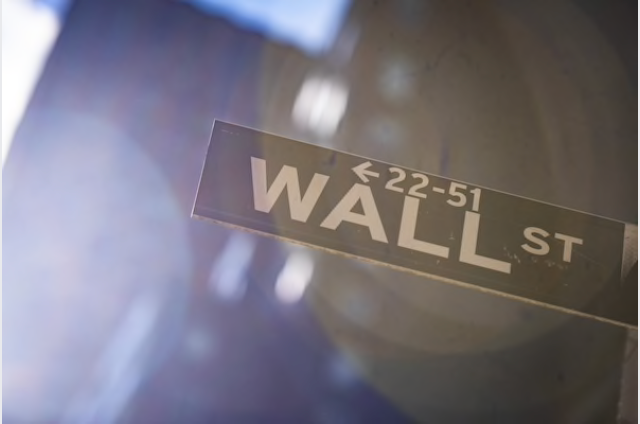
By Syndication Washington Post, Bloomberg · Sarah Ponczek, Casey Wagner · BUSINESS U.S. stocks rose for a second day amid a flurry of deal activity and signs of progress toward a coronavirus vaccine. The dollar weakened and Treasurys were little changed.
Oracle Corp. jumped 4.3% on reports the company beat Microsoft Corp. in negotiations for the U.S. operations of TikTok. Immunomedics Inc. almost doubled after Gilead Sciences Inc. agreed to buy the cancer drugmaker for $21 billion.
The S&P 500 touched a week high before paring gains, while the Nasdaq 100 Index broke a two-day slide. Pfizer Inc. Chief Executive Officer Albert Bourla said it’s “likely” the U.S. will deploy a covid-19 vaccine to the public before year-end.
“I know that we’re in the middle of a pandemic, but the reality is that the current economic environment has typically been very good for M&A activity,” said Jim Paulsen, chief investment strategist at Leuthold Group.
Global stocks are coming off the back of the first consecutive weeks of declines since March and traders remain on edge given the recent reassessment of valuations and volatility in options markets. The Federal Reserve is expected this week to maintain its dovish stance on policy as investors look for signs the global economy is recovering from the pandemic. Strategists at Goldman Sachs Group Inc. and Deutsche Bank AG suggested the recent pullback in the U.S. is nearing an end.
“The path of least resistance is up,” said Kevin Caron, portfolio manager for Washington Crossing. “We still have a lot of monetary stimulus in the pipeline, there’s still a decent amount of momentum in the market, the underlying data in earnings seem to be reasonably positive.”
The pound strengthened against peers as Prime Minister Boris Johnson faced a rebellion in Parliament against legislation that would override key elements of the divorce treaty signed with the European Union.
In Asia, stocks rallied with South Korea leading gains. SoftBank Group Corp. shares climbed after Nvidia Corp. agreed to buy the firm’s chip division Arm Ltd. for $40 billion.
These are the main moves in markets:
Stocks
The S&P 500 Index gained 1.3% to 3,383.45 as of 4 p.m. EDT.
The Dow Jones industrial average increased 1.2% to 27,992.38, the highest in more than a week.
The Nasdaq Composite Index climbed 1.9% to 11,056.65.
The Nasdaq 100 Index advanced 1.7% to 11,277.76.
Currencies
The Bloomberg Dollar Spot Index declined 0.3% to 1,165.64, the lowest in more than a week.
The euro increased 0.2% to $1.1864, the strongest in almost two weeks.
The Japanese yen appreciated 0.4% to 105.70 per dollar, the strongest in more than two weeks on the largest gain in more than two weeks.
The British pound advanced 0.5% to $1.2855, the biggest gain in more than two weeks.
Bonds
The yield on 10-year Treasurys advanced one basis point to 0.67%.
The yield on 30-year Treasurys gained one basis point to 1.42%.
Germany’s 10-year yield increased less than one basis point to -0.48%.
Commodities
West Texas Intermediate crude declined 0.1% to $37.29 a barrel.
Gold strengthened 0.9% to $1,958.15 an ounce, the highest in almost two weeks on the largest gain in more than two weeks.
Copper advanced 0.9% to $3.07 a pound, the highest in more than two years.
A proposal to suspend repayment of the Bangkok Mass Transit Authority (BMTA)’s Bt130 billion debt to the Finance Ministry will be put to the Cabinet next month, deputy PM and Health Minister Anutin Charnvirakul said on Monday.
The proposed seven-year debt moratorium is part of the Land Transport Department’s rehabilitation plan for the Bangkok bus operator. The plan was agreed at a BMTA meeting chaired by Anutin yesterday.
Under the plan, the Finance Ministry will suspend repayments provided that the state-run BMTA begins operating at a profit within seven years.
Bangkok city authorities say the heavy debt burden prevents the operator from functioning effectively.
The BMTA and its executives will face a performance evaluation once the Cabinet approves the rehab plan and debt suspension. If the operator is unable to turn a profit after its debt burden is lifted, privatisation might be the next step.
” I think it’s more of a reset. This [repayment suspension] will stop the bleeding and give the BMTA breathing space from the interest burden. Then it can find a way to manage the existing debt, for instance by gradually paying it off in the long term, or whatever is in the final proposed plan,” said Anutin.
The BMA had accumulated problems for more than four decades and could not solve the issues using the same methods, he added.
The rehab plan also covers cutting the number of bus routes to 162, safeguarding the BMTA’s priority rights for licences to operate new or changed routes, and a flat one-day fare, previously reported as Bt30.
New criteria for organisations who wish to apply for the Bt10-billion Energy Conservation Promotion Fund next fiscal year should be finalised by the end of this month, said Energy Ministry permanent secretary Kulit Sombatsiri.
The new criteria, which focus on creating jobs in local communities, will be presented to the National Energy Policy Committee in October.
Kulit mentioned funding had hit obstacles this fiscal year, including slow project screening. Applicants had shown a lack of experience in writing reports for funding, he explained.
EconSep 15. 2020Dechapiwat Na Songkhla, director of the Budget Bureau
By The Nation
The Budget Bureau admitted that though the delay in the annual budget for fiscal 2021 will delay capital spending, it will have a limited impact on investment projects.
The bureau will on Tuesday (September 15) explain to the Cabinet why its spending plan for fiscal 2021 cannot be released on October 1 as scheduled, said Dechapiwat Na Songkhla, director of the Budget Bureau.
According to the budget law, despite budget delay for the fiscal 2021, the government could spend Bt800 billion, or 25 per cent of the budget for fiscal 2020. So, it should have adequate funds to pay state officials and cover current spending until the end of the year, he said.
However, he said, capital spending on some new investment projects may be delayed, while some state agencies have also been advised to put off expenditure on things such as overseas trips.
The Bt3.3-trillion budget bill will undergo its second and third reading in the House of Representatives on September 16-18 before being sent to the Senate on September 21 and then presented to His Majesty for approval.
Earlier, Deputy Prime Minister Wissanu Krea-ngam said the budget will be about a month late.
In the fallout from Covid-19, the economy is projected to contract between 7 and 10 per cent this year.
The last budget was also delayed for six months due to a delay in the formation of the coalition government after the 2019 general elections.
The Investor Confidence Index fell by 21 per cent, the lowest in five months, due to political unrest and delay in the rolling out of economic stimulus measures, the Federation of Thai Capital Market Organisations (Fetco) said.
The index for the next three months fell by 21 per cent to 67.52 points, the lowest in five months since March, when confidence among foreign investors was the lowest.
Paiboon Narintarangkul, Fetco’s chairman, said the factors causing uncertainty among investors are the local political situation, which is causing the Thai stock market to underperform compared to other Asian indices even though Thailand has been able to successfully contain the spread of Covid-19.
“Another factor pressuring the Thai stock market is the government’s slowness in rolling out economic stimuli, such as the Bt400 billion budget to stimulate the economy and Bt500 billion in soft loans,” he said.
“We expect the political unrest to pressure the index in the short term as the government is likely to respond positively to protesters’ demand, such as amending the charter. However, it should also accelerate stimulating the economy as soon as possible.”
He added that individual and securities investors were concerned about the political unrest, while institutional investors were concerned about the state of the economy.
“Foreign investors are also concerned about the US Federal Reserve’s monetary policy and Europe’s economy, which has resulted in a drop in confidence,” he added.
“Investors are also prioritising investment in defensive stocks such as food and telecommunications, while reducing investment in banks and tourism stocks.”
He went on to say that the Stock Exchange of Thailand (SET) Index was underperforming compared to other Asian indices and has over the year until August contracted by 17 per cent compared to the MSCI Emerging Markets Index, which only contracted by 1.5 per cent.
“In August alone, Thai stock index contracted by 1.3 per cent, while other Asian indices, such as Singapore, Indonesia and Vietnam were on the rise,” he added.
Meanwhile, Ariya Tiranaprakit, executive vice-president of the Thai Bond Market Association, said the market expects the Monetary Policy Committee to maintain its interest rate at 0.5 per cent as the government issues measures to stimulate the economy.
The Udon Thani Industrial Estate is more than 50 per cent ready, and Phase 1 should be ready for service next year, according to the Industrial Estate Authority of Thailand (IEAT)
Somjin Piluek, IEAT governor, said that once the industrial estate is fully open it should bring in about Bt22 billion in investment and create at least 20,000 jobs, generating up to Bt2 billion in annual revenue for the government.
This industrial estate has the geographical advantage of being linked up to an extensive transportation network both within and outside the country. Routes R12, R9 and R8, which includes the double-track high-speed railway from Bangkok to Nong Khai, can accommodate the transportation of goods between Thailand and southern China as well as to Laem Chabang Port and the Eastern Economic Corridor (EEC).
The IEAT has conducted a feasibility study on projects that will benefit the area, such as a dry port in Udon Thani, a railway linking the project area to the rest of the country as well as the option of providing special incentives to investors.
Industries targeted for this project include rubber, agricultural products, auto parts and auto assembly, construction materials, electronics and steel.
Somjin said this is the first industrial estate in the Northeast, though it is the 56th in the country.
Apart from being very close to the Udon Thani airport as well as the biggest highway and railway, this industrial estate can also be linked up with CLMV countries, namely Cambodia, Laos, Myanmar and Vietnam.
The industrial estate’s logistics system will be developed in two phases, with the first phase (2020-2022) involving the construction of warehouses as well as container storage and off-loading areas. Permission is also being sought to establish a free trade zone.
The second phase (2022-2025) will include the development of a rail system, freight forwarder as well as a high-speed railway that links Udon Thani with neighbouring countries.
The industrial estate, located in Muang district’s Non Sung area, covers approximately 2,170 rai, of which 1,635 rai is up for sale.
The Stock Exchange of Thailand (SET) Index closed at 1,272.34 on Monday, down 7.62 points or 0.60 per cent. Total transactions amounted to Bt40.463 billion with an index high of 1,287.35 and a low of 1,270.59.
In the morning session, an analyst at Krungsri Securities expected the index to fluctuate between 1,275 and 1,290.
“Although the index gained positive sentiment from the recovery of foreign indices, uncertainty over the domestic politics, especially with student protesters planning a political rally on September 19, will cause market volatility,” the analyst said.
“Also, investors will delay trading until they hear the outcome of the US Federal Open Market Committee meeting on September 15-16.”
The 10 stocks with the highest trade value today were CBG, CPF, CPALL, MINT, PTT, AOT, STGT, KBANK, TVO and ASIAN.
As of 4.30pm, the price of oil dropped by US$0.37 or 0.99 per cent to $36.96 per barrel, while gold rose by $5.60 or 0.29 per cent, to $1,953.50 per ounce.
Other Asian indices were on the rise:
Japan’s Nikkei Index closed at 23,559.30, up 152.81 points or 0.65 per cent.
China’s Shang Hai SE Composite Index closed at 3,278.81, up 18.47 points or 0.57 per cent, while the Shenzhen SE Component Index closed at 13,021.99, up 79.04 points or 0.61 per cent.
Hong Kong’s Hang Seng Index closed at 24,640.28, up 136.97 points or 0.56 per cent.
South Korea’s KOSPI Index closed at 2,427.91, up 31.22 points or 1.30 per cent.
Taiwan’s TAIEX Index closed at 12,787.82, up 111.87 points or 0.88 per cent.

 THAI acting president Chansin Treenuchagron visits the bankruptcy court this morning to hear the court’s order on the airline’s rehabilitation. The court has been mulling this issue since May 26.




 Dechapiwat Na Songkhla, director of the Budget Bureau

 Somjin Piluek, IEAT governor


