Lockdown hits earnings of expressway, MRT operator #ศาสตร์เกษตรดินปุ๋ย

#ศาสตร์เกษตรดินปุ๋ย : ขอบคุณแหล่งข้อมูล : หนังสือพิมพ์ The Nation.

https://www.nationthailand.com/business/30388890?utm_source=category&utm_medium=internal_referral

Lockdown hits earnings of expressway, MRT operator

Jun 02. 2020
By The Nation

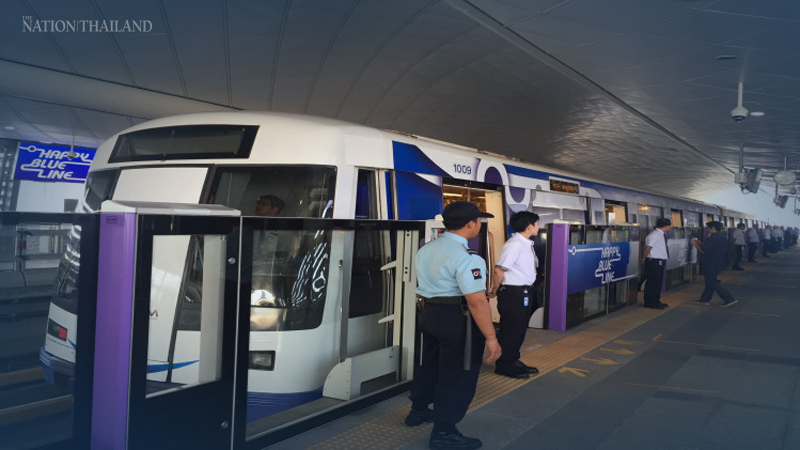
The Bangkok Express and Metro Public Co Ltd (BEM) said it expects its revenue for 2020 to drop by 15 per cent year on year because people have had to stop travelling due to the Covid-19 outbreak.

Sombat Kitjalaksana, BEM’s managing director, said the government imposed state of emergency, curfew and other restrictions to control the contagion has caused the number of commuters using expressways and the Metropolitan Rapid Transport (MRT) system to drop.

“However, we expect things to return to normal within the third quarter as the number of cars on the expressways and commuters using the underground rose in May as soon as the government began easing lockdown measures,” he said.

He said he expects the year’s revenue to stand at Bt13 billion, 15 per cent less than last year, while the profit should be Bt2 billion.

“Last year, BEM’s revenue and profit stood at Bt16 billion and Bt3 billion respectively,” he said. “The company’s performance next year is expected to improve as people will start travelling as per normal and the MRT Green Line should start operating by the end of this year.”

He added that BEM plans to further extend the MRT and that it was ready to cooperate with CH Karnchang to bid for the construction of the MRT Orange Line, which will link Thailand Cultural Centre to Bang Khun Non across the Chao Phraya.

“We expect the bidding to kick off in the third quarter,” he said. “We will also launch debentures worth Bt3 billion this month to repay debentures worth Bt2.5 billion that will reach maturity in October, while another Bt500 million will be used to cover operating expenses.”

He added that BEM will also hand out a million face masks to commuters on the MRT Blue and Purple lines for the next two months.

“This is part of a campaign to urge commuters to wear face masks for their own safety and for the safety of other passengers,” he added. “We will also hand out face masks to communities and education institutions across Bangkok and Nonthaburi.”

With no more flights to the US, THAI may not need to seek protection under Chapter 11 #ศาสตร์เกษตรดินปุ๋ย

#ศาสตร์เกษตรดินปุ๋ย : ขอบคุณแหล่งข้อมูล : หนังสือพิมพ์ The Nation.

https://www.nationthailand.com/business/30388897?utm_source=category&utm_medium=internal_referral

With no more flights to the US, THAI may not need to seek protection under Chapter 11

Jun 02. 2020
By The Nation

Thai Airways International (THAI) may not need to seek protection under Chapter 11 of the Bankruptcy Code in the United States, a senior official said after a meeting led by Deputy PM Wissanu Krea-ngam on Monday (June 1) with senior THAI officials and the airline’s board.

The meeting was held to discuss the airline’s rehab plan after the Central Bankruptcy Court accepted its bankruptcy protection case on May 27.

Prapas Kong-led, director general of the State Enterprise Policy Office, said the airline will send copies of the rehabilitation petition to its creditors, passengers who seek refunds on their tickets and members of the Royal Orchid Plus frequent flyer programme.

As of last year, THAI’s total debts were worth Bt147.4 billion, with the largest chunk or Bt74.1 billion owed to investors holding its debentures, followed by Bt46.5 billion owed for the leasing of planes and euro-denominated loans worth about Bt11.9 billion.

If creditors allow the rehab process to go via Thai courts, then THAI will not need to seek bankruptcy protection in the US, he said.

According to its legal adviser, THAI may not need to file bankruptcy in the US as it does not have any assets in the United States and it is not scheduling any flights to the US either. Hence, there is no risk of its airplanes being seized by creditors there.

However, the legal advisers said, the airline may need to file legal cases in other countries where it has assets and operates flights, so it can protect its planes from being confiscated by creditors.

Airplanes operated by THAI are divided into two groups – those owned by the airline, and those leased from other companies.

The creditors of the leased planes may exercise their right to seize the aircraft if they do not agree with the rehab plan. Other creditors, however, cannot take the planes unless they file and win a lawsuit.

“Our priority is to convince foreign creditors that they should accept the airline’s rehabilitation under Thailand’s Bankruptcy Court,” Prapas added.

Texas is showing the world how to reopen cautiously #ศาสตร์เกษตรดินปุ๋ย

#ศาสตร์เกษตรดินปุ๋ย : ขอบคุณแหล่งข้อมูล : หนังสือพิมพ์ The Nation.

https://www.nationthailand.com/business/30388901?utm_source=category&utm_medium=internal_referral

Texas is showing the world how to reopen cautiously

Jun 01. 2020
People dine at a restaurant after coronavirus restrictions were lifted in Houston on May 27, 2020. MUST CREDIT: Bloomberg photo by Callaghan O'Hare.

People dine at a restaurant after coronavirus restrictions were lifted in Houston on May 27, 2020. MUST CREDIT: Bloomberg photo by Callaghan O’Hare.
By Syndication Washington Post, Bloomberg · Matthew Townsend, Andre Tartar, Rachel Adams-Heard, Vanessa Fayzulin

Over Memorial Day weekend, a club in Houston hosted a pool party that looked straight out of spring break, with loads of bulky bare chests, bikinis and day drinking on an umbrella-filled patio during a balmy Saturday.

A day earlier, Texas Gov. Greg Abbott allowed bars-along with rodeos, bowling alleys and bingo halls-to open their doors at reduced capacity in the second phase of the state’s plan to restart the economy after shutting down in early April to slow the coronavirus.

The scene at Clé Houston, which quickly spread on social media, played to stereotypes of Texans-libertarian, don’t-tread-on-me types who prize personal freedom. But the reality of how many of the state’s citizens are behaving is much different. In other parts of the city that Saturday, bars were tame, even boring, with sparse attendance and plenty of crowd control. Some owners marked tables and floors with an X to reinforce social distancing. Another set out squeeze bottles filled with hand sanitizer.

South Padre Island, this was not.

A month into the reopening of one of America’s biggest economic engines, Texas looks a lot like those other Houston watering holes: cautiously coming back from the shutdown. Using a variety of data measuring all kinds of activity-from dining out to how frequently people leave their homes-a picture of the Lone Star State emerges that raises doubts about the pace of the economic recovery. For months, the big question has been how quickly Americans will bounce back. Looking at Texas, the answer is that it’s going to be a while.

Concerns erupted a month ago that coronavirus infections could surge after the state eased social-distancing measures-in just one example, prominent Texas Democrat Beto O’Rourke called the Republican governor’s plan “dangerous.” And in the past five days, there’s been an uptick in reported cases, though the rate of gains over the past seven weeks has been stable at about 1,000 a day. Texans appear to have evolved from a lockdown, which they took less seriously than other states, into a middle ground that hasn’t yet led to new outbreaks.

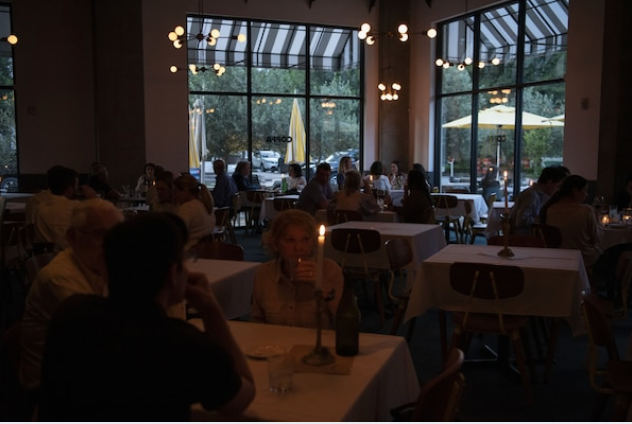
Restaurants reopened on May 1 at reduced capacity, and so far only about a third of the state’s sit-down dining has returned, according to OpenTable. In major cities, the rebound is even more muted. Transactions at restaurants, including takeout and delivery, have tripled since late March, but are still down 50% from before the pandemic, according to Shift4, a payments processor.

Clark Cooper Concepts operates a handful of high-end eateries in Houston, but one location has remained closed because the staff doesn’t want to risk exposure or would rather collect unemployment for now, according to Grant Cooper, one of the group’s partners. And when more customers do venture out, they’ll encounter a starkly different atmosphere than what they’re used to, he said.

“It’s like a high school mixer where everyone’s awkward,” Cooper said of dining during a pandemic. Even when the state ups capacity limits past the current 50%, he’s not sure how much of a difference that will make since they’ll still have to maintain six feet of distance. Plus, “a lot of people have learned in a short period of time that they have an oven and can cook something at home.”

Tony Goncalves, a 59-year-old from Tomball, about 30 miles north of Houston, has avoided restaurants and a lot of other pursuits because of the hassle of the covid-19 era, not health concerns.

“I’m not going to a restaurant if I gotta sit there with a mask, you know?” said Goncalves, a project manager for a pipeline company. “I mean, how do you eat? Until it becomes a lot more convenient to do things, then I would just continue doing what I need to.”

A lot of Texans appear to have adopted a similar mentality, either seeking out convenience or necessities. Supercuts has seen visits surge past where they were a year ago, according to foot traffic data on more than 30 standalone locations monitored by SafeGraph, an analytics firm that tracks mobile phones. Traffic to Walmart, which has remained open because it’s deemed an essential retailer for its grocery, is also above 2019.

That’s not to say people aren’t indulging. They’re flooding Whataburger, a drive-thru chain that in March added the ability to deliver its sweet & spicy bacon burger to your parked car. Rudy’s Country Store and Bar-B-Q, with more than 30 restaurants in the state, also has a robust pick-up business and its customer traffic drastically rebounded over the past month. Trips to Starbucks and Baskin-Robbins are almost back to normal, according to SafeGraph.

Meanwhile, malls all over the state are struggling to lure back customers. Hotel transactions, including bookings, have only rebounded 37% since hitting a nadir on March 22, according to Shift4.

The earliest that Billy Bob’s, a Fort Worth dance hall that calls itself the world’s largest honky-tonk, might open is June 8 and returning to concerts might be a month after that, according to General Manager Marty Travis. Even at the state-mandated 25% capacity (for now, bars are more restricted than restaurants), the venue could still hold 1,500 people. As added precaution, it’s considering installing thermal cameras to detect fevers in employees and patrons.

“We’re coming up on our 40th anniversary next year, and the last thing I need to do is become a hot spot,” Travis said. “The wise decision was to sit tight for a hot minute.”

Airports are largely empty. At Dallas Fort Worth International, the second largest airport in the country, scheduled daily departures are averaging about 500, roughly half the rate from February, according to tracking website Flightradar24. Offices can reopen, but many haven’t, instead opting to keep their staff working from home.

“We’re not in a rush to come back,” said Stephanie Boone, the 42-year-old founder of Wondercide, a 30-person company that makes pest protection products in Austin for nationwide distribution. “Working remote is working for us.”

During the weekday morning rush last week, a main artery into Dallas looked like a Sunday afternoon. In the city’s downtown, about the only cars on the road were FedEx trucks.

“Economic activity has improved from abysmally low to just drastically low,” said James Gaines, chief economist at Texas A&M University’s Real Estate Center. An index of the state’s economy curated by the school plunged to around 40 earlier this month from 120 in March. In the last week, it’s rebounded to the mid-50s.

Given the state’s diversity, there are regional divides in behavior, even within the same city. In the districts north of Dallas, largely white and affluent, residents are leaving their homes much more than a month ago, according to SafeGraph data. Meanwhile the black communities south of the city, which have been hit hard by the virus, have actually seen reduced mobility since the reopening.

In Austin, a politically-liberal enclave, there are lower levels of movement and business activity. In one sign of the dichotomy, a major mall has only seen a small lift in traffic since the reopening. Meanwhile in Midland, deep within the state’s conservative oil-producing Permian Basin, a big shopping center appears to already be back to normal levels of visitors, according to SafeGraph data.

These differences, of course, come amid President Donald Trump turning virus prevention into a partisan issue, by refusing to wear a mask and criticizing states that have kept economic activity under wraps.

“I definitely see a divide along political lines,” said Matt Asendio, a Houston real estate agent who’s witnessed interest in home buying rebound the past two weeks. “There are people who are out and about and aren’t social distancing like you’d like, and a second group that is staying at home.”

Tara Chapman realized the stark differences just 10 minutes outside Austin at a gas station where social distancing was non-existent. Later during her trip last weekend to the Hill Country, she stopped at a taco shop and the only person wearing a mask besides her and her boyfriend was an employee, and her nose wasn’t covered.

Chapman, 38, runs Two Hives Honey, an eight-person Austin beekeeping company that has survived the pandemic by boosting online sales. The company so far hasn’t brought back group events, like hive tours and classes, that had accounted for a third of revenue.

“Austin is taking it a lot more slowly,” Chapman said. “We just aren’t there yet.”

Airbus set to reassess output after virus hits jet demand #ศาสตร์เกษตรดินปุ๋ย

#ศาสตร์เกษตรดินปุ๋ย : ขอบคุณแหล่งข้อมูล : หนังสือพิมพ์ The Nation.

https://www.nationthailand.com/business/30388900?utm_source=category&utm_medium=internal_referral

Airbus set to reassess output after virus hits jet demand

Jun 01. 2020
Guillaume Faury, chief executive officer of Airbus, at a news conference in Toulouse, France, on Feb. 13, 2020. MUST CREDIT: Bloomberg photo by Balint Porneczi.

Guillaume Faury, chief executive officer of Airbus, at a news conference in Toulouse, France, on Feb. 13, 2020. MUST CREDIT: Bloomberg photo by Balint Porneczi.
By Syndication Washington Post, Bloomberg · Charlotte Ryan, Siddharth Philip, Anurag Kotoky · BUSINESS, WORLD, TRANSPORTATION, US-GLOBAL-MARKETS, EUROPE 

Top Airbus executives are planning to assess additional measures that may be necessary to address the impact of the coronavirus pandemic, according to people familiar with the matter.

Among the topics to be discussed at a meeting this week are production rates for the plane-maker’s top-selling A320-series narrow-body jet, said the people, who asked not to be named discussing confidential deliberations.

While an adjustment wouldn’t necessarily entail a rate cut, Airbus slashed output by about a third in April to cope with cratered demand from airlines that have parked planes because of the virus. At the time, the planemaker said it would aim to produce 40 of the single-aisle A320s per month, and reassess once it determined whether the recovery was “V-shaped” or “L-shaped.”

Almost two months later, many airlines remain grounded and short of cash, and are racing to cut jobs as the depth of the downturn sinks in. Without a vaccine to reassure passengers, flying could remain depressed for some time, sapping aircraft demand over the medium term while carriers nurse themselves back to health.

“This year will be really difficult,” said George Ferguson, an analyst with Bloomberg Intelligence. “I think an adjustment would come soon because I imagine they will be having a hard time getting airlines to take planes this quarter.”

An Airbus spokesman declined to comment on speculation related to internal meetings.

Shares in the Toulouse, France-based company advanced 3% to 58.37 euros as of 9:23 a.m. in Paris, paring this year’s drop to 55%.

The popular A320 series accounts for the bulk of Airbus’s production and cash flow. The planemaker handed over only 12 of the models during April, as it juggled rolling factory closures and negotiated with customers seeking to cancel or postpone deliveries. The company is set to announce its monthly order-and-delivery totals for May this week.

Chief Executive Officer Guillaume Faury has previously said that the company would reassess production rates by June.

“Our goal is to have completed a new stability to define a new world by June,” he said on an April 29 conference call. “We will have a more granular picture; it should not change significantly compared to what we have already done, but it could change slightly.”

In April, Airbus also lowered output of the advanced A350 wide-body to six a month, with the slower-selling A330 limping along at two a month, raising questions on the continued viability of the program. A ramp-up in production of a smaller narrow-body, the recently acquired A220 series, has also been slowed.

The A380 super-jumbo program, Airbus’s biggest jetliner, was already scheduled to wind down over coming months. Carriers have been taking the double-decker out of service, and Bloomberg has reported that its biggest customer, Emirates Group, is seeking to cancel the final five deliveries left on its order.

Any decision to further slash production would align with Faury’s plans to lower headcount as the company confronts the worst aviation downturn in its history.

Faury told senior managers in May that the European planemaker must “act fast” to eliminate jobs as it confronts the sharpest downturn ever in the aviation industry.

Gold price unchanged #ศาสตร์เกษตรดินปุ๋ย

#ศาสตร์เกษตรดินปุ๋ย : ขอบคุณแหล่งข้อมูล : หนังสือพิมพ์ The Nation.

https://www.nationthailand.com/business/30388925?utm_source=category&utm_medium=internal_referral

Gold price unchanged

Jun 02. 2020
By The Nation

The gold price remained unchanged in morning trade today (June 2), the Gold Traders Association reported.

As of 9.23am, the buying price of a gold bar was Bt25,950 per baht weight and selling price Bt26,050, while gold ornaments were priced at Bt25,483.96 and Bt26,550, respectively.

The Gold Spot Index price this morning moved to around US$1,740 (Bt55,011) per ounce after the price dropped by $1.4 to $1,750.3 per ounce at close yesterday (June 1).

Investors were buying gold as a safe haven asset after the United States revealed that the country’s manufacturing sector in May increased amid tensions between Washington and Beijing and protests across the US.

The gold price on the Hong Kong market rose by HK$40 to $16,085 (Bt65,611) per tael.

SET rises amid worries over renewed US-China trade war, Thai political situation #ศาสตร์เกษตรดินปุ๋ย

#ศาสตร์เกษตรดินปุ๋ย : ขอบคุณแหล่งข้อมูล : หนังสือพิมพ์ The Nation.

https://www.nationthailand.com/business/30388923?utm_source=category&utm_medium=internal_referral

SET rises amid worries over renewed US-China trade war, Thai political situation

Jun 02. 2020
By The Nation

The Stock Exchange of Thailand Index opened at 1,363.15, up 10.78 points, or 0.80 per cent, this morning (June 2).

A stock analyst at Krungsri Securities expected the index to fluctuate between 1,345 and 1,365 points due to uncertainty following a renewed trade war after China suspended imports of soybean in response to the US move to terminate its trade relationship with Hong Kong.

“Meanwhile, the political situation in Thailand and the tight SET valuation will pressure the index,” the analyst said. “On Monday, 18 members of the Palang Pracharat Party’s executive board officially resigned.”

He said that energy and petroleum stocks continued to gain positive sentiment from the rising crude oil price as investors expected the economy to recover after several countries eased their lockdowns.

He recommended investors buy:

▪ Energy stocks which will benefit from the rising crude oil price, such as PTT, PTTEP, Top, PTTGC, IRPC, SPRC and IVL.

▪ Stocks which will benefit from the government’s tourism stimulus measures, such as Mint, Centel, ERW and AOT.

▪ Stocks whose second quarter performance will improve, such as CKP, Tasco, STA and RS.

▪ Stocks which would be added to the SET50 – BPP and TTW – and SET100 calculation – Ace, DoHome, RBF, SIRI , SISB, TVO and WHAUP.

Stocks advance with investors focused on economy #ศาสตร์เกษตรดินปุ๋ย

#ศาสตร์เกษตรดินปุ๋ย : ขอบคุณแหล่งข้อมูล : หนังสือพิมพ์ The Nation.

https://www.nationthailand.com/business/30388910?utm_source=category&utm_medium=internal_referral

Stocks advance with investors focused on economy

Jun 02. 2020
By Syndication Washington Post, Bloomberg · Vildana Hajric · BUSINESS, US-GLOBAL-MARKETS 

U.S. stocks rose as investors focused on signs of economic recovery amid further tension with China, lackluster virus drug-test results and spreading protests over the killing of George Floyd, an unarmed black man, by police. The dollar slumped.

The tech-heavy Nasdaq Composite outperformed as a closely watched measure of U.S. manufacturing rose in May for the first time in four months, suggesting stabilization after a pandemic-driven plunge. Gunmakers rallied in the aftermath as the protests were marred by violence. Gilead Sciences Inc. fell after its drug remdesivir showed only a limited benefit in a large trial.

Risk assets showed signs of resilience Monday after stocks had dipped earlier in the day following reports that Chinese officials had told agricultural companies to pause purchases of some U.S. farm goods, threatening a hard-won trade deal. Metals and emerging-market equities advanced along with shares in Europe and Asia.

Investors mostly looked past the weekend of sometimes violent demonstrations across U.S. cities, highlighting what many see as the disconnect between Wall Street and Main Street. Stocks are near a three-month high as businesses reopen following shutdowns caused by the coronavirus, even with 40 million Americans having filed for unemployment benefits.

“Progress on the road to an economic recovery could help offset pressure on the equity market from near-term challenges stemming from geopolitical, health, and societal risks,” John Stoltzfus, chief investment strategist at Oppenheimer, wrote to clients.

Goldman Sachs said the U.S. labor market is showing the earliest signs of rebounding. China’s Caixin purchasing managers’ index for manufacturing rose above 50 May, indicating an expansion. Euro-area data on Monday also signaled factories have started down their long road to recovery.

Stocks:

– The S&P 500 Index rose 0.4% at the close of trading in New York.

– The Stoxx Europe 600 Index climbed 1.1%.

– Hong Kong’s Hang Seng Index increased 3.4%.

– The MSCI Asia Pacific Index increased 1.8%.

Currencies:

– The Bloomberg Dollar Spot Index declined 0.7%.

– The euro rose 0.3% to $1.1133.

– The British pound gained 1.3% to $1.2503.

– The Japanese yen strengthened 0.2% to 107.6 per dollar.

Bonds:

– The yield on 10-year Treasuries rose one basis point to 0.66%.

– Germany’s 10-year yield increased four basis points to -0.41%.

– Britain’s 10-year yield climbed five basis points to 0.23%.

Commodities:

– West Texas Intermediate crude rose 0.3% to $35.59 a barrel.

– Gold strengthened 0.6% to $1,740.17 an ounce.

Saudi Arabia to pump $13 billion into banks to offset twin shock #ศาสตร์เกษตรดินปุ๋ย

#ศาสตร์เกษตรดินปุ๋ย : ขอบคุณแหล่งข้อมูล : หนังสือพิมพ์ The Nation.

https://www.nationthailand.com/business/30388894?utm_source=category&utm_medium=internal_referral

Saudi Arabia to pump $13 billion into banks to offset twin shock

Jun 02. 2020
Construction workers operate at a development site in the King Abdullah Financial District (KAFD) in Riyadh, Saudi Arabia, on May 19, 2020. MUST CREDIT: Bloomberg photo by Tasneem Alsultan.

Construction workers operate at a development site in the King Abdullah Financial District (KAFD) in Riyadh, Saudi Arabia, on May 19, 2020. MUST CREDIT: Bloomberg photo by Tasneem Alsultan.
By Syndication The Washington Post, Bloomberg · Matthew Martin

Saudi Arabia unveiled a $13.3 billion stimulus package to protect banks against an expected drop in profits and rise in bad loans as they confront the double whammy of the coronavirus shock and lower oil prices.

The move by the central bank, the Saudi Arabian Monetary Authority, will help lenders amend and restructure loans, without additional fees, and support private sector employment and credit. It follows a 50-billion-riyal ($13.3 billion) program in March to help banks provide loans to businesses so companies didn’t have to cut jobs.

Saudi Arabia’s non-oil economy is expected to contract for the first time in over 30 years. Lenders in the world’s largest oil exporter — already dealing with a fragile economy before this year’s crisis — are expected to be hit hard as lockdown measures and lower government spending impact earnings and increase defaults.

Central banks around the world in recent months have unveiled emergency stimulus packages after the pandemic forced authorities to restrict international travel and shut down large parts of their economies. Turkey unveiled its most expansive credit incentive scheme in four years to help the economy, with the nation’s three largest state-owned banks offering mortgages, loans for used cars, credit for home appliances, holiday packages and other products.

Saudi Arabia’s injection “shows that SAMA is committed to support the sector beyond SMEs in this unprecedented crisis,” said Edmond Christou, a banking analyst at Bloomberg Intelligence. “This is likely to boost liquidity at no cost and mitigate part of the pressure on banks from relief repayments or debt restructuring to sectors beyond SMEs.”

Dollar-forwards for the Saudi riyal fell, with 12-month forwards dropping to 94, from 107.5 on Friday, the lowest since April 15, according to data compiled by Bloomberg. The kingdom’s dollar-denominated bonds strengthened for the first time in four days. The yield on the debt due 2060 fell 4 basis points to 3.96%.

The Tadawul Banks Index, composed of 11 Saudi lenders, rose as much as 0.9%, while the broader gauge in Riyadh climbed as much as 0.8%. On top of the stimulus package, the gauges were helped by a 7% increae in crude.

Banks in the kingdom have so far been able to avoid liquidity issues. The statutory loan-to-deposit ratio fell to 78.5% at the end of April, partly due to the slowdown in new lending.

The measures are “helpful” but “irrelevant” for most companies, Tarek Fadlallah, head of Nomura Asset Management’s Middle East unit, said on Twitter.

The government is looking to its largest-ever debt program to keep the depletion of reserves limited to 120 billion riyals, as originally planned in the budget. The kingdom has also turned to austerity measures and tripled the value-added tax in an attempt to cope with the impact of the coronavirus pandemic and the oil-price rout, which has cut deeply into government revenue for the kingdom.

At the same time, officials say they’re seizing investment opportunities abroad. In the first quarter of this year, the Public Investment Fund — Saudi Arabia’s sovereign wealth fund — went on a stock buying spree, investing billions of dollars in companies like cruise operator Carnival, BP Plc, Boeing Co., Citigroup Inc. and Facebook Inc.

In a statement over the weekend, Finance Minister Mohammed Al-Jadaan said the government had transferred around $40 billion from the central bank’s foreign currency reserves to the sovereign fund in March and April to enable it to take advantage of recent market turmoil.

Saudi Arabia’s fiscal deficit this year is set to widen to nearly 13% of gross domestic product, according to the International Monetary Fund. Gross official reserves are set to drop to around $456 billion this year, continuing the trend into 2021, when they’re estimated to reach just over $409 billion, IMF projections show. At the end of April, the central bank’s net foreign assets stood at $443 billion.

– – –

Bloomberg’s Filipe Pacheco and Netty Ismail contributed to this report.

‘Stars were aligned’ for stock rally as Asia follows Wall Street #ศาสตร์เกษตรดินปุ๋ย

#ศาสตร์เกษตรดินปุ๋ย : ขอบคุณแหล่งข้อมูล : หนังสือพิมพ์ The Nation.

https://www.nationthailand.com/business/30388899?utm_source=category&utm_medium=internal_referral

‘Stars were aligned’ for stock rally as Asia follows Wall Street

Jun 01. 2020
Police officers walk along an empty road during a lockdown imposed due to the coronavirus in Mumbai on June 1, 2020. MUST CREDIT: Bloomberg photo by Dhiraj Singh.

Police officers walk along an empty road during a lockdown imposed due to the coronavirus in Mumbai on June 1, 2020. MUST CREDIT: Bloomberg photo by Dhiraj Singh.
By Syndication Washington Post, Bloomberg · Moxy Ying, Abhishek Vishnoi, Ishika Mookerjee · BUSINESS, US-GLOBAL-MARKETS 

The animal spirit was abundant in Asia stocks on Monday as investors, emboldened by a lack of details in President Donald Trump’s speech on Friday and a resilient Wall Street, chose to look past weak economic data to focus on bargains.

Shares advanced in all major regional markets, pushing the MSCI Asia Pacific Index above the average level in the last 100 days for the first time since coronavirus rattled global investors. News of easing lockdowns across the region is fueling a rally in the most beaten down shares, such as those in the hospitality sector. Hong Kong stocks saw the best gains in two months.

India is allowing malls and restaurants to open from June 8 as the country attempts to revive business activities ravaged by the world’s largest lockdown. South Korean government unveiled a $62 billion ‘New Deal’ spending plan to reshape the economy. Regional measures aside, the stability of the U.S. market is also considered a key confidence booster for Asia stock buyers.

Prospects of a robust economic recovery in China, stable U.S.-China tensions, rising memory-chip and commodities prices, and a weak U.S. dollar are all favoring Asia equities, said Khiem Do, head of greater China investments at Barings in Hong Kong. “It just happens that all these stars were aligned over the last few days, a trend which is likely to continue in June.”

The Citi Economic Surprise Index for Asia Pacific climbed four straight days through May 29, rising to highest since end-February. Investors were able to see the bright side of the news events.

South Korea just posted another double-digit decline in overall export in May, but a 7.1% increase in chip exports was enough to push the Kospi to its best gain in a week.

Tensions between China and the U.S. are boiling over, but investors are cheering a better-than-expected PMI reading in China.

The U.S. market has been a mark of resilience for market sentiment in the face of the era of Covid-19, said Jingyi Pan, a market strategist at IG Asia Pte. The combination of reopening news and no strong suggestions of a second wave thus far has encouraged investors to inch back toward riskier assets, Pan said.

“With the momentum seen in the U.S. market, this had likewise powered the expectation across Asia that demand could likewise recover into the summer months,” she added.

Qontigo’s Asia-Pacific head of applied research Olivier d’Assier believes the strong market performance in Asia is because of stimulus packages.

The big U.S. stimulus via interest rates and the dollar affects many countries, he said. “Essentially, these stimulus packages have taken bearish sentiment out of the picture by underwriting speculative behavior and guaranteeing risk assets,” he added.

Bryan Goh, chief investment officer of Tsao Family Office in Singapore, isn’t as optimistic about the economic recovery.

“The markets are looking beyond 2020 to 2021 and even further for a recovery from recession and pandemic,” he said. “We have faith in the eventuality of a cure and vaccine but less faith that the economy will recover to the level implied by equity and credit valuations.”

Investors should also be cautious about “herd-like behavior” in the market, especially when there’s a disconnect between the economic reality and financial asset prices, according to Jeffrey Halley, a senior market analyst at Oanda Asia Pacific Pte in Singapore.

“Macro-funds act more like five-minute macros, and not five-month or five-year macros in my time,” he said.

OPEC+’s talks for short extension to cuts leave oil prices flat #ศาสตร์เกษตรดินปุ๋ย

#ศาสตร์เกษตรดินปุ๋ย : ขอบคุณแหล่งข้อมูล : หนังสือพิมพ์ The Nation.

https://www.nationthailand.com/business/30388895?utm_source=category&utm_medium=internal_referral

OPEC+’s talks for short extension to cuts leave oil prices flat

Jun 01. 2020
By Syndication The Washington Post, Bloomberg · Elizabeth Low, Alex Longley 

The oil market took an initially neutral view on OPEC+ deliberations that could result in the producers group announcing a short-extension to unprecedented output curbs.

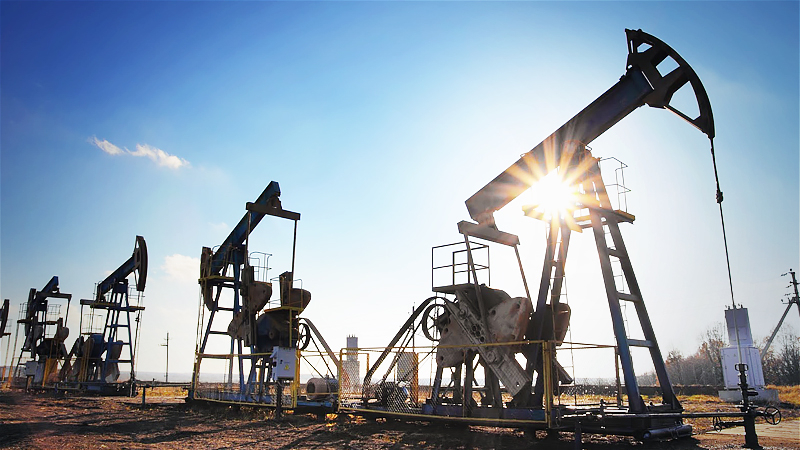
Futures in New York were virtually unchanged near $35 a barrel. The Organization of Petroleum Exporting Countries and its allies is considering bringing their next meeting forward to Thursday, where it will discuss prolonging production curbs by one to three months, according to a delegate. The existing agreement calls for the output cuts to ease from July.

Up to this point, the production curbs have been effective. Crude rallied almost 90% last month, a record gain, as reduced supply helped to offset the demand losses from the coronavirus outbreak. A key oil spread that helps dictate the flow of crude from regions including the North Sea and West Africa turned positive for the first time since March on Monday, the latest sign that crude’s recovery isn’t just financial-driven.

“The prospect of OPEC+ advancing its meeting and agreeing an extension rather than tapering of the deeper cuts should support crude’s rally this week,” said Vandana Hari, founder of energy consultancy Vanda Insights.

An earlier OPEC+ meeting would give the producer group more flexibility to change its current production limits as members usually decide their plans for shipping oil for July in the first week of June. The group’s preference is to take short-term measures on cuts as the situation is changing quickly, the delegate said. The coalition – which includes OPEC’s 13 members plus another 10 exporters — has achieved 92% compliance, according to an estimate by data analytics firm Kpler.

Though crude has rallied there is still evidence of a supply response in the world’s biggest oil producer — America. The number of rigs drilling for oil in the U.S. dropped for an 11th consecutive week to the lowest since 2009, according to data from Baker Hughes. Still, there’s a risk that oil’s continued advance could tempt some producers to turn their taps back on again.

Meanwhile, the U.S. Oil Fund ETF will begin its monthly roll of futures contracts on Monday. The fund plans to sell its July holdings and buy more November and January futures over the next 10 trading sessions.